Bloomberg

Bitcoin Finds Relief From a Past Record High in 2017

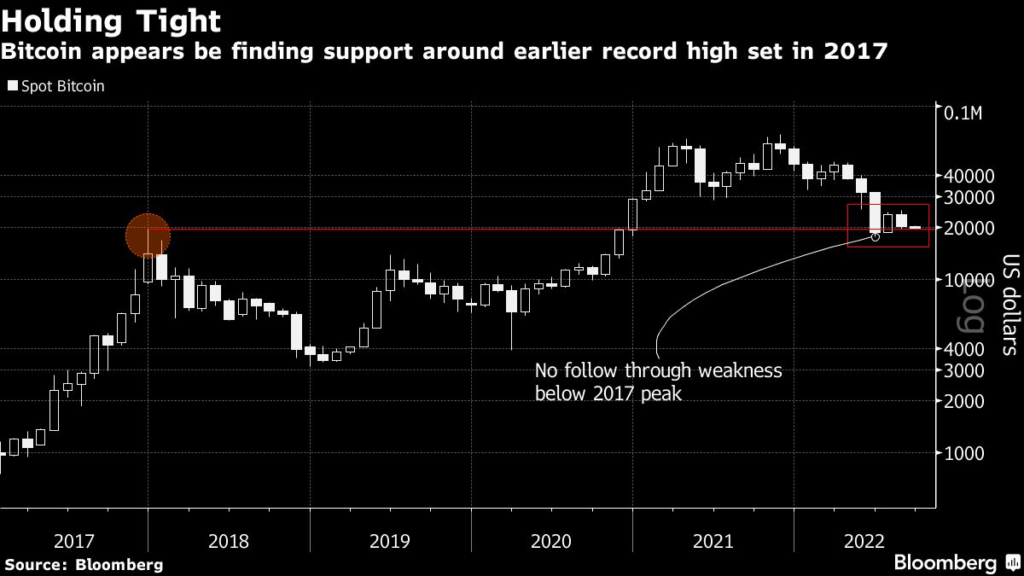
(Bloomberg) — Bitcoin may be finding some support at the 2017 peak of $19,511 that, at the time, was a record high for the largest cryptocurrency. The token has wavered since mid-August, dropping below the closely-watched $20,000 level, but has averted a drop below the 2017 high over the period. Traders are watching technical levels to see if Bitcoin has found a floor after a 57% plunge in 2022.

More stories like this are available on bloomberg.com

©2022 Bloomberg L.P.

Energy Woes Cast Pall Over Europe Futures, Stocks: Markets Wrap

(Bloomberg) — European equity futures sank 3% and the euro fell Monday as the region’s worsening energy crisis added to concerns about a global economy already facing high inflation and a wave of monetary tightening.

An Asian equity index was also in the red, paced by losses in Hong Kong, where tech shares slid as traders weighed the risk of US curbs on investment. US contracts wavered after the worst week for world shares since June.

The dollar was firm as commodity-linked currencies joined the euro’s retreat. Oil jumped past $88 a barrel before an OPEC+ meeting on supply. Cash Treasuries and US stocks are closed because of the Labor Day day holiday.

Russia’s Gazprom PJSC last week again halted its key European gas pipeline indefinitely after Group of Seven leaders agreed to implement a price cap on Russian oil as the Kremlin continues its war in Ukraine. Natural gas prices are set to test records, and Europe could roll out special steps to rein in power costs. Germany plans a $65 billion package to shield consumers.

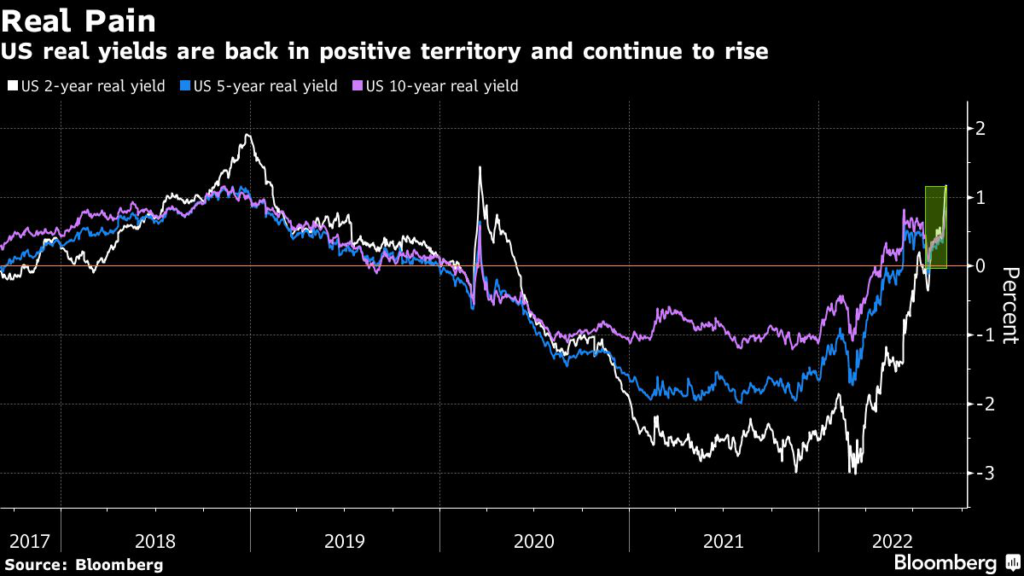
Monetary authorities including Europe’s central bank are set to keep hiking interest rates this week to fight inflation despite the darkening global economic outlook due to risks such power shortages and China’s Covid curbs. An attendant advance in real yields — seen as the true cost of money for borrowers — poses an obstacle to a variety of risk assets.

“The EU energy situation highlights the very challenging environment for central banks as they normalize policy settings and continue to hike,” said Su-Lin Ong, head of Australian economic and fixed-income strategy at Royal Bank of Canada.

Markets also face more uncertainty from US-China tension. The Biden administration is considering moves to curb US investment in Chinese technology firms and will allow Trump-era merchandise import tariffs to continue while the levies are reviewed.

Separately, China extended its lockdown in districts of the megacity Chengdu and ordered more mass testing there as it tries to contain a Covid outbreak.

In the UK, Conservative Party members are expected to name Liz Truss as their leader, clearing her way to become prime minister. Her plan to “turbo-charge” the economy by slashing taxes is already worrying investors amid double-digit inflation. The British pound weakened against the greenback. 

Elsewhere, Bitcoin hovered near the $20,000 level. Gold was little changed.

What to watch this week:

  • UK prime minister to be announced, Monday
  • OPEC+ meeting on supply, Monday
  • Australia rate decision, Tuesday
  • Apple event due to feature new iPhones, watches, Wednesday
  • Bank of England Governor Andrew Bailey at Treasury Committee, Wednesday
  • Fed’s Beige Book of regional economic activity, Wednesday
  • Cleveland Fed President Loretta Mester due to speak, Wednesday
  • European Central Bank rate decision, Thursday
  • Fed Chair Jerome Powell speaks at a Cato Institute conference in Washington, Thursday
  • Reserve Bank of Australia Governor Philip Lowe speaks at event, Thursday
  • China PPI, aggregate financing, money supply, new yuan loans, Friday
  • EU energy ministers extraordinary meeting on emergency intervention in electricity markets, Friday

Some of the main moves in markets:

Stocks

  • S&P 500 futures rose 0.2% as of 12:50 p.m. in Tokyo. The S&P 500 fell 1.1%
  • Nasdaq 100 futures were steady. The Nasdaq 100 fell 1.4%
  • Japan’s Topix index was steady.
  • Australia’s S&P/ASX 200 index added 0.2%
  • South Korea’s Kospi index fell 0.2%
  • China’s Shanghai Composite index added 0.1%
  • Hong Kong’s Hang Seng index shed 1.3%
  • Euro Stoxx 50 futures sank 3%

Currencies

  • The Bloomberg Dollar Spot Index rose 0.2%
  • The euro fell 0.4% to $0.9915
  • The Japanese yen was at 140.32 per dollar, down 0.1%
  • The offshore yuan fell 0.4% to 6.9411 per dollar

Bonds

  • The yield on 10-year Treasuries declined six basis points to 3.19% on Friday
  • Australia’s 10-year bond yield was at 3.64%

Commodities

  • West Texas Intermediate crude rose 2% to $88.61 a barrel
  • Gold was at $1,712.30 an ounce

More stories like this are available on bloomberg.com

©2022 Bloomberg L.P.

World’s First Covid Vaccine You Inhale Is Approved in China

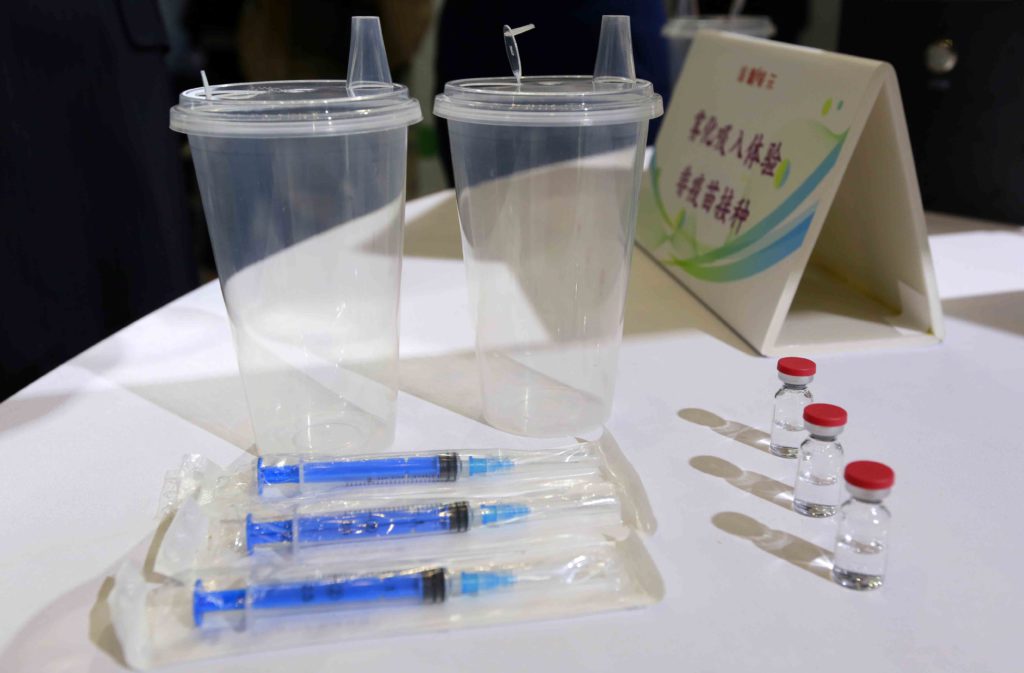
(Bloomberg) — China became the first country to approve a needle-free, inhaled version of a Covid-19 vaccine made by Tianjin-based CanSino Biologics Inc., pushing the company’s shares up as much as 14.5% Monday morning in Hong Kong. 

China’s National Medical Products Administration approved CanSino’s Ad5-nCoV for emergency use as a booster vaccine, the company said in a statement to the Hong Kong Stock Exchange on Sunday.  

The vaccine is a new version of CanSino’s one-shot Covid drug, the first in the world to undergo human testing in March 2020 and which has been used in China, Mexico, Pakistan, Malaysia and Hungary after being rolled out in February 2021. The inhaled version can stimulate cellular immunity and induce mucosal immunity to boost protection without intramuscular injection, CanSino said.


Companies are looking into developing inhaled versions of vaccines to stimulate antibodies in nasal and airway tissues to defend against coronavirus. They are needle-free and can be self-administered, broadening their appeal to vaccine-hesitant people and potentially easing pressure on health-care resources.

CanSino’s initial one-shot vaccine was found to be 66% effective in preventing Covid-19 symptoms and 91% effective against severe disease, but it trails vaccines from Sinovac Biotech Ltd. and state-owned Sinopharm Group Co. in use outside China. Those two companies account for most of the 770 million doses China has sent to the rest of the world. 

The vaccine, which uses a modified cold-causing virus to expose the immune system to the coronavirus, is similar to those developed by AstraZeneca Plc and Johnson & Johnson. 

More stories like this are available on bloomberg.com

©2022 Bloomberg L.P.

Grab Rival Be Group Gets $60 Million Loan for Vietnam Expansion

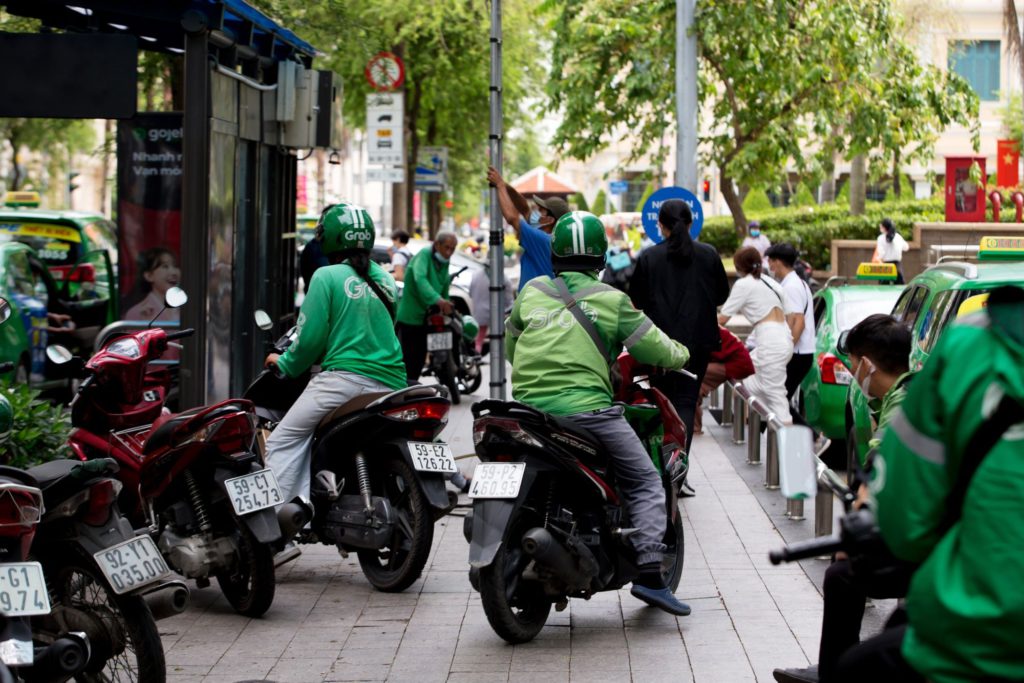
(Bloomberg) — Vietnamese ride-hailing startup Be Group JSC said it has received a loan facility of at least $60 million as it seeks to further challenge Grab Holdings Ltd. in the Southeast Asian country. 

The loan from Deutsche Bank AG includes a provision that would allow financing to increase to as much as $100 million, Be Group’s Chief Executive Officer Vu Hoang Yen said in an interview in Hanoi. The funds will be used to expand and enhance its primary services, which include ride-hailing, food deliveries and digital banking. 

Vietnam’s fast-expanding ride-hailing sector is seeing renewed competition from companies like Indonesia’s Go-Jek and FastGo Vietnam JSC as countries ease from Covid-linked lockdowns. The market is forecast to grow at a compounded annual rate of more than 28% over the next five years, according to research company Mordor Intelligence. 

Launched in 2018, Be Group has expanded into deliveries, online groceries, insurance, telecom service bundles, financial services and operates in 28 provinces and cities. To date, its app has been installed on more than 20 million mobile devices. 

The company – the owner and developer of the on-demand multi-service consumer platform “be”, expects to surpass 10 million active users next year, she said. Be aims to more than double that figure by 2026.

The company has a 30% to 40% share of the ride-hailing market in Hanoi, and 25% to 35% in Ho Chi Minh City, Yen said. Singapore-based Grab had about a 75% ride-hailing market share in Vietnam in the first half of 2020, according to research firm Statista.

Last month, Grab reported a wider-than-expected loss for the second quarter, a sign of the challenges in turning its ride-hailing and delivery businesses profitable. 

(Updates with Grab’s results in the last graph; an earlier version corrected the figure in the fifth paragraph to million)

More stories like this are available on bloomberg.com

©2022 Bloomberg L.P.

China’s BYD Jumps to No. 2 in Global Electric-Car Battery Market

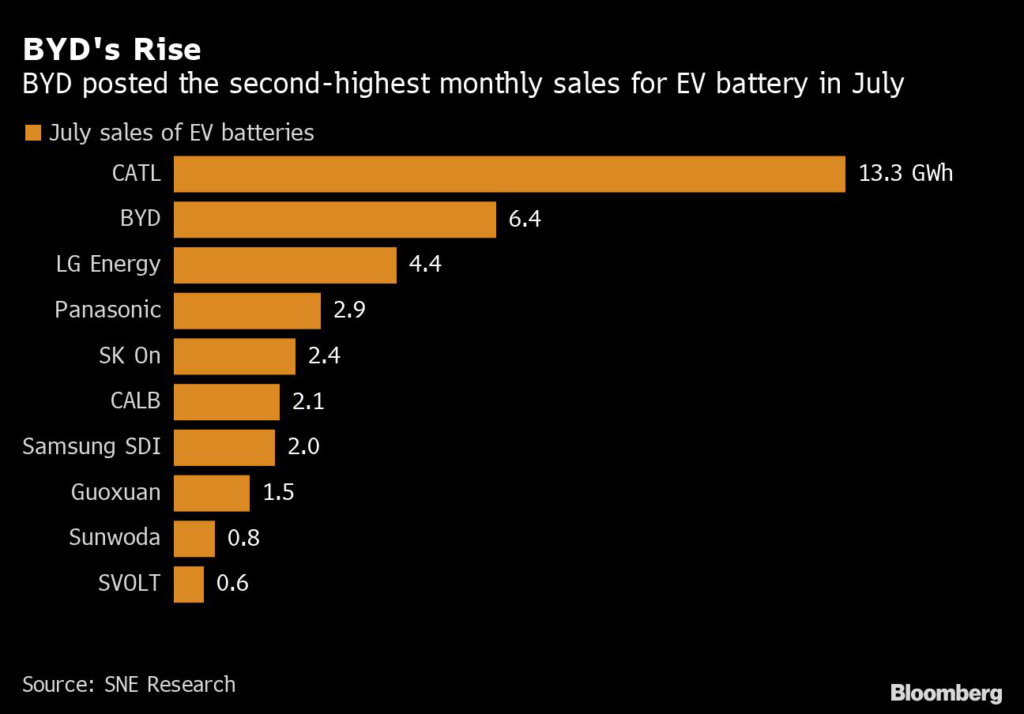
(Bloomberg) — BYD Co. jumped to second place in global electric-car battery rankings in July, overtaking LG Energy Solution Ltd. as China’s demand for clean cars surges.  

The Chinese car and battery maker supplied 6.4 gigawatt-hours of batteries in July, behind only giant Contemporary Amperex Technology Co. with 13.3 GWh. LG Energy slipped to third with 4.4 GWh, followed by Japan’s Panasonic Holdings Corp. at 2.9 GWh, according to data released by Seoul-based SNE Research on Monday. Global battery sales rose to 39.7 gigawatt-hours in July, up 80% from a year earlier, the report showed. 

Read more: China Electric Car Sales Forecast to Hit Record 6 Million

The year-to-date market share rankings were unchanged, with CATL top with 34.7% of the market, followed by LG Energy at 14.2% and BYD third with 12.6%.  

Demand for EVs continues to soar as high gasoline prices spur drivers to switch to hybrids and battery-powered cars, and automakers electrify their fleets. Still, EV makers face challenges, with the UK and Germany slashing subsidies, the US pushing to reduce reliance on Chinese minerals and components and surging materials prices pushing up the cost of batteries. 

Another Chinese company, China Aviation Lithium Battery Co., or CALB, ranked sixth by sales in July, overtaking South Korea’s Samsung SDI Co. 

Chinese firms led overall growth in the EV battery industry in July, while the total market share of South Korea’s three battery makers — LG, Samsung and SK — declined to 25.9% from 34.2% a year ago, SNE said. 

Chinese battery makers appear to be sustaining their pricing power amid tight supply, while China’s battery usage is expected to almost double this year on surging sales of new-energy vehicles, according to Bloomberg Intelligence. South Korean battery makers, meanwhile, need a new strategy to counter subsidies for EVs like new US rules that favor American-made electric vehicles and batteries, and rising “skepticism” over EVs in Europe, SNE said.  

More stories like this are available on bloomberg.com

©2022 Bloomberg L.P.

Platinum Buyers May Shun Russian Metal When Contracts Renewed

(Bloomberg) — Platinum supply concerns could re-emerge as buyers seek to avoid Russian metal, according to the World Platinum Investment Council.

While companies have continued to source platinum from Russia following its invasion of Ukraine, that could change when supply contracts are renewed, WPIC said in its quarterly report. Russia is a significant supplier of both platinum and palladium, which are mostly used to cut emissions from gasoline and diesel vehicles.

Both metals spiked earlier in the year over fears that Russian supply could be cut off. The country contributes about 11% of world output, making it the second-biggest producer after South Africa. Prices have since cooled on the deteriorating global economic outlook, which may lead to less demand from automakers.

WPIC sees platinum supply outstripping demand by 974,000 ounces in 2022, a slightly smaller surplus than the year before. Investors are expected to remain net-sellers of the metal, while demand from industrial users is expected to cool.

More stories like this are available on bloomberg.com

©2022 Bloomberg L.P.

EV Battery Maker ProLogium Considers UK for $8 Billion Factory

(Bloomberg) — Taiwanese battery maker ProLogium Technology Co. is considering the UK among the potential sites for an $8 billion factory that would build a promising but unproven new generation of cells for electric vehicles.

The solid-state battery startup is evaluating 90 sites across countries including France, Germany, the Netherlands, Poland and the UK, it said in a statement. Locations will be evaluated based on availability of skilled labor, transport links and incentives being offered — even proximity to customers.

Read more: Battery Developer ProLogium Says It May Go Public in 2022

A final decision is planned early next year, a Taiwan-based ProLogium spokesman said by phone. Other locations in the US, China and Southeast Asia are also being contemplated. The company has hired consulting firm Accuracy to help with the search.

The UK is pushing hard to attract battery makers as the auto industry phases out the internal combustion engine. The country’s car production has steadily declined over decades, and uncertainty about the future of Britain’s trading relationship with the European Union has added to the industry’s woes.

Related: UK Risks Car Collapse as Jaguar Looks Elsewhere for EV Batteries

Solid-state batteries promise reduced charging times, longer driving ranges and — unlike conventional lithium-ion batteries — no fire risk. While the technology offers vast potential improvements to accelerate EV adoption, it hasn’t yet been produced at scale. In January, ProLogium signed a cooperation agreement to develop solid-state battery cells with Mercedes-Benz Group AG, which also invested in the startup.

ProLogium has earmarked $8 billion for an overseas factory it will build in three phases over the course of a decade, with an ultimate capacity of 120 gigawatt hours.

More stories like this are available on bloomberg.com

©2022 Bloomberg L.P.

Nordic Utilities Get €33 Billion Backstops as Power Markets Fray

(Bloomberg) — The governments of Sweden and Finland decided to create emergency backstops to help utilities struggling to trade on power markets gripped by unprecedented turbulence. 

They’re setting up liquidity facilities made up of loans and credit guarantees, worth $33 billion in total, to avoid some power companies going into technical defaults as soon as Monday over surging collateral requirements. The aim is to prevent Russia’s energy curbs from sparking a financial crisis.

“This has, in a way, the ingredients for an energy-industry Lehman Brothers” moment, Finnish Economy Minister Mika Lintila said at a news conference in Helsinki, referring to the US investment bank whose name has become synonymous with systemic risk after its collapse set off the global financial crisis in 2008.

Earlier on Sunday, Sweden’s Finance Minister Mikael Damberg had warned that failing to act “could have contagion effects on the rest of the financial market,” even as the “issue is currently isolated to energy producers.” Sweden is home to Nasdaq Clearing AB, which sits at the heart of the Nordic power market.

Russia has been limiting supply of its gas to the European Union, contributing to a surge in prices and concerns about shortages during the colder winter months ahead. Already at four times the level of a year ago, natural-gas prices are set to jump on Monday after Russia’s announcement its Nord Stream 1 gas pipeline to Germany would stay shut. That’s piling more pressure on industries and households — and on policy makers to act.

“This winter, Russia is preparing for a decisive energy attack on all Europeans,” Ukraine’s President Volodymyr Zelenskiy said on Saturday. “It wants to weaken and intimidate the entire Europe, every state. Where Russia cannot do it by force of conventional weapons, it does so by force of energy weapons.”

Sweden is extending as much as 250 billion kronor ($23 billion) in credit guarantees, while Finland’s program worth as much as 10 billion euros ($10 billion) includes loans and guarantees. Both countries’ parliaments are set to begin processing the motions on Monday.

Norway’s government said in a separate statement it is closely monitoring developments in the financial power market but currently sees no need for measures of its own.

“Norwegian hydropower producers have high profitability and are not known to have challenges in securing market funding,” it said.

The skyrocketing price of energy in Europe has made it more expensive for utilities to buy and sell electricity, because of the collateral required to guarantee trades. Fortum Oyj said Aug. 29 its collateral rose by 1 billion euros in a week to 5 billion euros, excluding funds posted by its German subsidiary Uniper SE.

The utility welcomed the government action, and said its discussions on liquidity support continue with the Finnish state, its majority owner. 

“It’s good that the Finnish and Swedish governments seek to quickly stabilize the Nordic power markets and come to the energy companies’ aid at this difficult time,” the Espoo, Finland-based company said in a statement on Sunday.

Fortum had turned to the Finnish state for assistance to secure its liquidity needs until its hedged power contracts go to delivery and collaterals are released. Uniper, which has also sought further liquidity help, is not eligible for funds under the Finnish plan. The German company was bailed out just weeks ago after a massive shortfall in deliveries of natural gas from Russia led to huge losses.

The European Energy Exchange AG has also asked for more government support to traders to guarantee their buying and selling as billions of euros put up as collateral for trades are sapping liquidity and making prices even more volatile.

While the Finnish program has no set limits per company, the European Commission may impose such restrictions, the government said.

The Swedish guarantees will be provided by the National Debt Office, and are primarily aimed at Swedish companies, though entities based in other Nordic and Baltic countries can access them during the initial two weeks, or until their governments provide support. The move comes a week ahead of Sweden’s election, in which a constellation of conservative and liberal parties are seeking to unseat the Social Democratic minority cabinet, led by Prime Minister Magdalena Andersson.

The European Union is also preparing to step into the energy market to dampen soaring power costs. The bloc aims to limit prices in the short term and in the longer term change the way energy is priced by severing the link between gas and electricity, blunting the weapon Russia is wielding.

(Updates with comments from Norway in seventh paragraph.)

More stories like this are available on bloomberg.com

©2022 Bloomberg L.P.

Finland to Stabilize Power Market With €10 Billion Program

(Bloomberg) —

Finland’s government agreed to set up a 10 billion-euro ($10 billion) emergency backstop to help utilities weighed by surging collateral demands as they trade on volatile power markets. 

The facility is made up of loans and credit guarantees, Prime Minister Sanna Marin said at a news conference in Helsinki on Sunday. It will help power companies such as Fortum Oyj with short-term liquidity needs.

Finland’s move follows a decision earlier on Sunday by neighboring Sweden to extend power generators as much as 250 billion kronor ($23.2 billion) in credit guarantees to stave off the threat of a financial crisis. Utilities registered with Nasdaq Clearing AB are eligible for the Swedish plan.

More stories like this are available on bloomberg.com

©2022 Bloomberg L.P.
Sweden Sets Up $23 Billion Emergency Backstop for Utilities

(Bloomberg) —

Sweden’s government will provide Nordic and Baltic utilities as much as 250 billion kronor ($23.2 billion) in credit guarantees as it seeks to prevent Russia’s energy curbs from setting off a financial crisis. 

The measure is aimed at helping companies struggling to meet the surging collateral requirements needed to trade electricity, and avoid the threat of some going into technical defaults as soon as Monday, Finance Minister Mikael Damberg said at a news conference in Stockholm. Utilities registered with Nasdaq Clearing AB are eligible for the guarantees.

“The issue is currently isolated to energy producers, but unless we act, it could have contagion effects on the rest of the financial market,” the minister said on Sunday. “Ultimately, it could lead to a financial crisis.”

The surging price of energy in Europe has made it more expensive for utilities to buy and sell electricity, because of the collateral required to guarantee trades on power markets facing unprecedented turbulence. Fortum Oyj of neighboring Finland said Aug. 29 its collateral rose by 1 billion euros ($1 billion) in a week to 5 billion euros, excluding funds posted by its German subsidiary Uniper SE.

Russia has been limiting supply of its gas to the European Union, contributing to a surge in prices and concerns about shortages during the colder winter months ahead. Already at four times the level of a year ago, natural-gas prices are set to jump on Monday after Russia’s announcement its Nord Stream 1 gas pipeline to Germany would stay shut. That’s piling more pressure on industries and households — and on policy makers to act.

The guarantees will be provided by Sweden’s National Debt Office, and are primarily aimed at Swedish companies, though entities based in other Nordic and Baltic countries can access them during the initial two weeks, or until their governments provide support. Finland is preparing a similar move, but Damberg said the neighboring country has indicated that it may take more time to implement. 

According to newspaper Helsingin Sanomat, the Finnish government is meeting on Sunday to decide on loans and credit guarantees worth “several billion euros.”

The move comes a week ahead of Sweden’s election, in which a constellation of conservative and liberal parties are seeking to unseat the Social Democratic minority cabinet, led by Prime Minister Magdalena Andersson.

(Adds comments from third paragraph.)

More stories like this are available on bloomberg.com

©2022 Bloomberg L.P.
Close Bitnami banner
Bitnami