
Bloomberg

Biden Weighing Actions to Curb US Investment in China Tech

(Bloomberg) — The Biden administration is considering moves that would restrict US investment in Chinese technology companies amid growing tensions between the US and China, according to people familiar with the matter.  

The investment curbs taking shape would likely come as an executive order to be signed by President Joe Biden in coming months, one of the people said Friday evening. 

A separate action against TikTok Inc., the hugely popular video-sharing app, is a possibility but no action is imminent, the person added. The Commerce Department, the person said, may place further restrictions on chips used for artificial intelligence computing.

At the same time, the White House is in discussions with Congress on legislation requiring companies to disclose beforehand possible investments in certain Chinese industries, another of the people said. 

Among options being discussed is the establishment of a system that would give the government the authority to block investments outright, that person said. 

The person indicated that the executive order was part of a broader strategy, pointing out that the US had recently curbed sales of semiconductors to China and Russia. Last month, Biden signed into law a broad competition measure that includes about $52 billion to bolster domestic semiconductor research and development.

The White House declined to comment on Friday night. TikTok representatives did not immediately respond to a request for comment.

The Commerce Department expects to have an update on steps to protect Americans’ data from foreign-owned apps by the end of the year, the department’s press office said earlier this week.

US companies are under increasing government scrutiny over what they sell to China, whose electronics factories and consumers make it the biggest buyer of chips. Washington has been tightening restrictions on sales to the country, arguing that it represents a security risk.

Nvidia Corp. tumbled Thursday after the chipmaker said new rules on the export of some artificial intelligence chips could affect hundreds of millions of dollars in revenue.

The executive order, according to some of the people, is intended to address some of the concerns contemplated in the National Critical Capabilities Defense Act introduced by Senators John Cornyn, a Texas Republican, and  Bob Casey, a Pennsylvania Democrat.

The people familiar with the administration discussions described them on condition of anonymity because no decision has been made. Semafor reported earlier on plans for an executive order.

The US has up to now pursued a patchwork policy that’s stopped short of flat-out locking the Chinese out of the semiconductor industry. It’s concentrated on singling out individual companies such as Huawei Technologies Co. and Semiconductor Manufacturing International Corp. that it’s accused of being a threat to national security. Both companies deny the allegation.

Recent steps have indicated that the administration is leaning toward a more hawkish stance of banning Chinese access to whole swaths of technology.

The Biden administration is also scrutinizing TikTok, paying close heed to whether the Chinese government has access to American customer data. The company, whose parent is Beijing-based Bytedance Ltd., has told lawmakers it has taken steps to protect US user data, including through a contract with Oracle Corp, following then-President Donald Trump’s failed attempt to ban the app from the US.

Venture capital investment in Chinese tech startups, both in total dollars and deals, has increased steadily since 2019. Those investments hit $118 billion last year — the second highest on record, according to data firm PitchBook, with US based venture investors participating in roughly a quarter of those deals.

Wariness about Chinese technology giants has arisen in many countries. For instance, UK Foreign Secretary Liz Truss has pledged to crack down on companies including TikTok during a recent head-to-head debate with Rishi Sunak as part of their campaign to succeed Boris Johnson as prime minister.

More stories like this are available on bloomberg.com

©2022 Bloomberg L.P.
FTC Wants Zuckerberg to Seek Approval for Any Future Mergers

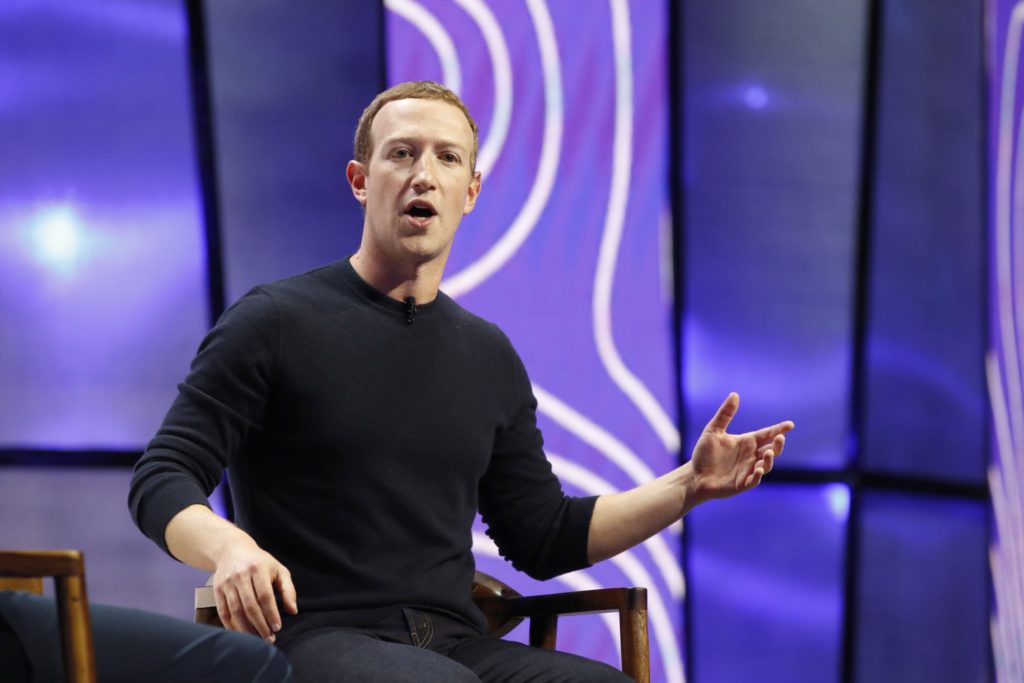
(Bloomberg) — The US Federal Trade Commission will continue to pursue a case personally against Meta Platforms Inc. Chief Executive Officer Mark Zuckerberg over the acquisition of a virtual reality app, a lawyer for the agency told the FTC’s in-house judge Friday. 

The agency has asked its in-house court to force both Meta and Zuckerberg to seek approval from the FTC before engaging in any future deals. The trial has been set for Jan. 19.

The agency sued Meta and Zuckerberg in July over the company’s proposed acquisition of Within Unlimited, the maker of the popular virtual reality fitness app Supernatural.

The case is playing out in two parallel venues: A California federal court has scheduled a six-day hearing in December to decide whether to stay the deal while the FTC pursues its case before the agency’s in-house judge.

At a hearing Friday in the in-house court, FTC Attorney Abby Dennis said the agency agreed to dismiss Zuckerberg from the federal case, but not the internal proceeding because it wants a broader legal remedy. The in-house complaint would block the Within deal as well as require Meta and Zuckerberg to provide advance notice and seek approval from the FTC for future mergers or acquisitions. 

Under US merger law, Meta only needs to notify the FTC and its sister agency, the Justice Department, when a deal is valued at $101 million or more. 

“The FTC is making meritless claims based on ideology completely divorced from commercial realities,” a Meta spokesperson said. “We will vigorously defend this deal in court and are confident the evidence will show that this deal will be good for people, developers, and the VR space more broadly.”

A 2020 House probe into Facebook found the company acquired nearly 100 companies in the previous decade, only one of which was subject to an in-depth FTC review. The FTC’s own study into acquisitions by Facebook and the four other large tech platforms found they bought or invested in more than 800 small companies that didn’t require merger notification or review.

Meta’s lawyer, Mark Hansen, said the company intends to ask the FTC to dismiss Zuckerberg from the internal agency proceedings. The company has also declined to offer a settlement to the FTC, he said.

“We believe the merger should be allowed and should go forward,” Hansen said. 

(Updates with Meta spokesperson’s comment in seventh paragraph.)

More stories like this are available on bloomberg.com

©2022 Bloomberg L.P.

What Executives Have to Say on the Economy, by the Numers

(Bloomberg) — The economic slowdown was the fastest growing topic discussed by S&P 500 executives for the second consecutive month, according to an analysis of earnings conference conference calls held in August. As leadership debated the severity of the downturn, inflation took center stage, and was the most popular topic this month behind only revenue, guidance and margins, as higher prices continue to have an effect on operations and speculation over what the Federal Reserve will do next moves shares. Company backlogs, general headwinds and solar were also discussed.

Read what S&P 500 executives had to say below:

  • Economic Slowdown (63 mentions, +933% year-over-year)
    • Loews Corp, Chief Executive Officer James S. Tisch: “I don’t foresee a deep and debilitating recession. Rather I can imagine that the slowdown will be relatively shallow, which is consistent with a full employment recession… So, overall I foresee a recession that I would characterize as benign. I have enough self-awareness to realize that I’m an optimist, but I consider myself a realistic optimist.” (8/1)
    • Vornado Realty Trust, Chief Executive Officer Steven Roth: “There are signs of a slowdown all around: a rapidly slowing housing market, falling consumer confidence and companies announcing hiring pauses or even layoffs. The inverted yield curve signals market participants expect a recession and the forward yield curve predicts rates will come back down within a couple of years. While we are protected by long-term leases with about 1,500 tenants, we do expect and are prepared for choppy conditions.” (8/2)
    • Marathon Oil Corp, Chief Executive Officer Lee Tillman, “The potential for a recession looms and American families are suffering. But the US energy renaissance, led by the shale revolution, has provided a measure of protection from the forced and more austere measures now being considered in Europe.” [However,] “we could be in for an extended period of elevated commodity prices globally, both for oil and natural gas.” (8/4)
  • Inflation (1,012 mentions, +140%)
    • Starbucks Corp, Interim Chief Executive Officer Howard D. Schultz: “While we are sensitive to the impact inflation and economic uncertainty are certainly having on consumers, its critically important that you all understand that we are not currently seeing any measurable reduction in customer spending or evidence of customers trading down.” (8/2)
    • Home Depot Inc., Chief Financial Officer Richard McPhail: “We find ourselves in a unique environment with many crosscurrents. We’re operating in a broad-based inflationary environment not seen in four decades while managing through constrained global supply chain conditions, all against the backdrop of monetary policy shifts intended to moderate demand. We also see engaged and resilient homeowners who have strong balance sheets, consumers spending more time in their homes and continued structural support for improvement project demand.” (8/16)
    • PVH Corp, Chief Financial Officer Zac Coughlin: “Revenue is lower than planned primarily due to an increasingly challenging macro environment which particularly effected our North America wholesale business as inflationary pressures weigh on consumer demand and our wholesale partners take a more cautious approach.” (8/31)
  • Backlog (452 mentions, +94%)
    • Caterpillar Inc., Chief Financial Officer Andrew Bonfield: “Overall, we are not seeing signs of slowing demand as order levels and backlog remain healthy. Our retail statistics, or sales to users, are normally strongly correlated to demand in a typical environment. However, the ongoing supply chain constraints continue to impact our ability to ship equipment.” (8/2)
    • Applied Materials Inc., Chief Executive Officer Gary E. Dickerson: “Resolving supply chain issues has required new levels of collaboration between our global teams suppliers and customers. While all of this hard work is yielding results, global supply chains remain stretched. Demand for Applied’s products is still higher than our ability to fulfill it and our backlog continues to grow.” (8/18)
    • Hewlett Packard Enterprise, Chief Executive Officer Antonio Neri: “New orders exceeded our expectations, despite finally starting to decelerate the growth rates, bringing our quarterly exit backlog to another record level. That is significant considering that for the previous four consecutive quarters we had grown orders 20% or more year-over-year. We continue to see robust consumer demand in the market and a high quality durable sales pipeline.” (8/30)
  • Headwinds (929 mentions, +85%)
    • Starbucks Corp, Chief Financial Officer Rachel Ruggeri: “Looking ahead however, the international segment may face near-term challenges. Given the prolonged lockdowns in China with limited mobility recovery in Q3, the headwinds now extended to Q4 as the market continues to recover. The current pace of recovery implies that China’s operating income contribution as a percent of global operating income may be reduced further than what we had previously anticipated to roughly a quarter of the contribution realized in a typical fiscal year. Outside of China, the increasing COVID cases around the world may damper the rapid growth we are seeing in many markets.” (8/2)
    • Principal Financial Group, Chief Executive Officer and President, Principal Global Patrick G. Halter: “I think the second half of 2022 obviously has macro headwinds. And as we talked to the managers, particularly on the private equity side, about their current market outlook, and the lagging nature of the return cycle, we could see some pullback clearly in alts performance and probably be below trend to what we’ve seen in the past.” (8/9)
    • Cisco Systems Inc., Chief Executive Officer Chuck Robbins: “While the component supply headwinds remain they have begun to show early signs of easing. The decisions we made and the multiple actions we have taken over the past two years are helping to improve our resiliency and will help offset cost inflation. These include adding new suppliers, leveraging alternative suppliers, redesigning hundreds of products to use alternative components with similar capability and targeted price increases, all of which position us for the future.” (8/17)
  • Solar (138 mentions, +82%)
    • WEC Energy Inc., Chief Executive Officer Scott J. Lauber: “Now you may recall our recent announcement about an adjustment that we made to our schedule of power plant retirements… We base this decision on two critical factors. First, tight energy supply conditions in the Midwest power market and expected delays in the delivery of solar panels and batteries, delays that will clearly affect the in-service states of renewable projects.” (8/2)
    • SolarEdge Technologies Inc., Chief Executive Officer Zvi Lando: “The topic of renewable energy and climate change has a lot of governments and leadership around the world busy. And what’s interesting is that there is, in countries that are strongly linked to fossil fuel like in the case of Saudi Arabia, a push from the leadership over there to implement renewable energies and solar in particular.” (8/2)
    • Dominion Energy Inc., Chief Executive Officer Bob Blue: “Let me touch on the solar supply chain. As we’ve discussed on prior calls, there continue to be challenges. Supply is still tight and prices for certain components are still up.” (8/8)

More stories like this are available on bloomberg.com

©2022 Bloomberg L.P.

Stocks Suffer Third Weekly Loss on Rate-Hike Woes: Markets Wrap

(Bloomberg) — US stocks suffered a third weekly loss after jobs data did little to alter views on the Federal Reserve’s next policy move.

The S&P 500 contended with its longest weekly losing streak since mid-June, as the central bank’s hawkish chorus grew louder in recent days. The index also ended Friday lower, erasing the gains it notched earlier in the session after the jobs report showed some signs of easing in a still-tight American labor market. A delay in the opening of a key gas pipeline to Europe bruised sentiment in the afternoon, ahead of a three-day weekend for American markets.

Treasuries rallied on Friday, led by short maturities. The policy-sensitive two-year yield ended the week nearly where it began, after topping 3.5% earlier.

The labor-market data on Friday add to a bevy of reports this week that validate the Fed’s assertion that the economy is robust enough to withstand more tightening. Risk assets have been under pressure since Fed Chair Jerome Powell made clear the central bank will raise rates further and keep them elevated until price gains slow. Despite the reassuring report, markets are still pricing in the likelihood of a three-quarters of a percentage point interest-rate hike this month.

“Unemployment remains relatively low, but the cause may be minimal labor force participation rather than a booming economy,” said Richard Flynn, managing director at Charles Schwab UK. “Investors will be mindful that jobs reports are a lagging indicator that are often strong heading into a recession. Indeed, broader economic indicators have been weakening recently.”

Meanwhile, in a massive blow to Europe, Russia’s Gazprom PJSC said its key gas pipeline to Europe can’t reopen as planned on Saturday as a new technical issue has been discovered. The news moves the region a step closer to blackouts, rationing and a severe recession.

Investors are already concerned about the European Central Bank possibly raising rates by three-quarters of a percentage point next week. That, combined with the restriction of natural gas supplies and escalating US-China tensions has worried investors, said Sam Stovall, chief investment strategist at CFRA Research.

Traders “don’t want to take extended long positions and thereby potentially be exposed over the long weekend,” he said.

Concern that rising rates will hurt growth has already weighed on markets, pushing global bonds into their first bear market in a generation. The Bloomberg Global Aggregate Total Return Index of government and investment-grade corporate bonds down more than 20% from a 2021 peak. 

Read More: Browbeaten Stock Bulls Wilt in the Face of Rising Fed Hostility

Some of the main moves in markets:

Stocks

  • The S&P 500 fell 1.1% as of 4 p.m. New York time
  • The Nasdaq 100 fell 1.4%
  • The Dow Jones Industrial Average fell 1.1%
  • The MSCI World index fell 0.8%

Currencies

  • The Bloomberg Dollar Spot Index was little changed
  • The euro was little changed at $0.9952
  • The British pound fell 0.3% to $1.1508
  • The Japanese yen was little changed at 140.25 per dollar

Bonds

  • The yield on 10-year Treasuries declined five basis points to 3.20%
  • Germany’s 10-year yield declined four basis points to 1.53%
  • Britain’s 10-year yield advanced four basis points to 2.92%

Commodities

  • West Texas Intermediate crude rose 0.5% to $87 a barrel
  • Gold futures rose 0.6% to $1,720.30 an ounce

More stories like this are available on bloomberg.com

©2022 Bloomberg L.P.

Twitter Asks for Musk to Turn Over Texts From First Six Months of 2022

(Bloomberg) — Twitter Inc. is asking a judge to order Elon Musk to turn over all of his text messages from the first six months of 2022, saying the billionaire wasn’t cooperating in exchanging evidence ahead of trial in the fight over his $44 billion buyout offer.

The social-media company submitted the public proposed order in a Friday court filing in Delaware attached to a sealed request for sanctions against Musk and his lawyers. 

The firm wants Delaware Chancery Judge Kathaleen St.J. McCormick to order Musk to produce all his text messages from Jan. 1 until July 8, according to court filings. Twitter also wants texts from top Musk aide Jared Birchall for the same period. Birchall runs Musk’s family office and is thought to have been deeply involved in setting up financing for the Twitter buyout.

Twitter’s attorneys contend Musk and his attorneys failed to act in “good faith” when it comes to producing the texts as part of pre-trial information exchanges tied to its lawsuit seeking to force him to consummate the $54.20-per-share deal. The platform and Musk have subpoenaed more than 100 banks, hedge funds and individuals to gather ammuntion for an Oct. 17 trial in Wilmington, Delaware.

Musk’s lawyers Friday denied any wrongdoing connected to pre-trial information exchanges. They contend Twitter launched a campaign to hide witnesses with detailed information on the number of spam and robot accounts embedded in the platform’s customer based. Musk has made questions about those accounts the centerpiece of arguments he was justified in walking away from the deal.

“As Twitter’s efforts to hide information and witnesses have unraveled, they are now trying to distract with this nonsense,” Alex Spiro, one of Musk’s lawyers, said in an emailed statement.

According to the proposed order, Twitter also wants McCormick to order Musk to sit for a deposition about his legal team’s responses to Twitter’s questions about the deal.

The case is Twitter v. Musk, 22-0613, Delaware Chancery Court (Wilmington)

(Updates with comment from Musk’s lawyer starting in fifth paragraph)

More stories like this are available on bloomberg.com

©2022 Bloomberg L.P.
Amazon Closes, Abandons Plans for Dozens of US Warehouses

(Bloomberg) — Amazon.com Inc., determined to reduce the size of its sprawling delivery operation amid slowing sales growth, has abandoned dozens of existing and planned facilities around the US, according to a closely watched consulting firm. 

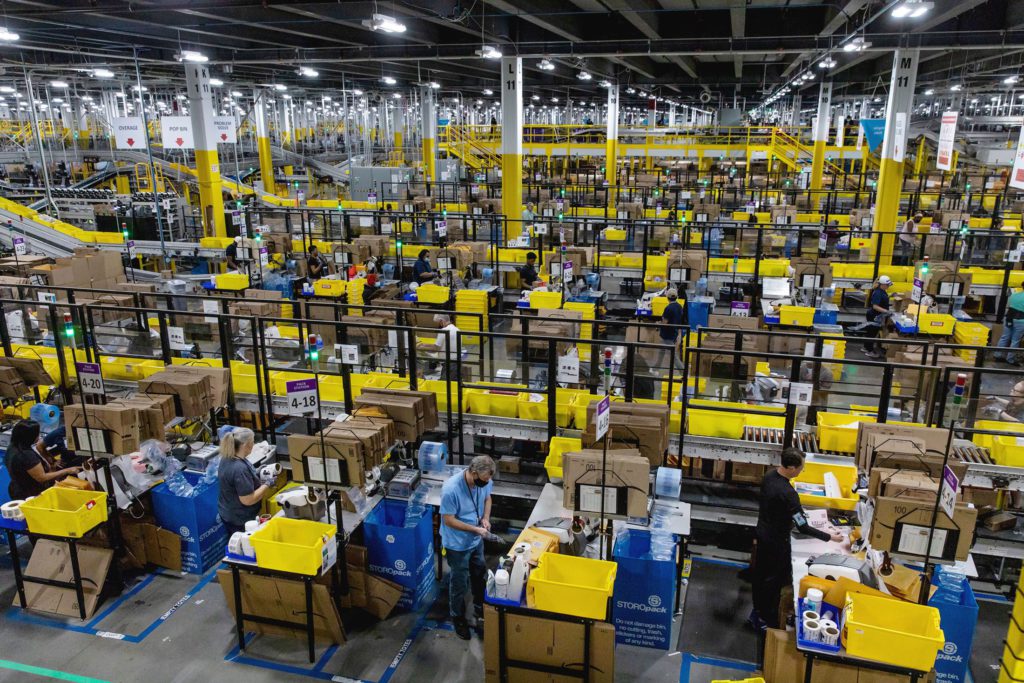
MWPVL International Inc., which tracks Amazon’s real-estate footprint, estimates the company has either shuttered or killed plans to open 42 facilities totaling almost 25 million square feet of usable space. The company has delayed opening an additional 21 locations, totaling nearly 28 million square feet, according to MWPVL. The e-commerce giant also has canceled a handful of European projects, mostly in Spain, the firm said. 

Just this week Amazon warned officials in Maryland that it plans to close two delivery stations next month in Hanover and Essex, near Baltimore, that employ more than 300 people. The moves are a striking contrast with previous years, when the world’s largest e-commerce company typically entered the fall rushing to open new facilities and hire thousands of workers to prepare for the holiday shopping season. Amazon continues to open facilities where it requires more space to meet customer demand. 

“There remains some serious cutting to do before year-end — in North America and the rest of the world,” said Marc Wulfraat, MWPVL’s founder and president. “Having said this, they continue to go live with new facilities this year at an astonishing pace.”

Maria Boschetti, an Amazon spokesperson, said it’s common for the company to explore multiple locations at once and make adjustments “based upon needs across the network.” 

“We weigh a variety of factors when deciding where to develop future sites to best serve customers,” she said in an emailed statement. “We have dozens of fulfillment centers, sortation centers and delivery stations under construction and evolving around the world.” 

The Maryland closings are part of an initiative to shift work to more modern buildings, Amazon says. “We regularly look at how we can improve the experience for our employees, partners, drivers and customers, and that includes upgrading our facilities,” Boschetti said. “As part of that effort, we’ll be closing our delivery stations in Hanover and Essex and offering all employees the opportunity to transfer to several different delivery stations close by.”  

Chief Executive Officer Andy Jassy has pledged to unwind part of a pandemic-era expansion that saddled Amazon with a surfeit of warehouse space and too many employees. The company has typically weaned its ranks of hourly workers by leaving vacant positions open, slowing hiring and tightening disciplinary or productivity standards. But warehouse closings are also part of the mix, and workers are bracing for more. During the second quarter, Amazon’s workforce shrank by roughly 100,000 jobs to 1.52 million, the biggest quarter-to-quarter contraction in the company’s history. 

The Seattle company has also been seeking to sub-lease at least 10 million square feet of warehouse space, Bloomberg reported in May. 


When homebound shoppers stampeded online during the pandemic, Amazon responded by doubling the size of its logistics network over a two-year period, a rapid buildout that exceeded that of rivals and partners like Walmart Inc., United Parcel Service Inc. and FedEx Corp. For a time, Amazon was opening a new warehouse somewhere in the U.S. roughly every 24 hours. Jassy told Bloomberg in June that the company had decided in early 2021 to build toward the high end of its forecasts for shopper demand, erring on the side of having too much warehouse space rather than too little. 

Wulfraat said that most of the closings announced this year are delivery stations, smaller buildings that hand off already packaged items to drivers. Facilities that have been canceled include several planned fulfillment centers, giant warehouses containing millions of items. MWPVL estimates that Amazon operates more than 1,200 logistics facilities, large and small, around the US.

More belt-tightening could complicate Amazon’s already fraught relations with organized labor. Earlier this year, an upstart labor union started by a fired Amazon worker won a historic victory at a company warehouse in Staten Island, New York. A federal labor official on Thursday rejected Amazon’s bid to overturn the result. Last month, workers at an Amazon facility near Albany, New York, filed a petition to hold a union election there. 

How much overcapacity Amazon needs to work through is hard to gauge, and some analysts believe the extra space will come in handy during the Christmas holiday season. 

(Updated with additional Amazon comment beginning in the fifth paragraph.)

More stories like this are available on bloomberg.com

©2022 Bloomberg L.P.

Self-Driving Tech Company Floats Possible Sale to Apple or Microsoft

(Bloomberg) — Aurora Innovation Inc.’s chief executive officer recently laid out a range of options for the self-driving company to respond to worsening market conditions and partners pushing out timelines, including a possible sale to Apple Inc. or Microsoft Corp., according to a document seen by Bloomberg.

Chris Urmson, who co-founded Aurora after running Google’s self-driving car project, also outlined cost cuts and floated measures including taking the company private, spinning off or selling assets and pursuing a small capital raise in a memo labeled “board discussion pre-read” and dated Aug. 3. Urmson inadvertently sent this to staff and asked them on Aug. 9 not to open it, the document shows.

A representative for Aurora confirmed the authenticity of the memo and said the company is considering ways to stay competitive in a challenging marketplace.

“Given the current macro conditions, every company should be going through the exercise of evaluating its options and long-term strategy,” a company spokesperson said Friday in an email. “We think that thinking through things like this is a positive sign and a mark of good governance.”

Aurora has struggled since going public by merging with a blank-check company late last year in a deal that left the company with more than $1.8 billion in cash. Urmson, 46, wrote in a memo that while Aurora had cut back on spending to extend its “runway” to the middle of 2024, the company needed to take action to make it through the market downturn and challenges working with manufacturers he didn’t name.

“Despite our best efforts to help our OEM partners meet our original schedule, their timelines have shifted out,” Urmson wrote, referring to original equipment manufacturers. “We do have increased confidence in their new timelines given the selection and awarding of key suppliers and the attachment of key personnel to the projects.”

Shares of the company, which has a market capitalization of about $2.9 billion, rose as much as 32% on the news. But the stock was down 81% this year through Thursday’s close, a reflection of depressed investor sentiment as Aurora has faced setbacks. Last month, the company said it would delay delivery of  “scalable” driverless truck technology until 2024.

Acquisition for Cash?

Another strategic option Urmson suggested in the memo was to consider acquiring companies in the sector with $150 million to $300 million of cash and aggressively cut costs to boost Aurora’s balance sheet. He wrote that Allen & Co. had been doing some analysis of this path.

Urmson gave a breakdown of personnel measures to consider including freezing hiring, laying off employees, aggressively managing poor performers and more intensively reorganizing the company to avoid duplication. He also listed cash-saving measures such as eliminating an equity grant for himself, zeroing-out corporate donations and discontinuing lunch-time food service.

Many electric-vehicle and self-driving startups that once raised cash easily through share listings and mergers with special purpose acquisition companies have fallen on hard times due to execution issues and the slumping stock market. The Aurora document details the extent to which a startup with still-in-development technology is prepared to go to access funding.

Urmson wrote that while the company’s leadership is “disinclined to sell at this time,” that could change with a competitive offer from a persuasive strategic buyer.

“Given our current stock price we should be an appealing target for any entity looking to own the future of automated driving,” Urmson wrote. “Of potentially appealing landing places, there are only a few: Apple, Microsoft, or potentially a Tier 1,” referring to a large auto-parts supplier.

Delayed Target

This year has been challenging for the Pittsburgh-based company. Aurora has burned through about $230 million in cash as it’s developed self-driving systems and delayed its target to have autonomous freight trucks on the road by a year to 2024.

“We don’t expect that a conventional fundraising opportunity of sufficient scale to add a year of runway to the company will present itself over the next six months,” Urmson wrote. “While we continue to have ample runway, it’s important that we do what we can to extend that runway.”

Among its bigger potential moves, Aurora could take the company private if it can find a partner who would anchor a $1.5 billion funding round, Urmson wrote. Aurora could also potentially sell its lidar business for $500 million to $1 billion, he said.

The company doesn’t expect to be able to renegotiate its contract for cloud computing, its biggest expense after employee costs, in the near term. The CEO said the company should consider an annual attrition rate as high as 10% that targets underperformers, which would mean cutting as many as 150 people in 2022.

Urmson could surrender his non-cash bonus and save $2.4 million to set the right tone, or the memo said Aurora could cut food service for employees and save $21 million.

The startup also considered selling a building or its test track, as well as offering employees discounted shares in a move that would raise $25 million.

(Updates with market capitalization in seventh paragraph and memo details from 16th paragraph.)

More stories like this are available on bloomberg.com

©2022 Bloomberg L.P.

UK Edges Closer to Blocking Chinese Takeover of Chip Plant

(Bloomberg) —

The UK is leaning toward restricting or blocking a Chinese company’s takeover of its biggest microchip factory, Newport Wafer Fab, after agreeing to extend a probe into the purchase, according to people familiar with the matter.

Unwinding the deal, more than a year after it was signed, would underscore an increasing crackdown on Chinese investment. Liz Truss, front-runner in the race to replace Boris Johnson as prime minister, has branded Chinese tech giants a security risk and vowed to reduce the UK’s dependence on China. Rishi Sunak, her opponent in the contest, has named China the “biggest long-term threat to Britain.”

Late Friday, Business Secretary Kwasi Kwarteng agreed to an additional extension with Nexperia Holding NV, owned by China’s Wingtech Technology Co., “to consider whether to make a final order under the National Security and Investment Act and, if so, what provision a final order should contain,” a spokeswoman for the Department for Business, Energy and Industrial Strategy said in response to a query from Bloomberg.

A final decision is expected within weeks, according to people familiar with the discussions. The delay indicates the transaction will be subject to remedies or a total veto, two people said, asking not to be named because the talks are private. 

A representative for Nexperia declined to comment. The Dutch subsidiary of Wingtech hit back at suspicions it was under the sway of the Chinese state in an interview with Bloomberg last year. 

No decision has been taken, and on Monday, the Conservative Party will choose a new prime minister who is expected to appoint a new Business Secretary, the minister responsible for the final decision. 

The National Security and Investment Act came into effect in January and allows ministers to block or retroactively pick apart foreign takeovers in sensitive industries.

Newport Wafer Fab makes the silicon wafers on which microchips are etched. Once assembled the chips are largely used in simple applications like power switches, many of which go into cars. The facility has passed through a series of international owners since it was founded in 1982, and was bought by Nexperia in 2021 from former manager Drew Nelson. 

Other possible buyers may be waiting in the wings if the deal is blocked, including a consortium led by Ron Black, the former chief executive officer of British chip design firm Imagination Technologies Group Ltd.

More stories like this are available on bloomberg.com

©2022 Bloomberg L.P.

Parler App Returns to Google Store After Ban in January 2021

(Bloomberg) — The Parler social media platform returned to the Google Play app store Friday after a suspension for violating its policies in January 2021 following the US Capitol insurrection.

The service, which was embraced by conservatives who departed Twitter over allegations of political censorship, was ousted from the app stores of both Google and Apple Inc. over concerns that it helped fuel violence at the Capitol. Parler returned to the Apple platform in May 2021, but it has remained absent from Google’s main app store until now.

Parler has agreed to modify its app to moderate content and remove posts that incite violence, Google said in a statement. All apps on the Google Play store must “implement robust moderation practices that prohibit objectionable content,” the company said. That includes an in-app system for reporting objectionable user-generated content and removing and blocking abusive users.

“We are pleased that Parler is back on Google Play as a native app,” said Samuel Lipoff, chief technology officer at Parler. Android users had previously been able to download a version of the app available outside of the Play store. 

Parler is among a growing group of so-called alt-tech sites that aim to give conservatives a forum to share views they feel are silenced on mainstream platforms. But the apps have struggled at times to fulfill their users’ expansive definition of free speech while complying with Apple and Google policies.

One of the most prominent, Donald Trump’s Truth Social, has been available in the Apple App Store since February but has yet to launch in the Google Play store. Earlier this week, Google said it had notified Truth Social of “several violations of standard policies in their current app submission and reiterated that having effective systems for moderating user-generated content is a condition of our terms of service for any app to go live on Google Play.”

Trump Media & Technology Group, which runs Truth Social, said that it’s been working in “good faith” to comply with with Google’s rules “without compromising our promise to be a haven for free speech.”

(Updates with Parler’s statement in fourth paragraph.)

More stories like this are available on bloomberg.com

©2022 Bloomberg L.P.

Stocks Decline on Fed Concerns, European Gas Woes: Markets Wrap

(Bloomberg) — Stocks fell, with major indexes headed for a third weekly decline, after jobs data did little to alter views on the Federal Reserve’s next policy move. A delay in the opening of a key gas pipeline to Europe also weighed on sentiment ahead of a three-day weekend for American markets.

The S&P 500 fell as much as 1% in the afternoon. It had climbed as much as 1.3% after employers added 315,000 jobs last month, slightly above what economists expected. The two-year yield tumbled below 3.5% as the jobs report showed wage growth slowed, potentially signaling some softening in labor demand. 

The labor-market data add to a bevy of reports this week that validate the Fed’s assertion that the economy is robust enough to withstand more tightening. Risk assets have been under pressure since Fed Chair Jerome Powell made clear the central bank will raise rates further and keep them elevated until price gains slow. Despite the reassuring report, markets are still pricing in the likelihood of a three-quarters of a percentage point interest-rate hike this month.

And in a massive blow to Europe, Russia’s Gazprom PJSC said its key gas pipeline to Europe can’t reopen as planned on Saturday as a new technical issue has been discovered. The news moves the region a step closer to blackouts, rationing and a severe recession.

Investors are already concerned about the European Central Bank possibly raising rates by three-quarters of a percentage point next week. That, combined with the restriction of natural gas supplies and escalating US-China tensions has worried investors, said Sam Stovall, chief investment strategist at CFRA Research.

Traders “don’t want to take extended long positions and thereby potentially be exposed over the long weekend,” he said.

Concern that rising rates will hurt growth has already weighed on markets, pushing global bonds into their first bear market in a generation. The Bloomberg Global Aggregate Total Return Index of government and investment-grade corporate bonds down more than 20% from a 2021 peak. 

Some of the main moves in markets:

Stocks

  • The S&P 500 fell 0.7% as of 2:28 p.m. New York time
  • The Nasdaq 100 fell 1.1%
  • The Dow Jones Industrial Average fell 0.6%
  • The MSCI World index fell 0.8%

Currencies

  • The Bloomberg Dollar Spot Index fell 0.2%
  • The euro rose 0.2% to $0.9966
  • The British pound fell 0.3% to $1.1514
  • The Japanese yen was little changed at 140.10 per dollar

Bonds

  • The yield on 10-year Treasuries declined six basis points to 3.20%
  • Germany’s 10-year yield declined four basis points to 1.53%
  • Britain’s 10-year yield advanced four basis points to 2.92%

Commodities

  • West Texas Intermediate crude rose 1% to $87.51 a barrel
  • Gold futures rose 0.9% to $1,724.90 an ounce

More stories like this are available on bloomberg.com

©2022 Bloomberg L.P.

Close Bitnami banner
Bitnami