
Bloomberg

Nidec Elevates Kobe as Seki, Once Seen as Next CEO, Resigns

(Bloomberg) — Japanese electric-motor giant Nidec Corp. named Vice Chairman Hiroshi Kobe as new chief operating officer and president, putting him in line to potentially succeed founder Shigenobu Nagamori, who has struggled to share control of the company. 

Kobe will move into the role effective Sept. 3, while current president and COO Jun Seki has resigned, effective immediately, the company said Friday. 

The appointment comes about a week since Seki was said to be leaving Nidec after less than three years at the firm. Nagamori, who demoted Seki from chief executive officer earlier this year, is planning a management overhaul, people familiar with the matter told Bloomberg News. It follows months of Nagamori publicly disparaging Seki and questioning his ability to lead the manufacturer he started in a shack in 1973.

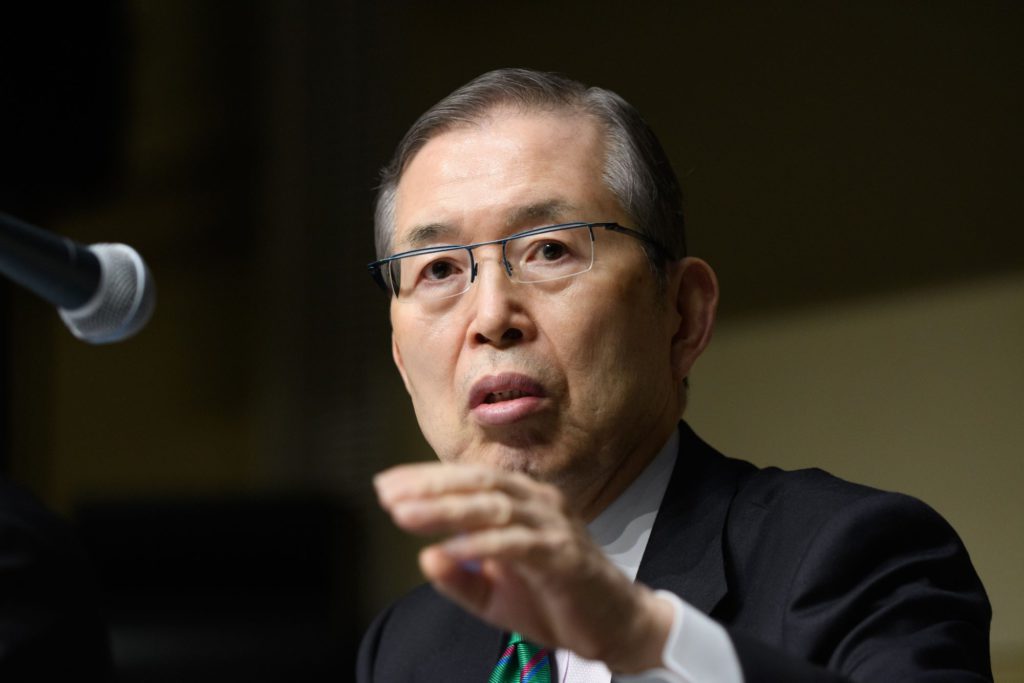
At a briefing Friday, Nagamori said Seki couldn’t deliver what he’d expected from him, and claimed that he was was wrong to look outside the company for a successor, calling it a “big mistake.” 

“Seki made great efforts, but the auto business kept deteriorating under him,” Nagamori said. “I thought he’d be good because he’s familiar with the industry which I would like to focus on in the future, but he couldn’t deliver what I had expected from him. I came to realize that our staff are much better than external personnel.” 

Nagamori, 77, took back the CEO role in April after souring on Seki, whom he hired from Nissan Motor Corp. in early 2020. 

Given all that has transpired, Kobe, 73, will likely face multiple challenges. His place as president will only be short term, Nagamori said, adding that the next president will be picked by April 2024. 

“I have 55 years of relationship with Kobe, we know each over very well,” he said. “I have always been tough on him, but he never told me he hates me or wants to quit and leave. I have full trust in him.”

Nagamori has struggled for years to find someone to succeed him at what is the world’s top supplier of motors for everything from computer hard drives to power plants. The founder said that he took back the reins from Seki because of his lackluster performance, saying in an interview with Bloomberg, that he “was in agony” every day as the manufacturer’s share price declined. 

Nidec is facing a worsening global economic outlook and needs to prepare by putting in place leaders with deep experience within the company, Nagamori is said to have told senior managers. Caught up in global supply chain turmoil and pandemic, Nidec’s shares are down 33% this year.

“Kobe understands every part of the company and may able to operate as Nagamori expects but due to his age, investors will remain skeptical about the company’s fate in terms of a successor,” Morningstar analyst Kazunori Ito said. “Nagamori needs to understand the company’s lackluster share performance is due to concerns over succession.”

In its most recent earnings, Nidec reported operating profit of 44.7 billion yen ($318 million) for the fiscal first quarter through June, compared with analysts’ average projection of 43.5 billion yen. Revenue rose 21% to 540.4 billion yen, beating the average prediction of 510 billion yen.  

At Friday’s briefing, Nagamori said Kobe was the best choice to help shore up Nidec’s share price and stabilize the company, and he said investors needn’t worry about succession issues. 

Nidec’s travails reflect a wider dilemma across Japan’s corporate landscape, as leaders who came of age during the country’s economic boom continue to hold on well into retirement age. It’s not the only company grappling with succession. Despite promising to retire at 65, Uniqlo founder Tadashi Yanai, now 73, still runs Fast Retailing Co. with a tight grip. Masayoshi Son, SoftBank Group Corp.’s 65-year-old founder and CEO, has parted ways with several potential successors in high-profile exits in recent years.

Read more: A Startup Offers Japan’s Aging CEOs a Worry-Free Succession Plan 

In his interview with Bloomberg in July, Nagamori said his goal was to see Nidec’s share price beat its 2021 record of 15,175 yen. The shares were at 9,019 yen Friday. 

Once Nidec’s share price hits a new high, the founder said he’ll look to pass on the CEO post and transition into the role of honorary chairman.

But at the same time, Nagamori said as long as he’s living, he can’t accept handing off Nidec and seeing it stumble. “I built this company from the ground up and Nidec is like a part of my body,” he told Bloomberg. “If the company were to become a failure it’d be like a physical wound for me.”

Indeed, what comes after Nagamori steps down is of key interest to investors in the company. For years, analysts have been warning that a bumpy transition of power would mean Nidec could lose its “Nagamori premium.”

Nagamori said in July he’s given up on finding any one individual capable of filling his shoes. He intends to break up his responsibilities between a number of people, he said. “At this level, there isn’t a person in Japan who can operate this company as CEO alone,” Nagamori said, “it needs to be managed by a group.” 

Recently, Nidec has moved to significantly bolster its recruiting activities, poaching prominent executives including Mitsuya Kishida, the former head of Sony Group Corp.’s mobile communications business, and Shinya Yoshida an executive vice president at Mitsubishi Corp. 

With regard to Seki, Nagamori in July said the former CEO had not done enough to learn and embody his methods of management since joining the company. 

Nidec has a basic policy outlining that the person who contributes most to the company’s profit will claim the top job, Nagamori said. “You may think this is an unsparing company but it’s really the proper way,” he said. “It’s a meritocracy.”

(Updates with comments from Nagamori at briefing.)

More stories like this are available on bloomberg.com

©2022 Bloomberg L.P.

Crypto Firms Are Still Investing Big in Sports

  • Listen to Bloomberg Crypto on the iHeartRadio App
  • Listen to Bloomberg Crypto on Apple Podcasts
  • Listen to Bloomberg Crypto on Spotify  

(Bloomberg) — If you’re a fan of the Chelsea football team, then you might have already spotted a curious little whale on the sleeves of Raheem Sterling and his teammates. The unassuming logo is part of a £20 million ($23 million)-a-year deal between the soccer club and the cryptocurrency platform WhaleFin. And it’s a big departure from the team’s previous sponsor Hyundai Motor, whose brand logo was featured on Chelsea jerseys for years. 

Crypto companies have spent more than $2 billion on sports advertising around the world. The NBA, Major League Baseball, Formula 1, and even the Drone Racing League have crypto sponsors. But in a market downturn, how long will these big investments in sports last? 

In this episode, Crypto Senior Editor Anna Irrera is joined by Bloomberg reporter Kim Bhasin to discuss the return on investment when it comes to crypto advertising.

Follow us on Twitter @crypto, and subscribe to the Bloomberg Crypto Newsletter at https://bloom.bg/cryptonewsletter

More stories like this are available on bloomberg.com

©2022 Bloomberg L.P.
Shenzhen Gets Antsy as City Tries to Quell Lockdown Rumors

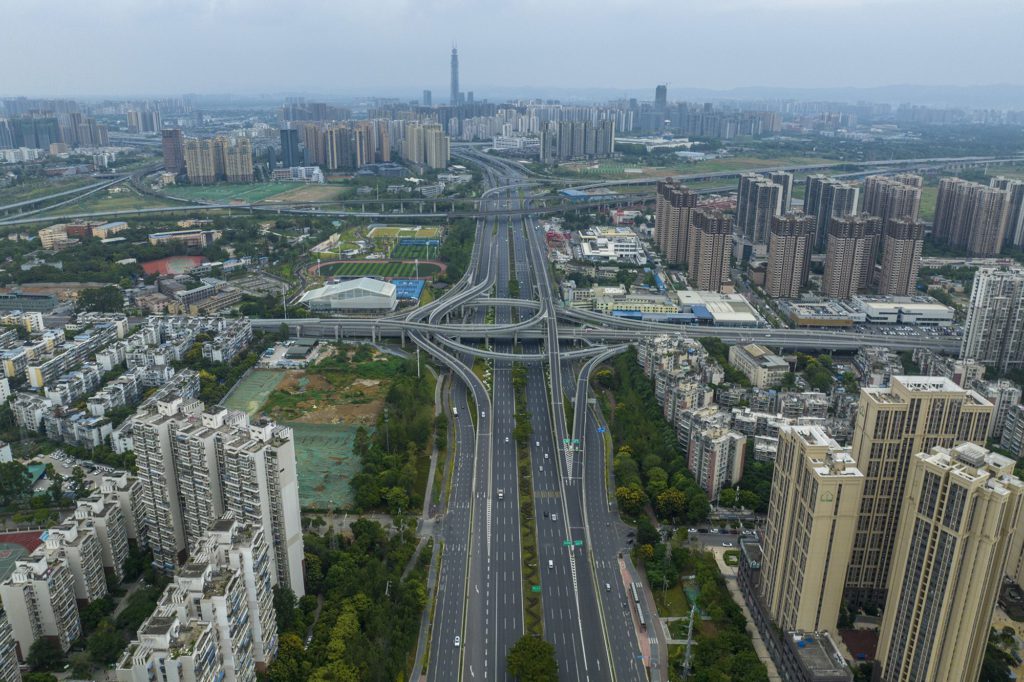
(Bloomberg) — Rising Covid-19 cases have residents of China’s technology hub of Shenzhen fearing their second city-wide lockdown this year, even as officials seek to quash such rumors fueled by the shutdown of another megalopolis to the west. 

Video on Chinese social media showed scenes of panic buying, with at least seven of Shenzhen’s 10 districts introducing curbs, among them the closure of entertainment venues and restaurants. Wide swaths of the Futian and Luohu districts, where Covid cases have been found, have been locked down, with residents ordered to stay at home. Those in other districts have been told to avoid gatherings and stay home as much as possible.  


The full lockdown Thursday night of Chengdu, which is also experiencing a worsening virus outbreak, fueled concerns, spurring Shenzhen’s anti-epidemic task force to say some of the restrictions were being misconstrued. They asked the city of almost 18 million people — home to the headquarters of tech giants Tencent Holdings Ltd. and Huawei Technologies Co. — to remain calm and go about their daily lives. 

Chengdu Fears Shanghai Repeat as Cities Fall to Xi’s Covid Zero

The agency said residents must continue to monitor official announcements on the latest Covid guidelines, according to a notice from the city administration.

The anxiety in Shenzhen, which experienced a seven-day city-wide lockdown in mid-March, underscores how China’s enduring Covid Zero policy is keeping the nation on edge almost three years after the first coronavirus case emerged in Wuhan. 

Strict Measures

Though China is seeing far fewer infections than other countries that now treat Covid as endemic, Beijing is continuing with a strategy of quashing the virus. The strict control measures are disrupting the economy and leading to social unrest, with protests and complaints common during the grueling lockdown of Shanghai during April and May. 

Situated just across the border from Hong Kong, Shenzhen was one of the first places in China to use so-called closed loop systems as a way of getting factories moving again despite lockdowns. The systems are now being deployed in Chengdu, as the city’s 21 million residents are told to stay in their homes. 

IPad Maker, VW Set Up Factory Bubbles as Chengdu Locks Down

Foxconn Technology Group, the largest assembler of Apple Inc. devices, said in a statement Friday that all its major sites in Shenzhen were operating normally. A plant that makes iPads in Chengdu, however, is operating under a closed loop, according to a person familiar with the decision. 

Tencent said it postponed its annual flagship digital ecosystem summit, originally scheduled for Sept. 15 and 16 in Shenzhen, due to Covid.

A video posted on social media showed workers at what is described as a company supermarket for Shenzhen-based carmaker BYD Co. rushing to buy food and queuing for groceries. A representative for BYD didn’t immediately respond to a request for comment. 

Lockdown Risk High

The risk of another city-wide lockdown in Shenzhen is considerable. The metropolis last introduced strict curbs after discovering 29 cases. 

The latest data showed 87 new cases for Thursday, up from 62 the previous day, with most discovered in quarantine. China requires all positive Covid cases and their close contacts to go into mandatory isolation, largely in makeshift hospitals operated by the state. Nationwide, there were 1,855 Covid cases reported for Thursday, down from 1,903 the day before. China’s infections have dropped from a peak of 3,400 in mid-August, but have spread to 25 out of 31 provinces and regions.  

China has also locked down cities days after assuring people such moves weren’t being planned. This was the case in Shanghai and in Chengdu. 

A Chengdu man surnamed Yu said online Aug. 29 that the city would go into lockdown, triggering panic-buying by residents. Officials said the post was false, and detained Yu for 15 days, fining him 1,000 yuan ($145). Two days later, a city-wide lockdown was imposed. 

(Updates with signs of panic-buying in second paragraph and Tencent summit in sixth.)

More stories like this are available on bloomberg.com

©2022 Bloomberg L.P.
Foxconn, VW Start Factory Bubbles to Cope With Chengdu Lockdown

(Bloomberg) — Volkswagen AG and Foxconn Technology Group are keeping their workers on-site in their factories in Chengdu after the Chinese metropolis locked down its 21 million residents to contain a Covid-19 outbreak.

The German automaker’s factory, jointly operated with its local partner China FAW Group Co., entered a so-called “closed loop system” Thursday evening to maintain production, a company representative said on the phone on Friday, without elaborating. Foxconn, the largest assembler of Apple Inc. devices, is also adopting the method at its facility that makes iPads there, according to a person familiar with the decision. 

First used during the Beijing Winter Olympics as a way of keeping athletes and support staff separate from the wider population, closed loop, or factory bubble, is a China invention used to keep its economy running amid punishing efforts to stamp out Covid’s spread. Closed loops typically require workers to travel from on-site accommodation to the factory and back, strictly avoiding contacts with outsiders, and be tested regularly for Covid. Companies such as Tesla Inc. have even kept their workers sleeping on the floor during the Shanghai lockdown earlier this year.

While the loops have allowed some supply chains to continue operating amid lockdowns, they have also created problems of their own, like workers revolting over poor living and working conditions. The system has also been unable to prevent widespread disruption to global supply chains from the strictures of Covid Zero.

Massimo Bagnasco, chair of the southwest China chapter, European Union Chamber of Commerce in China, said government guidance is that a company can operate in a closed loop system if it’s considered important to the community. In addition, businesses would have to satisfy local authorities that they can successfully manage the loop in a way that wouldn’t pose a threat to public health.

“Yesterday was kind of a messy time,” he said, adding a large majority of his members won’t be able to operate under the loop system as they may not belong to a category that’s viewed as fundamental to daily life. “Everyone was trying to understand what they could do from an operational point of view of their business, as well from the individual point of view.”

Chengdu, the capital of Sichuan province, is the biggest city to shut down since Shanghai’s bruising two-month lockdown starting end-March. It also functions as a manufacturing hub in southwestern China for companies including Geely Automobile Holdings Ltd. and Toyota Motor Corp. 

Volvo Car AB’s Sichuan plant, now under the parent group of Geely, has suspended production due to the lockdown. The parent company said it would closely monitor the situation. In the meantime, Hitachi Ltd.’s two Chengdu plants that manufacture elevators and escalators are operating at reduced rates due to an order from authorities, Ryuhei Tanaka, a spokesman for the Japanese company said by phone.

The entire city of Chengdu will undergo four days of mass testing starting Thursday evening. The extent of the economic dislocation depends on the duration of the lockdown, which city officials haven’t yet disclosed. China’s economy is bracing for more pain as the city, which has been just hit by severe drought and floods in recent weeks, makes up 1.7% of China’s national gross domestic product. 

(Updates with EU business chamber official’s comment in fourth paragraph. An earlier version of the story was corrected to remove reference to Tanaka Co. in fifth paragraph.)

More stories like this are available on bloomberg.com

©2022 Bloomberg L.P.
World-Beating India Stocks Just Pipped Taiwan in EM Index Weight

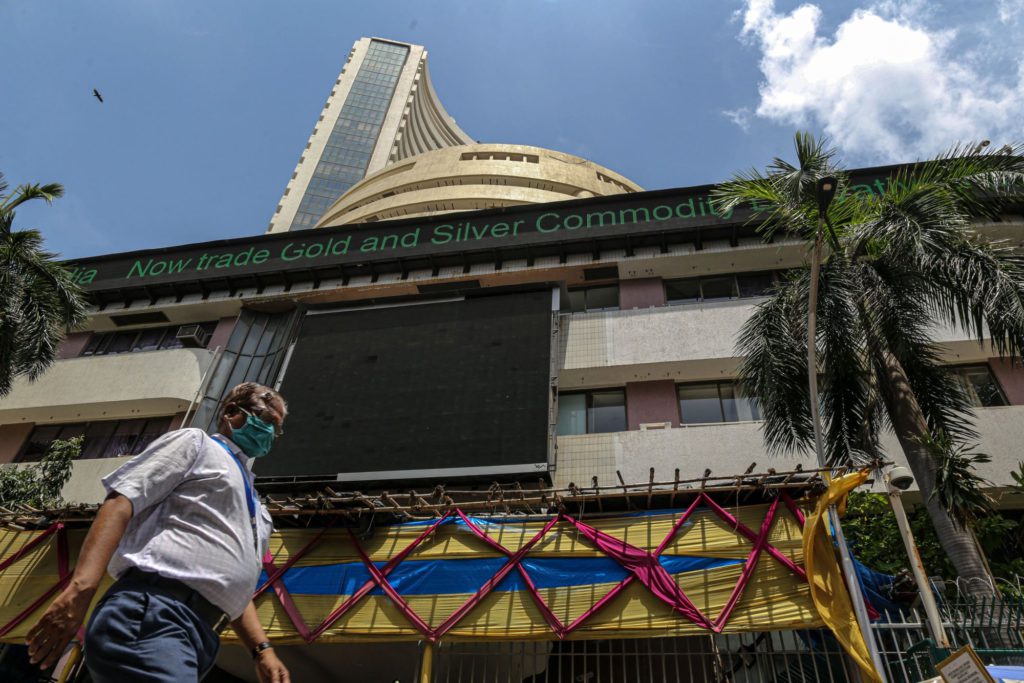
(Bloomberg) — A sharp rebound in Indian stocks this quarter has just seen their weighting rise to the second spot in the MSCI Emerging Markets Index, trailing only China’s.

With 108 members, India’s country weight stands at 14.483% as of end-August, according to data compiled by Bloomberg. That’s a whisker above 14.480% for Taiwan, which has 84 companies in the MSCI EM gauge, including the most-weighted Taiwan Semiconductor Manufacturing Co. China continues to dominate with about a third of the index weighting.

India’s S&P BSE Sensex has jumped 11% this quarter, the world’s best performance among national benchmarks in countries with a stock market value of at least $1 trillion, data compiled by Bloomberg show.

Driven by a pandemic-fueled retail investing boom, Indian stocks were the world’s best performers between early 2020 and October 2021. Thereafter, rising concerns about aggressive rate hikes by the Federal Reserve caused foreign investors to withdraw a record $33 billion from local shares in the nine months through June.

READ: Roaring India Stock Market on Track to Overtake U.K.’s in Value

Overseas funds have returned strongly this quarter, pumping $7.6 billion and supercharging the market. The Sensex is now less than 5% away from an all-time high reached in October.

There has been a big variance in China and India weightings in the EM gauge over the past two years as their market performance diverged — with a regulatory crackdown and stringent Covid curbs causing investors to flee Chinese stocks. While China’s weighting has fallen 9 percentage points since Aug. 2020, India’s has jumped more than 6 points, the data show.

READ: Airline Deal Burnishes India Equity Appeal Amid China Crackdown

“Economic impact of China’s lockdown and the zero-Covid policy is being seen now, while India is emerging stronger, month-by-month,” said Rakhi Prasad, an investment manager at Alder Capital. “India’s weight in the emerging markets can be higher, but how much it goes from here will depend on its economy’s performance.”

READ: India’s GDP Expands Most in a Year Amid Signs Pace Will Slow (2)

More stories like this are available on bloomberg.com

©2022 Bloomberg L.P.
A Hot Jobs Report Could Send Bitcoin to $15,000, Hedge Fund Says

(Bloomberg) — A stronger-than-expected US jobs report on Friday could send convulsions through cryptocurrencies and push Bitcoin to as low as $15,000, according to a hedge fund that dumped much of its crypto holdings in late August. 

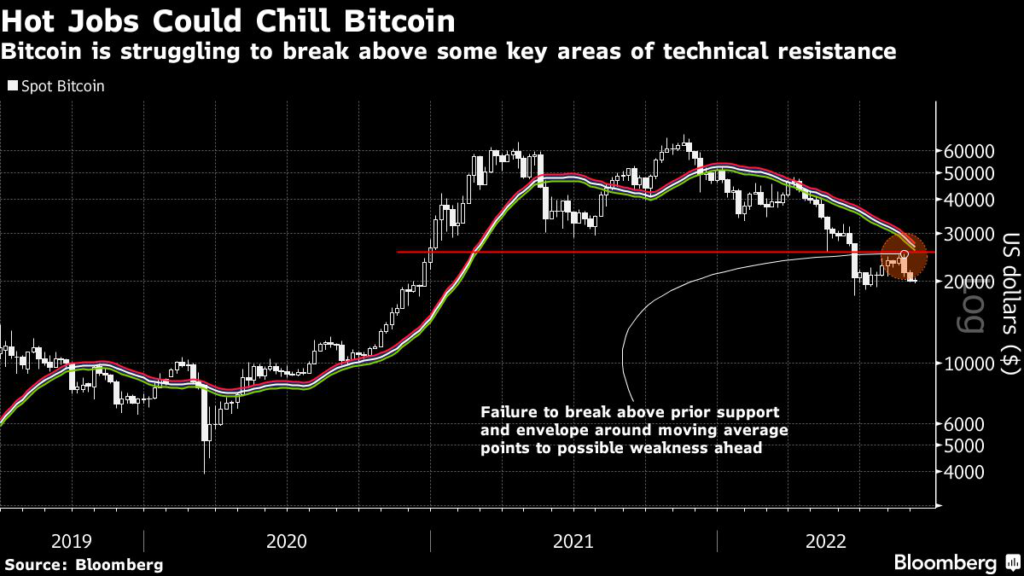
Elevated employment figures would raise the odds of more jumbo interest rate increases by the Federal Reserve, jeopardizing the $20,000 level at which Bitcoin has been holding firm since a mid-August selloff, said Max Gokhman, chief investment officer of AlphaTrAI. 

Bitcoin “is very tied to macro sentiment right now,” Gokhman said in an interview. The $20,000 level “has an importance. If we did break down below that you will see a further drop,” he said.

Read more: US Jobs Data Have Potential to Push Fed Toward Third Jumbo Hike

Bitcoin was last in the vicinity of $15,000 some two years ago, at the initial stages of a giant pandemic-era bull run that peaked at almost $69,000 last November. Digital tokens subsequently imploded under tightening monetary policy that crushed speculative ardor and contributed to blowups of leveraged crypto firms. 

Gokhman’s hedge fund shifted a large chunk of its crypto portfolio into cash toward the end of August. The portfolio trades on signals from models that employ artificial intelligence. 

Gokhman said the fund ended the month with a 0.4% gain compared to a 13% drop for its benchmark, the Bloomberg Galaxy Crypto Index.

“The true test for Bitcoin is if it can stay close to the $20,000 level after the NFP release,” Edward Moya, senior market analyst with Oanda Corp., wrote in a note, referring to the upcoming nonfarm payrolls data.  “A hot labor market report and Fed rate hike bets might surge and that could trigger downward pressure that eyes the summer lows.”

If Bitcoin manages to hold $20,000, that could strengthen arguments that the token, and perhaps the wider crypto sector, has found a floor. But some traders are evidently worried and are paying a premium in the options market for protection against a slump toward the $15,000 level.

The payrolls report due 8:30 a.m. New York time is projected to show a 298,000 gain and solid wage growth. Bitcoin was little changed at about $20,100 as of 9:14 a.m. in London ahead of the jobs print.

More stories like this are available on bloomberg.com

©2022 Bloomberg L.P.
Nikon to Purchase Elliott-Backed German 3D Printing Firm SLM

(Bloomberg) — Nikon Corp. agreed to buy SLM Solutions Group AG in a deal that values the German 3-D printing-machine maker and perennial takeover target at about 600 million euros ($597 million).

The Japanese technology company is offering 20 euros for each share of SLM, representing a premium of about 84% over the three-month average share price, according to a statement that confirmed an earlier report by Bloomberg News. SLM surged as much as much as 74% in Frankfurt trading. 

Nikon, best known for its cameras, has secured 61.1% of SLM Solutions’ shares via a planned capital increase as well as commitments from large shareholders Elliott Investment Management, Ena Investment Capital LLP and SLM founder Hans-Joachim Ihde, it said.

For Elliott, the deal ends its six-year investment in SLM. The hedge fund, led by billionaire activist investor Paul Singer, bought its stake in a bet that General Electric Co. would raise its takeover bid for SLM.

GE, which had bid 38 euros per SLM share, eventually abandoned its offer in 2016 and bought a rival company instead. Since then, Elliott has supported several capital increases by SLM to fund staff hires as well as research and development.

For Nikon, the acquisition boosts its additive manufacturing capabilities.

“We are focused on digital manufacturing as a growth driver and will create value through the promising market of metal additive manufacturing,” said Toshikazu Umatate, the chief executive officer of Nikon. “This acquisition will be key to growing our digital manufacturing business.” 

SLM’s powder bed fusion technology is geared toward production of high-performance components used in space rockets, aircraft engines and luxury sports cars.

Tokyo-based Nikon makes cameras and equipment for semiconductor machinery, optical measuring gear and precision instruments, as well as a 3-D metal modeling machine dubbed the “Lasermeister.”

SLM has long been seen as a takeover target. After GE’s foray, US rival Desktop Metal Inc. last year held talks about a potential takeover of the German company before deciding not to proceed, Bloomberg News reported at the time.

SLM reiterated in May that it aims to boost revenue by a third in 2022 to at least 100 million euros and that it plans to become profitable in the second half of this year. Shares of SLM have fallen 34% in Frankfurt this year.

(Updates with share reaction in second paragraph.)

More stories like this are available on bloomberg.com

©2022 Bloomberg L.P.

Nidec Elevates Kobe as Seki, Once Seen as CEO Successor, Resigns

(Bloomberg) — Japanese electric-motor giant Nidec Corp. named Vice Chairman Hiroshi Kobe as chief operating officer and president, putting him in line to possibly one day succeed founder Shigenobu Nagamori, who has struggled to share control of the company. 

Kobe will step into the role effective Sept. 3 while current president and COO Jun Seki resigned, effective immediately, the company said in a statement Friday.

The appointment comes about a week after Seki was said to be planning on leaving Nidec after less than three years. Nagamori, who demoted Seki from CEO earlier this year, is planning a management overhaul, people familiar with the matter told Bloomberg News. It follows months of Nagamori publicly disparaging Seki and questioning his ability to lead the manufacturer he started in a shack in 1973.

Friday’s statement said Seki was “stepping down to take responsibility for the deterioration of the business.”

Nagamori, 77, reclaimed the role of chief executive officer in April after souring on Seki, whom he hired from Nissan Motor Corp. in early 2020. 

Kobe comes into the position at a challenging time. 

Nagamori has struggled for years to find someone to succeed him at what is the world’s top supplier of motors for everything from hard drives to power plants. The founder said that he took back the reins from Seki because of his lackluster performance, saying in an interview with Bloomberg, that he “was in agony” every day as the manufacturer’s share price declined. 

Nidec is facing a worsening global economic outlook and needs to prepare by putting in place leaders with deep experience within the company, Nagamori is said to have told senior managers. Caught up in global supply chain turmoil and pandemic, Nidec’s shares are down 33% this year. 

In its most recent earnings, Nidec reported operating profit of 44.7 billion yen ($318 million) for the fiscal first quarter through June. That compares with analysts’ average projection of 43.5 billion yen. Revenue rose 21% to 540.4 billion yen, compared with the prediction of 510 billion yen.  


Nidec’s travails reflect a wider dilemma across Japan’s corporate landscape, as leaders who came of age during the country’s economic boom run their company well into years when most people retire. It’s not the only company grappling with succession. Despite promising to retire at 65, Uniqlo founder Tadashi Yanai, now 73, still runs Fast Retailing Co. with a tight grip. Masayoshi Son, SoftBank Group Corp.’s 65-year-old founder and CEO, has parted ways with several potential successors in high-profile exits in recent years.

Read more: A Startup Offers Japan’s Aging CEOs a Worry-Free Succession Plan 

In his interview with Bloomberg in July, Nagamori said his goal was to see Nidec’s share price beat its 2021 record of 15,175 yen. They were at 9,019 yen on Friday. 

Once Nidec’s share price hits a new record, the founder said he’ll look to pass on the CEO post and transition into the role of honorary chairman.

But at the same time, Nagamori said as long as he’s living, he can’t accept handing off Nidec and seeing it stumble. “I built this company from the ground up and Nidec is like a part of my body,” he said. “If the company were to become a failure it’d be like a physical wound for me.”

Indeed, what comes after Nagamori steps down is of key interest to investors in the company. For years, analysts have been warning that a bumpy transition of power would mean Nidec could lose its “Nagamori premium.”

Nagamori said in July he’s given up on finding any one individual capable of filling his shoes. He intends to break up his responsibilities between a number of individuals, he said. “At this level, there isn’t a person in Japan who can operate this company as CEO alone,” Nagamori said, “it needs to be managed by a group.” 

Recently, Nidec has moved to significantly bolster its recruiting activities, poaching prominent executives including Mitsuya Kishida, the former head of Sony Group Corp.’s mobile communications business, and Shinya Yoshida an executive vice president at Mitsubishi Corp. 

With regard to Seki, Nagamori in July said the former CEO had not done enough to learn and embody his methods of management since joining the company. 

Nidec has a basic policy outlining that the person who contributes most to the company’s profit will claim the top job, Nagamori said. “You may think this is an unsparing company but it’s really the proper way,” he said. “It’s a meritocracy.”

(Updates with context throughout.)

More stories like this are available on bloomberg.com

©2022 Bloomberg L.P.

Draghi Discussed Eni, GSE Hacks With Top Officials Thursday

(Bloomberg) — Italian Prime Minister Mario Draghi discussed hacker attacks on oil giant Eni SpA and other energy companies with senior officials at a high-level security meeting Thursday, according to people familiar with the matter.

Draghi and his undersecretary for security, Franco Gabrielli, held discussions at a meeting of the Interministerial Committee for Cybersecurity, said the people, who asked not to be named because the discussions were not public. A spokesman for the Italian government declined to comment. 

Eni said Wednesday its internal protection systems had detected unauthorized access to its networks, though the consequences have so far appeared to be minor. Earlier in the week, Italy’s energy agency GSE said that it suffered a breach on Sunday night and Monday morning. 

Read more: Hackers Hit Italian Oil Giant Eni’s Computer Network

“Cyberattacks on Italy’s top company and energy agency are not something to be underestimated,” Stefano Mele, chairman of the Cyber Security Commission of the Italian Atlantic Committee, said in a phone interview. “The fact this happened in the space of a few days and just before elections points to coordinated attacks and explains why the premier and committee are getting involved,” he said, referring to Italy’s national election Sept. 25. 

(Updates with cyber expert in final paragraph.)

More stories like this are available on bloomberg.com

©2022 Bloomberg L.P.

Stocks Drop as Dollar Gauge Hovers Near Record: Markets Wrap

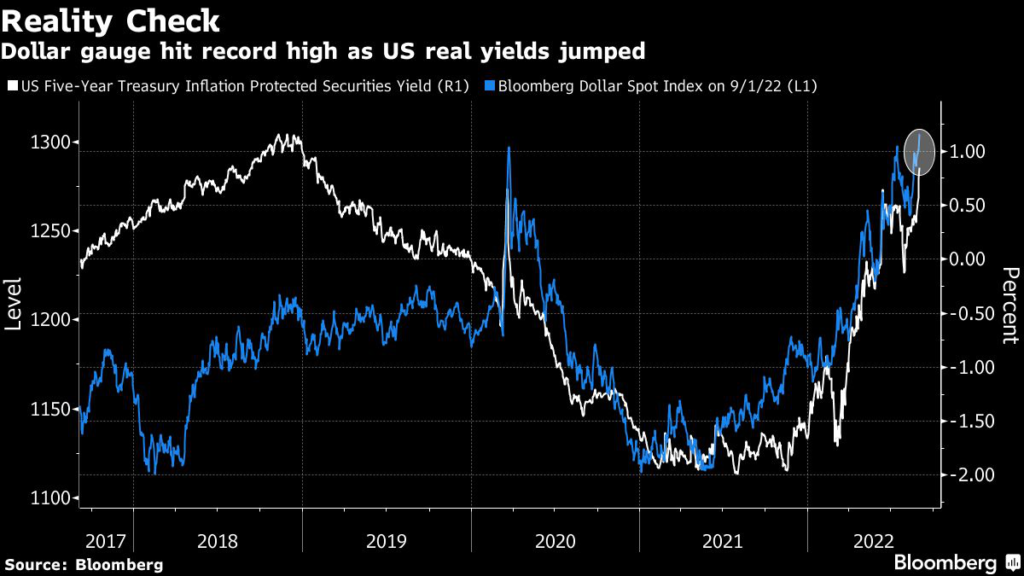
(Bloomberg) — Asian stocks fell Friday and a dollar gauge hovered near a record high ahead of key US jobs data that could stir expectations for another sharp Federal Reserve interest-rate hike.

A region-wide equity index shed more than 0.5%, hurt by a retreat in Chinese tech shares. US futures were in the red and European contracts pared an advance. Wall Street snapped a four-day losing streak to eke out modest gains.

The jobs update Friday is expected to show healthy payrolls growth and follows a stronger-than-expected US manufacturing report. Traders increasingly anticipate another large 75 basis points Fed rate rise to cool inflation.

The two-year Treasury yield was close to the highest since 2007 against that backdrop, while the Bloomberg Dollar Spot Index inched back but remained in sight of the unprecedented level hit Thursday. The euro strengthened.

Global bonds as a whole slumped into their first bear market in a generation: the Bloomberg Global Aggregate Total Return Index of government and investment-grade corporate bonds is down more than 20% from a 2021 peak.

A gauge of world shares is set for its worst week since June, roiled by ebbing bets on tempered Fed tightening after US central bank officials made it clear that they see the need for restrictive monetary settings for some time. 

“We don’t have a lot of reasons to be bullish in this type of environment for the next couple of weeks and months,” Meera Pandit, global market strategist at JPMorgan Asset Management, said on Bloomberg Television. “Yet when we think about the longer term perspective and the longer term investor, these are the types of level that can be fruitful in the long run.”

The payrolls report later Friday is projected to show a 298,000 gain and solid wage growth. Federal Reserve Bank of Atlanta President Raphael Bostic said there’s still some work to do to contain price pressures.

Europe’s energy crisis is another major fault-line in markets. Russia looks set to resume gas supplies through its key pipeline there, a relief for investors even as fears persist about more halts this winter.

Elsewhere, oil bounced above $87 a barrel, undoing much of the losses sparked by China’s move to lock down the metropolis of Chengdu to curb Covid. The latter step had amplified worries about the commodity demand outlook.

Gold struggled to hold above $1,700 an ounce. Bitcoin was near $20,000.

Here are some key events to watch this week:

  • ECB Governing Council members due to speak at event Tuesday through Sept. 2
  • US nonfarm payrolls, Friday
  • UK leadership ballot closes Friday. Winner announced Sept. 5

Will Chinese sovereign bonds outperform Treasuries? China is the theme of this week’s MLIV Pulse survey. Click here to participate anonymously.

Some of the main moves in markets:

Stocks

  • S&P 500 futures fell 0.3% as of 7:16 a.m. in London. The S&P 500 rose 0.3%
  • Nasdaq 100 futures lost 0.3%. The Nasdaq 100 was little changed
  • Japan’s Topix index dropped 0.3%
  • Australia’s S&P/ASX 200 index declined 0.3%
  • South Korea’s Kospi index lost 0.1%
  • China’s Shanghai Composite index weakened 0.2%
  • Hong Kong’s Hang Seng index fell 1.2%
  • Euro Stoxx 50 futures rose 0.7%

Currencies

  • The Bloomberg Dollar Spot Index was steady
  • The euro was at $0.9967, up 0.2%
  • The Japanese yen was at 140.41 per dollar, down 0.1%
  • The offshore yuan was at 6.9115 per dollar, up 0.1%

Bonds

  • The yield on 10-year Treasuries was at 3.24%
  • Australia’s 10-year bond yield was at 3.66%

Commodities

  • West Texas Intermediate crude rose 1.5% to $87.94 a barrel
  • Gold was at $1,701.44 an ounce, up 0.2%

More stories like this are available on bloomberg.com

©2022 Bloomberg L.P.

Close Bitnami banner
Bitnami