
Bloomberg

Foxconn, VW Start Factory Bubbles During Chengdu Lockdown

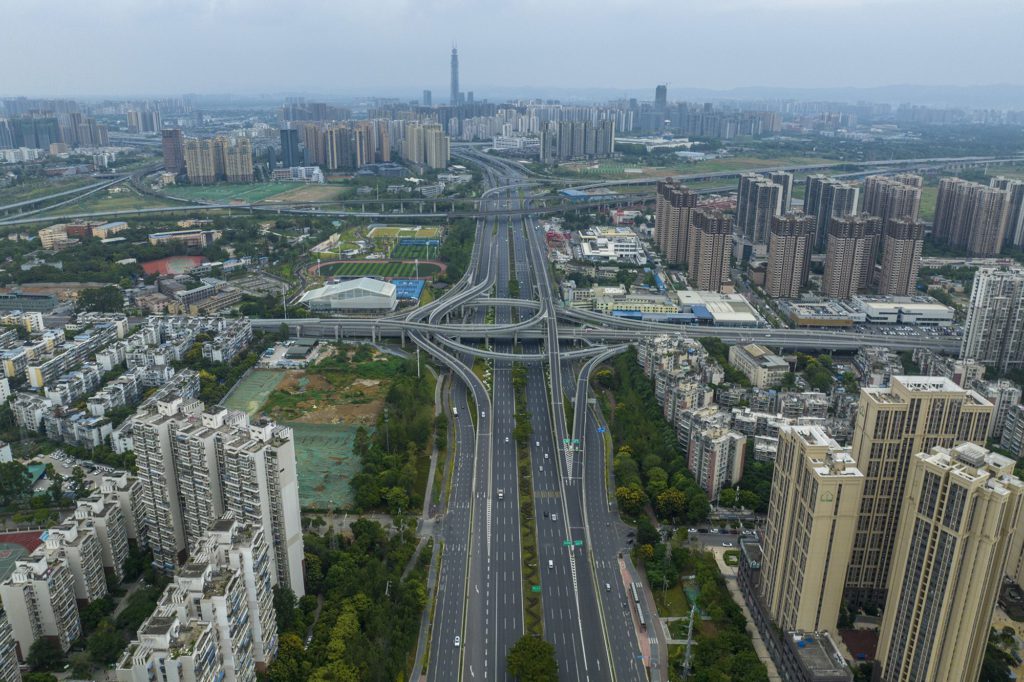
(Bloomberg) — Volkswagen AG and Foxconn Technology Group are keeping their workers on-site in their factories in Chengdu after the Chinese metropolis locked down its 21 million residents to contain a Covid-19 outbreak.

The German automaker’s factory, jointly operated with its local partner China FAW Group Co., entered a so-called “closed loop system” Thursday evening to maintain production, a company representative said on the phone on Friday, without elaborating. Foxconn, the largest assembler of Apple Inc. devices, is also adopting the method at its facility that makes iPads there, according to a person familiar with the decision. 

Robert Bosch GmbH, one of the world’s biggest auto-parts makers, has shifted to a closed-loop operation at two manufacturing sites for power tools and automotive components in Chengdu, with office staff working from home, a spokeswoman for its China business said.

First used during the Beijing Winter Olympics as a way of keeping athletes and support staff separate from the wider population, closed loop, or factory bubble, is a China invention used to keep its economy running amid punishing efforts to stamp out Covid’s spread. Closed loops typically require workers to travel from on-site accommodation to the factory and back, strictly avoiding contacts with outsiders, and be tested regularly for Covid. Companies such as Tesla Inc. have even kept their workers sleeping on the floor during the Shanghai lockdown earlier this year.

There’s pressure to keep factory operations running because the lockdown comes just days after the city moved past a two-week power crunch that shut down business operations, as household energy availability was prioritized. With the triple whammy of drought, floods and the Covid lockdown this summer, Chengdu’s economy, which makes up 1.7% of China’s national gross domestic product, is being dealt a serious blow. 

Massimo Bagnasco, chair of the southwest China chapter, European Union Chamber of Commerce in China, said government guidance is that a company can operate in a closed loop system if it’s considered important to the community. In addition, businesses would have to satisfy local authorities that they can successfully manage the loop in a way that wouldn’t pose a threat to public health.

“Yesterday was kind of a messy time,” he said, adding a large majority of his members won’t be able to operate under the loop system as they may not belong to a category that’s viewed as fundamental to daily life. “Everyone was trying to understand what they could do from an operational point of view of their business, as well from the individual point of view.”

While the closed loops have allowed some supply chains to continue operating amid lockdowns, they have also created problems of their own, like workers revolting over poor living and working conditions. The system has also been unable to prevent widespread disruption to global supply chains from the strictures of Covid Zero.

Chengdu, the capital of Sichuan province, is the biggest city to shut down since Shanghai’s bruising two-month lockdown starting end-March. It also functions as a manufacturing hub in southwestern China for companies including Geely Automobile Holdings Ltd. and Toyota Motor Corp. 

Volvo Car AB’s Sichuan plant, now under the parent group of Geely, has suspended production due to the lockdown. The parent company said it would closely monitor the situation. In the meantime, Hitachi Ltd.’s two Chengdu plants that manufacture elevators and escalators are operating at reduced rates due to an order from authorities, Ryuhei Tanaka, a spokesman for the Japanese company said by phone.

(Updates with statement from Robert Bosch GmbH. An earlier version of the story was corrected to remove reference to Tanaka Co. in fifth paragraph.)

More stories like this are available on bloomberg.com

©2022 Bloomberg L.P.
China Targets Online ‘Rumors’ Ahead of Xi’s Leadership Bid

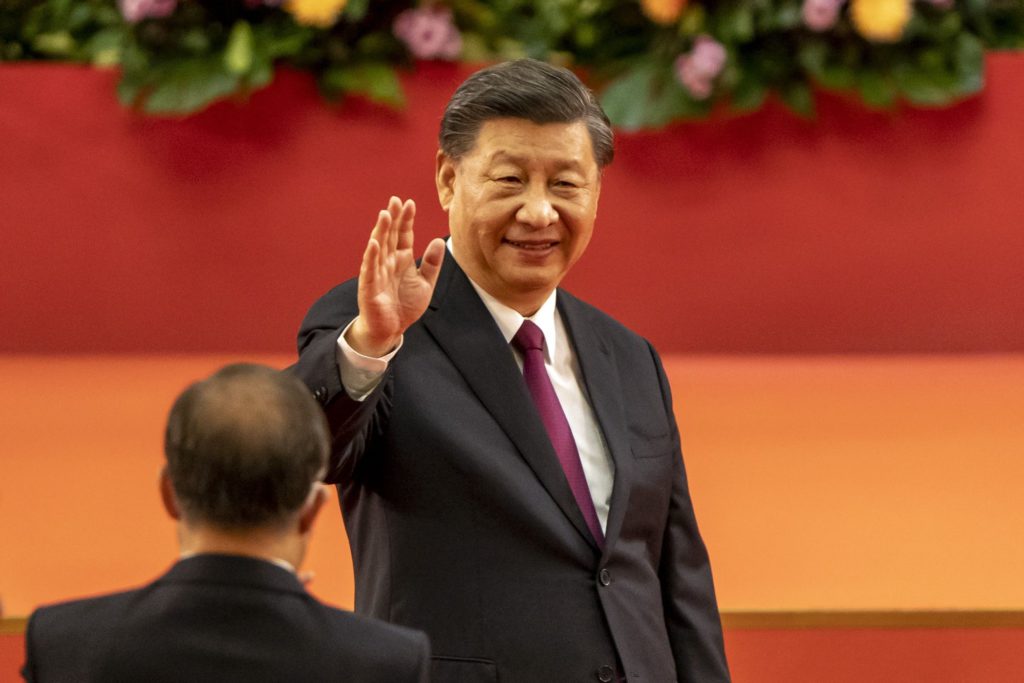
(Bloomberg) — China’s cyberspace watchdog has vowed to crackdown on fake news before a key summit where President Xi Jinping is set to take a precedent-defying third term in power.

The Cyberspace Administration of China launched a three-month campaign targeting “online rumors and fake information about major meetings, important events and policies,” starting Friday, it said in a statement. Offenders should be handled “strictly, quickly and severely,” the agency added, without specifying punishments. 

China’s call to strengthen its already stringent internet controls comes as the Communist Party prepares to begin its twice-a-decade leadership congress on Oct. 16.  

Xi heads into the most important event in the nation’s political calendar facing mounting problems at home and abroad. Economic growth forecasts in China are being slashed, Covid cases are rising and the US is pushing back over Beijing’s increased military pressure on Taiwan.  

Why China’s 2022 Party Congress Will Be a Landmark: QuickTake

The cyber crackdown will also rein in “rumors” about work safety, transport, natural disasters, as well as false information on society, the economy, and people’s livelihoods, according to the statement. Online platforms were urged to blacklist accounts posting such content and government agencies instructed to respond swiftly. 

China’s internet is heavily censored for information that deviates from official party rhetoric. Still, sometimes censors cannot keep up with users’ creative ways to bypass controls, as was seen during Shanghai’s bruising two-month Covid lockdown earlier this year, when an outpouring of anger flooded the nation’s social media platforms.

More stories like this are available on bloomberg.com

©2022 Bloomberg L.P.
Brazil Central Bank’s Payment App Dragged Into Election Campaign

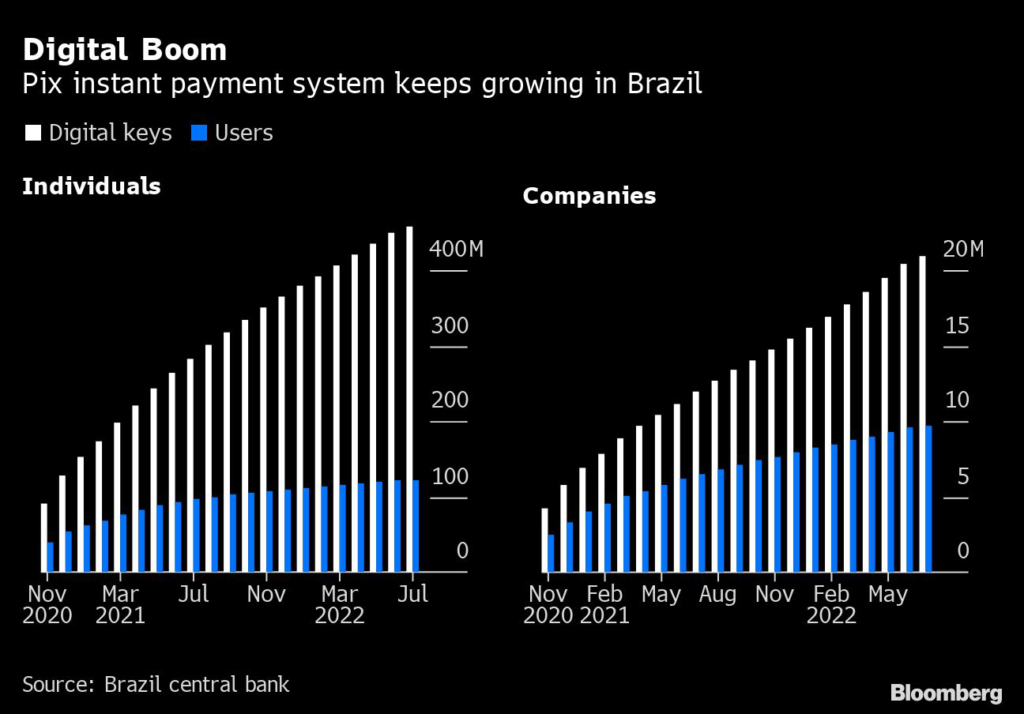
(Bloomberg) — A successful instant payment system launched by Brazil’s central bank two years ago suddenly became a major talking point in this year’s election as President Jair Bolsonaro tries to present a positive agenda a month ahead of the vote. 

“Let’s talk about Pix,” the incumbent says in a campaign ad now running on social media, referring to the system currently used by more than half of Brazilians. He smiles amid images of people making payments through the mobile app at markets and street stalls. The camera then cuts to a woman who says the platform is the “best thing” Bolsonaro did for the country. 

Pix was launched by the now autonomous central bank led by Roberto Campos Neto 10 months into Bolsonaro’s first year in office. Although its final development and branding took place between 2019 and 2020, the platform is the result of a “long evolutionary process,” a spokesperson for the bank said in a statement, when asked for comment. 

Read More: Brazil Has 110 Million Using Central Bank’s Mobile Money System

Pix became popular so quickly because it allows Brazilians to send and receive money instantaneously through a system that’s free and relatively easy to navigate. It is particularly important for small business owners who can cash their profits immediately, without having to wait for days until credit card purchases get cleared.  

It’s not the first time Pix is cited during the presidential campaign. When several bank executives signed a letter rejecting baseless allegations of potential voter fraud raised by Bolsonaro, the president’s team said they were just angry because financial institutions had lost billions of reais in fees per year with the new payment system.

While Bolsonaro’s marketing team says they will keep touting Pix during the campaign, the central bank’s union says he deserves no credit for it, arguing that the incumbent had largely dismissed the system before the campaign started. 

More stories like this are available on bloomberg.com

©2022 Bloomberg L.P.
Tencent Divestment Concerns Add to China Pressure

(Bloomberg) — In a world awash in technology stocks for sale, the last thing bulls want to see is more big sellers hitting the market. In China, that appears to be just what’s happening. 

Investors are fretting that Tencent Holdings Ltd. will add to pressure on the market if it moves ahead with a reported plan to offload 100 billion yuan ($14.5 billion) from its equity portfolio. While the company denied the report, that was little comfort to stockholders, who pushed down the share prices of Tencent investees such as Pinduoduo Inc. and KE Holdings Inc.

A divestment would follow similar moves under consideration by Baidu Inc. and Alibaba Group Holding Ltd. as the internet giants seek to assuage regulators concerned about their sway over the industry. And it would just deepen the gloom around Chinese tech stocks still reeling from Beijing’s regulatory clampdown. The Nasdaq Golden Dragon Index of US-listed Chinese stocks has plunged 64% from its 2021 record. 

“The current market environment is not favorable and may substantially exacerbate the negative impacts on the share prices of the targeted companies being off-loaded,” said Redmond Wong, Saxo Capital Markets strategist. 

Investors are now paying attention to what is next. Alibaba — which arguably faced the worst of the regulatory crackdown — holds a stake in at least six US-listed stocks, including XPeng Inc. and Weibo Corp., according to exchange filings. Baidu owns a controlling stake in iQiyi Inc., while e-commerce giant JD.com Inc. is a shareholder of its peer Vipshop Holdings Ltd., Bloomberg data shows.

China’s tech titans have plenty of incentive to pare their stakes in listed companies. Besides appeasing regulators, reducing their holdings also slims balance sheets and gives firms the ability to invest those funds into more profitable operations. 

The problem, though, is that these large caps are so deeply connected to other tech firms, having part-ownership of hundreds of startups and publicly traded firms worth hundreds of millions of dollars. So any moves by big companies to trim their stakes can trigger an outsized reaction in shares. 

Tencent responded to the Financial Times report by denying it has a target for divestments. Many investors say they still expect more shares to come on to the market.  

“We do believe the major Chinese internet corporates will continue to sell off their investment portfolio position, especially for those major players in the industry holding a great amount of stakes,” said Kenny Wen, head of investment research at KGI Asia Ltd. Investors appear to be more sensitive to the news of a stake liquidation given the weak market sentiment, he said.


Tech Chart of the Day

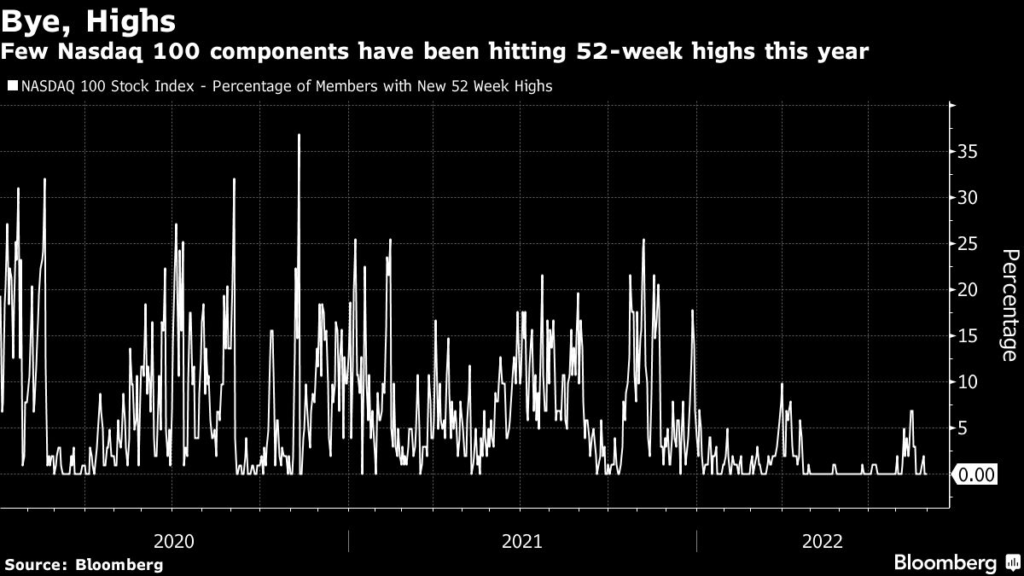
The weakness in the Nasdaq 100 Index throughout 2022 has meant an anemic number of companies hitting new 52-week highs, with none currently at such a peak. While there was a brief spike in 52-week highs last month — with nearly 7% hitting that level — the percentage hasn’t topped 10% all year. In November, more than a quarter of Nasdaq 100 components hit a 52-week high.

Top Tech Stories

  • Broadcom Inc., a chipmaker that supplies some of the largest companies in the tech industry, gave a strong sales forecast for the current quarter, allaying fears that spending on internet infrastructure is slowing.
  • SoftBank Group Corp. is planning to cut at least 20% of staff at its loss-churning Vision Fund operation, following public pledges from Masayoshi Son to reduce headcount at the world’s biggest tech investor, according to people familiar with the matter.
  • The US government’s new restrictions on the ability of Nvidia Corp. to sell artificial intelligence chips to Chinese customers threatens to deal a heavy blow to the country’s development of a sweeping range of cutting-edge technologies.
  • Volkswagen AG and Foxconn Technology Group are keeping their workers on-site in their factories in Chengdu after the Chinese metropolis locked down its 21 million residents to contain a Covid-19 outbreak.
  • With rising Covid cases, residents in China’s technology hub of Shenzhen are fearing a second city-wide lockdown, even as local authorities sought to quash such rumors fueled by restrictions imposed just hours earlier in another megacity to the west.
  • Sea Ltd. is trimming staff in its money-making gaming arm to rein in costs. It’s the e-commerce giant’s second round of job cuts this year, following a string of setbacks that is forcing the company to shift its focus away from unbridled growth to profitability.
  • The Amazon Labor Union’s landmark victory at a Staten Island warehouse should be upheld, a US labor board official has recommended, dealing a major setback to Amazon.com Inc.’s efforts to have the vote overturned.
  • Apple Inc. workers in Oklahoma City petitioned Thursday to unionize their store, extending a wave of organizing within the company and the broader retail industry.
  • Nikon Corp. agreed to buy SLM Solutions Group AG in a deal that values the German 3-D printing-machine maker and perennial takeover target at about 600 million euros ($597 million).
  • Snap Inc. is sunsetting efforts focused on building products for the much-vaunted next generation of the internet known as web3, according to a former research and development manager at the social media platform.

More stories like this are available on bloomberg.com

©2022 Bloomberg L.P.
US Deals Heavy Blow to China Tech Ambitions With Nvidia Chip Ban

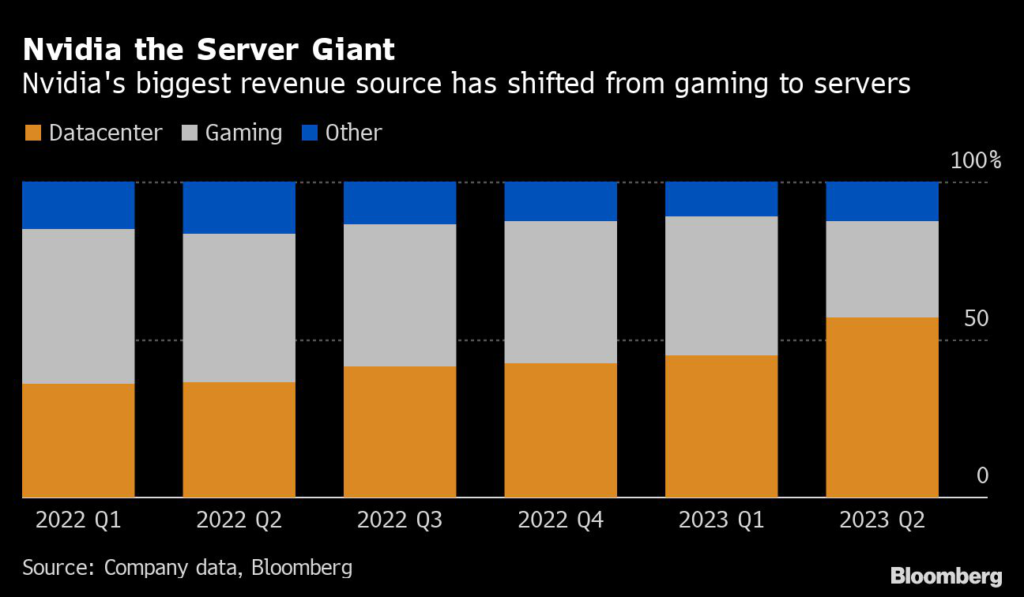
(Bloomberg) — The US government’s new restrictions on the ability of Nvidia Corp. to sell artificial intelligence chips to Chinese customers threatens to deal a heavy blow to the country’s development of a sweeping range of cutting-edge technologies.

The Santa Clara, California-based company disclosed in a regulatory filing this week it can no longer sell certain high-end chips in China without a license from Washington. These AI accelerators go into large data centers to train AI models for tasks like autonomous driving, image recognition and voice assistance.

Nvidia has nearly a 95% share of that market, according to Fubon Securities Investment Services estimates, and the rest is accounted for by Advanced Micro Devices Inc., a fellow US chip firm that’s bound by the same export restrictions. Without access to their gear, tech giants that rely on big server farms to develop everything from electric and self-driving cars to social and cloud services will be at a disadvantage to international competition.

“This is the new Cold War reality and broader export restrictions are part and parcel of this,” said Amir Anvarzadeh of Asymmetric Advisors. “The export restrictions will broaden and it will impact semiconductors, AI, autonomous systems and biotech.”

The escalated trade curbs, which Washington didn’t signal it was considering before imposing them, add to existing sanctions and limits on exports of chipmaking gear to China. Chinese semiconductor firms are already denied access to the most advanced lithography equipment from the Netherlands’ ASML Holding NV and cutting-edge gear from American suppliers including Lam Research Corp. The recent CHIPS Act in the US forces global chipmakers to effectively choose between investing in the US and China. Now that Washington is limiting access to AI products as well, it’s created another chokepoint for Beijing’s tech expansion while working on growing its own domestic semiconductor capability.

The head of one of China’s leading EV manufacturers quickly decried the restrictions.

The measures will “bring a challenge to the cloud training of all autonomous driving,” He Xiaopeng, the chairman and chief executive officer of XPeng Inc., said on his WeChat account. Nvidia is a leader in providing the hardware for autonomous driving — both for developing the algorithms in massive server farms and supplying the onboard processors for cars to be aware of their surroundings.

Read more: Chip Exports to China at Risk on New US Rules, Sparking Selloff

Washington has told Nvidia that the new curbs are designed to prevent advanced AI gear being used for or diverted to military purposes by China or Russia. In June of this year, Washington, DC-based think tank The Center for Security and Emerging Technology said almost all of the 97 AI chips in public Chinese military purchase records between April and November 2020 were designed by US firms Nvidia, Intel Corp., Microsemi Corp. or Xilinx, which is now part of AMD.

Still, the brunt of the impact will be felt by Nvidia itself and China’s biggest tech firms like Alibaba Group Holding Ltd. and Tencent Holdings Ltd., which are the closest rivals to US cloud services from Amazon.com Inc.’s AWS, Alphabet Inc.’s Google Cloud and Microsoft Corp.’s Azure.

The Chinese government opposes US restrictions on chip exports to the country because the move hurts the legitimate rights and interests of both Chinese and American firms, China commerce ministry spokesperson Shu Jueting said at a briefing on Thursday, in response to a question about Nvidia’s disclosure. China urges the US to stop the practice immediately and treat companies from all countries fairly, he said.

At a basic level, an AI accelerator is a graphics processor, or GPU, specifically tailored to train AI models by feeding them tons of data. It’s better suited for such tasks than a general-purpose CPU because its architecture can do parallel work in huge volumes. Nvidia was the first to come up with a language to make GPUs do AI tasks, giving it a huge head start over rivals like AMD and Intel.

Baidu Inc. last month secured approval to deploy the first fully autonomous self-driving taxis on China’s roads. Along with domestic rivals like Pony.ai Inc. and XPeng, Baidu is among the first companies globally to roll out such services — but that lead is threatened without the continued ability to develop using Nvidia’s hardware.

The US has given Nvidia a year to wrap up development work in China on its most advanced H100 server chip, underlining that it doesn’t want its companies working on sensitive tech within Chinese borders. Nvidia also said the restrictions may cost it $400 million in the current quarter and it may have to move some operations out of China.

The current-generation A100 chip from Nvidia is one of the world’s most sophisticated, with 54 billion transistors, while the next-generation H100 — which no Chinese firms will be able to buy without explicit US approval — will be built on TSMC’s 4nm process and have 80 billion transistors on board.

Big data center AI customers in China have been buying Nvidia’s gaming graphics cards as a substitute, though that requires significant modifications to deploy, according to Jeff Pu of Haitong International Securities. Washington’s move “will accelerate the development of local datacenter GPUs such as Alibaba’s” and it will boost sentiment for domestic stocks in the sector, he said.

China’s Cambricon Technologies Corp. is to a homegrown alternative to Nvidia or AMD for AI chipmaking and its shares jumped more than 30% over two days after the curbs were announced.

More stories like this are available on bloomberg.com

©2022 Bloomberg L.P.
When Driving, Tires Emit Pollution. And EVs Make the Problem Worse

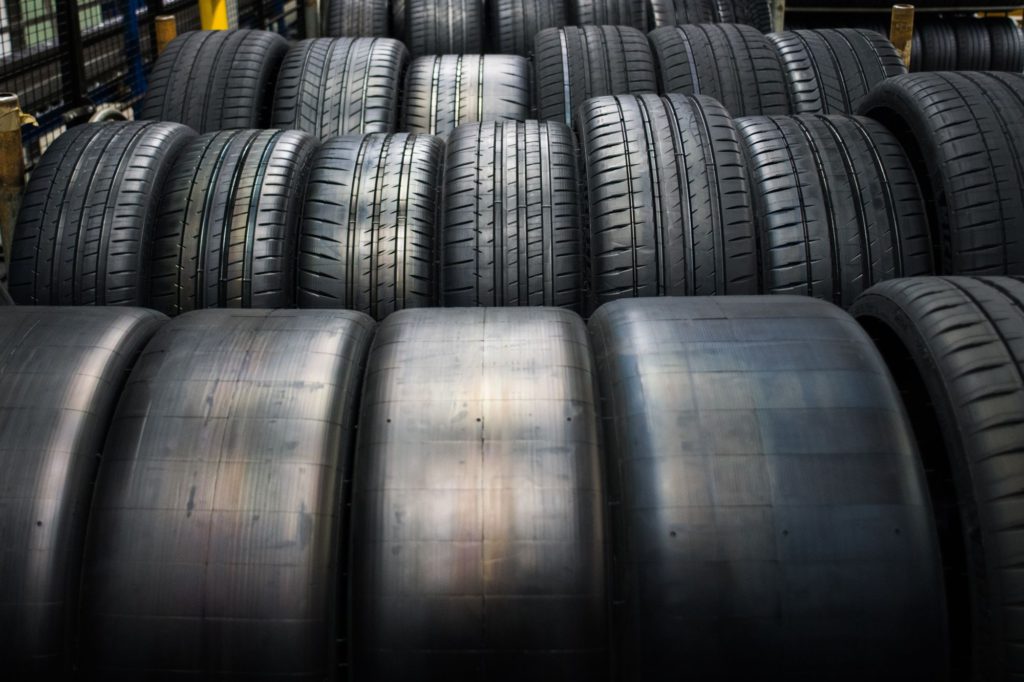
(Bloomberg) — The Tyre Collective does not yet have a name for its device. Hanson Cheng, one of the London-based startup’s three co-founders, calls it a “box.” Built to attach behind the wheel of a car, truck, van or bus, it’s designed to capture emissions from an oft-overlooked source: tires.

Every vehicle sheds tiny bits of its tires as it rolls, but “where the rubber meets the road” is a bit of a misnomer: The tires on most passenger vehicles contain little natural rubber. Instead, they’re made from a stew of petrochemicals, particles of which ultimately wind up in soil, air, waterways and oceans.

The International Union for Conservation of Nature pegs tires as the second leading source of microplastic pollution in oceans, and one 2017 study found a global per capita average of .81 kilograms in tire emissions per year, ranging from .23 kg per year in India to 4.7 kg (roughly 10 pounds) in the US. That may seem minor stacked up against the nearly 300 pounds in plastic waste the average American generates each year, but microplastics are tiny by definition — and an insidious source of toxins that researchers are only beginning to understand.

“When we talk about zero emissions, a lot of that conversation is about electric vehicles,” says Cheng, 30. “But there’s a whole world of non-exhaust emissions that also needs to be addressed.”

Switching to electric cars helps to lower carbon emissions — even after accounting for manufacturing and charging batteries — but it actually exacerbates the problem of tire emissions. EVs typically weigh more and accelerate faster than their gas-burning counterparts, which adds to tire wear. The EV transition will also keep the world’s fleet of cars growing until nearly 2040, well after the peak for gas-burning cars that’s expected in the next two years, according to BloombergNEF, a clean energy research group. 

“Most of these EVs are big monstrous things, so it’s perfectly intuitive that they will be chewing up tires faster,” says Nick Molden, founder and CEO of the UK-based research shop Emissions Analytics. Results from the company’s latest road tests, published in May, show that under normal driving conditions a gas car sheds about 73 milligrams per kilometer from four new tires. A comparable EV, the company estimates, sheds an additional 15 milligrams per kilometer, or about 20% more.

For decades, tailpipe emissions — both the greenhouse gases that contribute to global warming and the particulates that cause air pollution — have overshadowed the tire problem. That means researchers are only beginning to catalog what’s even in tire emissions. Across the different tires it studied, Emissions Analytics found an average of more than 400 organic compounds. “Part of the work we’re doing is to try to resolve what on earth these compounds are,” Molden says. “If we can’t identify them, then we can’t even fathom what the toxicity may or may not be.” 

One landmark study makes the potential stakes clear. In 2020, researchers in Washington state solved a decades-old mystery of why storm runoff was causing mass deaths of coho salmon: 6PPD, a preservative commonly used in car tires. When exposed to sun and air, 6PPD transforms into a chemical called 6PPD-quinone, which turns out to be highly toxic to coho salmon — causing them to circle, gasp at the surface and then die within hours. 

“In our lab it’s usually just one or two hours,” says the study’s lead author, Zhenyu Tian, now a professor at Northeastern University. “In the field, they struggle for an afternoon, and they die.” 

That stark finding set in motion a hunt for 6PPD alternatives that can help keep tires from breaking down in the elements without killing salmon or other fish. In May, California’s Department of Toxic Substances Control announced plans to add tires containing 6PPD to its list of hazardous products, a move that would force manufacturers to evaluate safer alternatives. But there’s no guarantee that the industry will be able to find a workable substitute. “[They] didn’t even know that the 6PPD-quinone existed until the Washington researchers found it,” says Anne Cooper Doherty, the DTSC’s head of chemical and product evaluation, adding that it could be years before 6PPD-free tires come to market.

“Our members are committed to supporting the alternatives analysis work in California,” says Sarah Amick, vice president of environmental health, safety and sustainability at the US Tire Manufacturers Association, a trade group representing a dozen of the world’s largest tire brands. 

For now, drivers can mitigate their tire emissions by driving gently. Electric motors are great for providing instant torque at the wheel, allowing for lightning-fast acceleration that is also hard on tires. On the flip side, EVs allow for regenerative braking (running the motor in reverse to create drag), which is a gentle way to decelerate. EV drivers who want to minimize their tire emissions — and compensate for the added emissions associated with battery weight — should go easy on the accelerator and heavy on the regenerative braking. 

“If you are a super eco driver, and you don’t use the torque, you can actually reduce your tire emissions in an electric vehicle,” says Molden at Emissions Analytics.

When it comes to purchasing tires, consumers have less control, and limited intel. One new rule in the EU calls for labeling tires by wear rate, but it can’t take effect until regulators identify a standard method of measurement. In the US, the National Highway Transportation Safety Administration includes a wear score for its tire ratings — the higher the number, the slower the wear — but it says little about what’s in the tires. 

“There’s huge variability in chemical composition, and virtually no regulation,” says Molden. “It’s a black hole of information.” 

Emissions Analytics has begun to assess toxicity across tire makes, but hasn’t yet validated its process enough to make it available to consumers. As a rule of thumb, however, Molden says cheaper tires tend to be more toxic. 

Back at The Tyre Collective, the goal is to reduce tire emissions by intercepting them at the source: The “box” uses electrostatic plates to draw in shed tire particles, which are charged from friction on the road. The company, founded in 2020, grew out of a joint project of four graduate students in the Innovation Design Engineering program at the Royal College of Art and Imperial College London. Earlier this year, its device was one of four winners of the Terra Carta Design Lab awards given for innovations that address the climate crisis.

In the laboratory, Tyre Collective’s device pulled in 60% of airborne emissions by mass, but real-world implementation is proving more challenging. The company is currently testing a prototype on a pair of delivery vans in London, where it’s so far gathering around a fifth of emissions. 

The Tyre Collective’s plan is to begin retrofitting the devices on delivery and bus fleets and, eventually, for EV manufacturers to integrate the technology into their cars — doing for tire emissions what the catalytic converter did for the tailpipe. Cartridges full of tire emissions could then be emptied at collection points as part of routine vehicle service and reused in new tires, soles of shoes and other products. 

“There’s a need to create a circular loop around this waste,” says Cheng. “Otherwise, we’re going to all this effort to capture it for it to be released back into landfills.” 

More stories like this are available on bloomberg.com

©2022 Bloomberg L.P.
SoftBank Plans Vision Fund Staff Cuts of at Least 20%

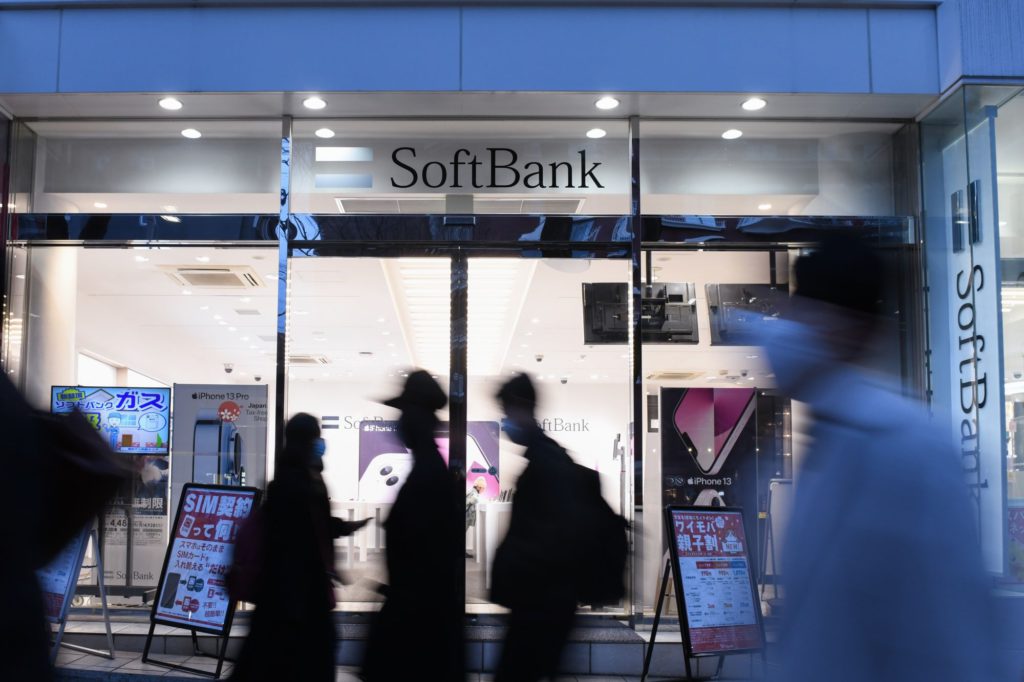
(Bloomberg) — SoftBank Group Corp. is planning to cut at least 20% of staff at its loss-churning Vision Fund operation, following public pledges from Masayoshi Son to reduce headcount at the world’s biggest tech investor, according to people familiar with the matter. 

The Tokyo-based company will slash a minimum of 100 positions and may announce the job cuts as early as this month, said the people, asking not to be named as the information is not public. The cuts will mostly be in the UK, US and China operations, which have the most headcount, said the people. The Vision Fund unit had about 500 employees including Latin America funds staff. 

Son, the self-made billionaire founder of the group, had said in August he plans widespread cost-cutting at his conglomerate and the Vision Fund investment arm after a record $23 billion loss. Most of the losses came from a plunge in the valuations of portfolio companies, including South Korea Coupang Inc. and DoorDash Inc. SoftBank also reported a $6 billion foreign exchange loss because of the weaker yen.

Executives are still debating how extensive the cuts should be, with some calling for cuts as high as 50%, according to one person. 

“As Masa said at our most recent earnings, we are reviewing the organization size and structure. However, nothing has been decided yet,” a company representative said in an email. 

Senior and junior employees in both front and back offices are being scrutinized to an extent never seen before, the people said. The US has 200 people including Latam staff, the UK has 150 people while China has 50 people, according to another person. 

Son had said last month that he would review “everything” for potential cuts without any “sacred cows.” 

“The loss is the biggest in our corporate history and we take it very seriously,” he said at the time. “We have to resort to big cost-cutting efforts at Vision Fund. The cost cutting efforts will have to include a reduction in head count – something I’ve made up my mind to do.”

Rajeev Misra, who helped Son set up the initial Vision Fund with almost $100 billion in 2017, is stepping down from his roles as a corporate officer and executive vice president at SoftBank, the company said in a statement on Wednesday. He will continue to oversee the first Vision Fund’s existing investments, while Son has said he will take over the management of new investments under the second Vision Fund.

Son, who turned 65 in August, has been taking on increasing responsibility at the company he founded 40 years ago. Chief Operating Officer Marcelo Claure left earlier this year, while former Chief Strategy Officer Katsunori Sago resigned in 2021.

The Japanese entrepreneur has told investors that he is taking defensive steps to navigate his way through a brutal tech downturn. SoftBank said last month that it had raised more than $17 billion by selling forward contracts on Alibaba Group Holding Ltd., the Chinese e-commerce company that made Son’s reputation as a startup investor. 

Son also said SoftBank has begun talks to sell asset manager Fortress Investment Group, acquired for $3.3 billion in 2017. To bolster SoftBank’s share price, Son unveiled a fresh program to buy back as much as 400 billion yen of its own stock.

Son is trying to wait out the technology slump so that he can pull off a successful initial public offering for Arm Ltd., the chip designer that SoftBank bought for $32 billion. The CEO is planning an initial public offering for Arm next year and has said he aims to make the offering the biggest-ever for a chip company.

More stories like this are available on bloomberg.com

©2022 Bloomberg L.P.
Italy Says Cyber Attacks on the Rise Since Invasion of Ukraine

(Bloomberg) — Italy’s foreign minister said cyber attacks on western European companies have risen following the Russian invasion of Ukraine, as Rome deals with the fallout from hacker actions targeting energy companies earlier this week.

The minister, Luigi Di Maio, said on Friday that the attacks are part of a destabilization strategy seen since the invasion in February, without specifying their source. 

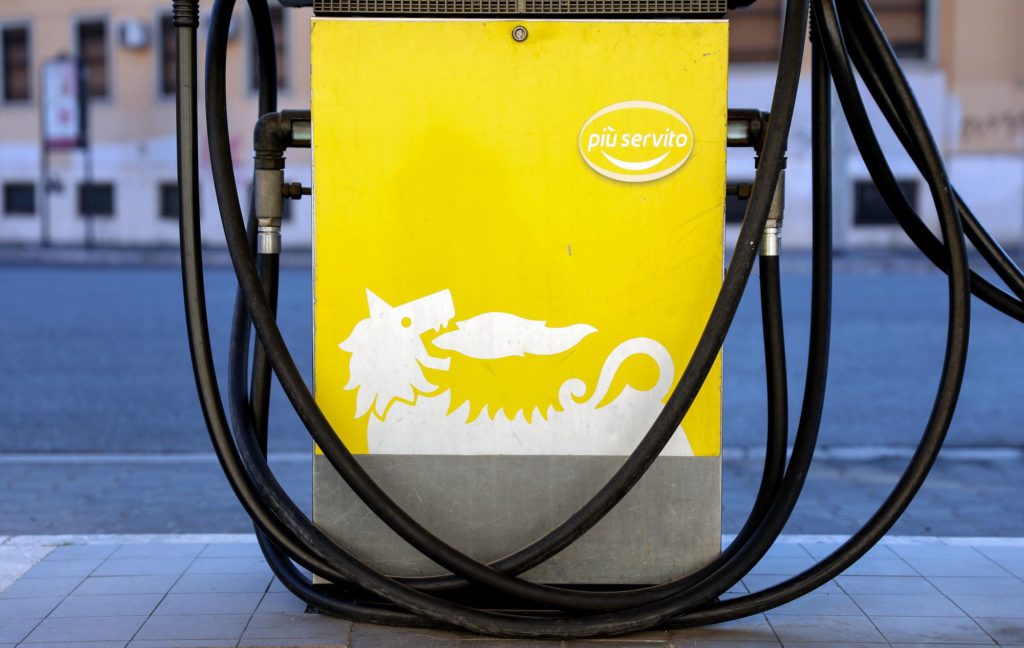
Prime Minister Mario Draghi and top Italian officials convened on Thursday to discuss hacker attacks on Eni SpA and other energy companies, after the oil giant said Wednesday that its internal protection systems had detected unauthorized access to its networks. The consequences of those attacks have so far appeared to be minor.

Italy’s GSE energy agency said earlier this week that it suffered breaches on Sunday night and Monday morning. 

“Attacks have risen in huge numbers since the Ukraine war began,” Di Maio said at the Ambrosetti Forum in Cernobbio, Italy. “It’s part of a strategy to increase tension in western countries, but we are ready to face it,” the minister said. 


More stories like this are available on bloomberg.com

©2022 Bloomberg L.P.
Stocks Mixed Ahead of US Jobs Report; Oil Rises: Markets Wrap

(Bloomberg) — Stocks were mixed Friday and global bonds slumped into their first bear market in a generation ahead of key US jobs data that could stir expectations for another sharp Federal Reserve interest-rate hike.

Europe’s Stoxx 600 index climbed, ending a five-day losing streak, while US futures were little changed and Asian shares fell. 

The jobs update Friday is expected to show healthy payrolls growth and follows a stronger-than-expected US manufacturing report. Traders increasingly anticipate another large 75 basis points Fed rate rise to cool inflation.

Concern that rising rates will hurt growth has weighed on markets, pushing the Bloomberg Global Aggregate Total Return Index of government and investment-grade corporate bonds down more than 20% from a 2021 peak. 

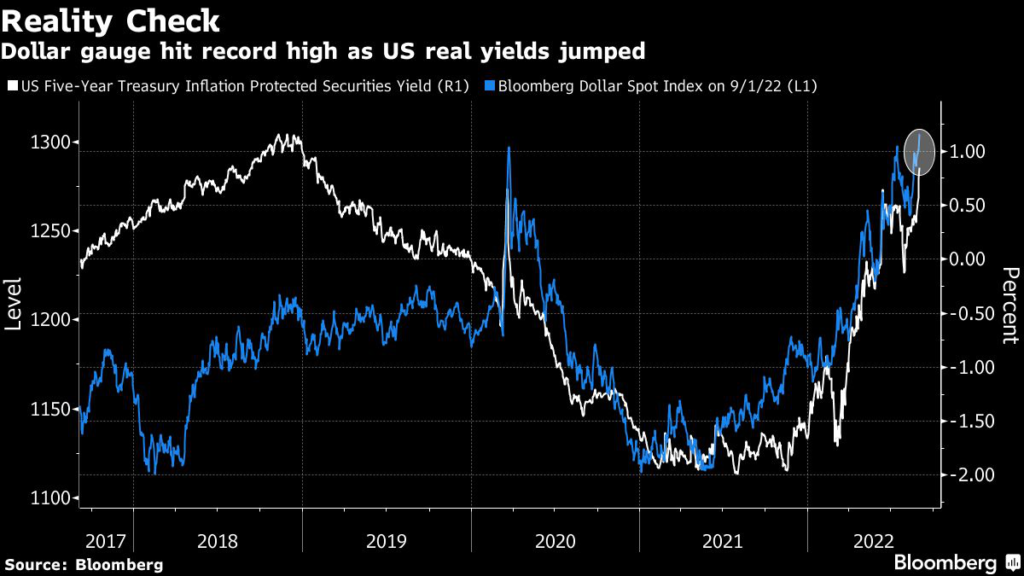
A dollar gauge held near a record high and the euro strengthened.

Energy companies outperformed in Europe as oil rose to pare a hefty weekly decline before an OPEC+ meeting on supply. Russia looks set to resume gas supplies through its key pipeline, a relief for investors even as fears persist about more halts this winter.

Among individual movers, JD Sports Fashion Plc, Puma SE and Adidas AG edged higher after Canadian peer Lululemon Athletica Inc. raised its full-year outlook. Lululemon jumped in premarket trading.

But traders remain cautious. A gauge of world shares is set for its worst week since June, roiled by ebbing bets on tempered Fed tightening after US central bank officials made it clear that they see the need for restrictive monetary settings for some time. 

Investors are also exiting global stock funds at a fast pace, with the fourth-largest weekly outflows of the year in the week through Aug. 31, according to BofA citing EPFR Global data.

“We don’t have a lot of reasons to be bullish in this type of environment for the next couple of weeks and months,” Meera Pandit, global market strategist at JPMorgan Asset Management, said on Bloomberg Television. “Yet when we think about the longer term perspective and the longer term investor, these are the types of level that can be fruitful in the long run.”

The payrolls report later Friday is projected to show a 298,000 gain and solid wage growth. Federal Reserve Bank of Atlanta President Raphael Bostic said there’s still some work to do to contain price pressures.

Gold and Bitcoin rose.

Here are some key events to watch this week:

  • ECB Governing Council members due to speak at event Tuesday through Sept. 2
  • US nonfarm payrolls, Friday
  • UK leadership ballot closes Friday. Winner announced Sept. 5

Will Chinese sovereign bonds outperform Treasuries? China is the theme of this week’s MLIV Pulse survey. Click here to participate anonymously.

Some of the main moves in markets:

Stocks

  • The Stoxx Europe 600 rose 0.7% as of 10:15 a.m. London time
  • Futures on the S&P 500 were little changed
  • Futures on the Nasdaq 100 were little changed
  • Futures on the Dow Jones Industrial Average were little changed
  • The MSCI Asia Pacific Index fell 2.2%
  • The MSCI Emerging Markets Index fell 1.8%

Currencies

  • The Bloomberg Dollar Spot Index was little changed
  • The euro rose 0.3% to $0.9972
  • The Japanese yen fell 0.1% to 140.36 per dollar
  • The offshore yuan was little changed at 6.9175 per dollar
  • The British pound was little changed at $1.1549

Bonds

  • The yield on 10-year Treasuries was little changed at 3.26%
  • Germany’s 10-year yield advanced two basis points to 1.59%
  • Britain’s 10-year yield advanced three basis points to 2.91%

Commodities

  • Brent crude rose 2.7% to $94.88 a barrel
  • Spot gold rose 0.4% to $1,704.73 an ounce

More stories like this are available on bloomberg.com

©2022 Bloomberg L.P.

OnlyFans Owner Gets Over $500 Million in Dividends in Two Years

(Bloomberg) — Social-media subscription service OnlyFans Ltd. said it paid its owner Leonid Radvinsky about $517 million in dividends since the end of 2020, as profit soared thanks to users and creators flocking to the platform known for its pornographic content during the global pandemic.

OnlyFans posted pretax profits of $433 million in the year ended Nov. 30, seven times more than it earned in the previous year, it said in its annual report Thursday. Radvinsky received $284 million in dividends for the period and an additional $233 million in 2022 through the end of August, the company said. 

Founded in 2016, the London-based company offers a portal for people to sell subscriptions for content directly to their followers, from which it takes a 20% cut. Although OnlyFans hosts a wide range of content, it’s best known for pornography, a category it said it would drop last year before reversing the decision a week later.

Radvinsky has a background in adult entertainment and direct marketing and is the sole owner of OnlyFans’ holding company, Fenix International Ltd. In 2004, Microsoft Corp. sued Radvinsky for allegedly sending millions of deceptive emails to Hotmail customers. His lawyers responded that the allegations were without merit, and the case was later dismissed.   

Revenue rose to $932 million in the period from $358 million a year earlier, as OnlyFans more than doubled the number of subscribers and boosted the number of creators by more than a third, the annual report said. 

OnlyFans said its priorities this year include cyber-security, content moderation, government relations, and promoting its new video streaming service OFTV.

More stories like this are available on bloomberg.com

©2022 Bloomberg L.P.

Close Bitnami banner
Bitnami
