Bloomberg

Amazon Bid to Overturn Union Victory Rejected by US Official

(Bloomberg) — The Amazon Labor Union’s landmark victory at a Staten Island warehouse should be upheld, a US labor board official has recommended, dealing a major setback to Amazon.com Inc.’s efforts to have the vote overturned.

A hearing officer who handled Amazon’s appeal of the union’s victory concluded that the company “has not met its burden” to prove that the union, the government or anyone else “engaged in objectionable conduct affecting the results of the election,” National Labor Relations Board spokesperson Kayla Blado said in an email.

Amazon spokesperson Kelly Nantel said the company was still reviewing the decision, but “we strongly disagree with the conclusion and intend to appeal. As we showed throughout the hearing with dozens of witnesses and hundreds of pages of documents, both the NLRB and the ALU improperly influenced the outcome of the election and we don’t believe it represents what the majority of our team wants.”

The Seattle-based company, which had managed to keep unions out of its US operations for more than a quarter-century, had argued in a filing that the labor board repeatedly “failed to protect the integrity and neutrality of its procedures.”

Amazon has until Sept. 16 to file objections to the hearing officer’s recommendation, which will then be heard by a regional director of the agency. If the company fails to persuade the agency to overturn the vote results, it will be legally required to negotiate with the union over pay and working conditions at the Staten Island warehouse. Employers sometimes refuse to negotiate even after exhausting their appeals at the labor board, leading to lengthy litigation in federal court. The NLRB lacks the power to impose punitive damages on companies for noncompliance.

The victory in April in New York by the upstart ALU, led by fired employee Christian Smalls, is among the most remarkable in a series of landmark labor wins over the past year, which include successful union elections at Starbucks Corp., Trader Joe’s and Chipotle Mexican Grill Inc.

“To have a contract for Amazon workers in this country would be monumental for the labor movement,” Smalls said Thursday. “We always were confident that we beat them fair and square.”

(Updates with comments from Amazon in the third paragraph.)

More stories like this are available on bloomberg.com

©2022 Bloomberg L.P.

UK Data Regulator Tackles Porn Sites Over Children’s Access

(Bloomberg) — The UK’s Information Commissioner’s Office has pledged to crack down on porn sites and other adult-only services to ensure they are taking steps, such as verifying users’ ages, to prevent children’s access, the regulator said Friday.

The new enforcement plans are a reversal for the ICO, which had previously maintained that services aimed at adults weren’t subject to the Children’s Code or Age Appropriate Design Code, a set of rules that guide how the UK Data Protection Act should be applied to digital services for children. It also follows a Bloomberg News report last month that showed the regulator hadn’t enforced a single child-protection case in the two years since the Children’s Code came into effect. 

Read More: UK’s Data Regulator Yet to Enforce Single Child Protection Case

Companies that break the rules can face fines of as much as 4% of annual global revenue.

The data watchdog changed its position after facing a legal challenge from eleven civil society groups in December 2021. Those groups, including the NSPCC, Barnardo’s, and CHIS, argued that the wording of the code covers all services “likely to be accessed” by children and not just services aimed at children. The groups said that allowing children to access adult-only services poses data protection harms in addition to content harms.

“We have revised our position,” said John Edwards, who became Information Commissioner in January 2022. “We now accept that if there are a significant number of children accessing the sites they are in the aegis of the code.”

The organizations — including the National Society for the Prevention of Cruelty to Children, children’s charity Barnardo’s and 5Rights, which advocates for child-safe digital design — said that allowing children to access adult-only services poses risks to data-protection in addition to exposing them to harmful content.

“We have revised our position,” Edwards said. “We now accept that if there are a significant number of children accessing the sites, they are in the aegis of the code.”

“We now accept that if there are a significant number of children accessing the sites, they are in the aegis of the code.”

– Information Commissioner John Edwards

Child online safety groups welcomed the announcement.

“It’s brilliant news if the ICO is going to move against these porn sites who have known for a very long time that what they are doing is wrong, but never felt any legal pressure to do anything,” said John Carr, from the Children’s Charities Coalition on Internet Safety, which spearheaded the legal challenge. “These sites shouldn’t be processing children’s data.”

The ICO will engage with adult-only services, such as Pornhub and xHamster, to make it clear that they must comply with the code by preventing children’s access. If a company can show their services are not accessed by a significant number of children, Edwards said, they would not be subject to the code. The regulator was yet to determine the threshold for what it would consider to be a “significant” number of children, he added.

Pornhub and xHamster did not respond to requests for comment.

Plans to force porn sites to verify the ages of visitors were first introduced in the UK through the Digital Economy Act of 2017, but were dropped two years later after criticism from privacy campaigners over the prospect of a database of porn users. Age assurance for adult sites is also a provision in the Online Safety Bill, a draft regulation that would compel websites to protect children from harmful content, however that won’t be enforced until 2025, according to Ofcom’s road map.

The ICO’s announcement coincides with the second anniversary of the Children’s Code, which came into force in September 2020 with a 12-month grace period.

The regulator said it has been investigating four companies for non-compliance with the code, and auditing an additional nine. A spokeswoman declined to name any of the 13 companies.

Many platforms including Instagram, Facebook, Youtube and Google have made voluntary changes to children’s accounts to comply with the code. Changes include disabling personalized ads, preventing adults from messaging minors, defaulting accounts to private and switching off autoplay.

“The result is that children are better protected online in 2022 than they were in 2021,” said Edwards.

More stories like this are available on bloomberg.com

©2022 Bloomberg L.P.

Broadcom Gives Strong Forecast, Evading the Chip Slump

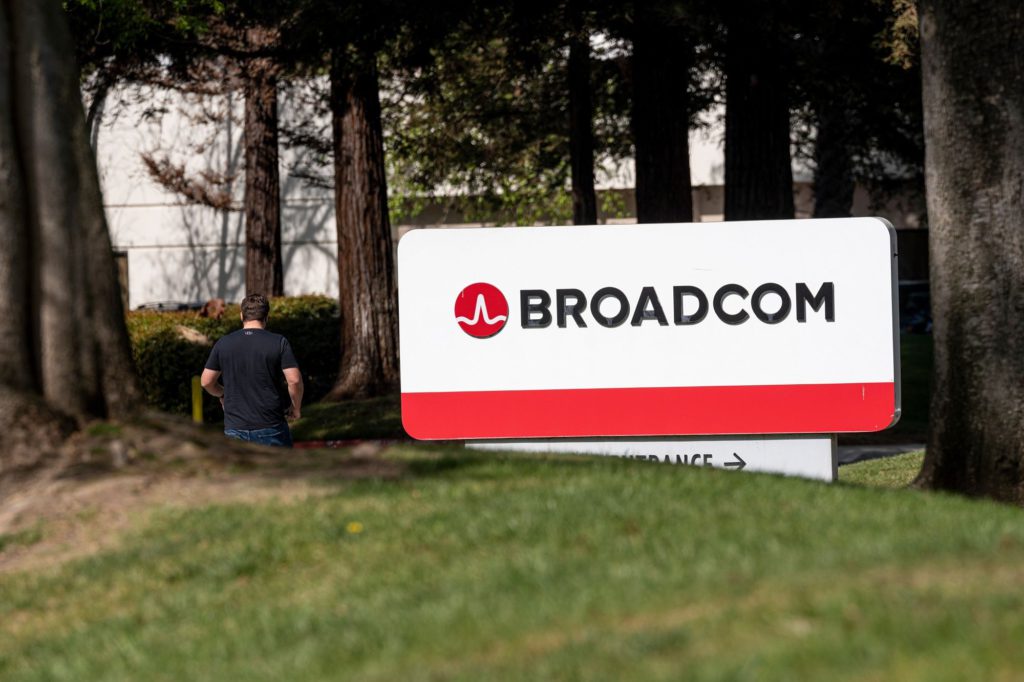
(Bloomberg) — Broadcom Inc., a chipmaker that supplies some of the largest companies in the tech industry, gave a strong sales forecast for the current quarter, allaying fears that spending on internet infrastructure is slowing. 

Revenue in the fiscal fourth quarter will be about $8.9 billion, Broadcom said in a statement Thursday, compared with an average analyst estimate of $8.72 billion. The shares rose about 2% in late trading following the report.

The outlook suggests Broadcom is sidestepping a broader decline in chip demand, at least for now. Other suppliers, including Nvidia Corp., Intel Corp. and Micron Technology Inc., have predicted a steep sales slowdown — hurt by sluggish orders of personal computers and smartphones. Given that pessimism, Broadcom Chief Executive Officer Hock Tan acknowledged that his company’s report was “somewhat surreal.”

“From our vantage point, infrastructure spending is still very much holding,” Tan said on a conference call with analysts. “It’s true end demand.”

Broadcom’s backlog of orders, which can’t be canceled, is expanding and now sits at $31 billion, Tan said. The company is rigorous in ensuring that those orders reflect demand for real products — and aren’t just going to be sitting in a warehouse. Broadcom’s average lead time, the gap between getting an order and filling it, remains at 50 weeks, Tan said. 

Broadcom is faring better than companies that focus on chips for PCs, which aren’t selling well because consumers are coping with inflation and putting off big-ticket purchases. Nvidia revealed an additional headache this week when it said that new restrictions on exporting to China could hurt sales. The warning triggered a decline in chip stocks Thursday, with Nvidia falling as much as 12%.

Broadcom, which gets about 30% of its chip revenue from China, hasn’t received a notice from the US government and doesn’t expect to, according to Tan. 

Broadcom sells a wide range of chips, making the San Jose, California-based company a bellwether for the tech industry.

Its semiconductors provide short-range connectivity for many Apple Inc. devices, including the iPhone. Other products are key to the networking machinery inside giant data centers owned by Amazon.com Inc.’s AWS and Alphabet Inc.’s Google. Cisco Systems Inc. uses those same chips in its products for corporate data centers, and a different range of Broadcom silicon runs many of the world’s set-top boxes.

Broadcom said demand from its large North American customer, its code for Apple, was solid and that it expects an increase in the current period when that company debuts a new range of models. The chip supplier said it expects unit volumes to be about the same as they were when the previous model was introduced. 

Broadcom also has branched out into enterprise software by acquiring security and mainframe capabilities. And it’s trying to extend that diversification with a $61 billion purchase of VMWare Inc. in a transaction announced May 26.

The company, like many of its peers, outsources much of its production. The biggest struggle in the past two years has been getting enough supply from those manufacturers. Now those shortages are at risk of turning into an inventory buildup.

In the third quarter, which ended July 31, Broadcom’s profit rose to $9.73 a share, excluding some items. Revenue climbed to $8.46 billion. Analysts had predicted a profit of $9.57 a share on sales of $8.41 billion.

Tan has predicted that the chip business will decelerate to historical growth rates of about 5% or less. That would be a major comedown from last year, when sales surged 26%. 

Investors have already decided that the latest chip boom has run its course. Broadcom has fallen 26% in 2022 through Thursday’s close, in line with the Philadelphia Stock Exchange Semiconductor Index.

(Updates with comment from CEO in fourth paragraph.)

More stories like this are available on bloomberg.com

©2022 Bloomberg L.P.

Snap Says Web3 Projects “Not a Priority” as Layoffs Bite

(Bloomberg) — Snap Inc. is sunsetting efforts focused on building products for the much-vaunted next generation of the internet known as web3, according to a former research and development manager at the social media platform. 

The California-based tech company said this week it would slash 20% of its employee base and cut investments in any projects that don’t directly contribute to what CEO Evan Spiegel outlined as three strategic priorities: community growth, revenue growth and augmented reality. 

According to a tweet posted on Wednesday by a Twitter account linked to Jake Sheinman, a research and development manager for web3 at Snap, web3 was not seen as contributing to those goals. 

“As a result of the company restructure, decisions were made to sunset our web3 team. The same team that I co-founded last year with other pirates who believed in digital ownership and the role that AR can play to support that,” Sheinman wrote in the Aug. 31 tweet. Sheinman did not respond to a request for further comment. 

A Snap spokesperson said that while augmented reality is a continued focus for the company, “early explorations in the web3 space represent a project that doesn’t directly contribute to our priority and continued investment in AR,” adding that only a few people were involved with the web3 effort.

Several external creators of nonfungible tokens — unique digital collectibles sold in exchange for cryptocurrency on platforms like OpenSea and LooksRare — said they had worked with Snap to launch AR filters, known as Lenses, that featured their NFTs in recent months. The filters allow users to create pictures and videos that showcase their NFTs in 3D formats, and had been popping up more frequently on the platform as Snap sought new ways to engage influencers with its products. 

Lenses using artwork from collections including Invisible Friends, Nouns and Drug Receipts had appeared on the platform over the summer. A report by the Financial Times in July, citing a person familiar with the matter, said Snap was exploring third-party partnerships that could help NFT creators monetize their designs.

Snap’s action stands in contrast to moves by rival Meta Inc., which said it would shift its business to focus on new developments in web3 and the metaverse last year, changing its name and hiring teams of staff to build a virtual reality platform called Horizon Worlds. Alphabet Inc.’s YouTube also said it was hiring for a head of web3 earlier this year.

Read more: Inside ‘Web3,’ Crypto’s Plan to Retool the Internet: QuickTake

Other projects being scrapped by Snap as part of the layoffs include its internally-produced series of short-form shows Snap Originals, in-app games and Pixy, a flying camera drone that had been in development since 2017.

More stories like this are available on bloomberg.com

©2022 Bloomberg L.P.

Apple Employees in Oklahoma City Petition to Unionize Store

(Bloomberg) — Apple Inc. workers in Oklahoma City petitioned Thursday to unionize their store, extending a wave of organizing within the company and the broader retail industry.

Employees filed a petition with the National Labor Relations Board seeking a vote on joining the Communications Workers of America union. The location, inside the city’s Penn Square Mall, is one of about 270 US retail stores operated by the iPhone maker.

The Oklahoma petition comes about two months after workers at a Maryland Apple store voted to unionize with the International Association of Machinists, adding to recent landmark labor wins at major US companies. Unions have established footholds at Amazon.com Inc., Starbucks Corp., Trader Joe’s and Chipotle Mexican Grill Inc.

“This is a really great time to bring back the labor movement,” said Oklahoma City employee Michael Forsythe, one of the leaders of the campaign there. Roughly 70% of the store’s eligible workers have signed up with the union, according to the CWA, which represents a swath of industries including technology, airlines and media.

Apple, based in Cupertino, California, didn’t immediately respond to a request for comment. 

When the labor board determines that a union has signed up at least 30% of an appropriate potential bargaining unit at a workplace — if the company hasn’t voluntarily agreed to recognize the group — the agency holds an election. If the union then wins a majority of the votes, the company is legally required to collectively bargain over working conditions. Reaching a contract for the first time can be a long and arduous process, though, especially when a company wants to avoid encouraging additional organizing at other sites.

The Oklahoma City workers could be the first from Apple to vote on joining CWA. The union, which won elections this year among Verizon Communications Inc. retail employees, Activision Blizzard Inc. quality-assurance testers and subcontracted Google Fiber staff, has said it’s been hearing from numerous Apple workers around the country. It petitioned in April to represent Apple store employees in Atlanta, but withdrew that request the week before a planned vote, citing alleged illegal union busting by Apple, as well as Covid-19 safety concerns about in-person voting.

The company has previously said when asked about union efforts and union-busting allegations that it is “pleased to offer very strong compensation and benefits for full-time and part-time employees, including health care, tuition reimbursement, new parental leave, paid family leave, annual stock grants and many other benefits.”

In a video message to workers earlier this year, Apple retail chief Deirdre O’Brien said she was worried about “what it would mean to put another organization in the middle of our relationship.” The company also announced in May that it would hike the minimum pay for its retail staff to $22 an hour.

The Oklahoma City workers said they were inspired by the Atlanta campaign, and have consulted with employees behind it to know what pushback to expect from the company and how to withstand it.

Employees want more transparency and input on issues like safety, scheduling and pay, said Forsythe, who’s worked at Apple for nine years.

“I do really love the company,” he said. “There are changes that I do know need to happen, but I don’t believe it’s necessarily with our direct managers. I see this as a thing between the workers and Big Apple.”

More stories like this are available on bloomberg.com

©2022 Bloomberg L.P.

Uber and Lyft Drivers in New York Struggle With City’s EV-Charging Divide

(Bloomberg) — Manhattan’s abundance of electric-car chargers is a boon for the burgeoning number of Tesla drivers in New York’s wealthiest borough. But for the vast majority of ride-share drivers who live elsewhere in the Big Apple, that network is largely out of reach.

This EV-charging divide poses a challenge for ride-hailing leaders Uber and Lyft, which need more drivers behind the wheels of electric vehicles to meet their lofty emissions-reduction goals.

Bronx-based Mohammed Islam, 44, typically spends about 30 minutes and roughly $40 to charge his Tesla Model Y SUV inside the parking garage of the Bay Plaza Shopping Center before starting a shift for Uber. It’s a short drive from his home and one of the only public fast chargers in the borough that can power an electric car battery to 80% in half an hour. If it’s too crowded or the chargers don’t work, the closest option is a lower-voltage facility a mile away, where an equivalent charge would take almost eight hours. 

“I get there early to avoid the lines but I’m always a little worried,” he said. “Maybe it’s not gas but there’s still a price, one way or the other. When I’m charging, I’m not picking people up.” 

Manhattan is New York’s richest borough and has by far the most chargers, according to the Department of Transportation. However, most Uber and Lyft drivers live in the outer boroughs. At 40%, Queens has the highest concentration of ride-share drivers in the city, according to the Taxi and Limousine Commission, yet has only 16% of the city’s over 1,900 public chargers. 

The range anxiety that can plague any EV owner is especially acute for these ride-share drivers in New York, where most count on driving as a full-time job. For them, the unequal distribution of chargers directly affects their take-home pay. It’s also a problem for their platforms. Uber Technologies Inc. and Lyft Inc. both pledged to electrify fleets in North America by 2030 and have ramped up incentives and perks to entice drivers to trade in gas guzzlers for an EV. Their goals are colliding with a charging system that was made to serve wealthy customers and not working-class members of the gig economy. 

It’s an uphill climb for the San Francisco-based apps. Only 1% of the 71,500 ride-share vehicles in New York are electric, according to the TLC. That’s slightly better than at the national level, according to clean-energy research firm BloombergNEF. Uber is doing better in Europe, where government incentives have helped spur the switch to EVs.

Uber has 26,000 EVs active on the platform and plans to spend $800 million in incentives, charging discounts and other benefits to help drivers make the switch to an electric vehicle. In London it’s taking steps to get more EVs on the streets by partnering with fintech Moove, which uses an alternative underwriting model to make it easier for gig workers to get a vehicle.

Uber also recently created a new role — head of charging infrastructure — dedicated to working with car manufacturers, charging companies and others to expand access for drivers. 

“For Uber to be successful in the EV transition, we need to make investment go into places where drivers are concentrated,” said Chris Hook, who leads global sustainability strategy at Uber. “It needs to be equitable.” 

Queens-based Viraj Desai, 25, said he isn’t willing to trade the certainty his Toyota Camry provides for his Uber shifts, even if it comes with a high gas bill.

“I would never switch to an EV. I’ve seen too many people wasting their time charging,” he said. “I need to know I can work. I can’t afford to be offline.”

For their part, cities should prioritize building public chargers in lower income neighborhoods, Hook said. Uber is working with lawmakers in key cities including London and Paris by sharing data on driving patterns like trip durations, pickups and destinations. It’s also helping drum up interest from car-charging companies that are skeptical of the commercial benefits of rollouts in lower income areas where, on the whole, EV adoption is still nascent. 

Lyft said its EV rental program and partnerships with charging providers like EVgo and Electrify America have helped boost the number of EVs on its platform by 22% compared with last year. Still, “there’s a very big role for the public side to fill in order to address charging equity, and ride-share can be a powerful partner,” Paul Augustine, Lyft’s director of sustainability, said in an interview. In May, the company wrote to New York Governor Kathy Hochul to stress the importance of increasing funding to charging access for low-income and disadvantaged communities.  

“The buck stops with all of us,” Augustine said. “We need to set the right market conditions where it’s a no-brainer for drivers to make the switch.”

New York’s lawmakers have goals of their own: the Department of Transportation plans to install 10,000 curbside chargers across all five boroughs and equip 40% of parking spots in municipal lots with fast chargers by 2030. Spokesman Vin Barone said more than 85% of curbside chargers installed by the city are in the outer boroughs.

“Equity is a guiding principle as this administration works to expand access to electric vehicle charging,” he said. “DOT will continue to work closely with the TLC on policy and infrastructure to support the transition to EVs among for-hire vehicle drivers and all drivers in the city.”

Uber has pledged to be zero-emissions globally by 2040 and Lyft, which only operates in North America, has targeted 2030. New York is one of their largest markets, so progress on electrification there is critical to reaching their climate goals.

Even under ambitious policy scenarios, the city still has a long way to go, according to Matthew Moniot, a researcher at the US Department of Energy’s National Renewable Energy Laboratory. Moniot led a May study on New York’s charging network and ride-hailing services that showed even if EVs made up only 30% of its ride-hailing fleet, the city would need to increase the current count of 68 fast-charging ports to over 1,000 to meet demand. 

Expanding public charging alone won’t solve EV’s inequality problem, Moniot said. “It won’t be fully equitable until ride-share drivers are able to charge at home,” he said. New York’s ride-share EVs have to charge three times more frequently than personal cars because they build up mileage more quickly.

“The trick is finding ways to charge off-shift so they can dedicate time to making money,” he said.  

(Adds detail on London EV plans in eighth paragraph. In an earlier version the company corrected the number of electric vehicles in the eighth paragraph.)

More stories like this are available on bloomberg.com

©2022 Bloomberg L.P.

US Stocks End Session Higher Before Jobs Report: Markets Wrap

(Bloomberg) — A surprising late-day reversal took US stocks higher as investors await Friday’s jobs report to gauge how hawkish the Federal Reserve will be. Recent data pointed to a resilient US economy, buoying sentiment later in the day. 

The S&P 500 ended its losing streak on Thursday, after falling for most of the session. The Nasdaq 100 finished the day flat. Treasuries slumped amid a selloff that left the two-year yield at the highest in almost 15 years. The dollar surged to a record high on speculation that latest data will force the central bank to raise rates by three-quarters of a percentage point at its meeting later this month.

Several Fed officials in recent days reiterated their promise to remain aggressive to control inflation, quashing any hopes of a dovish pivot investors had come to expect after July’s inflation reading. A fresh batch of labor-market and manufacturing data this week also pointed to a resilient US economy, strengthening the central bank’s resolve. But some investors positioned themselves to take advantage of recent market dislocations, bolstered by the positive data. 

“We’re taking a more opportunistic tone when it comes to markets,” Ashish Shah at Goldman Sachs Asset Management said on Bloomberg TV. “There’s going to be a lot of back and forth through the data and you want to set yourself up to be investing because sitting in cash is really expensive right now.”

Still, stocks are entering a month that is often poor for returns, following losses in August. The S&P 500 has averaged declines of 0.6% and 0.7% for August and September, respectively, over the past 25 years.

“Right now you have to be patient,” said Megan Horneman, chief investment officer at Verdence Capital Advisors. “I wouldn’t try and get in the middle of this kind of reset and re-pricing we’ve seen. The markets can move pretty violently.”

Read More: Bostic Says Fed Has ‘Work to Do’ With Inflation Long Way From 2%


Risk assets had been under pressure after China put the megacity of Chengdu under lockdown, delivering a blow to economic growth. Chengdu’s lockdown continues to ripple through the economy. Factory slowdowns in Europe and Asia also reflect dwindling demand.

Investors are also assessing political risks as Russia’s invasion of Ukraine continues and tensions in Taiwan mount, with the latter shooting down a civilian drone after weeks of complaints about incursions by unmanned aerial vehicles from China.

Russia is considering a plan to buy as much as $70 billion in yuan and other “friendly” currencies this year to slow the ruble’s surge, before shifting to a longer-term strategy of selling its holdings of the Chinese currency to fund investment. 

“The Fed effect is now melding with other global factors such as China’s growth slowdown and Europe’s stagflation to create a more fraught global macro environment with higher rates and lower growth,” said Alvin Tan, strategist at RBC Capital Markets in Singapore. “It is this combination of hawkish central banks led by the Fed, China’s slowdown and Europe’s stagflation that is now driving volatility across global markets.”

Here are some key events to watch this week:

  • ECB Governing Council members due to speak at event Tuesday through Sept. 2
  • US nonfarm payrolls, Friday
  • UK leadership ballot closes Friday. Winner announced Sept. 5

Will Chinese sovereign bonds outperform Treasuries? China is the theme of this week’s MLIV Pulse survey. Click here to participate anonymously.

Some of the main moves in markets:

Stocks

  • The S&P 500 rose 0.3% as of 4 p.m. New York time
  • The Nasdaq 100 was little changed
  • The Dow Jones Industrial Average rose 0.5%
  • The MSCI World index fell 0.6%

Currencies

  • The Bloomberg Dollar Spot Index rose 0.7%
  • The euro fell 1.1% to $0.9945
  • The British pound fell 0.7% to $1.1541
  • The Japanese yen fell 0.9% to 140.20 per dollar

Bonds

  • The yield on 10-year Treasuries advanced seven basis points to 3.26%
  • Germany’s 10-year yield advanced two basis points to 1.56%
  • Britain’s 10-year yield advanced eight basis points to 2.88%

Commodities

  • West Texas Intermediate crude fell 3.5% to $86.40 a barrel
  • Gold futures fell 1.1% to $1,706.40 an ounce

More stories like this are available on bloomberg.com

©2022 Bloomberg L.P.

Japan’s King of Deals Preps His Biggest Buy in Yen Headwinds

(Bloomberg) — Minebea Mitsumi Inc.’s chief executive officer — dubbed the “King of Deals” in Japan — seeks his biggest acquisition yet, even as a crumbling yen constrains his search. 

The Tokyo-based maker of ball bearings and high-precision components is in the market to buy a company with revenue of 300 billion yen ($2.1 billion) or more in the next few years, Chief Executive Officer Yoshihisa Kainuma, 66, told Bloomberg News in an interview. 

Kainuma declined to elaborate further on a timeframe or whether talks are ongoing, but he said separately that the company is keen to buy makers of machine components to beef up its product offerings. The company supplies a wide range of components to customers including Apple Inc., Nintendo Co. and Toyota Motor Corp., according to Bloomberg Data.

“Even when the world gets fully digitalized, you always need to physically pick things up and move things around in the end,” he said. “You need machine components to get the job done.”

With a chronic weak yen weighing on the company’s ability to match rivals’ bids for overseas firms on the block recently, Minebea Mitsumi has been on a spending spree at home. In a span of weeks in July and August, it snatched up companies Sumiko Tec Co., Honda Tsushin Kogyo Co. and Honda Lock Manufacturing Co. The Japanese currency dropped to its lowest in 24 years on Thursday. 

“The current exchange rate makes overseas companies cost 20% to 30% more, making it very risky to buy them now,” Kainuma said. “I pride myself on my ability to buy low.”

Since taking the CEO post in 2009, Kainuma has purchased 23 companies and says he is constantly juggling about five potential deals to expand the company’s lineup to meet a rapidly changing market. Minebea Mitsumi targets adding sales of 800 billion yen, or about 70% of its current revenue, through acquisitions by 2029.

“We want to be a sort of grocery store, where a customer can buy meat, fish, vegetables and liquors of all the same quality at reasonable prices,” Kainuma said of the company’s pursuit of components used in products such as energy-efficient lighting.

Kainuma’s most successful deal has been the purchase of Mitsumi Electric Co. in 2017. After turning around the then-struggling Nintendo supplier, the Mitsumi unit now contributes more than 30% of the entire group’s revenue.

Decades of similarly well-timed deals have kept Minebea Mitsumi relevant during successive waves of technology — from hard disks to smartphones and game consoles. They helped Kainuma’s firm grow from a small ball-bearing supplier on the outskirts of Tokyo to a key player in the global technology supply chain.

The market expects Minebea Mitsumi to buy more automobile-related component firms to partner with auto parts unit U-Shin Ltd., said Hideki Yasuda, an analyst at Toyo Securities. “Kainuma is good at not just buying companies but also post-merger integration,” he said. “We want to see him filling in gaps between U-Shin and other units of the company for better across-the-portfolio synergy.”

Read more: Japan’s King of Deals Preparing to Pounce Once Valuations Dip

More stories like this are available on bloomberg.com

©2022 Bloomberg L.P.

EU Will Propose Crisis Tool for Supply Chain Emergencies

(Bloomberg) — The European Commission wants the power to force companies to fill orders within the European Union first during times of crisis, or risk fines.

According to a draft document seen by Bloomberg News, “the Commission may, in exceptional circumstances,” require companies to accept such priority rated orders of “crisis-relevant goods.” If they don’t, companies could face fines up to “1.5% of the average daily turnover in the preceding business year for each working day of non-compliance,” the draft said.

The commission is set to make the proposal public in mid-September. Nine EU countries — including Belgium, Denmark and the Netherlands — warned this summer as the proposal was being drafted that it could overstep the bloc’s authority.

EU Nations Warn Brussels Over Crisis Plan for Supply-Chain Gaps  

The Single Market Emergency Instrument plan would give the commission far more power to intervene in the EU’s supply chain in a crisis. Motivated by the initial chaos caused by the Covid-19 pandemic, the proposal is seen internally as the EU’s equivalent of the US Defense Production Act.

The EU’s executive arm wrote that recent crises like the pandemic and Russia’s invasion of Ukraine have shown how “fragile” the single market can be and how much the European economy depends on it.

This will only become more important anticipating possible emergencies including “geopolitical instability, climate change and resulting natural disasters, biodiversity loss, and global economic instability,” the commission wrote. “The functioning of the Single Market needs to be guaranteed in times of emergency.”

The commission already included similar ideas when it proposed the EU’s Chips Act earlier this year to head off potential semiconductor shortages. 

Closer monitoring of supply chains will be a major part of the EU’s plan. Both the commission and EU countries would consistently audit strategic supply chains to prevent shortages. The draft repeatedly said that the EU would safeguard the confidentiality of commercially sensitive information.

Fines for Violations

Just as the commission could have the power to fine companies that do not prioritize EU orders, the commission could also fine companies that “intentionally or through gross negligence” supply incorrect or misleading information. A fine for not supplying the right information could not exceed 300,000 euros.

EU countries could also be required to stockpile certain items if a so-called “vigilance mode” is activated. Either the commission, or 14 member states, could force an EU country to do so if “the efforts of the Member State concerned to meet the voluntary target are insufficient, but also indispensable to ensure the preparedness to a potential Single Market emergency.”

The commission, building on its lead role in purchasing vaccines during the Covid pandemic, would be allowed to negotiate for crisis-relevant goods if at least two EU countries request it. EU countries that participate in the joint purchase would not be allowed to purchase the items separately.

Freedom of Movement

The commission also wants more authority to avoid internal EU border closures and export bans as happened in the early days of the pandemic, when countries like Germany and France cut off supplies of personal protective equipment and the Schengen area was repeatedly closed.

The commission wrote in the draft that EU countries should only limit the free movement of people if there are no alternatives. These restrictions must be “evidence-based” and time-limited.

Countries could not grant more generous travel rules to neighboring member states or make travel unnecessarily complicated for workers during an emergency. Similarly, countries could not impose any export restrictions within the EU of any “crisis-relevant goods.”

The commission would also be able to force a country to lift any measures that impact the free movement of goods, services or people if they do not comply with EU law.

(Updates throughout.)

More stories like this are available on bloomberg.com

©2022 Bloomberg L.P.

GM’s Cruise Recalls Self-Driving Software After June Crash

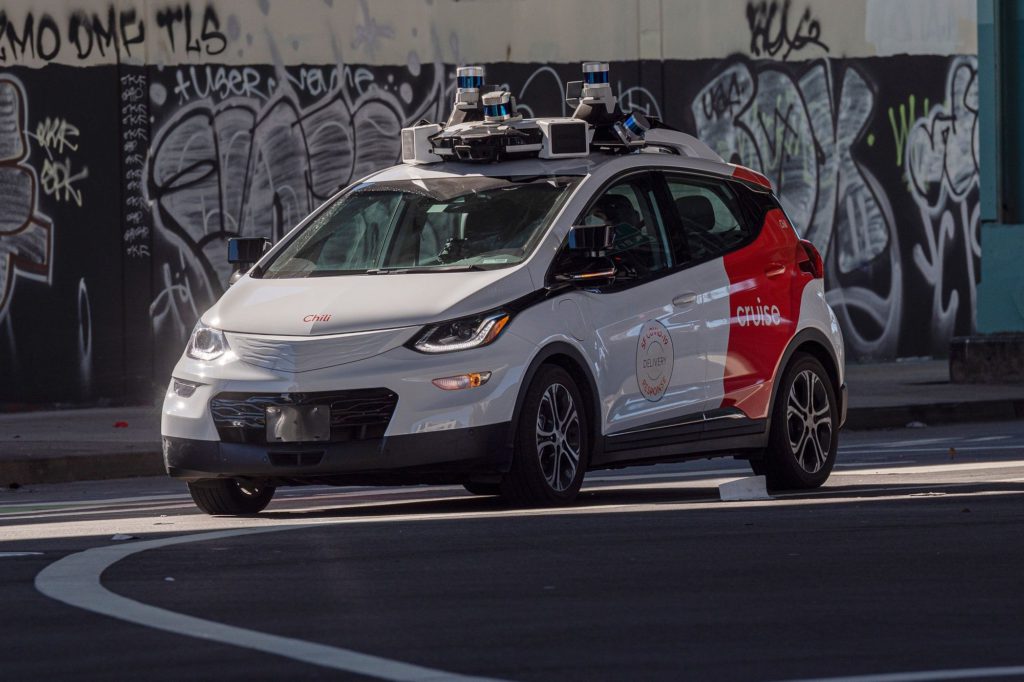
(Bloomberg) — General Motors Co.’s Cruise self-driving car unit has recalled an older version of software used by its robotaxis at the time of a crash in San Francisco in June, according to federal transportation regulators. 

Cruise has updated the automated driving system, or ADS, software and all affected vehicles were repaired in July, the National High Traffic Safety Administration said in a report posted early Thursday on its website. The issue centered on situations in which the driverless cars turned left at traffic signals without a green arrow light.

“The software may, in certain circumstances when making an unprotected left, cause the ADS to incorrectly predict another vehicle’s path or be insufficiently reactive to the sudden path change of a road user,” the report said. 

Cruise won permission from the California Public Utilities Commission on June 2 to charge fares late at night for its robotaxi service. The next day, one of its cars collided with a Toyota Prius while trying to make an unprotected left turn. The Prius driver was driving 40 miles an hour in a 25 mph zone. 

Read more: GM’s Cruise Plots Quick Expansion After Debuting Robotaxi Fares

The incident prompted both NHTSA and Cruise’s board to start asking questions, resulting in the recall filing. Cruise no longer uses that version of software, which was in use in 80 of its cars at the time of the accident.

“We submitted this voluntary filing in the interest of transparency to the public,” Cruise spokeswoman Hannah Lindow said in an email. “It pertains to a prior version of software and does not impact or change our current on-road operations.”

Separately, Cruise also has had to make fixes to its self-driving system after about a dozen cars all stopped in the same intersection in San Francisco, hemming other motorists in while the company sent employees to retrieve the cars.

GM shares rose just under 1% to close at $38.56 in New York trading. The stock is down 34% this year.

Related: GM Wants to Test Self-Driving Car With No Steering Wheel, Pedals

(Updates with GM share price in the eighth paragraph.)

More stories like this are available on bloomberg.com

©2022 Bloomberg L.P.
Close Bitnami banner
Bitnami