Bloomberg

Stocks, Commodities Fall as Growth Concerns Spread: Markets Wrap

(Bloomberg) — Global equities sank to a six-week low, the dollar rallied and commodities tumbled after China put the megacity of Chengdu under lockdown, delivering a blow to economic growth.

Nasdaq 100 Index futures dropped and US chipmakers fell in premarket trading after Nvidia Corp. warned that new rules on China exports may affect hundreds of millions of dollars in revenue, though shares pared losses after the company said it got US government approval needed to continue its development of some circuits.

European bonds tumbled, with Italian 10-year yields topping 4% for the first time since June, as investors bet that the central bank will have to deliver more interest-rate hikes. The euro weakened and the yen dropped to a 24-year low.

Across markets, investors were pulling out of risk assets and looking for safety in cash. Fears of an economic slowdown are intensifying as European and US policymakers implement restrictive monetary policy to choke inflation.

Stocks are also entering a month that is often poor for returns, following losses in August. The S&P 500 has averaged declines of 0.6% and 0.7% for August and September, respectively, over the past 25 years.

Chengdu is the biggest city to shut down since Shanghai’s two-month lockdown earlier this year, with that move continuing to ripple through the economy. Factory slowdowns in Europe and Asia also reflect dwindling demand.

Oil and natural gas retreated as Europe considers various measures to intervene in the energy market. But with the region’s energy crisis spurring record inflation, many now expect the European Central Bank to hike rates by 75 basis points at next week’s meeting. 

The US jobs report on Friday also has the potential to tip the scales toward a third move of that size later this month after Federal Reserve Chair Jerome Powell said it could be on the table, depending on the data. Initial unemployment claims fell for a third week to a two-month low, suggesting healthy demand for labor even as economic growth moderates. 

“Powell gave no doubt that the central bank will do whatever it takes to dampen inflation,” Geir Lode, head of global equities at Federated Hermes Ltd wrote in a note to investors. “A triple interest rate of 75 basis points is expected in the market.”

Investors are also assessing political risks as Russia’s invasion of Ukraine continues and tensions in Taiwan mount, with the latter shooting down a civilian drone after weeks of complaints about incursions by unmanned aerial vehicles from China.

Russia is considering a plan to buy as much as $70 billion in yuan and other “friendly” currencies this year to slow the ruble’s surge, before shifting to a longer-term strategy of selling its holdings of the Chinese currency to fund investment. 

“The Fed effect is now melding with other global factors such as China’s growth slowdown and Europe’s stagflation to create a more fraught global macro environment with higher rates and lower growth,” said Alvin Tan, strategist at RBC Capital Markets in Singapore. “It is this combination of hawkish central banks led by the Fed, China’s slowdown and Europe’s stagflation that is now driving volatility across global markets.”

Here are some key events to watch this week:

  • ECB Governing Council members due to speak at event Tuesday through Sept. 2
  • US nonfarm payrolls, Friday
  • UK leadership ballot closes Friday. Winner announced Sept. 5

Will Chinese sovereign bonds outperform Treasuries? China is the theme of this week’s MLIV Pulse survey. Click here to participate anonymously.

Some of the main moves in markets:

Stocks

  • Futures on the S&P 500 fell 0.6% as of 8:38 a.m. New York time
  • Futures on the Nasdaq 100 fell 0.9%
  • Futures on the Dow Jones Industrial Average fell 0.5%
  • The Stoxx Europe 600 fell 1.3%
  • The MSCI World index fell 0.6%

Currencies

  • The Bloomberg Dollar Spot Index rose 0.4%
  • The euro fell 0.6% to $0.9992
  • The British pound fell 0.6% to $1.1556
  • The Japanese yen fell 0.4% to 139.57 per dollar

Bonds

  • The yield on 10-year Treasuries advanced six basis points to 3.26%
  • Germany’s 10-year yield advanced six basis points to 1.60%
  • Britain’s 10-year yield advanced nine basis points to 2.89%

Commodities

  • West Texas Intermediate crude fell 1.4% to $88.32 a barrel
  • Gold futures fell 0.7% to $1,713.80 an ounce

More stories like this are available on bloomberg.com

©2022 Bloomberg L.P.

MercadoLibre Raises $193 Million in Sale of Brazil Real Estate Bonds

(Bloomberg) — Latin American e-commerce retailer and fintech provider MercadoLibre Inc. has tapped Brazil’s local debt market as it seeks to fund its largest investment plan for the nation yet.  

The firm raised 1 billion reais ($193 million) in local bonds that are backed by real-estate receivables known locally as CRIs, according to a statement. The transaction was led by Banco Itau BBA SA, Bradesco BBI SA and Banco Safra SA. 

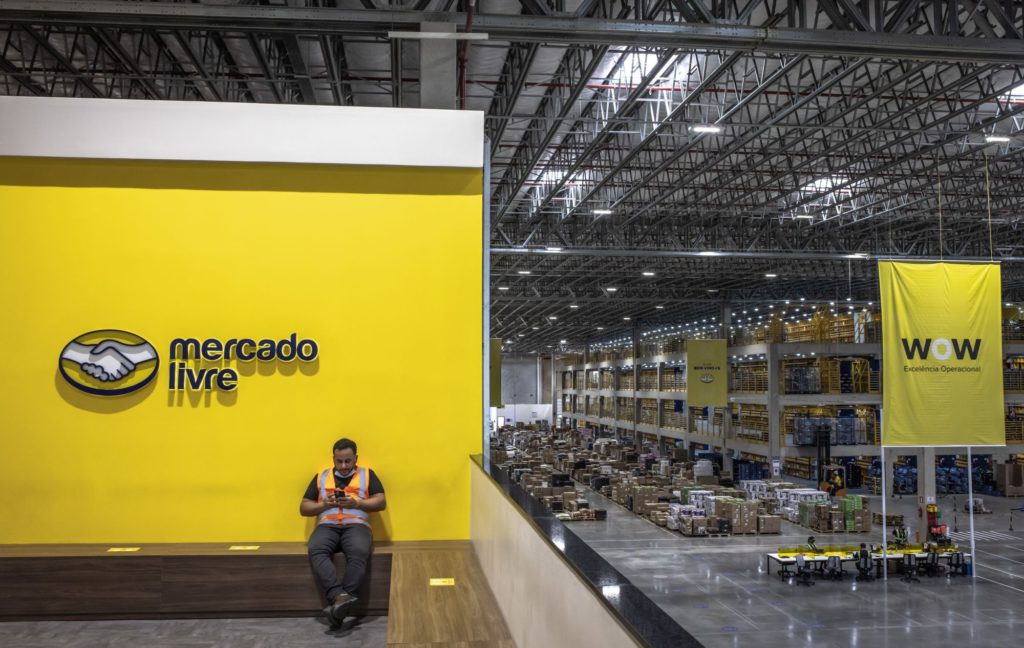
MercadoLibre plans to use the proceeds to expand and revamp its logistics network in Brazil, where it gets the majority of its revenues. The company had previously unveiled a plan to invest a record 17 billion reais in the country this year.

Read More: MercadoLibre Eyes More Investments in Credit Business, CFO Says

The deal takes place amid increased demand from investors for private-credit instruments as rates rise rates in Latin America’s largest economy.

More stories like this are available on bloomberg.com

©2022 Bloomberg L.P.

Microsoft’s $69 Billion Activision Deal Faces In-Depth UK Probe

(Bloomberg) — Microsoft Corp.’s planned $69 billion purchase of Activision Blizzard Inc. will be sent for an in-depth review unless the tech giant offers remedies to address the UK watchdog’s concerns. 

The Competition and Markets Authority said Thursday it was concerned about a substantial lessening of competition in the gaming consoles, multi-game subscription services and cloud gaming markets. It gave Microsoft a Sept. 8 deadline to come to an acceptable agreement with the agency.

The combination with Activision — which owns some of the most popular franchises including Call of Duty, World of Warcraft and Guitar Hero — will make Microsoft the world’s third-largest gaming company and boost the Xbox maker’s roster of titles for its Game Pass subscribers.

The CMA said in a statement it’s concerned Microsoft could use Activision’s games together with its own strength in the console, cloud and PC operating systems market to damage competition in the developing cloud market.

“We are concerned that Microsoft could use its control over popular games like Call of Duty and World of Warcraft post-merger to harm rivals, including recent and future rivals in multi-game subscription services and cloud gaming,” Sorcha O’Carroll, senior director of mergers at the CMA, said. 

The British agency has taken a more forceful approach on recent deals, particularly by the biggest technology companies. Microsoft announced it was buying Activision in January in what was the biggest ever gaming industry deal.

“We’re ready to work with the CMA on next steps and address any of its concerns,” Brad Smith, Microsoft’s president and vice chair, said. “Sony, as the industry leader, says it is worried about Call of Duty, but we’ve said we are committed to making the same game available on the same day on both Xbox and PlayStation.” 

Microsoft also released a letter Thursday from the company’s chief executive of gaming with an update on the regulatory scrutiny. 

The CMA joins other global regulators including the Federal Trade Commission in examining the deal and previously said it was working collaboratively to review the tie-up. Regulators are likely to look closely at how Microsoft’s ownership of Activision could harm rivals by limiting their access to the company’s biggest games.

The deal will be automatically referred to a thorough investigation if Microsoft does not offer any suitable proposals. A CMA phase 2 review allows for a more thorough investigation of internal information and document requests.

More stories like this are available on bloomberg.com

©2022 Bloomberg L.P.

Porsche Plans to Hire Mercedes’s Former Tech Chief Ahead of Potential IPO

(Bloomberg) — Porsche AG is planning a splashy new hire in the lead up to its probable initial public offering.

The Volkswagen AG-owned sports-car maker intends to appoint Sajjad Khan to its executive board, according to an emailed statement. He was chief technology officer at crosstown rival Mercedes-Benz Group AG until a year ago, when he left to start a venture capital fund.

Khan, 48, is expected to take on a similar role at Porsche, focusing primarily on car tech, the Stuggart, Germany-based manufacturer said. It’s not yet been decided exactly when the company will make a final decision on his appointment and start date. Handelsblatt reported earlier Thursday that Khan’s move to Porsche was imminent.

Porsche has lined up investor interest for its initial public offering at a valuation of as much as $85 billion, signaling one of Europe’s biggest-ever listings is poised to go ahead despite market headwinds, people familiar with the matter said last week. Khan would be a major addition to a management team led by Olive Blume, whose became chief executive officer of VW on Thursday.

More stories like this are available on bloomberg.com

©2022 Bloomberg L.P.

Nigerian Solar-Based Internet Provider Seeks IPO, $50 Million

(Bloomberg) — Tizeti, a US-backed Nigerian startup that connects homes to the internet through solar-powered towers, is looking to raise as much as $50 million to expand its operations. 

The company, which has backing from tech specialist Y Combinator, will seek funds from both an initial public offering in Lagos and a debt issue, Chief Executive Officer Kendall Ananyi said in an interview. The proceeds will be used to expand to 10 more states in Nigeria outside the main commercial hubs of Lagos, Abuja and Port Harcourt, as well as Ghana and Ivory Coast, he said. 

“We will be providing unlimited internet access to potentially 39 million Africans out of the unconnected 900 million on the continent,” Ananyi said. 

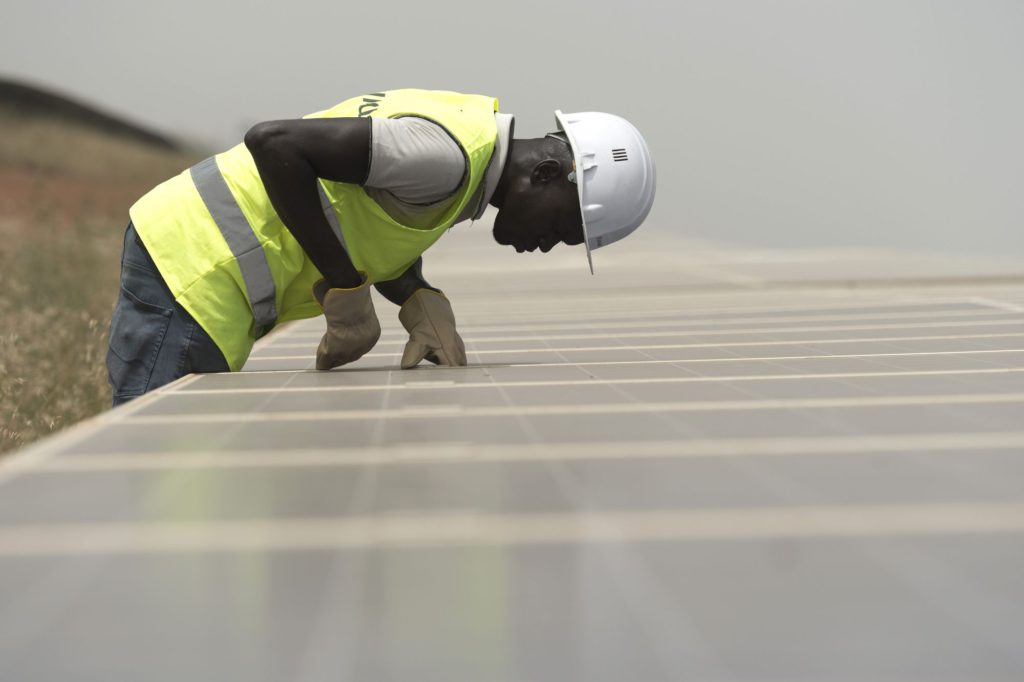
Tizeti, which started operations in 2012, has almost 4,000 hotspots providing internet services to 2.8 million customers in Nigeria and Ghana — albeit a fraction of the populations. Using solar power generates savings that can be passed onto customers, Ananyi said, and avoids the power shortages that have forced many companies to depend on expensive diesel-powered generators.

Demand for solar power in Nigeria has jumped after a more than 200% rise in the price of diesel following Russia’s invasion of Ukraine and the investor-driven desire for cleaner forms of energy. 

The Lagos-based startup previously raised $2.1 million in a seed round in 2017, followed by a $3 million series A in 2018. It has been profitable since then, according to Ananyi. Investors in previous rounds include Y Combinator, WTI, Social Capital and 4DX ventures. 

More stories like this are available on bloomberg.com

©2022 Bloomberg L.P.

Samsung Electronics Debt Rating Raised to Same as Government

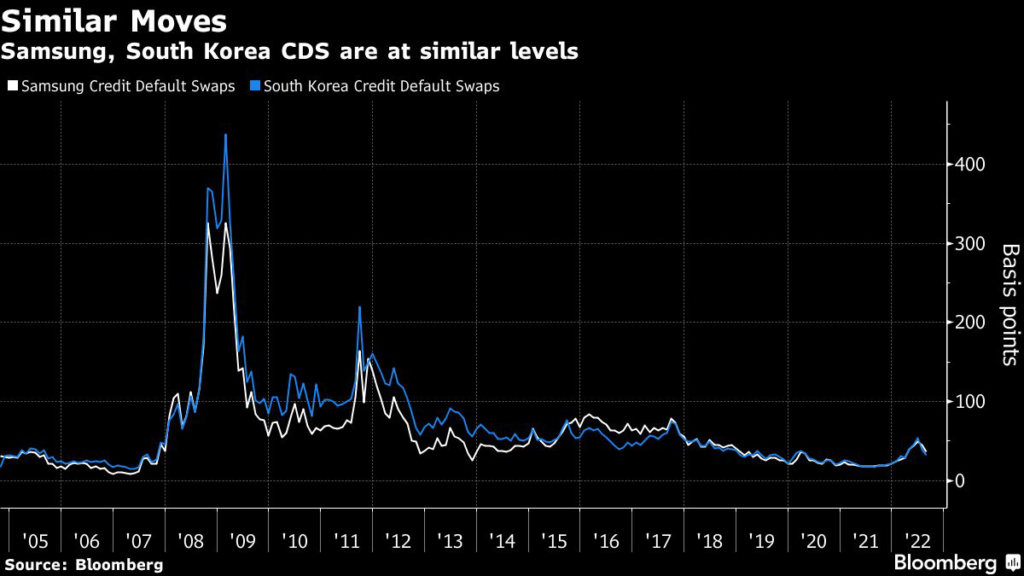
(Bloomberg) — Samsung Electronics Co.’s credit rating has been upgraded to the same level as the South Korean government by Moody’s Investors Service, highlighting the credit market’s confidence in the technology giant.

The senior unsecured debt rating of Korea’s biggest company was raised to Aa2, the third highest level, from Aa3, Moody’s said in a statement Thursday. The rating firm cited expectations that the Suwon-based company will maintain solid earnings over the foreseeable future and strong business and financial profile through business cycles. Moody’s also pointed to Samsung’s “exceptionally healthy balance sheet.”

Samsung Electronics has a massive presence in Asia’s fourth-biggest economy, with its revenue equivalent to around 13.5% of Korea’s gross domestic product in 2021, according to Bloomberg calculations. It’s not the only company with the same credit score as the government: Toyota Motor Corp. and the Japanese government both have an A1 rating from Moody’s, the fifth-highest grade.  

Read more: How Samsung Patriarch Helped Build Korea’s Tech-Driven Economy

While the global memory chip industry will likely undergo a significant cyclical downturn over the next several quarters, Samsung will remain solidly profitable, according to Moody’s. The company had a net cash position of 108 trillion won ($80 billion) as of June 30, while the total amount of public bonds and loans outstanding was $430 million, according to data compiled by Bloomberg.


More stories like this are available on bloomberg.com

©2022 Bloomberg L.P.

Aramco VC Fund Turns to Global Investments in Saudi Startup Push

(Bloomberg) —

Saudi Aramco’s venture capital arm is turning to international investments as part of the kingdom’s push to diversify its economy and attract global tech startups.

Wa’ed will invest about $100 million this year after spending around $50 million over the past nine years, Chief Executive Officer Fahad Alidi said in an interview. Its $200 million fund is planning 11 investments in the second half. On top of fintech and e-commerce, the firm will expand into sectors such as deep tech, space tech the metaverse and sustainability.

“We are deploying funds really fast,” Alidi said. “The pipeline is extremely rich locally and globally. In the very near future you might be hearing about two global investments that we hope to leverage for the benefit of Saudi Aramco.”

In its first global foray, Wa’ed has invested in 5G internet of things satellite operator OQ Technology as part of a 13 million euro ($13 million) series A funding round. 

Attracting Talent 

The plans reflect Saudi Arabia’s wider ambitions to invest internationally to diversify its economy and attract talent. The Gulf region currently has a dearth of so-called unicorns, or startups valued at $1 billion or more. But with oil prices rebounding and Saudi Arabia set to record its first budget surplus in nearly a decade, Alidi expects to see more opportunities. 

“Many global start ups see the next expansion avenue in the region as funding is available in plenty and they can have an edge by potentially relocating into Saudi Arabia and the GCC,” he said. “We will attract firms from those sectors and position the kingdom as the center of gravity for these global ventures.” 

To tap these opportunities, Wa’ed has increased the size of its typical investment to $20 million from $5 million, Alidi said. 

Luxembourg-based OQ Technology set up a satellite operation center in Saudi Arabia and is aiming to hire more than 120 people locally, Alidi said. They will train Saudi engineers to build a full space tech ecosystem.

More stories like this are available on bloomberg.com

©2022 Bloomberg L.P.

Global Stocks, Bonds Extend Selloff; Dollar Climbs: Markets Wrap

(Bloomberg) — Stocks and bonds extended their selloff on Thursday as a hawkish drumbeat from central banks and a lockdown in China further frayed investor nerves. The dollar gained. 

A global equity index hit a six-week low as Nasdaq 100 futures fell after a sales warning from Nvidia Corp. Miners led declines in Europe as commodities dropped amid concerns that aggressive tightening and China’s slowdown will lower demand.

Industrial metals fell after China moved to lock down Chengdu’s 21 million residents to contain a Covid-19 outbreak, while oil and natural gas retreated as Europe considers various measures to intervene in the energy market. Commodity-linked and Group-of-10 currencies weakened and the yen dropped to a 24-year low. 

Meanwhile, Russia is considering a plan to buy as much as $70 billion in yuan and other “friendly” currencies this year to slow the ruble’s surge, before shifting to a longer-term strategy of selling its holdings of the Chinese currency to fund investment. 

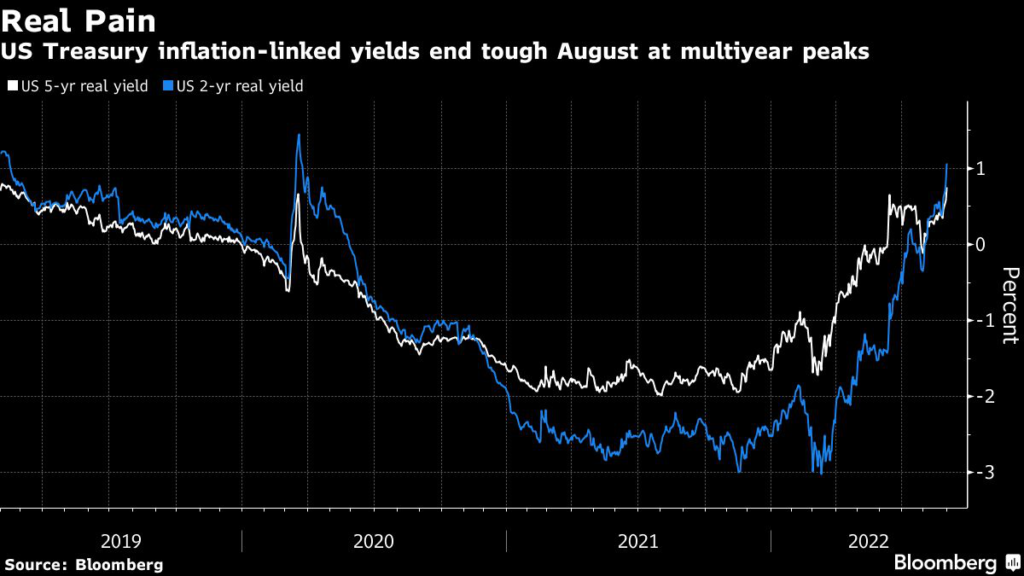
The market jitters come after August’s losses, reflecting fears of an economic downturn alongside restrictive monetary policy to choke inflation. A global bond rout saw the two-year Treasury yield touch 3.50% for the first time since 2007.

Stocks are entering a month that is often poor for returns and an equity bounce from June lows is fizzling as the Federal Reserve pushes back against bets on tempered rate hikes. A hotly anticipated US jobs report on Friday has the potential to tip the scales toward a third jumbo-sized hike in interest rates later this month.

Some of Wall Street’s biggest banks now expect the European Central Bank to hike rates by 75 basis points at next week’s meeting, while the latest economic data underlined a parlous outlook for China. 

“The Fed effect is now melding with other global factors such as China’s growth slowdown and Europe’s stagflation to create a more fraught global macro environment with higher rates and lower growth,” said Alvin Tan, strategist at RBC Capital Markets in Singapore. “It is this combination of hawkish central banks led by the Fed, China’s slowdown and Europe’s stagflation that is now driving volatility across global markets.”

Among individual moves, Reckitt Benckiser Group Plc’s shares fell on news that Chief Executive Officer Laxman Narasimhan will step down at the end of the month to pursue a new opportunity in the US. 

US chipmakers fell in premarket trading after Nvidia warned that new rules governing the export of artificial-intelligence chips to China may affect hundreds of millions of dollars in revenue. 

Here are some key events to watch this week:

  • ECB Governing Council members due to speak at event Tuesday through Sept. 2
  • US nonfarm payrolls, Friday
  • UK leadership ballot closes Friday. Winner announced Sept. 5

Will Chinese sovereign bonds outperform Treasuries? China is the theme of this week’s MLIV Pulse survey. Click here to participate anonymously.

Some of the main moves in markets:

Stocks

  • Futures on the S&P 500 fell 0.7% as of 5:50 a.m. New York time
  • Futures on the Nasdaq 100 fell 1.1%
  • Futures on the Dow Jones Industrial Average fell 0.5%
  • The Stoxx Europe 600 fell 1.4%
  • The MSCI World index fell 0.6%

Currencies

  • The Bloomberg Dollar Spot Index rose 0.2%
  • The euro fell 0.2% to $1.0029
  • The British pound fell 0.2% to $1.1599
  • The Japanese yen fell 0.1% to 139.15 per dollar

Bonds

  • The yield on 10-year Treasuries was little changed at 3.19%
  • Germany’s 10-year yield advanced four basis points to 1.58%
  • Britain’s 10-year yield advanced six basis points to 2.86%

Commodities

  • West Texas Intermediate crude fell 1.4% to $88.33 a barrel
  • Gold futures fell 0.4% to $1,719.20 an ounce

More stories like this are available on bloomberg.com

©2022 Bloomberg L.P.

Philippine Firm Converge Said to Weigh $1 Billion Network Deal

(Bloomberg) — Converge ICT Solutions Inc. is considering selling a stake in its infrastructure platform, according to people familiar with the matter, a move that would help the Philippine fiber provider raise cash to invest across the group. 

Co-founded and led by entrepreneur Dennis Anthony Uy, Converge has been holding talks with prospective advisers as it weighs a deal that would bring a minority investor into its networks platform, the people said, asking not to be identified because the matter is private. A transaction could help raise about $1 billion depending on the final size and structure, and draw interest from other firms in the industry and investment funds, the people said.

The company offers fixed broadband services for residential, enterprise and wholesale customers, counting more than 560,000 kilometers of fiber assets and a network reaching more than 13.5 million homes in the Philippines as of the end of June, according to a recent press release. It also offers integrated data-center and network solutions. Private-equity firm Warburg Pincus held a minority stake in Converge until earlier this year.

Its shares have dropped 45% this year, valuing the company at about $2.3 billion.

Considerations are at a preliminary stage, no final decisions have been made and Converge could still decide against pursuing a deal, the people said. 

While management regularly reviews opportunities to maximize shareholder value, no decision has been made on any such transaction, Converge’s Investor Relations Director Owen Kieffer Ocampo said in response to a Bloomberg News query. 

Digital infrastructure assets in Southeast Asia are drawing increasing investor interest. Globe Telecom Inc. in the Philippines last month agreed to sell two portfolios of towers to a KKR & Co.-backed company and a Stonepeak joint venture for about $1.3 billion. In Malaysia, DigitalBridge Group Inc. and Equinix Inc. have been shortlisted into a final round of talks for the data center business of Time Dotcom Bhd., Bloomberg News has reported. 

More stories like this are available on bloomberg.com

©2022 Bloomberg L.P.

Porsche Boss Faces Software Woes Keeping VW a Step Behind Tesla

(Bloomberg) — Herbert Diess’s master plan for beating Tesla Inc. hinged on replacing calloused factory hands with the nimble fingertips of 10,000 software workers who would transform Volkswagen AG into a tech player.

Instead, after two years of VW electric car customers angrily stabbing at screens and board members at the world’s second-largest automaker pointing fingers, Diess has been forced out. Porsche boss Oliver Blume, who starts as VW chief executive officer today, is all car guy rather than software guru and got the gig by being a team player and pragmatist.

The probability that Blume will make dramatic changes early in his tenure is low, and that risks prolonging the problems plaguing VW customers. Drivers’ car displays are seizing up and even going blank. For owners to gain the ability to get over-the-air updates of certain features — some of which may be safety-critical — VW is requiring many to drop their EV off for a day at the dealership. Infotainment systems reliant on software described as incomplete are making their way to more models, threatening VW’s position in sales and quality rankings.

“It’s the disease that’s spreading,” Jake Fisher, senior director of auto testing at Consumer Reports, said in an interview. “I’m talking about systems that, when you know how to use it, now it’s multiple steps to do something that used to be one button, and that is a shame. It’s moving backward and making these cars worse.”

Fisher was one of the more than a dozen testers or owners of VW’s ID series EVs and Tesla models in seven countries whom Bloomberg spoke with to get a sense of just how big a technological gap Blume has to close. ID drivers complained about their cars suddenly braking because of a traffic sign detection system so buggy, they tend to just deactivate it; a smartphone app that’s glitchy and lacking features; and challenges syncing their phone with their EV either wirelessly or with a cord.

“I hadn’t expected to buy a car that was unfinished,” said Christopher Bergsten, a 31-year-old in Linkoping, Sweden, who sold his ID.4 sport utility vehicle after less than six months. “I expected way more.”

Read more: Porsches Postponed by Buggy Software Cost VW’s CEO His Job

Diess started at VW in 2015, months before the diesel-emissions scandal that rocked the company to its core. He ascended to the top job three years later as the outsider who could clean up the mess. Almost immediately, Diess cut a check for an electric-vehicle battery order that almost matched Tesla’s market value at the time.

“I really liked what Diess did,” said Barry Holleran, a 47-year-old software engineer who was one of the first in Austria to take delivery of an ID.4. “He really put his neck out to make this move, and I thought as a consumer I should support that.”

Holleran said his SUV is well-engineered and a good, comfortable family vehicle — VW’s long history of building automobiles shined through. But the software? “Dreadful.” Updates are infrequent and the navigation system doesn’t work at all.

“The saving grace is Apple CarPlay,” Holleran said. “If it didn’t have that, to be honest, I would get rid of the car and I would go with a Tesla.”

Early in Diess’s tenure as CEO, Tesla was in what Elon Musk memorably referred to as production hell, struggling to mass-produce Model 3 sedans. For all the challenges the EV maker was having — Musk has said the company was weeks away from failing in 2018 — Diess recognized VW needed to massively expand investment in software capabilities.

One a-ha moment that year came when Consumer Reports initially denied a recommendation for the Model 3, saying it took longer to stop than the much larger Ford F-150 pickup. Musk tweeted the next day that Tesla would maybe be able to shorten stopping distances through an over-the-air update. The following week, Consumer Reports recommended the sedan after all — braking improved by almost 20 feet.

Much as that episode turned heads across the auto industry, VW and its legacy peers haven’t deployed software updates nearly as frequently as Tesla. Bert Steenbergen traded in his Skoda Kodiaq for an ID.4 early last year and has had two updates in the almost 20 months.

“The car was sold with a promise that every three months, there would be a software update. And that is not the case,” the 55-year-old former sales director for an energy company said. “They should be able to deliver the software, it’s not that complicated.”

Updating its vehicles every three months was part of VW’s long-term vision, said Benedikt Griffig, the automaker’s product and technology spokesman. “That was a misunderstanding when we started to announce OTA updates,” he said. “Our goal is also now with the ID family that we are bringing updates regularly to the customers. This is something we had to learn — it’s an agile process.”

Follow the future of the car industry by signing up for Bloomberg’s Hyperdrive newsletter here.

Incumbent automakers including VW are having to learn to be more nimble on several fronts to respond to Tesla, shifting to battery power from the tried and true internal combustion engines and to software from hardware.

“It’s easier to master electrification, since that’s a different way of converting energy and one that makes vehicles less complex,” said Jan Becker, co-founder and CEO of Apex.AI, which has developed an operating system for auto manufacturers. “Software is a completely new area of competence that needs to be built from scratch, not the ongoing development of existing skills.”

VW stumbled right out of the gate with its ID models. A software unit that Diess started when he was head of the brand set out in late 2016 to build the operating system for the vehicles and several follow-on models derived from their modular architecture. The initial EV of the series, the ID.3, only started deliveries on time in 2020 because early buyers agreed to wait months for certain functions to work.

During the summer of that year, VW started a group-wide operation that at the time was called Car.software.org. Within weeks, there was an abrupt personnel change: Audi CEO Markus Duesmann took charge, replacing an executive Diess had named to lead the VW group’s digital efforts. The unit was renamed Cariad in March of last year and put under Diess’s purview in December.

Taking on that responsibility proved costly. Duesmann commissioned McKinsey to give VW an in-depth assessment of where its software efforts stood, according to people familiar with the matter. The results, reported by Manager Magazin this May, were bleak: Cariad’s decision-making structure was found to be ineffective, budgets had ballooned and delays were going to set back launches of important Porsche and Audi models.

The report contributed to the billionaire Porsche and Piech family that majority-owns VW deciding in late July to oust Diess, according to the people, who asked not to be identified discussing private deliberations.

Blume, who’s spent 28 years at VW and led Porsche as the brand launched its first electric car, could have some changes up his sleeve.

Whereas Diess had emphasized the need for VW to go it alone building its own software platforms for its mass-market and premium brands, Blume has been more open to working with nimble partners promising faster solutions. Porsche has cooperated closely with Apple Inc., which has mentioned the brand being among the those that will integrate a new version of its CarPlay system.

During a global top management conference on Thursday, Blume praised the job Diess did setting a strategy for VW and said it’s now time to deliver. The automaker will streamline its group board of management, with the CEO focusing on strategy, quality, design and Cariad.

“It’s normal for the build-up of a company to be an onerous process,” Blume said of the software subsidiary in an interview VW posted to its website. “We will assess everything with an open mind and develop a swift implementation plan.”

For the time being, some 200,000 ID drivers are having to book drop-offs at dealerships for a hardware fix that will enable over-the-air updates to their infotainment and battery-management systems. VW needs to replace the 12-volt battery that acts as a secondary power source to the lithium-ion pack underneath the vehicle. There’s risk the current one doesn’t have enough juice to see through software downloads lasting several hours.

This fix is coming too late for some customers. David Staruch, a VW ID.3 owner in Bratislava, Slovakia, wrote to Diess in February after his car rapidly began to brake on its own while he was attempting to overtake a slower truck. He was convinced a major accident may have happened had he not stayed calm and slammed the accelerator pedal.

Staruch no longer relies on his ID.3’s driver-assistance functions. “It’s a trust that’s lost, and it will be hard for them to convince me again,” he said.

Jocellyn Juanillo, a 29-year-old who recently earned her master’s in social work and has been working as a Lyft driver while she searches for a job in her field, said riders keep marking her down in satisfaction ratings because she’s had to ask them to pull up a navigation app on their phone when her ID.4 screen goes blank. Once they reach the destination, she says the child locks often malfunction and trap customers in the car.

“If I could just on the spot trade it with someone and give them the keys, I would,” said Juanillo, who’s talking with her dealer about a possible buyback or trade-in.

Misgivings about VW’s software lagging behind led Gao Zhao, a finance manager in Shanghai, to spurn an ID.6 he’s tested in favor of the Model 3 he’s owned for two years. He believes the German automaker is trailing not only Tesla, but also Chinese upstarts.

“It’s just like when Nokia attempted to launch a smartphone system to compete with Apple,” Gao said. “It’s just quite awkward.”


(Updates with new CEO’s comment to top management in the 24th paragraph.)

More stories like this are available on bloomberg.com

©2022 Bloomberg L.P.

Close Bitnami banner
Bitnami