Bloomberg

Twitter Sued for Refusing to Pay for Two Private Jet Charters

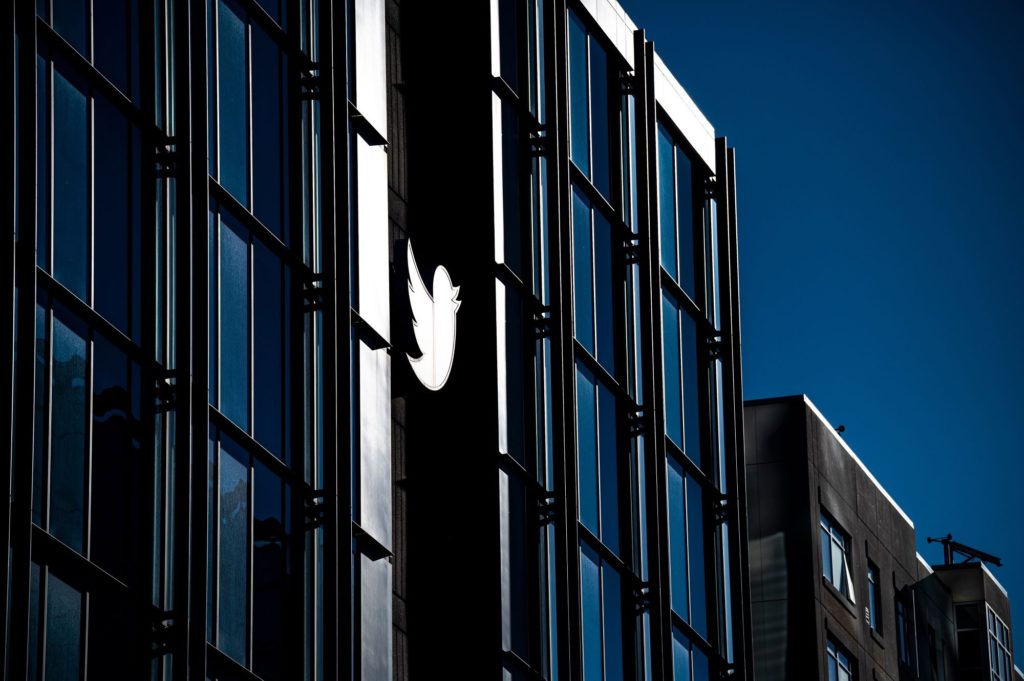
(Bloomberg) — Elon Musk’s Twitter was sued by a private jet provider for refusing to pay for two flights taken by former chief marketing officer Leslie Berland as Musk was preparing to close his $44 billion acquisition of the social media platform.

Private Jet Services Group LLC claims it’s owed $197,725 for Berland’s Oct. 26 flight from Teterboro, New Jersey, to San Francisco and a return flight the following day — the same day Musk closed the deal to buy Twitter. Berland was fired in early November, along with about half the workforce at the company.

According to a contract PJS had with Twitter, a designated representative at the social media company was required to book charters, but the flight service company said that practice wasn’t always followed and flights were booked by emails and text messages and paid without issue prior to Musk’s takeover.

But after Musk’s acquisition, the company refused to pay the bills for Berland’s flights, with Marty O’Neill, head of global strategic sourcing at Twitter, claiming in an email that they weren’t ordered by the designated representative, according to a complaint filed Friday in federal court in New Hampshire.

Twitter employee Taylor DeLorenzo replied to O’Neill in an email cited in the complaint, writing: “Just wanted to send a quick note with regards to the outstanding invoice for PJS: Parag [Agrawal] did sign off on this expense (he was still CEO at the time of both flight purchases) for Leslie. It was an urgent need the week the deal closed, and Leslie was the main person from Twitter liaising directly with Elon.”

But that didn’t sway the new management.

“Thanks Taylor, appreciate the added context,” O’Neill replied, according to another email cited in the complaint. “However, new management is not going to budge.”

Twitter didn’t immediately respond to an emailed request for comment.

The case is Private Jet Services LLC v. Twitter Inc., 1:22-cv-00548, US District Court, District of New Hampshire.


More stories like this are available on bloomberg.com

©2022 Bloomberg L.P.

Microsoft’s Fight for Activision Is a Bet on the Future of Gaming

(Bloomberg) — Microsoft Corp.’s $69 billion acquisition of Activision Blizzard Inc. has focused attention on the decades-old paradigm of console-exclusive games played on its Xbox and chief rival Sony Group Corp.’s PlayStation, but antitrust officials seeking to block the deal are potentially more concerned about the future of gaming in the cloud.Cloud gaming is still in its infancy. Most video games, from Activision’s Call of Duty, to Elden Ring, developed by FromSoftware Inc., are purchased individually for about $70 each and downloaded onto a console or computer. But Microsoft, one of the leading cloud computing service providers, is seeking to change that. It has focused its significant gaming efforts on building up a subscription service, Xbox Game Pass, which offers a library of more than 300 titles for about $10 a month for gamers who want to download games to play on the Xbox or PC. A higher tier of the subscription, at $15 a month, includes cloud gaming, which enables subscribers to stream certain games onto any device, even tablets and phones. 

While cloud gaming is still nascent in terms of the technology and content available today, some analysts and executives think it could eventually make consoles less relevant. And Microsoft is in pole position with the infrastructure and content to increase its share. By bringing Activision titles like Candy Crush and Call of Duty under its roof, Microsoft is betting that it will be able to offer more games to its Game Pass subscribers. The FTC’s concern — and Sony’s too —  is that Microsoft will take an early lead in the cloud by adding Activision’s games, eventually making them all exclusive to its own platforms.

 “We seek to stop Microsoft from gaining control over a leading independent game studio and using it to harm competition in multiple dynamic and fast-growing gaming markets,” Holly Vedova, director of the FTC’s Bureau of Competition, said in a statement accompanying the agency’s complaint.

Game Pass, which launched in 2017, has grown quickly and now has more than 25 million subscribers, far more than a similar offering from Sony, called PlayStation Plus. Microsoft added cloud gaming to Game Pass in 2020 and according to the FTC, more than 20 million gamers have streamed games from the cloud with the service. Microsoft has said that cloud gaming subscription services are essential to reach its goal of expanding to 3 billion gamers worldwide, and its vision of enabling gamers to play games across Windows, Xbox and smartphones.

The cloud lets gamers stream and play graphically rich and technically complicated titles such as Assassin’s Creed Origins and Halo Infinite on less sophisticated devices like smartphones or tablets that otherwise lack the computing power or storage to support the games. The technology has proven tricky and has yet to take off more widely because of the high-quality graphics involved in games and the dependency on ultra-fast data processing necessary to make sure that every press of a button immediately corresponds to a movement in the game, with no lag, known as low-latency.

Microsoft has an edge over Sony here, since Microsoft’s cloud division Azure owns more than 200 data centers, which support the lower-latency cloud gaming services for its stable of titles on Game Pass. Sony doesn’t own data centers from which it can run its subscription service, PlayStation Plus. Sony launched a revamped version of the service in June, which offers similar subscription tiers with access to popular titles like Spider-Man and Returnal, but doesn’t offer new releases in the subscription package, as GamePass does.

Other tech giants have tried to to build up cloud gaming service without much success. Alphabet Inc.’s Google had Stadia, the search giant’s attempt to take on the video game console giants with a platform of its own. But after failing to gain traction with gamers, it will shutter next year. Amazon.com Inc.’s Luna+, which provides streaming access to more than 100 third-party games has also struggled to attract users. Nvidia Corp.’s GeForce NOW cloud gaming offering, which is much pricier with its top tier at $100 for 6 months, allows gamers to stream titles they already own.

The struggles to gain traction in cloud gaming make the FTC even more concerned that Microsoft can quickly dominate the market. Phil Spencer, head of Microsoft Gaming, has de-emphasized the role consoles will play in Microsoft’s future. The company loses from $100 to $200 on every Xbox it sells, according to Spencer. Meanwhile, cloud gaming is forecasted to bring in $5.1 billion revenue in 2022, according to industry analyst Omdia, and rise to $12.7 billion by 2027. That accounts for about 3% of the $172.7 billion in total gaming revenue expected this year.

 FTC Chair Lina Khan has specifically highlighted her concern that Big Tech players may seek to leverage their power in adjacent markets to dominate emerging ones and is seeking to to avoid a repeat of the agency’s acquiescence when Meta Platforms Inc. bought Instagram and WhatsApp. 

“By now, regulators understand that big tech firms will seek to use their power in one market to capture downstream markets,” said Vili Lehdonvirta, Oxford University professor of economic sociology and digital social research. “Microsoft doesn’t quite dominate the public cloud market, but they have a big edge over cloud gaming rivals who don’t own their own infrastructure and have to rent it from the cloud providers.”

The FTC is currently in court arguing its lawsuit against Meta over its proposed acquisition of Within Unlimited Inc., a virtual reality startup that makes a popular fitness app, Supernatural. In an unusual case, the FTC has alleged that Meta sought to buy the app in an effort to monopolize the nascent virtual reality industry.  Experts see similarities with the Microsoft case.

“Meta says ‘we want to move to the metaverse, we need to have apps to populate it and Within and Supernatural fit into that,” Yale School of Management’s Florian Ederer said. Microsoft argues the future is cloud gaming and they “need content for that cloud service. The Activision transaction is a road for populating that.”

Sony has been a staunch opponent to Microsoft’s deal, accusing the company of seeking to “lock in many consumers to Xbox” and leveraging its other products to “foreclose cloud gaming at a critical point of its evolution.” Analysts question whether Sony’s criticisms come from insecurity that the Japanese tech company lags behind Microsoft in diversifying away from console gaming. Sony typically releases its best first-party games onto PlayStation long before they appear anywhere else. 

“If Sony is doubling down on its PlayStation business, that’s potentially very problematic,” said Joost Rietveld, an assistant professor of strategic management at the UCL School of management who has spoken to Microsoft and Sony representatives about the deal.

But Sony’s concerns about Microsoft shutting it out by making best-selling games like Call of Duty exclusive to Microsoft  have a precedent that the FTC has said it won’t ignore. After Microsoft’s purchase of ZeniMax Media was cleared by the European Commission in 2021, the company said it would release three future titles exclusively on its own products, according to the FTC’s complaint.

–With assistance from Dina Bass.

More stories like this are available on bloomberg.com

©2022 Bloomberg L.P.

XTX Plans Crypto Expansion Despite Its Founder’s Dislike for Digital Assets

(Bloomberg) — XTX Markets has become the last major global market maker to take the plunge into crypto despite its founder’s dislike for the digital asset space.

Chief Executive Officer Alex Gerko tweeted on Friday that the company has filled one of the four crypto positions advertised in October. The roles are on the operations team and trading desk, and based in London and Singapore. The company began trading crypto in recent months, according to a person familiar with the matter, who declined to be identified because the information isn’t public.

Gerko is known for being skeptical about crypto and has even written “pretty virulently anti-crypto it seems” into his Twitter profile. The Russian-born mathematician founded London-based XTX seven years ago, and the firm now handles almost $300 billion in daily volume across equities, commodities, currency and fixed income.

Ex-Deutsche Bank Trader Builds $6 Billion Fortune on Volatility 

In a posting for a still-open position on the operations team, the company said it’s expanding to support round-the-clock crypto trading. A spokesman for XTX declined to comment.

XTX’s competitors have been active in the crypto space for years. Virtu Financial Chief Executive Officer Douglas Cifu said earlier this month that it saw no losses stemming from the unraveling of Sam Bankman-Fried’s FTX crypto exchange.

More stories like this are available on bloomberg.com

©2022 Bloomberg L.P.

Crypto Scammers Allegedly Lured Victims With Suitcases of Fake Cash

(Bloomberg) — French authorities charged a pair of suspected fraudsters with taking part in a €2 million ($2.1 million) cryptocurrency scam to rob victims whom they tempted with suitcases full of fake bank notes or digital wallets loaded with funds.

The two were the first to face formal charges for fraud and money-laundering offenses after raids in the Paris region, the ski resort of Megeve and the French Riviera city of Cannes, prosecutors said Friday. 

The fraudsters allegedly used fake identities to set up meetings with targets in luxury hotels and restaurants in locations such as Paris and Milan. The victims would then wire them crypto assets including Bitcoin, Ethereum in exchange for the counterfeit cash or digital wallets, officials said. The suspects would then manipulate the victims’ phones in order to get access to the funds.

Police seized two Porsches, one Bentley, a watch worth about €50,000, €280,000 of crypto assets and €58,000 in cash.

In France, investigative magistrates can decide to charge companies or individuals in a procedure known as “mise en examen” when there are serious or consistent clues showing likely involvement in wrongdoing. They can then decide whether to refer a case to trial — no such decision has been made in this probe — but aren’t involved after that stage.

More stories like this are available on bloomberg.com

©2022 Bloomberg L.P.

Stocks in Choppy Waters With Focus on Fed Decision: Markets Wrap

(Bloomberg) — Stocks faced a lot of instability, with traders weighing mixed economic numbers amid bets they won’t be enough to deter the Federal Reserve from reducing the pace of tightening next week as recently signaled.

The S&P 500 wavered as an unexpected drop in short-term inflation expectations tempered worries with a hotter-than-expected producer price index. Two-year yields, which are more sensitive to imminent Fed moves, were flat. Swaps showed markets betting officials will raise rates by 50 basis points Wednesday, following four consecutive 75 basis-point hikes.

“Compared to where we were a year ago, we are in a better place and headed in the right direction,” said Mike Loewengart at Morgan Stanley Global Investment Office. “It’s unlikely today’s hotter-than-expected report would be enough to push the Fed to stick with the 75 basis point hikes next week, but any negative news on the inflation front is a thorn in the side of both the Fed and investors.”

In the run-up to the Fed decision, all eyes will be on Tuesday’s consumer inflation print — which is forecast to show inflation, while much too high, continued to decelerate. US central bankers, including Chair Jerome Powell, have been signaling a slowdown in the pace of rate hikes while stressing borrowing costs will need to keep rising and remain restrictive for some time to beat inflation.

The Fed is set to keep rates at their peak throughout 2023, dashing hopes markets have priced in for rate cuts in the second half, according to economists surveyed by Bloomberg.

The Federal Open Market Committee’s median projection is expected to show the benchmark peaking at 4.9% in 2023 — reflecting a 4.75%-5% target range — compared to 4.6% seen in September. That would deliver a hawkish surprise to investors — who currently bet rates will be cut by a half percentage point in the second half of next year, though they too see rates peaking around 4.9%. The current range is between 3.75% and 4%.

A combination of factors, including persistent inflationary pressures and higher-for-longer interest rates, could mean the economic recession that’s widely expected in 2023 will turn out to be shallow but drawn-out, according to strategists at Bloomberg Intelligence. A muted rebound in profits amid higher lending rates could slow the S&P 500’s annualized return to 5.7% in each of the next three years — half the speed of the 2010-2019 cycle.

While many investors are impatient for the Fed to deliver its last rate hike, history shows they should be wary of doing so while inflation remains elevated, according to Bank of America Corp. strategists.

An analysis by Michael Hartnett showed that stocks outperformed after the Fed stopped increasing rates during periods of disinflation in the past 30 years. However, during the era of high inflation in the 1970s and 1980s, equities had fallen after the last hike, they wrote. In the current cycle, they expect the Fed to raise rates for the last time in March 2023.

Stocks might be on track for their worst returns since the global financial crisis, but the market has endured the most daily routs in almost five decades, according to data compiled by Bloomberg as of Wednesday’s close. Those selloffs are calculated by a so-called hit ratio that measures the number of gains versus losses as a percentage of the total number of trading days. 

That ratio stands at 43%, the S&P 500’s lowest since 1974. An annual hit ratio lower than 50% has only been seen 10 other times in the past 48 years, and the recovery has been painfully slow in most cases

Still, some of the world’s biggest investors predict that stocks will see low double-digit gains next year. Seventy one percent of respondents in a Bloomberg News survey expect equities to rise, versus 19% forecasting declines. For those seeing gains, the average response was a 10% return.

Some of the main moves in markets:

Stocks

  • The S&P 500 was little changed as of 1:31 p.m. New York time
  • The Nasdaq 100 rose 0.1%
  • The Dow Jones Industrial Average fell 0.2%
  • The MSCI World index rose 0.3%

Currencies

  • The Bloomberg Dollar Spot Index was little changed
  • The euro was little changed at $1.0551
  • The British pound rose 0.4% to $1.2278
  • The Japanese yen rose 0.2% to 136.40 per dollar

Cryptocurrencies

  • Bitcoin fell 0.2% to $17,141.76
  • Ether fell 0.7% to $1,269.49

Bonds

  • The yield on 10-year Treasuries advanced seven basis points to 3.56%
  • Germany’s 10-year yield advanced 11 basis points to 1.93%
  • Britain’s 10-year yield advanced nine basis points to 3.18%

Commodities

  • West Texas Intermediate crude fell 1.3% to $70.50 a barrel
  • Gold futures rose 0.5% to $1,810.70 an ounce

This story was produced with the assistance of Bloomberg Automation.

–With assistance from Elena Popina.

More stories like this are available on bloomberg.com

©2022 Bloomberg L.P.

US Lawmakers Want More Oversight of the Federal Reserve 

(Bloomberg) — Two US lawmakers are aiming to make regional Federal Reserve banks comply with public record requests after a string of scandals in the central bank system.

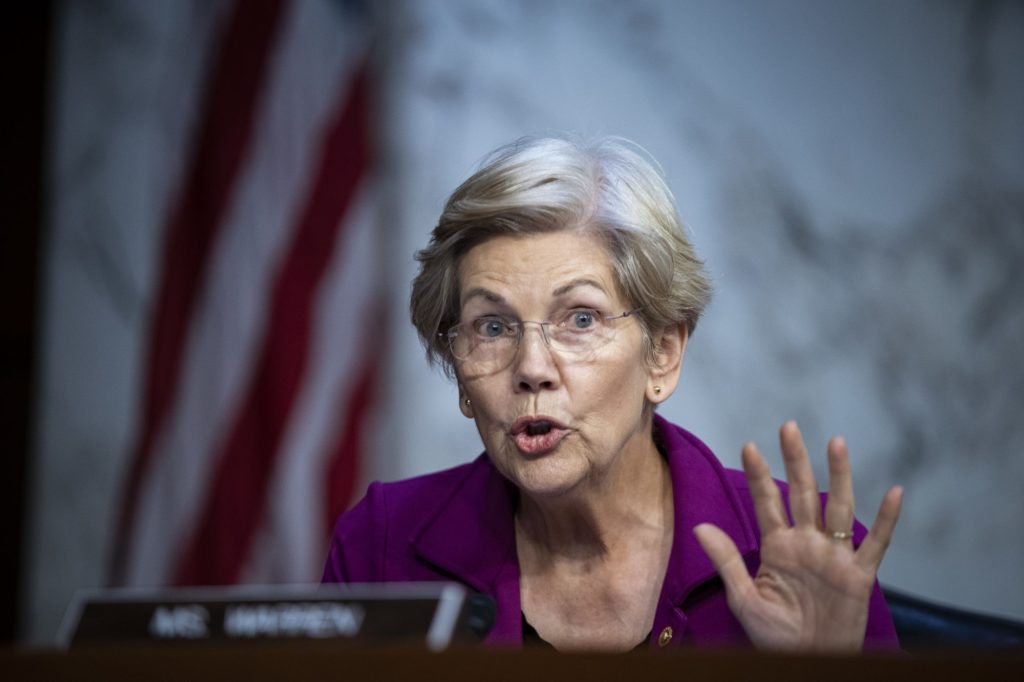
Massachusetts Democrat Elizabeth Warren and Pennsylvania Republican Patrick Toomey plan on Friday to propose legislation to subject the regional branches to congressional information requests under the Freedom of Information Act.

“During the largest ethics scandal in the history of the Federal Reserve system, Fed officials have stonewalled the American people and slow-walked their representatives in Congress,” Warren said in a statement. ”This bipartisan bill is a necessary response to ensure that no financial regulators can ignore congressional oversight into ethics failures, and finally deliver more transparency and accountability for any wrongdoing.”

The Fed branches are currently exempt to these requests due to their quasi-private structure. The proposal would lift that barrier by having them considered federal agencies for the purposes of a FOIA request from a member of Congress. A spokeswoman for the central bank declined to comment on the bill.

While the bill may not stand much chance of becoming law before the end of the current Congress in early January — when Toomey leaves office — it does suggest a potential direction for future bipartisan examination of Fed reform.

It also exposes frustration among senators on both sides of the aisle in search of answers to ethics questions connected with the trading scandal that engulfed the Fed last year, and how firms get access to the Fed’s payment system.

Sarah Binder, a senior fellow at the Brookings Institution, called the legislation “the next stage in Congress’s decades-long demands for greater transparency from the Fed,” which historically has bipartisan support.

The proposal would exempt monetary policy, confidential supervisory information and personnel matters from general requests from members of Congress, though committee heads, ranking members and subcommittees could ask for supervisory and personnel files under confidentiality rules.

The “Financial Regulators Transparency Act of 2022” would also give Congress broad powers to obtain ethics-related information from the Fed and its regional banks, the Securities and Exchange Commission, the Federal Deposit Insurance Corporation and other financial regulators.

Warren has sent several letters to the Fed over the past year requesting more information on possible ethics violations, and in her most recent correspondence to Chair Jerome Powell, she said the Fed has “repeatedly refused” her inquiries.

Toomey has had multiple exchanges with the Fed about how a financial technology company called Reserve Trust obtained a Fed master account, which allows integration into the central bank’s payment system. The account was later revoked.

“The Fed and regional Fed banks, despite being creatures of Congress, obstruct congressional oversight inquiries all too often,” Toomey said in a statement. 

“In light of this persistent refusal to comply with reasonable requests for information from both Republicans and Democrats, I’m glad to join with Senator Warren in pursuing reforms that will compel these public institutions to be more transparent and accountable to the American people.”

Former Fed governor Sarah Bloom Raskin was a Reserve Trust board member and her role in the Fed master account application was part of Toomey’s inquiry. 

She was nominated by President Joe Biden to become Fed vice chair for supervision, but withdrew from consideration after it became clear she didn’t have the votes to be confirmed.

The bill would also make the Fed’s Inspector General an appointment of the president and subject to Senate confirmation. Currently, the inspector general can be hired by the Fed chair and fired by a Fed Board majority. 

The Fed IG is currently reviewing the trading of current and former Fed officials, and earlier this year cleared Powell and former Vice Chair Richard Clarida of ethics violations.

Binder said the change in the IG appointment process would extend “Congress’s investigatory powers right into the Fed, possibly toughening the IG’s authority and willingness to challenge the Board.”

–With assistance from Molly Smith.

(Adds comment from Brookings scholar in seventh and final paragraph)

More stories like this are available on bloomberg.com

©2022 Bloomberg L.P.

Infinite Reality Nears Merger With Newbury Street SPAC

(Bloomberg) — Infinite Reality Inc., a company that helps build metaverse experiences, is in advanced talks to go public through a merger with Newbury Street Acquisition Corp., according to people with knowledge of the matter.

A transaction, which has yet to be finalized, could be announced as soon as next week as long as talks don’t fall apart at the last minute, said the people, who asked not to be identified discussing confidential information. Terms couldn’t immediately be learned.

Representatives for Infinite Reality and Newbury declined to comment.

Infinite Reality, known as iR, said in October it reached a multi-year partnership with Warner Bros. Discovery Sports to create immersive experiences, such as potential interactions in the metaverse between fans and athletes, as well as through virtual content during the UCI Track Champions League this month. Led by Chief Executive Officer John Acunto, iR agreed to buy e-sports startup ReKTGlobal earlier this year, which previously held talks to go public through a SPAC merger.

Newbury, led by CEO Tom Bushey, raised $128 million in a March 2021 initial public offering and said it would focus its search on target businesses in the consumer internet or media industries.

More stories like this are available on bloomberg.com

©2022 Bloomberg L.P.

Kyrsten Sinema Switches to Independent But Lets Democrats Keep Senate Grip

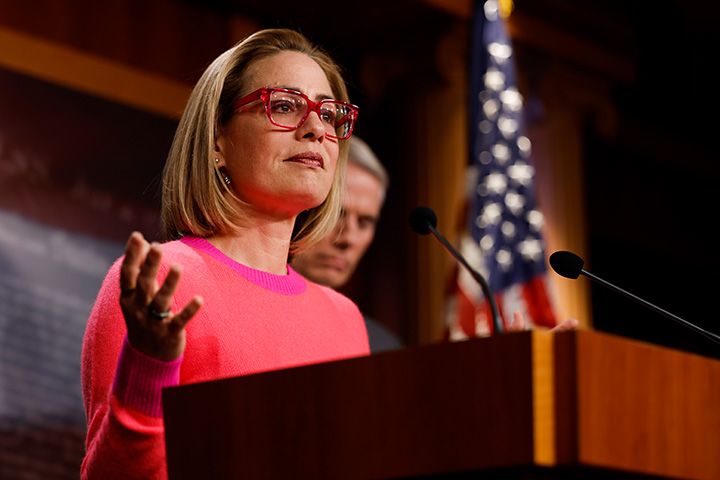
(Bloomberg) — Arizona Senator Kyrsten Sinema declared as an independent Friday but made clear she won’t caucus with Republicans, maintaining Democrats’ newly expanded control of the chamber, committee subpoena power and ability to advance judicial nominees.

Sinema, who has been a swing vote on key issues, said she would continue her centrist voting record, which has angered some Democrats in her home state who have vowed to mount a primary challenge if she seeks reelection in 2024.

“Becoming an independent won’t change my work in the Senate; my service to Arizona remains the same,” she wrote in an op-ed in the Arizona Republic. 

Sinema, 46, was first elected to the Senate in 2018 and was censured by the state party in January over her refusal to do away with the filibuster to force through voting rights legislation. The White House, however, stressed on Friday Sinema’s work on the bipartisan infrastructure bill and legislation to boost the domestic semiconductor industry. 

“We understand that her decision to register as an independent in Arizona does not change the new Democratic majority control of the Senate, and we have every reason to expect that we will continue to work successfully with her,” White House press secretary Karine Jean-Pierre said in a statement. 

Her action does come with political risks, however. If she runs again in 2024, a three-way general election race likely would benefit Republicans in narrowly divided Arizona.

Sinema becoming an independent won’t affect the overall control of the Senate next year. Her office said she intends to keep her committee assignments from the Democratic majority. And she doesn’t intend to caucus with the Republicans.

Jessica Taylor, the Senate editor of Cook Political Report said Democrats will still have the 51-49 seat control they secured earlier this week with Senator Raphael Warnock’s reelection in Georgia. 

“Democrats have more cushion than they had before,” Taylor said.

That majority gives Democrats expanded subpoena power next year, which they’ve said they intend to use for oversight and investigations of corporate actions.

Democrats still will either need Sinema’s backing on votes to confirm important nominees opposed by the GOP, or that of West Virginia Senator Joe Manchin, the conservative Democrat who also would face voters in the next election if he seeks another six-year term. 

That means the duo will continue to hold significant power in a divided Washington where President Joe Biden’s executive authority will play a big role with little prospect Democrats will be able to get legislation through the GOP dominated House next year.

Both Sinema and Manchin have reliably voted with their party for Biden’s judicial nominees. Senate Majority Leader Chuck Schumer said this week that a key focus on the chamber next year will be moving more of Biden’s picks to the bench. 

Manchin has repeatedly insisted he does not intend to become a Republican and this week was named to a post on Schumer’s leadership team. Becoming an independent would likely dilute his support in West Virginia and weaken his reelection chances. Manchin, 75, has not said whether he will run again.  

Sinema notified Schumer about her decision on Thursday, according to a Democratic aide. 

In a statement, Schumer said he agreed to Sinema’s request to keep her committee assignments.

“We will maintain our new majority on committees, exercise our subpoena power, and be able to clear nominees without discharge votes,” the New York Democrat said.

Despite breaks with Democrats on a few key issues, including raising corporate taxes, Sinema has voted with the party 97% of the time, according to data compiled by Bloomberg Government. She also has been a consistent vote in favor of Biden’s judicial nominees.

A political action committee dedicated to ousting her, called “Primary Sinema,” said in a statement that her move confirmed that she is “simply out for herself.”

“In one way, Sinema just made our jobs easier by bowing out of a Democratic primary she knew she couldn’t win. Now, we’ll beat her in the general election with a real Democrat,” the group said in a statement.

Last month, Democrats won in key races across the once-reliably Republican state, including governor, secretary of state and Arizona’s other US Senate seat. 

There are two other independents in the Senate, Bernie Sanders of Vermont and Angus King of Maine. They have divergent political stands but both caucus with Democrats on matters of the chamber’s organization and consistently vote with the party. Having a third independent in the Senate has no recent precedent.

The most consequential switch in recent times was Republican Jim Jeffords of Vermont becoming an independent and caucusing with Democrats in 2001, giving them the Senate majority. And after Senator Joseph I. Lieberman lost his Democratic primary in 2006, he won reelection anyway, and caucused with Democrats as an “independent Democrat.”

(Add statement from Schumer in 16th, 17th paragraphs)

More stories like this are available on bloomberg.com

©2022 Bloomberg L.P.

Bitcoin Miner Argo’s Shares Suspended in UK as Revenue Declines

(Bloomberg) — Shares of Argo Blockchain Plc were temporarily suspended by the UK’s Financial Conduct Authority after the beleaguered Bitcoin miner disclosed a November decline in revenue. 

The London-based company’s stock has already tumbled more than 90% this year. The American depository receipts are down a similar amount. 

In October, the mining firm was warned that it could be forced to shut down after a $27 million share sale appeared to have collapsed. In November, Argo said in a statement Friday that it had mined 198 Bitcoin, compared to 204 in October. 

Argo Blockchain said it continues to engage in financing discussions to provide the firm with working capital sufficient for its present requirements. 

As the crypto bear market continues, the firms that mine Bitcoin are coming under financial strain. Argo is among the largest public Bitcoin miners. It planned to build out a mining farm with up to 800-megawatt capacity earlier this year. However, the firm said in October it would have to curtail or cease operations without securing further funding. 

Bitcoin miners raised billions of dollars from debt financing during the most recent bull run but they are struggling to repay interest payments.  Low Bitcoin prices, soaring energy costs and stiff competition have battered the mining industry. Crypto-mining giant Core Scientific warned of a potential bankruptcy, while Iris Energy defaulted on $108 million in mining equipment-secured loans.   

More stories like this are available on bloomberg.com

©2022 Bloomberg L.P.
Bankman-Fried ‘Willing’ to Testify at House Hearing on FTX Fallout

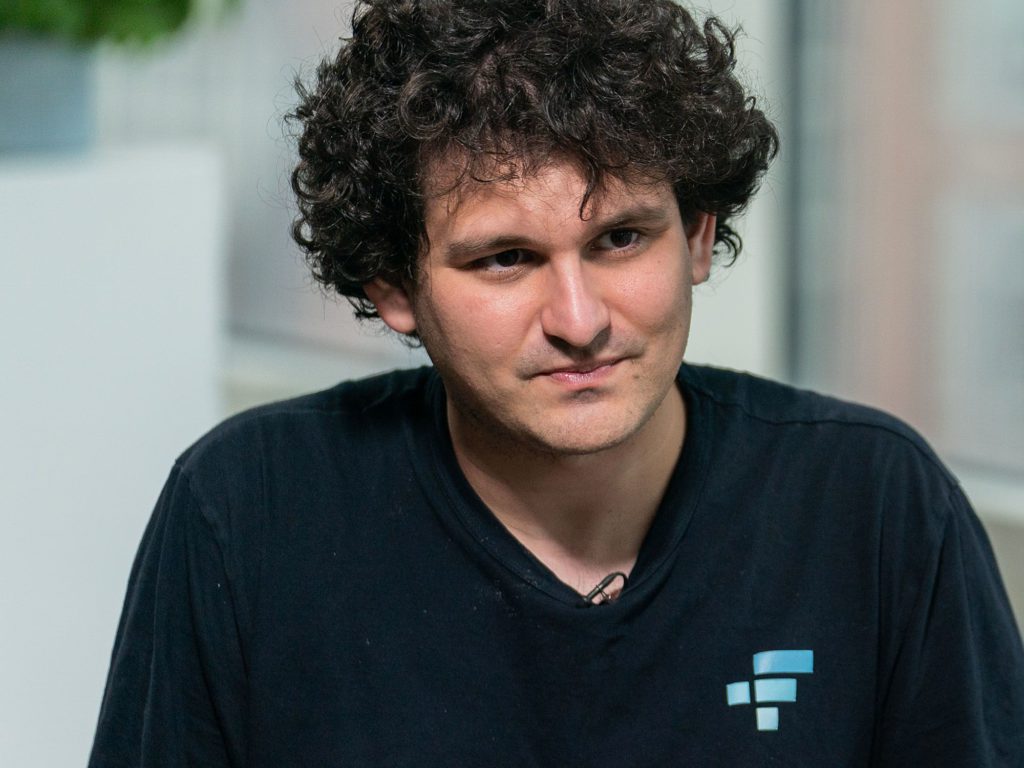
(Bloomberg) — Former FTX Chief Executive Officer Sam Bankman-Fried, in a series of messages sent over Twitter on Friday, said he’s “willing to testify” before the US House Financial Services Committee about the disintegration of his crypto empire.

Bankman-Fried added that he would be limited in what he would be able to say because he didn’t have access to much of his data — “professional or personal.” He didn’t respond to requests for additional comment. 

In tweets earlier this month, the House committee’s chairwoman, Representative Maxine Waters, urged Bankman-Fried to attend the Dec. 13 hearing, saying his appearance was “imperative.”

Bankman-Fried’s spokesman, Mark Botnick, said “details are still being worked out” and declined to comment further. Spokespeople for the House panel didn’t return requests for comment. 

Bankman-Fried missed the deadline set by the Senate Banking Committee for a response to a request to testify at its Dec. 14 hearing on FTX. His counsel didn’t reply in the needed time frame, the committee said Thursday in a statement.

Bankman-Fried, who hasn’t been charged with any crimes, has denied trying to perpetrate a fraud, though he has owned up to grievous managerial errors at FTX. 

Bahamas-based FTX and more than 100 related entities, including the company’s US arm, filed for bankruptcy in November, sending shock waves across the crypto ecosystem. The firm, which had been one of the world’s largest digital-asset exchanges, and its founder now face scrutiny from regulators and prosecutors in the US and overseas. The probes could eventually lead to criminal charges. 

At the center of the investigations into the FTX implosion are questions about whether FTX mishandled customer funds by lending them out to the trading platform’s sister company, Alameda Research, to shore up risky bets.     

–With assistance from Yueqi Yang.

(Adds comment from Bankman-Fried’s spokesman in the fourth paragraph.)

More stories like this are available on bloomberg.com

©2022 Bloomberg L.P.

Close Bitnami banner
Bitnami