
Bloomberg

Stocks Mixed as Dollar, Treasury Yields Fluctuate: Markets Wrap

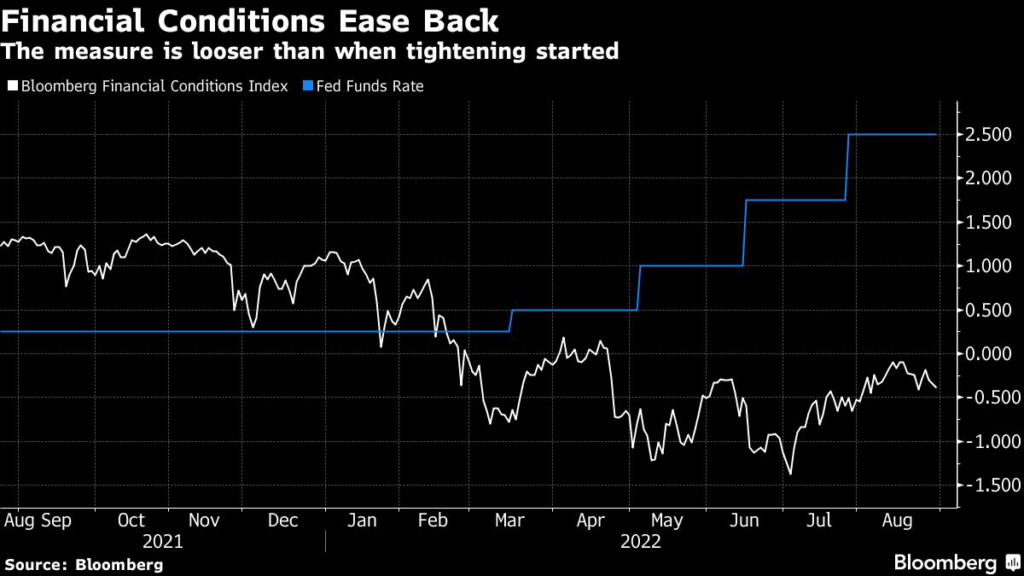
(Bloomberg) — Stocks were set to resume monthly declines on concern that restrictive monetary policy to tackle price pressures will harm the global economy. A dollar gauge and Treasury yields fluctuated. 

European shares reversed earlier gains to trade at the lowest level in more than six weeks. Euro-area inflation accelerated to another all-time high, strengthening the case for the European Central Bank to consider a jumbo interest-rate hike when it meets next week. 

US futures were little changed around a one-month low. Robust labor demand and consumer confidence data added to the case for sharp interest-rate hikes to tackle inflation, while Federal Reserve officials reiterated their determination to curb price pressures. A deepening yield curve inversion points to fears that the Fed will trigger a recession. 

Oil headed for a third monthly drop — the longest losing run in more than two years — hampered by the likelihood of slower global growth. European natural gas advanced after a two-day slump, with traders weighing risks to Russian supplies against the continent’s drastic efforts to curb the energy crisis. 

Market bets on a shallower trajectory for Fed tightening are receding, raising the prospect of more losses for stocks and bonds in an already difficult year. Investors are scouring incoming data for clues on the policy path, with August US jobs figures on Friday the next key report.

“What’s clear is that predicting this market is not clean cut,” Angeline Newman, a managing director at UBS Global Wealth Management, said on Bloomberg Television. “We are living in a world where conflicting economic signals are making the path of monetary policy very difficult to determine.”

Fed officials again stressed their commitment to defeating inflation while remaining vague on how big their policy move will be next month. 

New York Fed Chief John Williams said rates will need to be held in restrictive territory for “some time,” adding that this meant through 2023 — the latest official to push back on financial-market expectations of cuts later next year.

“We’re still going to see some pretty volatile times and maybe some further downside for equities in the short term,” Steve Brice, chief investment officer at Standard Chartered Wealth Management, said on Bloomberg Television.

Utilities led declines in Europe on Wednesday, extending their selloff to a fourth session as investors fret over Russian gas supplies at the start of a three-day halt of the key Nord Stream pipeline. 

Investors are contending with a European energy crisis as well as mounting friction between Beijing and Taipei after Taiwanese soldiers fired shots to ward off civilian drones. 

An Asian stock gauge climbed in a mixed day that saw tech shares advance but Japan’s bourses retreat. BYD Co. plunged in Hong Kong after Warren Buffett’s Berkshire Hathaway Inc. trimmed its stake in the electric vehicle maker.

Traders were evaluating the latest Chinese data, which indicated factory activity shrank for a second month. Power shortages, a property sector crisis and Covid outbreaks all took a toll.

Here are some key events to watch this week:

  • ECB Governing Council members due to speak at event Tuesday through Sept. 2
  • Euro-area CPI, Wednesday
  • Russia’s Gazprom set to halt Nord Stream pipeline gas flows for three days of maintenance, Wednesday
  • Cleveland Fed President Loretta Mester due to speak, Wednesday
  • China Caixin manufacturing PMI, Thursday
  • US nonfarm payrolls, Friday
  • UK leadership ballot closes Friday. Winner announced Sept. 5

Will Chinese sovereign bonds outperform Treasuries? China is the theme of this week’s MLIV Pulse survey. Click here to participate anonymously.

Some of the main moves in markets:

Stocks

  • The Stoxx Europe 600 fell 0.8% as of 10:35 a.m. London time
  • Futures on the S&P 500 fell 0.1%
  • Futures on the Nasdaq 100 rose 0.1%
  • Futures on the Dow Jones Industrial Average fell 0.2%
  • The MSCI Asia Pacific Index rose 0.6%
  • The MSCI Emerging Markets Index rose 0.1%

Currencies

  • The Bloomberg Dollar Spot Index rose 0.1%
  • The euro fell 0.2% to $0.9992
  • The Japanese yen was little changed at 138.76 per dollar
  • The offshore yuan rose 0.2% to 6.9081 per dollar
  • The British pound fell 0.2% to $1.1631

Bonds

  • The yield on 10-year Treasuries advanced three basis points to 3.13%
  • Germany’s 10-year yield advanced five basis points to 1.56%
  • Britain’s 10-year yield advanced 14 basis points to 2.84%

Commodities

  • Brent crude fell 3.1% to $96.28 a barrel
  • Spot gold fell 0.6% to $1,712.95 an ounce

More stories like this are available on bloomberg.com

©2022 Bloomberg L.P.
HP Reduces Profit Forecast as PC Sales Continue to Slide

(Bloomberg) — HP Inc. reported quarterly sales that missed estimates and reduced its annual profit forecast on falling demand for personal computers and printers, especially among consumers. The shares fell in extended trading.

Fiscal third-quarter revenue fell 4.1% to $14.7 billion, the Palo Alto, California-based company said Tuesday in a statement. Analysts, on average, projected $15.6 billion. Consumer sales in its computer division declined 20%, led by cratering demand for notebooks. 

HP also reduced its annual profit forecast to $4.02 to $4.12 a share, excluding some items, from $4.24 to $4.38 a share. Analysts, on average, estimated $4.30, according to data compiled by Bloomberg. 

“Like many other companies, our revenue has been impacted by worsening consumer demand that we expect is going to continue is Q4,” Chief Executive Officer Enrique Lores said in an interview. “This situation will probably last for a couple more quarters.”

Revenue generated by the Personal Systems division — including PCs — dropped 3% to $10.1 billion in the period ended July 31. While sales to consumers fell, commercial revenue increased 7%. Total unit shipments tumbled 25%, with notebooks down 32%.

HP’s higher mix of commercial PCs has served as a shield from the plunging consumer market in recent months, but Lores said the company is also starting to see a slowdown in business demand. This phenomenon contributed to the forecast reduction, Lores added. 

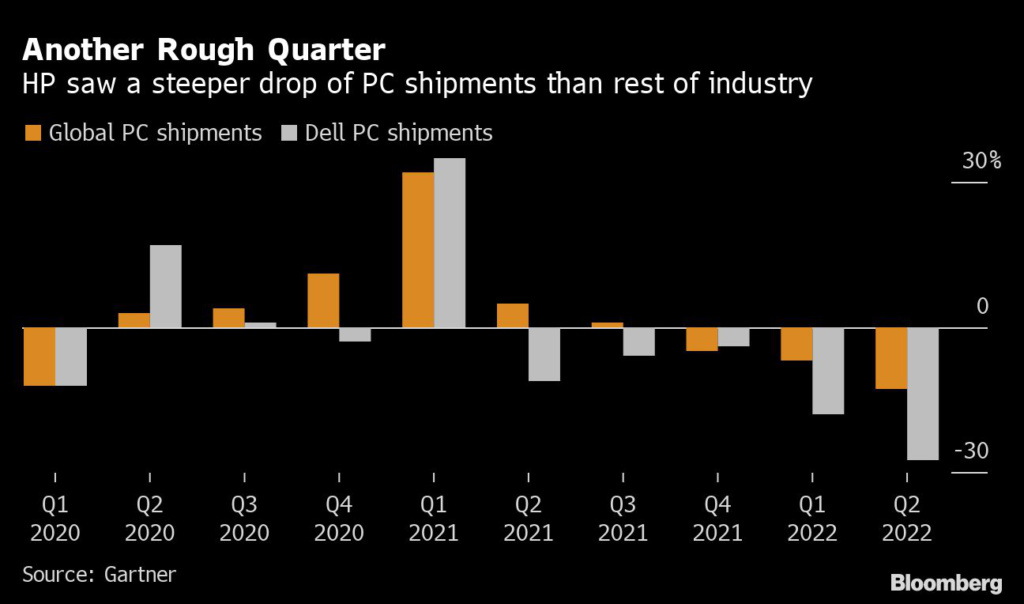
PC demand, which boomed early in the pandemic, has fallen off as schools reopened and economic sentiment soured. Global shipments declined 13% from April to June — the worst quarter in more than nine years, according to Gartner Inc., an industry analyst. HP experienced a drop of more than 27%, the worst of any company tracked by Gartner. 

In the quarter, printing revenue fell 6% to $4.6 billion, missing analyst estimates of $4.8 billion. The segment continues to be hurt by supply-chain shortages and backlogs, Citigroup analysts Jim Suva and Asiya Merchant wrote before the earnings were released.

Profit, excluding some items, was $1.04, one cent below estimates. The company has been focused on cutting costs in recent years, Lores said.

The shares declined about 6.8% in early trading on Wednesday before markets opened in New York. The stock has dropped 17% this year.

Earlier this week, HP completed its $3.3 billion deal for Poly, the company formerly known as Plantronics Inc., which sells phone headsets and other audio and video accessories. The acquisition is a bet on the lasting demand for remote work equipment.

(Updates with premarket trading in penultimate paragraph)

More stories like this are available on bloomberg.com

©2022 Bloomberg L.P.

Snap to Cut 20% of Workforce Starting Wednesday, Verge Says

(Bloomberg) — Snap Inc. is planning to lay off about 20% of its nearly 6,500 employees following weeks of planning, the Verge reported. 

Job cuts will begin on Wednesday with the team working on Minis, small applications made by third-parties which run in the Snapchat app, affected the most, the report said. Zenly, the company Snap acquired in 2017 for social mapping, will also be affected by the workforce reduction. 

A Snap spokesperson declined to comment to the Verge.

Read More: Snap Falls on Reported Layoffs, Top Executive Exits: Street Wrap

Separately, Snap’s Chief Business Officer Jeremi Gorman and Peter Naylor, vice president of the Americas, have agreed to join Netflix Inc. to help lead its global advertising business starting in September, AdAge said in a report on Tuesday, citing statements from the executives and Netflix’s Chief Operating Officer Greg Peters.

Snap shares dropped 7.3% in premarket trading on Wednesday before markets opened in New York. The stock has slumped 79% this year as the company has faced a slowdown in advertiser spending on the platform. Due to the uncertainty, Snap told investors in July that it wouldn’t offer specific guidance for the current quarter.

To weather the business environment, the company has said it will focus on three main priorities: growing the user base, improving direct-response advertising business and how it measures ad spending and finding new sources of revenue.

To view the source of this information click here

(Updates with Netflix hires, share move starting in fourth paragraph.)

More stories like this are available on bloomberg.com

©2022 Bloomberg L.P.

Satellite Data Suggest More Bad News From China’s Consumers

(Bloomberg) — China’s retail activity flatlined in August with e-commerce demand especially weak, according to satellite data, suggesting that consumer caution due to the ongoing Covid Zero policy and elevated unemployment remain major drags on the world’s second-largest economy.

Activity at distribution centers used by Chinese e-commerce companies was even lower than during 2020, according to data up to Aug. 17 tracking the movement of trucks around such areas. The data was shared with Bloomberg News by SpaceKnow, a New York-based company that analyzes satellite imagery.

The data suggest weak earnings by companies such as Chinese e-commerce giant Alibaba Group Holding Ltd., which posted its first ever drop in quarterly revenue for the three months ended in June, could continue as households cut back on spending. That weakness also extended to brick-and-mortar retailers, with the change in the number of cars in shopping mall parking lots in August well below the same month in 2021.  

Retail sales fell in March through May as the lockdowns in Shanghai and dozens of other cities confined tens of millions to their homes to control the spread of coronavirus. Official retail sales data grew 2.7% in July, though that was unadjusted for consumer price inflation, which was also 2.7% for the month. Data for August will be released on Sept. 16.

The lockdowns and the broader economic slowdown severely damaged Chinese households’ outlook on the future and undermined their willingness to spend. Confidence in future income growth fell to the lowest level since at least 2009 in the second quarter of this year, according to a central bank survey, while households have been piling up savings at a record pace. 

China’s official consumer confidence index dropped to its lowest level in nearly 10 years in April and has barely recovered since.

The satellite data adds to mounting evidence of a weak economy in August. China’s manufacturing sector contracted in the month, according to the official purchasing manager’s index. Data from logistics company G7 Connect showed a 20% decline in intercity truck flows in August, which researchers have found to be correlated with gross domestic product.

“The decline in activity at distribution centers happened before the decline in consumer confidence,” SpaceKnow said in a research note. “Distribution centers were performing much better during the 2020 Covid period,” it said, adding that shopping mall activity hasn’t fallen to the lows seen during China’s initial coronavirus lockdowns in 2020. 

With economists predicting consumption to remain weak this year, Beijing is trying to use government spending on infrastructure to revive growth. But the high-frequency data suggests that the infrastructure push so far hasn’t been able to offset the hit to construction activity from a deep slump in China’s property market.

The satellite data suggest a mixed picture on construction, with cement output rising strongly in August but steel output falling, although steel companies also reduced inventories in August, SpaceKnow said. Going forward, the company said it’s key to monitor if consumption and construction recovers or if “the weakness begins to extend into manufacturing industries.”

More stories like this are available on bloomberg.com

©2022 Bloomberg L.P.
A Peek Inside the Vaults of Tether

  • Listen to Bloomberg Crypto on the iHeartRadio App
  • Listen to Bloomberg Crypto on Apple Podcasts
  • Listen to Bloomberg Crypto on Spotify  

(Bloomberg) — Did you know that Tether, a stablecoin that trades under the ticker USDT, is the third-largest digital token by market value? It’s also one of the most actively traded tokens in the entire ecosystem. And unlike some of its volatile counterparts, Tether comes with two promises. One: each Tether has a stable value, and that value is $1. And two: that each of those tokens is backed by a “real” dollar, or similarly liquid and reliable financial asset, like a bond issued by the US government. Those promises have not always been kept, and that’s something that keeps Tether in the crosshairs of regulatory scrutiny and investor speculation.

Bloomberg reporter Emily Nicolle joins this episode for the latest on Tether and its asset reserves. 

Follow us on Twitter @crypto, and subscribe to the Bloomberg Crypto Newsletter at https://bloom.bg/cryptonewsletter


More stories like this are available on bloomberg.com

©2022 Bloomberg L.P.

Klarna’s Sales and Losses Grow as it Builds US Business

(Bloomberg) —

Klarna Bank AB said losses more than trebled in the first half of the year, ahead of a cost-cutting drive that’s set to temper its rapid international growth.

The Stockholm-based fintech reported an operating loss before tax of 6.2 billion Swedish kronor ($581 million) for the six months through June, up from 1.8 billion kronor in the same period a year ago. Revenue rose 24%.

“We’ve had a few years now where growth has been really heavily prioritized by investors. Now, understandably, they want to see profitability,” said Chief Executive Officer Sebastian Siemiatkowski in a statement. 

Klarna’s sharp increase in losses were driven by administrative expenses — the cost of running the business, including paying salaries — which rose to 10.2 billion kronor, compared to about 6 billion kronor a year before.

The firm said it would cut 10% of its staff earlier in the year as it looked to get a handle on these expenses. “We cannot afford being as forward leaning” while investors are getting more careful about the fintech industry, Siemiatkowski told Bloomberg TV. 

The company has reevaluated its investment plans, including some strategies to attract new customers, he added. Klarna is working to restore profitability after an investment round this summer that slashed the company’s valuation to $6.7 billion from about $45.6 billion a year ago. 

Cash reserves more than halved to 9.35 billion kronor in the first half of the year. But the pace appears to have slowed, since reserves fell 7.3 billion Swedish kronor in the first quarter of the year alone, in a sign the firm’s cost-cutting is already taking effect.

Klarna’s borrowing costs dropped after the earnings: yields on bonds maturing in February 2024 fell 14 basis points to 4.57% early on Wednesday in a possible sign of relief that the company has stemmed the outflow of cash. That said, yields remain well above the 1.38% seen at the start of the year.

Other Key Insights

  • Net credit losses were 2.85 billion kronor, up from 1.85 billion kronor. The firm said the total represented 0.7% of gross merchandise value and was a result of overall loan growth. A year ago, credit losses were 0.56% of gross merchandise value.
  • Klarna offers interest-free loans to customers who shop online, allowing them to spread the cost of a product over multiple payments, making money by charging retailers a fee on transactions. That makes it vulnerable rising costs that might force customers to cut spending.
  • Klarna said the US continues to be the company’s fastest-growing key market, with volumes up 109% on a year ago and 30 million users. Overall it has 150 million customers across 45 markets.
  • The more established business in the UK is “an excellent example of Klarna’s expected market trajectory,” it said, pointing to 70% volume growth along with gross margins of 54%.

Get More

  • Klarna’s Valuation Slashed by $39 Billion Amid Fintech Rout
  • Klarna Customers Seek Loans for Groceries as Debt Risk Rises
  • UK Warns Buy-Now-Pay-Later Firms on Ads Amid Household Squeeze


(Adds CEO interview quotes, bond yields from fifth paragraph.)

More stories like this are available on bloomberg.com

©2022 Bloomberg L.P.
Indonesia’s Indosat Is Said to Consider Selling Mobile Towers

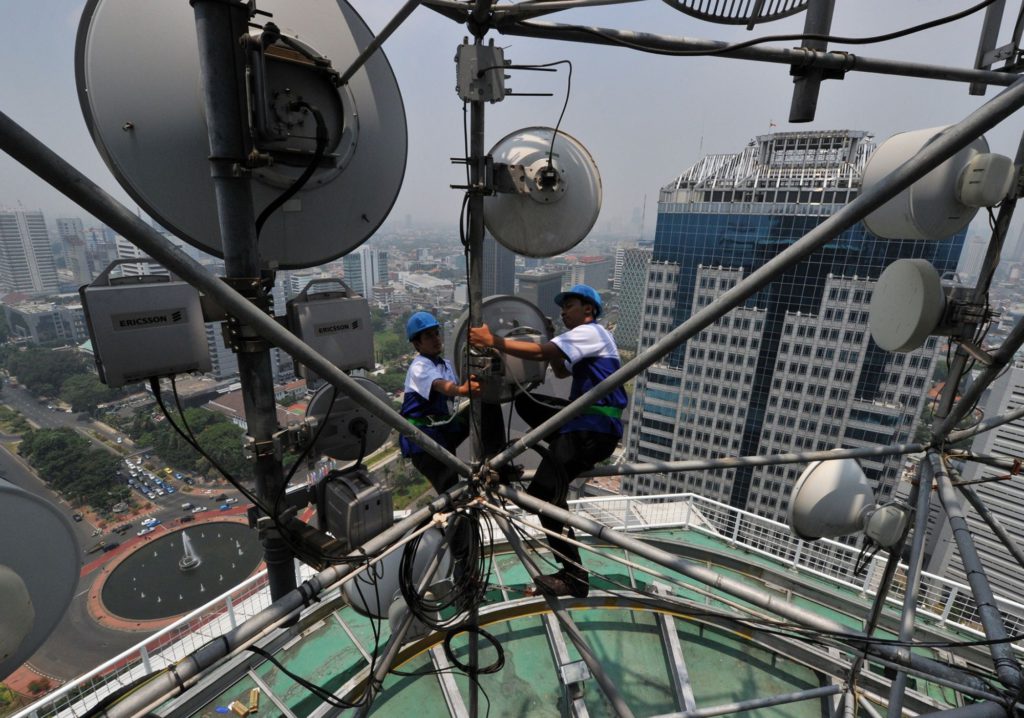
(Bloomberg) — PT Indosat is considering selling some telecommunications towers, as the Indonesian carrier continues to offload assets amid rising demand for digital infrastructure, people familiar with the matter said.

The portfolio includes about 1,800 sites, the people said, asking not to be identified because the matter is private. A transaction by the Jakarta-based company, which rebranded as Indosat Ooredoo Hutchison after a recent merger, could raise about $250 million, the people said. 

Potential bidders could include firms in the industry and infrastructure-focused funds, the people said. Considerations are preliminary and no final decisions have been made, they said. Steve Saerang, an Indosat spokesperson, declined to comment.

Shares of Indosat have risen about 14% this year, valuing the company at around $3.8 billion.

A sale would follow Indosat’s disposal last year of more than 4,200 towers to EdgePoint Infrastructure, a firm backed by DigitalBridge Group Inc. and Abu Dhabi Investment Authority, for $750 million. In May, Indosat agreed to form a $300 million joint venture for its data centers with Big Data Exchange, the data-center platform owned by investment firm I Squared.

Last year, CK Hutchison Holdings Ltd. and Qatar’s Ooredoo agreed to combine their Indonesian telecom businesses in a $6 billion transaction, consolidating to fend off competition in Southeast Asia’s biggest market by subscribers. The deal completed in January.

More stories like this are available on bloomberg.com

©2022 Bloomberg L.P.

ByteDance Is Repricing Stock Options to Retain Workers, Sources Say

(Bloomberg) — ByteDance Ltd., the parent of short-video hit TikTok, is planning to lower the price of its stock options to retain employees after a sharp downturn in technology valuations over the past year.

Option prices will be reduced to $155 a share from the earlier $195 a share, or a cut of just over 20%, according to a human resources executive at the company who asked not to be named because the details aren’t yet public. ByteDance’s valuation in private trading had dropped to below $300 billion from a high of more than $400 billion, Bloomberg News reported in July. 

The Beijing-based company is making the adjustment primarily to retain workers and entice new ones after a decline in technology stocks worldwide and a crackdown on internet giants within China. Options give holders the right to acquire shares at a predetermined strike price, and they make money if the market valuation is above that strike price.  

ByteDance is showing good faith by repricing the securities, the company executive said, providing competitive compensation to motivate employees as they take on new challenges. ByteDance is taking action because it wants to retain talented employees and attract promising hires.

The company, co-founded by Zhang Yiming, has about 110,000 employees. It is considered one of the rising powers in China’s technology industry, alongside Alibaba Group Holding Ltd. and Tencent Holdings Ltd. 

Employees who hold options above the $155 level are eligible for the one-time award of new options.

Xi Jinping’s crackdown on the tech sector has deflated growth prospects for China’s tech giants, which in many cases are experiencing their first revenue declines on record. That in turn has spurred historic industry layoffs and encouraged top talent to look for opportunities elsewhere, despite unemployment.

More stories like this are available on bloomberg.com

©2022 Bloomberg L.P.
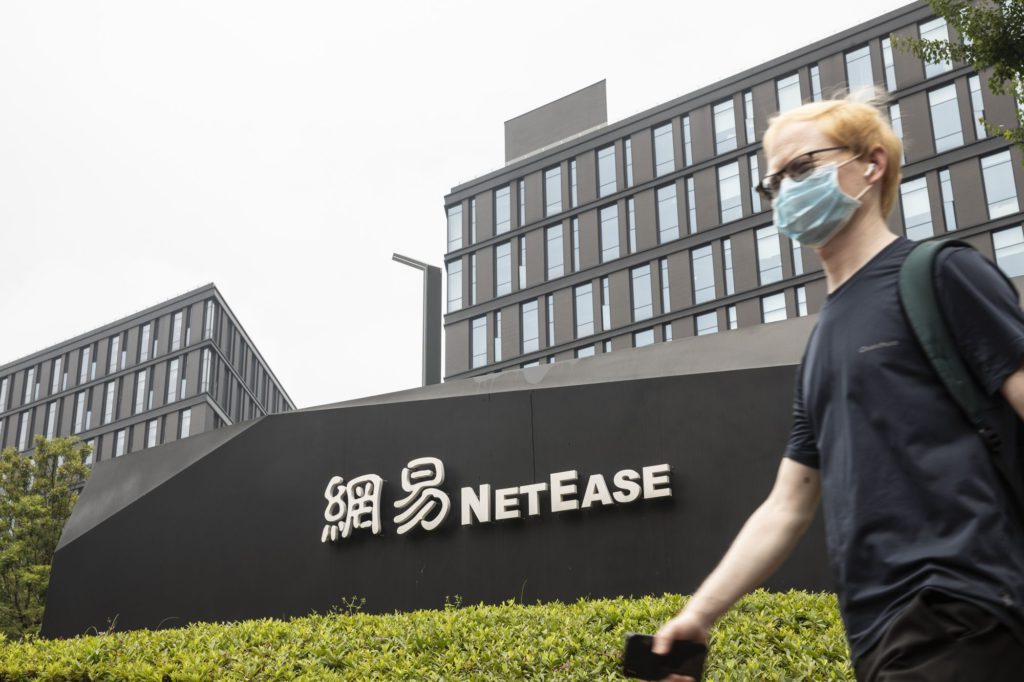
NetEase Acquires France’s Quantic Dream in Gaming Expansion

(Bloomberg) — NetEase Inc. has acquired French game developer and publisher Quantic Dream SA, the companies announced in a statement Wednesday.

China’s biggest games distributor after Tencent Holdings Ltd., NetEase is stepping up the international expansion of its gaming business to counter economic and regulatory headwinds at home. With Quantic Dream, it secures its first studio in Europe and the developer of an upcoming game in the Star Wars franchise.

Paris-based Quantic Dream will continue to operate independently and develop games on all platforms, as well as supporting and publishing third-party developed titles, the companies said. They did not disclose the size of the deal.

“NetEase will continue to fulfil our promise to support Quantic Dream to realise its full potential,” said William Ding, chief executive officer of NetEase. “There are infinite possibilities that could re-define the interactive entertainment experience.”

The Chinese publisher first acquired a minority stake in Quantic Dream in 2019 and their collaboration on projects has given the French outfit confidence in the partnership, according to Guillaume de Fondaumière, co-CEO and head of publishing at Quantic Dream, who described the deal as a “natural evolution” of the relationship.

China’s Other Gaming Giant Is Quietly Snapping Up Global Talent

The deal is an important step for NetEase as the $44 billion Chinese gaming arena is dragged by a weak economy and tightening regulations. The company’s revenue for the second quarter grew just 13%, the slowest pace since the start of 2020. While the government lifted a months-long game approval freeze in April, regulators have made plain their willingness to punish an industry accused of encouraging addiction and even damaging children’s eyesight.

NetEase and deeper-pocketed rival Tencent are now accelerating their international endeavors after a Chinese government crackdown depressed growth prospects at home. Having earlier partnered with Blizzard and Mojang, a Microsoft Corp. subsidiary, NetEase also opened its first development studio in Austin, Texas in May. Shenzhen-based Tencent has placed big bets on the likes of Ubisoft Entertainment SA and Activision Blizzard Inc. and also holds a majority share in Finland’s Supercell.

NetEase generates about 10% of its gaming revenue overseas, compared with about a quarter for Tencent. In five years, NetEase wants to put its name on a quarter of new triple-A releases in the global market, through everything from self-development to investment and publishing, the company has said. It also wants to generate half of its gaming sales from outside China, executives told Bloomberg News in an interview earlier this year.

More stories like this are available on bloomberg.com

©2022 Bloomberg L.P.

Japan’s Regulator Proposes Tax Breaks for Investors, Crypto

(Bloomberg) — Japan’s financial regulator proposed easing corporate tax rules for crypto assets as well as lighter levies for individual stock investors in support of Prime Minister Fumio Kishida’s efforts to reinvigorate the economy.

Companies should be exempted from paying taxes for paper gains on crypto coins that they hold after issuing them, the regulator proposed in its annual tax-code change request announced Wednesday. The Financial Services Agency also called for boosting a program that gives tax breaks to individual investors.

The moves support Kishida’s “New Capitalism” vision, which seeks to boost the world’s third-largest economy. He has pledged to double the wealth of households while offering support to help the country’s so-called Web3 businesses grow.

Crypto lobbying groups have been calling for changes, saying high corporate taxes have raised the bar for launching projects in Japan, causing some companies to relocate to Singapore and elsewhere. Currently, profit from cryptocurrency holdings, including unrealized gains, is subject to corporate tax of about 30%. 

For retail investors, the FSA wants to expand a tax break initiative known as the Nippon Individual Savings Account, by raising its investment limits and making the program permanent. Under NISA, individuals can have some of their investment gains and dividends exempt from capital-gains tax over a period of time.

The move marks the latest in years of efforts to prod individuals to put their savings to productive use, such as investing in stocks for the benefit of the broader economy. Japanese households hold roughly half of their 2 quadrillion yen ($14.5 trillion) financial assets in cash and deposits, Bank of Japan data show.

The tax panel of Japan’s ruling Liberal Democratic Party makes decisions near the end of the year after reviewing proposals from government offices.    

More stories like this are available on bloomberg.com

©2022 Bloomberg L.P.

Close Bitnami banner
Bitnami
