
Bloomberg

Grab, Singtel Join Singapore’s Digital Bank Battle Next Week

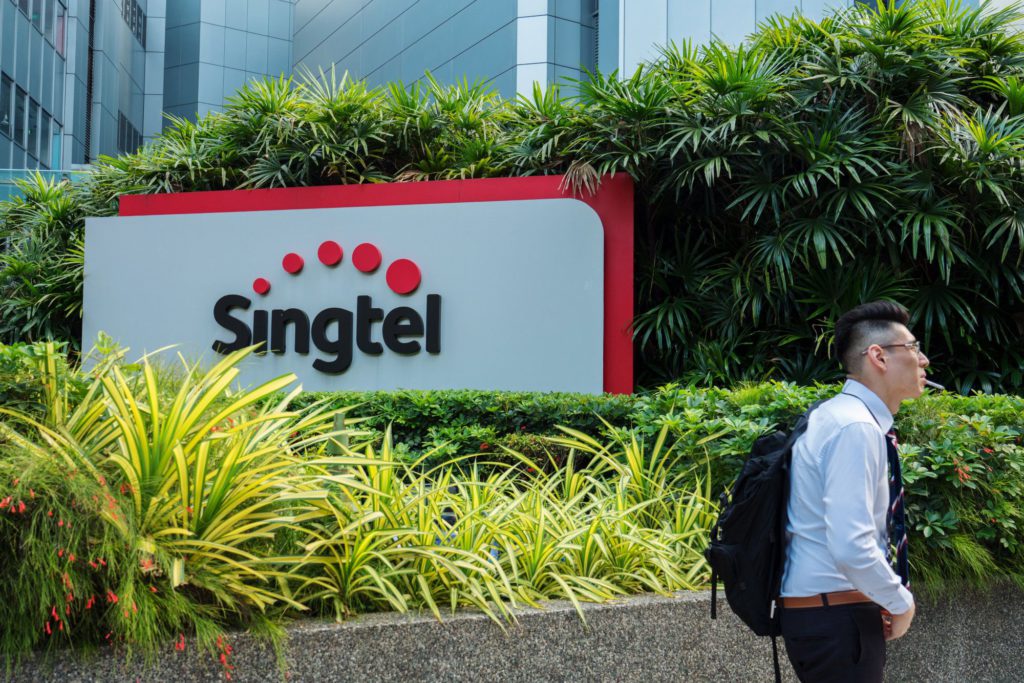
(Bloomberg) — Grab Holdings Ltd. and Singapore Telecommunications Ltd. plan to roll out a banking app next week, joining tech giants like Jack Ma’s Ant Group Co. in taking advantage of the country’s fintech liberalization.

Called GXS, the bank will start by offering a savings account from Sept. 5 and envisions expanding into credit products over time. It will begin by targeting younger users and the gig economy workers that underpin Grab’s car-hailing and meal delivery services, according to a statement.

Grab and telco Singtel aim to compete with tech giants Sea Ltd. and Ant, which are building digital banking products for the affluent city-state. But they’re entering a space dominated by major incumbents including DBS Group Holdings Ltd. and Oversea-Chinese Banking Corp.

Singapore joins the UK and Hong Kong in opening up to digital-only financial services, seeking to cement its position as a regional center for fintech and wealth management. Grab, which owns 60% of the venture, has been banking on financial services to help it turn profitable after burning cash in pursuit of growth in ride-hailing and delivery.

Read more: Ant, Grab Become First Tech Firms to Run Banks in Singapore

The bank will offer daily interest deposits — which amount to up to 1.58% per annum — and won’t impose criteria such as minimum deposits, Wong told reporters at a briefing. GXS hopes to compete by tapping Grab’s platform in Singapore, where people who use the app to hail rides or order food can now also access banking services.

“What’s important for us is to look at what we can do across our ecosystem,” Charles Wong, chief executive officer at GXS Bank, told Bloomberg News. 

Grab and its telco partner have more than 3 million customers combined, he added. They plan to introduce products for lending, savings, insurance and investments in the near future for small businesses and retail customers, Wong said without specifying a timeframe. The standalone GXS app will be linked to the main Grab platform in Singapore within 60 days, he said.

Wong, a former executive at Citigroup Inc., has more than 20 years of experience in the banking industry. He led its retail banking arm in Singapore and held roles in areas including bancassurance and wealth management before joining Grab, according to his LinkedIn profile.

The Grab-Singtel venture was one of two groups besides Sea to get a full digital bank license in 2020, allowing it to take deposits and serve both retail and corporate customers. The license requires S$1.5 billion ($1.1 billion) in capital as well as local control. That compares with a wholesale digital banking license for companies like Ant, which requires a capital commitment of S$100 million and can only serve small and midsized firms and other non-retail segments.

(Updates with CEO’s comments from the fifth paragraph)

More stories like this are available on bloomberg.com

©2022 Bloomberg L.P.
SoftBank’s Misra Steps Down as Corporate Officer on Record Loss

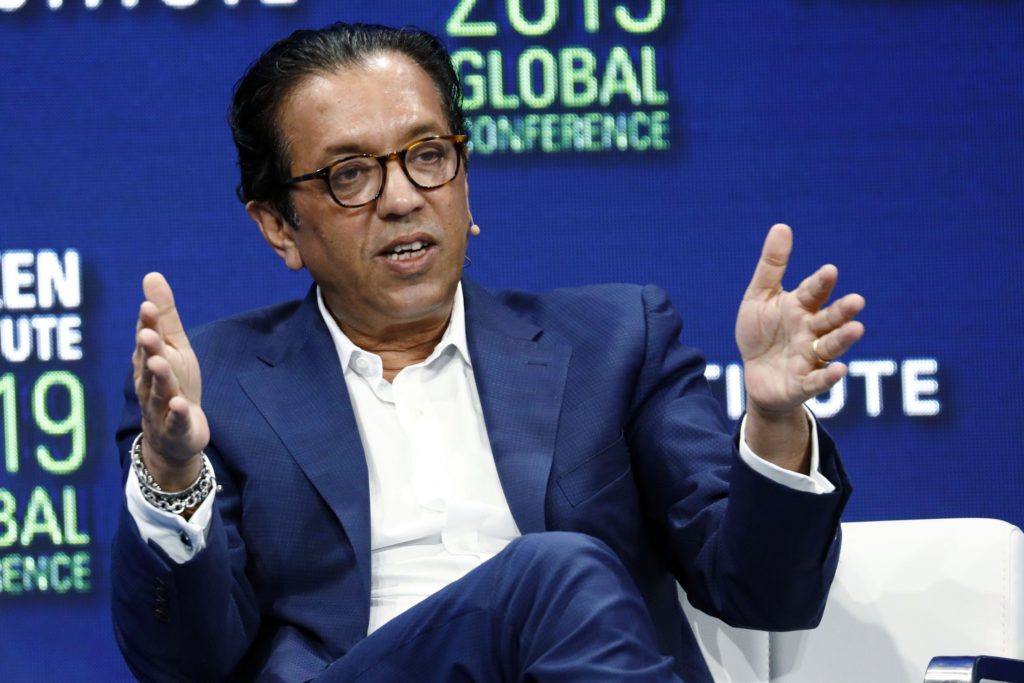
(Bloomberg) — SoftBank Group Corp. said Rajeev Misra is stepping down from his roles as a corporate officer and executive vice president, after a slide in technology stocks resulted in a record loss at the Japanese investment group.

The 60-year-old will retain his post as head of SoftBank Investment Advisers, which helps oversee the first Vision Fund’s existing investments, SoftBank said in a statement on Wednesday. SoftBank founder Masayoshi Son has said he will take over the management of new investments under the second Vision Fund.

A key lieutenant to Son, Misra is stepping back from his main roles at SoftBank and has secured more than $6 billion to launch his own fund, Bloomberg News reported last month.

Misra helped Son set up the initial Vision Fund with almost $100 billion in 2017, transforming SoftBank into the world’s largest technology investor. The Japanese billionaire, after successful early bets on companies like Alibaba Group Holding Ltd., poured money into an array of startups in the US, China, India and other countries in his hunt for the next big hit.

But Softbank’s investments soured, most notably in WeWork and China’s ride-hailing giant Didi Global Inc. After five years of deploying more than $140 billion, the company reported a record 3.2 trillion yen ($23 billion) loss for the company in the quarter ended in June.

More stories like this are available on bloomberg.com

©2022 Bloomberg L.P.
US Futures, Asia Stock Gauge Climb as Dollar Dips: Markets Wrap

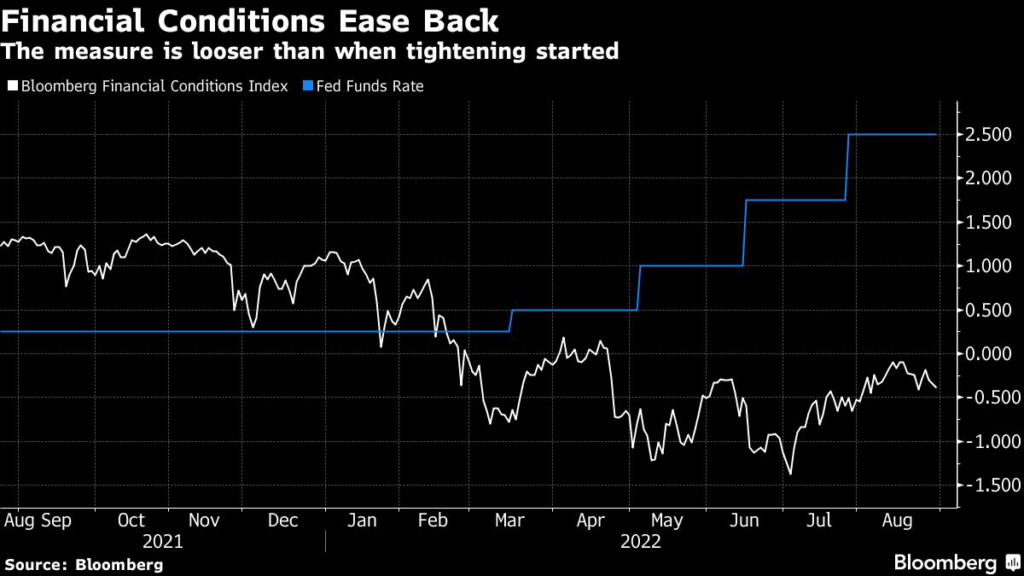
(Bloomberg) — US equity futures and an Asian stock gauge rose Wednesday in a hiatus from the selloff triggered by the Federal Reserve’s preference for restrictive monetary settings to tackle inflation.

The regional index climbed about 0.4% in a mixed day that saw tech shares advance but Japan’s bourses retreat. BYD Co. plunged in Hong Kong after Warren Buffett’s Berkshire Hathaway Inc. trimmed its stake in the electric vehicle maker.

Traders were evaluating the latest Chinese data, which indicated factory activity shrank for a second month. Power shortages, a property sector crisis and Covid outbreaks all took a toll.

S&P 500, Nasdaq 100 and European contracts pushed higher. Wall Street shares on Tuesday hit a one-month low — robust US labor demand and consumer confidence data added to the case for sharp interest-rate hikes to tackle inflation. Fed officials reiterated their determination to curb price pressures.

A dollar gauge declined and Treasuries were steady. A deepening yield curve inversion points to fears that the Fed will trigger a recession. Oil pared a slide but was still headed for a third monthly drop — the longest losing run in more than two years — hampered by the likelihood of slower global growth.

Market bets on a shallower trajectory for Fed tightening are receding, raising the prospect of more losses for stocks and bonds in an already difficult year. Investors are scouring incoming data for clues on the policy path, with August US jobs figures on Friday the next key report.

“What’s clear is that predicting this market is not clean cut,” Angeline Newman, a managing director at UBS Global Wealth Management, said on Bloomberg Television. “We are living in a world where conflicting economic signals are making the path of monetary policy very difficult to determine.”

Fed officials again stressed their commitment to defeating inflation while remaining vague on how big their policy move will be next month. 

New York Fed chief John Williams said rates will need to be held in restrictive territory for “some time,” adding that this meant through 2023 — the latest official to push back on financial-market expectations of cuts later next year.

“We’re still going to see some pretty volatile times and maybe some further downside for equities in the short term,” Steve Brice, chief investment officer at Standard Chartered Wealth Management, said on Bloomberg Television.

Investors are also contending with a European energy crisis as well as mounting friction between Beijing and Taipei after Taiwanese soldiers fired shots to ward off civilian drones. 

Here are some key events to watch this week:

  • ECB Governing Council members due to speak at event Tuesday through Sept. 2
  • Euro-area CPI, Wednesday
  • Russia’s Gazprom set to halt Nord Stream pipeline gas flows for three days of maintenance, Wednesday
  • Cleveland Fed President Loretta Mester due to speak, Wednesday
  • China Caixin manufacturing PMI, Thursday
  • US nonfarm payrolls, Friday
  • UK leadership ballot closes Friday. Winner announced Sept. 5

Will Chinese sovereign bonds outperform Treasuries? China is the theme of this week’s MLIV Pulse survey. Click here to participate anonymously.

Some of the main moves in markets:

Stocks

  • S&P 500 futures rose 0.7% as of 7 a.m. in London. The S&P 500 fell 1.1%
  • Nasdaq 100 futures added 0.8%. The Nasdaq 100 fell 1.1%
  • Japan’s Topix index fell 0.3%
  • Australia’s S&P/ASX 200 index dropped 0.2%
  • South Korea’s Kospi index rose 0.7%
  • Hong Kong’s Hang Seng Index gained 0.6%
  • China’s Shanghai Composite Index lost 0.3%
  • Euro Stoxx 50 futures increased 0.6%

Currencies

  • The Bloomberg Dollar Spot Index fell 0.3%
  • The euro traded at $1.0040, up 0.2%
  • The Japanese yen was at 138.42 per dollar, up 0.3%
  • The offshore yuan was at 6.8973 per dollar, up 0.4%

Bonds

  • The yield on 10-year Treasuries rose held at 3.10%
  • Australia’s 10-year bond yield fell about one basis point to 3.59%

Commodities

  • West Texas Intermediate crude was at $92.44 a barrel, up 0.9%
  • Gold was at $1,724.73 an ounce

More stories like this are available on bloomberg.com

©2022 Bloomberg L.P.

China Lithium Giants Notch Earnings Records on Supply Crunch

(Bloomberg) — China’s biggest lithium miners are enjoying a bumper earnings season just as the price of the battery metal approaches record highs amid a supply crunch.

Tianqi Lithium Corp.’s first-half net income skyrocketed by almost 12,000% from a year earlier to a record 10.3 billion yuan ($1.5 billion), it said in a filing on Tuesday. Ganfeng Lithium Co. reported net income soaring more than 400% in the first half to 7.25 billion yuan, although that was at the lower end of its forecast range. 

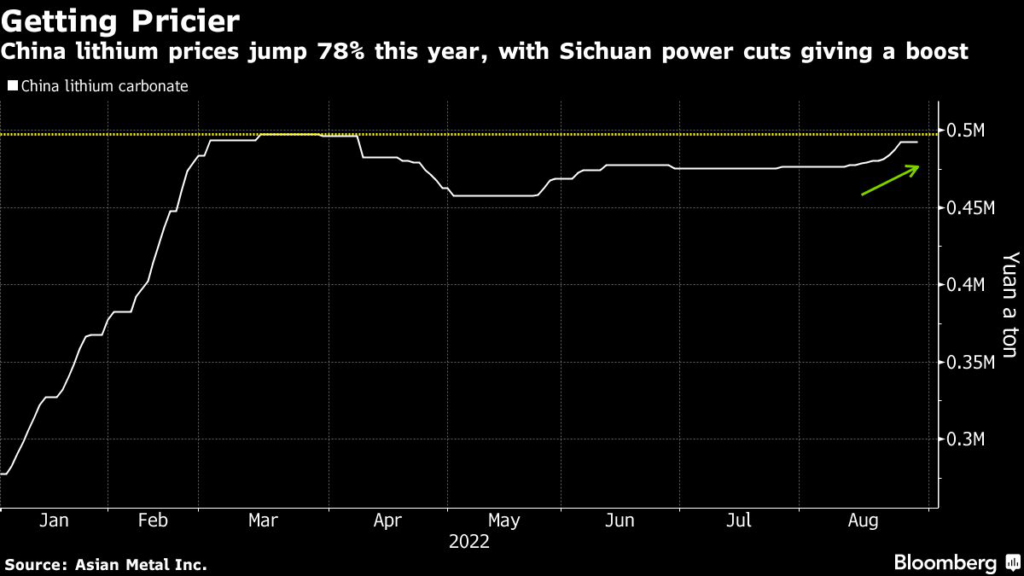
Lithium carbonate prices have jumped almost 80% in China so far this year, with the recent power crunch in Sichuan adding impetus to the rally. The province, home to over one-fifth of China’s lithium production, suffered two weeks of electricity curtailments in August. That created supply disruptions in an already-squeezed market, pushing the metal closer to record levels.

See also: Lithium Shortage to Worsen as Drought Hits China Output

Demand for the battery material, meanwhile, is accelerating as the automotive industry increasingly turns to electric vehicles. Chinese EV sales could surge as much as 89% this year, supported by post-lockdown subsidies and new model launches, according to Bloomberg Intelligence. UBS Group AG has lifted its long-term price forecast for battery-grade lithium by 38%, as incentivizing new supply will require even higher prices, it said in a note on Friday.

Tianqi Lithium plans to restart a project at Yajiang Cuola Mine in Sichuan “in order to address the potential risks of lithium resource shortage and reliance on import of raw materials in the future,” it said in an earnings report. The company already said in July that it aims to more than double its capacity in the coming three years.

Ganfeng Lithium said its production and sales were generally lower than expected in the first half. However, it’s forecasting an improvement for the second half, citing the completion of its Mt Marion mine expansion in Australia, new capacity in China, and the relaxation of virus curbs. The company also unveiled expansion plans for battery production in Chongqing and Jiangxi.

“Continued robust EV demand globally, and record-breaking heat and drought in the southwest of China are the key drivers for the market,” Benchmark Mineral Intelligence said in a note last week. “Longer-term, the lithium market is likely to remain tight this decade, but become more balanced by around 2026.” 

Tianqi Lithium’s share prices have risen 3% in Shenzhen so far this year, while Ganfeng Lithium has fallen by 17%.

(Updates chart and adds share prices in last paragraph)

More stories like this are available on bloomberg.com

©2022 Bloomberg L.P.

Japan Declares ‘War’ on the Humble Floppy Disk in New Digitization Push

(Bloomberg) — Japan’s digital minister, who’s vowed to rid the bureaucracy of outdated tools from the hanko stamp to the fax machine, has now declared “war” on a technology many haven’t seen for decades — the floppy disk. 

The hand-sized, square-shaped data storage item, along with similar devices including the CD or even lesser-known mini disk, are still required for some 1,900 government procedures and must go, digital minister Taro Kono wrote in a Twitter post Wednesday. 

“We will be reviewing these practices swiftly,” Kono said in a press conference Tuesday, who added that Prime Minister Fumio Kishida has offered his full support. “Where does one even buy a floppy disk these days?” 

Japan isn’t the only nation that has struggled to phase out the outdated technology — the US Defense Department only announced in 2019 that it has ended the use of floppy disks, which were first developed in the 1960s, in a control system for its nuclear arsenal. Sony Group Corp. stopped making the disks in 2011 and many young people would struggle to describe how to use one or even identify one in the modern workplace. 


Legal hurdles are making it difficult to adopt modern technology like cloud storage for wider use within the bureaucracy, according to a presentation by the government’s digital taskforce dated Tuesday. The group will review the provisions and plans to announce ways to improve them by the year-end.

Kono, one of the ruling Liberal Democratic Party’s most visible politicians who’s often cited by voters as a contender to be prime minister, has been an outspoken critic of bureaucratic inefficiencies due to archaic practices, most notably the fax machine and the hanko, a unique, carved red stamp that remains necessary to sign off on official documents like a marriage license. He tried to curb use of both when he was administrative reform minister between 2020 and 2021, but the two are still widely used.

Japan Taps Kono as Vaccine Minister as Approval Nears for Pfizer

“I’m looking to get rid of the fax machine, and I still plan to do that,” he quipped at his press conference Tuesday.

More stories like this are available on bloomberg.com

©2022 Bloomberg L.P.

Apple Quietly Gives Up Its Didi Board Seat After Turmoil

(Bloomberg) — An Apple Inc. executive has left the board of Didi Global Inc., as the Chinese ride-hailing company struggles to regain ground it lost during Beijing’s crackdown on the country’s internet sector.

Adrian Perica, Apple’s vice president of corporate development, has resigned from Didi’s board, according to a one-sentence release posted on Didi’s website this month. Didi didn’t respond to requests for comment. Apple declined to comment. 

The departure of Perica, who also heads Apple’s mergers and acquisitions strategy, follows a tumultuous year for Didi. Since the company went ahead with a US initial public offering against Beijing’s wishes in June last year, Didi’s app has been pulled from China’s mobile stores, preventing meaningful growth and erasing more than 80% of its market value. 

Didi said in May it will delist from the New York Stock Exchange. Last month, it was fined $1.2 billion by the Chinese government for infractions that Beijing said compromised national security, ending a yearlong probe.

Perica joined Didi’s board in 2016 after Apple made a $1 billion investment in the ride-hailing app, giving the smartphone maker a more secure foothold in the Chinese market amid rising US-China tensions. Apple Chief Executive Officer Tim Cook said at the time that the move was a “great financial investment.”

Perica, a former Goldman Sachs banker, joined Apple in 2009 and reports directly to Cook. The company has slowed its dealmaking in the last two years, however, as tech giants become more cautious in an uncertain economy.

More stories like this are available on bloomberg.com

©2022 Bloomberg L.P.
Grab, Singtel to Start Digital Services in Singapore Bank Battle

(Bloomberg) — Grab Holdings Ltd. and Singapore Telecommunications Ltd. plan to roll out a banking service next week, joining tech giants like Jack Ma’s Ant Group Co. in taking advantage of the country’s fintech liberalization.

Called GXS, the bank will start by offering a savings account from Sept. 5 and envisions expanding into credit products over time. It will begin by targeting younger users and the gig economy workers that underpin Grab’s car-hailing and meal delivery services, according to a statement.

Grab and telco Singtel aim to compete with tech giants Sea Ltd. and Ant, which are building digital banking products for the affluent city-state. But they’re entering a space dominated by major incumbents including DBS Group Holdings Ltd. and Oversea-Chinese Banking Corp.

Singapore joins the UK and Hong Kong in opening up to digital-only financial services, seeking to cement its position as a regional center for fintech and wealth management. Grab, which owns 60% of the venture, has been banking on financial services to help it turn profitable after burning cash in pursuit of growth in ride-hailing and delivery. 

Grab hopes to benefit by offering a suite of services across its platform in Singapore, where people who use Grab to hail rides or order food can now also access banking services.

“GXS is a homegrown bank on a mission to support the needs of entrepreneurs, gig economy workers and early-jobbers in our community,” Charles Wong, chief executive officer at GXS Bank, said in the statement. The bank will offer daily interest deposits — which amount to up to 1.58% per annum — and won’t impose criteria such as minimum deposits, he told reporters at a briefing.

Wong, a former executive at Citigroup Inc., has more than 20 years of experience in the banking industry. He led its retail banking arm in Singapore and held roles in areas including bancassurance and wealth management before joining Grab, according to his LinkedIn profile.

The Grab-Singtel venture was one of two groups besides Sea to get a full digital bank license in 2020, allowing it to take deposits and serve both retail and corporate customers. The license requires S$1.5 billion ($1.1 billion) in capital as well as local control. That compares with a wholesale digital banking license for companies like Ant, which requires a capital commitment of S$100 million and can only serve small and midsized firms and other non-retail segments.

Grab’s financial services arm reported about $13 million in revenue for the second quarter. It expects total payment volume, the sum of payments flowing through its platform, for financial services to rise to as much as $3.9 billion for the third quarter.

More stories like this are available on bloomberg.com

©2022 Bloomberg L.P.
Ex-Goldman Banker’s Crypto Startup Backed By Key Market Makers

(Bloomberg) — Market makers Flow Traders and Hudson River Trading have backed Sei Labs, a crypto startup founded by Goldman Sachs and Robinhood Markets Inc. veterans that is developing a blockchain aimed at speeding up decentralized finance transactions.

The investments are part of a $5 million seed round led by Multicoin Capital, with participation from Coinbase Ventures and GSR, New York-based Sei Labs’s founders said on Wednesday. Backers, which also include Delphi Digital and Tangent, will receive a mix of equity and future tokens from the platform.

DeFi applications — through which users trade, borrow and lend crypto without a central intermediary — are typically built using popular blockchains such as Ethereum and Solana. These chains often get congested as the networks get busier, stopping market makers from being able to place orders consistently. Sei Labs’s protocol, to be launched later this year, will feature a built-in order book allowing DeFi projects and institutional market makers to process transactions and access liquidity at faster speeds.

The funding comes as the cryptosphere prepares to undergo a major shakeup next month, when the Ethereum blockchain is set to begin a significant upgrade process that could create a myriad of disturbances on its network. Crypto prices have been volatile in recent weeks ahead of the change, while institutions have largely remained on the outside of the fray.

Listen: Anticipating the Coming Ethereum Merge

The cash injection will be used to fund growth of the network, Sei Labs co-founder Jeff Feng said in an interview. Feng spent three years at Goldman as a technology investment banker before moving into venture investing for Coatue Management. Sei was also co-founded by Jay Jog, a former Robinhood software engineer, with most of the startup’s engineering talent hailing from Robinhood’s clearing team.

Built using code from the Cosmos blockchain, Sei’s infrastructure will be able to complete transactions in as fast as 600 milliseconds, it said in a statement. By comparison, it takes between 12 and 14 seconds on average to complete a transaction on Ethereum, a favorite protocol for building DeFi apps.

Current speeds for completing orders on blockchain networks are “a deal breaker” for institutional market makers seeking to access the space, Dan Edlebeck, the firm’s head of ecosystem, said in an interview.

As Sei was developed specifically to facilitate trading, its creators hope the network will overtake Solana as one of the preferred protocols for building DeFi apps. Solana was also originally designed to be used in trading, Feng said, but later expanded into gaming and collectibles. 

“Because we’ve built the entire chain around an order book, all of the things that Solana could but won’t do because it has a ton of other games and other use cases, we’re able to do,” Feng said.

More stories like this are available on bloomberg.com

©2022 Bloomberg L.P.
GoTo Loss Widens on Spending to Tap Ride, E-Commerce Demand

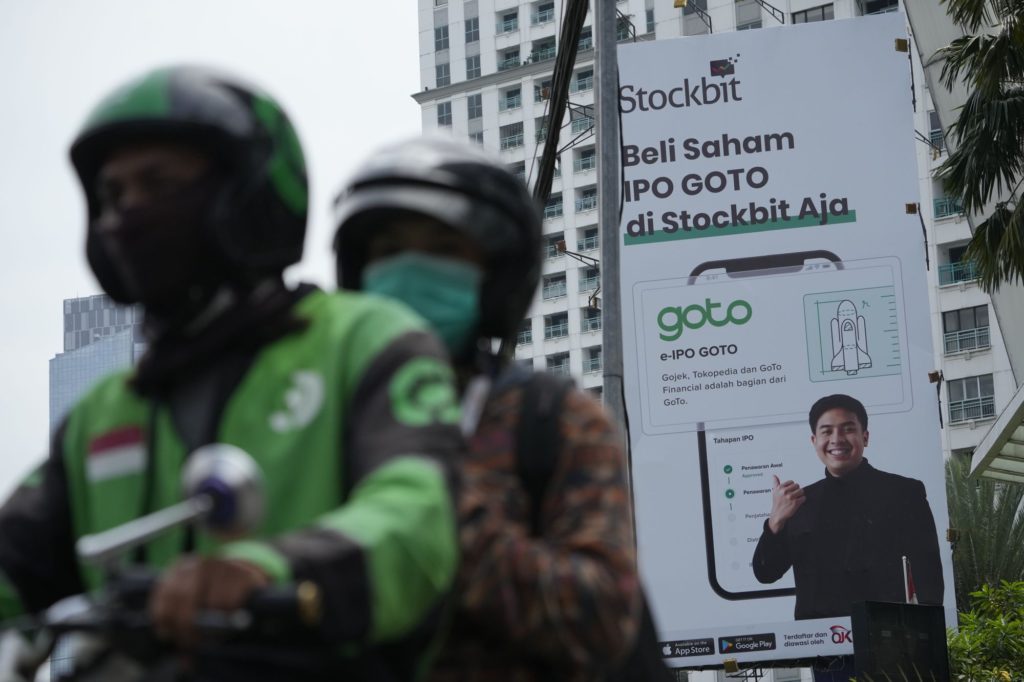
(Bloomberg) — Indonesian ride-hailing and e-commerce giant GoTo Group reported a wider second-quarter loss on operating basis, a setback for its bid to convince investors of its profit-making potential.

The adjusted loss before interest, taxes, depreciation and amortization was 4.14 trillion rupiah ($279 million), compared with a pro-forma loss of 3.9 trillion rupiah a year earlier, the Jakarta-based company said Tuesday. Gross revenue on a pro-forma basis rose 45% to 5.5 trillion rupiah, a sign that appetite for online services keeps increasing in Southeast Asia’s largest economy.

Shares fell as much as 6.2% in trading on Wednesday. Like its rivals, GoTo has struggled to reassure investors of its ability to generate profits and its value is down about 8% since its initial public offering in Jakarta in April.

GoTo is trying to balance spending on growth with its effort to reach profitability as soaring inflation and rising interest rates weigh on the technology industry globally. Mobile-savvy consumers in Indonesia, a country of 270 million people, are shopping online on GoTo’s e-commerce platform Tokopedia, ordering rides and meals via its Gojek app and paying through its GoPay e-wallet.

Formed through a merger between ride-hailing provider Gojek and e-commerce firm Tokopedia, the company has spent years competing against rivals including Grab Holdings Ltd. in Southeast Asia’s increasingly fierce online market.

GoTo May Report Narrower 2Q Ebitda Loss, Higher Revenue: Preview

GoTo said the wider loss reflects the impact of Covid-related restrictions as well as higher cross-platform investments. Main competitor Grab last week reported a wider second-quarter Ebitda loss of about $233 million.

Key Insights

  • Second-quarter net revenue, which strips out incentives to driver and merchant partners and promotions to users, rose 63% to 1.9 trillion rupiah
  • Co. forecasts third-quarter gross revenue of 5.7 trillion rupiah to 6 trillion rupiah
  • Co. projects third-quarter gross transaction value of 151 trillion rupiah to 156 trillion rupiah
  • Co. expects contribution margin, a measure of profitability, to turn positive starting in the first quarter of 2024
  • On-demand segment to achieve positive contribution margin by the first quarter of 2023; e-commerce segment by the fourth quarter of 2023

Get More

  • GoTo’s GTV, the sum of transactions flowing through its platform, grew 39% to 150.5 trillion rupiah
  • Annual transacting users for the last twelve months grew about 28% to 67.2 million

(Updates with share price in third paragraph)

More stories like this are available on bloomberg.com

©2022 Bloomberg L.P.

China’s Lithium Giants Notch Earnings Records on Supply Crunch

(Bloomberg) — China’s biggest lithium miners are enjoying a bumper earnings season just as the price of the battery metal approaches record highs amid a supply crunch.

Tianqi Lithium Corp.’s first-half net income skyrocketed by almost 12,000% from a year earlier to a record 10.3 billion yuan ($1.5 billion), it said in a filing on Tuesday. Ganfeng Lithium Co. reported net income soaring more than 400% in the first half to 7.25 billion yuan, although that was at the lower end of its forecast range. 

Lithium carbonate prices have jumped almost 80% in China so far this year, with the recent power crunch in Sichuan added impetus to the rally. The province, home to over one-fifth of China’s lithium production, suffered two weeks of electricity curtailments in August. That created supply disruptions in an already-squeezed market, pushing the metal closer to record levels.

See also: Lithium Shortage to Worsen as Drought Hits China Output

Demand for the battery material, meanwhile, is accelerating as the automotive industry increasingly turns to electric vehicles. Chinese EV sales could surge as much as 89% this year, supported by post-lockdown subsidies and new model launches, according to Bloomberg Intelligence. UBS Group AG has lifted its long-term price forecast for battery-grade lithium by 38%, as incentivizing new supply will require even higher prices, it said in a note on Friday.

Tianqi Lithium plans to restart a project in Yajiang Cuola Mine in Sichuan “in order to address the potential risks of lithium resource shortage and reliance on import of raw materials in the future,” it said in an earnings report. The company already said in July that it aims to more than double its capacity in the coming three years.

Ganfeng Lithium said its production and sales were generally lower than expected in the first half. However, it’s forecasting an improvement for the second half, citing the completion of its Mt Marion mine expansion in Australia, new capacity in China, and the relaxation of virus curbs. The company also unveiled expansion plans for battery production in Chongqing and Jiangxi province.

“Continued robust EV demand globally, and record-breaking heat and drought in the southwest of China are the key drivers for the market,” Benchmark Mineral Intelligence said in a note last week. “Longer-term, the lithium market is likely to remain tight this decade, but become more balanced by around 2026.” 

More stories like this are available on bloomberg.com

©2022 Bloomberg L.P.

Close Bitnami banner
Bitnami