
Bloomberg

 Credit Markets Brace for Big Post-Jackson Hole Test From Citrix Loan Sale

(Bloomberg) — Bankers are poised to kick off the $15 billion leveraged buyout financing for Citrix Systems Inc. next week, testing investor demand for risky debt just days after the Federal Reserve pledged to keep raising interest rates.

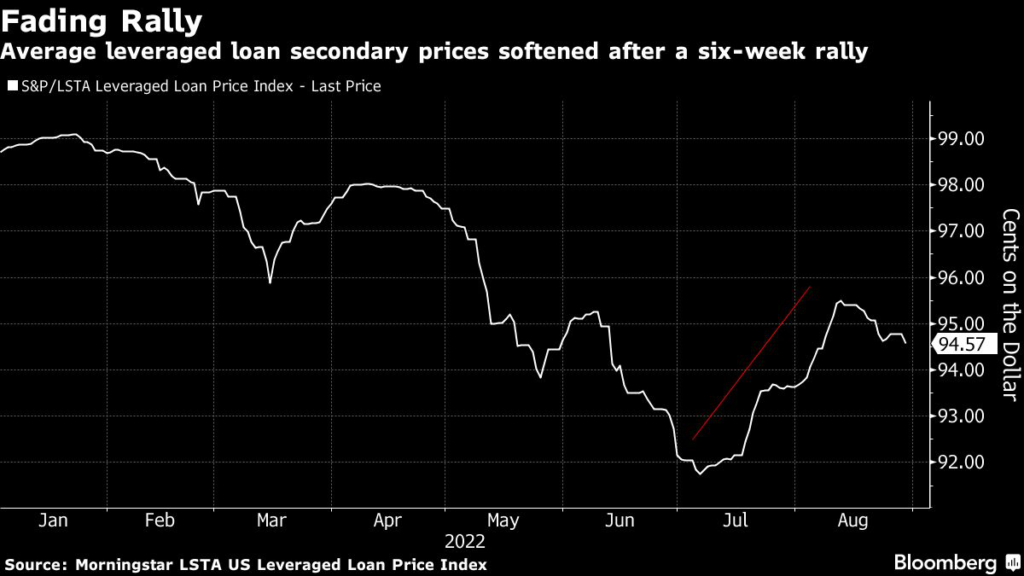
The loan portion of the deal, an expected $4.05 billion offering, will get under way on Tuesday after being reconfigured several times to help banks offload debt that they committed to provide in January, when credit markets were in much better shape. Loans then were trading at around 99 cents on the dollar, and have since fallen to about 94.6 cents on average, according to the Morningstar LSTA US Leveraged Loan Price Index.

Fed Chair Jerome Powell on Friday made the banks’ job harder, saying at a symposium in Jackson Hole, Wyoming, that the US central bank is likely to keep raising interest rates and leave them elevated for a while to stamp out inflation. This caused a rout in credit markets, a painful double-whammy following the mid-August demise of a six-week rally that had sparked hope the deal might launch in a more-welcoming environment.  

Where the Citrix loan prices will indicate any potential losses faced by those banks, led by Bank of America Corp., and how two other large buyout deals for Nielsen Holdings and Tenneco Inc. may fare.

“The buyout deals will set the tone on what price the market wants to assign to true risk,” said John McClain, a high-yield portfolio manager at Brandywine Global Investment Management. As a software company, Citrix is more resistant to a downturn, but Nielsen and Tenneco are in media and auto parts, respectively, and therefore more exposed if there is a recession, he said.

The size of the financing is so large that banks have decided to hold onto part of the Citrix debt rather than overload the market with too much supply. 

The underwriters plan to hold onto $3.5 billion of a leveraged loan, though they may reduce that amount if there is enough demand for the $4.05 billion broadly syndicated portion, of which about $1 billion has already been placed with private credit firms, Bloomberg reported. 

The $4.05 billion loan was floated at a margin of 450 basis points over the Secured Overnight Financing Rate and a discounted price in the low-90 cents range in the latest round of pre-marketing earlier this month, Bloomberg previously reported.

Banks are also expected to retain $3.95 billion of unsecured bond commitments, which were turned into a second-lien loan, though details could change. 

The Citrix transaction also includes a $500 million-equivalent leveraged loan denominated in euros and $3 billion of secured bonds.

The Nielsen deal includes $8.35 billion of bonds and loans, and Tenneco plans to sell $5.4 billion.  

Banks typically provide temporary debt commitments for acquisitions and buyouts with the intention of replacing them with junk bonds and leveraged loans sold to institutional investors. The underwriters promised to find investors for the debt at specific maximum interest rates, but then the cost of borrowing increased above those caps over the course of the year, leaving banks on the hook for the difference.

Read more: Debt Losses for Buyouts Top $1 Billion and Banks Brace for More

The floating-rate structure of leveraged loans means that the interest rates will continue to increase for these heavily indebted companies as rates rise. That could cause defaults to increase, making them the “canary in today’s credit coal mine” for a potential recession, according to a recent report by Morgan Stanley strategist Srikanth Sankaran. 

After Citrix

Volatility, high valuations, and choppy debt markets have caused a slowdown in new acquisition and buyout activity. Refinancing of existing debt often makes up a substantial portion of the leveraged finance markets, but many companies already took advantage of low interest rates in the last two years to push out maturities and can wait out turbulence.

“Once we clear this crop of deals, the calendar will be rather light,” said Peter Toal, global head of fixed income syndicate at Barclays Plc. If the deals go well, that will give underwriters the confidence to commit to new leveraged buyouts and acquisitions, he said. But if the deals struggle, underwriters might hold off on new commitments.

Investors are still looking to put money to work through leveraged loans and junk bonds as rising rates makes lending more attractive. 

“The cost of capital has gone up, there’s no question about it, but there will be need for more financing undoubtedly,” said Toal. “It’s been a long time since we had a really hawkish Fed but the financing markets will continue and there will be windows where they are more open or less open.” 

Elsewhere in credit markets:

Americas

Bonds are sliding toward the first bear market in a generation, burning investors who erred in bets that central banks would pivot away from rapid interest-rate hikes. 

  • Debt markets have swiftly moved to reprice credit risk, following a duration hit from the higher-for-longer rates outlook.
  • Mexican President Andres Manuel Lopez Obrador, pilloried for doling out only the bare minimum of pandemic emergency aid, is getting some pay-off as Mexico has maintained access to international bond markets while other developing nations haven’t.
  • While junk-rated bonds have traditionally been the credit market’s first to crack as economic conditions deteriorate, that position may now be filled by the more than $1 trillion worth of floating-rate loans, writes Morgan Stanley strategist Srikanth Sankaran in a new note.
  • For deal updates, click here for the New Issue Monitor
  • For more, click here for the Credit Daybook Americas

EMEA

Eleven issuers across 15 tranches were in the primary market on Tuesday, with a minimum placement volume equivalent to 10.79 billion euros ($10.82 billion). That’s the highest tranche count since June 23, data compiled by Bloomberg show. On Friday, a euro-denominated senior preferred offering by UK lender Nationwide Building Society capped last week’s issuance activity, which amounted to more than the equivalent of 30 billion euros.

  • The European Commission approved a plan to transfer bad loans guaranteed by the Italian government to state-owned asset manager Amco SpA, according to a report in Sole 24 Ore
  • Nostrum Oil & Gas Plc got court approval for debt restructuring

Asia

China is set to ask companies planning to sell offshore debt with tenors longer than one year to get approval from the country’s top economic planning body, bringing greater enforcement to parts of longstanding guidance on overseas financing as concern mounts about dollar strength.

  • The lowest August volume for dollar-bond deals from Asia in a decade continued on Tuesday, as issuers kept to the sidelines amid rising borrowing costs in the US currency
  • Still, Korea Electric Power has sent a request for proposals to banks for a potential issuance of dollar notes, a person familiar with the matter said
  • Indian solar utility Azure Power Global Ltd.’s dollar notes slid to record lows on Tuesday after the firm’s chief executive officer Harsh Shah unexpectedly resigned
  • Vietnam will tighten rules on bond issuance by property companies to curb speculation and rein in high real-estate prices it says are a threat to the nation’s financial market
  • Indonesia’s bid to help the rupiah via “Operation Twist” has pushed the spread between long-dated and shorter corporate notes to the lowest in two years

More stories like this are available on bloomberg.com

©2022 Bloomberg L.P.

Credit Markets Brace for Big Post-Jackson Hole Test From Citrix Loan Sale

(Bloomberg) — Bankers are poised to kick off the $15 billion leveraged buyout financing for Citrix Systems Inc. next week, testing investor demand for risky debt just days after the Federal Reserve pledged to keep raising interest rates.

The loan portion of the deal, an expected $4.05 billion offering, will get under way on Tuesday after being reconfigured several times to help banks offload debt that they committed to provide in January, when credit markets were in much better shape. Loans then were trading at around 99 cents on the dollar, and have since fallen to about 94.6 cents on average, according to the Morningstar LSTA US Leveraged Loan Price Index.

Fed Chair Jerome Powell on Friday made the banks’ job harder, saying at a symposium in Jackson Hole, Wyoming, that the US central bank is likely to keep raising interest rates and leave them elevated for a while to stamp out inflation. This caused a rout in credit markets, a painful double-whammy following the mid-August demise of a six-week rally that had sparked hope the deal might launch in a more-welcoming environment.  

Where the Citrix loan prices will indicate any potential losses faced by those banks, led by Bank of America Corp., and how two other large buyout deals for Nielsen Holdings and Tenneco Inc. may fare.

“The buyout deals will set the tone on what price the market wants to assign to true risk,” said John McClain, a high-yield portfolio manager at Brandywine Global Investment Management. As a software company, Citrix is more resistant to a downturn, but Nielsen and Tenneco are in media and auto parts, respectively, and therefore more exposed if there is a recession, he said.

The size of the financing is so large that banks have decided to hold onto part of the Citrix debt rather than overload the market with too much supply. 

The underwriters plan to hold onto $3.5 billion of a leveraged loan, though they may reduce that amount if there is enough demand for the $4.05 billion broadly syndicated portion, of which about $1 billion has already been placed with private credit firms, Bloomberg reported. 

The $4.05 billion loan was floated at a margin of 450 basis points over the Secured Overnight Financing Rate and a discounted price in the low-90 cents range in the latest round of pre-marketing earlier this month, Bloomberg previously reported.

Banks are also expected to retain $3.95 billion of unsecured bond commitments, which were turned into a second-lien loan, though details could change. 

The Citrix transaction also includes a $500 million-equivalent leveraged loan denominated in euros and $3 billion of secured bonds.

The Nielsen deal includes $8.35 billion of bonds and loans, and Tenneco plans to sell $5.4 billion.  

Banks typically provide temporary debt commitments for acquisitions and buyouts with the intention of replacing them with junk bonds and leveraged loans sold to institutional investors. The underwriters promised to find investors for the debt at specific maximum interest rates, but then the cost of borrowing increased above those caps over the course of the year, leaving banks on the hook for the difference.

Read more: Debt Losses for Buyouts Top $1 Billion and Banks Brace for More

The floating-rate structure of leveraged loans means that the interest rates will continue to increase for these heavily indebted companies as rates rise. That could cause defaults to increase, making them the “canary in today’s credit coal mine” for a potential recession, according to a recent report by Morgan Stanley strategist Srikanth Sankaran. 

After Citrix

Volatility, high valuations, and choppy debt markets have caused a slowdown in new acquisition and buyout activity. Refinancing of existing debt often makes up a substantial portion of the leveraged finance markets, but many companies already took advantage of low interest rates in the last two years to push out maturities and can wait out turbulence.

“Once we clear this crop of deals, the calendar will be rather light,” said Peter Toal, global head of fixed income syndicate at Barclays Plc. If the deals go well, that will give underwriters the confidence to commit to new leveraged buyouts and acquisitions, he said. But if the deals struggle, underwriters might hold off on new commitments.

Investors are still looking to put money to work through leveraged loans and junk bonds as rising rates makes lending more attractive. 

“The cost of capital has gone up, there’s no question about it, but there will be need for more financing undoubtedly,” said Toal. “It’s been a long time since we had a really hawkish Fed but the financing markets will continue and there will be windows where they are more open or less open.” 

Elsewhere in credit markets:

Americas

Bonds are sliding toward the first bear market in a generation, burning investors who erred in bets that central banks would pivot away from rapid interest-rate hikes. 

  • Debt markets have swiftly moved to reprice credit risk, following a duration hit from the higher-for-longer rates outlook.
  • Mexican President Andres Manuel Lopez Obrador, pilloried for doling out only the bare minimum of pandemic emergency aid, is getting some pay-off as Mexico has maintained access to international bond markets while other developing nations haven’t.
  • While junk-rated bonds have traditionally been the credit market’s first to crack as economic conditions deteriorate, that position may now be filled by the more than $1 trillion worth of floating-rate loans, writes Morgan Stanley strategist Srikanth Sankaran in a new note.
  • For deal updates, click here for the New Issue Monitor
  • For more, click here for the Credit Daybook Americas

EMEA

Eleven issuers across 15 tranches were in the primary market on Tuesday, with a minimum placement volume equivalent to 10.79 billion euros ($10.82 billion). That’s the highest tranche count since June 23, data compiled by Bloomberg show. On Friday, a euro-denominated senior preferred offering by UK lender Nationwide Building Society capped last week’s issuance activity, which amounted to more than the equivalent of 30 billion euros.

  • The European Commission approved a plan to transfer bad loans guaranteed by the Italian government to state-owned asset manager Amco SpA, according to a report in Sole 24 Ore
  • Nostrum Oil & Gas Plc got court approval for debt restructuring

Asia

China is set to ask companies planning to sell offshore debt with tenors longer than one year to get approval from the country’s top economic planning body, bringing greater enforcement to parts of longstanding guidance on overseas financing as concern mounts about dollar strength.

  • The lowest August volume for dollar-bond deals from Asia in a decade continued on Tuesday, as issuers kept to the sidelines amid rising borrowing costs in the US currency
  • Still, Korea Electric Power has sent a request for proposals to banks for a potential issuance of dollar notes, a person familiar with the matter said
  • Indian solar utility Azure Power Global Ltd.’s dollar notes slid to record lows on Tuesday after the firm’s chief executive officer Harsh Shah unexpectedly resigned
  • Vietnam will tighten rules on bond issuance by property companies to curb speculation and rein in high real-estate prices it says are a threat to the nation’s financial market
  • Indonesia’s bid to help the rupiah via “Operation Twist” has pushed the spread between long-dated and shorter corporate notes to the lowest in two years

More stories like this are available on bloomberg.com

©2022 Bloomberg L.P.
Musk’s Proposed Takeover of Twitter Backed by ISS, Glass Lewis

(Bloomberg) — Two prominent shareholder advisory firms are urging Twitter Inc. shareholders to support a proposed takeover by Elon Musk despite efforts by the world’s richest man to back out of the deal. 

Institutional Shareholder Services Inc. and Glass Lewis & Co. both issued reports Tuesday urging shareholders to vote for the deal. ISS said that while the situation is “unique,” investors should focus on the details of the proposal itself instead of the noise around it. 

The advisory firm said while the lack of an auction for the company would generally be a cause for concern, no other rival bids have emerged and no shareholders have opposed Musk’s $44 billion offer. In fact, ISS noted that regulatory filings show several institutional shareholders actually encouraged the board to seriously consider Musk’s offer. 

“Together, these considerations diminish concerns about opportunism. Moreover, the all-cash offer provides liquidity and certainty of value to shareholders, and there is clear downside risk of non-approval,” ISS said in the report. “In light of these factors, support for the proposed transaction is warranted.”

Glass Lewis said the offer price would allow shareholders a relatively attractive exit price, and a premium for the company’s unaffiliated shareholders. As such, support for the deal was warranted, it said.

“The matter of how shareholders should vote on the proposed merger is comparatively a straightforward affair, in our view,” Glass Lewis said. “Considering the worsening expectations regarding the company’s standalone prospects, coupled with the broader market sell-off in recent months, we believe the proposed merger very likely represents the best available alternative to maximize shareholder value at this time.”

A Twitter spokesman declined to comment. A representative for Musk wasn’t immediately available for comment. 

Musk agreed to acquire Twitter for $54.20 a share in April in what would be one of the largest leveraged buyout deals in history. Within weeks, the billionaire, who owns about a 9.6% stake in Twitter, cooled to the idea of acquiring the company, and said he planned terminate the deal in July. He alleged that Twitter misled the public about the number of automated accounts known as spam bots on its platform and he used that as the rationale for vacating the deal. 

San Francisco-based Twitter has refused to let Musk out of his commitment. The matter will now play out in a Delaware court that has historically frowned on efforts to scrap merger agreements and could result in a verdict forcing Musk to buy Twitter, or possibly an out-of-court settlement.

The trial is slated to begin on Oct. 17. 

“While the outcome of the litigation could impact the proposed transaction, in that the deal could be delayed or terminated, it appears that the most prudent course of action for shareholders at this juncture is to focus on the fundamentals of the transaction itself,” ISS said. 

The matter is slated to go to a shareholder vote on Sept. 13. 

Accusations by a whistle-blower last week, including claims of “egregious deficiencies” in the platform’s defenses against hackers and privacy issues, have given Musk new ammunition in his case against Twitter. His lawyers sent a letter to their Twitter counterparts on Tuesday claiming that the whistle-blower’s allegations mean that Twitter breached the terms of the merger agreement. Twitter’s lawyers responded, saying that Musk’s case for termination of the deal is “invalid and wrongful.”

More stories like this are available on bloomberg.com

©2022 Bloomberg L.P.

Bitcoin Falls Below $20,000 as Hawkish Fed Continues to Weigh on Riskier Assets

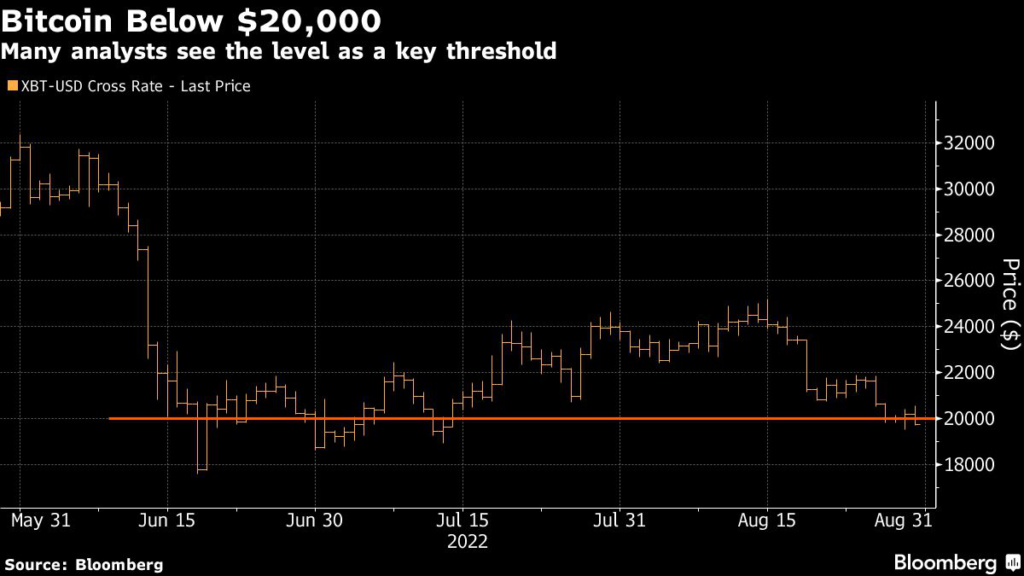
(Bloomberg) — Bitcoin dipped below $20,000 once again, as hawkish comments from the Federal Reserve about inflation and the economic slowdown continue to weigh on riskier assets.

The largest digital token fell as much as 2.3% on Tuesday to trade around $19,723, while other cryptocurrencies including Ether, Polkadot and Dogecoin also declined. An index of 100 of the largest digital coins fell 2% at one point. US stocks also posted losses, with the S&P 500 shedding as much as 1.5% in what’s likely to be its third straight day lower. 

Riskier assets have been having a rough few days as traders digested comments from Fed Chair Jerome Powell, who reiterated that the central bank is willing to continue monetary tightening even at the risk of an economic downturn.

“This is still macro driven by Jackson Hole — Jerome Powell delivered a hawkish speech and stated that a single month’s improvement is not enough to return inflation to 2%,” Annabelle Huang, managing partner at Amber Group, said in reference to the Fed’s meeting at the end of last week. “The language signaled that the market would face further interest-rate hikes until the issue of inflation would be deemed ‘under control.’” She added that Bitcoin retraced below its 200-week moving average. 

The rout in riskier assets started Friday, when Powell made it clear the Fed is willing to let the economy suffer as it fights inflation. Macro headwinds will continue to weigh on cryptocurrencies as inflation is still far from under control and the Fed is unlikely to pivot anytime soon, wrote Vetle Lunde at Arcane Research in a note. “The macro backdrop will be a difficult landscape to navigate in the coming years,” he said. 

The $20,000 level acted as support for Bitcoin when it hit lows in recent months, although the cryptocurrency had worked its way higher over the last few weeks. Many analysts see it as an important psychological threshold, with a drop below it potentially signaling further losses. 

“I always view crypto as the riskiest of risk assets and it coincides quite a bit with some of the more frothier areas of the equity markets,” Shawn Cruz, head trading strategist at TD Ameritrade, said in an interview. “It makes sense when you have risk tolerance and risk aversion flying all over the place that you’re going to see a little bit of volatility pick up.” 

More stories like this are available on bloomberg.com

©2022 Bloomberg L.P.

Stocks Drop for 3rd Day as Fed Hangover Persists: Markets Wrap

(Bloomberg) — US stocks sank after two days of losses sparked by Federal Reserve comments that it intends to keep rates elevated for an extended period.

The S&P 500 and the tech-heavy Nasdaq 100 dropped as much as 1.5% and 1.8%, respectively. Treasuries yields climbed after an unexpected rebound in August consumer confidence sparked a selloff and pushed the two-year rate to a new multiyear high. 

Macro news has been scant since Fed Chair Jerome Powell made clear his intention to bring down inflation. Richmond Fed President Thomas Barkin and his New York counterpart John Williams restated those claims on Tuesday. A reading on job openings Tuesday added to signs that the labor market remains tight and wage pressures persist. Jobless claims will air Thursday before Friday’s August payrolls report.

“Market volatility is a sign the market is doing exactly what it’s supposed to be doing — it’s incorporating all these changes in expectations,” said Wes Crill, head of investments strategists and VP at Dimensional Fund Advisors. “We could well be coming out of this decline, out of the bear market, but we’re still going to have these negative days, we’re still going to have market volatility. And that’s because there’s so much news to process.”

Analysts remain mixed on what recent remarks by Fed officials and upcoming data could mean for stocks. While Credit Suisse Group AG recommended investors go underweight global equities following the Jackson Hole symposium, JPMorgan Chase & Co. strategists say that a reading on the US labor market that spells bad news for the economy is actually a bullish signal for stocks.

Meanwhile, bonds are sliding toward the first bear market in a generation, burning investors who erred in bets that central banks would pivot away from rapid interest-rate hikes.

The Fed this week is also set to step up the unwinding of its near-$9 trillion balance sheet. The impact of quantitative tightening is going to be relatively benign for the first six to 12 months, but could start to amplify its effects on the economy around the middle part of next year, Jeff Schulze, investment strategist at ClearBridge Investments, said in an interview. 

Other risks range from China’s economic slowdown to an energy crisis that threatens to tip Europe into recession with winter approaching.

Here are some key events to watch this week:

  • ECB Governing Council members due to speak at event Tuesday through Sept. 2
  • China PMI, Wednesday
  • Euro-area CPI, Wednesday
  • Russia’s Gazprom set to halt Nord Stream pipeline gas flows for three days of maintenance, Wednesday
  • Cleveland Fed President Loretta Mester due to speak, Wednesday
  • China Caixin manufacturing PMI, Thursday
  • US nonfarm payrolls, Friday
  • UK leadership ballot closes Friday. Winner announced Sept. 5

Will Chinese sovereign bonds outperform Treasuries? China is the theme of this week’s MLIV Pulse survey. Click here to participate anonymously.

Some of the main moves in markets:

Stocks

  • The S&P 500 fell 0.8% as of 11:34 a.m. New York time
  • The Nasdaq 100 fell 1%
  • The Dow Jones Industrial Average fell 0.6%
  • The Stoxx Europe 600 fell 0.6%
  • The MSCI World index fell 1%

Currencies

  • The Bloomberg Dollar Spot Index was little changed
  • The euro rose 0.3% to $1.0025
  • The British pound fell 0.4% to $1.1668
  • The Japanese yen was little changed at 138.65 per dollar

Bonds

  • The yield on 10-year Treasuries advanced one basis point to 3.11%
  • Germany’s 10-year yield was little changed at 1.51%
  • Britain’s 10-year yield advanced 10 basis points to 2.70%

Commodities

  • West Texas Intermediate crude fell 4.6% to $92.55 a barrel
  • Gold futures fell 0.8% to $1,736.30 an ounce

More stories like this are available on bloomberg.com

©2022 Bloomberg L.P.
Africa Unicorn Maps Nasdaq IPO Unfazed by Regulatory Hurdles

(Bloomberg) — Flutterwave Inc., an Africa-focused financial technology firm, is preparing for an initial public offering on the Nasdaq stock exchange, even as it deals with regulatory hurdles in its key markets.

The San Francisco and Lagos-based company will use the funds to expand operations in its existing markets and enter new ones in Africa, according to Chief Financial Officer Oneal Bhambani. The executive along with three others joined the company in June from American Express Co. as Flutterwave moves to bolster corporate governance at a firm that’s struggling with allegations of financial impropriety.

“We have the attractive market potential and opportunity to do so now,” Bhambani said in an interview Friday. The listing is an initiative of the payments company that’s “reaching the scale and trajectory comparable to what other investors seemed to invest in the public markets,” he said, without giving further details.  

Flutterwave, valued at more than $3 billion and backed by B Capital Group and Tiger Global Management LLC, had its bank accounts in Kenya frozen under anti-money laundering rules and the central bank said it isn’t licensed to operate payments services in the country. The company has also been struggling with allegations in the media and lawsuits — including claims of refusing former employees stock rights, harassment and bullying — casting doubts over its IPO plans.

Flutterwave denied accusations of financial misconduct, including claims of money laundering in Kenya and irregularities related to stock options, and said it has taken action against those found culpable for any form of harassment in the company.

Meanwhile, the company, which specializes in cross-border transactions, is expanding into lending. Flutterwave Capital will provide collateral-free, digital loans to business owners in Nigeria.

“We are a growth company, we have a tremendous opportunity to invest and really develop solutions for the largest enterprises in the world that transact in Africa,” Bhambani said. It plans to begin lending by end of this year, he said.

Revenue at African financial-technology companies may soar to $30.3 billion by 2025 — eight times higher than in 2020 — as a growing, young and under-banked population gets more access to the internet, according to a report by McKinsey & Co.

Flutterwave, which counts Flywire Corp. and Uber Technologies Inc. as its customers, says it has processed 200 million financial transactions valued at about $16 billion since it began operations. 

(Adds McKinsey’s forecast for fintech market in eighth paragraph. A previous version corrected the name of Flutterwave’s investor.)

More stories like this are available on bloomberg.com

©2022 Bloomberg L.P.

Biden Tests Political Muscle as Midterm Travel Blitz Begins

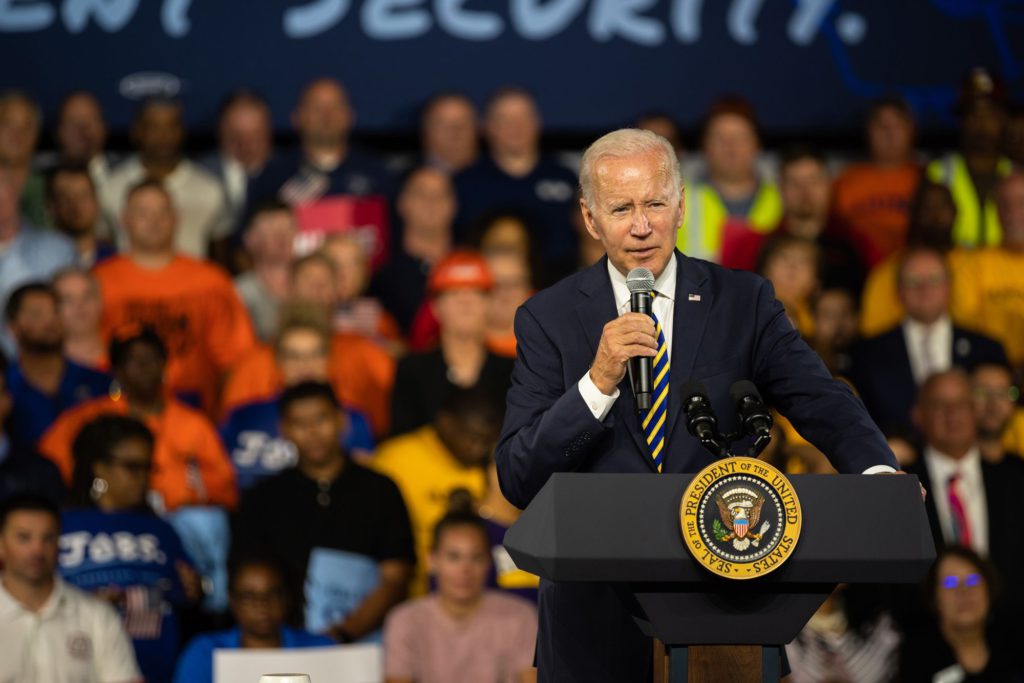
(Bloomberg) — President Joe Biden is kicking off a travel stretch intended to save the Democratic Party’s majorities in Congress with visits to two pivotal states that will provide an early test of his political clout ahead of November’s midterm elections. 

Over the next week, Biden will make three visits to Pennsylvania and one to Wisconsin — both states with competitive Senate and gubernatorial races. It’s part of a series of upcoming trips White House aides say are designed to promote Biden’s achievements and contrast his record with Republicans. 

The president will start his travels Tuesday with an official speech on his crime-prevention initiative in Wilkes-Barre, Pennsylvania, next door to his birthplace of Scranton. He plans to deliver a prime-time address Thursday in Philadelphia on what the White House calls “the continued battle for the soul of the nation.” Next week, he’ll attend events marking Labor Day in Pittsburgh and Milwaukee. 

The travel will measure Biden’s appeal — or lack thereof — among Democrats running for Congress: The party’s Senate nominee in Pennsylvania, Lieutenant Governor John Fetterman, is skipping the Wilkes-Barre event but will attend Monday’s Labor Day parade, his spokesman said. 

Attorney General Josh Shapiro, who is running for governor, will join Biden in Wilkes-Barre, his office said, as will Democratic Representative Matt Cartwright, according to the New York Times. Aides to Cartwright, who represents the area and faces a tough re-election race, didn’t return requests for comment. 

Biden is riding high off a series of landmark domestic and foreign policy victories, positive economic data and falling gasoline prices, which have boosted his sagging poll numbers as well as Democrats’ prospects of holding onto their slim House and Senate majorities. His approval rating is about 42%, according to a FiveThirtyEight analysis of polls — still underwater, but an improvement of more than four percentage points since late July. 

Many Democratic office-seekers in competitive states have kept their distance from the president. Fetterman, Shapiro and Cartwright have not tied themselves to Biden in their campaign messaging and advertising. Fetterman, the Senate hopeful, has explicitly run against Washington. 

“They’re holding their own running their own campaigns, and I think keeping some distance from the president in a competitive race isn’t a bad idea for them,” said Berwood Yost, director of the Franklin & Marshall College Poll. 

Pennsylvania is one of a handful of states that could determine control of Congress. Former President Donald Trump will travel to Wilkes-Barre just four days after Biden to hold a rally. Biden has already made three visits to the state this year.

Democrats hope to flip the Senate seat in Pennsylvania being vacated by Republican Pat Toomey and hold on to the governor’s mansion.

Fetterman communications director Joe Calvello said in a statement that the candidate looked forward to speaking with Biden in Pittsburgh “about the need to finally decriminalize marijuana.”

Read more: Fetterman to Skip One Biden Pennsylvania Event and Join Another

Biden is less popular in Pennsylvania, a state he won in 2020 and considers his second home, than he is nationally. Only about a third of Keystone State voters said Biden is doing an excellent or good job as president, according to a new Franklin & Marshall poll. 

Yet Fetterman and Shapiro are performing better in the state than Biden, holding double-digit leads in the Franklin & Marshall survey over their respective Republican opponents: celebrity doctor-turned-politician Mehmet Oz and state Senator Doug Mastriano, a leading proponent of Trump’s false claims that Biden’s 2020 victory in Pennsylvania was fraudulent. 

Both of those Trump-endorsed candidates have proved to be weaker than party leaders hoped. Oz and Mastriano’s favorability ratings are underwater by 30 percentage points and 23 percentage points respectively in the Franklin & Marshall poll.  

Trump remains polarizing with suburban voters living near large- and medium-sized metro areas, with whom Oz and Mastriano need to make inroads. 

“It probably hurts more than helps right at this moment,” Yost said of Trump’s visit.

Biden’s goal, meanwhile, is to raise voters’ awareness of his achievements, which in turn could help boost his approval ratings, making him more of an asset for Democratic candidates. That’s a difficult task, given that Americans’ persistent fears about the economy and outrage over inflation have been the strongest factors in shaping perceptions of Biden. 

White House aides say Biden’s schedule is expected to include a mix of political and official visits to battleground states and districts in the two months ahead of the midterms. 

The events will promote recent legislative successes, including a $437 billion health, climate and tax law; new subsidies for domestic semiconductor manufacturing; and bipartisan gun safety and infrastructure laws. 

In Tuesday’s speech, Biden is expected to tout his “Safe America Plan,” which includes funding to hire thousands more police officers and is aimed at countering Republican accusations that Democrats are not serious about fighting violent crime. 

Biden also plans to contrast his support for an assault-weapons ban with Republicans’ opposition, as well as with some GOP lawmakers’ calls to strip the FBI of funding following its search of Trump’s Mar-a-Lago resort in Florida.

“That extreme MAGA agenda that you heard him talk about last week is a threat to the rule of law,” White House Press Secretary Karine Jean-Pierre said Monday, referring to Trump’s “Make America Great Again” slogan. 

“He will say that you can’t propose defunding the FBI, or defend the mob that stormed the Capitol and attacked and assaulted police officers on Jan. 6, and be pro-police,” she said.

In Thursday’s speech, the president will warn that the country’s core values — including democracy itself — are at stake, a White House official said, previewing the speech on condition of anonymity. He’ll stress that it’s his party fighting to preserve American rights and freedoms, the official said.

Biden plans to continue his travels next Friday in Ohio, where he will attend the groundbreaking of an Intel Corp. semiconductor manufacturing facility. Democratic Senate candidate Tim Ryan and gubernatorial aspirant Nan Whaley have avoided appearing with Biden during his past visits to the state. 

(Updates with detail on Thursday speech in 24th paragraph. The spelling of Cartwright was corrected in a previous version of this story.)

More stories like this are available on bloomberg.com

©2022 Bloomberg L.P.
Instagram Adds Ways for Users to Adjust Their Suggested Posts

(Bloomberg) — Instagram, racing to improve its algorithm to catch up with TikTok, is asking its users for some input.

The social media app, owned by Meta Platforms Inc., is now allowing users to select and indicate that they are “not interested” in multiple posts at once within the Explore tab, the section on the app where users can discover content and accounts they aren’t already following. Previously, a user could only mark content as irrelevant one post at a time.

Instagram is also testing a feature that would allow users to mute certain words, hashtags or emojis that might show up in the posts Instagram puts in their feed from people they aren’t already following.

“We recognize that people sometimes want different things from different sessions, or their interests or needs from Instagram change quickly over time in a way we’re not going to be able to reflect in our ranking alone,” Tessa Lyons-Laing, Instagram’s director of product management, said in an interview.

Say a user was interested in wedding planning content in the run-up to their big day. Now that their nuptials have passed, that person may not want to see that sort of content, Lyons-Laing explained. These changes could help them scrub their feed more quickly.

Instagram has been making major updates to its app over the past two years, increasingly populating feeds with algorithmically generated content, as opposed to posts users have chosen to follow. It’s in direct response to competition from a growing rival, ByteDance Ltd.’s TikTok, which has captivated the attention of younger users with its feed called “For You” that is algorithmically generated.

While Instagram and its sister app Facebook are experts at suggesting content relevant to what it knows you already like and who you follow, TikTok stands out in its ability to introduce users to new interests and communities based on their actions on the app.

Instagram’s mimicking of TikTok’s playbook has drawn the ire of users, including a call from reality-show celebrity Kylie Jenner for the app to return to its roots of posts from friends. The app has worked to maintain some of that experience by giving users the ability to view only posts from accounts they follow or added to their favorites list.

“We’re always going to be working to make our ranking systems that deliver content to you as personalized and relevant and engaging as possible,” Lyons-Laing said. “We’re also always going to continue to give you explicit controls that enable you to customize that experience because we’re just not always going to get it right.”

More stories like this are available on bloomberg.com

©2022 Bloomberg L.P.

Microsoft Changes European Cloud-License Terms After Complaints

(Bloomberg) — Microsoft Corp. outlined planned changes to the terms of its software licensing agreements, following complaints to antitrust regulators from some European cloud-computing service providers that the company’s practices put rivals at a competitive disadvantage.

The changes will make it simpler for customers of rival cloud-service companies in Europe to move their existing software to these other networks, Microsoft said in a blog post on Monday. The new terms will also ensure that cloud partners “have access to the products necessary to sell cost-effective solutions that customers want,” the company said.

The changes take effect Oct. 1. While the blog post refers to European cloud providers and their worldwide customers, Microsoft said the new rules also include cloud sellers globally. The rules explicitly don’t apply to Amazon.com Inc. and Alphabet Inc.’s Google, Microsoft’s two biggest cloud competitors, or China’s Alibaba Group Holding Ltd.CISPE, a European cloud group with Amazon and Aruba SpA as members, on Tuesday said Microsoft’s new commitments fall short, a concern the group voiced back in May during the initial announcement from President Brad Smith.

“What was announced yesterday not only fails to show any progress in addressing Microsoft’s anticompetitive behavior but may add new dependencies that further lock in customers and arbitrarily exclude cloud infrastructure providers,” CISPE Secretary General Francisco Mingorance wrote in a statement.

Microsoft is facing a formal inquiry from the European Commission into its business practices. The commission sought feedback from rival services after a complaint last year from France’s OVHcloud, which claimed Microsoft’s licensing terms put it at a disadvantage by making it more difficult to run Microsoft products on their cloud networks, while making it easier or cheaper to pair Windows, Office and Windows Server with the company’s own Azure cloud. In May, Microsoft President and Vice Chair Brad Smith acknowledged the company had work to do to fix its practices. 

“We don’t think all of these claims are valid, but some of them are,” Smith said at the time. “So we’re making changes.”

The previous month, Smith had said the software giant would address some concerns about its licensing rules. His comments came after being contacted by Bloomberg News about customer complaints that Microsoft’s rules for purchasing software are increasing the cost of running programs like Windows and Office on rival cloud-computing systems like Amazon Web Services and Google Cloud Platform. In some cases, the rules, revamped three years ago, outright forbid using Microsoft products on competing cloud services.

The company hasn’t made any changes that relate to its largest cloud rivals. 

Read more: Microsoft Cloud Customers Decry Contracts That Sideline Rivals

(Updates to add comment from European cloud group in fourth paragraph.)

More stories like this are available on bloomberg.com

©2022 Bloomberg L.P.

Seattle VC Madrona Is Opening Its First Silicon Valley Office

(Bloomberg) — Many Silicon Valley offices remain empty, and some venture capitalists are leaving the region altogether. In this climate, Seattle’s most prominent venture capital firm just did something unusual: It signed a lease in Palo Alto, California.

Madrona Venture Group, a fixture of the Seattle tech scene since the dot-com days, is opening its first office in California. To run it, Madrona hired Karan Mehandru, a longtime VC in the Valley.

The firm has $2.4 billion under management and got its start in 1995, about a year after Jeff Bezos moved to town and started Amazon.com Inc. For years, Madrona partners talked up the underdog status of Seattle and its ability to build enduring technology companies like Microsoft Corp. and Amazon. Madrona was an early investor in Amazon, along with other local hits including Redfin Corp. and Smartsheet Inc.

But Madrona has been branching out over the last decade or so. Now about 15% of its startups are based outside of the Pacific Northwest, among them Snowflake Inc. and UiPath Inc. The Bay Area offers a dynamic that no place else has replicated to the same degree: a network where entrepreneurs and VCs routinely run into each other and can share ideas or make introductions, said Mehandru, who ran the venture practice at Steadfast Capital before joining Madrona.

As Madrona prepares for an expansion to the south, the partners observed how the Valley’s native firms seem to be moving everywhere else. General Catalyst and Founders Fund opened Miami offices. Index Ventures is going to New York. Sequoia Capital is in London. Andreessen Horowitz is expanding to Santa Monica, California, as well as Miami and New York. (It says its headquarters is in the cloud.)

“I don’t think these other geographies are going to diminish what California has,” Mehandru said. “What that does is expand the opportunities. It doesn’t take away from what California has, which is special.”

S. Somasegar, a managing director at Madrona, said geographic diversity is valuable. “The Valley guys are finally realizing there’s a world outside the Valley,” Somasegar joked. “Now we’re expanding our horizons, too.”

Madrona saved a bundle by skipping Sand Hill Road in Menlo Park, California, home to the biggest VC firms. Asking rents for Sand Hill Road offices were an average of $163.80 per square foot last quarter, according to the real estate firm Cushman & Wakefield. That’s more than the Penn Station and Hudson Yards area of New York and about double the cost of San Francisco’s Financial District.

Still, Madrona missed the best time to sign a lease in Silicon Valley. Asking prices were generally lowest at the end of 2020, according to Cushman. The venture firm won’t say exactly what it’s paying, but asking rents last quarter in downtown Palo Alto averaged $119.40 per square foot.

Madrona isn’t immune to current tech migration trends. Recently, venture partner John Torrey moved to Texas.

More stories like this are available on bloomberg.com

©2022 Bloomberg L.P.

Close Bitnami banner
Bitnami