

Bloomberg

Thai YouTuber Allegedly Cheats Forex Investors of $55 Million

(Bloomberg) — A popular Thai YouTuber allegedly cheated thousands of her followers to swindle about $55 million through a foreign exchange trading scam that reportedly promised hefty returns on their investments.

Known as Nutty to her followers, Natthamon Khongchak attracted more than 847,000 subscribers to a YouTube channel where she posted dance videos. She also advertised private courses for aspiring forex traders on her Instagram account, posting images of what she said were her profits. 

More than 6,000 people gave Natthamon money to invest, the Nation newspaper reported, citing a lawyer who helped dozens of alleged victims file complaints with Thai police. Followers were lured with promises of returns of as much as 35% on their investments, the report said.

In her last Instagram post, in May, Natthamon said she owed 1 billion baht ($27.5 million) to investors. In the video, she claimed her broker had blocked her trading account and funds since March, but said she would try to repay the money. 

Natthamon didn’t respond to a direct message sent to her Instagram account on Tuesday.

A Thailand police unit involved in internet crimes last week issued an arrest warrant for fraud against Natthamon, according to Wattana Ketumpai, a police officer at the Cyber Crime Investigation Bureau. 

So far, the bureau has received complaints from 102 people claiming they’d lost a total of 30 million baht, he said. New victims come forward nearly every day, with most claiming to have lost tens of thousands of baht, Wattana said. The numbers could be higher, he said, as complaints may have been lodged with other police offices. 

While Natthamon hasn’t been seen on social media since June, followers are speculating that she’s fled the country, the Nation reported. Still, immigration records show she hasn’t left Thailand, said Wattana. 

More stories like this are available on bloomberg.com

©2022 Bloomberg L.P.

YouTube Star Allegedly Cheats Her Followers of $55 Million in Forex Scam

(Bloomberg) — A popular Thai YouTuber allegedly cheated thousands of her followers to swindle about $55 million through a foreign exchange trading scam that reportedly promised hefty returns on their investments.

Known as Nutty to her followers, Natthamon Khongchak attracted more than 847,000 subscribers to a YouTube channel where she posted dance videos. She also advertised private courses for aspiring forex traders on her Instagram account, posting images of what she said were her profits. 

More than 6,000 people gave Natthamon money to invest, the Nation newspaper reported, citing a lawyer who helped dozens of alleged victims file complaints with Thai police. Followers were lured with promises of returns of as much as 35% on their investments, the report said.

In her last Instagram post, in May, Natthamon said she owed 1 billion baht ($27.5 million) to investors. In the video, she claimed her broker had blocked her trading account and funds since March, but said she would try to repay the money. 

Natthamon didn’t respond to a direct message sent to her Instagram account on Tuesday.

A Thailand police unit involved in internet crimes last week issued an arrest warrant for fraud against Natthamon, according to Wattana Ketumpai, a police officer at the Cyber Crime Investigation Bureau. 

So far, the bureau has received complaints from 102 people claiming they’d lost a total of 30 million baht, he said. New victims come forward nearly every day, with most claiming to have lost tens of thousands of baht, Wattana said. The numbers could be higher, he said, as complaints may have been lodged with other police offices. 

While Natthamon hasn’t been seen on social media since June, followers are speculating that she’s fled the country, the Nation reported. Still, immigration records show she hasn’t left Thailand, said Wattana. 

More stories like this are available on bloomberg.com

©2022 Bloomberg L.P.
Germany’s Ultra-Cheap Train Ticket Saved 1.8 Million Tons of CO2

(Bloomberg) — Germany’s three-month experiment with super-cheap public transport reduced carbon dioxide emissions equivalent to powering about 350,000 homes for a year.

The 9-euro ($9) monthly ticket, which allows nationwide travel on regional trains, subways, trams and buses, prevented 1.8 million tons of CO2 because commuters didn’t use their cars as much, according to the VDV public-transport lobby.

The ticket, which took effect in June and runs out at the end of this month, is meant to help soften the blow from inflation in Europe’s biggest economy amid a surge in energy and fuel prices sparked by the war in Ukraine. While there are concerns over financing the ticket and strains on the transport network, several German politicians want the subsidy extended in some form.

“We must find a convincing follow-up solution for a nationwide local transport ticket to continue to relieve the citizens who depend on it in times of rising prices and costs,” Petra Berg, environment and mobility minister in the western state of Saarland, said in a statement.

Some 52 million of the tickets have been sold, with one in ten buyers ditching at least one of their daily auto trips, the VDV said. The group cited the results of a government-commissioned survey of 78,000 people it conducted with Deutsche Bahn AG and polling institutes Forsa and RC Research.

Despite the positive fallout from the 9-euro ticket, Germany’s transport sector has been blamed for falling short of environmental targets by some 3 million tons CO2 last year, adding pressure on the government to find more ways to trim emissions.

One hotly contested step would be to impose a speed limit on the Autobahn, but Transport Minister Volker Wissing reaffirmed the ruling coalition’s rejection of the move, even as the country suffers an energy squeeze. In an interview with Bloomberg TV on Monday, he said the step would be socially divisive at a time when Germany needs solidarity.

More stories like this are available on bloomberg.com

©2022 Bloomberg L.P.

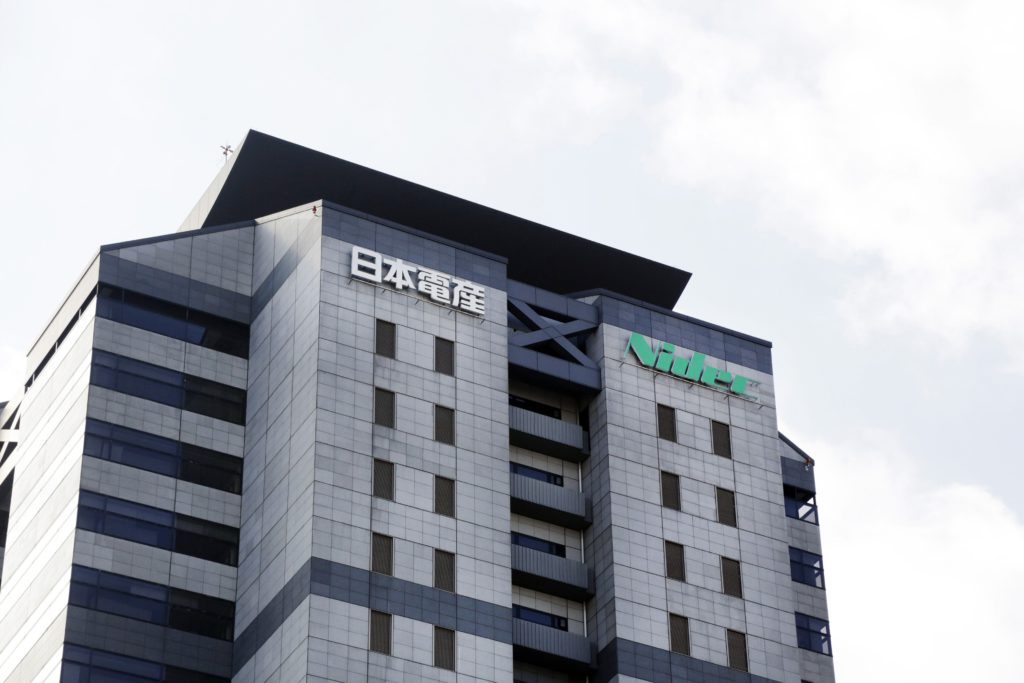
Battery Startup Freyr Signs $3 Billion Supply Deal With Nidec

(Bloomberg) — Freyr Battery SA and Nidec Corp., the world’s largest manufacturer of high-efficiency electric motors, signed a binding deal for lithium-ion batteries from Freyr’s arctic giga-factory.

The volume totals 38 gigawatt-hours and equates to projected revenues of more than $3 billion for Freyr, the Norwegian company said in a statement on Tuesday. The companies are converting and expanding a previously announced 31 gigawatt-hour conditional off-take agreement to a binding sales agreement running from 2025 to 2030.

Freyr, which started trading last year on the New York Stock Exchange, is building its first lithium-ion battery factory in the far north of Norway and has announced plans for production in Finland and the US. It entered a joint venture agreement with Koch Strategic Platforms in 2021 and another with Aleees earlier this year as it seeks to establish itself in the battery supply chain.

Freyr and Nidec also agreed to cooperate in using Freyr’s next-generation battery cells with modules and packs into integrated downstream energy storage system solutions for industrial and utility grade customers, they said.

“What this joint venture is about is a tailor-made ESS solution leveraging larger and thicker cells that are more tailor-made for energy storage applications,” Freyr Chief Executive Officer Tom Einar Jensen said in an interview. “We will partner along the value chain with leading companies to ensure that we can be the industrialization partner of choice.”

The multi-year sales deal covers an increasing volume over time with a pricing structure linked to the underlying price of the raw material, in particular, lithium carbonate and lithium hydroxide, Jensen said. Along with its role in the JV, pass-through mechanisms will ensure raw material price risk is passed on and will ensure the battery maker can stay profitable both at the cell production level and at the module and pack level, he said.

The agreement provides Nidec with predictable supply as it continues to grow its energy storage solution business, Laurent Demortier, the head of Nidec’s energy and infrastructure division, said in the interview. Freyr’s cell is adapted to the ESS market, with a manufacturing capacity in line with the Kyoto, Japan-based company’s needs and compatible with the US and European markets it supplies, he said.

Nidec had been buying batteries in the spot market that are largely designed for the automotive industry, which are more costly due to the smaller size of the units, Demortier said in a presentation on Tuesday. 

“A battery for utility scale is a hundred times bigger than the one from the automotive,” he said. “We need to design products that will fit this industry — this growing industry.”

The deal includes an option to increase volumes to 50 GWh in the period and potentially add volumes beyond 2030, Freyr said.

(Updates with comment from Nidec in 8th paragraph.)

More stories like this are available on bloomberg.com

©2022 Bloomberg L.P.
Gopuff to Exit Spain While Focusing International Efforts in UK

(Bloomberg) — Gopuff plans to end its operations in Spain to slim down its business and move closer to profitability, according to a person familiar with the matter.

While the company is leaving Spain, the UK will become a bigger priority and is one of Gopuff’s fastest growing markets, with revenue increasing at a 30% compound monthly rate, the person said, asking not to be identified because the plans haven’t been formally announced. 

The retrenchment is a reversal of the SoftBank Group Corp.-backed company’s expansion plans a year ago, when it bought a pair of startups and said it planned to expand into every country in Europe. The delivery startup has also cut back its global workforce and closed dozens of warehouses this year, reining in spending amid a shift from pandemic-fueled growth toward generating cash. 

Read more: Gopuff Cuts 10% of Staff, Closes Warehouses to Preserve Cash

In July, Gopuff slashed 10% of its workforce and said it would be “re-evaluating” its presence in France and Spain to double down on the UK. A representative for Gopuff declined to comment.

Rival Deliveroo Plc has also discontinued operations in Spain, saying last year that the level of investment required to maintain a top competitive position in the market was too great. 

Gopuff’s Spanish operations came as part of its acquisition last year of UK competitor Dija and include about 180 employees and five micro-fulfillment centers in Madrid, which accounted for about 1% of the company’s global orders in the first half, the person said. 


More stories like this are available on bloomberg.com

©2022 Bloomberg L.P.

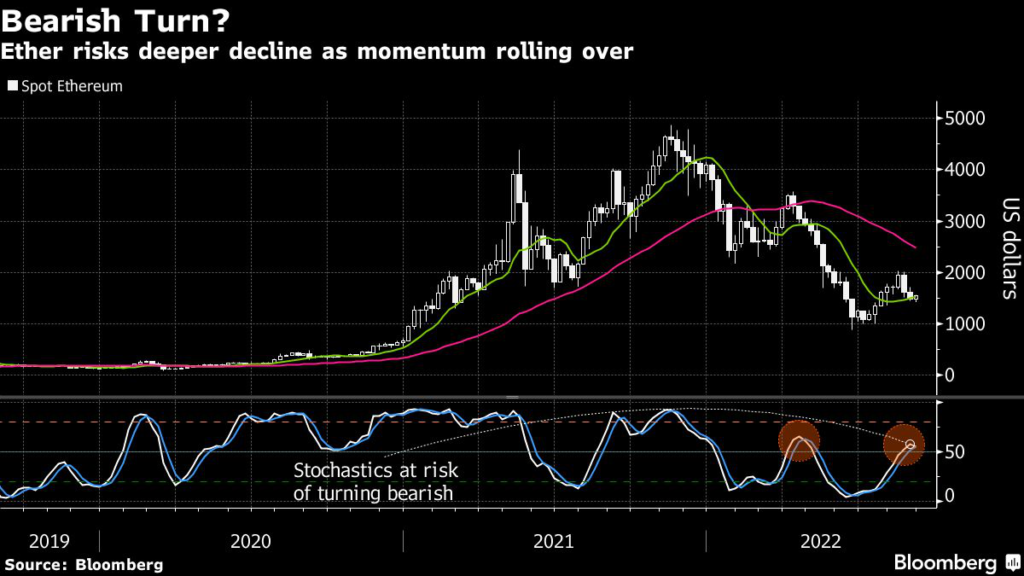
Ether Could Drop to $1,000 or Below, Chart Shows

(Bloomberg) — Ether may drop to $1,000 for the first time in two months, with volatile price swings in the second-largest cryptocurrency ahead of its much-anticipated Merge upgrade. Technical indicators on momentum and price trends show that the token’s tumble from a peak of about $2,000 in mid-August to the current zone near $1,500 is likely to continue. “Ether has broken down below initial support from its 50-day moving average, increasing downside risk with short-term momentum now negative,” said Katie Stockton, co-founder of Fairlead Strategies, who added that “the weekly stochastics have a downturn for the first time since April,” suggesting a retest of support at about $1000 is likely “in the coming days.”

More stories like this are available on bloomberg.com

©2022 Bloomberg L.P.

Australia Grills Apple, Meta on Plans to Tackle Child Abuse

(Bloomberg) — Australia has demanded that US technology giants including Apple Inc., Meta Platforms Inc. and Microsoft Corp. provide details on how they’re cracking down on child abuse material.

The government’s eSafety Commissioner issued legal notices on Tuesday to a group of tech companies that operate online platforms in Australia. It’s the first such requests under new legislation introduced last year, according to a statement Tuesday.

The firms have 28 days to report back on what they’re doing to prevent the spread of child exploitation images. Any delay could lead to fines of as much as A$555,000 ($383,000) a day. 

“We’ve received these notices and are currently reviewing them,” a spokesperson for Meta, the parent of Facebook and Instagram, said in an emailed statement. “The safety of our users is a top priority and we continue to proactively engage with the eSafety Commissioner on these important issues.” 

A spokeswoman for Microsoft said the firm would respond to the notice. Apple didn’t immediately respond to a request for comment.

The responses would help inform government decisions about “what needs to be done to protect Australians online,” Minister for Communications Michelle Rowland said in the government statement. She urged the industry to comply with the commissioner’s requests.

Australia’s Online Safety Bill passed in June 2021 and placed the onus on internet-service companies, rather than government officials, to curb toxic behavior on their online platforms. The act also increased the penalty for online abuse and harassment to as much as five years in prison.

The new legislation is just the latest in a series of clashes between Australia and US tech giants. In February 2021, Facebook put a blackout on all news content on its Australian site after Canberra passed laws requiring social media platforms to pay local publishers for using their content.

Eventually Facebook backed down and agreed to pay some local news organizations to access their stories.

More stories like this are available on bloomberg.com

©2022 Bloomberg L.P.

Trading in Revolution Beauty to Be Suspended: The London Rush

(Bloomberg) — Here’s the key business news from London-listed companies this morning.

Revolution Beauty Group Plc: Trading in the beauty company’s shares will be suspended on Thursday, after it said it won’t be able to publish its full year results by the end of the month.

  • That comes just over a year after the company listed in London
  • It said it expects to publish the results “within a matter of weeks,” after which trading would restart

Biffa Plc: The waste management company is still in talks with Energy Capital Partners LLC about a possible takeover, but the venture capital firm said it needs more time for discussions around financing to finish.

  • The deadline for the deal was today, but that has now been extended and Energy Capital has until 5 pm on September 27 to make an offer, or to rule one out

Joules Group Plc: The embattled lifestyle brand said it continues to have “positive discussions” with Next Plc about a possible equity investment and adopting its Total Platform services.

  • That comes after Sky News reported the two companies are not close to an agreement, and after Joules warned on its full year profits

Outside The City

Chancellor of the Exchequer Nadhim Zahawi said he’s working on additional measures to help households and businesses with soaring energy bills. The proposals will help the incoming prime minister “hit the ground running,” Zahawi told Bloomberg Television in an interview. 

Meanwhile, frontrunner in the Tory leadership race, Liz Truss, plans to approve a series of North Sea oil and gas drilling licenses in one of her first acts as prime minister, the Times reports, citing people familiar with the matter.

In Case You Missed It 

Asda is the frontrunner to buy the Co-op Group’s petrol station business, with a deal on the cards as soon as this week, according to a Sky News report, citing people familiar with the matter.

Last night, European Commission President, Ursula von der Leyen, confirmed that the EU plans to step into the energy market soon, to limit prices and cut the link between gas and electricity costs.And finally some good news — Britons who drink several cups of English breakfast or Earl Grey tea a day tend to see lower risk of death compared to those who hardly drink the beverage, research from a 14-year observational study found.

Looking Ahead

Bank of Cyprus Holdings Plc updates the market tomorrow. The bank recently rejected a takeover proposal by Lone Star, saying the proposals undervalue it.

The Readout with Allegra Stratton is back from its summer break today, so sign up for a news fix when the day is done.

More stories like this are available on bloomberg.com

©2022 Bloomberg L.P.

Crypto Lender Hodlnaut Is Granted Protection From Creditors

(Bloomberg) — The Singapore High Court granted judicial management to Hodlnaut, giving the struggling crypto lender additional breathing space to come up with a recovery plan. 

Justice Aedit Abdullah approved Angela Ee and Aaron Loh of EY Corporate Advisors Pte. as the interim judicial managers, Hodlnaut said in a statement on its website on Tuesday. In an earlier application, Hodlnaut had proposed Tam Chee Chong of Kairos Corporate Advisory Ltd. as the interim judicial manager. The court announced the decision on Monday, Hodlnaut added.

Judicial management is a process where the court appoints an independent party to take over operations from a company’s directors. During the process, it is protected from claims by creditors and attempts to liquidate its assets.  

Hodlnaut, which operates out of Singapore and Hong Kong, halted withdrawals earlier this month, joining Asian crypto firms including Vauld, Zipmex and Babel Finance in getting swept away by a $2 trillion rout in digital asset markets.   

Singapore is responding to the crypto industry’s turmoil. The head of the city-state’s central bank, Ravi Menon, on Monday said it’s considering additional guardrails around retail investing in digital assets to limit risks.

Read More:  Singapore Mulls Making It Harder for People to Trade Crypto

Started in 2019, Hodlnaut allowed investors to earn interest on crypto by lending out their tokens. The firm said in February that it had more than $100 million in customer funds across over 1,000 users, up from $1 million a year earlier. 

(Updates with Singapore regulatory tightening in fifth paragraph.)

More stories like this are available on bloomberg.com

©2022 Bloomberg L.P.

Toyota Output Shrinks for Fourth Month on Shortages, China

(Bloomberg) — Toyota Motor Corp.’s global output sank for the fourth straight month as a shortage of semiconductors and supply chain disruptions caused by Covid lockdowns in China hurt production. 

Output fell 8.6% in July from a year earlier to 706,547 vehicles, the Japanese automaker said in a statement Tuesday. Sales declined 7.2% to 797,179 units, extending a slump for an 11th consecutive month. 

A shortage of computer chips that go into many car parts, higher raw material costs and frequent shutdowns at factories in China because of Covid-related curbs have thrown global auto assembly lines in turmoil. Still, Toyota is sticking to its production target of 9.7 million vehicles for the fiscal year through March 2023 and has also kept its profit outlook.  

While Toyota’s overseas output climbed to a record for July, volumes still fell short of target. Output in Japan slid 28.2% from a year earlier. 

Even though the yen has weakened against the US dollar this year, meaning the carmaker’s products are more competitive overseas and its income gets a boost in the local currency, executives this month said they aren’t confident enough to raise profit guidance. They cited “many uncertainties ahead,” such as downward pressure on the economy and potential interest rate hikes in other nations.

Toyota shares are little changed since the start of the year and traded 0.7% higher in Tokyo on Tuesday. 

Separately, Nissan Motor Co. said July production climbed 9.4% to 284,755 vehicles, while sales dropped 13% to 265,905 units, extending declines for a 13th straight month. Honda Motor Co. said output rose 5.9% in the month to 343,205 vehicles, the second consecutive increase.

(Updates with Nissan and Honda numbers in last paragraph.)

More stories like this are available on bloomberg.com

©2022 Bloomberg L.P.

Close Bitnami banner
Bitnami