Bloomberg

FTC Sues Mobile Data Broker Over Abortion Location Data Sale

(Bloomberg) — The US Federal Trade Commission sued Kochava Inc., a data broker it alleges sells consumers’ mobile geolocation data that could be used to track visits to abortion providers, addiction recovery centers or other sensitive locations.

The agency voted 4-1 to file the complaint in Idaho federal court, with Republican Commissioner Noah Phillips dissenting. 

The suit comes in the wake of the Supreme Court’s decision in July overturning the right to seek an abortion. In the weeks since, 12 states have criminalized abortion and six have put time limits on the procedure. Last week, new bans went into effect in Idaho and Tennessee, and in Texas abortion is now considered a felony punishable by life in prison. 

Privacy and reproductive rights advocates have warned that data collected from mobile health apps or online search information could be used to build a case against people seeking abortions or health-care professionals and others who assist them.

Democratic Commissioner Alvaro Bedoya said in a series of tweets Monday that the FTC’s case seeks “to protect some of the most sensitive information imaginable — precise data on our movements.”

The consumer protection agency also sought public comments this month about what it’s dubbed “commercial surveillance” by businesses that sell or share information collected about consumers across websites and mobile apps. 

The FTC alleges that Kochava’s data put consumers at risk, letting buyers purchase time-stamped location data with few restrictions on its usage. 

Kochava general manager Brian Cox said in a statement that the FTC has a “general misunderstanding” about the company’s business. He said it recently introduced features to block the sale of sensitive geographic data from its marketplace. 

“Real progress to improve data privacy for consumers will not be reached through flamboyant press releases and frivolous litigation,” Cox said, accusing the agency of seeking to “perpetuate misinformation surrounding data privacy.” 

Kochava describes itself as an Idaho-based mobile analytics company. The company preemptively sued the FTC this month, alleging the agency misunderstands its business and that consumers can opt-out of geolocation data collection. 

The case is Federal Trade Commission v Kochava, 22-cv-00377, US District Court for the District of Idaho.

(Adds company statement in eighth paragraph)

More stories like this are available on bloomberg.com

©2022 Bloomberg L.P.

DOJ Response Raises Doubts on Trump ‘Special Master’ Request

(Bloomberg) — The US Department of Justice said it already screened documents seized from Donald Trump’s Florida home for attorney-client privilege, potentially casting doubt on the former president’s lawsuit seeking third-party review of the records.

Trump claims a so-called special master is necessary to determine if some of the documents were privileged, and a federal judge suggested over the weekend that she was inclined to grant the request. But in a Monday court filing that was its first reaction to the suit, the Justice Department suggested that it had already addressed those concerns.

A privilege review team identified a “limited set” of materials that potentially contain attorney-client privileged information and has now completed its review of those materials, the government said in its filing in federal court in West Palm Beach, Florida. The Justice Department said it would file a more substantive response on Tuesday. US District Judge Aileen Cannon has set a Sept. 1 hearing on the matter.

Though the government hasn’t yet said if it’s opposed the appointment of a special master, legal experts said the work of the privilege team may have obviated the need for a third-party review.

“There may be little need for a special master, especially if the filter team acted properly,” said Carl Tobias, a University of Richmond law professor.

Trump’s lawyer in the case, James Trusty, didn’t immediately respond to a message seeking comment.

Similar Playbook

The dispute over privileged material is separate from whether Trump broke any laws by taking hundreds of classified documents — some of them marked top secret — from the White House after leaving office. But in calling for a special master, Trump followed a similar playbook as two of his former lawyers who were subject to Federal Bureau of Investigation searches. 

A retired federal judge was appointed in both instances to review whether any material seized from Rudy Giuliani and Michael Cohen was subject to attorney-client privilege. In a Friday filing to Cannon, Trump’s lawyers repeatedly cited the case of Rudy Giuliani, who is under investigation for illegal foreign lobbying but has not been charged, as precedent for the appointment of a special master. 

But both those men were lawyers themselves, and federal agents seized from them hard drives and electronic devices containing thousands of documents. Even then, the special master found only a handful of documents she deemed protected by attorney-client privilege.

Kevin O’Brien, a former federal prosecutor, said he didn’t think the privileged documents the Justice Department found at Mar-a-Lago would prove significant.

“It would not be surprising if some privileged materials are found, since we know Trump has been represented by counsel during the process of his negotiations with the government over the return of the materials,” said Kevin O’Brien, a former federal prosecutor who’s now a white-collar criminal defense attorney. DOJ’s use of a privilege team is “standard operating procedure.”

That FBI affidavit backing the Aug. 8 search, which was released Friday in heavily redacted form, sets our procedures for handling any attorney-client privileged material. According to the affidavit, the government can seek a court order to determine privilege, keep privileged documents away from criminal investigators or ask Trump to assert privilege in detail.

Former federal prosecutor Brandon Fox said a key question is whether the documents have already been shared beyond the Justice Department’s privilege review team. 

“If the investigators already have access to documents seized, the bigger fight may not be about whether there should be a special master,” Fox said. “Instead, the issue is going to be whether the investigators have been tainted by documents that Mr. Trump claims are privileged.”

Attorney-client privilege covers many communications between a lawyer and client, but there are important exceptions, including for communications that are made in furtherance of a crime. Such privilege also only applies to legal advice. 

The Mar-a-Lago situation is further complicated by the fact that Trump’s suit not only asserted attorney-client privilege but executive privilege as well. The Justice Department’s filing on Monday doesn’t include a reference to any such material, and many legal experts doubt that an ex-president can assert that privilege.

In the Giuliani case, the special master was appointed by the same judge who issued the warrants to search the former New York mayor’s home and office. Trump, on the other hand, bypassed the warrant case being heard by US Magistrate Judge Bruce Reinhart and filed a separate suit that ended up in front of Cannon, whom he appointed to the bench.

In his Aug. 22 suit, Trump complained that Reinhart approved the Justice Department’s filter protocol “without input from the defense.”

“The result is a protocol that is plainly ineffective — it simply does not ensure that prosecution team members will not access or become aware of privileged materials particularly as the filter team’s leader is a deputy to the lead prosecutor in this matter,” according to Trump’ suit.

National Security Assessment

In her Saturday order, Cannon further directed the Justice Department to file under seal a more detailed list of property seized from Trump’s home and explain the status of the government’s own review of the material. The sealed document must describe “any filter review conducted by the privilege review team and any dissemination of materials beyond the privilege review team,” she said.

The Justice Department in its Monday filing said it was currently undertaking a review of the material along with the Office of the Director of National Intelligence, which was also undertaking a separate assessment of whether the documents compromised national security.

Trump has denied wrongdoing and offered a variety of explanations for the presence of classified documents at his home, including that he had a “standing order” to declassify records he took and that FBI agents may have planted evidence during the search.

The case is Trump v. United States of America, 22-cv-81294, US District Court, Southern District of Florida (West Palm Beach).

(Updates with additional expert comment.)

More stories like this are available on bloomberg.com

©2022 Bloomberg L.P.

Zendesk Investor Light Street Aims to Nix Takeover, Oust CEO

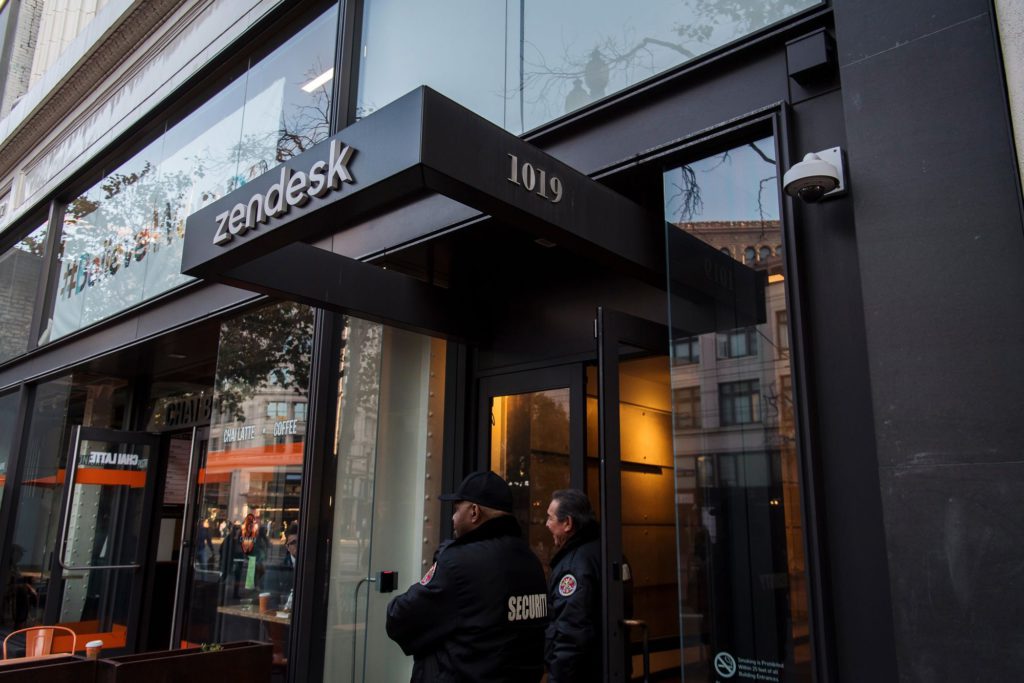
(Bloomberg) — A large Zendesk Inc. investor planning to vote against a planned takeover by private equity firms has proposed an alternative strategy that includes a $4 billion investment to keep the software company independent. 

Light Street Capital Management, which owns more than 2% of Zendesk, also wants the company to expand its board and replace Chief Executive Officer Mikkel Svane, who would remain chairman under the proposal. 

The firm said in a letter to Zendesk’s board it plans to vote against the $9.5 billion takeover by private equity firms Hellman & Friedman and Permira, saying it’s too low. Instead, Light Street is offering to recapitalize the company with $2 billion in preferred shares and $2 billion in an incremental debt facility. Together with $1 billion of cash from the balance sheet, Zendesk could then conduct a $5 billion tender offer at $82.50 per share, the firm said.

“We believe the private equity playbook from here is obvious — drive this business to higher profitability then sell to one of the interested strategic buyers who evaluated Zendesk during this process,” Light Street founder Glen Kacher said in a letter to the board Sunday, a copy of which was reviewed by Bloomberg News. “With higher margins, Zendesk is much more likely to be immediately accretive to these buyers, enabling them to pay a much higher price and appease their own shareholders.”

Zendesk will “carefully” review the proposal with its advisers, the company said in a statement. Zendesk shares rose 0.1% to close at $76.60 in New York trading Monday. 

Light Street is calling on the San Francisco-based company to expand the size of its board to 10 seats, including five independent directors — two of those to fill vacant positions and three to replace current directors. The investor also wants a new CEO with a successful track record in the software business. Light Street wants three of its nominees for the board to participate in a CEO search. 

Zendesk agreed to be acquired in June by a buyout group led by Hellman & Friedman and Permira. The deal came together after Zendesk failed to win support from its shareholders to acquire Momentive Global Inc. in an all-stock transaction valued at about $4 billion when the the deal was struck in October.

The transaction was met with a dramatic sell-off in both companies as investors balked at the tie-up. Zendesk shareholder Janus Henderson Group Plc came out against the acquisition and activist investor Jana Partners also urged shareholders to reject the deal. 

Light Street said in its letter that it believed Zendesk was willing to sell at any price after a series of “self-inflicted missteps.”

“With increased focus on driving meaningful operating margin expansion and fresh leadership, we believe that shareholders can realize private equity style returns in the public markets,” Kacher said.

(Adds Zendesk response in fifth paragraph.)

More stories like this are available on bloomberg.com

©2022 Bloomberg L.P.
US Lawmakers Seek Answers From Fintech on Buy Now, Pay Later Gun Sales

(Bloomberg) — A group of 18 US representatives is demanding Credova Financial LLC answer questions about its no-interest financing options for the purchase of guns and ammunition.

In a letter Monday to Credova Chief Financial Officer Dusty Wunderlich, the lawmakers said they are expressing their “strong concern” and seeking information about the provision and marketing of buy now, pay later financing for online purchases of firearms and related accessories.

The representatives want to know what safeguards Credova has in place to stop potential customers who are prohibited from possessing guns or who have a record for criminal activity from using the company’s services to buy firearms. They also want to know if Credova has information on whether customers who have purchased guns using the company’s financing commit unlawful acts of violence, including in recent high-profile massacres such as in Uvalde, Texas. Other questions among the 15 listed in the letter include queries about how many customers default on their payments and what kind of disclosures Credova offers consumers.

Credova, a four-year-old startup based in Bozeman, Montana, is part of a burgeoning group of companies offering a financing alternative to credit cards. The BNPL concept allows buyers to pay for a purchase in a few monthly installments without accruing interest, and is particularly popular with young people to spontaneously purchase discretionary items such as clothes and cosmetics. Bloomberg highlighted in May how Credova is different from most other BNPL companies because it embraces gun sales, alongside other sporting goods. Most of the biggest companies in the BNPL business, including Affirm Holdings Inc., Afterpay Ltd., Klarna Bank, and Zip, don’t finance guns. Wunderlich has described Credova’s mission as making it easier to finance gun purchases.

Read more about how Credova makes it easy to finance firearms

The lawmakers noted that the Task Force on Financial Technology of the House Financial Services Committee is already examining the risks and benefits associated with BNPL products in general.

BNPL’s popularity has raised concerns about consumers taking on debt too easily, but its emergence in gun retailing also has public-health implications. Mass shootings in Uvalde and Highland Park, Illinois, have called attention to how easy it is to legally buy guns in the US, though neither incident has been linked to BNPL financing. 

The letter noted that Credova’s retail partners are online gun merchants whose websites “prominently highlight the convenience and benefits associated with Credova BNPL, including ‘approval in seconds,’ ‘no impact to your credit score,’ ‘$0 down,’ and ‘3 Months Interest Free.’” They also market Credova’s services using dangerous terminology, such as “shoot now, pay later,”  or “get protected now, pay later,”  to finance a “dream gun.”

Among the lawmakers who signed the letter are Democrats who have been vocal proponents of gun safety, including Stephen Lynch of Massachusetts, Carolyn Maloney of New York, John Larson of Connecticut, and Al Green of Texas and Alma Adams of North Carolina. They requested written responses from the company by Sept. 26.

More stories like this are available on bloomberg.com

©2022 Bloomberg L.P.

NASA Opts for Familiar Caution in Scrubbing Moon Rocket’s Launch

(Bloomberg) — NASA’s latest rocket demonstrated one of the biggest and most enduring frustrations that comes with launching new and highly complicated space technology: waiting.

Though expectations were high for Monday’s scheduled first launch of NASA’s new Space Launch System rocket, or the SLS, the space agency was careful to temper expectations ahead of the planned lift-off. It emphasized that this was a test flight and that engineers were still learning how to work with the still-untested rocket.

“The complexity is daunting when you bring it all into the focus of a countdown,” said Bill Nelson, administrator of the National Aeronautics and Space Administration.

Ahead of Monday’s event, experts within the space community also downplayed the odds of the SLS actually flying on schedule. Still NASA gave it the agency’s best shot — and Vice President Kamala Harris flew in to be on hand — before an issue with one of the four main engines triggered a scrub.

But the truth is such problems are not uncommon for new launch vehicles, especially ones as big and as complex as the SLS — and NASA has been here before. The first Space Shuttle launch way back in 1981 was scrubbed and delayed before it finally lifted off. And risk-averse NASA would rather hold a launch than fly with an anomaly its engineers would have been unable to fix once the mission was under way.

“Welcome to spaceflight,” Stan Love, a NASA astronaut, said after the scrub. “It’s going to be even more exciting for the crew if they come down and then decide not to go.”

The earliest available opportunity to try again is on Sept. 2, which Mike Sarafin, NASA’s Artemis mission manager, said in a press conference was “definitely in play.” No decision has been made on rescheduling.

Official confirmation of the delay came after the space agency spent the early morning hours investigating issues including a potential crack in material in the main body of the rocket as well as the temperature issue, officials said earlier Monday. Those came after engineers examined and resolved a suspected leak affecting the hydrogen tanking process.

One of Four

During the countdown, the SLS’s engines need to chill down in preparation for launch. But one of the four — Engine 3 — was not cooling properly. Engineers weren’t able to test the process during the rocket’s final dress rehearsal due to a hydrogen leak. Engineers also discovered a leak in a valve in one of the rocket’s tanks. The engine and the valve issue ultimately prompted the abort.

Artemis relies on RS-25 engines made by Aerojet Rocketdyne Holdings Inc., all of which were previously used on various Space Shuttle missions. 

The Artemis mission will be the first major flight in NASA’s ambitious plan to send the first woman and the first person of color to the lunar surface as early as 2025. Artemis I is aimed at testing out the components of the Space Launch System: The core rocket made by Boeing Co., and the side boosters made by Northrop Grumman Corp. A new deep-space crew capsule called Orion developed by Lockheed Martin Corp. will also get a try out.  

If Artemis I is able to launch on Sept. 2, SLS will be sending Orion on a mission of more than five weeks, along with a host of payloads and sensors to track the journey. The length of the mission will vary depending on the launch date.

The capsule is tasked with inserting itself into lunar orbit and entering deep space before return to Earth in the Pacific Ocean off San Diego. NASA plans to stress test the systems ahead of later crewed missions.

Five Years Behind

The Space Launch System already is more than five years behind schedule. It has been in development for roughly a decade, slowed by a myriad of delays and cost overruns. Development costs of the program have soared from an original $7 billion to about $23 billion, according to an estimate by the Planetary Society.

If successful, the Artemis program — named for the twin sister of the god Apollo in Greek mythology — will see the return of people to the moon for the first time in 50 years. No one has visited since Apollo 17 in December 1972.

More stories like this are available on bloomberg.com

©2022 Bloomberg L.P.
France, Germany Could Look to TikTok, YouTube Bloggers to Fight Putin Propaganda

(Bloomberg) — Germany and France want the European Union to drive a wedge between President Vladimir Putin and the Russian people with a campaign to counter propaganda within Russia and a visa policy that signals Europe is still open to ordinary citizens. 

In a joint non-paper titled “Defending the international order in an age of systemic rivalry: EU-Russia relations,” France and Germany say the EU needs to continue exploring “creative ways” to allow for the dissemination of independent information to and within Russia, according to a copy of the document seen by Bloomberg. A non-paper is an unofficial document drafted by technical experts from EU member states for closed-door discussions.

The countries also call for open channels of communication with the Russian government, even as they urge broadening sanctions against Russian officials and continued financial and military support for Ukraine. 

The paper was circulated to EU member states ahead of a gathering of foreign ministers in Prague on Tuesday and Wednesday, where they’ll discuss the topic of a visa ban for Russian tourists. Baltic states have been pushing to ban EU visas to Russian tourists, but German Chancellor Olaf Scholz has urged more caution.

The Franco-German paper stresses the “transformative power of experiencing life in democratic systems at first-hand,” adding the countries’ caution against far-reaching restrictions on visas, “in order to prevent feeding the Russian narrative and trigger unintended rallying-around the flag effects and/or estranging future generations.”

 ‘Technical Measures’

The plan to counter domestic propaganda could include using “technical measures against Russian censorship, i.e. via an Internet Censorship Circumvention Hub,” the paper says, as well as providing Russian language content for Russian speaking minorities abroad. Another suggestion includes funding media literacy courses in Russian that could be disseminated by video bloggers on YouTube, Facebook, TikTok, Telegram channels and Vkontakte, the paper says.

Meanwhile, the EU should “retain certain channels of communication with Russia” to minimize the risk of unintended escalation and ensure “a minimum of cooperation” in areas of overriding interest, such as at the UN Security Council or over a nuclear deal with Iran, the Franco-German document says.

French President Emmanuel Macron’s frequent phone calls with Putin previously drew criticism he was too soft on the Russian president. The French leader has since defended the efforts saying he had hoped to find a path forward with Putin “via trust and reasoning.”

More stories like this are available on bloomberg.com

©2022 Bloomberg L.P.

JPMorgan’s Kelly Says Buy Value, Sell Crypto With Hawkish Fed

(Bloomberg) — JPMorgan Asset Management’s David Kelly has some words of advice for investors rattled by a hawkish Federal Reserve: forget about short-term direction and focus on valuations.

Fed Chair Jerome Powell sent equity markets into a tailspin Friday after he reiterated that the central bank is willing to raise rates and keep them higher for longer to tame inflation, even at the risk of an economic downturn. That quashed hopes of a dovish pivot anytime soon, a view that helped fuel bets this year’s bear market is over. 

“The economy has got one foot into a recession and the other on the banana peel now,” the chief global strategist said in an interview Friday after Powell’s speech at Jackson Hole, Wyoming. Given this backdrop, the best way to be positioned now is to look at valuations. 

“Make sure you overweight US and international value, as well as stocks with relatively low price-to-earnings ratio,” he said. 

Markets have been on a roller-coaster ride this year, falling on fears tightening monetary policy to rein in inflation running at the fastest clip in four decade would dip the economy into recession. Bulls took solace in prospects for inflation peaking, the Fed slowing the pace of rate hikes and a soft landing. 

Those fears and hopes have been reflected in the performance of value versus growth stocks, with former outperforming in the first half of this year, while growth has generally performed better since then. After Powell’s remarks Friday, value has again grabbed the pole position again. 

Kelly recommends steering clear of large cap tech stocks and bitcoin and selling crypto.

Bitcoin briefly traded below $20,000 on Monday and the meme-stock ETF (ticker MEME) has fallen roughly 20% since mid-August, hovering around late July lows. 

Kelly expects more volatility and a high risk of a recession. But by the end of next year the economy “will feel more normal.” But the real question is “how much damage the Fed wants to inflict to this economy?”

“The Federal Reserve is overestimating the strength of the US economy as it feels guilty about the fact that inflation went up under their watch,” he said.

More stories like this are available on bloomberg.com

©2022 Bloomberg L.P.

Bitcoin Hovers Around $20,000 as Hawkish Fed Weighs on Crypto

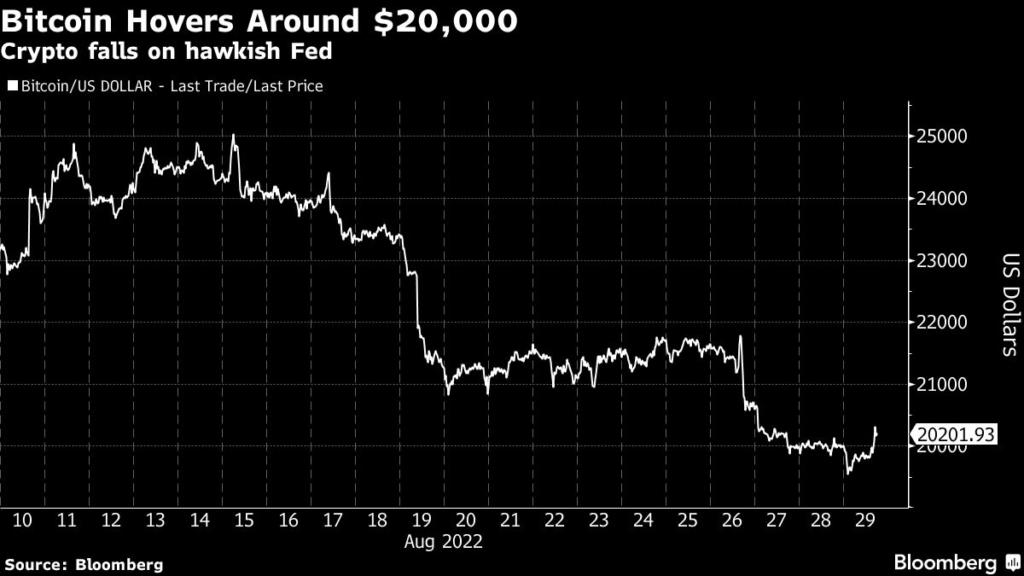
(Bloomberg) — Bitcoin traded in a narrow band around $20,000, with investors less willing to take big risks after Federal Reserve Chair Jerome Powell reiterated the central bank’s commitment to keep raising rates in the fight against inflation. 

The largest token rose as much as 2% on Monday to $20,412 after trading below that key round-number threshold over the weekend. Other cryptocurrenices were mixed. Equities — which plunged on Friday in the wake of Powell’s remarks — extended declines, with the Nasdaq Composite index shedding 0.7% as of 2:20 p.m. in New York. 

“Money is flowing out of risky assets,” said Cici Lu, chief executive officer at consulting firm Venn Link Partners. 

The $20,000 level acted as support for Bitcoin when it hit lows in recent months, but the cryptocurrency had worked its way higher in recent weeks. Before Saturday, it hadn’t been below that mark since July 14, and had even crossed above $25,000 earlier in August. That mini-rally was cut short as rate-hike concerns intensified, and Bitcoin has fallen some 17% since Aug. 15. 

Riskier assets have been having a rough few days as traders digested comments from Fed Chair Powell, who reiterated that the central bank is willing to continue monetary tightening, even at the risk of an economic downturn.

Still, given that digital assets are closer to their 2022 lows than the stock market is, “the downside potential for stocks is actually more than for the cryptos right now,” said Matt Maley, chief market strategist at Miller Tabak & Co.

Numerous strategists have flagged $20,000 as a key point for Bitcoin, though levels of support could lie lower as well.

Fairlead Strategies’ Katie Stockton sees long-term support in the $18,300 to $19,500 area. Fundstrat strategist Mark Newton has flagged some key areas in the $19,000 range, with a “real area of importance” around $17,500, near the June lows and which would allow for a 100% alternate wave projection of the most recent decline from mid-August, he said in a note Friday.

With reports due this week on U.S. manufacturing and jobs that could influence central bankers’ policy decisions, “it could be another big week for crypto,” wrote Tammy Da Costa, an analyst for DailyFX, in a note Saturday. “In terms of technical analysis, a hold below $21,000 and below the lower bound of the bearish flag at around $20,300 could drive price action back towards the July low $18,905 with the June low then coming into play at $17,592.”

The past two Fridays have been tough in the crypto market, with $288 million of crypto longs liquidated on the most recent one, according to data from Coinglass. On Aug. 19, $562 million of longs were liquidated, the most since June 13. 

Ether, the second-biggest token, slid as much as 4.1% early Monday before recovering and then gaining 3.5% to trade at $1,530 — still down from around $2,000 a couple weeks ago. It has been fluctuating ahead of its much-anticipated Merge upgrade, which is due in mid-September.

“Ethereum’s drop ahead of the impending Merge is also of note as bearish sentiment appears to be taking hold across all so-called risk assets,” analysts at Bitfinex said in a note Friday. “The volatility that has become so characteristic of the digital token space shows no signs of abating.”

(Updates prices and adds new commentary.)

More stories like this are available on bloomberg.com

©2022 Bloomberg L.P.

NASA Heeds Own Painful History in Scrubbing Moon Rocket’s Launch

(Bloomberg) — NASA’s latest rocket demonstrated one of the biggest and most enduring frustrations that comes with launching new and highly complicated space technology: waiting.

Though expectations were high for Monday’s scheduled first launch of NASA’s new Space Launch System rocket, or the SLS, the space agency was careful to temper expectations ahead of the planned lift-off. It emphasized that this was a test flight and that engineers were still learning how to work with the still-untested rocket.

“The complexity is daunting when you bring it all into the focus of a countdown,” said Bill Nelson, administrator of the National Aeronautics and Space Administration. 

Ahead of Monday’s event, experts within the space community also downplayed the odds of the SLS actually flying on schedule. Still NASA gave it the agency’s best shot — and Vice President Kamala Harris flew in to be on hand — before an issue with one of the four main engines triggered a scrub.

But the truth is such problems are not uncommon for new launch vehicles, especially ones as big and as complex as the SLS — and NASA has been here before. The first Space Shuttle launch way back in 1981 was scrubbed and delayed before it finally lifted off. And risk-averse NASA would rather hold a launch than fly with an anomaly its engineers would have been unable to fix once the mission was under way.

The earliest available opportunity to try again is on Sept. 2, which Mike Sarafin, NASA’s Artemis mission manager, said in a press conference was “definitely in play.” No decision has been made on rescheduling.

Official confirmation of the delay came after the space agency spent the early morning hours investigating issues including a potential crack in material in the main body of the rocket as well as the temperature issue, officials said earlier Monday. Those came after engineers examined and resolved a suspected leak affecting the hydrogen tanking process.

During the countdown, the SLS’s engines need to chill down in preparation for launch. But one of the four — Engine 3 — was not cooling properly. Engineers weren’t able to test the process during the rocket’s final dress rehearsal due to a hydrogen leak. Engineers also discovered a leak in a valve in one of the rocket’s tanks. The engine and the valve issue ultimately prompted the abort.

The Artemis mission will be the first major flight in NASA’s ambitious plan to send the first woman and the first person of color to the lunar surface as early as 2025. Artemis I is aimed at testing out the Space Launch System, made by Boeing Co., and a new deep-space crew capsule called Orion that was developed by Lockheed Martin Corp. 

If Artemis I is able to launch on Sept. 2, SLS will be sending Orion on a mission of more than five weeks, along with a host of payloads and sensors to track the journey. The length of the mission will vary depending on the launch date.

The capsule is tasked with inserting itself into lunar orbit and entering deep space before return to Earth in the Pacific Ocean off San Diego. NASA plans to stress test the systems ahead of later crewed missions.

The Space Launch System already is more than five years behind schedule. It has been in development for roughly a decade, slowed by a myriad of delays and cost overruns. Development costs of the program have soared from an original $7 billion to about $23 billion, according to an estimate by the Planetary Society.

If successful, the Artemis program — named for the twin sister of the god Apollo in Greek mythology — will see the return of people to the moon for the first time in 50 years. No one has visited since Apollo 17 in December 1972.

Boeing and Lockheed Martin shares each rose less than 1% at 2:23 p.m. in New York.

More stories like this are available on bloomberg.com

©2022 Bloomberg L.P.
Treasuries Slump as Traders Rethink Rate Bets: Markets Wrap

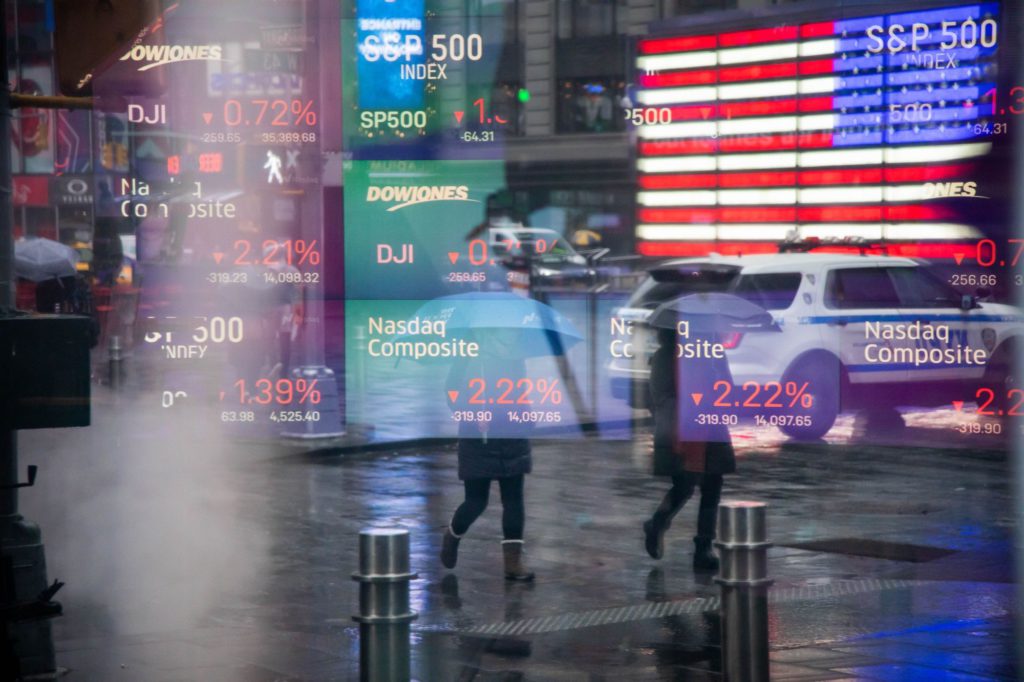
(Bloomberg) — US Treasuries slumped and stocks dropped as traders recalibrate their expectations in response to the Federal Reserve indicating that it will continue to raise interest rates to tamp down on inflation.

The S&P 500 and the Nasdaq 100 fell, but came off session lows. Treasury yields rose, with the 10-year rate hovering around 3.11%. The two-year yield had climbed to its highest level since 2007 before paring the advance.    

Fed Chair Jerome Powell’s speech during the Jackson Hole symposium had made it clear that a dovish pivot that some investors had been positioning for was unlikely. He had also warned of the potential for economic pain for households and businesses as the central bank continues to be aggressive to battle inflation. 

“The process of a Fed funds hike cycle, especially in the early days of such a cycle, is never easily digestible for the markets,” wrote John Stoltzfus, chief investment strategist at Oppenheimer. “This process often comes with periods of elevated anxiety and volatility for market participants.”

The current rate-hike cycle to “particularly rough to manage” as it involves policy tightening combined with sky-high inflation, which the Fed has still not been able to slow meaningfully, he said. 

Going forward, weaker earnings — not higher interest rates — could pose the largest threat to US stock prices, Morgan Stanley strategists led by Michael J. Wilson said in a research note Monday. The bank’s leading earnings model, which projects a steep fall in earnings per share growth over the next several months, confirms that view.

“The path for stocks from here will be determined by earnings, where we still see material downside,” the strategists said. “As a result, equity investors should be laser focused on this risk, not the Fed.” 

Seema Shah, chief global strategist at Principal Global Investors, echoed the sentiment.

“While earnings season has been positive, persistent challenges indicate an increasingly difficult operating environment, likely limiting profit persistence in the second half of the year,” she wrote.

Bonds in Europe tumbled, with Germany’s 10-year yield rising as high as 1.5% after a string of European Central Bank officials over the weekend stressed the need to act more forcefully to quash record inflation. 

ECB officials read from a similar script as Powell. Austria’s Robert Holzmann and Dutch colleague Klaas Knot both floated the prospect of an unprecedented three-quarter point hike at their meeting in September. Executive Board member Isabel Schnabel warned that the likelihood of inflation expectations becoming unanchored is uncomfortably high.

Bitcoin pushed above the $20,000 level that some view as a marker of a deeper slide in investor sentiment. Oil made gains on supply risks. 

Here are some key events to watch this week:

  • US consumer confidence, Tuesday
  • New York Fed President John Williams due to speak, Tuesday
  • ECB Governing Council members due to speak at event Tuesday through Sept. 2
  • China PMI, Wednesday
  • Euro-area CPI, Wednesday
  • Russia’s Gazprom set to halt Nord Stream pipeline gas flows for three days of maintenance, Wednesday
  • Cleveland Fed President Loretta Mester due to speak, Wednesday
  • China Caixin manufacturing PMI, Thursday
  • US nonfarm payrolls, Friday
  • UK leadership ballot closes Friday. Winner announced Sept. 5

Some of the main moves in markets:

Stocks

  • The S&P 500 fell 0.2% as of 2:09 p.m. New York time
  • The Nasdaq 100 fell 0.4%
  • The Dow Jones Industrial Average fell 0.1%
  • The MSCI World index fell 2.3%

Currencies

  • The Bloomberg Dollar Spot Index was little changed
  • The euro rose 0.4% to $1.0008
  • The British pound fell 0.2% to $1.1718
  • The Japanese yen fell 0.8% to 138.78 per dollar

Bonds

  • The yield on 10-year Treasuries advanced seven basis points to 3.11%
  • Germany’s 10-year yield advanced 11 basis points to 1.50%

Commodities

  • West Texas Intermediate crude rose 4.1% to $96.89 a barrel
  • Gold futures were little changed

More stories like this are available on bloomberg.com

©2022 Bloomberg L.P.

Close Bitnami banner
Bitnami