

Bloomberg

US Futures Sink, Treasuries Fall on Policy Outlook: Markets Wrap

(Bloomberg) — US equity futures declined along with stocks in Europe after policy makers from the world’s biggest central banks reaffirmed they will follow through with higher interest rates even as economies come under strain. Treasury yields rose.

Contracts on the S&P 500 and Nasdaq 100 retreated, with the latter underperforming after the tech-heavy gauge slumped the most in more than two months on Friday. A global share index fell to a one-month low and European stocks extended last week’s drop, with the rates-sensitive technology sector leading a broad-based decline. 

The US two-year yield, sensitive to expectations around Fed policy, reached 3.47% in Asian trading, the highest since the global financial crisis. The 10-year yield climbed to about 3.10%. The Bloomberg Dollar Spot Index pushed toward the record hit last month before paring the advance. 

Global markets are balancing inflation risks against the threat of an economic slowdown that may be exacerbated by aggressive central bank rate hikes. Some investors had been positioning for a pivot away from tightening, a narrative that was scuttled by Fed Chair Jerome Powell and others at the Jackson Hole central bankers’ meeting. 

“We maintain our view that the Fed will raise rates by another 100 basis points by year-end, with risks for more if inflation does not slow in line with our forecasts,” said Mark Haefele, chief investment officer at UBS Global Wealth Management. “With rates likely to stay higher for longer, our base case is for further volatility, earnings downgrades, and higher-than-expected default rates over the course of the next year.”

Bonds in Europe tumbled, with Germany’s 10-year yield rising as high as 1.5% after a string of European Central Bank officials over the weekend stressed the need to act more forcefully to quash record inflation. The euro strengthened above parity with the dollar.

Powell in his address at the Fed’s Jackson Hole symposium flagged the likely need for restrictive monetary policy for some time to curb high inflation and cautioned against loosening monetary conditions prematurely. He also warned of the potential for economic pain for households and businesses.

ECB officials read from a similar script. Austria’s Robert Holzmann and Dutch colleague Klaas Knot both floated the prospect of an unprecedented three-quarter point hike at their meeting in September. Executive Board member Isabel Schnabel warned that the likelihood of inflation expectations becoming unanchored is uncomfortably high.

Tech firms led losses for Asian equities, while progress in the US-China delisting spat helped to cushion Chinese stocks. Emerging-market stocks dropped and a gauge of major developing-nation currencies slumped by the most in more than two months.

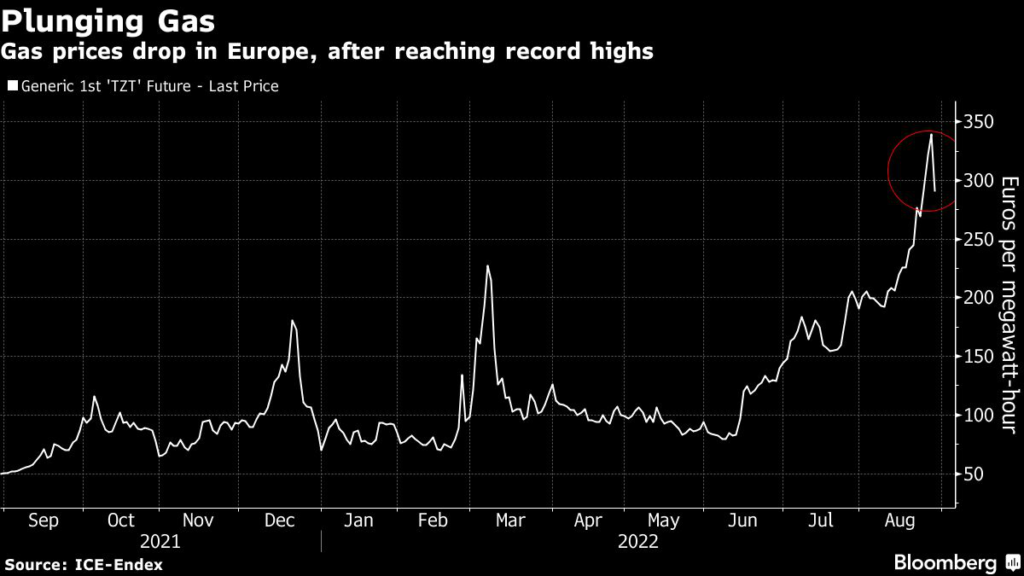
Bitcoin held below the $20,000 level some view as a marker of a deeper slide in investor sentiment. Gold retreated, but oil made gains on supply risks. Meanwhile, European natural gas prices plunged the most since March after Germany said its gas stores are filling up faster than planned ahead of winter. 

Here are some key events to watch this week:

  • US consumer confidence, Tuesday
  • New York Fed President John Williams due to speak, Tuesday
  • ECB Governing Council members due to speak at event Tuesday through Sept. 2
  • China PMI, Wednesday
  • Euro-area CPI, Wednesday
  • Russia’s Gazprom set to halt Nord Stream pipeline gas flows for three days of maintenance, Wednesday
  • Cleveland Fed President Loretta Mester due to speak, Wednesday
  • China Caixin manufacturing PMI, Thursday
  • US nonfarm payrolls, Friday
  • UK leadership ballot closes Friday. Winner announced Sept. 5

Some of the main moves in markets:

Stocks

  • Futures on the S&P 500 fell 0.8% as of 8:38 a.m. New York time
  • Futures on the Nasdaq 100 fell 0.9%
  • Futures on the Dow Jones Industrial Average fell 0.7%
  • The Stoxx Europe 600 fell 0.9%
  • The MSCI World index fell 0.5%

Currencies

  • The Bloomberg Dollar Spot Index was little changed
  • The euro rose 0.5% to $1.0017
  • The British pound fell 0.1% to $1.1728
  • The Japanese yen fell 0.6% to 138.40 per dollar

Bonds

  • The yield on 10-year Treasuries advanced five basis points to 3.09%
  • Germany’s 10-year yield advanced eight basis points to 1.47%

Commodities

  • West Texas Intermediate crude rose 1.4% to $94.33 a barrel
  • Gold futures fell 0.5% to $1,741.80 an ounce

More stories like this are available on bloomberg.com

©2022 Bloomberg L.P.
Ukraine Latest: Energy Talks; IAEA Team to Inspect Nuclear Plant

(Bloomberg) — International Atomic Energy Agency Director General Rafael Mariano Grossi will lead an inspection of the Russian-occupied Zaporizhzhia nuclear power plant in Ukraine this week. 

Ukrainian President Volodymyr Zelenskiy warned at the weekend that the situation at the plant remains dangerous, even after two power units were reconnected to the grid following an outage. Several strikes were reported near the site in recent days.

Energy ministers of the European Union will meet in Brussels on Sept. 9 for emergency talks on a bloc-wide solution to the spike in power markets. Czech officials, whose country holds the EU’s rotating presidency, are proposing to cap prices of natural gas used for power generation, according to Industry and Trade Minister Jozef Sikela.

(See RSAN on the Bloomberg Terminal for the Russian Sanctions Dashboard.)

Key Developments

  • IAEA Monitors Will Visit Zaporizhzhia Nuclear Plant This Week
  • Zelenskiy Reinforces Nuclear Warning After Disruption 
  • EU to Propose New Training Mission to Boost Ukraine’s Military
  • Germany to Reach October Gas-Storage Target Already Next Month
  • European Gas Slumps as Storage Gains, Traders Take Profit
  • Why Ukraine Debt Relief Isn’t Matching Funding Needs: QuickTake

On the Ground

The Ukrainian army launched an offensive in many directions in the south of Ukraine, Natalia Humenyuk, a spokeswoman for the military’s southern command, said on Suspilne TV. The city of Energodar near the Zaporizhzhia plant was shelled late Sunday, according to Ukrainska Pravda news site, which also reported that Russia hit the city of Sarny in Ukraine’s western Rivne region with missiles, striking a military infrastructure target. Russia struck Ukraine’s second-largest city of Kharkiv again, the regional Governor Oleh Synyehubov said on Telegram, while in Donbas several Russian attempts to conduct assaults in the vicinity of Slovyansk, Bakhmut and Avdiivka were unsuccessful, Ukraine’s General Staff said on Facebook.

(All times CET)

US Officials, Allies to Meet in Germany Sept. 8 (14:10 p.m.)

Secretary of Defense Lloyd Austin is scheduled to host an in-person Ukraine Defense Contact Group meeting at Ramstein Air Base, Germany, on Sept. 8, the US said in a statement. Austin has invited Ministers of Defense and senior military officials from around the world to discuss the ongoing crisis in Ukraine and various security issues facing allies and partners.

New Training Mission Plan Aims to Bolster Ukraine’s Military (13:35 p.m.)

The European Union could offer Ukraine’s armed forces sniper, de-mining or officer training as part of a new mission the bloc’s foreign policy chief plans to propose to member states this week. Josep Borrell is due to suggest an EU training mission for Ukraine, with the aim of clinching political backing from defense ministers when they gather in Prague starting Monday evening.

While Ukraine’s needs are evolving, Kyiv has identified some specific training needs, including for medical, de-mining and sniper missions, as well as various kinds of officer training, according to a document obtained by Bloomberg. 

EU to Hold Emergency Talks on Sept. 9 as Prices Spike (13:25 p.m.)

The Czech Republic, which holds the European Union’s rotating presidency, called an extraordinary meeting of energy ministers to discuss a bloc-wide solution to the spike in power markets. 

The meeting, which will take place in Brussels on Sept. 9, will debate concrete measures to tackle the energy crisis, according to Industry and Trade Minister Jozef Sikela. Czech officials are proposing to cap prices of natural gas used for power generation, Sikela said.

Record Number of Refugees Return to Ukraine From Poland (13.:15 p.m.)

Over 73,000 people left Poland for Ukraine on Aug. 27-28, a record for any weekend since Russia’s invasion in February, Polish border guards said on Twitter. Refugees’ returns intensified ahead of the start of the new school year on Sept. 1. Most of the people who fled the war are women with children.

Poland has been a major destination for refugees fleeing the war. Since Feb. 24, 5.89 million people have entered Poland from Ukraine, while about 4 million crossed the border in the opposite direction.

Read More: Poland Sees Record Number of Refugees Returning to Ukraine

European Gas Prices Slump (12:20 p.m.)

European natural gas prices plunged the most since March after Germany said its gas stores are filling up faster than planned and some traders took profits following the rally of recent weeks.

Zelenskiy Offers Spare Gas Capacity (12:10 p.m.)

The Ukrainian president offered excess capacity at the country’s gas-storage facilities for the European Union to use to build supplies for the winter. Ukraine can also be a contributor to the energy transition, he said via a webcast at the ONS conference in Stavanger, Norway.

Prime Minister Jonas Gahr Store told the same conference Norway aims to spend 2 billion kroner ($205 million) this year to ensure that Ukrainians can buy gas for the winter. The support will be distributed through the European Bank for Reconstruction and Development.

Russia to Ensure IAEA Security on Territory It Controls (12:05 p.m.)

Russia will ensure the security of a mission from the IAEA to the Zaporizhzhia nuclear power plant on the territory it controls in Ukraine, while it will be up to Kyiv to handle it on the other side of the front, according to Kremlin spokesman Dmitry Peskov.

“We’ve been waiting for this mission for a long time and consider it necessary,” he told a conference call. But he said there is “no discussion” of creating a de-militarized zone around the plant at the moment.

Ukraine Expects Clear IAEA Statement (11:50 a.m.)

Foreign Minister Dmytro Kuleba said he spoke to IAEA chief Rafael Mariano Grossi on Sunday to discuss details of an inspection of the Zaporizhzhia nuclear power plant this week.

“They have vast experience in inspecting nuclear power facilities across the world under the most difficult circumstances, but without exaggeration this mission will be the hardest in the history of the IAEA given the combat activities undertaken by the Russian Federation on the ground and also the very blatant way that Russia is trying to legitimize its presence” at the plant, Kuleba told reporters in Stockholm Monday. Ukraine expects a “clear statement of facts of violation of all nuclear safety protocols,” he added. 

The Moscow-appointed occupation governor told state television earlier on Monday that his officials would show the IAEA delegation evidence of what he said was shelling by Ukrainian forces. Kyiv has denied firing in the area around the plant.

Sweden Announces Aid for Ukraine (10 a.m.)

Half of Sweden’s 1 billion-krona ($93 million) aid package will involve military support and the other half help for the economy and reconstruction, Prime Minister Magdalena Andersson said at a press conference in Stockholm Monday as she received Ukrainian Foreign Minister Dmytro Kuleba. Sweden will also provide funds to the UN World Food Program, allowing it to buy 30,000 tons of wheat from Ukraine and ship it to countries at risk of famine, she said.

“The goal is for Ukraine to regain total control over your territory, within its internationally recognized borders,” Swedish Foreign Minister Ann Linde said.

Grain Vessels to Depart Ukrainian Ports (8:15 a.m.)

Three commercial vessels carrying 72,985 metric tons of grain and food products were authorized to leave Ukraine on Monday, the Joint Coordination Centre said in an emailed statement. They are destined for Turkey, Romania and Egypt. 

Zelenskiy Sacks Deputy National Guard Commander (8 a.m.)

The president dismissed Yaroslav Spodar as deputy commander of Ukraine’s National Guard, according to the Ukrinform site, which said that a decree notifying of the dismissal was published on the presidential website Sunday. It didn’t give any reason for the action.

Germany to Reach Gas-Storage Target Early (7:45 a.m.)

Germany’s economy ministry said gas-storage facilities are filling up faster than planned despite uncertainty over supplies through a key pipeline from Russia, and predicted that an October target of 85% capacity should already be reached early next month.

Germany has reduced its dependence on Russian gas from 55% before the war to about 30% now, and is moving to find alternative sources while filling storage facilities ahead of the winter. 

More stories like this are available on bloomberg.com

©2022 Bloomberg L.P.
Zendesk Investor Light Street Seeks to Nix Takeover, Oust CEO

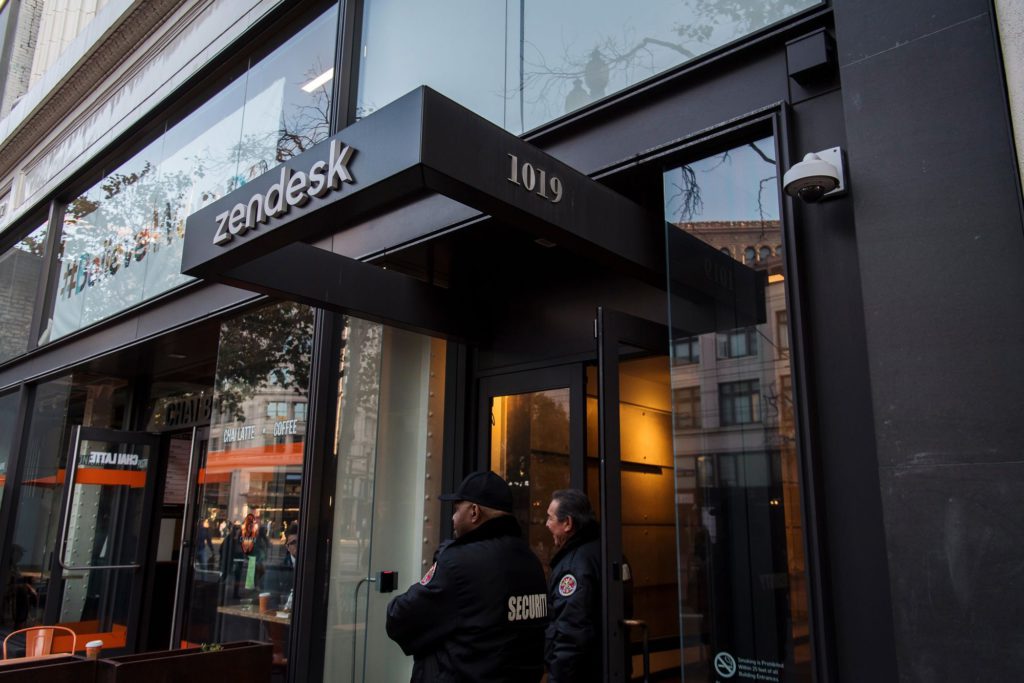
(Bloomberg) — A large Zendesk Inc. investor planning to vote against the takeover has proposed an alternative strategy that includes a $4 billion investment to keep the software company independent. 

Light Street Capital Management, which owns more than 2% of Zendesk, also wants the company to expand its board and replace Chief Executive Officer Mikkel Svane, who would remain chairman under the proposal. 

The firm said in a letter to Zendesk’s board it plans to vote against the $9.5 billion takeover by private equity firms Hellman & Friedman and Permira, saying it’s too low. Instead, Light Street is offering to recapitalize the company with $2 billion in preferred shares and $2 billion in an incremental debt facility. Together with $1 billion of cash from the balance sheet, Zendesk could then conduct a $5 billion tender offer at $82.50 per share, the firm said.

“We believe the private equity playbook from here is obvious — drive this business to higher profitability then sell to one of the interested strategic buyers who evaluated Zendesk during this process,” Light Street founder Glen Kacher said in a letter to the board Sunday, a copy of which was reviewed by Bloomberg News. “With higher margins, Zendesk is much more likely to be immediately accretive to these buyers, enabling them to pay a much higher price and appease their own shareholders.”

A representative for Zendesk wasn’t immediately available for comment. 

Light Street is calling on the San Francisco-based company to expand the size of its board to 10 seats, including five independent directors — two of those to fill vacant positions and three to replace current directors. The investor also wants a new CEO with a successful track record in the software business. Light Street wants three of its nominees for the board to participate in a CEO search. 

Zendesk agreed to be acquired in June by a buyout group led by Hellman & Friedman and Permira. The deal came together after Zendesk failed to win support from its shareholders to acquire Momentive Global Inc. in an all-stock transaction valued at about $4 billion when the the deal was struck in October.

The transaction was met with a dramatic sell-off in both companies as investors balked at the tie-up. Zendesk shareholder Janus Henderson Group Plc came out against the acquisition and activist investor Jana Partners also urged shareholders to reject the deal. 

Light Street said in its letter that it believed Zendesk was willing to sell at any price after a series of “self-inflicted missteps.”

“With increased focus on driving meaningful operating margin expansion and fresh leadership, we believe that shareholders can realize private equity style returns in the public markets,” Kacher said.

More stories like this are available on bloomberg.com

©2022 Bloomberg L.P.

Meme Stock Mania Is Here to Stay — Even With Those Wild Price Swings

(Bloomberg) — Wall Street says the meme stock is here to stay.

Born of lockdown boredom, no-fee brokers and social-media chatrooms, the phenomenon drew in a new generation of traders, who fueled massive rallies by banding together to pump up the stock prices of companies Wall Street was betting against. 

It had all the elements of a flash-in-the-pan trend, especially with the speculative excesses giving way to a bear-market beating. Yet Wall Street professionals and individual investors think it will become a permanent part of the market landscape: Nearly two-thirds of the 522 respondents in the latest MLIV Pulse survey expect some version of the meme stock mania to stick around. 

The meme movement has added volatility into corners of a market already contending with rising interest rates, recession risks and a steep drop from the record highs. That was on display this month with Bed Bath & Beyond Inc. and AMC Entertainment Holdings Inc., two meme favorites, both surging, only to give back the gains just as quickly.

“We see community aspects within meme stocks, so as long as investors create community and access, they’ll find their way into meme stocks,” said Callie Cox, US investment analyst at eToro. “Meme stocks are just another way that retail investors are getting engaged with the market.”

Speculating in meme stocks has been painful this year. Even the coordinated efforts have been no match for a rout that’s battered individual-investor picks like high-growth technology stocks and cryptocurrencies. A basket of 37 retail-trader favorites tracked by Bloomberg is down nearly 40% in the past year.

The gauge, which includes AMC, GameStop Corp. and BlackBerry Ltd., looks set for another loss Monday with all three stocks down at least 3% in pre-session trading. US stocks are poised for further declines after Jerome Powell signaled the Federal Reserve is willing to keep tightening policy, even if it’s at the expense of an economic downturn. 

Wall Street professionals are split on whether the market won’t hit a bottom until individual investors withdraw their support by becoming net sellers of stocks. The group has recently pushed $1.2 billion per day into US-listed securities, according to Vanda Research, below its expectations for a $1.3 billion to $1.4 billion influx. With the S&P 500 off its mid-month highs, that signals a potentially diminished appetite for buying such dips. 

The retail trading crowd faces “a crucial inflection point as summer draws to a close,” according to Vanda analysts. 

The MLIV Pulse survey found that while the meme-stock phenomenon is likely to stick around, 69% said it’s unlikely to see the trading volumes it did during its January 2021 height. Nor are such stocks seen as a good bet for the remainder of the year.

When asked whether cryptocurrencies, meme stocks or so-called blank check companies known as SPACs would provide the best value over the next six months, 51% of respondents chose crypto and 32% SPACs. Only 17% favored meme stocks. 

Nevertheless, the run-ups in some meme stocks have provided a financial lifeline to certain companies, allowing them to raise funds by selling shares or tapping lines of credit. Bed Bath & Beyond is in talks with Sixth Street Partners for a new line of credit, Bloomberg reported, citing people with knowledge of the private discussions. 

The stock advanced from $4.5 to $23 in a rally that ended on Aug. 17, but since then, the shares lost more than half of the value. The retailer will host a conference call on Wednesday to address plans to drive growth and strengthen its balance sheet.

“Memes come and go quickly, same thing goes with these prices,” Jaime Rogozinski, founder of the popular online stock-market chat forum WallStreetBets, told Bloomberg TV. 

While the presence of meme stocks is something investors will keep an eye on, they were mixed on whether its volatility poses a risk to the broader market. Fifty-seven percent said it doesn’t, with 43% saying the opposite. 

“Meme stock trading won’t have enough money backing long substantial moves that dictate longer-term trends, but become more of a pump and dump trade,” said Ed Moya, senior market analyst at Oanda. 

In a gauge of broader market sentiment, more than half of the respondents said they expect US Treasuries to have a better volatility-adjusted return over the next month than US stocks. The US two-year yield jumped to the highest level since November 2007 in Monday morning Asia trading, after Fed Chair Jerome Powell said at Jackson Hole that a restrictive stance was likely to remain in place “for some time,’’ and “the historical record cautions strongly against prematurely loosening policy.’’

For more market analysis, go to MLIV. To read full survey results, click here.

(Updates with Monday share price moves.)

More stories like this are available on bloomberg.com

©2022 Bloomberg L.P.
Bonds Slump, Stock Selloff Deepens as Dollar Jumps: Markets Wrap

(Bloomberg) — Bonds in Europe led a global selloff that lifted the two-year Treasury yield to levels last seen in 2007 as European Central Bank policy makers joined their Federal Reserve counterparts in signaling aggressive tightening. Stocks sank with US futures and the dollar climbed.

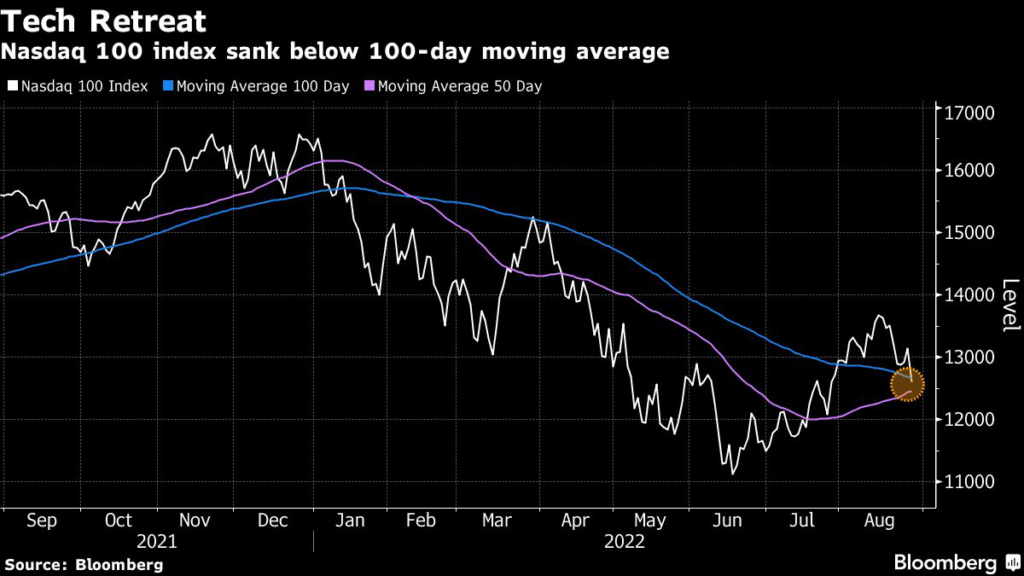
A global share index fell to a one-month low and European stocks extended last week’s drop, with the rates-sensitive technology sector leading a broad-based decline. US futures retreated, with contracts on the Nasdaq 100 underperforming after the tech-heavy gauge slumped the most in more than two months on Friday. 

The Bloomberg Dollar Spot Index pushed toward the record hit last month as investors sought a haven from spiking volatility. Commodity-linked currencies as well as the yen, the pound and the offshore yuan were under pressure.

Bonds in Europe tumbled, with Germany’s 10-year yield rising above 1.5% after a string of European Central Bank officials stressed over the weekend the need to act more forcefully to quash record inflation. The US two-year yield, sensitive to expectations around Fed policy, hit 3.47% in Asian trading, the highest since the global financial crisis. With UK markets closed Monday, cash Treasuries aren’t trading in Europe.

“We maintain our view that the Fed will raise rates by another 100 basis points by year-end, with risks for more if inflation does not slow in line with our forecasts,” said Mark Haefele, chief investment officer at UBS Global Wealth Management. “With rates likely to stay higher for longer, our base case is for further volatility, earnings downgrades, and higher-than-expected default rates over the course of the next year.”

Powell in his address at the Fed’s Jackson Hole symposium flagged the likely need for restrictive monetary policy for some time to curb high inflation and cautioned against loosening monetary conditions prematurely. He also warned of the potential for economic pain for households and businesses.

ECB officials read from a similar script. Austria’s Robert Holzmann and Dutch colleague Klaas Knot both floated the prospect of an unprecedented three-quarter point hike at their meeting in September. Executive Board member Isabel Schnabel warned that the likelihood of inflation expectations becoming unanchored is uncomfortably high.

Tech firms led losses for Asian equities, while progress in the US-China delisting spat helped to cushion Chinese stocks. 

Bitcoin broke below the $20,000 level some view as a marker of a deeper slide in investor sentiment. Gold retreated, but oil made gains on supply risks. Meanwhile, European natural gas prices plunged the most since April after Germany said its gas stores are filling up faster than planned ahead of winter. 

Here are some key events to watch this week:

  • US consumer confidence, Tuesday
  • New York Fed President John Williams due to speak, Tuesday
  • ECB Governing Council members due to speak at event Tuesday through Sept. 2
  • China PMI, Wednesday
  • Euro-area CPI, Wednesday
  • Russia’s Gazprom set to halt Nord Stream pipeline gas flows for three days of maintenance, Wednesday
  • Cleveland Fed President Loretta Mester due to speak, Wednesday
  • China Caixin manufacturing PMI, Thursday
  • US nonfarm payrolls, Friday
  • UK leadership ballot closes Friday. Winner announced Sept. 5

Some of the main moves in markets:

Stocks

  • The Stoxx Europe 600 fell 1.1% as of 10:55 a.m. London time
  • Futures on the S&P 500 fell 0.9%
  • Futures on the Nasdaq 100 fell 1.2%
  • Futures on the Dow Jones Industrial Average fell 0.8%
  • The MSCI Asia Pacific Index fell 2.2%
  • The MSCI Emerging Markets Index fell 1.5%

Currencies

  • The Bloomberg Dollar Spot Index rose 0.4%
  • The euro was little changed at $0.9961
  • The Japanese yen fell 0.7% to 138.62 per dollar
  • The offshore yuan fell 0.5% to 6.9267 per dollar
  • The British pound fell 0.5% to $1.1684

Bonds

  • The yield on 10-year Treasuries advanced seven basis points to 3.11%
  • Germany’s 10-year yield advanced 12 basis points to 1.51%

Commodities

  • Brent crude rose 0.5% to $101.47 a barrel
  • Spot gold fell 0.9% to $1,722.78 an ounce

More stories like this are available on bloomberg.com

©2022 Bloomberg L.P.
Walmart Takes Massmart Private to Revive South African Business

(Bloomberg) — Walmart Inc. plans to take Massmart Holdings Ltd. private and will promote the unit’s chief operating officer to head of the company as it prepares to renew its focus on South Africa.

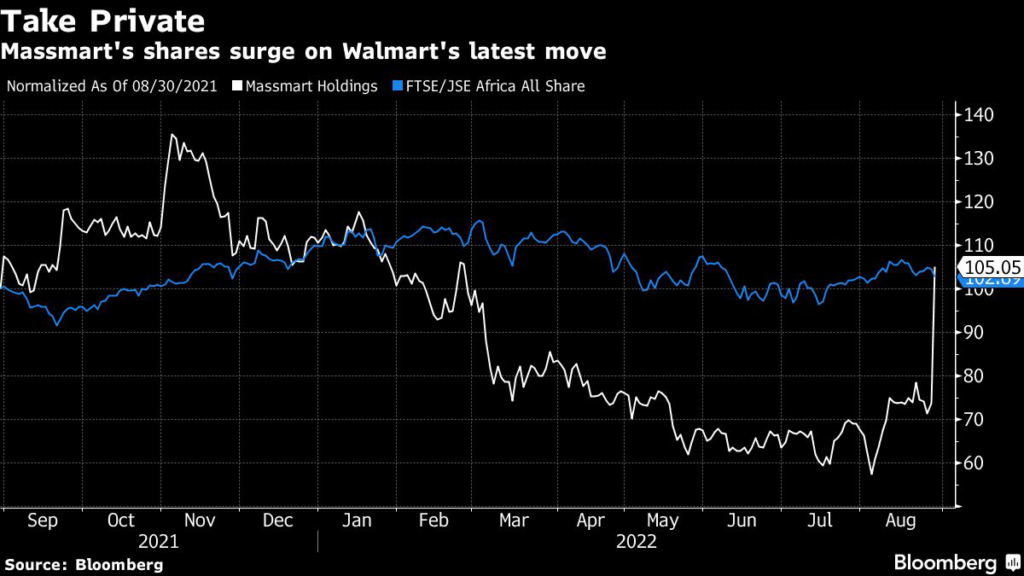
The global retail giant plans to buy all of the shares it doesn’t already own of Massmart for 62 rand ($3.65) apiece, a 53% premium to the last closing price, and delist the company from Johannesburg’s main bourse. Jonathan Molapo, who joined Massmart in January as COO will take over as chief executive officer a year after he joined the company. He replaces Walmart veteran Mitchell Slape.

Walmart is preparing for increased competition amid press reports that Amazon.com Inc. is planning to expand into Africa’s most-industrialized nation. Taking Massmart private may help Walmart cut costs and invest in the company that owns brands including Makro and Builders without the scrutiny that comes with being a public company.

“There is no question that Amazon is going to intensify competition in the market,” Slape said at a briefing on Monday. “We’ve been working hard to build our e-commerce business over the last few years. We think we’ll have a very competitive, very interesting offer for our consumers and you’ll see more of that in the coming months.”

The stock jumped as much as 45% on the 6.4 billion-rand offer. It was trading 42% higher as of 11:20 a.m. in Johannesburg. That pares its loss for the year to 5.3%.

Walmart has been exiting low-growth markets and concentrating on partnerships or stakes in local participants. The company has sold Asda in the UK, Seiyu in Japan and its Argentina operations. 

“Basically, all markets outside of the US, they haven’t made an imprint,” Evan Walker, money manager at 36ONE Asset Management Ltd. in Johannesburg, said referring to Walmart. “It’s going to be interesting to see if they come out now very aggressively against other retailers from a buyer perspective.”

Slape, who has worked for Walmart for 27 years, was sent to arrest a slump in profit at the Johannesburg-based company. Under Slape’s leadership, the company has cut jobs, shut its Dion Wired chain, disposed of underperforming Masscash stores and stopped selling fresh food in household-goods chain Game.

Still, Game is struggling, even after the broad cost cuts. Slape has also faced a string of difficulties ranging from pandemic-induced supply chain problems to a week of deadly South African riots a year ago. 

Widening Loss

Massmart on Monday also reported a first-half net loss of 1.1 billion rand, widening from a loss of 1.09 billion rand a year earlier. The company also has 14.9 billion rand of debt as of Dec. 31, according to data compiled by Bloomberg. 

COO Molapo has held various leadership positions in South Africa and internationally and was most recently the CEO of Astron Energy Ltd. His most significant retail experience has been developing retail forecourts at gas stations.

Molapo’s appointment as COO was “from the very outset, part of a carefully thought out succession planning process,” Massmart Chairman Kuseni Dlamini said on a briefing with reporters. This followed a local and international search, he said.

Walmart bought a majority stake in Massmart in 2011 for 16.5 billion rand. The purchase came under scrutiny from competition authorities and Walmart had to make various development commitments in order to get the deal passed. Still, as majority shareholders, Walmart’s new offer won’t be subject to regulatory approvals, Slape said at the same briefing.

Walmart “are excited about the future of Africa and the potential that it represents,” Slape said. “They take a long-term view, they’re a long-term holder.” 

More stories like this are available on bloomberg.com

©2022 Bloomberg L.P.

Spain’s Labor Minister Backs Union Protests for Higher Wages

(Bloomberg) — Spanish Labor Minister Yolanda Diaz threw her support behind union plans to protest for higher wages, as the country suffers its worst cost-of-living crisis in four decades.

“Unions have reasons to head to the streets” to demand pay increases, Diaz said Monday in an interview with Spanish radio broadcaster Cadena Ser. Business organizations are “blocking” collective salary agreements, she added. 

The head of UGT, one of Spain’s largest union umbrella groups, last week warned that there will be an autumn full of protests if the country’s main industry group doesn’t sit down to negotiate, according to state-owned broadcaster RTVE.

Spain in recent months has recorded the strongest employment rates in more than a decade, but the healthier job market comes as the country suffers the highest inflation since the mid-80s — with prices up as much as 10.8% in July. 

The employment rate has been positively affected, in part, by a new labor law passed this year, which was presented by Diaz — also one of the three deputy prime ministers.

Diaz is the highest-ranking government official from junior coalition partner Unidas Podemos. Also a member of Spain’s Communist party, the labor lawyer with extensive ties to unions is widely expected to run for prime minister in the next election, expected in late 2023.

More stories like this are available on bloomberg.com

©2022 Bloomberg L.P.

Bitcoin Back Down Below $20,000 as Hawkish Fed Weighs on Crypto

(Bloomberg) — Bitcoin is seeing sustained trading below $20,000 for the first time since mid-July, as risk appetite wavers after Federal Reserve Chair Jerome Powell stressed that interest rates may have to stay elevated to stamp out inflation. 

The largest token fell as much as 2.3% on Monday to $19,527, the fifth day of declines. While Bitcoin had briefly dipped below $20,000 during the days following Powell’s speech Friday at the Jackson Hole conference, it had quickly rebounded to trade at around that key level. Equities also slumped across Asia and Europe, along with US futures. 

“Money is flowing out of risky assets. Crypto followed the sharp adjustment of the U.S. stock market” after Powell’s remarks, said Cici Lu, chief executive officer at consulting firm Venn Link Partners. “Markets didn’t like what he had to say and Bitcoin is resuming as a high-beta asset.” 

The $20,000 level acted as support for Bitcoin when it hit lows in recent months, but the cryptocurrency had worked its way higher in recent weeks. Before Saturday, it hadn’t been below $20,000 since July 14, and had even crossed above $25,000 earlier in August. That mini-rally was cut short as rate-hike concerns intensified, and Bitcoin has fallen around 20% since Aug. 15. 

The gyrations have come amid uncertainty about the path and magnitude of Fed rate hikes, and the effect they could have on riskier assets. 

Numerous strategists have flagged $20,000 as a key point for Bitcoin, though levels of support could lie lower as well.

Fairlead Strategies’ Katie Stockton sees long-term support in the $18,300 to $19,500 area. Fundstrat strategist Mark Newton has flagged some key areas in the $19,000 range, with a “real area of importance” around $17,500, near the June lows and which would allow for a 100% alternate wave projection of the most recent decline from mid-August, he said in a note Friday.

“If Bitcoin doesn’t hold $20,000, then $18,900 comes into play before a date with the June intraday low of $17,600,” said Antoni Trenchev, co-founder and managing partner of Nexo, in a note Sunday. “Close below that and it doesn’t look pretty.”

The past two Fridays have been tough in the crypto market, with $288 million of crypto longs liquidated on the most recent one, according to data from Coinglass. On Aug. 19, $562 million of longs were liquidated, the most since June 13. 

Ether, the second-biggest token, slid as much as 4.1% on Monday to $1,422.67, continuing a decline from around $2,000 a couple weeks ago. It has been fluctuating ahead of its much-anticipated Merge upgrade, which is due in mid-September.

“Ethereum’s drop ahead of the impending Merge is also of note as bearish sentiment appears to be taking hold across all so-called risk assets,” analysts at Bitfinex said in a note Friday. “The volatility that has become so characteristic of the digital token space shows no signs of abating.”

More stories like this are available on bloomberg.com

©2022 Bloomberg L.P.
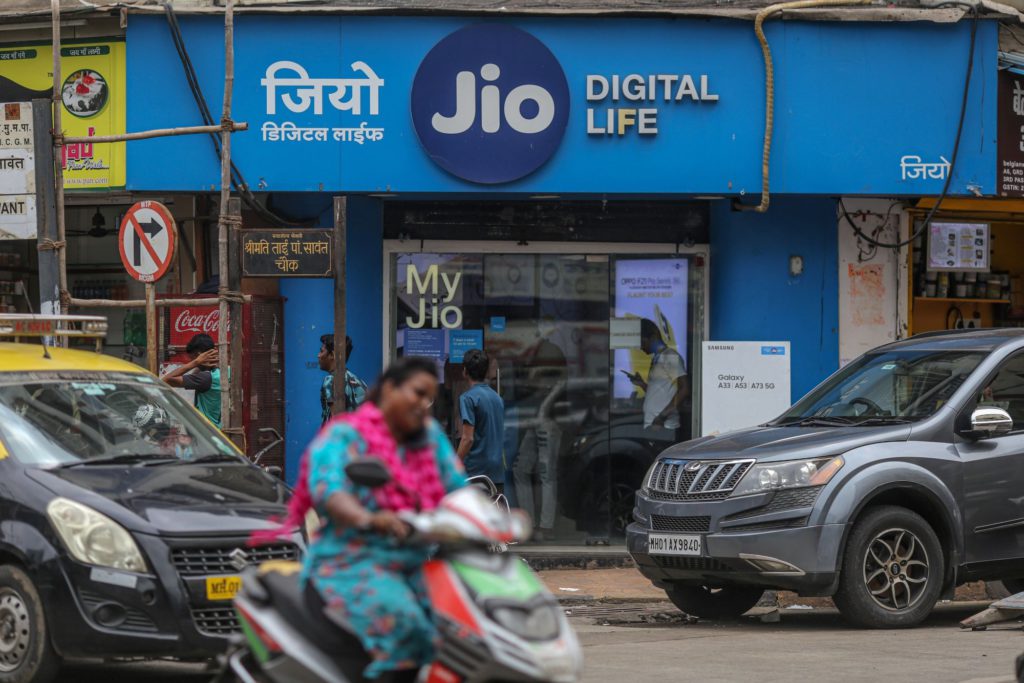
Ambani Says Reliance to Spend $25 Billion to Start 5G in October

(Bloomberg) — Reliance Industries Ltd. will invest 2 trillion rupees ($25 billion) to roll out its 5G services in October across the largest Indian cities, its billionaire-chairman Mukesh Ambani said as he continues to expand and diversify the $221 billion empire.

Reliance Jio Infocomm Ltd., the telecom unit of the retail-to-refining conglomerate will deploy “standalone 5G” version which doesn’t depend on the earlier 4G network and hence delivers speedier connectivity, Ambani told investors in the annual shareholder meet on Monday. Reliance Jio 5G is expected to provide country wide services by December 2023, he said, adding that the service has the potential to connect 100 million homes as well as accelerate the adoption of fixed broadband services. 

Reliance Jio — India’s top wireless operator — was the biggest buyer in this year’s local spectrum auctions to develop a 5G network that can boost revenue, attract high-end users and bolster its e-commerce and media ambitions. Ambani, Asia’s second-richest person who built Reliance into India’s largest company by market value, has been diversifying the powerhouse conglomerate beyond its fossil fuel-led businesses and toward technology and renewable energy. 

India Sells $19 Billion of Airwaves With Reliance as Top Buyer

Reliance’s 5G service “will connect everyone, every place and everything with the highest quality and most affordable data,” Ambani said at the online event. “It will be world’s largest and most advanced 5G network.” He didn’t share tariff details.

Ambani, who did not share tariff details, said the new standalone 5G service will help Reliance Jio deliver “new and powerful services like low latency, massive machine-to-machine communication, 5G voice, Edge computing and network slicing, and metaverse.” 

The wireless carrier also forged a collaboration with Qualcomm to develop 5G solutions for India, he said.

This was one of the much-awaited announcements from Ambani who has used the annual shareholder speech in the past as a platform for announcing new initiatives. Investors were awaiting details around the 5G roll out, tariff structure given Reliance’s track record of price disruption plans, as well as end-use cases. 

The 5G technology has not been very profitable for Asian wireless operators despite many investing billions of dollars, including those in China which have been offering 5G service since 2019. 

(Updates with details throughout.)

More stories like this are available on bloomberg.com

©2022 Bloomberg L.P.

WhatsApp Rolls Out In-App Shopping Product With India’s JioMart

(Bloomberg) — WhatsApp, the popular messaging service owned by Meta Platforms Inc., is rolling out a shopping product in India, the first time users will be able to browse and purchase groceries and other household products without leaving the app. 

WhatsApp unveiled the new tool alongside JioMart, part of Reliance Industries Ltd.’s Jio Platforms, an Indian tech company that Meta invested almost $6 billion into in early 2020. The new feature lets users in India shop for products from JioMart, and pay for them directly within the app. People could previously browse products via WhatsApp, but had to leave the service to finish the transaction.

Having a full-blown shopping experience inside WhatsApp has been a longtime goal of Meta Chief Executive Officer Mark Zuckerberg. The social networking giant paid $22 billion to acquire WhatsApp in 2014, but the service is still a small part of Meta’s overall business. The app now makes money by charging some businesses to message customers, and also by selling click-to-message ads, which are ads that appear in users’ Facebook or Instagram feeds and then kick them into a private chat with a business once they’re clicked. Those ads already bring in billions of dollars per year across all Meta’s apps.

Zuckerberg is targeting a much larger business opportunity for WhatsApp related to commerce and payments, especially in emerging markets where the app is popular like India and Brazil. The CEO has spoken about business messaging on almost every Meta earnings call in the past few years, pitching the idea as a complementary business line to the company’s existing advertising business. 

“Business messaging is an area with real momentum and chat-based experiences like this will be the go-to way people and businesses communicate in the years to come,” Zuckerberg said in a statement Monday.

Part of the struggle for Meta has been related to payments regulation. The company tested payments in India for years before getting formal government approval in 2020 to expand the test into a full-blown feature.JioMart, the online grocery push by Indian billionaire Mukesh Ambani, is competing with Walmart Inc.-controlled Flipkart and Amazon.com Inc. for a bigger piece of India’s growing online retail market. A partnership with WhatsApp could just give it a much-needed boost.“When Jio platforms and Meta announced our partnership in 2020, Mark and I shared a vision of bringing more people and businesses online and creating truly innovative solutions that will add convenience to the daily lives of every Indian,” Ambani, who is chairman of Reliance Industries, said in a statement. “The JioMart on WhatsApp experience furthers our commitment of enabling a simple and convenient way of online shopping to millions of Indians.”

A Meta spokesperson said the company hopes to expand in India to team up with more businesses, and also aims to bring this shopping tool to other countries.

More stories like this are available on bloomberg.com

©2022 Bloomberg L.P.

Close Bitnami banner
Bitnami