
Bloomberg

Nio Is Winning EV Drivers’ Hearts as Competition in China Spikes

(Bloomberg) — The fierce brand loyalty inspired by Chinese electric carmakers is something to behold, and a big reason behind the huge success many have had with local buyers.

Nio is a poster child for this and a look into how the location was chosen for its 2022 annual customer day, to be held later this year, is quite telling. The upstart electric vehicle maker eventually landed on Hefei in China’s eastern Anhui province but only after loyal customers all around the nation competed for their respective cities to be nominated. Promotion posters were designed, local authorities were roped in, video clips were produced and even free gifts were sent out. A shortlist of 10 and then three was created, with Hefei ultimately winning out over the southern city of Guangzhou and the central city of Xi’an. 

The event, called Nio Day, was initially introduced by the carmaker in 2017 in Beijing, where it launched its first electric model, the ES8 sports utility vehicle. Since then, it’s become a yearly staple and a venue for Nio to unveil new models, get many of its customers together in one place and talk about future business plans. It’s generally held in a stadium and top entertainers are booked. Past acts have included Imagine Dragons, Bruno Mars and popular DJ Alan Walker.

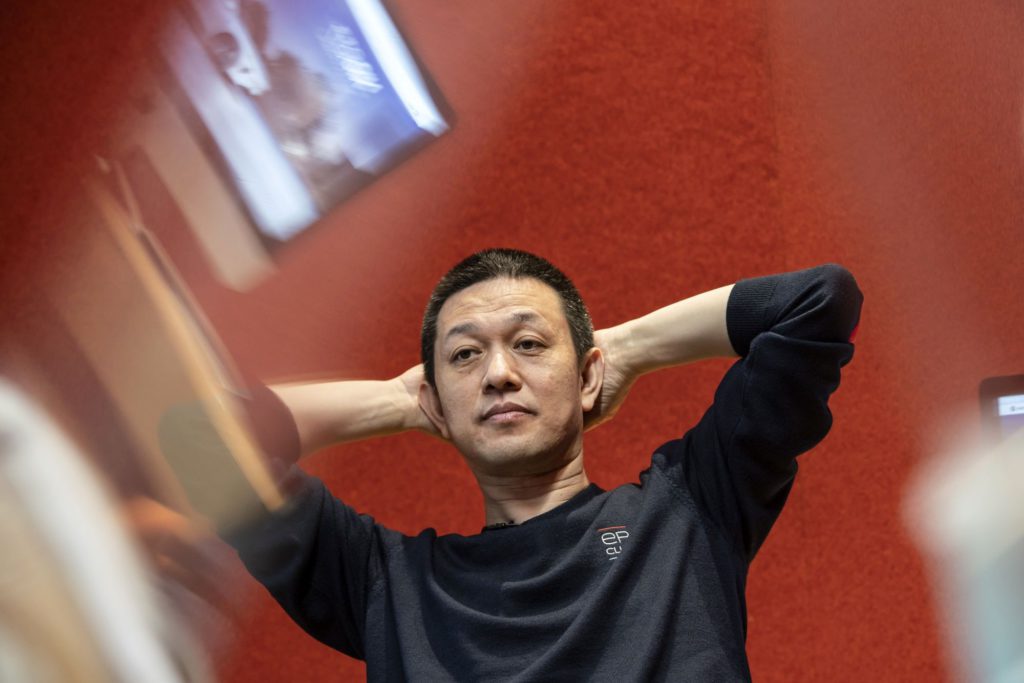
Nio’s whole business model relies on creating a sense of allegiance among customers, who then persuade family and friends to spread the word about its cars. Chief Executive Officer William Li explained in an interview in June 2021 the strategy is called “rippling mode,” invoking the ever-widening circles caused by throwing a single stone into a pond.

Indeed, Li credits Nio’s customers with saving the company from one near-death experience. In its first four years of existence, Nio had racked up $5 billion of losses and was losing almost $5 million a day by the second quarter of 2019. Sales of 8,000 cars in the fourth quarter of 2019 proved crucial to seeing the company through before the government of Hefei chipped in with a pledge to invest around $1 billion. “That’s why I always say that our customers saved us,” Li said in June last year. “Even if we sold 500 or 1,000 fewer vehicles, that could have triggered a total collapse.”

Nio, thanks to that customer loyalty, has gone on to thrive. Deliveries went from strength to strength in 2020 and exceeded 91,000 units by the end of last year.

The company has been careful to keep investing in the relationship. For its first Nio Day in 2017, Nio paid for flights to the event and luxury hotels for anyone who had ordered an EV in the 12 months before production started. Now, car owners are doing the PR for Nio. For the Nio Day to be held later this year, the Hefei Nio owners club is extending free bags of rice for anyone who visits a Nio battery-swapping station and giving out free tickets to Anhui’s main tourist attractions, including Yellow Mountain, a UNESCO World Heritage site famous for its fantastically shaped granite peaks. 

Automakers who win the hearts and minds of customers stand to reap immense gains. Deliveries of new-energy vehicles in China (defined as pure electric cars and plug-in hybrids) more than doubled in July to around 486,000 units, accounting for more than one quarter of total new car sales, according to data from the China Passenger Car Association. The PCA has also raised its annual sales forecast for NEVs this year to 6 million.

Other EV makers are seeking to follow Nio’s lead. Zeekr, the electric car unit of Chinese automaking powerhouse Geely, has begun talking about “co-creation with users” for various stages of its business, including product design, marketing and community activities. “Rising from the internet industry, user operation has become a core theme for every EV maker,” the company’s vice president Zhao Yuhui said during the World New Energy Vehicle Congress in Beijing over the weekend. “We are all talking about how to build a deeper insight into our users, treat them well and respond to their requests.”

There are some question marks over whether this strategy will work long term. The money Nio has spent building Nio Houses — like private clubs for Nio car owners — isn’t insignificant and forms a big part of the company’s costs. (Zeekr now has Zeekr Spaces.) Chinese automakers are also still grappling with snap lockdowns to contain Covid. Those have caused production delays and supply-chain snarls, further pressuring profitability.

As Lin Wenbin, the head of business analytics at marketing platform of Douyin, put it: “With the increase in new energy vehicles and consumers’ acceptance of cleaner energy cars, customers are becoming more picky and less tolerant. The most competitive companies will be those that can recognize the changes and adapt.”

Nio’s annual day for 2022 is sure to be a hit. Whether the loss-making carmaker is nimble enough to hold back the scores of other brands fighting to lure away customers as they upgrade their EVs in years to come is less clear.

More stories like this are available on bloomberg.com

©2022 Bloomberg L.P.
Why Are Luxury Brands So Bullish on NFTs?

  • Listen to Bloomberg Crypto on the iHeartRadio App
  • Listen to Bloomberg Crypto on Apple Podcasts
  • Listen to Bloomberg Crypto on Spotify  

(Bloomberg) — Nonfungible tokens have become increasingly popular with many luxury brands and remain a powerful draw for some consumers despite the continued crypto winter. High-end retailers Gucci and Tiffany are the latest to jump into the fray with new NFT offerings.

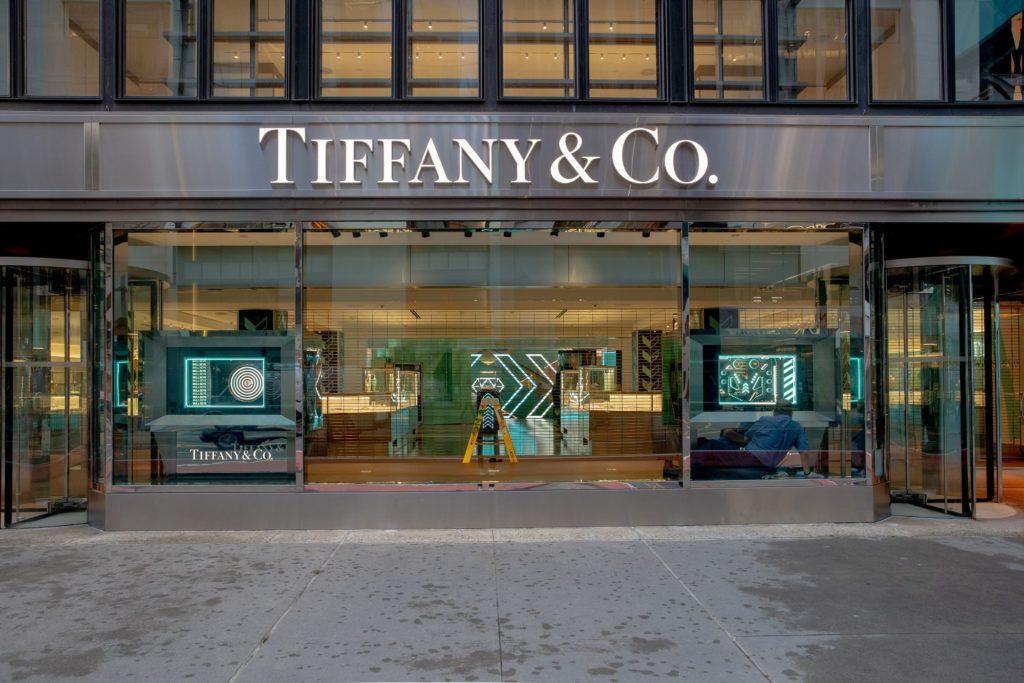
Kering SA’s Gucci says it will accept ApeCoin as a form of payment in select US stores. LVMH’s Tiffany & Co. also announced it’s launching what it calls N-F-Tiffs: collectible passes that can be redeemed by owners of CryptoPunk NFTs for a custom jewelry piece.  

The demand for NFTs has slumped in recent months, so why are these brands so bullish on crypto? Bloomberg journalists Emily Nicolle and Taz Akhtar join Crypto Senior editor Anna Irrera to discuss why luxury brands have embraced NFTs.

Follow us on Twitter @crypto, and subscribe to the Bloomberg Crypto Newsletter at https://bloom.bg/cryptonewsletter

More stories like this are available on bloomberg.com

©2022 Bloomberg L.P.
NASA’s Return to the Moon Starts With Critical Test Flight

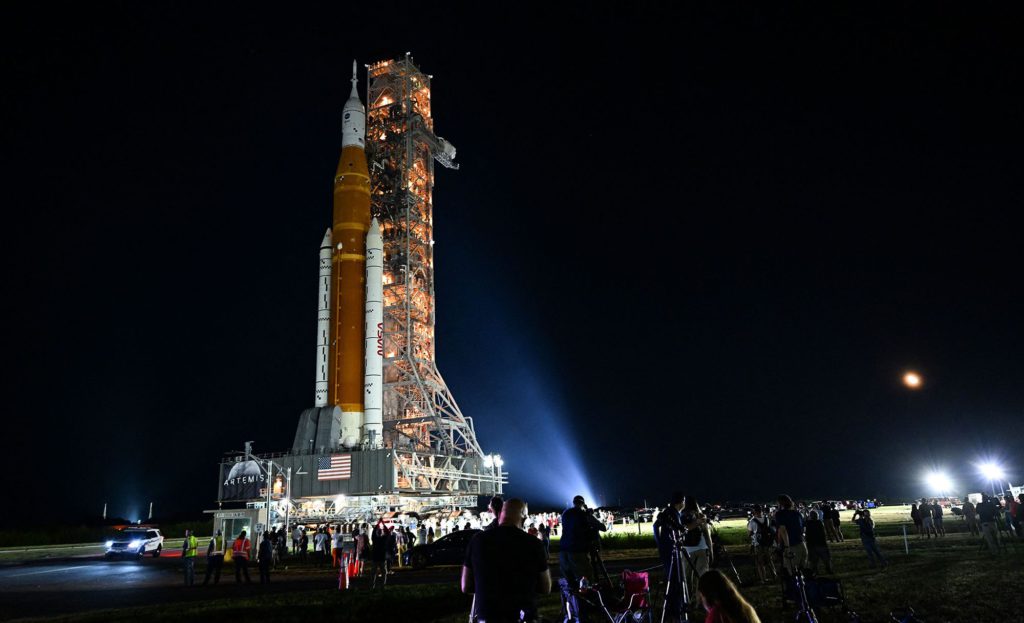
(Bloomberg) — NASA is about to take the first step on its journey to return people to the moon by the end of the decade. If all goes well, a massive uncrewed rocket will lift off from Kennedy Space Center on Monday morning, then circle the moon in an orbit that will take it deep into space before it returns to Earth 42 days later.

Engineers worked in the early hours to check a leak affecting the hydrogen tanking process, which had already been delayed by bad weather. Launch controllers concluded that the hydrogen was being loaded at an acceptable rate and resumed the process, monitoring closely.

The Artemis I mission marks a critical moment for NASA and the space industry. The Artemis program, named for the twin sister of the god Apollo in Greek mythology, aims to land the first woman and the first person of color on the moon as early as 2025. Among the critical components of the mission are the Boeing Co.-built rocket, named the Space Launch System, and the Orion crew capsule made by Lockheed Martin Corp. A future landing vehicle will be supplied by Space Exploration Technology Corp.

The stakes are high for both NASA and its corporate contractors after a decade of development delays and cost overruns. It marks the first time since the end of the Space Shuttle program that NASA has debuted a new flagship vehicle and system geared toward human spaceflight. After the Shuttle was retired, NASA relied on Russia’s Soyuz rocket to get humans to and from the International Space Station and, more recently, has turned to SpaceX’s Falcon 9 rocket and Dragon crew capsule. 

The return of NASA to moon missions has followed a long and tortuous path on Earth. Multiple administrations have proposed ambitious human spaceflight programs after the end of Apollo, only to fall victim to budgetary concerns. Artemis, though it has garnered Congressional support to keep going, has been beset by high-profile setbacks.


The Space Launch System has been in development for roughly a decade, slowed by a myriad of delays and cost overruns. More than five years behind schedule, the rocket has seen  its development cost soar from an original $7 billion to about $23 billion, according to an estimate by the Planetary Society. Multiple audits of NASA’s main contractor, Boeing , have criticized the company for its management of SLS, and have highlighted flaws throughout the vehicle’s construction and testing. 

NASA and Boeing are tempering expectations ahead of the launch, stressing that Artemis I is a test of a new and highly complex system. 

“It’s not without risk,” Jim Free, NASA’s associate administrator for explorations systems development, said during a press conference ahead of the launch. “We have analyzed the risk as best we can, and we’ve mitigated, also, as best we can.”

Some of those risks were apparent on Saturday, when lightning towers at the launch pad were struck multiple times. NASA officials reviewed the situation and said the mission is still on schedule for Monday morning.

“Everything to date looks good from a vehicle perspective. We haven’t had to do any significant retest,” Jeff Spaulding, senior NASA test director for Artemis I, said Sunday. “Whenever we see things that are as dramatic as lightning, we all ought to pay a lot of attention to it, as we should.’’

Even a successful test flight may not be enough to satisfy SLS’s many critics who bemoan the rocket’s high price tag and inefficiency. SpaceX’s planned deep-space Starship spacecraft may prove even more powerful than SLS, as well as cheaper to both develop and launch when it becomes operational. Additionally, Starship is designed to be fully reusable, unlike SLS, which will be expended after each launch.

But Starship has yet to reach orbit and it could be years before the vehicle is ready to carry humans to deep space. Plus, NASA has also contracted SpaceX to develop Starship as a human lunar landing system as part of Artemis. So both SLS and Starship may be seen as in competition to one another, but they will be working together to help return NASA astronauts to the moon.

The SLS is scheduled to take off from launchpad LC-39B at 8:33 a.m. Florida time, lofting the Orion capsule into orbit around Earth. Then a little less than two hours after launch, the upper stage of the SLS will ignite and send Orion on course to the moon. Six days out from launch, Orion will come within 60 miles of the lunar surface, using the moon’s gravity to enter an elongated orbit.As of Saturday morning, the launch appeared to be a go. “At this time we are not as a launch team working any significant issues so I’m happy to report that and everything is proceeding on schedule,” Charlie Blackwell-Thompson, NASA’s launch director, told a news conference.

The objective is to demonstrate the Orion capsule can be safely launched and recovered before an attempt is made with a human crew. The spacecraft’s path will take it farther from Earth than any vehicle built to carry humans has gone before. After spending about two weeks in lunar orbit, Orion will make the journey back to Earth and splash down in the Pacific Ocean off the coast of San Diego under parachutes on Oct. 10.NASA officials put the risk of losing the vehicle at one in 125.

Though no humans will be aboard, a mannequin — nicknamed Commander Moonikin Campos to honor a legendary NASA engineer who helped bring Apollo 13 safely back to Earth — will be on board, sitting inside the commander’s seat. Various sensors on its seat and spacesuit will gather data about vibrations, acceleration, and radiation throughout the mission. Two additional mannequin torsos will be on board, outfitted with thousands of sensors to record even more details.The main objective of the uncrewed mission is to test the rocket’s heat shield, which will protect astronauts upon re-entry, NASA Administrator Bill Nelson told Bloomberg on Saturday.  “And how critical is it? You don’t put humans on the top until you think it’s safe. So it’s a critical test,” he said.

Additionally, a package called Callisto, named for the companion of Artemis in Greek mythology, will be flying inside Orion. Callisto houses both an Amazon Alexa and a touch screen that will host Cisco’s Webex software. The payload is meant to test out smart tools that future astronauts might use on Orion in order to communicate over video with Mission Control and get information about where they are in space.

Also packed on the SLS are nearly a dozen small satellites that the rocket will deploy after it’s sent Orion on its way to the Moon.

There are plenty of moving parts on this mission, and numerous test objectives that NASA hopes to accomplish. But Artemis I could prove to be a make or a break moment for NASA.

“NASA needs to show that it works,” said Casey Dreier, senior policy adviser for the Planetary Society. “That’s the fundamental risk of this program.”

(Updates with comments from NASA official Spaulding about Saturday’s lightning strikes.)

More stories like this are available on bloomberg.com

©2022 Bloomberg L.P.

Ukraine Latest: IAEA Monitors to Inspect Occupied Nuclear Plant

(Bloomberg) — International Atomic Energy Agency Director General Rafael Mariano Grossi will lead an inspection of the Russian-occupied Zaporizhzhia nuclear power plant in Ukraine this week. 

Ukrainian President Volodymyr Zelenskiy warned at the weekend that the situation at the plant remains dangerous, even after two power units were reconnected to the grid following an outage. Several strikes were reported near the site in recent days. 

(See RSAN on the Bloomberg Terminal for the Russian Sanctions Dashboard.)

Key Developments

  • IAEA Monitors Will Visit Zaporizhzhia Nuclear Plant This Week
  • Zelenskiy Reinforces Nuclear Warning After Disruption 
  • Germany Wants Power-Market Overhaul to Dampen Soaring Prices
  • Germany to Reach October Gas-Storage Target Already Next Month
  • European Gas Futures Plunge as Nations Rush to Fill Up Storage
  • Why Ukraine Debt Relief Isn’t Matching Funding Needs: QuickTake

On the Ground

The city of Energodar near the Zaporizhzhia plant was shelled late Sunday, according to Ukrainska Pravda news site, which also reported that Russia hit the city of Sarny in Ukraine’s western Rivne region with missiles, striking a military infrastructure target. Russia struck Ukraine’s second-largest city of Kharkiv again, the regional Governor Oleh Synyehubov said on Telegram, while in Donbas several Russian attempts to conduct assaults in the vicinity of Slovyansk, Bakhmut and Avdiivka were unsuccessful, Ukraine’s General Staff said on Facebook.

(All times CET)

Russia to Ensure Security of IAEA Mission (10:15 a.m.)

Russia will ensure the security of a mission from the IAEA to the Zaporizhzhia nuclear power plant this week, the Moscow-appointed occupation governor told state television.

“We’re not expecting big results from them because the Americans have all the European structures in their pocket,” Yevgeny Balitsky said on Rossiya-24. The delegation is expected to arrive “at the beginning of September,” he said, without specifying a date. Occupation authorities haven’t had any direct contact with the IAEA, but they are getting information from Russia, he said.

Balitsky said his officials would show the delegation evidence of what he said was shelling by Ukrainian forces. Kyiv has denied firing in the area around the plant.

Sweden Announces Aid for Ukraine (10 a.m.)

Half of Sweden’s 1 billion-krona ($93 million) aid package will involve military support and the other half help for the economy and reconstruction, Prime Minister Magdalena Andersson said at a press conference in Stockholm Monday as she received Ukrainian Foreign Minister Dmytro Kuleba. Sweden will also provide funds to the UN World Food Program, allowing it to buy 30,000 tons of wheat from Ukraine and ship it to countries at risk of famine, she said.

“The goal is for Ukraine to regain total control over your territory, within its internationally recognized borders,” Swedish Foreign Minister Ann Linde said.

Grain Vessels to Depart Ukrainian Ports (8:15 a.m.)

Three commercial vessels carrying 72,985 metric tons of grain and food products were authorized to leave Ukraine on Monday, the Joint Coordination Centre said in an emailed statement. They are destined for Turkey, Romania and Egypt. 

Zelenskiy Sacks Deputy National Guard Commander (8 a.m.)

The president dismissed Yaroslav Spodar as deputy commander of Ukraine’s National Guard, according to the Ukrinform site, which said that a decree notifying of the dismissal was published on the presidential website Sunday. It didn’t give any reason for the action.

Germany to Reach Gas-Storage Target Early (7:45 a.m.)

Germany’s economy ministry said gas-storage facilities are filling up faster than planned despite uncertainty over supplies through a key pipeline from Russia, and predicted that an October target of 85% capacity should already be reached early next month.

Germany has reduced its dependence on Russian gas from 55% before the war to about 30% now, and is moving to find alternative sources while filling storage facilities ahead of the winter. 

Safety Systems Working at Nuclear Plant, Ukraine Tells IAEA (4 p.m.)

Russian shelling of the Zaporizhzhia nuclear plant on Thursday, Friday and Saturday hit buildings at the station that were just 100 meters from the reactor building, the IAEA said on Twitter, citing communication from the Ukrainian government. There was also damage to some water pipelines that have since been repaired, the IAEA said. All safety systems at the plant remain operational and radioactivity levels are normal, Ukraine told the IAEA. 

EU Set to Suspend Visa Travel Agreement With Russia: FT (3 p.m.)

European Union foreign ministers are poised to support a suspension of the bloc’s visa facilitation agreement with Russia in a bid to curb the number of tourists allowed from the country, the Financial Times reported.

EU countries bordering Russia have called for a ban on Russian tourists, but under a compromise reported by Bloomberg earlier, Russians traveling to the bloc would have to pay more and withstand additional bureaucracy to obtain short-term visas. 

Read more: Russians Face European Travel Hurdles as EU Mulls Restrictions

More stories like this are available on bloomberg.com

©2022 Bloomberg L.P.
Singapore Mulls Making It Harder for People to Trade Crypto

(Bloomberg) — The Monetary Authority of Singapore is considering restricting retail investors’ use of leverage and credit facilities to trade cryptocurrencies as it joins global regulators in forging rules to govern digital assets.

Any new MAS’ rules may also include tests to determine customer suitability, Managing Director Ravi Menon said in a speech on Monday, noting that many people seem to be “irrationally oblivious” about the trading risks. It plans to publicly consult on the proposals by October, he said.  

“Banning retail access to cryptocurrencies is not likely to work. The cryptocurrency world is borderless,” Menon said in front of a room of more than 50 industry players, with the seminar titled “Yes to Digital Asset Innovation, No to Cryptocurrency Speculation” also streamed online. “There is greater impetus now among global regulators to enhance regulations in this space. MAS will also do so.” 

By October, the regulator will also consult industry participants about regulation of stablecoins, an issue that came to the forefront after TerraUSD collapsed in a $40 billion wipeout, sending shockwaves through digital assets markets. Menon said regulators globally are looking to impose requirements such as secure reserve backing and timely redemption at par for stablecoins.

The pitfalls of lacking global regulatory coordination have come sharply into focus over the past few months, as a series of high-profile company failures exacerbated a $2 trillion market meltdown. Singapore’s regime for crypto companies has garnered particular attention, given that several entities including disgraced hedge fund Three Arrows Capital and platforms Vauld, Zipmex and Hodlnaut, operated out of the country. 

Menon reiterated a stance that cryptocurrencies’ volatility makes them unsuitable for use as money and “highly hazardous” for retail investors. Tokenization and distributed ledgers, which record the ownership and transfer of digital assets, offer economic potential however, he said. 

Singapore was early to study blockchain technology as well as tout its ambitions as a crypto hub. It is now trying to achieve a delicate balance between encouraging blockchain innovation and protecting investors from some of the risks of participating in a nascent market. 

Adapting Rules

Menon stressed the city-state can thread that needle, while acknowledging that the regulator could have done a better job explaining its approach, following complaints from some in the crypto industry about a lack of clarity.

There are already rules in Singapore around product suitability, fair dealing, disclosures and consumer knowledge assessment that may be adapted for crypto, according to Nizam Ismail, whose Ethikom Consultancy advises firms on compliance in areas including blockchain and financial technology. 

“The focus should be on shining a brighter light for consumers to see whether they are making appropriate investment decisions,” he said.

Singapore started tightening crypto rules early this year with a ban on advertising, and plans to require virtual-asset providers to be licensed locally even if they only do business overseas. The regulator further stepped up scrutiny of the sector in recent weeks, sending a questionnaire to some applicants and holders of its digital-payments license seeking highly granular information about their business activity and holdings.

So far in the city-state, just over 10 entities have received permits to operate as digital service token providers out of nearly 200 applicants.

Given the large number of applicants for crypto licences, the MAS prioritizes those who demonstrate “strong risk management capabilities,” Menon said, adding the due diligence process takes a long time “but it is necessary.”

“With the rapid growth in scale and complexity of digital asset activities, other risks have surfaced,” he said. “Regulators around the world including MAS are therefore stepping up their responses to these new risks.”

(Updates with comment from consultant in ninth paragraph.)

More stories like this are available on bloomberg.com

©2022 Bloomberg L.P.
Bain Capital to Buy Olympus Science-Optics Unit for $3.1 Billion

(Bloomberg) — Bain Capital agreed to buy Olympus Corp.’s scientific instruments business for 428 billion yen ($3.1 billion), as the Japanese medical devices company further shifts its focus to health-care.  

Olympus expects to transfer the unit on Jan. 4 and book the gain from the sale in the fourth quarter of the fiscal year ending March 31, the company said in a statement Monday. The Nikkei newspaper first reported the likely deal last week. 

The sale is a part of Olympus Chief Executive Officer Yasuo Takeuchi’s plan to pivot the company in the direction of health-care, with the goal of becoming the world’s leading maker of endoscopes. The unit being bought by Bain Capital, called Evident, reported an operating profit of 18 billion yen from sales of 119 billion yen for the year ended March 31. 

Evident was vied over by other private equity firms including Carlyle Group Inc. and Polaris Capital Group Co. in the first round of an auction that closed May 9, Nikkei reported without identifying its sources. 

Founded a century ago, Olympus made its name as one of Japan’s leading camera and endoscope manufacturers, It gained notoriety in 2011 when newly appointed British-national CEO Michael Woodford was fired for exposing accounting irregularities, triggering a major corporate scandal that dragged on for years. 

Now, with the camera industry decimated by smartphones and only a few niche players remaining, Olympus is betting on medical devices and its share of 70% of the global gastrointestinal endoscope market for a new driver of growth.


More stories like this are available on bloomberg.com

©2022 Bloomberg L.P.
Global Stocks Hit One-Month Low as Dollar Advances: Markets Wrap

(Bloomberg) — Federal Reserve Chair Jerome Powell’s signal of higher-for-longer interest rates coursed through markets Monday, sinking stocks and equity futures and lifting two-year Treasury yields to levels last seen in 2007.

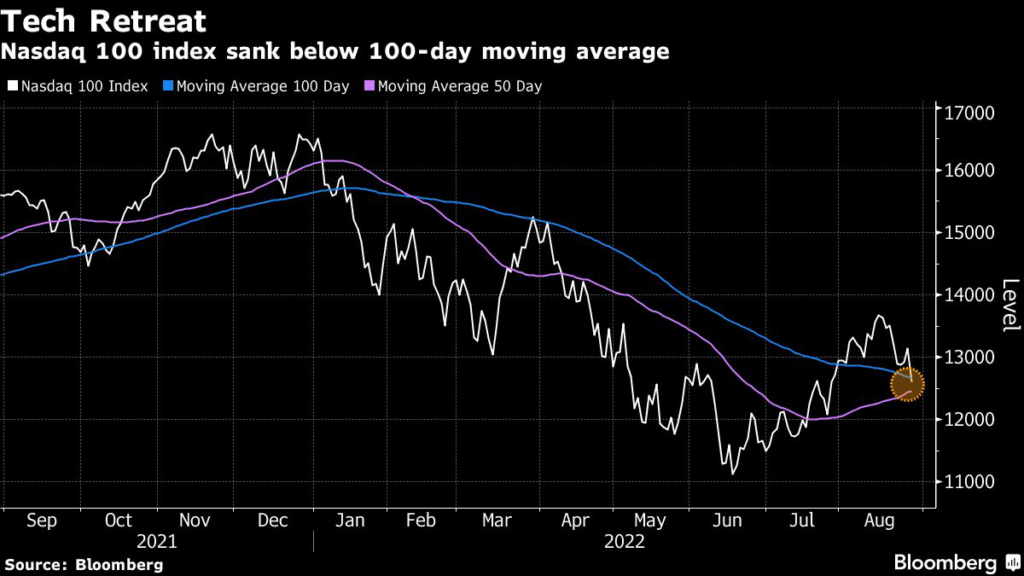
A global share index fell to a one-month low as Asian equities shed over 2%, hurt by tech firms. Losses on Nasdaq 100 and European futures were at least 1%. Progress in the US-China delisting spat helped to cushion Chinese stocks.

The Bloomberg Dollar Spot Index pushed toward the record hit last month as investors sought a haven from spiking volatility. Commodity-linked currencies as well as the yen, the pound and the offshore yuan were under pressure.

Bonds sold off and a deepening inversion of the Treasury yield curve underscored expectations of a recession as monetary policy tightens. The US two-year yield, sensitive to expectations around Fed policy, hit 3.47%

Powell in his address last week at the Fed’s Jackson Hole symposium flagged the likely need for restrictive monetary policy for some time to curb high inflation and cautioned against loosening monetary conditions prematurely. He also warned of the potential for economic pain for households and businesses.

Those comments contrast with bets for reductions in US borrowing costs next year as growth slows. The locus for much of the investor angst is the equities market, further undoing a bounce in global shares from the bear-market lows of mid-June. Other risks include China’s slowdown and Europe’s energy crisis.

Powell signaled “once they get to whatever the final hike is, they’re going to stay there for a while,” Charles Schwab & Co. Chief Investment Strategist Liz Ann Sonders said on Bloomberg Television. “The market had trouble digesting that.”

Bitcoin broke below the $20,000 level some view as a marker of a deeper slide in investor sentiment. Gold retreated but oil made gains on supply risks.

Delisting Progress

The relative resilience in China’s bourses may reflect optimism about a preliminary deal between Beijing and Washington to ease a dispute over reviewing audits of Chinese firms. An agreement is needed to avert the delisting of about 200 Chinese companies from US exchanges. 

The mood in global markets overall remains downbeat against the backdrop of a slowing world economy struggling with the highest inflation in a generation, stoked by disruptions from Russia’s war in Ukraine and China’s Covid curbs.

“We’re going to go back down below 4,000 here in short order,” Paul Christopher, head of global market strategy at Wells Fargo Investment Institute, said on Bloomberg Television, referring to the S&P 500. Markets must absorb the fact that “the Fed is going to remain aggressive until inflation’s back is broken,” he said.

Here are some key events to watch this week:

  • US consumer confidence, Tuesday
  • New York Fed President John Williams due to speak, Tuesday
  • ECB Governing Council members due to speak at event Tuesday through Sept. 2
  • China PMI, Wednesday
  • Euro-area CPI, Wednesday
  • Russia’s Gazprom set to halt Nord Stream pipeline gas flows for three days of maintenance, Wednesday
  • Cleveland Fed President Loretta Mester due to speak, Wednesday
  • China Caixin manufacturing PMI, Thursday
  • US nonfarm payrolls, Friday
  • UK leadership ballot closes Friday. Winner announced Sept. 5

Some of the main moves in markets:

Stocks

  • S&P 500 futures fell 0.9% as of 7:21 a.m. in London. The S&P 500 fell 3.4%
  • Nasdaq 100 futures dropped 1.2%. The Nasdaq 100 shed 4.1%
  • Japan’s Topix index fell 1.8%
  • Australia’s S&P/ASX 200 index lost 2%
  • South Korea’s Kospi dropped 2.1%
  • Hong Kong’s Hang Seng index retreated 0.9%
  • China’s Shanghai Composite index was little changed
  • Euro Stoxx 50 futures fell 1.4%

Currencies

  • The Bloomberg Dollar Spot Index rose 0.6%
  • The euro was at $0.9928, down 0.4%
  • The Japanese yen was at 138.83 per dollar, down 0.9%
  • The offshore yuan was at 6.9282 per dollar, down 0.5%

Bonds

  • The yield on 10-year Treasuries rose about seven basis points to 3.11%
  • Australia’s 10-year yield added 12 basis points to 3.69%

Commodities

  • West Texas Intermediate crude was at $93.67 a barrel, up 0.6%
  • Gold was at $1,723.20 an ounce, down 0.9%

More stories like this are available on bloomberg.com

©2022 Bloomberg L.P.
Japan Will Monitor China, New Economic Security Minister Says

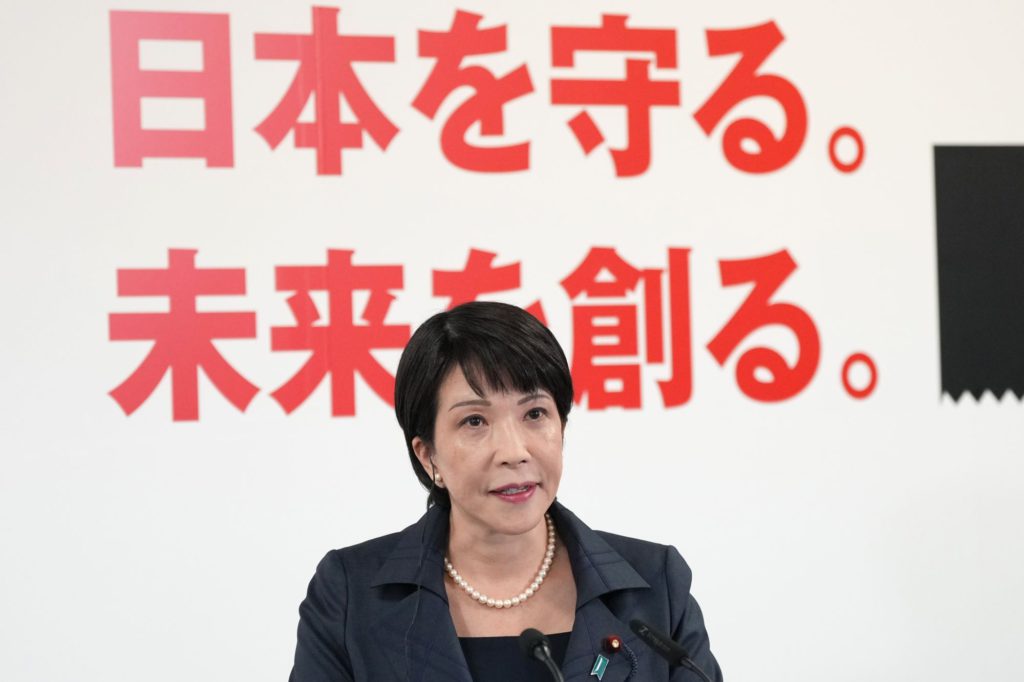
(Bloomberg) — Japan’s new Economic Security Minister Sanae Takaichi pledged to keep a close eye on nations including China to protect Japan from danger.

“We don’t have a specific nation to watch in mind,” Takaichi said in a group interview Monday. “However, we must keep a close eye on countries that could impact our economic security, including China.”

Takaichi, who’s known for her hawkish stance toward Japan’s powerful neighbor, took her post this month amid increasing government awareness of economic security. Relations between the US and China remain tense, while the war in Ukraine continues to cast a shadow over the global economy. 

Prime Minister Fumio Kishida said economic security is “a fundamental requirement” for achieving sustainable economic growth in his key economic policy plan published in June.

Japan’s economic recovery from the pandemic has been sluggish compared to other advanced economies. It’s been hampered by a lack of semiconductors, and a series of cyberattacks have also disrupted economic activities in the nation. 

In March, Toyota Motor Corp.’s Japanese factories suspended output after a key parts supplier shut down its computer systems due to a cyberattack. That was a blow to the carmaker’s efforts to make up for lost production earlier this year. 

Speaking about supply chains, Takaichi said it’s “extremely” important to strengthen those for semiconductors. Improving collaboration with allies including the US will be key, she added.

Still, the new economic security minister refrained from commenting on specific additional support measures for now. Last year Japan succeeded in getting Taiwan Semiconductor Manufacturing Co., one of the largest chipmakers in the world, to build a manufacturing plant in the country. 

“We’re beginning to see firms relocate their production bases back to Japan,” said Takaichi. “It’s a welcome development from an economic security perspective, but we’ll also have to make sure there’s sufficient domestic support.” 

More stories like this are available on bloomberg.com

©2022 Bloomberg L.P.

Goldman Says Market Sees 50% Risk of China Stocks Exiting US

(Bloomberg) — Goldman Sachs Group Inc. said markets are still pricing in a 50% chance of Chinese companies being delisted from US exchanges, even as the two nations reached a preliminary deal to resolve a decades-long standoff over audits.

According to the firm’s “delisting barometer” based on quantitative models, market calculations on the risk have come down from a peak of 95% in March but still more needs to be done as execution risk remains, strategists including Kinger Lau wrote in a note Monday. 

Chinese stocks trading in the US and Hong Kong rallied last week as expectations built that a deal is nearing, which would remove a major regulatory overhang on share prices. The announcement by the two sides late Friday showed American officials will have access to audit work papers of Chinese firms, a key step toward keeping the stocks trading on US bourses. 

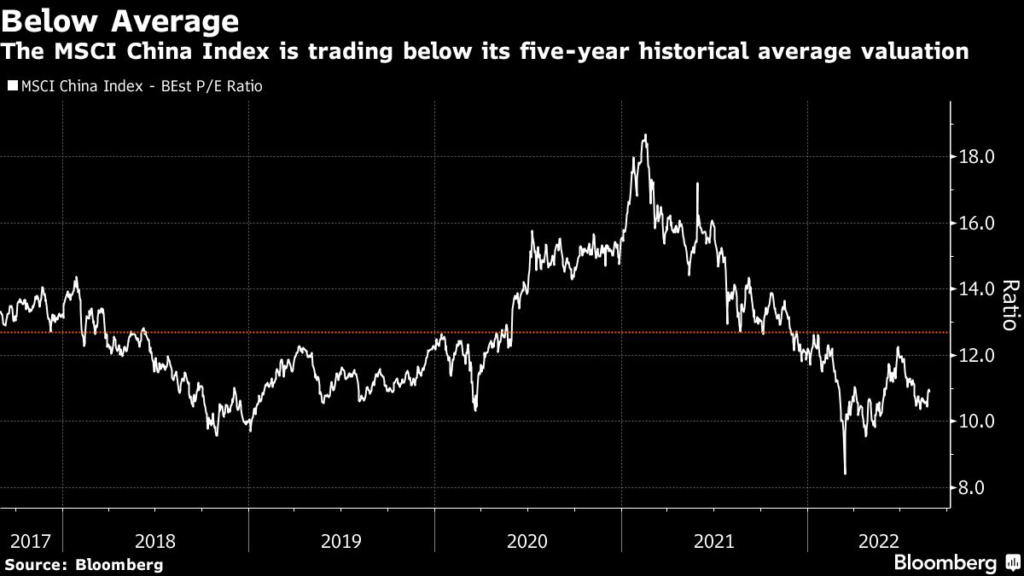
In a best-case “no-delisting” scenario where Beijing and Washington reach a final agreement, US-listed Chinese companies and the MSCI China Index may see valuation gains of 11% and 5%, respectively, Goldman Sachs said. In the event of forced delisting, the bank estimates 13% and 6% downside each for American Depositary Receipts and the MSCI’s China gauge. 

Even with continued uncertainties around delisting, Goldman Sachs remains overweight on tech, media and telecom sector due to improving regulatory headwinds and inexpensive valuations, according to the note.  

The Hang Seng Tech Index remains down about 25% this year as broader worries over slowing China’s growth and mixed corporate earnings have weighed on share prices. Investors generally agree that the worst of Beijing’s tech crackdown is over, but sentiment remains fragile with shares swinging on every small regulatory development. 

Regardless of how the audit discussions progress from here, Goldman Sachs expects the longer-term trend of the companies seeking to list in Hong Kong to continue. 

“Although the audit inspection agreement may reduce the risks of broad-based delisting, it doesn’t alter our view that the uncertainty around US-China tensions across key strategic domains — trade, technology, capital markets, and geopolitics — would continue to motivate Chinese ADRs to diversify their listing risk away from the US,” the strategists said. 

More stories like this are available on bloomberg.com

©2022 Bloomberg L.P.

Singapore Mulls Crypto Consumer Suitability, Leverage Rules

(Bloomberg) — The Monetary Authority of Singapore is considering more ways to protect consumers who trade cryptocurrencies, joining a push by policymakers and financial regulators across the globe aimed at mitigating the risks of the sector, which remains largely unregulated. 

The MAS’ new rules may include customer suitability tests and cutting the use of leverage and credit facilities by retail investors for trading these digital assets, Managing Director Ravi Menon said in a speech on Monday, elaborating on earlier remarks that authorities were planning to expand rules in the sector. It plans to publicly consult on the proposals by October, he said. 

“Banning retail access to cryptocurrencies is not likely to work. The cryptocurrency world is borderless.” Menon said in front of a room of more than 50 industry players, with the event also streamed online. “There is greater impetus now among global regulators to enhance regulations in this space. MAS will also do so.” 

The pitfalls of such lack of oversight globally have come sharply into focus over the past few months, with a series of high profile company failures triggering and exacerbating a $2 trillion market meltdown. Singapore’s regime for crypto companies has garnered particular attention, given that several entities including disgraced hedge fund Three Arrows Capital and platforms Vauld, Zipmex and Hodlnaut, operated out of the country. 

Menon reiterated a stance that cryptocurrencies’ volatility makes them unsuitable for use as money and “highly hazardous” for retail investors. Tokenization and distributed ledgers, that record the ownership and transfer of ownership of digital assets, offers economic potential however, he said. 

MAS had already started tightening crypto investments rules early this year when it required virtual-asset providers to be licensed locally even if they only do business overseas. The central bank further stepped up scrutiny of the sector in recent weeks, sending a questionnaire to some applicants and holders of its digital-payments license seeking highly granular information about their business activity and holdings.

Singapore was early to study blockchain technology and tout its ambitions as a crypto hub. It is now trying to achieve a delicate balance between encouraging blockchain innovation and protecting investors from some of the risks of participating in a nascent market. So far more than 10 entities have permits to operate as digital service token providers out of nearly 200 applicants.

More stories like this are available on bloomberg.com

©2022 Bloomberg L.P.

Close Bitnami banner
Bitnami