Bloomberg

Season of Shelved M&A Surpasses $150 Billion as Credit Woes Bite

(Bloomberg) — Takeovers are falling apart across the globe, leading to a gloomy late summer for Wall Street bankers as cheap financing dries up. 

More than $150 billion of mergers and acquisitions have been scrapped or stalled since the beginning of June, according to data compiled by Bloomberg. KKR & Co. on Friday confirmed a Bloomberg News scoop that it’s abandoning a $14 billion bid for Australian hospital chain Ramsay Health Care Ltd.

Swiss drugmaker Novartis AG announced a day earlier it would spin off its $25 billion generics unit after failing to draw attractive private equity bids. Merck & Co.’s talks for $30 billion cancer-drug maker Seagen Inc. have hit a snag over price, while Ardian SAS is shelving a $3 billion sale of Italian health-care software provider Dedalus. 

Inflation Fears

Dislocated financing markets and higher interest rates are making acquisition financing more expensive and harder to raise, said Lars Aagaard, head of Asia Pacific M&A at Barclays Plc.

“More deals are being pulled and auction processes put on hold,” Aagaard said. “Vendors’ price expectations take some time to adjust to the new normal.”

Private equity dealmakers are struggling to get cheap credit for buyouts, as inflation and fears of an economic slowdown rock the debt markets. 

Investment banks are nervous about adding more debt to the $80 billion they already hold, while private lenders are pulling back on risk by cutting how much debt they are offering in a single deal.

Crypto Bubble

Several transactions have been canceled due to once-hot parts of the market falling out of favor. In the cyptocurrency industry, Mike Novogratz’s Galaxy Digital Holdings and a lender backed by the Thai royal family both scrapped acquisitions this month. 

The air has also been coming out of the market for special purpose acquisition companies. Grooming startup Manscaped this month terminated a $1 billion deal with a blank-check company that was set to be backed by Channing Tatum. Ticketing engine SeatGeek abandoned a $1.4 billion merger with a SPAC backed by basketball star Kevin Durant. 

Then there’s the biggest deal of them all to hit the rocks: Elon Musk’s $44 billion takeover of Twitter Inc., which is subject to a court battle after the billionaire tried to back out.  

To be sure, some negotiations could be revived, particularly if market sentiment improves. Ramsay Health said Friday it’s prepared to engage with KKR to see if it can come up with another offer. 

Dealmaking may pick up in the fourth quarter and early next year, according to Barclays’ Aagaard, who’s also head of financial sponsors for Asia Pacific. Banks’ appetite to finance new deals may increase as they start offloading some of the risk they hold, he said. 

More stories like this are available on bloomberg.com

©2022 Bloomberg L.P.

Biden Sees Six-Point Gain in Gallup Poll, Adding to Political Ground

(Bloomberg) — President Joe Biden’s approval rating rose to 44% in the latest Gallup poll, the highest in a year and a fresh sign he and his party are gaining political ground ahead of November midterm elections. 

Biden’s approval rating in August jumped six percentage points from July, when it hit a low of 38% in Gallup’s survey. But even after a string of victories in Congress and abroad that have stoked enthusiasm in the White House and among Democratic voters, 53% of Americans still disapprove of Biden’s performance as commander-in-chief.

The president’s popularity began to erode after the disastrous US withdrawal from Afghanistan in August 2021, accelerating as inflation rose to 40-year highs and congressional gridlock waylaid much of Biden’s agenda late last year.

But in the past month, the president has seen Congress approve a landmark health, tax and climate package and also signed into law bipartisan measures aimed at subsidizing domestic semiconductor manufacturing and improving gun safety. The president also announced a successful air strike that killed al-Qaeda leader Ayman Al-Zawahiri in Afghanistan. 

Gas prices have steadily declined over the summer and new inflation data released Friday showed consumer price increases easing in July, alleviating a pressure point Republicans have used against Biden and Democrats. 

The president’s improved political standing could boost Democrats running in competitive House and Senate races, raising hopes in his party that it may retain control of one or even both chambers of Congress.

More stories like this are available on bloomberg.com

©2022 Bloomberg L.P.

Ukraine Latest: Nuclear Plant Unit Reconnected to Nation’s Grid

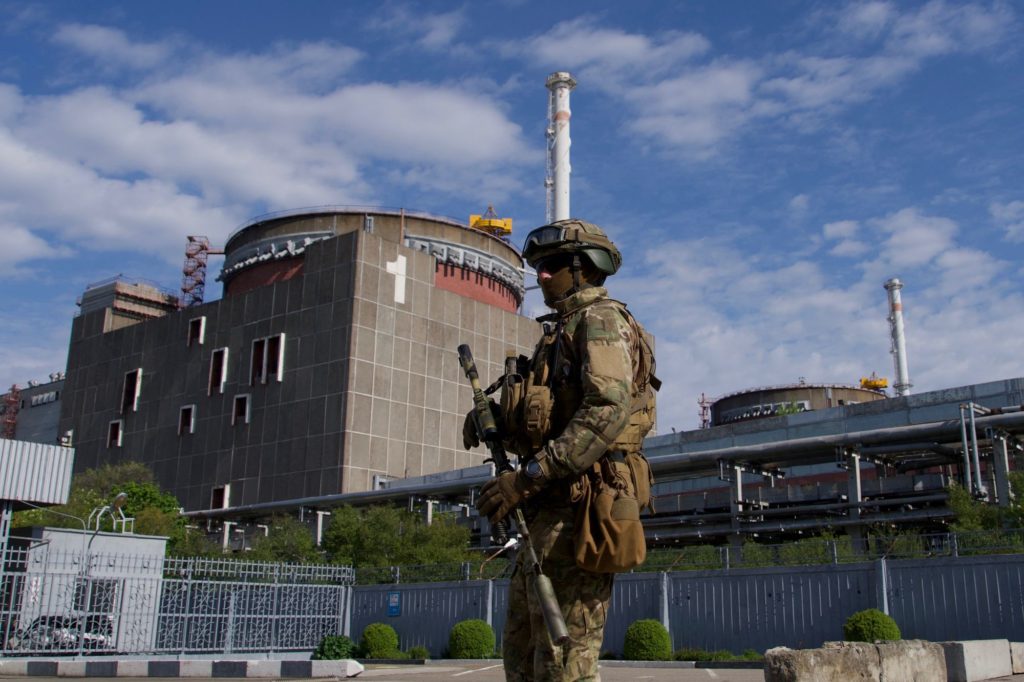
(Bloomberg) — One of the power units of the Zaporizhzhia nuclear plant has been reconnected to Ukraine’s energy grid.

Equipment and safety systems are functioning with no concerns and the unit is gaining power, with the facility producing electricity for the country’s needs, state-owned operator Energoatom said. 

President Volodymyr Zelenskiy has been calling for Russian troops in the area around the plant, in southeastern Ukraine, to withdraw. On Friday afternoon, European Union foreign policy chief Josep Borrell expressed concern about the situation. 

(See RSAN on the Bloomberg Terminal for the Russian Sanctions Dashboard.)

Key Developments

  • Zelenskiy Reinforces Nuclear Warning After Power-Line Disruption
  • Russian Gas Flows to Europe Are at Stable Levels on Friday
  • Germany to Rethink Gas Levy After Outcry Over Energy Profits
  • Why Ukraine Debt Relief Isn’t Matching Funding Needs: QuickTake
  • A Corner of Europe Leans to Live With Power Blackouts Again

On the Ground

Russian forces kept up attempts to conduct an offensive on the Donetsk axis in eastern Ukraine, focusing efforts on areas around Bakhmut and Avdiivka, according to a statement by Ukraine’s General Staff on Facebook. Artillery strikes hit private residences, schools and farms in regions including Donetsk, Chernihiv and Kharkiv, Interfax-Ukraine reported, citing local officials. Seven Russian ammunition depots in southern Ukraine were destroyed this week, said Natalia Humenyuk, a Ukrainian military spokeswoman.

(All times CET)

Russian Corporate Profits Rise 25% (3:00 p.m.)

Profits jumped to 9.5 trillion rubles ($144 billion at the average rate for the period), with the year-on-year increase outpacing the 17% rise in consumer prices over the period, according to Sberbank CIB calculations based on data from the Federal Statistics Service. 

The net income gain came despite sweeping US and European sanctions imposed over the Kremlin’s invasion of Ukraine pushed the economy into recession.

Ukraine Evacuated More Than One Million Donetsk Residents (12:20 a.m.)

Almost three quarters of the population in the Donetsk region have been evacuated, the area’s head Pavlo Kyrylenko said on the regional administration’s You Tube channel. Ukraine controls approximately 45% of the Donetsk region, where about 350,000 residents currently live, Kyrylenko said.

“As of February 24, 1.6 million people lived in the part of the region that was controlled by the Ukrainian authorities,” Kyrylenko said. “Almost three quarters of the region’s population have been evacuated.” Kyrylenko said, adding that all the cities of the region are being shelled permanently.

Hungary Boosts Energy Links with Russia Despite EU Stance (10:55 a.m.)

Hungary issued a key permit for the Russian-led expansion of its sole nuclear power plant, bolstering the nation’s energy links with Moscow even as European Union peers seek to distance themselves over the invasion of Ukraine.

The National Atomic Energy Agency issued an “establishment permit” to build a fifth and sixth nuclear reactor in the city of Paks, next to four existing units whose lifetimes are expiring, according to a statement on the authority’s website. Russia’s state-owned Rosatom Corp. is the lead constructor. In May, Finland scrapped a construction contract with Rosatom.

Zelenskiy Says Ukraine Is Working to Avert Nuclear Accident (9:33 a.m.)

Ukrainian authorities are doing everything possible to prevent an emergency at the Zaporizhzhia nuclear power plant, which has stopped work for the first time after being cut off from the nation’s electricity grid, Zelenskiy said in an address late Thursday.

Zelenskiy called for “tough international pressure” to force occupying Russian forces to withdraw from the plant, which has suffered artillery attacks that both Ukraine and Russia have blamed on each other.

Zelenskiy said he had spoken to US President Joe Biden of the situation and warned that Russia’s actions at the plant risked a nuclear disaster that could affect all of Europe.

Zaporizhzhia Nuclear Plant Remains off Ukraine’s Grid (9:00 a.m.)

All power units of the Zaporizhzhia nuclear plant remained disconnected from the country’s electric grid as of 9 a.m. local time on Friday, state-owned operator Energoatom said on Telegram.

The nuclear plant is being powered via a restored link from Ukraine’s energy system, and transmission lines leading from the plant have also been repaired. Work is under way to reconnect two power units of the plant back to the grid. There are no concerns about equipment and safety systems at the plant, Energoatom said.

Report Details Russian ‘Filtration System’ for People in Donetsk (8:35 a.m.)

Russia has set up a “filtration system” in occupied areas of Ukraine’s Donetsk region which allegedly violates international law, according to a report from Yale School of Public Health’s Humanitarian Research Lab.

Russia and its proxies operate at least 21 facilities in and around the Donetsk region to screen, detain and interrogate people, according to the report based on open-source information and satellite imagery. The system was created weeks before the invasion in February and grew following Russia’s capture of the port city of Mariupol.

Russia dismissed the report. “This is yet another fabrication aimed at discrediting the Russian special military operation,” its embassy in the US said on Telegram. “Russia is committed to observing the international humanitarian law.”

Ukraine Pursues Effort to Ramp Up Food Exports (8:30 a.m.) 

Ukraine has received more than 60 requests for loading grain and agricultural products in the ports of Odesa, Chornomorsk and Pivdennyi as part of the Black Sea Grain Initiative signed almost a month ago between Ukraine, the UN, Turkey and Russia, Infrastructure Minister Oleksandr Kubrakov said on Twitter. 

European Commission head Ursula von der Leyen and UN Secretary General Antonio Guterres said earlier that they will continue to help boost exports from Ukraine.

Japan Looking to Reopen Kyiv Embassy, Asahi Says (8:15 a.m.)

Japan is considering reopening its embassy in Kyiv and sending back staff who had been working from other locations such as Poland since soon after Russia’s invasion of Ukraine started, the Asahi newspaper reported, citing government officials.

Japan’s ambassador to Ukraine has been in Kyiv this week looking at resuming operations, the paper said, adding that Japan has been the slowest among Group of Seven nations to bring diplomatic staff back to the Ukrainian capital.

More stories like this are available on bloomberg.com

©2022 Bloomberg L.P.

Open Text CEO Defends UK Deal as Shares Tumble to 2019 Levels

(Bloomberg) — Open Text Corp.’s top executive defended the acquisition of Micro Focus International Plc at a huge premium, saying his company can help the UK firm with its turnaround. 

“Micro Focus is on a great path toward stabilization. We’ve known this business for many, many years,” Open Text Chief Executive Officer Mark Barrenechea said on BNN Bloomberg Television on Friday. “Open Text can add significant value.”

Waterloo, Ontario-based Open Text said Thursday it will acquire Micro Focus for 532 pence a share, 99% above the previous closing price. Open Text was down 12% to C$42.27 as of 10:56 a.m. in Toronto, the lowest level since December 2019. 

Open Text Falls as Analysts Mull Micro Focus Deal: Street Wrap

The deal is Open Text’s largest acquisition yet and values the target at about $2.2 billion — $6 billion including debt. 

After the merger, Open Text will sell in about 120 countries and have much better scale to compete with larger enterprise-software players, Barrenechea said. 

The deal will make Open Text look more like SAP SE and Oracle Corp. “and that’s good company to be in,” he said. The combined entity would have revenue of more than $6 billion and adjusted earnings before interest, taxes, depreciation and amortization of over $2 billion. 

More stories like this are available on bloomberg.com

©2022 Bloomberg L.P.

Moderna Sues Pfizer, BioNTech Over Covid Vaccine Technology

(Bloomberg) — Moderna Inc. sued Pfizer Inc. and BioNTech SE, claiming the technology in their Covid-19 shot infringes on its patents, a move that sets the stage for a massive legal clash between the vaccine titans.

Moderna accused Pfizer and BioNTech of violating intellectual property rights on key elements of its messenger RNA technology in developing the Comirnaty vaccine. Cambridge, Massachusetts-based Moderna said it had patents from 2010 to 2016 on the mRNA technology that made its Spikevax shot possible but that the other two companies copied the technology without permission.

Pfizer and BioNTech “took four different candidates into clinical testing, including options that would have steered clear of Moderna’s innovative path by using unmodified mRNA,” according a lawsuit filed Friday in the US District Court in Massachusetts. “Ultimately, however, Pfizer and BioNTech discarded those alternatives and copied Moderna’s patented technology.”

Moderna said it’s also filing suit in Germany. That complaint couldn’t immediately be verified. Pfizer and BioNTech haven’t fully reviewed the US complaint but are “surprised” by the litigation and will “vigorously defend” themselves, according to an emailed statement.

Pfizer shares fell 1.1% at 10:31 a.m. in New York, while BioNTech’s American depositary receipts fell 2.3%. Moderna shares lost 1.7%.

What Bloomberg Intelligence Says: 

Moderna’s lawsuit against Pfizer-BioNTech is unsurprising, given the broad US patents directed toward its mRNA technology, though they may be vulnerable to invalidity under the current case-law trends on written description and enablement… Pfizer-BioNTech could be liable for at least mid-single-digit royalties on past and future Covid vaccine sales if Moderna is successful. 

-Bloomberg Intelligence analysts John Murphy and Sam Fazeli

Read the research

Moderna said it’s not asking the courts to pull the Pfizer-BioNTech Covid vaccine from the market nor to block future sales. The company is seeking damages for the period starting March 8 of this year and says it will not seek damages for Pfizer’s sales to 92 lower- and middle-income countries. 

Early in the Covid crisis, Moderna promised not to enforce its intellectual property rights during the pandemic, but on March 7 it modified that pledge to apply only to lower-income countries, essentially making this litigation possible.

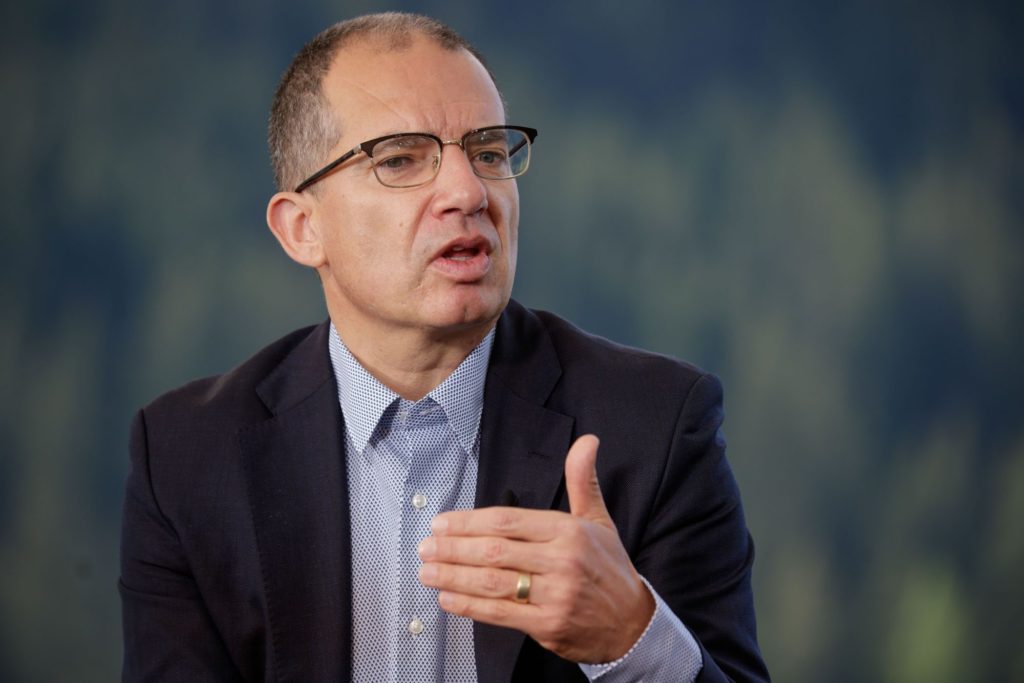
“We are filing these lawsuits to protect the innovative mRNA technology platform that we pioneered, invested billions of dollars in creating, and patented during the decade preceding the Covid-19 pandemic,” Moderna Chief Executive Officer Stephane Bancel said in a statement.

Pfizer and BioNTech made “the exact same chemical modification to their mRNA that Moderna scientists first developed years earlier, and which the company patented and uses in Spikevax,” the suit said. In addition, “the Pfizer and BioNTech vaccine encoded for the exact same type of coronavirus protein (i.e., the full-length spike protein), which is the coronavirus vaccine design that Moderna had pioneered based off its earlier work on coronaviruses and which the company patented and uses in Spikevax.”

The mRNA vaccines have played a crucial role in the pandemic response, particularly in the US. Pfizer last year recorded almost $37 billion in sales from Comirnaty, while Moderna posted roughly $18 billion of revenue from Spikevax. 

Patent Pledge

Moderna’s original pledge not to enforce its patent during the pandemic gives Pfizer and BioNTech a solid defense, since it hasn’t officially ended, said Jorge Contreras, a law professor at the University of Utah and an expert on patent pledges. Public promises are viewed as binding commitments under the law, he said, and the tweaking of the pledge that Moderna did earlier this year doesn’t negate the original one, he said. 

“This was a public, formal statement from a public company through a press release, so it’s reasonable for other companies to rely on it,” Contreras said. 

It’s possible Moderna is using the lawsuit to prod Pfizer and BioNTech into licensing Moderna’s technology, a “classic way” to pressure companies into making such agreements, he said.

Intellectual property battles over technology used in both the Moderna and Pfizer-BioNTech vaccines are proliferating. Alnylam Pharmaceuticals Inc. earlier this year sued Moderna, Pfizer and BioNTech over the lipid nanoparticle technology used in both of their Covid vaccines. Moderna has sparred with the National Institutes of Health over whether to list the agency’s scientists as inventors on patents for Moderna’s Covid vaccine. 

The case is Moderna v. Pfizer, 22-cv-11378, US District Court, District of Massachusetts.

(Updates with Pfizer-BioNTech comment in fourth paragraph, lawyer’s comments in 11th-13th)

More stories like this are available on bloomberg.com

©2022 Bloomberg L.P.
Look Out, Corn Kid, the Future of Your Favorite Crop Is Far From ‘Corntastic’

(Bloomberg) — Corn is having a viral moment on the Internet just as commodity traders worry about tight supplies.

The online obsession began earlier this month after Julian Shapiro-Barnum — who produces the video series, Recess Therapy — interviewed a young boy who really, really seems to love corn. The original video, in which the boy describes corn as “a big lump with knobs,” was picked up by a meme account on TikTok, where it drew 16 million views. A musical remix posted by The Gregory Brothers achieved even wider recognition with more than 33 million views on the social platform. It even inspired spin-off videos from brands like United Airlines  and the NFL’s Tennessee Titans. 

“Ever since I was told corn is real, it tasted good,” the boy says in the video. “When I tried it with butter, everything changed.”

@recesstherapy

Children of the… corn? #recesstherapy #corn #cornisgood #fyp #favorite

♬ original sound – Recess Therapy

While corn’s cachet is growing in the online world, real-world supplies have been squeezed. This year, though, supplies of corn have been cut significantly. The war between Ukraine and Russia, which together account for about a fifth of world exports, has disrupted the market. Meanwhile in the US, the world’s biggest producer and exporter, the crop has been decimated by extreme weather.

That can’t diminish corn’s appeal for the Corn Kid — as the boy in the video is now known on the Internet. “Look at this thing. I cannot imagine a more beautiful thing,” he says in the viral hit. “It’s corn!”

This year’s corn fields are anything but pretty, however. Scorching heat, prolonged drought, ravenous pests and damaging hail have hit this year’s crops, leaving cobs of the grain unusually small — if the stalks have ears at all. Others are stunted and brown. Yield outlooks in the US trail last year’s averages.

Read More: Stunted Corn Plants Stoke Fears of Looming US Shortage

It’s not just Corn Kid who is a fan of corn. World consumption of the grain has about doubled the last two decades, according to US government figures. Demand is driven by a growing global population and its use in many products: sweet corn is generally eaten on the cob; white corn is used for chips and tortillas; commodity, or yellow dent corn that’s nearly inedible, is used for sweeteners, feed and fuel.

@schmoyoho

intro song for any meal/snack with corn – from iconic interview on @doingthings

♬ Corn but it becomes a song and unites world – schmoyoho

In the video, Corn Kid says he thinks the cob he’s eating should cost $1. Prices of the commodity have doubled in the past two years and the scorched crops and ongoing war in Ukraine mean prices are likely to stay elevated for the foreseeable days ahead. 

After drought shriveled US corn plants in the western crop belt, all eyes turned to Iowa, the biggest producer in the country, to help save the national harvest. Instead, the fields have been “underwhelming,” “disappointing,” and just “not great.”

For his part, Corn Kid is monetizing his fame with a Cameo account, where users can commission a personalized video message starting at $145. 

“I can tell you all about it,” he says in the original interview. “I hope you guys have a corntastic day!”

(Updates with latest crop tour results in ninth paragraph.)

More stories like this are available on bloomberg.com

©2022 Bloomberg L.P.
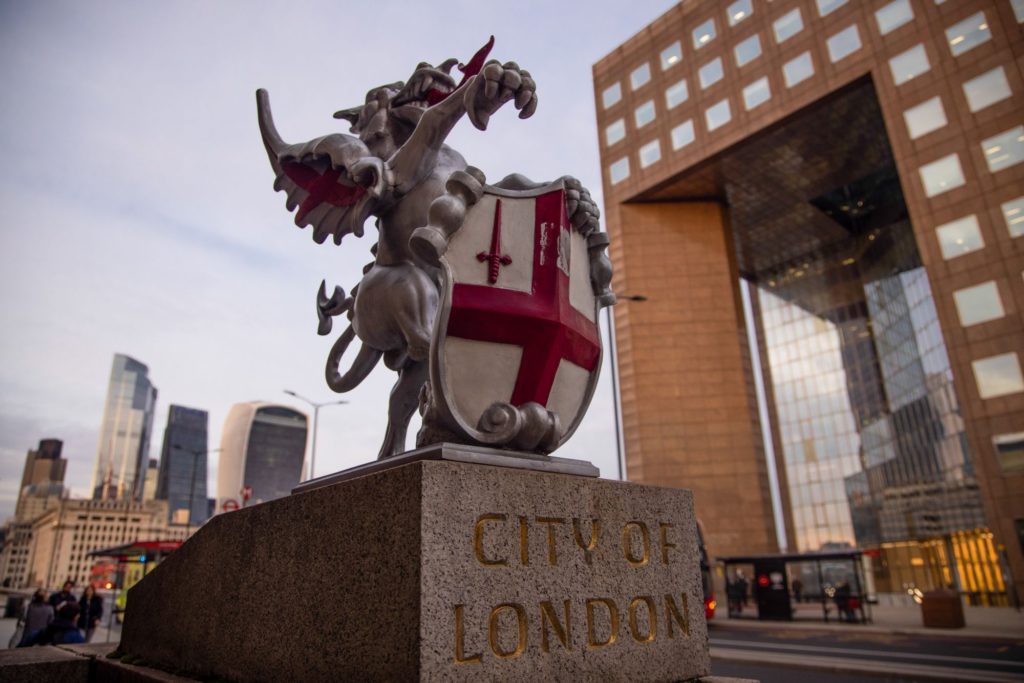
Here’s What Happened in the City of London This Week

(Bloomberg) — Good afternoon from Bloomberg’s UK finance team. Here are five news stories from the Square Mile and beyond that caught our eye this week.

1)  Fed’s Jackson Hole Conference Is Underway: Here’s What to ExpectAll eyes are on this weekend’s annual gathering in Jackson Hole, Wyoming, featuring central bankers from around the world.2)  Buy-Now-Pay-Later Tech Pioneers Squeezed as Big Banks Muscle InTech mavericks who made buy-now-pay-later an option for shoppers worldwide are grappling with mounting losses and investor skepticism. Now big finance is on their tail.3)  London’s Stock Market Misery GrowsA rise in companies fleeing the UK stock market is another blow to London’s status as Europe’s top financial center, adding to the gloom around a lack of initial public offerings. 

4) Schneider Considers Buyout of £8.9 Billion Software Firm AvevaSchneider Electric said it’s considering a bid to buy out minority shareholders of industrial software developer Aveva Group.5)  The City of London’s Hottest Hotel Is Struggling to Bounce BackThe Ned, the glamorous hotel and members club in the heart of the City of London, is having a hard time recovering from the fallout of Covid-19 and the pandemic.

More stories like this are available on bloomberg.com

©2022 Bloomberg L.P.

Lone Pine Assets Shrivel as Hedge Fund Reels From Record Losses

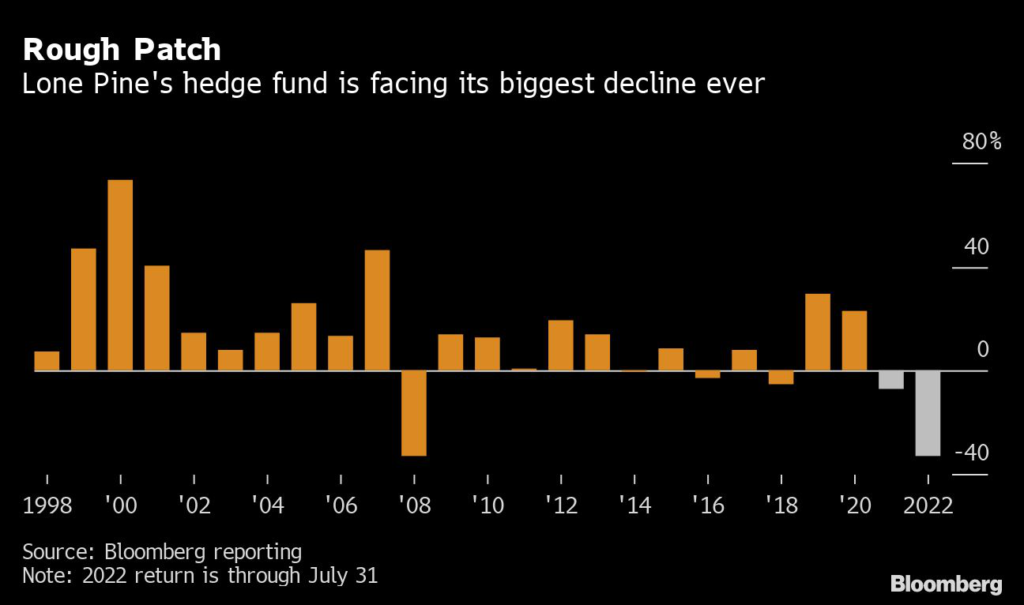
(Bloomberg) — Lone Pine Capital is facing its biggest challenge since Steve Mandel founded the firm a quarter-century ago, with its $5.8 billion hedge fund down the most in its history. 

The hedge and long-only funds are both mired in a prolonged slump, each losing more than 30% this year through July on bullish growth-stock wagers that soured. Assets have tumbled 42% to $16.7 billion, driven by the wrong-way bets and client redemptions.  

It’s a humbling turn for a firm that long engendered fierce client loyalty with its industry-leading returns and comes just three years after Mandel, 66, stepped back from day-to-day management.

“We recognize that our performance over the past nine months has been deeply disappointing,” Mandel and co-portfolio managers David Craver and Kelly Granat wrote in a letter to clients last month. “While this latest period of underperformance has been difficult, we believe the work we are doing today will set us up to reap the rewards in the months and years to come.”

More withdrawals are coming this quarter, even though performance improved in July, according to investors and other people familiar with the firm. Based on Bloomberg calculations, second-quarter net redemptions totaled about $1 billion, or 6% of assets as of June 30. 

A spokesman for Greenwich, Connecticut-based Lone Pine declined to comment.

Growth Stocks

At the start of 2019, Mandel pulled off a rare feat for a hedge fund founder, successfully handing leadership to the next generation.

Instead of managing the portfolio, he spent days researching companies and advising younger colleagues, leaving stock-picking to Craver, Granat and Mala Gaonkar. Lone Pine flourished, posting some of its strongest returns in 2019 and 2020.

Then the bottom fell out for growth stocks. 

The hedge fund tumbled 47.1% from September through June, according to the letter. The long-only fund, which managed $10.9 billion, was down 51.6% in the same span, rivaling losses it incurred during a 16-month swoon around the 2008 financial crisis.

While other founders might have jumped back in to protect their wealth and legacies, Mandel hasn’t announced any intention of reasserting his influence on the portfolio, according to some investors. He has, however, participated in recent fundraising conversations with clients, they said.

That’s happening just as Gaonkar, who announced in late 2021 that she was leaving Lone Pine, is raising money for her own firm, SurgoCap Partners, which plans to open next year with at least $1 billion.

Read more: Gaonkar Hires From Third Point, Maverick for Fund Launch 

Mandel worked for legendary investor Julian Robertson’s Tiger Management for seven years before launching Lone Pine. Performance was strong from the outset, and even with the recent losses the hedge fund has posted annualized returns of 11.8% since inception through June 30, beating the S&P 500 by 4.1 percentage points. 

Those returns have made Mandel a billionaire. He and other insiders account for about 25% of the hedge fund’s assets, according to a March regulatory filing. 

‘Steady Compounders’     

The firm has been shifting toward investments that it describes as “steady compounders,” while trimming growth stocks, according to the July letter. It also reduced leverage, added to its short bets and increased stakes in some beaten-down equities, including high-end retailer RH, Taiwan Semiconductor Manufacturing Co. and Workday Inc.   

Those changes helped Lone Pine benefit from the recent market rebound, with the hedge fund jumping 7% in July and the long-only fund gaining 12%. That still leaves those funds down 33% and 38%, respectively, for the year. 

While Lone Pine looks to attract more money, another fundraising project is on hold: a vehicle with a $1 billion target that would invest in later-stage private companies, according to people familiar with the matter. The firm currently has investments in more than two dozen privates, including Outreach Corp., a Seattle-based provider of enterprise software solutions, and Australian payments firm Airwallex.

Still, it might be a while before Lone Pine manages to climb out of the hole. After 2008, it took about three years before the funds returned to breakeven.

“Remaining focused during previous drawdowns,” the firm told investors in July, “has helped drive strong outperformance when the markets eventually recover.”

More stories like this are available on bloomberg.com

©2022 Bloomberg L.P.
US Earnings to Watch: Best Buy, CrowdStrike, Lululemon

(Bloomberg) — Downward revisions in full-year outlooks by department stores sent chills through the consumer discretionary sector this week, as middle-class consumers shop less amid decades-high inflation. The sector, alongside financials, has so far recorded the highest proportion of earnings and revenue misses in this reporting season. Reports next week from big retail names like Best Buy and Lululemon will offer signals on how their diverse customer bases could affect top-line momentum for the rest of the year. 

  • To subscribe to earnings coverage across your portfolio or other earnings analysis, run NSUB EARNINGS.
  • NOTE: The US Earnings Week Ahead will not appear next Friday, Sept. 2; it will resume the following week.

Earnings highlights to look for next week:

Monday: Pinduoduo (PDD US) is due before market opens. A push to help Chinese agriculture and food merchants reach residents during lockdowns will likely help maintain year-on-year revenue growth for the fiscal second quarter, says Bloomberg Intelligence. Active buyers and monthly active users — two key customer engagement metrics for the Shanghai-based e-commerce operator — are poised to continue their growth streaks, despite slowing in the past year. BI analysts also note that management could address questions over reports about its first cross-border expansion in the US market.  

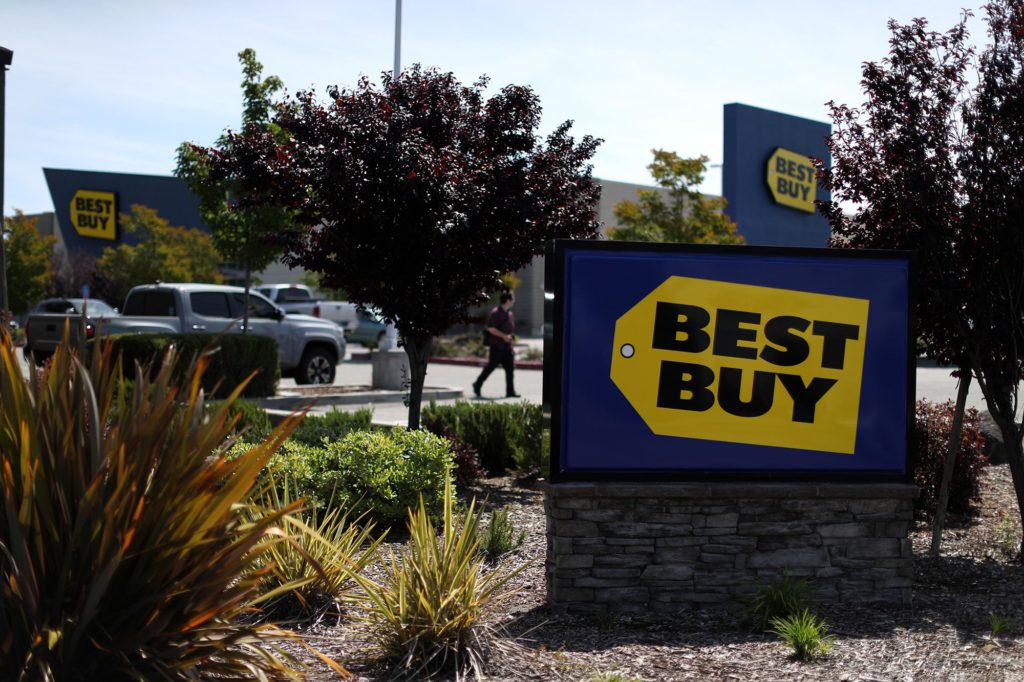
Tuesday: Best Buy (BBY US) will report before the bell. Updates to its forecast will take center stage, says Bloomberg Intelligence, after softening consumer demand forced the retailer of electronics and home-office equipment to slash its full-year sales guidance and halt share buybacks last month. Aggressive promotions are likely to dilute its operating margin for the second quarter, which the company said may shrink to around 4%, its lowest level in at least two years. 

  • ESG in focus: Best Buy, an authorized service provider for Apple and Samsung devices, may face questions on its earnings call over how the two giants’ self-repair programs could impact its repair business, according to Bloomberg Intelligence ESG analyst Gail Glazerman. Just this week, Apple expanded the initiative to some MacBooks, providing repair manuals, parts and tools through its Self-Service Repair Store.
  • CrowdStrike (CRWD US) is due after market. Better-than-expected results and full-year guidance from cybersecurity peer Palo Alto Networks this week may portend strength in its second-quarter performance, supported by steady customer adds and adoption of new modules like Identity, Cloud and Humio, according to Barclays and Bloomberg Intelligence. Competitiveness against Microsoft and SentinelOne remains a focal point for the earnings call, though so far the company’s win rate against legacy endpoint security providers remain high, and the sales cycle “likely hasn’t elongated,” BI said. Investors may also listen for updates on CrowdStrike’s reported acquisition interests — potentially one or more Israeli cybersecurity companies totaling $2 billion as well as speculation it may join Thoma Bravo’s bid for British cybersecurity firm Darktrace.

Wednesday: SentinelOne (S US) will report after market. As with CrowdStrike, analysts are expecting the company to post record revenue as Barclays said businesses view cybersecurity as “mission-critical” to protect endpoint devices and workloads in a more distributed workforce. The company boosted full-year revenue guidance to nearly triple-digit growth in June, momentum that could be sustained by M&A as the market is fundamentally strong, Jefferies said.

Thursday: Lululemon (LULU US) is due after market. The premium athleisure brand continues to see double-digit, albeit slowing, growth in revenue and adjusted earnings, although Jefferies’ Randal Konik sees risks ahead for its international ambitions as it has relatively low brand awareness in Europe and Asia. More marketing spending and investment may be needed to support growth in the Chinese market, which has suffered a slowdown due to weakening demand and Covid lockdowns, prompting Adidas to cut its full-year guidance. Despite the recent popularity of its belt bag, Konik said it may not be enough to offset other risks including price markdowns on footwear and apparel due to elevated inventory, which could lead to margin declines.

More stories like this are available on bloomberg.com

©2022 Bloomberg L.P.
Electronic Arts Gains on Report Amazon Readying Takeover Bid

(Bloomberg) — Electronic Arts Inc. gained Friday after a report said Amazon.com Inc. is preparing an offer to buy the US video game publisher. 

According to a column in USA Today, Amazon could announce as soon as Friday an offer to acquire the publisher of hit games Apex Legends, FIFA and Madden titles. The report, if true, would accelerate Amazon’s efforts to become a major player in the game industry.

EA shares rose as much as 5.5% in New York. The stock is down about 1% this year, valuing the Redwood City, California-based company at about $37 billion. David Faber cast doubt on the report on CNBC following its publication.

It has been a banner year for deals in the video game industry, from Microsoft Corp.’s pending $69 billion purchase of Activision Blizzard Inc. to Take-Two Interactive Software Inc.’s acquisition of Zynga for $11 billion. The sector boomed during the pandemic and although sales have slowed this year, gaming companies are still seen as attractive sources of long-term revenue thanks to titles that can be monetized for years after they launch. Live-service games, which are continuously updated over time, and microtransactions made within games made up 71% of EA’s revenue last fiscal year.

Amazon, too, has been on the hunt for deals this year, despite already being under intense antitrust scrutiny. Earlier this month, Amazon announced an agreement to buy iRobot Corp. for $1.65 billion, coming on the heels of a $3.49 billion deal just two weeks earlier to buy the One Medical chain of doctor’s offices.

With the consolidation in the gaming industry, EA has long been suspected of being a takeover target. Amazon, Apple Inc., and the Walt Disney Co. have been mentioned as potential suitors. 

Known for its Star Wars and sports games, EA has yet to release any major new titles this year and is still grappling with fallout from Battlefield 2042, which was released last November to mediocre reviews and poor fan reception.

Amazon has failed to make much of an impact in gaming on its own, even after hiring industry veterans and buying the video game streaming service Twitch. EA has a suite of live-service titles such as Apex Legends and The Sims that could be appealing to the tech giant, especially after Netflix Inc.’s success with shows such as The Witcher and Arcane, which have been built around big video games. A deal could give Amazon franchises from the popular role-playing game developer BioWare such as Dragon Age, which is set for a Netflix animated series that was teased earlier this year.

EA has also dominated the sports sphere and regularly releases the most popular soccer and football games. Its FIFA franchise — which will no longer be officially associated with the world football governing body following this year’s release — sells millions of copies a year. It generates even more revenue with its FIFA Ultimate Team microtransactions, which brought in $1.62 billion during the company’s 2021 fiscal year. 


(Updates shares in third paragraph.)

More stories like this are available on bloomberg.com

©2022 Bloomberg L.P.
Close Bitnami banner
Bitnami

