

Bloomberg

The Republican Party Is Having an Identity Crisis

(Bloomberg) — The GOP is now acting like a party in search of itself with less than three months before US elections that once favored Republicans to retake both chambers of Congress and set them up for 2024. 

Should the party fumble, as polls increasingly suggest, August will have been a pivotal month. It began with the FBI’s search of Donald Trump’s Florida home and the party’s bellicose defense of the former president that belied its pro-law enforcement image. The weaknesses of Senate candidates Trump personally picked became glaring as the cycle moves from the primary season, where the focus is on a small number of party-faithful voters, to the general election, which requires a broader appeal to a varied electorate.   

There are also two high-profile Republicans uncomfortably dominating the spotlight and who put the party’s schisms in full view.One is Liz Cheney, who led the Jan. 6 hearings into Trump’s role inciting a mob to attack the Capitol only to lose the nomination for a third term in a landslide to a pro-Trump candidate. The other is Florida Governor Ron DeSantis, gaining momentum as an alternative to the former president, who embodies some of his pugnacity without the baggage.

Trump has shown no inclination for passing the torch and his allies used the FBI investigation to encourage him to make a third White House bid, setting up a potential clash between he and his would-be heir apparent. 

This is a defining moment for Republicans who were counting on a strong midterm showing to launch themselves back into the White House in 2024. But the party’s identity crisis is evident in the uneven performances of Senate candidates in battleground states like Pennsylvania, Georgia, Arizona and Ohio, among others, that jeopardizes its prospects for a congressional majority. 

“You’ve got a lot of factions within the party,” Robert Blizzard, a Republican strategist, said in an interview. “It looks convoluted. Are we the Trump party? Are we at the point where we’re DeSantis’ party?”

Meanwhile, President Joe Biden and Democrats are feeling buoyant. In August, they notched wins with legislation on veterans health, bipartisan passage of a bill to boost semiconductor chip manufacturing and a sweeping bill to address climate change and lower prescription drug costs. Biden also oversaw the killing of al-Qaeda leader Ayman al-Zawahiri and this week fulfilled a campaign promise to forgive student debt. 

An early August defeat of a Kansas referendum to ban abortion in the wake of the Supreme Court’s decision to reverse Roe v. Wade added to Democrats’ renewed optimism about the midterms. And Democrat Pat Ryan narrowly beat Republican Marc Molinaro this week in a New York swing district race. 

The Senate is currently deadlocked at 50-50, with Vice President Kamala Harris wielding the deciding vote. Democrats are now favored to expand their majority in the upper chamber, according to Nate Silver’s FiveThirtyEight. But Republicans are still favored to win the House, given how those races are decided in carefully gerrymandered districts in favor of the party that controls the state’s legislature.  

The danger for the GOP was made publicly clear when Senate Republican Leader Mitch McConnell said last week that “candidate quality has a lot to do with the outcome” of the Senate. It was an implicit acknowledgment that in competitive states a Trump-endorsed candidate faces a strong Democrat and could lose. 

It also sparked the latest public war of words between the one-time allies, whose seminal achievement was the reshaping of the Supreme Court. Trump took obvious umbrage with McConnell’s remarks, issuing a statement that said “a new Republican Leader in the Senate should be picked immediately!”

“If you can’t win as a Republican in this cycle then you have some real issues,” said Terry Sullivan, a strategist who ran US Senator Marco Rubio’s 2016 presidential campaign.

But there is a palpable and vocal base still enthralled with the 76-year-old Trump and want him back. Yale and Harvard Law-educated DeSantis, 43, offers a more methodical take on the Make America Great Again mantra. Cheney, 56, represents a party that might not exist anymore and has been refashioned in Trump’s image. 

Occupying space between DeSantis and Cheney are Republicans trying to win public attention on other issues.That includes Missouri Senator Josh Hawley and Arkansas Senator Tom Cotton presenting themselves as the anti-China hawks; Texas Senator Ted Cruz and his governor, Greg Abbott, focusing on immigration and Florida Senator Rick Scott lining up culture war issues to entice conservative voters.Scott, who has a second job as head of the committee to ensure Republican Senate victories, drew fire from his own party earlier this year for a proposal that would require Congress to reauthorize popular programs like Medicare and Social Security every five years. 

Republicans are increasingly worried that they squandered a winning hand in the form of Biden’s poor approval rating and anger over decades-high inflation and crime. The tide there is already turning too. Biden’s popularity is rebounding, gasoline prices are receding, inflation is showing signs of cooling and unemployment remains low.  

To Republican political consultants like Sullivan, the very fabric of the GOP has changed. By its wholesale adoption of a more populist identity, they sacrificed highly educated, upper-middle-class suburbanites who became the independent voters.

That slice of the population is now up for grabs for both parties, but it’s more challenging for Republicans in places like Wisconsin or Pennsylvania to square the circle.

“It’s a real patch-work,” Sullivan said.

Republican strategist John Thomas said that the GOP’s identity was now fully cemented in Trump’s image with the August FBI search of his Mar-a-Lago resort. Up to that point Thomas had been working on a pro-Desantis political action committee, with donor commitments in the “mid-seven-figures,” he said.

“That was a pivotal, hinge moment in the Republican party,” Thomas said. “To be the man, you’ve got to beat the man. Right now, no Republican has beaten Trump. Ron has to take it from Trump and right now I just don’t see it.”

More stories like this are available on bloomberg.com

©2022 Bloomberg L.P.

Taliban Ban Crypto in Afghanistan, Arrest Dealers of Tokens

(Bloomberg) — Afghanistan’s central bank imposed a nationwide ban on cryptocurrencies this month and the Taliban regime has arrested several dealers who defied orders to stop trading digital tokens, according to a senior police official.

The crackdown comes after some Afghans turned to cryptocurrencies to preserve their wealth and keep it out of the Taliban’s reach. Crypto has become a popular way of moving money in and out of the country, which is shut off from the global banking system due to sanctions leveled on the militant group. 

While countries from Singapore to the US are tightening crypto regulations in the wake of a market crash that wiped out some $2 trillion of wealth and drove several high-profile firms into bankruptcy, outright bans are much rarer. Afghanistan now joins China, which declared all crypto transactions illegal in September 2021. 

“The central bank gave us an order to stop all money changers, individuals, and businesspeople from trading fraudulent digital currencies like what is commonly referred to as Bitcoin,” Sayed Shah Saadaat, head of criminal investigations at the police headquarters in Herat, said by phone. 

Saadaat said 13 people were arrested, most of whom were released on bail, while more than 20 crypto-related businesses have been shut down in Herat, Afghanistan’s third-largest city and a hub for trading in digital tokens. Four of the six crypto brokerages in Afghanistan are located in the city, some 75 miles (121 kilometers) away from the Iranian border. 

A report last year by blockchain research firm Chainalysis ranked Afghanistan as one of the top 20 countries in the world in terms of crypto adoption. The results were weighted by purchasing power parity per capita, which favors poorer nations.

The Taliban in February said they’d study whether digital tokens can be allowed under Islamic financial practices, as they were looking at all options to revive the economy, which collapsed after last year’s messy withdrawal of US forces paved the way for the Taliban to seize control. 

Some religious scholars had long predicted that the Taliban would end up banning crypto because it’s considered “haram,” or forbidden to Muslims as it has elements of wagering and uncertainty. However, other Muslim-majority countries have taken a more lenient approach. The United Arab Emirates allow crypto trading in Dubai’s free zone, while Bahrain have backed digital assets since 2019.

(Updates with context from third paragraph.)

More stories like this are available on bloomberg.com

©2022 Bloomberg L.P.
Meituan Sales Beat as Chinese Appetite for Meal Takeout Intact

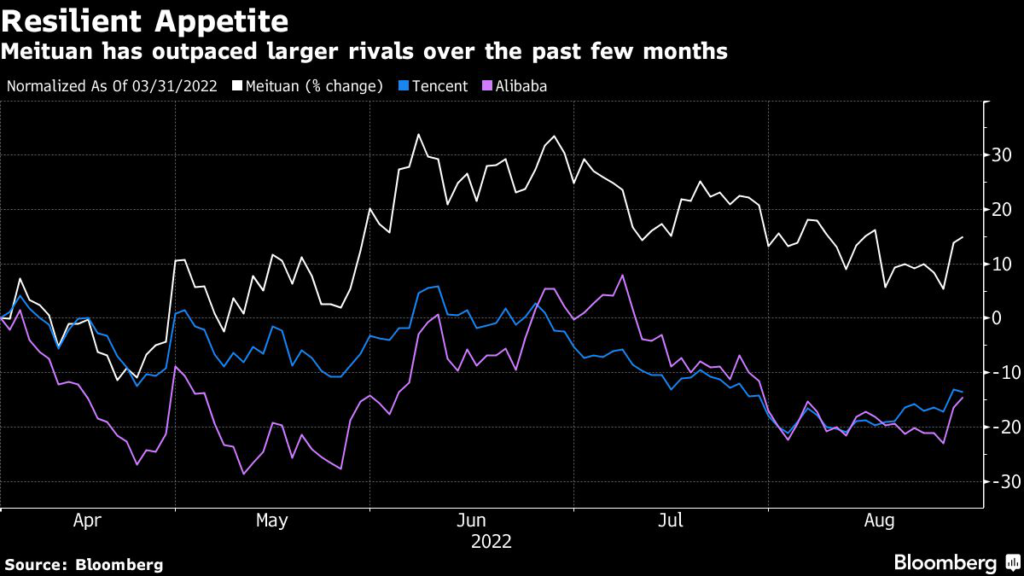
(Bloomberg) — Chinese food delivery titan Meituan reported a better-than-expected 16% increase in quarterly revenue, after appetite for meal takeout remained largely intact despite an economic downturn and Covid-related disruptions.

Sales rose to 50.9 billion yuan ($7.4 billion) during the three months ended June, versus an average projection for 48.6 billion yuan. It logged a net loss of 1.12 billion yuan, the seventh consecutive quarter in the red, but better than estimated as cost cuts kicked in. 

Meituan is one of the few Chinese internet companies that managed to expand at a double-digit pace despite macroeconomic headwinds. The economic fallout from Covid-induced lockdowns in cities like Shanghai dealt a serious blow to larger firms including Alibaba Group Holding Ltd. and Tencent Holdings Ltd., both of which reported their first-ever sales contractions since going public nearly a decade ago. 

What Bloomberg Intelligence Says

Meituan could have lifted 2Q food delivery operating margin from a year earlier even as the growth rate of transactions narrows to a historical low of less than 3% vs. gains of 16-17% in the prior six months. The company probably cut spending on promotions and user incentives, which make up more than 55% of total selling plus marketing expenses, during Covid-19 flare-ups and lockdowns in mainland China. Such savings would have offset the impact of merchant fee cuts and Covid-related cost hikes on the segment’s 2Q margin vs. the prior year. An uptick in food-delivery transactions may spur stronger margin gains through 2H if Meituan maintains a lean cost structure.

– Catherine Lim and Tiffany Tam, analysts

Click here for the research.

Billionaire Wang Xing’s empire isn’t entirely immune to challenges. Shares of Meituan plunged more than 9% following a Reuters report that Tencent — its long-time backer — was considering selling all or much of its $24 billion stake in Meituan to appease Chinese leaders. Tencent later called that “inaccurate,” but it nevertheless served as a reminder of the uncertainties plaguing Chinese internet giants as Beijing resets its approach toward the once free-wheeling tech industry. 

Meituan also faces a deepening downturn in the world’s second-largest economy that is hammering consumer sentiment and investor confidence. The Beijing-based company recently hired Kuaishou Technology’s former international business chief, Tony Qiu, fueling speculation about ambitions to branch out to overseas markets. 

Meituan also folded its food delivery, hotels and other commerce businesses into a new division it dubbed “core local commerce,” which grew 9.2% in the quarter. It kept newer initiatives such as its ride-hailing services separate.

More stories like this are available on bloomberg.com

©2022 Bloomberg L.P.
China Tech Stocks Gain as Talks Progress to Avoid US Delistings

(Bloomberg) — Chinese technology shares rose for a second day after talks between Beijing and Washington to avoid the delisting of companies in New York was said to show signs of progress. 

Hong Kong’s Hang Seng Tech Index climbed as much as 2.1% on Friday before paring gains to close 0.8% higher as it capped its biggest weekly gain in over a month. Firms that have ADRs, such as GDS Holdings Ltd. and AAC Technologies Holdings Inc., were among the best performers. 

China regulators have instructed major accounting firms to prepare to bring audit work papers of US-listed Chinese companies to Hong Kong, where they can be reviewed by US officials, according to a person who asked not to be identified as the discussions are private.

US-China Talks on Delistings Advance With H.K. Inspections (1)

Signs of progress in the talks will provide a tailwind for Chinese equities, which have been hit by slowing economic growth, a regulatory crackdown and tensions in the Taiwan Strait. Beijing’s latest stimulus measures have also given stocks a boost, and the Hang Seng Tech Index has climbed over 20% from a March low.

“To see that both sides are communicating, it is a good thing,” said Daisy Li, fund manager at EFG Asset Management.  “Still, we will need to see if the US side is actually willing to accept the disclosure. If this can be resolved, it could help lower some China market’s geopolitical risk premium.”

Possible US-China Auditing Deal Bodes Well for ADRs: Street Wrap

Even as talks progress, some analysts are already positioning for further gains in Hong Kong stocks. The short squeeze risk for the shares “has not yet fully eased” and there is room for the current short covering-driven rally to continue in near term, according to Morgan Stanley’s strategists.

Cautionary Note

Congress imposed a 2024 deadline for kicking off businesses that don’t comply with US exchange listing rules and investors have remained wary over the fate of about 200 Chinese firms with American Depositary Receipts. 

Earlier this month, China Life Insurance Co., PetroChina Co. and China Petroleum & Chemical Corp. all announced plans to delist from US exchanges. Alibaba Group Holdings Ltd. recently said it will seek a primary listing in Hong Kong while ride-hailing giant Didi Global Inc. announced plans in December to delist from the New York Stock Exchange.

Sinopec, US-listed China Stocks Wobble Amid NYSE Exit Woes (2)

Still, some market watchers remain cautious.

It’s still necessary for US and Chinese leaders to “publicly ink the agreement, which still will be very political and the timing is unclear,” Patrick Springer, managing director of institutional securities at Huatai Securities USA, wrote in a note.

(Updates Friday’s closing price)

More stories like this are available on bloomberg.com

©2022 Bloomberg L.P.
Tycoon Uy’s Empire Open to Sale of Crown Jewels to Pay Debt

(Bloomberg) — Philippine tycoon Dennis Uy’s conglomerate is open to parting ways with its crown jewels as part of an asset-sale plan to pay down debt after it aggressively expanded from oil to casinos. 

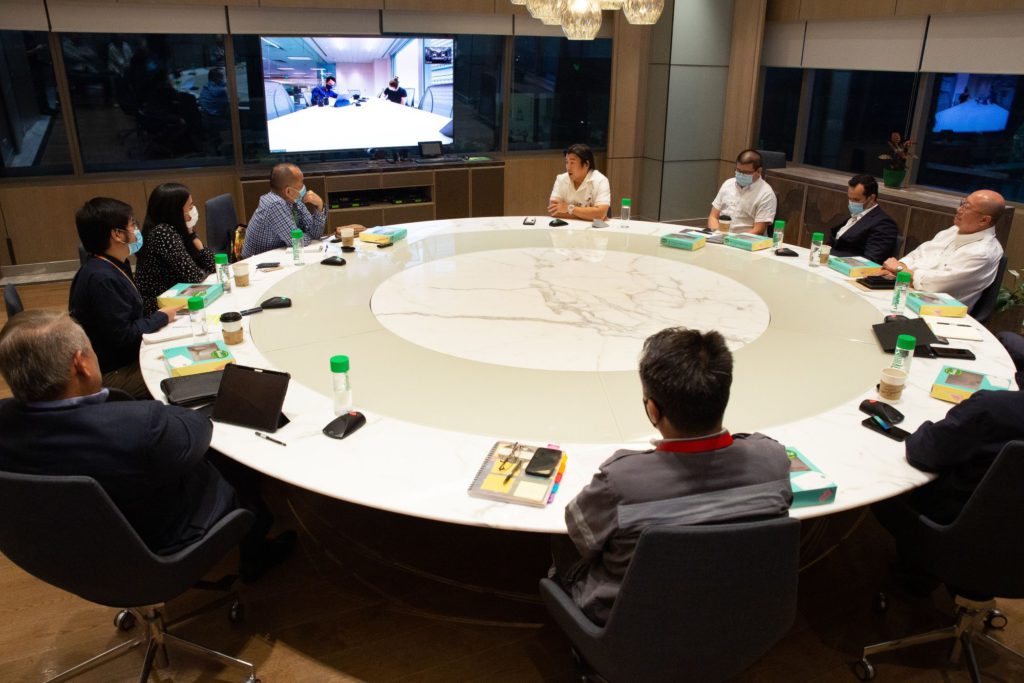
Discussions are underway and are ripe to close in coming months, according to the president of holding company Udenna Corp., who joined Uy for an interview with Bloomberg this week. The leaders of several units, including Chelsea Logistics & Infrastructure Holdings Corp. and Phoenix Petroleum Philippines Inc. were also present. Although the preference is to pare down debt without divesting the majority of Phoenix and Chelsea, the group is open to offers.

Udenna would like to keep its crown jewels, but won’t object to an attractive offer if that helps cut debt further, President Martin Escalona said.

The asset-sale plan follows years of credit-fueled expansion by Udenna, including a foray into property and casinos, a telecommunication venture, as well as investments in a gas platform operator and a culinary school. The Davao City-based business empire made headlines in July after one of its units received a default notice from creditors, which Escalona said made him skip dinner when he received word of it on a Friday evening. He termed it as a “misunderstanding” and Udenna said the matter is now settled. 

The executives declined to give a figure for the group’s total debt, but publicly available filings provide details of its borrowings. Mobile phone operator DITO Telecommunity Corp., Uy’s venture with China Telecommunications Corp., took out more than $1 billion in loans from Chinese banks, according to figures published this month. Udenna’s most recent report shows debt of 180 billion pesos ($3.21 billion) at the end of 2020.

China Telecom Philippine Partner Sees Profit For Venture By 2026

“We know how to sell, and we know how to buy,” Uy said. “If some of our assets are attractive, and it makes sense, then we rationalize, but again, it’s not easy because everyone’s part of the family.”

Creditors have been supportive, Escalona said, adding the group is looking to sign a planned $4.1 billion loan by November for DITO Telecom’s network rollout.  

Shares in DITO CME Holdings Corp., parent of of DITO Tel, advanced as much as 1.3% on Friday. The overall market rose as much as 0.7%.

Righting Ship

Uy, 48, said any decision to sell assets is an emotional one for him as the company is responsible for thousands of families.

“We should’ve raised equity, which we planned in 2020, but we made the decision that debt is cheaper,” said Uy, adding he should’ve brought in strategic partners.

The conglomerate has already started unloading assets, selling stake in its casino ventures to billionaire Enrique Razon, who is also acquiring a stake in an offshore gas project where Uy has an investment. Chelsea last year sold its entire holding in a shipping company called 2GO.

Uy, who made a name from oil trading, kicked off his expansion and deal spree following the 2016 election of former President Rodrigo Duterte. Both hail from Davao City in the southern island of Mindanao. The shipping and energy mogul, who contributed to Duterte’s campaign and counts the leader as a family friend, defended his aggressive expansion in a 2017 interview, saying he believed in Duterte’s economic agenda. In the past years, he has assembled assets that have eaten into industries ruled by the country’s richest families.

“We expanded too fast in the past, and the only reason we did that was that there was a very strong belief that the economy will improve,” said Escalona. 

The onslaught of the pandemic and the group’s debt load have raised the insolvency risks on Uy’s businesses. A measure of bankruptcy risk, known as the Altman-Z score, for four companies owned by the businessman shows greater risks than the average for the MSCI Philippines Index, which is already the worst in Southeast Asia, according to data compiled by Bloomberg. 

“Of course we are wounded. Who else is not?” Uy said. “We’re making it right, righting the ship.”

(Adds share move in eighth paragraph)

More stories like this are available on bloomberg.com

©2022 Bloomberg L.P.

How Musk Plans to Kill Off Cellphone Dead Zones Across the US

(Bloomberg) — The danger of getting lost in the desert or stranded at sea, unable to raise an alarm, may become a thing of the past as soon as next year near if Elon Musk’s latest project goes off without a hitch. The SpaceX chief teamed up with T-Mobile CEO Mike Sievert to unveil a new service that will utilize Musk’s Starlink satellites to offer cell coverage in every corner of the US.

Sievert said there were a more than half a million square miles of dead zone — areas not covered by any cellular network —  across the country, and described the project as “a lot like putting a cellular tower in the sky, just a lot harder.”Here’s how the companies plan to do it, what it means for mobile users and what the limitations will be:

What is it?

The two companies want to create an entirely new mobile network, broadcast from Starlink satellites, that uses T-Mobile’s existing mid-band spectrum. The service will give customers that sign up phone coverage practically everywhere in the continental US, Hawaii, parts of  Alaska, Puerto Rico and even territorial waters.

How will it work?

The new network will be accessible thanks to large, powerful antennas attached to Starlink satellites. Musk said each antenna would measure some 25 square meters (269 square feet) and be “extremely advanced because they’ve got to pick up a very quiet signal from your cell phone and then be caught by a satellite that’s traveling 17,000 miles an hour.” The T-Mobile service will run in a similar way to data roaming, where a user’s mobile will scan for service and if it finds none it will connect to the satellite. Most phones already have the technology built in and no additional equipment will be required.

What are the limitations?

The main issue is bandwidth, which will at first limit the service to text messaging. The coverage area will be divided into large cell zones, with each zone’s connectivity limited to around 2-4 MBs. Musk said that would allow for some 1,000-2,000 voice calls per cell, or millions of text messages, but the service would not provide a substitute for ground cell stations. “This is really meant to provide basic coverage to areas that are currently completely dead,” Musk said. In addition, he said there could initially be a delay of “half an hour, maybe worse” for messages to pass through the system.

How much will it cost?

Sievert said he hoped that the service would be bundled for free on T-Mobile’s most popular pricing plans, while lower cost plans where it’s not included could be charged a monthly fee.

Will the service be available outside the US?

It’s not clear yet. Sievert said T-Mobile was seeking reciprocal roaming deals with carriers outside the US, “so that when those people come and visit the United States and go off the grid into the national parks, they’ll be connected too. And likewise when American citizens travel to those countries, they’ll be connected.”

What’s the timeframe?

SpaceX said in a press release the satellite-to-cellular service would begin with beta testing in select areas by the end of next year, after new satellites have been launched. Musk said the first phase would include messaging, MMS “and even messaging apps,” although he said they had not yet spoken to app providers about how to integrate their services.

What does the future hold?

After messaging, the companies hope to work on voice calls and data. But Musk has grander ambitions. “We’d love to have T-Mobile on Mars,” he said.

More stories like this are available on bloomberg.com

©2022 Bloomberg L.P.
Audi to Join Formula 1 With Car Running on Synthetic Fuel

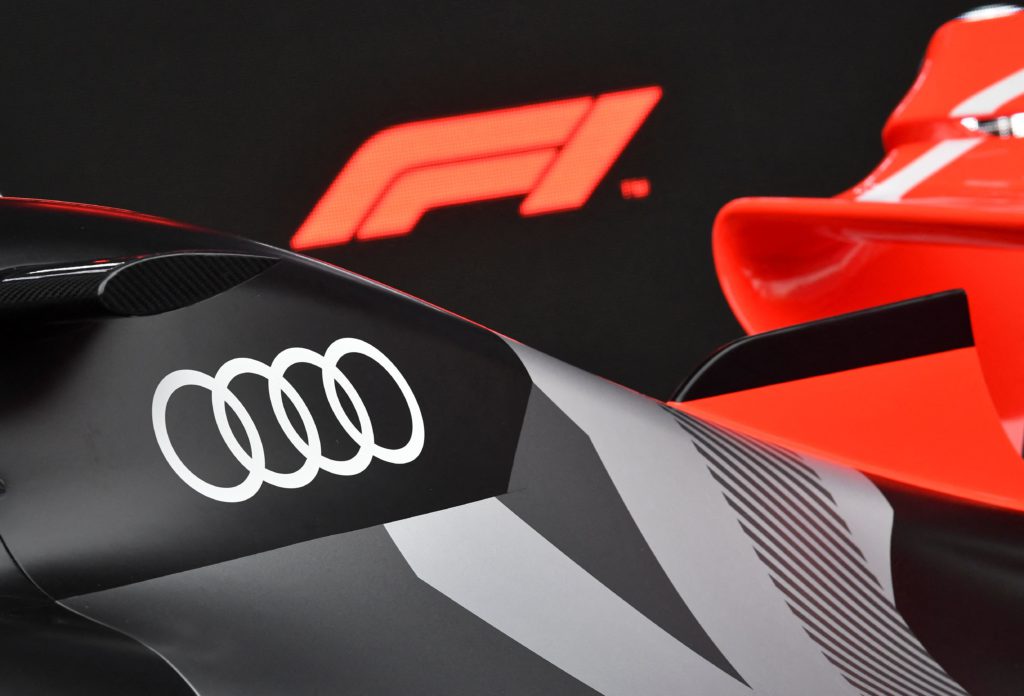
(Bloomberg) — Germany’s Audi is joining Formula 1 in 2026 as the Volkswagen AG business bets it can bolster its brand by competing in the popular racing circuit.

Audi will build a dedicated Formula 1 power train at a facility in Neuburg, Germany, the carmaker said Friday. It will make a decision on which team to partner with by the end of the year.

Formula 1 intends to switch to cars running on synthetic fuel from 2026 as part of a plan to become carbon neutral by the end of the decade. The change in technology is a unique opportunity to start competing in the franchise that’s been dominated by Mercedes.

“Motorsport is an integral part of Audi’s DNA,” Chief Executive Officer Markus Duesmann said in a statement. “With the new rules, now is the right time for us to get involved.”

READ: What Audi and Porsche Could Stand to Gain From Joining Formula 1

Volkswagen’s supervisory board in April approved plans for Audi and the Porsche sports-car brand to potentially join the competition. Outgoing CEO Herbert Diess has said both businesses see Formula 1 as the most important lever to boost brand value, and pointed to the competition’s plans for expansion in China and the US.

Porsche has advanced a bid to join the competition after documents revealed last month detailed its plan to buy half of Red Bull Technology, which builds chassis for the Formula 1 team Oracle Red Bull Racing.

Audi and Porsche will develop separate power trains if they are both to race in Formula 1, Duesmann told reporters on Friday. Audi’s investment in the competition is “very long-term,” the executive said, adding that he hopes for the brand’s future team to feature a German driver.

(Updates with CEO comment in final paragraph.)

More stories like this are available on bloomberg.com

©2022 Bloomberg L.P.
China Telecom Philippine Venture May Post Profit by 2026

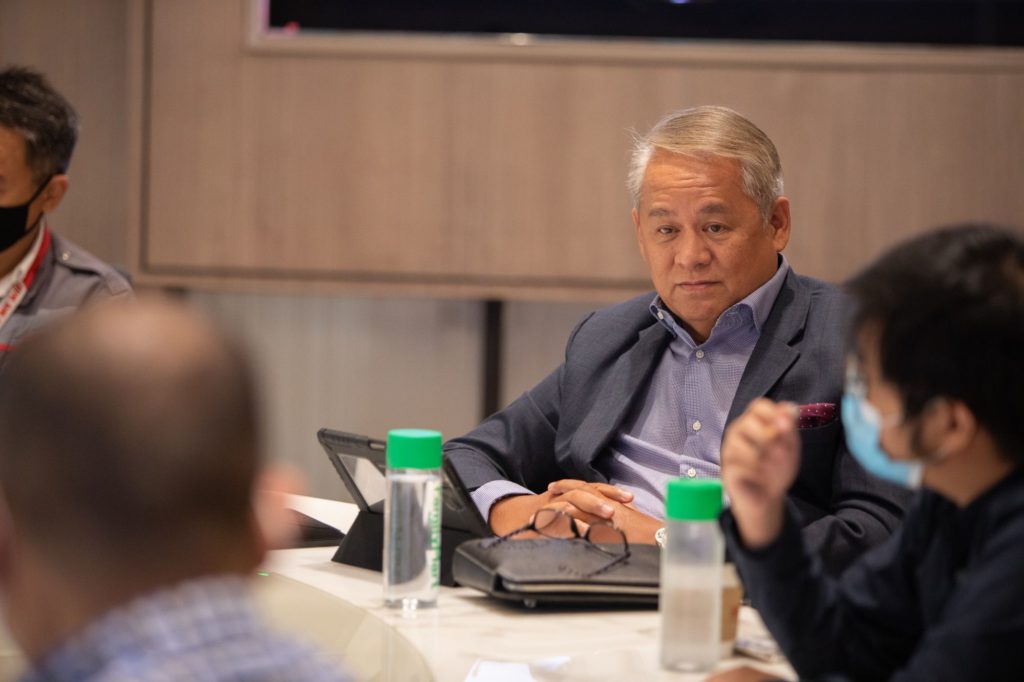
(Bloomberg) — China Telecommunications Corp.’s Philippine venture expects to post its first profit in as early as four years, the majority shareholder of the Southeast Asian nation’s third mobile-phone provider said.

A positive bottomline “will emerge” for DITO Telecommunity Corp. by 2026 or 2027, said Ernesto Alberto, president of DITO CME Holdings Corp. that’s owned by businessman Dennis Uy. 

“We are also on track on the business plan despite two-and-half years of the pandemic,” Alberto said in an interview this week with other officials of Uy’s businesses. The telecom venture’s earnings before interest, taxes, depreciation and amortization is also on track to be positive as early as end-2024 “assuming no event risk,” Alberto said.

“With an already saturated mobile-phone market, DITO Telecom must acquire market share from its rivals by offering a network with better quality” to achieve its profitability goal, says Carlos Temporal, analyst at AP Securities Inc. “DITO must build a strong image to maximize monetization of its subscribers base.”

DITO CME may sell down its 53% stake in DITO Telecom to raise its equity share to help fund venture’s expansion and has asked banks to find it an “ideal private equity placement partner,” Alberto said.

Still, the DITO CME president said a preferred option is to use its share in DITO Telecom to raise its share of equity component with a 2-3 year loan with balloon payment. “We are confident that the value of shares will be much more — barring of course, event risks — two, three years down the road,” he said, adding that talks are on with foreign and local lenders on this “bridge facility.”

Shares of DITO CME fluctuated between gains of as much as 1.3% and losses of up to 0.5% before closing unchanged at 3.85 pesos at the end of Friday trading in Manila.

Other Highlights:

  • DITO Telecom is also optimistic that it will complete by November talks with a group of lenders led by Bank of China for a $4.1 billion long term loan to fund rollout of its network which is required to have 84% population coverage by 2024.
  • By 2024, DITO Telecom “will be on even keel competition with the incumbents in terms of capacity but with a much more brand-new network without any legacy baggage,” Alberto said.
  • The mobile-phone provider, which started commercial operations in March 2021, is close to hitting its 12 million customer goal by year-end, with the subscriber count currently nearing 11.5 million.

(Adds analyst’s comment in fourth paragraph, share price in sixth paragraph)

More stories like this are available on bloomberg.com

©2022 Bloomberg L.P.
Panasonic in Talks for $4 Billion Battery Plant in US: WSJ

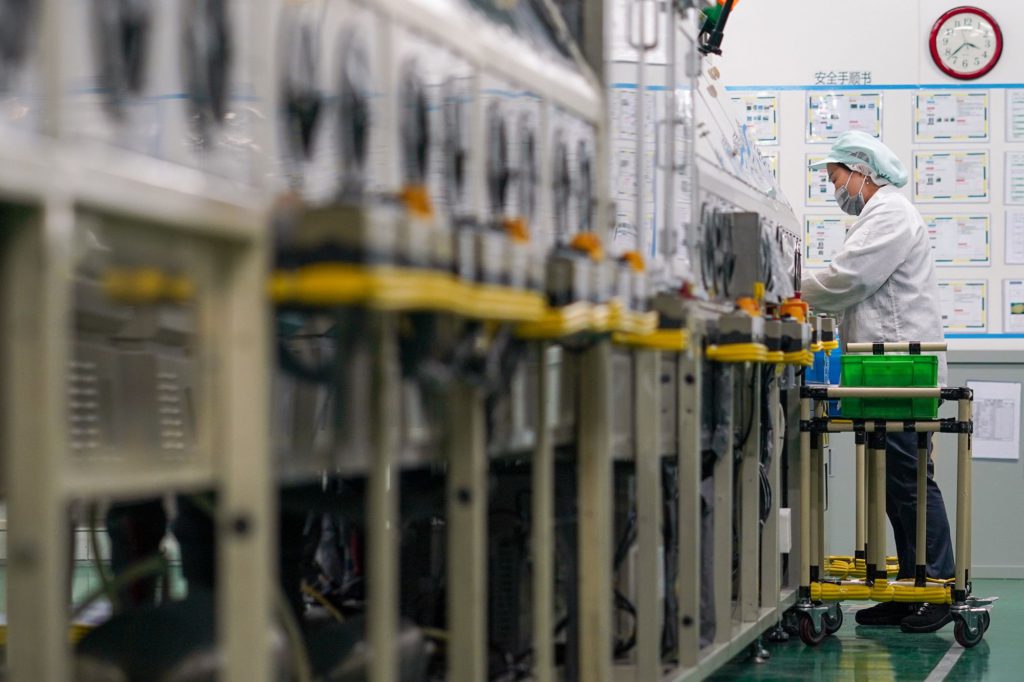
(Bloomberg) — Panasonic Holdings Corp., which supplies electric car batteries to Tesla Inc., is in talks to build another battery plant in the US worth around $4 billion, the Wall Street Journal reported Friday, citing people familiar with the matter that it didn’t identify.

Oklahoma is a likely location for the new plant, although there are no guarantees an agreement will be reached, according to the report. Any new facility would be on top of another $4 billion EV battery factory that Panasonic said in July it plans to build in Kansas.

A spokeswoman for Oklahoma Governor Kevin Stitt declined to comment to the WSJ. 

A representative for Panasonic said the company is “examining various growth strategies for our automotive battery business, but there is no further information that we can share at the moment aside from what we have already announced.”

The Japanese manufacturer is seeking to ramp up production capacity to meet growing demand from Tesla and other electric vehicle makers as consumers start to embrace cleaner cars in a meaningful way. EV cell production is a business the 104-year-old electronics giant sees as critical for its future growth.

Though Panasonic has supplied Tesla from its early days, it’s been slower to build scale versus rivals LG Energy Solution Co. of South Korea and China’s Contemporary Amperex Technology Co. Ltd., which is the world’s largest maker of EV batteries.

Korean battery makers also have a slew of plans for battery plants in the US, constructing four for General Motors Co., two for Stellantis NV and three for Ford Motor Co.

(Updates with response from Panasonic in fourth paragraph.)

More stories like this are available on bloomberg.com

©2022 Bloomberg L.P.
Biggest EM Asia Stock Inflow Since 2020 Faces Jackson Hole Test

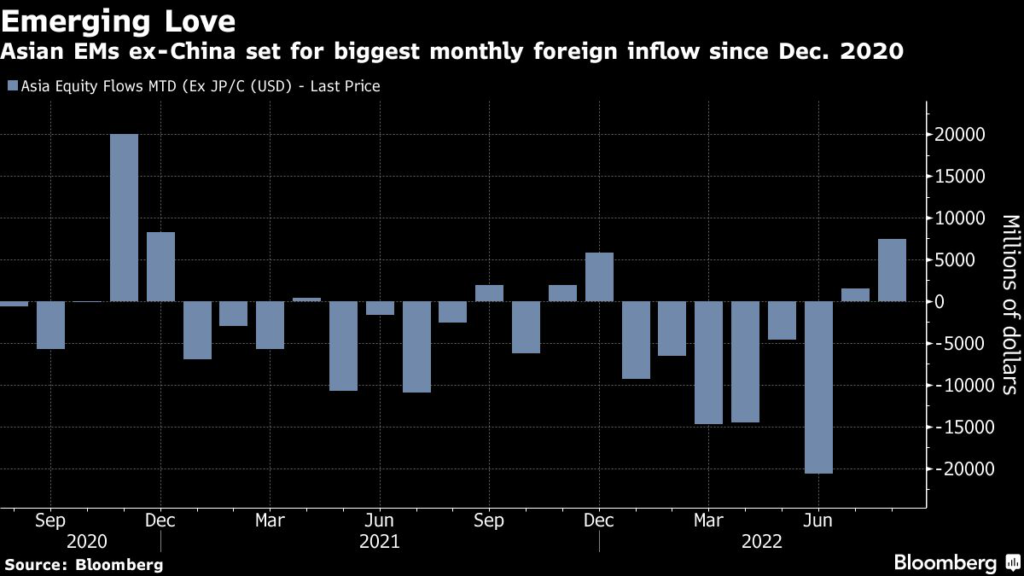
(Bloomberg) — Global funds haven’t been this optimistic about emerging Asia ex-China stocks in almost two years. Whether this lasts will depend on the US policy signals that emerge Friday.

Overseas investors poured a net $7.5 billion into nine regional markets so far in August, the biggest monthly inflow since end-2020, according to exchange data compiled by Bloomberg. India accounted for the lion’s share as foreigners pumped in $5.7 billion, while South Korea received $2.3 billion.

The wave of buying mirrors a similar dash into developing Asian bonds, and this investor optimism will be tested when Jerome Powell sets out the path for US policy on Friday. Inflows may dry up if the Federal Reserve Chair signals a determination to press on with aggressive rate hikes to curb inflation.

Fed’s Jackson Hole Conference Is Underway: Here’s What to Expect

Powell’s remarks are likely to help define the path for emerging Asian stocks, which are languishing near a two-year low. Concerns that rising interest rates may tip the global economy into a recession have eroded demand for equities.

For now, the wave of inflows is fueling hope of more buying, especially in the case of India where funds are returning after a record $33 billion exodus between October and June. An improving outlook for the economy and corporate earnings is boosting confidence, and the market’s relative appeal has also increased as China struggles with a property crisis and sporadic Covid lockdowns.

“A trend reversal has emerged in the case of Indian equities, as FIIs turned net buyers in July after nine months of relentless selling,” Herald van der Linde, head of APAC equity strategy at HSBC Holdings Plc, wrote in a note on Thursday.

Read: Sensex May Double in Three Years, Bloomberg Intelligence Says

More broadly, funds that have a mandate to invest in Asia are rotating toward underweight markets from overweight ones, according to HSBC’s analysis.

“Over the past month, these funds appear to have trimmed exposure to Asean, Korea, and Hong Kong equities to add to markets where they are underweight, such as mainland China, India and Taiwan,” Linde wrote.

More stories like this are available on bloomberg.com

©2022 Bloomberg L.P.

Close Bitnami banner
Bitnami
