
Bloomberg

Sam Bankman-Fried’s FTX and Alameda Merge Their VC Operations

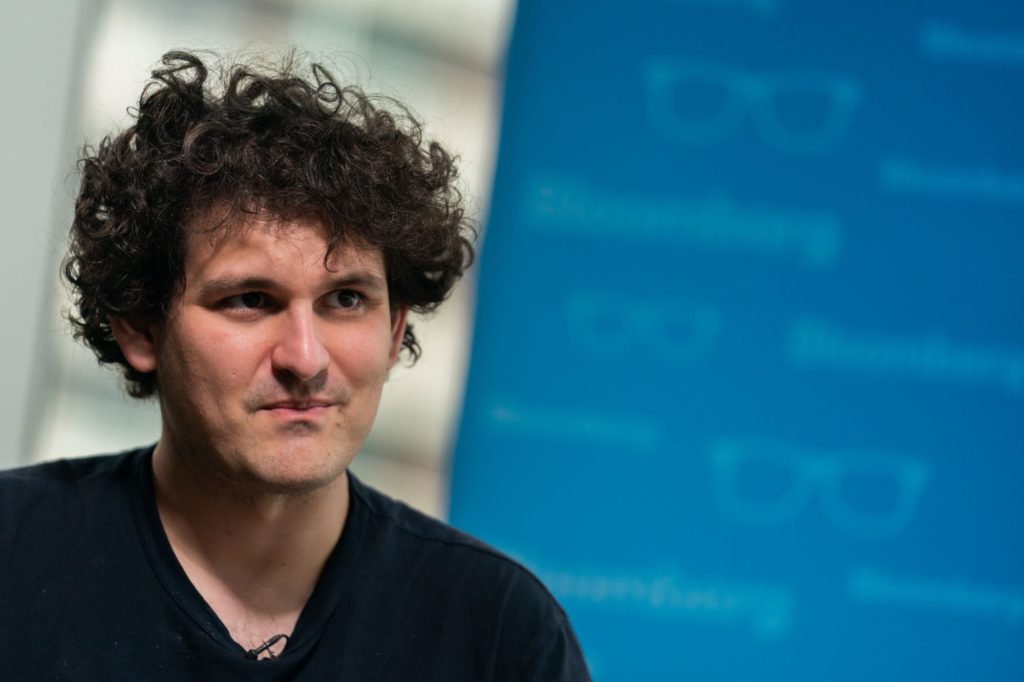
(Bloomberg) — Crypto exchange FTX absorbed the venture capital operations of Alameda Research, an effort to consolidate parts of billionaire Sam Bankman-Fried’s empire as it copes with a prolonged decline in cryptocurrency prices.

Alameda Chief Executive Officer Caroline Ellison outlined the change, which hasn’t been previously reported, in an interview with Bloomberg. The move took place before Ellison’s co-CEO, Sam Trabucco, said this week that he was stepping down and would move into an advisory role.

Brian Lee, formerly a partner at Alameda Research Ventures, now works at FTX Ventures, the startup investment arm of the crypto exchange.

While the implications were small for Alameda’s staffing, they are significant for the crypto startup industry. Alameda was a prolific investor that backed more than 150 private companies, according to research from PitchBook. Its portfolio includes the nonfungible token marketplace Magic Eden and crypto bank Anchorage Digital.

Read more: Magic Eden’s valuation surges

The transition began in January, when FTX Ventures raised $2 billion, said Amy Wu, who runs the fund. No money changed hands between FTX and Alameda, she said. Venture investing is now completely concentrated under FTX Ventures. The crypto exchange, the venture arm and Alameda are all independent from one another, Wu said. “All three are operating completely as separate entities.”

Sam Bankman-Fried, who is the founder and CEO of FTX, is listed as one of six “investors” in FTX Ventures, along with Wu, Lee, Adam Jin and Ramnik Arora, according to its website. Arora leads product at FTX. 

Alameda will focus mainly on exchange and over-the-counter trading and decentralized finance, Ellison said. The agreement to move its venture capital unit to FTX isn’t meant to signal a closer relationship between the two companies, she said. “We’re arm’s length and don’t get any different treatment from other market makers,” she said. “The Alameda team isn’t working too much on the venture side day-to-day.”

The two companies, FTX and Alameda, have worked together on deals at times in the past. Alameda offered Voyager Digital LLC, a crypto lender and trading platform, a $485 million loan in June, but the lifeline wasn’t enough to stave off a liquidity crisis and bankruptcy. Alameda and FTX made a joint cash offer to purchase all of Voyager’s digital assets and loans, but Voyager called the offer a “low-ball bid” that disrupted the bankruptcy process.

Ellison said Alameda is open to doing similar bailouts as the crypto winter rages on. “The more systemically important someone is, the more important it would be to try to support them,” she said.

The move to FTX shouldn’t be too disruptive for Lee, the former Alameda venture capitalist. Both companies are located on the same corporate campus in the Bahamas.

Read more: Sam Bankman-Fried Turns $2 Trillion Crypto Rout Into Buying Opportunity

More stories like this are available on bloomberg.com

©2022 Bloomberg L.P.
Micron Seeks Tax Breaks for $160 Billion Chip Plant Near Austin

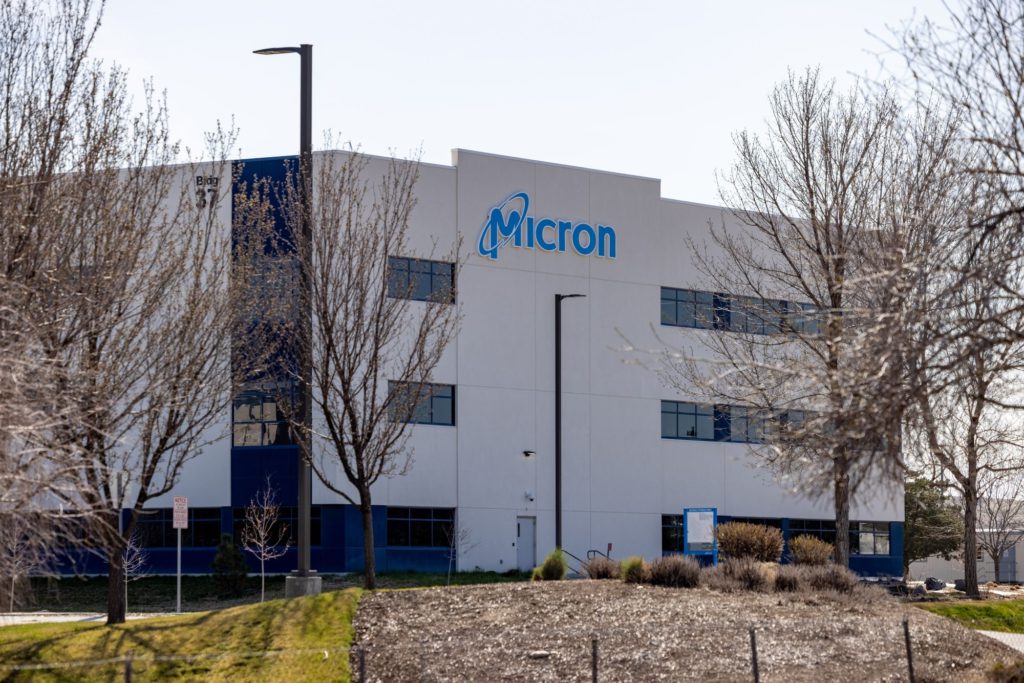
(Bloomberg) — Micron Technology Inc. is considering a plan to spend as much as $160 billion on a new semiconductor factory in central Texas. 

The company filed applications with the state comptroller’s office to lock down property-tax breaks in exchange for a potential new facility near Lockhart, an exurb about 30 miles (48 kilometers) south of Austin. It would be built in eight phases with construction beginning in January 2023, according to the application. 

There’s no guarantee that Micron will make an investment of that magnitude, and a company spokeswoman declined to comment on the potential spending. But companies like Micron are rushing to file applications before the tax-break program, known as Chapter 313, expires at the end of this year. That way they’ll have the incentives if they do decide to go through with the plans.

“We have not made any final decisions regarding the location, timing or scope of any expansion,” Moira Whalen, a spokeswoman for Micron, said in an email. “Filing these applications now allows us to preserve options for potential future expansion needed to meet long-term memory demand.”

Texas has seen a record number of applications under Chapter 313 this year. Another chipmaker, Samsung Electronics Co. filed multiple applications for potential plants in Austin and Taylor, Texas, although the company said there weren’t specific plans to build at this time. 

In its application, Micron noted that Texas’s high property taxes are a disincentive for developers and that the tax break would be a determining factor in its decision to locate the facility within the state.

“Thus, in the absence of a Chapter 313 value limitation agreement, the economic rate of return on this project would be greater in locations outside the state of Texas,” the application read. 

Last year, Micron announced it would spend $150 billion over the next decade on plants and research and development. 

More stories like this are available on bloomberg.com

©2022 Bloomberg L.P.

Google to Label Medical Facilities That Provide Abortions

(Bloomberg) — Google will now clearly label facilities in the US that provide abortions in search results and in Google Maps, seeking to eliminate confusion between medical clinics and so-called crisis pregnancy centers.

If the Alphabet Inc.-owned search giant has confirmation a place offers medical services to terminate a pregnancy, it will say so clearly, with a label such as “provides abortions.” For search results that may be relevant but for which Google doesn’t have confirmation, it will state, “Might not provide abortions,” according to a company spokesperson.

The adjustment follows a Bloomberg News analysis that found Google Maps was steering people who searched for abortion clinics to crisis pregnancy centers roughly a quarter of the time. Those centers, with a mission to encourage women to go through with their unwanted pregnancies, dominated results in several states where abortion is restricted or illegal.

“When people turn to Google to find local information, we aim to help them easily explore the range of places available so they can determine which are most helpful to them,” a Google representative said in a statement. “For a number of categories where we’ve received confirmation that places offer specific services, we’ve been working for many months on more useful ways to display those results.” The change was reported earlier by TechCrunch. Read more Bloomberg stories about how tech companies are navigating privacy and misinformation challenges in the post-Roe v. Wade world 

Since the US Supreme Court overturned Roe v. Wade, 12 states have criminalized abortion and six have put time limits on the procedure. On Thursday, new bans went into effect in Idaho and Tennessee, and in Texas, abortion is now considered a felony and punishable by up to life in prison. The CPCs target women who are seeking abortions and, once in their facilities, may save their data — which could become useful to prosecutors if the women end up seeking abortions in one of these states.

Google has until now failed to eliminate inaccurate results in Maps, cited as a problem by media organizations since at least 2018, when news outlets asked the company to explain why searches were turning up CPCs. Google Maps is the dominant navigation service in the US, with over 118.4 million monthly users in the country and a 56% share of the market among mobile users, according to a recent report from Insider Intelligence. Bloomberg found that people seeking abortions were among those users who were erroneously directed to CPCs. 

Also this week, Yelp Inc. made a policy change to put disclaimers on CPCs, flagging the centers as places that “provide limited medical services and may not have licensed medical professionals onsite.” The rule will apply to religious and secular CPCs in the US and Canada.

(Adds Yelp change in the final paragraph)

More stories like this are available on bloomberg.com

©2022 Bloomberg L.P.

NASA, Boeing Target February 2023 for Crewed Starliner Mission

(Bloomberg) — NASA aims to use Boeing Co.’s Starliner space vehicle for a crewed mission to the International Space Station as soon as February, the agency said. The flight will mark a major milestone in Starliner’s development, which has suffered from delays and testing setbacks.

The planned eight-day mission would be Starliner’s first with astronauts aboard. While the exact launch date hasn’t been set, February “is likely the best window,” Steve Stich, manager of NASA’s Commercial Crew Program, said Thursday in a press conference. The agency had previously said it hoped to launch by the end of this year.

The National Aeronautics and Space Administration selected Boeing and Space Exploration Technologies Corp. in 2014 to build and operate vehicles that will ferry crews to the space station. In June, NASA announced it had selected two astronauts to fly on Starliner’s first crewed flight.

The plans come on the heels of a successful uncrewed test flight in May that was a welcome development after years of setbacks. Boeing has accrued $595 million in charges to cover Starliner delays, including $185 million last October.

Despite recent stock performance gains, Boeing Chief Executive Officer Dave Calhoun has remained under fire from customers and investors as the company has grappled with problems in its commercial aircraft operations.

More stories like this are available on bloomberg.com

©2022 Bloomberg L.P.
Chinese Stocks in the US Surge as Talks on Delistings Progress

(Bloomberg) — China stocks listed in the US surged by the most in more than two months as talks between both countries to avoid delisting of companies on the New York Stock Exchange ramp up.

The Nasdaq Golden Dragon China Index jumped as much as 6.5%, the most since June. Bloomberg News reported regulators in China have told accounting firms to be ready to bring audit paperwork for US-listed Chinese companies to Hong Kong, where it can be reviewed by the US Public Company Accounting Oversight Board, a person who asked not to be identified as the discussions are private. The 

Shares of US-listed tech giants including Alibaba Group Holding Ltd., JD.com Inc. and Pinduoduo Inc. all rose at least 9% Thursday. Meanwhile, NetEase gained 5.1%, while electric-vehicle makers Nio Inc. and Li Auto Inc. added 6.5% and 4.2% respectively. 

The PCAOB declined to comment, while the China Securities Regulatory Commission and the US Securities and Exchange Commission didn’t immediately respond to requests for comment. The Wall Street Journal has reported on this matter earlier.

“This is a fascinating development,” said Ed Moya, senior market analyst at Oanda Corp. “An official confirmation is needed but expectations were growing that this would get done as both countries are dealing with economic fragility,” he added.

Read more: US-China Talks on Delistings Advance With Hong Kong Inspections

Such a move would be a major step toward alleviating fears of mass forced delisting of US-listed Chinese stocks, something that has weighed on shares for more than a year. Earlier this month, China Life Insurance Co., PetroChina Co. and China Petroleum & Chemical Corp. were among a group of state-owned companies that announced plans to delist from American exchanges. Dow Jones reported on the news earlier. 

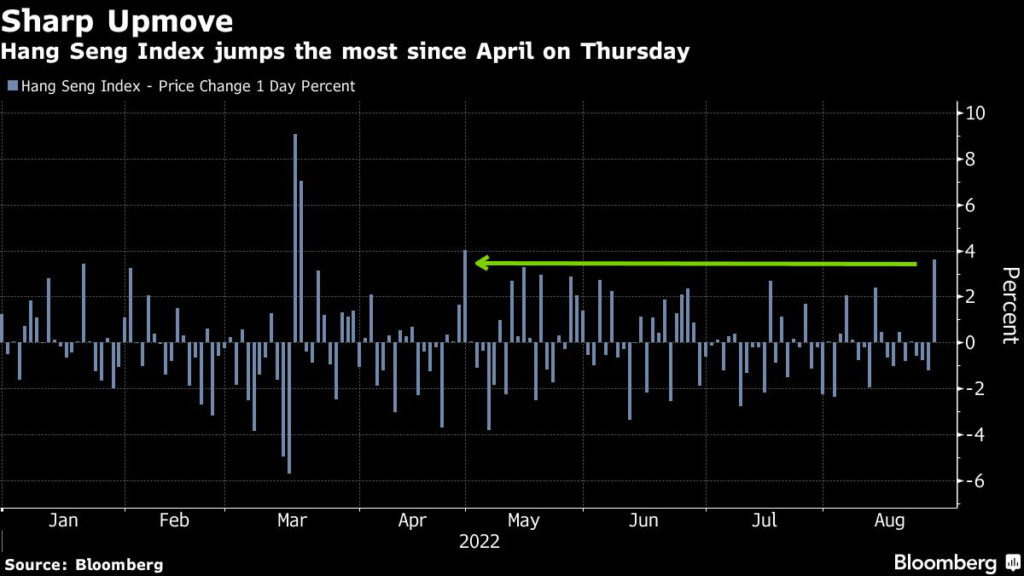
The rally in US trading follows what was the best day in nearly four months for Hong Kong’s Hang Seng Tech Index, which rose 6% on Thursday. That helped lead the city’s benchmark Hang Seng Index to a 3.6% gain, making it the best performer among Asia’s major equity gauges.

In addition to the Chinese government’s 1 trillion yuan ($146 billion) of support for the economy, traders cited short covering and an adjustment of positions ahead of Jackson Hole.

“Whether or not the rumor on an audit deal is true, Hong Kong shorts have pressed their bets in a light summer tape,” said Brendan Ahern, chief investment officer at Krane Fund Advisors LLC. “We have been setting up for an epic short squeeze that is contributing to today’s move.”

Stocks in Hong Kong had slumped to the lowest in months this week, as global risk-off sentiment spread ahead of the Federal Reserve’s Jackson Hole symposium. Concerns over China’s economic growth, with a deepening property crisis and power shortages spurred by a severe drought, had added to the gloom.

Following three days of losses, the Hang Seng Index was also looking ripe for a rebound to some market watchers based on various technical indicators.  

The gauge was near “oversold” levels on monthly measures of the relative strength index, approaching the 30-threshold that’s never been reached in data going back to 1972. Morgan Stanley strategist Gilbert Wong said “the risk of short squeeze in China and Hong Kong equities is rising.” 

(Adds details throughout, quote in ninth paragraph, updates pricing.)

More stories like this are available on bloomberg.com

©2022 Bloomberg L.P.
Investor Group Says Rogers M&A Debt Extension Fee Is Too Low

(Bloomberg) — Rogers Communications Inc. is facing opposition from some creditors over its plans to extend the deadline to wrap up the purchase of a smaller rival.

The Toronto-based cable and wireless firm is seeking approval from investors holding $9.35 billion of eight series of bonds to extend the deadline to complete its acquisition of Shaw Communications Inc. The proposed change applies to five series of US dollar notes and three series of Canadian dollar notes, and requires the consent of a majority of holders.

Under the current terms, Rogers has to repay the securities at 101 cents on the dollar if the C$20 billion ($15.4 billion) Shaw deal isn’t done by the end of this year. The merger has been delayed by Canada’s antitrust body, which has sued to block it, so Rogers is asking bondholders to extend the so-called special mandatory redemption clause to December 2023.

The company is offering to pay bondholders fees in return for their permission. But some don’t like the terms, according to a note Thursday from the Credit Roundtable, an industry group that represents the interests of bondholders. 

Investors in the US notes would initially be paid a consent fee ranging from $23.50 to $62.60 per $1,000 in face value. They can receive additional fees of $11.45 to $31 if the merger doesn’t close by Dec. 31 and Rogers isn’t forced to repay the notes at that time. Owners of the Canadian notes are eligible for similar fees. 

Some creditors say the total consent fees are undervalued, especially since the bonds declined after the consent solicitation was announced at the end of trading on Aug 22. Bond investors in Canada say the fees should be paid to all holders, not merely those who agree to Rogers’ request. 

“We advocate that consent fees be paid to all bond holders that participate in the solicitation regardless of whether they consent to the changes,” the Canadian Bond Investors’ Association said in a statement. “It is our reading of the Rogers consent solicitation that the consent fees will only be paid to bond holders that provide a positive consent.”

Short Deadline

Rogers has set a deadline of 5 p.m. New York time on Aug. 31 for bondholders to give their consent. Bank of America Corp., Royal Bank of Canada and Bank of Nova Scotia are organizing the transaction.

The deadline doesn’t give investors enough time to examine the consent, especially given the thinner liquidity of the bond markets in August, the Credit Roundtable’s note said.

A representative for Rogers didn’t immediately reply to a request for comment. 

Rogers shouldn’t be able to optionally circumvent the SMR, the Credit Roundtable said in a note to members. The group held a call with investors Thursday and is now gathering feedback about whether there’s enough opposition to force Rogers to make changes, according to a person familiar with the matter.

Rogers may have pay to pay about C$775 million to bondholders should it get 100% acceptance from the creditors, Jerome Dubreuil, a telecommunications analyst at Desjardins Securities Inc., said in a note to investors.

(Updates with comment from Canadian Bond Investors’ Association in 7th paragraph, note from Desjardins analyst and other additional context)

More stories like this are available on bloomberg.com

©2022 Bloomberg L.P.
ETF Holding Hedge-Fund Darlings Is Lagging Every Major Index

(Bloomberg) — Even elite money managers are struggling to pick winners in this year’s vicious market.

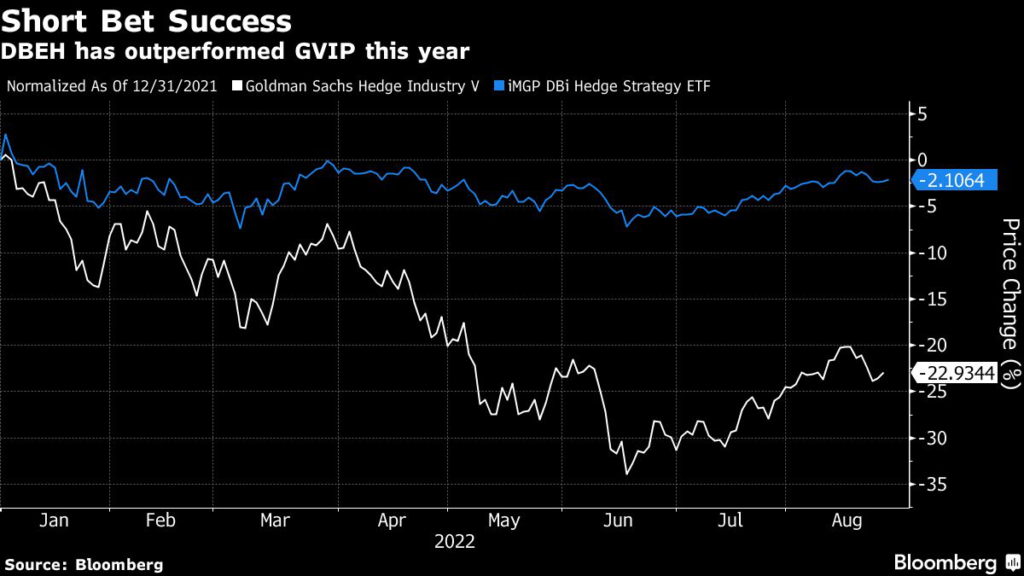
The top stocks favored by hedge funds are doing even worse than all the major benchmarks this year, based on an ETF tracking the cohort. The $151 million Goldman Sachs Hedge Industry VIP ETF (ticker GVIP) has tumbled 23%, falling more than funds that track the S&P 500, the tech-heavy Nasdaq 100, the Dow Jones Industrial Average and the Russell 2000.

GVIP tracks an index that consists of the 50 stocks that appear most frequently among the top ten holdings of US hedge funds. The index, based on 13F filings of hedge fund managers, is rebalanced quarterly. The stocks are equally weighted at each rebalance. 

The ETF has had the greatest exposure to the technology sector throughout this year, according to data compiled by Bloomberg. Some of GVIP’s top tech holdings include Zendesk Inc. and Alibaba Group Holding Ltd. Tech stocks had plummeted at the start of this year as rising prices stoked fears that higher interest rates could weigh on valuations. While technology has somewhat rebounded in the past two months, it is still among the worst-performing sectors this year. 

“It is not unusual that hedge fund investors overweight technology,” said Arthur Hogan, chief market strategist at B. Riley Wealth. “There’s much more beta,” referring to a measure of a stock’s volatility. The higher the beta, the greater the chance of more reward but also more risk.

Recent picks by hedge funds don’t appear to be performing well this quarter either. The S&P 500 companies that saw the biggest increases in hedge-fund ownership in the second quarter have mostly been underperforming so far this quarter, according to Lori Calvasina, head of US equity strategy at RBC Capital Markets. This includes Boston Properties Inc. and Warner Bros Discovery Inc., according to Calvasina.

Conversely, many of the names that saw the biggest declines in hedge fund ownership have been outperforming over the same period, she said. This includes Amazon.com Inc. and On Semiconductor Corp.

To be sure, it’s not all bad news for hedge funds, since long positions are typically just one side of their book. The $19 million iM DBi Hedge Strategy ETF (DBEH), which emulates both the long and short side of a hedge-fund strategy, has fallen just 2% this year.

(Updates heading in table.)

More stories like this are available on bloomberg.com

©2022 Bloomberg L.P.

Facebook Is Building a Customer-Service Group to Field Content Complaints

(Bloomberg) — Facebook parent company Meta Platforms Inc. is building a customer-service division to help users of its social networks who have had posts or accounts removed unexpectedly.

The effort is in the early stages, and has taken on a higher priority thanks to feedback Meta has gotten from the Oversight Board, the independent body set up in 2020 by the company to review some of its decisions on questionable or problematic content. The board has received more than a million appeals from users, many of them related to account support.

“How do we provide care and customer service and responsiveness to people about why their content has been taken down or why their accounts are taken down?” said Brent Harris, Meta’s vice president of governance, who confirmed that improving Meta’s customer service is something they are “spending a bunch of time on.” He didn’t provide details on how the group would interact with users.

Meta, with more than 3 billion global users across social-media apps including Facebook, Instagram, WhatsApp and Messenger, is notoriously poor at customer service. The issue has intensified as the company relies more heavily on artificial intelligence to make content moderation decisions, which sometimes leads to the mistaken automated removal of users’ accounts or posts with little explanation.Both regular users and small business advertisers often complain that there is almost no recourse for a locked, suspended or hacked account. The company offers automated tools to try to recover an account, but it’s difficult to make contact with a person who actually works at Meta. Users instead sometimes resort to messaging employees or journalists directly asking for help.

The Oversight Board has made more than 100 formal recommendations to Meta since its inception, including suggested policy changes and requests to translate the company’s rules into more languages.

Improving customer service wasn’t a formal recommendation, but the Oversight Board has helped illuminate the issue as part of the broader feedback it gives to Meta, Harris said. Of the official recommendations the board has issued, Meta has implemented or considered 73% of them, according to a quarterly report issued by the company Thursday.

The report also included some new details about Meta’s newsworthiness exemption. The company has long allowed some posts that have news value, such as those from world leaders, to remain on the service even if they violate the rules—a policy that Twitter Inc. also holds—but has never reported how often that policy is used.

Meta said it invoked the newsworthiness exemption 68 times in the 12 months that ended June 30, and 13 of those times were “issued for content posted by politicians.” Meta didn’t include the full list of posts that received the exemption, but a spokesman said none of the 13 political exemptions were from US politicians.The Oversight Board, while not part of Meta, is conceived and funded by the company. Chief Executive Officer Mark Zuckerberg wanted an external body with authority to check Meta’s work, and reverse its decisions if necessary.

Meta on Thursday also published a quarterly report on its content enforcement decisions. The company removed nearly 500 accounts, pages and groups linked to the far-right extremist group the Proud Boys last quarter, according to Monika Bickert, Meta’s vice president for content policy. Meta had decided to ban the group in 2018, but content has continued to crop up; Bickert says Meta has removed roughly 750 assets linked to the group in the past year. 

(Adds Proud Boys content removal in the final paragraph.)

More stories like this are available on bloomberg.com

©2022 Bloomberg L.P.
India Accuses A16Z-Backed Crypto Exchange CoinSwitch of Forex Violations

(Bloomberg) — India’s anti-money laundering agency conducted searches on Thursday at five premises of a16z-backed crypto exchange CoinSwitch Kuber, alleging violations of forex laws, a person with knowledge of the matter said.

The Enforcement Directorate searched office facilities and residences of directors and the CEO. The exchange is under suspicion of acquiring shares of over 20 billion rupees ($250 million) in contravention of forex laws, the person said, asking not to be named as the matter isn’t public. The exchange was also found non-compliant with certain know-your-customer norms, the person said.

“We receive queries from various government agencies,” a spokesperson for CoinSwitch said. “Our approach has always been that of transparency. Crypto is an early stage industry with a lot of potential and we continuously engage with all stakeholders.”

An Enforcement Directorate spokesperson did not respond to calls for comment. 

The Bengaluru-based exchange, which is backed by Tiger Global, Sequoia and Coinbase Ventures, is one of India’s largest crypto exchanges. It achieved unicorn status last year during a funding round led by Andreessen Horowitz. 

Read more: Police Tactics Chill India’s Crypto Winter: Andy Mukherjee

The development spells further trouble for the crypto sector, which has faced scrutiny from the Indian authorities over potential money laundering through instant loan apps and the purchase and transfer of virtual crypto assets.

Last year, the agency issued a show-cause notice to WazirX cryptocurrency exchange over alleged contravention of forex laws involving cryptocurrencies worth 27.9 billion rupees ($382 million).

The agency earlier this month froze WazirX assets worth $8.2 million in relation to the instant loan app case. It also froze assets worth 3.7 billion rupees (nearly $46 million) of crypto asset lender Vauld.

More stories like this are available on bloomberg.com

©2022 Bloomberg L.P.

Cboe Is Teaming With Virtu, Jane Street to Build Crypto Business

(Bloomberg) — Cboe Global Markets Inc. is partnering with financial firms including market makers DRW, Jane Street and Virtu Financial Inc. as it builds out its crypto business.

The Chicago-based exchange operator said it’s in “advanced discussions” with potential equity partners including B2C2, Hidden Road, Interactive Brokers Group Inc. and Jump Crypto, according to a statement Thursday. Terms of the equity partnership, which is expected to be finalized in coming weeks, weren’t disclosed.

“We look forward to leveraging the combined expertise of our partner firms to help bring Cboe’s regulatory framework, transparency, infrastructure and data solutions to further grow the digital asset market on a global scale,” Cboe Chief Executive Officer Ed Tilly said in the statement.

Cboe is working to build its presence in crypto markets. In 2017, it was the first exchange to list Bitcoin futures in the US, then exited the market in 2019 and was replaced by CME Group Inc. It re-entered the space earlier this year with the acquisition of crypto firm Eris Digital Holdings LLC, also known as ErisX, which is slated to be renamed Cboe Digital.

Cboe said it plans to form a Digital Advisory Committee that it includes equity partners. The committee will advise the firm on the development of ErisX spot and derivatives markets and the Cboe Digital business.

More stories like this are available on bloomberg.com

©2022 Bloomberg L.P.

Close Bitnami banner
Bitnami