Bloomberg

Alfred Co-Founder Says Female-Led Business `Ideas Are No Smaller’

(Bloomberg) — When the news broke that Adam Neumann’s latest venture, a residential real estate company called Flow, had raised about $350 million from Andreessen Horowitz, the startup’s premise sounded similar to another company Neumann had been involved in: Alfred Club Inc.

Neumann invested in Alfred in 2020, about a year after his ouster as the chief executive officer of WeWork Inc., the co-working company he co-founded. Alfred offers technology and services to improve the experience of renters in apartment buildings—and though details on Neumann’s Flow are scarce, it’s also focused on residential real estate and renters. 

That leaves the founders of Alfred, Marcela Sapone and Jessica Beck, in a potentially tough spot. Their major investor, Neumann, is now running a would-be rival. Forbes previously reported on the size of Neumann’s stake, estimating that he still owns about 10% of the company. A spokesperson for Neumann told Bloomberg that he and his family have always been supportive of Alfred.

Sapone and Beck spoke for the first time since the news of Neumann’s company in an interview with Bloomberg Television on Wednesday. The co-founders declined to comment on Neumann’s decision to start a competitor, but Sapone said that she believes investors can benefit from giving female founders their fair shot. “Female-led companies — the ideas are no smaller, and our ability to execute is not less,” she said. “I think there’s a huge arbitrage opportunity for backing female founders.”She also said that Andreessen Horowitz’s funding was nevertheless a good signal for venture capital interest in residential real estate. 

“Andreessen is a storied firm and fantastic investor, and we’re excited about the attention they’re bringing to the space,” Sapone said. Alfred has always been focused on residential as opposed to other types of real estate, she said. The company originally started as a service that added amenities to apartment buildings and has moved into providing the software to manage buildings. 

Despite Neumann’s spotty track record with WeWork — he was wrapped up in allegations of self-dealing, lavish spending and eccentricities, and the company once privately valued at $47 billion now trades at around $3 billion — Andreessen Horowitz has been a vocal backer of his new project.

(Corrects description of allegations in the last paragraph.)

More stories like this are available on bloomberg.com

©2022 Bloomberg L.P.

World Monkeypox Cases Fall, Led by Decline in Europe

(Bloomberg) — Global monkeypox cases declined for the first time in a month led by a drop in infections across Europe, even as concerns increased about a vaccine supply crunch.

New cases around the world fell 21% in the week ending Aug. 21 from the previous week, as dwindling caseloads in Europe offset a continued rise in the Americas, the World Health Organization said Thursday. 

The WHO noted that 16 countries haven’t reported new infections for more than three weeks, the maximum incubation period for the disease. The virus has spread to nearly 100 countries, with the global caseload topping 41,000.

“There are signs the outbreak is slowing in Europe where a combination of effective public health measures, behavior change and vaccination are helping to prevent transmission,” WHO Director-General Tedros Adhanom Ghebreyesus said at an online briefing Thursday. “However, in Latin America in particular, insufficient awareness or public health measures are combining with a lack of access to vaccines to fan the flames of the outbreak.”

The US saw the heaviest increase in the past week and has reported a total of 14,049 cases as of Monday. With a moderating trend in Europe, most of the new infections are being reported in the Americas, primarily among men who have sex with men.

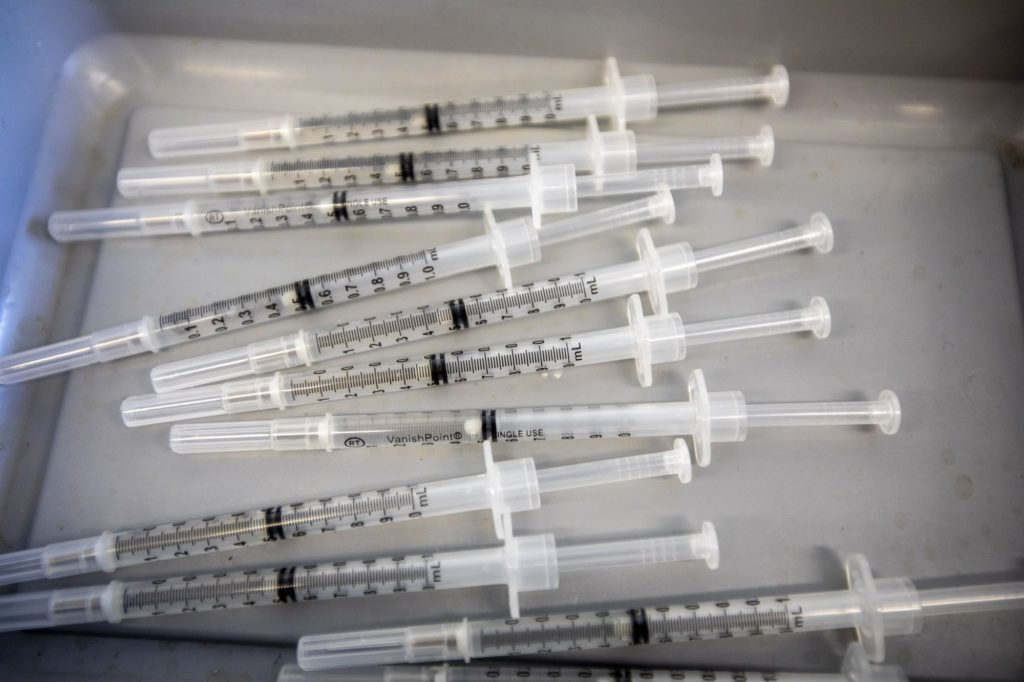
The steady climb in cases over the past few months has prompted countries to scramble for vaccines, and surging demand has strained production at Bavarian Nordic A/S, the Danish producer of the only shot approved for the disease.

Bavarian Nordic has signed a deal with Grand River Aseptic Manufacturing to expand production in the US. Health authorities there, in the European Union and in the UK have called on clinics to administer shots at lower doses to stretch supplies. It has also agreed to support access to monkeypox vaccine in Latin America and the Caribbean region. 

At least 18 million people, defined as men who have sex with men and who either take medication to prevent HIV or already live with an HIV infection, need to be vaccinated against monkeypox, according to an estimate by data analytics firm Airfinity. Given Bavarian Nordic’s current manufacturing capacity, all in this group could be vaccinated with one dose by November, Airfinity said.

(Updates with WHO director-general comment in fourth paragraph)

More stories like this are available on bloomberg.com

©2022 Bloomberg L.P.

Biden to Sign Order to Begin Implementing $52 Billion Chip-Manufacturing Law

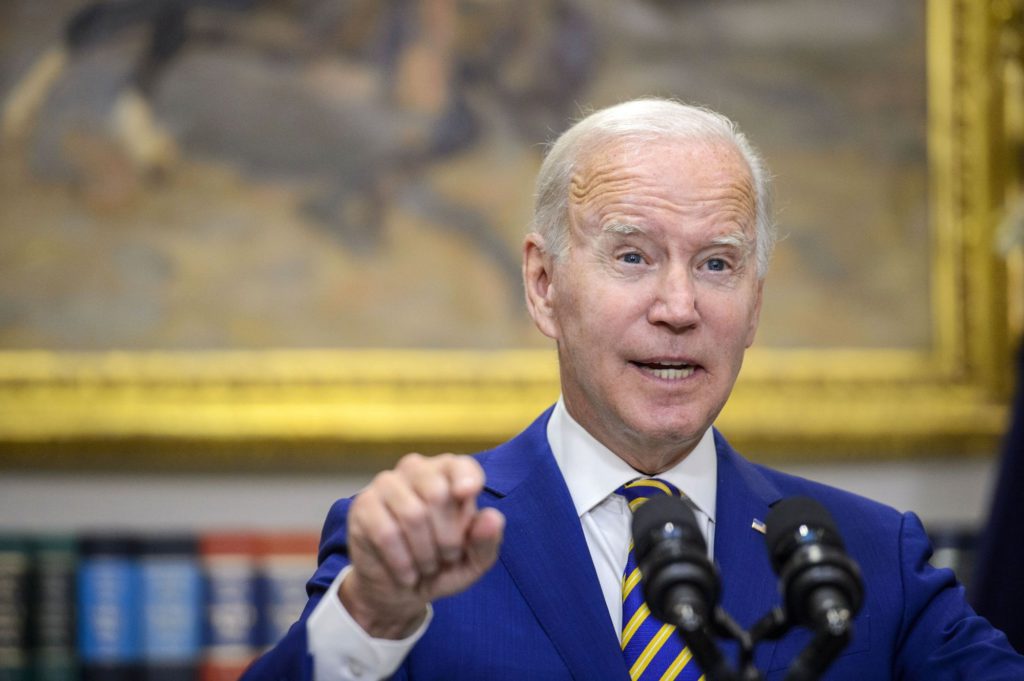
(Bloomberg) — President Joe Biden signed an executive order Thursday to fast-track implementation of a law aimed at boosting domestic semiconductor manufacturing and helping the US compete with China’s dominance in the industry. 

The directive establishes a steering committee to help agencies coordinate their efforts to put the law into action and details the administration’s priorities as companies begin applying for and using funds available under the $52 billion CHIPS and Science Act. 

The CHIPS Implementation Steering Council will be co-chaired by National Economic Director Brian Deese, National Security Advisor Jake Sullivan, and Office of Science and Technology Policy Acting Director Alondra Nelson, according to a White House memo.

Read more: Biden Signs Chips Bill, Unleashing Funding for US Production

Several Cabinet members will also be on the council, including Treasury Secretary Janet Yellen, Commerce Secretary Gina Raimondo, Secretary of State Antony Blinken, and Defense Secretary Lloyd Austin.

The order also lays out six priorities for the federal government to implement the law: protecting taxpayer dollars; meeting national security and economic interests; developing long-term US leadership in the sector; strengthening and expanding regional manufacturing and innovation clusters; attracting private sector investment; and generating broad benefits for stakeholders such as startups and minority-owned or rural businesses.

The Commerce Department today also launched CHIPS.gov, to provide updates to the public about the law’s initiatives.

Biden signed the chips legislation into law Aug. 9, one of a string of policy achievements for the president in the last month along with passage of a massive Democratic climate, health care and tax package, and a plan to offer relief for student loan borrowers. 

The law aims to sustain long-term research on the development of microchips, used in a range of products including cell phones, electric vehicles and household electronics. 

Silicon Valley was a leader in semiconductor development, but the US has since lost market share to manufacturers in Asia. The US share of global microprocessor chip production has fallen to 10% to 12% from 40% production in earlier years, according to Raimondo, who played a key role in advancing the law.

More stories like this are available on bloomberg.com

©2022 Bloomberg L.P.

Stocks Pare Gains in Countdown to Jackson Hole: Markets Wrap

(Bloomberg) — Stocks pared gains, with data painting a mixed picture of the economy and traders awaiting a key speech by Federal Reserve Chair Jerome Powell on Friday.

The S&P 500 cut its advance by about half in another session of below-average volume. The Nasdaq 100 outperformed major benchmarks amid a rally in marquee names like Apple Inc. and Amazon.com Inc., though Tesla Inc. whipsawed as its stock split took effect. The dollar fell, while Treasury 10-year yields remained near 3.1%.

The government’s main measures of US growth pointed in different directions in the first half of 2022, data showed Thursday, underpinning further debate on the health of the economy.

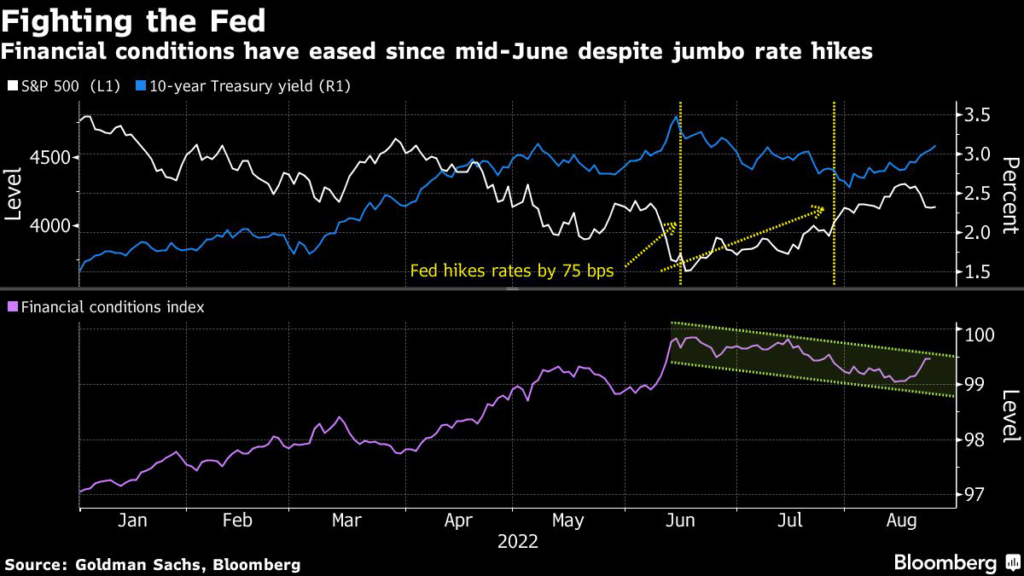
Kansas City Fed President Esther George joined the chorus of hawkish policy makers in the run-up to Jackson Hole, telling Bloomberg TV the central bank’s benchmark may have to rise above 4% to defeat inflation. The message has eroded a bounce in stocks and bonds from mid-June troughs. The tension in markets is whether those assets will continue to head back toward the lows of the year.

“Powell is likely to push back on premature expectations of a dovish pivot, reiterating the focus on the fight against high inflation,” said Silvia Dall’Angelo, a senior economist at Federated Hermes Ltd. “Whether markets take him seriously amid an increasingly gloomy outlook for the global economy is yet to be seen.”

Sentiment was boosted earlier after China stepped up stimulus with a further 1 trillion yuan ($146 billion) of measures. Traders expect markets to remain volatile as they look to Powell’s comments due Friday at the Jackson Hole meeting for clues on the pace of US monetary tightening. 

Crude oil held around $95 a barrel, with elevated energy prices feeding into renewed jitters about whether price pressures have peaked. Natural gas has surged to fresh highs, intensifying an energy crisis that threatens the euro-area economy and hence the global outlook.

Will the meme mania fizzle out? That’s the theme of this week’s MLIV Pulse survey. Click here to participate anonymously.

What to watch this week:

  • Fed Chair Powell speaks at Jackson Hole, Friday
  • US personal income, PCE deflator, University of Michigan consumer sentiment, Friday

Some of the main moves in markets:

Stocks

  • The S&P 500 rose 0.5% as of 11:18 a.m. New York time
  • The Nasdaq 100 rose 0.7%
  • The Dow Jones Industrial Average was little changed
  • The Stoxx Europe 600 rose 0.3%
  • The MSCI World index rose 0.7%

Currencies

  • The Bloomberg Dollar Spot Index fell 0.1%
  • The euro was little changed at $0.9971
  • The British pound rose 0.1% to $1.1815
  • The Japanese yen rose 0.3% to 136.68 per dollar

Bonds

  • The yield on 10-year Treasuries declined two basis points to 3.08%
  • Germany’s 10-year yield declined four basis points to 1.33%
  • Britain’s 10-year yield declined eight basis points to 2.62%

Commodities

  • West Texas Intermediate crude fell 1.1% to $93.86 a barrel
  • Gold futures rose 0.4% to $1,769.20 an ounce

More stories like this are available on bloomberg.com

©2022 Bloomberg L.P.

Crypto Volatility Seen Leading to Purge of ‘Merge Frontrunners’

(Bloomberg) — Ether is outperforming Bitcoin for a third consecutive day amid expectations that the intermittent bouts of optimism over the pending upgrade of the Ethereum blockchain will finally take root. 

The native currency of the most commercially important blockchain gained as much as 2% to $1,716 as of 10:51 a.m. in New York. Bitcoin was little changed at about $21,693. Other tokens such as Solana and Cardano were trading on either side of unchanged. 

Speculators have scooped up Ether call options with traders waging the token’s price could rise to around $2,200 in September in the past few weeks, while showing more interest in put options for downside protection after the upgrade. Known as the Merge, the Ethereum blockchain network is set to transition from proof of work consensus mechanism to proof of stake next month after a series of delays. 

“We think the crypto-specific liquidations have largely concluded, and so price action is probably going to continue chopping violently with macro for the time being.” Cumberland, the crypto offshoot of the Chicago-based trading giant DRW, said in a Twitter thread on Thursday. “The benefit of this volatility is that it has likely shaken out the ‘Merge frontrunners’.”

Investors anticipate the software upgrade can boost the token’s price since the new mechanism replaces a process, in which crypto miners use energy-intensive computers to secure the network and earn tens of millions of dollars in the token as rewards. That reduces its carbon footprint by 99%. The new mechanism also helps slow the rate of issuance for new tokens by eliminating the miners.  

“The Merge (if completed successfully) is now a real catalyst: the impact of removing ~$20M/day of miner selling is impossible to ignore.” the trading firm said. “It will take significant macro headwinds to offset the impact of that flow’s sudden disappearance,” Cumberland officials wrote.     

More stories like this are available on bloomberg.com

©2022 Bloomberg L.P.

Peloton Tumbles After Bleak Forecast Casts Doubt on Comeback

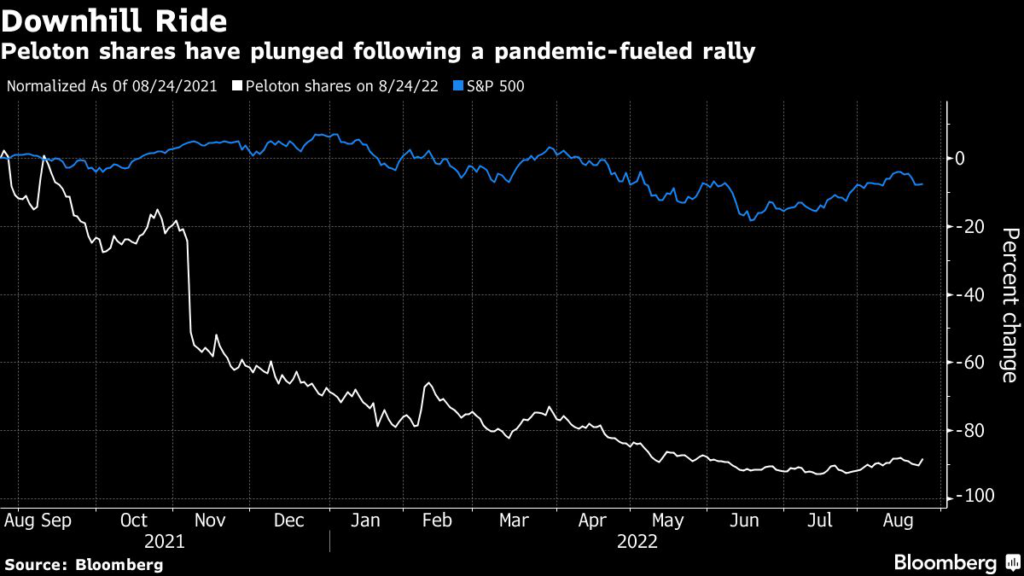
(Bloomberg) — Peloton Interactive Inc. tumbled as much as 20% after the fitness company gave a bleak forecast for the current quarter, with losses piling up and sales falling more steeply than Wall Street expected, renewing concerns about its comeback plan. 

Revenue will be $625 million to $650 million in the fiscal first quarter, the company said Thursday, far short of the $772 million analysts were predicting. Its loss on an adjusted basis will be $90 million to $115 million, compared with an average estimate of about $93 million.

The outlook follows a similarly dire fourth quarter, when sales plunged 28% to $678.7 million and the adjusted loss was $288.7 million. On a net basis, the loss was $1.2 billion — about four times the size of the company’s loss a year earlier.

The numbers suggest that a turnaround plan under Chief Executive Officer Barry McCarthy still has a long way to go. He took the reins in February and slashed expenses — cutting thousands of jobs and shuttering operations — but the company is facing sluggish demand and a buildup of inventory. On Wednesday, Peloton announced plans to begin selling its bikes and accessories on Amazon.com Inc.’s site, aiming to broaden its distribution.

The shares fell as low as $10.77 in New York, marking the worst intraday decline since May, and down more than 90% in the past 12 months. 

McCarthy was blunt about the challenges in a letter to shareholders Thursday, but said Peloton is making headway.

“The naysayers will look at our Q4 financial performance and see a melting pot of declining revenue, negative gross margin and deeper operating losses. They will say these threaten the viability of the business,” McCarthy said. “But what I see is significant progress driving our comeback and Peloton’s long-term resilience.”

The net loss in the fourth quarter, which ended June 30, included $415 million in costs related to the comeback plan.

A slowdown in subscriber growth has added to Peloton’s challenges. Last quarter, it had 2.97 million connected fitness subscribers — people who receive content on Peloton equipment — up 27% from a year earlier. But the figure was flat from the previous quarter.

“Peloton’s turnaround may be a ways off,” Bloomberg Intelligence analyst Geetha Ranganathan said in a report. “Limited visibility into demand gives little confidence.”

Workouts on Peloton equipment fell 4% from a year earlier and 20% from the last quarter. The company had seen a surge in use during the pandemic, when stuck-at-home consumers snapped up its equipment. But even with the slowdown, engagement is “tracking well above pre-Covid levels,” Peloton said. The connected fitness number is expected to stay around 3 million in the coming quarter. 

McCarthy’s goal is to make Peloton cash flow positive in the second half of the coming fiscal year. “We continue to make steady progress, but we still have work to do,” he said.

In an interview earlier this month, McCarthy said the company should prioritize its digital offering over hardware and that it’s exploring allowing subscribers to beam content from their smartphone to non-Peloton fitness equipment.

In recent weeks, the company also announced a plan to outsource all manufacturing to third-party factories, cut its customer service operations in half, shift away from in-house deliveries and warehouses, and lay off hundreds of workers. It’s also planning to shut stores next year. The move is designed to let Peloton reallocate $50 million in annual spend, McCarthy said on a call with analysts Thursday. 

In an effort to increase cash flow, the company also hiked prices for its Bike+ model and Tread treadmill by $500 and $800, respectively.

“Our Q1 outlook reflects near-term demand weakness associated with our recent hardware price increases as well as typical seasonal demand softness,” the company said Thursday.

Peloton believes its new leasing program — which combines a bike and content into a monthly price without a down payment — may help with the turnaround, saying that churn for the initiative is low and that it will expand its marketing for the program in September.

“Our test results show the program is driving increased traffic to the top of our marketing funnel and clearly appeals to a younger, more value-conscious consumer,” McCarthy said. 

On the call with analysts, McCarthy said the company is currently seeing a run rate of about 40,000 leases per year from the leasing program, but he hopes to raise that to about 150,000 leases annually. The company also said it hopes to have $1 billion of cash on hand at all times. 

The company isn’t giving full-year guidance for fiscal 2023, citing “broader macroeconomic uncertainties and the pace and number of changes we’re making to our business.” It also will no longer report quarterly engagement metrics. 

In describing Peloton’s challenges, McCarthy reflected on his time working on a cargo ship in high school. 

“After midnight on my second voyage, I was asleep when the alarm for general quarters woke me,” he said in the shareholder letter. “The ship was healing sharply to starboard and the steel hull was shuddering. The captain was trying to turn the ship around, but a ship that big, going that fast, takes miles and miles to change direction.”

Peloton, he said, is like that cargo ship. “We’ve sounded the alarm for general quarters. Everyone’s at their station,” McCarthy said. “When will the ship respond is the question. Our goal is FY23.”

(Updates shares starting in first paragraph.)

More stories like this are available on bloomberg.com

©2022 Bloomberg L.P.

Plug Power Surges on Amazon Deal to Supply Green Hydrogen

(Bloomberg) — Amazon.com Inc. agreed to buy enough carbon-free hydrogen from Plug Power Inc. to run 30,000 forklifts or 800 long-haul trucks annually in a push to use less fossil fuel. Plug’s shares surged. 

Plug will supply the retail giant with almost 11,000 tons of green hydrogen, which is produced with renewable energy, annually starting in 2025, according to a statement Thursday. The company’s shares rose as much as 14.7%. They were up 7.8% at 10:39 a.m. in New York.

Amazon has long used Plug’s hydrogen-powered forklifts in its operations. But Plug is now pivoting to become a major supplier of hydrogen itself, betting that the fuel will become crucial in a low-carbon future. The company, based in Latham, New York, signed a similar supply agreement with Walmart in April. 

Previously: Walmart Will Run Forklifts on Green Hydrogen in Plug Power Deal

Green hydrogen is made using wind or solar energy to power a device called an electrolyzer, which splits water into hydrogen and oxygen without emitting greenhouse gases. Reducing those emissions is necessary to avoid the worst effects of global climate change.  

Amazon has pledged to become a “net zero” emitter of carbon by 2040, including by reducing its own emissions and backing forest preservation and other projects that offset any greenhouse gases it’s unable to eliminate. The company, the corporate largest buyer of renewable power in recent years, has pledged to equip its last-mile package delivery fleet with electric vehicles and reduce waste, among other projects.

As part of the agreement, Amazon acquired the right to buy 16 million Plug shares. Amazon often acquires such warrants in deals with suppliers, an effort to share in the financial windfall that working with one of the country’s most prominent companies can bring. The stake vests automatically if Amazon spends $2.1 billion on Plug Power products over seven years.

Amazon announced its climate goals in 2019. Its greenhouse gas emissions are up roughly 40% since then.


(Adds details of deal in third paragraph and background on Plug Power in paragraph five.)

More stories like this are available on bloomberg.com

©2022 Bloomberg L.P.

Meta Removes Fake Accounts Tied to Pro-US Influence Campaign

(Bloomberg) — A covert online persuasion campaign to cast the US and its allies in a positive light in the Middle East and Central Asia — as well as to bash its adversaries — was disrupted by Meta Platforms Inc. and Twitter Inc., which have removed the “inauthentic” accounts from their platforms, according to internet researchers.

The campaign resembled previous online campaigns by US adversaries such as Russia, China and Iran in its use of fake personas and bogus media outlets, among other tactics. The US has criticized those countries for using online campaigns to spread false information.

The fake accounts were on Twitter, Facebook, Instagram and five other social-media platforms, according to a report published Wednesday by the social media analytics company Graphika Inc. and Stanford University’s Internet Observatory Cyber Policy Center, which analyzed a portion of the activity. The accounts in question used deceptive tactics to promote pro-US stories and to air negative narratives about Russia and other countries, according to the report.

The researchers didn’t attribute the campaign to a specific group or organization. However, the report notes there were limited instances of the fake accounts sharing information from an overt US messaging campaign and one Twitter account that posed as a man in Iraq; the account had previously claimed to operate on behalf of the US military.

The activity reviewed by the researchers includes what appears to be a series of covert campaigns, as opposed to one operation, that spanned almost five years.

The social media campaigns heavily criticized Russia for the deaths of innocent civilians and other alleged atrocities following its invasion of Ukraine in February, according to the report. They also sometimes shared articles from US government-funded media outlets such as Voice of America and Radio Free Europe, as well as links to websites sponsored by the US military.

Meta confirmed that it had removed a coordinated inauthentic behavior network in the US and shared the information with researchers. It was the first foreign-focused pro-US network of its kind, according to Meta. The Meta dataset reviewed by researchers included 39 Facebook profiles, 16 pages, two groups and 26 Instagram accounts active from 2017 to July 2022.

A Twitter representative declined to comment on the report. The research is independent from Twitter, which shares its data to enable “independent, external analysis to inform the public,” the representative said. The researchers analyzed 299,566 tweets from 146 accounts between March 2012 and February 2022, according to the report.

A representative for US Central Command said it would look into and assess “any information that Facebook provides.”

“We can confirm that CENTCOM possesses its own Twitter and Facebook accounts, and represents itself through our verified and official accounts,” said the representative. “To be clear ­– aside from CENTCOM, there are no organizations authorized to speak on CENTCOM’s behalf through Facebook or Twitter.”

The representative referred other questions to US Special Operations Command, which didn’t respond to a message seeking comment.

The social media campaign relied on bogus media outlets to promote pro-America news and to criticize other countries. A Facebook page for a fake media outlet called Vostochnaya Pravda, for instance, claimed to focus on debunking myths and sharing “absolute facts” about Central Asia, according to the report. 

In addition, several of the suspended accounts were linked to two fake media outlets operating in Persian: Fahim News, with the tagline “Accurate news and information,” and Dariche News, which claimed to be an independent media operation.  An Aug. 18 post for Fahim News on the Persian link-sharing platform Balatarin said social media is the only way Iranians can access the free world. 

Dariche News often quoted officials at the US Central Command, including a December 2021 article that quotes a former CENTCOM commander saying the Iranian government was starving people to build missiles. 

Some of the accounts attempted to appear as real people by using profile pictures that were created using artificial intelligence techniques. In other instance, one of the bogus accounts used a doctored picture of the Puerto Rican actor Valeria Menendez. Another fake persona used a picture stolen from a dating website, according to the report.

In another technique believed to be used to add authenticity, some of the accounts posted more mundane content, commenting on the natural beauty of Central Asia or reposting a photo of cats, according to the report.

Among the accounts reviewed by the researchers, the ones focused on Central Asia consisted of 12 Twitter accounts, 10 Facebook pages, 15 Facebook profiles and 10 Instagram accounts, in addition to connected activity on Telegram, YouTube and Russian social-media platforms, according to the report. They targeted Russian-speaking Central Asian audiences, praising US aid to the region and criticizing Moscow.

The accounts focused on Iranian audiences included 21 Twitter accounts, two Facebook pages and six Instagram accounts. 

Despite the magnitude of the effort, the researchers said the vast majority of the posts and tweets they reviewed received no more than a handful of likes or retweets. In addition, only 19% of the covert social media assets that the researchers identified had more than 1,000 followers.

(Updates with comments from Twitter in eighth paragraph.)

More stories like this are available on bloomberg.com

©2022 Bloomberg L.P.
China Stocks in US Jump on Report Audit Inspection Deal Is Near

(Bloomberg) — China stocks listed in the US surged by the most in two weeks after the Wall Street Journal reported that regulators in Washington and Beijing are nearing an agreement that would move them one step closer to resolving a long-standing disagreement over auditing practices.

Shares of US-listed tech giants including Alibaba Group Holding Ltd., JD.com Inc. and Pinduoduo Inc. all rose at least 7.5% Thursday. Meanwhile, NetEase gained 4.1%, while electric-vehicle makers Nio Inc. and Li Auto Inc. added 6.3% and 5.3% respectively. The Nasdaq Golden Dragon China Index jumped as much as 6.1%, bringing its four-day rally to more than 10%.

The report says the agreement would allow representatives from the US Public Company Accounting Oversight Board to travel to Hong Kong as soon as next month to perform audits on record for Chinese companies listed on America exchanges. 

“This is a fascinating development,” said Edward Moya, senior market analyst at Oanda Corp. “An official confirmation is needed but expectations were growing that this would get done as both countries are dealing with economic fragility,” he added.

Read more: US, China Near Deal on China Co’s Audit Inspections in HK: DJ

Such a move would be a major step toward alleviating fears of mass forced delisting of US-listed Chinese stocks, something that has weighed on shares for more than a year. Earlier this month, China Life Insurance Co., PetroChina Co. and China Petroleum & Chemical Corp. were among a group of state-owned companies that announced plans to delistfrom American exchanges.

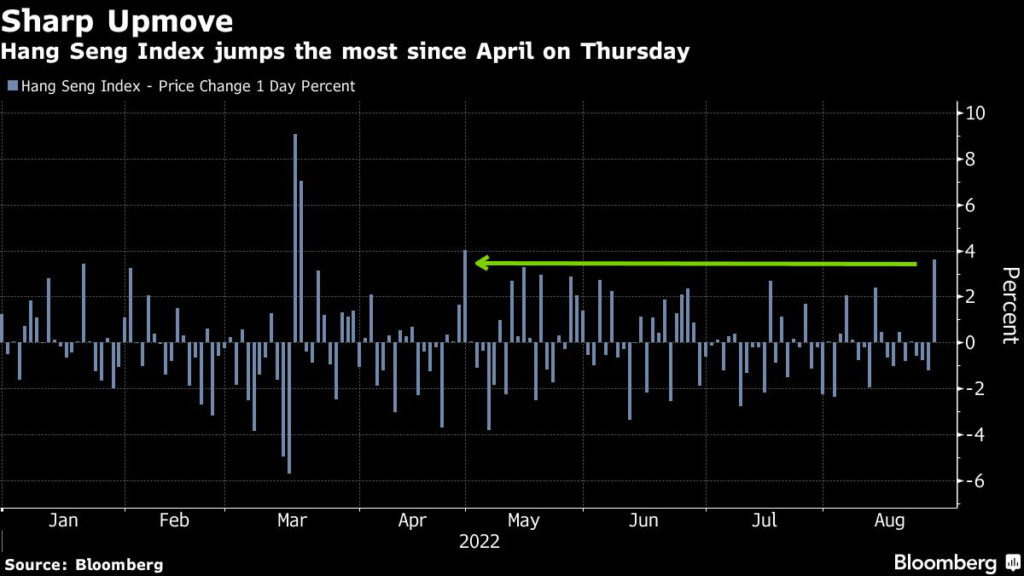
The rally in US trading follows what was the best day in nearly four months for Hong Kong’s Hang Seng Tech Index, which rose 6% on Thursday. That helped lead the city’s benchmark Hang Seng Index to a 3.6% gain, making it the best performer among Asia’s major equity gauges.

In addition to the Chinese government’s 1 trillion yuan ($146 billion) of support for the economy, traders cited short covering and an adjustment of positions ahead of Jackson Hole.

Stocks in Hong Kong had slumped to the lowest in months this week, as global risk-off sentiment spread ahead of the Federal Reserve’s Jackson Hole symposium. Concerns over China’s economic growth, with a deepening property crisis and power shortages spurred by a severe drought, had added to the gloom.

Following three days of losses, the Hang Seng Index was also looking ripe for a rebound to some market watchers based on various technical indicators.  

The gauge was near “oversold” levels on monthly measures of the relative strength index, approaching the 30-threshold that’s never been reached in data going back to 1972. Morgan Stanley strategist Gilbert Wong said “the risk of short squeeze in China and Hong Kong equities is rising.” 

(Adds details on WSJ report, updates pricing throughout.)

More stories like this are available on bloomberg.com

©2022 Bloomberg L.P.
UK to Review Billionaire Kretinsky’s Royal Mail Stake Under Security Law

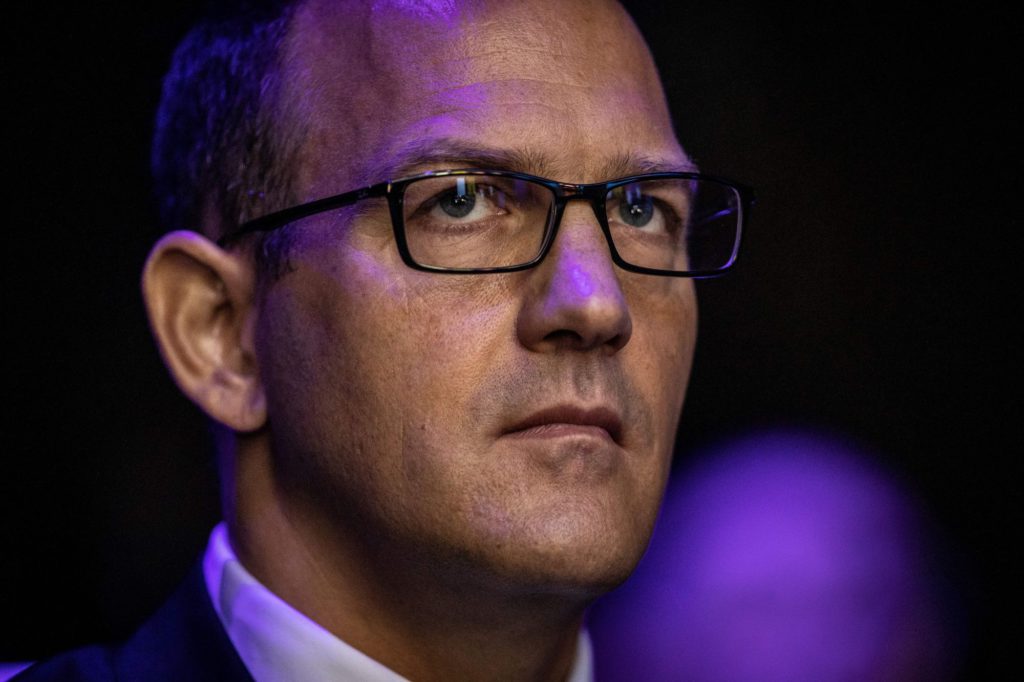
(Bloomberg) — The UK plans to review Czech billionaire Daniel Kretinsky’s holding in postal service Royal Mail Plc as his firm Vesa Equity Investment moves to raise its stake to more than 25%.

Such a step would trigger an inquiry under the National Security and Investment Act, Royal Mail said in a statement Thursday, citing the UK’s Department for Business, Energy and Industrial Strategy. The 500-year-old company said it will fully cooperate with the procedure.

Royal Mail shares rose as much as 5.2% in London, the most in more than three months, though the stock has lost almost half its value this year.

Royal Mail is currently caught in a battle with its workforce, with 115,000 postal workers due to go on strike starting Friday, over wages and a restructuring of terms and conditions. The group has argued that reorganizing its struggling UK operations is vital for a turnaround, and said it will sustain a full-year loss if the stoppage goes ahead as planned. 

Vesa announced the acquisition of a 5.35% stake in Royal Mail in 2020 and has been building that since then. The firm, controlled by Kretinsky, has a range of other investments in retail, media, sports and other interests, and is the largest shareholder of Dutch postal service PostNL NV, with a 25.02% stake. 

In the UK, the group has a 10% holding in supermarket chain J Sainsbury Plc, according to data compiled by Bloomberg.

“The notification sets out Vesa’s intention, subject to market conditions, to acquire additional shares,” the company said. “The notification was made on a voluntary basis, out of an abundance of caution.”

The UK has been scrutinizing corporate deals involving purchases of British assets, exercising new security powers that include allowing the government to pull apart acquisitions retrospectively. In the first three months of 2022, the country has reviewed 17 deals.

The law has also been used to temporarily block of a group led by technology entrepreneur Hakan Koc from buying assets of telecom firm Truphone Ltd. 

(Updates with Vesa comment in seventh paragraph.)

More stories like this are available on bloomberg.com

©2022 Bloomberg L.P.
Close Bitnami banner
Bitnami