Bloomberg

GE Sells Generator Technology for Stake in EV Startup

(Bloomberg) — General Electric Co. is selling new generator technology to startup Hyliion Holdings Corp. and will take a roughly 3% stake in the electric trucking startup in a cash-and-stock transaction.

The system, cooked up by engineers at GE’s 3-D printing unit, can use as many as 20 different types of fuel and will be integrated into Hyliion’s next-generation electric truck powertrain platform. Cedar Park, Texas-based Hyliion is also paying $15 million in cash for the GE assets as well as related intellectual property and some 3D-printing machines needed to manufacture the generators.

Shares of Hyliion rose as much as 7.9% Thursday in New York, while GE climbed as much as 2%.

The deal monetizes an invention by GE Additive, the conglomerate’s 3-D printing unit built via acquisitions prior to Chief Executive Officer Larry Culp’s tenure. The unit is housed within GE’s aviation division. 

Electric vehicle startups across the industry are looking for partners to bolster their chances at survival in the currently sluggish market — with Canoo Inc. recently striking a deal to sell EVs to Walmart Inc. in exchange for potentially around 25% of its shares, and Nikola Corp. acquiring battery startup Romeo Power Inc. 

Hyliion is one of many EV-related startups that went public by merging with a special purpose acquisition company. Its stock declined about 40% this year through Wednesday and roughly 90% since its reverse IPO in October 2020. 

(Updates with stock move in third paragraph.)

More stories like this are available on bloomberg.com

©2022 Bloomberg L.P.

US Jobless Claims Fall for Second Week, a Sign of Labor Strength

(Bloomberg) — Applications for US unemployment insurance fell for the second week, suggesting that employers are holding on to workers despite growing economic uncertainty. 

Initial unemployment claims decreased by 2,000 to 243,000 in the week ended Aug. 20, Labor Department data showed Thursday. The median estimate in a Bloomberg survey of economists called for 252,000 new applications.

Continuing claims for state benefits fell to 1.42 million in the week ended Aug. 13.

The decline in jobless claims points to still-robust labor demand as companies try to attract and retain employees amid lingering worker shortages. Even so, some employers, particularly those in the technology sector, have been laying off staff or freezing hiring, which could continue in the coming months as the Federal Reserve raises interest rates to curb demand and tame inflation.

On an unadjusted basis, initial claims declined to about 184,000 last week. New Jersey, Indiana and California had the largest declines in initial claims, while Massachusetts posted an outsized increase.

The four-week moving average, which smooths out volatile week-to-week moves, rose slightly to 247,000. 

More stories like this are available on bloomberg.com

©2022 Bloomberg L.P.

Gen Z Wants To Ditch Corporate Jobs For Influencing, Social Media Dreams

(Bloomberg) — America’s youngest workers want to become business owners — just not in the way their parents might envision.

The drive to turn social media posts into sustainable income is highest among the youngest generation of workers, according to new research by Adobe Inc. About 45% of Gen Z creators surveyed said they aspire to own a business and make money from content shared online, according to the company’s survey in May of more than 9,000 influencers and creators across nine countries. 

Adobe defines creators as those who post social content with the aim of growing their online presence or to promote their creative work  — anything from photography to music to NFTs. The influencers surveyed reported over 5,000 followers on their primary social media platform and earn money posting content.

Gen Z content creators and influencers are part of the wave of entrepreneurship that’s accompanied the labor market shakeup of the past two years. While many Americans started businesses during the pandemic lockdown out of necessity, the streak has continued, driven by a desire for flexibility and greater control over one’s financial future. A  record 5.4 million new businesses were started in the US last year, according to Census data. While the monthly rate has plateaued below its 2021 peak, it’s remained far above pre-pandemic levels. 

Although there’s been much speculation around whether this surge in small business creation was an aberration or the start of a long-term reversal, “what we are seeing is that this trend shows no signs of abating,” said Luke Pardue, an economist at payroll services platform Gusto.

The shifting dynamics are partly generational, he said. “Specifically among younger workers, we’re seeing this trend that even amid a tight labor market workers aren’t seeing wage gains that are keeping up with inflation, so they’re moving to self-employment where they can determine their compensation a little more independently,” said Pardue. “There isn’t a lot that the 9-to-5 employment can allow in terms of achieving some of the milestones that were available to prior generations.”

Why Gen Z’s Dream Jobs Are Very Different From Millennials’

While Millennials are experimenting with having a side hustle alongside a day job, Gen Z is focused more on making a project into a career,  said Maria Yap, vice president of digital imaging applications at Adobe. “They’re thinking, no — my regular job could be the thing that I’m passionate about.”

Some colleges, like Duke University, the University of Southern California and the University of Virginia, have responded to the shift in demand by offering classes on how to build successful social media enterprises.

Read More: Colleges Are Launching TikTok Classes for Influencers Making $5,000 a Post

The Adobe research suggests ditching the corporate ladder for the Instagram grid can be can bring in a six-figure income if done full-time, though the reality is often more complicated.

Creators who monetize content make $61 per hour on average, according to Adobe. If done 40 hours a week, Adobe estimates this would translate to an annual income of $122,000. Influencers polled by Adobe make $81 per hour, which would parlay into about $162,000 if done full-time. 

Yet the boundaries are often blurred between hobbyists and hustlers, and most of the people polled by Adobe aren’t full-time. Content creators spend an average of nine hours per week and influencers spend an average of 15 hours per week making content. In the US, six in 10 creators hold full-time jobs, Adobe found. If creators were to ditch their day jobs, it’s not clear whether they would be able to drum up enough business to fill a 40-hour workweek.

Public perception is often that content creators and influencers with more than 10,000 followers are earning a significant income, but this is far from the reality, said Qianna Smith Bruneteau, founder of the American Influencer Council, a trade association for social media content professionals. 

Of those who create content full-time, only about 12% make more than $50,000 a year, according to a global survey of over 9,500 creators published in April by Linktree, a link-sharing platform popular with influencers. The living wage in Manhattan is almost $53,000, according to MIT’s living wage calculator.

Is Content Creation a Good Dream Job?

While some creators and influencers stumble into success, for others it can take countless hours of hard work without pay to build up a following, according to Bruneteau. “To produce content every single day, in a video-first environment —  it takes tremendous work,” she said. That can mean years of free content before a creator sees dividends. “When you’re just starting out, you can’t expect to earn immediately. Like any small business, it takes about two years to reach break-even,” Bruneteau said. 

Even with a large audience, monetizing content isn’t easy — it takes substantial business acumen to pitch yourself to brands and establish partnerships. And successful creators often must work to generate as many income streams as possible across platforms, from ad revenue to merchandise to workshops and classes. 

Tejas Hullur, 21, is an influencer based in New York City. After starting out posting about crypto and finance over the summer of 2020, Hullur said he hit his stride posting about the creator economy itself. “It’s very ironically meta, in the sense of making content for other creators,” he said. 

Like many of his peers, Hullur quickly had to diversify his revenue stream after the income from brand deals turned out to be spotty. Still, the unpredictability of income makes it difficult to plan effectively, especially with an economic downturn threatening companies’ marketing budgets. And career longevity for influencers is an issue. Often, internet fame — and the money that comes along with it — doesn’t last forever. 

“We play in this world of hype. It can feel like you’re on top of the world,” Hullur said. “I’ve seen this time and time again — the amount of TikTokers who were on top of the world in 2020, who still have a fully monetizable and flourishing business today is, I would say, under 5%. It comes up and then goes down.”

More stories like this are available on bloomberg.com

©2022 Bloomberg L.P.

Bank of America Beefs Up Tech Offerings as Digital Logins Rise to a Record

(Bloomberg) — Bank of America Corp. is expanding its investments in digital channels as customers shift their transactions online in record numbers. 

Clients logged in to the bank’s electronic platforms 1 billion times in July and 2.8 billion times — an 11% increase– in the second quarter, Bank of America said Thursday in a statement. New investments will focus on areas such as budgeting and financial-planning tools, personalization of apps and enhanced security, according to David Tyrie, head of digital banking and marketing.

Electronic banking is a key part of the company’s effort to expand its online and mobile services, which saw a surge in demand during the pandemic that’s showing no signs of a slowdown. Bank of America spends $11 billion on technology every year, including $3.6 billion set aside for new initiatives, Tyrie said. 

“I would hate to be a small bank or fintech trying to compete with us because of the lack of investments and financial backing,” he said in an interview. “Banks are defined based on customer interaction, and today it’s all digital.”

With clients managing more transactions digitally and using online tools for longer-term financial planning, the company is spending to improve existing systems such as its “Life Plan” financial tool for budgeting and savings, according to Tyrie. 

Read More: BofA Names Former Visa Executive Head of Social Media, Rewards

Digital expansion can also help cut the number of costly branch locations and pare workforces, while making it harder for competitors to poach clients with the allure of better technology. 

Retail branches are still useful for bigger transactions and some types of financial planning, but technology is replacing more and more of the need for face-to-face interactions, helping the bank cut expenses, Tyrie said. 

Tyrie was put in charge of digital strategy across the company, then expanded his role to include data and marketing efforts last year. His team has hired talent from outside the financial industry for its digital efforts, from firms including Google, Walt Disney Co., Apple Inc., Visa Inc. and Amazon.com Inc. 

More stories like this are available on bloomberg.com

©2022 Bloomberg L.P.

Futures Rise as China Lifts Mood Ahead of Powell: Markets Wrap

(Bloomberg) — US futures rose Thursday as data painted a mixed picture of the economy in the anxious wait for a key speech by Federal Reserve Chair Jerome Powell. Treasury yields ticked higher and a dollar gauge dipped. 

Contracts on the S&P 500 and Nasdaq 100 advanced in the wake of positive closes for both gauges. The government’s main measures of US growth pointed in different directions in the first half of 2022, data showed Thursday, underpinning further debate on the health of the economy.

Sentiment was boosted earlier after China stepped up stimulus with a further 1 trillion yuan ($146 billion) of measures. Traders expect markets to remain volatile as they look to Powell’s comments due Friday at the Jackson Hole meeting for clues on the pace of US monetary tightening. 

Kansas City Fed President Esther George joined the chorus of hawkish policy makers in the run-up to Jackson Hole, telling Bloomberg TV the central bank’s benchmark may have to rise above 4% to defeat inflation. The message has eroded a bounce in stocks and bonds from mid-June troughs. The tension in markets is whether those assets will continue to head back toward the lows of the year.

“Powell is likely to push back on premature expectations of a dovish pivot, reiterating the focus on the fight against high inflation,” said Silvia Dall’Angelo, a senior economist at Federated Hermes Ltd. “Whether markets take him seriously amid an increasingly gloomy outlook for the global economy is yet to be seen.”

Europe’s stock benchmark pared an advance amid mixed economic data from the region’s biggest economy. Energy and basic resources stocks were the biggest gainers, with retailers underperforming. Sovereign bonds across Europe gained.

Germany’s economy proved more resilient than initially thought in the second quarter, though worsening business confidence pointed to a still-cloudy outlook. The euro area has already entered a “shallow” recession that’s been triggered by surging energy prices and will last through year-end, according to economists at UBS Group AG.

Crude oil held around $95 a barrel, with elevated energy prices feeding into renewed jitters about whether price pressures have peaked. Natural gas has surged to fresh highs, intensifying an energy crisis that threatens the euro-area economy and hence the global outlook.

Will the meme mania fizzle out? That’s the theme of this week’s MLIV Pulse survey. Click here to participate anonymously.

What to watch this week:

  • Kansas City Fed hosts its annual economic policy symposium in Jackson Hole, Wyoming, Thursday
  • ECB’s July minutes, Thursday
  • Fed Chair Powell speaks at Jackson Hole, Friday
  • US personal income, PCE deflator, University of Michigan consumer sentiment, Friday

Some of the main moves in markets:

Stocks

  • Futures on the S&P 500 rose 0.5% as of 8:37 a.m. New York time
  • Futures on the Nasdaq 100 rose 0.6%
  • Futures on the Dow Jones Industrial Average rose 0.2%
  • The Stoxx Europe 600 rose 0.2%
  • The MSCI World index rose 0.2%

Currencies

  • The Bloomberg Dollar Spot Index fell 0.1%
  • The euro was little changed at $0.9966
  • The British pound rose 0.1% to $1.1814
  • The Japanese yen rose 0.2% to 136.81 per dollar

Bonds

  • The yield on 10-year Treasuries advanced two basis points to 3.12%
  • Germany’s 10-year yield declined one basis point to 1.36%
  • Britain’s 10-year yield declined five basis points to 2.65%

Commodities

  • West Texas Intermediate crude was little changed
  • Gold futures rose 0.7% to $1,773.60 an ounce

More stories like this are available on bloomberg.com

©2022 Bloomberg L.P.

India Seeks Byju’s Reply on Delayed Filing of Audited Accounts

(Bloomberg) — India sought reasons from Byju’s, the country’s most-valuable startup backed by Tiger Global Management, for not yet filing its audited financial accounts for the year ended March 2021, according to people familiar with the matter.

Earlier this month, the nation’s Ministry of Corporate Affairs sent a letter to Byju’s parent company asking them to explain the seventeen-month delay in filing audited accounts, the people said, asking not to be named as the information is private.

The delay in filing is due to consolidating the accounts of a number of companies that the online education provider acquired during the accounting year, the company has replied to MCA, one of the people said. Byju’s, also backed by Mark Zuckerberg’s Chan Zuckerberg Initiative, had been on an accelerated expansion spree globally, buying multiple startups in the U.S. and elsewhere.

An unlisted company has to file its annual accounts within seven months of the financial year-end, beyond which they have to pay an additional fee for each day of delay, said Ved Jain, former president at the Institute of Chartered Accountants of India, and founder of Ved Jain And Associates. A delay of more than 17 months to make the filing is rare and prompted the letter from MCA.

“In case of excessive delays in filing annual accounts, the company and its directors are liable for fines as well as prosecution,” Jain said. “Normally, the prosecution is filed when the delay exceeds two years.”

Emails to spokespersons for the ministry of corporate affairs and Byju’s weren’t answered.

The Bengaluru-based edtech pioneer, formally known as Think & Learn Pvt., has a valuation of $22 billion, according to market researcher CB Insights. Chief Executive Officer Byju Raveendran, 41, a teacher himself and the son of school teachers, founded the education startup in 2015.


More stories like this are available on bloomberg.com

©2022 Bloomberg L.P.
UK Challenger Bank Zopa Reaches £2 Billion in Deposits

(Bloomberg) —

Zopa Group Ltd. has reached £2 billion ($2.37 billion) in deposits, two years after it started offering banking services.

The London headquartered firm, which started as a peer-to-peer lender before it relaunched as a bank in 2020, said on Thursday deposits had more than doubled from £968 million in December.

Zopa is among the UK’s challenger banks vying to attract customers from the long-established big five lenders. Starling Bank, which launched eight years ago, grew its deposits 55% to £9 billion in the year through March. Monzo Bank Ltd. had £4.4 billion in deposits by February, up about 40% in a year, while Atom Bank had grown to £3.5 billion by July.

Zopa said it had 730,000 total customers by the end of July. 


More stories like this are available on bloomberg.com

©2022 Bloomberg L.P.
Chinese Stocks in US Jump as New Stimulus Lifts Investor Mood

(Bloomberg) — China stocks listed in the US are on track for a fourth straight day of gains, following a strong rally by their peers in Asia, as Beijing’s pledges of fresh stimulus help lift investor sentiment.

Shares of US-listed tech giants including Alibaba Group Holding Ltd., JD.com Inc. and Pinduoduo Inc. all rose at least 3.5% in premarket trading Thursday. Meanwhile, NetEase rose 2.6%, while electric-vehicle makers Nio Inc. and Li Auto Inc. added 2.7% and 2.0% respectively. The Nasdaq Golden Dragon China Index is set to extend its winning streak after rallying during each of the first three trading days this week.

The strong moves in US trading follow what was the best day in nearly four months for Hong Kong’s Hang Seng Tech Index, which rose 6% on Thursday. That helped lead the city’s benchmark Hang Seng Index to a 3.6% gain, making it the best performer among Asia’s major equity gauges.

In addition to the Chinese government’s 1 trillion yuan ($146 billion) of support for the economy, traders cited short covering, an adjustment of positions ahead of Jackson Hole, and speculation that the US and China are nearing a deal on their auditing spat as reasons behind the rebound.

“Growth, tech and offshore listed China stocks are leading gains suggesting that Fed meeting may be playing a bigger role in the late day move,” said Marvin Chen, a strategist with Bloomberg Intelligence.

Stocks in Hong Kong had slumped to the lowest in months this week, as global risk-off sentiment spread ahead of the Federal Reserve’s Jackson Hole symposium. Concerns over China’s economic growth, with a deepening property crisis and power shortages spurred by a severe drought, had added to the gloom.

Following three days of losses, the Hang Seng Index was also looking ripe for a rebound to some market watchers based on various technical indicators.  

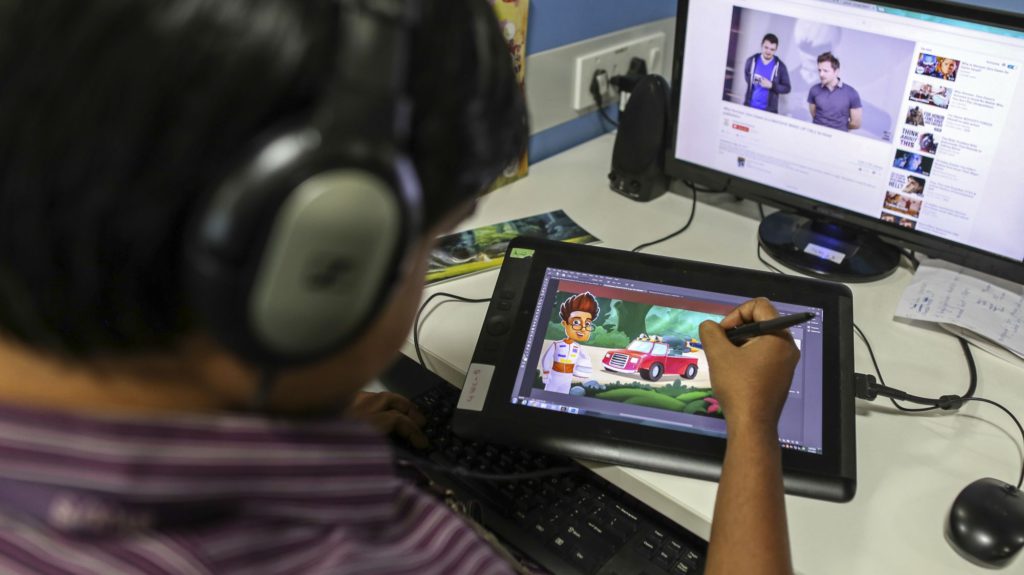
The gauge was near “oversold” levels on monthly measures of the relative strength index, approaching the 30-threshold that’s never been reached in data going back to 1972. Morgan Stanley strategist Gilbert Wong said “the risk of short squeeze in China and Hong Kong equities is rising.” 

(Updates to include details on US trading.)

More stories like this are available on bloomberg.com

©2022 Bloomberg L.P.
Singapore’s Grab Shows Revival Signs as Sales Top Estimates

(Bloomberg) — Grab Holdings Ltd. reported a better-than-expected 79% revenue increase, buoyed by resilient demand from consumers who continued to hail rides and order food despite rising inflation.

Revenue climbed to $321 million in the second quarter, the Singapore-based company said in a statement Thursday. That beat the $273.1 million average of analysts’ estimates compiled by Bloomberg. Grab’s net loss narrowed to about $547 million as it fights to reduce cash burn after spending several years locked in an expensive battle for dominance in the region.

Grab, which had been one of Southeast Asia’s hottest startups and is led by Anthony Tan, has struggled since it went public via a merger with a US blank-check company last year. Its shares have lost more than 60% of their value since then as losses piled up during pandemic-era lockdowns and money-losing companies have fallen out of favor with investors.

Now Tan must navigate through an era of rising inflation that could dampen demand just as Grab is trying to emerge from the Covid challenges. The company has faced increasing competition from GoTo Group and Sea Ltd.

Grab said revenue this year is expected to be $1.25 billion to $1.3 billion, compared with its previous forecast of $1.2 billion to $1.3 billion. The company said its gross merchandise value will expand 21% to 25% this year, compared with 30% to 35% it had projected previously.

Key Insights

  • Second-quarter revenue from Grab’s delivery business almost tripled to $134 million.
  • Revenue from its mobility arm gained 37% to $161 million.
  • Revenue from financial services rose to $13 million.
  • Grab’s cash and cash equivalents fell to $2.8 billion at the end of June from about $3.4 billion at the end of March.
  • Partner incentives climbed 23% to $212 million, while consumer incentives rose 28% to $311 million.
  • Monthly transacting users grew 12% to 32.6 million.

Get More

  • Earlier this month, Grab and rivals Foodpanda and Deliveroo Plc formed an unlikely partnership to strengthen their influence with the Singapore government as it considers laws that could transform the gig economy. Legislation that seeks to protect the interest and safety of thousands of drivers could impact companies like Grab, who have benefited from having people work for them without shouldering traditional responsibilities of a direct employer.
  • Grab’s gross merchandise value, the sum of transactions flowing through its platform, rose 30% to $5.1 billion.
  • Grab expects deliveries GMV to hit as much as $2.5 billion in the third quarter; mobility GMV to reach up to $1.1 billion; TPV for financial services to rise to as much as $3.9 billion.

Market Reaction

  • Grab shares rose 6.7% in trading before US markets opened.

(Updates with operating metrics starting in sixth paragraph)

More stories like this are available on bloomberg.com

©2022 Bloomberg L.P.

OECD Urges South Africa to Raise Taxes, Sell State Firms

(Bloomberg) — South Africa should overhaul its tax regime to fund reforms that enhance economic growth and reduce inequality now that it’s reached the limits of spending adjustments that were aimed at cutting fiscal deficits and reining in debt, the OECD recommended. 

Africa’s most-industrialized economy is battling surging debt, which the government expects to peak at 75.1% of gross domestic product in the 2023 fiscal year, and its interest bill has been the fastest-growing expenditure line item in the budget since 2011. Both are key risks to fiscal sustainability and have been compounded by damage wrought by the coronavirus pandemic, years of overspending, mismanagement and graft. 

While putting public finances on a more sustainable path is key to restoring confidence, the government should spend money more efficiently and would benefit from a “less-distortive” tax system, the OECD said in a report released on Thursday. “Overall, tax rates are already high or comparable to OECD levels, but there is a wide range of tax provisions and exemptions” that can reduce taxpayers’ effective liability, it said. 

South Africa’s top 10% of earners contribute almost half of all revenue, and the richest 10% of its residents hold 85.6% of net wealth, according to the OECD, which sees scope for the tax system to contribute more to reducing inequality. 

More than a quarter-century after the end of apartheid, South Africa is ranked by the Thomas Piketty-backed World Inequality Lab as the world’s most unequal nation for which data is available. While presidents from Nelson Mandela on have expanded the welfare system and instituted affirmative-action policies to create a substantial Black middle class and lift millions out of poverty, inequality continues to be exacerbated by ineffective spending on one of the world’s worst education systems. 

The country’s progressive personal income tax schedule is undermined by deductions that largely benefit high-income earners, the OECD said. Raising levies on fringe benefits, cutting allowances for travel expenses and exercised share options, reducing relief for pensioners and lowering deductions for medical expenses could solve the problem, it said. South Africa should also broaden its estate tax base by cutting exemptions for life insurance, trust and pension savings, it said.

Tax Reform

“Reforming the personal income tax has to strike a balance between strongly reducing inequalities and preserving work incentives for middle to high-income earners,” the OECD said.        

South Africa’s value-added tax rate of 15% is relatively low and lifting it by 2 percentage points could raise its contribution to revenue by about 1% of GDP, according to OECD estimates. Increasing the tax, which the government has done only twice since 1991, is unpopular within the ruling African National Congress because it is seen hitting the country’s poorest people hardest.

The OECD suggested that raising VAT could be made more politically palatable by increasing and extending grants to poor households. 

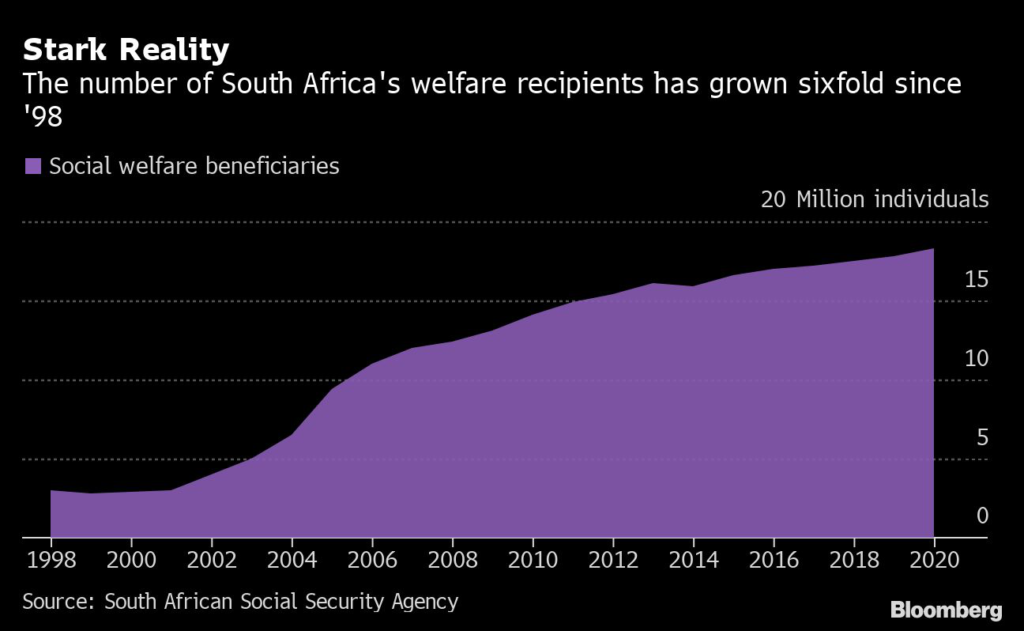
A so-called social relief of distress grant was first introduced in response to the pandemic and has since been extended to March 2023. It added more than 10 million people to the welfare net in a country where there are twice as many social support beneficiaries as taxpayers.

South Africa’s corporate income tax rate was lowered by 1 percentage point to 27% this year. That’s still relatively high and there’s scope to reduce it further if the tax base is broadened, the OECD said. Revenues from the extraction of natural resources could be increased and digital taxation levies could be improved, it said. 

The OECD’s tax recommendations come as South Africans grapple with a cost-of-living crisis and aggressive interest-rate hiking cycle. In October 2020, The National Treasury said recent tax increases generated less revenue than expected and evidence suggested they can have large negative effects on economic growth. 

The OECD expects the economy to expand 1.8% this year and 1.3% in 2023. That compares with the Treasury’s February estimate for growth of 2.1% in 2022, and 1.6% next year. 

With the state’s wage bill accounting for about a third of government spending, future pay increases should be more fiscally sustainable and linked to increased efficiency or economy-wide productivity, the OECD said. Increasing productivity, which would require improving transport infrastructure, electricity generation capacity and telecommunication networks, reducing barriers to competition and broadening access to higher education and quality health care, is key to lifting living standards, it added.     

The government’s high exposure to state-owned companies, some of which continue to under-perform despite changes in management, “represents a risk to debt sustainability and public finances,” according to the OECD, which sees debt-ridden power utility Eskom Holdings SOC Ltd. as “the highest liability risk to public finances.”

(Updates with OECD growth estimates in third paragraph below chart.)

More stories like this are available on bloomberg.com

©2022 Bloomberg L.P.
Close Bitnami banner
Bitnami

