

Bloomberg

Ethiopia Says It Downed Arms-Laden Plane Crossing From Sudan

(Bloomberg) — Ethiopia’s air force shot down a plane carrying weapons that crossed the border from Sudan, a senior security official said, ratcheting up tensions between the neighbors just as Ethiopia’s civil war resumes.

Relations between the Horn of Africa’s two most-populous nations deteriorated in late June, with their forces exchanging fire at the disputed territory of al-Fashqa after Sudanese soldiers were reported killed. Ethiopia and Sudan are also at odds over Ethiopia’s unilateral plans to fill and operate a giant dam it has built on a tributary of the Nile River.

The claimed downing of the aircraft came hours after reports of renewed fighting between Ethiopian government forces and fighters from the northern Tigray region, five months after the two sides declared a cease-fire. 

Sudanese army spokesman Nabil Abdallah said by phone that his country had no connection to the alleged incident.

“The military explained that a plane belonging to historical enemies of our country, who are known for their incessant desire to weaken our country, was shot down,” Redwan Hussein, the national security adviser to Ethiopian Prime Minister Abiy Ahmed, said on Twitter.

Both forces loyal to Abiy and their Tigrayan rebel opponents traded blame for the resumption of conflict Wednesday. It ended a truce enacted in March that brought hopes of an end to more than 16 months of brutal civil war. 

Residents interviewed by Bloomberg who asked not to be identified said they heard heavy artillery near Kobo town, which is in Ethiopia’s Amhara region and about 200 kilometers (124 miles) south of Mekelle, the capital of the Tigray region. It wasn’t immediately clear if there were casualties.

Devastating Conflict

The conflict in Ethiopia has devastated the lives of millions of peoples and left most of Tigray without power or reliable communications, while souring Ethiopia’s reputation as one of Africa’s top investment destinations.

Getachew Reda, a senior member of the Tigray People’s Liberation Front, said on Twitter that the government had launched “a major offensive” in the vicinity of Kobo after federal forces and militias from the neighboring Amhara region opened fire at around 5 a.m. He said Tigrayan forces were defending their positions.

The government’s communication service blamed Tigray forces for clashes it said erupted on the border of the Tigray and Afar regions.

“Leaving aside all the peace efforts from the government, the terrorist group that has been waging war for the past couple of days has launched an attack this morning in the eastern front,” it said in a statement.

The two sides’ leaders have yet to meet face to face, and ongoing animosity between them has impeded efforts to distribute aid and delayed reconstruction. Special envoys from Europe and the US recently visited Africa’s second-most populous country in an effort to broker talks but weren’t successful.

(Updates with government officials’ comments starting from first paragraph.)

More stories like this are available on bloomberg.com

©2022 Bloomberg L.P.

Tornado Cash Seen as Key Laundering Tool for NFT Scams Before US Sanctions

(Bloomberg) — Tornado Cash, a cryptocurrency mixer that was recently slapped with US sanctions, was the preferred tool for laundering illicit proceeds from nonfungible token scams prior to the ban, according to blockchain analytics firm Elliptic Enterprises.

The mixer “was the source of $137.6 million of cryptoassets processed by NFT marketplaces and the laundering tool of choice for 52% of NFT scam proceeds before being sanctioned,” the firm wrote in a report released Wednesday. Services offered by platforms like Tornado Cash can be used to mask transactions by mixing tokens from different sources before transferring them to the ultimate recipients — making them a popular tool among illicit actors. Tornado Cash didn’t immediately return a request for comment.

Treasury’s Office of Foreign Assets Control sanctioned Tornado Cash earlier this month, saying the platform had been used to launder more than $7 billion worth of cryptocurrency since its creation in 2019, including hundreds of millions of dollars worth of funds stolen by North Korean hackers. The action came after the department took similar steps against the mixer Blender.io in May.   

Read More: Crypto Mixer Used by North Korea Slapped With US Sanctions 

Bankrupt cryptocurrency lender Celsius Network alleged in a lawsuit Tuesday that its former money manager, Keyfi and its founder Jason Stone, stole millions of dollars worth of Celsius assets, including by converting them into hundreds of NFTs, and using Tornado Cash to cover their tracks. Stone sued Celsius last month, accusing the firm of fraud and cheating him out of potentially hundreds of millions of dollars in pay.    

More stories like this are available on bloomberg.com

©2022 Bloomberg L.P.

Schneider Considers Buyout of £8.9 Billion Software Firm Aveva

(Bloomberg) — Schneider Electric SE said it’s considering a bid to buy out minority shareholders of industrial software developer Aveva Group Plc.

The French industrial conglomerate believes a full combination with Aveva would help it execute its growth strategy faster, it said in a statement Wednesday that confirmed an earlier Bloomberg News report. It already owns about 60% of London-listed Aveva. 

Aveva said in a separate statement that it hasn’t yet received any approach. Under UK takeover rules, Schneider has until 5 p.m. on Sept. 21 to make a bid. 

Shares of Aveva jumped as much as 39% in London trading Wednesday, a record intraday gain. They were up 28% at 2:51 p.m., giving the company a market value of about £8.5 billion ($10 billion). Aveva had lost nearly half its value in the 12 months through Tuesday. 

Any transaction would mark the second big cross-border deal between France and the UK in recent months. Paris-listed Eutelsat Communications SA agreed in July to combine with OneWeb Ltd. in a deal valuing the UK government-backed satellite operator at $3.4 billion.

Analysts at Jefferies Financial Group Inc. wrote in a research report Wednesday that the deal “makes sense,” especially as most of Aveva’s top managers came from Schneider. Omid Vaziri, an analyst at Bloomberg Intelligence, wrote that any buyout could bring “synergistic benefits to both sales and costs” and potentially boost valuations while reducing Schneider’s capital intensity.

Schneider is working with Citigroup Inc., while Aveva is being advised by Lazard Ltd., JPMorgan Chase & Co. and Numis Corp., according to Wednesday’s filings. 

Chief Executive Officer Jean-Pascal Tricoire has been offloading Schneider’s non-core businesses and channeling more investment into areas that help companies with the shift to digitalization. Cambridge, England-based Aveva provides software tools for utilities, oil and gas producers, transportation firms and other companies, according to its website. 

Schneider took control of Aveva after agreeing in 2017 to combine its own industrial software business with the British company. Aveva has since bulked up further through acquisitions, buying SoftBank Group Corp.-backed industrial software maker Osisoft in 2020 at a valuation of $5 billion including debt. 

Aveva’s original deal with Schneider prevented the French company from boosting its stake for two years after the transaction closed, and capped its holding below 75% for a further 18 months unless certain conditions were fulfilled.

(Updates with dealmaking background, analyst quotes from fifth paragraph)

More stories like this are available on bloomberg.com

©2022 Bloomberg L.P.
A Bad Year May Get Worse for Snapchat and Facebook Owners

(Bloomberg) — A bad year for digital advertisers may not be done yet.

The likes of Snap Inc., Pinterest Inc. and Meta Platforms Inc. have seen both estimates and their stock prices slide this year amid mounting competition and falling corporate ad budgets.

Yet, according to Piper Sandler analyst Thomas Champion, the final cut to forecasts may still be to come. A change to Apple Inc.’s operating system making it difficult for apps to track user activity on iPhone and iPads means the likes of Snap and Meta will continue to lag, he wrote in a note.

Analysts also fear the impact of new entrants, as TikTok Inc. gains traction and Netflix Inc. and Walt Disney Co. launch their ad-supported streaming tiers.

Against such a tough backdrop, shares of most social media companies have taken a beating. Snap is down 77% for the year, followed by Meta’s 52% slide. Pinterest is down 43%.

It’s been “the perfect storm for digital advertising with Apple’s platform changes, the macro environment and TikTok’s growth hitting all at once,” said Matthew Kanterman, director of research at Ball Metaverse Research Partners.

With a recession looming, businesses will be more cautious about spending and opt for the “highest value platforms and not blast out across multiple platforms,” Kanterman said. Snap will see bigger drawdowns compared with Alphabet Inc.’s Google as “you’re seeing quality outperform the smaller players,” he added.

The Snapchat owner, which last month reported sales that missed its already lowered forecast, has seen the biggest estimate cuts over the last quarter. Analysts have reduced full-year sales estimates by 17% and now expect an adjusted loss of 13 cents a share versus previous projections for a profit, according to Bloomberg data. Meanwhile, Meta saw 2022 revenue estimates cut by 7% in the same period.

While Alphabet and Amazon.com Inc. should fare better, the group, which also includes Pinterest and Twitter Inc., might be in for a couple of more quarters of cuts to revenue forecasts “before we’d consider it to be washed out,” Piper’s Champion said.

New entrants are a threat to an industry that has been dominated by Alphabet, followed by Meta and social media companies that are able to target ads at the billions of users they draw onto their platforms.

“New mediums could amplify competitive intensity” in the second half of 2022 as many firms compete for ad budgets against “an uncertain backdrop,” Goldman Sachs Group Inc. analyst Eric Sheridan wrote in a note.

To be sure, most sell-side analysts appear optimistic of a rebound. Snap, Meta and Pinterest all have at least four times more buy recommendations than sell ratings and offer at least 30% return potential based on average price targets, according to data compiled by Bloomberg.

Tech Chart of the Day

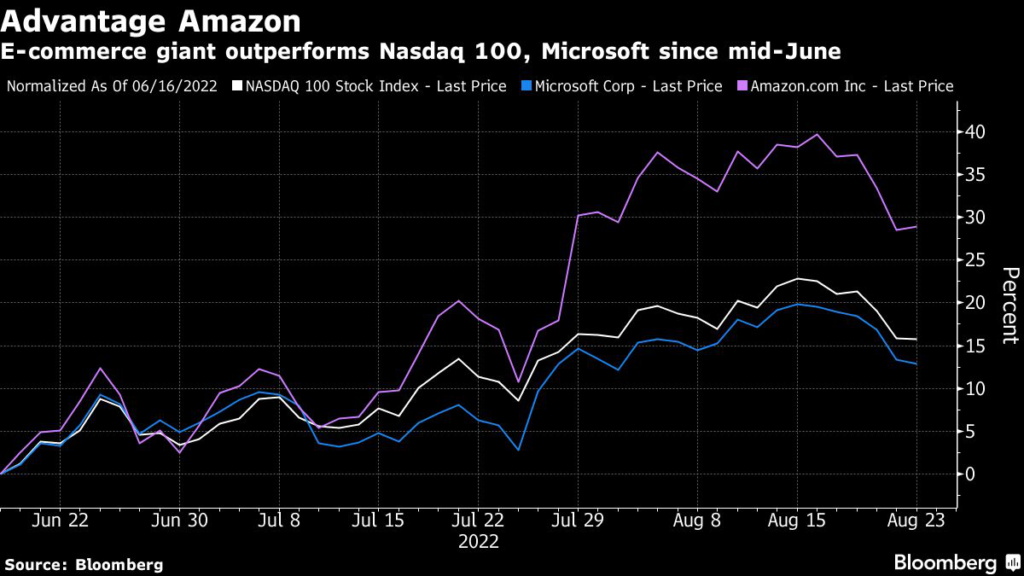
Hedge funds ramped up bets on megacap US tech stocks and whittled down overall holdings to concentrate on favored names last quarter, with conviction growing to levels last seen before the pandemic, according to Goldman Sachs strategists. Amazon.com supplanted Microsoft Corp. as the most popular long position, a timely call this quarter with the stock rising 25% versus the latter’s 7.3% gain.

Top Tech Stories

  • Cathie Wood bought Zoom Video Communications Inc.’s shares as they tumbled to levels seen before the stock’s meteoric rise during the pandemic.
  • A whistle-blower complaint from Twitter’s former head of security, claiming severe shortcomings in the social media company’s handling of users’ personal data, will have wide ramifications for the business.
    • Accusations from a former Twitter executive that the social network had lax data protections have sparked concerns among lawmakers and cyber experts that the alleged vulnerabilities pose a threat to national security.
    • READ: Twitter Whistle-Blower Won Hacker Kudos, Fired Over Performance
  • China has blocked the social media accounts of a nationalistic blogger who waged a campaign against a major Chinese tech firm, in the latest censorship of an outspoken patriotic voice.
  • Sony Group Corp. is expanding its gaming accessories range with the announcement of a new DualSense Edge wireless controller for the PlayStation 5.
  • Meta Platforms learned that the US Federal Trade Commission was suing the company over one of its smaller acquisitions via a Twitter post.

(Updates stock move in last paragraph and adds BI tout.)

More stories like this are available on bloomberg.com

©2022 Bloomberg L.P.
Crypto VC Electric Capital Names Ex-SEC Chair Clayton as Adviser

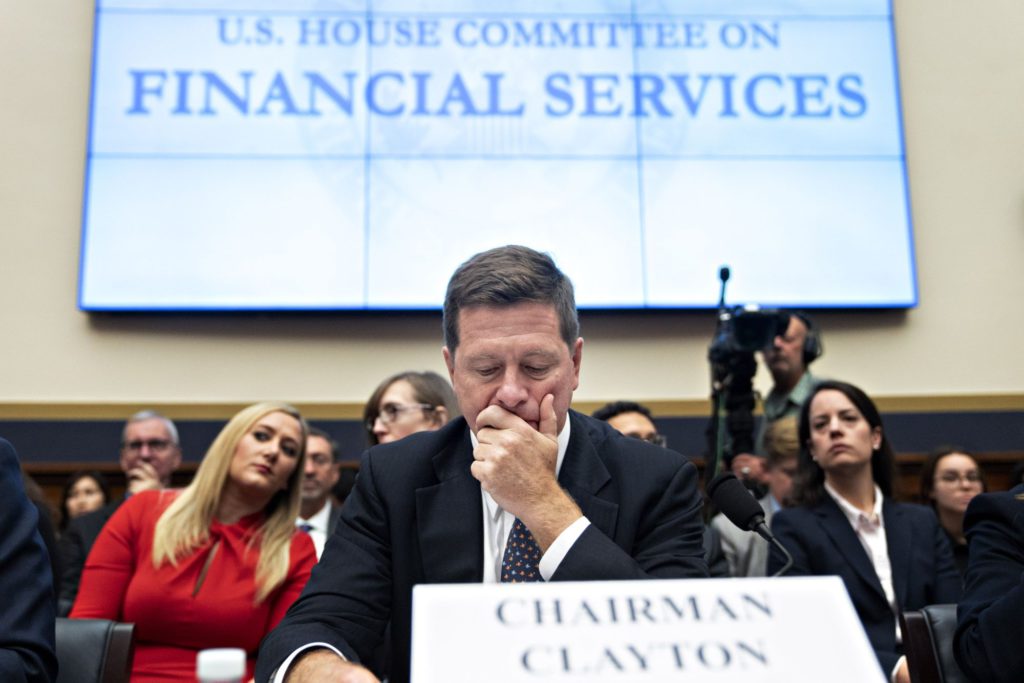
(Bloomberg) — Former Securities and Exchange Commission Chairman Jay Clayton has joined venture firm Electric Capital as an advisor, part of a growing wave of ex-regulators flocking to the crypto space as the industry faces increasing scrutiny.

Kevin Warsh, a former member of the Federal Reserve Board of Governors, and Pratiti Raychoudhury, vice president and head of research at Meta Platforms Inc., were also named as advisors, Electric Capital said Wednesday.

Clayton is already an advisor to crypto custody firm Fireblocks Inc. and One River Asset Management, a cryptocurrency-fund manager backed by Alan Howard. Others joining crypto include former commissioner of the Commodity Futures Trading Commission Brian Quintenz, who serves as an advisory partner to Andreessen Horowitz’s crypto team, and former Acting Comptroller of the Currency Brian Brooks is now the chief executive officer of blockchain tech firm Bitfury. Ex-SEC Director Brett Redfearn oversaw capital markets at Coinbase Global Inc. before becoming a senior strategic advisor at digital-asset firm Securitize, Inc.

“They realize there’s something real happening here,” Avichal Garg, managing partner at Electric Capital, said of ex-regulators stepping into the crypto space. 

Clayton and Warsh will help Electric Capital’s portfolio companies navigate changing crypto regulations around securities law, stablecoins and decentralized finance, Garg said in an interview. Warsh, a one-time Bitcoin skeptic, said in a statement that he is “thrilled to help” Electric Capital. The VC firm, which raised $1 billion for crypto investments in February, has previously backed nonfungible token marketplace Magic Eden, blockchain developer Mysten Labs and crypto exchange Kraken. 

Regulations around privacy will also be an area of focus for Clayton and Warsh, according to Garg. He pointed to sanctions put in place by the US Treasury Department against Tornado Cash as being an example of how regulators can butt heads with crypto projects over privacy issues. The Treasury barred US companies and individuals from using the crypto mixer to help further anonymize their transactions, alleging that it allowed North Korean hackers to illegally launder more than $7 billion.  

As for Meta’s Raychoudhury, Garg said her experience working at the social media giant will allow her to help crypto founders create more user-friendly experiences on their platforms.

“It’s really about unlocking how we get from a couple of million people to 2 billion people using this stuff,” he said. 

More stories like this are available on bloomberg.com

©2022 Bloomberg L.P.

US Capital Goods Exceed Forecast, Excluding Aircraft and Defense

(Bloomberg) — Orders placed with US factories for core capital goods rose by more than expected in July, pointing to sustained demand for equipment despite higher interest rates and concerns about a weakening economy.

The value of core capital goods orders, a proxy for investment in equipment that excludes aircraft and military hardware, rose 0.4% after an upwardly revised 0.9% advance, Commerce Department figures showed Wednesday. The data aren’t adjusted for inflation.

Bookings for durable goods — items meant to last at least three years — were little changed in July, missing estimates for a sizable gain as defense bookings weighed on the figure. The reading followed a revised 2.2% advance in June.

Defense aircraft orders, which are volatile month to month, plunged nearly 50% in July. Durable goods orders excluding transportation equipment rose 0.3% last month. 

Economists in a Bloomberg survey had called for an 0.8% increase in overall orders and an 0.3% rise in the core figure.

The data suggest that firms are still investing in longer-term technology and equipment, likely due in part to ongoing labor shortages. In the coming months, however, durable goods orders could weaken amid higher borrowing costs and growing uncertainty about the US economic outlook.

Separate data Tuesday showed a measure of manufacturing output slipped to the lowest level in more than two years, adding to concerns about the health of the overall economy.

What Bloomberg Economics Says…

“The level of core capital goods orders continues to exceed shipments, a positive sign for future production. However, that gap is now the narrowest since the Covid recession, another sign that the bulk of the capex upswing is behind us.”

–Andrew Husby, economist

To read the full note, click here

Orders increased in July for computers and communications equipment, as well as fabricated metals and machinery. Meantime, primary metals and electrical equipment declined.

Bookings for commercial aircraft climbed 14.5%, the government data showed. Boeing Co. reported 130 orders in July, up from 50 in June. While often helpful to compare the two, aircraft orders are volatile and the government data don’t always correlate with the company’s monthly figures.

Core capital goods shipments, a figure that is used to help calculate equipment investment in the government’s gross domestic product report, increased 0.7% in July after a 0.8% jump a month earlier. 

The report also showed unfilled orders for all durable goods advanced 0.7%, while inventories climbed 0.2%.

(Adds Bloomberg Economics comment)

More stories like this are available on bloomberg.com

©2022 Bloomberg L.P.
Bitcoin Strategists See Charts Signaling Another Downward Move

(Bloomberg) — If a slew of technical charts are to be believed, Bitcoin may be poised for another downward move.

The largest cryptocurrency by market value is down more than 50% this year and recently has been sitting in a range of about $19,000 to $25,000. The token has struggled in recent months as the Federal Reserve raised rates and inflation remained stubborn. It was little changed at about $21,480 as of 9:03 a.m. New York time on Wednesday. 

The nearby round-number level is a particular focus: $20,000 has been “sticky” over the last few months, said 22V technical strategist John Roque in a note Sunday — though he still sees it working down to $10,000. Edward Moya, senior market analyst at Oanda, wrote in a note Monday that Bitcoin could be able to defend $20,000, “but it may be tough for that level to hold if King Dollar continues to appreciate leading up to Fed Chair Powell’s speech at the Jackson Hole Symposium.” 

And it isn’t just that level. Numerous technical analysts have been casting their eyes on even lower numbers after Bitcoin has several times attempted runs higher and then retreated.

“The sell-off is associated with a loss of short-term momentum, increasing risk within the long-term downtrend,” said Katie Stockton, co-founder of Fairlead Strategies, in a note Monday. “Short-term oversold levels should produce a few days of stabilization, after which we expect a retest of and potential breakdown below long-term support in the ~$18,300 to $19,500 range.”

Here are four charts that bode ill for the original cryptocurrency:

Seasonality

September is the worst month of the year for Bitcoin. Its price has fallen in the month in each of the last five years, by an average of about 10%.

Option Demand

Traders are paying a lot more for protection below $18,000. Implied volatility skew shows that traders are willing to pay elevated premiums for deep out-of-the-money puts — the jump is particularly steep closer to the $15,000 strike, which has the second-highest concentration of puts for the September expiry.

Option Quantity

The options chain for contracts expiring at the end of September shows that $20,000 is the strike price with the maximum open interest, so a sustained break below there may force put sellers to hedge their positions, pressuring prices further and bringing the June lows back into focus.

Underperforming 

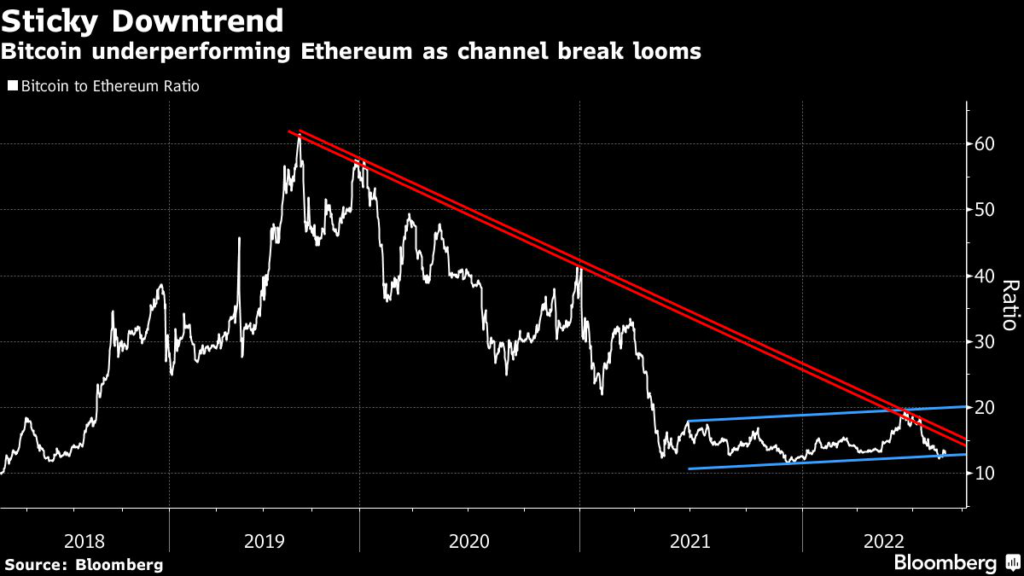
Bitcoin has recovered from its mid-June lows, but number-two crypto Ether has done even better amid enthusiasm about its coming Merge upgrade. The recent selloff in both tokens has left their ratio testing the lower end of a rising channel whose downside resolution might see the it tumble to around six, from highs of around 60 in 2019.


More stories like this are available on bloomberg.com

©2022 Bloomberg L.P.

US Futures Waver Amid Fed Policy, Growth Risks: Markets Wrap

(Bloomberg) — US index futures struggled for direction as investors digested the latest hawkish noises from the Federal Reserve amid mounting signs of a global economic slowdown.

Cntracts on the S&P 500 and Nasdaq 100 fluctuated in a tight range. The 10-year Treasury yield climbed about two basis points after data showed orders placed with US factories for core capital goods rose by more than expected in July, pointing to sustained demand for equipment despite higher interest rates and concerns about a weakening economy. The dollar resumed an advance against major peers.

Investors will pore over Fed Chair Jerome Powell’s speech at the Jackson Hole symposium on Friday for a sense of how hawkish the US central bank will be in the face of mounting economic challenges. A global rebound in equities from a June low has stalled ahead of the widely-anticipated event.

“Globally we haven’t seen a deceleration like this that has been so synchronized in many decades,” Frances Stacy, director of strategy at Optimal Capital Advisors LLC, said on Bloomberg Television. “I don’t want to be directional” in picking trades, she added.

The latest data showed economic activity weakening from the US to Europe and Asia, underlining the delicate task the Fed faces in hiking interest rates to bring down high inflation without sparking a recession. Still, Minneapolis Fed President Neel Kashkari said inflation is very high and the central bank must act to bring it under control.

The Fed “is probably going to use this weekend to reiterate the fact that rates have more room to climb because they really want to bring inflation down,” Kelvin Tay, Asia-Pacific chief investment officer at UBS Global Wealth Management, said on Bloomberg Television.

The Stoxx Europe 600 index swung between small gains and losses, with retailers under pressure after US peer Nordstrom Inc. trimmed its full-year outlook. Luxury-goods giant Richemont surged after selling a stake in its online business.

European bonds fell as traders raised wagers the European Central Bank will take bolder action to tame surging prices as the euro area struggles with record energy prices. Money markets are now fully pricing a percentage-point of policy tightening by the October meeting, which would take the deposit rate to 1%. Germany’s 10-year yield climbed 4.5 basis points to 1.36%, a two-month high.

Elsewhere, WTI crude oil drifted above $94 a barrel, bolstered by shrinking US stockpiles and possible OPEC+ output cuts. Tuesday’s Bitcoin rally proved short-lived, with the cryptocurrency heading back toward $21,000.

Will the meme mania fizzle out? That’s the theme of this week’s MLIV Pulse survey. Click here to participate anonymously.

What to watch this week:

  • US GDP, initial jobless claims, Thursday
  • Kansas City Fed hosts its annual economic policy symposium in Jackson Hole, Wyoming, Thursday
  • ECB’s July minutes, Thursday
  • Fed Chair Powell speaks at Jackson Hole, Friday
  • US personal income, PCE deflator, University of Michigan consumer sentiment, Friday

Some of the main moves in markets:

Stocks

  • Futures on the S&P 500 were little changed as of 8:40 a.m. New York time
  • Futures on the Nasdaq 100 were little changed
  • Futures on the Dow Jones Industrial Average were little changed
  • The Stoxx Europe 600 was little changed
  • The MSCI World index fell 0.2%

Currencies

  • The Bloomberg Dollar Spot Index rose 0.3%
  • The euro fell 0.5% to $0.9925
  • The British pound fell 0.5% to $1.1771
  • The Japanese yen was little changed at 136.87 per dollar

Bonds

  • The yield on 10-year Treasuries advanced two basis points to 3.07%
  • Germany’s 10-year yield advanced five basis points to 1.37%
  • Britain’s 10-year yield advanced eight basis points to 2.66%

Commodities

  • West Texas Intermediate crude rose 0.5% to $94.25 a barrel
  • Gold futures fell 0.1% to $1,758.90 an ounce

More stories like this are available on bloomberg.com

©2022 Bloomberg L.P.
Goldman May Tap Brakes, Again, on Consumer Unit’s Next Big Thing

(Bloomberg) — Goldman Sachs Group Inc. is reconsidering how to launch a long-delayed product for the masses as senior executives wrestle with cost overruns.

For more than a year, the firm’s consumer-banking arm has strained to ready online checking accounts that will let users set up direct deposits and pay their bills online — a key step toward the Wall Street titan’s goal of building a digital bank of the future.

But recently, Goldman leaders have been weighing whether to shelve the new account’s retail blitz until 2023, and instead open the platform in a more limited way, to private-wealth clients and some other existing customers, according to people with knowledge of the discussions. That would spare the firm from spending big on marketing in a year in which the online platform, known as Marcus, has seen losses accelerate. The company’s leaders have yet to make their decision.

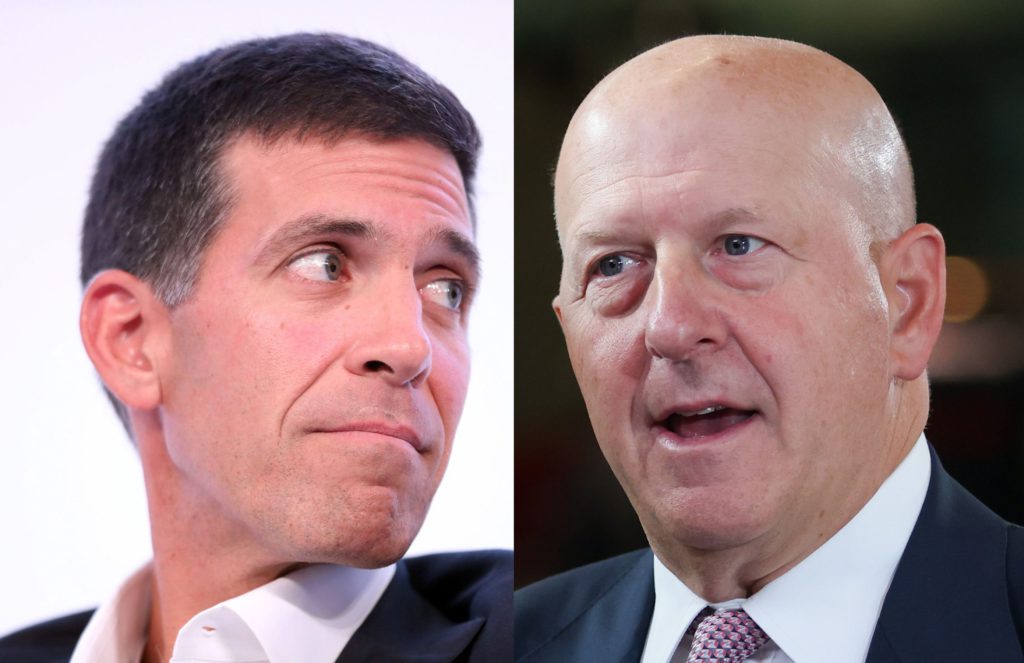
David Solomon, who quickly embraced the nascent consumer unit as a key area of growth when he became chief executive officer in 2018, is now contending with its persistent cash burn as he tries to stay the course. Effectively a giant startup inside the bank, Marcus is set to post cumulative losses topping $4 billion since inception, according to the people, who asked not to be identified discussing internal business. That’s not including Goldman’s acquisition of installment-loans provider GreenSky Inc. in a deal initially valued at more than $2.2 billion last year at what turned out to be the peak of the market for fintech ventures. 

Marcus, which already offers savings accounts, promised to add checking by mid-2021, but technical issues proved challenging. Now the product is nearing its unveiling at a daunting moment for the industry. Regulators in the Biden administration are scrutinizing fees. And some of the nation’s biggest retail banks have unfurled generous sign-up bonuses to attract new account holders.

Inside Goldman, conversations are focused on how to launch checking successfully while spending prudently. Solomon’s deputy, John Waldron, is personally overseeing Marcus’s expenses as part of an effort to put the unit back on course to contribute to earnings. As Solomon pushes forward, Waldron is trying to manage investor expectations.


Earlier this month, Credit Suisse Group AG analyst Susan Katzke wrote in a report that she was told by Goldman executives including Waldron that they still backed the growth initiatives but signaled a shift in focus — with more to wealth management and less to consumer banking. Katzke wrote that she welcomed that pivot.

A spokesman for New York-based Goldman declined to comment on the unit’s plans.

Checking Desire

Solomon has long made checking accounts a key part of Marcus’s strategy. When the bank started exploring the consumer market more than a half-decade ago, it considered a variety of products including credit cards, loans and investing offerings. But in the CEO’s view, the franchise had the best chances for success if it could establish itself as a customer’s primary financial-services provider.

Checking can offer a range of benefits to banks. The accounts create lasting — or “sticky” — relationships with customers by serving as the inbox for their paychecks and a hub for paying bills. The deposits are also a source of funding that lenders can use for loans and other businesses. And the accompanying debit cards generate a treasure trove of data on customers’ spending habits. For Goldman, all of that would help it become a one-stop shop for Americans’ everyday financial needs. 

Yet profit margins for the accounts themselves can be thin. Overdraft fees and other charges for insufficient funds once provided more than half of the profits that banks reaped by offering mass-market checking. But lawmakers and regulators have taken a dim view of the billions of dollars in revenue that extracts.

Take the Consumer Financial Protection Bureau, which is already scrutinizing Goldman’s credit-card practices. In recent months, the agency asked consumers to weigh in on overdraft costs, typically penalties of roughly $30 that banks levy each time a consumer spends more than they have left in their accounts. A number of banks have promised to ease off.

“From the bankers’ perspective, the fee opportunities are diminishing,” said Sarah Grotta, a director at consultancy Mercator Advisory Group who focuses on financial products including debit accounts. “A lot of checking accounts actually, from a net income perspective, don’t make banks all that much money. But they’re a source of deposits that are valuable, and it’s a platform from which to create relationships for other types of products.”

In the early days, Solomon’s management team gave shareholders periodic updates on the business’s initial losses and even specified when investors could expect the venture to break even. But as deadlines slipped and expenses continued, the firm has shied away from providing new forecasts. 

To make matters worse, Goldman readied its checking accounts just as the cost to acquire such customers soared. Rivals Citigroup Inc. and JPMorgan Chase & Co. have flooded mailboxes across the country, offering potential customers hundreds of dollars to open new accounts. 

Lenders now spend a whopping $500 to acquire each new customer, according to the software provider FI Works. It found that even with those outlays, most banks still face the loss of 15% of their customers every year.

More stories like this are available on bloomberg.com

©2022 Bloomberg L.P.

Crypto Confronts Own Y2K Moment With Ethereum Network Upgrade

(Bloomberg) — Airplanes wouldn’t be able to land. Power plants would shut down. Those were just some of the dire predictions faced by computer programmers and users worldwide as the year 2000 approached. In the end, the millennium bug that was widely expected to create computer chaos turned out to be more of a punch line to jokes than an actual problem. 

Two decades later, the crypto world could be facing its own Y2K moment, when the Ethereum network undergoes a major software upgrade in September. The revamp, known as the Merge, is being billed as a seamless transition that shouldn’t be noticeable to users of the most commercially important blockchain. Not everyone is convinced, especially when it comes to the more than 3,400 active distributed applications that are built on the platform.  

“You know there will be those edge cases that will be interesting and exploitable,” said Toby Lewis, chief executive officer of Novum Insights, a crypto analytics provider. “One thing I can guarantee, it’s going to be a very bumpy ride.”

Observers just need to look back to Ethereum’s 2016 upgrade, when the network was besieged for weeks by so-called replay attacks, where hackers replayed users’ transactions to steal tokens. The Yunbi exchange reportedly lost 40,000 Ethereum Classic coins. Developers have since implemented network-based protection measures. Even so, attacks could still take place if any of the self-executing software programs called smart contracts that run the myriad of apps on the network haven’t been built correctly, according to Josselin Feist, engineering director for blockchain assurance at Trail of Bits, a security firm that audits the self-executing contracts.  

Industry participants are already announcing safeguards. Coinbase Global Inc., the largest US crypto exchange, said it will pause withdrawals and deposits of all Ethereum-based tokens “briefly” around the time of the Merge. Most other crypto exchanges, and even many decentralized-finance apps, which let users trade, borrow and lend tokens, are expected to follow suit.

Ethereum is transitioning from a proof-of-work system where networks of computers known as miners pluck transactions out of a data pool, and arrange them into blocks that are added to the blockchain. The miners are being eliminated as part of a plan to reduce energy consumption. After the upgrade, a newly created participant in the new proof-of-stake system known as a builder will gather transactions into blocks, which it will then send to validators. The validators will sign off on the order of the blocks that will form the upgraded blockchain. 

The protective measures by the likes of Coinbase are being taken after some glitches took place during the final test of the upgrade. Some of the validators got out of sync with others, resulting in some changes to block ordering. That sort of issue can result in the need for the network to be paused, said Pedro Herrera, head of research at DappRadar. In such a scenario, a user facing liquidation, for instance, may be powerless to stop it on time.

The most disruptive issues could actually come from the emergence, around the time of the Merge, of offshoots of Ethereum. A fork in the chain would generate an almost exact replica of the Ethereum ecosystem, with copies of all its coins, nonfungible tokens and apps. People who hold an Ether token on the Ethereum blockchain will receive an additional EtherPOW token representing a forked blockchain. Some users may then try to offload POW coins — and that’s where scammers can come in and execute replay attacks.

“Replaying attacks are possible during the Merge as the network becomes less secure and more vulnerable to attacks when forks happen,” Justin Sun, who is an investor in the Poloniex crypto exchange and the founder of Tron blockchain, said in a message.

Crypto investors who want to do transactions around the time of the upgrade may want to consider using alternative blockchains and other safeguards. 

“If you want to play with your POW assets, move them to another wallet, so there’s no way for an attacker to replay the transaction,” said Pedro Herrera, head of research at DappRadar.

For their part, Ethereum core developers are downplaying the risk, as opposed to the dire circumstances that many pundits warned of back in the 1990s that could result from the inability of many computers to interpret the date change at the millennium correctly.

“I don’t expect replay attacks to be a significant problem, if they occur at all,” said Ben Edgington, lead product manager at ConsenSys.      

More stories like this are available on bloomberg.com

©2022 Bloomberg L.P.

Close Bitnami banner
Bitnami
