Bloomberg

Elon Musk Tells Tesla Owner Don’t Complain About Buggy Driving System

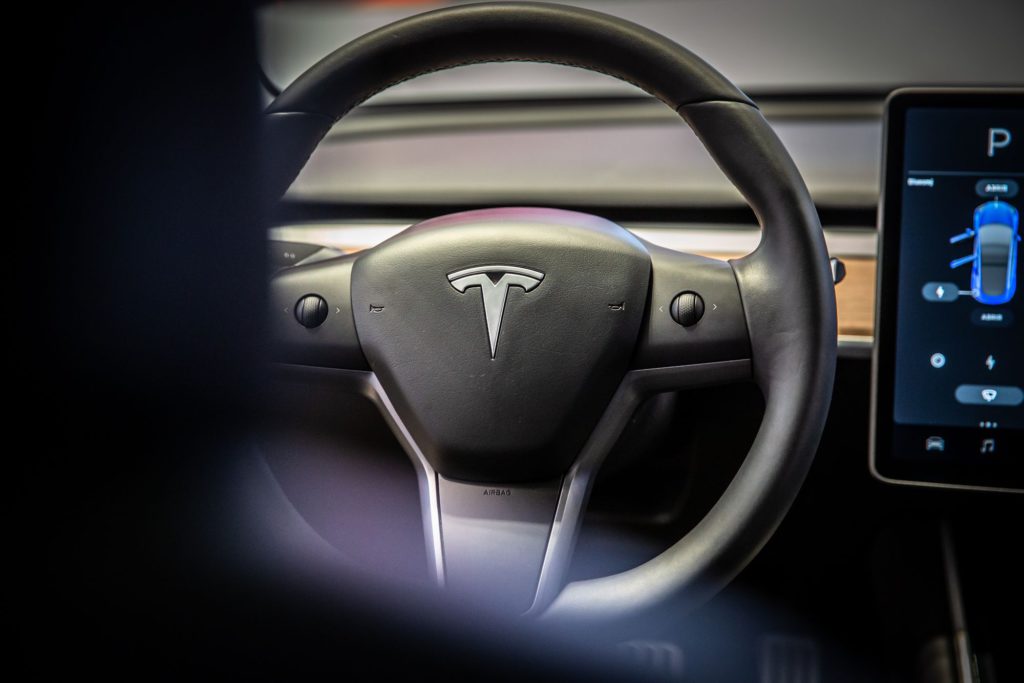
(Bloomberg) — Elon Musk doesn’t want to hear complaints from customers trying out the driver-assistance system that Tesla Inc. plans to start charging $15,000 for in the coming weeks.

The chief executive officer scolded a Tesla owner who posted videos to Twitter on Tuesday showing that a new beta version of the system marketed as Full Self-Driving at times struggles with right turns and other basic tasks. The customer wrote that he’s spent more than $32,000 paying for the system multiple times.

“10.69 is in limited release for a reason,” Musk replied, referring to the latest version of the system rolled out to select customers last week. “Please do not ask to be included in early beta releases and then complain.”

Musk announced over the weekend that Tesla will start charging $3,000 more for Full Self-Driving, which still requires active supervision and doesn’t make the company’s vehicles autonomous. California’s Department of Motor Vehicles has accused Tesla of misleading consumers about its technology, and the US National Highway Traffic Safety Administration is investigating whether the automaker’s Autopilot system is defective.

NHTSA also wrote to Tesla last year about how the company had been subjecting Full Self-Driving beta testers to non-disclosure agreements that may have impeded access to information the agency needed to assess the program. While the carmaker had encouraged customers to share their experiences with the system, it asked them to be selective, citing concern that critics wanted the company to fail and would mis-characterize feedback posted on social media.

In October, Musk confirmed Tesla had dropped the NDA. A few months later, the company terminated an employee days after he posted a YouTube video of his car running into a traffic pylon while using Full Self-Driving.

Musk has written in the past that he appreciates critical feedback and urged his Twitter followers in February to seek out negative assessments.

(Updates with amount customer has paid for the system in the second paragraph.)

More stories like this are available on bloomberg.com

©2022 Bloomberg L.P.

Schneider Considers Buyout of $8 Billion Software Firm Aveva

(Bloomberg) — Schneider Electric SE said it’s considering a bid to buy out minority shareholders of industrial software developer Aveva Group Plc.

The French industrial conglomerate believes a full combination with Aveva would help it execute its growth strategy faster, it said in a statement Wednesday that confirmed an earlier Bloomberg News report. It already owns about 60% of London-listed Aveva. 

Schneider said no proposal has been made to Aveva yet and there’s no certainty it will proceed with an offer. Under UK takeover rules, it has until 5 p.m. on Sept. 21 to make a bid. 

Shares of Aveva were up 34% at 12:29 p.m. Wednesday in London, putting the company on track for a record daily gain and giving it a market value of about £8.9 billion ($10.5 billion). Aveva had lost nearly half its value in the 12 months through Tuesday. 

Schneider Chief Executive Officer Jean-Pascal Tricoire has been offloading non-core businesses and channeling more investment into areas that help companies with the shift to digitalization. 

Cambridge, England-based Aveva provides software tools for utilities, oil and gas producers, transportation firms and other companies, according to its website. 

Schneider took control of Aveva after agreeing in 2017 to combine its own industrial software business with the British company. Aveva has since bulked up further through acquisitions, buying SoftBank Group Corp.-backed industrial software maker Osisoft in 2020 at a valuation of $5 billion including debt. 

Aveva’s original deal with Schneider prevented the French company from boosting its stake for two years after the deal closed, and capped its holding below 75% for a further 18 months unless certain conditions were fulfilled.

(Updates with confirmation from first paragraph)

More stories like this are available on bloomberg.com

©2022 Bloomberg L.P.

UK-Backed Africa Infrastructure Fund Plans to Raise $500 Million

(Bloomberg) — Emerging Africa Infrastructure Fund plans to raise as much as $500 million over the next three years to invest in infrastructure projects on the continent.

The EAIF needs the new capital to embark on its next growth phase, said Martijn Proos, director at London- and Johannesburg-listed firm Ninety One Plc, which manages the fund. “We are open to Africa, we are open for business where there are good opportunities,” he said in an interview.   

The EAIF was established by Private Infrastructure Development Group in 2001 and substantially funded by the governments of the UK, the Netherlands, Switzerland and Sweden. It provides mainly debt capital and has invested $2.1 billion in over 90 projects on the continent.

In an effort to bolster interest from investors, Proos said the fund this week received its first-ever credit rating, from Moody’s Investors Service — a foreign currency long-term issuer rating of A2 with a stable outlook.

The fund is banking on increased interest in Africa from investors looking for bigger returns than they can get in Europe and the US.

The fund previously raised $385 million of debt capital in 2018 with insurance giant Allianz Global Investors participating in the round. Other investors include Standard Chartered Bank, the African Development Bank, the German development finance institution KFW, and FMO, the Dutch development bank.

It has an active current loan portfolio of $1.15 billion in projects spread across 17 African countries and infrastructure including power, telecommunication and transportation. Its loans range from a minimum of $10 million to $65 million per project, for as long as 20 years.

More stories like this are available on bloomberg.com

©2022 Bloomberg L.P.

Hyundai and Korean Battery Makers Bristle at Biden Climate Bill

(Bloomberg) —

South Korea’s Hyundai Motor and local battery makers are struggling with the Biden administration’s historic climate and energy law that’s aimed at containing the influence of Chinese companies in the global electric car industry and boosting domestic production of EVs. Bloomberg has written about some of their concerns before here.

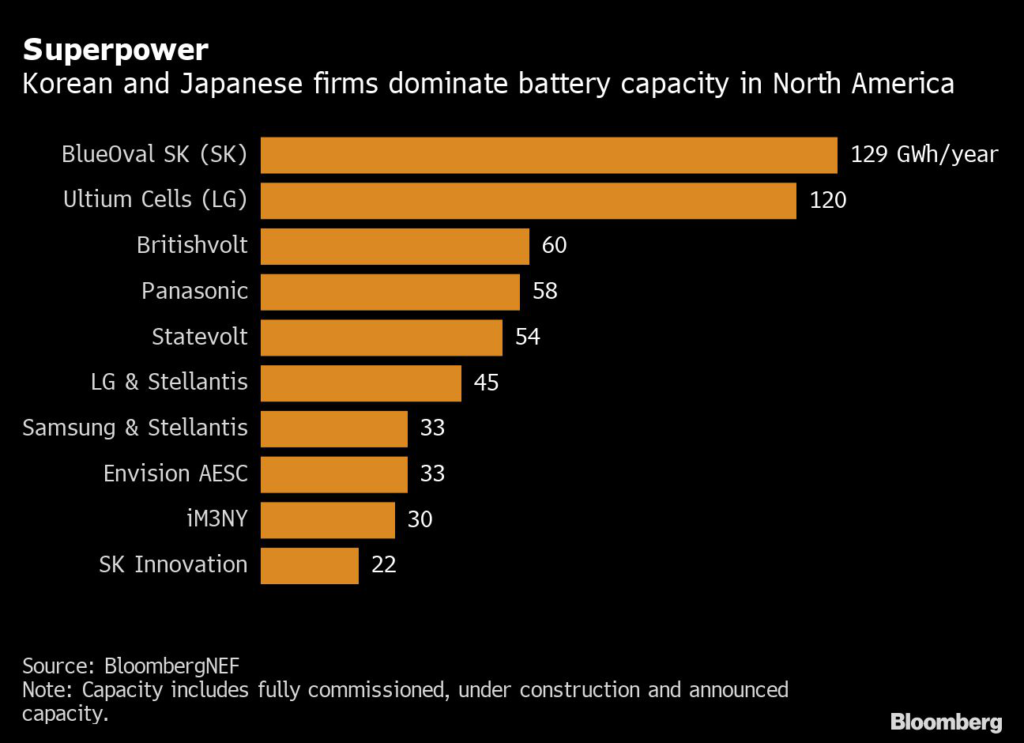
The act, which has been signed into law by President Joe Biden, requires EV makers to assemble their cars in North America and quickly reduce their reliance on China for battery components and materials in order to get a maximum $7,500 in tax credits. That’s a disaster for Korea: Hyundai and Kia don’t have any operational electric car plants in the US (and Hyundai specifically faces union resistance when it comes to overseas expansion) and Korean battery makers import more than 80% of minerals from China; mines typically take seven years or longer to come online.

Japanese automakers are at a similar disadvantage, having invested lots of money in the US but not currently producing EVs there. With the exception of Nissan’s Leaf, no other Japanese EV model would qualify for subsidies under the new rules.

South Korea’s trade ministry is considering asking the US to postpone the Inflation Reduction Act, even just for two or three years, during which time Hyundai could build a new EV plant, an official said last week. Hyundai is also mulling speeding up construction of a planned EV plant in Georgia, Yonhap News reported.

Korean government and company officials don’t see the exclusion of Chinese rivals as an opportunity. The two rely on each other so much. It’s not a new dilemma either — the US is Korea’s closest political ally but China is its biggest trading partner and deeply involved in Korean supply chains. 

Treasury Secretary Janet Yellen described US efforts to diversify supply chains with “trusted partners” as “friend-shoring” during her visit to Seoul last month, adding the US “cannot allow countries like China to use their market position in key raw materials, technologies, or products.” South Korea is also being asked to join a kickoff meeting of the so-called Chip 4 Alliance — a new group of major chipmaking powers — along with the US, Taiwan and Japan.

According to Chul-Wan Park, a professor at Seojeong College who specializes in the auto industry, the Inflation Reduction Act could be a “huge opportunity for South Korea by excluding China, but unfortunately, no company is that well prepared for diversification.” The US might “push Korea to join the Chip 4 Alliance in return for relaxing or delaying the IRA requirements.” 

Korea’s Industry Minister Lee Chang-yang earlier this week said he was considering filing a complaint with the World Trade Organization against the act. Some 25 lawmakers in South Korea proposed a resolution against it, urging the US not to “discriminate” against foreign electric car and battery makers.

As one analyst said, there’s a feeling the US is betraying South Korea, particularly given the huge investment that Korean companies have promised to make in US. Hyundai announced a plan to invest $5.5 billion to build an EV assembly and battery plant near Savannah, Georgia, and Korean battery makers have a series of plans for battery plants: four plants for General Motors, two for Stellantis and three for Ford. 

The act will result in a loss of 100,000 jobs in South Korea and hurt profits at local auto-parts makers, Kweon Seongdong, a senior ruling party lawmaker said. That’s in stark contrast to the around 35,000 jobs expected to be created in the US by 34 Korean companies, mostly in the battery industry, according to US lobby group Reshoring Initiative.

Another issue is that Hyundai will have to reduce its dependence on Chinese-made auto parts. South Korea imported about 35% of its total auto parts from China in 2021, according to the Korea Institute for Industrial Economics and Trade.

“It will be hard to secure raw materials and components from the US to meet the threshold to access the tax credits,” BloombergNEF energy storage analyst Evelina Stoikou said. “In addition, companies will have to move fast as it takes time to build component and battery manufacturing capacity (up to three years) and the credits will be phased out in 2032.”

Hyundai and Kia have become the largest EV makers behind Tesla in the US this year, selling about 44,000 clean cars, according to BNEF. Korean battery makers are also supplying not only US carmakers like Tesla, GM, Ford and Rivian, but also European names like Volkswagen and BMW.

Global carmakers have few other options to turn to if they aren’t prepared to be more accommodating to Korean battery companies. All the top 10 battery makers are from Asia — six from China, three from Korea and Japan’s Panasonic, according to SNE Research.

As Kim Pil-Soo, an automobile professor at Daelim University, put it: “It’s not just a matter for Korean carmakers. US carmakers like Ford and Tesla are also using Chinese minerals to lower the price of EVs. The IRA is a disaster for them too.”

(Updates to add lede image and link to graphic.)

More stories like this are available on bloomberg.com

©2022 Bloomberg L.P.

Atom Bank Says Four-Day Week Is The ‘Future of Working Life’

(Bloomberg) —

Six months after switching to a four-day working week, the UK’s Atom Bank said it’s seen benefits from talent retention to improved productivity.

There was a 49% increase in job applications at the bank in January 2022 compared to a year ago, while staff retention rates have also risen, according to a press release Wednesday. Days lost to sickness fell over the period and customer service ratings also improved.

The Durham, England-based challenger bank is one of a number of UK companies exploring new working patterns to meet growing demand for flexible employment following the pandemic. While some have questioned the feasibility of a shorter working week, Atom Bank has no such qualms.

“We firmly believe the four-day week is the future of working life,” said Anne-Marie Lister, chief people officer at Atom Bank. “We hope Atom’s experiences will encourage more businesses to make the shift permanently.”

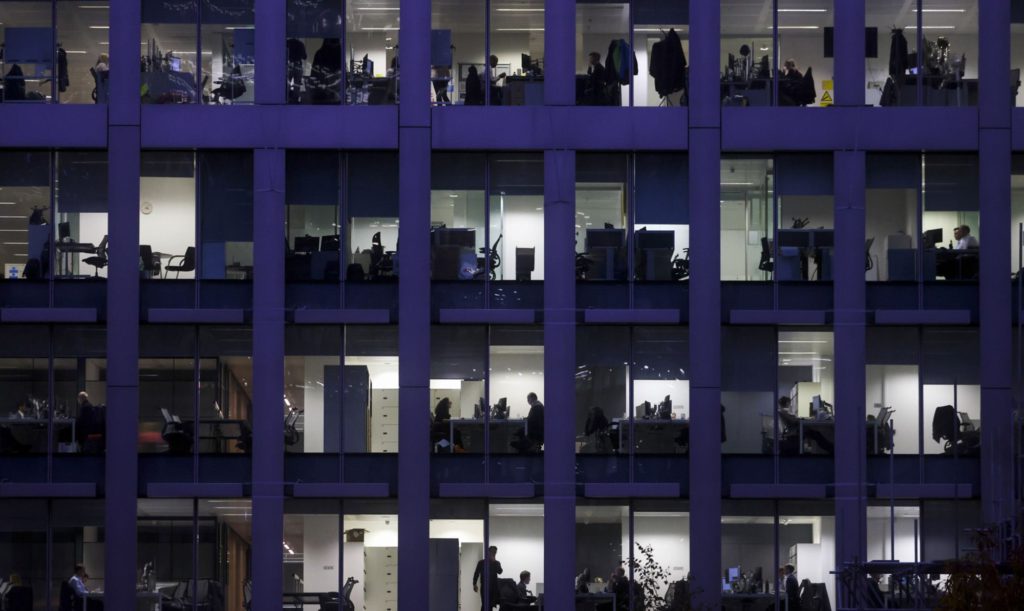
Even as the pandemic recedes and some bosses push for a return to the office, there’s increasing evidence flexible work is here to stay. Office vacancies in central London are at the highest level in more than 15 years with the equivalent of about 60 Gherkin skyscrapers of empty space.

Read more: London’s Empty Office Space Hits Highest Level in 15 Years  

More stories like this are available on bloomberg.com

©2022 Bloomberg L.P.

UK Bank Says Four-Day Week Is The ‘Future of Working Life’

(Bloomberg) —

Six months after switching to a four-day working week, the UK’s Atom Bank said it’s seen benefits from talent retention to improved productivity.

There was a 49% increase in job applications at the bank in January 2022 compared to a year ago, while staff retention rates have also risen, according to a press release Wednesday. Days lost to sickness fell over the period and customer service ratings also improved.

The Durham, England-based challenger bank is one of a number of UK companies exploring new working patterns to meet growing demand for flexible employment following the pandemic. While some have questioned the feasibility of a shorter working week, Atom Bank has no such qualms.

“We firmly believe the four-day week is the future of working life,” said Anne-Marie Lister, chief people officer at Atom Bank. “We hope Atom’s experiences will encourage more businesses to make the shift permanently.”

Even as the pandemic recedes and some bosses push for a return to the office, there’s increasing evidence flexible work is here to stay. Office vacancies in central London are at the highest level in more than 15 years with the equivalent of about 60 Gherkin skyscrapers of empty space.

Read more: London’s Empty Office Space Hits Highest Level in 15 Years  

More stories like this are available on bloomberg.com

©2022 Bloomberg L.P.

Offshore Tax Loophole Helps Americans Cheat IRS, Senate Says

(Bloomberg) — Rich Americans are hiding “vast amounts of income” from the Internal Revenue Service by exploiting a “deeply troubling” loophole in a 12-year-old US law designed to crack down on offshore tax evasion, according to a Senate Finance Committee report. 

The committee, led by Oregon Democrat Ron Wyden, focused on the loophole after investigating Robert Brockman, the billionaire software developer indicted in the largest tax-evasion case against an individual in US history. Brockman, who died this month at 81 before his case came to trial, allegedly used offshore trusts and corporations to hide $2 billion in income from the IRS. 

According to the Senate report released Wednesday, the popular method of tax avoidance involves the 2010 Foreign Account Tax Compliance Act, or FATCA. The law requires banks around the world to report assets and accounts of US clients to the IRS, but wealthy Americans have figured out a way to sidestep the rule and draw less scrutiny from the banks. 

“It doesn’t take a rocket scientist to see how this loophole leads to billions in tax evasion,” Wyden said in a separate statement.

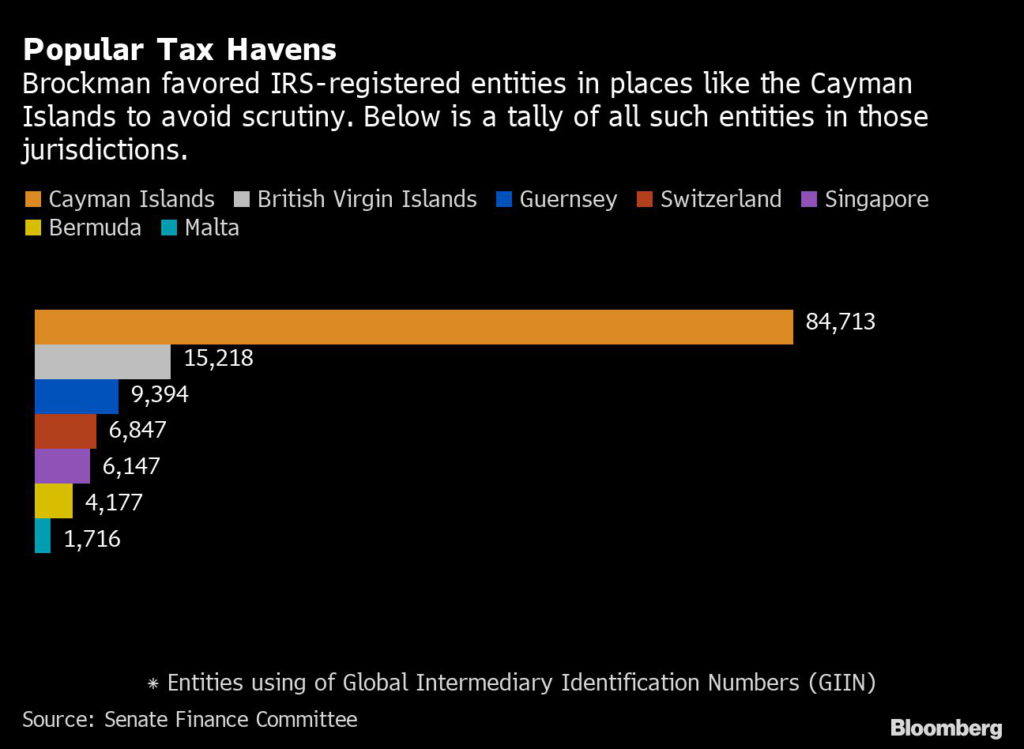
The report described a “shockingly easy” process that starts by setting up shell companies abroad and registering them with the IRS as offshore financial institutions. The IRS issues the entities unique Global Intermediary Identification Numbers, or GIINs, which relieve the banks of FATCA’s requirement to investigate whether they’re held by Americans, the report said.

Hundreds of thousands of entities holding GIINs are based in tax havens like the Cayman Islands, British Virgin Islands and Guernsey. In most cases, the IRS issues the identifiers without conducting any investigation into the recipient’s assets, activities or beneficial owners because the agency says it is “extraordinarily difficult to do meaningful due diligence,” according to the report. 

‘Shell Bank’ Loophole

“This ‘shell bank’ loophole creates widespread risks for offshore tax evasion and money laundering,” the report said. “Due to persistent budget cuts and decade-long campaign to gut the IRS, the agency does not have the personnel or the capabilities to adequately monitor whether these offshore entities are properly reporting accounts belonging to US persons.”

Senate investigators, citing court documents, said Brockman set up entities in the tax havens of Bermuda, Cayman Islands, Malta, Nevis, Switzerland, Singapore, Guernsey and the British Virgin Islands. He used those foreign entities to hide more than $2 billion in untaxed income, much of it from his investments in Vista Equity Partners, the Justice Department alleged.

Swiss bank Mirabaud & Cie. received at least $799 million for an entity linked to Brockman called Point Investments, court records show. While that transfer happened before FATCA was in place, the law later required the bank to flag accounts owned by Americans, regardless of when they were opened. 

However, because Bermuda-based Point and other Brockman-linked entities had IRS-issued GIIN numbers, Mirabaud and another small Swiss bank took the position that “no further review, identification, or reporting is required with respect to the account” under FATCA, according to the study. 

The IRS has issued GIIN numbers to more than 128,000 entities in eight FATCA partner jurisdictions linked to Brockman, the Senate report showed. For entities like those tied to Brockman, obtaining GIINs involves a self-certification process in which applications “are almost always approved without meaningful investigations,” the committee found.

The committee, which interviewed IRS officials for its study, wrote that a lack of resources has “significantly hindered” the agency’s enforcement activities and ability to crack down on tax evasion by wealthy Americans, as was intended under FATCA.

“Urgent steps need to be taken to ensure that the wealthy taxpayers are not abusing this ‘shell bank’ loophole and other weaknesses with FATCA enforcement to hide their assets offshore and evade paying their fair share,” the Senate report says.

Given the IRS’s severe shortage of resources, Brockman’s scheme may have gone undetected by the agency or federal prosecutors if not for evidence provided by a Vista whistle-blower and the cooperation of several co-conspirators, the study said.

“The committee strongly supports immediate action to make it more difficult for wealthy tax cheats to stash funds overseas in secret offshore accounts,” the report said. 

Among its recommendations are: Congress and the Treasury should toughen due-diligence requirements for large money transfers; screen GIIN applications more rigorously; strengthen the IRS Whistleblower Office; and add IRS resources to audit large foreign partnerships like those managed by Vista Equity Partners.

More stories like this are available on bloomberg.com

©2022 Bloomberg L.P.

Korean Battery, Automakers Bristle Over US Clean Energy Act

(Bloomberg) — South Korea’s Hyundai Motor and local battery makers are struggling with the Biden administration’s historic climate and energy law that’s aimed at containing the influence of Chinese companies in the global electric car industry and boosting domestic production of EVs. Bloomberg has written about some of their concerns before here.

The act, which has been signed into law by President Joe Biden, requires EV makers to assemble their cars in North America and quickly reduce their reliance on China for battery components and materials in order to get a maximum $7,500 in tax credits. That’s a disaster for Korea: Hyundai and Kia don’t have any operational electric car plants in the US (and Hyundai specifically faces union resistance when it comes to overseas expansion) and Korean battery makers import more than 80% of minerals from China; mines typically take seven years or longer to come online.

Japanese automakers are at a similar disadvantage, having invested lots of money in the US but not currently producing EVs there. With the exception of Nissan’s Leaf, no other Japanese EV model would qualify for subsidies under the new rules.

South Korea’s trade ministry is considering asking the US to postpone the Inflation Reduction Act, even just for two or three years, during which time Hyundai could build a new EV plant, an official said last week. Hyundai is also mulling speeding up construction of a planned EV plant in Georgia, Yonhap News reported.

Korean government and company officials don’t see the exclusion of Chinese rivals as an opportunity. The two rely on each other so much. It’s not a new dilemma either — the US is Korea’s closest political ally but China is its biggest trading partner and deeply involved in Korean supply chains. 

Treasury Secretary Janet Yellen described US efforts to diversify supply chains with “trusted partners” as “friend-shoring” during her visit to Seoul last month, adding the US “cannot allow countries like China to use their market position in key raw materials, technologies, or products.” South Korea is also being asked to join a kickoff meeting of the so-called Chip 4 Alliance — a new group of major chipmaking powers  — along with the US, Taiwan and Japan.

According to Chul-Wan Park, a professor at Seojeong College who specializes in the auto industry, the Inflation Reduction Act could be a “huge opportunity for South Korea by excluding China, but unfortunately, no company is that well prepared for diversification.” The US might “push Korea to join the Chip 4 Alliance in return for relaxing or delaying the IRA requirements.” 

Korea’s Industry Minister Lee Chang-yang earlier this week said he was considering filing a complaint with the World Trade Organization against the act. Some 25 lawmakers in South Korea proposed a resolution against it, urging the US not to “discriminate” against foreign electric car and battery makers.

As one analyst said, there’s a feeling the US is betraying South Korea, particularly given the huge investment that Korean companies have promised to make in US. Hyundai announced a plan to invest $5.5 billion to build an EV assembly and battery plant near Savannah, Georgia, and Korean battery makers have a series of plans for battery plants: four plants for General Motors, two for Stellantis and three for Ford. 

The act will result in a loss of 100,000 jobs in South Korea and hurt profits at local auto-parts makers, Kweon Seongdong, a senior ruling party lawmaker said. That’s in stark contrast to the around 35,000 jobs expected to be created in the US by 34 Korean companies, mostly in the battery industry, according to US lobby group Reshoring Initiative.

Another issue is that Hyundai will have to reduce its dependence on Chinese-made auto parts. South Korea imported about 35% of its total auto parts from China in 2021, according to the Korea Institute for Industrial Economics and Trade.

“It will be hard to secure raw materials and components from the US to meet the threshold to access the tax credits,” BloombergNEF energy storage analyst Evelina Stoikou said. “In addition, companies will have to move fast as it takes time to build component and battery manufacturing capacity (up to three years) and the credits will be phased out in 2032.”

Hyundai and Kia have become the largest EV makers behind Tesla in the US this year, selling about 44,000 clean cars, according to BNEF. Korean battery makers are also supplying not only US carmakers like Tesla, GM, Ford and Rivian, but also European names like Volkswagen and BMW.

Global carmakers have few other options to turn to if they aren’t prepared to be more accommodating to Korean battery companies. All the top 10 battery makers are from Asia — six from China, three from Korea and Japan’s Panasonic, according to SNE Research.

As Kim Pil-Soo, an automobile professor at Daelim University, put it: “It’s not just a matter for Korean carmakers. US carmakers like Ford and Tesla are also using Chinese minerals to lower the price of EVs. The IRA is a disaster for them too.”

More stories like this are available on bloomberg.com

©2022 Bloomberg L.P.
Servify Raises $65 Million as It Prepares for a $2.5 Billion IPO

(Bloomberg) — Servify, which services equipment, such as phones and laptops, from purchase to sale has raised $65 million from investors led by Singularity Growth Opportunity Fund as it prepares for an initial public offering, according to the Mumbai-based company’s founder.

“The company will turn profitable on an operational level by November, and we are already in talks with advisers for an initial public offering after 18 months,” Sreevathsa P, founder of the company formally known as Service Lee Technologies Ltd., said by phone. “This was like a pre-IPO round, and we will seek a valuation of about $2.5 billion in the listing.”

Other investors in the current round that valued the company at less than a billion dollars included Iron Pillar Capital Management Ltd., Blume Ventures, and AmTrust. The seven-year-old product-life cycle management platform offers services in regions including North America, the European Union, and the Middle East.

The founder said the company would use the funds to enter new geographies, including Latin America, add new products, and make acquisitions. The company has partnered with over 75 brands, including Apple Inc., Samsung Electronics Ltd., OnePlus, and Xiaomi Corp., to offer life cycle management.

More stories like this are available on bloomberg.com

©2022 Bloomberg L.P.

Is “Flippening” on the Horizon?

  • Listen to Bloomberg Crypto on the iHeartRadio App
  • Listen to Bloomberg Crypto on Apple Podcasts
  • Listen to Bloomberg Crypto on Spotify  

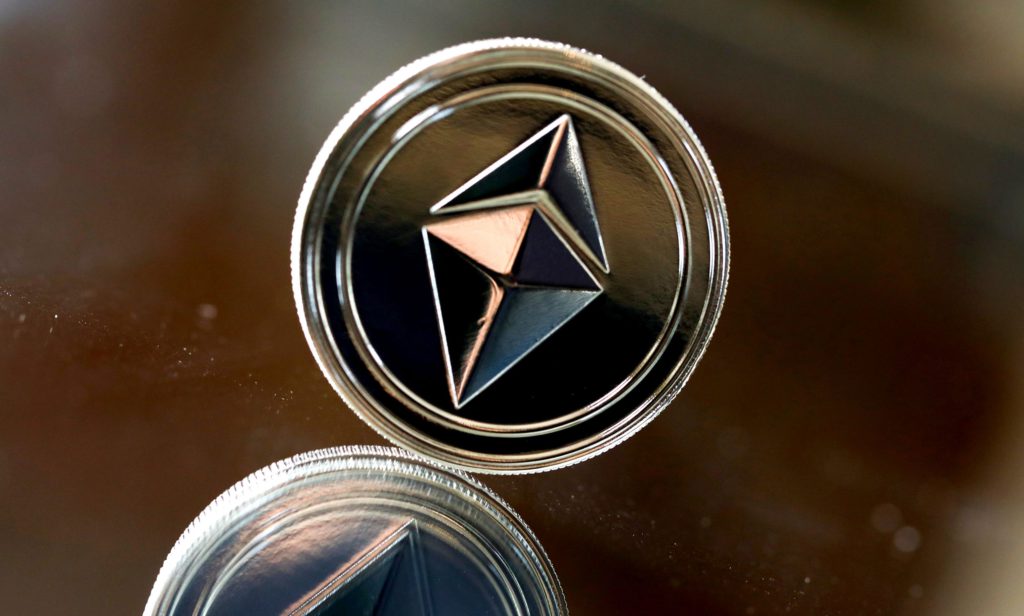
(Bloomberg) — We’ve talked a lot about Bitcoin on the Bloomberg Crypto podcast — the world’s oldest, largest, and most popular cryptocurrency. But in this episode, we’re going to talk about the number two token — Ether, and about the blockchain it’s built on.

Ether’s market value is still about half that of Bitcoin’s. But a recent surge — a whopping 50% since mid-June — has some Ether fans hoping it’ll unseat the number one crypto.

There’s even a word for this theoretical event: “flippening.” 

So, could Ether overtake Bitcoin, upending more than a decade’s worth of Bitcoin dominance? And what would that mean for the future of crypto? Bloomberg reporters Olga Kharif and Vildana Hajric join this episode to delve into what exactly the flippening entails.

Follow us on Twitter @crypto, and subscribe to the Bloomberg Crypto Newsletter at https://bloom.bg/cryptonewsletter


More stories like this are available on bloomberg.com

©2022 Bloomberg L.P.
Close Bitnami banner
Bitnami