Bloomberg

At Shanghai Landmark Mall, 34% of Shops Close Amid Lockdowns

(Bloomberg) — Shopping malls in China’s financial hub are seeing a surge in vacancies after Covid Zero lockdowns hammered consumer demand, adding to the woes of developers and asset managers owning them. 

Vacancy rates in the city’s malls climbed to 7% in the second quarter, above a “warning line” of 5%, said China Real Estate Information Corp., citing research of 20 major malls. 

The worst hit was Super Brand Mall, which sits at the heart of Shanghai’s Lujiazui financial district. It saw 34% of its shops shuttered, CRIC said. The 2.7-million-square-foot mall, just a few minutes away from the world’s second-tallest office tower, has been one of the most popular shopping centers since it opened more than two decades ago. 

Malls are getting hit hard by Covid as China’s economy slows and consumer demand wanes. After traumatic lockdowns in April and May, health authorities in Shanghai still deploy “temporary control measures” that sometimes could confine people in shopping venues with little advance notice. That has led mall rents in major areas to plummet more than 30% in the second quarter from the first.

Global brands are feeling the pain too. Burberry Group Plc and Richemont reported sales drops of at least a 35% in China for their more recent quarters. Starbucks Corp.’s China revenue sank more than 40% in the three months ended July 3. 

(Updates with details about mall rent drops in fourth graph)

More stories like this are available on bloomberg.com

©2022 Bloomberg L.P.

Sony Playstation Faces UK Suit Seeking Billions for Consumers

(Bloomberg) — Sony Playstation is facing the prospect of a UK class action suit over allegations it “ripped” consumers off by overcharging for games and in-game purchases.

The lawsuit, filed at London’s Competition Appeal Tribunal, accuses the games console maker of abusing its market dominance by imposing unfair conditions on developers who then pass on “excessive and unfair” prices to consumers. 

“The drive towards in-game purchases allows companies like Sony to profiteer and abuse their power because they have a captive audience,” Alex Neill, leading the claim, said. “Sony knows its customers are hooked once they are part of the PlayStation world and it exploits them with exorbitant charges on every digital purchase.” 

Judges now need to approve the suit as an opt-out collective action before it can progress. Once certified the claim could sweep in 8.9 million customers and garner as much as £5 billion ($5.9 billion) in damages. Anyone in the UK who has purchased digital games or extra content on their console or through the PlayStation store since August 2016 is included in the lawsuit.

US style Opt-out class lawsuits, where someone impacted doesn’t have to be aware of the case to be included, are on the rise in the UK. Not a single claim was allowed to go ahead in the five years since rules in 2015, but 2021 saw four claims given the green light. There are now nine claims certified at the Competition Appeal Tribunal with many more waiting expected in the coming months. 

More stories like this are available on bloomberg.com

©2022 Bloomberg L.P.

China-Bound Ex-Apple Engineer Admits to Trade Secrets Theft

(Bloomberg) — A former Apple Inc. engineer pleaded guilty to criminal charges that he stole proprietary information from the company while preparing to go work for a Chinese startup that makes electric cars with autonomous driving features.

Zhang Xiaolang, who was arrested in July 2018 on his way to catch a one-way flight to China, admitted to a single count of trade-secret theft at a hearing Monday in federal court in San Jose, California, according to the court’s electronic docket. 

A judge ordered his plea agreement to be filed under seal from public view and set Zhang’s sentencing for Nov. 14. Trade secret theft carries a maximum penalty of 10 years in prison and a $250,000 fine.

Read more: Judge Says Accused Apple Secrets Thief Can’t Shed Ankle Bracelet

US prosecutors accused Zhang of downloading a 25-page Apple document to his wife’s computer that included schematic drawings of a circuit board design for a portion of an autonomous vehicle.

Apple hired Zhang in 2015 to work as a hardware engineer in its autonomous car project, which has yet to generate a commercial product.

In April 2018, Zhang announced his intention to resign, saying he wanted to return to China to be near his ailing mother and that he intended to take a job at Xpeng Inc.

Zhang’s lawyer, Daniel Olmos, declined to comment on the plea agreement. 

Xpeng said in a statement it was aware of the latest developments in the case from media reports, but is “not clear about the details, nor involved in further investigation conducted by US law enforcement.” 

“We have no controversy against Apple and have no correlation with this case,” it said in the statement. “Xpeng strictly abides by the related laws and highly values the protection of intellectual property.”

In January 2019, federal prosecutors charged another Apple engineer, Jizhong Chen, with stealing proprietary information from the company’s self-driving car project while applying to work for a Chinese rival. 

A search of a hard drive owned by Chen found thousands of sensitive documents along with 100 photos taken inside the company’s self-driving facility, according to an FBI affidavit.

The engineer told Apple he planned to travel to China to visit his ill father, but he was arrested before he could board his direct flight. 

Chen has pleaded not guilty and the case is still pending.

The cases are US v. Zhang, 18-cr-00312, and US v. Chen, 19-cr-00056, US District Court, Northern District of California (San Jose).

(Adds comment from Xpeng in 8th paragraph.)

More stories like this are available on bloomberg.com

©2022 Bloomberg L.P.

A $3.1 Billion Fertilizer Plant Risks Aboriginal Rock Carvings

(Bloomberg) — Australia has approved a multi-billion dollar fertilizer plant in the Pilbara region after the project received the green light from the area’s local Indigenous corporation, despite concerns it will damage sacred Aboriginal ancient rock art located nearby.

Federal Environment Minister Tanya Plibersek said on Tuesday the Murujuga Aboriginal Corporation, representing the five traditional owners of the land in Western Australia, had agreed a number of rock carvings could be moved safely to an adjacent site. The corporation had allowed the development of a A$4.5 billion ($3.1 billion) project by Perdaman Chemicals and Fertlizers Ltd.

The Perth-based company had stopped work on the urea plant for months, after facing opposition from traditional custodians wanting to protect the millions of Indigenous petroglyphs on Western Australia’s Burrup peninsula — an area that’s been nominated for a World Heritage listing.

“It does mean that work can soon commence on this,” Plibersek said in a radio interview with the Australian Broadcasting Corp. She noted that only “a couple” of rock carvings and grinding stones, as well as an arrangement of stones, were at risk in the proposed site.

Perdaman has already secured gas supplies from Woodside Energy Group’s Scarborough field, and received A$255 million in February from the federal government’s Northern Australian Infrastructure Fund to build water and port facilities in the area.

The decision is a blow to Save Our Songlines, a separate Aboriginal activist group which had applied for a one-month pause on construction under Section 9 of the Aboriginal and Torres Strait Islander Heritage Protection Act. While Plibersek struck down the appeal, she said that she was still considering an application that would secure longer-term protection of the area.

“The minister suggests the Murujuga Aboriginal Corporation is legally constituted to speak for traditional custodians but its own members and elders say they are gagged and cannot oppose or object to projects,” Murujuga traditional custodians and Save our Songlines spokeswomen Raelene Cooper and Josie Alec said in a post on Twitter. “Elders repeatedly expressed opposition to relocating rock art.”

The move spurred a backlash from some First Nations groups. Speaking in a separate interview with the ABC on Tuesday, Greens Senator Dorinda Cox called the Perdaman project a “Juukan 2.0” — a reference to Rio Tinto’s destruction in 2020 of a 40,000 year-old ancient Aboriginal heritage site in the Pilbara. 

That event sparked national outrage at the time and eventually led to the resignation of a number of the company’s senior executives, including then-Chief Executive Officer Jean-Sebastien Jacques.

“The movement of that rock art will be its destruction,” Senator Cox said about the fertilizer project.

(Updates with comment from project opponents in 7th paragraph)

More stories like this are available on bloomberg.com

©2022 Bloomberg L.P.

Apple’s New iPhone 14 to Show India Closing Tech Gap With China

(Bloomberg) — Apple Inc. plans to begin manufacturing the iPhone 14 in India about two months after the product’s initial release out of China, narrowing the gap between the two countries but not closing it completely as some had anticipated. 

The company has been working with suppliers to ramp up manufacturing in India and shorten the lag in production of the new iPhone from the typical six to nine months for previous launches, according to people familiar with the matter. Apple, which long made most of its iPhones in China, is seeking alternatives as Xi Jinping’s administration clashes with the US government and imposes lockdowns across the country that have disrupted economic activity.

Analysts such as Ming-Chi Kuo of TF International Securities Group have said they anticipate Apple will ship the next iPhone from both countries at roughly the same time, which would have been a significant benchmark in Apple’s efforts to diversify its supply chain and build redundancy.

Foxconn Technology Group, the primary manufacturer of iPhones, studied the process of shipping components from China and assembling the iPhone 14 device at its plant outside the southern Indian city of Chennai, said the people, who asked not to be identified because the efforts are confidential. That included looking at ways to maintain Apple’s high standards for confidentiality.

Apple and Foxconn ultimately determined a simultaneous start in India and China isn’t realistic this year, although it remains a long-term goal, said the people. The first iPhone 14s from India are likely to be finished in late October or November, following the initial September release, they said. An ambitious target would be the Diwali festival that begins Oct. 24, one person said. 

A spokesman for Cupertino, California-based Apple declined to comment. Foxconn did not immediately respond to requests for comment.

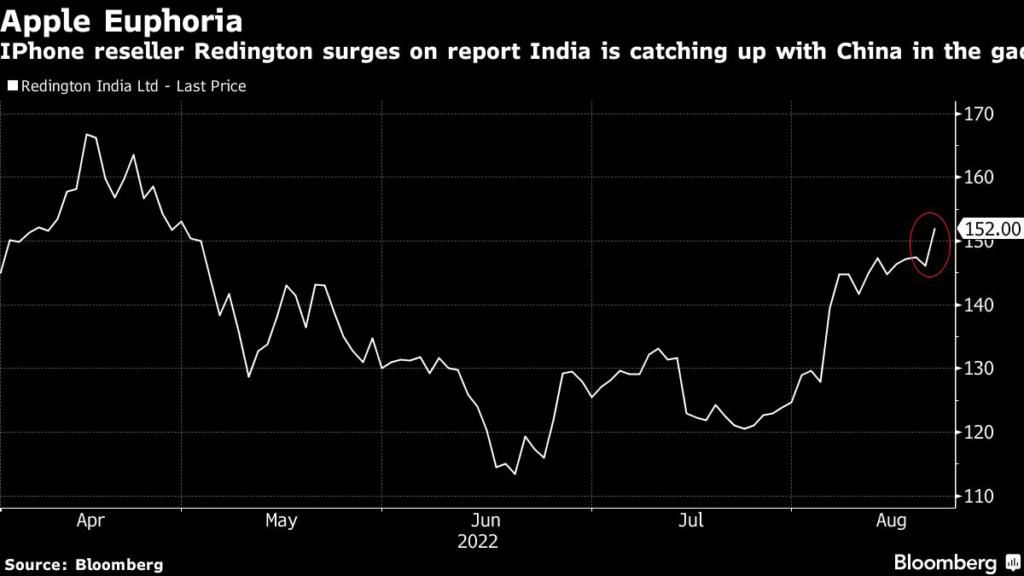
Redington India Ltd., which distributes Apple products in the country, rose as much as 9.5% after Bloomberg’s initial report.

Matching China’s pace of iPhone production would have marked a major milestone for India, which has been touting its attractiveness as an alternative at a time when rolling Covid lockdowns and US sanctions jeopardize China’s position as factory to the world. Assembling iPhones often entails coordination between hundreds of suppliers and meeting Apple’s infamously tight deadlines and quality controls.

Some people within Apple and Foxconn had hoped to begin simultaneous production in India this year, but that was never an official plan. To ensure a smooth launch, Apple wanted to focus on getting the China operations up to speed first and then work out the India production, one of the people said. 

Apple’s partners began making iPhones in India in 2017, the start of a yearslong effort to build manufacturing capabilities in the country. Besides offering backup to its existing operations, the country of 1.4 billion people is a promising consumer market and the Modi administration has offered financial incentives for tech production under its Make in India program. 

One challenge in narrowing the cap of India production is secrecy. Apple goes to extreme lengths to keep new product details confidential, and imposing the same rigorous controls in a second country would prove difficult.

Local executives in India examined entirely cornering off a section of one of Foxconn’s multiple assembly lines, sequestering workers and scrutinizing all possible ways in which the security around the device could be compromised, according to two of the people. Thus far, the drastic security controls and stringent seclusion of its China facilities would be challenging to replicate, one of the people said. 

Apple has also been concerned about Indian customs officials, who typically open up packages to check whether imported materials match their declarations, another potential vulnerability for product secrecy. 

Even if Apple and Foxconn intended a simultaneous launch, supply-chain challenges would have stymied the goal. China, the source of many iPhone components, has gone through successive waves of lockdowns, complicating the process of shipping components through the country.

India’s workforce and factories haven’t easily adopted the highly controlled practices that Apple requires from suppliers. Since Apple began assembling iPhones in India through contract manufacturers Foxconn and Wistron Corp. five years ago, workers have revolted over salaries and the quality of food in two prominent incidents.

(Updates with shares from seventh paragraph)

More stories like this are available on bloomberg.com

©2022 Bloomberg L.P.

Rogers’ Rivals Are Big Winners With Shaw Deal in Limbo, BMO Says

(Bloomberg) — Rogers Communications Inc. is still waiting to see if it can win regulatory approval for a takeover of a smaller Canadian cable company, 17 months after it was first announced. The situation has handed a huge advantage to its two biggest rivals, according to an industry analyst. 

Canada’s largest wireless and cable firm agreed to a C$20 billion ($15.4 billion) deal to buy Shaw Communications Inc. in a friendly offer announced in March 2021. The country’s antitrust regulator is trying to block the transaction, delaying it. It’s now possible it won’t close until early 2023, if it closes at all — forcing Rogers to ask holders of M&A bonds on Monday if they’ll agree to relax the terms. 

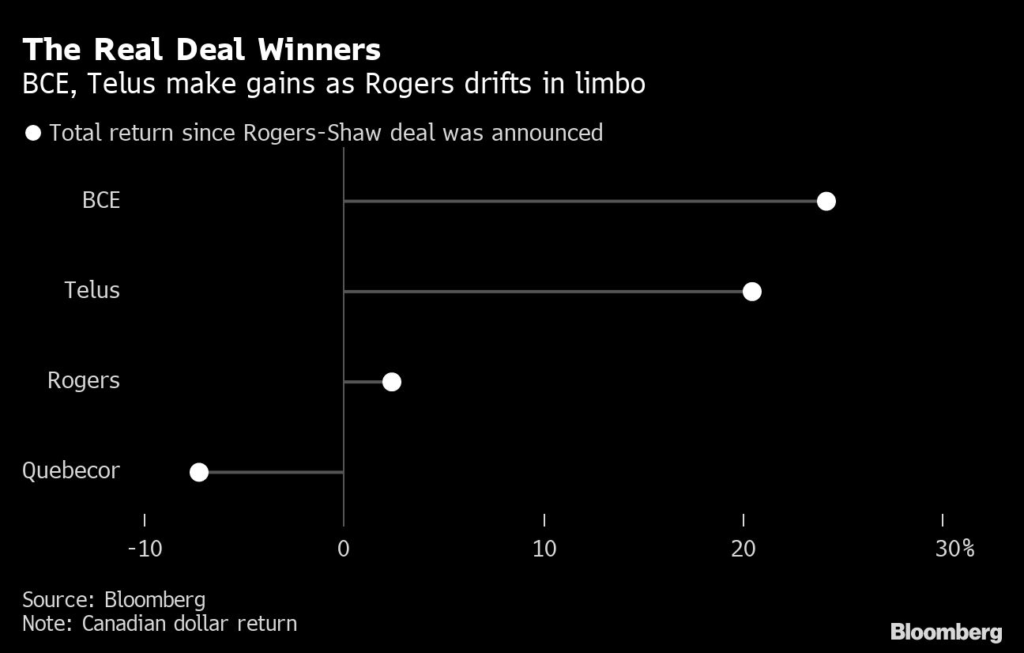
The halting of the deal is “disproportionately favorable” to rivals BCE Inc. and Telus Corp., BMO Capital Markets analyst Tim Casey said. It has given them time to improve their 5G wireless and fixed-line networks to compete with Rogers, and their shares have outperformed since the Shaw merger was announced, Casey said in a report to investors.  

“Both parties are focused on their core business and are not distracted by the regulatory challenges incurred to date by the cable companies,” Casey wrote. “Investors understand this.”

The question is whether Rogers and Shaw can get their deal across the finish line. Casey argued that they should be able to win approval, despite all the delays and drama. 

To defuse the antitrust complaint, they’ve agreed to sell most of Shaw’s wireless business to Montreal-based Quebecor Inc. for C$2.85 billion. There’s little overlap between Shaw and Rogers in the rest of their business because they operate cable television networks in different territories.

The Quebecor arrangement is “as good as it gets” for regulators and a federal government that wants to maintain a policy of having a fourth wireless competitor to challenge Rogers, BCE and Telus, according to Casey. 

“In our view, Quebecor represents the best solution available to satisfy the government’s industrial policy. It meets ownership requirements, has an operational track record in the business and enough balance sheet capacity to fund the purchase,” the analyst wrote.

By combining its wireless business with Shaw’s, Quebecor would have more than 3 million wireless subscribers across Canada’s four most populous provinces.

Canada’s Competition Bureau can “claim credit” for keeping Shaw’s wireless business out of Rogers’s hands and forcing the Quebecor deal, Casey said. “The outstanding question for investors is will it take a victory lap?” 

More stories like this are available on bloomberg.com

©2022 Bloomberg L.P.

From Fashion to Food, Brits Using Fast Credit to Stretch Budgets

(Bloomberg) — The corporate TikTok account for Zilch features brunch plates, tourist trips and snacks for the office dog: buy now, pay later as a lifestyle. 

The London-based credit provider, launched about two years ago and now worth $2 billion, says it serves a purpose for both treats and essentials, giving shoppers options to spread the cost of purchases and earn cashback. 

TikTok videos from Zilch’s users have different vibes. 

“If you’re struggling before payday and need a money hack?? Download Zilch! Game changer,” one caption read over a video showing milk, coffee, noodles and biscuits. The user added that he’d make repayments every two weeks. 

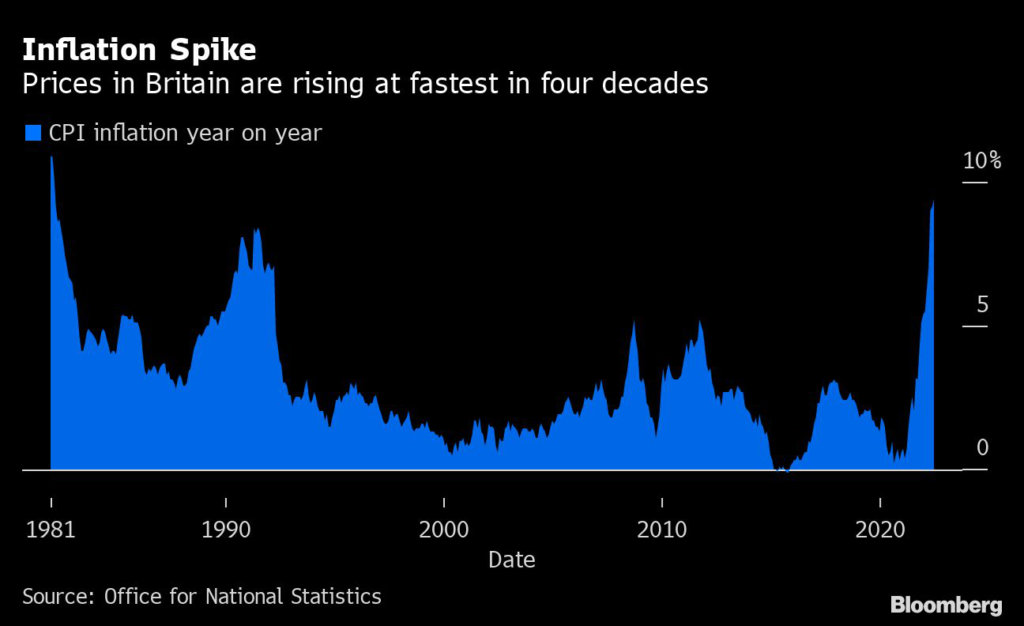
With inflation in the UK now forecast to reach 13% later this year as the country falls into recession, Zilch and its BNPL peers are about to discover how their customers choose to use short-term credit in a downturn. 

Lockdown Debts  

Michael Quinn, a 36-year-old who is unemployed and living in Glasgow, uses Zilch to split the cost of his groceries and energy bills over six weeks, paying it off with his government benefits. He started using the service last summer after maxing out his credit cards, which he relied upon throughout the Covid-19 lockdowns that began in early 2020.

“With benefits, sometimes it’s hard to have money left over to pay for certain things,” Quinn said. He admits he got carried away with Zilch at the beginning, racking up hundreds of pounds, and says there needs to be regulation. Still, he believes it’s better than credit cards, which he’s sworn off for good, once he’s cleared about £2,000 in remaining debt. 

Larris Grant, 29, uses Zilch for everything she buys, from groceries and clothes to Amazon deliveries. “I don’t use it as a lifeline; however, if I did need to, I know I can,” the hotel duty manager said. Grant signed up in 2021 after receiving a £20 cash reward link from a friend and now collects cashback on purchases — which isn’t the case with her credit card. This perk helped pay for her children’s school uniform, she said. 

While she doesn’t use it to pay for electricity, Grant said it could prove “handy” as her monthly bill has gone up from £90 to £230. The UK’s price cap on annual energy bills is expected to jump to nearly £3,600 per household later this week, about treble last year’s level, and come into effect for the final three months of the year. It’s set to keep rising even further in 2023.

Basic Costs 

Zilch is just one provider in a booming market for short-term credit. Klarna Bank AB, Affirm Holdings Inc. and Afterpay have all picked up millions of new customers around the world in the past few years, though investors have begun to raise concerns about how long some of them can keep growing while also losing money. Big banks such as NatWest Group Plc are also launching similar products. 

One in 12 people turned to BNPL to cover basic costs such as food and toiletries in the six months to March 2022, according to Citizens Advice. The consumer charity likened this credit to “quicksand” and found young people, those in debt and those out of work or claiming low-income benefits were twice as likely to have used BNPL for essentials than the general population. 

To be sure, short-term loans have served a purpose in Britain for over a century and have a lifespan far beyond online startups. Iceland Foods, a UK supermarket chain, this month launched a BNPL option for struggling shoppers, particularly those finding it hard to make ends meet during the school holidays.

Groceries, Fast Food 

Open the Zilch app, and after the cool green welcome screen and spending tracker is a list of thousands of retailers. Scroll down and supermarkets including Asda and Sainsbury’s appear, as do Deliveroo and Uber Eats, along with travel, beauty and home improvement sites. Customers get two options: pay off their purchases over six weeks, with no interest or late fees, or pay immediately and accumulate 2% cashback. 

Like some of its rivals, Zilch has affiliate agreements with stores, which pay the firm a small fee for customers sent their way. The app can also be used at other websites that accept Mastercard, with the customer paying a small charge instead — though there’s a list of banned items that includes alcohol, gift vouchers and cryptocurrency. Since its launch in 2020, the fintech has attracted 2.5 million users. 

In June, when other fintechs such as Klarna were watching their valuations crater, Zilch extended its funding round to maintain its value at $2 billion. Its most recent fundraising announcement highlighted “mature customer cohorts now using Zilch daily.”

To celebrate its billion-dollar status, Zilch displays a neon green unicorn at the entrance to its London headquarters. 

Chief Executive Officer Philip Belamant co-founded the business as an alternative to high-interest loans, believing that customers have been poorly served by an industry that’s barely changed in 80 years. 

Zilch’s products “give a customer the most affordable way to pay on credit or debit with the most value back to them,” he told Bloomberg News. 

Belamant, 37, is proud of Zilch’s status as a regulated company, with a consumer credit license granted by the UK’s Financial Conduct Authority in 2020. This is unusual in the BNPL industry, which has grown so quickly in part because it’s exempt from regulations on products that charge interest. The CEO says that isn’t “healthy” for the sector. 

He’s also aware of the issues that short-term credit can create, noting that Zilch doesn’t allow users to pay off their accounts with a credit card, cycling from debt to debt. The firm works with credit checking firm Experian Plc to ensure customers can afford to borrow. But Belamant is otherwise open to customers using debt to pay for groceries.

“It’s OK for people to buy fast fashion that ends up in a landfill in six weeks’ time. But for food that people need or something that’s essential for their family? No, they should use high cost credit to pay for this,” he said. “We just do not understand how you reconcile that logic.”

Still, there’s been a shift in the way Zilch markets itself. Earlier advertisements had slogans such as “Have it Now, Pay Later” below burgers and pizza. Now, social media posts say “Please spend responsibly.”

The Financial Conduct Authority said last week it’s “proactively monitoring” the sector and will use criminal and regulatory enforcement powers if it sees promotions — including posts by social media influencers — that do not include prominent warnings of the risks involved.

Toby King, spokesperson at the Advertising Standards Authority, said BNPL ads must not specifically target vulnerable groups or exaggerate the speed and ease of using a service and clearly spell out all relevant terms and conditions. The regulator ruled against Klarna in 2020 for sponsored Instagram posts that claimed spending would lift customers’ moods. 

“We know that the cost of living crisis is affecting everybody, especially people with lower incomes or poor credit histories. That’s why it’s so important that marketers for delayed payment services (‘BNPL’s) advertise soberly, responsibly and accurately,” King said.

Rising Costs

Consumer charities are already warning of some BNPL customers getting into difficulty. 

“We’ve seen a shopper threatened with debt collectors after splitting the payment of a t-shirt and, more recently, a worrying two in five BNPL customers borrowing money to make repayments,” Clare Moriarty, chief executive of Citizens Advice, said.

The consumer charity said people were using credit cards, overdrafts, and borrowing from family and friends to pay off their BNPL installments. Frontline advisers have seen customers who were unaware they were taking on credit when presented with a “spread the cost” button at the online checkout. Citizens Advice research showed BNPL shoppers were charged £39 million in late fees in the year through June 2021, with one in three users missing or making a late payment.

Almost two-thirds of British BNPL users are under the age of 40, according to the Money and Pensions Service, a financial wellbeing body sponsored by the UK government. A key concern for Chief Executive Officer Caroline Siarkiewicz is consumers prioritizing BNPL repayments ahead of other obligations such as rent and council tax bills, which was “really damaging for people.” 

The lack of regulation in the sector was keenly felt by 25-year-old nursery nurse Chloe Porter, who has been paying off her loans for seven years. She used Klarna when she was 17, mainly for purchases of £20 or £40. “It all adds up to this very long term issue, which can spiral really quickly when you then start receiving angry letters and phone calls,” she said. 

By the time she turned 22, she owed £5,000 to Klarna, online retailers Littlewoods and Very, as well as her credit card bill with Capital One — which she had been using to pay off her BNPL loans. “Not knowing much about credit, I just buried my head in the sand, which is the absolute worst thing to do,” Porter said.  

Spinning Plates

It’s now also a growing issue among the “squeezed middle” age groups, according to Sarah Coles, senior personal finance analyst at investment firm Hargreaves Lansdown Plc. “People think it’s just spreading the cost,” she said. “So they don’t realize that they’re just entering into a borrowing agreement.”

Richard Lane, director of external affairs at debt charity StepChange, said the credit products are in some cases marketed to people who are less financially resilient already. “They may have started with a buy now pay later credit; when they realize that they’re struggling to pay, they might have made a payment with a credit card. They’ll then ultimately try and spin the plates and balance for as long as possible.” 

It chimes with the experience of David, 36, an aviation worker, who at one point owed £26,000 in payday loans and believes he is now being specifically targeted by BNPL payment options. He has received text and emails from providers — despite never using them — and fears his details have been flagged as someone susceptible to loans. He did not want to give his last name discussing these issues. 

“I personally view buy now, pay later as a rebadged payday loan,” he said. “It’s a very slippery slope and I found out the hard way.”

More stories like this are available on bloomberg.com

©2022 Bloomberg L.P.

Australian Church Bans Staff From Uber Use Over Ethical Concerns

(Bloomberg) — One of Australia’s largest Christian churches has indefinitely suspended staff from using Uber and Uber Eats over concerns about the ride-sharing platform’s treatment of drivers and delivery riders. 

The Uniting Church in Australia’s Victoria and Tasmania Synod said staff should only use Uber for work purposes when taxis and other ride-sharing apps were unavailable. It cited the treatment of drivers as independent contractors, resulting in many earning below the minimum wage and working excessive hours. 

“The Uniting Church has a long history of seeking to ensure that people get fair and just treatment in their employment,” Synod Moderator David Fotheringham said in a statement. 

Uber Technologies Inc., which has grappled with complaints about how it treats drivers for years, said it was “committed to improving standards for independent contractors in the gig economy.” 

“While no doubt well intentioned, this characterization is unfortunate and not representative of the way the Uber platform operates,” the company said in a statement. “We welcome the opportunity to discuss these concerns directly with the church.”

Read More: Uber Waits Annoy U.K. Passengers After Drivers Quit in Droves

Uber’s treatment of drivers came to a head in February last year when a landmark U.K. Supreme Court ruling forced the company to recognize a group of drivers as “workers,” entitling them to a minimum wage, vacation pay and other benefits. Similar claims followed, and ultimately Uber said it would extend the classification to all of its U.K. drivers.


More stories like this are available on bloomberg.com

©2022 Bloomberg L.P.

DBS Exchange Says Bitcoin Trading Surged Amid Global Selloff

(Bloomberg) — DBS Group Holdings Ltd. said the number of trades on its digital exchange more than doubled in June from two months earlier with buys accounting for 90%, in contrast to a massive sell-off in crypto assets globally.

The quantity of the world’s largest token, Bitcoin, bought on the members-only exchange was four times higher than April, according to a statement from Southeast Asia’s largest lender, which did not provide numbers for other months. DBS launched the digital exchange in December 2020.

Cryptocurrency prices have fallen sharply since May, when the collapse of stablecoin project Terra set off a wave of liquidations, bankruptcies and layoffs in the sector.

“Investors today are instead seeking out safe harbours to trade and store their digital assets amid the ongoing market volatility,” Lionel Lim, chief executive officer at DBS Digital Exchange, said in the statement. 

While the bank has seen strong traction in its digital exchange which serves institutional investors and family offices, it has pushed back its plans to offer crypto trading for retail investors, citing technological challenges and resistance from regulators.

Singapore is walking a fine line between building a blockchain hub in which innovations can flourish, and also protecting retail investors from crypto markets’ volatility.

More stories like this are available on bloomberg.com

©2022 Bloomberg L.P.

Google’s Asia Head on Singapore Growth, Regional Challenges: Q&A

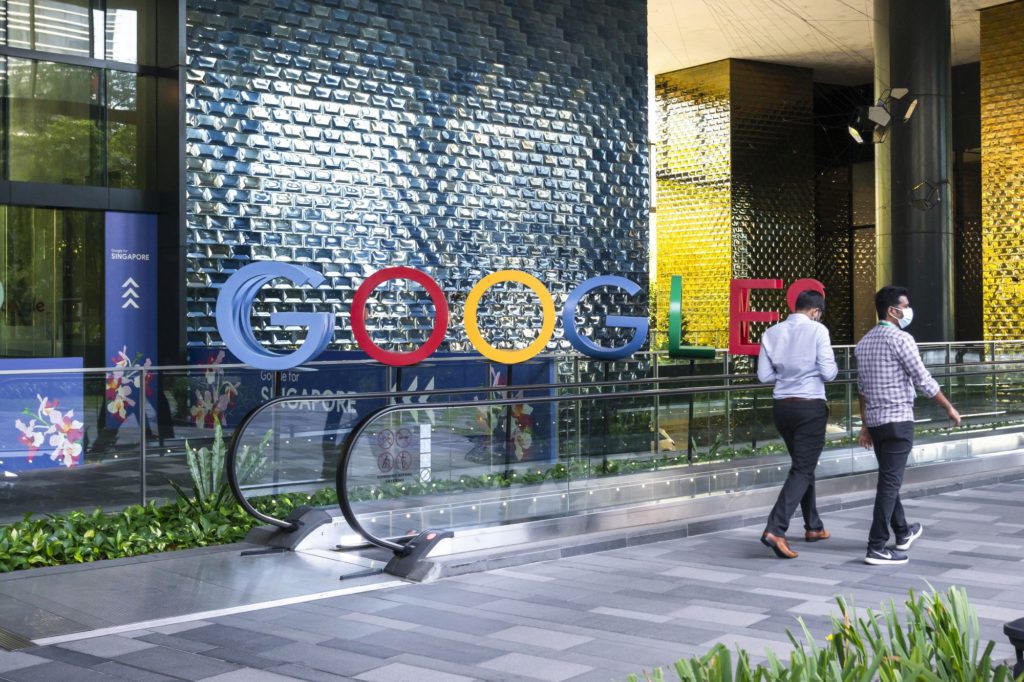
(Bloomberg) — Alphabet Inc.’s Google completed its third data center in Singapore, bringing its investment in such facilities in the city-state to $850 million as it vies with tech giants from Amazon.com Inc. to Meta Platforms Inc. for bigger clout in Asia.

Since opening its first Singapore office in 2007 with 24 people, Google has grown its local staff to 3,000 and built infrastructure including subsea cables connecting the finance hub to the US and beyond. As it marks its 15th anniversary in Singapore Tuesday, the company said it’s deepening collaboration with the country, ranging from training 50,000 parents and children in online safety to an artificial-intelligence partnership with the government.

“Asia, overall, sees technology as a way to leapfrog, catch up or accelerate,” Scott Beaumont, president of Google Asia Pacific, said in an interview in Singapore. “We see lots of opportunities from the perspective of Google as a platform company, how we help provide the tools that enable these entrepreneurs and developers to bring their ideas to life.”

The company faces challenges across the region. In India, where it has pledged to invest $10 billion, the government is increasingly tightening its grip on online content and the country’s antitrust regulator has called Google’s billing system for app developers “unfair and discriminatory.” In South Korea, the communications watchdog said this month it’ll investigate Google and Apple Inc. over potential violations of the country’s in-app payment rules.

Here’s a partial transcript from the interview with Beaumont, edited for brevity:

Q: What’s your view on the South Korea app store situation?

A: The vast majority of developers don’t pay anything. We’ve created a structure where the smaller developers automatically contribute less. There is a burden of operation: the work that we do to scan apps within the Play Store and make sure that users are safe, to make sure that money goes to the right pockets, that there aren’t scams.

It would just be nice to get to a solution where we can move on. We’ll work with the KCC (Korea Communications Commission) to help them understand that.  

Q: What are the biggest outstanding challenges Google is facing in Asia?  

A: In Asia, there are local differences and that’s one of the things that we’re working on constantly. We need to think about how we customize and modify and localize our products, so they make sense in all these different contexts. There needs to be a neat balancing of this incredible diversity of Asia.

Q: There have been various antitrust issues in India, and the government has been tightening its grip on online content. What is Google’s approach to this?

A: Broadly, when it comes to things like antitrust, we are going to see regulation in the technology space. We’re trying to make sure that we can engage with governments around the region on that basis.

Q: Google has invested a lot of money in four short video apps in India, after the government banned TikTok in the summer of 2020. What’s Google’s strategy?  

A: Time will tell how those investments will pan out and how close those relationships will be over time. In the short term, we’re really pleased with the results on both sides — what is catalyzed within India, but also the knowledge and the partnerships that it has helped us develop.

Q: Google’s subsea cable projects, called Echo and Apricot, are expected to be launched in the next year or two. Why choose Singapore as the linking point, and how do you see this connectivity helping the whole region?  

A: Without these very strong pipes linking the US with Asia, Asia with Europe and so on, many islands will not have access to the internet. Singapore is an important hub in helping manage that distribution. The cables will connect Singapore to the rest of the world and then move that distribution to the rest of Asia too. It is to help sustain today’s demand, but also very much with a view to what that future demand is going to be.

Q: Is the company concerned about operations in Taiwan given the geopolitical tensions and is there a contingency plan?

A: If we had an issue with a data center in Singapore, we would find a way of routing that traffic through other data centers within the network. Similarly, if there’s an issue with the data center in Taiwan, we would do the same. What we would like to do as a global company is look across all our operations and make sure that we’ve got contingencies and redundancies in place. We need to think about how we set up and make sure that we can ebb and flow with various happenings in different places.

For example, sometimes subsea cables get bitten by sharks. We try to think about what we would do — if we lost this cable, how we should route the traffic and how we can stop that happening again.

Q: Tell us more about Google’s collaboration with Singapore.

A: Singapore’s strength is in collaboration, particularly in the field of AI. For example, instead of having just a plain vanilla set of ideas in terms of how AI should be governed and how we should legislate for it, Singapore is looking at use cases — in areas including finance and health care -– to understand how regulation looks. They are zooming out to catch the commonalities, rather than try and legislate from 50,000 feet and create something which doesn’t make sense in each of those individual fields.

We hope that the solutions created with the Singapore government will then be used as best practices to be leveraged in other fields. We will look to point to that, and say: ‘Hey look Indonesia, or India, here’s a really great example of how you can work together with us.’ That will be a secondhand benefit that we hope will come from that collaboration.

Q: What is your biggest achievement as president of Google APAC in the past three years and what do you hope to achieve in coming years?

A: One of the things where I think we’ve made a lot of progress is in the area of diversity and inclusion. When I took on the role, the leadership of the region was largely represented by Western white males — I know I’m one. But now, when you look at the country leadership team that we have across the region, it is almost equally split by gender.

We think about diversity across many different dimensions, including local talent, gender, people with disabilities, ethnicity and sexuality. I think we’ve made huge steps in creating an environment where, hopefully, everyone feels like they belong or we’re on a path to do so. (The proportion of women leaders at Google in the Asia-Pacific region has increased to 27.5% in 2022 from 20.8% in 2021, according to the Google Diversity Annual Report 2022.)

More stories like this are available on bloomberg.com

©2022 Bloomberg L.P.
Close Bitnami banner
Bitnami