
Bloomberg

Pimco, Capital Group Say Era of Low Inflation Is Gone for Good

(Bloomberg) — Some of the world’s biggest bond investors say the market is wrong to expect central banks to score a long-term win in the war against inflation.

There’s little doubt that interest-rate hikes from policy makers in the US and Europe will pull consumer-price increases down from the fastest pace in decades by slowing economic growth or setting off recessions. 

But the retreat of inflation from its peak isn’t likely to mark a return to the price stability of the recent past because of stark shifts in the world economy, according to a broad group of investors and strategists at firms including Pacific Investment Management Co., Capital Group and Union Investment. 

During the period of expanding globalization, cheap commodities and low labor costs helped keep inflation at bay. Now, that’s starting to reverse. Oil and gas prices are elevated as nations sever ties with Russia over the Ukraine war. Businesses are weighing political tensions while rebuilding frayed supply chains. And tight labor markets are giving workers the power to push for higher pay.

That has money managers who oversee trillions of dollars bracing for inflation to hold well above the roughly 2% level targeted by major central banks. To guard against that risk, they have been buying inflation-protected bonds, boosting exposure to commodities and expanding cash holdings instead of plowing it directly into bonds, wagering that consumer-price increases won’t quickly pull back to levels seen in recent decades. 

“The last twenty years of the great moderation — that’s fully behind us now,” said Tiffany Wilding, North American economist at Pimco, which had about $1.8 trillion under management at the end of June. She anticipates a period of highly volatile inflation as the world adjusts to changes that will “lead to higher input costs in general that should result in a multi-year price level adjustment.”

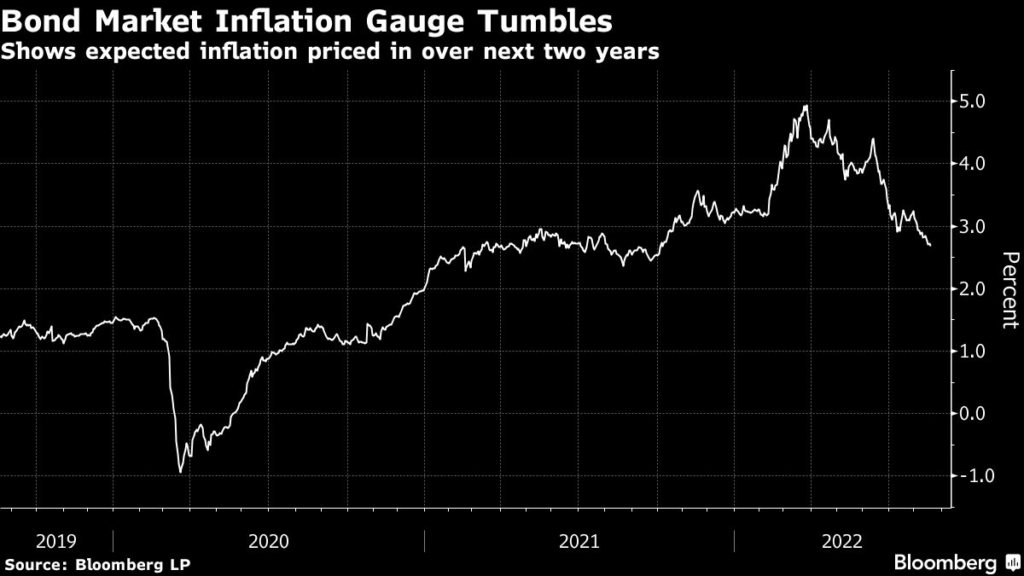
The views contrast with speculation that price pressures will ease so much that the Federal Reserve may start cutting interest rates next year to jump-start economic growth. Benchmark 10-year Treasury yields are holding around 3%, about half a percentage point below the mid-June peak. And a bond-market proxy of US inflation expectations over the next two years has been cut nearly in half since March to about 2.7%, not all that far above the 1.9% average increase in a broad price gauge in the 20 years before the pandemic.

Both policy makers and markets have been surprised by how stubbornly high inflation has been, since it was initially thought to be a temporary side effect of the pandemic that would fade once economies reopened. On Wednesday, the UK reported that consumer prices increased at a faster-than-expected pace of 10.1% in July, the most since 1982. That surprised traders, who dumped 2-year government bonds, triggering a steep jump in yields. 

“The view in the market that central banks will be in a position to cut rates in a number of countries will be challenged in due course,” Ivailo Vesselinov, chief strategist at Emso Asset Management, who expects the yields on slightly longer dated bonds to jump as the realization that inflation will be more persistent sinks in.

No one expects current levels of inflation to last, making the debate about whether it has crested yet or not beside the point. The key question is what economies are facing over the next three to five years, when many investors are expecting repeated flare-ups in price pressures akin those during the geopolitical turmoil of the 1970s.

Among the major reasons is the expectation that trade tensions, high energy prices and a tight labor market that’s putting upward pressure on wages may not dissipate soon. In Europe, the challenge is all the greater given the region’s dependence on Russian energy supplies, while the ECB also has to keep in mind the implications of monetary policy for 19 disparate economies. 

Still, while policy makers across geographies have repeatedly emphasized that they will keep tightening policy until inflation is contained, it’s possible they could pivot in the face of a deep slowdown. Fed officials acknowledged there was a risk that they could tighten more than necessary to restore price stability in the minutes of the July 26-27 meeting. 

Fed Years Away From Hitting Inflation Target: MLIV Pulse Results

Union Investment’s Michael Herzum, the head of macro and strategy, sees a risk that the Fed will stop hiking rates prematurely, only to start doing so again once inflation roars back.

“Looking at growth and not just inflation is a very risky game because the structural trend we had since the mid-1980s — the disinflationary trend — is turning,” he said.

Flavio Carpenzano, investment director at Capital Group in London, said tight labor markets worldwide mean that the Fed has to induce a large recession and a higher unemployment rate to get inflation to go down sharply. 

He seized on the July rally to cut holdings of US debt most sensitive to interest-rate hikes and sees China as attractive from a fixed-income perspective because inflation there is less of a concern.

“We see the slowdown in inflation occurring at a much slower pace than what the market is expecting,” said Carpenzano, whose firm managed some $2.7 trillion at the end of last year. He said the market is off in pricing that the Fed will cut rates in mid-2023. “Inflation is by no means a solved puzzle and the Fed will continue to be vigilant.”

Another factor: companies are weighing increased political tensions as they rebuild supply chains roiled by the pandemic. That may weaken the power of a long-running disinflationary force: the moving of jobs to low-wage countries. In the US, President Joe Biden signed a $52 billion measure to spur semiconductor manufacturing in the country. His Treasury Secretary, Janet Yellen, has also promoted the concept of “friend-shoring,” or diversifying supply chains among allied countries to protect against disruption. 

“It will take years to rebuild the trade networks and supply chains,” said Glen Capelo, managing director at Mischler Financial. 

“Deglobalization is here to stay,” he said. “This will all be inflationary. And this structural inflation is something the Fed can’t fight with higher rates.” 

More stories like this are available on bloomberg.com

©2022 Bloomberg L.P.
The Sleuths Who Protect Crypto From Hackers Are Raking in Money

(Bloomberg) —

At a time when many crypto companies have seen their fortunes plummet, one corner of the industry is thriving.

With criminals including North Korean hackers increasingly targeting the sprawling software infrastructure underpinning the cryptosphere, firms that sift through code for weaknesses and run bug-hunting sites are finding themselves with more business than they can handle. As mass firings become the norm elsewhere in crypto, they’re boosting hiring, raising prices and taking in fresh funding.  

Their rising fortunes underscore how the industry is waking up to the threat of sophisticated hackers who have stolen roughly $2 billion from digital-asset protocols this year, according to researcher Chainalysis, which says such attacks show few signs of slowing. 

With so much at stake, crypto security services are moving from the “nice to have” spending category to the “must have” bucket, even for bootstrapping startups and community-driven projects. 

“We have spent sooooo much money on audits,” Paul Frambot, chief executive officer of crypto startup Morpho Labs, said by text message. “Security is, in my opinion, not taken sufficiently seriously in DeFi,” he added, referring to decentralized finance, where people trade, borrow and lend crypto without a central intermediary. 

Morpho has done more than 10 code audits in the past year, according to Frambot. 

Investors are taking note of the growing demand for protection. Venture capital firms have poured $257 million into crypto auditing and security companies so far this year, up from $185 million for all of 2021, according to CB Insights. 

Rising Threat

Crypto thieves have stalked the industry for most of its roughly decade-long existence, from the Bitfinex exchange hack in 2016 to last year’s exploit of the PolyNetwork protocol. 

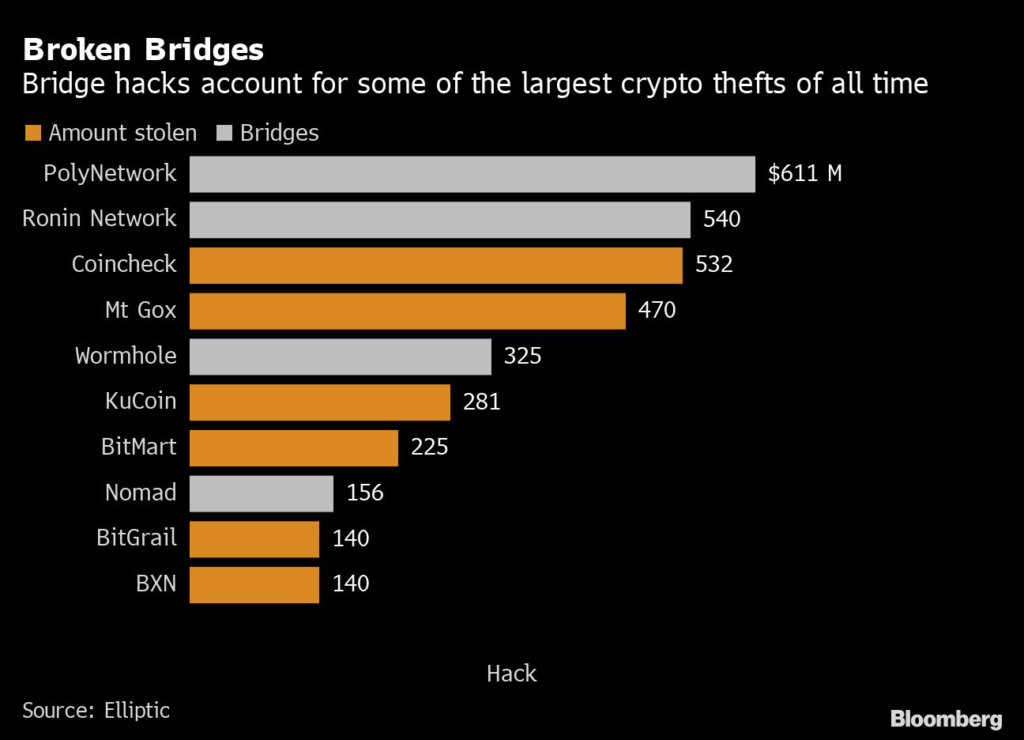
But the problem has worsened recently, in part because of a relatively novel part of the ecosystem that’s become a juicy target: so-called crypto bridges, software platforms that allow coins designed for one blockchain to be used on another. Hacks on crypto bridges accounted for more than two-thirds of the total value stolen in the first seven months of 2022, Chainalysis estimates. 

Understanding Crypto Bridges and $1 Billion in Thefts: QuickTake

In March, hackers struck the Ronin Bridge connected to the popular Axie Infinity online game and made off with cryptocurrencies worth about $600 million at the time, one of the biggest hauls to date. The attack has been tied to the North Korean hacker group Lazarus. 

Sky Mavis, the developer of Axie Infinity, was forced to compensate players who lost money. The incident was also a publicity nightmare for Sky Mavis, as many of those whose coins were taken in the hack were gamers in low-income countries like the Philippines who played the game to bolster their modest paychecks. 

The threat isn’t limited to bridges. Hundreds of millions of dollars have vanished in exploits of other projects, like DeFi apps. Many of these efforts rely on so-called smart contracts — code that automatically executes transactions in a way that can’t be reversed — so design flaws can be especially costly. 

A hack, or even a major coding error, can spell the end of an app developers spent months or years building. 

“These protocols are not simply another service that may be disrupted for a while — for example, like not being able to watch TV for a few hours or longer,” said Stefano Schiavi, an investor at bitscale.vc, a backer of crypto security firm Immunefi. When crypto protocols fail, “many people lose significant portions of their savings, and often they even lose everything.”

The evolution of Web3, a version of today’s internet built largely on crypto technology where ownership and control should be more widely distributed, means applications will increasingly be interconnected and span many blockchains, said Lex Sokolin, head economist at ConsenSys, which audits smart-contract code.   

“I think the more complicated Web3 becomes, the larger the surface area for these exploits,” Sokolin said.

$400,000 Salaries

Audits are essentially reviews of code by experienced developers who scrutinize it to identify bugs, security concerns and other issues that could make the technology run in unintended ways. In some cases, the protocol’s developer can fix the weaknesses pinpointed, and then have those patches reviewed by the auditor. 

Some crypto auditors use automated tools that scan code. Others, like OpenZeppelin, deploy at least two auditors who go through the code, one after another, line by line. 

Salaries for experienced blockchain auditors can run as high as $400,000 a year, according to Zeth Couceiro, founder of crypto recruitment firm Plexus Resource Solutions. Their pay is typically around 20% above that of developers focused on Solidity, one of the biggest crypto programming languages.  

“The reason for that is the need to come from a coding background but also understand the architecture to establish vulnerabilities,” Couceiro said. 

Long Waits, Rising Prices

So far this year, 1,161 external projects have asked ConsenSys to audit their smart-contract code, close to the number for all of 2021 and up from 247 requests in 2020, according to the company. Clients can wait in line for audits costing up to $320,000 for as long as nine months.

At rival Trail of Bits, published fees have jumped about 20% to 25% in the last 12 months as rising demand put pressure on lead times, said Nick Selby, a vice president at the company. 

OpenZeppelin has expanded its workforce by 63% this year, scooping up specialists laid off by other crypto companies in the downturn, said Steve Grant, the company’s head of growth. It plans to double headcount in 2022, according to Grant. 

There’s another constituency benefiting from crypto’s increasing need for safety: so-called “white hat” hackers who use their skills to help companies plug security holes, rather than exploit them.  

“Most hackers prefer to get clean and well-earned money and ease of mind instead of worrying their whole life if they will be caught for their crimes,” said Adrian Hetman, tech lead of triaging at bug bounty hunter site Immunefi, whose clients include DeFi project MakerDAO. 

Rewards for identifying significant flaws can run as high as $10 million, Hetman said. 

More stories like this are available on bloomberg.com

©2022 Bloomberg L.P.

Branson-Backed Group Starts Virgin Broadband Service in Italy

(Bloomberg) — A group backed by British billionaire Richard Branson will start selling fiber broadband service in Italy under the Virgin brand using Open Fiber SpA’s network. 

Virgin Fibra is backed by Virgin Group, former Sky Italia and Virgin Media UK boss, Tom Mockridge, and other Italian investors, the company said in a statement Monday, confirming an earlier Bloomberg report. Milan-based Virgin Fibra is available to customers served by Open Fiber’s fiber-to-the-home network. 

“Like everywhere in Europe and fundamentally around the world, Italy is going through this once-in-a-century transformation between the old copper network going away and being replaced by the fiber network,” Virgin Fibra Chief Executive Officer Mockridge said in an interview with Bloomberg on Monday. 

Virgin Fibra’s core service will be broadband internet access, but Mockridge said he sees opportunities in bundling that with streaming and gaming services in the coming years. It’s not entering the mobile business, he added. 

The Virgin brand is known in Italy already through its use in gyms, a radio franchise and cruise line venture.

More stories like this are available on bloomberg.com

©2022 Bloomberg L.P.
Taiwan Sees Surprise Export Order Fall on Weak China Demand

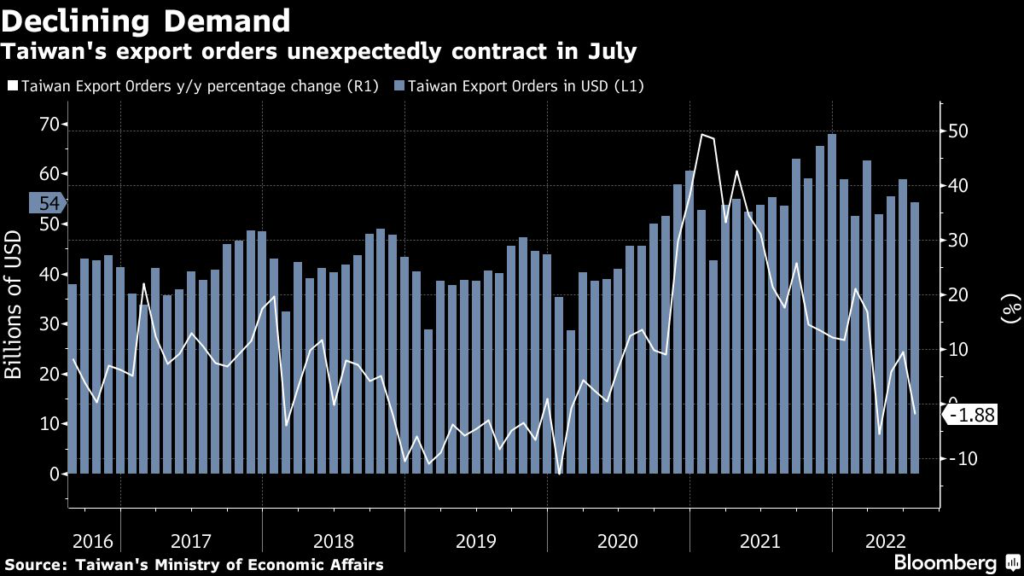
(Bloomberg) — Taiwan’s export orders unexpectedly contracted in July as demand from Chinese customers plunged, and officials are now warning of further declines to come. 

Orders slumped 1.9% in July compared to the same month last year, according to a Monday statement from Taiwan’s Ministry of Economic Affairs. That was worse than even the most bearish forecast in a Bloomberg survey of economists. The median estimate was for a 6.2% increase. 

A 22.6% decline in orders from China and Hong Kong — which, combined, are the second-largest source of demand after the US — was the main driver of the surprise fall, ministry data show. A 6.9% increase in orders from the US was insufficient to offset the difference.  

Orders declined across major product categories, with the exception of electronic products, which includes semiconductors.

The outlook signals the likely end of close to two years of strong expansion in overseas orders. Export orders picked up in May and June after another shock fall in April, but the ministry said Monday that it expects orders to fall again in August between 0.9% and 3.7%.

The Chinese economy is showing multiple warning signs, with cooling demand slipping over to other economies as well. South Korea’s early exports barely rose in August, with data showing Monday that total exports advanced 3.9% but shipments to China dropped 11.2%.

Covid cases in China reached a three-month high last week, suggesting more lockdowns are likely while weak economic data signaled a slump in domestic spending. 

More stories like this are available on bloomberg.com

©2022 Bloomberg L.P.
Japan Lawmakers Join US in Defying China With Taiwan Visit

(Bloomberg) — A delegation of Japanese lawmakers and a US state governor are making overlapping trips to Taiwan, pushing back against Chinese efforts to isolate the island after House Speaker Nancy Pelosi’s visit earlier this month. 

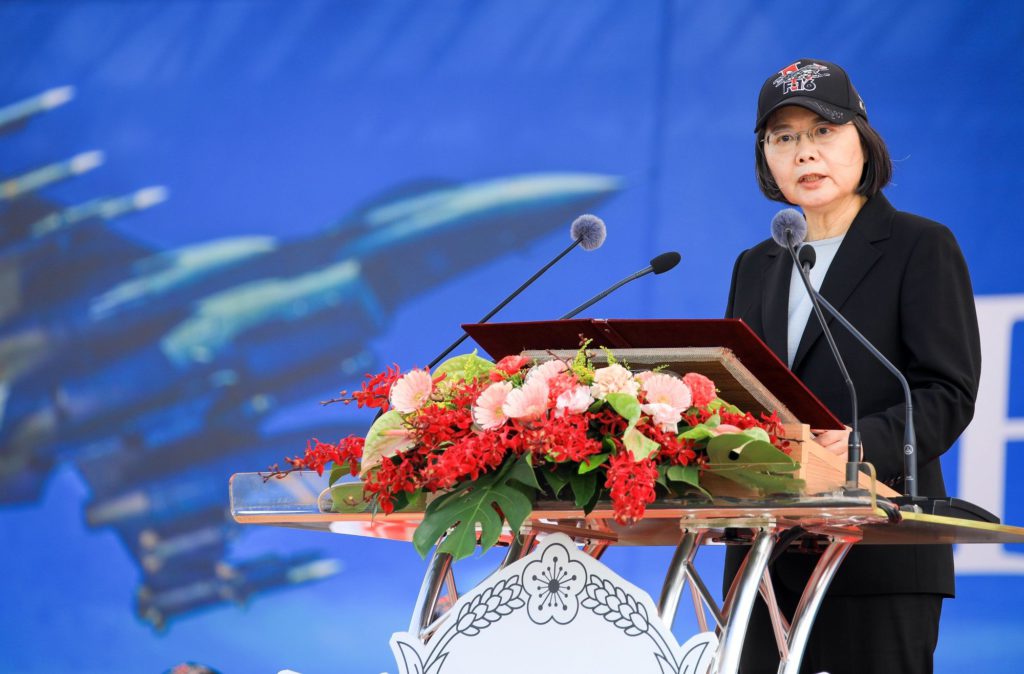
The cross-party delegation from Tokyo arrived Monday for a two-day trip that will see them meet President Tsai Ing-wen. The day before, Indiana Governor Eric Holcomb landed to discuss economic partnerships on the democratically governed island that China claims as its territory. 

The Japanese group will also visit the grave of Lee Teng-hui, the island’s first democratically elected president and a advocate for stronger ties with Japan. 

Beijing reacted to Pelosi becoming the most senior US official in 25 years to visit Taiwan with its most provocative military drills in decades. That included firing missiles over the island, some of which landed in what Japan says is its exclusive economic zone.

“China’s military provocations and other erratic behavior pose a risk to the peace and safety of not only Taiwan, but East Asia as a whole,” the head of the Japan-Taiwan parliamentary friendship association Keiji Furuya, a member of the ruling Liberal Democratic Party, said on Twitter before departing Tokyo. 

Foreign officials regularly visit Taiwan to discuss cultural and economic links, despite China requiring states to renounce ties with Taipei as a condition of establishing diplomatic relations. The latest Japanese delegation arrived days after Japan’s national security adviser, Takeo Akiba, met China’s top diplomat, Yang Jiechi, for talks to shore up relations between the two neighbors. 

On Monday, Holcomb signed a memorandum of understanding with Taiwan’s deputy economic minister, Chen Chern-chyi, that aims to build on earlier commitments from Taiwanese companies, such as chip designer MediaTek Inc., to collaborate with Indiana. 

“This agreement follows on the heels of other good deeds,” Holcomb said, referencing the CHIPS and Science Act, which will give part of a federal grant to Taiwan Semiconductor Manufacturing Co.’s American operations. “This is real momentum we’re experiencing, so we are seeking to cultivate that.”

Monday’s agreement covers areas such as advanced manufacturing, biotech and academic cooperation. Wistron Corp., one of Apple Inc.’s iPhone assemblers, signed a research partnership deal with Indiana’s Purdue University earlier in the day.

More stories like this are available on bloomberg.com

©2022 Bloomberg L.P.
Biden’s Approach to Crypto

  •  
  • Listen to Bloomberg Crypto on the iHeartRadio App
  • Listen to Bloomberg Crypto on Apple Podcasts
  • Listen to Bloomberg Crypto on Spotify  

(Bloomberg) — We hear the words “Crypto” and “Regulation” mentioned in the same sentence a lot these days. In the U.S. House, Financial Services Committee Chair Maxine Waters and Ranking Member Patrick McHenry are looking to regulate stablecoins in the wake of the Terra/Luna collapse, when this supposed ‘stablecoin’ proved not so stable. 

Though still in markups, their efforts are matched on the Senate side with an early August regulation proposal by the Agriculture Committee, who oversees the CFTC: the Commodity Futures Trading Commission. 

And not to mention Senators’ Cynthia Lummis and Kirsten Gillibrand’s landmark crypto bill released earlier this summer: The Responsible Financial Innovation Act, also in process. All of this is in an effort to figure out how to shore up a young, volatile, but entrenched asset class. 

The issue has also caught the attention of the Biden administration. Earlier this year, the President signed a broad executive order that called on federal agencies to both “protect consumer rights and the rights of investors.” But can these agencies walk and chew gum at the same time? And what is Biden potentially getting right – and wrong – about regulating the cryptosphere? 

We talk with Bloomberg Intelligence -BI – Senior government Analyst Nathan Dean.


Follow us on Twitter @crypto, and subscribe to the Bloomberg Crypto Newsletter at https://bloom.bg/cryptonewsletter

More stories like this are available on bloomberg.com

©2022 Bloomberg L.P.

Biden’s Approach to Crypto

  • Listen to Bloomberg Crypto on the iHeartRadio App
  • Listen to Bloomberg Crypto on Apple Podcasts
  • Listen to Bloomberg Crypto on Spotify  

(Bloomberg) — We hear the words “Crypto” and “Regulation” mentioned in the same sentence a lot these days. In the U.S. House, Financial Services Committee Chair Maxine Waters and Ranking Member Patrick McHenry are looking to regulate stablecoins in the wake of the Terra/Luna collapse, when this supposed ‘stablecoin’ proved not so stable. 

Though still in markups, their efforts are matched on the Senate side with an early August regulation proposal by the Agriculture Committee, who oversees the CFTC: the Commodity Futures Trading Commission. 

And not to mention Senators’ Cynthia Lummis and Kirsten Gillibrand’s landmark crypto bill released earlier this summer: The Responsible Financial Innovation Act, also in process. All of this is in an effort to figure out how to shore up a young, volatile, but entrenched asset class. 

The issue has also caught the attention of the Biden administration. Earlier this year, the President signed a broad executive order that called on federal agencies to both “protect consumer rights and the rights of investors.” But can these agencies walk and chew gum at the same time? And what is Biden potentially getting right – and wrong – about regulating the cryptosphere? 

We talk with Bloomberg Intelligence -BI – Senior government Analyst Nathan Dean.

Follow us on Twitter @crypto, and subscribe to the Bloomberg Crypto Newsletter at https://bloom.bg/cryptonewsletter

More stories like this are available on bloomberg.com

©2022 Bloomberg L.P.

Shanghai United Imaging Jumps 75% in Debut Post $1.6 Billion IPO

(Bloomberg) — Shanghai United Imaging Healthcare Co., the latest in a slew of $1 billion-plus listings in mainland China this year, soared in its first day of trading. 

Shares of the firm, which provides medical imaging systems, jumped 65% to 181.22 yuan, after rising as much as 75% shortly after open. They were sold at 109.88 yuan each in an initial public offering that raised 11 billion yuan ($1.6 billion), according to data compiled by Bloomberg. 

The company is the seventh Chinese listing this year with an offering larger than $1 billion. Big IPOs remain active in the Asian country, in contrast to a slowdown in traditional venues from New York to London and Hong Kong as high inflation and rising interest rates damp prospects for equity sales.

The stock had the third-best initial session among large IPOs in China this year. New share sales in China owe part of their strong performance to the fact that valuation during the public offering is capped by local rules, with the process being mainly targeted at local investors.

Shanghai United Imaging provides medical imaging equipment, radiotherapy products, medical digital and other solutions to its customers, according to the prospectus. It has the top 10 medical institutions in China as clients, the document said.  

Fundraising through IPOs for Chinese health-care companies has become more challenging in 2022 due to uncertainties that include the adjustment to the national drug approval policy, with growth rates for the sector slowing down.

With the proceeds from the share sale, the Shanghai-based firm plans to invest in a medical equipment fund, research and development projects and its sales network, as well as replenish capital.

The managers of the offering were CITIC Securities Co., China International Capital Corp Ltd. and Haitong Securities Co.

(Updates second paragraph with final numbers and adds context to sixth paragraph)

More stories like this are available on bloomberg.com

©2022 Bloomberg L.P.
Vodafone Agrees to Sell Hungary Unit for 1.8 Billion Euros

(Bloomberg) — Vodafone Group Plc has agreed to sell its Hungarian unit in a deal valued at 1.8 billion euros ($1.8 billion) including debt as part of the British telecommunications company’s plan to simplify its sprawling business. 

The company sold the assets to 4iG Public Ltd. and Corvinus Zrt, a Hungarian state holding company, Vodafone said in a statement on Monday. The companies aim to close the acquisition by the end of the year, and VOIS, Vodafone’s IT and business support venture, isn’t included in the deal. 

The combination with 4iG will create the second-largest mobile and fixed communications company in the country, the company said in the statement. It will go toward the government’s strategy of creating a “national champion in the ICT sector,” Vodafone Chief Executive Officer Nick Read said. 

The deal fits into a pattern of expanding state ownership in the economy under Prime Minister Viktor Orban’s 12-year rule, while helping businesses close to the premier acquire prized assets, which have included businesses in the banking, insurance, energy, aviation, telecommunications and media industries. The state plans to take a 49% stake in the asset via Corvinus while 4iG, an IT and telecommunications company that relies on state contracts, will get the remaining 51%. 

The government plans to label the assets as strategically important, Economic Development Minister Marton Nagy said in a statement. That means the purchase won’t face regulatory scrutiny. Vodafone has about 3 million mobile customers and 738,000 fixed broadband customers in Hungary according to filings.

Although Hungary is one of Vodafone’s smaller units, its planned divestment shows Read’s ongoing effort to simplify the business, which has also included the sale of Vodafone operations in New Zealand, Malta and Qatar. The business has also spun out its mobile masts into a separate infrastructure business and consolidated its African assets into its Vodacom subsidiary. Next, Read said he wants to consolidate Vodafone in key markets like Italy, the UK and Portugal. 

Read More: Vodafone CEO Focuses on Deals in U.K., Italy, Spain and Portugal

After almost three decades of global expansion riding the global proliferation of wireless services, Vodafone has retrenched and focused on core markets in Europe and Africa. Telecom shareholder returns have dwindled facing regulation, fierce competition, demands for relentless investment in networks, and the loss of revenues from services like messaging.

4iG shares surged as much as 17% in Budapest trading on Monday. Vodafone was little changed at 122.24 pence at 8:45 a.m. in London trading. 

(Updates with context on the Hungarian market from the fourth paragraph)

More stories like this are available on bloomberg.com

©2022 Bloomberg L.P.

Kazakh Wealth Fund Readies Rare Oil IPO and Promises a Discount

(Bloomberg) — Kazakhstan’s sovereign wealth fund plans to sell shares in oil producer KazMunayGas at a discount to drive interest from local investors amid international uncertainty stoked by Russia’s war in Ukraine.

“We will offer a discount to the valuation of KazMunayGas to broaden the investor base and increase interest” domestically in the initial public offering, Samruk-Kazyna Chief Executive Officer Almasadam Satkaliyev said in an interview. Preparations for the IPO to attract “at least several hundred million dollars” will be complete by mid-October, though a decision on timing will depend on the government and the geopolitical situation, he said. 

The sale plan is part of a long-delayed series of IPOs aimed at privatizing some of Kazakhstan’s biggest companies as President Kassym-Jomart Tokayev pushes for political and economic reforms in the wake of January’s deadly riots in central Asia’s largest energy exporter. 

Samruk-Kazyna, which controls most of Kazakhstan’s state-run companies with assets totalling about $69 billion, intends to gradually transform itself into an investment holding vehicle as it moves away from its units, according to Satkaliyev. 

‘Active Shareholder’

The fund has about 40 projects in the deal pipeline for planned investments, including in agriculture technologies and food security, and “is ready to invest in the capital of the projects, provide guarantees, to be an active shareholder working with the government,” he said. “We understand that interest from foreign investors will depend on the success of implementing pilot projects.”

Amid the current international uncertainty and sweeping economic sanctions against Russia and Belarus, Kazakhstan’s partners in the Eurasian Union, the fund will focus mainly on domestic projects for the rest of the decade, including transport infrastructure, telecommunications and power production, he said.

KazMunayGas shares won’t be sold abroad after stoppages on the Caspian Pipeline Consortium, the main route for Kazakh oil exports, added to nervousness among foreign investors already spooked by Russia’s invasion. 

While “everyone understands the possible risks related to oil deliveries to international markets,” local investors are less sensitive to global events and more optimistic about KazMunayGas’s prospects, Satkaliyev said.

Air Astana, Kazatomprom

The planned IPO of state-run airline Air Astana was delayed to next year amid the geopolitical tensions. The country’s last public listing of a state-owned entity was Kazatomprom, the world’s largest uranium producer, in London and Nur-Sultan in 2018.

After he turned to Russian President Vladimir Putin for help in crushing the riots that he called an attempted coup, Tokayev denounced the dominance of “oligarchic groups” in the Kazakh economy that he said had “dented the country’s competitive edge.” He moved to marginalize former President Nursultan Nazarbayev by ousting allies of the long-time ruler and abolishing his special status as “leader for life.” 

Tokayev strengthened his own grip on power with an amended constitution in June that also sought to curb corruption by banning close relatives of the Kazakh president from holding positions in government and state-run companies. He’s expected to set out an agenda for further political reforms in a speech next month.

Tensions flared, however, after Tokayev distanced himself from Putin’s war in Ukraine with the Kremlin leader sitting beside him at an economic forum in St. Petersburg in June, saying Kazakhstan doesn’t recognize “quasi-state territories” backed by Russia. A court ordered a halt to oil loadings at a Black Sea port used to ship Kazakh crude weeks later, a move that was rescinded after a few days. 

KazMunayGas slightly increased oil output to 10.8 million tons in the first half of this year from a year earlier, despite disruptions to exports via the Caspian Pipeline Consortium. The company is vulnerable to any protracted disruptions at the consortium, Fitch Ratings said Aug. 10. 

Halyk Finance, Freedom Finance, BCC Invest and Skybridge Invest are advising on KazMunayGas’s share sale in Kazakhstan, Satkaliyev said. While it was decided not to issue global depositary receipts, foreign investors are welcome to participate in the sale and the fund has seen interest from the US, European Union and Asia, he said.

More stories like this are available on bloomberg.com

©2022 Bloomberg L.P.

Close Bitnami banner
Bitnami