Bloomberg

Japan Prime Minister Fumio Kishida Tests Positive for Covid

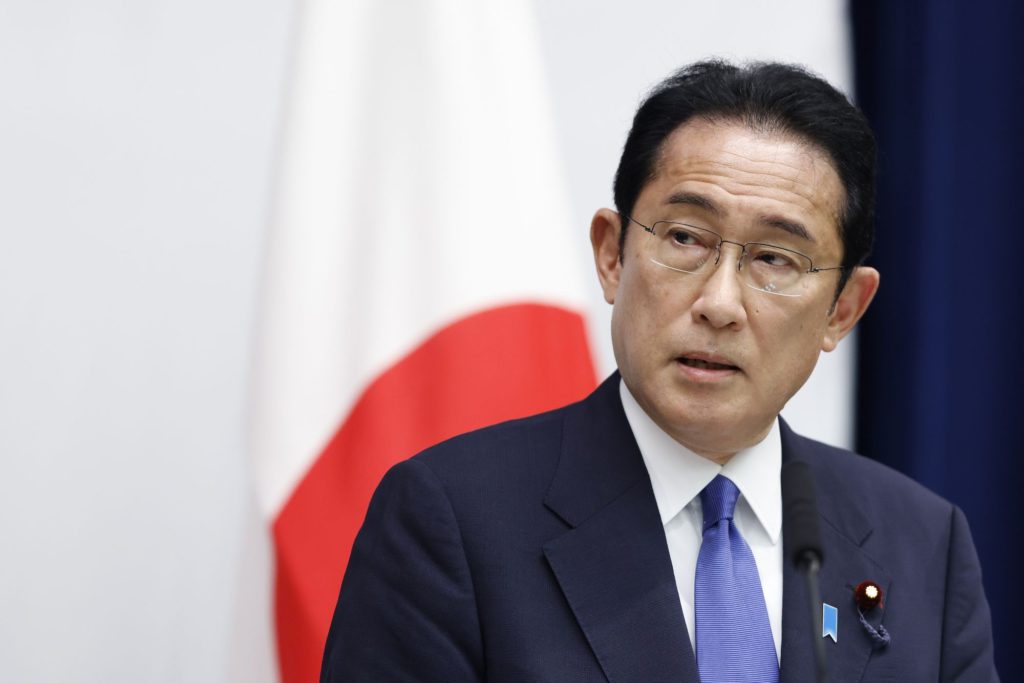
(Bloomberg) — Japanese Prime Minister Fumio Kishida tested positive for Covid-19 and has relatively mild symptoms, the government said.

Kishida, 65, developed a cough and slight fever on Saturday night and came up positive in a PCR test, according to a statement by the Cabinet Secretariat. He’s currently resting at the prime minister’s official residence and is expected to resume duties Monday, albeit remotely.

Coronavirus infections in the country have remained near record highs, with 24,780 Covid cases found in Tokyo alone on Sunday. That’s forcing politicians and health-care officials to reconsider what steps, if any, are needed to contain the outbreak. The same conundrum is facing countries around the globe, as the arrival of more infectious omicron subvariants has led to higher infection rates even as testing in most areas is on the decline.

Kishida, who has been calling on the elderly to get their fourth Covid-19 vaccination, got a booster shot himself earlier this month.

The end of pandemic restrictions on businesses in late March helped to spur the Japanese economy. Consumer spending, which accounts for more than half of Japan’s economic output, led the growth, as did capital expenditure. The relaxing of Covid rules resulted in increased spending at restaurants and hotels, as well as on clothes.

Read more: Japanese Premier Kishida Sees Support Slip as Covid Numbers Peak

Kishida will cancel a planned trip to Tunisia and the Middle East in the next week, Japanese media reported.

The route of infection is unknown at this this time, and only some family members, including Kishida’s wife, are close contacts, broadcaster NHK reported, citing government officials. He played golf last Tuesday — his first round since becoming premier in October — and the following day went to a hot spring resort, Kyodo News reported. 

The prime minister finished official duties on Aug. 15, and is set to return to work on Monday after taking summer holiday. 

Japan’s government is planning to stop requiring medical facilities to report daily case numbers after the current wave of infections subsides, the Yomiuri newspaper reported on Thursday, as Japan mulls classifying the pathogen as endemic.

(Updates with details.)

More stories like this are available on bloomberg.com

©2022 Bloomberg L.P.

Democrats Sense New Optimism for Blunting GOP’s Midterm Gains

(Bloomberg) — Democrats are increasingly optimistic they can limit Republican gains in the House and even keep control of the Senate as a raging national debate on abortion crowds inflation as an issue and the tumult around former President Donald Trump drags on the GOP.

The House is almost certain to flip to Republican control after the November midterm elections. Democrats now have only a nine-seat advantage, and independent analysts forecast a net gain of as many as two dozen seats or more for the GOP, helped by partisan redistricting in Republican-controlled states.

The Senate, now split 50-50, is increasingly looking like a toss-up, with Democrats’ prospects enhanced by inexperienced GOP candidates in Pennsylvania, Ohio, Georgia and Arizona who’ve underperformed in polls despite Trump’s backing and President Joe Biden’s dismal approval ratings. Wisconsin and Nevada also are battlegrounds.

Senate GOP leader Mitch McConnell has been lowering expectations in recent weeks.

“I think there’s probably a greater likelihood the House flips than the Senate,” he told reporters at an event Thursday in his home state of Kentucky. “Senate races are just different, they’re statewide. Candidate quality has a lot to do with the outcome.”

The one result of the November vote that’s likely baked in is legislative gridlock and an end to Biden’s hopes of advancing his agenda through Congress in the final two years of his first term. If congressional control is split between the parties, the House and Senate are unlikely to agree on any major new initiatives. If Republicans take control of both chambers, they won’t have a big enough majority to overcome a Biden veto of legislation.

Analyst Nathan Gonzales of the non-partisan Inside Elections newsletter said he still gives a slight edge to Republicans in the Senate contest. But he said there are recent signs Democratic voters are more energized after the Supreme Court in June overturned the Roe v. Wade decision that legalized abortion nationwide.

In recent House special elections in Nebraska and Minnesota, Republican victors eked out surprisingly narrow wins in districts that supported Trump by double digits, he said. And Kansas voters’ rejection this month of a constitutional amendment allowing state lawmakers to further restrict abortion access showed the issue’s potency.

“We’re still waiting to see if the reversal of Roe v. Wade is enough to help Democrats buck the typical midterm trend,” Gonzales said. Although the president’s party typically suffers significant losses in midterm elections, “there is some evidence in recent weeks that Democrats are over-performing.”

He is projecting a GOP net gain of 12-30 seats in the House. Given the shifts in the political climate, Gonzales said, the prospects for GOP House seat pickups could be toward the lower end, “the difference between Republicans having a great year or just having a good year.”

Republicans are still counting on inflation to outweigh abortion and other issues as a decision point for voters. Consumer prices are seeing a slight improvement in recent weeks, though, as gasoline and other energy prices decline. In July, the consumer price index increased 8.5% from a year earlier, cooling from a June 9.1% advance that was the biggest in four decades.

“I still think the wind is at our back and that our chances are better than 50-50,” said T.W. Arrighi, national press secretary for the National Republican Senatorial Committee.

Democrats see some glimmers of hope after a string of recent legislative victories, including a bill to boost US semiconductor manufacturing, gun safety legislation, a major veterans health measure and a prized $437 billion climate and healthcare package.

“I do think the environment has improved, but it’s summertime and we have a long way to go,” said JB Poersch, president of Senate Majority PAC, a super-PAC allied with Senate Majority Leader Chuck Schumer.

Trump, who continues to be engulfed in controversy and legal peril, is another wild card. His hold over the Republican Party is evident in the primary victories by candidates he’s endorsed. The most recent came Tuesday in Wyoming, when conservative lawyer Harriet Hageman beat incumbent GOP Representative Liz Cheney, one of Trump’s most vocal critics.

But in general election contests in some of the biggest Senate battlegrounds, Trump’s candidates are struggling.

In Georgia, Trump backed University of Georgia football legend Herschel Walker, who is facing off against incumbent Democratic Senator Raphael Warnock. Walker’s campaign has been beset by a series of controversies about his personal history and statements on the trail. 

Warnock, the first Black senator from Georgia, has been leading in recent polls, with a 4.4% edge in a RealClearPolitics average of recent surveys. He also has vastly out-raised Walker and has $22.2 million left to spend in his campaign coffers at the end of June, while Walker has $6.8 million.

Arizona Democratic Senator Mark Kelly is seeking a full six-year term after winning his Senate seat in a special election in 2020, facing off against venture capitalist Blake Masters. Masters is backed by Trump and billionaire entrepreneur Peter Thiel. He’s repeated the former president’s false claims that the 2020 presidential election was stolen, taken a hard line on illegal immigration and embraced a national abortion ban in the primary.

Kelly, a former astronaut, has distanced himself from Biden somewhat on issues, including immigration. A Fox News poll released this week found him leading Masters 50% to 42%.

Pennsylvania’s Democratic Lieutenant Governor John Fetterman is consistently leading in polls against Trump-endorsed celebrity physician Mehmet Oz, as the two battle it out for the seat of retiring GOP Senator Pat Toomey. 

Fetterman suffered a stroke in May that kept him off the campaign trail. But Fetterman has managed to make Oz’s wealth and his residency status into campaign issues. Every poll taken in the last month shows Fetterman with a lead of between nine and 18 percentage points, though a significant number of voters remain undecided.

The open Ohio Senate seat has been largely viewed as the GOP’s to lose. JD Vance, a venture capitalist, author and political newcomer, prevailed in a bitter Republican primary contest and was seen as a strong candidate for a state Trump easily won in 2020. 

But Democratic Representative Tim Ryan has deep Ohio roots and has distanced himself from Biden and run a populist campaign to directly compete for some Trump voters. Ryan has collected vastly more in donations than Vance, although outside groups also are spending heavily. The result is a race that polls indicate is deadlocked three months before the election.

More stories like this are available on bloomberg.com

©2022 Bloomberg L.P.

Paytm’s Billionaire CEO Wins Resounding Vote to Stay in Charge

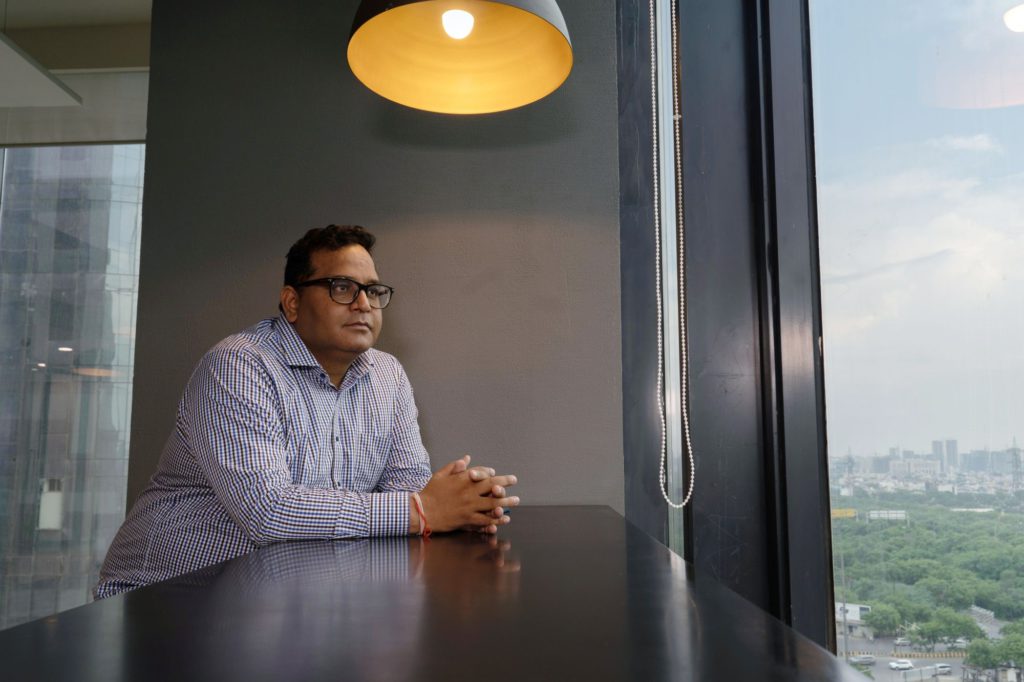
(Bloomberg) — The billionaire founder of Paytm emerged unscathed in a crucial test of investor confidence, with a forceful majority of shareholders voting to keep him at the helm of the fintech pioneer that made one of the worst market debuts in Indian history.

An emphatic 99.67% of shareholders voted to maintain Vijay Shekhar Sharma as the managing director and chief executive officer, among the items decided on at the company’s annual general meeting. A proxy advisory firm last week recommended that shareholders replace the founder as managing director and CEO, citing concerns about his ability to reverse losses at the payments provider.


Sharma got a “resounding vote of confidence from shareholders for reappointment” as managing director and CEO, the company said in an exchange filing and a press statement on Sunday.  Each of seven resolutions, including one detailing Sharma’s remuneration, were passed with at least 94% of votes in favor.

Paytm, the poster boy for India’s tech startups, has lost more than 60% of its value since its high-profile initial public offering in November as it struggled to convince investors of its earnings potential. In an interview last month, 44-year-old Sharma said Paytm is set to become India’s first internet company to hit $1 billion in annual revenue and pledged a shift from growth toward profitability.

Institutional Investor Advisory Services India Ltd. last week said investors should vote against Sharma’s reappointment and that the board must bring in a professional to the role. On several occasions before the IPO Sharma talked publicly about the company turning profitable, and yet it hasn’t happened even at an operational level, the firm said.

Paytm, listed on the bourse as One 97 Communications Ltd., counts Ant Group Co.’s Antfin (Netherlands) Holding BV., SoftBank Group Corp. and Canada Pension Plan Investment Board among its top shareholders. Of the dozen analysts covering the firm, six have a buy rating, while three have a hold and the remaining three recommend investors sell their shares.

Sharma’s remuneration is fixed for the next three years without any annual increment, the company said on Sunday. The founder had earlier said that his employee share incentives will vest after the company’s market value crosses the IPO level on a sustained basis. 

Shareholders also approved the reappointment of Ravi Adusumalli to the board, which the proxy adviser had recommended against, as well as the appointment of Madhur Deora as whole-time director and group chief financial officer.

More stories like this are available on bloomberg.com

©2022 Bloomberg L.P.

Guinea Junta Leader Names Goumou PM, Revamps Cabinet

(Bloomberg) —

Guinea’s ruling junta leader Colonel Mamadi Doumbouya revamped his cabinet ahead of the first anniversary of the Sept. 5 putsch that overthrew former president Alpha Conde.

Doumbouya confirmed acting Prime Minister Bernard Goumou as the new prime minister, Radio Television Guineenne said Saturday, citing a decree from his office. Goumou replaces Mohamed Beavogui, who was unavailable because of health reasons, the state-owned broadcaster said, without providing more details. 

The cabinet reshuffle comes as the military junta faces opposition protests in the West African nation.

Budget Minister Moussa Cisse will take the economy, finance and planning portfolio, while Lancine Conde, who was in charge of the finance ministry, will become the budget minister, RTG said. Rose Pola Pricemou was named Minister of Industry, Commerce and Small and Medium Enterprises, replacing Goumou.

Tax administration official Aly Seydouba Soumah was appointed as minister of energy, hydraulics and hydrocarbons, replacing Ibrahima Abe Sylla. Previously minister of town planning and housing, Ousmane Gaoual Diallo becomes minister of post, telecommunications and digital economy.

(Updates with details throughout)

More stories like this are available on bloomberg.com

©2022 Bloomberg L.P.

Nobel Winner Spence Sees Non-Trivial Chance of US Recession: Q&A

(Bloomberg) — Sign up for the New Economy Daily newsletter, follow us @economics and subscribe to our podcast.

In an interview on Aug. 17, Michael Spence, Nobel laureate and both a professor and dean emeritus at the Stanford Graduate School of Business, discussed prospects for the US, Chinese and European economies and the consequences of China’s slowdown for the world. 

Spence, who is a senior adviser to General Atlantic LLC and chairman of the firm’s Global Growth Institute, also gave his view on the biggest risks facing the global economy.

Here’s a partial transcript of highlights from the interview, lightly edited for brevity: 

US Economy 

Q: Has inflation peaked?

A: Overall, I think inflation has peaked but it may not settle down at an acceptable level anytime soon. There are different degrees of transitoriness if I can put it that way. A spike in a whole variety of commodities will likely abate as the system adjusts.

But we have very major changes in labor markets and in the configuration of the global economy. We went through more than two or three decades of bringing more productive capacity online in developing countries. And every time demand ramped up, the supply side responded. There isn’t that degree of elasticity on the supply side anymore, which means that shifting from a demand-constrained world to a supply-constrained world is almost a regime change in the global economy. 

Q: Is recession fear over?

A: I think recession fear is receding, but I don’t think it’s over. There are still people who are worried that inflation will be persistent enough to force the Fed to really clamp down. There’s still a non-trivial possibility that we’ll have a recession or a dramatic slowdown.

The Federal Reserve has a responsibility to get inflation down. So it will keep the pressure on, but the magnitude of interest-rates increases may vary. 

They take seriously their inflation mandate. They’re probably worried that their lack of concern about inflation when it started to appear caused some damage to their credibility, so they don’t want to do that again. On the other hand, they have a dual mandate, and they definitely don’t want to crash the economy.

Q: Sentiment among investors has clearly shifted and markets are rallying. What are some of the biggest risks you’re seeing?

A: Financial markets are much more sensitive to interest rates, forecasting and forward guidance. And we’re in a world in which asset prices were dramatically elevated over a long period of very low interest rates.

The rebound we’re seeing in financial markets is a rebound from fear of a very rapid and dramatic change in interest rates, which would change discount rates. And when there is some evidence that perhaps the extreme scenario isn’t going to manifest, then you get a fairly big financial-market reaction from it.

We’re in a world in which asset prices are going to be reset, not just in public markets, but in private markets, where valuations have come down dramatically. There’s probably a whole collection of former unicorns that aren’t unicorns anymore.

I don’t expect these things just to collapse, but an asset-price reset in the downward direction seems pretty inevitable.

Q: The US labor market remains strong. What are some of the major shifts you’re expecting?

A: There have been shifts in labor-market behavior. Some people who were willing to work in a variety of jobs that were either low paying or relatively insecure are just not going back to those jobs. A lot of people are retiring because they have the assets that they think are adequate to do that. And then there’s a whole generation of people, especially younger people, who think lifestyle is pretty important and there are certain kinds of jobs they’re not willing to do.

Another part is labor is gaining power relative to the past, and pressure from employers is diminishing. In part because of geopolitical tensions and also due to congestion in global supply chains. There is a genuine shift on the supply side in terms of who’s willing to do what kinds of work and for what kinds of compensation. 

So labor is getting more powerful and my feeling is these are not temporary shifts — there isn’t an infinite supply of low-cost labor anymore. There’s a beginning of a fairly substantial regime change in the way the global economy is put together. And that would affect the labor markets for sure.

Q: What are the biggest risks for the US economy?

A: The biggest risk is still the expansion of geopolitical conflict. Something going wrong in Taiwan would be a disaster. Along with it is a rising set of climate-related risks. If I had to pick one more it could be a complete loss of functionality in government. We had a pretty good run recently, thanks to some leadership and politics: the infrastructure bill, the semiconductor and science one — what’s encouraging is they will all involve investments that are critical for longer-term economic performance, including growth and productivity. 

China’s Economy

Q: How long will China’s slowdown last and how can it be managed?

A: The Chinese slowdown looks to be real. That affects not only global supply chains, but domestic demand. The imbalances in the real estate area are big enough to produce significant risk. I think they can manage that, but in managing it, that will further slow the economy down.

And then you pile on top of that the geopolitical tensions and disruption of trade flows that started on the US side with the Trump administration.

China is still doing a lot of things right — they continue to invest heavily in things that have the potential to produce a modern economy. The medium- to longer-term prospects in China are pretty good, but in the short term there are pretty powerful headwinds.

Q: What are some of the most important implications for rest of the world?

A: When China slows down, global growth is directly affected.

It affects trading partners and investments. And now we’re going through delisting of Chinese companies and we may get a pretty substantial separating of the Chinese and Western financial systems.

That’s not good in the short run — it makes people nervous and inhibits investment. But in the longer term that’s also a bad outcome.

Q: When will the Chinese economy start recovering? 

A: I expect it will rebound in the next two to three years unless there’s bad luck. We we’re moving into an era where tech and digital are going to be regulated. China is on a similar path, but it stepped into regulation in an extremely aggressive way. As a result of that, I think it has diminished some of the dynamism and animal spirits in the economy in a way that might have been avoided with a slightly more thoughtful, gradual approach to regulating the tech sectors.

I think once the party congress is over and the president has been put in place with a third term, there’s a reasonable chance you’ll get a rebalancing of the policy agenda in the direction of focusing on economic, and social progress performance. Whereas it got lost in the shuffle in the geopolitical tensions and the pandemic. 

Europe, UK 

Q: What are your biggest concerns for the European economy?

A: In the immediate future it’s energy and Ukraine. The big shocks are likely to come this winter. If we run short of gas and start telling companies to stop operating for two days a week, there’s serious potential to drag the economy down or even cause a crisis. Euro depreciation tends to produce additional inflationary pressures.

The UK seems to be in a very tough spot now. With very high rates of inflation, lots of people are getting hurt. 

The chances of a recession in Europe are still clearly quite high, if not already in place. It’s going to be a tough period until they make the energy transition.  

Global Risks

Q: What are some of the biggest shifts in the global economy that concern you?

A: A very large fraction of the world is what you might call non-aligned. They don’t want to choose up sides, whether it’s Russia or China, and they’ve made it clear that they have not endorsed the sanctions. There’s a fairly large part of the world that doesn’t want to play the game that’s being played right now.

Whether or not that has a big economic effect is a different question. But we’ve lost a fair amount of the underpinnings of the global economy and we’re really not getting started building a new architecture. And that’s pretty important to a fairly large number of people on the planet, especially in a wide range of developing economies and emerging economies.

More stories like this are available on bloomberg.com

©2022 Bloomberg L.P.

T-Mobile Emerges as Hedge Fund Favorite With Stock on a Tear

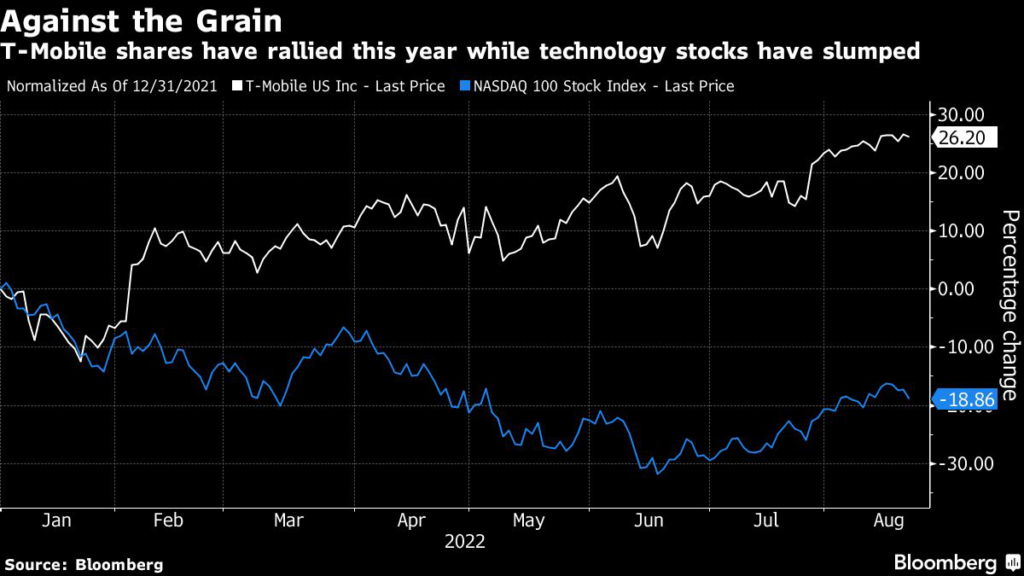
(Bloomberg) — With traders fixated this week on wild swings in meme stocks like Bed Bath & Beyond and mixed signals from Federal Reserve officials, it was easy to miss under piles of regulatory disclosures that hedge funds have been quietly buying T-Mobile US Inc.

The mobile phone carrier was the biggest position at Steven Cohen’s Point72 Asset Management at the end of the second quarter. In total, at least 25 hedge funds had 5% or more of their equity investments in the stock, according to a Bloomberg analysis of quarterly 13F filings. At Tekne Capital Management, the position was 18% of its book.

Anyone paying attention has watched T-Mobile steadily rise up the leaderboard of the Nasdaq 100 in a year in which technology and communications stalwarts have been pummeled amid soaring interest rates and slowing economic growth. The stock has gained 26%, far outpacing the performance of broad markets. The Nasdaq 100 is down 19% so far this year, while the S&P 500 is down 11%.

T-Mobile is benefiting from a banner year for mobile phone subscribers attracted by its cut-rate service plans at a time when high inflation is taking a bite out of consumers’ paychecks. After years of lagging behind peers like Verizon Communications Inc. in network quality, T-Mobile is also gaining from investments in spectrum and its 2020 acquisition of Sprint, according to analysts.  

“T-Mobile has gained a 5G network advantage, and is no longer just a value leader but can compete and win on network quality as well,” said Ric Prentiss, an analyst at Raymond James.

Another T-Mobile feature that could be making the stock attractive to hedge fund managers: the company is in a good position to splurge on its own shares.

Unlike Verizon and AT&T, T-Mobile doesn’t pay a dividend, which gives the company more flexibility to allocate capital. At the same time, earnings are on the rise thanks to synergies from the Sprint combination and subscriber growth. Profit is projected to more than double next year to $6.44 per share, according to the average of analyst estimates compiled by Bloomberg. 

“One of its great advantages is that it’s not burdened by the dividend and so it can return cash to shareholders in whatever is the most efficient way,” said Craig Moffett, analyst at research firm MoffettNathanson. “Most investors would say that the share repurchase program that is expected to start later this year will be a more efficient and more attractive path to cash return than a dividend would be.”

More than four-fifths of the analysts on Wall Street that cover the stock have a buy rating, according to data compiled by Bloomberg. By contrast, fewer than half of analysts recommend buying Verizon and AT&T. The average price target for T-Mobile implies a gain of about 19% from Friday’s closing price.

No Bargain

Hedge funds weren’t the only buyers of T-Mobile in the second quarter. Deutsche Telekom purchased $2.4 billion of shares from Softbank Group Corp., taking it closer to its goal of holding a majority of the company. The German telecommunications giant held 48% of T-Mobile’s outstanding shares, Deutsche Telekom said in April.

Of course, T-Mobile shares don’t come cheap. Priced at 30 times earnings projected over the next 12 months, it’s more than three times more expensive than AT&T and Verizon and could be vulnerable to a reversal if momentum shifts.

Though T-Mobile has seen “great” business growth this year, it’s still “extremely expensive,” said David Bahnsen, chief investment officer at the Bahnsen Group. It’s a “speculative play, more than it’s a stable value play.”

More stories like this are available on bloomberg.com

©2022 Bloomberg L.P.
Social Media Buzz: Texas Weather Warning, Linda Evangelista

(Bloomberg) — Here’s what’s buzzing on social media this morning: 

Andrew Tate, a former reality TV star in the UK who has described himself as “absolutely a misogynist,” was banned from Meta platforms Instagram and Facebook for violating policies “on dangerous organizations and individuals.”

A regular guest on Alex Jones’s Infowars, Tate had more than 4.7 million followers on Instagram at the time of his ban, up from 1 million in June.

Extreme rainfall is forecast from southern Oklahoma to central Texas, increasing the risk of serious flash flooding, particularly in urban areas.

Former supermodel Linda Evangelista appeared on the cover of British Vogue and opened up about the mental health toll of her disfiguring cosmetic procedure.

The 57-year-old said she’d have turned down the fat-freezing treatment had she known that “side effects may include losing your livelihood and (ending) up so depressed that you hate yourself.”

Former Boston Red Sox star Bill Lee collapsed in the bullpen while warming up for the Savannah Bananas during an exhibition game. The 75-year-old pitcher, nicknamed “Spaceman,” walked off the field with assistance and was taken to a local hospital.

And happy 74th birthday to Robert Plant, lead singer of Led Zeppelin and one of the greatest rock vocalists of all time. 

Born in West Bromwich, central England, in 1948, Plant met Jimmy Page in 1968 and the two hit it off immediately. Initially called the “New Yardbirds,” the band soon came to be known as Led Zeppelin, and their debut album hit the charts the following year.

Plant was a guest on the BBC’s long-running Desert Island Discs this year, where he was invited to choose eight songs, one book and one luxury item to take with him to a mythical desert island. His favorite musical piece was “Serenade” by Mario Lanza and his luxury item was a basket containing photos of homing pigeons.

More stories like this are available on bloomberg.com

©2022 Bloomberg L.P.

Ethereum Overhaul Risks Creating a New Class of Crypto Kingpins

(Bloomberg) — The much-anticipated upgrade of Ethereum will create new participants called builders in the blockchain ecosystem, a move that risks altering the power structure of what is arguably the most commercially important cryptocurrency network. 

Under the current system, networks of computers known as miners pluck transactions out of a special data pool, and arrange them into blocks that are added to the blockchain. The miners are being eliminated as part of a plan to reduce energy consumption. After the planned September upgrade known as the Merge, the builders will gather transactions into blocks, which they will then send to the validators. The validators will sign off on the order of the blocks that will form the upgraded blockchain. 

This seemingly geeky change, part of a portion of the software upgrade that is called MEV-Boost, could potentially make Ethereum more centralized, at least initially. While there are already more than 416,000 validators lined up to order transactions, there are only a handful of participants committed to serving as builders. The largest is Flashbots, which makes open-source software used by trading bots.

Flashbots is already the dominant way for miners to collect fees from traders by letting their transactions front-run and otherwise step around others. Other participants are considering becoming builders because of concern about Flashbots or similar entities having too much control.

“It kills decentralization,” said Uri Klarman, chief executive officer of BloXroute Labs, which has a network of servers that let traders send transactions to miners faster. About 40% of all the trading volume from decentralized finance apps, which let people trade, loan and borrow coins, is routed through the network, he said.

One risk is that a powerful digital wallet like MetaMask, which gives users the ability to buy, sell and receive cryptocurrency, could become a “king maker,” Klarman said. MetaMask is the most popular non-custodial wallet, with 30 million users. 

A wallet service could favor one builder over all others and even decide to act as a builder, thus controlling the flow of transactions, Klarman said.

MetaMask is owned by the New York-based ConsenSys, which was founded by Ethereum co-founder Joseph Lubin. The software firm dismisses the concern. 

“We will never send all of MetaMask’s transactions to one specific builder or provider,” said Taylor Monahan, global product lead at MetaMask. “MetaMask’s value is derived from being a gateway to an exciting, vibrant, diverse and fair ecosystem. For that reason, MetaMask will always strive to make decisions that promote a healthy and decentralized Ethereum.”

The builder-validator role split was initially conceived as a way to increase Ethereum’s decentralization, and to take the power away from validators.

Still, having too few builders on the upgraded Ethereum chain raises potential issues. They could censor transactions from being included into blocks. Earlier this month, Flashbots blacklisted wallets associated with Tornado Cash, after the mixer protocol was sanctioned by the US Treasury Department. 

If there are very few builders, they can also command higher fees, with validators earning less. That could, in turn, lead to fewer validators choosing to get involved in supporting the network. To date, miners have earned about $240 million on the transaction-reorganization service, called MEV, according to Flashbots. The fees are expected to be a significant contributor to validators’ revenue as well.

Builders can also capitalize on their users’ order flow. If a builder knows that a lot of users are placing orders for a particular token, they could buy a long position in it, for example. 

It’s like “Robinhood,  making money off order flow,” said Nathan Worsley, referencing the commission-free trading firm. Worsley and his partners, who make money off of transaction reorganizing liquidations and various complex trades, are considering becoming a builder, he said. 

Worsley isn’t alone in considering a change in focus because of the potential centralization risks and power shift.

“We’ll monitor the situation. If it gets closer to a centralized builder world, we’ll take action,” said Jonas Pfannschmidt at Blockdaemon, which runs validator nodes for clients.   

More stories like this are available on bloomberg.com

©2022 Bloomberg L.P.
Twitter Tells Employees Bonuses Could Halve on Performance: NYT

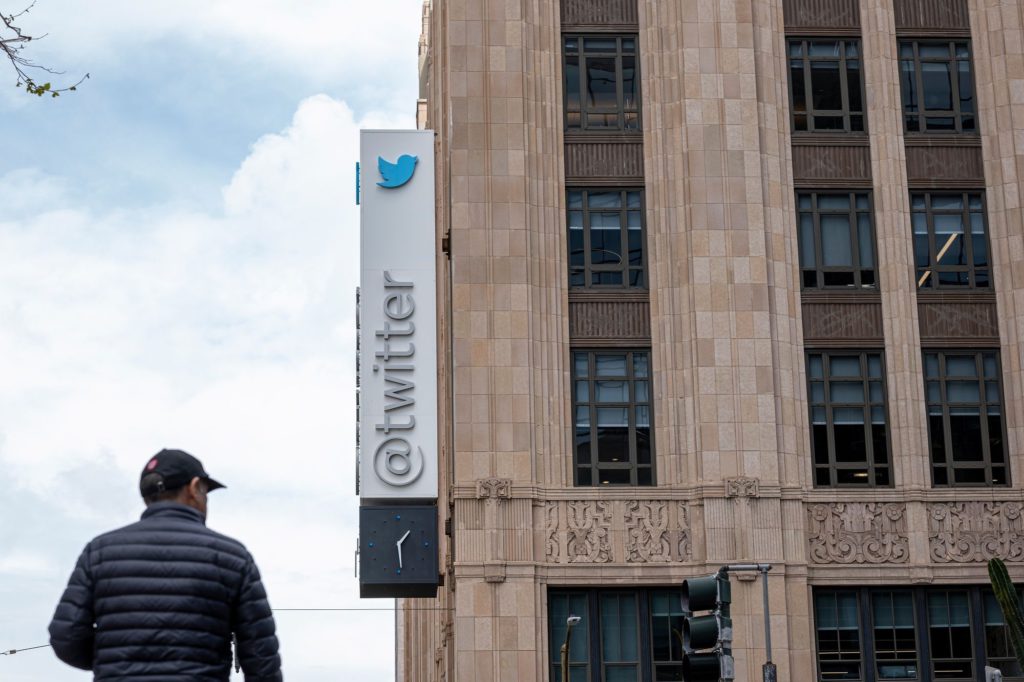
(Bloomberg) — Twitter Inc. told employees they may get about half of their annual bonuses because of the company’s financial performance, The New York Times reported.

Challenges for Twitter include advertisers’ uncertainty related to the Ukraine war and a legal dispute with Elon Musk over his plan to abandon his $44 billion purchase of the social media company, the paper said. It cited two unidentified employees who received an email from Chief Financial Office Ned Segal on Friday on the bonus warning.

While the figure may change throughout the year depending on earnings, the bonus pool is currently at 50% of what the potential would be should it meet financial targets, it said. A Twitter spokesman confirmed to NYT the email details and declined to comment further.

NOTE: Twitter Sales Miss Estimates Amid Takeover Battle With Musk

More stories like this are available on bloomberg.com

©2022 Bloomberg L.P.

UK Equips Nurses with Smart Goggles to See More Patients

(Bloomberg) — Nurses in some parts of England will trial smart goggles on visits to patients’ home as the struggling UK National Health Service turns to digital gadgets to try and improve services.

As long as individual patients consent, the virtual reality headsets will help nurses transcribe medical records, automate administrative work, and share live footage for consults with hospital colleagues. The goggles also come equipped with thermal imaging technology for examining wounds and injuries. The trial will be carried out in Northern Lincolnshire and Goole, England, the NHS said in a statement Saturday.

The goggles, developed at a company set up by a general practitioner, are part of a £6 million ($7.1 million) effort to improve ambulance and community services care at a time when health staff, burnt out by the demands of the Covid pandemic, struggle to meet mounting care demands. 

Earlier this year the NHS also doled out smart watches to patients with Parkinson’s disease so that doctors can access their conditions remotely. 

Community nurses are estimated to spend more than half of their day filling out forms and manually inputting patient data. The trial aims to see if the goggles will help free up time for more clinical tasks for patients, such as checking blood pressure and dressing wounds.

Years of underfunding and the incessant waves of Covid-19 outbreaks have left the NHS severely stretched. Nurses in England will be balloted soon on strike action over pay amid a soaring cost-of-living crisis.

More stories like this are available on bloomberg.com

©2022 Bloomberg L.P.
Close Bitnami banner
Bitnami