
Bloomberg

Foot Locker Comeback Hangs on Woman Who Rewrote Beauty Playbook

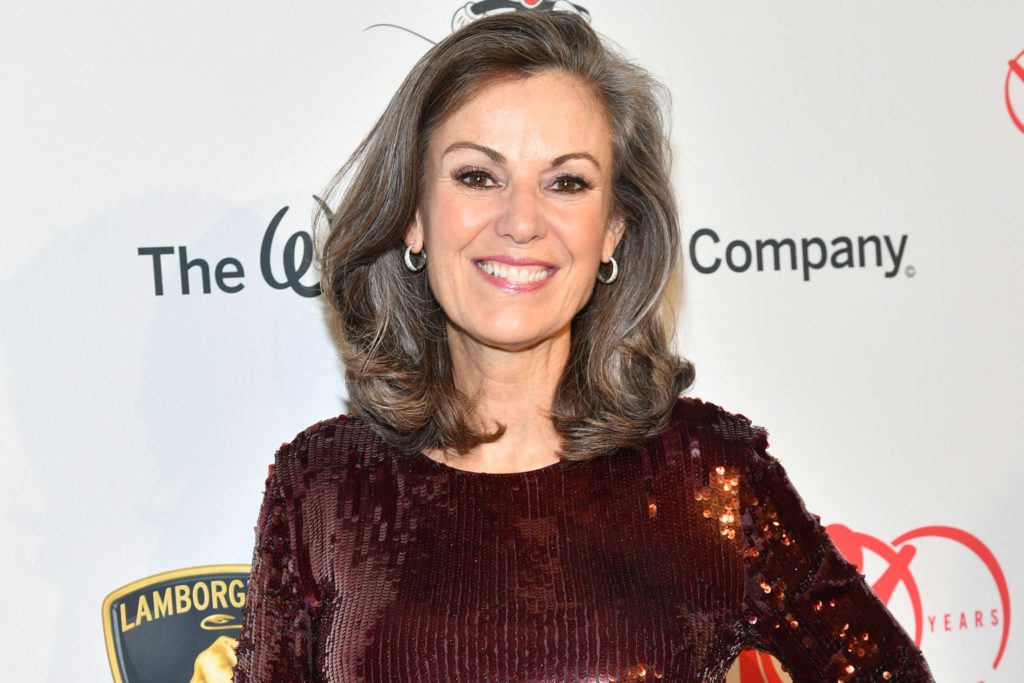
(Bloomberg) — When Mary Dillon joined Ulta Beauty Inc. almost a decade ago, the personal-care company had around 675 stores across the US, made less than 5% of its sales online and generated around $2.7 billion in annual revenue.

After Dillon stepped down in June 2021 following eight years as chief executive officer, Ulta had around 1,300 stores, sold roughly one-quarter of its items online and reported $8.6 billion in sales.

While some of that success can be attributed to a surge in spending on personal-care products during the pandemic, a lot of the growth is Dillon’s doing. Now, Foot Locker Inc., which on Friday named the 61-year-old executive as its next CEO, is betting she can deliver the same magic at its struggling operations.

The athletic retailer has been foundering amid supply-chain disruptions and a pullback in business from Nike Inc., its biggest brand partner, earlier this year.

Dillon’s appointment generated excitement on Wall Street, sending Foot Locker shares up 20% for their biggest gain in more than two years. At least six analysts upgraded their ratings on the stock.

“If you’re a retailer looking for a new CEO, she’s almost the best announcement that you can make,” Evercore ISI analyst Warren Cheng said in an interview. He sees Dillon’s acceptance of the job as “a ringing endorsement that there’s still a spot for Foot Locker” in the sporting-goods landscape.

That spot has been in question as shopping malls lose favor and inventory piles up across the retail industry. Then in February, Foot Locker said that Nike was pivoting to sell more of its products on its own website rather than in other retailers’ stores.

“Nike has gotten so good at direct to consumer that there’s been a constant overhang thesis on Foot Locker that they’re not really needed anymore,” Cheng said. Dillon, 61, “is coming in at this change-in-strategy moment” and will have to convince shoppers, brands and investors that Foot Locker is still relevant.

Groundwork for Change

Foot Locker’s current management team has already started to lay some of the groundwork. The company is teaming up with Adidas AG on two major launches this fall and has been increasing its offering of popular brands such as Hoka and On.

Dillon is likely to focus on making Foot Locker stores more attractive to a range of shoppers, including “sneakerheads” who are drawn to the design and cultural relevance of shoes, rather than just their utility.

Foot Locker opened it first store in 1974. Now, many locations are “kind of racks and stacks of shoes,” said Garrett Sheridan, managing partner at Axiom Consulting Partners. “It can be hard to find things that you want.”

Heightened competition from other retailers, including department stores and Amazon.com Inc., as well as direct sales by brands themselves, mean that Foot Locker will have to do more to stand out.

Dillon is likely to take a page from the blueprint she used to remake Ulta. While at the helm, she improved some of the salon services offered in-store and broadened the assortment of available products, including higher-end personal-care products as well as mass-market ones. That brought in a wider array of consumers — from budget-conscious teens to executives.

The strategy ignited sales growth and transformed Ulta from what Sheridan calls a “drugstore retailer,” into a personal-care giant that competes against Sephora, owned by luxury juggernaut LVMH.

The deal that Ulta inked in 2020 to open its shops within Target Corp. stores solidified that broad-based consumer approach.

Rare Resume

The breadth of Dillon’s executive career is unusual in the US. She was also global chief marketing officer at McDonald’s Corp. and CEO of US Cellular before taking the helm at Ulta.

She’s also rare as a female chief executive.

Women still hold less than 7% of CEO roles at the largest public US companies. That includes Lauren Hobart, who was elevated to the top spot at athletic-goods rival Dick’s Sporting Goods Inc. last year.

The list of women who have been CEOs of multiple US public companies is even shorter. It includes Maggie Wilderotter, who was CEO of television e-commerce company Wink Communications, and cable company Frontier Communications. She’s currently the interim CEO of DocuSign Inc. 

Irene Rosenfeld was CEO of both Kraft Foods Inc. and Mondelez International Inc. Patti Poppe, current head of power company PG&E Corp. was also previously CEO of CMS Energy Corp. And Meg Whitman led both EBay Inc. and Hewlett Packard Enterprise Co.

Despite the challenges that lay ahead at Foot Locker, Dillon is “probably more focused on the opportunities,” Sheridan said. “At this stage, she has nothing to prove. What’s she’s accomplished is amazing.”

More stories like this are available on bloomberg.com

©2022 Bloomberg L.P.
Uber and Lyft Drivers’ Complaints Are a Startup Opportunity

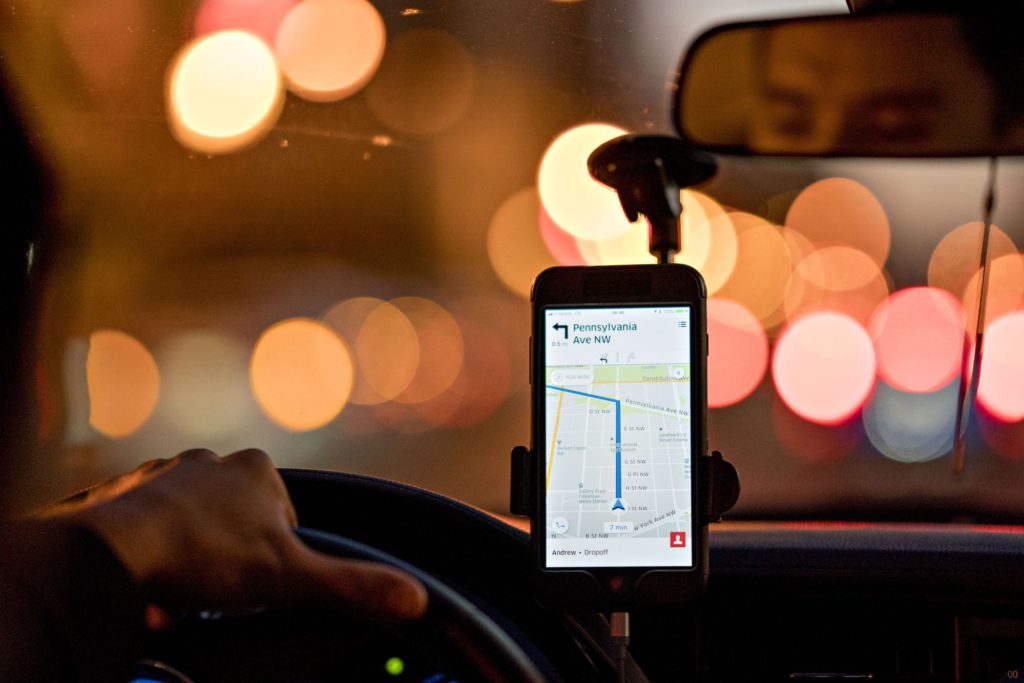
(Bloomberg) — A number of upstart ride-hailing apps are taking on Uber and Lyft with the promise of treating drivers better.

Among them are Dallas-based Alto, which hires drivers as employees and gives annual compensation. Empower, based in McLean, Virginia, and Wridz in Austin, Texas give 100% of cab fares to the driver. The Drivers Cooperative in New York promises a share in the profits.

Drivers for Uber Technologies Inc. and Lyft Inc. have long complained about issues from platform charges to employment status. As quarantines decimated demand for rides, many drivers quit and found unemployment benefits outpaced wages from driving, some shifted into food and grocery delivery, while others sought full-time work. This shift in the power dynamics between drivers and the apps saw the tech giants paying millions in bonuses to lure them back.

The new startups can tap into that dissatisfaction. But to win market share they must confront the efficiency with which Uber and Lyft match riders with drivers, and the massive scale of those companies. The incumbents have reported progress in luring and retaining drivers, raising pressure on new entrants to ensure they can compete.

“A lot of drivers don’t feel that they are paid enough, that the commission is too high, that the companies don’t care about them. And so, you could imagine for new rideshare companies it’s kind of easy,” said Harry Campbell, longtime driver and founder of the Rideshare Guy blog. “The really hard part is the customers. There’s a reason why no one has really come close to unseating Uber and Lyft.”

Uber and Lyft regard drivers as independent contractors. Uber takes almost 27% in commission. Lyft takes a commission but doesn’t disclose its share. This contractor model means drivers don’t get the security of a minimum wage, insurance, overtime pay or other benefits. The companies say this enables lower fares and gives drivers flexibility, but their decision has spurred lawsuits and state legislation. 

A spokeswoman for Lyft highlighted that the number of active drivers reached a two-year high in the second quarter. A spokeswoman for Uber noted growth in drivers on the platform, and declined further comment. Both companies have worked to incorporate more driver-friendly features to their apps in recent months, such as upfront pricing that allows drivers to see a fare before accepting a ride. 

Alto owns and manages its fleet of luxury cars and gives drivers hourly rates along with benefits like health care. Chief Executive Officer Will Coleman said the company also looks for drivers from big employers like Amazon.com Inc. and charges riders a bit more than a regular Uber though less than the premium-level Uber Black.

Other startups promise drivers will receive 100% of the fare in exchange for a subscription fee. Wridz launched earlier this year with a $100 monthly charge, though it’s currently running free trials for drivers while it establishes a passenger base.

Empower got started the same year. It charges $250 a month in Washington DC, its biggest market, where it offers monthly and daily subscriptions. There are monthly and weekly options in New York City and North Carolina. Its pitch to drivers hones in on their dissatisfaction with the incumbents.

“We just have to find drivers who are Uber and Lyft drivers, who for the most part hate Uber and Lyft, and suggest that they can work for themselves, make more money, be the actual customer, and be listened to and heard,” said Empower founder Josh Sear.

Meanwhile The Drivers Cooperative, based in Long Island City, is a worker-owned take on rideshare. It takes a 15% commission on each trip and guarantees drivers earn at least $30 an hour. Any profit goes back to drivers.

“Our goal is to break even early, become profitable, provide a high quality service and good pay for drivers and benefits,” said co-founder Erik Forman.

Erin Hatton, a sociology professor at the University at Buffalo whose work focuses on labor and social policy, sees a battle ahead for these companies.

“It’s possible that a company with a strong focus on worker rights and protections could gain traction against the more established companies, given those companies’ poor record on those issues,” Hatton said. “But it’s clear that it’s hard to turn a profit in this industry without being highly subsidized and/or charging much higher rates to consumers.”

The driver-focused startups are a fraction of the size of their rivals — Uber and Lyft have a combined market capitalization of more than $60 billion. 

Alto has raised $59.5 million and Empower has raised $10.1 million, according to Crunchbase. Drivers Cooperative raised more than $1 million through crowdfunding and has also taken on debt. 

Wridz founder Steve Wright says the company is self-funded, and he’s not that worried about competing with incentives from Uber and Lyft.

“The driver incentive is not a concern for us,” he said. “All the incentive you need is to give the driver 100% of what’s available to give them.”

It’s not clear how much longer Uber and Lyft will keep shelling out to keep drivers happy. The two San Francisco-based companies are relatively new to profitability, and shares rose after recent earnings reports indicated they’re on a path to rein in spending on driver bonuses.

Even if fading incentives burnish the appeal of these smaller rivals, they still must attract customers willing to see them through some early issues. Driver’s Coop, for instance, doesn’t yet have on-demand cars ready to pick customers up unless they are willing to wait about 45 minutes to an hour. 

“Unfortunately, I don’t think that most consumers care quite enough about worker rights to make that more ethical choice if it’s more expensive or less available,” Hatton said.

(Updates with details on Empower in 10th paragraph. An earlier version corrected the types of subscriptions available in 10th paragraph.)

More stories like this are available on bloomberg.com

©2022 Bloomberg L.P.
Metaverse Jobs Are Disappearing as Hiring Slows at Google, Facebook 

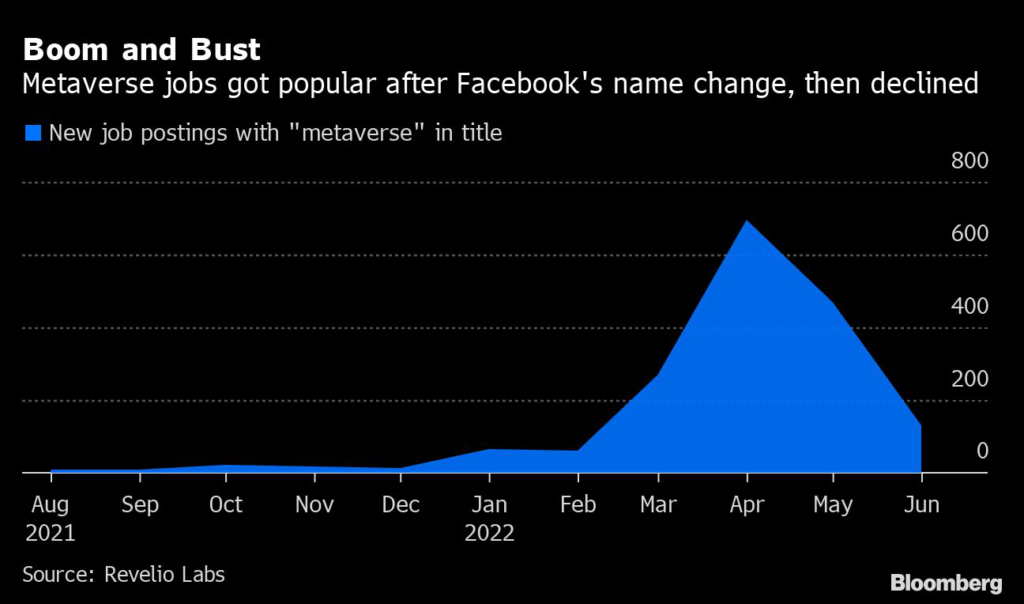
(Bloomberg) — Jobs in the metaverse are declining, according to workplace researcher Revelio Labs. 

New monthly job postings across all industries with “metaverse” in the title declined 81% between April and June, Revelio found, after surging in the months following Facebook’s rebranding last fall. The dropoff coincides with a broader pullback across the tech sector, which has prompted layoffs and hiring freezes, leaving workers from the Bay Area to Bangalore increasingly rattled. 

Meta Platforms Inc. had slowed hiring in May, but said it has picked back up in recent months. “After temporarily pausing hiring for certain roles at the company, we’re excited to resume it again for some of our highest priority areas,” said spokeswoman Andrea Beasley. The company, which brought on more than 5,700 net new hires in the second quarter, is looking to add talent in areas like machine learning, AI and graphics. 

Representatives for Google parent Alphabet Inc. and Apple Inc., which are also active in developing immersive digital technologies, did not immediately reply to a request to comment.  

Meta Chief Executive Officer Mark Zuckerberg’s big bet on virtual reality and other nascent, immersive technologies encouraged companies of all stripes to look for experts in those fields, which may have created “short-lived hype from the demand side,” Revelio Labs economist Jin Yan said. Now, as employers recalibrate their hiring needs and labor budgets amid growing concerns of a recession, that hype might come face to face with a sobering reality. 

Zuckerberg said on Meta’s July 27 earnings call that he’s “slowing the pace” of long-term investments due to the revenue shortfall. Apple, an emerging rival of Meta’s in the virtual-reality space, said July 28 that it would be “more deliberate” in its recruitment. Alphabet, which has shied away from grand futuristic statements about the internet’s next iteration but is moving quickly in areas like augmented reality, has also slowed hiring.

While full-time metaverse jobs have become more scarce, the number of freelance gigs for metaverse-related services like avatar development and 3D design has more than quadrupled, according to freelance talent marketplace Fiverr International Ltd.

(Corrects July 29 story to include Meta Platforms comment in third paragraph and add source of data in headline and first paragraph)

More stories like this are available on bloomberg.com

©2022 Bloomberg L.P.

The Pursuit of Crypto Happiness: Wen Lambo?

  • Listen to Bloomberg Crypto on the iHeartRadio App
  • Listen to Bloomberg Crypto on Apple Podcasts
  • Listen to Bloomberg Crypto on Spotify  

(Bloomberg) — There’s a scene in the 2006 film “The Pursuit of Happyness” where Actor Will Smith plays a single father, broke and homeless, looking for a fresh start. As he wanders around San Francisco’s financial district, he comes across a stranger stepping out of a Red Ferrari. 

Smith says: “I just have two questions for you. What do you do, and how do you do it?” The guy replies, with a confident smile, “I am a stock broker.” 

If the movie were made within the last couple of years, that stock broker might be a crypto bro. And the Ferrari might be a Lamborghini.

For years, many crypto investors have been consumed by a single, persistent question as they’ve watched the prices of coins rise and fall, especially as of late: Wen Lambo? 

Bloomberg reporter Hannah Miller & Crypto VC Peter Saddington join this episode to discuss all your burning questions about one of the most visible status-symbols of crypto. 

Follow us on Twitter @crypto, and subscribe to the Bloomberg Crypto Newsletter at https://bloom.bg/cryptonewsletter


(The story has been corrected to note that the scene took place in San Francisco rather than in New York.)

More stories like this are available on bloomberg.com

©2022 Bloomberg L.P.
Stocks Slide as Short-Sellers Cash In on Fedspeak: Markets Wrap

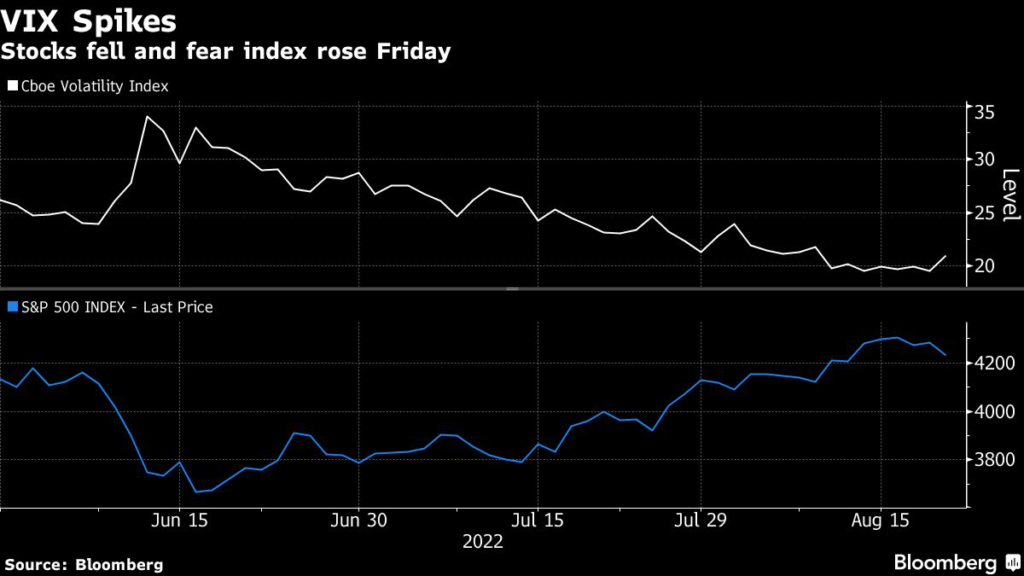
(Bloomberg) — Stocks fell in a decisive pivot that snapped the longest weekly rally since November, as short-sellers resurfaced and investors turned cautious after Federal Reserve officials beat the drum on hiking rates. Treasury yields climbed, while the dollar capped its best week since April 2020.

The S&P 500 Index notched its biggest daily decline since June, sending the benchmark to its first weekly loss in five weeks. The tech-heavy Nasdaq 100 underperformed major benchmarks, with growth-related stocks among the hardest hit Friday. Meanwhile, Wall Street’s fear gauge, the Cboe Volatility Index, jumped the most in more than two weeks, back above 20. 

Expiration of $2 trillion in options, obliging investors to either roll over existing positions or start new ones, set the stage for a volatile session as failure to break a key threshold for the S&P 500 around 4,300 appeared to open the door to selling positions. And bears pounced. A basket of the most-shorted stocks dropped more than 6%, extending its weekly loss to 12% and giving short sellers their best week since March 2020. 

In a blow to individual investors, high-flying meme stock Bed Bath & Beyond tumbled more than 40% after Ryan Cohen sold his entire stake in the retailer. Cryptocurrency-linked stocks tumbled, tracking losses in Bitcoin: Coinbase Global Inc., Marathon Digital Holdings and Riot Blockchain Inc. each dropped more than 10%. Bitcoin sank back below $21,500 apiece.

One bright spot in the equity space was Occidental Petroleum Corp., rallying the most since March on news that Warren Buffett’s Berkshire Hathaway Inc. won approval from US regulators to buy as much as 50% in the oil company.

Against a backdrop of fear and volatility, the dollar marched higher for a third day in a row. Treasuries fell, with the two-year Treasury yield, the most sensitive to policy changes, jumping 4 basis points. 

Ahead of the Fed’s Jackson Hole gathering next week, officials reiterated their resolve to raise rates to curb stubbornly high inflation. In comments Thursday, two voting members of the Federal Open Market Committee — St. Louis’s James Bullard and Kansas City’s Esther George —  stood firm on the need to hike rates, though they diverged on the size of the September move. Richmond’s Thomas Barkin echoed that resolve on Friday, noting the risk those efforts could cause a recession. 

“Fighting the Fed is not a good policy at this juncture,” Jose Torres, senior economist at Interactive Brokers, said in an interview. “If you didn’t fight the Fed while they were engaging in quantitative easing and they boosted asset prices, why would you fight the Fed now when they’re engaging in the opposite. The same way we got a really violent summer bear-market rally, you can have those moves exacerbated the other way, particularly as liquidity conditions tighten.”

The pullback in equities this week follows a rally that has propelled the S&P 500 up more the 15% from its mid-June nadir amid speculation that the Fed may scale back its aggressive path of rate hikes. And a force that contributed to the rally is now showing signs of fatigue, with hedge funds dialing down purchases of shares.

Other Fed officials joined the chorus of a hawkish stance in the runup to the annual symposium at Jackson Hole Aug. 25-27. San Francisco’s Mary Daly pushed back against bets for rate cuts before the end of 2023 and Minneapolis’s Neel Kashkari said that “we have an inflation problem right now,” and that the central bank has to get it down “urgently.”

“We think the Fed is likely to put an exclamation point on any premature notion that easing is in the cards, and we think they might do that with more hawkish commentary,” Leo Grohowski, CIO at BNY Wealth Management, said by phone. “There’s been a big change in sentiment and perhaps a little bit too much complacency here built in the short term.”

Other market commentary

  • “Markets have been rallying on the back of three assumptions: a moderated recession-to-come, a Fed pivot and an earnings expansion: from that perspective, this week has been sobering with notably a negative macro news flow,” Florian Ielpo, head of macro research at Lombard Odier Asset Management, wrote. “This week, we have seen a pause in this bear market rally which has not yet mutated into a turning point. The macro-heavy next two weeks should bring about more clarity in this matter.”
  • “It is patently clear that the Fed has inflation reduction as its main aim, even though it acknowledges the knock-on risk of derailing the economy,” Richard Hunter, the head of markets at Interactive Investor International in Leeds, UK, said. “Comments from several Fed officials suggest that there remains some way to go before victory can be declared on taming inflation.”

Some of the main moves in markets:

Stocks

  • The S&P 500 fell 1.3% as of 4 p.m. New York time
  • The Nasdaq 100 fell 1.9%
  • The Dow Jones Industrial Average fell 0.9%
  • The MSCI World index fell 1.3%

Currencies

  • The Bloomberg Dollar Spot Index rose 0.5%
  • The euro fell 0.5% to $1.0041
  • The British pound fell 0.8% to $1.1832
  • The Japanese yen fell 0.7% to 136.78 per dollar

Bonds

  • The yield on 10-year Treasuries advanced 10 basis points to 2.98%
  • Germany’s 10-year yield advanced 13 basis points to 1.23%
  • Britain’s 10-year yield advanced 10 basis points to 2.41%

Commodities

  • West Texas Intermediate crude fell 0.4% to $90.13 a barrel
  • Gold futures fell 0.6% to $1,761 an ounce

More stories like this are available on bloomberg.com

©2022 Bloomberg L.P.
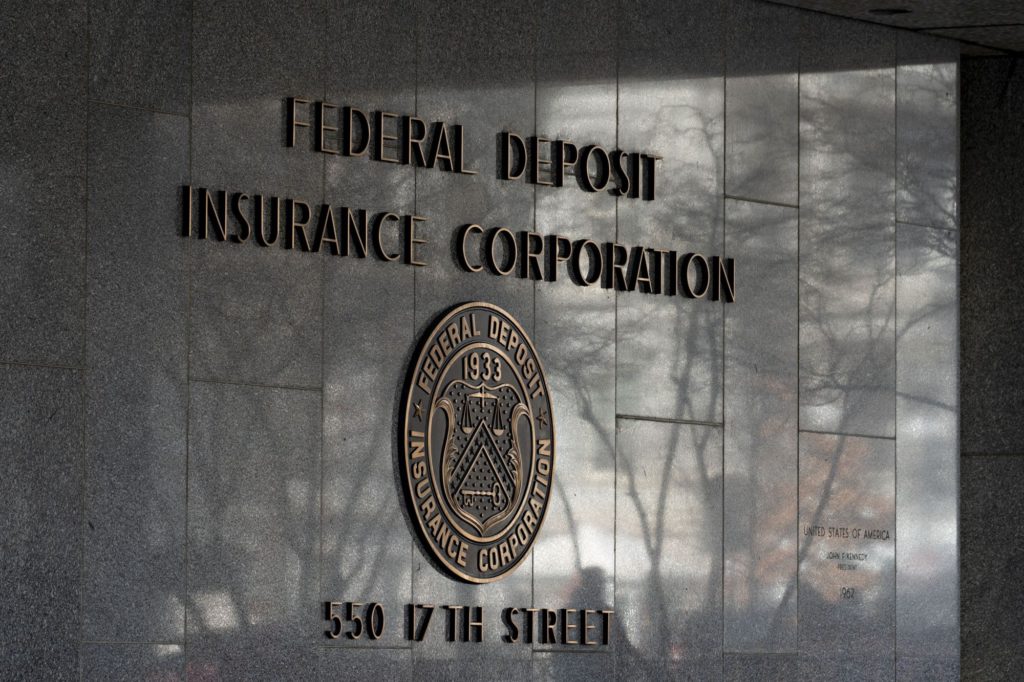
FTX US, Four Others Ordered to Correct FDIC Insurance Claims

(Bloomberg) — The Federal Deposit Insurance Corporation issued letters to five companies, including crypto exchange FTX US, demanding that they take immediate steps to correct “false or misleading statements” about certain products being eligible for insurance protection. 

The action shows the US agency is ramping up its efforts to crack down on businesses, particularly in the digital asset space, that it determines aren’t being transparent with customers. It has said inaccurate representations about FDIC insurance can create confusion and harm consumers.  

The latest cease-and-desist letters come after FDIC and the Federal Reserve took a similar step against bankrupt crypto platform Voyager Digital LLC in July. 

The US agency said in a statement Friday said that it found evidence that the five companies — which also included Cryptonews.com, Cryptosec.info, SmartAsset.com, and FDICCrypto.com — posted false statements on their websites and social media accounts that suggested certain crypto products or stocks held in brokerage accounts are FDIC-insured. 

FTX US is the American arm of billionaire Sam Bankman-Fried’s trading juggernaut FTX. In its letter to the company, FDIC said comments FTX US President Brett Harrison posted to Twitter in July appeared to contain misrepresentations about deposit insurance. 

Following the FDIC’s announcement, Harrison said on Twitter that he had deleted the prior post, per the agency’s instruction. “We really didn’t mean to mislead anyone, and we didn’t suggest that FTX US itself, or that crypto/non-fiat assets, benefit from FDIC insurance,” he said. 

Bankman-Fried also responded on the social media platform, saying FTX US isn’t FDIC-insured and it never meant to suggest otherwise. He added: “We’re also excited to explore potential ways that individual accounts using direct deposit (which we now support) could, in the future, be used to further protect customers, and would be excited to work with the FDIC on that.”


In May, the FDIC approved regulations clarifying the regulator’s procedures for taking action against firms and people who make misleading claims about deposit insurance.    

(Updates with additional details about FTX US and the company’s response beginning in the fifth paragraph.)

More stories like this are available on bloomberg.com

©2022 Bloomberg L.P.

Mexico Considers Incentives to Attract Semiconductor Investment

(Bloomberg) — Mexico is considering incentives to attract private investment in semiconductors, taking advantage of a push by the US to bring the production of chips closer to home, according to the Latin American nation’s economy minister.

Tatiana Clouthier said on Friday the government is looking to help companies that think about expanding their presence in Mexico and proposals are being evaluated by the Finance Ministry. Additional investment in Mexico will benefit the auto, electronics, and aerospace industries, she added.

“We could have mechanisms to make investment more attractive for companies that relocate,” Clouthier told Bloomberg News in an interview, saying she’s in touch with the Finance Ministry to discuss what can be done to support innovative industries that could boost employment. “We think that for these sectors there should be certain kinds of assistance.”

She did not elaborate on what types of incentives are being discussed.

Earlier in August, the ministry held a forum with US investors to discuss the advantages of investment in Mexico after the US Congress approved the CHIPS Act, which includes about $52 billion to boost domestic semiconductor production and research. Mexico could be a “key ally,” the Economy Ministry said in a statement after the event.

Clouthier named Jalisco and Aguascalientes states as potential areas of investment, though the government has also encouraged companies to move to southern states, where there is more water available. Drought has stricken northern cities including Monterrey, and President Andres Manuel Lopez Obrador has called for water-guzzling companies to limit production.

More stories like this are available on bloomberg.com

©2022 Bloomberg L.P.

Monkeypox Can Linger on Common Household Items, CDC Says

(Bloomberg) — The monkeypox virus can linger on many common household objects, though it’s not yet clear if that can spread the infection, according to a new government study.

Two monkeypox patients sharing a home said they disinfected surfaces, washed their hands several times a day and showered regularly. Researchers still found the virus on 70% of high-contact areas 20 days after their symptoms began, including on couches, blankets, a coffee machine, computer mouse and light switch, the US Centers for Disease Control and Prevention said. 

However, no live virus was detected on any of the items or surfaces, suggesting the risk infections could spread is low. The CDC said that cleaning and disinfection practices may have limited the amount of contamination in the home. 

The study sheds new light on the behavior of the monkeypox virus while also raising questions. Monkeypox primarily spreads through direct contact with lesions or respiratory secretions during sustained close contact with someone who is sick. More than 90% of monkeypox cases in the US were associated with recent male-to-male sexual contact, according to a different CDC study. 

The virus can also spread through fluids or objects used by an infected person, but it’s not yet clear how much some surface contamination contributes to indirect transmission of the virus, according to the study. 

People visiting the home of someone with monkeypox should still protect themselves “by wearing a well-fitting mask, avoiding touching possibly contaminated surfaces, maintaining appropriate hand hygiene, avoiding sharing eating utensils, clothing, bedding, or towels and following home disinfection recommendations,” the CDC says.

Both patients had cases of monkeypox that were reported in May, according to the study. One of the people had lesions on the genitals, hands, chest, lips and scalp, while the other had lesions on the foot, leg and finger. They were both sick for about a month, according the report.

More stories like this are available on bloomberg.com

©2022 Bloomberg L.P.

McLaren’s New $3.6 Million Hypercar Is Based on a Video Game

(Bloomberg) — McLaren is turning fantasy into fact.

The McLaren Solus GT is the real-life version of a McLaren Vision concept car that was featured in the Gran Turismo Sport video game. Legal to drive only on a track, the Solus GT debuted on Aug. 19 at the Quail car show during Monterey car week in Carmel, Calif. 

Started in 2013, the vision concept component of the popular video game features futuristic but fictional cars from the likes of Mercedes-Benz and Lamborghini. Many production vehicles from Bugatti and Porsche are often featured in other video games such as CSR Racing and Forza. But the McLaren Vision GT that debuted in 2017 is the first from the brand to go from game to garage. 

Related:  The Bugatti Divo May Be $5.8 Million. But You Can Still Drive It

“It keeps the original concept of the Vision car, but this is a lot more sophisticated now: a very clean, good design,” says Kazunori Yamauchi, chief executive officer of Polyphony Digital, which created Gran Turismo. Yamauchi, onsite during a media preview on Aug. 18. notes that the progression from virtual reality to real life complements the consumer progression for many gamers. 

“Many Gran Turismo players ultimately become loyal customers of sports cars,” he says. “When a player falls in love with cars, about 20 years down the line they are able to buy that car. In the supercar world, there is a genre of customers who is actually a Gran Turismo customer.”

Despite having the name GT, which can sometimes stand for “grand touring,” the Solus GT is primed for anything but a casual cruise. Its naturally aspirated V10 engine gets 829bhp (840hp) and promises a zero-to-60 mph sprint time of less than 2.5 seconds. Top speed is 200 mph.

Owners who are especially keen to live out their Formula One fantasies can purchase an FIA-homologated race suit, a helmet, a bespoke Head and Neck Support (HANS) device, and a driver-development coaching program. The neck support is particularly important, says Bruno Senna, the professional racing driver who has driven the Solus GT prototypes for testing purposes. (Senna’s uncle, Aryton, spent much of his career racing with McLaren’s Formula One team and has a $1 million model named after him.)

Driving the Solus GT is “a whole different planet” compared to driving other high-powered McLarens such as the Senna, he says. “This is the closest you can get to a top-end race car,” he said. “It’s friendly to drive but—definitely for the people who buy it—they will need a coach.”

The performance alone is sure to thrill anyone sitting in the car’s single seat. Just getting into and out of the vehicle will be an event. Its spring-loaded canopy top slides open with the press of a mechanical lever; the roof then moves across a slight arc, lifting clear of the cockpit and sliding forward to allow easy access to the drivers seat. Once inside, the driver can access the ignition switch—and a fully integrated fire extinguisher—on the ceiling of the vehicle.  

Like every McLaren made since 1981, the Solus GT uses a carbon-fiber monocoque body; the front and rear chassis structures, and even the steering wheel, are also made from carbon fiber. But in a new first for the Woking, England-based company, McLaren used 3D-printed titanium components comprising the halo cockpit-protection structure and roll hoop. All the carbon fiber and titanium help the car achieve a feather weight of just over 1 ton, or 2,205 pounds.McLaren will make just 25 of the Solus GT, which—unlike the exclusive-to-the-US McLaren Sabre—is being sold globally. Pricing starts at £3 million ($3.6 million). Deliveries will start in 2023.

More stories like this are available on bloomberg.com

©2022 Bloomberg L.P.

Can Grocery Stores Save the American Mall?

(Bloomberg) — Between movie theaters, fitness centers and full-on amusement parks, American shopping malls have scrambled for years to attract new visitors to counter plummeting foot traffic. Even before the coronavirus struck, the concept of the mall—once so central to suburban life—was increasingly viewed as an anachronism.

Now, with pandemic precautions falling by the wayside and brick-and-mortar shopping eyeing a revival, it’s looking like there may be a strategy for the old standby to survive amid the hordes of Amazon delivery vans.

Grocery stores.  

When the Westfield Oakridge mall in San Jose, California opened the popular Asian grocery store chain 99 Ranch Market in March, its debut saw lines snaking out the door. Since then, the mall’s foot traffic has jumped, with customer visits up more than 10% in July compared to pre-pandemic levels, according to traffic analytics firm Placer.ai.

In addition to grocery store staples like produce and meat, the supermarket has also attracted shoppers with its dining hall and tea bar. What’s surprising is 99 Ranch took up residence in one of the mall’s anchor spots, which had typically gone to massive chains like Target Corp. or Macy’s Inc. It’s the supermarket’s first location inside a megamall.

At the Westfield Valley Fair mall in nearby Santa Clara, the shopping center also saw its visits rise after the June arrival of Eataly, the all-in-one Italian marketplace, restaurant and cooking school. It was already one of the better-performing malls in the US, but Eataly seemed to drive more foot traffic. Visits to the mall during the store’s opening week surpassed 20% for the first time in months, and have remained elevated compared to 2019 levels, according to Placer.ai.  

Malls were already reeling before the pandemic, with shuttered stores and bankruptcies legion. They didn’t pivot fast enough in the face of Amazon, resulting in dwindling traffic, lower sales and shuttered storefronts. Once the existential threat of ecommerce became clear, owners struggled to find ways to get people out from behind their computers, with new and strange offerings and more diverse tenants.

As far back in 2017, Credit Suisse was already predicting that between 20% and 25% of US malls would fail in just five years.

Then Covid-19 arrived. Dozens of mall-based retailers sought court protection, including J.C. Penney Co. and J. Crew. Macy’s announced plans to close more than 125 stores at the beginning of 2020, citing too many locations in underperforming malls. Nordstrom and Bed Bath & Beyond also announced widespread closures.

Could fancy food destinations stop the bleeding? The test isn’t only foot traffic—it’s also about attracting other retailers. But for now, the strategy looks promising.

“The result has been a rise in other tenant types that could have a waterfall effect, driving even more mall tenant diversity and new opportunities for less traditional mall tenants,” said Ethan Chernofsky, Placer.ai’s vice president of marketing. “While they are still not an indoor mall staple, there is ample reason to believe that their role within this segment will increase.”

Although grocery stores have anchored strip malls for decades, traditional supermarkets and groceries haven’t been a dominant presence at indoor US malls. While roughly one in five enclosed shopping malls has a grocery store, according to data from commercial real estate analytics firm Green Street, half are Targets. The phenomenon is much more common overseas.

But grocery stores have been a growing US consumer segment over the last few years. Except for so-called value outlets and “dollar” stores, grocers have had the most store openings, outpacing home improvement, electronics and superstores, according to an analysis of store openings between 2019 and 2021 from Green Street. The firm’s research shows adding a grocer can boost traffic by upwards of 20% at a shopping center.

“One reason that we’re seeing grocers become a more commonplace tenant within the mall spaces is because we witnessed the resilience of grocery-anchored strip centers or open air-retail throughout the pandemic,” said Emily Arft, a retail analyst at Green Street. “That reaffirmed the importance of brick-and-mortar retail.”

Much of that growth was driven by the widespread adoption of in-store pickups for online orders, which helped cement the relevancy of brick-and-mortar stores, Arft said.

That said, roughly half of grocery stores at shopping malls are located in what industry experts call a “Class B” mall—not the gold-standard Class A mall that is more likely to house luxury goods. Class B malls, which are more likely to attract middle-class clientele, have struggled more than their wealthier cousins. As a result, they’ve been forced to think more creatively when it comes to finding tenants. More than 300 malls in the US are categorized as B-tier malls.

“Malls that are struggling a little bit more are going to require more non-traditional tenants like grocers,” said Arft.

More stories like this are available on bloomberg.com

©2022 Bloomberg L.P.

Close Bitnami banner
Bitnami