Bloomberg

Lockdowns Long Over, Americans Still Hooked on Online Groceries

(Bloomberg) — Online grocery shopping looks like it will be one of the few pandemic behaviors that really does stick.

The arrival of Covid-19 disrupted lifestyles, and prognosticators weighed in on the long-term changes that would bring. Now, even as Americans list their Peloton bikes on Craigslist, cancel their Netflix accounts and slow down their home-remodeling plans, they refuse to give up the convenience of online grocery shopping.  

Against a backdrop of the highest inflation in four decades, now around 8.5%, shoppers are still willing to pay a premium for that convenience. There’s also mounting evidence that consumers are trading down amid all these price hikes, and yet e-grocery revenue is still rising.

After posting year-over-year declines in March and April, online grocery sales rebounded and have increased in the past three months, according to data from Brick Meets Click and Mercatus Technologies Inc., which both provide online services to food retailers. That includes July, when sales rose 17% from last year’s, reaching $7.8 billion. Though it has come down from its pre-vaccine heights, overall, the average monthly sales thus far in 2022 are four times as high as the pre-Covid sales rate, David Bishop of Brick Meets Click told Bloomberg. The number of monthly active users has more than doubled since August 2019.

“Grocery benefits from the fact that it’s an essential, everyday necessity,” Bishop said, which creates a “figurative moat” around it, protecting it from consumer pullback. Consumers are navigating a number of factors in deciding to use e-grocery, including inflation but also possible Covid infection, marketing promotions and convenience, he said. Within the category there’s still trading down, to store brands from national brands or to mass retailers from supermarkets. But overall, Americans need groceries, and many of them are choosing to stock up online, even if it’s more expensive.

Plus, said Alex Frederick, an analyst at Pitchbook, offering the option to pick orders up at stores eliminates pricey delivery fees and has helped retain customers. Allowing shoppers to quickly compare prices from other sites before checking out is also a “significant benefit” of e-grocery during a high-inflation environment, he said.

Though the pandemic didn’t create e-grocery, it bolstered it substantially by turning it into a necessary option for many who wanted to reduce their chances of getting Covid by avoiding public places. That sped up investments and the rollout of services, such as picking up orders at stores. To meet their customers’ needs quickly, many chains signed deals with with Instacart Inc., an online grocery service, to pick items from their stores and deliver them.

Many online food retailers now are finding that even inflation-wary consumers are willing to spend more for the right products and good service.

Customer Gains

“At any moment, you can find something more cheaply, I’m not going to argue with that,” said Dave Bass, managing director for Ahold Delhaize NV’s FreshDirect, a New York-area e-grocer. Still, the company continues to see gains in new customers, which Bass said is because of its focus on freshness and premium offerings. “We have a consumer base that wants and expects the high quality.”

It’s not just the higher end of the market that is bucking expectations. Discount online supermarket Misfits Market has also generated significant growth, Chief Executive Officer Abhi Ramesh said. As consumers seek more value, Misfits’ average order size has grown 40% in the first half of 2022 compared with the same period last year.

Thrive Market, a discount online seller in the organic and natural categories, is also seeing higher sales, according to CEO Nick Green. As prices at the store go up, Thrive membership becomes more valuable for shoppers who don’t want “to shop down to unhealthy processed-foods options,” he said. Prices on the site haven’t risen significantly, he said. Instead, it has started offering volume discounts and more free samples with orders. 

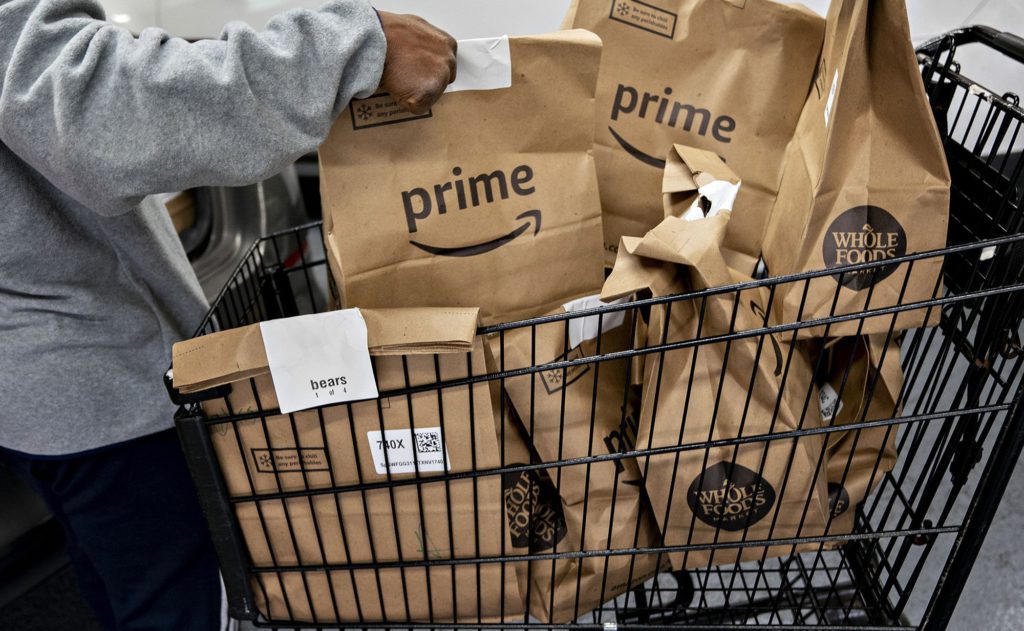
Meanwhile, major grocers and mass retailers have invested heavily in e-commerce. Kroger Co. is building food distribution centers that will rely on robots. Walmart Inc. expanded a service to deliver groceries to customers’ refrigerators. Amazon.com Inc., which jump-started the growth in e-grocery with its purchase of Whole Foods Market in 2017, has a similar offering that drops off orders in a home’s garage. And like many chains, Target Corp. quickly bolstered its curbside pickup during the pandemic. 

But as competition has intensified, with supermarkets creating their own e-commerce sites and food-delivery giants DoorDash Inc. and Uber Inc. also jumping into the expanding category, industry bellwether Instacart saw a major investor slash its valuation in July. Instacart declined to comment. 

For many consumers, the competition is a boon: More products and ways to get them, and sometimes more discounts and freebies, too. Even without the promotions, though, the convenience of online grocery shopping is proving to be worth the higher price, even if name-brand peanut butter isn’t. “Behaviors are stabilizing,” Bishop said, and buying groceries online is now an “embedded, new routine for a sizable group.”

More stories like this are available on bloomberg.com

©2022 Bloomberg L.P.

Tether’s Second Quarter Lays Bare Impact of Terra Collapse

(Bloomberg) — Tether Holdings Ltd.’s total assets dropped by almost 20% in the second quarter, a report showed, demonstrating the impact of increased redemptions on the stablecoin operator’s cryptocurrency in circulation.

The stablecoin operator had assets totaling at least $66.4 billion as of June 30, according to a so-called assurance issued by the accounting firm BDO Italia on Friday. Tether’s total liabilities amounted to $66.22 billion, of which $66.2 billion relates to the digital tokens that the company has issued.

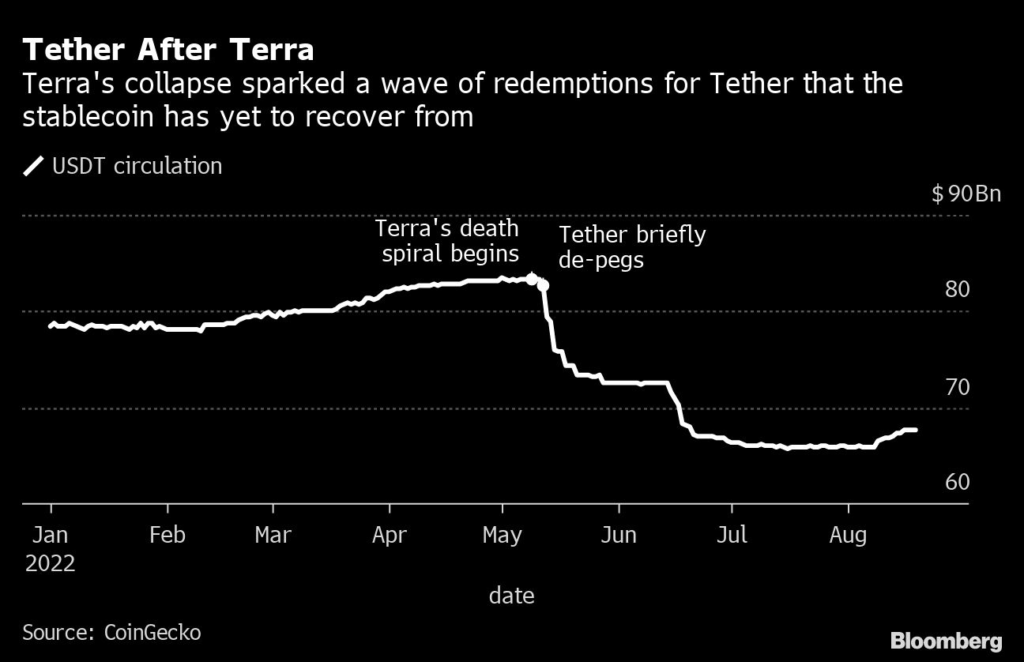
That compared to assets of $82.4 billion in March, two months before the collapse of algorithmic stablecoin TerraUSD sent the crypto market reeling. During the second quarter Tether experienced its own brief de-peg from the dollar, causing redemptions against its USDT token to spike.  

USDT, the world’s most traded cryptoasset with a total circulation of $67.7 billion on Friday, aims to maintain a one-to-one redemption with the US dollar by relying a reserve of cash and cash-equivalents. The quality of assets used by Tether for that reserve have previously been called into question, and regulators globally have turned the spotlight onto stablecoin issuers over a perceived lack of transparency.

Crypto Rules Crackdown Looms for $150 Billion Stablecoin Market

In the reserves backing its token, Tether reported $28.9 billion in US Treasury bills, a common asset adopted by stablecoins to provide liquidity with an average maturity of less than 60 days. It held $8.4 billion in longer-dated commercial paper as of the end of June, though an update provided by Tether on Thursday said it had now reduced that figure to $3.7 billion. 

The stablecoin issuer said it plans to have offloaded all of its commercial paper by early November, having reduced that figure by 58% during the quarter. As of June 30, around $49.8 million in paper was due to expire between September and December. A further $6.8 billion in assets were held in money-market funds, it added, while $5.5 billion was allocated under “other investments” including cash and bank deposits.

Regulator spotlight

Tether said on Thursday that it began working with BDO as its accounting partner last month, separating from Cayman Islands-based MHA Cayman.

The firm and its affiliated companies began filing quarterly reports to New York on their activities in February 2021, as part of a settlement deal over allegations that it lied about its holdings in prior years. Tether also committed to reducing its holdings of commercial paper, a more controversial asset for liquidity redemption in the eyes of regulators following a 2020 meltdown in the paper market.

After more recent updates on the maturity of its paper holdings raised eyebrows, Tether’s Chief Technology Officer Paolo Ardoino told Bloomberg that the issuer had been re-buying some commercial paper as it expired. It stopped the practice in mid-May, around the time that USDT briefly de-pegged from the dollar and kickstarted a wave of redemptions that knocked around $16 billion off the token’s total circulation.

The upcoming US Stablecoin Bill is expected to set out restrictions on providers buying commercial paper, allow the Federal Reserve to establish a licensing regime for non-bank stablecoin issuers and mandate that they keep 100% reserves. Other regions are considering similar legislation, including in the UK, Japan and Singapore.

An Aug. 8 report by Galaxy Digital highlighted the lack of real-time visibility into Tether’s reserves as an issue for market participants, noting that end-of-period reporting creates “opportunities for Tether to hold riskier assets that can then be replaced with safer assets closer to the end of each quarter”. Tether said on Thursday that it planned to transition toward monthly reports in time, a schedule already adopted by rivals like Circle and Paxos.

Digital tokens

In its first-quarter assurance, Tether said it had $5 billion in its “other investments” bracket, which at the time was specified as including digital token investments. Monsur Hussain, an analyst at Fitch Ratings, said the presence of those assets were a concern because it is not known what types of digital tokens are included in those holdings.

“That’s quite a large sum in digital tokens, and we’ve all been watching the market spiral down,” Hussain said in a July interview. During the second quarter alone, the total value of the cryptoasset market fell almost 60% from $2.2 trillion to $892 billion, according to data from CoinMarketCap. 

“But maybe they’ve been conservative, and they’ve invested mostly in stablecoins from competitors, perhaps USDC, PAX or Binance,” Hussain added. “That might be why you might not see a significant diminishing in value of the digital token bucket.”

More stories like this are available on bloomberg.com

©2022 Bloomberg L.P.

GM Reinstates Dividend, Share Buybacks After Two-Year Hiatus

(Bloomberg) — General Motors Co. is reinstating its dividend — at a sharply reduced level — and resuming share buybacks more than two years after they were suspended to preserve cash in the early days of the pandemic.

The Detroit automaker will pay a quarterly dividend of 9 cents a share beginning Sept. 15, according to a statement Friday. GM had halted its 38-cent payout in April 2020. The company is also restarting its buyback program, which will be expanded to $5 billion from the $3.3 billion remaining under the prior plan.

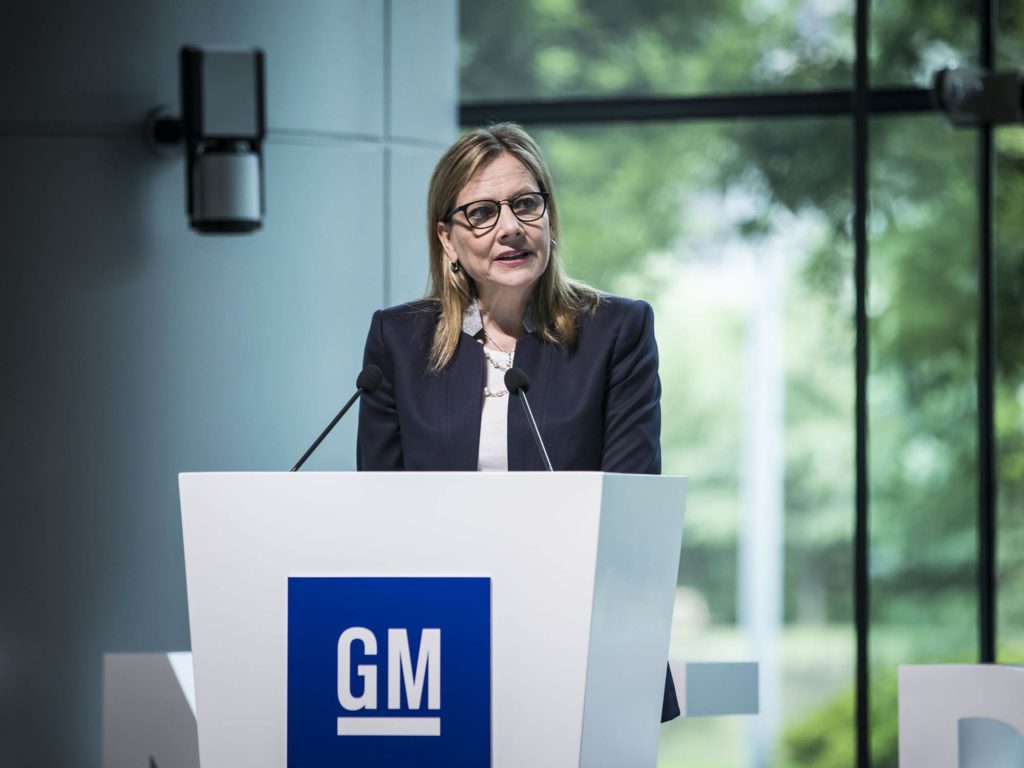
The decision was made in part because of momentum GM is seeing in other efforts, including electric-vehicle development and battery manufacturing, Chief Executive Officer Mary Barra said in the statement. “Progress on these key strategic initiatives has improved our visibility and strengthened confidence in our capacity to fund growth while also returning capital to shareholders.”

GM’s shareholder-pleasing effort reflects Barra’s confidence the company can fund this give-back while still being committed to spending $35 billion on more than 30 plug-in vehicles by 2025 and four EV battery plants.

The shares rose 3.2% at 9:35 a.m. in New York.

The moves come amid a tough year for GM’s stock, which tumbled 34% through Thursday’s close as the semiconductor shortage upended production and pressured sales. Rival Ford Motor Co., meanwhile, has grabbed the spotlight in the electric vehicle race with the first electric pickup truck. Ford reinstated its dividend in late 2021.

Given the rout in GM shares this year, the company needed to give something to shareholders, but would have been hard pressed to go back to a peak dividend that paid out $3.1 billion annually, said Bloomberg Intelligence analyst Joel Levington. The reinstated payout comes to about $525 million.

Below Forecast

The dividend was short of a Bloomberg forecast, which had predicted a quarterly distribution of 19 cents. By taking a more measured approach, the company can preserve cash in case the US falls into a recession and because the rollout of self-driving cars for GM’s Cruise unit will require more capital.

“They are trying to appease shareholders,” Levington said in an interview. But with additional capital needs on the horizon, “that’s not really the time to put in a heavy fixed cash payment.”

GM last month missed quarterly earnings expectations, dragging down shares even as Barra said the company would hit this year’s adjusted profit target of $6.50 to $7.50 a share. Investors see semiconductor issues as an ongoing risk, along with inflation and the risk of a recession.

(Updates with share trading in fifth paragraph)

More stories like this are available on bloomberg.com

©2022 Bloomberg L.P.

Selfies From Kilimanjaro Seen Boosting Tanzania Tourist Arrivals

(Bloomberg) — Tanzania has installed high-speed internet on Mt. Kilimanjaro this week, part of a plan to lure tourists and triple arrivals to the East African nation in two years.

The new connectivity on Africa’s highest mountain will initially benefit as many as 1,000 climbers on various stages of the trek every day, according to the East African nation’s Information, Communication, and Information Technology Minister Nape Nnauye. Coverage will reach the Kilimanjaro summit by the end of the year and thousands more mountaineers will be able to log-in, according to Nnauye. 

The facility introduced by state-owned Tanzania Telecommunications Corp. will allow “tourists to access live streaming services, make calls and post their mountain-climbing adventures on social media platforms, thus helping to promote our tourism sector,” Nnauye said. Until this week, tourists depended on satellite phones for communication, which made the trek more costly and some visitors felt unsafe, according to local tour guides.

Tourist arrivals in Tanzania, home of the Serengeti nature reserve and pristine beaches of Zanzibar, are just recovering after dropping to less than a third of the 1.5 million before the pandemic. The number of arrivals jumped 62.7% to 742,133 in the seven months through July, compared with a year earlier, according to data from the national statistics office.

Projects such as connecting Kilimanjaro’s peaks are part of a plan, not only to hasten Tanzania’s tourism rebound, but to ultimately increase arrivals to 5 million annually by 2025. President Samia Suluhu Hassan was featured on PBS’s Royal Tour program as part of a strategy to promote Tanzanian destinations.

At any given time, there are as many as 6,000 climbers and trekkers on Mt. Kilimanjaro, a dormant volcano, and better connectivity is likely to increase the number, according to the government.

Revenue collections from the mountain are poised to increase, according to Nnauye, and further boost the importance of tourism which already accounts for most of the nation’s foreign-currency earnings after gold exports.

More stories like this are available on bloomberg.com

©2022 Bloomberg L.P.

Africa’s Biggest Lender Looking to Bolster Business Banking Unit

(Bloomberg) — Standard Bank Group Ltd., the market leader in the home loans segment, says it will use its heft to grow its business banking offering, as it seeks to fight off rising competition in the space.

The continent’s biggest lender by assets will look to capitalize on its scale and geographical footprint to drive growth in the division, Chief Executive Officer Sim Tshabalala said during an investor briefing Friday. That includes cross selling a variety financial solutions, including insurance and transactional accounts.

“We’re very well able to take any combination of established competitors and digital insurgents and take them on head on,” he said.

The sector is growing increasingly crowded, with South Africa’s first digital bank TymeBank announcing on Aug. 3 that it is buying small business-focused Retail Capital. African Bank announced in May that it would buy Grindrod Bank. 

Tshabalala also said the lender is heightening its focus on climate change, and expects its green loan book to grow to at least 250 billion rand ($15 billion) by the end of 2026, up from an expected 50 billion rand at the end of this year.

“We have started work on the complex process of quantifying the emissions that we face,” Tshabalala says, adding that the timetable would be announced in “due course.”

Earlier the bank said net income rose 37% in the first six months of the year, helped by rising interest rates and increased client activity.

Standard Bank dropped as much as 2.6%, before paring gains to 2.1% by 2:55 p.m. in Johannesburg. Peers on the FTSE/JSE Africa Bank index slipped 2%, the biggest drop in more than two weeks.

More stories like this are available on bloomberg.com

©2022 Bloomberg L.P.

Two SAP Staffers Say HR Mishandled Their Work-Event Rape Claims

(Bloomberg) — Two women who worked at SAP SE filed reports to the software company’s human resources department within 18 months of each other saying that they were raped by colleagues while attending after-work events on business trips.

The incidents — one in Las Vegas and the other near Dallas — provide an unsettling look into how some women at SAP say they struggled to convince their own HR team that they didn’t consent to sexual advances. For this story, Bloomberg spoke to the women, as well as seven other current and former employees who say they experienced sexual harassment or assault at company events, or witnessed it. All asked not to be identified because they fear reprisals or because they signed non-disclosure agreements. Bloomberg also reviewed internal emails and documents that detail how SAP, one of the world’s largest tech companies, responded to these complaints.

In the two instances of alleged rape, dating back to 2018, the accused attackers said they had sexual relations with the victims and that each woman appeared to be very drunk or acting abnormally, according to summaries of SAP’s internal investigations, which were seen by Bloomberg. The women said they believe they were drugged, and both filed reports with the police. SAP concluded that the men showed poor judgment and that the employees shouldn’t work together in the future, the SAP investigation showed.

“We take all allegations of misconduct and criminal behavior extraordinarily seriously. Ensuring the safety and well-being of our employees underlies all our decisions,” Joellen Perry, an SAP spokeswoman, said in an emailed statement in response to questions for this story. The company encouraged the women to contact the police, and “we fully supported their independent investigations as well as opening our own internal enquiries. Law enforcement ultimately did not file any charges in either case. Together with our own findings, this led us to take the actions we deemed appropriate for the accused employees.

“The SAP of 2022 is, moreover, different than the SAP of the past,” Perry said. The company said it has recently commissioned an external review of its policies.

The women’s experiences were at the extreme end of a culture that current and former employees of SAP said allowed sexual harassment to fester. The company often hosted networking events that had a “boys’ club” climate, involving heavy drinking, which was used as an excuse for inappropriate and unwelcome advances from senior male managers, according to the current and former employees. Several women have said they were groped, followed to hotel rooms or forced to put up with lewd comments and other inappropriate behavior from men they worked with.

The company’s human resources department suffered from a widely held perception that it effectively worked against women who complained, moving them on to other departments or encouraging them to quit while the men involved faced few or no repercussions, Bloomberg has previously reported after speaking to more than a dozen of those women, whose jobs spanned three continents, or people with knowledge of the issues. SAP said previously that it has a zero-tolerance policy for harassment and unlawful discrimination and has severe consequences for employees found in violation.

Read More: SAP Wrestles With Concerns Over Women’s Treatment, Senior Exits

SAP is one of the world’s largest enterprise software companies, focusing on selling products covering a range of uses, from filing expenses to helping store and sift through data. With more than 100,000 employees worldwide, its rivals include US firms such as Salesforce Inc. and Oracle Corp.

Corporate events, both internal and for clients, play a key part in how these companies sell software to potential customers. SAP — which sponsors a number of sports teams and owns the naming rights to the SAP Center in San Jose, California — has regularly held events at venues including Caesars Palace in Las Vegas and hired Lady Gaga to entertain clients in 2019. Enthusiastic blogs have been written by external attendees of SAP Sapphire, a flagship conference that has attracted more than 20,000 attendees in some years, listing where the best happy hours are.

Some other enterprise software companies are more circumspect about the use of alcohol at company events. Salesforce Chief Executive Officer Marc Benioff banned alcohol from Salesforce’s offices in 2017, claiming it was unfair to those who chose not to drink.

At SAP, these events regularly became the backdrop for sexual advances from colleagues and clients, current and former employees told Bloomberg. Women also felt pressure to attend alcohol-fueled mixers, even though they knew the risk of inappropriate behavior by other attendees, lest they miss out on valuable networking opportunities.

SAP’s employee manual for company-sponsored events attempts to limit alcohol intake — stipulating that drinks can’t be self-served and that food and non-alcoholic beverages must also be offered. Alcohol can generally only be offered for two hours, unless a senior executive says otherwise, and employees who appear impaired are not to be served, the manual states.

It also says “all employees who choose to drink alcoholic beverages at company functions are expected to behave in accordance with usual business standards and all company policies at all times.”

Like many other companies, SAP allows what it calls “close personal relationships” among employees — provided there is no conflict of interest. Its code of conduct states that it aims to create an environment that is free from “unwelcome sexual advances and requests for sexual favors.”

The two women who said they were raped while on work trips at SAP — in 2018 and 2019 — had strikingly similar stories. They’d been out for drinks with colleagues after a work event. They said that they believed they were drugged, and that a co-worker followed them into their hotel room and had sex with them when they were incapacitated and couldn’t consent. One woman woke up with her clothes torn, according to a police report, and said she had cuts and bruises from the encounter.

The two women, unknown to each other, both filed complaints to HR, which interviewed the men involved. The men said they had sexual encounters with the women, and described them as drunk or not themselves, according to SAP’s own investigations. SAP failed to conclude that the encounters weren’t consensual, just that they’d violated the company’s “respect” policy, according to the reports.

The incidents took place within SAP’s Ariba unit, a business the company bought for $4.3 billion in 2012 that makes software that helps corporate clients handle payments and deal with suppliers. At the time, the company was making a belated transition to cloud software after competitors began winning customers. Ariba was a key part of that strategy and, because of that, was allowed to operate largely independently, people familiar with the company at the time said. That allowed cultural problems with harassment to continue, they said.

Within SAP, both alleged sexual assaults were known by at least some members of senior management, people with knowledge of the matter said. One of the women said she was compelled to sign an NDA in order to recoup some of her lost pay after a protracted battle with the company ended in an arbitration session over the alleged assault.

The other woman refused to sign an NDA, which would have included a settlement of $10,000, and emailed her version of events to Jennifer Morgan, a senior US executive who became co-CEO in 2019 only to leave less than a year later. The woman spoke to Morgan on the phone on her last day, and Morgan expressed remorse for what had happened, according to the woman and another person with knowledge of the conversation, who wasn’t authorized to speak publicly about it.

The alleged victims’ managers reported both incidents to HR. Bloomberg previously reported that some employees at SAP said that they are reluctant to complain to HR for fear of reprisals or because they doubt HR will act.

“Derelict in their duties”

Both women filed reports to the police, who investigated but didn’t pursue charges, even after one woman submitted to a forensic examination where her bruises and cuts were photographed. In one instance, a detective in the Plano, Texas, police department maintained that he couldn’t disprove the alleged attacker’s story — that the encounter had been consensual — and that the police therefore wouldn’t pursue a case, according to a person familiar with the investigation.

A Plano police public information officer said that the department investigated the incident but was “unable to develop sufficient probable cause,” and declined to comment further. A PIO for the Las Vegas Metropolitan Police Department said that after their investigation, the findings were submitted to the Clark County District Attorney’s office for review. Clark County never prosecuted. The DA’s office didn’t respond to requests for comment that were left Tuesday.

In the US, every state has different legislation surrounding sexual consent. In Texas, a person can’t consent if they’re unconscious or unable to resist. In Nevada, the attacker is deemed to act without consent if the person knows or should know the other person is mentally or physically incapable of resisting.

For every 1,000 sexual assaults in the US, just 310 are reported to police and only 50 of those will lead to an arrest, according to statistics from the Rape, Abuse & Incest National Network. About half of those arrests lead to a conviction, the group said.

HR departments have a duty to make sure that they minimize risk factors for sexual harassment and assault, like a culture of heavy drinking at work events, said Debra Katz, a partner at Katz, Marshall & Banks LLP in Washington.  

“This seems pretty derelict in their duties on the part of the HR department saying it’s, ‘he said, she said’,” said Katz, who specializes in sexual harassment and assault complaints. Katz was not involved in the SAP instances. SAP’s current head of HR, Sabine Bendiek, joined the company in 2021, after these alleged assaults occurred.

The alleged Texas incident occurred in May 2019 when the woman was in town visiting a customer. Her team took the client out for dinner, and then a group staying in the same Marriott went out for drinks. She left a drink unattended while she went to the bathroom and said she began to lose control soon after. Her last clear memory was getting in the elevator to go back to her room after a bartender refused to serve her. This account is based on an interview with the woman as well as the police incident report seen by Bloomberg.

In the report, the detective said that when the woman woke up the next morning, she was naked, her bra clasp was broken, and her underwear was “shredded.” She found her colleague’s credit card on the bathroom floor, and later had a flashback to the night before where her co-worker was on top of her. The police report, filed a few days later following the Memorial Day holiday, described her as visibly shaken and crying.

SAP’s human resources team interviewed the man involved, who’d claimed that she’d invited him up to her room to have another drink after they were thrown out of the bar, and once there, aggressively kissed him, according to a copy of the internal SAP report seen by Bloomberg.

SAP said its investigation found that the male employee “exhibited poor judgment when deciding to engage in sexual relations” with the woman and that he’d said he believed she’d had too much to drink. But the company’s only proposal was to limit her interaction with her alleged attacker in the future and recommend that she contact security next time she traveled to an event, the letter showed.

When the woman replied to SAP’s HR representative that she’s a lesbian and was in a committed relationship at the time, SAP’s HR manager declined to take either factor into account, she said.  

At an Ariba Live conference in Las Vegas in 2018, the other woman said she woke up in the early hours of the morning in her hotel room to find a co-worker having sex with her. She said her last memory from the night before was being handed a drink from her alleged attacker.

In the following investigation by SAP, the alleged attacker said they engaged in sexual relations, and that she didn’t appear to be “acting normal,” according to documents seen by Bloomberg. Despite concluding that his behavior was “contrary to SAP’s Respect Policy in the Employee Manual,” SAP closed its investigation, and promised the woman that it would limit his interaction with her, according to the company’s final report. SAP also encouraged her to continue working with the police if she wished to pursue the case.

Both women eventually left SAP. Of the men, one remains at SAP. The other left in early 2022 to become a senior executive at a US-based enterprise-software company. Neither of the men responded to requests for comment.

(Updates to add that SAP encouraged the women to speak to the police in the fourth paragraph)

More stories like this are available on bloomberg.com

©2022 Bloomberg L.P.

States Are Bracing for Social Media-Enabled Election Violence

(Bloomberg) — State elections officials say they’re seeing an uptick in a new kind of social media-fueled danger to US midterms: online anger that threatens to spill over into real-world violence.

In Arizona, online conspiracy theories resulted in so many harassing phone calls to the secretary of state’s office, employees had to take a break from answering. In Michigan, officials have seen such a flood of violent rhetoric online that this week they sent letters to tech company CEOs pleading with them to do more to control their platforms. In Maine, a state where Election Day is associated with patriotic pie-eating, a poll worker last year received a credible death threat on Facebook.

Bloomberg reached out to all 50 secretaries of state and spoke with representatives of 12 offices, from Texas to Hawaii. All of those who commented said they’ve seen an increase in online suspicion about the electoral process, which in many states has led to threats for staff or poll workers and resignations of these crucial employees.

Narratives that drove the Jan. 6, 2021, insurrection at the US Capitol, such as false claims of voter fraud, have lingered online. The chatter escalated most during primaries in states that had close contests in 2020 or where former US President Donald Trump backed candidates for office. Social media platforms have ramped up their election-related security measures, adding channels for state governments to report posts more directly. But rules on misinformation and harassing content are applied inconsistently, if at all, the officials said.

“Things that we might see as directly threatening, the social media company might not,” said Katie Hobbs, Arizona’s secretary of state and Democratic candidate for governor, who regularly receives harassing posts online, as well as calls to her office phone.

A recent voicemail reviewed by Bloomberg falsely claimed Hobbs cheated through the primary, and suggested she be “hunted” for her “betrayal.” Other missives threaten her family or call her a traitor. People are so convinced of online election conspiracies, Hobbs said, that they “will see the need to take action in their own hands. And that is a scary place to be.”

Overall in the US, one in six election officials have experienced threats because of their job, according to a March survey of local election workers by the Brennan Center for Justice. In some states, it’s worse: 77% of Oregon election workers said they have experienced harassment, threats or intimidation while doing their jobs in the past five years, according to a January survey by the secretary of state office. One anonymous respondent said they and their colleagues deactivated their personal social media accounts, after a coworker was targeted with vulgar attacks on Facebook.

In Tarrant County, Texas, the elections administrator received social media threats to hunt him down, hang him and end his bloodline following the 2020 election, according to an Aug. 11 election disinformation report from the U.S. House Committee on Oversight and Reform. In Gillespie County, Texas, the elections administrator and her entire three-person staff resigned effective Aug. 16 due to threats she was receiving, including on social media.

During primary elections, which have taken place in all but seven states, multiple state officials said they were working to proactively educate citizens about the electoral process via their social media accounts, to try to avoid online anger bubbling into real-world threats. In Texas, for instance, the secretary of state’s office invites the public and media to a demonstration of how voting machines work, explaining clearly that they aren’t connected to the internet and can’t be easily tampered with. But the reassurances only go so far.

“These days, there are people calling about whether their vote is safe, and you go through all the details of the process and they don’t believe you,” said Sam Taylor, the assistant secretary of state for communications in Texas. “They just want to be angry at someone and point their finger at someone and accuse someone, saying they’re rigging the election.”

Facebook owner Meta Platforms Inc. explained that the company divides the country into five regions and staffs state- and local-level representatives to each region. Since 2018, the state and local government outreach team has operated a 24/7 email line where states can directly report content they think violates standards. In an interview with Bloomberg, a Facebook representative said that receiving context from local officials can be helpful, but everything submitted is reviewed against the same set of standards, and then decreed either in violation of the social network’s Community Guidelines — or not.

YouTube said government officials can join a “trusted flagger” program, to bring misleading content to reviewers’ attention more directly. In the first three months of the year, the Alphabet Inc.-owned video platform removed over 60,000 videos for promotion of violence and violent extremism. Twitter Inc. said instead of addressing each and every instance of misinformation on its site, it will aim to educate its users with an information alert at the top of users’ feeds, explaining the kinds of falsehoods they may encounter during election time.

The decision-making process is not transparent enough, several of the state officials said. In Michigan, the frustration led to sending formal letters, signed by the secretary of state and attorney general, asking for more open communication with the platforms. They mailed paper copies of the letters to heads of Facebook, Instagram, Twitter, TikTok and YouTube at their corporate addresses; a shot in the dark, but one that was necessary because the office didn’t have direct contacts at any platform besides Facebook, a spokesperson said.

“We would like an opportunity to meet with you or your designee,” the letters ask. “We are concerned by the unprecedented speed with which election lies and falsehoods travel and take root due to social media platforms such as yours.”

It adds: “In far less time than our offices can review and disprove them, the lies are eroding faith in America’s elections and weakening our democracy.”

Taylor, in Texas, said it’s particularly frustrating when the state reports problematic content to the social media companies and waits for a response, only to hear, ultimately, that it’s not a violation of their policies.

In May, for instance, a Twitter user replied to the official Texas secretary of state’s account falsely claiming that the office obstructs poll watchers, calling the legal director a “traitor” and saying she should be fired. Taylor said the tweet was misleading and an apparent attempt to target the agency’s legal director for explaining the correct law on poll watchers in Texas elections. Taylor’s multiple reports of the tweet went nowhere.

“On one hand that is free speech. You can call someone a traitor or treasonous,” Taylor said. “But these days, calling an election official treasonous usually invokes more violent action or at least calls people to get organized against that person. And more often than not, those things go viral.”

More stories like this are available on bloomberg.com

©2022 Bloomberg L.P.
Oscars Producer Will Packer Finds Fixing Hollywood a Never-Ending Job

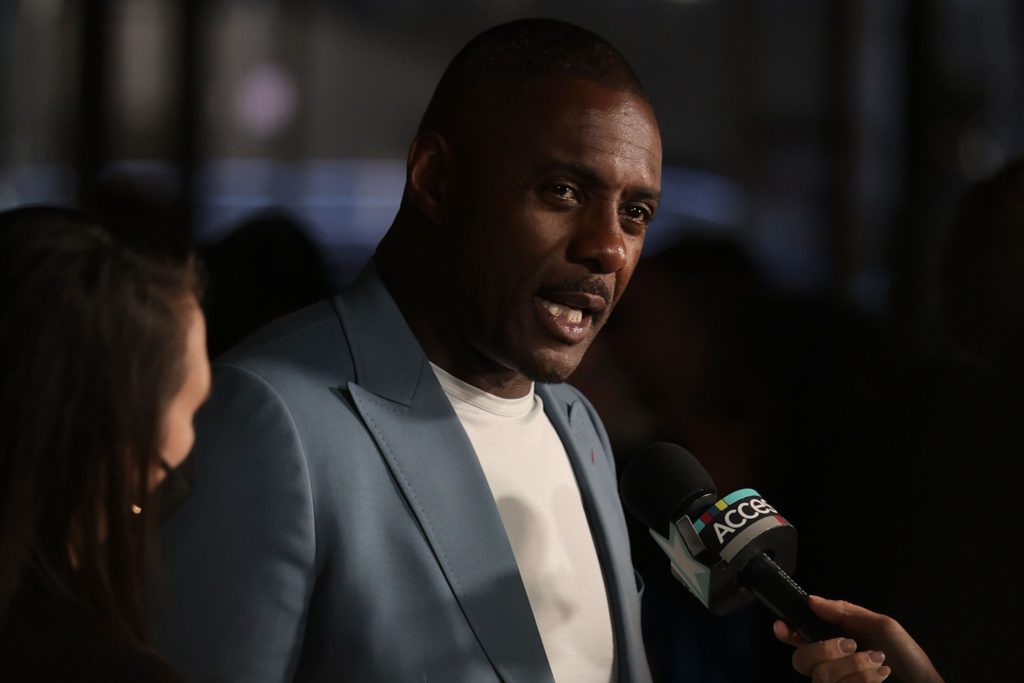
(Bloomberg) — In “Beast,” the Universal Pictures thriller released Friday, Idris Elba plays a father locked in a battle with a rogue lion in South Africa. Every time he thinks he’s won, his feline foe comes roaring back. 

Will Packer, the movie’s producer, can relate. The 48-year-old is one of the industry’s more prolific filmmakers. Among his hits: the two “Ride Along” pictures, starring Ice Cube and Kevin Hart, which took in more than $300 million at the box office, and 2017’s “Girls Trip,” featuring Regina Hall and Tiffany Haddish. The top-grossing comedy that year, the film was the first by a Black female screenwriter to take in more than $100 million.

But each triumph for diversity in Hollywood seems to come with setbacks as well. Case in point, the Academy Awards in March, where Packer led the first all-Black production team. People of color captured two of the top acting awards, a deaf person snagged best supporting actor and a woman won best director. What was supposed to be an epic celebration of inclusion in entertainment instead will be remembered as the night best actor winner Will Smith slapped presenter Chris Rock on stage. 

“The dream would’ve been that there was this seismic shift within the industry around diversity,” Packer said in a recent interview, referring to the last two years. “It hasn’t been seismic, but there has been a continued progressive nature of the way Hollywood has looked at who’s invited in to the club.”

Packer couldn’t have predicted it’d be this way when his phone started ringing off the hook in 2020. George Floyd, an unarmed Black man in Minnesota, had been killed by the police. For weeks, the Atlanta-based producer said, he felt like he heard from every white person he knew.

That made Packer hopeful for change in a way he hadn’t been before. Growing up as a math whiz in Florida, he followed his parents’ advice and didn’t get defensive about often being the only Black kid in class. He kept that in mind as he scratched his way into the upper echelons of Hollywood, allowing the work and the cash to speak for itself. If white people finally wanted his perspective, however, he’d give it.

As of 2020, 93% of senior managers at the 11 major and “mini-major” film studios were white, according to a report from the University of California at Los Angeles. Nonwhite customers accounted for 45% of frequent moviegoers, while making up 39% of the US population in 2019. They were underrepresented on and off screen. 

A self-described “outsider” living in Georgia, Packer had by then produced films that sold more than $1 billion worth of tickets. He did so by betting on the star potential of fellow people of color like Elba, Haddish and Hart.

“Everyone loves to see a story that they can relate to in some way,” Elba said by email. “Will is just one of the pioneers of taking the African-American culture, as pure as it can be, and amplifying it to the silver screen.” 

Packer had been asked to produce the Oscars in the past and declined. The 2022 ceremony, which followed Floyd’s killing and the subsequent protests, was the one he accepted. While creating the show was much harder than he thought, he realized the most important parts of his vision. 

The show opened full of promise and energy, with Beyoncé singing an ode to Venus and Serena Williams on a tennis court in Compton, California. Ariana DeBose, who won best supporting actress for her role in “West Side Story,” expressed pride in her speech that she did so as a queer Afro-Latina woman. “Coda” broke ground for the deaf, winning best picture and best supporting actor for Troy Kotsur.

The ratings for the program reversed a long-running decline, with 16.6 million people tuning in. They were up more than 50% from a year earlier, and that was before what many have called “the slap heard around the world.”

Immediately after the incident the backstage press room was filled the sound of clacking keyboards as reporters rewrote their stories to focus on Smith. Questlove, who collected the award for best documentary feature for “Summer of Soul” from Rock moments after the incident, went in front of the journalists to discuss his win and realized with a frown their focus was elsewhere. 

Packer responds graciously to every question about the slap, but he’s not happy. “Quest got robbed. Ariana got robbed. Troy got robbed. I got robbed,” he said.

Smith, who was banned from attending the Oscars for ten years, apologized to the Academy of Motion Picture Arts and Sciences and to Rock.

If there’s one positive note Packer said he can identify, it’s that people are making fewer sweeping generalizations about others. In his nearly 30-year career, Packer said he often felt his own actions affected every other aspiring Black filmmaker. He no longer feels that way.  

“I think that people are being judged more on their individual successes, failures, morals,” he said. “And that’s a good thing.”

Packer is releasing “Beast” with Universal, Comcast Corp.’s movie division, as a part of a longstanding partnership. The studio is run by Donna Langley, making her one of Hollywood’s most prominent women of color. The next Langley needs to be fostered from a young age, he said.

Black kids miss out on early educational opportunities, Packer said, leaving companies with fewer qualified candidates of color years later. Simply making “diverse” hires and putting those people in jobs for which they haven’t been prepared will only make things worse, he said.

“Beast” focuses on a doctor who takes his young daughters to South Africa after the death of their mother. It’s expected to take in a relatively light $10 million domestically in its opening weekend, according to an estimate from Box Office Pro. It may not even finish the weekend in first place, depending on the success of “Dragon Ball Super: Super Hero,” a computer-generated anime film from Japan.

“It’s been a really good summer for moviegoing, but the movies that have really broken out have been big IP, big franchises,” he said. “We’re trying to do an original concept movie and feel great about what we have in the marketplace.”

Packer has many other projects in the works. He’s filming a movie, “Praise This,” about youth choirs gathering for a competition, and is releasing three TV series. He’s also producing podcasts, including a second season of “Lower Bottoms,” which focuses on a gentrifying neighborhood in West Oakland, California. And he’s writing a book with his perspective on business, which he hopes will be motivational. 

Packer’s also up for an Emmy for the Oscars ceremony, competing against the Super Bowl halftime show and the Grammys. He’ll find out if he won on Sept. 12.

“I always look at the bright side,” he said. “I’m the most interesting dinner conversationalist at any dinner party. I’m telling you, I got the best stories.”

More stories like this are available on bloomberg.com

©2022 Bloomberg L.P.
War-Hit Ukraine Atomic Plant Poses Risks to Europe’s Energy Grid

(Bloomberg) — Diplomats concerned about an atomic accident at a war-damaged nuclear power plant in Ukraine should also turn their attention to a larger and looming danger, according to engineers who study critical infrastructure.

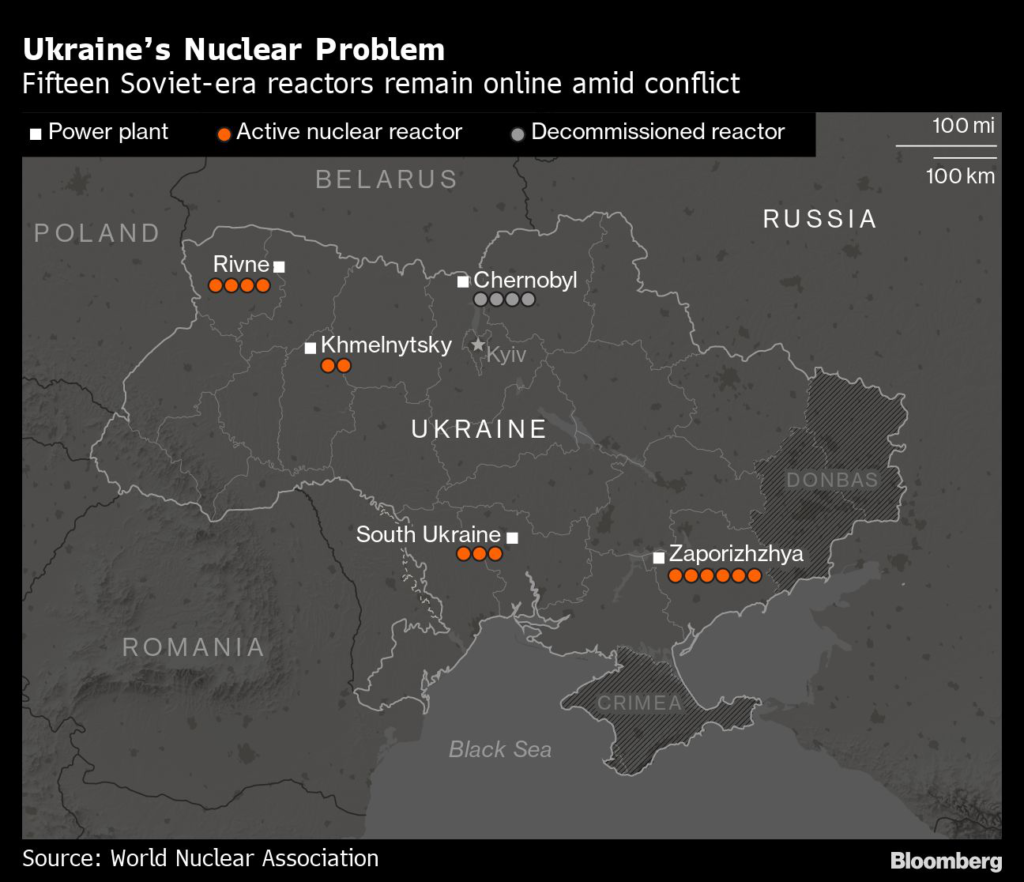
Already only two of six reactors at the Zaporizhzhia Nuclear Power Plant are operating, potentially leaving Ukraine’s electricity grid facing collapse this winter, with the crisis spilling into neighboring European Union energy markets. 

Europe’s biggest atomic-energy station, Zaporizhzhia has in recent weeks been hit by shelling, with Ukraine and Russia blaming each other. Explosions wrecked infrastructure and cables critical for cooling atomic reactions and transmitting power.

United Nations Secretary General Antonio Guterres called for a demilitarized zone around the plant during a Thursday press briefing in Lviv, Ukraine, saying “any potential damage to Zaporizhzhia is suicide.” US Secretary of State Antony Blinken has demanded an end to all military operations at or near Ukraine’s nuclear facilities and for Moscow to return full control to Kyiv.

The attacks have not only increased the possibility of a nuclear-safety event, according to international monitors. They’ve prompted warnings that a cascading power-grid failure could imperil Ukrainians when temperatures plummet. Because Ukraine’s electricity network has been connected to Europe’s since March, an outage would have the potential to move beyond the country’s borders. 

Entso-e, the European association for the cooperation of transmission system operators, declined to comment in an email, citing “the sensitive and evolving nature of the situation.”

‘Uncharted Territory’

Zaporizhzhia’s designed to cover a fifth of Ukraine’s electricity demand and any abrupt disconnection would ripple through transmission networks that need to precisely match supply with demand in order remain stable. With Russian forces also controlling some Ukrainian hydropower and coal plants, as well as mounting war damage to cables and substations, grid operator Ukrenergo could struggle to keep the system in balance even though the war has lowered demand for electricity.

If that were to happen, “we’ll be in uncharted territory for both electricity grids and for societies,” said Thomas Popik, an engineer who has been working with Ukrainians to identify electricity-grid vulnerabilities exposed by Russia’s invasion. 

A grid failure could have huge impacts. Telecommunications, railways and other critical services would stop, potentially leading to new waves of refugees. Pressure would rise on Ukraine’s neighbors to export scarce power resources as their own populations struggle with record prices. Ukraine’s natural-gas pipelines may be forced off line without the electricity needed to control fuel flows to the EU. 

Russia’s seizure of Zaporizhzhia on March 4 thrust the world into an unprecedented crisis. Never before had a nuclear station been taken as a spoil of war, or forced to continue operating at gunpoint. 

Attacks on the plant have increased since the beginning of July, according to International Atomic Energy Agency reports filed by both Ukrainian and Russian diplomats. While the IAEA has criticized Russia’s reckless takeover of Zaporizhzhia, it so far hasn’t assigned responsibility for the attacks because it’s been unable to secure safe passage through the war zone.

Europe’s Other Energy Problem: Relying on Russian Nuclear Fuel

Occupying engineers have been laying plans to connect the facility to Russia’s power grid and charge Kyiv’s government for the electricity it generates. But Ukrenergo told Bloomberg that the plant is still delivering “electricity exclusively to the Ukrainian power system.”

Unlike coal- or gas-fired power plants, reactors require a constant flow of electricity for water pumps needed to cool fuel and prevent a meltdown. The Zaporizhzhia plant’s design and containment vessels make it highly unlikely an explosion like the one that wrecked Ukraine’s Chernobyl plant in 1986 could occur. But an accident similar to that at Fukushima in Japan just over a decade ago can’t be ruled out if the plant loses all electricity, according to Popik and Robert Kelley, an ex-IAEA safeguards director. 

At Fukushima, three reactors melted down after an earthquake and tsunami, causing hundreds of billions of dollars in damages, and will take decades to clean up. While radiation released led to few direct deaths, the accident forced more than 100,000 people to relocate, 3,691 of whom died prematurely of disaster-related causes. 

“It’s a high-level problem and the IAEA needs to deal with it,” said Artem Starosiek, the chief executive officer of Kyiv-based Molfar Ltd., an open-source intelligence organization keeping track of Russian personnel at the plant. 

Molfar investigators have identified more than a half dozen Russian personnel supervising Ukrainian technicians still running the reactors at Zaporizhzhia. They range from engineers, to radiation safety experts and thermo-dynamic specialists who work with steam turbines, according to documents seen by Bloomberg. 

Russia’s focus on the site has turned the invasion into an “electricity war,” said Kelley. A nuclear engineer and former Department of Energy official, he’s been studying satellite images of recent attacks that suggest partisans are trying to raise the cost of occupation by destroying power lines, forcing the reactors to shut down rather provide valuable electricity to Russia or occupied territories. 

Russia circulated a diplomatic note in Vienna on Wednesday that said attacks had damaged four of the plant’s seven power lines, pushing the reactors closer to a “nuclear disaster,” according to an official IAEA document. 

Still, “fears of a nuclear meltdown are a bit overblown. Zaporizhzhia can take a decent amount of abuse,” said Suriya Jayanti, a former State Department official who advised policy-makers on Ukraine energy supply. “What the shelling is doing is creating the potential for the disruption for electricity supply.” 

(Adds photograph.)

More stories like this are available on bloomberg.com

©2022 Bloomberg L.P.
Xiaomi Profit Misses Estimates on Smartphone Business Slump

(Bloomberg) — Xiaomi Corp.’s profit fell more than expected after the global smartphone slump wiped out growth at the Chinese mobile giant.

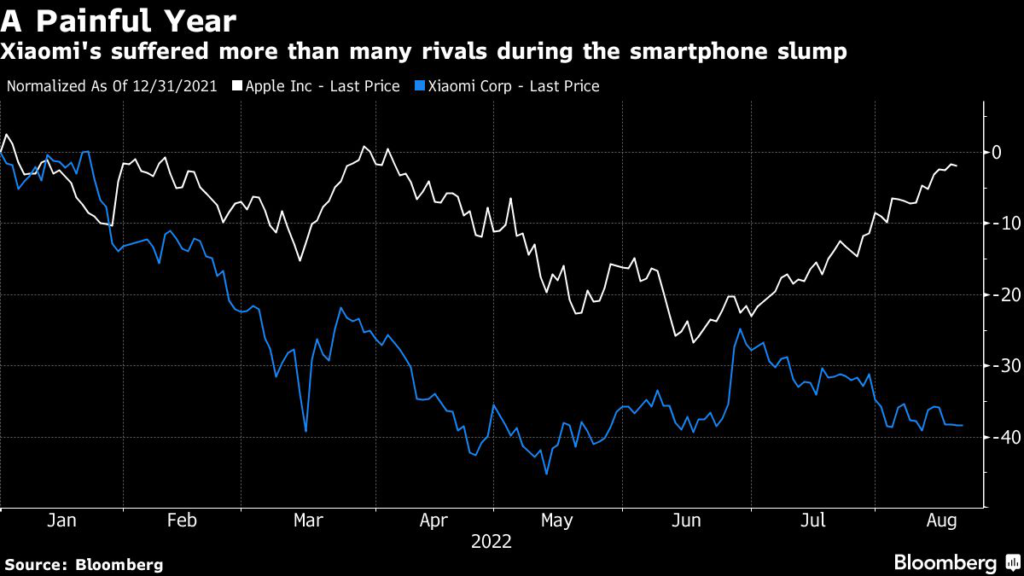
Net income fell 83% to 1.39 billion yuan ($204 million) in the three months ended June, versus estimates for 1.5 billion yuan. Revenue slid 20% to 70.2 billion yuan, compared with an average projection for about 70 billion yuan. 

Once China’s biggest smartphone brand, Xiaomi has ceded ground to local rival brands like Honor and Vivo, who’ve won over young and tech-savvy consumers with sleek designs and aggressive marketing. Xiaomi’s efforts to expand into the premium segment, where Apple Inc.’s iPhones maintain a strong position, have also progressed slowly.

Inflation, recession fears and the war in Ukraine have squeezed Xiaomi’s smartphone business. Its global device shipments tumbled by more than a fourth in the second quarter, the heaviest decline among the world’s top five vendors, IDC said. In China, shipments of Xiaomi devices plunged 22% in the June quarter, faster than the average market decline of 14.7%, according to research firm IDC.

India is also seeking to restrict Chinese smartphone makers from selling devices cheaper than $150, dealing a blow to brands including Xiaomi.

The reported policy change is yet to affect the company’s business in India, Xiaomi President Wang Xiang said in a call with the media Friday. “We are still shipping low-end phones in India,” he said, adding the company is in active contact with local authorities on various issues.

Read more: The World’s Biggest Smartphone Market Is In Trouble

What Bloomberg Intelligence Says

Xiaomi’s free cash flow could recover in 2022 and 2023, in our scenario, despite margin pressure from flagging smartphone demand. Inventory may decline from 2021’s record, which should help working capital. Cash flow may also get a boost from anticipated lower capital investment amid the market downturn. 

– Steven Tseng and Sean Chen, analysts

Click here for research.

Marketwide discounts offered during a major online sales promotion in the period also hurt Xiaomi’s profitability, Bloomberg Intelligence analysts Tseng and Nathan Naidu wrote in a note ahead of the earnings release.

Wang said he’s “lightly optimistic” about the smartphone business in the second half, as new products and holiday season propel sales. But he also warned uncertainties including inflation and Covid outbreaks in China could further dent demand.

Billionaire co-founder Lei Jun is on a mission to transform his 12-year-old company into an innovation-driven juggernaut that makes everything a family can use — from dishwashers to luggage and surveillance cameras. Its biggest endeavor is a $10 billion electric vehicle project led by Lei himself. But Xiaomi is having trouble getting approval from Chinese regulators, Bloomberg News reported in July. Lei said at a company event last week he’s still committed to the car project.

(Updates with president’s comments.)

More stories like this are available on bloomberg.com

©2022 Bloomberg L.P.

Close Bitnami banner
Bitnami