

Bloomberg

High-Flying Travel Startup Pollen Collapses, Leaving Trail of Complaints

(Bloomberg) — Customer complaints about travel startup Pollen poured in so quickly that staffers couldn’t keep up. Over the last year, it was forced to cancel dozens of its luxury events, many featuring A-list musicians at posh beachfront locales, blaming the omicron variant of Covid-19. Pollen resorted to a slapdash triage system to handle refund requests: a spreadsheet that prioritized people who complained the loudest on social media.

There was a lot to gripe about. A January extravaganza in Cancun featuring reggaeton superstar J Balvin was called off just days before it was due to begin. That same month, the Departure music festival in Playa del Carmen, Mexico, featuring top electronic music artists, was abruptly postponed by a day, and then canceled—after many guests had arrived. Other events were scrapped. Promised refunds went unpaid for months, if at all.

“How can you STILL have the audacity to run more events NOT paying previous cancelled events refunds!!?,” Pollen customer Zahra Ali wrote on Twitter. “Absolute Jokes. Robbing people it’s disgusting. Do NOT use this service people.” Many customers on social media—and employees in interviews—compared Pollen to the 2017 Fyre Festival, the posh Bahamas event that devolved into chaos after organizers failed to deliver promised food, lodging and entertainment.

Cancellations, along with other pressures, caught up with Pollen last week, when its London-based owner Streatteam Software Ltd. said it hired Kroll LLC to handle a breakup and sale of its disparate businesses. It cited Covid-19 restrictions, the global economic downturn and bearish sentiment among venture investors, which combined to “put too much pressure on the business whilst at a critical stage of a startup’s maturity.”

But Pollen’s troubles extend far beyond Covid lockdowns and antsy funders. Interviews with 16 people, including former staffers, describe a startup derailed by missteps including unrealistic growth projections, misleading communication with customers, lavish employee perks and unmet financial obligations to departing workers. Before opting to dismantle through a restructuring, Streetteam Chief Executive Officer Callum Negus-Fancey worked unsuccessfully with bankers at Goldman Sachs Group Inc. to find a buyer for the company as a whole, according to a memo from the CEO reviewed by Bloomberg. A representative of Goldman Sachs declined to comment.

Founded in 2014 by Callum Negus-Fancey and his brother Liam, a pair of British entrepreneurs, Pollen boasted that it has raised more than $200 million from investors including Northzone Ventures, Molten Ventures and Lansdowne Partners. The company works with promoters and music festivals to plan travel experiences, such as a four-day music festival in Malta headlined by American rapper 50 Cent, or a two-day wilderness experience in the Alps led by a former special-forces sniper. Pollen hosted a three-day Justin Bieber extravaganza in Las Vegas last year.

As Covid lockdowns loosened and travelers began venturing out last year, Negus-Fancey had cause for optimism. Pollen said in July it saw a surge in growth in 2021, notching a sales increase of more than 300% compared with pre-pandemic levels. It had lofty goals for this year too, aiming to generate $376 million in bookings, according to an internal projection. That would have been a more than three-fold increase from 2021.

A party called Project Ocean, scheduled for summer 2023, would take place on a rented Caribbean island and cruise ships and feature some of the biggest names in music, according to a person familiar with the matter, citing internal projections. It would generate close to $40 million in sales, this person said. Pollen targeted $1 billion in gross bookings for 2023, according to a company presentation.

Pollen said in April it raised $150 million.  The funding vaulted Pollen to a valuation of $800 million, not including the amount raised, according to a company document. Representatives of Pollen investors Northzone, Molten Ventures and Lansdowne Partners declined to comment.

But Pollen’s prospects worsened as omicron unleashed a cascade of event cancellations, customer complaints and refund demands. Of 360 events put on by Pollen in the last 12 months, 39 were called off, according to Daniel Ritterband, a spokesman for Pollen. Departure, the music festival in Playa del Carmen, was pulled at least in part because the company had failed to secure the necessary permits, according to two people familiar with the matter. “It’s completely untrue,” Ritterband said. “The government deemed it unsafe to continue with Departure because of the capacities, scale and shows Pollen had planned.”

Customers flooded social media with unflattering posts about the company. Aracely Salas, a 31-year-old customer from Dallas, said it took her about five months to get reimbursed for $2,400 for the four-day trip she had booked through Pollen for J Balvin, which was rescheduled for another date. San Francisco resident Mark Dangjaros, 27, said he shelled out $3,000 for an all-inclusive stay at the Departure festival, only to have his room downgraded weeks before arrival. After his plane touched down, he learned the event was postponed—then canceled. “As Thursday turned into Friday, the whole thing was like, ‘Oh this is all not real’,” he said in an interview.

Some posts on Pollen’s Instagram account garnered hundreds of comments about cancellations, screenshots captured by Bloomberg show. Few remain visible. A former Pollen employee who was responsible for customer experience said that she was instructed to hide them. She requested anonymity discussing internal policies. A Pollen customer service manual reviewed by Bloomberg shows that the company policy is to suppress comments that include words like “scam” or “scammers,” as they are classified as “spam.”“Hide the comment”The manual also instructed employees to suppress comparisons to Fyre, such as “This has real Fyre fest vibes.” “Responding may come across as desperate,” the manual says. “We would hide the comment in this instance.” Ritterband compared Pollen to other companies that have social media content-moderation policies. Fyre Fest “is a lazy meme used anytime an experience gets cancelled, for any reason, in our industry,” Ritterband said, adding that like all travel companies Pollen has had to cancel events due to Covid-19 restrictions.

When it came to communications about refunds, the customer experience employee said she misled users about how soon they would get their money back. It was her job to keep customers happy, buy Pollen time and tell them that their refund was processing and would arrive within a week, she said. “I’m either lying to them that they’ll get a refund or ignoring them completely,” she said, referring to the timeliness of refunds. Bloomberg reviewed an email Dangjaros received in April promising a refund within a week. As of August 15, the refund hadn’t arrived.

Ritterband said that customers are “triaged and prioritized fairly” when requesting refunds. Pollen aims to fulfill the requests within 90 days, and it has met this target 90% of the time since 2020, he said. Recovering money that was paid to hotels or vendors can take longer, he said. Pollen has paid more than $75 million in refunds since the pandemic began, internal Pollen documents reviewed by Bloomberg show.

Refunds were hardly the only line item boosting costs. As it grew, Pollen spent on employee perks, such as renting out England’s Osea Island, and flying staff from the US to a week-long retreat in the redwoods in California in 2019. There was also a partying culture to match the business, employees said. Lock-in events, where Pollen would pause work early for outings such as go-karting, often ended in late nights of drinking, followed by hangovers the following day, employees said. “Although we believe bringing people together is important to build community, we invest less than 1% of our annual budget on employee experiences,” Ritterband said.Negus-Fancey expensed almost £53,000 for a villa in Ibiza at the end of May, describing it as “accommodation and entertainment for key clients,” according to a report reviewed by Bloomberg. The charge represented two months of accommodations for 20 employees while events were happening on the island, and it was cheaper than a hotel, Ritterband said. He declined to identify the accommodation, saying that, “if published, it would still look opulent to current creditors.”Questions about executive-related expenses arose at a recent town hall meeting, with staff asking for greater transparency, former employees said. Pollen President James Ellis told staff that people who take Snoop Dogg to dinner can’t take him to McDonald’s, according to employees who attended the meeting.Pollen’s operating loss widened to 53 million pounds on sales of 48 million pounds in 2021, compared with a loss of 40 million pounds the prior year, according to a filing. Meanwhile, operating expenses ballooned to more than 100 million pounds last year compared with 60 million pounds a year earlier. As of the end of last year, the company had sufficient liquidity to meet its financial obligations, according to the filing.

Even so, concerns over the company’s financial footing surfaced within weeks of the April fundraising announcement, when Pollen cut about a third of its staff, or about 200 people. Many of those who lost their jobs are still awaiting severance pay, according to former employees who spoke to Bloomberg and requested anonymity for fear of not getting paid. In its statement regarding a breakup last week, Streetteam said it’s “working hard to get the best outcome for all stakeholders.”

“Greed, negligence, pride”

Some investors in the funding announced in April got cold feet, backing out or shifting commitments, Negus-Fancey said in his memo. The funding was due to be paid in tranches, assuming Pollen met certain growth metrics, the people said. It was also spread over two years and closed in December, Ritterband said. About $100 million was raised in 2021, company filings show. So far this year through July 18, the company had raised 900,000 pounds in cash from investors, and it had issued new convertible loans worth $31.5 million, the filings show.

Christine Osazuwa, who served as a strategy director for about 10 months at Pollen before departing in the spring, discussed her exit in a recent LinkedIn post. “This is greed, negligence, pride,” she wrote. “None of the senior leadership team will face any real consequences for what they have done when what they did had very serious consequences for the 700+ people that were previously on their payroll this year.”

By early June, some employees openly worried about Pollen’s solvency. “In the spirit of transparency, can’t we just admit that we’re broke?” one employee asked anonymously at a company town hall-style meeting held over an online Q&A tool. “We all know we have no money; it would feel so liberating if we just stopped with the excuses and admitted it.” Bloomberg reviewed screenshots of the posting.

The company hasn’t paid into the UK pension program for months, former employees said. Ritterband acknowledged that Pollen missed three months of pension contribution payments, but he said employees are protected under government provisions and “will not be negatively impacted.” He said the company is doing “everything we can to ensure the best outcome for all our stakeholders via the sale of our subsidiary companies.” Company directors are using “personal funds” to support the company during its restructuring, Ritterband said.Many remaining Pollen employees based in the UK have lost their jobs, Sky News reported Thursday. Pollen parent Streetteam informed staff that “only a handful” would remain, the news service reported.

In his memo to employees last week, Negus-Fancey apologized for failing to find a buyer. “I am sorry that I wasn’t able to close a deal in which we sold the business in its entirety and kept the whole company together,” he wrote. “Everything we have achieved is because of all of you.”

(Adds job cuts in penultimate paragraph; an earlier version corrected a reference to sales, making it bookings)

More stories like this are available on bloomberg.com

©2022 Bloomberg L.P.
Applied Materials Gives Bullish Forecast in Face of Slowdown

(Bloomberg) — Applied Materials Inc., the biggest maker of machinery used to manufacture semiconductors, gave an upbeat sales forecast for the current period, saying it can weather the economic slowdown afflicting the industry. 

Revenue will be about $6.65 billion in the fiscal fourth quarter, which runs through October, the company said in a statement Thursday. Analysts estimated $6.55 billion on average, according to data compiled by Bloomberg.

The outlook signals that the chip industry may be faring better than some had feared. Investors have grown increasingly concerned in recent weeks that the market is sliding into a slump, battered by too much inventory and weakening demand for electronic devices. Large customers such as Intel Corp. and Micron Technology Inc. have already cut their budgets for new plants and equipment following weak earnings reports.

But even with the economy softening, many customers are still investing to improve their production technology, Chief Executive Officer Gary Dickerson said in an interview. Applied Materials’ order backlog is increasing as it struggles to get enough supply of chips to make its equipment, he said. 

“Demand is still exceeding supply by a fair amount,” he said. “We’re mindful of the macro headwinds.”

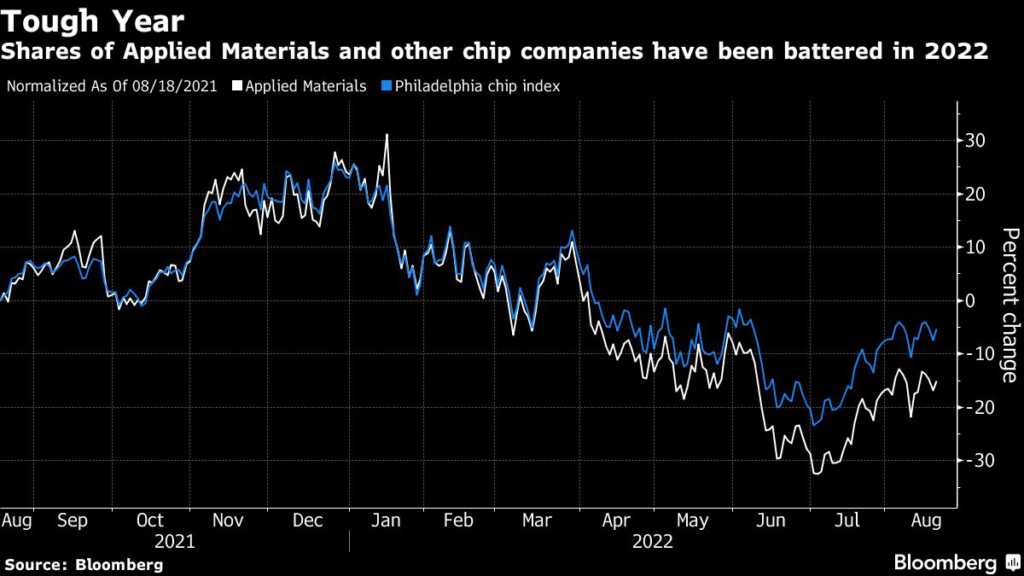
The stock gained more than 2% in extended trading. Applied Materials shares had dropped by 31% this year through Thursday’s close, part of an industrywide rout for the chip business.

While memory chipmakers have cut back on expansion plans, other types of companies are maintaining spending. That includes manufacturers of logic chips and so-called foundries, which produce semiconductors for other companies.

Until recently, the industry’s biggest concern was getting its products through the supply chain — rather than softening demand. Like Cisco Systems Inc., which reported earnings Wednesday, Applied Materials said it’s still struggling with that problem, despite gradual improvements.

The company said it probably won’t be able to satisfy all the demand it’s getting for the next several quarters. And if even if there’s a drop in orders caused by the economy, earnings will remain stronger than in previous downturns because customers are competing to improve their production, Applied Materials said.

Excluding certain items, profit will be $1.82 to $2.18 a share in the current quarter. The midpoint of that range, $2 a share, topped the average prediction of $1.94.

The company also exceeded projections with its third-quarter results. Earnings amounted to $1.94 a share, minus certain items. Analysts estimated $1.79. Sales rose 5.2% to $6.52 billion, beating the $6.26 billion projection.

Applied Materials’ machines are crucial to the process of making semiconductors and are at the heart of factories operated by companies such as Samsung Electronics Co, Intel and Taiwan Semiconductor Manufacturing Co. Its projections offer a window into the chipmakers’ confidence about future demand. 

Dickerson has argued that the growing use of semiconductors in new types of devices is lessening the industry’s dependence on personal computers and smartphones. That may help it avoid the severe ups and downs it suffered in past years. With phone demand slowing and PC demand falling off rapidly, his thesis is being put to the test.

(Updates with chart after sixth paragraph.)

More stories like this are available on bloomberg.com

©2022 Bloomberg L.P.
Russia Is Seen Using Ukraine Nuclear Plant as Shield for Troops

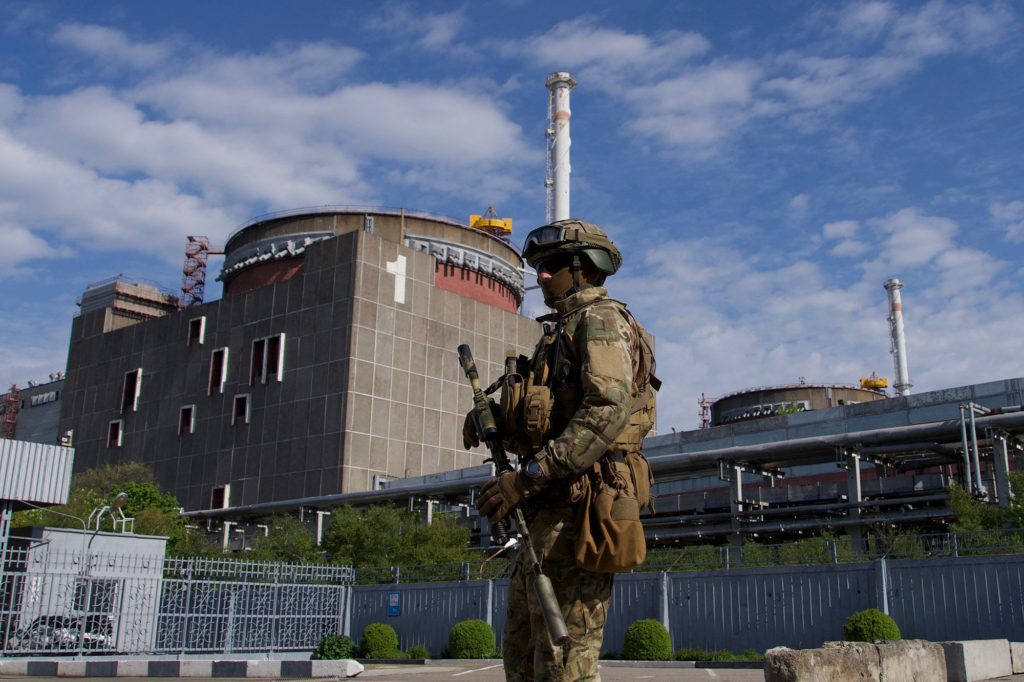
(Bloomberg) — Russia is likely using the Zaporizhzhia nuclear power plant in southern Ukraine to shield its troops and equipment, undermining the safety of the plant’s operations, according to European intelligence officials.

There appears to be a deliberate effort by Russia to use the plant’s protected status as a nuclear site to provide cover to its forces, and prevent them from being attacked by Ukrainian forces, a tactic that undermines the security of the plant, said the officials, who asked for anonymity to discuss sensitive information.

Russia has also used the wider area to rest its forces at night, and has launched long-range artillery attacks from adjacent regions, the people said, adding that it doesn’t appear that significant strikes have been launched from within the facility so far.

Russian forces captured the Zaporizhzhia plant, Europe’s largest nuclear facility, in March. The UN’s International Atomic Energy Agency has warned in recent days of a real risk of nuclear disaster at the facility. Moscow has been stalling international calls to grant inspectors access to the plant.

This week, the US, European Union, UK and other allies issued a joint statement warning that the “deployment of Russian military personnel and weaponry at the facility is unacceptable and disregards the safety, security and safeguards principles that all members of the IAEA have committed to respect.”

European intelligence has also assessed that Russia is likely to continue to spread disinformation falsely painting Ukraine’s actions toward the plant as reckless, the officials said. Russian state Twitter accounts have repeatedly accused Kyiv of targeting the facility, including with western weapons, and Moscow has warned of unsubstantiated false-flag operations.

The officials said that the plant’s nuclear reactors are well protected by large steel and concrete blocks, which would probably provide some protection from accidental strikes. Any damage to the reactors would likely be due to them being deliberately targeted, they added.

Russia’s goals for the plant are unclear, the officials said, but Moscow could use the energy it produces as a bargaining chip with Kyiv.

More stories like this are available on bloomberg.com

©2022 Bloomberg L.P.
Stocks Rise as Dip Buyers Emerge in Seesaw Session: Markets Wrap

(Bloomberg) — US stocks ended the day higher after swinging between modest gains and losses as mixed economic and earnings reports failed to spark a broad conviction trade. The dollar and bonds also rose.

The S&P 500 rose 0.2%, in a session marked volumes holding about 20% below the 30-day average that can exacerbate price swings. Light trading also typified the Nasdaq 100, which closed 0.3% higher after falling 0.5%. Treasury yields stayed lower after Federal Reserve officials gave mixed signals on rate hikes next month. 

Signs of strength in demand for labor came from the weekly US jobless claims data falling for the first time in three weeks, while a gauge of manufacturing activity in the Philadelphia area unexpectedly expanded in August for the first time in three months, though the outlook remained weak. Meanwhile, existing-home sales fell for a sixth straight month, the latest indication of the housing market’s rapid decline.

In corporate news, Cisco Systems Inc. rose after issuing an upbeat forecast for quarterly sales as chip-supply shortages ease and the company is able to fill more orders. Bed Bath & Beyond Inc. plunged after Ryan Cohen’s RC Ventures said it might sell as much as 7.78 million shares in the retailer. Kohl’s Corp. dropped after the department store operator cut its full-year earnings and sales guidance for the second straight quarter as inflation suppresses demand.

In extended trading, Applied Materials Inc. gained after the biggest maker of machinery used to manufacture semiconductors gave an upbeat sales forecast for the current period in the face of “headwinds.”

Read more: Value Trade Crumbles on Wall Street, Putting Quant Funds at Risk

Following the equity rally from June lows, sentiment turned fragile Wednesday after the Fed minutes signaled inflation-busting rate hikes will continue despite a weakening economy. Further clues for policy makers’ views may come at the Fed’s annual symposium in Jackson Hole, Wyoming next week.

“With Jackson hole kicking off in a week, that already is now top of mind — I would say the minutes, if you were hoping to see dovish, you got a seven out 10,” Alex Chaloff, co-head of investment strategies at Bernstein Private Wealth Management, said by phone. “If you just think about the disconnect between earnings and what’s gone on in markets, this is a macro driven market right now. Inflation has peaked and the numbers will demonstrate that we’ve rolled over.”

In comments Wednesday from Fed officials, St. Louis Fed President James Bullard told the Wall Street Journal he backed another 75 basis-point increase at next month’s meeting. Kansas City Fed’s Esther George struck a more cautious tone, saying the hike pace was under debate. Meanwhile, Minneapolis Fed’s Neel Kashkari said the Fed had “more work to do” in raising rates to curb inflation. 

The S&P 500 has rebounded 17% from its nadir in mid-June, a rally that Zhiwei Ren, portfolio manager at Penn Mutual Asset Management, attributed to fundamentals and technicals.

“On the economy side, I think recently you’re seeing data that’s just working the way the Fed was hoping — inflation is coming down and the job numbers are still robust, he said. “The fear of recession is much, much lower now — a lot of people are talking about a soft landing.” 

As for technicals, futures positioning was very short back in June, Ren said. “So in that kind of background, if you have some good news, then people have to buy back the equities they sold, and I think that’s what’s happened.”

Oil rose for a second day as a bullish US stockpile report eased fears of an economic slowdown. West Texas Intermediate futures traded back arond $90 a barrel.

Inflation remains the most closely-watched indicator in the second half. Will it come down gradually, or will it stay elevated, forcing the Fed to keep raising rates aggressively? Have your say in the anonymous MLIV Pulse survey.

Some of the main moves in markets:

Stocks

  • The S&P 500 rose 0.2% as of 4 p.m. New York time
  • The Nasdaq 100 rose 0.3%
  • The Dow Jones Industrial Average was little changed
  • The MSCI World index was little changed

Currencies

  • The Bloomberg Dollar Spot Index rose 0.6%
  • The euro fell 0.8% to $1.0094
  • The British pound fell 0.9% to $1.1936
  • The Japanese yen fell 0.6% to 135.89 per dollar

Bonds

  • The yield on 10-year Treasuries declined two basis points to 2.88%
  • Germany’s 10-year yield advanced two basis points to 1.10%
  • Britain’s 10-year yield advanced two basis points to 2.31%

Commodities

  • West Texas Intermediate crude rose 2.9% to $90.70 a barrel
  • Gold futures fell 0.2% to $1,773 an ounce

More stories like this are available on bloomberg.com

©2022 Bloomberg L.P.
Apollo in Line for Breakup Fee If SAS Bankruptcy Loan Falters

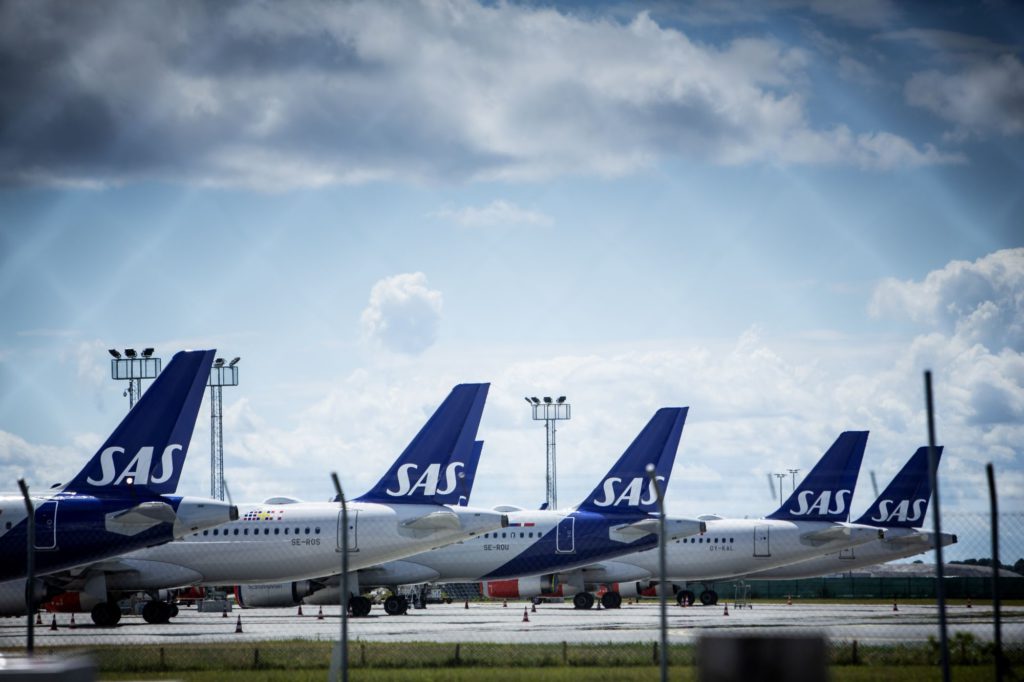
(Bloomberg) — The federal judge overseeing SAS AB’s Chapter 11 process approved a $7 million breakup fee to Apollo Global Management Inc. if its planned bankruptcy financing package for the Scandinavian airline falls through. 

Apollo said it would provide roughly $700 million to help SAS continue to operate during bankruptcy on the condition that the court signed off on the breakup fee and a $1 million deposit to help cover the investment firm’s expenses in putting together the deal. 

US Bankruptcy Judge Michael Wiles approved the fee on the basis that SAS, the company’s creditors committee and the US Trustee supported the terms, but questioned their necessity. 

“I have never had a case where someone sought transaction protections in connection with a DIP loan,” Wiles said in a hearing Thursday. 

A representative for the US Trustee said the federal bankruptcy watchdog didn’t file an objection to the fee because SAS said there was a risk of Apollo walking away from the deal, and there were no other contenders to provide SAS with the financing. 

A hearing on the company’s debtor-in-possession financing package is set for Sept. 7. 

SAS filed for bankruptcy in July, facing a crippling debt burden and dwindling cash balance amid the pandemic. 

The case is SAS AB, 22-10925, U.S. Bankruptcy Court for the Southern District of New York (Manhattan). 

More stories like this are available on bloomberg.com

©2022 Bloomberg L.P.

Tesla Autopilot Probe Casts Eye on Role of In-Car Camera

(Bloomberg) — US auto-safety regulators are scrutinizing Tesla Inc.’s in-car camera systems as part of a recently expanded investigation into whether the company’s automated-driving technology is defective.

In a letter made public on Thursday, the National Highway Traffic Safety Administration asked the automaker a series of questions related to the cameras and the ways they’re used to monitor driver attentiveness.

“Describe the role that the Cabin Camera plays in the enforcement of driver engagement/attentiveness and the manner in which its inputs are factored into the subject system’s operation,” the agency asked in a letter to Tesla Field Quality Director Eddie Gates. NHTSA also asked Tesla to describe “the engineering and safety explanation” for certain design decisions regarding automated systems including its Autopilot feature.

Read more: Tesla Autopilot Defect Probe Spirals as US Reviews 191 Crashes

The questions offer hints on what specific features and technology regulators are looking at as part of the investigation opened last year. The probe, which was launched after a dozen collisions at crash scenes involving first-responder vehicles, signaled a change in regulatory posture toward Tesla following years of complaints from safety advocates about the company’s marketing of its driver-assistance systems under the names Autopilot and Full Self Driving. 

Tesla, which has disbanded its media relations department, didn’t respond to a request for comment.

The EV maker, run by Chief Executive Officer Elon Musk, was also asked to include “evidence that justifies the period of time that the driver is permitted to have their hands off the steering wheel before receiving a warning,” and information on the amount of time that lapses if the driver doesn’t respond before receiving additional warnings.

The agency gave Tesla a Sept. 19 deadline to respond to the bulk of the questions. 

Separately, Tesla has also requested to defend itself against allegations it falsely advertises its Autopilot system in another investigation into its marketing practices being conducted by the California Department of Motor Vehicles, the agency confirmed on Thursday. Reuters reported earlier on the California notice.

(Adds details on California Autopilot investigation in eighth paragraph)

More stories like this are available on bloomberg.com

©2022 Bloomberg L.P.

Musk Says Twitter Is Hounding Him Over Every Chat About Buyout

(Bloomberg) — Elon Musk says Twitter Inc. is casting too wide a net for the names of those he talked to about his proposed $44 billion buyout of the social media company.  

The billionaire on Wednesday complained about it to the judge overseeing their legal dispute. After a fusillade of document demands over the acquisition, which Twitter has sued Musk to complete, Twitter is now going after friends, colleagues and firms far outside the case’s scope for information on the deal’s financing, his legal team argued.

In a letter to Delaware Chancery Court Judge Kathaleen St. J. McCormick, Musk’s attorneys said they had already handed over the names of “scores of individuals and entities” with “unique information” about the financing. They said Twitter at this point is pushing for documents from anyone “who might have had a passing conversation” with Musk about the buyout.

Read More: All the Banks, Billionaires and VCs Sucked Into Twitter v. Musk

Both sides are jockeying for position as they prepare for an Oct. 17 trial, sending out a torrent of subpoenas to equity investors, advisers and banks involved in the proposed acquisition. On Thursday, Musk filed notice of subpoenas served on advertising technology firms Integral Ad Science and DoubleVerify. In trying to avoid the buyout, he claims Twitter has understated the number of bot and spam accounts on the platform.

Among the people and firms Twitter has described as “actual or potential” co-investors in the deal are Citadel Chief Executive Officer Ken Griffin and Founders Fund Growth II Management, a venture capital fund owned by PayPal co-founder and longtime Musk friend Peter Thiel. 

At issue in Wednesday’s letter is who qualifies as a potential co-investor in Musk’s $7.1 billion equity raise for the buyout. Musk’s side says Twitter wants to include anyone the Tesla Inc. CEO talked to about the deal in “even the briefest, non-substantive, social interactions.” 

A Twitter spokesman declined to comment on the letter.

The case is Twitter v. Musk, 2022-0613, Delaware Chancery Court (Wilmington).

Read More

  • Twitter Must Give Musk Data, Documents From Ex-Product Head 
  • Twitter Seeks Musk Deal Insight From Larry Ellison’s Trust
  • Goldman, JPMorgan Subpoenaed by Elon Musk in Twitter Fight 

More stories like this are available on bloomberg.com

©2022 Bloomberg L.P.
Hong Kong’s GigaCloud Technology Climbs 28% in Nasdaq Debut

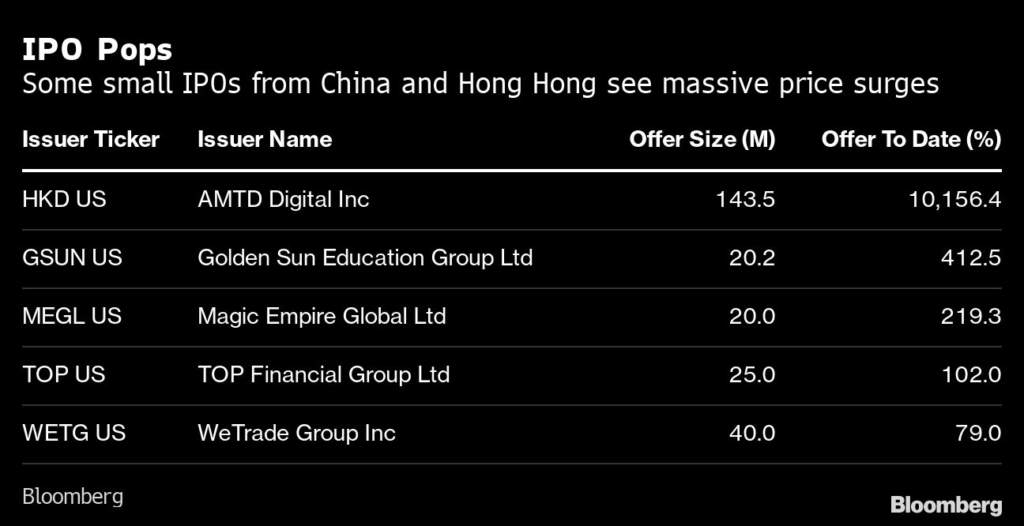
(Bloomberg) — GigaCloud Technology Inc., a Hong Kong-based online marketplace provider, surged 28% in its debut on Thursday, joining a string of smaller companies from Asia that are still tapping the US market to sell shares in spite of a crackdown from regulators in Washington and Beijing.

GigaCloud opened at $19.20 at the Nasdaq in New York, up 57% from its original offer price of $12.25 per share, raising $36 million. It pared some of the earlier gains to close at $15.69. E-commerce giant JD.com Inc. owns a 12% stake in the business-to-business trading platform specializing in merchandise for the furniture sector. 

GigaCloud joined 11 other companies, excluding blank-check firms, based in China and Hong Kong that opted to sell shares in New York this year even as a spat between US and China over financial audits increases the risk of delistings. Sharp swings in share prices on some of the trading debuts have also grabbed regulator’s attention. In two recent examples, AMTD Digital Inc. soared more than 32,000% following its IPO in July, while Magic Empire Global Ltd. saw a 2,325% spike in its debut session earlier this month.

David Lau, GigaCloud’s chief financial officer told Bloomberg the company doesn’t generate revenue from China, which in turn may diminish regulatory oversight. “Our business isn’t classified as a sensitive industry by the Chinese government, and that really helps give comfort to regulators and investors,” he said. Still, GigaCloud plans to explore switching its Chinese auditor to a US-based accounting firm to hedge against a potential delisting, Lau said. 

Read more: China’s New York IPOs Are Already Making a Comeback: ECM Watch

Listing in the US over Hong Kong provides better access to Wall Street’s funding for a company like GigaCloud whose business is focused in the country, said Lau. 

“A US listing would help us achieve not just valuation but also the profile we need to grow into the next phrase,” he said. 

(Updates with price at close)

More stories like this are available on bloomberg.com

©2022 Bloomberg L.P.

Banks’ Crypto Exposure Capped by Canadian Regulator in New Rules

(Bloomberg) — Canadian banks and insurers must limit their exposure to crypto assets to a small fraction of their capital under new interim rules from the country’s financial regulator.

Financial firms need to notify the Office of the Superintendent of Financial Institutions if their gross exposure to type 2 crypto assets — which, under the regulator’s definition, would likely encompass most cryptocurrencies — exceeds 1% of their Tier 1 capital, the regulator said Thursday. 

Firms also need to notify OSFI if their total net short positions on those assets exceed 0.1% of Tier 1 capital. The rules are effective in the second quarter of 2023.

The interim rules represent the first significant framework for how Canadian financial institutions should treat cryptocurrencies, which are largely unregulated in the country. OSFI said it would update the approach to reflect future developments — including the government’s legislative review of the topic, guidance from the Basel Committee on Banking Supervision and any related developments in the crypto market.

“We have provided this interim approach to help ensure risks in this area are managed prudently and supervised according to the principle of ‘same activity, same risk, same regulation,’” Superintendent Peter Routledge said in a statement.

Regulatory uncertainty has kept large global banks from engaging with crypto assets directly by trading them or holding them on their balance sheets. The US Federal Reserve has requested that banks notify the regulator prior to conducting crypto-related activities, but didn’t provide details on capital requirement rules for crypto.

Type 1 crypto assets — which represent a legal claim on an underlying asset and have other safeguards in place — may receive credit-risk capital treatment and liquidity treatment that is consistent with that applied to comparable traditional assets, according to the new guidelines.

(Adds additional context on US rules in sixth paragraph)

More stories like this are available on bloomberg.com

©2022 Bloomberg L.P.
Former Tesla Engineer Accused of Theft Fights to Clear His Name Publicly

(Bloomberg) — A former Tesla Inc. engineer said it was “humiliating” to be sued in open court for allegedly stealing trade secrets, only to be steered by the company into closed-door arbitration where he can’t defend himself publicly.

But a federal judge said Thursday that’s how it has to be for Alexander Yatskov, who’s fighting allegations he stole sensitive proprietary information about Tesla’s supercomputer technology after a brief stint working for the electric automaker this year.

“I think you’re on your way to arbitration,” US District Judge James Donato said at a San Francisco hearing. “I’d love to keep it, I’m just not really seeing a way.”

The case highlights two recurring patterns at Tesla: Aggressive action toward ex-employees suspected of betraying the company and a strong preference for waging workplace disputes out of the public eye.

The world’s most valuable automaker has been accused in the past of using arbitration proceedings to minimize attention on embarrassing allegations about racial discrimination and sex harassment at its main California factory.

In this case, Tesla went on the offensive in a May 6 complaint alleging that Yatskov downloaded “extremely valuable” trade secrets about its supercomputer on his personal device and tried to cover up the theft before he left the company.

While the complaint said Tesla employees spent thousands of hours building the supercomputer to deal with massive amounts of data and solve difficult engineering problems, including driver autonomy, Chief Executive Officer Elon Musk told investors in a January earnings call that “Project Dojo” isn’t guaranteed to succeed.

“We’re not saying for sure, Dojo will succeed,” Musk said. “We think it will.”

Yatskov’s lawyers argued that the company’s move to toggle back and forth between court and arbitration is procedurally improper and that Tesla “cannot have it both ways.” 

“Now that Tesla has dragged Dr. Yatskov’s name through the mud, Tesla wants to hide this dispute in private arbitration,” his lawyers said in a filing.

But Donato said Tesla appears to be appropriately exercising the mandatory arbitration provision of Yatskov’s contract with the company.

He also urged the two sides to seek a settlement. 

“At the end of the day, maybe it’s just money,” the judge said to Yatskov’s lawyer, John Kirke. “I mean, he doesn’t want his job back, does he?”

Kirke confirmed he doesn’t.

But Tesla’s lawyer, Sean Paul Gates, told Donato the company aims to recover the cost of its investigation from Yatskov, which the judge said may prove to be a roadblock to a settlement.

Kirke said afterward he was disappointed with Donato’s decision to send the case to arbitration.

“We will continue to do everything we can in public to clear Dr. Yatskov’s name,” the lawyer said, adding that he was encouraged by the judge’s assumption that Tesla should resolve the case by paying his client.


More stories like this are available on bloomberg.com

©2022 Bloomberg L.P.

Close Bitnami banner
Bitnami
