Bloomberg

Geneva Auto Show Trades Snow for Sand as Qatar to Host 2023 Event

(Bloomberg) — Geneva’s auto show is abandoning its namesake location in Switzerland next year and instead will be held in Doha, Qatar, switching its traditionally chilly venue in alpine Europe to the balmy Middle East.  

Organizers of the event, which is formally known as the Geneva International Motor Show, attributed the decision to hold the show outside its home town to unspecified economic, geopolitical and pandemic-related concerns. 

“The risks overweighed the opportunities,” Maurice Turrettini, president of the foundation that runs the show, said Thursday in a statement. 

The exhibition, which hasn’t been held since 2019 after being canceled days ahead of a planned 2020 staging due to the global outbreak of the coronavirus, was to have been supplemented by a Doha-based event, according to a statement last year in partnership with Qatar Tourism. But the organizers decided Thursday at a meeting in Bern to scrap the Geneva portion of the event in February and hold it exclusively in Doha in November 2023. 

The news comes less than a month before the scheduled start of the North American International Auto Show in Detroit, which also has not been held in three years.  

The Geneva show’s Qatar event is slated to be held every two years, the statement said.

More stories like this are available on bloomberg.com

©2022 Bloomberg L.P.

Qualcomm Is Plotting a Return to Server Market With New Chip

(Bloomberg) — Qualcomm Inc. is taking another run at the market for server processors, according to people familiar with its plans, betting it can tap a $28 billion industry and decrease its reliance on smartphones.

The company is seeking customers for a product stemming from last year’s purchase of chip startup Nuvia, according to the people, who asked not to be identified because the discussions are private. Amazon.com Inc.’s AWS business, one of the biggest server chip buyers, has agreed to take a look at Qualcomm’s offerings, they said.

Representatives for Qualcomm and Amazon declined to comment. 

Qualcomm gained as much as 2.9% to $152.91 in New York trading after Bloomberg reported the news. The shares had been down 19% this year through Wednesday, part of a broader slide for chip stocks. 

Chief Executive Officer Cristiano Amon is trying to turn Qualcomm into a broader provider of semiconductors, rather than just the top maker of smartphone chips. But an earlier push into the server market was abandoned four years ago under his predecessor. At the time, the company was trying to cut costs and placate investors after fending off a hostile takeover by Broadcom Inc.

This time around, Qualcomm has Nuvia, staffed with chip designers from companies such as Apple Inc. Amon, who acquired the business for about $1.4 billion in 2021, has said that its work will help revitalize Qualcomm’s high-end offerings for smartphones and personal computers. But Nuvia was founded as a provider of technology for the server industry.

Qualcomm’s return to the server business will require a rebuilding of trust among the prospective customers it courted the last time. The industry also has changed dramatically in the past few years. Amazon has developed homegrown processors for servers, though it also buys chips from other vendors. And startups such as Ampere Computing LLC have made inroads, winning contracts with customers such as Microsoft Corp.

Still, the potential rewards could be big. A successful push into server chips would mean Qualcomm has a much bigger-ticket item to sell. The company’s phone offerings are typically priced in the tens of dollars. The highest-end server processors carry prices of more than $10,000 per chip.

Spending on cloud computing infrastructure — the kind of equipment that Amazon, Google and Microsoft use to whisk data around the world — totaled $73.9 billion last year, according to research firm IDC. That was up 8.8% from 2020.

Data-center processors alone generate $28 billion a year, according to Bloomberg Intelligence analyst Mandeep Singh. “Qualcomm’s re-entry to the Arm server market broadens its reach into one of the bright spots in semiconductors,” he said in a note Thursday.

The owners of giant cloud data centers have long relied on Intel Corp.’s chip technology for their servers. But they’re increasingly embracing processors that use designs from Arm Ltd., a key partner in phone chips for San Diego-based Qualcomm.

Arm designs are already dominant in mobile phones, where they’re prized for not draining battery life. Now power consumption has become a more pressing issue in the data center world as well. As server farms spread — and suck up staggering amounts of electricity — companies want more efficient chips.

Amazon has addressed this need by building its own chips based on Arm designs. The e-commerce giant has created multiple generations of its Graviton processor line and touts its performance to customers.

But Amazon also still uses chips from Intel, Advanced Micro Devices Inc. and Nvidia Corp. — and Qualcomm sees an opportunity to carve out a niche among those suppliers.

The last time it made such an attempt was 2017, when Qualcomm began selling an Arm-based server chip called the Centriq 2400. It relied on Samsung Electronics Co. to manufacture the products and said they outperformed Intel’s Xeon processors in energy efficiency and cost. At the public introduction of the server chip line in November of that year, potential customers such as Microsoft took to the stage to voice their interest in the offering.

But less than a year later, the company’s leadership began shuttering the project. Former Intel executive Anand Chandrasekher, who had led the effort, left Qualcomm.

For Intel, Qualcomm’s latest move would bring yet more competition to an industry it once dominated. The company has been racing to bolster its technology and manufacturing after losing market share to AMD and homegrown chips like Amazon’s.

(Updates with more on Qualcomm’s previous server chip efforts in seventh paragraph.)

More stories like this are available on bloomberg.com

©2022 Bloomberg L.P.

Ukraine Latest: Erdogan Says Talks Focus on Ending War

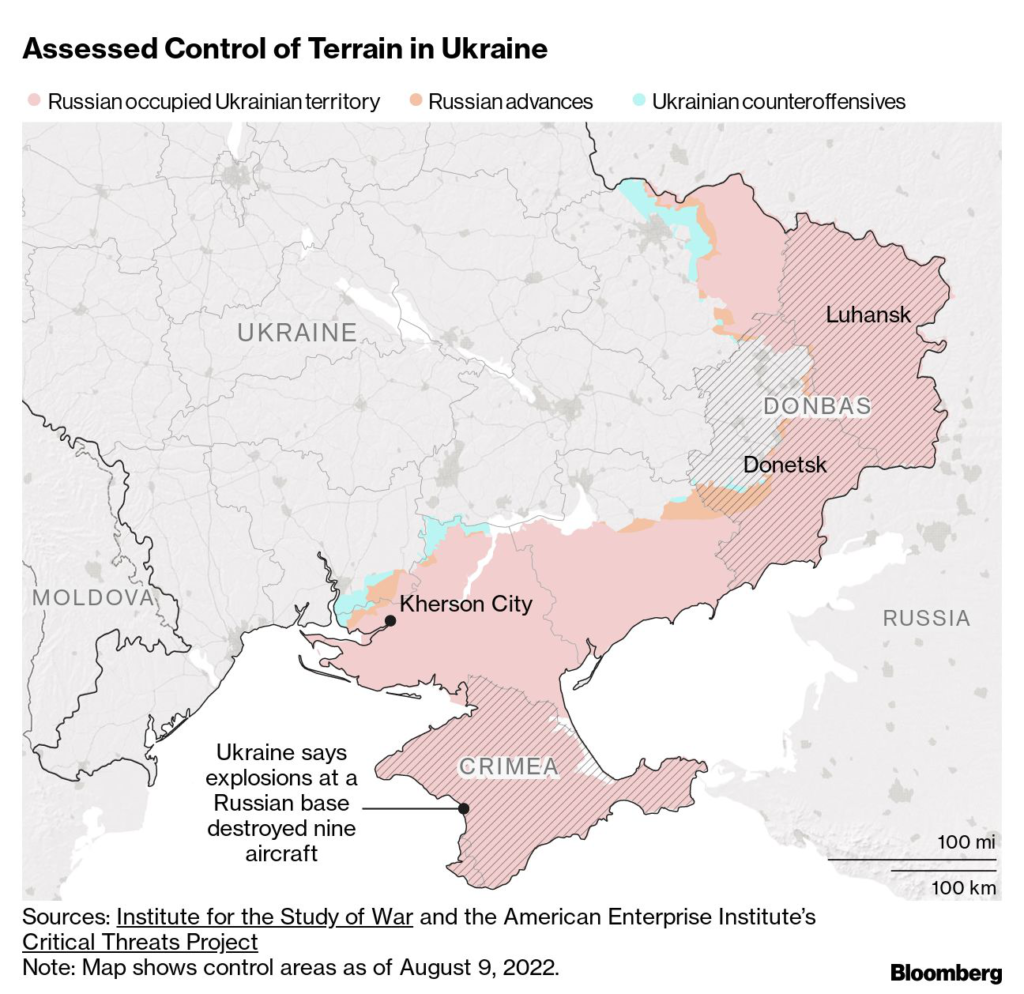
(Bloomberg) — Turkish President Recep Tayyip Erdogan said talks in Lviv, western Ukraine, with United Nations Secretary General Antonio Guterres and Ukraine President Volodymyr Zelenskiy focused on how to “ultimately end” the nearly six-month-old conflict. Erdogan said he would evaluate the meeting with Russian President Vladimir Putin. 

Ukraine’s president held separate talks with each man before a joint meeting. Major topics included the situation at the Zaporizhizhia nuclear power plant. Guterres said the UN was establishing a “fact finding mission” to investigate last month’s attack on the Olenivka prison which killed dozens of Ukrainian POWs. 

Shipments from Black Sea ports are picking up under last month’s deal brokered by Turkey and the UN, driving grain prices lower. Russia’s defense ministry said it deployed fighter jets equipped with hypersonic missiles to the exclave of Kaliningrad. Two are suspected of having violated Finnish airspace. 

(See RSAN on the Bloomberg Terminal for the Russian Sanctions Dashboard.)

Key Developments

  • Erdogan Says Discussed Ending War in Latest Bid to Mediate
  • Russian Gas Shipments to Europe to Remain Stable on Thursday
  • A $379 Billion Hole Emerges in Developing Nations’ War Chests
  • Ukraine Crop-Export Corridor Successes Help Push Down Prices
  • Blinken Spoke to Ukraine’s Kuleba on US Security Assistance
  • Ukraine’s Rating Lifted From Default by Fitch on Debt Delay 

On the Ground

Russian forces conducted several unsuccessful assaults near Kramatorsk, Bakhmut and Avdiyivka in the eastern Donetsk region, Ukraine’s military staff reported on Facebook. Shelling continued in areas from the Sumy region in the northeastern Ukraine to Mykolaiv region in the south, according to the statement. Russia also fired missiles at Ukraine’s second largest city of Kharkiv, killing at least 9 people and wounding 35 as residential house and a dormitory were hit, Oleh Syniehubov, the regional governor said. One person was killed and two injured in Mykolaiv. 

(All times CET)

Erdogan Says Discussed Ending War in Latest Bid to Mediate (6:52 p.m.)

Turkish President Recep Tayyip Erdogan said he discussed avenues to end the Russian-led war during talks with his Ukrainian counterpart, as well as conditions for a possible prisoners exchange. 

The comments came after the Turkish leader met in the western Ukrainian city of Lviv with President Volodymyr Zelenskiy and United Nations Secretary General Antonio Guterres on Thursday. Erdogan said he would follow up on the discussions with Russian President Vladimir Putin. 

Erdogan Says Discussed Ending War in Latest Bid to Mediate

Ukraine Buys Imaging Satellite and Data Access for Military (6:24 p.m.)

A Ukrainian charity used $16.4 million spared by the Bayraktar drone donation to buy a satellite and access to high-resolution imaging for the country’s military. 

The money had been crowd-funded by Ukrainians via the Pritula Charity Foundation to purchase the Turkish drones, which were ultimately provided free of charge. 

The foundation used the funds to sign a contract with Helsinki-based ICEYE which operates a fleet of 21 spacecraft providing high-precision Earth images multiple times a day.

UN to Establish Fact-Finding Mission at Olenivka Prison, Guterres Says (6:10 p.m.) 

The United Nations will establish a fact-finding mission at the site of the Olenivka prison, where some 50 Ukrainian prisoners of war died in an attack last month, said UN Secretary General Antonio Guterres. General Carlos dos Santos Cruz of Brazil has been appointed to lead the effort. 

“We will now continue to work to obtain the necessary assurances to guarantee secure access to Olenivka,” Guterres said in Lviv. “That means safe, secure and unfettered access to people, places and evidence without any interference from anybody.” 

While Ukraine and Russia have traded blame for the incident, European intelligence has dismissed Moscow’s claims that ammunition provided by the US were used to hit the facility, following analysis of the damage captured by satellite images.

Zelenskiy, Erdogan Discuss Stolen Grain (5:30 p.m.)

Volodymyr Zelenskiy and Recep Tayyip Erdogan agreed that trade in looted grain is “unacceptable,” Ukraine’s president said after his meeting with Turkey’s president in Lviv, western Ukraine. Kyiv estimates that Russia has stolen almost 500,000 tons of grain from occupied areas. 

The pair also discussed the situation at the Zaporizhzhia nuclear power plant, Ukraine’s presidential office said in a readout. 

UN Secretary General Antonio Guterres said in Lviv that global food markets are “beginning to stabilize” — a trend reflected in wheat prices, which have given up the year’s gains. 

Ukraine, Turkey to Cooperate on to Infrastructure (5:16 p.m.)

Ukraine and Turkey signed a memorandum on cooperation for the reconstruction of Ukrainian infrastructure after the war, President Volodymyr Zelenskiy’s office said.

The first potential project is the restoration of a bridge in the village of Romanivka in the Kyiv region, which connected Bucha and Irpin with Kyiv and was destroyed at the start of Russia’s full-scale invasion. 

Oleskandr Kubrakov, Ukraine’s infrastructure minister, noted that Turkish business has extensive experience in the construction of roads and bridges, in particular the Zaporizhzhia and Kremenchug bridges in Ukraine, and is a reliable partner.

Zelenskiy Says He Spoke With UN Chief About Nuclear Plant, Deportations (4:10 p.m.)

Commenting on Telegram after speaking with Antonio Guterres, President Volodymyr Zelenskiy said he discussed with the UN Secretary-General António Guterres the forced deportation of Ukrainians, the need to release Ukrainian soldiers and medics from Russian captivity, and continued exports of grain from the Black Sea. 

“Particular attention was paid to the topic of Russia’s nuclear blackmail” at the Zaporizhzhia plant, Zelenskiy said, adding that the UN “must ensure the security of this strategic object, its demilitarization and complete liberation from Russian troops.” 

Turkish President Recep Tayyip Erdogan, a key architect of the Ukrainian grain export safe-transit agreement, met with Zelenskiy before the three men started tripartite talks. 

Russia Issuing Drivers’ Licenses in Occupied Zaporizhzhia (3:33 p.m.)

Russian occupation authorities began distributing drivers’ licenses and vehicle registration plates in Ukraine’s Zaporizhzhia region, according to state-run Tass. A planned replacement of licenses in the city of Melitopol began Aug. 16, the news service reported. 

The move is the latest sign of Kremlin efforts to consolidate control over areas of Ukraine seized by Russian forces even as the war continues. 

Officials in the occupied Kherson region of southern Ukraine also began issuing Russian licenses and registration plates this month, as the Kremlin prepares to organize referendums to annex territories into Russia as soon as in September.

Ukraine Foodstuffs Exports Hit 500,000 Tons Under Deal (2:20 p.m.)

More than 500,000 tons of foodstuffs has been exported from Ukraine aboard 21 ships since a safe-transit deal for three ports in the Odesa region was signed last month. 

More vessels are arriving by the day. A key challenge is whether larger vessels normally commonplace in Ukraine’s ports are willing to transit the corridor and boost flows, even as Moscow continues its wider assault. 

Wheat futures in Chicago tumbled on Thursday and have now erased all of the year’s gains.  

Russia Sends Jets With Hypersonic Missiles to Kaliningrad (1:02 p.m.)

Three MiG-31 planes with hypersonic Kinzhal missiles relocated to the Russia’s Kaliningrad exclave as part of strategic deterrence, Russian Defense Ministry says, according to Interfax. 

The deployments have been signaled by Moscow for some time in response to Finland and Sweden’s decision to join NATO. 

Two of the jets are suspected of having violated Finnish airspace near Porvoo on the Gulf of Finland, Finland’s defense ministry said, according to Reuters. 

New Aid Pledges Plummet in July (11:28 a.m.)

New pledges of support for Ukraine from international donors declined “drastically” to about 1.5 billion euros ($1.52 billion) last month, with two thirds, or 1 billion euros, of the total coming from Norway, according to the latest analysis by the Kiel Institute for the World Economy.

“In July, donor countries initiated almost no new aid, but they did deliver some of the already committed support such as weapon systems,” said Christoph Trebesch, who heads the team that compiles the institute’s Ukraine Support Tracker. “Both financial and military support has fallen further behind what Ukraine needs,” he added. “It also remains small in relation to what some donors are mobilizing in their own countries for crisis response.”

Wheat Extends Losses on New Shipments (9:03 a.m.)

Wheat extended declines on Thursday as grain cargoes from Ukraine’s Black Sea ports have continued to flow, weeks after a safe-transit deal was reached. The resumption of grain shipments from one of the world’s major suppliers has buoyed global supply prospects at a time of year when its sales typically peak.

Three more ships left Ukraine on Wednesday carrying corn and sunflower oil and meal. Another four inbound ships are cleared to sail to Ukrainian ports. On Thursday, four outbound vessels and four inbound ships will be inspected. 

Blinken Spoke to Kuleba on Security Assistance (9:03 a.m.)

US Secretary of State Antony Blinken spoke with Ukrainian Foreign Minister Dmytro Kuleba on continued US support for Ukraine’s defense needs, according to a readout from the State Department. 

Blinken reaffirmed that the US will continue to call for an end to all military operations at or near Ukraine’s nuclear facilities, the return of full control of these facilities to Ukraine and for Russia to end the war, according to the readout. 

Separately, Kuleba on Thursday described a call with IAEA chief Rafael Grossi, who said “he is ready” to lead a delegation to Ukraine’s Zaporizhzhia nuclear power plant. The facility has recently come under shelling that Ukraine and Russia have blamed on each other.

Estonia Faced Cyber Attacks After Removing Soviet Tank Monument (8:02 a.m.) 

Estonia was hit by a massive wave of cyber attacks on Wednesday after the removal of a Soviet tank monument on Tuesday, Estonian Prime Minister Kaja Kallas said on Twitter.

In announcing the various monuments were being removed, Kallas said that “as symbols of repressions and Soviet occupation, they have become a source of increasing social tensions.” 

(Corrects amount of grain to 500,000 tons in item on discussion about stolen grain.)

More stories like this are available on bloomberg.com

©2022 Bloomberg L.P.

Bank of America Hires Citi Investment Banker Eish Dhillon for Technology Deals

(Bloomberg) — Bank of America Corp. hired Eish Dhillon from Citigroup Inc. for its technology investment banking team, according to people with knowledge of the matter.

Dhillon, based in New York, will join BofA’s investment bank as managing director focused on information technology services, the people said, asking not to be identified discussing information that isn’t public. He will start the role in mid-September, the people added.

A representative for Charlotte, North Carolina-based Bank of America declined to comment. Dhillon, as well as a representative for New York-based Citigroup didn’t immediately respond to a request for comment.

The hire comes during a slowdown in dealmaking, though mergers and acquisitions and other investments in the finance and technology industries have stayed stronger. Firms are still looking for bankers who specialize in active industries for deals like technology. 

Dhillon spent over 16 years at Citi, most recently as a managing director in the investment banking division and the global head of IT services, according to his LinkedIn. 

More stories like this are available on bloomberg.com

©2022 Bloomberg L.P.

Ethereum Developers Back Sept. 15 Target for Blockchain Software ‘Merge’

(Bloomberg) — The core developers working on the much-anticipated software upgrade of the Ethereum blockchain firmed up Sept. 15 as the likely official date of the so-called Merge.  

This is likely the final forecast for the timing of the upgrade, which will make the network more energy efficient, according to a developer’s conference call Thursday. A tentative date range for mid-September was set at a developers’ meeting last week.

Still, the actual date of the Merge could change since it will likely be impacted by any large swings in the amount of support Ethereum has to order transactions. In an emergency, if support drops off, developers can move the Merge forward ahead of schedule.

“We got it. Mainnet release — that’s pretty exciting,” Tim Beiko, who coordinates core Ethereum developers, said on the call, which was also attended by Ethereum Co-founder Vitalik Buterin. Last week, Buterin said the upgrade would likely happen Sept. 15.

Called the Merge, the software upgrade has been in the works for years, and it will change the way Ethereum orders transactions. Instead of using energy-guzzling computers called miners, the network will deploy so-called validators using staked Ether tokens — a setup called proof of stake.

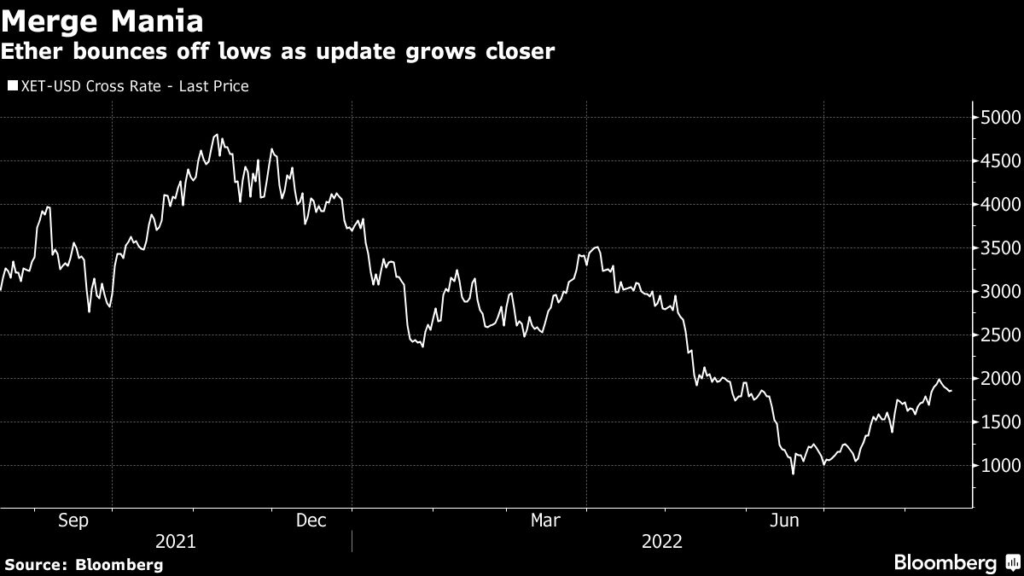
Ether, the native cryptocurrency of the blockchain, was little changed at around $1,850 as of 11:54 a.m. in New York. It has surged about 70% since digital-asset prices tumbled in the middle of June. It traded at a record of almost $4,900 in November.

Ethereum developers also debated on the call whether the network will be as censorship-resistant as the current rendition. Several developers raised concern about potential for validators and builders, new parties that will compile transactions into blocks on the upgraded blockchain, to omit certain transactions from inclusion into blocks recorded on the chain under government pressure. The issue is coming to a head in the face of recent US government sanctions against Tornado Cash, a coin mixing service.

In a tweet on Aug. 17, Brian Armstrong, chief executive officer of Coinbase Global Inc., said the biggest US crypto exchange will likely exit its validator business if forced by the government to censor certain Ethereum transactions. 

“This is the hill I am willing to die on, if we start allowing users to be censored on Ethereum, then this whole thing does not make sense, and I will be leaving and starting something else,” developer Marius van der Wijden said on the call. “Censorship resistance is the highest goal in Ethereum.”


(Updates with comment on censorship concerns in the final three paragraphs.)

More stories like this are available on bloomberg.com

©2022 Bloomberg L.P.
‘ESG’ Stripped From 23% of EU Sustainable Funds in Fresh Review

(Bloomberg) — Almost a quarter of funds that claim to “promote” sustainability under European regulations don’t deserve an “ESG” label, according to a fresh review by market researcher Morningstar Inc.

The analysis, which looked at funds classified as Article 8 within the EU’s Sustainable Finance Disclosure Regulation, shows that 23% don’t live up to environmental, social or governance investing principles, Boya Wang, ESG analyst at Morningstar, said in an interview. 

To justify an ESG tag within Morningstar’s definition of the term, a fund’s investment strategy can’t rely only on excluding so-called sin stocks like tobacco, coal or weapons, Wang said. “Many Article 8 funds will not be tagged as sustainable funds under our framework,” he said.

The assessment is the latest to raise questions around a key pillar of Europe’s efforts to become of global champion of sustainability. No other jurisdiction has raced ahead with such an ambitious program for transforming the entire asset management industry. But even regulators are starting to warn that the process has left too many opportunities for greenwashing.

The EU’s rulebook for ESG investing, SFDR, was designed to root out asset managers’ inflated sustainability claims. The framework, which was enforced in March last year, requires firms to classify their investment products under one of three categories: Article 6, which only addresses ESG risks; Article 8, which “promotes” ESG characteristics; and Article 9, which sets measurable ESG “objectives.” 

Arguably the vaguest of the three categories, Article 8 has become a magnet for fund managers. The latest Morningstar data reveals that asset managers have reclassified well over 600 funds previously listed as Article 6 to Article 8. A number of Article 9 funds were also downgraded to Article 8, it found. As of June, funds registered as Article 8 held 3.76 trillion euros ($3.8 trillion), compared with 420 billion euros allocated to Article 9 funds, Morningstar estimates.

The reclassifications have coincided with a crackdown by financial watchdogs on funds suspected of misstating the ESG-ness of their portfolios.

“There have been several indications from regulators to say, ‘we are watching closely and we will come knocking,’” said Sonali Siriwardena, partner and global head of ESG at Simmons & Simmons. Recent guidance from the EU “very clearly says one of the likely reasons for regulatory intervention would be that periodic reporting doesn’t support what is said in the product document.” 


There’s also evidence that investment clients are growing more cautious toward Article 8, as fund managers include atypical ESG sectors like defense, energy and commodities in the category. More than $30 billion was withdrawn from Article 8 products last quarter, while roughly $6 billion flowed into the stricter ESG category of Article 9, Morningstar data shows. 

In response to stricter rules and more demanding clients, some asset managers have started removing ESG labels from funds, rather than be accused of greenwashing. In the second quarter, six funds dropped sustainability-related keywords from their names, Morningstar found. 

“Dropping ‘ESG’ is related to broader rising expectations,” said Wang. Fund managers “think those strategies don’t fulfill the expectations of investors and regulators anymore, so the best way is to drop ‘ESG’ and ‘sustainability’ from their names,” he said.

The European Fund and Asset Management Association, which represents the industry, said the issue stems from the general absence of adequate ESG definitions.

“With a current lack of clear labeling standards, these disclosure classifications are often used as an indication of the ESG credentials of a fund,” said Vincent Ingham, director of regulatory policy at EFAMA. “However this is not what they were designed for. While it is less easily comparable or measurable, it is crucial to take into account other qualitative information on a fund when assessing its green credentials.”

European regulators have acknowledged the need to revisit some of the definitions currently guiding SFDR allocations. Verena Ross, chair of the European Securities and Markets Authority, said in May that regulators across the EU are working on reducing “what one might call over-disclosure by investment funds under Article 8, to avoid misleading disclosures to investors about the greenness of a product.”

Ross said that ESMA also supports future legislative efforts to create clear criteria for financial products making sustainability disclosures. That includes potentially introducing “sustainability labels” for financial products, “in order to help generate much needed clarity for retail investors.”

More stories like this are available on bloomberg.com

©2022 Bloomberg L.P.
Big Ten Sets College Record With $1 Billion-a-Year Broadcast Deal

(Bloomberg) — Fox, CBS and NBC will collectively pay $1.1 billion a year for the rights to broadcast Big Ten Conference sports in the largest deal of its kind for college athletics.

Fox Corp. will pay about $400 million per year to televise football and men’s basketball games, with the opportunity to carry more sports throughout the year, according to a person familiar with the matter. Paramount Global’s CBS and Comcast Corp.’s NBC are each paying about $350 million annually, as Bloomberg previously reported.

The new seven-year contract that starts next season is almost triple the size of the prior deal, where Fox and ESPN were paying $430 million a year combined. Rights to air sports on TV and streaming networks have gotten increasingly costly in recent years, squeezing media companies that are also grappling with the loss of cable subscribers.

Two years ago, Walt Disney Co., which owns ABC and ESPN, agreed to pay the Southeastern Conference around $300 million annually for its media rights, up significantly from the $55 million per year that CBS has been paying. ESPN declined to pay about $380 million a year for a portion of the Big Ten package, ending a longtime relationship with the conference.

Fox also owns 61% of the Big Ten Network, which will still televise the conference’s football, basketball and Olympic sport competitions. CBS and NBC will show games on their respective streaming services, Paramount+ and Peacock.

More stories like this are available on bloomberg.com

©2022 Bloomberg L.P.
Nigeria Seeks to Boost E-Naira Users 10-Fold as Cryptos Grow

(Bloomberg) — Nigeria, which has attracted just 840,000 users for its digital currency since October, is seeking to boost adoption of the e-naira almost 10-fold in the next 12 months by luring people without bank accounts. 

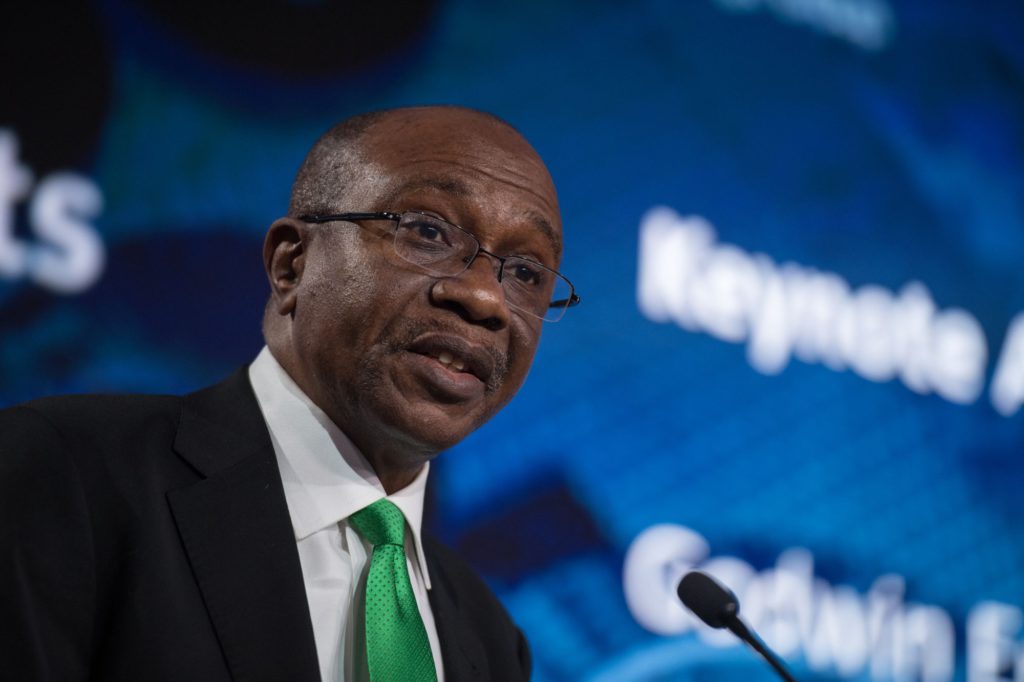
The Central Bank of Nigeria is targeting 8 million users in the “second phase” of the digital currency’s expansion, central bank Governor Godwin Emefiele said Thursday in Abuja, the capital.  

“Just like the naira, the e-naira is expected to be available to all Nigerians and will provide more possibilities to bring the unbanked into the digital economy,” Emefiele said during the finals of a central bank-sponsored hackathon to build products around the e-naira. 

The steady depreciation of the naira has seen many residents of Africa’s most populous nation pivot toward cryptocurrencies, even though the central bank ordered commercial lenders to stop transactions or operations in digital tokens. While there are 270,000 active users of e-naira, as many as 33.4 million Nigerians have either owned or traded cryptocurrencies, according to a report by KuCoin, a Seychelles-based crypto exchange. 

The adoption of stable coins like USDT is on the rise in the West African nation, according to Paxful, a peer-to-peer exchange. The average monthly trade volumes increased 10-fold to $25 million in June 2022. Trade volumes for the first half of 2022 are nearly $400 million compared to $760m for last year on Paxful alone. 

While the e-naira is an exciting project, accelerating inflation and a weakening currency have deterred its adoption, said Keturah Ovio, chief executive officer of book-keeping startup Dukka. “To drive adoption, the central bank has to take initiatives to drive down inflation and improve trust in the local currency.”

Africa’s most-populous nation has shown more interest in cryptocurrencies than any other country since the digital assets began to decline in April, according to a study by price tracker CoinGecko.

Meanwhile, from Monday, people without bank accounts will be able to download and open an active e-naira wallet by using the unstructured supplementary service data, or USSD, and dialing *997 from their mobile phones, said Emefiele.

Only about 45% of adults in the nation with more than 200 million people have bank accounts, according to the World Bank. That compares with an average of 70% in the BRICS economies. The e-naira has attracted slightly over 200,000 transactions valued at 4 billion naira ($9.4 million), just a fraction of the 54 trillion naira through the Nigeria Instant Payment System between January and February 2022. 

The expansion of access to the e-naira platform will further deepen its integration with the existing national payment infrastructure, Emefiele said. Both merchants and consumers with bank accounts will now be able to use the nation’s existing payment mechanism to transfer and receive e-naira. 

“We don’t have a choice but to live with the fact that we are now in a digital economy,” Emefiele said. “The use of cash will dissipate to zero and the use of digital currency will increase to become part of our lives.”

(Adds details of Nigerian crypto exchange volume in 5th graph)

More stories like this are available on bloomberg.com

©2022 Bloomberg L.P.
Roblox Short Sellers Retreat After 100% Stock Run

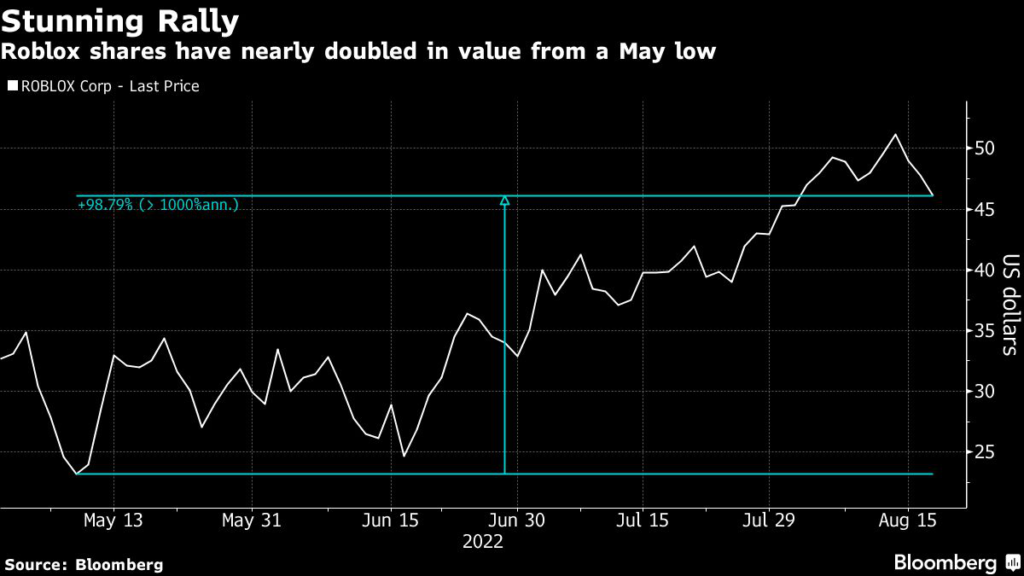
(Bloomberg) — The stunning rally in Roblox Corp. has forced short sellers to pull back as upbeat investors pile into its stock amid an uptick in users of its video-game platform. 

Roblox has almost doubled since mid-May, snapping a six-month losing streak. That’s fueled a retreat by bears who had bet against the stock. Shorts have been reducing their Roblox positions recently, buying 876,000 shares, worth $42 million, over the past 30 days, according to S3 Partners.

While plenty of technology stocks have posted big gains in the market rebound of the past couple of months, Roblox stands out because the company was a poster child of the metaverse frenzy that gripped Wall Street in late 2021. The stock collapsed as investors fled risky assets this year, but now it’s outperforming peers, beating all members of the tech-heavy Nasdaq 100 Index since the benchmark bottomed in June.

That volatility is probably here to stay for a while: Short sellers are still betting that the money-losing company will struggle to build a profitable business any time soon, while backers such as growth-stock guru Cathie Wood’s Ark Investment Management see it as a big player in the metaverse, digital worlds where users can socialize, play games and conduct business.

“There’s obviously a type of war between the long term and the short term,” Gal Munda, an analyst at Wolfe Research, said by phone. He initiated coverage on the stock Wednesday with the equivalent of a hold rating, saying Roblox’s pandemic-driven growth is cooling off and the metaverse is still at least five years away for the company. 

Roblox’s platform is aimed at preteens and teenagers, who play games for free on the site. The company earns revenue when users buy Robux, a virtual currency with which they make in-game purchases. But it aims to build a virtual world that features events such as a 50,000-person virtual concert with simulated audio and video.

The company last week reported bookings in the second quarter that missed analyst estimates, yet analysts seized on a rebound in July. At least 14 brokers, including Morgan Stanley, Citigroup Inc. and JPMorgan Chase & Co. raised their stock price targets after the results.

 “The market believes that the Q2 miss was a near-term hiccup,” said Tejas Dessai, an analyst at Global X, a manager of exchange-traded funds that counts Roblox as the biggest holding in its video-game and esports ETF. The quarter “had plenty of bright spots,” he said.

While Roblox shares are still down 55% for the year, investors like Wood have continued to pile in. Her ARK Innovation ETF has steadily increased its position, buying about 147,000 shares this month. 

That’s added pressure on short sellers, who borrow shares and sell them, hoping to buy them back at a lower price to profit from the difference. When the stock rises, they close out their positions to cap their losses.

“If Roblox’s stock price gets reinvigorated and pushes past March highs, we may see the rally continue in earnest and squeeze even more shorts out of their trades,” according to Ihor Dusaniwsky, managing director of predictive analytics at S3 Partners.

The majority of analysts covering the stock remain bullish on Roblox’s long-term prospects, too, with 15 analysts giving it a buy rating, nine at hold and two saying sell. The San Mateo, California-based company, which went public in March 2021 at $45 a share, is trading around that level on Thursday.

The bearish case is that Roblox may never again see the kind of growth it enjoyed when much of the world was locked down, and the metaverse may turn out to be a fad that fails to live up to the hopes of its boosters. And in the short term, the US may be headed for recession, which would lead to a pullback in consumer spending generally.

“The excitement around the Roblox metaverse will continue to be muted until new technological progress is made,” Munda wrote in his report this week.


Tech Chart of the Day

Only four out of the 44 components in the Roundhill Ball Metaverse ETF are down since its June 16 low, with Cloudfare Inc., Roblox and Coinbase Global Inc. leading the pack. The group is up 26% in the period, outperforming the Nasdaq 100’s 21% rise. 

Top Tech Stories

  • China lashed out at a $52 billion program to expand American chipmaking, saying the landmark blueprint contains elements that violate fair market principles and targets Beijing’s own efforts to build a semiconductor industry.
  • Cisco Systems Inc., the biggest maker of machines that run the internet and corporate computer networks, gave a bullish forecast for quarterly sales as chip supply shortages ease and it’s able to fill more orders.
  • Renesas Electronics Corp. is exploring the sale of a US unit with military applications, which could fetch as much as $1 billion, according to people familiar with the matter.
  • Abu Dhabi-based artificial intelligence firm G42, backed by a key member of the oil-rich emirate’s ruling family, is setting up a $10 billion fund with a focus on technology investments in emerging markets.
  • Singapore’s biggest mobile apps, Grab Holdings Ltd., Delivery Hero SE’s Foodpanda and Deliveroo Plc, have set aside their rivalry to form an unlikely partnership, hoping to strengthen their influence with the local government as it considers laws that could transform the gig economy.
  • Apple Inc. is aiming to hold a launch event on Sept. 7 to unveil the iPhone 14 line, according to people with knowledge of the matter, rolling out the latest version of a product that generates more than half its sales.

(Adds stock moves)

More stories like this are available on bloomberg.com

©2022 Bloomberg L.P.
Cisco Gives Upbeat Outlook as Chip Supply Shortages Ease

(Bloomberg) — Cisco Systems Inc. rose after the biggest maker of machines that run the internet and corporate computer networks gave a bullish forecast for quarterly sales, saying chip supply shortages ease and it’s able to fill more orders. 

Revenue in the fiscal first quarter will grow 2% to 4%, Cisco said in a statement Wednesday. Analysts had predicted that sales would be roughly flat from a year ago, when revenue was $12.9 billion. For fiscal 2023, the company expects sales to expand as much as 6%.

The shares rose as much as 7.2% in New York, the biggest gain in almost two years. The stock fell 11 cents to $46.66 on Wednesday and had dropped 26% this year. 

Read More: Cisco Rises on Bullish Forecast as Supply Improves: Street Wrap

The outlook suggests Cisco can weather a shaky economy and tech spending slowdown, helped by better access to supply. The company saw orders remain steady through the end of the quarter and there’s no indication that customers are tightening their budgets, according to Chief Financial Officer Scott Herren. 

“We’re not seeing any signs of order cancellation,” he said. Unlike the personal computer industry, which is suffering a steep decline, networking and security technology remains essential for companies, Herren said. “It’s not optional.”

Though the company is getting more of the components it needs, shortages will drag on throughout fiscal 2023 and keep Cisco from meeting all of the healthy demand that’s out there, executives said.

While revenue growth will exceed some projections, Cisco’s profitability may not. In the current period, profit will be 82 to 84 cents when excluding certain items. For the year, earnings will be $3.49 to $3.56. Average estimates were for 84 cents in the quarter and $3.54 for the year.

Investors are focused on the company’s order rates, which provide a sense of future sales. Growth by that measure accelerated to 15% in the fourth quarter from the prior period, the company said. That increase had slowed to just 8% in the fiscal third period after a run of quarters when it was over 30%. 

Cisco’s stock performance has reflected those concerns this year. The company has given up more than a third of its market capitalization in 2022, putting the onetime king of Silicon Valley at less than $200 billion.

Under Chief Executive Officer Chuck Robbins, Cisco has been trying to spur growth with updated hardware and software, as well as new services provided over the internet. The idea is to pursue more sources of revenue, beyond the networking equipment that is Cisco’s hallmark.

Reflecting that shift, Cisco’s unit that contains hardware shrank about 1% in the third quarter. Security and its business that sells optimization of internet-based services had strong growth.

Revenue in the three months ended in July was $13.1 billion, flat from a year ago. Excluding some items, earnings per share was 83 cents. Analysts had projected sales of $12.7 billion and profit of 82 cents.

More stories like this are available on bloomberg.com

©2022 Bloomberg L.P.

Close Bitnami banner
Bitnami