Bloomberg

Chip Startup Horizon Robotics Seeks Funds, Weighs H.K. IPO Timing, Sources Say

(Bloomberg) — Chinese artificial intelligence-chip startup Horizon Robotics Inc. is considering raising $100 million to $200 million in fresh capital, according to people familiar with the situation.

The Intel Corp.-backed firm is working with an adviser to gauge interest in the fundraise from investors, the people said, asking not to be identified discussing a private matter. Horizon, which is currently valued at about $8 billion, is waiting for more favorable market conditions to launch its planned initial public offering in Hong Kong, they said.

Deliberations are preliminary and details of the funding round including size and valuation could still change, the people said. A company representative declined to comment on a call with Bloomberg News.

Horizon was looking into a possible Hong Kong listing as soon as this year to raise as much as $1 billion, Bloomberg News reported in October. The Beijing-based firm had previously considered going public in the US before China tightened rules on overseas listings, people familiar with the matter have said. 

The chipmaker operates in a burgeoning market for developers of advanced technology as China looks to become a world leader in areas such as artificial intelligence and semiconductors. Tensions with the US have also fueled a push to develop crucial technologies domestically. State-owned carmaker China FAW Group Co. made a strategic investment in Horizon, the startup announced in June.

Backed by investors including Hillhouse Capital and electric vehicle maker BYD Co., Horizon makes chips and software for autonomous vehicles and machines. Its technology can be installed in everything from cars to smart speakers. The company counts Volkswagen AG’s Audi and SAIC Motor Corp. among its partners, according to its website. 

More stories like this are available on bloomberg.com

©2022 Bloomberg L.P.

Crypto Funds Weigh Market Data Options As Correlations Grow

(Bloomberg) — In a sign of how close digital and traditional markets have become, cryptocurrency traders can no longer live without knowing what’s happening on stock exchanges. 

Tightening links between price moves in US equities and cryptocurrencies are forcing digital asset hedge funds to consider shelling out for expensive data from stock exchanges and other traditional markets, in a shift from previous years when it was possible for these firms to profit on Bitcoin’s moves without clues from other asset classes. 

The influx of traditional trading firms into crypto, who already have such inputs, is also adding to pressure to gobble up more data due to intensifying competition in digital asset markets.

As a result, large crypto trading firms could see their market data costs rise to as much as $500,000 per month, according to several hedge fund managers, from near zero currently. Other than leading to heftier market bills, the moves further tighten links between the world of digital assets and Wall Street.

“The headline here is that you absolutely need data from traditional markets,” said Jonah Van Bourgh, global head of trading at Cumberland, the digital asset trading arm of DRW. “If you’re trading Bitcoin right now, you’re effectively trading macro so you need that data to survive and to make money.” 

As an offshoot of DRW, a Chicago-based trading giant, Cumberland has access to market data from all asset classes. This is a luxury that crypto native firms are craving. 

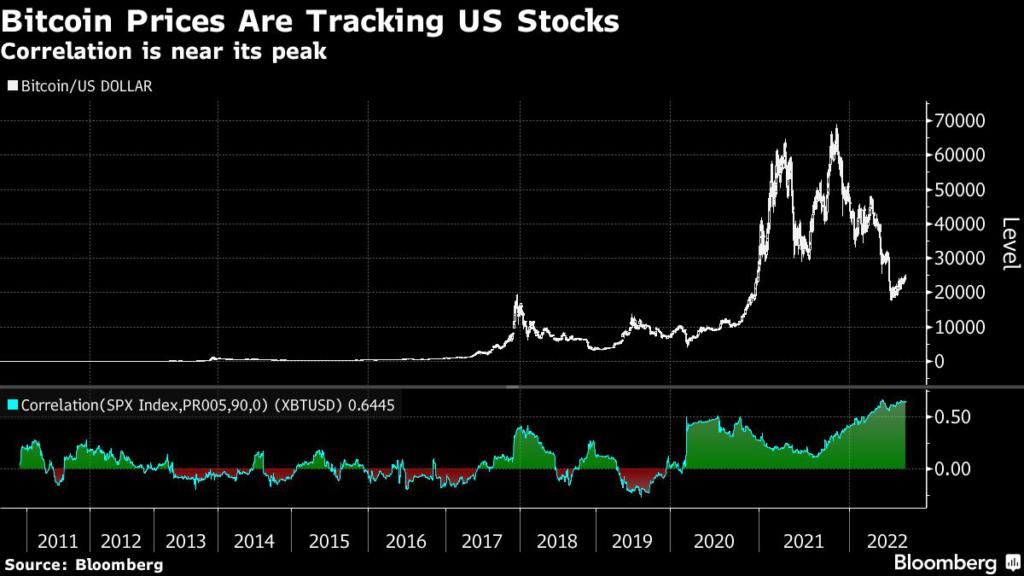
In recent months the price of cryptocurrencies moved in sync with US stocks, making the correlation between digital assets and two key indices, the S&P 500 and Nasdaq, the strongest since 2010. The close relationship has turned Bitcoin into a version of equities, an asset that goes up when investors are feeling optimistic about global financial conditions and sinks when concerns about growth flare up.

“Despite all the talk of Bitcoin being a good inflation hedge or it being the new gold, the only thing that mattered for prices were stocks,” said Francesco Filia, founding partner of crypto hedge fund Fasanara Capital. “It’s quite a clear correlation.” For now, Fasanara trades without input from traditional markets.


Wintermute is of of many companies weighing whether to add market data from futures and equity markets to its inputs, according to Evgeny Gaevoy, the London-based crypto market maker’s chief executive.

“With increased correlation between traditional and digital asset prices, we of course can’t ignore the traditional data feeds,” said Gaevoy, which trades as much as $7 billion worth of digital tokens a day.

Tyr Capital, a Geneva-based digital asset manager, is also planning to increase the type of financial data it buys. Tyr is gearing up to expand its activities and to trade tokenized commodities and oil, said Ed Hindi, chief investment officer at the fund. At this point, market data will become a key input, especially as Hindi expects these new strategies to become a big part of the fund’s trading strategies.

“Tyr Capital will need more market data from the TradFi world especially when we start actively trading tokenized financial assets in the coming 24 months,” Hindi said. For now, Tyr Capital relies on data from currency markets only. 

Paying for data would be a sharp shift from previous years when the funds and other crypto specialist trading firms could thrive simply by relying on free inputs from exchanges where Bitcoin and its peers are traded. That’s now changing. Unlike in stock and currencies markets, crypto exchanges give away trading information for free to their customers, rather than charging tens of thousands of dollars a year for information about prices and liquidity. 

The largest clients of LMAX Group’s institutional only crypto exchange are already subscribing to data feeds from LMAX’s other markets, such as FX and metals, said David Mercer, the company’s CEO. 

‘It is entirely natural as crypto becomes intertwined with TradFi that a wider range of market data will be required for all participating firms,” said Mercer.

Costs for crypto trading firms may also rise as they start requiring more mainstream tools to execute trades or other related services. Demand is growing for cross-asset trading software such as portfolio or risk management systems, technology companies and fund managers said.

Digital Asset order management system provider Talos has seen demand for its products including data spike over the last 6 months, said Chief Executive Anton Katz. Sell-side vendors are looking to provide their clients with the ability to price and trade currencies and crypto simultaneously to improve execution outcomes, he said. Buy-side crypto traders, such as hedge funds, are looking at new areas, where input from other markets is key.

The pressure to substantially increase costs comes at a time when the prices of crypto assets have slumped, further impacting the profitability of digital asset specialists. Market makers in crypto are also facing stiff competition from companies with roots in traditional finance, with firms including large players like hedge fund Brevan Howard and market maker Citadel Securities entering this space. These companies already have information and links to equities and commodities trading, which potentially provide an edge over those that do without additional data.

For now, some are hoping they can still hold off on a data shopping spree.

“If I wanted CME data that’s a significant lift for me financially,” said Michael Safai, a founding partner at crypto trading firm Dexterity Capital. “For the time being it’s not attractive but in the long run we will have to think about it. It’s only going one way.”   

More stories like this are available on bloomberg.com

©2022 Bloomberg L.P.

Abu Dhabi AI Firm Sets Up $10 Billion Fund for Tech Deals

(Bloomberg) — Sign up for our Middle East newsletter and follow us @middleeast for news on the region.

Abu Dhabi-based artificial intelligence firm G42, backed by a key member of the oil-rich emirate’s ruling family, is setting up a $10 billion fund with a focus on technology investments in emerging markets.

The entity will be formed in partnership with the Abu Dhabi Growth Fund, which was set up by state-controlled ADQ last year. Both G42 and ADQ are part of a business empire overseen by United Arab Emirates national security adviser Sheikh Tahnoon Bin Zayed.

The G42 Expansion Fund will target late-stage growth companies with disruptive technologies. It will operate as a private equity investor, with a significant share of funds earmarked for high-growth regions, in sectors ranging from communications, intelligent mobility and renewables to healthcare. 

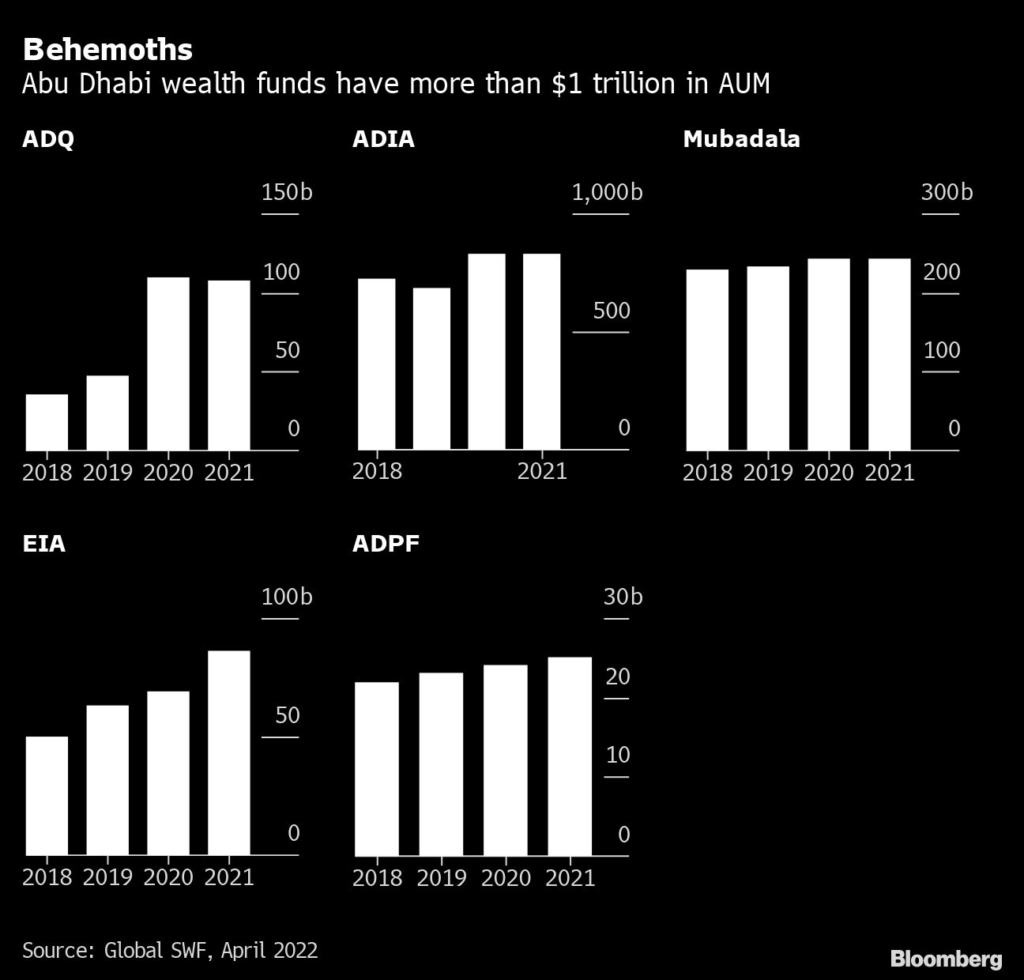
The move comes as Abu Dhabi — a city that’s among the few globally to manage over $1 trillion in sovereign wealth capital — ratchets up efforts to plow oil revenue into the technology sector and diversify its economy. Mubadala Investment Co., an Abu Dhabi wealth fund that owns a minority stake in G42, has itself stepped in to invest in the sector amid a recent rout. 

For its part, G42 has been building out its investment team with key hires from Abu Dhabi sovereign funds over the past year. US private equity firm Silver Lake invested in the firm last year and its co-Chief Executive Officer Egon Durban sits on its board. The new fund “is an important milestone in the growth of the UAE’s technology ecosystem,” Durban said in a statement.

Abu Dhabi Growth Fund, a partner in the G42 venture, invests primarily in private equity and venture capital. Led by Khalifa Al Suwaidi — who was a chief investment officer at ADQ — the fund has a “unique risk profile that complements the existing Abu Dhabi sovereign wealth funds,” according to its website.

Tech Deals

Sheikh Tahnoon, a brother of the UAE’s president, has been at the forefront of many of Abu Dhabi’s recent technology investments. His interests range from Royal Group to ADQ, and both entities recently committed money to a new fund set up by SoftBank Group’s Rajeev Misra. 

Read More: One of Biggest-Ever Tech Funds Wins Backing of UAE Royal’s Firm

G42, an AI and cloud computing company, has operations spanning from energy to healthcare and autonomous vehicles. Last year, it formed a joint venture with Beijing-based Sinopharm, marking the first overseas manufacturing of the Chinese coronavirus vaccine. 

It was also the first Emirati firm to open an Israel office after the nations normalized ties in the so-called Abraham Accords and rolled out the Middle East’s earliest driverless car trials. 

“With the G42 Expansion Fund, we aim to accelerate our global impact not only through the deployment of capital, but also by providing unique access to our networks, management, and operational assets to our portfolio companies,” G42 CEO Peng Xiao said in a statement. 

Peng Xiao will be chairman of the new fund’s investment committee, which will also include Abu Dhabi Growth Fund’s Al Suwaidi.

(Updates with details; adds deckheads)

More stories like this are available on bloomberg.com

©2022 Bloomberg L.P.

Car-Charging Investment Soars, Driven by EV Growth and Government Funds

(Bloomberg) —

More than $4.8 billion has been pumped into the electric-vehicle charging industry this year — a combination of roll-out announcements, debt financing, investment and acquisitions. And this is just the deals that have disclosed financial figures.

Large corporates are competing for M&A targets with pure-play charging companies they may previously have acquired, and new competitors are cropping up. Infrastructure investment funds’ appetite is increasing, as they see EV charging as a maturing asset class. Explosive growth is still required to go from single-digit billions of investment today to hundreds of billions worth of investment over the next two decades.

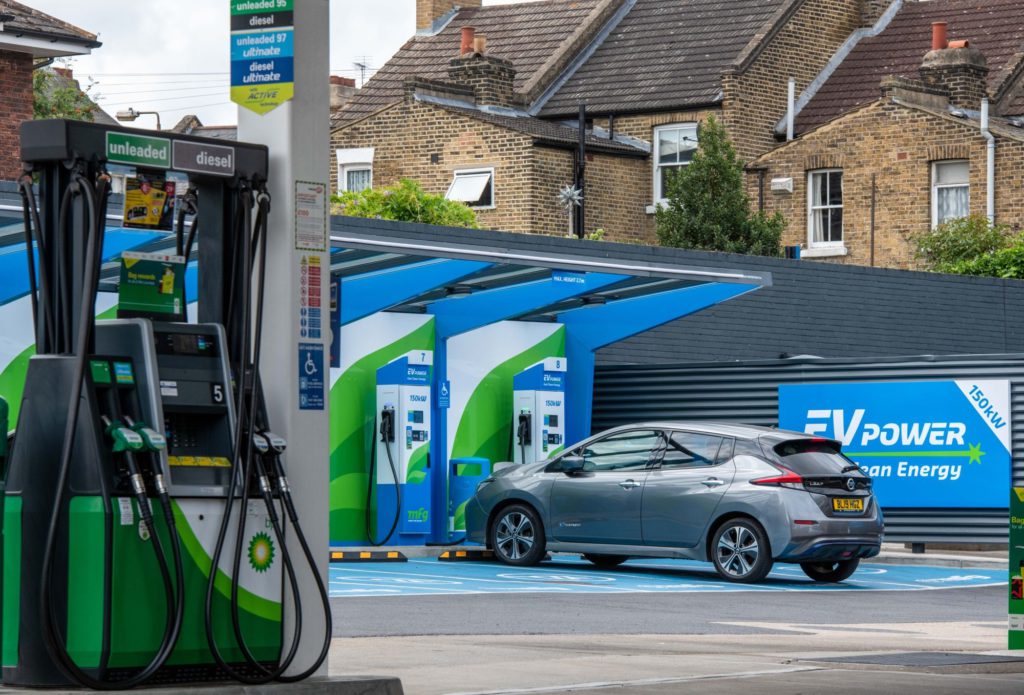
Some of the biggest roll-outs this year include a €1 billion ($1 billion) announcement by BP and Iberdrola for 11,000 fast chargers across Europe, and a $650 million investment across the US by Blackrock, Daimler Truck and NextEra Energy Resources. Electrify America also got a $450 million injection from parent Volkswagen and Siemens for its US charging network.

French energy storage and EV charging provider NW Storm raised €300 million, fast-charging manufacturer Freewire raised $125 million, and charging operator EVCS raised $69 million. Major UK charging companies have also been on a spree, with Raw Charging and Gridserve raising £250 million ($301 million) and £200 million, and Instavolt securing £110 million of debt funding.

BloombergNEF estimates that over 73% of investment in the public chargers that were put in the ground globally in 2021 went to ultra-fast charging. While the sub-sector continues to dominate investor funding this year, the whole EV charging supply chain is attracting investment.

Slow-charging operators, software platforms, installers, charging component manufacturers and wireless charging companies have all received investment. Financers and larger charging companies are sifting through the EV charging field to find the right pieces to fill their technological and regional gaps.

Large corporates including Siemens (Electrify America and WiTricity), Shell (Cable Energia and NWG Charging), ABB (InCharge Energy, Numocity, Chargedot) and Schneider Electric (EV Connect) are great examples. But smaller companies are also stepping up their M&A game.

Blink Charging acquired fellow US competitor SemaConnect for $200 million and the UK’s EB Charging for about $23.4 million. Wallbox announced two acquisitions last week: installer Coil and circuit-board manufacturer Ares Electronics.

New players continue to pop-up, driven by the fast growth and huge availability of government funds. Voltera is an example of a new company launched just this month with backing from EQT Infrastructure, a fund whose parent has €77 billion under management.

BNEF expects cumulative investment in charging to exceed $360 billion globally by 2030 and over $1 trillion by 2040 to meet the needs of the electric vehicle fleet. More than $1.4 trillion is needed in a net-zero scenario where the entire vehicle fleet would be on track to be electric by 2050. Around 60% of this investment is expected to be used for putting DC fast chargers between 50 kilowatts and 1,000 kW in the ground.

To keep moving the needle on investor confidence and meet requirements over the coming decades, charging companies will have to show they can scale at pace profitably. The cost base for EV charging is still evolving and business models have yet to be proven.

For more analysis of the EV charging industry, see BNEF’s Electric Vehicle Outlook and our latest Electrified Transport Market Outlook that tracks investments and acquisitions.

(Updates EQT reference in the ninth paragraph.)

More stories like this are available on bloomberg.com

©2022 Bloomberg L.P.

Toyota, CATL Shut Plants in Sichuan as Power Crisis Worsens

(Bloomberg) — Toyota Motor Corp. and Contemporary Amperex Technology Co., the world’s top battery maker, are closing plants in China’s Sichuan province as a drought-induced power crisis worsens.

The Japanese automaker shut a factory in the provincial capital of Chengdu and will keep operations suspended until Aug. 20, a company spokesperson said. Contemporary Amperex halted activity at its major lithium battery base in Yibin through the same date, a local business publication reported.

Sichuan, one of China’s most populous provinces, is highly reliant on hydropower. That makes it particularly vulnerable to a heat wave and drought that’s pushing up air-conditioning demand and drying up reservoirs behind hydro dams. It’s a key manufacturing hub and is also important for the production of materials including polysilicon and lithium that are vital to the energy transition.


The southwestern province has become a key development hub for battery makers aiming to harness hydropower to reduce emissions in their production processes. CATL has about 100 gigawatts of existing and planned capacity in the province, the most after Fujian, according to BloombergNEF.

The factory shutdowns add to a growing number in industries from solar panels to aluminum smelting. Volkswagen AG said on Monday that its factory in Chengdu is affected by power shortages, but that it was only expecting slight delays in deliveries to customers. Foxconn Technology Co. also makes Apple iPads in the province, but said it was seeing only limited impact from the drought so far. 

See also: China Facing Power Supply Threat From Drought in Sichuan 

The local government instructed factories to suspend activities through Aug. 20, said Shiori Hashimoto, a spokeswoman for Toyota. The Chengdu plant produces about 30,000 vehicles a year, including the Landcruiser Prado, according to the manufacturer’s website.

CATL didn’t immediately respond to an emailed request for comment.

While other regions in China are dealing with curtailments on a smaller scale, a major power crisis is likely to be mostly limited to Sichuan because of its unique reliance on dams for electricity. Still, that leaves a region with a similar population to Germany and an economy bigger than Turkey facing curtailments on a wide array of factories for almost a week.

Many Chinese provinces rely more on coal for power, and generators stocked up on the fuel in the run-up to summer as virus lockdowns weighed on demand. The heat wave has reversed that, with coal consumption for the first two weeks of August rising 15% from a year earlier, the government’s top planning agency said Tuesday.

Yangtze River Basin

Floods in the northern Shanxi province, the biggest coal producer, are also leading to mine closures that could impact the wider electricity market if they persist.

Temperatures in Chengdu were as high as 38 degrees Celsius (100 degrees Fahrenheit) on Wednesday after soaring above 40 in parts of Sichuan on Tuesday, with humidity making it feel hotter. Some office buildings in the city have stopped air conditioning as the power shortage becomes more severe, Securities Times reported. 

In Dazhou, another major city in Sichuan, residents may have their power use limited for two and a half hours if pressure on electricity use can’t be alleviated, Dazhou Electric Power said in a statement on its WeChat account.

Sichuan is a major rice and corn producer, and the National Meteorological Center warned this week the drought could damage crops and hinder growth. 

The heat wave isn’t limited to just Sichuan, and is affecting the wider Yangtze River basin. There’s only light-to-moderate rain expected in the next week and the Three Gorges Dam, the world’s largest, in neighboring Hubei province, will release more water in the next five days to help replenish the middle and lower reaches of China’s largest waterway, state-run Xinhua News reported.

See also: Lithium Prices Seen Rising as Sichuan Power Crunch Dents Output

Sichuan accounts for nearly 15% of Chinese polysilicon output, and the price of the key ingredient in solar panels rose on Wednesday, according to China Silicon Industry Association. The price of lithium, used in electric vehicle batteries, is also likely to get a boost from the drought, said Susan Zou, an analyst at Rystad Energy. 

The power cuts have affected more than 70% of steel mills in Sichuan, which have either halted production or started rationing, Mysteel said in a note this week. Henan Zhongfu Industry Co., an aluminum smelter, is halting production for a week for some production units in Sichuan. The Chinese price of aluminum is up around 3.5% since Monday’s close. 

(Updates with more details and price moves from 12th paragraph.)

More stories like this are available on bloomberg.com

©2022 Bloomberg L.P.

UN Slavery Expert Says Xinjiang Forced Labor Claims ‘Reasonable’

(Bloomberg) — A United Nations slavery expert has found claims of forced labor in Xinjiang to be “reasonable,” in one of the clearest critiques of China’s human rights practices from within the world body.

Tomoya Obokata, the UN’s special rapporteur on contemporary forms of slavery, said in a report that the involuntary nature of China’s employment programs in Xinjiang indicated forced labor, even if they did improve job opportunities for some minorities. The findings were based on an “independent assessment of available information,” including stakeholder submissions, victim testimony and government accounts.  

“The special rapporteur regards it as reasonable to conclude that forced labor among Uyghur, Kazakh and other ethnic minorities in sectors such as agriculture and manufacturing has been occurring in the Xinjiang Uyghur Autonomous Region of China,” Obokata’s report said. Similar policies were in place in Tibet, according to the report, which was dated July 19 and posted on Obokata’s Twitter feed Tuesday. 

The report on global slavery concerns was addressed to the Human Rights Council and is separate from an assessment on Xinjiang expected to be soon published by UN Human Rights High Commissioner Michelle Bachelet. Xinjiang scholars have urged Bachelet to release her report after a widely criticized trip to China in May that the rights chief has since acknowledged faced “limitations.” 

The Chinese Foreign Ministry didn’t immediately reply Wednesday to a request for comment on the rapporteur’s report. 

China has denied forced labor allegations from the US and other governments, calling them the “lie of the century,” and last week submitted two ratified International Labor Organization treaties on the practice. “The government of China has once again made clear its resolute position on opposing and fighting against forced labor,” Foreign Ministry spokesman Wang Wenbin told reporters at a regular news briefing Monday.

The US has been developing measures to punish China over its human rights practices in Xinjiang, including the Uyghur Forced Labor Prevention Act. The legislation, which took effect in June, bans the import of anything produced in Xinjiang unless companies can provide “clear and compelling evidence” it wasn’t made with forced labor.

James Cockayne, anti-slavery commissioner for the state of New South Wales, in Australia, said he wasn’t aware of a UN special rapporteur making such a clear statement on Xinjiang before. 

“This is an important conclusion by the top UN expert on this issue in the world,” said Cockayne, a former professor at the University of Nottingham. “The question of where the commissioner’s report is, when we will get to see that, is a critical one.”

Obokata is a professor of international law and human rights at Keele University and specializes in transnational organized crime, human-trafficking and modern slavery. He was appointed as the special rapporteur on contemporary forms of slavery in March 2020.

Obokata’s report outlined two labor systems in Xinjiang, including one in which minorities were detained and subjected to work placements to give them vocational skills, education and training. Separately, surplus rural laborers are transferred into secondary- or tertiary-sector work as part of a poverty-alleviation program. 

“Given the nature and extent of powers exercised over affected workers during forced labor, including excessive surveillance, abusive living and working conditions, restriction of movement through internment, threats, physical and/or sexual violence and other inhuman or degrading treatment, some instances may amount to enslavement as a crime against humanity, meriting a further independent analysis,” Obokata’s report said. 

Adrian Zenz, a senior fellow in China studies at the Victims of Communism Memorial Foundation and a leading critic of China’s Xinjiang policies, said that the rapporteur’s report set a “very important” precedent. “It would be awkward if Bachelet’s report says something to the contrary,” Zenz said.

More stories like this are available on bloomberg.com

©2022 Bloomberg L.P.

Stock Rally Rolls On as Steadier Mood Lifts Crude: Markets Wrap

(Bloomberg) — Stocks rose in Asia on Wednesday amid speculation that China may deploy more stimulus to shore up its ailing economy and as robust US earnings delivered a boost for investor sentiment.

A jump of over 1% in Japan, along with gains in China and Hong Kong, put MSCI Inc.’s Asia-Pacific share index on course for a more than two-month high. S&P 500 and Nasdaq 100 futures fluctuated while European contracts edged up. 

In China, where challenges from a property-sector slump and Covid curbs are multiplying, Premier Li Keqiang asked local officials from six key provinces that account for 40% of the economy to bolster pro-growth measures.

The US stock market posted a small gain on Tuesday, aided by earnings reports from retailers Walmart Inc. and Home Depot Inc. Company profits have encouraged an equity rebound from June lows.

Oil partially bounced from a recent slump but was still in sight of a more than six-month low — reflecting lingering worries about a tough economic outlook amid high inflation and tightening monetary policy. 

Treasury yields and the dollar drifted higher after UK inflation reached double digits for the first time in 40 years. Gold and Bitcoin were both in the green.

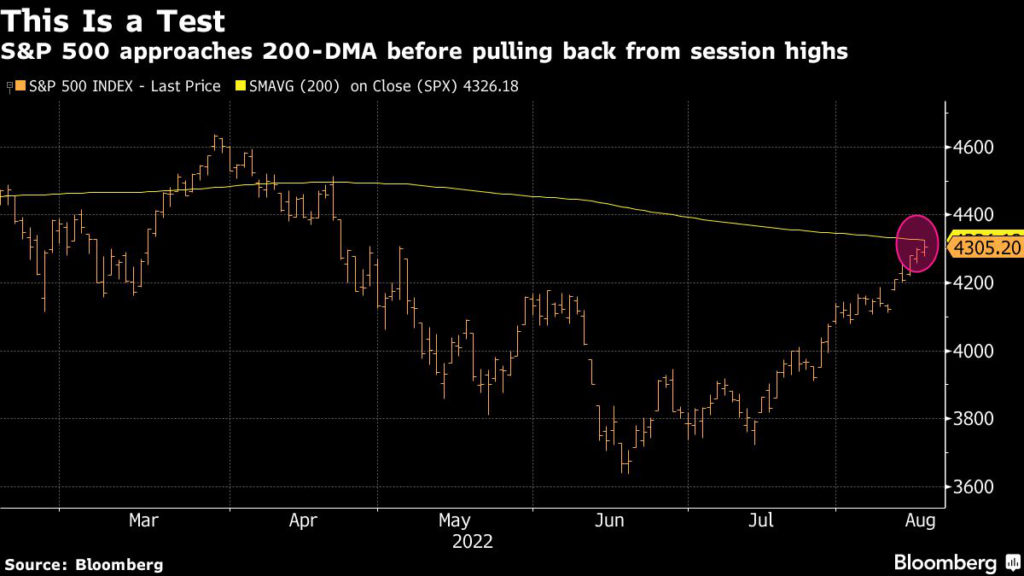
The revival in stocks from bear-market lows is partly a bet that inflation and central bank hawkishness are peaking, making a recession less likely. The latest Federal Reserve minutes Wednesday may test those wagers. New Zealand’s half-point interest-rate hike and signal of more to come suggests officials think there’s still work to do to contain price pressures.

“We expect the FOMC minutes to have a hawkish tilt,” Carol Kong, strategist at Commonwealth Bank of Australia Ltd., wrote in a note. “We would not be surprised if the minutes show the FOMC considered a 100 basis points increase in July.”

The latest US data were patchy. Home construction fell more than expected, while factory output increased in July for the first time in three months.

The stock rebound “could be the beginning of a more durable and gradual rally over 2022 and 2023” if the US avoids a recession, Isaac Poole, global chief investment officer at Oreana Financial Services, said on Bloomberg TV. 


Inflation remains the most closely-watched indicator in the second half. Will it come down gradually, or will it stay elevated, forcing the Fed to keep raising rates aggressively? Have your say in the anonymous MLIV Pulse survey.

Here are some key events to watch this week:

  • Federal Reserve July minutes, Wednesday
  • UK CPI, US retail sales, Wednesday
  • Australia unemployment, Thursday
  • U.S. existing home sales, initial jobless claims, Conference Board leading index, Thursday
  • Fed’s Esther George, Neel Kashkari speak at separate events, Thursday

Some of the main moves in markets:

Stocks

  • S&P 500 futures were steady as of 7:14 a.m. in London. The S&P 500 rose 0.2%
  • Nasdaq 100 futures lost 0.1%. The Nasdaq 100 fell 0.2%
  • Japan’s Topix index rose 1.3%
  • South Korea’s Kospi index slid 0.7%
  • Hong Kong’s Hang Seng index climbed 0.8%
  • China’s Shanghai Composite index increased 0.4%
  • Australia’s S&P/ASX 200 index was up 0.3%
  • Euro Stoxx 50 futures gained 0.3%

Currencies

  • The Bloomberg Dollar Spot Index was steady
  • The euro was at 1.0174 per dollar
  • The Japanese yen was at 134.38 per dollar, down 0.1%
  • The offshore yuan was at 6.7834 per dollar, up 0.1%

Bonds

  • The yield on 10-year Treasuries rose three basis points to 2.83%
  • Australia’s 10-year yield rose five basis points to 3.27%

Commodities

  • West Texas Intermediate crude rose 1.2% to $87.54 a barrel
  • Gold was at $1,779.09 an ounce, up 0.2%

More stories like this are available on bloomberg.com

©2022 Bloomberg L.P.

Mercedes and Ferrari’s Edge in the Electric Age: High-End Motors

(Bloomberg) — When drivers of future Mercedes AMG models stomp the accelerator of their electric performance cars, they’ll get extra oomph out of the batteries from something that sounds straight out of Back to the Future.

No, not flux capacitors, but axial flux motors.

Mercedes-Benz AG and Ferrari NV are turning to this type of electric motor to generate headrest-hitting torque. Axial flux motors are much smaller than predominantly used radial motors, yet pack a more powerful punch.

High-end motors like these will be crucial to brands like AMG and Ferrari as they race to electrify the high-performance vehicles that earn prestige and bumper profits. All EVs offer the sensation of instant acceleration, from Nissan’s Leaf to Tesla’s  Model S Plaid. Whereas in the combustion age, quicker times off the line and higher top speeds were achieved with more engine cylinders, manufacturers will differentiate performance EVs by getting the most out of batteries with lighter and more efficient motors.“The power-to-weight ratio is really a record number, and much better than conventional motors,” Markus Schaefer, Mercedes’s chief technology officer, said of the automaker’s upcoming AMG electric vehicle platform. “It will make use of the small size of the motor.”

With each press of the accelerator, EV drivers push hundreds — and in some cases thousands — of amps of electric current to copper coils. When these coils are energized, they become electromagnets with attractive and repulsive forces. The magnetic force created by a stationary stator surrounding a rotating rotor produces the torque that turns the wheels of the vehicle.

In axial motors, rather than have a rotor spin inside a stator, disc-shaped rotors spin alongside a central stator. This leads the flow of current — the flux — to travel axially through the machine, rather than radially out from the center. Since the motor generates torque at a bigger diameter, less material is needed. Yasa, an Oxford, England-based manufacturer of motors used in Ferrari’s SF90 and 296 GTB plug-in hybrids, uses just a few kilograms of iron for its stators, reducing the mass of the machines by as much as 85%.

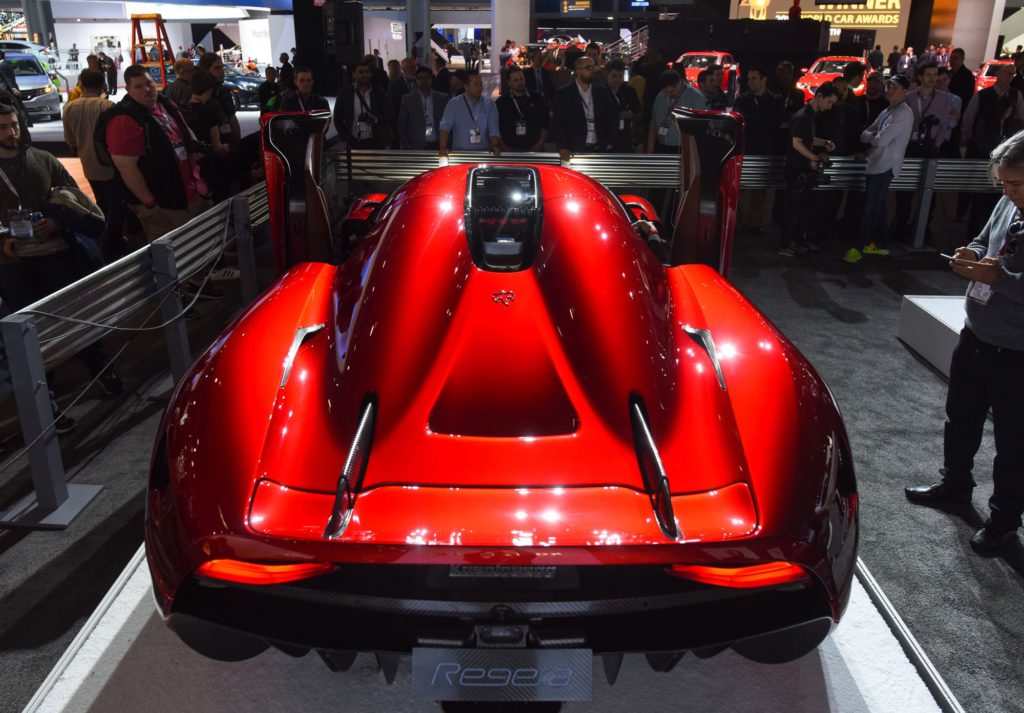
Yasa’s motors are the brainchild of Tim Woolmer, whose work on them were the focus of his electrical engineering PhD at the University of Oxford. Within a few years of earning his doctorate, Jaguar Land Rover made plans to use Yasa’s motors in the C-X75, a hybrid-electric two-seater with enough horsepower to rival the Porsche 918 Spyder, McLaren P1 and Ferrari LaFerrari. While JLR ended up canceling the project due to financial constraints, Yasa’s motors found their way into the Koenigsegg Regera hybrid hypercar, followed by the Ferrari SF90.

In July of last year, Mercedes announced it had acquired Yasa for an undisclosed sum and would put its motors in AMG models slated to launch starting in 2025.

“If you look at the history of automotive generally, the auto companies have wanted to have the engine, their core technology, in-house,” Woolmer said in an interview. “The batteries, the motors, this is their core technology now. They recognize the importance of having long-term differentiation in these spaces, so they have to bring it in-house.”

The most important aspect of axial motors is form-factor potential, according to Malte Jaensch, professor of sustainable mobile drivetrains at the TUM School of Engineering and Design in Munich. Their smaller size could allow carmakers to put one motor on each wheel, which isn’t feasible with radial motors.

Putting a motor on each wheel — or at least one on each axle — could translate into hair-raising EV driving performance. The innovation allows for torque vectoring that better controls how much power the motors send to each individual wheel for improved agility. High-speed cornering may help AMG and Ferrari drivers get over the lost roar of their eight-, 10- or 12-cylinder engines.

Yasa’s motors also could completely remove the need for a powertrain on the so-called skateboard underneath the middle of an EV, Woolmer said. That would open up more space for engineers to package batteries, make more room for bigger front and rear trunk spaces, or allow designers to experiment with new aerodynamic ideas.

The small size and light weight of axial motors won’t just benefit high-performance cars. They’re also finding a home in aerospace, leading Yasa to spin out its electric aviation division Evolito last year. The world’s fastest electric vehicle, Rolls-Royce Plc’s electric aircraft called the Spirit of Innovation, uses three axial flux motors to drive its propeller. The aircraft can travel around 380 miles (612 kilometers) per hour, making it faster than the Spitfire fighter aircraft that was powered by a Rolls-Royce V12 engine.

“The critical thing is their efficiency,” said Matheu Parr, the Spirit of Innovation project leader at Rolls-Royce. “This allows you to keep the weight of the aircraft low.”

Axial motors won’t necessarily be the death knell of radial motors, which deliver higher top speeds. This led Ferrari to use two radial motors on the front axle of the SF90, along with an axial motor on the rear axle. For the 296 GTB, handling was deemed more important, so only a lighter axial motor was used between the engine and transmission.

“It’s just a matter of what kind of driving experience you want to design for your customers with a specific engine,” said Davide Ferrara, Ferrari’s electric motors manager. “Different voices make sweet notes.”

More stories like this are available on bloomberg.com

©2022 Bloomberg L.P.

China Reliance on Taiwan Would Make Trade Retaliation Costly

(Bloomberg) — China’s military drills after US House Speaker Nancy Pelosi visited Taiwan sparked alarm around the region, although its trade retaliation barely made a dent — mostly because Beijing doesn’t want to hurt itself.

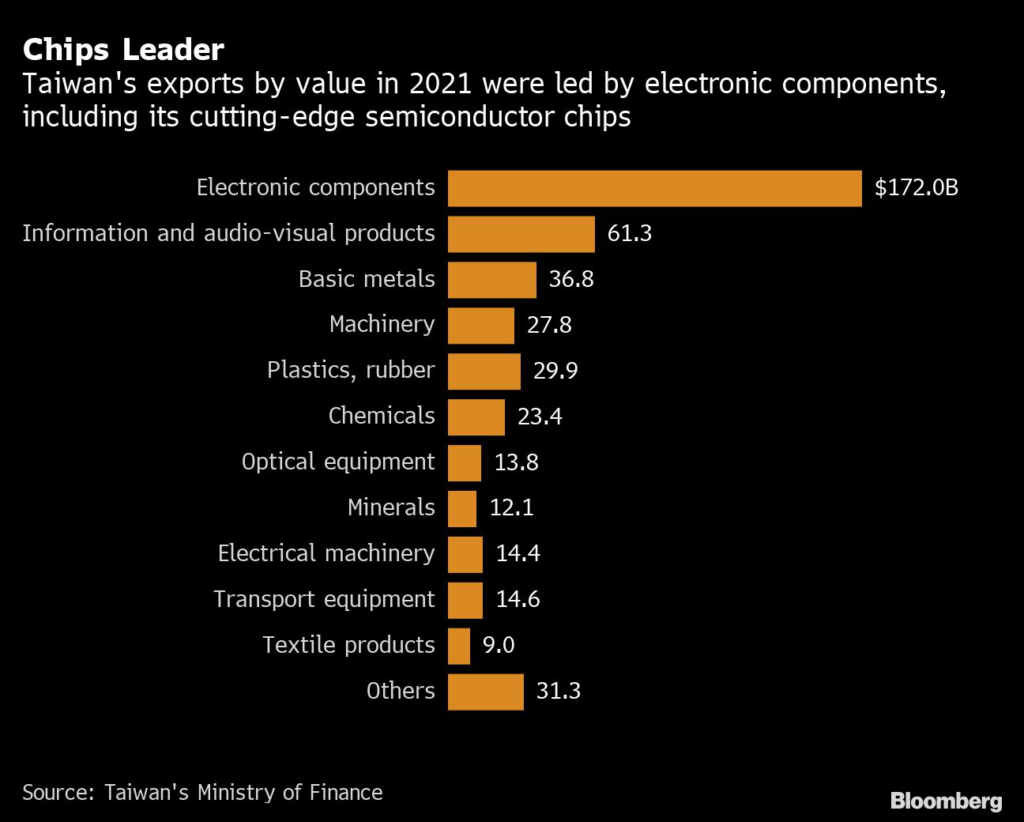
The value of trade targeted by China’s sanctions contributes a tiny amount of less than 1% to Taiwan’s gross domestic product, according to economists, taking the sting out of China’s announcements. Beijing could ramp up actions by targeting more food products, wood or minerals. But levies on any big-ticket items that would cause real damage to Taipei — such as semiconductors — are near-unthinkable, given China’s reliance on the island for cutting-edge technology.

“The chance remains relatively low” for China to target Taiwanese tech, said Ma Tieying, an economist at DBS Group Holdings Ltd. “If you look at Taiwan’s role in global semiconductor supply, it’s very much dominant. It would be very difficult for China to find the alternative supply if it bans the Taiwan-made semiconductors.”

Beijing still has a few tools it could deploy to pressure Taipei. China and Hong Kong account for around 40% of Taiwan’s total exports, though Taipei has made efforts to reduce its economic dependence on China in recent years. More restrictions would be an economic headache for Taiwan, which is already grappling with slowing global demand for electronics and high inflation, cooling its growth outlook.

Here’s a look at what China has already targeted and how likely more measures against Taiwan are:

Trade Sanctions

The trade sanctions Beijing has already inflicted this month are expected to have a marginal impact on Taipei. Food accounts for just 0.4% of cross-strait trade, Goldman Sachs Group Inc. economists wrote in a research note last week. In all, bilateral trade between the two economies reached $328.3 billion last year.

The recent restrictions impacting citrus fruits and some fish exports might have an impact of less than 0.1% on Taiwan’s GDP, the Goldman economists said.

There’s also evidence of other tension, including Chinese customs data that show Beijing has blocked other food imports, though it’s not clear when those suspensions happened.

If China wants to mitigate the fallout of sanctions on its own economy, it could target Taiwanese wood, minerals, shoes or hats. Taiwan’s trade relies significantly more on delivering those items to China than China does on receiving them from the island, according to a DBS report. 

China would also have an easier time finding alternative sources for those products, according to DBS. For instance, one-fifth of Taiwanese wood is exported to China, but these comprise only some 0.1% of China’s total wood imports. Other countries where China imports wood from include Russia, the US and Australia.

China could also restrict more of its own exports to Taiwan, as it did with natural sand. There’s some historical precedent for doing so, as Beijing previously halted sand exports in 2007 for about a year, citing environmental concerns. Taiwan, though, has reduced its reliance on China in that area since that ban more than a decade ago, according to economists at JPMorgan Chase & Co., who called the most recent restrictions “mainly symbolic.”

Technological Power

It’s unsurprising that technology is at the heart of trade across the Taiwan Strait, comprising nearly 70% of Taiwan’s total exports to China. 

China imported $79.4 billion worth of integrated circuits from Taiwan in the first half of 2022, up more than 15% on year. That accounted for nearly 38% of China’s total such imports in the period.

Taiwan is known as the world’s leading supplier of semiconductors, thanks to the outsized dominance of Taiwan Semiconductor Manufacturing Co., which on its own accounts for around half of the global foundry market. It would be very difficult for China to find an alternative supplier if it bars chips imports from Taiwan, particularly for the most advanced 5-nanometer and 7-nanometer chips.

China and other major countries, including the US and Japan, have sought to boost domestic investments in semiconductors and to entice companies like TSMC to build plants in their countries, in part to ease the geopolitical risks of potential disruptions to Taiwan’s supply of chips.

Chinese chip-makers such as Semiconductor Manufacturing International Corp. have also had to contend with US sanctions and tightening export restrictions as Washington tries to curb Beijing’s chip ambitions. While homegrown firms in China have made strides in producing advanced chips, industry experts say they remain several years behind TSMC’s standards, meaning the Taiwanese firm remains a key resource for China.

Investment Ties

There are other ways in which the two economies are intertwined aside from trade across the Taiwan Strait. 

Many of Taiwan’s major electronic firms have production bases inside of China, including Hon Hai Precision Industry Co., which is the main iPhone assembler for Apple Inc. The company, also called Foxconn, was at one point known as the largest private employer in China, with ambitions to expand to more than a million workers. The company’s plant in Zhengzhou alone employs some 200,000 workers, according to a report earlier this year in the local Henan Daily newspaper. 

That could make moves by Beijing to crack down on Taiwanese firms like Foxconn difficult to pull off without impacting those companies’ contributions to the local economy. 

Tourism is another avenue that China could target. The effects might be limited, though, as China had restricted visas for its citizens to travel to Taiwan before the Covid shutdown. Tsai’s government, meanwhile, has policies encouraging tourism and travel from other regions, including Southeast Asia.

Taiwan has been looking to diminish its dependence on China in recent years, with Tsai exploring ways to bolster trade and investment with Southeast Asia, India, Australia and New Zealand. Taipei last year asked to join Asia-Pacific’s biggest working trade deal, though its application is still pending. 

Supply Chains

Actions against Taiwan by China — such as more military drills — could also impact supply routes in the Taiwan Strait, which is one of the world’s busiest shipping lanes. Almost half of the global container fleet and 88% of the world’s largest ships by tonnage passed through the waterway this year, according to data compiled by Bloomberg.

More aggressive actions in the strait, though, could have more of an impact on trade routes involving Chinese ports than Taiwanese ones. The recent Chinese military exercises have had limited impact on container shipping in the Taiwan Strait, beyond some divergence of vessels away from specified military exclusion zones, said Tan Hua Joo, a consultant at the container analysis firm Linerlytica. While access to Taiwanese ports is not dependent on passage through the strait, he added, entry to ports in Hong Kong and northern China often are. 

“If there’s full-blown military action, that would be a completely different story,” he said. “But given the experience in the last two weeks, I think its quite clear that China has no intention of blocking the trade routes because its own trade volumes would also be affected if there was any vessel transit restrictions.”

Economists also suspect Beijing could take steps to restrict more trade in the second half of 2022, given that President Xi Jinping may want to bolster his power ahead of a Communist Party Congress later this year, when he is expected to secure a historic third term in office. Beijing claims the self-governed island as its own territory, and has made unification a top strategic priority.

“China may broaden the trade restriction measures in the coming months or quarters,” Ma from DBS said. “Given the very busy political calendar going forward, I think it’s possible that the tensions between Beijing and Taipei may escalate gradually going forward.”

(Adds Chinese import data on integrated circuits, chart.)

More stories like this are available on bloomberg.com

©2022 Bloomberg L.P.

Singapore’s Sea Tumbles 14% After Wider Than Expected Loss

(Bloomberg) — Sea Ltd. posted a bigger loss than expected and withdrew its 2022 e-commerce forecast, joining other online giants struggling to gauge an increasingly uncertain global economic outlook.

Its shares dived 14% in New York, wiping $800 million off the wealth of founder Forrest Li. Once Southeast Asia’s most-valuable company, Sea’s shares have now fallen almost 80% since peaking in October.

It’s been a steep downfall for one of Singapore’s most prominent tycoons, whose fortune has tanked almost $17 billion from its highs. Li’s net worth of $5.1 billion now makes him the fourth-wealthiest in the city-state, according to the Bloomberg Billionaires Index.

Sea Tumbles as Macro Uncertainties Cloud Outlook: Street Wrap

The downbeat result came after Sea cut its full-year e-commerce revenue outlook in May, to a low of $8.5 billion versus $8.9 billion previously. Shoppers emerging from pandemic lockdowns are cutting back on online purchases, shifting toward essentials during a potential recession.

The suspension of e-commerce revenue guidance “will no doubt send unease to investors sentiment,” said Alicia Yap, analyst at Citigroup Inc.

Sea, which counts Tencent Holdings Ltd. as its biggest investor, has suffered a run of setbacks this year, including a sudden ban of its most popular mobile game in India and the subsequent closure of its e-commerce operations there.  

The company has been trying to boost profitability as topline growth plateaus. Second-quarter sales rose 29% to $2.9 billion, the slowest growth in almost five years.

Key Insights

  • Sea posted an adjusted loss before interest, taxes, depreciation and amortization of $506.3 million in the June quarter, surpassing the average projection for $482.3 million. Its net loss more than doubled to over $931 million.
  • In Southeast Asia and Taiwan, adjusted Ebitda loss per order for Shopee — before allocation of headquarters’ common expenses — was less than 1 cent. Chief Executive Officer Forrest Li affirmed a target for the business to hit positive adjusted Ebitda before HQ costs in Asia this year
  • Second-quarter revenue from Shopee, Sea’s e-commerce unit, gained 51% to about $1.7 billion versus estimates of $1.9 billion.
  • Revenue from gaming arm Garena fell to $900.3 million, slightly ahead of estimates for $827.6 million, as hit mobile game Free Fire matures. The company said in March it expected Garena to post $2.9 billion to $3.1 billion in bookings in 2022, set to be its first decline ever.
  • Revenue from SeaMoney, Sea’s digital financial services unit, rose to $279 million.

Get More

  • Sea has been reducing its overseas footprint and slashing jobs in peripheral businesses as competition takes a toll and as it focuses more on profitability, a stark shift from its previous stance of spending for global expansion.
  • Shopee’s gross merchandise value, the sum of transactions flowing through its platform, rose 27% to $19 billion.
  • Some investors are reducing their exposure to Sea. Tiger Global Management LLC sold $473.8 million of Sea shares, cutting its holdings after six quarters of buying, according to SEC filings. Altimeter Capital Management LP, a shareholder of Singapore-based Grab Holdings Ltd., exited Sea’s Class A-ADRs, according to an analysis of its filings by Bloomberg News.

(Updates with founder’s loss of wealth from the second paragraph)

More stories like this are available on bloomberg.com

©2022 Bloomberg L.P.
Close Bitnami banner
Bitnami