

Bloomberg

Big Tech Helps Big Oil Pump More, Belying Climate Pledges

(Bloomberg) — It’s been a blockbuster summer for Big Oil. Exxon Mobil Corp. and Chevron Corp. posted record profits thanks to surging energy prices. The new US climate bill includes concessions to oil and gas companies.

There are other, quieter beneficiaries: Microsoft Corp., Amazon.com Inc. and the other cloud-services companies that are increasingly responsible for the computing horsepower behind the oil giants’ efforts to find and extract more oil and natural gas.

Among other things, Microsoft is making it possible for Exxon to analyze reams of oil field data. Amazon is helping drillers run simulations to maximize how much oil they can pump from existing wells.

It’s an awkward look for companies that have pledged to cut their own emissions. Microsoft has vowed to remove more carbon from the atmosphere than it emits by 2030, while Amazon has committed to eliminating greenhouse gases from its operations by 2040.

Both companies justify their oil industry contracts by pledging to accelerate a transition from dirty oil to sources that emit little or no carbon dioxide. And each is quick to provide examples of how they’re helping the oil industry move to a greener future. Microsoft and Chevron are working on a project to convert agricultural waste into fuel; Amazon Web Services software helps Marathon Oil Corp. identify and stamp out methane leaks. At the same time, Microsoft and Amazon say making oil companies more efficient is part of their sustainability work, helping their clients avoid unnecessary emissions, including those associated with antiquated data centers and older, error-prone software.

But neither company provided evidence that these projects are succeeding, or that they offset the environmental damage caused by increased oil and gas production from their biggest clients. AWS energy sales chief Arno van den Haak said his company is helping oil industry customers meet emissions reduction targets but didn’t have any figures to back up that assertion. “There’s not a single solution or a single goal,” he said. A Microsoft spokesperson said the company doesn’t have access to customer data but that energy partners have “shared some achievements that we’ve been proud to have taken part in.”

Such pronouncements infuriate critics who say the cloud providers’ oil industry contracts are prolonging the fossil-fuel age, tarnishing their green credentials and risking climate catastrophe. David Carter, an engineer who quit Microsoft last year partly because the company continued to work with the oil industry, argues that “if you do anything more efficiently, it gets done more.” Rob Day, a co-founder of Spring Lane Capital, a sustainability focused private-equity firm, credits the cloud providers for massive investments in solar and wind projects to power their operations. “On the flip side,” he said, “it’s not good enough. They’re making oil and gas drilling operations more profitable. Full stop.”

The criticism hasn’t prompted Microsoft and Amazon to pull back from the oil sector, but Alphabet Inc.’s Google, the third-ranked cloud player, seems to have been slowed down by employee activism.

‘Dirty Little Secret’

The tech giants began courting oil companies several years ago, eager for business from a lucrative but technologically backward industry. At first, Amazon, Microsoft and Google struggled to sell the benefits of their mammoth computing power. Oil executives were leery of putting data on the cloud and potentially exposing valuable trade secrets such as well-test data.

But the sector was rife with inefficiencies. Darryl Willis, Microsoft’s vice president for energy, estimates that 90% of the geological and operational information oil and gas companies collected was going unused, sitting dormant in spreadsheets or files. Meanwhile, the mathematical models used for decades to assess how much oil a given well can produce were generating little more than educated guesses. 

“Ninety-nine percent of what goes into these models is fiction,” said Jonathan Carter, who ran technology for the exploration unit of EON SE, the European energy firm, from 2012 to 2016. “It’s the dirty little secret we shove under the carpet in the oil industry because we make so much money.” If there is one thing cloud providers do well, it’s crunch massive amounts of data fast. Carter, who now teaches uncertainty and risk quantification at Coventry University, says that before EON started working with AWS, it took the energy company weeks to conduct a few dozen simulations on an oil reservoir. Using AWS software, he says, EON could run 60,000 simulations in a matter of days, helping the company more accurately pinpoint where to drill. (EON says it has since divested its oil and gas exploration business and is investing in “climate-friendly customer solutions.”)

Cloud tools can help model and minimize how much carbon drillers generate, said Rajeev Sonthalia, a president for oil services company Schlumberger Ltd. But that same data-crunching tech is also useful in trimming the time it takes to get oil and natural gas to market. “As long as you keep cutting the cost of production, you access more barrels,” Sonthalia said. “It becomes a growth vehicle.”

The cloud providers also help oil companies maintain their wells, a costly and time-consuming process that can extend their pumping life. Leo Mariani, a director and energy analyst for the equity research and trading firm MKM Partners LLC, says cloud  algorithms are helping maintenance crews find the best routes through vast oil fields in remote, difficult-to-access regions.

Chevron has purchased as many as 400 HoloLens headsets from Microsoft and regularly uses the augmented-reality technology for a variety of tasks, including site surveys and safety assessments. The Remote Assist program lets office-based experts guide on-site workers through inspections, repair jobs and more. In investor reports, Chevron has said it helped design versions of the HoloLens headsets. In a statement, the company said that, among other benefits, its digital investment strategy will improve reliability and lead to higher returns and lower carbon. “We are seeking to grow lower carbon businesses along with our traditional business lines,” Chevron said. “We are planning $10 billion in lower carbon investments by 2028.”

Halliburton Co. and Woodside Energy Group Ltd. are among several oil companies using AWS server farms to sift through troves of seismic data that would have been unaffordable if using mainframe computers, enabling them to map out potential oil and gas finds. Microsoft engineers collaborated on the opening of a Chevron project in Kazakhstan’s Tengiz oil field. One software engineer sent to the site recalled working on complex research tasks, such as computer vision models for 3D maps of the terrain. The engineer, who requested anonymity to discuss a private matter, considered Microsoft’s vows to push the energy industry toward sustainability as “just marketing-speak.”

Peter Bernard, who runs Datagration Solutions Inc., spends his days helping oil drillers upload and manage data on servers operated by Microsoft and Amazon. He says drillers see the cloud as a way to modernize their operations and survive boom-bust undulations. “They make a lot of money from our industry,” Bernard said of the cloud-service companies. “They’re going to continue to make a whole lot of money from our industry. But it’s not popular to talk about.”

Nowhere is that more true than inside the cloud companies themselves. Microsoft staff have long objected to their employer’s oil and gas deals—even passing around figures showing that the extra production enabled by the company at Chevron’s Kazakhstan project increased emissions to 5000% of Microsoft’s pledged carbon removal targets. A Microsoft representative didn’t comment on the project but said the company has outlined a strategy to move partners to net-zero emissions. Amazon employees also have protested AWS’s contracts with oil companies.

Microsoft’s Willis says the notion that the oil industry can quickly transition from oil to cleaner forms of energy is naive. “We don’t have the luxury of turning off one and turning on the other,” he says. “Energy is a thing that people love to hate, but no one is willing to live without.” Willis also says sharper machine analysis could better predict the best places to drill, removing the need to wastefully plunge into the earth. “If you didn’t have to drill those wells, that’s less emissions,” he said. “So it’s a big opportunity to help the industry.”

Still, optics are optics, and Microsoft and Amazon have both changed how they describe their work with the oil industry. AWS has removed blurbs about “digital oil fields” and drawings of derricks from its website, swapping in bromides about clean energy and an e-book titled, “Pathways and Principles for Energy Transformation.” Microsoft’s promotional materials have ditched pictures of oil fields for windmills.

After its own employee backlash, Google in 2020 pledged to stop selling machine learning tools for oil exploration—effectively ceding the sector to its rivals. Google is “quite vocally staying away from oil and gas,” Schlumberger’s Sonthalia said.

But he believes Amazon and Microsoft will deepen their relationship with the industry and estimates that spending on cloud services will rise to as much as 75% of oil company IT budgets in five years’ time, up from about 10% to 15% now. Next month, Schlumberger plans to host a Digital Forum in Luzern, Switzerland, devoted to the ways tech can “deliver high performance and sustainability in energy.” One session will focus on the latest oil-field production technology. Microsoft Chief Executive Officer Satya Nadella is a keynote speaker.

(Updated with Chevron statement. A previous version of this story corrected the company name in the fifth paragraph to Marathon Oil.)

More stories like this are available on bloomberg.com

©2022 Bloomberg L.P.

Kraken CEO Scorns ‘Unconstitutional’ US Shutdown of Tornado Cash

(Bloomberg) — US Treasury Department actions to shut the Tornado Cash crypto-mixing service may be “unconstitutional,” according to Jesse Powell, chief executive officer of the digital-asset exchange Kraken. 

“People have a right to financial privacy,” Powell said during an interview with Bloomberg TV on Tuesday. “We’ll see if it survives a challenge” in court.

On Aug. 8, Treasury Department sanctioned Tornado Cash because of its use by criminals and the likes of North Korea to launder cryptocurrency. Mixers like Tornado cash can be used to obfuscate sources of coins by mixing different users’ tokens together. But while used by criminals, such services are also being used by some privacy-seeking, law-abiding consumers. 

“The code repositories were taken down, a step I think was not necessary,” Powell said. “This is mostly a knee jerk, recently to what happened to UST and Luna.” Terra blockchain’s UST and Luna tokens collapsed in May, causing billions of dollars in losses.

Crypto industry advocacy Coin Center has said it is exploring challenging the government’s action in court. USDC stablecoin issuer Circle Internet Financial, which blocked Tornado Cash addresses, at the same time called banning Tornado akin to banning email because some bad actors had used it.

“Having a digital currency that’s so controlled and able to be controlled by maybe unconstitutional government action is a little bit scary, too,” Powell said about Circle’s action. Kraken blocked Tornado-related accounts as well, he said.

Powell declined to comment on a New York Times report that said Kraken is under US investigation for suspected violations of Iran sanctions.

More stories like this are available on bloomberg.com

©2022 Bloomberg L.P.

Twitter Has to Give Musk Only One Bot Checker’s Data: Its Ex-Product Head

(Bloomberg) — Twitter Inc. was ordered to hand over files from its former consumer product head to Elon Musk on spam and bot accounts the billionaire has cited in seeking to abandon his $44 billion purchase of the social media company. 

But Twitter was spared from producing documents for most of the employees Musk says are key witnesses on the bots issue.

Musk, whom Twitter sued to make him complete the deal, accused the company this month of hiding the names of workers specifically responsible for evaluating how much of the platform’s customer base is made up of spam and robot accounts. He asked the judge to force Twitter to identify them. So far Twitter has given up the names of “records custodians,” who aren’t as familiar with the data in question. 

Read More: Musk Says Twitter Hiding Witnesses He Needs in Buyout Fight 

On Monday, Delaware Chancery Court Judge Kathaleen St. J. McCormick mostly denied Musk’s request in a one-page ruling, ordering that Twitter needn’t “collect, review, or produce documents” from any of the other 21 additional custodians Musk asked for. 

The exception is Kayvon Beykpour, former head of consumer product, who was fired in May. 

Beykpour was the top product executive at Twitter for years before he was unexpectedly dismissed by new chief executive officer Parag Agrawal. It was his product team that was most directly responsible for expanding Twitter’s user base — and it is the quality of that base Musk has questioned in seeking to walk away from the deal.

“We look forward to reviewing Beykpour’s communications and will continue to seek information and witnesses until the full truth comes out,” said Alex Spiro, a lawyer for Musk.

Beykpour joined Twitter in 2015 when the company acquired his live video app, Periscope, and quickly climbed the ranks under former CEO Jack Dorsey. He was pushing Twitter into new product areas, like live audio spaces and newsletters, before he was ousted.

The departures of Beykpour and Bruce Falck, formerly in charge of revenue product, reflected Twitter’s state of limbo while it awaited a new owner, a state now intensified by the litigation. Meanwhile a hiring freeze and other cost-cutting efforts have left some employees unsure of whether the projects or teams they are working on will be prioritized under new leadership.

Read More: Twitter to Freeze Hiring, Rescind Offers Ahead of Musk Deal 

Lawyers for Twitter and Musk have issued a flurry of subpoenas to banks, investors and attorneys involved in the deal, as the two sides prepare for an Oct. 17 trial in Wilmington.

Twitter claims that Musk, the world’s richest person and the CEO of Tesla Inc., is using the concerns about spam and bot accounts as an excuse to get out of the transaction. Musk argues the company has failed to show that spam bots account for fewer than 5% of its active users, as it has said in regulatory filings.

The case is Twitter v. Musk, 22-0613, Delaware Chancery Court (Wilmington). 

(Updates with Musk lawyer’s comment in seventh paragraph.)

More stories like this are available on bloomberg.com

©2022 Bloomberg L.P.
Meta Pulls Out Familiar Playbook Ahead of US Midterms

(Bloomberg) — After years of revising and updating its election strategy, Meta Platforms Inc. is pulling out a familiar playbook for the US midterms, sticking with many of the same tactics it used during the 2020 general election to handle political ads and fight misinformation.

That largely means focusing on scrubbing misinformation about voting logistics and restricting any new political ads in the week prior to Election Day.

“You’ll see that we both maintain the policies and practices where we think it makes sense, but also improve upon them,” Clegg said in an interview Monday. “My philosophy in all of this is to build on what we did before. Be consistent, be clear, fill the gaps where we can identify those gaps.”

Similar to the general election two years ago, the company, which owns Facebook and Instagram, will remove posts that mislead people on where, when and how to vote, or that call for violence based on the voting or election outcome, according to a statement Tuesday. Ads that push people not to vote or that question the legitimacy of an election will be removed. 

Meta is working with 10 outside fact checking partners, including five Spanish-language organizations, to review posts and label them if they’re misleading. The company will also prompt users to check out a section of its site with general voting information, curated by Meta employees.  

A key part of Meta’s current approach relates to political advertising. In the week prior to the election, no new ads on political or social issues can run — just like in 2020 — though the company reviewed and revised the policy. Marketers won’t be able to change any of the ad design or audience targeting parameters during the week before the vote.

“The one thing we wanted to avoid was carrying the highly contentious, inflammatory ads at the last minute, which can’t then be contested,” Clegg said. 

Meta has a controversial policy of not fact-checking political ads. The company has debated internally on how to handle political ads for years, with criticism flaring after the 2016 US election when Facebook and Instagram unwittingly sold ads to Russian trolls trying to sow discord among US voters. Facebook also came under fire during the Jan. 6, 2021 insurrection, which was organized in part on Facebook and fueled by false claims of an illegitimate election.

Meta has considered blocking political ads entirely — an approach used in some European elections — though reaction to the idea was mixed. The US electoral system gives paid speech “a very particular status,” Clegg said. 

Meta believes it has an “obligation to carry that kind of material,” he said. Instead of blocking ads, Meta makes all political advertisers register with the company, and saves and shows the promotions in a searchable public archive.

In 2020, the company told lawmakers it blocked or removed 265,000 posts and rejected 3.3 million ad submissions that violated its policies against voter interference. Among politicians, the response was split. Republicans criticized the social media giant for being too aggressive and claimed it infringed on free expression. Democrats said the actions weren’t enough, pointing to posts from President Donald Trump that his political opponents said contained misinformation.

While the company is largely using an old playbook during this year’s US midterms, Clegg asserts that the company can still make changes as needed. This marks his first American election with full discretion over related policy decisions, after outgoing Chief Operating Officer Sheryl Sandberg leaves in September.

“Our work is not finished, there will be things we can’t predict, there will be things that go better and things that go worse,” Clegg said. “One thing I can assure you certainly as long as I’m doing this job is I will be unflinching and self-critical as to whether we are doing the right thing in roughly the right order.”

More stories like this are available on bloomberg.com

©2022 Bloomberg L.P.

Walmart Jumps Most Since 2020 After Tempering Gloom Over Profit

(Bloomberg) — Walmart Inc. surged the most in almost two years as a less-dire profit forecast signaled that the retail giant is finding its footing after slashing its outlook three weeks ago. 

Results improved more than expected in late July thanks to robust back-to-school sales, lower fuel prices and more buying by wealthier customers seeking bargains, Walmart Chief Executive Officer Doug McMillon said Tuesday. The company has slowed inventory growth and will be well positioned for the holiday season, he said. 

Walmart’s upbeat tone suggested it’s making progress in adapting to changing consumer-spending habits after a July 25 cut to its profit forecast that shook investors and spurred fears of a broader economic downturn. Soaring US inflation is forcing shoppers to pay more for essentials, eroding sales of more profitable items and prompting Walmart to mark down prices of apparel and other goods.

“We certainly hope to put the pressures that we’ve had in the first half behind us as quickly as we can,” McMillon told analysts after the company reported quarterly results and said annual profit would fall a little less sharply than expected. “But as you can see in our guidance, we acknowledge reality” as US consumers contend with rising prices. 

The shares rose 5.6% to $140.06 at 12:55 p.m. in New York after climbing as much as 6.2% for the biggest intraday gain since Sept. 1, 2020. Walmart fell 8.4% this year through Monday, trailing the 1.6% decline in an S&P index of consumer-staples companies. 

Wall Street analysts breathed a sigh of relief after Walmart’s jarring warning last month. The retailer’s earnings report for its fiscal second quarter was a “classic ‘beat the guide-down,’” said Michael Baker, an analyst at D.A. Davidson. Results were “better than feared,” said Rupesh Parikh of Oppenheimer & Co. 

Higher-Income Shoppers

Adjusted earnings edged down to $1.77 a share during the second quarter, Walmart said Tuesday, topping the $1.63 average of analysts’ estimates compiled by Bloomberg. Sales rose 8.4% to $152.9 billion in the fiscal second quarter, which ended July 31, Walmart said. Analysts had predicted $151.1 billion.

Shoppers are looking to scrimp by buying more store-brand goods and spurning higher-end deli meats for hot dogs and canned tuna. In the US, e-commerce sales growth rose 12% in the second quarter, up from a 1% pace in the first quarter, Walmart said. 

“Higher-income families are shopping at Walmart because they’re so price-sensitive right now,” McMillon said in an interview with CNBC. “Families making more than $100,000 in household income have driven a lot of our growth during this last quarter.”

The retailer said it has been adding customers to its Walmart+ membership program. A streaming deal announced Monday between Walmart+ and Paramount Global will provide another boost since customers had been pressing for entertainment options, said John Furner, head of the company’s US operations. 

The global advertising business expanded almost 30%, Walmart said. While wage pressures will linger, the company has made progress in reining in supply-chain costs, McMillon said. For example, it has more than halved the number of shipping containers in its system compared with the first quarter and is “now much closer to our historical averages,” he said. 

Inventory Progress

Inventory rose 25% from a year earlier to $59.9 billion. That was a slower growth rate than the 32% jump in the first quarter. Walmart has canceled billions of dollars in orders to align its stockpiles with demand, said the company’s new chief financial officer, John David Rainey. 

The Bentonville, Arkansas-based retailer will still need to mark down prices of apparel in the current quarter, and home goods and electronics also stand out as problem areas, Rainey said. But only about $1.5 billion of its US inventory consists of goods that the retailer would get rid of “if we could just wave a magic wand.”

During the year as a whole, earnings per share will fall no more than 11%, compared with last month’s warning of a drop of as much as 13%. Operating income will also slip less than expected, Walmart said. The company reiterated its outlook for a 3% gain in comparable sales at its US stores during the second half, excluding fuel. The metric will rise about 4% for the year as a whole. 

Walmart’s profit warning last month was the second cut to the company’s annual forecast. In May, Walmart said earnings per share would dip about 1%. In February, the company had predicted a modest increase.

More stories like this are available on bloomberg.com

©2022 Bloomberg L.P.
Largest Bitcoin Miners Lost Over $1 Billion During Crypto Crash

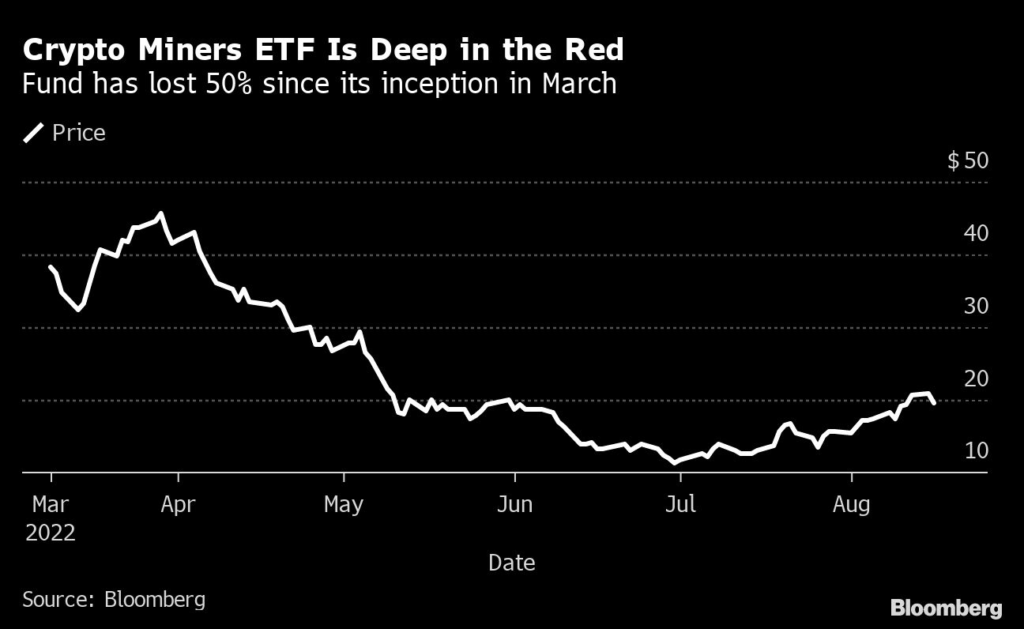
(Bloomberg) — The three-largest US publicly traded Bitcoin mining companies lost more than $1 billion in the second quarter after taking a series of impairment charges spurred by the collapse of cryptocurrency prices. 

Core Scientific Inc., Marathon Digital Holdings Inc. and Riot Blockchain Inc. posted net losses of $862 million, $192 million and $366 million, respectively, in the three months ended June 30, recent quarterly earnings reports show. Other significant miners such as Bitfarms Ltd. and Greenidge Generation Holdings Inc., which reported results Monday, were also forced to write down the value of their holdings in the wake of the almost 60% drop in the price of Bitcoin during the quarter. 

While the shares of crypto-mining companies have enjoyed a respite in recent weeks, they are still deep in the red this year. The miners had to shift from their Bitcoin-hoarding positions and sell coins as they struggled to repay debt and cover operational costs in the recent quarter. That continued into the third quarter.

“Public miners are still dumping their Bitcoin holdings at a higher rate than their production rate,” Jarand Mellerud, an analyst at Arcane Crypto, wrote in a research note. “Public miners sold 6,200 coins in July, making July the second highest BTC selling month in 2022.” 

The miners weren’t the only industry participants to take significant hits last quarter. Coinbase Global Inc., the largest US crypto exchange, registered a $1.1 billion loss, while MicroStrategy Inc. also had a net loss of more than $1 billion. 

Top public miners sold 14,600 coins in June whereas they produced 3,900, Mellerud said. Core Scientific sold nearly 80% of its coins to cover operational costs and fund expansion in June. Bitfarms sold nearly half of its holdings to pay down a $100 million loan in the same month.   

The miners are raising more debt and sell their holdings and mining rigs to stay afloat. Marathon added an additional $100 million term loan with crypto-friendly bank Silvergate Capital Corp., while refinancing its existing $100 million line of credit in July. The miner also sold its mining rigs for $58 million. Core Scientific has entered a $100 million common stock purchase agreement with B. Riley Principal Capital II. 

The US Securities and Exchange Commission has told public companies with large Bitcoin holdings on their balance sheets they can’t strip out the price swings while disclosing results. The losses aren’t realized unless there is an actual sale of the tokens.

More stories like this are available on bloomberg.com

©2022 Bloomberg L.P.
Amazon Accuses FTC of Harassing Bezos in ‘Burdensome’ Probe

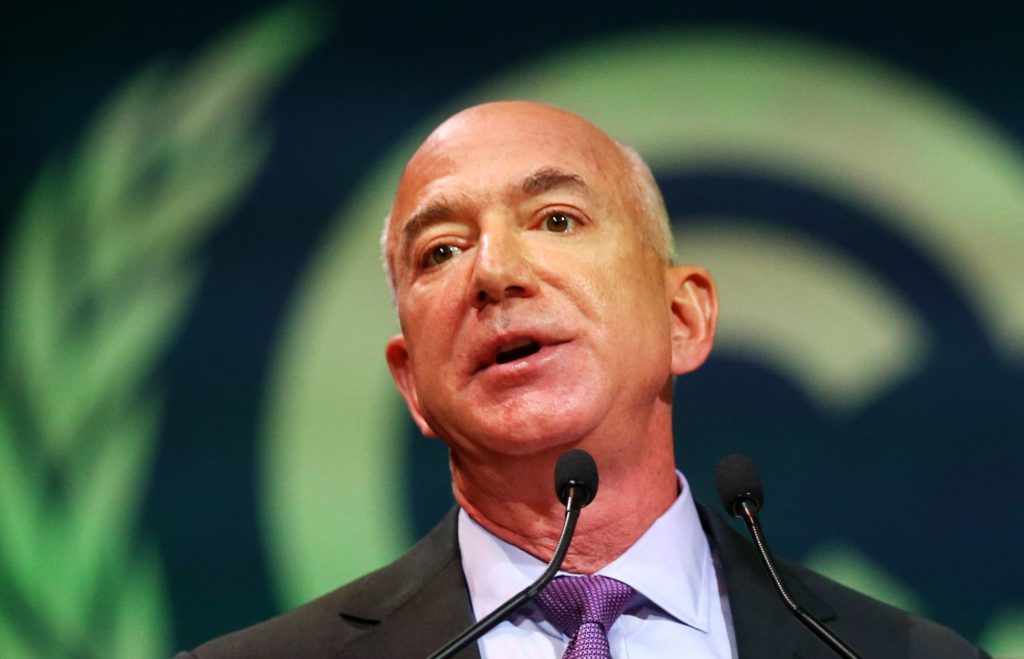
(Bloomberg) — Amazon.com Inc. accused the US Federal Trade Commission of harassing its founder Jeff Bezos and the company’s Chief Executive Officer Andy Jassy as it probes the e-commerce giant’s business practices. 

In a filing made public on Monday, Amazon claimed that FTC staff have made “unduly burdensome” demands as the agency investigates whether the company’s subscription services, including Amazon Prime, violate consumer protection laws. The online retailer is seeking to quash or limit the FTC’s most recent civil investigative demands, which are similar to subpoenas.

Amazon said the FTC’s requests are “unworkable for Amazon to discern the information staff demands and to respond in the timeframe allowed.” 

The FTC, which has both antitrust and consumer protection mandates, has been investigating Amazon for potential anticompetitive conduct for several years. The filing offers an unusually public glimpse into the ongoing struggle between one of the world’s biggest companies and one of its regulators. 

FTC Chair Lina Khan, who took over the position in June 2021, has escalated the investigation, shaking up the team, re-interviewing potential witnesses and asking questions about the company’s recent acquisition of MGM Studios, Bloomberg reported in May.

The FTC declined to comment.

Amazon has taken a particularly antagonistic approach as it faces scrutiny from the FTC, said Maurice Stucke, a former prosecutor in the Justice Department’s antitrust division who now teaches law at the University of Tennessee. Stucke pointed out that Amazon previously attempted to force Khan to recuse herself from the Amazon investigation altogether.

“Generally, this approach over the long run is not workable,” said Stucke, comparing Amazon’s approach to Microsoft Corp.’s stance in the 1990s as it faced antitrust scrutiny from the Justice Department. “The day of reckoning for Amazon is coming.” 

Microsoft was “very confrontational” when it first began battling the government in the 1990s, but “ultimately, they relented,” said Stucke. Microsoft appealed after losing at trial and the case was settled in 2001.

The Biden administration has stepped up antitrust enforcement as a keystone of its economic policy, seeking to reverse what antitrust officials view as decades of lax oversight over corporate consolidation and market power.  

The FTC served individual information demands to 20 current and former Amazon employees at their homes in June, according to the filing.

Bezos and Jassy are also petitioning to quash the FTC requests directed at them, arguing that the commission could obtain the same information from the documents and testimony that company executives have already offered. Business Insider reported earlier on the filing.

The FTC will be required to respond to Amazon’s allegations over the next few months. Then the commission will hand down a ruling about how to move forward.

Amazon in the filing said it has been cooperating with the FTC’s investigation into Amazon Prime since March of last year. The company said it so far has provided over 37,000 pages of documents. Staff have been given a deadline of this fall to make a recommendation to the commission. Amazon is represented by Covington & Burling LLP.

The FTC staff fell silent for months until the commission again escalated the probe in April, according to the filing. Amazon is seeking to narrow the FTC’s follow-up request from June, which the company described as “extraordinarily broad,” including questions about Amazon Prime as well as Audible, Amazon Music and Kindle Unlimited. The FTC had demanded responses by August 1.

(Updates with outside comment and more details about probe from seventh paragraph)

More stories like this are available on bloomberg.com

©2022 Bloomberg L.P.
Ratan Tata, 84, Backs Startup That Staves Off Senior Loneliness

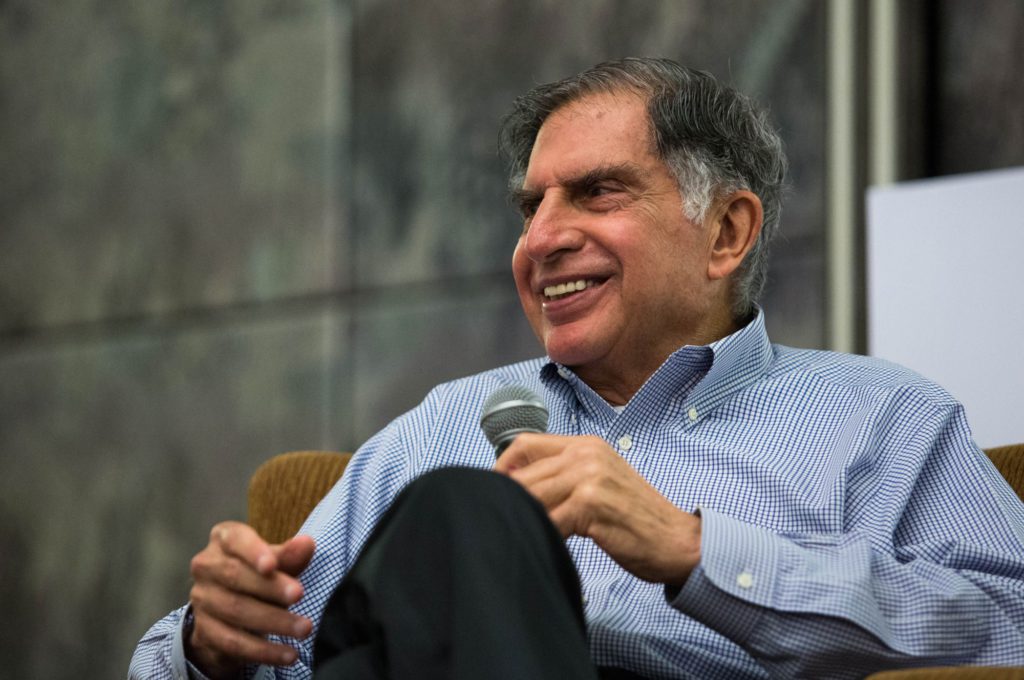
(Bloomberg) — Ratan Tata, the octogenarian industrialist who steered the $128 billion Tata Group for decades, has backed a startup that connects senior citizens with young graduates for meaningful friendships.

Goodfellows, which promotes “inter-generational friendships” said on Tuesday that it received a seed investment of an undisclosed sum from Tata, the influential chairman emeritus of Tata Sons Ltd., which runs about 150 companies including some of India’s most valuable such as software outsourcer Tata Consultancy Service Ltd. and the country’s largest steelmaker Tata Steel Ltd.

The startup was founded by Shantanu Naidu, 30, who manages Ratan Tata’s office and his startup investment portfolio, in the role of general manager. Naidu also assists Tata as chairman of the group’s massive philanthropy arm, Tata Trusts.

“You don’t know what it is to be lonely until you spend time alone wishing for companionship,” Tata said Tuesday at the startup’s official launch in Mumbai. “You don’t mind getting old, until you get old and you find it’s a difficult world,” he said, addressing a group consisting of seniors and their young friends.

Naidu said the idea for the startup came from his own rapport with Tata, which he termed a “peak example of an intergenerational friendship given the five-and-a-half-decade age difference.”  He added that he gravitates toward those like Tata for their new-found innocence, wisdom, and the motto of savoring every moment.

Tata is credited with turning around the tradition-bound 168-year-old steel-to-airlines group founded by his great grandfather. But he came into his own after his exit from executive duties at the group five years ago, unexpectedly turning into a star figure in India’s startup circles. He has since backed over 50 startups including eyewear retailer Lenskart, digital payments brand Paytm, electric vehicle startup Ola Electric Mobility Pvt. and online stock trading platform Upstox. 

Even a small check from Ratan Tata is considered a badge of honor among the country’s fraternity of entrepreneurs. Naidu, a design engineer and an MBA from Cornell University, the alma mater of Ratan Tata, connected with Tata when he sought funding for his first startup, Motopaws, a social enterprise that provided reflective collars for street dogs. The two bonded instantly.

“He selects his investments intuitively,” Naidu said in a phone conversation after the launch. “He aligns with young people, and backs their drive, and the social impact they will have. It’s never about financial returns.”

Goodfellows connects about 50 “grandpals,” men and women over 70 with “good fellows” in their twenties, an eclectic group of employees, chosen after several round of intense vetting and psychometric testing. Many are recent graduates in engineering, the arts or filmmaking and are paid salaries.  

In a country of about 1.4 billion people, every second Indian is under the age of 25. But over 15 million elderly Indians live alone, either because they have no family or because their children are overseas, which presents a mental and physical health challenges. 

The subscription-based service is only available in Mumbai currently but will be offered in other cities including Bengaluru soon. The startup emphasizes companionship, which could mean anything from going for a quiet walk or watching a movie to just engaging in conversations. Non-profit models that have attempted this have failed, Naidu said, as the companions are unpaid volunteers who don’t commit long-term. 

More stories like this are available on bloomberg.com

©2022 Bloomberg L.P.

Crypto Nomads Move Back to Big Cities Like London, New York in Bear Market

(Bloomberg) — Over the years, Oliver Gale’s workplace view has included the palm-lined promenade of Miami Beach, the sandy shores of Barbados and the turquoise waters of Mexico’s Caribbean coast. 

Now, the 36-year-old crypto entrepreneur is back in London, working out of hotel lobbies. Gone is the gentle sea breeze, replaced by the humming sounds of air conditioners trying to keep the British capital’s unusually warm summer at bay.

Gale is one of many crypto nomads who have started trickling back into major cities like London and New York, as financial hubs start buzzing back to life post-pandemic.

As a subset of digital nomads, roving crypto workers spent the past several years hopping from country to country, persuaded to leave large financial centers as living costs soared. The nomadic life is especially well suited to the crypto crowd, with its 24/7 market and ethos of a digital, borderless monetary future. But pandemic travel restrictions, followed by a crash in cryptocurrency prices have made it less practical and too expensive of a lifestyle to maintain.

“People want to be where business is happening and opportunities to expand their network are present,” said Mary Elizabeth Elkordy, who launched her fully remote company Elkordy Global Strategies during the pandemic. “With crypto integrating into more aspects of traditional businesses and industries — being in a major city like New York or London is beneficial from a networking standpoint as well.”

Gale, who is also the co-founder and CEO of blockchain project Panther Protocol, returned to London in March 2020 to start Elemental.io, a consumer credit platform formerly known as PayMachine. 

“London is considered the fintech hub of the world and has great tax benefits and fundraising incentives,” said Gale, who boasts British and Barbadian passports. 

The population of London rose 4% in July 2022 from the same month two years ago, according to NHS Digital data. Offices are starting to see workers return, although not to pre-pandemic levels just yet. About 60% to 70% of workers in London are back at their desks, according to data compiled in June by Google, which tracks the movements of some of its users.

Migration out of many New York City neighborhoods is also reversing as more households are moving to Manhattan than before the pandemic in 2019, according to Melissa, a global data intelligence and address analytics company. 

From Partying in Venice, to Fasting

Kenzi Wang, co-founder of Symbolic Capital and former vice president and general manager of crypto exchange Huobi Global, relocated back to New York in April after traveling around Europe and Latin America.

“I’m staying in NYC because the bear market reduced a lot of noise and unnecessary networking in the market,” said Wang. “I can stay focused on building and hiring for my company.

The current crypto winter reminds him of the previous crash when cryptocurrency prices plunged 80% and it became “a highly efficient time to build” new products and services. The price of one Bitcoin is down 50% this year from its all time high of nearly $69,000 in November 2021. 

Wang’s nomadic life included partying with Hollywood actor Vin Diesel during the 2021 Venice Film Festival and strolls on Barcelona’s Las Ramblas. Now he has been slipping back into a life of socializing, playing basketball and expanding his crypto ventures in the Big Apple.

“I’ve also gotten into 20-hour daily fasting and lost a bunch of weight after losing the nomadic conference lifestyle,” Wang said.

Other nomads have hit pause on travel to get their financial bearings.

“This most recent turn of economic events and the consequent bear market has hit my finances a little,” said 37 year-old Sukanta Sekhar Das, the chief executive of information site CoinMarketBag. “So I thought it would be prudent for me to recoup some of my losses, regain my composure, and move back to a city I love for a permanent residence.” 

Das, who spent the better part of the last five years traveling around the world, recently settled down in Seoul, where he says the “crypto scene” is great.

“I’m saving a fortune in travel costs — not to mention the absolute nightmare that travel has been over the past 12-18 months,” he added. 

Nomads Are Growing Up

Even as room rents in London rise 15% from last year, according to data compiled by roommate search website SpareRoom, and Manhattan rents climb to new highs, some nomads are returning to big cities for more stability. Many of them are, after all, growing older and finding that the lure of being a nomad is not always easy to reconcile with the demands of starting a family. 

“My wife, then girlfriend, was unhappy and wanted me to travel less, and I also found that I wasn’t very productive work-wise when I was constantly on the road,” said Lane Rettig, a 39-year-old former Ethereum core developer who spent more than four years on the global road before returning to New York in 2020. 

Rettig, now a core developer at crypto project Spacemesh, purchased a condo in the New York neighborhood of Harlem and is “grappling with how to stay plugged into a super global, nomadic community with a newborn and a mortgage.”

To be sure, some people will never stop roaming. Burning Man, an annual arts festival held in Nevada’s Black Rock City around the US Labor Day holiday, is on Gale’s agenda.

“Entrepreneurship is a game of balancing your responsibility and what you wish to do,” he said. “It is an important part of my life to go on adventures — work and play — strike up a lifestyle which is dynamic and creative.”

More stories like this are available on bloomberg.com

©2022 Bloomberg L.P.
Netflix Burns Shorts as ‘Extreme’ Bearishness Ebbs

(Bloomberg) — Investors who bet against Netflix Inc. in recent months might now be licking their wounds. 

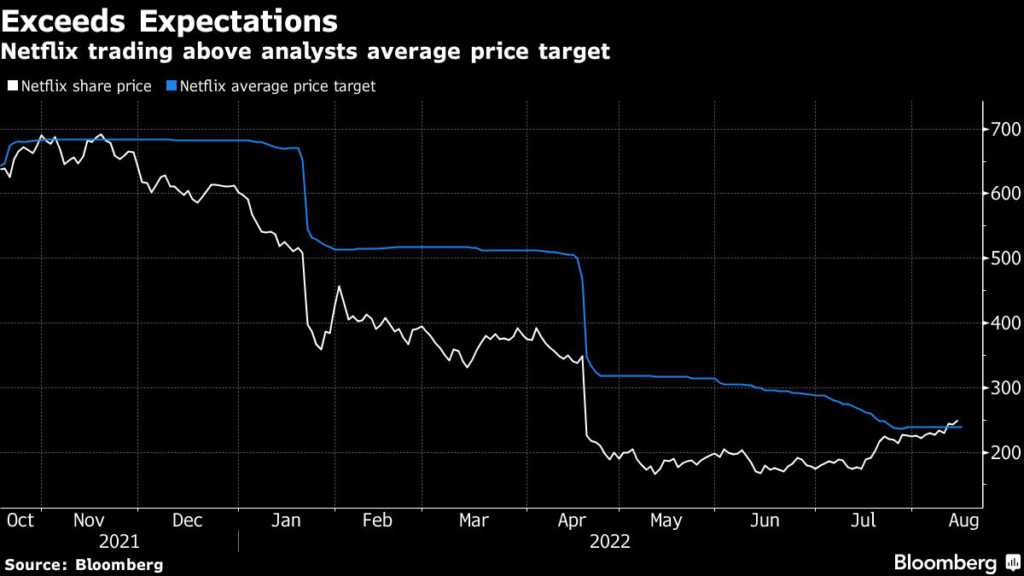
Shares of the streaming giant have surged about 50% from their May low, buoyed by the promise of new features to revive growth, better-than-expected quarterly results and the runaway success of the latest installment of sci-fi thriller “Stranger Things.” 

That’s hurting short sellers, who borrow shares and sell them, hoping to buy them back at a lower price to profit from the difference. Since mid-May, they have seen $996 million in mark-to-market losses, according to S3 Partners. 

At its May low, Netflix was down 72% for the year as the company faced mounting competition, customers whose finances are getting pinched by rising inflation, the possibility of a global recession and the end of the pandemic-fueled streaming boom.

“Bearishness was extreme,” said Neil Campling, head of technology, media and telecom research at Mirabaud Securities. “The stock got to extreme oversold levels, and traded at a massive discount to trend valuation, to peers, and to history.”

To be sure, with the stock still down 59% in 2022, shorts that have been bearish since the start of 2022 are still sitting on $2.69 billion in mark-to-market profits, according to Ihor Dusaniwsky, managing director of predictive analytics at S3 Partners. 

The recent rally in Netflix’s shares reflects optimism about the start of a much-anticipated version of the streaming service that will carry advertising, a crackdown on password sharing and better-than-feared second-quarter subscriber loss. The company also forecast growth in its subscriber base after two quarters of contractions. 

Bears who gave up on their bets may have added fuel to the surge. In the past month, short sellers have bought back about 2.4 million shares worth $599 million, according to S3 Partners. That’s an 18% decline in the total amount of shares shorted as Netflix rallied.

“Netflix shorts have been actively trimming their short exposure after the most recent earnings call — looking for the worst to be over and for this quarter to reflect better earnings andor user growth,” Dusaniwsky said. 

Netflix shares are still cheaper than usual after their rebound. They’re priced at about 22 times profits projected over the next 12 months, well below the 10-year average of 80 times. The Nasdaq 100 is almost at 24, while the S&P 500’s price-earnings ratio is 18.

Others are bracing for some volatility as competition concerns and rising costs aren’t going away any time soon. 

“This stock can do very well over the next 12 to 24 months, but there will probably be a better entry point in the fall,” said Matt Maley, chief market strategist at Miller Tabak + Co. 


Tech Chart of the Day 

Tesla Inc. shares have rallied about 48% from the lows touched in late May. George Soros’s investment firm added a new $20 million position in the electric-car company, according to a regulatory filing on Friday. The shares, which are down about 11% this year, rose in early trading Tuesday.

Top Tech Stories

  • Apple Inc. laid off many of its contract-based recruiters in the past week, part of a push to rein in the tech giant’s hiring and spending, according to people with knowledge of the matter.
    • Apple set a Sept. 5 deadline for corporate employees to be in the office at least three days a week, marking its latest return attempt after Covid-19 spikes delayed its plans several times.
  • Tencent Holdings Ltd. plans to sell all or much of its stake in food delivery giant Meituan to appease Beijing and lock in profits, Reuters reported, citing four sources with knowledge of the matter.
    • Shares of Meituan and other Tencent investees plunged on the news. Meituan slid more than 10% in Hong Kong, while Kuaishou Technology fell more than 5% and Bilibili Inc. dipped as much as 4.7%.
  • Twitter Inc. was ordered to hand over files from its former consumer product head to Elon Musk on spam and bot accounts the billionaire has cited in seeking to abandon his $44 billion purchase of the social media company.
  • Investment firms Tiger Global Management LLC and Soros Fund Management piled into some of the biggest technology companies weeks before big tech spiked on optimism the Federal Reserve’s tightening won’t be as aggressive as previously thought, the latest 13F filings show.
  • Peloton Interactive Inc. is planning to redesign its bikes so that customers can self-assemble them at home and will explore letting users beam its content to rival workout machines, part of a wide-ranging turnaround bid under Chief Executive Officer Barry McCarthy.
  • Fintech giant Ant Group Co.’s valuation was trimmed again by global investors who bought private shares ahead of its suspended initial public offering.
  • The semiconductor market enjoyed a massive run-up in orders during the pandemic, sending sales and stock prices to new highs and triggering a global scramble to find enough supplies. There was hope in some circles that the boom could be sustained for several more years without a painful pullback, but chipmakers are now facing a familiar problem: growing inventory and shrinking demand.

(Updates share price moves throughout.)

More stories like this are available on bloomberg.com

©2022 Bloomberg L.P.

Close Bitnami banner
Bitnami
