Bloomberg

How North Korea Became A Crypto Hacking Powerhouse

(Bloomberg) — In late July, allegations surfaced that some North Koreans were plagiarizing online resumes and tricking companies, including crypto companies, into hiring them. It’s part of a broader effort to raise money for North Korea’s government weapons program. It could also help the authoritarian nation evade global sanctions. 

How did North Korea get so good at tricking crypto employers? And what does all of this mean for the security of crypto companies? 

Bloomberg reporter Jeff Stone joins this episode to explain. 

Follow us on Twitter @crypto, and subscribe to the Bloomberg Crypto Newsletter at https://bloom.bg/cryptonewsletter

  • Listen to Bloomberg Crypto on the iHeartRadio App
  • Listen to Bloomberg Crypto on Apple Podcasts
  • Listen to Bloomberg Crypto on Spotify  

More stories like this are available on bloomberg.com

©2022 Bloomberg L.P.

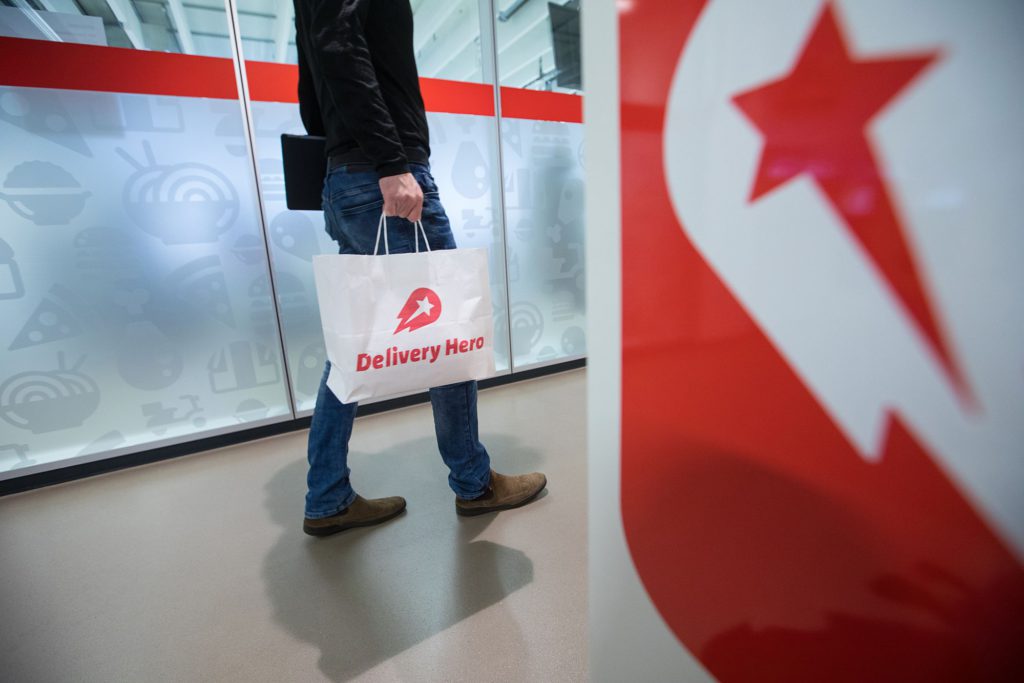
Delivery Hero Sees Path to 2023 Profit Powered by Asia Unit

(Bloomberg) — Delivery Hero SE sought to reassure investors with an accelerated plan to reach profitability by next year driven by its Asia business despite a broader slowdown in the food delivery industry. 

While growth has eased following a pandemic surge, the Berlin-based company said Tuesday it will generate positive adjusted earnings in fiscal year 2023. It also forecast the value of transactions on its platform will grow 7% this quarter from the second quarter.

Delivery Hero’s Asia segment already generated positive adjusted earnings in the second quarter, it said in an earnings statement. Shares rose in early trading in Frankfurt.

The company hasn’t set a timeline for generating free cash flow yet but an update may come soon, according to Chief Executive Officer Niklas Oestberg. “The path is pretty clear,” he said in an interview. 

Last month, Delivery Hero cut its outlook for sales and orders for the year, joining others in the the industry that have slashed growth projections. However, the company also said it would buy back convertible bonds and that its margins would be better than expected. 

Competitors such as Deliveroo Plc and Just Eat Takeaway.com NV previously announced plans to boost revenue and cut costs as orders decelerate after a period of rapid growth during lockdown restrictions. 

Key Insights

  • Delivery Hero confirmed previous guidance for 2022 that it will generate gross merchandise value of as much as 46.9 billion euros ($47.6 billion) and total segment revenue of as much as 10.4 billion euros.
  • The company reiterated its forecast that its margin of adjusted earnings before interest, taxes, depreciation and amortization to gross merchandise value will be -1.5% to -1.6% this year.
  • It said it sold its entire stake in Zomato Ltd., valued at $60 million, in July.
  • Oestberg said in the interview that the accelerated path to profits will be acheived from steps such as offering fewer discounts, boosting efficiency and growing scale.
  • He added that he’s seen little impact from rising inflation, although increased consumer prices have slightly dampened demand in Europe.

Market Context

  • Shares in Delivery Hero rose as much as 7.5% Tuesday in Frankfurt.
  • Shares are down 45% year-to-date, compared to a 22% drop for an index of European technology companies.

Get More

  • Delivery Hero Rises on ‘Reassuring’ 3Q Guidance: Street Wrap
  • Delivery Hero Shares Spike After Forecasting Narrower Losses 
  • Delivery Hero, Glovo Raided by EU Over Antitrust Concerns 
  • After $30 Billion Rout, Food Delivery Firms Face Growth Slowdown

(Updates throughout with more info, CEO interview, shares)

More stories like this are available on bloomberg.com

©2022 Bloomberg L.P.

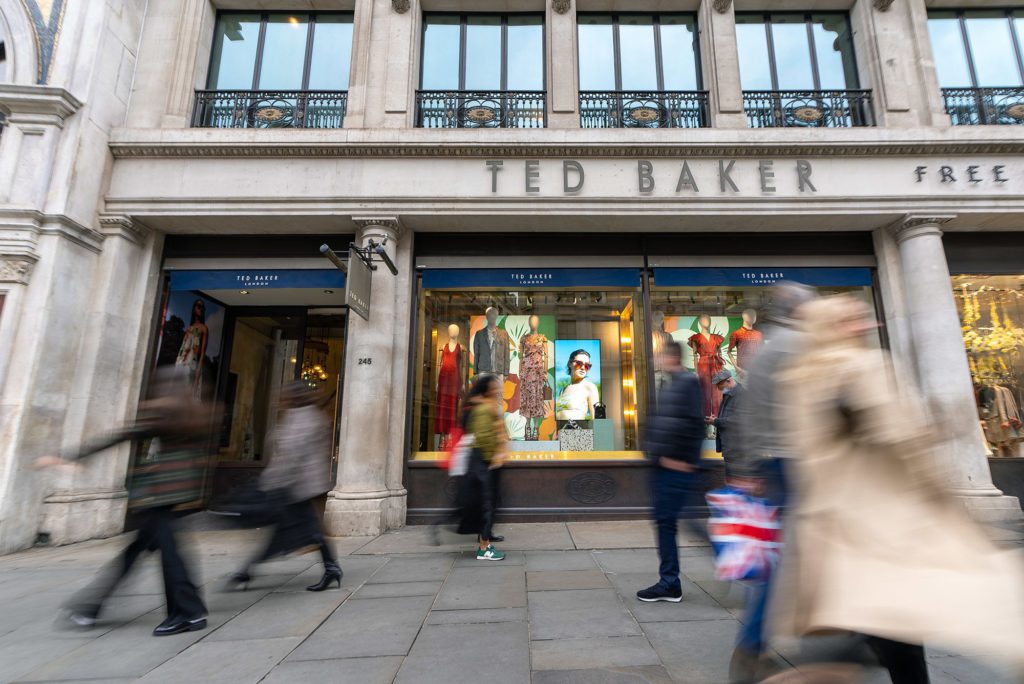
Ted Baker Agrees £211 Million Sale to Authentic Brands

(Bloomberg) —

Authentic Brands Group Inc., the owner of Juicy Couture, has struck a deal to buy Ted Baker Plc for about £211 million ($254 million) in a cut-price cash deal which could secure the future of the struggling UK fashion chain. 

The US group offered 110 pence a share for the chain, best known for its floral designs, according to a statement Tuesday. The deal represents a premium of about 18% to the retailer’s closing price on Monday. 

Ted Baker stock was up more than 16% at 9:12 a.m. in London. The company’s directors are unanimously recommending the deal.

New York-based Authentic Brands previously held discussions with Ted Baker and indicated it was willing to pay a higher price but then walked away. Private equity fund Sycamore Partners Management LP also bowed out of the sale process after offering as much as 137.5 pence a share.

Founded by Jamie Salter, Authentic Brands has become a key consolidator in the retail industry and is the owner of licensing and marketing rights to names like David Beckham and Juicy Couture. It agreed to buy Reebok from Adidas AG in August of last year for $2.5 billion.

Authentic Brands said Ted Baker is “a distinctive British lifestyle brand” and one option it’s exploring is to merge the UK retailer’s operations in North America with SPARC Group LLC, its joint venture with Simon Property Group which operates about 1,660 stores. 

The lower price agreed comes amid tough market conditions for British retailers and as Ted Baker’s turnaround struggles to regain momentum. The chain was engulfed in a scandal in 2019 when founder Ray Kelvin departed after being accused of inappropriate hugs and other behavior in the workplace. Kelvin denied any wrongdoing. Led by Chief Executive Officer Rachel Osborne, Ted Baker shares have lost more than 90% of their value in the past four years. 

“As hard as leaving Ted has been, to this day I feel the same passion for design and product to do it all again,” Kelvin said in a separate statement Tuesday. “I am unsure if Ted Baker is still the company I once knew, however I hope under new ownership it will regain its identity.” 

Kelvin still owns more than 10% of the company. The two largest shareholders are Toscafund Asset Management, founded by veteran city investor Martin Hughes, and Schroders Plc. Toscafund first invested in Ted Baker about three years ago. 

Ted Baker has grown to 377 stores and concessions worldwide since Kelvin started the business as a men’s shirt shop in Glasgow in 1988. The company offers its own-design mens and womenswear and accessories and is also known for its mens barbers under the name Ted’s Grooming Room. 

Ted Baker is being sold via a UK arrangement that requires 75% approval from shareholders. It’s expected to be completed during the fourth quarter. 

(Updates with founder comments in eighth paragraph, number of stores in final graph.)

More stories like this are available on bloomberg.com

©2022 Bloomberg L.P.

China Facing Power Supply Threat From Drought in Sichuan

(Bloomberg) — A heat wave in Sichuan is curbing hydropower generation in a growing threat to electricity supply and economic growth in one of China’s most-populous provinces. 

Some factories in the manufacturing hub in southwestern China are curbing production, and the extreme weather may also cut supplies of materials like polysilicon and lithium that are vital to the energy transition. 

High temperatures and drought are the worst on record, with the heat expected to continue for another week, according to the Sichuan Provincial Economic and Information Department. Water flows into hydropower reservoirs have dropped by 50% since the start of the month from average historical levels, just as the hot weather boosted power demand, it said on a government website.  

The drought is primarily a threat, at least at this stage, to power generation. That’s in contrast to Europe, where the shriveling Rhine River is risking the transit of fuel and other goods. Still, river and coastal shipping carries around 16% of goods in China, according to a transport ministry report in 2020, so there could be problems if water levels keep dropping.

Sichuan and surrounding areas have been grappling with heat and drought since July, with water levels for the Yangtze River — China’s largest waterway — falling to the lowest level for this time of year, according to a report from state-run Xinhua news agency. The province is particularly dependent on hydropower and also sells river-generated electricity to heavily populated eastern parts of China including Shanghai and Zhejiang. 

Sichuan accounts for nearly 15% of China’s polysilicon production, and the power outages will further tighten the market, Morgan Stanley analysts including Simon Lee said in a note. It will also reduce lithium supply and push up prices, Daiwa Capital Markets including Dennis Ip said in a note.

The province is also a major manufacturing hub, with Foxconn Technology Co. making Apple iPads there. A spokesman for the Taiwanese company said there is limited impact from the drought on the company’s operations in Sichuan.

Volkswagen AG also has a plant in Sichuan. The automaker’s China spokesperson said its factory in Chengdu is affected by power shortages, but it was only expecting slight delays in deliveries to customers.

In Hubei province, next to Sichuan, outflows from the Three Gorges Dam, the world’s largest hydroelectric power station, are down about 40% from last year, according to sxcoal.com, an industry news service.

However, China is unlikely to see nationwide power outages due to the drought, said Hanyang Wei, an analyst at BloombergNEF.  Most provinces are more dependent on coal for electricity generation, and plants stocked up on the fossil fuel before summer in line with government directives, he said.

Here are some of the companies impacted by the drought in Sichuan:

  • At least three fertilizer companies have curbed production, with Sichuan Lutianhua Co. saying this week’s power outage will lead to 30 million yuan ($4.4 million) of losses, according to company filings
  • Aluminum smelter Henan Zhongfu Industry Co. said in a filing that it will halt some production in Sichuan for a week, cutting profit by 78 million yuan
  • Leading solar manufacturer Tongwei Co. said it’s received a power rationing notice

Events Today

  • Nothing major scheduled

Today’s Chart 

Recent surveys show Chinese households are more pessimistic about future income growth than they’ve ever been. They amassed 10.3 trillion yuan in bank deposits in the first half of 2022, an almost 13% increase from the same period a year earlier and the largest jump on record. Their borrowing grew some 8%, the slowest pace since 2007.

On The Wire

BHP Group, the world’s biggest miner, unveiled a record profit on gains in prices of commodities from coal to nickel, and offered some optimism on Beijing’s efforts to reboot Chinese growth and stabilize the ailing property sector.

  • BHP Sees China Providing Boost to Slowing Global Economy
  • CHINA INSIGHT: Subways, Housing, Steel Show Strain on Economy
  • China’s Biggest Builder Loses Its Last Investment-Grade Rating
  • China Covid Cases Hold Near Three-Month High on Holiday Hotspots
  • ‘Too Little, Too Late’ China Rate Cut Spurs Call for More Moves

The Week Ahead

Wednesday, Aug. 17

  • China July output data for base metals and oil products
  • EARNINGS: HKEX, Tongwei, China Resources Power

Thursday, Aug. 18

  • China’s 2nd batch of July trade data, incl. agricultural imports; LNG & pipeline gas imports; oil products trade breakdown; alumina, copper and rare-earth product exports; bauxite, steel & aluminum product imports
  • EARNINGS: MMG
  • USDA weekly crop export sales, 08:30 EST

Friday, Aug. 19

  • China weekly iron ore port stockpiles
  • Shanghai exchange weekly commodities inventory, ~15:30
  • EARNINGS: Zhejiang Huayou Cobalt, China Moly, Jiangsu Shagang, Xinjiang Goldwind, ENN Energy

Saturday, Aug. 20

  • China’s 3rd batch of June trade data, including country breakdowns for energy and commodities

(Updates with more comments and details throughout.)

More stories like this are available on bloomberg.com

©2022 Bloomberg L.P.

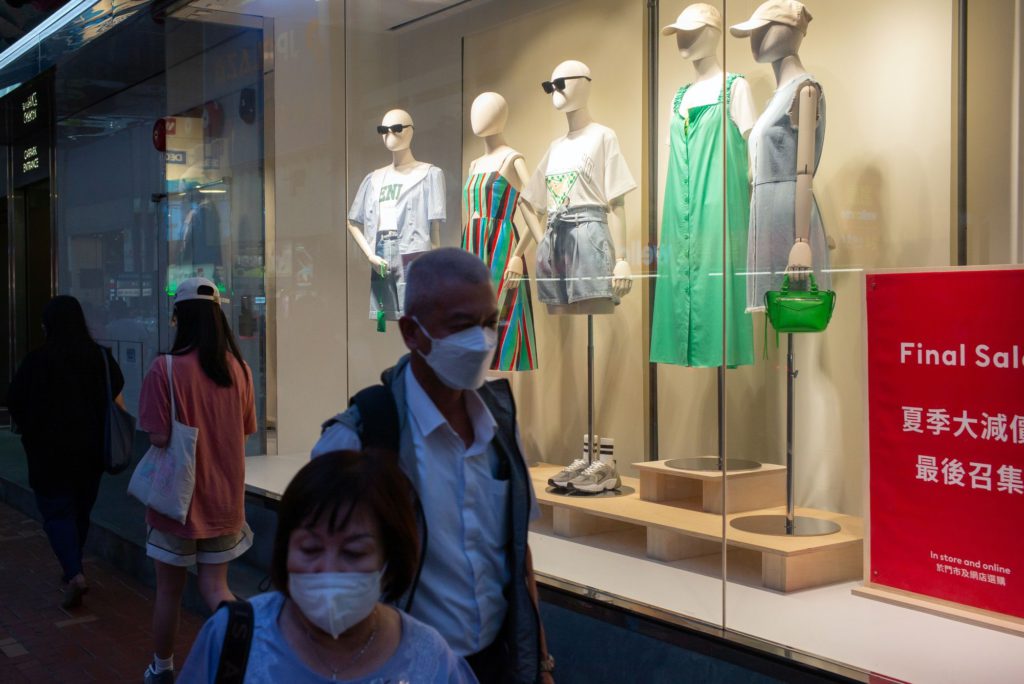
H&M Back to China’s Tmall After Cancellation Over Xinjiang

(Bloomberg) — Retail giant Hennes & Mauritz AB returned to Chinese e-commerce platform Tmall more than a year after it was removed as part of a broader boycott of the Swedish company for its comments about Xinjiang cotton.

The online store, which has more than 14 million subscribers, is now available on the marketplace owned by Alibaba Group Holding Ltd., according to a search by Bloomberg News on Tuesday. Most of the product options, including t-shirts and socks, show single-digit monthly sales volumes, indicating it hasn’t been open for long.

Read more: China Canceled H&M. Every Other Brand Needs to Understand Why

Its outlet locations are still unavailable on Apple Maps and Baidu Maps searches. H&M declined to comment and Alibaba didn’t immediately respond to a Bloomberg News request for comment.

It’s the first time the Swedish retailer has managed to reopen its Tmall store since March 2021, when social media users dug out an undated company statement expressing concerns about accusations of forced labor in Xinjiang. H&M’s treatment became symbolic of the risks Western companies face operating in increasingly nationalistic China, with the company facing the harshest backlash among other big brands including Nike Inc.

Read more: Nationalism in China Has Dethroned Nike and Adidas

H&M had been holding weekly talks with Alibaba about returning to the online platform, people familiar with the matter told Bloomberg earlier this year. They could still sell products on their self-run website.

As well as vanishing from online marketplaces and maps, about 60 of its stores closed — roughly 12% of the brand’s total Chinese network — as the furore escalated. While the apparel giant is less China-focused than brands like Uniqlo or Nike, the nation accounts for about 3% of sales and is home to almost one in 10 brick-and-mortar stores. It’s also H&M’s biggest manufacturing hub, with more than a third of its suppliers.

H&M Chief Executive Officer Helena Helmersson said in March that “when it comes to China, we are still in a complicated situation.”

Still, Tmall users may face difficulties finding the store. When typing the words “HM Official Flagship Store”, the store appears on the screen. But the official store won’t show for terms like “HM” or “H&M”. That’s commonly seen when China’s online marketplaces and social media intend to filter some sensitive words.

The company is yet to trumpet its return to potential customers. Its Weibo account makes no mention of the move, and has just 10 posts since the boycott started in March last year. That compares with at least 10,000 posts between 2011 and 2021, according to data compiled by Bloomberg News.

(Updates to add details throughout)

More stories like this are available on bloomberg.com

©2022 Bloomberg L.P.

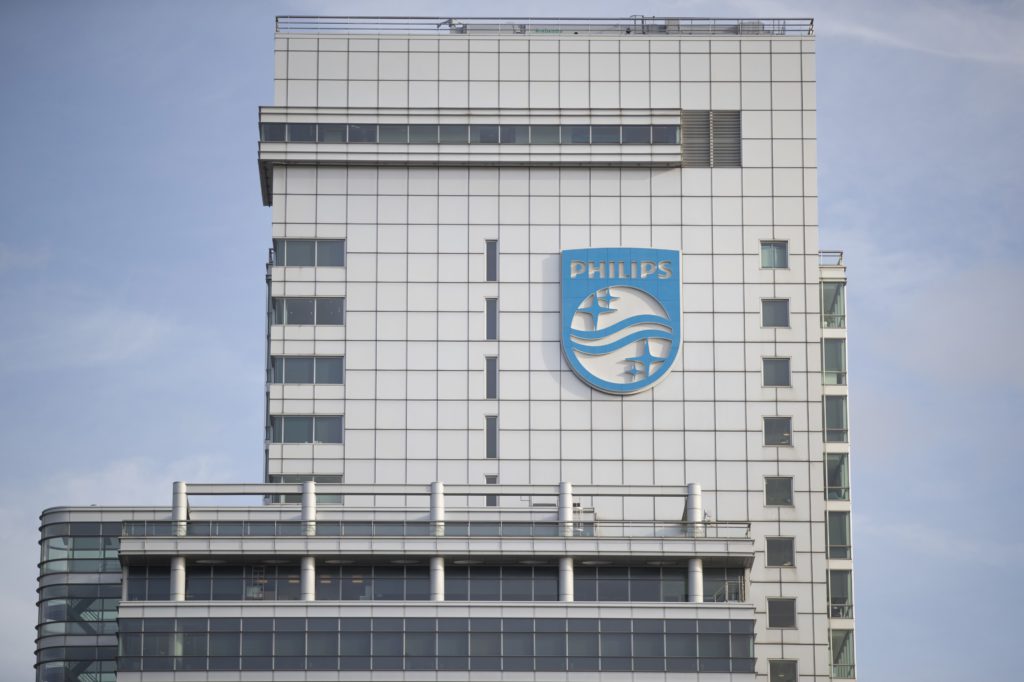
Philips Names New CEO Who Has Led Respiratory Device Recall

(Bloomberg) — Royal Philips NV said Roy Jakobs, who has been leading the company’s response to a recall of medical gear, will take over as new chief executive officer. 

Jakobs will become CEO in October, succeeding Frans van Houten who’s been in the top role for 12 years and nearing the end of a third term, the Dutch maker of medical devices said Tuesday. 

The executive, with previous roles at Shell Plc, is “deeply involved in Philips’ continuous quality improvement initiatives and is fully committed to patient safety,” Chairman Feike Sijbesma said in a statement. 

Philips rose as much as 2.7% in Amsterdam. The shares are down around 39% this year.

“It’s always difficult of course to let go after raising the company that I have a lot of passion for for so long,” van Houten said on a call with reporters, adding that it was not his intention to stay longer. “It is a logical moment to hand over after 12 years, it is a planned process.”

Recall Expert

Jakobs joined Philips in 2010 and was put in charge of turning around the company’s Connected Care businesses in early 2020, managing the response to the Covid-19 crisis. The following year, he took on responsibility for a recall of medical devices to treat sleep apnea.

READ: Philips Knew of CPAP Foam Decay Years Before Recall, Emails Show

Philips continues to face court cases over noise-dampening foam inside ventilators that treat sleep apnea. Users have alleged that inhaling the foam after it disintegrates poses a cancer risk. The company started its first recall of the devices last June and has made financial provisions of around 885 million euros ($900 million). 

“While I am proud of our many accomplishments, much remains to be done to enhance the resilience of Philips to manage through current setbacks and adverse market conditions,” van Houten said. 

(Updates with shares in fourth paragraph)

More stories like this are available on bloomberg.com

©2022 Bloomberg L.P.

Darktrace Shares Jump on Takeover Talks with Thoma Bravo

(Bloomberg) — Shares of Darktrace Plc surged after the UK cybersecurity company said it’s in early discussions with private equity firm Thoma Bravo LP about a possible takeover.

The buyout firm must announce whether it plans to make a bid by Sept. 12, and there’s no certainty that any offer will be made, Darktrace said in a statement on Monday. The company said that it has received “a number of preliminary and conditional proposals,” and that the discussions with the private equity firm are for a cash offer. 

“This deal could make sense given Thoma Bravo’s recent activity in the cybersecurity space and an attractive current valuation for shares of Darktrace,” Piper Sandler analyst Rob Owens said in a note to clients. 

Darktrace shares jumped 19% at 8:11 a.m. in London trading on Tuesday. The stock had declined 1.3% this year through Monday’s close. The company’s shares have been volatile this year, reaching a high of 511.5 pence in March before tumbling to 287.6 pence in July.

Founded in 2013 by mathematicians and cyber defense experts, Darktrace uses artificial intelligence to check for hacks and suspicious data leaks. Its founding investor was Invoke Capital Partners, an investment firm created by embattled British entrepreneur Mike Lynch. 

As a result, any possible takeover talks will likely involve questions about Darktrace’s historic links to Lynch, the former Autonomy Corp. founder who’s fighting criminal fraud charges related to the sale of that company to Hewlett-Packard in 2011. Lynch formed Invoke following the Autonomy sale. 

Read more: Lynch’s Legal Woes Barely Dent Loyalists’ $1.7 Billion Fortune

Darktrace warned about potential risks arising from Lynch’s legal battles in the prospectus released ahead of its initial public offering. 

(Updates with share move throughout. An earlier version corrected second graph to say that Thoma Bravo must make an offer by Sept. 12)

More stories like this are available on bloomberg.com

©2022 Bloomberg L.P.

Babylon Weigh Take-Private Not Long After SPAC Deal

(Bloomberg) — The owners of Babylon Holdings Ltd. are starting to consider the possibility of taking the health tech company private, less than a year after it went public, people familiar with the matter said.

Babylon, founded by its Chief Executive Officer Ali Parsa, has been holding preliminary discussions with some investors about how to address a crumbling share price that’s wiped almost $4 billion off its value since its October listing in New York, the people said. 

The company is exploring multiple options, ranging from a take private to a potential deal with a strategic partner, and no final decisions have been taken, the people said. The company could also try to raise fresh funding to grow the business, one of them said. 

A Babylon representative said in a statement Monday that it had not held any discussions with any potential acquirer of the company.

Founded in 2013, Babylon runs a health-care app that allows patients to schedule video calls with doctors and other specialists, including physiotherapists, and check symptoms. 

It went public via a merger with Alkuri Global Acquisition Corp., a special purpose acquisition company, or SPAC, run by former Groupon Inc. executives. The deal gave Babylon an implied equity value of about $4.2 billion. Since then, its shares have fallen about 90%, resulting in a market valuation of just $287 million.

Shares in Babylon closed Monday up 9.2% at roughly $0.84.

SPACs, which raise money so that they can buy another, still-private company, were one of Wall Street’s hottest trades during the pandemic bull market. But many of these deals are now struggling in the public markets, with investors watching billions of dollars in value disappear from the SPAC mergers they backed.

Babylon, whose shareholders include Saudi Arabia’s Public Investment Fund, is in talks to cut about 100 jobs across its global business as part of a plan to reduce costs and become profitable, Bloomberg News reported in July.

(Updates with company share price in seventh paragraph.)

More stories like this are available on bloomberg.com

©2022 Bloomberg L.P.

Crypto Firm BitGo Says it Drew All-Cash Offer, Could Opt for IPO

(Bloomberg) — Crypto custody firm BitGo attracted an all-cash offer that exceeded the value of the now-terminated deal with Mike Novogratz’s Galaxy Digital Holdings, BitGo’s Chief Executive Officer Mike Belshe said in an interview.

  • That came in the last couple of months but BitGo isn’t actively entertaining acquisition offers at the moment and could list on the stock market if the timing is right, he said
  • NOTE: Novogratz’s Spurned Takeover Target Seeks Termination Fee
  • NOTE: BitGo is backed by investors including Goldman Sachs, Craft Ventures, Jump Capital and Galaxy Digital.

More stories like this are available on bloomberg.com

©2022 Bloomberg L.P.

Chipmakers’ Pandemic Boom Turns to Bust as Recession Looms

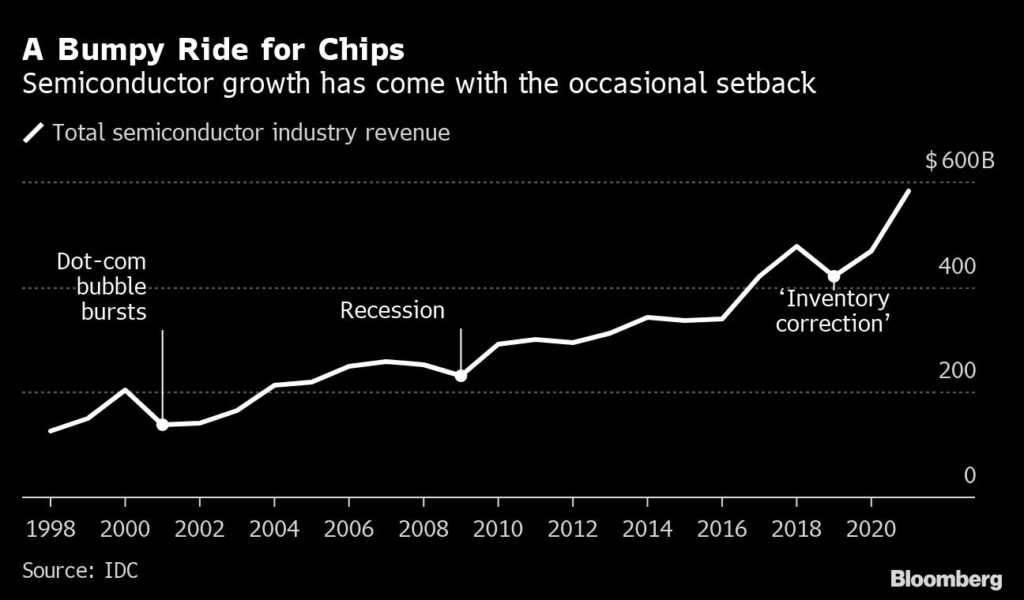
(Bloomberg) — Even in an industry famous for its roller-coaster cycles, chipmakers are bracing for a particularly severe shift in coming months, when a record-setting sales surge is threatening to give way to the worst decline in a decade or more.

The semiconductor market enjoyed a massive run-up in orders during the pandemic, sending sales and stock prices to new highs and triggering a global scramble to find enough supplies. There was hope in some circles that the boom could be sustained for several more years without a painful pullback, but chipmakers are now facing a familiar problem: growing inventory and shrinking demand.

It’s a dilemma as old as the computing age. It takes years to build a chip plant, and they don’t always come online when they’re most needed. In the last few years, the problem was a lack of supply. As recently as this quarter, automakers and some other customers were complaining they still couldn’t get enough electronic components.

But fortunes have turned swiftly for the biggest chipmakers. Companies like Nvidia Corp. are reporting more that 40% annual declines in their core businesses, while Micron Technology Inc. warns that demand is evaporating fast in many areas. This week, Chinese government data showed that output of integrated circuits plunged 17% in July after robust growth in 2021, reflecting supply chain shocks as well as a tapering in demand for lower-end chips from the world’s biggest semiconductor market.

The treachery of the semiconductor cycle was driven home when President Joe Biden signed the $52 billion Chips and Science Act to subsidize domestic production — on the very day that Micron, the US’s biggest maker of memory chips, told investors demand was fading.

“It’s sort of darkly humorous,” said Sanford C. Bernstein analyst Stacy Rasgon. “The politicians are going to find out how quickly shortages can resolve themselves when the industry turns.”

Personal computer makers, some of the biggest buyers of chips, were the harbinger of darker times. Desktop processor shipments dropped to their lowest level in nearly three decades in the second quarter, according to Mercury Research. Total processor shipments experienced their largest year-over-year falloff since about 1984.

It’s a painful hangover following pandemic lockdowns, when the work-from-home trend spurred demand for PCs and other devices. Chipmakers had been rushing to keep up with a flood of orders, and supply-chain snags made customers even more desperate. Manufacturers of electronic devices were willing to buy chips at whatever price they could.

Now consumers are cutting down on big-ticket purchases, and chip buyers are following suit. That’s created what the industry calls an “inventory correction.” The last such downturn was in 2019, and they don’t usually last long. 

But this one is expected to be especially pronounced due to a weakening global economy. If an inventory correction happens at the same time the economy slides into recession, the industry won’t get the speedy rebound it saw after the last slump.

“It’s going to be a bad downturn,” said Gus Richard, an analyst for Northland Securities. 

Christopher Danely, a Citigroup Inc. analyst, expects the industry’s drop to be the worst in at least a decade, and possibly two. Every company and every chip category is likely to suffer, he said.  

One unusual factor this time is a broad push by governments to subsidize new factories and equipment, from the US and Europe to China and Japan. Companies like Intel Corp. lobbied for passage of the Chips legislation, arguing the US needed to be more competitive with Asian manufacturers. Now they’re poised to start adding new capacity at a time of shaky demand.

There are 24 new construction projects of large-scale plants, known as fabs, getting underway in 2022, according to chip equipment industry association SEMI. That’s well above the average of 20 that’s been tracked by SEMI since 2014. Total spending on equipment will reach $117.5 billion in 2022, up 15% from the previous industry record, which was in in 2021. Next year that spending will increase to $120.8 billion, SEMI predicts.

“It used to be a competition between companies,” Richard said. “Now it’s a competition between countries because of the strategic importance. There’s a race between China and the US.” 

The business of manufacturing chips has become increasingly precarious because of the massive upfront costs. Plants with a price tag of up to $20 billion need to be run flat-out 24 hours a day to bring a return in the few years before they become obsolete. The scale required to make that kind of investment has reduced the number of companies with leading-edge technology to fewer than five. And just three, Samsung Electronics Co., Taiwan Semiconductor Manufacturing Co. and Intel, account for the majority of production.

Those companies built their dominance by understanding the economics of the industry better than their rivals. They added production lines at just the right time and made their supply chains as efficient as possible.

But the push to build up chip production in the US and Europe, providing an alternative to Asian manufacturing, could disrupt that drive toward efficiency. 

The industry is “effectively building duplicate supply chains in the US and Europe,” said Fitch Ratings analyst Jason Pompeii. “This transition will result in short recurring periods of heightened revenue and cash flow volatility, particularly compared with the increasing efficiency the industry has enjoyed over past decades.” 

In the immediate term, the risk is “overinvesting in production capacity heading into an economic downturn,” he said.

Chipmakers remain bullish about demand in the long run. Executives still expect the industry to hit $1 trillion in total revenue by the end of the decade. That means their massive factory build-out may well be worth it.

And in the end, no one really knows what will happen, said Bernstein’s Rasgon. That’s the story of the chip industry. 

“Everybody is really bad at forecasting demand,” he said. “They’re too bullish, then they’re too bearish.” 

(Updates with latest Chinese chip output data in the fourth paragraph)

More stories like this are available on bloomberg.com

©2022 Bloomberg L.P.

Close Bitnami banner
Bitnami