Bloomberg

Bitcoin Slumps, Ending a Four-Day Rally, as Volatility Reigns

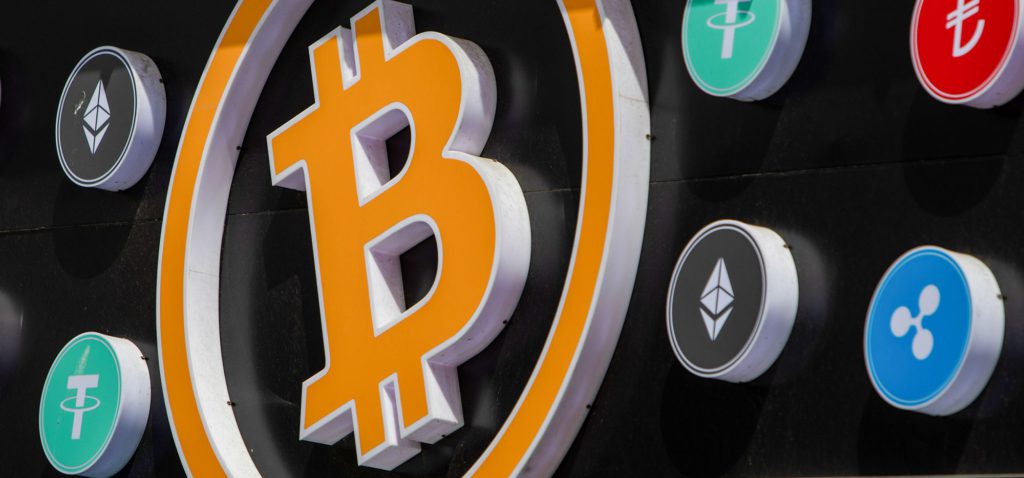
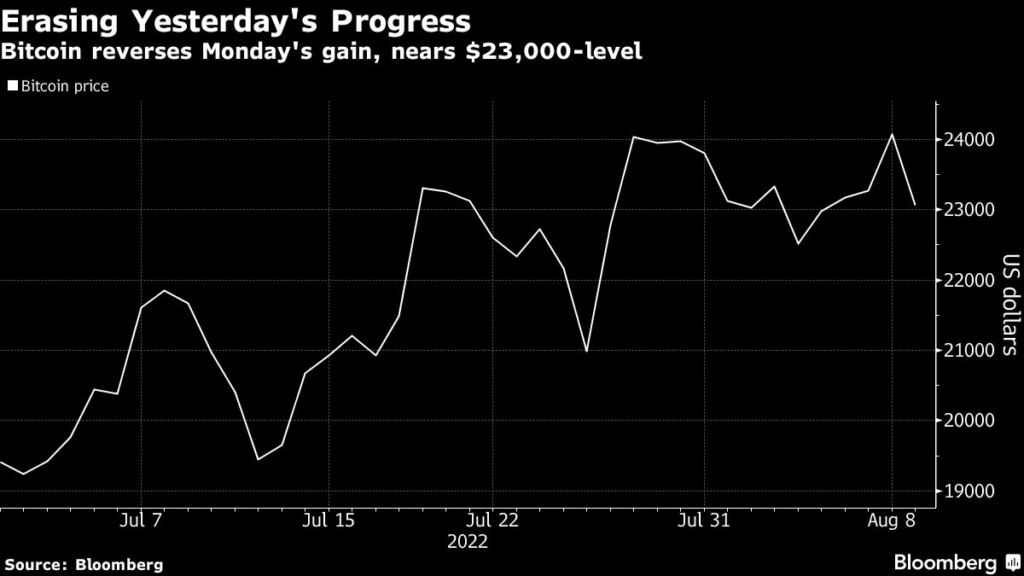
(Bloomberg) — Bitcoin resumed its slump on Tuesday, erasing all of the prior session’s gains and ending a four-day winning streak as volatility continues to whipsaw the crypto world.

The largest cryptocurrency by market value was down 4% to $23,119 at 1:21 p.m. in New York, the biggest one-day drop since June 26. Other cryptocurrencies didn’t fare much better, as Ether — Ethereum’s native token — sank below $1,700 on losses of around 5.7%, Cardano and Solana both took similar losses. 

“The volatility is, and always has been, huge with any of these crypto investments,” Brian Nick, chief investment strategist at Nuveen, said in an interview.

Despite Tuesday’s drop, Bitcoin has enjoyed a recent uptick after months of being beat down, as it finally broke through several closely watched price levels. The bellwether crypto asset has been trading around $23,000 after posting its best month since October in July. 

Still, risk-off sentiment and investor caution abound in the market. Michael Novogratz, the billionaire who founded crypto financial services firm Galaxy Digital Holdings Ltd., said that he is doubtful of Bitcoin will break through the $30,000 level anytime soon in a Bloomberg TV interview on Monday. 

“I quite frankly would be happy if we’re in a $20,000, $22,000 or $30,000 range for a while,” Novogratz said. “We’re not seeing huge institutional flows, to be fair, but we’re not seeing anyone back away.”

Recent turmoil is not likely to ease investor worries as another exchange, Hodlnaut, halted withdrawals and the US Treasury Department slapped the Tornado Cash protocol with sanctions for allegedly. 

Despite the recent gains, buffeted investors are staring at a year-to-date loss of around of 50%. 

More stories like this are available on bloomberg.com

©2022 Bloomberg L.P.

Chipmaker Selloff Deepens as Micron, Nvidia Fan Slowdown Fears

(Bloomberg) — Semiconductor stocks tumbled after Micron Technology Inc. became the latest chipmaker this week to sound the alarm over a slowdown in demand. 

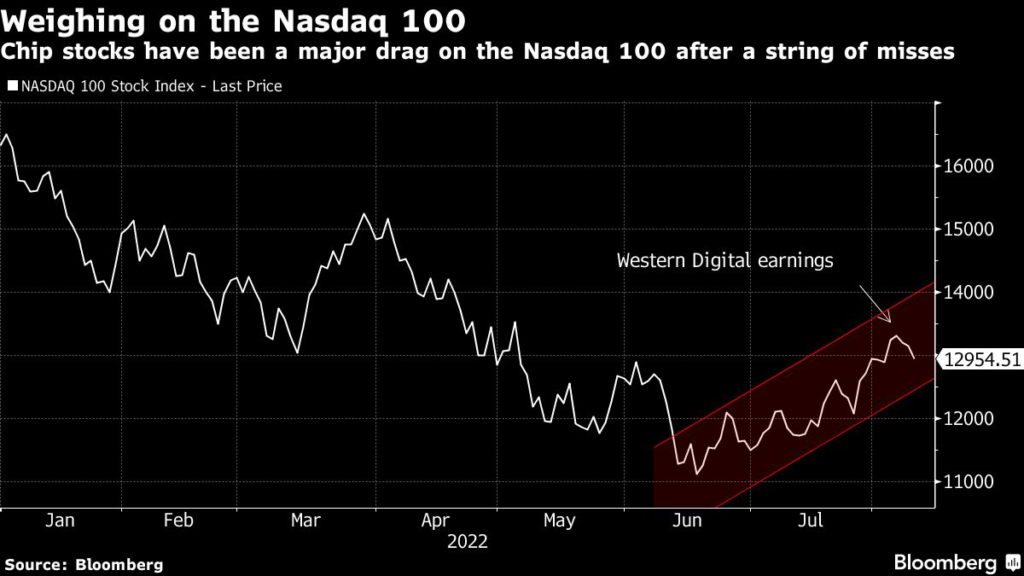
The Philadelphia semiconductor index sank nearly 6% on Tuesday with all 30 members in the red. The decline was the worst in three weeks as investors fled the sector on mounting fears that chipmakers are heading into what could be a prolonged sales slump after years in which customers couldn’t get enough of their products. 

Semiconductor stocks have been a major drag on the broader Nasdaq 100 Stock Index after a string of disappointing financial results and forecasts from chipmakers including Nvidia Corp. and Advanced Micro Devices Inc. The benchmark rallied nearly 20% from a June low before memory and hard disk drive maker Western Digital Corp. helped fuel a selloff in the wake of a weak sales forecast on Aug. 5. The Nasdaq 100 has fallen for three straight days since.

“It appears to be a challenging market for everyone after both Nvidia and Micron had to slash their outlooks,” said Edward Moya, senior market analyst with Oanda.

Makers of equipment used in the production of chips were among the biggest decliners on Tuesday after Micron said it plans to reduce spending on new plants and equipment in response to a drop off in orders. Lam Research Corp. fell more than 10%, while Applied Materials sank 8.8%.

Of the 10 worst performing stocks in the Nasdaq 100 this month, seven are chip stocks. Marvell Technology Inc. is down 8.8%, followed by Lam Research and NXP Semiconducors. The semiconductor index has fallen 28% this year, compared with a drop of 20% for the Nasdaq 100 and 14% for the S&P 500.

More stories like this are available on bloomberg.com

©2022 Bloomberg L.P.

Amazon Warehouse Walkouts Over Pay Seen Spreading Across UK

(Bloomberg) — Hundreds of Amazon.com Inc.’s UK workers are planning walkouts in the coming days after logistics workers clashed with managers over pay. 

A series of walkouts and slowdown protests at at least seven facilities in Essex, Coventry, Bristol, Swindon, Chesterfield, Warrington and Rugeley last week are expected to be followed by further protests over the coming days, according to warehouse workers and the GMB union, which represents some of the Amazon employees.

Hundreds of Amazon workers on social media and in private messaging groups on WhatsApp and Telegram are calling for further protests and work stoppages this week at multiple sites, and for their hourly wage to rise to £15, according to messages seen by Bloomberg.

Amazon has faced periodic walkouts at some US facilities since the start of the pandemic, sometimes with the backing or assistance of labor or workers’ rights groups. The protests have tended to be small in size and participants say they’re seeking higher pay, a break from onerous productivity goals, and safer working conditions, among other demands. 

“This is bigger than anything that has happened before, no doubt,” said the GMB’s Steve Garelick, a regional organizer, in an interview. “I don’t care what the profits are as long as people get paid a fair wage for what they do in the recession we are in.”

In the UK, Amazon has so far given workers pay rise of between 35 pence and 50 pence per hour depending on location and tenure. That’s during a cost of living crisis when inflation is expected to hit 13%.

Read More: Amazon Pledged Bezos’s Attention as Anti-Union Step, Worker Says

An Amazon spokesman said that minimum wage would increase to between £10.50 and £11.45 per hour, depending on location and that workers are also offered benefits including private medical insurance, life insurance, income protection, subsidized meals and employee discounts, which “combined are worth thousands annually,” as well as a company pension plan. Amazon has about 20 warehouses and employs 70,000 people in the UK, the spokesman said. 

Since the pay rise was announced last week, workers have continued to engage in work stoppages. At a fulfillment center in Swindon, UK, about 150-to-200 workers left their stations to sit in the canteen for several hours on Monday night, according to workers who spoke to Bloomberg, who asked not to be identified because they aren’t allowed to talk to the media.

Managers struggled to get protesters back to work and at one point the general manager compared the group to “animals.” The incident was captured on a smartphone video, seen by Bloomberg.

“This was a poor choice of words and we apologize for any offense caused by one of our site managers,” said an Amazon spokesman. 


More stories like this are available on bloomberg.com

©2022 Bloomberg L.P.

Tesla, GM Score Biggest Share of $1.2 Billion EV Order From Startup Autonomy

(Bloomberg) — Tesla, GM, Volkswagen and Ford are among the automakers set to get big orders from Autonomy, a startup offering drivers the option of subscribing to an electric vehicle instead of buying one outright.

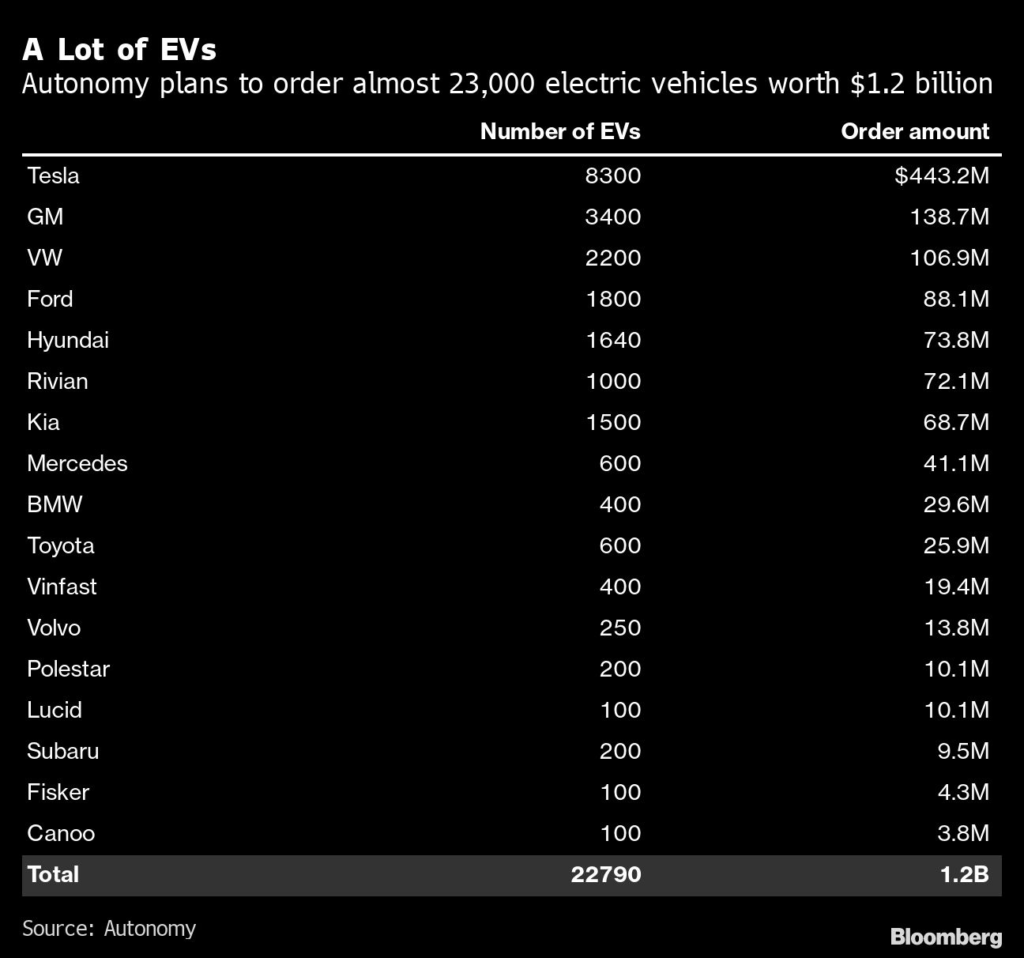
Autonomy plans to announce Tuesday that it’s ordering nearly 23,000 EVs from 17 different automakers for a total outlay of $1.2 billion. With chip shortages limiting production capacity at most automakers, it’s unclear how soon such a fleet could be amassed. The order represents 1.2% of the projected US electric vehicle production through the end of next year.

Some deliveries won’t begin until the fourth quarter or early 2023, Scott Painter, Autonomy’s founder and chief executive officer, said in an interview. The Santa Monica, California-based company launched its subscription service in January and currently has 1,000 cars — all of which are Tesla models. 

“This 23,000 order is really about diversifying away from Tesla and getting into everything at different price points,” said Painter, who is best known for founding auto-pricing company TrueCar Inc.

Read more: TrueCar Founder’s New Venture Will Get You a Tesla in 10 Minutes

Tesla Inc., the market leader in battery-powered cars, is expected to account for 8,300 vehicles worth $443 million, according to the company. Autonomy plans to order 3,400 Bolt EVs and EUVs from General Motors Co., 2,200 vehicles from Volkswagen AG, 1,800 from Ford Motor Co., and 1,640 units from Hyundai Motor Co. It will also buy from newer players such as Lucid Group Inc. and Rivian Automotive Inc. 

Hertz Global Holdings Inc.’s blockbuster announcement last year of plans to buy 100,000 Tesla vehicles paved the way for more fleet deals involving EVs as automakers ramp up production. Tesla models are now available for retail rentals with Hertz in more than 30 markets in the US. More locations are expected in the coming months. 

Hertz has also entered into a partnership with Polestar earlier this year that includes purchasing as many as 65,000 EVS over the next five years. 

More stories like this are available on bloomberg.com

©2022 Bloomberg L.P.

Biden Signs Chips Bill, Unleashing Subsidies for US Production

(Bloomberg) — President Joe Biden signed into law a broad competition bill Tuesday that includes about $52 billion to boost domestic semiconductor research and development, calling it a “once-in-a-generation investment in America itself.”

“We need to make these chips here in America to bring down everyday costs and create jobs,” said Biden at a signing ceremony for the CHIPS and Science Act on the White House South Lawn, joined by executives from US semiconductor firms and congressional leaders.

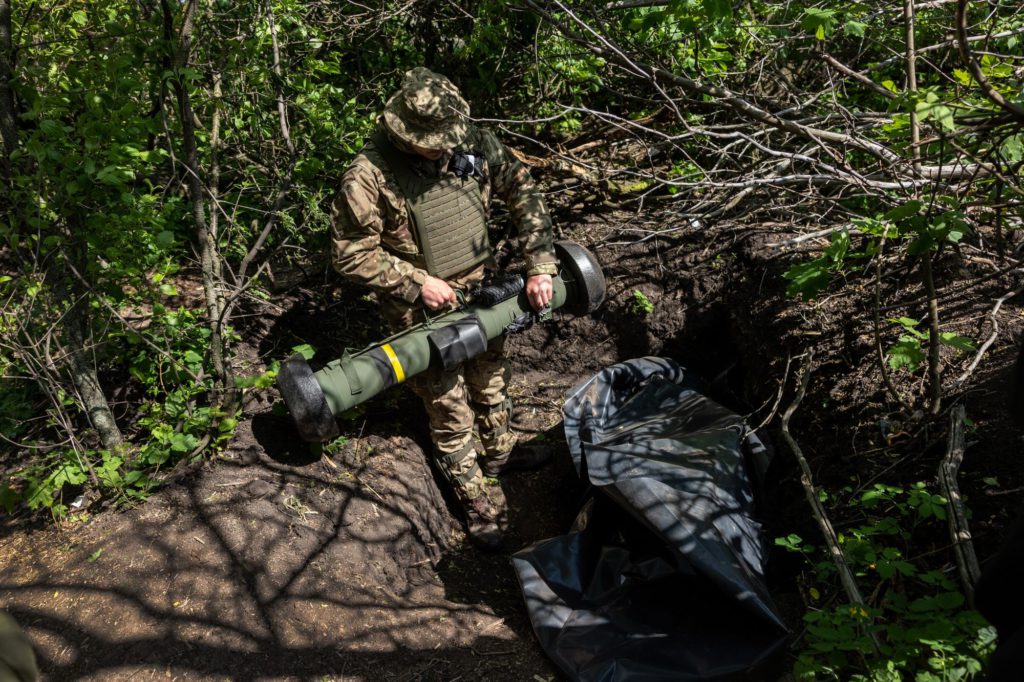
Biden said he had visited the US facility where Javelin missiles were made and said the bill would make the nation less reliant on other countries to provide the advanced chips needed for those weapons systems, as well as other products.

“Unfortunately, we produce zero percent of these advanced chips and China is trying to move way ahead of us to manufacture these sophisticated chips as well,” said Biden. 

“It’s no wonder the Chinese Communist Party actively lobbied US business against this bill. The United States must lead the world in the production of these advanced chips; this law will do exactly that.”

Spurred by the bill, US semiconductor companies are planning billions of dollars in new investments. Ahead of the signing, the White House announced that Micron Technology Inc. will invest $40 billion in memory-chip manufacturing and that Qualcomm Inc. is partnering with GlobalFoundries, which has a facility in New York state, in a $4.2 billion agreement to manufacture chips. Micron on Tuesday said its investments would create up to 40,000 jobs in sectors including construction and manufacturing — well beyond the initial White House estimate of 8,000 — and it expects to receive funding through the semiconductor bill.

Legislative Wins

Micron Chief Executive Officer Sanjay Mehrotra attended the signing, along with Intel Corp. CEO Pat Gelsinger, Lockheed Martin Corp. CEO Jim Taiclet, HP Inc. CEO Enrique Lores and the CEO of Advanced Micro Devices Inc., Dr. Lisa Su.

The chips bill is one in a slew of legislative wins for the White House in recent weeks. Senate Democrats on Sunday passed a sweeping climate and spending bill — a slimmed down version of Biden’s Build Back Better agenda — after lawmakers also approved veterans health and gun-safety bills with bipartisan support. 

Biden was joined at the signing by Senate Majority Leader Chuck Schumer and House Speaker Nancy Pelosi.

The legislation first passed the Senate in June 2021 but lingered in the House for months, and it took more than one year to reconcile the two chambers’ versions. Some Senate Democrats had criticized the White House for not pushing the House and Pelosi to get the legislation over the finish line sooner.

Overseas Reliance

The chips bill is at the center of the Biden administration’s effort to reduce dependence on Asian suppliers like Taiwan and South Korea, whose homegrown companies are leading the market, and to address supply-chain disruptions and resulting price hikes for certain goods containing semiconductors.

Biden’s team and lawmakers have stressed the national security implications of the bill, saying it was vital to competing with and countering China.

A large chunk of the federal grant is expected to go to Intel, Taiwan Semiconductor Manufacturing Co. and South Korea’s Samsung Electronics Co., all of which are now building new chip fabrication facilities worth tens of billions of dollars in the US.

US to Stop TSMC, Intel From Adding Advanced Chip Fabs in China

The bill also includes important caveats sought by Republicans and China hawks: Companies that receive the funding have to promise not to increase their production of advanced chips in China. 

It was a condition made by lawmakers and the White House and was included in the measure over the objection of some chipmakers. Intel, in particular, was lobbying hard against the prohibitions. In late 2021, the American chipmaker wanted to increase production in China, but the plan was rejected by the Biden administration.

While China’s chipmaking champion Semiconductor Manufacturing International Corp. can make chips that are more advanced than 28 nanometers, its technology is still at least six years behind industry leader TSMC. 

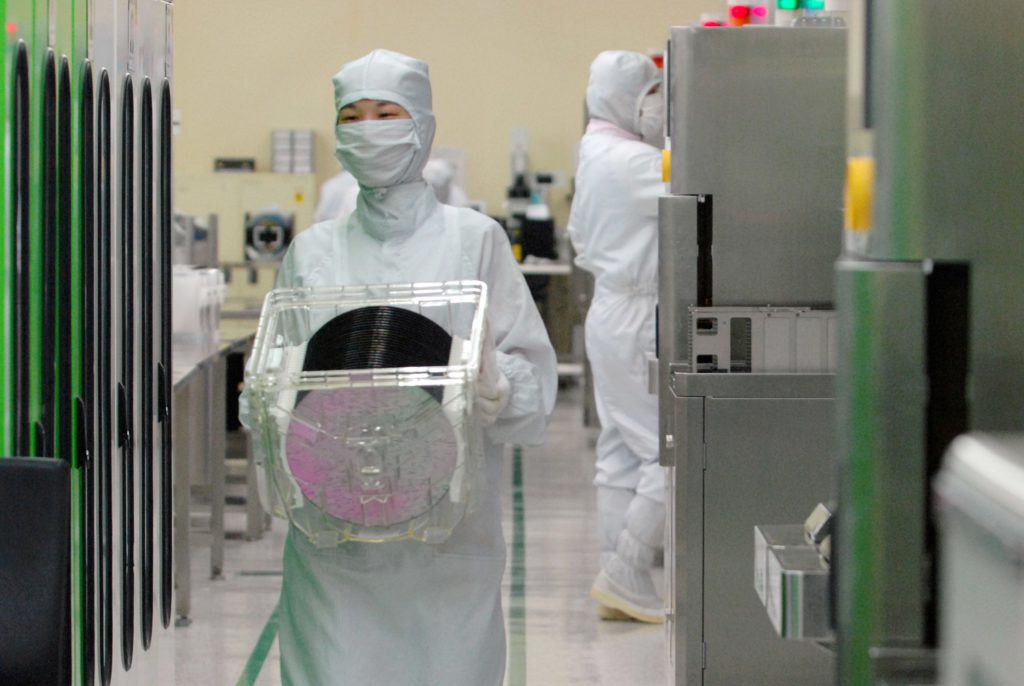
Micron’s Mehrotra said earlier Tuesday that “today less than one in 50 chips, memory chips in the world, are produced in the US. With Micron’s commitment, it will enable us to produce one in 10 chips of the global memory consumption here in the US.”

The legislation “solidifies long term technology and manufacturing leadership of America,” Mehrotra said on Bloomberg Television.

(Updates with bill signing, Biden remarks, starting in first paragraph.)

More stories like this are available on bloomberg.com

©2022 Bloomberg L.P.

Circle Won’t Support Ethereum Offshoots After Software Upgrade

(Bloomberg) — Circle Internet Financial, issuer of the crypto stablecoin USDC, said it won’t support any offshoots of Ethereum when the blockchain network undergoes a major software update expected to be completed as soon as next month. 

USDC is the largest dollar-backed stablecoin on Ethereum with about $45 billion in circulation, as well as the most popular so-called ERC-20 token used to facilitate transactions on Ethereum, Circle said in a blog post Tuesday.  

Ethereum will shift from using power-hungry computers known as miners to order transactions to much more energy-efficient validators — a setup called proof-of-stake. But factions are calling for the creation of copies or forks of Ethereum, which would still use miners, in what is known as proof-of-work.  

Access to stablecoins would likely be key to the long-term survival of any alternative blockchains that could emerge. Tokens such USDC lie at the heart of decentralized-finance applications, which let users trade, lend and borrow coins. Without the stablecoins, many of the DeFi apps on forked blockchains may not work. 

“We understand the responsibility we have for the Ethereum ecosystem and businesses, developers and end users that depend on USDC, and we intend to do the right thing,” Joao Reginatto, vice president of product at Circle, said in the blog post.

In several tweets on July 31, Tether Chief Technology Officer Paolo Ardoino, said the stablecoin will support Ethereum’s proof-of-stake chain. Tether has a overall market value of about $66 billion.

There’s about $69 billion total value locked in DeFi, according to data tracker DeFi Llama. About 58% of it on Ethereum. Almost 90 DeFi apps, including exchange Uniswap, lender Aave and staking derivative maker Lido run the bulk of their activity through Ethereum.  

More stories like this are available on bloomberg.com

©2022 Bloomberg L.P.

AppLovin Proposes to Merge With Unity in $20 Billion Deal

(Bloomberg) — AppLovin Corp. made an unsolicited proposal to merge with Unity Software Inc. in an all-stock deal valued at $20 billion, potentially upending Unity’s plan to buy a competitor.

AppLovin, which markets software platforms for app developers to help them find customers and bring in revenue, is offering gaming platform Unity an alternative to its recently announced $4.4 billion deal to buy IronSource. The deal proposed Tuesday is structured as a takeover that allows Unity to run the combined company. 

Unity, whose software underpins many of the most popular video games, agreed last month to buy AppLovin rival IronSource to boost its advertising technology, which has suffered under changes to data tracking by Apple Inc. The merger proposed by AppLovin would be contingent on Unity canceling its agreement with IronSource, according to a statement. 

AppLovin, whose shares are down 62% this year, is seeking to capitalize on the growing demand for three-dimensional gaming, which is a specialty of Unity. The Palo Alto, California-based company proposes that Unity Chief Executive Officer John Riccitiello would be head of the combined business and AppLovin’s CEO Adam Foroughi become chief operating officer.

“We believe that together, AppLovin and Unity create a market leading business that has tremendous growth,” Foroughi said in the statement.

AppLovin shares fell 11% on Tuesday in New York while Unity gained 1.9%. IronSource tumbled 10%. Unity didn’t respond to a request for comment.

“Given its proposed deal for IronSource, we believe it’s unlikely for Unity Software to accept a seemingly hostile bid from AppLovin,” said Bloomberg Intelligence analyst Mandeep Singh. “A merger between AppLovin and Unity could help increase their first-party data to offset headwinds from Apple’s privacy changes, yet there will likely be a high overlap between IronSource and AppLovin’s ad-tech platforms, and the combined company may have to carry out a large restructuring down the line to cut costs.”

Backed by Sequoia and Silver Lake Partners, Unity hasn’t been immune to the economic forces roiling the broader tech sector and gaming in particular. The industry is seeing a post-pandemic slump as people return to the office and other activities, while there has been a dearth of major new gaming titles this year and new consoles from PlayStation and Xbox have been hard to get due to ongoing supply chain issues. This year has also seen some of the largest video game deals and there are more likely on the way. 

Unity’s advertising and monetization products have been under pressure ever since Apple made it harder for companies to track ad views across mobile devices. In July Unity lowered its annual revenue forecast and its stock is down more than 63% this year. In addition to the dismal earnings report, Unity last month announced plans to cut 4% of its 5,900 employees internationally. IronSource, which competes with AppLovin, provides ad technology and gives game developers tools to find customers, make their games stickier, and earn money faster. 

AppLovin is offering $58.85 a share for the gaming technology platform, an 18% premium to Monday’s closing share price. According to terms of the offer, each share of Unity common stock would be exchanged for 1.152 shares of AppLovin Class A voting common stock and 0.314 shares of a newly created non-voting Class C stock. Unity shareholders would control 55% of the combined company and 49% of the voting rights. 

The proposal would allow for Applovin’s Class B shares, which KKR owns a chunk of, to be converted to Class A shares.

The combination of AppLovin and Unity would generate estimated adjusted earnings before interest, tax, depreciation and amortization of more than $3 billion by the end of 2024, “and would be in the best interest of shareholders of both companies,” Foroughi said in the statement. 

AppLovin is being advised by JPMorgan Chase & Co. and Wilson Sonsini Goodrich & Rosati.

(Updates with terms of the deal and detail throughout.)

More stories like this are available on bloomberg.com

©2022 Bloomberg L.P.

Russia Is Scouring the Globe for Weapons to Use Against Ukraine

(Bloomberg) — A merchant ship under US sanctions passed Turkey’s Bosphorus Strait on its way from Syria to Russia late last month. European intelligence officials who tracked the Sparta II say it carried military vehicles to bolster President Vladimir Putin’s war in Ukraine.

The ship’s journey to the Black Sea port of Novorossiysk underlines the Kremlin’s efforts to tap resources for the invasion that’s now in its sixth month, as supply lines strain under the pressure of Europe’s largest military campaign since World War II. 

While Ukraine has received billions of dollars of weapons from the US and Europe to help defend itself, Russia must rely on its own resources to support frontline forces amid reports of extensive losses. Tens of thousands of Russian troops have been killed or wounded and thousands of armored vehicles destroyed, according to US estimates.  

An official familiar with the matter said the US government believed Russia has been using merchant vessels to move military cargo to the Black Sea, echoing the European intelligence reports. The official asked not to be identified discussing confidential matters.

The Sparta II almost certainly brought military vehicles from Syria’s Tartus port that’s used by Russia, according to the intelligence officials and July 17-25 satellite imagery seen by Bloomberg. They said the exact nature of the vehicles was unclear. The ship was seen in Syria with vehicles in its hold, spotted crossing the Bosphorus Strait and later identified in Novorossiysk with at least 11 vehicles it was likely offloading. 

Maritime tracking data show the ship owned by a company the US sanctioned in May that’s controlled by the Russian Defense Ministry made the journey on those dates, apparently unhindered by NATO member Turkey. 

Ankara invoked the Montreux Convention to close the strait to warships soon after Putin’s Feb. 24 invasion, though commercial shipping can pass through. Russia used cargo ships from the company, Oboronlogistika OOO, on the same route on other occasions this year, according to the people. It has ferried military cargo multiple times from Russia to Syria in the past.  

A US State Department spokesperson referred queries on the matter to the Turkish government. A Turkish official familiar with the issue said a merchant ship would only be examined if there was a tip-off or suspicion of wrongdoing. A White House spokesperson declined to comment on whether the US has spoken with Turkish officials about the situation. The Kremlin and Oboronlogistika didn’t immediately respond to requests to comment.

To be sure, Russia built up massive stockpiles of armaments during a decade-long modernization program overseen by Putin, and Kremlin officials deny any resupply problems. Still, US and European officials say the loss of large numbers of tanks and armored personnel carriers is forcing Moscow to dip into stocks of older equipment, including decades-old T-62 tanks.  

Like Russia, Ukraine hasn’t disclosed the scale of its military losses though it has faced logistical challenges against a much larger foe, particularly earlier in the war. President Volodymyr Zelenskiy said in a July 22 interview with the Wall Street Journal that battlefield casualties had fallen to about 30 per day from a high of 100-200 daily in May-June, a number that has not been independently verified.

Putin has had troops in Syria since ordering a 2015 operation to shore up its embattled President Bashar al-Assad. Russian Defense Minister Sergei Shoigu in 2017 said the military tested more than 160 types of advanced weaponry there including fighter jets, laser-guided missiles, tanks, electronic warfare methods and air-defense systems.

There are indications the Kremlin has looked elsewhere for additional resources, too. 

Tensions have flared between Armenia and Azerbaijan over the disputed Nagorno-Karabakh region in recent weeks amid reports denied by Moscow that Russia has thinned out a peacekeeping force of up to 2,000 troops to send to Ukraine. The US in March said Russia had diverted some troops to Ukraine from Georgia’s breakaway region of South Ossetia, where it’s kept thousands of soldiers since fighting a 2008 war. 

Russia is turning to Iran to try to buy armed drones, CIA Director William Burns told a US security forum last month, saying it indicated “the deficiencies of Russia’s defense industry today, and the difficulties they’re having after significant losses.” 

North Korea may become an unlikely new source of artillery as it has systems of a decent quality and last month recognized the Kremlin-controlled Donetsk and Luhansk people’s republics in eastern Ukraine as independent, according to one person with knowledge of Russian defense policy, asking not be identified discussing sensitive issues.  

Russian shipments from Syria are likely feeding into its overall logistics as Novorossiysk is used to resupply bases in neighboring Crimea that Putin annexed in 2014, and from there to occupied Kherson and Zaporizhzhia in southern Ukraine, one of the European intelligence officials said. Russia has recently redeployed forces and equipment to the area as Ukraine threatens a counteroffensive in the Kherson region.

Russia moved a significant number of troops to Crimea in preparation for deployment in southern Ukraine and at least eight battalion tactical groups that comprise 800 to 1,000 soldiers were moved from the eastern Donbas region, adding to pressure on its logistical supply routes, the person said. 

Rather than a large-scale offensive, Ukraine may be seeking to lure Russian forces to the Kherson area where they’ll be more vulnerable to attack, Phillips O’Brien, professor of strategic studies at the University of St. Andrews in Scotland, said Aug. 7 on Twitter. “Moreover, the supply issue for the Russians is far trickier with rivers where bridges can be severed and only a few heavy rail lines,” he said.

The Pentagon says it has supplied $9.1 billion in defense assistance to Ukraine since February, including $1 billion announced Monday to boost supplies of  long-range artillery munitions, anti-tank weapons and medical vehicles. The government in Kyiv has also received billions more in weapons from the UK and other North Atlantic Treaty Organization allies.

Ukrainian forces using US-supplied HIMARS long-range artillery recently have targeted Russian supply lines and ammunition stores behind the front with increasing effectiveness, as well as key infrastructure.

“Western arms shipments are allowing Ukraine to strike bridges, which is complicating logistics and supplies,” said Igor Korotchenko, head of the Moscow-based Center for Analysis of World Arms Trade. “Still, artillery and attack aircraft are the key weapons in our current offensive and we don’t have any shortages of either.”

Long-Range Guns Given to Ukraine Open Door to New Phase of War

As many as 80,000 Russian troops have been killed or wounded in the war, US Undersecretary of Defense for policy Colin Kahl said Monday at a regular Pentagon briefing. The US assessment was also that Russia had used up a significant percentage of its precision-guided munitions including air- and sea-launched missiles and lost as many as 4,000 tanks and other armored vehicles, he said.

“A lot of that is because of the anti-armor systems like Javelin, like the AT4, but also frankly because of the creativity and ingenuity in the way the Ukrainians have used those systems,” he said. 

Putin hasn’t sought to bolster his military by ordering a mass mobilization, likely because that would risk forcing the Russian public to confront the costs of a war he’s kept at arm’s length from them so far. But regional officials have offered cash incentives to encourage people to volunteer on short-term contracts, while the lower house of parliament in May abolished an upper age limit for army service.  

The Russian government also moved last month to boost arms production by seeking powers to ease labor regulations in defense companies, citing the “short-term increased need to repair weapons and military equipment.” 

Russian military systems lean on microelectronics components designed and produced in the US, Europe and east Asia, according to a new report from the Royal United Services Institute in London, based on an examination of the remains of equipment used in Ukraine. 

Russian Weapon Systems Rely Heavily on Foreign Tech, Report Says

Even as it seeks to shore up its army on the battlefield, Russian gains in the east of Ukraine have continued to be extremely limited and slow in recent days, according to the intelligence officials.

Vasily Kashin, a Russian military expert at Moscow’s Higher School of Economics, said nations shouldn’t underestimate Russia’s resources. But he said importing weapons might still be worthwhile, noting North Korea has long-range multi-launch rocket systems that are “more powerful than those that Russia has.”

“Of course Russia has some problems on the battlefield, but we see no proof that it imports any weapons for its war against Ukraine” he said. “However, it might be worth doing.”

More stories like this are available on bloomberg.com

©2022 Bloomberg L.P.

Micron to Invest $40 Billion by 2030 Into US Memory Plants

(Bloomberg) — Micron Technology Inc. said it will use “anticipated” government grants and credits to help it invest $40 billion by the end of the decade to build out US semiconductor manufacturing capacity. 

The company expects to begin producing chips after 2025 and said it will create as many as 40,000 jobs, the Boise, Idaho-based memory manufacturer said in a statement on Tuesday. The investment is being funded with subsidies it believes will be awarded from the Chips and Science Act, Micron said. 

“Today, less than one in 50 memory chips in the world are produced in the US,” Micron CEO Sanjay Mehrotra said in an interview with Bloomberg Television. “With Micron’s commitment, this will enable us to produce one in 10 chips of the global memory consumption in the US.”

The spending plan is part of the company’s previously announced $150 billion global investment goal, which it detailed last year. President Joe Biden is expected to sign the chips act into law on Tuesday as part of a package of spending and tax reforms. Most of Micron’s production is done in Japan, Singapore and Taiwan. 

Read More: Biden Gets Big Economic Win as Inflation Threatens Legacy 

“Micron’s domestic leading-edge manufacturing capabilities will ensure US national security and supply chain resilience as demand for memory grows in critical market segments like automotive and data center, fueled by accelerating adoption of artificial intelligence and 5G,” the company said in the statement. 

Read More: Micron’s Dim Outlook Suggests Tech Spending Is on the Wane

The company, which competes with South Korea’s Samsung Electronics Co. and SK Hynix Inc., as well as Japan’s Kioxia Holdings Corp., said last month that it’s cutting spending on plants and equipment to slow increases in factory output amid concerns about a glut in the market. Electronic device makers that buy Micron’s chips have been scaling back orders to reduce their own inventory. 


(Updates with CEO interview in the third paragraph.)

More stories like this are available on bloomberg.com

©2022 Bloomberg L.P.
Metaverse Crypto Use Raises Systemic Risk, Bank of England Says

(Bloomberg) — Widespread adoption of cryptoassets in a fully developed metaverse may pose a systemic risk to financial stability and would require “robust consumer protection” frameworks, staffers at the Bank of England said.

When built, decentralized digital worlds and platforms could host large volumes of real-world economic transactions carried out via crypto tokens like Bitcoin and Ether, BoE researchers Owen Lock and Teresa Cascino said in a blog post published on Tuesday.

The larger the volume of these crypto transactions, the larger the potential impact to real-world financial stability if prices were to collapse, they said. 

“The importance of cryptoassets in the open-metaverse means that if an open and decentralised metaverse grows, existing risks from cryptoassets may scale to have systemic financial stability consequences,” Lock and Cascino said. “An important step is therefore for regulators to address risks from cryptoassets’ use in the metaverse before they reach systemic status.”

The metaverse, a future generation of the internet built inside digital worlds, is at the early stages of development. While still in its infancy, some large technology companies including Meta Inc. have reorganized their business around its potential. 

In the blue-sky scenario, Lock and Cascino envisioned a world in which consumers spend more of their time and money in the metaverse: Going to virtual concerts, being employed to sell items in a virtual store or hanging out with friends in virtual spaces. In this future, households may hold a share of their wealth in crypto to make payments in the metaverse, they said, while corporates may increasingly accept crypto or sell digital assets like nonfungible tokens. 

Non-bank financial institutions could also choose to hold more crypto in order to facilitate more metaverse activity, while banks may consider increasing their exposure through offering services like digital asset custody.

Read more: Struggling ‘Bored Ape’ Market Now Has Buy Now, Pay Later Option

As a result, falling crypto prices could lead to “balance sheet losses for households and corporates, an impact on unemployment, fire-sales of traditional assets from non-banks to meet margin calls on cryptoasset positions, and negative profitability impacts on exposed bank,” Lock and Cascino wrote. 

It remains to be seen whether the metaverse will adopt crypto transactions en masse. Versions of the metaverse are still in early development, and a battleground is forming over whether it should be built by crypto-native, community-based platforms or Big Tech companies like Meta that could face more scrutiny over solely using privately-created tokens in its virtual world.

“This evolution of the metaverse is uncertain, and the above scenario is a possibility, rather than a certainty,” Lock and Cascino said. 

The Bank of England has repeatedly warned that investors should be wary of engaging with cryptoassets, and be prepared to lose all their money when buying digital tokens. A digital version of the pound under exploration by the Bank is unlikely to work like cash, its Deputy Governor Jon Cunliffe said last month, and would not be expected to appear until the latter half of this decade.

More stories like this are available on bloomberg.com

©2022 Bloomberg L.P.
Close Bitnami banner
Bitnami