Bloomberg

Is Gaming a Good Use Case for Blockchain?

  • Listen to Bloomberg Crypto on the iHeartRadio App
  • Listen to Bloomberg Crypto on Apple Podcasts
  • Listen to Bloomberg Crypto on Spotify  

(Bloomberg) — Stacy-Marie used to argue that you could divide folks into two categories: people who play video games, and people who don’t. Gaming is bigger, in revenue terms worldwide, than the film and television industries combined. It’s also a complex universe dealing that often involves hard and necessary conversations around who benefits, as well as work and labor conditions and (as always) intellectual property. Add blockchain and NFTs into the mix, and it gets even more complicated. Or does it?

Bloomberg reporter Cecilia D’Anastasio joins this episode to discuss how crypto is showing up in video games, and why much of the gaming community against using blockchain and NFTs.

Follow us on Twitter @crypto, and subscribe to the Bloomberg Crypto Newsletter at https://bloom.bg/cryptonewsletter


More stories like this are available on bloomberg.com

©2022 Bloomberg L.P.

African Startups Bet on Local Developers for Global Expansion

(Bloomberg) — African startups are expanding into Europe and other parts of the world, betting on providing more affordable services with a growing tech talent pool, at a time when many established tech firms are cutting back staff. 

Nigerian data company Bluechip Technologies, which has worked for Oracle and Microsoft, is opening an office in Ireland, according to a statement Monday. The firm, which provides data warehousing and analytics services, will rely on developers and data scientists from continent to offer services to financial and telecom firms.

“We can do it cheaper than India, cheaper than Eastern Europe because the cost of living here is way lower and we have the talent,” Olumide Soyombo, the co-founder of Bluechip Technologies said in an interview. 

In a slowdown in tech hiring, Africa stands out as an exception as the under-served populations on the continent outweigh inflation and slowing economies.

Bluechip joins a growing list of African technology companies including payment unicorn Flutterwave and drone delivery company Zipline, in expansion into developed markets. The drone medical delivery service first developed in Rwanda and Ghana. The company now primarily operates in the U.S., in partnership with Novant Health and customers including Walmart.

While Africa’s developer pool is still small accounting for less than 0.5% of the non-agricultural workforce, it is growing rapidly with  the number of developers on the continent increasing by 3.8% to 716,000 last year, according to the Africa Developer Ecosystem Report by Google. Nigeria added 5,000 developers, the most of any country, to the ecosystem.

Bluechip’s expansion into Europe was prompted by the growing trend of remote working post-pandemic, a shortage of tech talent, and an increase in the demand for more efficient data management, Soyombo said. 

The Lagos-based company that operates in five African markets has seen its revenue grow ten-fold since 2014, crossing the $50 million mark last year, said Soyombo, who co-founded the company in 2008. 

By leveraging its experience working with some of the biggest technology companies in the world, Bluechip projects the company revenues to increase to $250 million in the next five-years, primarily from the European market which is estimated to grow to $105 billion by then. 

The opportunities are not just from Africa to the developed markets, according to Surabhi Nimkar, Partner at GreenHouse Capital who is seeing African startups expanding into other emerging markets including Latin America and Asia. “If you are building tech that’s specific to your region in Africa, it is actually super scaleable because the fundamental challenges are the same.” 

Kuunda, a South African payment company that gives overdraft services, is now operating in Pakistan and Nigerian founded Helium Health, a company that digitizes hospital networks and operations has expanded into Qatar and the U.A.E. 

The Dubai and Cairo founded Swvl Holdings Corp. has been on an acquisition spree since now listed in the Nasdaq Stock Market after merging with blank-check company Queen’s Gambit Growth Capital. Blue Technologies plans to expand into francophone Africa including Cameroon, Senegal and Ivory Coast.

More stories like this are available on bloomberg.com

©2022 Bloomberg L.P.

Sanctions May Freeze Veon’s Network Rollout in Russia, CEO Says

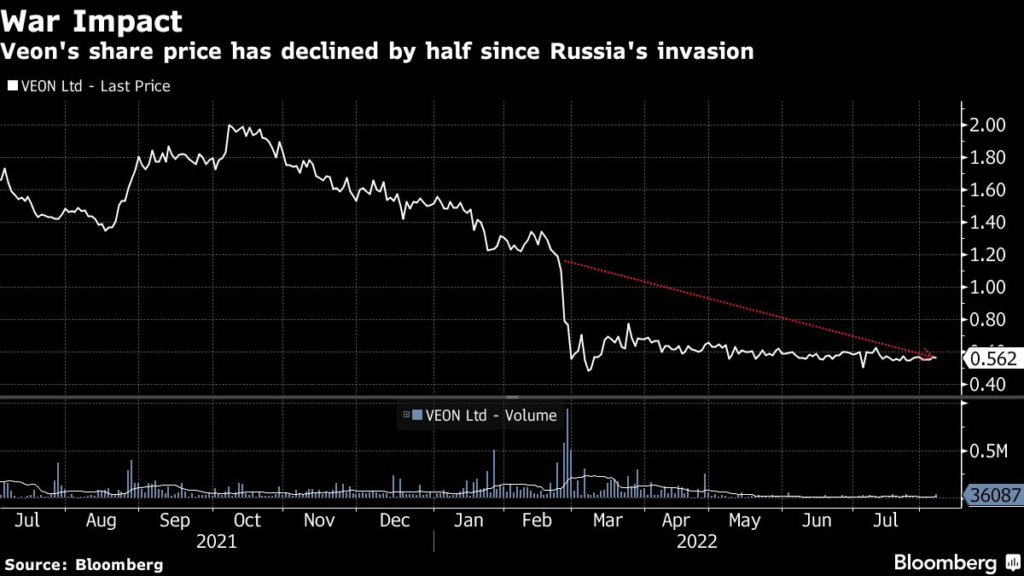
(Bloomberg) — Veon Ltd., the third-largest mobile-phone operator in Russia, may need to freeze its network rollout in the country if sanctions over the war in Ukraine continue to block imports of essential equipment, according to Chief Executive Officer Kaan Terzioglu. 

“There is no doubt that the deployment will slow down and almost has a risk of coming to a standstill,” Terzioglu said in an interview after Veon’s earnings report, adding the sanctions affect all market players. “Our network in Russia is the most modern network as it was rebuilt especially over the last two years.”

Veon was founded in Moscow in 1992 as VimpelCom, one of the nation’s first cellular-phone providers, and is now a Dutch-domiciled telecommunications company serving over 220 million customers in eight countries. It is the largest mobile operator in Ukraine, and two of its employees there have died in the fighting since Russia’s February invasion.

The telecom reported last week second quarter revenue rose 5.6% from a year earlier to $2.01 billion, with nearly half coming from operations in Russia. Veon is holding talks with potential buyers to sell more towers in Pakistan, Bangladesh, Kazakhstan, Uzbekistan and Ukraine, according to Terzioglu. 

“Towers should be in the hands of independent tower companies,” Terzioglu said. “We are progressing on monetization of these tower assets.” 

Last year, the company sold over 15,000 towers in Russia for around $970 million to Service-Telecom LLC. The company has around 30,000 more towers to sell, Terzioglu said. 

Bond Payments

Veon has over $1.2 billion in bond repayments due February and April 2023. The company is planning to use $682 million from the sale of its Algerian branch, Djezzy, to cover part of the payments, Chief Financial Officer Serkan Okandan said in the same interview. The rest will be paid using some of the $1.9 billion in the company has at its headquarters in Amsterdam and money from dividends that its local subsidiaries pay, he said.

Veon is not planning to “tap the market at an HQ level in the short term,” Okandan said. “Until the end of the year, we’re focusing on local financings” in markets like Pakistan, Bangladesh, Kazakhstan and Uzbekistan, he said.

LetterOne Investment Holdings, founded by Russian billionaire Mikhail Fridman, owns 47.9% of Veon. Fridman was recently sanctioned by both the European Union and the U.K., and stepped down from the boards of Veon and LetterOne.

More stories like this are available on bloomberg.com

©2022 Bloomberg L.P.

SoftBank Reports Record $23.4 Billion Loss as Holdings Fall

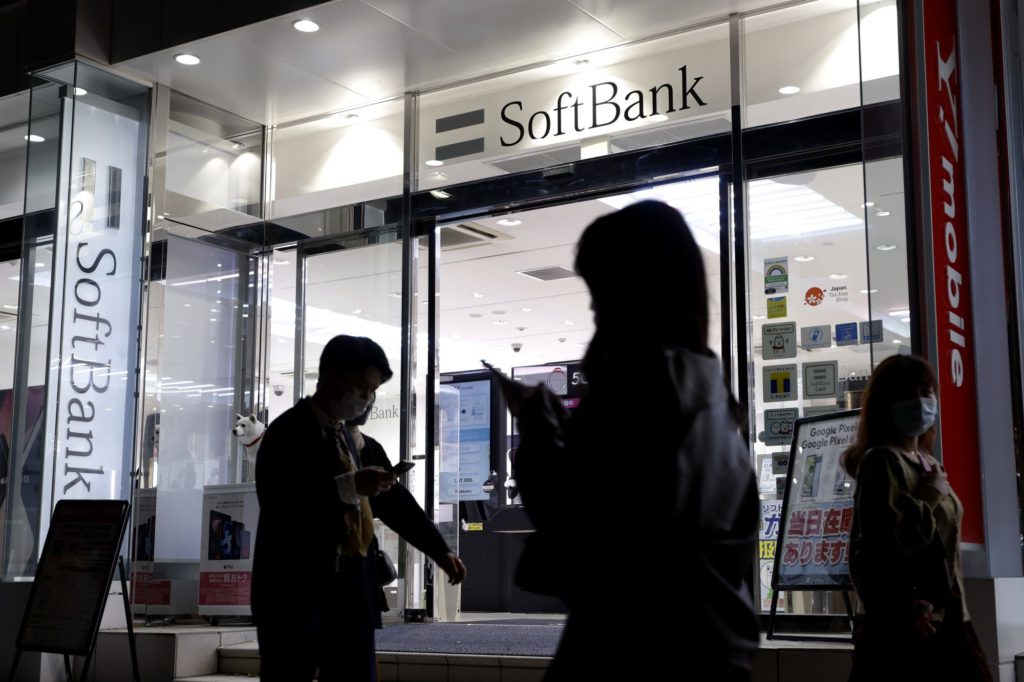
(Bloomberg) — SoftBank Group Corp. reported a record 3.16 trillion yen ($23.4 billion) net loss as a selloff in global tech stocks continued to hammer its Vision Fund’s portfolio of investments.

The Vision Fund segment posted a loss of 2.33 trillion yen in the three months ended June 3O, following a then-record 2.2 trillion yen loss in the previous quarter. SoftBank also reported a 820 billion yen foreign exchange loss because of the weaker yen.

Global stock prices continued their slide during the June quarter, hurting valuations of SoftBank’s key public holdings like Uber Technologies Inc. and Coupang Inc. The Nasdaq 100, a barometer for tech heavyweights, lost 22% during the period, capping its worst such performance since the global financial crisis in 2008. It’s the most serious setback for founder Masayoshi Son since he repositioned his company to focus on tech investments.

“The loss is the biggest in our corporate history and we take it very seriously,” Son said during a press conference after the results. 

Asked about what lessons he has learned from the experience, Son said, “There are too many to count.”

The world’s largest technology fund holds large stakes in hundreds of unlisted technology startups. But low tech valuations have been draining SoftBank’s ability to turn public listings of its portfolio companies into liquidity to fuel further big bets. 

SoftBank said the Vision Fund losses included 293.4 billion yen for Coupang, 235.9 billion yen for SenseTime Group Ltd. and 220.7 billion yen for DoorDash Inc. They also mentioned drops at AutoStore Holdings and WeWork Inc.

Son said the Vision Fund will have to scale back after the losses. Rajeev Misra, the long-time head of the Vision Fund, is stepping away from most of his responsibilities and will start his own investment fund. 

“For SoftBank vision fund, we know we have to reduce operational costs substantially,” Son said. “Our vision remains the same, our beliefs remain the same. But we know we have to reduce operational costs, including headcount. For new investments, we have to be more selective.”

SoftBank said that, among its still-private companies, their fair value dropped in “a wide range” because of weak performance, recent funding rounds and declines in the value of comparable public companies. Shares of ByteDance Ltd., the Chinese parent of TikTok, have slumped more than 25% since last year in private markets, while Swedish buy-now-pay-later company Klarna Bank AB had its valuation slashed 85% in a recent funding round compared with June 2021, Bloomberg News has reported.

“Valuations will probably get worse before they get better,” said Redex Research’s Kirk Boodry, who publishes on Smartkarma. 

SoftBank and Son are now trying to wait out a slump in chip-related stocks so that it can grab a return on its $32 billion purchase of chip designer unit Arm Ltd. through an initial public offering. The Japanese billionaire has said he aims to make the offering the biggest-ever for a chip company.

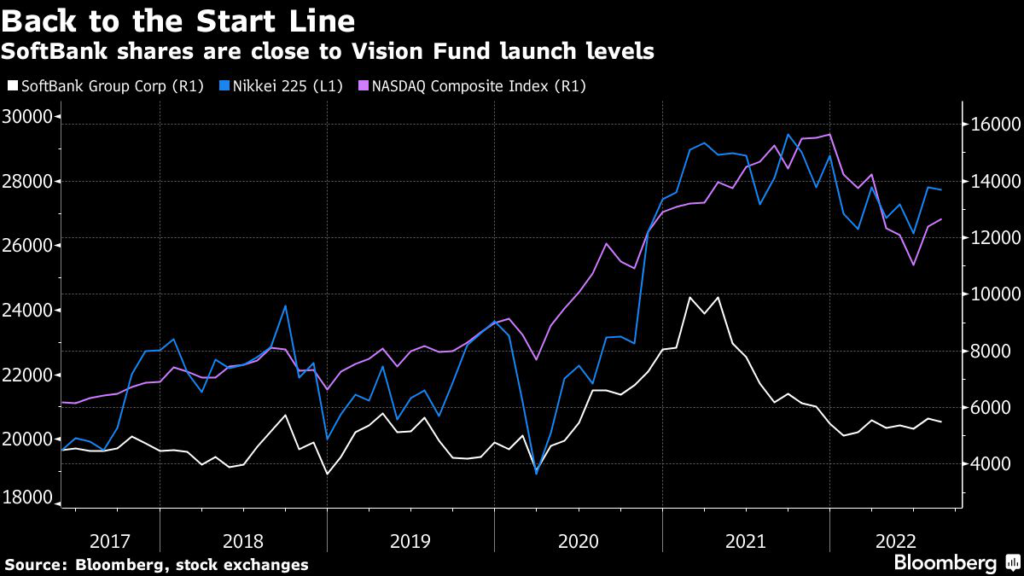
Shares in SoftBank itself are close to where they were five years ago, before the launch of the Vision Fund, despite a series of aggressive buyback programs. Most recently, it announced a 1 trillion yen buyback program through September. That, as well as expectations that the company may launch another buyback program later this year, have helped its shares gain about 5% this year.

Son has been taking defensive measures. He raised $10.5 billion by entering forward contracts related to Alibaba Group Holding Ltd. and also procured $6.8 billion by entering forward contracts on and after July 1. 

SoftBank said such measures had resulted in a large improvement in its loan-to-value ratio, a key metric Son tracks.

The company also exited its holding in Uber Technologies Inc.

SoftBank is also grappling with the departure of a growing number of top executives at the Japanese conglomerate, putting more responsibility on founder Son’s shoulders just as the outlook turns increasingly grim. The company’s former Chief Operating Officer Marcelo Claure left earlier this year, while former Chief Strategy Officer Katsunori Sago resigned in 2021.

(Updates with CEO’s comments from fourth paragraph)

More stories like this are available on bloomberg.com

©2022 Bloomberg L.P.

PwC Hit With £1.75 Million Fine Over BT Audit

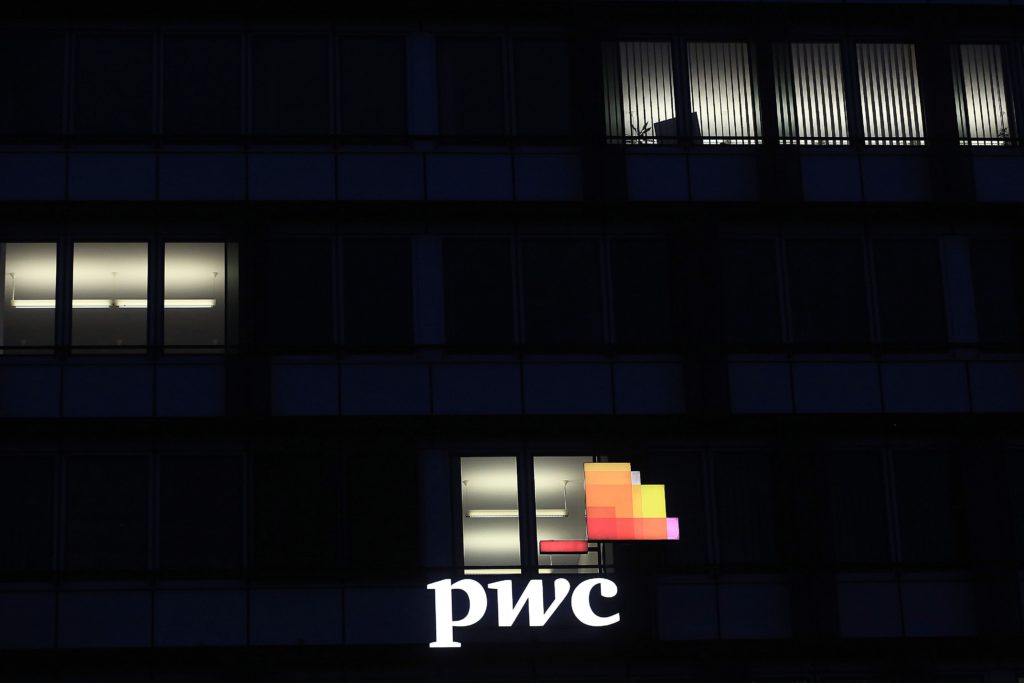
(Bloomberg) — PricewaterhouseCoopers LLP was fined £1.75 million ($2.1 million) by the UK’s audit watchdog over failings in a 2017 audit of BT Group Plc, which was hit by a massive fraud at its Italian unit. 

The Financial Reporting Council also handed partner Richard Hughes a £42,000 penalty for his role on the audit. The fines were reduced by the regulator after admissions and “early disposal.”

Both PwC and Hughes admitted the breaches which were “made following the identification of a fraud in its Italian operations in 2016,” the FRC said in a statement Monday. 

BT’s Leaseback Deal With IBM Said to Be Focus of Italian Probe

The scale of the BT Italy scandal was such that in its 2017 financial statements BT disclosed adjustments of approximately £513 million. The company said at the time it was duped by a sophisticated deception orchestrated by a few employees and missed by its long-time accountant PricewaterhouseCoopers.

The sanctions in the case “will serve as a timely reminder to the profession,” Claudia Mortimore, deputy executive counsel at the FRC, said. 

“We are sorry that aspects of this audit were not of the required standard,” a spokesperson from PwC said. “The FRC’s finding relates to a narrow element of the audit.”

PwC was also fined almost £5 million pounds in June for a series of poor audits of two UK  construction companies, as the regulator continues to crack down on audit failings by the Big Four.

The UK is bringing in sweeping audit reforms aimed at reining in the dominance of the largest accountancy firms and cleaning up the industry following a string of high-profile scandals. 

More stories like this are available on bloomberg.com

©2022 Bloomberg L.P.

SoftBank to Buy Back Up to 400 Billion Yen of Shares

(Bloomberg) — SoftBank Group Corp. said it will buy back up to 400 billion yen of its own shares, seeking to give its stock support after it reported a record 3.16 trillion yen ($23.4 billion) net loss. 

The Japanese conglomerate has increasingly turned to repurchasing its own shares after suffering declines in the value of its investments. The company last said in November that it would buy back up to 1 trillion yen of its shares. 

Founder Masayoshi Son has struggled as the global tech market hit a sharp downturn, forcing him to write down the value of companies in his portfolio. The company recorded losses due to key public holdings like Uber Technologies Inc., SenseTime Group Ltd. and Coupang Inc. SoftBank exited its position in Uber in last quarter.

Son’s defensive turn has protected its stock, with shares up about 5% this year. 

More stories like this are available on bloomberg.com

©2022 Bloomberg L.P.

UniCredit’s Top Investment Bankers Hunt for Gains Amid Turmoil

(Bloomberg) — UniCredit SpA’s top corporate and investment bankers are betting on surging demand for risk products in the most volatile market in a decade, and taking deal-making business from rivals to help meet ambitious revenue targets set down by Chief Executive Officer Andrea Orcel.

In a joint interview, Richard Burton, head of the unit that includes all the corporate and investment banking activity, and advisory head Sam Kendall said they’re seeking to win market share from local and international rivals in M&A and capital markets. They see easier profits from hedging and other risk products clients are demanding to navigate the turmoil unleashed by the invasion of Ukraine and surging inflation. 

“In a second half likely dominated by volatility and uncertainty, we can over-perform in transactions and client risk management,” according to Burton, while “in the more challenging segments of capital markets and M&A, we expect to further erode market share from peers,” said Kendall.

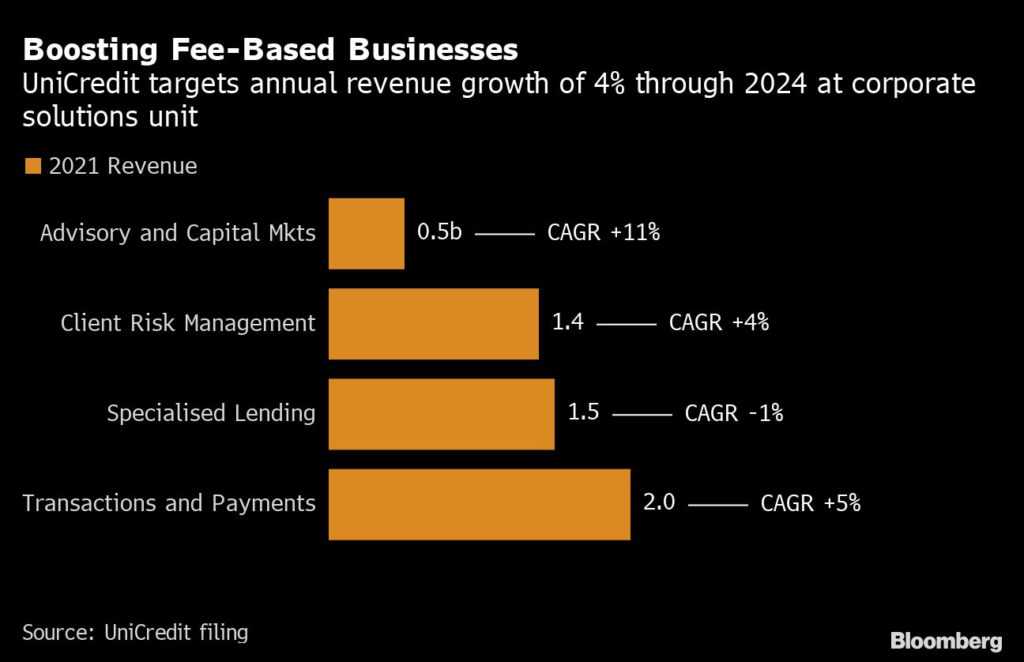
Orcel, who gained a reputation as a top dealmaker while head of UBS Group AG’s investment bank, is now reshaping UniCredit’s corporate and investment bank. He’s enlarged Burton’s duties and has hired ex-UBS Group AG colleague Kendall to focus on more medium-sized corporate clients, with the aim of boosting annual revenue at the corporate solutions unit by 4% through 2024. 

In the second quarter, the business generated 1.5 billion euros ($1.5 billion) in revenue, or a third of the total. The unit offers a range of transaction services, structured finance, capital markets and investment products to its 1 million clients through more then 3,000 employees. Revenues were up 16% year on year, driven by a 25% increase in client risk management income that more than offset an 11% decline in advisory and capital markets’ revenue. 

“It’s our intention to meet the targets we set ourselves in corporate solutions,” said Burton. “Now, the sub mix might change slightly because the environment has changed, but the levers of this plan are mostly under management control.”

Read More: UniCredit Cheers Investors With $18 Billion in Planned Returns

In UniCredit’s overall strategy outlined in December, Italy’s second-biggest bank shifted the focus on client needs in each of the 13 countries where it operates, bringing all corporate and individual offers under the same control. The coverage of clients needs has been split among countries where they are based, while the products are managed at the group level by Burton’s team. 

Since then, the list of pressure points has quickly increased, from fears surrounding Russia’s invasion of Ukraine and the potential use of gas deliveries as a geopolitical weapon, to surging inflation, interest-rate increases and recession.

“When we put together the plan at the beginning of year, we might have thought there were going to be a lot of IPOs,” said Burton. “Now, we’re doing more in private capital markets. Similarly, we might have thought certain industries were going to grow, but the picture has changed.”

As part of the bank’s new strategy Orcel hired Kendall in September to oversee industry coverage, advisory, as well as public and private equity and debt capital markets. Since his hiring, Kendall’s task has become harder as global deal activity collapsed and the trading business struggled to keep pace with Wall Street peers. 

We have has readdressed our focus to meet the new needs of clients,” said Kendall. “Business plans are being adjusted but strategies are not changing.”

Read More: UniCredit Hires Ex-UBS Top U.S. Investment Banker Kendall 

In a shrinking business, Kendal is focusing on relative performance to peers and expects to gain additional share in the second half, in each of the single segments of advisory and capital markets. In advisory and capital markets, the bank’s market share by fees — which includes M&A, ECM, DCM and Loan Syndication– increased to 6.2% in the second quarter from 4.7% a year earlier.  

“The international banks don’t know our clients as well as we do, particularly in the mid-market segment,” said Kendall. “We expect to take market share from local banks, as well as boutiques and investment firms, because we’re more international than any local bank. And we’re more local than any international bank,” added Burton.


More stories like this are available on bloomberg.com

©2022 Bloomberg L.P.

Crypto Business Leaving Japan Due to High Tax, Entrepreneur Says

(Bloomberg) — Japan should reduce corporate taxes on crypto to prevent entrepreneurs leaving the country, one of the nation’s most high-profile crypto businesspeople said.

“At least 20 or more” firms have opted to establish their crypto business abroad rather than Japan because of the high levy, said Sota Watanabe, CEO of Web3 infrastructure developer Stake Technologies Pte., in an interview on Monday. 

Watanabe, who moved his own firm to Singapore in 2020, said he hopes Japan’s government will change the corporate levy next year. If that happens, he would like to bring his company back to his home country. It may take a few more years before Japan lowers income taxes for cryptocurrency gains made by individual investors, Watanabe said. 

Watanabe joins others pushing for change. Crypto lobbying groups in Japan are asking the government to ease corporate tax rules that are seen to be stunting the local digital asset industry’s growth. 

More stories like this are available on bloomberg.com

©2022 Bloomberg L.P.

US Futures Edge Higher as Traders Assess Fed Hikes: Markets Wrap

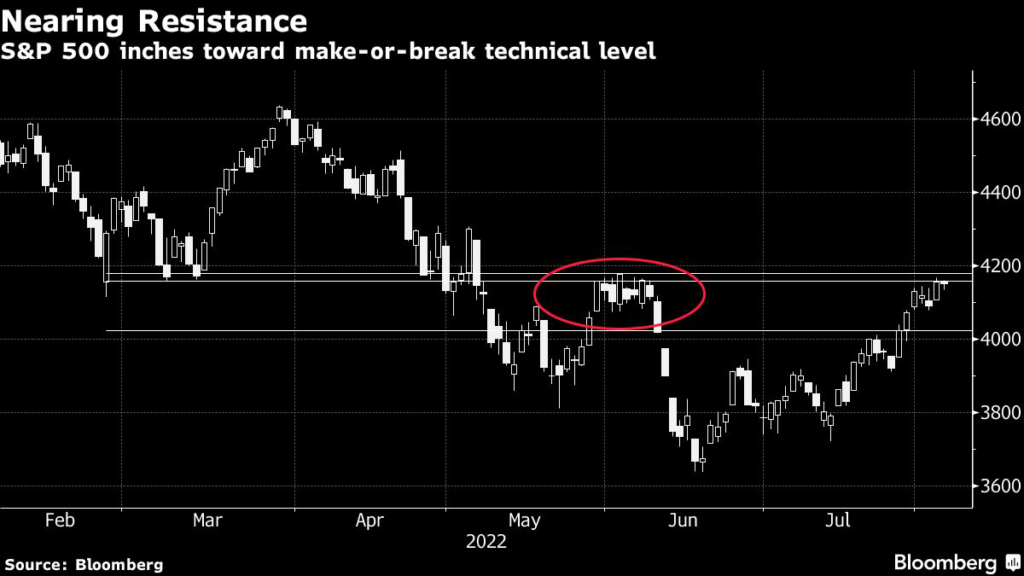
(Bloomberg) — US equity futures edged higher on Monday while Asian stocks faltered as investors assessed prospects of aggressive Federal Reserve interest-rate hikes to tackle the highest inflation in a generation.

S&P 500 and Nasdaq 100 contracts both added more than 0.1% after global shares completed a third straight advance last week in a rebound from bear-market lows. European futures hinted at gains.

Retreating tech shares were among the drags on MSCI Inc.’s Asia-Pacific stock index. Covid lockdowns in a Chinese resort island also hit sentiment, while Hong Kong’s move to cut mandatory quarantine failed to ignite much optimism.

Strong US jobs data Friday added to the case for more Fed monetary tightening. That’s pushed up Treasury yields and the dollar. A key part of the US bond curve is close to the most inverted level since 2000, suggesting investors foresee a recession ahead as the Fed applies the brakes on the economy.

Crude oil climbed but remained below $90 a barrel. Gold struggled to make much progress. Bitcoin pushed above $23,500.

Traders now see greater odds of another 75 basis-point Fed hike in September, part of a global wave of rate increases. US inflation data this week could shape views on that policy path and inject more market swings. While price pressures may be topping out, it’s unclear if they will persist a stubbornly high levels.

If investor projections for a peak in the fed funds rate top 4% following the inflation data, we could see “risk rolling over, with volatility rising, defensives outperforming, and better shorting opportunities” kicking in, Chris Weston, Pepperstone Group Ltd. head of research, wrote in a note.

The latest comments from Fed officials left a question mark over wagers on a policy pivot toward reducing borrowing costs next year.

‘Far From Done’

San Francisco Fed President Mary Daly said the US central bank is “far from done yet” in bringing down price pressures. Governor Michelle Bowman said the Fed should keep considering large hikes similar to the 75 basis-point increase approved last month until inflation meaningfully declines.

The July US payrolls report is “likely to enhance the Fed’s inclination to front-load interest rate hikes until the policy rate overshoots neutral by a good margin over the next few months,” TD Securities strategists including Priya Misra wrote in a note.

Elsewhere, the US Senate passed a landmark tax, climate and health-care bill, speeding a slimmed-down version of President Joe Biden’s domestic agenda on a path to becoming law.

US-China tension over Taiwan remains elevated. China’s military announced a new exercise near the self-ruled island in the fallout from US House Speaker Nancy Pelosi’s visit. 

What to watch this week:

  • Iran nuclear deal talks, Monday
  • US CPI data, Wednesday
  • China CPI, PPI Wednesday
  • Chicago Fed President Charles Evans, Minneapolis Fed President Neel Kashkari due to speak, Wednesday
  • US PPI, initial jobless claims, Thursday
  • San Francisco Fed President Mary Daly is interviewed on Bloomberg Television, Thursday
  • Euro-area industrial production, Friday
  • US University of Michigan consumer sentiment, Friday

Some of the main moves in markets:

Stocks

  • Futures on the S&P 500 rose 0.1% as of 7:49 a.m. London time
  • Futures on the Nasdaq 100 rose 0.2%
  • Futures on the Dow Jones Industrial Average rose 0.1%
  • The MSCI Asia Pacific Index fell 0.3%
  • The MSCI Emerging Markets Index fell 0.6%

Currencies

  • The Bloomberg Dollar Spot Index was little changed
  • The euro was little changed at $1.0175
  • The Japanese yen fell 0.3% to 135.35 per dollar
  • The offshore yuan was little changed at 6.7699 per dollar
  • The British pound was little changed at $1.2075

Bonds

  • The yield on 10-year Treasuries declined one basis point to 2.81%
  • Germany’s 10-year yield declined four basis points to 0.92%
  • Britain’s 10-year yield advanced 16 basis points to 2.05%

Commodities

  • Brent crude rose 0.8% to $95.70 a barrel
  • Spot gold was little changed

More stories like this are available on bloomberg.com

©2022 Bloomberg L.P.
SoftBank Reports Record $23.4 Billion Loss as Holdings Tumble

(Bloomberg) — SoftBank Group Corp. reported a record 3.16 trillion yen ($23.4 billion) net loss as a selloff in global tech stocks continued to hammer its Vision Fund’s portfolio of investments.

The Vision Fund segment posted a loss of 2.33 trillion yen in the three months ended June 3O following a then-record 2.2 trillion yen loss in the previous quarter. It’s a sharp reversal from the 235.6 billion yen profit posted in the same quarter a year ago. 

Global stock prices continued their slide during the June quarter, hurting valuations of SoftBank’s key public holdings like Uber Technologies Inc. and Coupang Inc. The Nasdaq 100, a barometer for tech heavyweights, lost 22% during the period, capping its worst such performance since the global financial crisis in 2008. 

“Valuations will probably get worse before they get better,” said Redex Research’s Kirk Boodry, who publishes on Smartkarma. 

The world’s largest technology fund holds large stakes in hundreds of unlisted technology startups. But low tech valuations have been draining SoftBank’s ability to turn public listings of its portfolio companies into liquidity to fuel further big bets. 

SoftBank is now trying to wait out a slump in chip-related stocks so that it can grab a return on its $32 billion purchase of chip designer unit Arm Ltd. through an initial public offering. Shares of ByteDance Ltd., the Chinese parent of TikTok, have slumped more than 25% since last year in private markets, while Swedish buy-now-pay-later company Klarna Bank AB had its valuation slashed 85% in a recent funding round compared with June 2021, Bloomberg News has reported.

Shares in the company are close to where they were five years ago, before the launch of the Vision Fund, despite a series of aggressive buyback programs. Most recently, it announced a 1 trillion yen buyback program through September. That, as well as expectations that the company may launch another buyback program later this year, have helped its shares gain about 5% this year.

SoftBank is also grappling with the departure of a growing number of top executives at the Japanese conglomerate, putting more responsibility on founder Son’s shoulders just as the outlook turns increasingly grim. The company’s former Chief Operating Officer Marcelo Claure left earlier this year, while former Chief Strategy Officer Katsunori Sago resigned in 2021. Rajeev Misra, the long-time head of the Vision Fund, is stepping away from most of his responsibilities and will start his own investment fund. 

More stories like this are available on bloomberg.com

©2022 Bloomberg L.P.
Close Bitnami banner
Bitnami