Bloomberg

Crypto.com Expands in South Korea, Looks Beyond Market Route 

(Bloomberg) — Digital currency platform Crypto.com unveiled acquisitions in South Korea, pushing ahead with expansion in a bet that digital-asset markets will recover from this year’s rout.

The company said Monday it had acquired South Korean payment service provider PnLink Co. and virtual-asset exchange OK-BIT Co., securing registrations under the nation’s Electronic Financial Transaction Act and as a virtual-asset service provider.

The statement didn’t disclose the size of the deals or whether Singapore-based Crypto.com faces any other hurdles to be able to offer a full suite of services in South Korea. 

“We’re trying to be able to bring some of our offerings to the Korean market, and also work with partners here that are at the forefront of gaming and entertainment,” Chief Operating Officer Eric Anziani said in an interview.

South Korea is prized by digital-asset firms because of comparatively high levels of crypto adoption. But retail-investor faith in the sector was badly shaken by the $40 billion wipeout in the Terraform Labs ecosystem, including the unraveling of the TerraUSD stablecoin.

The meltdown and other leveraged blowups contributed to this year’s more than 50% plunge in the top 100 virtual coins. The sector is only just beginning to pick up the pieces of the punishing shakeout.

Crypto.com in June said it had received in-principle approval from the Monetary Authority of Singapore to provide digital payment token services in the city-state.

More stories like this are available on bloomberg.com

©2022 Bloomberg L.P.

Zipmex to Ease Some Bitcoin, Ether Withdrawals After Altcoins

(Bloomberg) — Asia crypto exchange Zipmex Pte will allow users to partially withdraw Bitcoin and Ether from their trading accounts starting later this week, providing some relief to those caught by the recent meltdown in the digital asset market.  

Zipmex, which halted withdrawals in July due to a liquidity crunch after its exposure to troubled Babel Finance went bad, will let users withdraw part of their Ether from August 11 and Bitcoin from August 16 from Zipmex’s Z Wallet, according to the company’s spokesperson. This means around 60% of users will get some of their tokens back, the spokesperson said.

Read: Zipmex Seeks $50 Million After Freezing Crypto Withdrawals

The move comes after Zipmex recently started to unlock some altcoins. The firm eased the withdrawals of Solana’s SOL, Ripple’s XRP and Cardano’s ADA starting last week. These steps follow Thailand’s Securities & Exchange Commission order to Zipmex’s Thai unit to lift a freeze on some digital coins. 

The crypto exchange, that also operates in Singapore, Indonesia and Australia, is one of several crypto firms hit by a $2 trillion meltdown in the market that has forced many players to halt withdrawals and some to file for bankruptcy.

Zipmex has filed for a moratorium in Singapore for protection from creditors against any lawsuits and to buy time for raising funds. The court hearing for moratorium is due on August 15 in the city-state.

More stories like this are available on bloomberg.com

©2022 Bloomberg L.P.

Global Stock Bounce Pauses on Worry Over Fed Hikes: Markets Wrap

(Bloomberg) — A bounce in stocks paused and US equity futures wavered Monday, hampered by expectations of aggressive interest-rate hikes by the Federal Reserve to tackle the highest inflation in a generation.

Retreating tech shares were among the drags on MSCI Inc.’s Asia-Pacific stock index. Covid lockdowns in a Chinese resort island also hit sentiment, while Hong Kong’s move to cut mandatory quarantine failed to ignite much optimism.

S&P 500 and Nasdaq 100 contracts fluctuated after global shares completed a third straight advance last week in a rebound from bear-market lows. European futures painted a more upbeat picture, hinting at modest gains.

Strong US jobs data Friday added to the case for more Fed monetary tightening. That’s pushed up Treasury yields and the dollar. A key part of the US bond curve is close to the most inverted level since 2000, suggesting investors foresee a recession ahead as the Fed applies the brakes on the economy.

Crude oil remained below $90 a barrel, restrained by worries about the demand outlook. Both gold and Bitcoin struggled to make much progress.

Traders now see greater odds of another 75 basis-point Fed hike in September, part of a global wave of rate increases. US inflation data this week could shape views on that policy path and inject more market swings. While price pressures may be topping out, it’s unclear if they will persist a stubbornly high levels.

If investor projections for a peak in the fed funds rate top 4% following the inflation data, we could see “risk rolling over, with volatility rising, defensives outperforming, and better shorting opportunities” kicking in, Chris Weston, Pepperstone Group Ltd. head of research, wrote in a note.

The latest comments from Fed officials left a question mark over wagers on a policy pivot toward reducing borrowing costs next year.

‘Far From Done’

San Francisco Fed President Mary Daly said the US central bank is “far from done yet” in bringing down price pressures. Governor Michelle Bowman said the Fed should keep considering large hikes similar to the 75 basis-point increase approved last month until inflation meaningfully declines.

The July US payrolls report is “likely to enhance the Fed’s inclination to front-load interest rate hikes until the policy rate overshoots neutral by a good margin over the next few months,” TD Securities strategists including Priya Misra wrote in a note.

Elsewhere, the US Senate passed a landmark tax, climate and health-care bill, speeding a slimmed-down version of President Joe Biden’s domestic agenda on a path to becoming law.

Incoming reports showed China’s trade surplus rose to a record. The nation’s economic rebound faces potential global headwinds as well as domestic Covid flareups and property-sector woes.

What to watch this week:

  • Iran nuclear deal talks, Monday
  • US CPI data, Wednesday
  • China CPI, PPI Wednesday
  • Chicago Fed President Charles Evans, Minneapolis Fed President Neel Kashkari due to speak, Wednesday
  • US PPI, initial jobless claims, Thursday
  • San Francisco Fed President Mary Daly is interviewed on Bloomberg Television, Thursday
  • Euro-area industrial production, Friday
  • US University of Michigan consumer sentiment, Friday

Some of the main moves in markets:

Stocks

  • S&P 500 futures fell 0.1% as of 12:38 p.m. in Tokyo. The S&P 500 fell 0.2%
  • Nasdaq 100 futures fell 0.1%. The Nasdaq 100 fell 0.8%
  • Japan’s Topix index climbed 0.1%
  • Australia’s S&P/ASX 200 Index was little changed
  • South Korea’s Kospi index fell 0.1%
  • Hong Kong’s Hang Seng Index shed 0.8%
  • China’s Shanghai Composite Index added 0.2%
  • Euro Stoxx 50 futures increased 0.5%

Currencies

  • The Bloomberg Dollar Spot Index was steady
  • The euro was at $1.0183
  • The Japanese yen was at 135.13 per dollar, down 0.1%
  • The offshore yuan was at 6.7691 per dollar, down 0.1%

Bonds

  • The yield on 10-year Treasuries fell one basis point to 2.82%
  • Australia’s 10-year yield rose 12 basis points to 3.20%

Commodities

  • West Texas Intermediate crude rose 0.2% to $89.20 a barrel
  • Gold was at $1,773.03 an ounce, down 0.1%

More stories like this are available on bloomberg.com

©2022 Bloomberg L.P.

Baidu Wins Approval for China’s First Full Driverless Taxis

(Bloomberg) — Baidu Inc. has won approval to deploy the first fully autonomous self-driving taxis on China’s roads, giving it an edge over rivals like Pony.ai Inc. and XPeng Inc.

The tech giant has secured permits to operate robotaxis in Wuhan and Chongqing, it said in a statement Monday. The move marks a relaxation of Chinese rules, which previously mandated someone must be in the vehicle to take control in case of an emergency. 

Baidu will begin to provide fully driverless robotaxi services in designated areas in Wuhan between 9 a.m. to 5 p.m., and Chongqing from 9:30 a.m. to 4:30 p.m., with five Apollo fifth generation robotaxis operating in each city. The service area covers 13 square kilometers (5 square miles) in the Wuhan Economic & Technological Development Zone, and 30 square kilometers in Chongqing’s Yongchuan district.

The company will work with regulators in cities like Beijing and Guangzhou to obtain similar permits, said Wei Dong, vice-president of Baidu Intelligence Driving Group. 

“It’s as if we’ve landed on the moon and built a base there,” he said in a video interview. “It’s just a matter of time for us to go to Mars or even beyond our solar system.”

In the US, Cruise LLC in June won a license to charge for fully driverless rides in selected areas in San Francisco, but the General Motors Co.-backed startup is now facing regulatory scrutiny after two on-road incidents, including an accident that left two people with minor injuries. In China, Baidu and self-driving startup Pony.ai earlier this year were greenlit by local regulators to deploy cars without someone in the driver’s seat in part of Beijing.

Baidu, which operated China’s largest search engine, is transitioning to artificial intelligence and self-driving cars after its core advertising revenue shrank in the mobile era. Its smart-driving business provides software to carmakers like Geely Automobile Holdings Ltd. and runs a ride-hailing app powered by a fleet of self-driving cars in major cities including Beijing and Shanghai.

In July, Baidu unveiled a new version of its robotaxi, called Apollo RT6, that it says costs nearly 50% less to make as its previous model, opening the opportunity for cheaper travel. The company will double the number of robotaxis it has on Chinese roads to 600 vehicles by the end of this year, Wei said.

More stories like this are available on bloomberg.com

©2022 Bloomberg L.P.

Biden, Democrats Look for Midterm Boost From Breakthrough Bill

(Bloomberg) — President Joe Biden and his party finally scored the win they’ve been waiting for heading into the November congressional elections.

But it’s uncertain it will be enough to save them from the nation’s sour mood over inflation.

The tax and climate bill passed by the Senate Sunday was a shadow of the $10 trillion plan progressives sought more than a year ago. 

Nonetheless it represents a cornerstone achievement of the president’s first term, even if the White House stayed on the sidelines as Senate Majority Leader Chuck Schumer and two moderate Democrats, Joe Manchin and Kyrsten Sinema, shaped its final form.

“I ran for President promising to make government work for working families again, and that is what this bill does,” Biden said in a statement after the vote. “It required many compromises. Doing important things almost always does.”

In a time of high inflation and looming recession, the higher spending and taxes also offer Republicans plenty to campaign against.

Biden’s economic agenda has been bookended by his early success in passing the American Rescue Plan, which Republicans blame for triggering the current inflation surge, and now the Inflation Reduction Act, which most outside analysts have concluded will have modest effects on reducing prices.  

“Last year, Democrats jammed through trillions of dollars in reckless spending that fueled the worst inflation in 40 years. Now, Democrats insist on pouring fuel on the fire with another partisan tax-and-spending spree that will only further exacerbate a recession we’re already likely in,” Pennsylvania GOP Senator Pat Toomey said.

Unusual Unity

Getting there required Democrats to put aside more than a year of intraparty squabbling. They showed an unusual level of unity during a nonstop weekend marathon of votes on amendments, even rejecting proposals that in other circumstances most of them would have backed, in order to keep the bill — and the fragile coalition behind it — intact.

Progressive Democrats swallowed provisions for fossil fuels and other items that they stood firmly against earlier this year, settling for what they consider half-measures to get something out the door before the fall campaigns begin in earnest in September. 

Their House counterparts, who had been pushing hard for expansive action on climate change and more spending on social programs such as child care, have indicated they were ready to back the legislation when the chamber meets Friday for a vote on final passage. While many priorities were cut, the bill takes “real steps forward on key progressive priorities,” Representative Pramila Jayapal, chair of the Congressional Progressive Caucus, said in a statement.

The question still to be answered is whether it is enough to keep Democrats in control of Congress. There are some signs that it won’t be.

An ABC News/Ipsos poll released Sunday showed that more than two-thirds of Americans fear the economy is getting worse and only 37% said they approved of the way the president is handling the economy. Other polls show inflation — which is at a 40-year high — as the top issue for voters, even as Democrats hoped that the Supreme Court’s overturning of Roe v. Wade would put abortion rights on top.

Republicans, who universally opposed the bill, have zeroed in on those sentiments, arguing that the Democrats’ legislation wouldn’t put the brakes on inflation and could tip the US into recession by taxing big companies. 

“The party in power is rarely, if ever, politically rewarded in midterms for bills it passes” said Kyle Kondik, managing editor of the non-partisan Sabato’s Crystal Ball at the University of Virginia. “Sometimes the party in power is punished.”

Democrats, who control the House and Senate by only the narrowest margin, clearly have those vulnerabilities in mind, giving the bill its aspirational name. 

Although the process started with Biden, it was Manchin, from Republican-dominated West Virginia, and Sinema, representing a closely divided swing state, who were center stage for the final act. Both are pivotal Democratic votes in the 50-50 Senate.

In the early stages, Biden wooed Sinema and Manchin with Oval Office meetings to lobby them to get behind his proposal. Last October, Biden publicly announced agreement on a framework on taxes and social spending plan that was meant to fulfill a central promise of his presidential campaign. 

Breakthrough Talks 

But that collapsed in December when Manchin walked away from a $2 trillion version of Biden’s agenda that would have provided paid family leave, as well as expanded child tax credits, Medicaid coverage, childcare subsidies and Medicare hearing coverage. Sinema rarely tipped her hand, but never embraced the larger plan.

An administration official said Sunday that Biden and top White House officials had been involved in keeping the efforts alive. Biden and Manchin held a series of private calls in recent months, and senior aide Steve Ricchetti maintained communication with the West Virginia senator. White House chief of staff Ron Klain held a dinner with Manchin in the spring, while Brian Deese, the head of Biden’s National Economic Council, traveled to West Virginia to speak with Manchin and his staff, which the official said helped generate a framework for the deal.

Meanwhile, Schumer re-engaged with Manchin in secretive talks this spring to revive a $1 trillion version. But those talks blew up in early July, when Manchin balked at the deal after data showed inflation topping 9%. Still, White House staff stayed in contact with Manchin and Schumer’s offices, including direct calls from Biden to the senators. Deese also traveled to Capitol Hill to meet with their staffers to discuss details. 


Later in July, Schumer and Manchin made a surprise announcement that the tax and climate provisions were back in the mix, shocking Washington out of summer doldrums. GOP Senator Rick Scott said on Bloomberg Television that he thought “Republicans were duped” because the deal was announced after they agreed to vote for an unrelated bill to provide billions to semiconductor manufacturers. Republican Senate leader McConnell had said that semiconductor vote would only happen if Biden’s economic agenda was done for.

Manchin agreed to the outline of the deal after he got some attention in it for fossil fuels and secured a promise to pass a separate bill easing environmental reviews of energy projects. Meanwhile, he and Schumer had kept their negotiations close to the vest, not even sharing them with Sinema because, in Manchin’s words, the deal could’ve gone “sideways” at any moment.

In the end, Democrats hailed it as a monumental step, the beginning of the messaging they will need to turn the bill into a political victory.

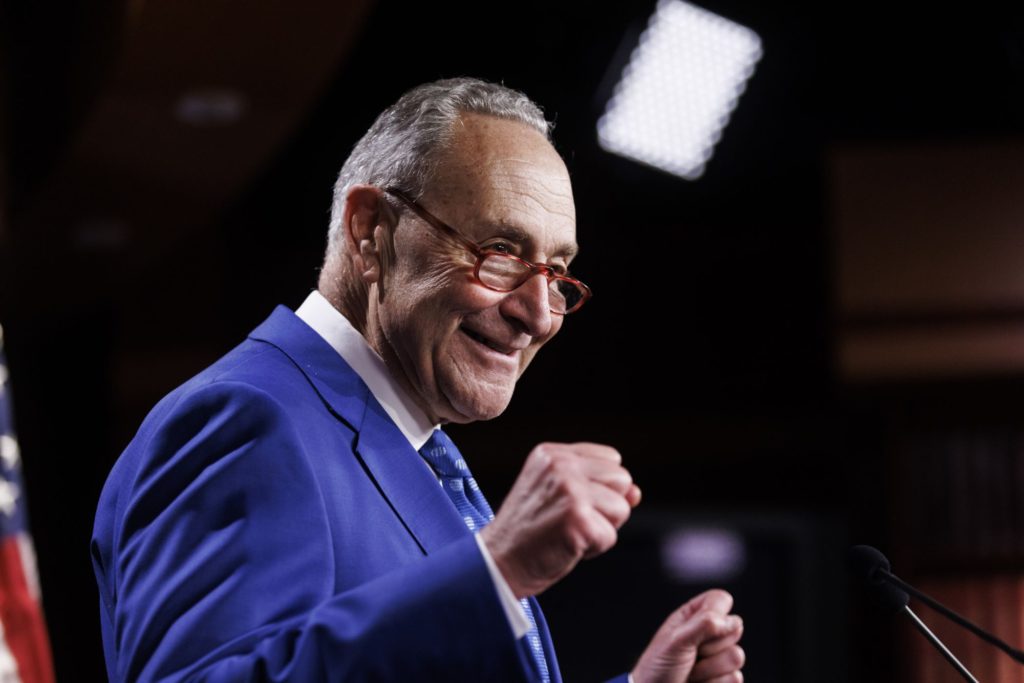
“We had many bumps in the road, many times when it looked like it wouldn’t happen, but we didn’t give up. We got it done,” Schumer said at a news conference after the vote. “I think it is going to help us in November tremendously.”

(Updates with details of Biden administration efforts in second paragraph after ‘Breakthrough Talks’ page break.)

More stories like this are available on bloomberg.com

©2022 Bloomberg L.P.

Tax Bill Latest: GOP Private Equity Carveout Amendment Approved

(Bloomberg) — The Senate is still voting on a lengthy series of amendments to the Democrats’ $437 billion climate, health and tax package leading up to expected passage of the legislation as soon as Sunday afternoon.

In one of the quirks of Senate rules being employed by Democrats to pass the bill with a simple majority, Republicans have the chance to offer scores of amendments. Most are designed to force Democratic senators to take politically fraught positions on contentious issues such as immigration and taxes. 

In the 50-50 Senate, Republicans can force a change in the legislation with help from just one member of the Democratic caucus.

Extended SALT Cap Quickly Replaced by Democrats (3:00 p.m.)

Senate Democrats have voted 51 to 50 to strip out an extension of the $10,000 cap on state and local tax deductions inserted by Republicans and replaced it with their own new revenue-raising provision.

The vote on the amendment from Virginia Senator Mark Warner came after swing-state senators helped the GOP pass an amendment to the bill extending the SALT cap for one year in order to pay for a new carveout from the 15% corporate for private equity subsidiaries.

The Warner amendment extends for two years a measure in the tax code that limits how much in losses pass-through business can deduct each year.

Senate Democrats Replace SALT Cap in Bill (2:45 p.m.)

Senate Democrats have voted to to strip out an extension of the cap on state and local tax deductions inserted by Republicans and replaced it with their own new revenue raising provision.

The vote on the amendment from Virginia Senator Mark Warner came after swing state senators helped the GOP pass an amendment to the bill extending the SALT cap for one year in order to pay for a new carveout from the 15% corporate for private equity subsidiaries.

The Warner amendment extends for two years a measure in the tax code that limits how much in losses pass-through business can deduct each year.


Senate Approves Private Equity Carveout Amendment

The Senate approved a Republican amendment carving out subsidiaries of private equity firms from a new 15% corporate minimum tax on corporations with at least $1 billion in profits.

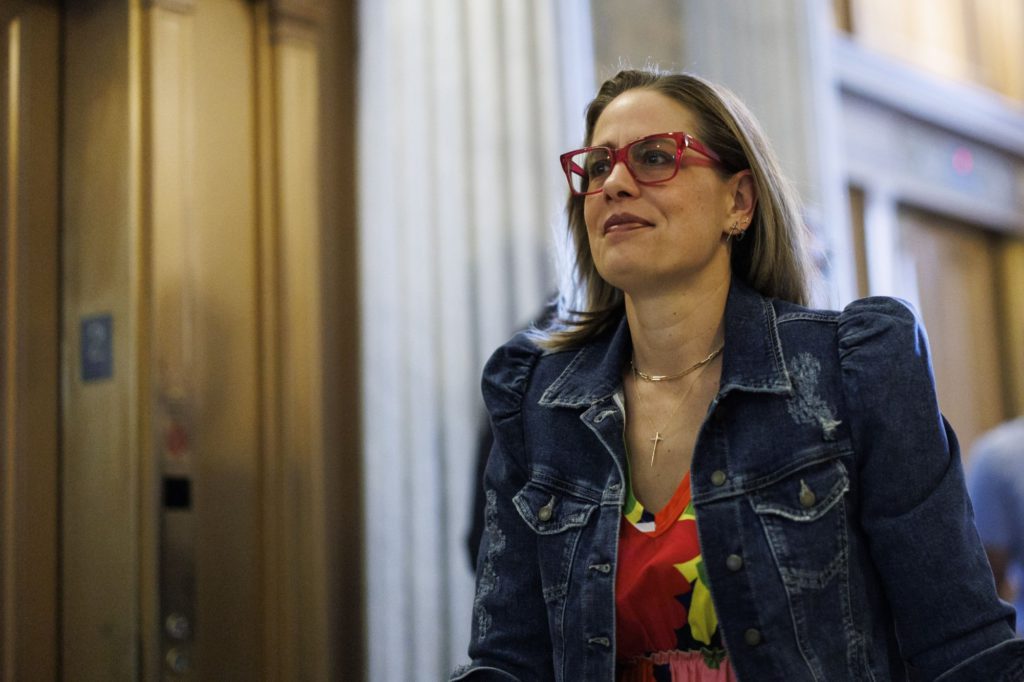
The amendment offered by South Dakota Senator John Thune passed on a 57 to 43 vote, after Democrats Kyrsten Sinema, Raphael Warnock, Jacky Rosen, Catherine Cortez Masto, Maggie Hassan, Jon Ossoff and Mark Kelly voted for it. 

The Thune amendment would cover the estimated $35 billion revenue loss by extending for one year a $10,000 limit on state and local tax deductions that is set to expire in 2025. The SALT change makes the entire bill politically poisonous in the House, where a group of lawmakers from high-tax states have been pushing to raise the cap.

Democrats are expected to soon offer their own amendment to remove the SALT changes and replace them with another source of revenue.

Sinema Sends Democrats Scrambling for a Plan B (2:21 p.m.)

Senator Kyrsten Sinema’s  support of an amendment creating a private equity carveout for the 15% minimum corporate tax sent Democrats scrambling for an alternative way to pay for the last-minute change. It appears they’ve settled on extending a measure in the tax code that limits how much in losses pass-through business can deduct each year.

The amendment, from South Dakota Republican Senator John Thune, would pay for it by extending the $10,000 cap on state-and-local tax deductions for another year, which would cause coastal Democrats to balk.

Democrats scrambled to find the pay-for on the fly after 15 hours of voting on amendments. Sinema sat on the floor alone at her desk, while Democrats huddled.

Sinema Considers GOP’s Private Equity Carveout (1:45 p.m.)

Senator Kyrsten Sinema is considering backing a Republican amendment that would create special tax treatment for the private equity industry in Democrat’s tax and climate bill, according to a person familiar.

Senator John Thune, the No. 2 Senate Republican, is planning to offer the amendment in the coming hours that would make the 15% corporate minimum tax apply to fewer companies owned by private equity firms.

Sinema is talking to Senate Majority Leader Chuck Schumer about how to address the minimum tax, said the person, who asked not to be identified because the talks are private. Senators are also discussing how to offset the cost of the carveout. Final passage on the bill is likely going to be delayed until those issues are resolved.

The South Dakota Republican is planning to offset the cost of creating a carveout for private equity by extending the $10,000 cap on state and local tax, or SALT, deduction, an important tax break for Democrats. Democrats are considering alternatives that aren’t politically toxic for their members.

Senators Discuss Last-Minute Tax Changes For Private Equity (12:16 p.m.)

Senator Joe Manchin huddled in the office of No. 2 Senate Republican John Thune to discuss a possible change to the 15% corporate minimum tax that would create a carve-out to benefit private equity companies.

The minimum tax levy only applies to companies earning at least $1 billion, but Republicans propose dulling that by allowing all the portfolio companies to be counted separately from the private equity owner. That change, which Democrats consider a massive loophole, would be offset by extending the $10,000 cap on state and local tax deductions for an additional year. 

It’s a lose-lose proposition for Democrats. It offers tax breaks for private equity and it also offers an extension of the $10,000 state and local tax cap, which increases taxes for homeowners in many areas represented by Democrats.

The ongoing talks have the potential to delay the final vote. Democrats are concerned Senator Kyrsten Sinema will vote for the Thune amendment and it will pass, according to one person familiar with the situation.

Both Thune and Manchin said that negotiations were ongoing.

GOP’s Johnson, Rubio Targeted for Insulin Vote (11:20 a.m.)

Democrats immediately attacked Senators Ron Johnson of Wisconsin and Marco Rubio of Florida, who are up for re-election, over their votes to strip a $35 insulin cap from the tax bill. 

“Republicans have just gone on the record in favor of expensive insulin,” Oregon Senator Ron Wyden said. “After years of tough talk about taking on insulin makers, Republicans have once against wilted in the face of heat from Big Pharma.”

Voting with Democrats to keep the provision were Senators Bill Cassidy, Susan Collins, Josh Hawley, Cindy Hyde-Smith, John Kennedy, Lisa Murkowski and Dan Sullivan. The 57-43 vote was shy of the 60 needed. 

The bill retains a $35 per month for out-of-pocket insulin co-pay under Medicare even though the GOP succeeded in removing the cap for private insurance.

GOP Strips Insulin Out-of-Pocket Cap From Bill (10:50 a.m.)

Republicans successfully stripped a proposed $35 per month cap on out-of-pocket spending on insulin for patients enrolled in private insurance from the tax and climate bill.

The Senate parliamentarian had ruled that the provision, sponsored by Georgia Democratic Senator Raphael Warnock, is not primarily related to the federal budget. That gave the GOP a chance to raise a procedural objection.

Waiving the rules required 60 votes to succeed. Seven Republicans sided with Democrats to keep the insulin cap in the bill, but that was not enough. Democrats plan to use the GOP move to strip the insulin cap in the fall midterm campaigns.

Many in the GOP supported an amendment from Louisiana Senator John Kennedy to instead provide government funding to subsidize insulin purchases for low income individuals.

Medicaid Funding Kept Out of Democrats’ Bill (9:11 a.m)

Warnock failed in an attempt to add funding to the bill to cover expansion of Medicaid eligibility in states that refused to expand the program with Obamacare funds.

The Medicaid provision was part of the $2 trillion House version of the bill, but it ended up being cut during months of talks with West Virginia Democratic Senator Joe Manchin. Republicans objected to the bill citing Senate budget rules and a motion to waive the objection failed with 94 votes against it and only five in favor.

Senator Ron Wyden said that to preserve the rest of the bill, the amendment must be defeated even though failing to address Medicaid is a “moral abomination.” Warnock, in a tough re-election fight this fall has made Medicaid expansion a signature issue.

Cruz Amendment to Strip IRS Funding Fails (8:45 a.m.)

Democrats defeated an amendment from Texas Republican Senator Ted Cruz to strip extra funding for the Internal Revenue Service from the bill.

The proposed amendment was one of several offered by Republicans targeting the portion of the package that would give the IRS roughly $80 billion in extra funding. It failed on a 50-50 vote.

Republicans have expressed concerns that the IRS funding would lead to an increase in audits of middle-class taxpayers and small businesses. Democrats argue that the funds would allow the IRS to crack down on tax avoidance by the wealthy and to improve customer service.

Sanders’ Bid to Hike Corporate Tax Rejected (8:09 a.m.)

Vermont independent Bernie Sanders failed in an attempt to raise the corporate tax rate for large companies to 28% in order to pay for expanded child tax credits through 2026. 

The 97 to 1 vote against Sanders’ amendment reflects a determination by many Democrats to resist any changes to the bill in order to keep pushing it through to passage, even for a provision that most in the party would favor.

A House-passed bill would have provided one year of expanded child tax credit payments of up to $300 per month, but the provision died in the Senate due to opposition from West Virginia Democratic Senator Joe Manchin.

Democratic Senator Michael Bennet of Colorado, the chief proponent of the expanded child tax credit, urged a “no” vote, saying the amendment would kill the underlying bill. He vowed to work with both parties to revive the benefit.

Democrats Fend Off GOP Changes to Legislation (6:12 a.m.)

As the sun rose on Washington Sunday, the Senate wasn’t near being done with a marathon series of amendment votes on the Democrats’ landmark tax, climate and drug pricing bill.

Democrats have stayed unified during the overnight session to beat back multiple Republican amendments and attempts by progressive independent Bernie Sanders of Vermont to expand social programs in the bill.

Among the rejected amendments were GOP attempts to shield the middle class from tax audits, strip a new fee on fossil fuels to fund environmental cleanup and to attach environmental permitting changes to the bill.

More amendment proposals are expected. At the current rate, Senate passage of the legislation wouldn’t happen until midday.

Democrats Turn Back Immigration Amendment (2:58 a.m.)

Democrats blocked an effort by Republicans to force a continuation of the Covid-era immigration policy known as Title 42 — which a number of Democrats have said they support — lest they risk the underlying bill. 

Hispanic Democrats have warned they could derail the package in the House if anti-immigration policies are added to it in the vote-a-rama, and Republicans have made clear they hope to add amendments that could bring down the bill.

The amendment by James Lankford of Oklahoma failed on a 50-50 vote.

Democratic Senator Jon Tester then offered a similar amendment, but one that didn’t comply with the budget rules, that needed 60 votes. It failed 56-44 but had the backing of Democrats Kyrsten Sinema and Mark Kelly of Arizona, Catherine Cortez Masto of Nevada, Raphael Warnock of Georgia, Maggie Hassan of New Hampshire and Tester. 

Georgia Senators Support Sanders’ Medicare Amendment (2:25 a.m.)

Those votes came after a series of other failed amendments, including one by Vermont independent Bernie Sanders to expand Medicare benefits for dental, vision and hearing. Sanders’ amendment, which would have been paid for with higher income tax rates on high-earning Americans, including a restoration of the 39.6% tax bracket, was defeated 97-3, with only Warnock and Jon Ossoff of Georgia joining him.

Most Democrats have adopted a strategy of voting against all amendments to protect the bill, though Democrats facing tough re-election fights, like Warnock, have on occasion broken from that strategy on amendments where their votes would not impact the outcome.

Republican Oil, SALT Amendment Blocked (12:50 a.m.)

The Senate blocked an amendment by Senator Lindsey Graham of South Carolina to nix a 16.4 cents per barrel oil import fee and extend a cap on the state and local tax deduction.

Graham said his amendment would prevent a rise in gas prices. Democrats argued it amounted to less than a penny a gallon to pay for toxic cleanup.

But his amendment, defeated on a 50-50 party-line vote, also had a tax increase. It would have extended the $10,000 cap on the state and local tax deduction set in the 2017 GOP tax law by another year to 2027. That cap is unpopular with voters in high-tax states like California, New York and New Jersey. 

Hassan instead proposed an amendment to nix the fees to pay for the Superfund program, but without the SALT tax increase to pay for it.

The Senate voted 55-45 to waive a budget point of order to allow the amendment, short of a 60-vote threshold. Three other Democrats who, like Hassan, face tough re-election fights in November joined her effort: Kelly, Cortez Masto and Warnock, as well as Sinema. 

Democrats Hang Together in Early Sanders Test (12:10 a.m.)

In the first vote of the night, the Senate easily blocked an amendment by Sanders, the Budget chairman, to tie the cost of Medicare prescription drugs to the prices paid by the VA.

Sanders said his amendment would cut drug prices in half and save $900 billion. But Graham, the ranking Republican on the Budget Committee, raised a budget point of order against it.

The Senate voted 99-1 against Sanders’ effort to waive the point of order, killing the amendment. Sixty votes would have been required.

The early vote showed Democrats are united in their strategy of voting down all amendments — even measures they would otherwise agree with — in order to preserve all 50 Democratic votes for the underlying bill.

Minimum Tax Includes Special Treatment for Telecom (10:48 p.m.)

The bill text, released Saturday evening, contains a special carve-out in the corporate minimum tax for telecommunications companies that wasn’t included in previous versions of the bill.

The change makes the 15% minimum tax on financial profits less severe for telecom businesses, because they will be able to claim additional deductions when calculating the tax. The legislation also allows companies in all industries to claim tax breaks related to depreciating their equipment and facilities, a previously announced revision that Sinema requested in order to win her support.

Democrats Dare GOP to Strip Out Insulin Cap (10:06 p.m.)

Democrats included a $35 cap on insulin in the bill and are daring the GOP to strip it out.

The top Senate rules official has said the provision, authored by Warnock, is not eligible for the budget bill under Senate rules. But they kept it in the legislation.

Republicans can object to the provision and then Democrats will need 60 votes to waive the objection. Pennsylvania Republican Senator Pat Toomey said the GOP will likely object.

Manchin Ready to Reject GOP Amendments (7:00 p.m.)

During the marathon of amendment votes, it would only take one Democrat siding with all Republicans to change the bill. 

Senator John Thune said the GOP will try to add amendments intended to rile progressive Democrats and make the bill harder to pass the House.

West Virginia Senator Joe Manchin, a moderate Democrat who has sometimes angered his party’s left wing, indicated he wouldn’t go. “I’m protecting the integrity of the bill” he said.

Thune said, “If he sticks to that he is going to make some votes that he regrets.” 

Automakers Lost Fight Over Domestic Content (6:00 p.m.)

US automakers lost their fight to remove domestic content requirements from the vehicle tax proposal. 

Michigan Senators Gary Peters and Debbie Stabenow told reporters that the changes they had sought were not made. Companies will have to comply with tough new battery and critical minerals sourcing requirements that could render the credits useless for years for many manufactures, the senators have warned. 

Manchin insisted on the domestic supply chain requirements.

More stories like this are available on bloomberg.com

©2022 Bloomberg L.P.

Tax Bill Latest: GOP’s Johnson, Rubio Targeted for Insulin Vote

(Bloomberg) — The Senate is still voting on a lengthy series of amendments to the Democrats’ $437 billion climate, health and tax package leading up to expected passage of the legislation as soon as Sunday afternoon.

In one of the quirks of Senate rules being employed by Democrats to pass the bill with a simple majority, Republicans have the chance to offer scores of amendments. Most are designed to force Democratic senators to take politically fraught positions on contentious issues such as immigration and taxes. 

In the 50-50 Senate, Republicans can force a change in the legislation with help from just one member of the Democratic caucus.

GOP’s Johnson, Rubio Targeted for Insulin Vote (11:20 a.m.)

Democrats immediately attacked Senators Ron Johnson of Wisconsin and Marco Rubio of Florida, who are up for re-election, over their votes to strip a $35 insulin cap from the tax bill. 

“Republicans have just gone on the record in favor of expensive insulin,” Oregon Senator Ron Wyden said. “After years of tough talk about taking on insulin makers, Republicans have once against wilted in the face of heat from Big Pharma.”

Voting with Democrats to keep the provision were Senators Bill Cassidy, Susan Collins, Josh Hawley, Cindy Hyde-Smith, John Kennedy, Lisa Murkowski and Dan Sullivan. The 57-43 vote was shy of the 60 needed. 

The bill retains a $35 per month for out-of-pocket insulin co-pays under Medicare even through the GOP successfully removed the cap for private insurance.

GOP Strips Insulin Out-of-Pocket Cap From Bill (10:50 a.m.)

Republicans successfully stripped a proposed $35 per month cap on out-of-pocket spending on insulin for patients enrolled in private insurance from the tax and climate bill.

The Senate parliamentarian had ruled that the provision, sponsored by Georgia Democratic Senator Raphael Warnock, is not primarily related to the federal budget. That gave the GOP a chance to raise a procedural objection.

Waiving the rules required 60 votes to succeed. Seven Republicans sided with Democrats to keep the insulin cap in the bill, but that was not enough. Democrats plan to use the GOP move to strip the insulin cap in the fall midterm campaigns.

Many in the GOP supported an amendment from Louisiana Senator John Kennedy to instead provide government funding to subsidize insulin purchases for low income individuals.

Medicaid Funding Kept Out of Democrats’ Bill (9:11 a.m)

Warnock failed in an attempt to add funding to the bill to cover expansion of Medicaid eligibility in states that refused to expand the program with Obamacare funds.

The Medicaid provision was part of the $2 trillion House version of the bill, but it ended up being cut during months of talks with West Virginia Democratic Senator Joe Manchin. Republicans objected to the bill citing Senate budget rules and a motion to waive the objection failed with 94 votes against it and only five in favor.

Senator Ron Wyden said that to preserve the rest of the bill, the amendment must be defeated even though failing to address Medicaid is a “moral abomination.” Warnock, in a tough reelection fight this fall has made Medicaid expansion a signature issue.

Cruz Amendment to Strip IRS Funding Fails (8:45 a.m.)

Democrats defeated an amendment from Texas Republican Senator Ted Cruz to strip extra funding for the Internal Revenue Service from the bill.

The proposed amendment was one of several offered by Republicans targeting the portion of the package that would give the IRS roughly $80 billion in extra funding. It failed on a 50-50 vote.

Republicans have expressed concerns that the IRS funding would lead to an increase in audits of middle-class taxpayers and small businesses. Democrats argue that the funds would allow the IRS to crack down on tax avoidance by the wealthy and to improve customer service.

Sanders’ Bid to Hike Corporate Tax Rejected (8:09 a.m.)

Vermont independent Bernie Sanders failed in an attempt to raise the corporate tax rate for large companies to 28% in order to pay for expanded child tax credits through 2026. 

The 97 to 1 vote against Sanders’ amendment reflects a determination by many Democrats to resist any changes to the bill in order to keep pushing it through to passage, even for a provision that most in the party would favor.

A House-passed bill would have provided one year of expanded child tax credit payments of up to $300 per month, but the provision died in the Senate due to opposition from West Virginia Democratic Senator Joe Manchin.

Democratic Senator Michael Bennet of Colorado, the chief proponent of the expanded child tax credit, urged a “no” vote, saying the amendment would kill the underlying bill. He vowed to work with both parties to revive the benefit.

Democrats Fend Off GOP Changes to Legislation (6:12 a.m.)

As the sun rose on Washington Sunday, the Senate wasn’t near being done with a marathon series of amendment votes on the Democrats’ landmark tax, climate and drug pricing bill.

Democrats have stayed unified during the overnight session to beat back multiple Republican amendments and attempts by progressive independent Bernie Sanders of Vermont to expand social programs in the bill.

Among the rejected amendments were GOP attempts to shield the middle class from tax audits, strip a new fee on fossil fuels to fund environmental cleanup and to attach environmental permitting changes to the bill.

More amendment proposals are expected. At the current rate, Senate passage of the legislation wouldn’t happen until midday.

Democrats Turn Back Immigration Amendment (2:58 a.m.)

Democrats blocked an effort by Republicans to force a continuation of the Covid-era immigration policy known as Title 42 — which a number of Democrats have said they support — lest they risk the underlying bill. 

Hispanic Democrats have warned they could derail the package in the House if anti-immigration policies are added to it in the vote-a-rama, and Republicans have made clear they hope to add amendments that could bring down the bill.

The amendment by James Lankford of Oklahoma failed on a 50-50 vote.

Democratic Senator Jon Tester then offered a similar amendment, but one that didn’t comply with the budget rules, that needed 60 votes. It failed 56-44 but had the backing of Democrats Kyrsten Sinema and Mark Kelly of Arizona, Catherine Cortez Masto of Nevada, Raphael Warnock of Georgia, Maggie Hassan of New Hampshire and Tester. 

Georgia Senators Support Sanders’ Medicare Amendment (2:25 a.m.)

Those votes came after a series of other failed amendments, including one by Vermont independent Bernie Sanders to expand Medicare benefits for dental, vision and hearing. Sanders’ amendment, which would have been paid for with higher income tax rates on high-earning Americans, including a restoration of the 39.6% tax bracket, was defeated 97-3, with only Warnock and Jon Ossoff of Georgia joining him.

Most Democrats have adopted a strategy of voting against all amendments to protect the bill, though Democrats facing tough re-election fights, like Warnock, have on occasion broken from that strategy on amendments where their votes would not impact the outcome.

Republican Oil, SALT Amendment Blocked (12:50 a.m.)

The Senate blocked an amendment by Senator Lindsey Graham of South Carolina to nix a 16.4 cents per barrel oil import fee and extend a cap on the state and local tax deduction.

Graham said his amendment would prevent a rise in gas prices. Democrats argued it amounted to less than a penny a gallon to pay for toxic cleanup.

But his amendment, defeated on a 50-50 party-line vote, also had a tax increase. It would have extended the $10,000 cap on the state and local tax deduction set in the 2017 GOP tax law by another year to 2027. That cap is unpopular with voters in high-tax states like California, New York and New Jersey. 

Hassan instead proposed an amendment to nix the fees to pay for the Superfund program, but without the SALT tax increase to pay for it.

The Senate voted 55-45 to waive a budget point of order to allow the amendment, short of a 60-vote threshold. Three other Democrats who, like Hassan, face tough reelection fights in November joined her effort: Kelly, Cortez Masto and Warnock, as well as Sinema. 

Democrats Hang Together in Early Sanders Test (12:10 a.m.)

In the first vote of the night, the Senate easily blocked an amendment by Sanders, the Budget chairman, to tie the cost of Medicare prescription drugs to the prices paid by the VA.

Sanders said his amendment would cut drug prices in half and save $900 billion. But Graham, the ranking Republican on the Budget Committee, raised a budget point of order against it.

The Senate voted 99-1 against Sanders’ effort to waive the point of order, killing the amendment. Sixty votes would have been required.

The early vote showed Democrats are united in their strategy of voting down all amendments — even measures they would otherwise agree with — in order to preserve all 50 Democratic votes for the underlying bill.

Minimum Tax Includes Special Treatment for Telecom (10:48 p.m.)

The bill text, released Saturday evening, contains a special carve-out in the corporate minimum tax for telecommunications companies that wasn’t included in previous versions of the bill.

The change makes the 15% minimum tax on financial profits less severe for telecom businesses, because they will be able to claim additional deductions when calculating the tax. The legislation also allows companies in all industries to claim tax breaks related to depreciating their equipment and facilities, a previously announced revision that Sinema requested in order to win her support.

Democrats Dare GOP to Strip Out Insulin Cap (10:06 p.m.)

Democrats included a $35 cap on insulin in the bill and are daring the GOP to strip it out.

The top Senate rules official has said the provision, authored by Warnock, is not eligible for the budget bill under Senate rules. But they kept it in the legislation.

Republicans can object to the provision and then Democrats will need 60 votes to waive the objection. Pennsylvania Republican Senator Pat Toomey said the GOP will likely object.

Manchin Ready to Reject GOP Amendments (7:00 p.m.)

During the marathon of amendment votes, it would only take one Democrat siding with all Republicans to change the bill. 

Senator John Thune said the GOP will try to add amendments intended to rile progressive Democrats and make the bill harder to pass the House.

West Virginia Senator Joe Manchin, a moderate Democrat who has sometimes angered his party’s left wing, indicated he wouldn’t go. “I’m protecting the integrity of the bill” he said.

Thune said, “If he sticks to that he is going to make some votes that he regrets.” 

Automakers Lost Fight Over Domestic Content (6:00 p.m.)

US automakers lost their fight to remove domestic content requirements from the vehicle tax proposal. 

Michigan Senators Gary Peters and Debbie Stabenow told reporters that the changes they had sought were not made. Companies will have to comply with tough new battery and critical minerals sourcing requirements that could render the credits useless for years for many manufactures, the senators have warned. 

Manchin insisted on the domestic supply chain requirements.

More stories like this are available on bloomberg.com

©2022 Bloomberg L.P.
Joules Says in Talks for Next to Take £15 Million Minority Stake

(Bloomberg) — British clothing and housewares chain Next Plc is in talks to acquire a minority stake in troubled retailer Joules Group Plc for about £15 million ($18.1 million).

The potential investment will be made “at no less than” its current market price, Joules said in a statement responding to a report it was looking to sell a roughly 25% stake to raise capital.

Next in Talks to Buy Stake in UK Retailer Joules, Sky Says (1)

There’s no certainty the discussions will lead to any agreement, according to the statement. Joules’ shares fell as much as 0.9% in London on Friday and closed at 33 pence. The stock is down more than 77% this year.

The company is also in talks with Next to adopt its Total Platform services to support Joules’ long term growth plans, it said. 

Joules said in May that it was cautious about its near-term outlook amid a “challenging” trading environment, with consumer confidence impacted by the rising cost of living.

More stories like this are available on bloomberg.com

©2022 Bloomberg L.P.

Tax Bill Latest: Sanders’ Bid to Hike Corporate Tax Rejected

(Bloomberg) — The Senate has started voting on a lengthy series of amendments to the Democrats’ $437 billion climate, health and tax package leading up to expected passage of the legislation sometime this weekend.

In one of the quirks of Senate rules being employed by Democrats to pass the bill with a simple majority, Republicans have the chance to offer scores of amendments. Most are designed to force Democratic senators to take politically fraught positions on contentious issues such as immigration and taxes. 

In the 50-50 Senate, Republicans can force a change in the legislation with help from just one member of the Democratic caucus.

Sanders’ Bid to Hike Corporate Tax Rejected (8:09 a.m.)

Vermont independent Bernie Sanders failed in an attempt to raise the corporate tax rate for large companies to 28% in order to pay for expanded child tax credits through 2026. 

The 97 to 1 vote against Sanders’ amendment reflects a determination by many Democrats to resist any changes to the bill in order to keep pushing it through to passage, even for a provision that most in the party would favor.

A House-passed bill would have provided one year of expanded child tax credit payments of up to $300 per month, but the provision died in the Senate due to opposition from West Virginia Democratic Senator Joe Manchin.

Democratic Senator Michael Bennet of Colorado, the chief proponent of the expanded child tax credit, urged a “no” vote, saying the amendment would kill the underlying bill. He vowed to work with both parties to revive the benefit.

Democrats Fend Off GOP Changes to Legislation (6:12 a.m.)

As the sun rose on Washington Sunday, the Senate wasn’t near being done with a marathon series of amendment votes on the Democrats’ landmark tax, climate and drug pricing bill.

Democrats have stayed unified during the overnight session to beat back multiple Republican amendments and attempts by progressive independent Bernie Sanders of Vermont to expand social programs in the bill.

Among the rejected amendments were GOP attempts to shield the middle class from tax audits, strip a new fee on fossil fuels to fund environmental cleanup and to attach environmental permitting changes to the bill.

More amendment proposals are expected. At the current rate, Senate passage of the legislation wouldn’t happen until midday.

Democrats Turn Back Immigration Amendment (2:58 a.m.)

Democrats blocked an effort by Republicans to force a continuation of the Covid-era immigration policy known as Title 42 — which a number of Democrats have said they support — lest they risk the underlying bill. 

Hispanic Democrats have warned they could derail the package in the House if anti-immigration policies are added to it in the vote-a-rama, and Republicans have made clear they hope to add amendments that could bring down the bill.

The amendment by James Lankford of Oklahoma failed on a 50-50 vote.

Democratic Senator Jon Tester then offered a similar amendment, but one that didn’t comply with the budget rules, that needed 60 votes. It failed 56-44 but had the backing of Democrats Kyrsten Sinema and Mark Kelly of Arizona, Catherine Cortez Masto of Nevada, Raphael Warnock of Georgia, Maggie Hassan of New Hampshire and Tester. 

Georgia Senators Support Sanders’ Medicare Amendment (2:25 a.m.)

Those votes came after a series of other failed amendments, including one by Vermont independent Bernie Sanders to expand Medicare benefits for dental, vision and hearing. Sanders’ amendment, which would have been paid for with higher income tax rates on high-earning Americans, including a restoration of the 39.6% tax bracket, was defeated 97-3, with only Warnock and Jon Ossoff of Georgia joining him.

Most Democrats have adopted a strategy of voting against all amendments to protect the bill, though Democrats facing tough re-election fights, like Warnock, have on occasion broken from that strategy on amendments where their votes would not impact the outcome.

Republican Oil, SALT Amendment Blocked (12:50 a.m.)

The Senate blocked an amendment by Senator Lindsey Graham of South Carolina to nix a 16.4 cents per barrel oil import fee and extend a cap on the state and local tax deduction.

Graham said his amendment would prevent a rise in gas prices. Democrats argued it amounted to less than a penny a gallon to pay for toxic cleanup.

But his amendment, defeated on a 50-50 party-line vote, also had a tax increase. It would have extended the $10,000 cap on the state and local tax deduction set in the 2017 GOP tax law by another year to 2027. That cap is unpopular with voters in high-tax states like California, New York and New Jersey. 

Hassan instead proposed an amendment to nix the fees to pay for the Superfund program, but without the SALT tax increase to pay for it.

The Senate voted 55-45 to waive a budget point of order to allow the amendment, short of a 60-vote threshold. Three other Democrats who, like Hassan, face tough reelection fights in November joined her effort: Kelly, Cortez Masto and Warnock, as well as Sinema. 

Democrats Hang Together in Early Sanders Test (12:10 a.m.)

In the first vote of the night, the Senate easily blocked an amendment by Sanders, the Budget chairman, to tie the cost of Medicare prescription drugs to the prices paid by the VA.

Sanders said his amendment would cut drug prices in half and save $900 billion. But Graham, the ranking Republican on the Budget Committee, raised a budget point of order against it.

The Senate voted 99-1 against Sanders’ effort to waive the point of order, killing the amendment. Sixty votes would have been required.

The early vote showed Democrats are united in their strategy of voting down all amendments — even measures they would otherwise agree with — in order to preserve all 50 Democratic votes for the underlying bill.

Minimum Tax Includes Special Treatment for Telecom (10:48 p.m.)

The bill text, released Saturday evening, contains a special carve-out in the corporate minimum tax for telecommunications companies that wasn’t included in previous versions of the bill.

The change makes the 15% minimum tax on financial profits less severe for telecom businesses, because they will be able to claim additional deductions when calculating the tax. The legislation also allows companies in all industries to claim tax breaks related to depreciating their equipment and facilities, a previously announced revision that Sinema requested in order to win her support.

Democrats Dare GOP to Strip Out Insulin Cap (10:06 p.m.)

Democrats included a $35 cap on insulin in the bill and are daring the GOP to strip it out.

The top Senate rules official has said the provision, authored by Warnock, is not eligible for the budget bill under Senate rules. But they kept it in the legislation.

Republicans can object to the provision and then Democrats will need 60 votes to waive the objection. Pennsylvania Republican Senator Pat Toomey said the GOP will likely object.

Manchin Ready to Reject GOP Amendments (7:00 p.m.)

During the marathon of amendment votes, it would only take one Democrat siding with all Republicans to change the bill. 

Senator John Thune said the GOP will try to add amendments intended to rile progressive Democrats and make the bill harder to pass the House.

West Virginia Senator Joe Manchin, a moderate Democrat who has sometimes angered his party’s left wing, indicated he wouldn’t go. “I’m protecting the integrity of the bill” he said.

Thune said, “If he sticks to that he is going to make some votes that he regrets.” 

Automakers Lost Fight Over Domestic Content (6:00 p.m.)

US automakers lost their fight to remove domestic content requirements from the vehicle tax proposal. 

Michigan Senators Gary Peters and Debbie Stabenow told reporters that the changes they had sought were not made. Companies will have to comply with tough new battery and critical minerals sourcing requirements that could render the credits useless for years for many manufactures, the senators have warned. 

Manchin insisted on the domestic supply chain requirements.

More stories like this are available on bloomberg.com

©2022 Bloomberg L.P.

Renault Is On Right Track With New Electric Vehicle, CEO Says

(Bloomberg) — Renault SA Chief Executive Officer Luca de Meo said the uptake of the new Megane E-Tech EV model shows the French carmaker is on the right track with its turnaround at a time of increased challenges for the automotive industry.

Renault sold 25,000 Megane E-Tech vehicles in three months, the 55-year-old CEO told Le Journal du Dimanche in an interview published in its Sunday edition. Total new car registrations have fallen this year in France. 

“The democratization of the electric car will take place in Europe and involves products at affordable prices,” de Meo told the newspaper. Still, costs are rising for materials needed for EV batteries and that means the “equation is hard,” he said.

The Megane E-Tech model, which is being widely advertised in French media, was the country’s best-selling EV in July, according to data by Avere-France.


Renault is counting on a series of new EV models to take on bigger rivals such as Volkswagen AG and Stellantis NV as European carmakers battle a shortage in semiconductors and rising inflation that could impact consumers’ ability to spend money on costlier electric vehicles.

Renault on July 29 raised its outlook for 2022 after posting a net loss in the first half of the year. 

“Our first half performance and hiked full-year guidance should quieten those who said Renault couldn’t survive,” de Meo told JDD.

Renault’s “restructuring and strong execution are paying off,” Bernstein & Co. analyst Daniel Roeska wrote in an Aug. 4 note to clients. Still, “tides may turn in 2023” as the carmaker faces multiple headwinds, he said.

De Meo has pledged to give more details on his plan to carve out Renault’s electric and combustion-engine businesses in the fall. 

More stories like this are available on bloomberg.com

©2022 Bloomberg L.P.
Close Bitnami banner
Bitnami