

Bloomberg

Taiwan Says China Simulating Attack on Main Island in Drills

(Bloomberg) — Taiwan said China’s military drills on Saturday appeared to be simulating an attack on its main island, as Chinese warplanes and warships crossed the strait’s median line in a continued show of force.

China is engaging in increasingly destabilizing action, US Secretary of State Antony Blinken told reporters, saying he has communicated this to his Chinese counterpart Wang Yi. Blinken said tensions between the US and China need to be de-escalated and he told Wang that lines of communications between the two sides must be kept open.

The People’s Liberation Army said it conducted live-fire drills in the sea and airspace of northern, southwestern, and eastern Taiwan as planned on Saturday. Taiwan’s Defense Ministry said it detected 20 PLA warplanes and 14 warships around the Taiwan Strait as of 5 p.m. local time.

Taiwan said its army monitored the situation with the Patriot missile system, and sent air patrols and naval ships. Chinese drills are unilaterally changing the regional status quo and sabotaging peace in the Taiwan Strait, it said.

China is carrying out its most provocative military drills in decades in the wake of House Speaker Nancy Pelosi’s trip to Taiwan this week. It has also likely fired missiles over the island of 23 million people, sent warships across the Taiwan Strait’s median line and waves of warplanes across the US-defined boundary. 

The US, Japan and Australia in a joint statement condemned China’s missile launches, urged an immediate stop to its military drills and backed “the region’s desire for diplomacy to avoid the risks of miscalculation.” Blinken, Australian Foreign Minister Penny Wong and Japanese Foreign Minister Hayashi Yoshimasa met earlier in Phnom Penh in a sign of support for a free and open Indo-Pacific, according to the statement.

Beijing has denounced the visit by Pelosi as a violation of the US pledge 50 years ago not to formally recognize the government of Taiwan, which China claims as its territory. It announced on Friday a set of measures including cutting off defense talks with the US, further deteriorating relations between the world’s biggest economies.

“Maintaining dialogue is arguably even more important when we’re in period of heightened tensions,” Blinken said in a briefing in Manila. China’s actions against the US on Friday are “another irresponsible step,” he said.

The Chinese Foreign Ministry also announced unspecified sanctions against Pelosi and her immediate family over what it said was her “egregious provocation.” Although largely symbolic, the move makes the House speaker the highest-ranking American official sanctioned by Beijing. The action was announced shortly after Pelosi left Japan after wrapping up her dramatic week-long trip. 

Blinken said Friday that China is choosing to “overreact” to Pelosi’s visit, adding there was “no justification for this extreme, disproportionate and escalatory military response.” He reiterated those views in the press briefing on Saturday.

“The differences between Taiwan and the mainland need to be resolved peacefully,” said Blinken, who earlier stopped in Phnom Penh for a regional meeting of foreign ministers. “Countries throughout the region and around the world are very concerned about that.”

Taiwan’s Ports

Taiwan’s military warned off drones flying over restricted waters surrounding its outer islands late Friday, the third consecutive day such incidents occurred. Earlier this week, it said Chinese army drones were flying near some of the islands. 

China’s military exercises are making ships think twice about heading into one of Taiwan’s most important ports, creating potential delays for shipments of electronic goods. Ship owners, worried about the possibility of missile strikes, are choosing to idle vessels and burn extra fuel until the drills pass.

Ships are dropping anchor at sea to avoid a drill zone located just outside Kaohsiung port in the south of Taiwan, said Jayendu Krishna, deputy head of consultancy Drewry Maritime Advisors. The zone, one of the largest areas where China is carrying out exercises, is 15 nautical miles away from the entrance of the port.

The Taiwan Strait is a key route for supply chains, with almost half of the global container fleet passing through the waterway this year. While vessels are continuing to travel through the strait during the military exercises, they are navigating around the drill zones. The Taiwanese Maritime & Port Bureau on Thursday told ships to avoid designated areas around the island until Aug. 8 in waters to the east of the island.

China will practice live weapon firing in the southern part of the Yellow Sea, according to the Maritime Safety Administration in the eastern Chinese city of Lianyungang in Jiangsu province. The drills will last for ten days from Aug. 6-15, it said.

Alongside military exercises, China has imposed trade restrictions on Taiwan. It suspended some fish and fruit imports, citing excessive pesticide residue detected on products since last year and some frozen fish packages that tested positive for coronavirus in June. Exports of natural sand, used in construction, were also banned. 

China is moving to tighten the enforcement of existing rules on imports from Taiwan, according to people familiar with the matter. Products labeled as originated from the R.O.C., or the “Republic of China,” won’t be allowed entry to the mainland China market, the people said, asking not to be identified discussing sensitive matters. Beijing objects to Taiwan’s use of “Republic of China” as its official designation because it considers the self-governing democracy part of its territory.

China Tightening Label Rules on Goods From Taiwan, Sources Say

One of the people said China’s labeling rules for Taiwanese imports were first announced in 2015 but had not been strictly enforced until this week. That risk is that products are confiscated unless companies change their labeling to comply with the regulations, the person said, although they expected the overall impact to be modest for now as firms were likely to adjust their packaging quickly.

China is Taiwan’s largest trading partner, with bilateral trade rising 26% on year to $328.3 billion in 2021. Taiwan held a sizable surplus against China, with exports from the island exceeding imports by $172 billion, according to Chinese customs data. While Beijing could leverage that advantage by sanctioning exporters, China also relies on Taiwan for semiconductor supplies.

(Updates with joint statement by US, Australia and Japan in sixth paragraph.)

More stories like this are available on bloomberg.com

©2022 Bloomberg L.P.

BlackRock Sees Demand Grow for Thematic ETFs as Inflation Hedge

(Bloomberg) — Investors are turning to some thematic exchange-traded funds to hedge against inflation and take advantage of the renewed performance of value stocks this year, according to Jay Jacobs, US head of thematics and active equity ETFs at BlackRock Inc. 

Jacobs joined the “What Goes Up” podcast to discuss how the firm is sizing up investing opportunities amid an uncertain economic outlook. Below are condensed and lightly edited highlights of the conversation. Click here to listen to the full podcast, or subscribe on Apple Podcasts or wherever you listen.

Q: What are some of the hot thematic ETFs of the year?

A: Within the thematic space, it’s been really interesting. Over the last three, four years, a lot of leadership in the thematic space has been around disruptive technology. It’s been looking at things like cloud computing during the pandemic when we were all working from home, it was around genomics and biomedicine when we were trying to figure out the vaccine situation and testing. But now it’s really pivoted, especially as we’ve seen broader shifts within the market from growth to value. People are looking for more themes that are in the value space, especially themes that we think are going to be more resilient in this high inflationary environment. 

So we’ve seen a lot of interest in infrastructure as a theme. We’ve seen an incredible amount of interest in food-related themes, especially as we’ve seen inflation at the supermarket. And then also we’ve seen interest in clean energy as a play on inflation, as well as some of the most recent news out of Washington. So we’re seeing, again, this shift — it’s not just about disruptive tech anymore. We’re seeing themes that are playing a little bit more in that value end of the spectrum as investors look for long-term structural trends, but those that can still do well in this different environment than we’ve been in.

Q: And those different themes are for this inflationary environment, right? Could you maybe walk us through those key themes and why they work in today’s world?

A: A lot of it has to do with what are the underlying companies in this theme and why do we think that it’s going to benefit in an inflationary environment. So starting with infrastructure, a lot of infrastructure asset owners — companies that run airports, run toll roads, run seaports, or utilities companies — they literally get to change their tolls based off of CPI. So that is a natural built-in business hedge for inflation. When inflation is higher, they get to raise their rates, especially if their regulated rates are tied to CPI. And that just neutralizes those businesses from an inflation perspective. 

What’s also happening in that space is you have a lot of money coming into infrastructure from the Infrastructure Investment and Jobs Act. So there’s a lot of build-out of infrastructure that, frankly, these companies don’t have to pay for, or they get tax credits or other benefits to build out this infrastructure, which is helping. And then finally, when we think about the economic environment that we’re in, infrastructure tends to be very non-cyclical. So if we start to see a recession, or if the economy slows down, people still turn on the lights, they still use their ovens, they still pay their water bills. And so not only does it have this inflation component, but there’s also a defensive component within this theme which is giving people that sweet spot of, we don’t know if there’s a recession, we don’t know how long inflation’s going to be around, and we also want to participate in long-term structural growth. Inflation really hits on all three of those points. 

The second theme that we are really excited about from that inflation perspective is ag-tech and food innovation. And I’ll be honest, this is a theme that we thought was really going to be playing out over the next 20 years. We took a step back and we said, the world’s arable land is pretty much limited, there’s a finite amount of land in the world. If anything, that has been shrinking due to changes in the climate and more floods and more forest fires, which is making arable land somewhat shrink. But on the demand side of the equation, we’ve seen a rising emerging-market consumer, which is spending more money on food and more complex foods like proteins and dairies. We’ve seen a growing global population, which will reach 10 billion people by the year 2050. And we’re seeing a change in food preferences where people are increasingly demanding sustainable food. 

So just looking at that, we were believing that over the next several decades, we were going to have this supply and demand imbalance around food that would create food inflation. Of course, that’s been pulled forward 20 years earlier than we expected because of conflict in Eastern Europe, which has brought a lot of wheat offline, because of general global supply-chain disruptions, which has made it more difficult to ship food around the world. So we’re seeing food inflation, we’re seeing it in really powerful ways, but we also have these solutions that are already out there with ag-tech, like precision farming, precision watering, reduced use of chemicals, more resilient crops, and that is getting accelerated by this environment. 

And then the third theme is clean energy where we’ve seen that a lot of the cost in clean energy is really in the initial build out. You build out a solar farm, you build out a wind turbine. That cost is mostly up front. Yes, there’s some servicing that’s ongoing, but a lot of those costs are basically fixed compared to more traditional forms of energy production, where you’re constantly paying for fuels. So in an inflationary environment where you have rising commodity prices, upfront payment of a lot of those costs tends to be beneficiary. So those are the three segments we think really are in the sweet spot of inflation, but also how these long-term tailwinds. 

More stories like this are available on bloomberg.com

©2022 Bloomberg L.P.
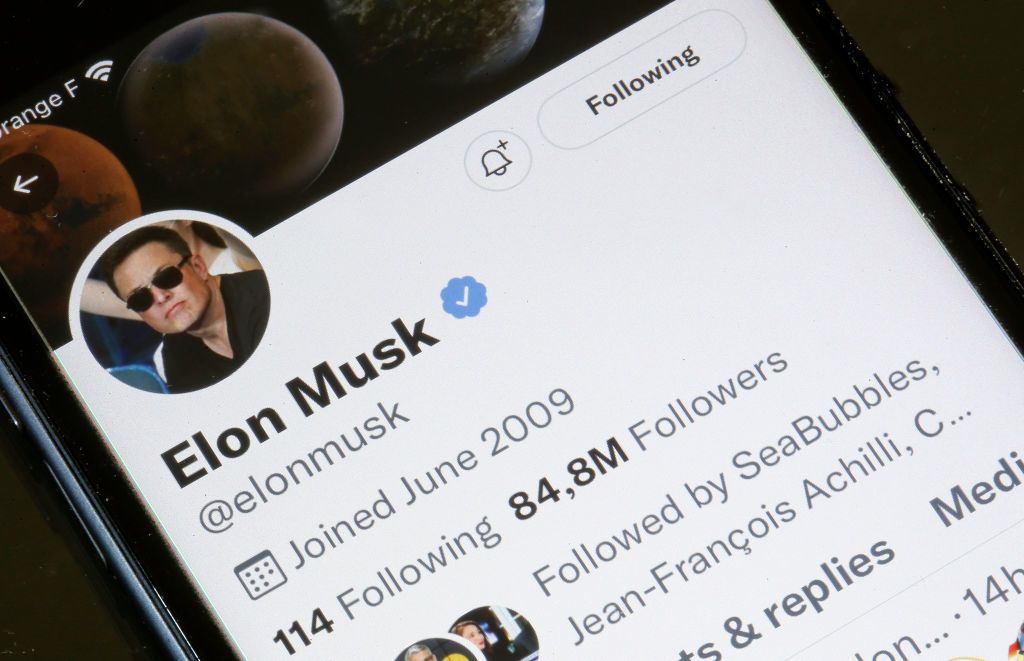
Musk Questions Why SEC Not Investigating Twitter Spam Data

(Bloomberg) — The world’s richest person Elon Musk has taken his concern about Twitter Inc. to the social media site again.

Responding to a thread initiated by another user, Musk said the deal to buy the company “should proceed on original terms” if Twitter would provide their method for sampling accounts and confirm them to be genuine. “However, if it turns out that their SEC filings are materially false, then it should not,” he also said.

Musk questioned the US Securities and Exchange Commission for not investigating Twitter over its account data and also challenged Twitter Chief Executive Officer Parag Agrawal to a public debate over the number of so-called bots on the platform. 

Twitter is currently suing Musk over the canceled $44 billion buyout. Musk has argued that Twitter checks only 100 accounts a day when trying to calculate the number of spam bots on the service.

Read more: Musk’s Questions About Twitter Bot Problem Spur Race for Answer

Musk has accused Twitter of misrepresenting the size of its user base to distort its value and cited the issue of fake accounts as a main reason for abandoning his offer to buy the company. Twitter responded by saying that the idea that Musk, backed by a team of lawyers and financial advisers, was “hoodwinked” into signing the purchase agreement was “as implausible and contrary to fact as it sounds.” 

Musk’s arguments for abandoning the deal were revealed in counterclaims filed under seal in a Delaware court last week. Musk is asking the judge to declare Twitter in breach of contract. 

Musk originally agreed to pay $54.2 per Twitter share. The company’s stock has plunged along with other technology stocks since then and now trades at $42.52 a share. 

(Updates with Musk’s comment on a public debate in third paragraph.)

More stories like this are available on bloomberg.com

©2022 Bloomberg L.P.
PredictIt Betting on US Elections Nixed by American Regulators

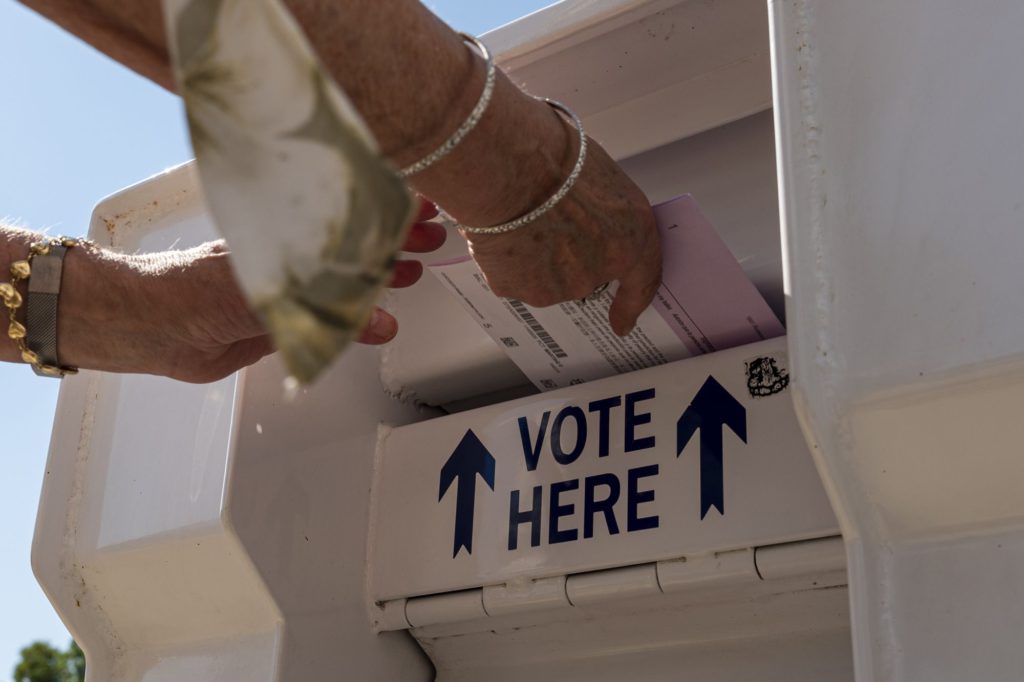
(Bloomberg) — PredictIt, a market that built its name by letting Americans bet on who will be elected to Congress or the next president, has lost its legal authority to operate in the US. 

The move by the Commodity Futures Trading Commission on Aug. 4 to revoke the regulatory letter relied on by the platform sent shock waves through the political-gambling industry. Since 2014, PredictIt has used the permission granted for research purposes to a New Zealand university to let Americans bet on US elections, something that’s generally forbidden. 

The focus on politics thrust PredictIt into the forefront of an emerging asset class that easily lets people wager on the outcomes of real-world events using derivatives. Odds based on PredictIt wagers have been widely cited by major media, and while the site’s origins were rooted in academia and bets are capped at $850, it’s become a favorite among American gamblers. 

The CFTC said that PredictIt trading in contracts listed under the 2014 legal interpretation must end by Feb. 15, 2023. The regulator’s move didn’t involve an enforcement action.

As of Friday afternoon in Washington, traders still could use PredictIt to bet on everything from whether former President Donald Trump or Florida Governor Ron DeSantis would win the 2024 presidential election to whether New York’s Alexandria Ocasio-Cortez will file to run for president before 2024. 

The website included a disclaimer that read: “Predictit.org is an experimental project operated for academic purposes under permission from the CFTC.”

The CFTC didn’t specify its exact rationale for revoking its letter to Victoria University of Wellington in New Zealand, other than stating that the university had “not operated its market in compliance with the terms” of the 2014 determination.

The letter gave the university the ability to list the products for research and academic purposes. Because of PredictIt’s relationship with the university, the platform never registered with the CFTC as a derivatives exchange — an onerous process that involves intense scrutiny from the regulator.  

In a statement, PredictIt said it disagreed with the agency’s decision and “maintains that all active markets are not only within the terms of the no-action letter but are also consistent with commission interpretations conveyed to us over the past eight years.” It added that it intends to continue normal operations until the Feb. 15 deadline.

The platform hasn’t yet decided how contracts with end dates after Feb. 15 will be settled, Margaret Hyland, a Vice-Provost at Victoria University of Wellington, said in a separate statement.

The decision to revoke the CFTC’s letter that effectively told the university it wouldn’t get sued for offering the contracts came after CFTC staff determined it had allowed PredictIt to stray too far from the original remit of being a small-scale market designed to facilitate academic research, according to four people familiar with the matter.

PredictIt is operated by Aristotle Inc. and it attracts a cadre of professional gamblers. 

The uncertainty over whether the exchange was actually being operated as a for-profit entity, given its ties to Aristotle, which provides technology, data and other services to political campaigns, also drew concern within the agency, said the people who asked not to be named discussing internal deliberations. 

The CFTC declined to comment.

In a statement, Aristotle said that American voters, politicians, journalists and academics rely on PredictIt for the valuable data it provides. 

“Over the past eight years we have always strived to be a good actor in an industry rife with bad ones and have worked with the CFTC since the beginning and would like to continue working with them,” Aristotle spokeswoman Brandi Travis said in an email. “The CFTC has known for years about the extent to which Aristotle was involved with PredictIt day to day, as this was disclosed to them by us many years ago,” Travis said. 

Victoria University of Wellington said in a statement that the PredictIt platform “remains a project of the university, operated by Aristotle. There has been no sale by the university to Aristotle.” PredictIt didn’t respond to a request for comment on the arrangements between it, the university and Aristotle.

Regulatory microscope

Recently, the regulator has become more focused on event contracts, an area which has grown in popularity amid the recent explosion in retail trading. 

In January, Polymarket, a crypto-based event market, agreed to pay a $1.4 million to settle CFTC allegations it had been running an unregistered trading platform. The firm didn’t admit or deny wrongdoing in the settlement.

Meanwhile, Kalshi, a Silicon Valley startup with venture capital backing, became the first exchange granted CFTC registration to run a fully-commercial event market in 2020. 

Kalshi doesn’t currently offer trading in election outcomes, but recently filed papers with the agency to begin listing events contracts tied to the 2022 midterm elections, two of the people said. Kalshi didn’t respond to a request for comment. 

In general, prediction markets have been viewed with a mixture of fascination and skepticism from some in the US news media and election watchers. While backers say they’re more accurate than polling, there have been occasional concerns about market manipulation to increase the perception of a candidate’s performance.

Rajiv Sethi, an economics professor at Barnard College, Columbia University says he’s found PredictIt data to be useful in his research. The CFTC decision means that elections-watchers could lose a major source of data ahead of the 2024 US presidential elections, he added. 

“For those who are interested in market based predictions of political outcomes, including journalists and researchers, there is really no close substitute,” Sethi said.

More stories like this are available on bloomberg.com

©2022 Bloomberg L.P.
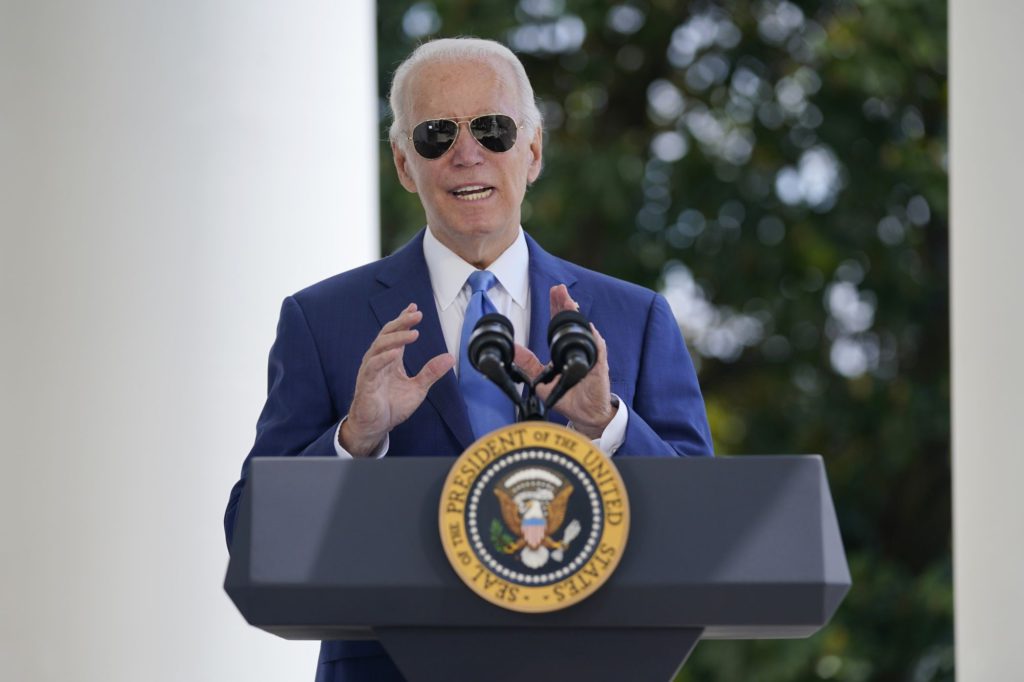
Biden Tests Negative for Covid, Will Isolate Pending Second Test

(Bloomberg) —

President Joe Biden tested negative for Covid-19 for the first time in a week, though he’ll maintain isolation at the White House pending a second negative test, his doctor said.

Biden, 79, “continues to feel very well,” presidential physician Kevin O’Connor said in a letter released by the White House. 

Biden’s “rebound” case, linked by his doctor to the antiviral drug Paxlovid, has stymied the embattled president’s plans to take advantage of a recent Democratic policy wins. He canceled an Aug. 2  trip to Michigan to promote legislation subsidizing US semiconductor manufacturing in the competition with China, though he joined virtually.

The latest antigen test on Biden came back negative on Saturday morning, O’Connor said. “In an abundance of caution, the president will continue his strict isolation measures pending a second negative test as previously described,” the doctor said.

Biden first tested positive on July 21 and ended isolation six days later after twice testing negative on rapid antigen tests. He suffered mild symptoms, including a sore throat, runny nose, fatigue and elevated temperature.

The president tested positive for the second time on July 30 in a type of case seen in some Covid patients who take Pfizer Inc.’s Paxlovid to treat the disease. 

Earlier: Biden’s Covid ‘Rebound’ Case Keeps Him at the White House Again

The US Centers for Disease Control and Prevention guidelines recommend people with rebound cases isolate for five days following a positive test, and if their symptoms are improving and they have no fever, to end isolation but wear a mask for an additional five days with no travel restrictions.

Biden’s case highlighted the issue of rebound cases in a small percentage of people who take Paxlovid, which Biden has touted as a symbol of progress the US has made in controlling the pandemic. 

Rebound cases are typically associated with few or no symptoms, but cause many to resume isolation in accordance with CDC guidelines. Biden had only a mild cough, according to O’Connor.

Pfizer Chief Scientific Officer Mikael Dolsten said the company was working with the Food and Drug Administration to finalize plans for a study of Paxlovid “retreatment” among people who test positive after testing negative.  

More stories like this are available on bloomberg.com

©2022 Bloomberg L.P.

Social Media Buzz: Taiwan, Indiana Abortion Ban, Kim and Pete

(Bloomberg) — Here’s what’s buzzing on social media this morning: 

BUZZING HEADLINES:

Taiwan said China’s military drills on Saturday appeared to be simulating an attack on its main island, as Chinese warplanes and warships crossed the strait’s median line in a continued show of force.

China is engaging in increasingly destabilizing action, US Secretary of State Antony Blinken told reporters on Saturday. China is carrying out its most provocative military drills in decades in the wake of House Speaker Nancy Pelosi’s trip to Taiwan this week.

Indiana’s governor signed a law instituting a near-total ban on abortion, making it the first state in the nation to draw up and pass new legislation restricting access to the procedure since the Supreme Court overturned Roe v. Wade. The move has met with strong opposition, including from some of the state’s largest corporate employers.

In the UK, Archie Battersbee, a 12-year-old boy who was at the center of a legal battle to prevent his life support treatment being removed, has died in the Royal London hospital.

A last-ditch plea to the European Court of Human Rights to intervene in the case was rejected late Friday, following a UK High Court ruling that he must remain at the hospital rather than be transferred to a hospice to die. Battersbee had been in a coma for four months after what his mother said was the result of him choking following a challenge on social media.

A Texas jury unanimously ordered conspiracy theorist Alex Jones to pay $45.2 million in punitive damages to the family of a six-year-old boy who was shot to death in the 2012 massacre at an elementary school in Newtown, Connecticut. “I am asking you to take the bullhorn away from Alex Jones and all others who believe they can profit off fear and misinformation,” plaintiffs’ lawyer Wesley Ball said during closing arguments. 

Jones conceded under oath earlier that the massacre was “100% real.” During the trial, Jones’s legal counsel mistakenly gave his cell phone texts to the parents’ legal team and the judge presiding over the case on several occasions admonished Jones for not being truthful during his testimony.

Reality TV star Kim Kardashian and Saturday Night Live alumnus Pete Davidson are splitting up after a nine-month relationship, multiple media outlets quoted anonymous sources as saying. 

Davidson has been in Australia filming a movie, as Kardashian raises her four children with Kanye West. A source told E! News that their schedules and distance “made it really difficult to maintain a relationship.” Their relationship attracted much attention, for the full-glare celebrity allure, their age difference (she’s 41 and he’s 28) and that so many people hated themselves for caring but still did and had opinions about Davidson’s love tattoos.

More stories like this are available on bloomberg.com

©2022 Bloomberg L.P.
Crypto Miner Pushback Suggests Ethereum Offshoots Are Coming

(Bloomberg) — A monkey wrench is about to be thrown into the already complicated transition that the Ethereum blockchain is slated to go through soon.

In as early as September, Ethereum is expected to undergo a major software upgrade dubbed the Merge, in which the network will shift from using the scores of computers commonly referred to as miners to more energy-efficient validators to order transactions. Not everyone is going along with the change. A growing number of factions are making plans for forks that will copy the current software and, with a few tweaks, continue to essentially run the old version of Ethereum using miners.

One effort, called EthereumPOW, is spearheaded by Hongcai “Chandler” Guo, who used to be a large Ethereum miner in China but is now semi-retired and living near San Francisco. Several Chinese companies manufacturing Ethereum mining equipment — which will be made nearly obsolete by the Merge — have asked him to start the forking effort, he said. 

“Everybody will get free money” when existing Ethereum holders receive new tokens if the blockchain is forked, Guo said in an interview. “Everybody will be happy.” 

Forks have been a mainstay of the cryptocurrency world almost since the debut of Bitcoin more than a decade ago, as factions fought over the direction and control of various blockchains. Bitcoin Cash, Bitcoin Gold, and Bitcoin SV have all been spun off to varying degrees of success. There is already Ethereum Classic, which forked from Ethereum in 2016.

Analysts see plenty of hurdles. Newly forked chains often lack support from app developers, promoters and users, and in many cases don’t even have explorer tools that track their usage or lack thereof. 

“Most discussions around a PoW Ethereum fork have been relatively short-sighted in scope,” focused on a new token, said Aidan Mott, intel manager at researcher Messari. “However, meaningful planning and research into supporting the ongoing logistics of a new network have been very light.”

At the Bidl Asia 2022 conference in Seoul, South Korea, this week, Ethereum co-founder Vitalik Buterin dismissed forking efforts as adding little value, saying they provide hardly any differentiation from existing blockchains.

“I don’t expect Ethereum to really be significantly harmed by another fork,” Buterin said in a webinar on Saturday. “In general my impression from pretty much everyone I talk to in Ethereum ecosystem, they have been completely supportive of the proof-of-stake effort and the ecosystem has been quite united around it.”

Still, Guo said he has a team of 60 developers working on a fork, which would require tweaks to the existing software to get rid of the ominous-sounding difficulty bomb, a software feature designed to force the transition to the new validator-based system called proof-of- stake (PoS) from the current proof-of-work (PoW). 

How to proceed appears to be in dispute. Hedge fund Galois Capital has been predicting a fork, though Guo said they haven’t communicated. Crypto entrepreneur Justin Sun’s Poloniex exchange will support all forked proof-of-work Ethereum tokens, Sun said in a message to Bloomberg. Sun has created his own blockchain, Tron, which already uses proof-of-stake.

“Proof-of-work is essential to Ethereum,” since it’s very reliable, Sun said. “For PoS smart platform, we have Tron.”

Miners may simply end up supporting a fork as a way to keep going. After the Merge, they face the choice of migrating to supporting smaller chains like Ethereum Classic, repurposing gear or even selling their machines. Hive Blockchain Technologies Ltd. said Friday it would consider switching to mining Ethereum Classic.

“We generally support anything that pays us well, that we can get behind,” said Chris Kyle, of Flexpool, which helps many small miners to support Ethereum. While he notes he hasn’t seen any strong proposals yet, that doesn’t mean a fork won’t take off, he said.

“One thing I will note is that crypto tends to be pretty illogical,” Kyle said. “Many networks/coins have little actual value, it’s all speculation. So a successful fork would likely need someone/something famous behind it, if they get that — then it’s possible.”

Many companies are likely to take a wait-and-see approach. Back in 2016, Taylor Monahan, now global product lead at MetaMask crypto wallet, was spearheading work on MyEtherWallet, which initially said it wouldn’t support the Ethereum Classic fork. The firm soon had a change of heart. 

“With all the things we had happen back then, I’d never say that today,” Monahan said, adding that MetaMask would have to weigh whether to support another forked token. “If there’s an opportunity for someone somewhere to make a boatload of money, it will probably happen.”  

(Adds comment from Vitalik Buterin in the ninth paragraph.)

More stories like this are available on bloomberg.com

©2022 Bloomberg L.P.

Buterin Says Any Ethereum Miner Migration Won’t Slow Merge

(Bloomberg) — Ethereum co-founder Vitalik Buterin said the blockchain’s software transition is unlikely to be significantly impacted even if some miners gravitate to alternative chains to mint tokens.

Ethereum Classic, an earlier fork which still uses the proof-of-work mechanism that relies on massive electricity, could be one of the biggest beneficiaries of any miner exodus. Ethereum’s upgrade is expected to impact earnings for as many as one million miners. Some that are already looking for a platform for their costly mining equipment may turn to Ethereum Classic. 

“I don’t expect Ethereum to really be significantly harmed by another fork,” Buterin said in a webinar on Saturday. “In general my impression from pretty much everyone I talk to in Ethereum ecosystem, they have been completely supportive of the proof-of-stake effort and the ecosystem has been quite united around it.”

Buterin’s comments come ahead of a long-anticipated major software upgrade to the blockchain that aims to reduce the extensive energy use. The switch, which has become known as the Merge, is viewed as the most ambitious technical change in the blockchain world. 

Ethereum will switch from using miners — essentially, powerful computers — to order transactions to using much more energy-efficient coin wallets, run by so-called validators. The move to the new system, called proof of stake, has been worked on — and delayed — for years, as scores of developers worldwide have kept on improving and testing the software to work out any bugs.

Ethereum is the most important commercial highway in crypto, and any disruptions could cost billions and impact millions of users. The chain supports more than 3,400 active decentralized apps, allowing for everything from trading to gaming, according to tracker DappRadar. More than $40 billion is sitting in decentralized-finance applications on Ethereum, which lets users trade, lend and borrow coins, according to industry data tracker DeFi Llama. Most of the most valuable non-fungible tokens, such as CryptoPunks, live there. 

Ether, the native token of the network, has a market value of about $200 billion, or less than half that of better known rival Bitcoin. 

Classic Issues

Historically, blockchain software upgrades have often been surrounded by disruptions. Back in 2016, soon after Ethereum underwent a software upgrade to reverse a major hack, it experienced denial-of-service attacks. Many crypto exchanges and other apps are expected to temporarily pause operations around the Merge as a precaution.

If everything goes smoothly, no one should even notice that the Merge has happened, Tim Beiko, who coordinates Ethereum developers, said in a recent interview with Bloomberg. And post Merge, Ethereum will consume about 99% less energy than it does today, according to various calculations.

“There were these genuine arguments that like, there were people in the Ethereum community that really believed in the immutability thing. And a lot of them went to Ethereum Classic,” Buterin said.

“Classic already has superior community and superior product” for people with “pro-proof of work values and preferences,” he said, adding but “it’s not that we’re not going to see a couple of splits on some markets in the meantime.”

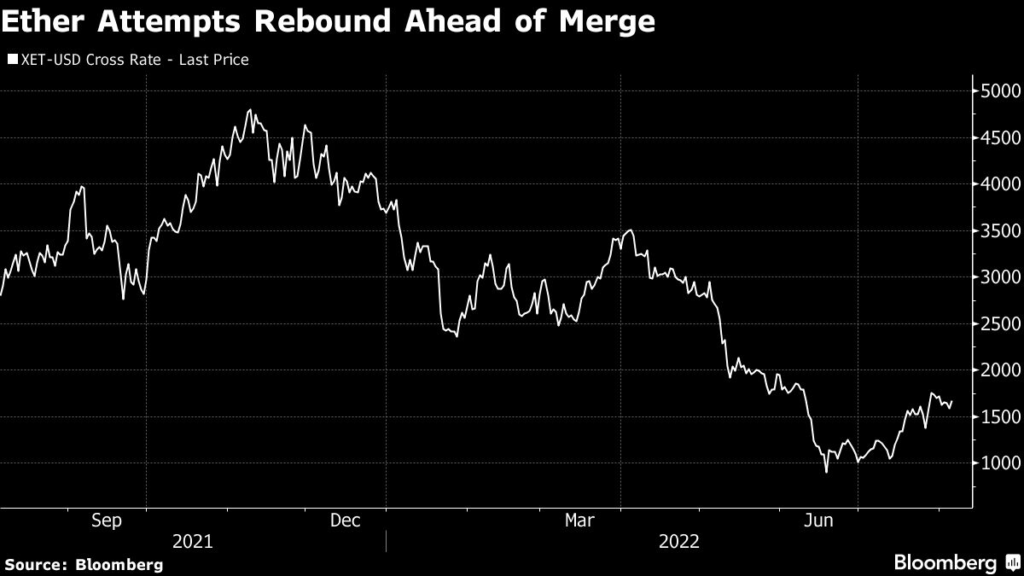
Ether has declined in value along with most cryptocurrencies this year amid a collapse in demand that led to liquidations and bankruptcies. It is trading at around $1,700 on Saturday, and the value of the token has dropped about 55% this year.

“I hope that whatever happens, doesn’t lead to people losing money. Hope for the best,” Buterin said.

(Updates the share price.)

More stories like this are available on bloomberg.com

©2022 Bloomberg L.P.

Cyber Attack Disrupts NHS 111 Emergency Line in UK: Telegraph

(Bloomberg) — A major cyber attack is delaying response times on the NHS 111 telephone service in the UK that’s used for medical emergencies, the Telegraph reported.

The target of the breach was Advanced, which is owned by private equity companies. It supplies software for about 85% of the hotline’s services, according to the paper. 

The company’s Adastra system allows call handlers to dispatch ambulances, book urgent appointments or fulfil emergency prescriptions. 

Cases in need of an ambulance are being prioritized, the paper cited a source from the National Health Service as saying. The systems could remain offline until Aug. 9.

Simon Short, chief operating officer of Advanced, said a security issue was identified on Aug. 4 and as a precaution the health and care systems were immediately isolated. The company’s services also extend to care homes and a patient record management system. 

The National Cyber Security Centre is working with the company to investigate the cause of the breach. Advanced is owned by Vista Equity Partners and BC Partners.


More stories like this are available on bloomberg.com

©2022 Bloomberg L.P.

Telus Mobile Head Sees Roger-Shaw Merger Lessening Competition

(Bloomberg) — Jim Senko, head of Telus Corp’s mobile phone unit, said the sale of Shaw Communications Inc. to Rogers Communications Inc. could curb competition in key markets, including Western Canada.

Speaking in an interview Friday after Canada’s No. 3 telecom company reported its largest ever second-quarter increase in customers, Senko said the proposed sale of Shaw’s mobile assets to Quebecor Inc., a smaller regional player based out of Montreal, will probably mean a weaker competitive landscape.

Quebecor’s Videotron mobile unit “doesn’t truly understand the Western markets and would have to wholesale there any kind of wireline services at very thin margins, and will not be able to compete as well as Shaw who owns those assets,” Senko said by telephone.

Rogers has agreed to buy Shaw in a C$20 billion ($15.4 billion) deal that still requires regulatory approval. Including debt, the transaction is worth about C$26 billion.

The merger is also facing a legal challenge from the country’s competition watchdog, which has cited worries about higher prices, poorer service quality and fewer choices.

Read more: Rogers Takeover of Shaw Meets Skepticism; Deal Spread Widens

Quebecor has agreed to buy Shaw’s Freedom Mobile wireless service for C$2.85 billion — giving it an opening to expand outside of its core Quebec market. With the sale, Shaw and Rogers are hoping to temper worries related to competition issues.

“I think Shaw was a very strong competitor,” Senko said. “They had the bundling in the West and they executed well in the Greater Toronto Area with Freedom Mobile.”

Quebecor Chief Executive Pierre Karl Peladeau said on an analyst call Thursday he finds the anti-trust agency’s concerns “incomprehensible” given the need for more competition in the sector. Citing federal data, Peladeau claims Quebec is one of the most competitive regions in Canada, with wireless service costs less than in other provinces. 

“We must act and we must act now,” he said.

‘Unique Bundles’

Vancouver-based Telus reported operating revenues of C$4.4 billion for the three-month period ended June 30, up 7.1% on a year-over-year basis. The C$0.32 adjusted earnings per share, a 23% boost from 2021, beat Bloomberg’s consensus estimate by C$0.03.

Telus reported that it added 247,000 customers in the second quarter, including 93,000 in net mobile phone additions.

“We have a very diversified product portfolio that we can put together in very unique bundles,” Senko said. The mobile phone, internet and television provider also offers home security solutions. All services can be bundled in a single purchase.

Since the onset of the pandemic, the company has added 800,000 mobile phone net additions, and over 600,000 in wireline.

Telus’ shares were little changed in Toronto trading Friday, closing at C$28.92.

More stories like this are available on bloomberg.com

©2022 Bloomberg L.P.

Close Bitnami banner
Bitnami
