

Bloomberg

Robert Brockman, Software Developer Who Fought IRS, Dies at 81

(Bloomberg) — Robert Brockman, who built a multibillion-dollar fortune as a software entrepreneur and investor before he was indicted in a landmark tax-evasion case, has died. He was 81.

Brockman, who was suffering from dementia and undergoing home hospice care, died late Friday, said Kathy Keneally, his attorney. He’d been fighting tax-evasion charges since 2020, but his attorneys said his dementia meant he wasn’t competent to stand trial. 

A judge ruled in May that Brockman was competent. At a hearing a month later, the judge tentatively set his trial date for Feb. 23, 2023. Brockman appeared in bed via video during that hearing. 

“The government wasted time and resources indicting a man who had progressive dementia and was terminally ill,” Keneally said. 

In his younger days, Brockman was known as an inexhaustible worker with a passion for physical fitness, fly fishing in Colorado and dove hunting in Argentina. Forbes estimated his net worth to be $4.7 billion.  

A Florida native of modest origins, Brockman was selling computing services to auto dealers on behalf of International Business Machines Corp. when, in 1970, he founded a company that helped revolutionize how the industry operates in North America and Europe. 

Brockman, a self-taught programmer, developed a software system that helped car dealers run virtually every aspect of their operations. He obtained more than a dozen patents, and grew his software company, Reynolds & Reynolds, into a 5,000-person operation worth some $5 billion.

Read more: The Sting That Snagged the Tax Lawyer to a Pair of Billionaires

As Brockman built his firm into an industry force, he also defended numerous lawsuits accusing him of bare-knuckled business practices. Salespeople accused his company of stiffing them on payments; auto dealers said he tricked them into expensive multiyear contracts. The Federal Trade Commission investigated whether he engaged in anti-competitive practices.

A former Marine reservist who surrounded himself with loyal lieutenants, Brockman had an intense desire for personal privacy that extended to his dealings with the Internal Revenue Service. 

“Brockman had one rule: Don’t do business with the government,” said Robert Tyson, an entrepreneur who won a lawsuit against Brockman for unpaid compensation for services rendered. “He didn’t want the feds looking at anything.”

In October 2020, the US charged Brockman in the largest tax-evasion case ever against an individual, as well as on money-laundering charges. 

Burner Phones

Brockman helped launch the private equity career of Robert F. Smith, America’s wealthiest Black citizen, by providing the initial investment in his firm, Vista Equity Partners. Prosecutors alleged Brockman used a web of offshore entities, code names and burner phones to hide $2 billion in income from the IRS, most of it earned through Vista investments. 

Smith admitted committing tax crimes but avoided prosecution by cooperating with prosecutors against Brockman.

The case against Brockman hinged on whether billions of dollars in an offshore charitable trust were secretly controlled by him, as prosecutors alleged, or were independently managed, as he claimed. Prosecutors said he used untaxed proceeds from offshore entities to buy a Colorado fishing lodge, a private jet and a 200-foot yacht, which his lawyers denied.

“I have not seen this pattern of greed or concealment and cover-up in my 25-plus years as a special agent,” James Lee, an IRS official, said when the charges were filed.

Brockman pleaded not guilty, but his lawyers soon began arguing that dementia left him unable to assist in his defense.

Robert Theron Brockman was born in St. Petersburg, Florida, on May 28, 1941. His father, Alfred Eugene Brockman, owned a gas station. His mother, Pearl, was a physiotherapist. With the family struggling financially, Brockman “decided he didn’t love that and went out to make something of himself,” his younger brother, David, told the Wall Street Journal in 2021.

Seeding Vista

After graduating summa cum laude from the University of Florida in 1963, Brockman worked as a marketing trainee at Ford Motor Co. before moving to IBM, where he became a top salesman in Washington and Houston. In 1970, he set up his own firm, Universal Computer Systems, and began providing auto dealerships with weekly inventory reports, Auto News reported.

As Brockman built his company, he met Smith, then a rising Goldman Sachs technology investment banker. Brockman later seeded Smith’s firm, Vista, with at least $1 billion in funds to buy out enterprise software firms. The partners structured their arrangement to keep profits offshore, prosecutors say.

In 2006, Brockman brought his software and investing interests together to engineer the acquisition that thrust UCS into the big leagues. Brockman’s closely held firm bought Reynolds & Reynolds, a public company nearly twice its size. Part of the equity financing came from Vista’s original fund, in which Brockman was the sole outside investor.   

The combined firm took the Reynolds & Reynolds name and was controlled by a Bermudian charitable trust set up in the name of Brockman’s father. As Brockman’s wealth grew, so did the trust’s offshore assets. 

In addition to the $5 billion worth of software company holdings, they included $1.3 billion in investments made through an entity based in the British Virgin Islands and $1.4 billion in a Swiss bank, his wife, Dorothy, said in an affidavit filed in a Bermudian court.

Support for Opera

The Bermudian trust and the Brockmans also became active philanthropists. Their gifts included tens of millions of dollars to the Baylor College of Medicine, where Brockman was a trustee, and the Brockman Hall for Opera at Rice University in Houston. They also supported dozens of students with scholarships. 

However, in 2018 US tax authorities raided Brockman’s attorneys in Houston and Bermuda. They uncovered a cache of encrypted documents and messages that prosecutors used in building their criminal case against Brockman. 

In September 2021, the IRS assessed Brockman for $1.4 billion, related to taxes it said he owed from 2004 to 2018. The case is pending in US District Court and Tax Court, and the battle against his estate could last years.

“Whether Bob Brockman in fact owed more taxes, which we dispute, can await a decision by the Tax Court,” Keneally said. 

He is survived by his brother David; his wife of 53 years, Dorothy; a son, Robert Brockman II; a daughter-in-law; a grandson; and a granddaughter.   

More stories like this are available on bloomberg.com

©2022 Bloomberg L.P.
An English Soccer Club Is Adding Global Warming Data to Its Uniforms

(Bloomberg) — When the English soccer club Reading F.C. takes to the field for its first home game of the season this weekend, the sleeves on its uniforms will look a bit different from years past. Instead of the club’s traditional blue and white bands, fans will see 150 narrow stripes in varying shades of red and blue. The change isn’t about aesthetics: The new sleeves are a data visualization of global warming known as climate stripes. 

Each stripe represents a year, beginning at the club’s founding in 1871. Below-average annual temperatures are shown in blue and above-average in red, making the sleeves’ shift from cool blue at the neck to fire red at the arm a stark, time-lapse image of climate change. “The stripes are an easy-to-understand communication tool for people to grasp the emergency of the situation,” says Reading’s commercial director, Tim Kilpatrick. 

That’s exactly why the stripes exist, says Ed Hawkins, a climate scientist with the National Centre for Atmospheric Science at the University of Reading. Hawkins developed the climate stripes in 2018 after seeing baby blankets knitted by a colleague that also used color coding to track global warming. Two years earlier, his spiral animation of rising global temperatures had become a sensation when it was used in the opening ceremony of the 2016 Olympic Games in Rio de Janeiro. If there is such a thing as a climate change data visualization celebrity, Hawkins is it. Still, the Reading shirt unveiling was a surreal moment for him. 

I also never imagined doing a photoshoot for a new football kit! pic.twitter.com/OS1l1TqClg

— Ed Hawkins (@ed_hawkins) July 25, 2022

In collaborating with Reading F.C., whose men’s team plays in the second tier of English professional soccer, Hawkins suggested using temperatures from the local historical record. “It highlights the fact that things are changing where we live,” he says. “We are experiencing this in our own backyard.” The collaboration arose by chance after Kilpatrick saw the stripes on the wall in the background during a video call with a counterpart at the University of Reading in 2020. Hawkins and the university provide free, open access to the climate stripes, which have shown up everywhere from flip-flops and leggings to wall art and city buses. 

In addition to putting the stripes on its sleeves, Reading F.C. is using fabric made from recycled plastic bottles to produce its shirts. The change is part of a broader effort to make operations more sustainable, including by adding solar arrays and electric vehicle chargers on team grounds, as well as new labeling at concession stands to guide fans toward more climate-friendly choices. 

The initiative also represents a new wrinkle in soccer’s “kit launch” custom. Every summer, in a ritual whose hype rivals an Apple product launch, soccer clubs release new versions of their uniforms for the upcoming season, accompanied by glitzy, over-the-top videos and relentless scrutiny of the slightest modifications in design. Apparel brands pay top clubs tens of millions of dollars per year for the rights to sell the shirts. Sponsors pay similar sums to splash their brands across the chest, and fans pay upwards of $100 each season to own the latest edition.

Initial feedback on the new Reading sleeves was mostly negative, says Kilpatrick, as fans were bewildered by the departure from tradition. But the response is shifting as people learn about the meaning behind the new design. So far, he says, online orders are about 35% above where they were last year for the club, which sells roughly 10,000 shirts per season. “People from all over the world have have already bought them on preorder,” says Kilpatrick.

The ultimate hope, says Hawkins, is to make climate change a more normal topic of conversation between fans. “It would be fantastic if we hear the fans talking about what they are doing to tackle this problem,” he says, “whether they’re cycling more or they’ve got a heat pump or they’re thinking about buying an electric car or eating less meat, whatever of the innumerable actions that we can all take.”

More stories like this are available on bloomberg.com

©2022 Bloomberg L.P.
An English Football Club Is Adding Global Warming Data to Its Kits

(Bloomberg) — When the English football club Reading F.C. takes to the field for its first home game of the season this weekend, the sleeves on its kits will look a bit different from years past. Instead of the club’s traditional blue and white bands, fans will see 150 narrow stripes in varying shades of red and blue. The change isn’t about aesthetics: The new sleeves are a data visualization of global warming known as climate stripes. 

Each stripe represents a year, beginning at the club’s founding in 1871. Below-average annual temperatures are shown in blue and above-average in red, making the sleeves’ shift from cool blue at the neck to fire red at the arm a stark, time-lapse image of climate change. “The stripes are an easy-to-understand communication tool for people to grasp the emergency of the situation,” says Reading’s commercial director, Tim Kilpatrick. 

That’s exactly why the stripes exist, says Ed Hawkins, a climate scientist with the National Centre for Atmospheric Science at the University of Reading. Hawkins developed the climate stripes in 2018 after seeing baby blankets knitted by a colleague that also used color coding to track global warming. Two years earlier, his spiral animation of rising global temperatures had become a sensation when it was used in the opening ceremony of the 2016 Olympic Games in Rio de Janeiro. If there is such a thing as a climate change data visualization celebrity, Hawkins is it. Still, the Reading shirt unveiling was a surreal moment for him. 

I also never imagined doing a photoshoot for a new football kit! pic.twitter.com/OS1l1TqClg

— Ed Hawkins (@ed_hawkins) July 25, 2022

In collaborating with Reading F.C., whose men’s team plays in the second tier of English professional football, Hawkins suggested using temperatures from the local historical record. “It highlights the fact that things are changing where we live,” he says. “We are experiencing this in our own backyard.” The collaboration arose by chance after Kilpatrick saw the stripes on the wall in the background during a video call with a counterpart at the University of Reading in 2020. Hawkins and the university provide free, open access to the climate stripes, which have shown up everywhere from flip-flops and leggings to wall art and city buses. 

In addition to putting the stripes on its sleeves, Reading F.C. is using fabric made from recycled plastic bottles to produce its shirts. The change is part of a broader effort to make operations more sustainable, including by adding solar arrays and electric vehicle chargers on team grounds, as well as new labeling at concession stands to guide fans toward more climate-friendly choices. 

The initiative also represents a new wrinkle in football’s “kit launch” custom. Every summer, in a ritual whose hype rivals an Apple product launch, football clubs release new versions of their uniforms for the upcoming season, accompanied by glitzy, over-the-top videos and relentless scrutiny of the slightest modifications in design. Apparel brands pay top clubs tens of millions of dollars per year for the rights to sell the shirts. Sponsors pay similar sums to splash their brands across the chest, and fans pay upwards of $100 each season to own the latest edition.

Initial feedback on the new Reading sleeves was mostly negative, says Kilpatrick, as fans were bewildered by the departure from tradition. But the response is shifting as people learn about the meaning behind the new design. So far, he says, online orders are about 35% above where they were last year for the club, which sells roughly 10,000 shirts per season. “People from all over the world have have already bought them on preorder,” says Kilpatrick.

The ultimate hope, says Hawkins, is to make climate change a more normal topic of conversation between fans. “It would be fantastic if we hear the fans talking about what they are doing to tackle this problem,” he says, “whether they’re cycling more or they’ve got a heat pump or they’re thinking about buying an electric car or eating less meat, whatever of the innumerable actions that we can all take.”

More stories like this are available on bloomberg.com

©2022 Bloomberg L.P.
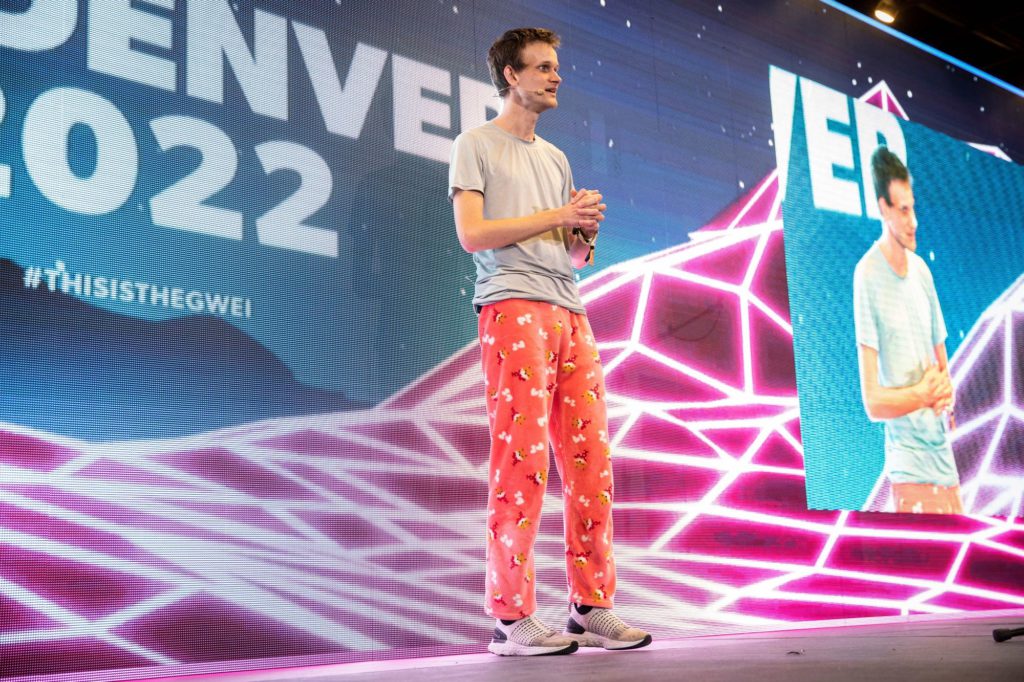
Buterin Says Mining on Ethereum Classic Won’t Affect Merge

(Bloomberg) — Ethereum co-founder Vitalik Buterin said the blockchain’s software transition is unlikely to be significantly impacted even if miners continue to mint the tokens on its early offshoot, the Ethereum Classic chain. 

Ethereum Classic, which still uses the proof-of-work mechanism that relies on massive electricity, may be one of the biggest beneficiaries of the Ethereum’s migration that’s expected to cut off earnings for as many as one million people. Miners who are looking for a platform for their costly mining equipment may turn to Ethereum Classic. 

“I don’t expect Ethereum to really be significantly harmed by another fork,” Buterin said in a webinar on Saturday referring to its other blockchain Ethereum Classic. “In general my impression from pretty much everyone I talk to in Ethereum ecosystem, they have been completely supportive of the proof-of-stake effort and the ecosystem has been quite united around it.”

Buterin’s comments come ahead of a long-anticipated major software upgrade to the blockchain that aims to reduce the extensive energy use. The switch, which has become known as the Merge, is viewed as the most ambitious technical change in the blockchain world. 

Ethereum will switch from using miners — essentially, powerful computers — to order transactions to using much more energy-efficient coin wallets, run by so-called validators. The move to the new system, called proof of stake, has been worked on — and delayed — for years, as scores of developers worldwide have kept on improving and testing the software to work out any bugs.

Ethereum is the most important commercial highway in crypto, and any disruptions could cost billions and impact millions of users. The chain supports more than 3,400 active decentralized apps, allowing for everything from trading to gaming, according to tracker DappRadar. More than $40 billion is sitting in decentralized-finance applications on Ethereum, which lets users trade, lend and borrow coins, according to industry data tracker DeFi Llama. Most of the most valuable non-fungible tokens, such as CryptoPunks, live there. 

Ether, the native token of the network, has a market value of about $200 billion, or less than half that of better known rival Bitcoin. 

Classic Issues

Historically, blockchain software upgrades have often been surrounded by disruptions. Back in 2016, soon after Ethereum underwent a software upgrade to reverse a major hack, it experienced denial-of-service attacks. Many crypto exchanges and other apps are expected to temporarily pause operations around the Merge as a precaution.

If everything goes smoothly, no one should even notice that the Merge has happened, Tim Beiko, who coordinates Ethereum developers, said in a recent interview with Bloomberg. And post Merge, Ethereum will consume about 99% less energy than it does today, according to various calculations.

“There were these genuine arguments that like, there were people in the Ethereum community that really believed in the immutability thing. And a lot of them went to Ethereum Classic,” Buterin said.

“Classic already has superior community and superior product” for people with “pro-proof of work values and preferences,” he said, adding but “it’s not that we’re not going to see a couple of splits on some markets in the meantime.”

Ether has declined in value along with most cryptocurrencies this year amid a collapse in demand that led to liquidations and bankruptcies. It is trading at around $1,700, and the value of the token has dropped about 55% this year.

“I hope that whatever happens, doesn’t lead to people losing money. Hope for the best,” Buterin said.

More stories like this are available on bloomberg.com

©2022 Bloomberg L.P.
Savile Row Fights to Stay Relevant as Suits Fall Out of Fashion

(Bloomberg) — When the governor of the Bank of England stood up to address 300 City bigwigs last month, there was a striking difference from previous Mansion House dinners — no-one was wearing black-tie.

The historic relaxation of one of London’s stuffiest dress codes was a relief to many attendees after temperatures struck a record-breaking 40 degrees Celsius (104 degrees Fahrenheit) earlier in the day.

But heat waves and increasingly casual fashion habits pose a headache to one of the capital’s best-known industries on the other side of town: the tailors of Savile Row.

Savile Row has faced a tough time after stores closed during Covid following several years of rising rents, but the latest threats in its 200 years of history are perhaps more subtle and pervasive.

“The boundaries are blurred now” between the office and the outside world, said Nick Paget, senior editor at WGSN, a retail trends forecaster. “The very traditional pinstriped suit starts to feel like an anachronism.”

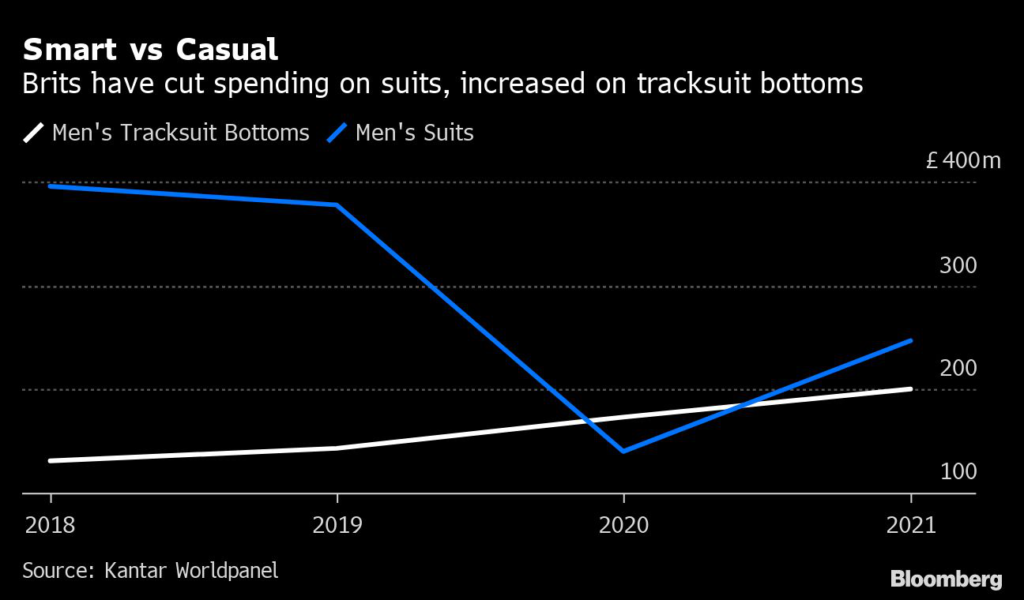
With many professionals working from home part time and offices relaxing dress codes to entice workers back, a freshly cut suit is losing its appeal. Record-breaking temperatures this summer have put added pressure on formal dress and wealthy Chinese buyers are not able to travel to the UK for their bespoke suits as Beijing persists with its strict zero-Covid policy.

The fundamentals are stark. In the last week of June footfall on Savile Row was more than 40% below the equivalent week in 2019, the second biggest decline among all the nearby roads including Regent Street and Oxford Street, according to New West End Company data seen by Bloomberg News. 

It takes several months to produce a bespoke two-piece Savile Row suit with an average of 60 man hours and multiple appointments for fittings. The average price is around £5,000.

Tailors on ‘The Row’ are trying to adapt to changing tastes, with many launching ready-to-wear ranges alongside their bespoke offerings. Online sales are becoming more important and tailors are also opting for lighter-weight fabrics to cope with unprecedented temperatures.

At Anderson & Sheppard, around the corner from Savile Row, customers are requesting jackets without the back lined for a more breezy feel and many are choosing linen. The 116-year-old company, whose clients include Daniel Craig and Tom Ford, is using colorful, lighter cloths to convince Brits to buy their summer wardrobes at home rather than shopping in France, Italy or the US, said its boss Anda Rowland. 

It’s a similar story at Edward Sexton, the eponymous brand of the Savile Row doyen, with silk shirts “flying out the door”. The 79-year-old tailor, who dressed The Beatles on their Abbey Road album cover, Mick Jagger and Harry Styles to name a few, has brought out an unstructured jacket in an open-weave fabric in another nod to comfort.

Sexton, sitting in front of a vast mirror in a large fitting room, calls it “the smartest cardigan you’ll ever wear” with fabric “as soft as butter.” The company is also rebuilding its website to make it easier for customers to compare prices and work out their size from home.

Deathly quiet

Savile Row has come a long way since Sexton started out, when store fronts were obscured by heavy curtains and only opened by appointment with upper-class gentlemen. Still, the street cannot afford to stop reinventing itself to entice today’s shopper.

“Generally Savile Row by 5pm or 6pm, and also on weekends, is deathly quiet,” said Rowland, who as chair of the Savile Row Bespoke Association is pushing for improvements on the street. “If a young potential customer travels all the way from Seoul to come and see Savile Row, he should be able to have something lovely to drink and spend time in the area, and that’s not really the case today.”


The Pollen Estate, which owns most of Savile Row, is planning restaurant openings and new stores. Recent arrivals include Clothsurgeon, which makes bespoke streetwear including tracksuits and bomber jackets, and Savile Row’s first female-only tailor The Deck. US interiors chain Restoration Hardware is set to open its doors in the Abercrombie & Fitch Co. site. Edward Sexton is also returning to Savile Row with a permanent store.

“Our strategy is to enhance and cherish the best of the traditions of Savile Row but introduce new, exciting and sometimes different offers,” said Julian Stocks, CEO of the Pollen Estate.

The suit isn’t only in decline on Savile Row. Retailers are selling them cheaper as demand falls. The average price for a suit has dropped almost 75% over the last two years to an average of around £200 in mid July, according to data from WGSN by Ascential tracking 62 retailers in the UK. 

The Office for National Statistics removed the suit from its basket of goods used to calculate the annual inflation rate in March for the first time since 1947. It now tracks prices of formal jackets or blazers instead. Marks & Spencer Group Plc cut the number of stores selling suits last year to 110 out of its 254 large locations. The retailer highlighted “the relaxation of formalwear” when it unveiled a collection of smart-separates for the England men’s football team this week, avoiding the “structured suit, shirt and tie uniform.”

In a sign of distress among suitmakers, 250-year-old Savile Row tailor Gieves & Hawkes is being sold after its owner, Hong Kong-listed Trinity Ltd. was put into liquidation last year. British suitmaker T.M. Lewin entered into insolvency twice in recent years as the pandemic forced the 120-year-old company to become an online-only business. Kilgour, who dressed icons Cary Grant and Fred Astaire, closed its doors in 2020 after lockdown took hold.

Robotic tailor

Back on Savile Row, some of the tailors are turning to new technology to reach clients abroad. Huntsman, which was established in 1849 and served as the inspiration for the blockbuster Kingsman movie franchise, is managing to fit bespoke suits to customers in China and Hong Kong using a robot created in the depth of the pandemic.

Huntsman’s tailors use the robot — essentially a camera, microphone, speaker and frame on wheels — to remotely work alongside an assistant in another part of the world, when they are fitting a client. Huntsman has done 11 fittings in China this year and is fitting in Hong Kong every other week, said managing director Taj Phull.

Wherever clients are based, there remains an undeniable prestige to holding an address on The Row. “Savile Row is 100% a destination,” said Phull, sitting in Huntsman’s plaid-clad VIP Club Room across from two deer head busts above a fireplace.

Clothsurgeon founder Rav Matharu echoed the sentiment. It “had to be” Savile Row, he said, ahead of Clothsurgeon’s first store opening next week. The company, whose autumn winter 2021 collection was dubbed Rebel on the Row, is seeking younger, “different” customers with its more casual clothing.

“Everyone wants to be more convenient and more comfortable,” said Matharu, sitting at a consultation table where clients can discuss their look. “We are disruptive in a respectful way.”

The tailor’s arrival has attracted attention to wider efforts to give the street a make-over. With retail analysts warning that casual dress habits are here for the long run, and the West End still struggling to find its way post-pandemic, the need to adapt is more pressing than ever. If the City of London can change its pinstripes, so can Savile Row.

More stories like this are available on bloomberg.com

©2022 Bloomberg L.P.

China Relationship Is Casualty of Truss-Sunak Battle to Lead UK

(Bloomberg) — The rivals to replace Prime Minister Boris Johnson are locked in a battle to take the toughest line on China, firmly drawing a line under the vaunted golden era for Sino-British ties.

Liz Truss, the front-runner in the Conservative leadership race, has branded Chinese tech giants a security risk, called to arm Taiwan and, in private, labeled China’s crackdown in Xinjiang a genocide, according to reports. Rishi Sunak has named China the “biggest long-term threat to Britain.” 

“There’s a perception China’s actually more of a hostile-state relationship so you should re-consider all areas of engagement,” said Julia Pamilih, head of research at the China Research Group, set up by Conservative MPs to scrutinize Sino-UK ties. 

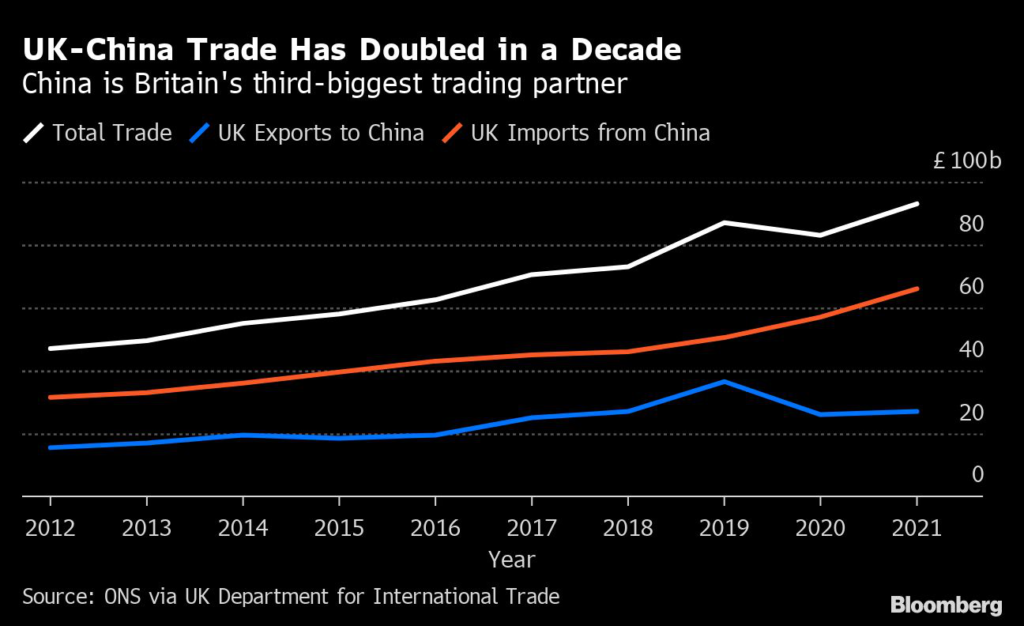
If Truss or Sunak follow through with a hardline approach when one of them becomes prime minister on Sept. 6, they’ll be weakening ties with the UK’s third-biggest trade partner – a major source of cheap imports – just at a time when the cost-of-living crisis is biting the hardest, with inflation soaring into double digits. 

They’ll be in line with the US, which is keen for allies to support it in more clearly taking on China over human rights issues.

But amid fears about the involvement of China-backed companies in critical UK infrastructure, the new leader will also be closing the investment spigots that their fellow Tories David Cameron and George Osborne sought to open just seven years ago when they were prime minister and chancellor of the exchequer. 

In 2015, the two men said Britain would be China’s “best partner in the West,” promising a “golden era” in relations. 

Now, both Truss and Sunak are apparently calculating that a degree of economic damage is an acceptable price to pay for defending western principles. 

“There will be a cost in terms of diplomatic relations and probably in the Chinese willingness to invest in capital projects here,” said Royal United Services Institute Chairman David Lidington, the de facto deputy to Theresa May when she was prime minister. Still, “the Chinese will look at actions rather than slogans.”

A lot has changed since the Cameron era amid alleged Chinese human rights abuses against the Uyghur ethnic group, suppression of civil liberties in Hong Kong and President Xi Jinping’s failure to condemn Russia for the war in Ukraine. That’s prompted the UK, US and European Union to take a harder stance.

“For too long, politicians in Britain and across the West have rolled out the red carpet and turned a blind eye to China’s nefarious activity and ambitions,” Sunak said last month. “They are stealing our technology and infiltrating our universities. And abroad, they are propping up Putin’s fascist invasion of Ukraine by buying his oil and attempting to bully their neighbors, including Taiwan.”

Hyping the Threat

Earlier this year, when Sunak was Chancellor of the Exchequer, Treasury officials drafted a deal to deepen trade links with China, but that initiative was called off and seems unlikely to be resurrected.

Chinese Foreign Ministry spokesman Zhao Lijian has accused Sunak and Truss of “hyping up the so-called China threat” for political one-oneupmanship.

The Chinese government is less concerned about Sunak than Truss — the clear front-runner. It’s trying to discern the approach she’d take as prime minister, two people familiar with the matter said on condition of anonymity.

Truss used her opening pitch as foreign secretary in 2021 to characterize China as a strategic threat contrasting with the “network of liberty” she wanted with allies such as the US and Australia. That alliance was strengthened with the creation of the AUKUS partnership, designed to counter China’s growing clout in the Indo-Pacific. 

Growing Trade

During the leadership contest, Truss advocated cracking down on Chinese-owned companies such as TikTok Inc. and warned “we can’t be strategically dependent on China.”

While such jockeying is driven by the internal dynamics of the Conservative Party — there’s a significant caucus of anti-China Tory MPs — it also reflects that Britain is becoming less willing to separate growing trade ties from managing security risks. 

Tens of thousands of Chinese students studying in Britain contribute £2.5 billion ($3 billion) annually to the economy, while 880,000 Chinese tourist visits brought in £1.7 billion in the year before the pandemic. Total trade between the two countries jumped 5.5% to £93.4 billion in the year through March.

British companies are already rethinking their operations in anticipation of the UK working to decouple from China, Tony Danker, director-general of the Confederation of British Industry told the Financial Times last month. Removing China from corporate supply chains will push up prices, he said.

China also stands to lose: its exports to Britain are more than double the flow the other way. Moreover, China saw involvement in UK industries such as nuclear as a showcase to broaden the appeal of Chinese technology.

The direction of travel by Truss and Sunak isn’t new. Even as Johnson said less than a year ago that Britain wouldn’t “pitchfork away” Chinese investment, his government worked to end China General Nuclear Power Corp.’s involvement in British nuclear power projects. His administration also blocked Huawei Technologies Co. from participating in Britain’s 5G network.

It remains to be seen whether campaign talk translates into tough action in power. With important industrial-policy decisions awaiting Johnson’s successor, their stance will soon become clear. Britain is probing a Chinese-led takeover of Newport Wafer Fab, which owns the UK’s largest semiconductor plant, with a decision due in September. MPs are calling for a ban on the sale of closed-circuit television cameras from the Chinese firms Hangzhou Hikvision Digital Technology Co. and Zhejiang Dahua Technology Co.

As with all Western leaders, Truss or Sunak will ultimately have to decide how much they’re willing to turn a blind eye to issues such as human rights abuses for the sake of economic gain. 

China’s belief is that after the campaign, pragmatism will prevail and the UK will seek a mutually beneficial relationship, according to the two people familiar. But Sam Hogg, who runs the Beijing to Britain website which monitors the relationship, predicts rocky times ahead.

“I don’t see it returning to that golden-era type pragmatic approach,” said Hogg, who expects Truss to win. “She’s willing to put political headlines over the economic outcome.”

More stories like this are available on bloomberg.com

©2022 Bloomberg L.P.
Fintech Firm Paytm’s Quarterly Loss Widens Almost 70% on Costs

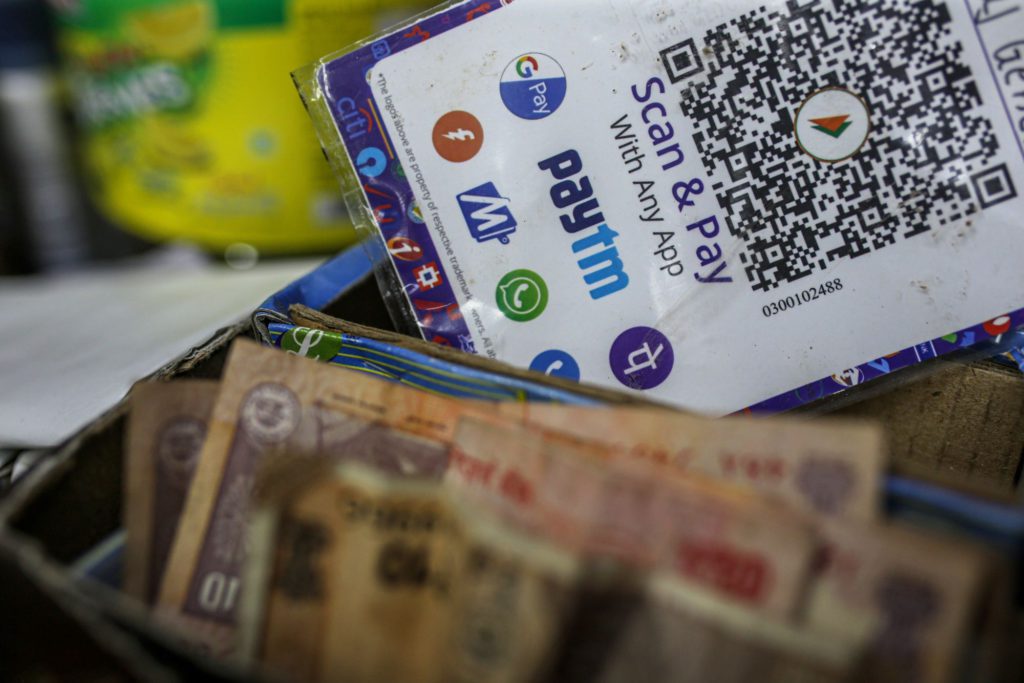
(Bloomberg) — Paytm, India’s leading digital payments brand, said its first-quarter loss widened by almost 70% on higher costs, and reiterated that the company is on track to hit operational profitability by September 2023.

The loss in the April-June period climbed to 6.44 billion rupees ($81 million) from 3.8 billion rupees a year earlier, the company said late on Friday. Revenue rose 89% to 16.8 billion rupees, while total costs jumped 85% to 24.2 billion rupees.

Paytm’s loss was probably also affected by intensifying competition with the likes of Alphabet Inc.’s Google Pay, Amazon.com Inc.’s Amazon Pay and Walmart Inc.’s PhonePe, and a slew of smaller fintech startups. The company’s shares have crashed more than 50% since its mega $2.5 billion IPO fizzled in November over concerns of a hazy path to profitability.

Paytm, backed by Japan’s SoftBank Group Corp and China’s Ant Group Co.,  said it would touch operating profitability by the quarter ending September 2023 amid continued revenue growth. 

Paytm’s loan-distribution business has scaled up quickly in the past 12 months, the company said, with the number of loans growing to 8.5 million, a 492% annual jump, albeit from a low base. The value of loans grew almost nine times from a year earlier to 55.54 billion rupees, according to the statement. 

More stories like this are available on bloomberg.com

©2022 Bloomberg L.P.
Google Sued for Nixing Free Workspace Software to Early Adopters

(Bloomberg) — Alphabet Inc.’s Google was sued by an early adopter of its Workplace cloud productivity software who claims the company reneged on a promise to provide it with free access to the program for life.

Google Workplace, formerly known as Google Apps and G Suite, provides a host of services including Gmail, Calendar, Drive for storage and Google Docs for content creation. Some of the programs are free to all, but enterprise features such as custom email addresses and shared Drive storage cost extra.

The Stratford Company LLC sued on behalf of all early adopters who were lured to use the software in its early stages, allowing Google to fine-tune it and then sell it for a fee. In exchange Stratford Company said the early adopters were promised a free version of Workspace as long as Google offered it.

In 2012, Google started charging new customers $12 a month to use the software. Then, in 2022, Google notified legacy users that they would also be charged, although it later excluded non-business users of the software.

“Google’s abandonment of the credo ‘don’t be evil’ is well-illustrated in this case,” Stratford Company said in the complaint, filed Friday in San Jose federal court. “Google, as the better part of a conglomerate worth nearly two trillion dollars, breaks a promise to loyal customers who helped Google develop a profitable product, in order to pad its already grossly outsized profits.”

Stratford company is seeking class-action status for all the early adopters and damages to be determined at trial, but more than $5 million.

Google didn’t immediately respond to an emailed request for comment, sent after regular business hours.

The case is The Stratford Company LLC v. Google LLC, 5:22-cv-4547, US District Court, Northern District of California (San Jose).

More stories like this are available on bloomberg.com

©2022 Bloomberg L.P.

Ex-Cisco Worker Claiming Caste Discrimination Avoids Arbitration

(Bloomberg) — A former Cisco Systems Inc. worker claiming he was a victim of discrimination because of his low caste standing won appeal court rulings allowing him to proceed with a lawsuit under a pseudonym in open court.

The man, known as John Doe, said revealing his identity could jeopardize the safety of his family in India. A trial court judge had ruled the safety of family members outside California can’t be considered in determining whether a party can proceed under a pseudonym. The state appeals court overruled that decision saying Friday that “evidence of potential harm to family members anywhere is a legitimate consideration.”

The man claimed supervisors at Cisco’s San Jose headquarters were cutting him out of meetings and failing to promote him because of his membership in the Dalit caste. He also accused Cisco of retaliating against him after he complained about his treatment.

The Dalits are the lowest rung of the hierarchical South Asian caste system.

The appeals court affirmed the trial judge’s ruling rejecting Cisco’s request to move the lawsuit to arbitration.

The networking giant claimed it had the right to move the case out of open court because the employee alleging bias had signed an arbitration agreement as a condition of employment.

Writing for the court, Justice Adrienne Grover said Cisco could not compel arbitration because the state Department of Fair Employment and Housing filed the suit on the employee’s behalf and wasn’t a party to, nor had it signed, the arbitration agreement.

“As an independent party, the department cannot be compelled to arbitrate under an agreement it has not entered,” the judge said.

The case is Department of Fair Employment and Housing v. Superior Court, H048962, California Court of Appeals, Sixth District (San Jose).

More stories like this are available on bloomberg.com

©2022 Bloomberg L.P.

Alex Jones Ordered to Pay $45 Million in Punitive Damages

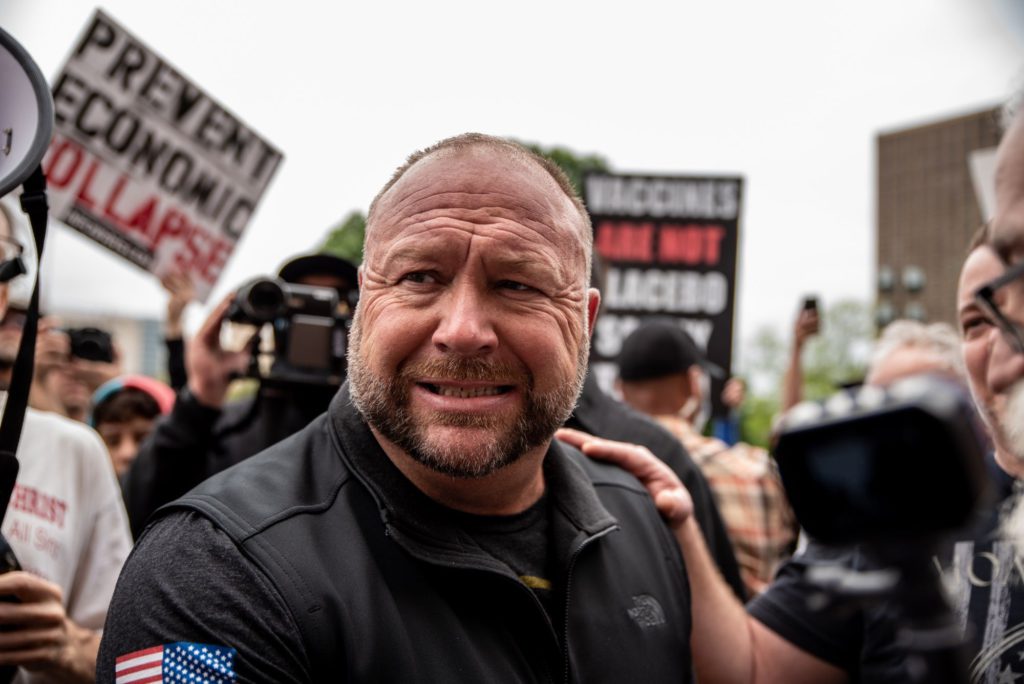
(Bloomberg Law) — A Texas jury on Friday ordered Alex Jones to pay $45.2 million in punitive damages to the parents of a Sandy Hook victim, a day after he was ordered to pay $4.1 million in actual damages for claiming that the school shooting was a hoax.

The combined award —which is likely to be reduced—is well below the $150 million that parents Neil Heslin and Scarlett Lewis sought for the InfoWars host’s assertions that the 2012 massacre in Newtown, Conn., was fabricated. Their six-year-old, Jesse Lewis, was killed in the shooting.

“Punitive damages are typically more of a bellwether or a barometer of where we are culturally; they are more iconic messages sending verdicts from the public to the defendant directly,” Jamie Abrams, law professor at American University, told Bloomberg Law. “And so, on that front, this trial is uniquely interesting, because it really is a political barometer of how much misinformation the public is willing to accept.”

Read More: Five High-Profile Defamation Cases You Should Know

Friday’s unanimous ruling closes the two-week trial in Travis County, Texas.

Friday’s damages are punishment for Jones’ statements, while Thursday’s damages were meant to compensate the parents for economic and noneconomic damages like emotional distress.

“I am asking you to take the bullhorn away from Alex Jones and all others who believe they can profit off fear and misinformation,” plaintiffs’ lawyer Wesley Ball said during closing arguments Friday.

“I suggest to you to return a verdict that is proportionate,” Jones’ attorney Andino Reynal countered during his own closing, asking jurors to order just $270,000 in punitive damages. “You’ve already sent a message. A message for the first time to a talk show host, to all talk show hosts, that their standard of care has to change.”

Damage Caps

In Texas, there are statutory limits on punitive damages, with a per-defendant cap of two times the amount of economic damages, plus the amount of noneconomic damages found by the jury—the latter part not to exceed $750,000.

Judge Maya Guerra Gamble of the 459th District Court in Travis County may reduce the punitive damages given those caps, and Jones’ attorneys said immediately after the verdict that they would file a motion to reduce the punitive award.

The Texas law “protects companies and bad actors like Alex Jones, so that they’re never going to be punished to the full extent that would be needed to truly deter them from future actions and to teach other people that this is bad behavior,” said Carrie Goldberg of the C.A. Goldberg Law Firm in New York. “Texas is unusual.”

The very purpose of punitive damages gets frustrated when there’s a cap, she said.

“We do not believe punitive damage caps are constitutional as applied to our case and will certainly litigate that issue if necessary,” Mark Bankston, one of the plaintiffs’ attorneys, told Bloomberg Law.

Mistaken Disclosure

Jones and InfoWars’ parent company, Free Speech Systems LLC, were co-defendants in the case.

The trial was shocking at times, including when Bankston told Jones earlier in the week that his defense team had accidentally sent the plaintiffs’ lawyers a record of previously requested text messages. Bankston also said that the US House committee investigating the Jan. 6, 2021 insurrection at the US Capitol had requested the texts, and Gamble hinted Friday that she wouldn’t stand in the way of that.

Immediately after the Friday ruling, Bankston said he would seek sanctions against Jones’ attorneys for their handling of evidence and their conduct at trial.

Reynal said he’d tell the court which communications he would seek to reseal, and Gamble said she would set a hearing on those motions.

‘100% Real’

Jones conceded under oath earlier this week that the massacre was “100% real.” He also admitted that it was irresponsible of him to declare the shooting a hoax.

The defamation case vindicates Jesse’s memory, Ball said during closing arguments on Friday.

The court already determined in a 2021 default judgment that Jones was liable for defamation and intentional infliction of emotional distress.

Farrar & Ball LLP represented the parents. Reynal Law Firm PC represented Jones.

The case is Helsin v. Jones, Tex. Dist. Ct., No. D-1-GN-18-001835, 8/5/22.

—With assistance from Kaustuv Basu and James Nani.

To contact the reporter on this story: Janet Miranda in Houston at jmiranda@bloombergindustry.com

To contact the editors responsible for this story: Rob Tricchinelli at rtricchinelli@bloomberglaw.com; Nicholas Datlowe at ndatlowe@bloomberglaw.com

(Updates throughout with commentary on punitive damages.)

More stories like this are available on bloomberg.com

©2022 Bloomberg L.P.

Close Bitnami banner
Bitnami