

Bloomberg

Shadow Profiles From Therapist Directory Spark Startup Backlash

(Bloomberg) — The therapist’s page on the CareDash website looked official: It had a profile photo, an office address and phone number, and a button to “check availability” and book an appointment.

But for potential patients who clicked on that button, it didn’t take them to set up time with the therapist, who had never signed up for CareDash. Instead, the patients were prompted to try therapy from BetterHelp or Talkspace Inc., one of the many startups launched in recent years to offer therapy online.

CareDash, an online health company founded six years ago, said in a statement Friday that it was changing many of its practices, including how it steers patients to advertisers. BetterHelp, which is owned by Teladoc Health Inc., said on social media Thursday that it had cut its advertising arrangement with the company. Talkspace also said it was stopping advertising with CareDash.

The blowback was sparked by an online protest by independent therapists who say CareDash used publicly available information to create shadow profiles that steered business away from them and toward the startups.  

On the short video app TikTok, a post from a therapist named Alicia Murray called out the practice. Murray’s post has received over 400,000 views in two days, and resulted in dozens of replies from people saying they are therapists who found similar shadow profiles on CareDash. 

Online mental health startups work to meet a real need in the US: There are too few therapists, insufficient insurance coverage, and a growing number of patients seeking counseling or care for everything from temporary mental health needs to more serious, complex conditions. That’s led to a flood of investment in startups seeking to help those patients. Venture capitalists put $6.9 billion into mental health and behavioral health companies last year, close to three times the 2019 total, according to data compiled by Pitchbook. Competition for patients and growth has followed.

Bryan Harnsberger is a licensed psychologist and the cofounder of Wellesley Counseling and Wellness LLC in Massachusetts, and says that he also found a CareDash profile made without his consent, and that it directed potential patients to the online startups.

“I feel like someone else is catfishing me,” said Harnsberger, using a slang term for online impersonation. “I’ve spent hundreds of thousands of dollars in training and hours in the community working to build my reputation and my persona. And now they’re going to potentially use that to gather their own leads.”

Website Changes

On Friday, CareDash emailed a statement saying it would make changes: “Over the last few days, CareDash has listened to the concerns of many in the therapist community and we recognize the opportunity to improve the profile pages we display.”

Harnsberger and other therapists contacted by Bloomberg provided recent photos of CareDash’s site before the changes were made. Under the old design, once the “check availability” button was clicked, it would scroll down the page and say the provider hadn’t provided a way to schedule online through CareDash and that “you could get connected with an online therapist” right above ads for BetterHelp and Talkspace. Those features no longer appear on several profiles reviewed by Bloomberg.

In the statement sent Friday, CareDash said it had removed the website features that therapists said directed potential patients elsewhere, including a “Book An Appointment” feature for profiles where the therapist hadn’t signed up for CareDash, as well as steps to “reduce potential confusion about provider availability.”

In a separate, earlier statement, the company had said that it creates profiles for licensed health professionals without their permission or knowledge and that profiles are not taken down, even if asked for by the therapist. In its follow-up statement, the CareDash did not say it would change that policy, but would make it clear from where it obtains data.

Caredash was founded in 2016 and is headquartered in the Boston area. It raised $2.8 million from venture capital firm Link Ventures during two funding rounds in 2014 and 2017, according to PitchBook.  BetterHelp, a 2013 telehealth start-up bought by Teladoc in 2015 for $3.5 million in cash and other considerations, said Aug. 4 that it was pulling its advertising from the site.

“CareDash is an entirely separate company and we do not control their business practices,” BetterHelp said in a statement on its social media accounts. “We had a service agreement with CareDash so that users who were looking for a therapist could get help from one of the therapists in our network. Since we’ve learned of some concerns raised about CareDash, we’ve stopped promoting BetterHelp on their website and ended the arrangement. These changes will take effect shortly.”

Reached for comment by Bloomberg, BetterHelp reiterated the statement it had posted online earlier. In an emailed statement, Talkspace said its ads had been placed through an agency. “Once we were made aware of any issues regarding this site, Talkspace immediately discontinued our nominal advertising relationship. We are committed to transparency around our business practices,” the company said.

Benjamin Caldwell, a marriage and family therapist in Los Angeles, found an unauthorized profile of himself on CareDash.

“I haven’t seen anybody be as sort of egregiously misleading about what a consumer can do on that site as what CareDash has been doing,” Caldwell said. CareDash suggested that “if you as a consumer came to my profile on CareDash, that you could use that button or link to check my availability or to schedule with me. And this is despite the fact that of course I have no affiliation with CareDash.”

Blowback

The company’s practice led to blowback from groups representing mental health professionals. The American Psychological Association, the Clinical Social Work Association and the National Association of Social Workers sent alerts to members about the situation and encouraged them to file complaints with the US Federal Trade Commission and state attorneys general.

CareDash’s site allows health providers to “claim” their pages and update information. The American Psychological Association, or APA, sent a cease-and-desist request Aug. 4 asking CareDash to deactivate and remove all psychologist profiles that have not already been “claimed” by the provider and discontinue advertising that “suggests that psychologist providers have endorsed or approved the CareDash platform.”

The APA alleged that CareDash has generated and displayed thousands of “unauthorized medical provider ‘profiles.’” Bloomberg reviewed a copy of the letter.

Profiles that haven’t been “claimed” by a provider say that mental health providers’ data was collected from the NPPES NPI Registry, a publicly available database of all registered health professionals managed by the US government. CareDash’s website tells providers to “please claim your profile in order to update your information and provide the best way for patients to reach you.”

Some providers discovered their CareDash profile includes their private home address from their National Provider Identifier records. The NPI registry does not allow providers to register with a post office box, and some don’t work out of a physical office location.

Other clinicians have found their profiles to list inaccurate licensing, affiliations and other information.

Susan Bush, a licensed clinical psychologist and owner of Birchwood Clinic in Chicago, said her page was unauthorized and had “multiple inaccuracies,” including her business location, the company where she works, and the company with which she is affiliated.

“Whatever information is public will be available on CareDash by default,” CareDash said in its first statement to Bloomberg. The company said that if information on a profile was wrong, it could be updated at the request of the health professional. 

Other provider directories like ZocDoc and Psychology Today require clinicians to sign up, create their own profile, pay for it, and choose the information they want to display, Bush said.

Harnsberger, for example, said he uses Psychology Today, but he created his profile and has “clear understanding and clear control” over it.

In addition to the business considerations for therapists, the stakes for patients can be serious, said Caldwell, the Los Angeles therapist.

“It’s really hard even if you have coverage to actually obtain mental health care,” Caldwell said. To have a website like CareDash “suggest to consumers that you can actually find these providers and schedule with these providers through our site, only for then the consumer to be redirected away from the therapist that they had searched for to an online platform instead” isn’t right, he said.

“That is deeply problematic,” he said. “It seems like a kind of bait-and-switch operation.”

More stories like this are available on bloomberg.com

©2022 Bloomberg L.P.
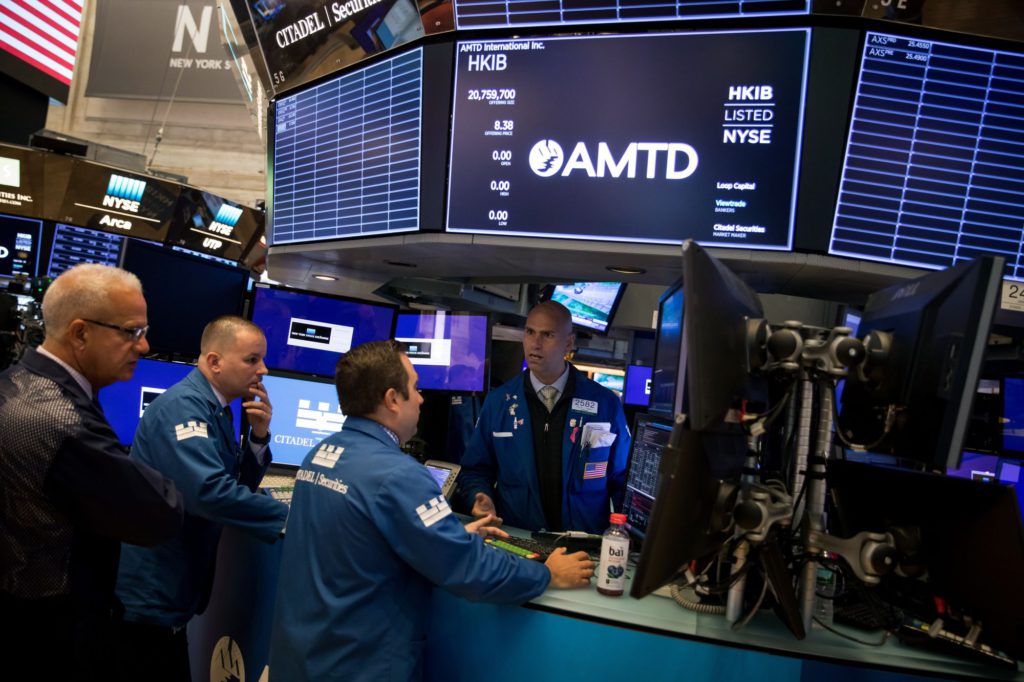
Little-Known Stock’s 32,000% Surge Ends With $175 Billlion Drop

(Bloomberg) — Even after a retail frenzy that saw GameStop Corp. become the hottest stock in the world and a dog-themed joke cryptocurrency gain billions in value, the whirlwind trading in an obscure Hong Kong financial business stands out as spectacular.

The rapid rise of AMTD Digital Inc. — a barely profitable financial services firm — is a tale that, while reminiscent of last year’s meme-stock frenzy, is even more mysterious. In a move that has puzzled the financial community, the company’s shares skyrocketed in less than three weeks from their $7.80 initial public offering price to an intraday high of $2,555, an eye-popping jump of more than 32,000%. 

Perhaps even more perplexing, unlike other publicly traded financial juggernauts that report hundreds of billions of dollars in revenue each year, AMTD’s IPO prospectus lists total sales of just $25 million for the year ended April 2021. Still, that didn’t stop the company’s market value from ballooning to $310 billion at Tuesday’s close, making it larger than industry stalwarts like Goldman Sachs Group Inc. and Bank of America Corp.

“I’m not entirely sure what the business model there is, but that hasn’t mattered to the Reddit crowd who are dipping in like piranhas,” said Max Gokhman, chief investment officer at money manager AlphaTrAI Inc.

Much like the retail-induced mania of early 2021, which catapulted stocks like GameStop and AMC Entertainment Holdings Inc. to baffling highs before they plunged just as quickly, AMTD’s run as a financial giant seems likely to be short-lived. Since hitting a record on Tuesday, ATMD Digital has fallen by 57%, erasing about $175 billion in market value along the way. That’s more than the entire current market capitalization of companies including Morgan Stanley, Intel Corp., and Goldman Sachs.

Still, it’s hard to pin the stock’s wild moves entirely on the retail crowd. While AMTD Digital appeared high on Fidelity’s list of most actively traded stocks multiple times during the week, it lacks a few key characteristics.

For starters, AMTD Digital doesn’t yet have any options available to be traded. Frenzied buying of call options was a hallmark of the GameStop and AMC stock surges. Trading volumes, meanwhile, have also been extremely low for a majority of the past week’s moves. Despite seeing swings of at least 40% in either direction on all but one day this week, the stock has yet to crack 500,000 shares traded on a single day. On Friday, just over 50,000 shares changed hands, its sixth straight session of declining volume.

As for the retail traders themselves, even a cursory search of the top posts on Reddit’s WallStreetBets forum shows a flood of denials of any involvement.

AMTD Family

AMTD Digital’s frenetic moves also led to extreme volatility in the shares of one of its parent companies, AMTD Idea Group. That firm, which is part of the larger AMTD Group umbrella, owns roughly 88.7% of AMTD Digital’s outstanding shares. It too saw a wave of buying this week, soaring as much as 520% on Tuesday alone.

On Friday, AMTD Digital announced that the underwriters of its mid-July IPO had decided to exercise their full greenshoe option. That means they’ll be able to purchase an additional 2.4 million American depositary shares at their listing price of $7.80 each, roughly 99% below where they closed on Friday. 

AMTD Global Markets Ltd. was the lead underwriter on AMTD Digital’s IPO, responsible for nearly 90% of the shares, meaning it could potentially profit off its involvement.

That’s all shone a spotlight on Calvin Choi, AMTD Group’s chairman, chief executive officer and major shareholder, who’s currently facing an industry ban in Hong Kong for failing to disclose conflicts of interest when he worked at UBS Group AG.

Already some firms are cutting ties. Billionaire Li Ka-shing’s CK Group said Thursday that it would sell its remaining stake in parent company AMTD Group Co.

Growing Pattern

As shocking as the post-IPO surge for AMTD Digital has been, it’s far from alone in such moves. On Friday, another Hong Kong-based financial firm Magic Empire Global Ltd. made its US trading debut only to see its shares halted for volatility multiple times as it surged as much as 5,799%.

Other Hong Kong and Chinese stocks have seen similarly outsized gains after debuting in the US in recent weeks. At least five other companies, including Ostin Technology Group Co., Golden Sun Education Group Ltd. and Intelligent Living Application Group Inc. have posted intraday gains of 395% or more on their first day of trading.

Michael Burry, the investor who famously predicted the housing crash in 2008, tweeted a screenshot of Magic Empire’s stock chart Friday and said, “Gamblers gamble more the more they lose.”

(Updates with additional context on AMTD, prices throughout)

More stories like this are available on bloomberg.com

©2022 Bloomberg L.P.

Tesla Takes Pause From Months-Long Rally as Investors Clear 3-for-1 Split

(Bloomberg) — Tesla Inc.’s months-long rally took a pause Friday as the stock retreated following seven sessions of gains after the electric-vehicle maker’s shareholders approved a three-for-one stock split on Thursday. 

The split — aimed at attracting an even larger number of retail investors, who have been piling into the stock — will bring Tesla’s shares down to the $300 range. The Austin, Texas based-company in a regulatory filing on Friday said each stockholder of record on Aug. 17 will get a dividend of two additional shares for each stock held, to be distributed after the market close on Aug. 24. Trading on a split-adjusted basis will begin on Aug. 25. Tesla first announced its plan on March 28 via a tweet. 

The four-month lag between announcement and vote has proven to be beneficial, as a recovery in growth stocks has carried the Nasdaq 100 Index up 19% from a June low. Tesla is outperforming both the tech-heavy gauge and the broad S&P 500 Index with a gain of over 38% from a late-May low.

Tesla closed down 6.6% at $864.51 Friday in New York. The stock has been on an upswing over the past month, rising 28% since the end of June as of Friday’s close.

“Tesla’s stock split timing looks impeccable,” Roth Capital Partners analyst Craig Irwin said, noting the shareholder vote is coming at a time when the “market seems to be heading in the right direction.”

Tesla’s recent rebound — it posted a 32% gain in July for its best month since October — comes on the back of resilient second-quarter results and a bit of a lift from the climate change bill from the Biden administration, which aims to boost the use of clean energy through a series of tax incentives.

Some of the latest momentum also comes from its faithful band of retail investors, with their purchases of the stock “skyrocketing” ahead of the stock-split vote, according to Vanda Research data. 

Related: Tesla Investors Fail to Back Pair of Company-Supported Proposals

Still, most of the risks that weighed on the company earlier this year continue to linger, with supply-chain disruptions far from sorted, tensions between the US and China rising, and Elon Musk involved in a potentially lengthy and costly legal dispute with Twitter Inc. Moreover, recent high profile stock splits have failed to give a meaningful boost to other giants including Alphabet Inc. and Amazon.com this year.

Read more: Alphabet Stock Split Lands With a Thud in Worry-Filled Market

For Tesla, this will be the second share-split in less than two years. The company had a five-for-one stock split in 2020, prompting a 60% surge in the share price from the day of the announcement to the execution date. The company already has a fairly strong retail investor following, often making it the stock with the most buy orders on Fidelity’s retail trading platform. 

Even though stock splits do not impact the business model of a company, they bring in a sense of affordability by lowering the price of the shares, especially for mom-and-pop investors, market watchers say. 

“Owning the whole share can be less complicated and more empowering, and these companies know that,” said Callie Cox, eToro US investment analyst. “There’s clearly an underlying desire in this market for any company to make its stock as accessible as possible. And so far, investors have responded to that.”

(Adds details from filing in second paragraph. Updates stock move in third and fourth paragraphs, and chart.)

More stories like this are available on bloomberg.com

©2022 Bloomberg L.P.
Meta Pauses Purchase of ‘Supernatural’ Developer as FTC Suit Proceeds

(Bloomberg) — Meta Platforms Inc., the owner of Facebook, has agreed to pause its acquisition of the virtual reality company Within Unlimited Inc., which makes the fitness app Supernatural.

The Federal Trade Commission sued to block the purchase, saying it would help Meta on a path to a monopoly in virtual reality. Now, lawyers for the government and the company have told a federal judge in California they’ve agreed that the Within acquisition will not close until Jan. 1, or until the court rules on the FTC’s injunction to block the transaction, whichever comes first.

“We are prepared to vigorously defend this deal in court and are confident the evidence will show that it will be good for people, developers and the VR space more broadly,” Meta said in a statement Friday.

The acquisition was small, compared with Meta’s more controversial purchases of WhatsApp and Instagram. But FTC Chair Lina Khan, who was appointed by President Joe Biden to invigorate antitrust enforcement, is taking a more aggressive approach than her predecessors to scrutinize tech giants’ growth. While the efforts are aimed at preventing the large platforms from eliminating nascent rivals and consolidating their market dominance, the Biden administration’s tougher approach has raised concerns that it could cause a chilling effect on the startup industry — if smaller companies can’t get purchased by bigger ones, it may become riskier to invest in their ideas in the first place.

Read more: How FTC’s Khan overruled staff to sue Meta over its VR deal

FTC alleged the deal would give the social networking company a leg up in dominating the burgeoning virtual reality market. The suit represents the first time the agency has preemptively challenged an acquisition by the social media giant, which has bought more than 100 smaller companies over the past decade, according to a 2020 congressional report.

“The FTC’s case is based on ideology and speculation, not evidence,” Meta lawyer Nikhil Shanbhag said in a blog post about the case.


(Updates with Meta statement in third paragraph)

More stories like this are available on bloomberg.com

©2022 Bloomberg L.P.
Amazon’s iRobot Deal Seen Facing Tough FTC Antitrust Review

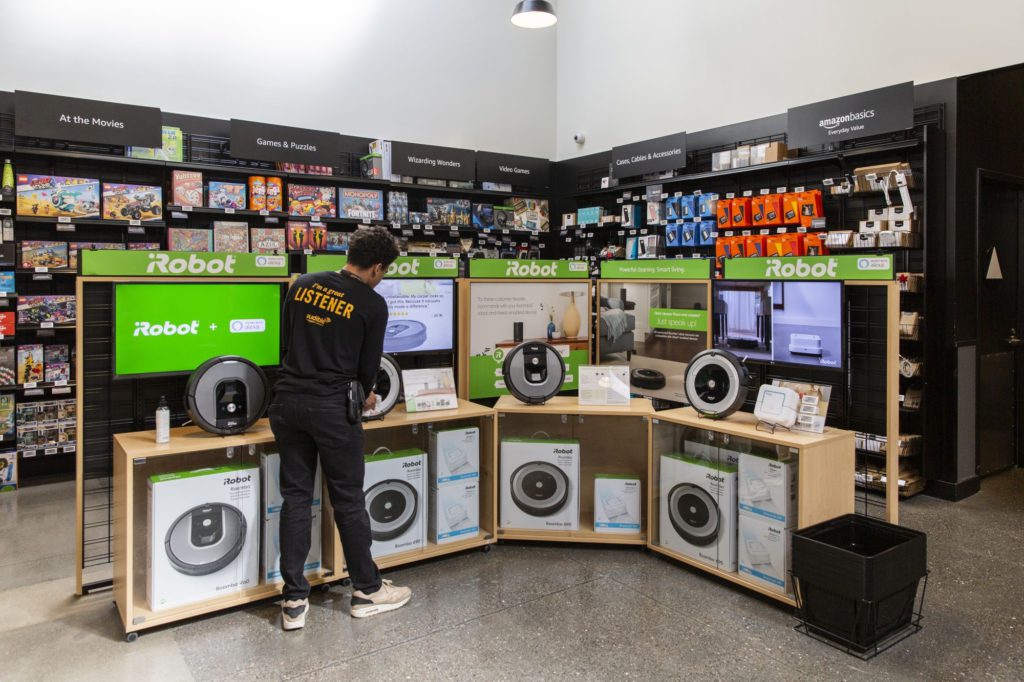
(Bloomberg) — Amazon.com Inc. is barrelling ahead with an aggressive acquisition strategy despite intense antitrust scrutiny in Washington, with its $1.65 billion deal to buy Roomba vacuum maker iRobot Corp. as the latest example.

Antitrust experts say the deal is expected to draw a tough review from the US Federal Trade Commission led by Chair Lina Khan, a critic of the e-commerce platform’s market dominance. The agency will also review Amazon’s $3.49 billion deal last month to buy 1Life Healthcare, the parent of One Medical. The FTC didn’t challenge Amazon’s purchase of MGM Studios earlier this year, but that was before Khan had a Democratic majority on the commission. 

Close scrutiny of Amazon’s iRobot transaction won’t necessarily result in a challenge, and even if the FTC does sue to block the deal, there’s a chance it wouldn’t prevail. 

Hal Singer, managing director at Econ One, a litigation consulting firm, said the FTC could have a hard time winning a merger challenge on the deal.

“I want them to try and challenge these things but I worry about their current evidentiary burden,” said Singer, who has served as an economics expert in antitrust cases. “Antitrust law has contorted itself where it’s largely feckless” in recent merger challenges where the companies weren’t direct competitors.

Khan has pushed the FTC to take a harder look at acquisitions by the biggest tech firms in the wake of a report by the agency last year that found Alphabet Inc.’s Google, Amazon, Apple Inc., Meta Platforms Inc. and Microsoft Corp. used loopholes to avoid antitrust scrutiny on hundreds of smaller deals. Last week, the agency sued to block Meta’s acquisition of virtual reality startup Within, the first time the FTC has preemptively sought to block a deal by the social networking giant.

iRobot’s Roomba dominates the smart vacuum market with a 75% market share by revenue in the US, according to industry database Statista. Amazon introduced its own offering last fall, a three-wheeled device called Astro, which sells for about $1,450. Astro, still in a limited rollout, hasn’t made a splash with consumers.  

Amazon is “basically taking out their largest competition in a market they want to dominate,” said Sarah Miller, executive director of anti-monopoly advocacy group American Economic Liberties Project. “Buying what is your biggest competitor should be an antitrust violation.”

Beyond that, the deal also could have anticompetitive effects, said Amanda Lewis of the law firm Cuneo, Gilbert & LaDuca LLP.

The acquisition “would put Amazon in a position to disadvantage rivals on the platform and block access to important tools to reach new customers, like buying ads on Amazon.com,” said Lewis, who led the Amazon section of the 2020 congressional investigation into competition in online markets. 

An Amazon spokesperson said Friday that the company would continue to supply retailers with iRobot products and sell competing devices on Amazon’s retail websites. 

That promise may not be enough. The company made a similar pledge with its other major robotics deal — the 2012 acquisition of industrial bot builder Kiva Systems. Later Amazon stopped selling the devices to other companies, using them exclusively to supply its own warehouses.

The 2020 House probe found that Amazon has made significant investments into building out smart home systems based around its Alexa voice assistant. It’s acquired a number of companies with that aim, the report said, including the Ring smart security system in 2018 and a year later Eero, a router designed to make it easier for customers to set up smart home devices.

Adding iRobot’s Roomba to Amazon’s offerings alongside Alexa and Ring could lock-in consumers to the company’s smart home products, said Alex Harman, director of competition policy at the Economic Security Project.

“Once you have your whole house tied to one company, how can you justify the cost of switching?” he said.

The 2019 Eero acquisition may have helped Amazon decide to acquire iRobot by providing insights into how frequently and when consumers use their smart vacuums, said Stacy Mitchell, co-executive director of Institute for Local Self-Reliance. Amazon is using its data collection and acquisitions to help it dominate the smart home in the same way that it has e-commerce, she said.

“The smart home is going to become a powerful new platform that the Big Tech companies and Amazon in particular see as an opportunity to gain and exercise market power,” said Mitchell, who has studied Amazon for years. “Any other company that wants to participate in this arena is going to have to play according to Amazon’s rules.”

Miller from Economic Liberties noted that bipartisan legislation introduced in Congress would bar Amazon from this kind of acquisition.

“Congress really needs to act at this point,” she said. “The FTC cannot be the only one in the arena.”

(Updates with impact of tech bill in last two paragraphs)

More stories like this are available on bloomberg.com

©2022 Bloomberg L.P.
Twitter Seeks Musk Deal Insight From Larry Ellison’s Trust

(Bloomberg) — Twitter Inc. subpoenaed an official of a trust controlled by Oracle Corp. founder Larry Ellison that committed $1 billion to Elon Musk’s proposed $44 billion buyout of the social media company.

The company’s lawyers are demanding Ellison Trust representative Philip Simon hand over details of the entity’s involvement in the now-teetering transaction, according to court filings Friday. 

Twitter also subpoenaed venture capitalist Marc Andreessen over the financing of the deal, as well as David O. Sacks and Joe Lonsdale.

The company has sought information from more than a dozen people or investment firms that committed equity to Musk’s purchase as well as the banks that advised Musk and pledged billions in financing.

Read More: Elon Musk Turns to Billionaire Backers for Twitter Equity 

Twitter’s legal team wants Simon and Andreessen to turn over “documents and communications” about their intentions to invest in the deal and all information about arrangements for “equity co-investments,” the filings show. 

Both sides are seeking information to make their case ahead of an Oct. 17 trial in Twitter’s suit seeking to force Musk to complete the acquisition. Musk claims he canceled the deal because Twitter failed to provide him with information about the number of spam and bot accounts on the platform. Twitter says his bot complaints were a pretext for him to walk away.

The case is Twitter v. Musk, 22-0613, Delaware Chancery Court (Wilmington).

Read More: Musk Says Twitter Played ‘Hide-and-Seek’ as He Sought Info

More stories like this are available on bloomberg.com

©2022 Bloomberg L.P.
Stocks Notch Weekly Gain After Jobs Data Surprise: Markets Wrap

(Bloomberg) — US stocks notched a weekly gain after a surprisingly strong jobs report alleviated recession fears but cleared the path for the Federal Reserve to raise rates sharply at its next meeting. 

The S&P 500 suffered a decline on Friday after falling as much as 1.1% during the session. But the index and the Nasdaq 100 wrapped up their third straight week of gains, the longest rising streak since April for both. Treasuries sank, with the 10-year yield around 2.83% after climbing nearly 26 basis points since Monday.

The strong jobs report validated the Fed’s view of a resilient economy that can withstand additional interest-rate hikes. Traders have now recalibrated expectations for Fed policy, with a hike of three-quarters of a percentage point the more likely scenario at the September meeting as the central bank battles inflation.

Read More: Traders Give Some Probability to an Intermeeting Fed Rate Hike

A handful of Fed officials this week reiterated the central bank’s resolve to bring down high prices. Among them is Fed St Louis President James Bullard, who has said he favors a strategy of front-loading big interest-rate hikes. That stance has likely strengthened after Friday’s job report, ruling out the possibility of a dovish pivot that Fed Chair Jerome Powell hinted at last week. 

“This jobs report is consistent with an inflationary boom,” said Neil Dutta, head of economics at Renaissance Macro Research. “The Fed has a lot more work to do and in an odd way, that the Fed needs to get more aggressive in pushing up rates, makes the hard-landing scenario more likely.”

Here’s what else Wall Street is saying about the jobs surprise:

Win Thin, global head of currency strategy at Brown Brothers Harriman & Co:

“Odds of a 75 basis point move next month have shot up, as they should. We still get one more jobs report before the September FOMC but barring a disaster, I think 75 bp then is a done deal.”

Eric Theoret, global macro strategist at Manulife Investment Management:

“For the Fed, this report confirms the need to continue tightening and also endorses much of this week’s Fedspeak that sought to jawbone rate expectations. For markets, the report may pose a challenge for rate-sensitive equities like tech which had recently been leading in terms of sector performance.”

Seema Shah, chief strategist at Principal Global Investors:

“All the jobs lost during the pandemic have now been regained. But while that is positive news, markets will take today’s number as a timely reminder that there is significantly more Fed hiking still to come. Rates are going above 4% — today’s number should put to bed any doubters.”

Peter Boockvar, chief investment officer at Bleakley Financial Group:

“This was a great number with the obvious big upside in hirings but when this is happening at the same time GDP is declining, it means productivity is plunging. Also, as the pace of firing is at the highest level in nine months, this pace of hiring is just not sustainable.”

Keith Lerner, co-chief investment officer at Truist Advisory Services:

“Some of the conviction levels around recession are somewhat less. And I think that’s offsetting the other side of the equation which is, OK, that means the Fed will have to be more aggressive. So that’s why you’re netting this out to be a flat day because it really comes down to people questioning their confidence that we were in a recession, which was the primary reason why we were down.”

Corporate earnings, combined with thin liquidity that’s common in the summer, took the stock market on a ride this week. Many firms beat expectations and proved they could handle high inflation and a gloomy economic outlook. But investors have resumed shunning global stocks in favor of bonds, according to Bank of America Corp. strategists, who say it’s time to step back from US equities after July’s rally.

US-China tension also remained among the uncertainties clouding the outlook. China announced it would halt cooperation with the US in a number of areas — including working-level talks on climate change and defense — after US House Speaker Nancy Pelosi’s trip to Taiwan this week. China also sent warships across the Taiwan Strait’s median line, a day after likely firing missiles over the island.

Gold fell and Bitcoin gained on Friday. West Texas Intermediate suffered its biggest weekly decline since April.

Some of the main moves in markets:

Stocks

  • The S&P 500 fell 0.2% as of 4:02 p.m. New York time
  • The Nasdaq 100 fell 0.8%
  • The Dow Jones Industrial Average rose 0.2%
  • The MSCI World index rose 0.3%

Currencies

  • The Bloomberg Dollar Spot Index rose 0.7%
  • The euro fell 0.7% to $1.0178
  • The British pound fell 0.8% to $1.2068
  • The Japanese yen fell 1.6% to 135.03 per dollar

Bonds

  • The yield on 10-year Treasuries advanced 14 basis points to 2.83%
  • Germany’s 10-year yield advanced 15 basis points to 0.96%
  • Britain’s 10-year yield advanced 16 basis points to 2.05%

Commodities

  • West Texas Intermediate crude fell 0.2% to $88.36 a barrel
  • Gold futures fell 0.9% to $1,791.10 an ounce

More stories like this are available on bloomberg.com

©2022 Bloomberg L.P.
VC Billionaire Marc Andreessen and Ultra-Wealthy Neighbors Thwart Housing in California Town

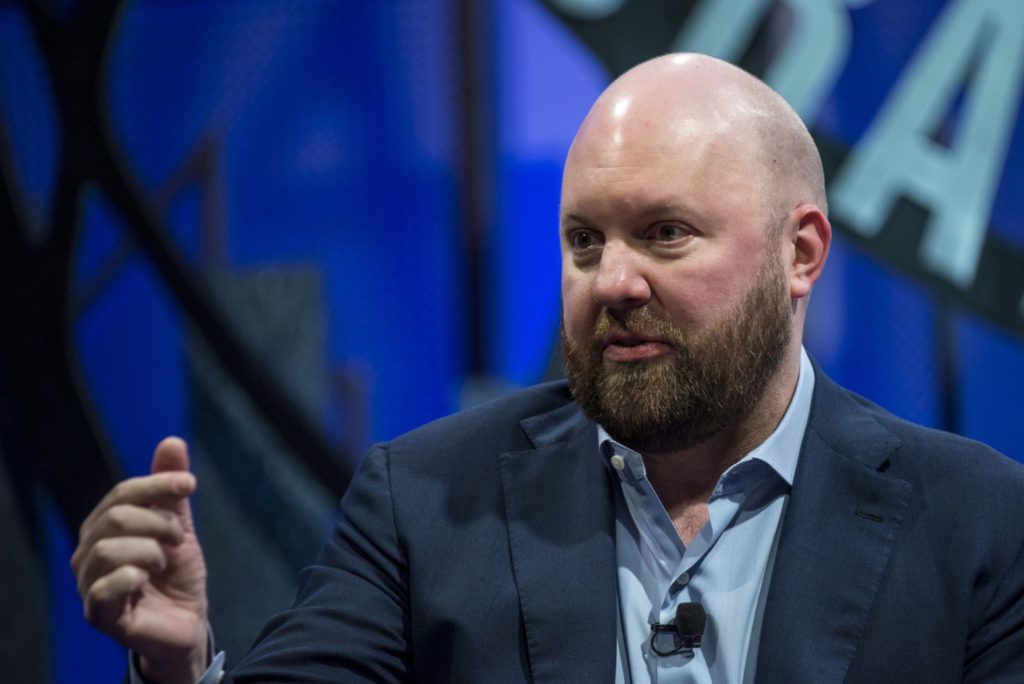
(Bloomberg) — With wrought iron gates, mega mansions and towering hedges, Atherton, California, has long been a bastion for Silicon Valley’s ultra-wealthy, where the median home value is north of $8 million. Billionaire venture capitalist Marc Andreessen and his moneyed neighbors have been lobbying local officials to keep it that way.

In a letter to the Atherton Town Council, Andreessen, who is the co-founder of VC firm Andreessen Horowitz, railed against a proposal to add multi-family overlay zones to the wealthy zip code, which would provide incentives for developers to build more housing in the area.

“I am writing this letter to communicate our IMMENSE objection to the creation of multifamily overlay zones in Atherton,” Andreessen and his wife, Laura Arrillaga-Andreessen, wrote in a letter in June.

Andreessen complained that an effort to boost the housing supply would “MASSIVELY decrease our home values, the quality of life of ourselves and our neighbors and IMMENSELY increase the noise pollution and traffic.”  The Atlantic earlier reported on the Andreessens’ objections. 

The letter was one of 270 comments submitted to the town, the vast majority of them from residents opposing multi-family overlay zones. People cited safety concerns for pedestrians from increased traffic and congestion, and questioned whether the town’s existing infrastructure could support more people.

The residents of the affluent neighborhood were successful: The multifamily overlay zones were expunged from the town’s draft housing element entirely in August.

The effort comes in a state that has the worst housing crisis in the country: Many California cities have been slow to build housing, leading to a deficit of 980,000 homes. Andreessen did not immediately respond to requests for comment. 

Andreessen’s attempt to block efforts to increase the housing supply stands in contrast to the Silicon Valley heavyweight’s previous advocacy for more building. In an influential 2020 essay, the venture capitalist criticized the country’s failure to construct enough homes, particularly in San Francisco and other job centers. “We can’t build nearly enough housing in our cities with surging economic potential,” he wrote. (Bloomberg LP has invested in Andreessen Horowitz.)

Atherton is a well-known enclave for Silicon Valley elites, and has been home to the likes of Facebook executive Sheryl Sandberg and brokerage pioneer Charles Schwab. Zillow estimates that Andreessen’s Atherton residence is worth more than $20 million. The billionaire also owns real estate elsewhere: He completed a $36 million deal in June in Las Vegas for four parcels, and purchased a $177 million estate in Malibu last year, the most expensive purchase on record for a California residence.

Atherton is hardly the only wealthy community to try to block cheap housing. Earlier this year, residents of another wealthy California suburb came under fire for an attempt to block efforts to boost the housing supply by claiming the area was a protected wildlife refuge for mountain lions. 

More stories like this are available on bloomberg.com

©2022 Bloomberg L.P.

US Treasuries Sink as Jobs Fuel Rate-Hike Bets: Markets Wrap

(Bloomberg) — Treasuries sank after data showed a booming labor market that might prompt the Federal Reserve to raise rates sharply at its next meeting.

The two-year Treasury yield jumped past 3.20% while the 10-year rate pushed past 2.80% after employers added 528,000 jobs last month, more than double what economists expected. Wage growth also came in stronger than anticipated. 

The S&P 500 trimmed declines after falling as much as 1.1%, as investors speculated the threat of recession has receded enough that corporate earnings can remain robust. Rate-sensitive sectors such as big tech also retreated.

The strong jobs report validates the Fed’s view of a resilient economy that can withstand additional interest-rate hikes. Traders have now recalibrated expectations for Fed policy, with a hike of three-quarters of a percentage point the more likely scenario at the September meeting as the central bank battles inflation.

A handful of Fed officials this week reiterated the central bank’s resolve to bring down high prices. Among them is Fed St Louis President James Bullard, who has said he favors a strategy of front-loading big interest-rate hikes. That stance has likely strengthened after Friday’s job report, ruling out the possibility of a dovish pivot that Fed Chair Jerome Powell hinted at last week. 

“This jobs report is consistent with an inflationary boom,” said Neil Dutta, head of economics at Renaissance Macro Research. “The Fed has a lot more work to do and in an odd way, that the Fed needs to get more aggressive in pushing up rates, makes the hard-landing scenario more likely.”

Here’s what else Wall Street is saying about the jobs surprise:

Win Thin, global head of currency strategy at Brown Brothers Harriman & Co:

“Odds of a 75 basis point move next month have shot up, as they should. We still get one more jobs report before the September FOMC but barring a disaster, I think 75 bp then is a done deal.”

Eric Theoret, global macro strategist at Manulife Investment Management:

“For the Fed, this report confirms the need to continue tightening and also endorses much of this week’s Fedspeak that sought to jawbone rate expectations. For markets, the report may pose a challenge for rate-sensitive equities like tech which had recently been leading in terms of sector performance.”

Seema Shah, chief strategist at Principal Global Investors:

“All the jobs lost during the pandemic have now been regained. But while that is positive news, markets will take today’s number as a timely reminder that there is significantly more Fed hiking still to come. Rates are going above 4% — today’s number should put to bed any doubters.”

Peter Boockvar, chief investment officer at Bleakley Financial Group:

“This was a great number with the obvious big upside in hirings but when this is happening at the same time GDP is declining, it means productivity is plunging. Also, as the pace of firing is at the highest level in nine months, this pace of hiring is just not sustainable.”

Keith Lerner, co-chief investment officer at Truist Advisory Services:

“Some of the conviction levels around recession are somewhat less. And I think that’s offsetting the other side of the equation which is, OK, that means the Fed will have to be more aggressive. So that’s why you’re netting this out to be a flat day because it really comes down to people questioning their confidence that we were in a recession, which was the primary reason why we were down.”

Despite being the focus of the day for traders, the jobs report supposedly has little value for those trying to predict a recession because it’s backward-looking. 

Corporate earnings, combined with thin liquidity that’s common in the summer, took the stock market on a ride this week. Many firms beat expectations and proved they could handle high inflation and a gloomy economic outlook. But investors have resumed shunning global stocks in favor of bonds, according to Bank of America Corp. strategists, who say it’s time to step back from US equities after July’s rally.

US-China tension also remains among the uncertainties clouding the outlook. China announced it would halt cooperation with the US in a number of areas — including working-level talks on climate change and defense — after US House Speaker Nancy Pelosi’s trip to Taiwan this week. China also sent warships across the Taiwan Strait’s median line in the first such incursion in years, a day after likely firing missiles over the island.

West Texas Intermediate rose to near $90 a barrel, but remains on track for its biggest weekly decline since April. Gold fell and Bitcoin gained.

Some of the main moves in markets:

Stocks

  • The S&P 500 fell 0.6% as of 2:58 p.m. New York time
  • The Nasdaq 100 fell 1.3%
  • The Dow Jones Industrial Average was little changed
  • The MSCI World index rose 0.3%

Currencies

  • The Bloomberg Dollar Spot Index rose 0.7%
  • The euro fell 0.7% to $1.0178
  • The British pound fell 0.8% to $1.2066
  • The Japanese yen fell 1.7% to 135.10 per dollar

Bonds

  • The yield on 10-year Treasuries advanced 15 basis points to 2.84%
  • Germany’s 10-year yield advanced 15 basis points to 0.96%
  • Britain’s 10-year yield advanced 16 basis points to 2.05%

Commodities

  • West Texas Intermediate crude rose 0.4% to $88.91 a barrel
  • Gold futures fell 0.9% to $1,790.50 an ounce

More stories like this are available on bloomberg.com

©2022 Bloomberg L.P.

The US Midterms Are Happening Now. Here Are the Key Primaries to Watch

(Bloomberg) — Here are the key dates ahead in the 2022 midterm elections, as Democrats try to hold onto and even expand razor-thin majorities in the US House and Senate and Republicans weigh the influence of former President Donald Trump.

Aug. 9 — Wisconsin, Connecticut,  Minnesota and Vermont

  • Wisconsin — Republican Senator Ron Johnson is considered one of the most endangered Republican incumbents. The list of  Democrats vying to replace him shrunk after Alex Lasry, an executive with the NBA Milwaukee Bucks and son of team owner Marc Lasry, a venture capitalist, as well as State Treasurer Sarah Godlewski, have dropped out of the race and endorsed Lieutenant Governor Mandela Barnes. Democratic Governor Tony Evers barely won in 2018 and will have a tough battle for re-election in a year that is favoring Republicans. Rebecca Kleefisch, a former lieutenant governor, is favored to win the GOP nomination.
  • Connecticut — Governor Ned Lamont and Senator Richard Blumenthal face minimal opposition in this heavily Democratic state.

  • Minnesota — Several candidates from both parties are vying to fill the 1st District seat left vacant by the death of Republican Representative Jim Hagedorn, though it’s favored to stay in GOP hands. At the same time, eight Republicans are seeking the nomination to take on Democratic Governor Tim Walz. 

  • Vermont — Representative Peter Welch holds an early lead for the Democratic nomination to fill the seat of retiring Senator Patrick Leahy.

Aug. 13 — Hawaii

  • Senator Brian Schatz appears poised to keep the seat in Democratic hands. 

Aug. 16 — Wyoming,  Alaska

  • Wyoming — The only House race in the sparsely populated state is also one of the nation’s most closely watched as Representative Liz Cheney fends off Trump-backed backlash for her work on the committee investigating Trump’s role in the Jan. 6 Capitol insurrection.

  • Alaska — The single House race in Alaska, to replace the late Don Young, features a possible comeback for 2008 vice presidential nominee and former Alaska Governor Sarah Palin, who is hoping the political brand she pioneered will return her to office. Republican Senator Lisa Murkowski is facing a primary challenge by Kelly Tshibaka, who was endorsed by Trump because of Murkowski’s vote to convict him in his second impeachment trial.

Aug. 23 — Florida, New York

  • Florida — Republican incumbent Senator Marco Rubio will likely face Representative Val Demings in a hotly contested election in November. The governorship is also on the ballot but incumbent Republican Ron DeSantis is not facing serious primary opposition. Democrats will choose between Representative Charlie Crist, who is favored, and state Agriculture Commissioner Nikki Fried.

  • New York — A last-minute redistricting ruling has led to the rescheduling of New York congressional primaries. Two long-serving representatives are slated to face off in the 12th District: Jerry Nadler and Carolyn Maloney.

Sept. 6 — Massachusetts

  • Massachusetts Attorney General Maura Healey has opened up a wide lead in the Democratic primary for governor and is favored to succeed retiring Republican Governor Charlie Baker.

Sept. 13 — Delaware, New Hampshire, Rhode Island

  • Delaware — Delaware only has one congressional district, and incumbent Democratic Representative Lisa Blunt Rochester is favored to win in President Joe Biden’s home state. 

  • New Hampshire — New Hampshire’s Republican primary to challenge incumbent Democratic Senator Maggie Hassan includes Harvard University lecturer and founder of Kelan Capital LLC Vikram Mansharamani, state Senator Chuck Morse,  former conservative advocacy group director and town manager Kevin Smith, and former executive director of the Bitcoin Foundation, Bruce Fenton.

  • Rhode Island — Incumbent Representative David Cicilline, who represents the 1st District, is expected to be re-elected. Redistricting slightly changed the makeup of the 2nd District, though it’s still expected to stay Democratic. Jim Langevin, the incumbent in that district, isn’t seeking re-election and several candidates are running including Sarah Morgenthau, a US Commerce Department official, state General Treasurer Seth Magaziner, refugee advocate and Gambian native Omar Bah and former state Representative David Segal.

Nov. 8

  • General Election Day

  • Louisiana — The state holds a hybrid primary where all candidates are listed on the ballot for each seat. The winner is whoever gets a simple majority, but if no candidate breaks 50%, the race goes into a runoff on Dec. 10. It’s unlikely any will, as no incumbent is facing serious opposition. Incumbent Republican Senator John Kennedy can expect to keep his seat.

(Updates with focus shifting to next race.)

More stories like this are available on bloomberg.com

©2022 Bloomberg L.P.

Close Bitnami banner
Bitnami