

Bloomberg

Putin Bans Oil Companies, Banks From Exiting Nation to Year-End

(Bloomberg) — President Vladimir Putin tightened his control over two key sectors of the Russian economy with a decree that bans some foreign banks and energy companies, including Exxon Mobil Corp., from exiting their businesses in the country. 

Exxon and other foreign shareholders in the Sakhalin-1 oil field won’t be allowed to dispose of their holdings until year-end as part of measures “to protect national interests,” according to a decree published on Russia’s legal database. The decree comes just days after Exxon said it was in talks to move its 30% stake in Sakhalin-1 to an unnamed entity. 

The decree also orders the nation’s government to prepare a list of other energy companies and banks with foreign shareholders that may be subject to the same restrictions.

International companies — from energy producers to makers of consumer goods and electronics — have been pulling out of Russia or suspending their operations since the invasion of Ukraine. While sanctions and financial restrictions imposed both by the Kremlin and other nations are making it harder to conduct business, companies are also concerned about potential backlash over being seen as supporting the Russian economy during the war.

Some banks have said they are evaluating option of leaving the country because of the invasion. Russian officials have threatened to block any such moves, saying the nation’s banks are not treated fairly abroad. Many foreign bank units still remain in Russia, including UniCredit SpA, Raiffeisen Bank International AG and Citigroup Inc.

Citigroup Inc. said last month that it’s considering a “full range of possibilities” on leaving Russia. Raiffeisen has said that exiting the country is one of its options.

Major Field

Exxon operated the Sakhalin-1 field, which was regarded in Russia as an engineering marvel when it first started pumping in 2005. The project produced about 227,000 barrels a day last year, using two ice breakers to maintain exports even when the sea freezes over in winter.

Oil production there has been practically halted since May 15 due to Exxon’s decision to withdraw from the project, Rosneft PJSC said earlier this week. There have been no crude exports from the De Kastri terminal, which serves Sakhalin-1, since the start of June, according to tanker-tracking data monitored by Bloomberg.  

Rosneft, which holds 20% of the project, said it had no information on Exxon’s talks to exit Sakhalin-1, indicating it was not party to those negotiations.

Russia and the projects other foreign shareholders, are taking steps to restore output, according to Rosneft. Japan’s SODECO holds another 30% in the project, and India’s ONGC Videsh Ltd. has the remaining 20%.

Putin’s decree imposes the same limitations on the smaller Kharyaga oil project and range of other Russian assets owned or co-owned by firms from the so-called ‘unfriendly nations’, which include the US, Japan and most European countries.

Kharyaga, located in in West Siberia, is much smaller than Sakhalin-1, pumping about 31,000 barrels a day last year. France’s TotalEnergies SE in July said it had agreed to transfer its 20% share in the field to Russia’s Zarubezhneft, which operates the project with a 40% stake. Norway’s Equinor ASA, which has 30%, said in late May that it would exit the field. 

More stories like this are available on bloomberg.com

©2022 Bloomberg L.P.
Thiel’s Palantir Boosts Hiring While Others Are Cutting Jobs

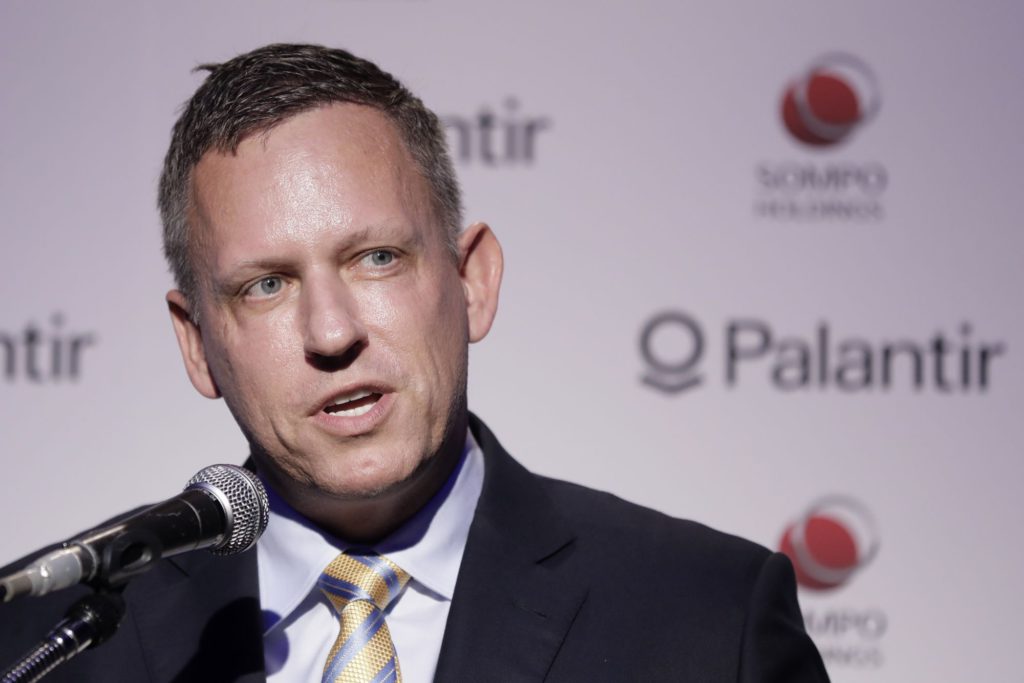
(Bloomberg) — Palantir Technologies Inc. is significantly accelerating its pace of hiring this year to help meet ambitious sales goals, defying convention when many other technology companies are freezing headcount or cutting jobs.

The move reflects the ethos of the company’s chairman and co-founder, Peter Thiel, who built a fortune by going against popular opinion in Silicon Valley. Palantir, which sells data analysis software to governments and companies, is on track to increase headcount about 25% by the end of the year, Lisa Gordon, a spokeswoman for the company, told Bloomberg.

Palantir has already hired or extended offers to 1,100 new employees so far this year and expects to add another 300 before the end of the year, Gordon said. Palantir’s headcount will soon reach around 3,670, up from 2,920 at the end of 2021, she said.

The conventional response to economic uncertainty is to slow down or cut back. That’s what many companies are doing now. Alphabet Inc., Apple Inc. and Meta Platforms Inc. have taken steps to cool recruiting. Amazon.com Inc. shed about 100,000 jobs through attrition. Microsoft Corp., Netflix Inc., Oracle Corp. and many others eliminated positions.

Palantir hasn’t been immune to market trends that have dragged down tech stocks. Its shares have declined 38% this year. The stock jumped as much as 2% on the hiring news Friday, erasing an earlier loss. The company reports quarterly financial results on Monday.

Since its founding nearly two decades ago, Palantir has worn contrarianism like a badge of honor. It pursued work for governments when few tech companies would do so and for a long time, refused to hire salespeople. (Alex Karp, the co-founder and chief executive officer, once said the only way he’d hire a sales team was if investors forced him or if he was “hit by a bus.”) Just before Palantir went public in 2020, Karp used the event as an opportunity to distance his company from Silicon Valley, both philosophically and physically, by moving the headquarters to Denver.

Karp’s view on salespeople has evolved. The company made it a top priority in recent years to build a sales team as part of a larger goal to win government and commercial customers. Shyam Sankar, the chief operating officer, told Bloomberg in February that Palantir would add at least 175 people in sales this year. Palantir also works with International Business Machines Corp., Hyundai Heavy Industries Group and others to help sell its software to companies.

Of the 1,400 new hires planned for 2022, a significant portion outside of the sales department will be software engineers, according to Bonnie McLindon, the global head of recruiting for Palantir. Competition for top engineering talent remains fierce, but hiring them has gotten somewhat easier as the economy has contracted, she said.

One thing Palantir won’t focus on in its pitch to recruits is workplace perks such as free meals or bringing your dog to work, McLindon said. “We’re not quibbling over trinkets,” she said. “We’re finding people who are aligned with our mission and who really want to be here.”

(Updates with shares in the fifth paragraph.)

More stories like this are available on bloomberg.com

©2022 Bloomberg L.P.
Biden Touts Jobs Report as White House Insists Economy Strong

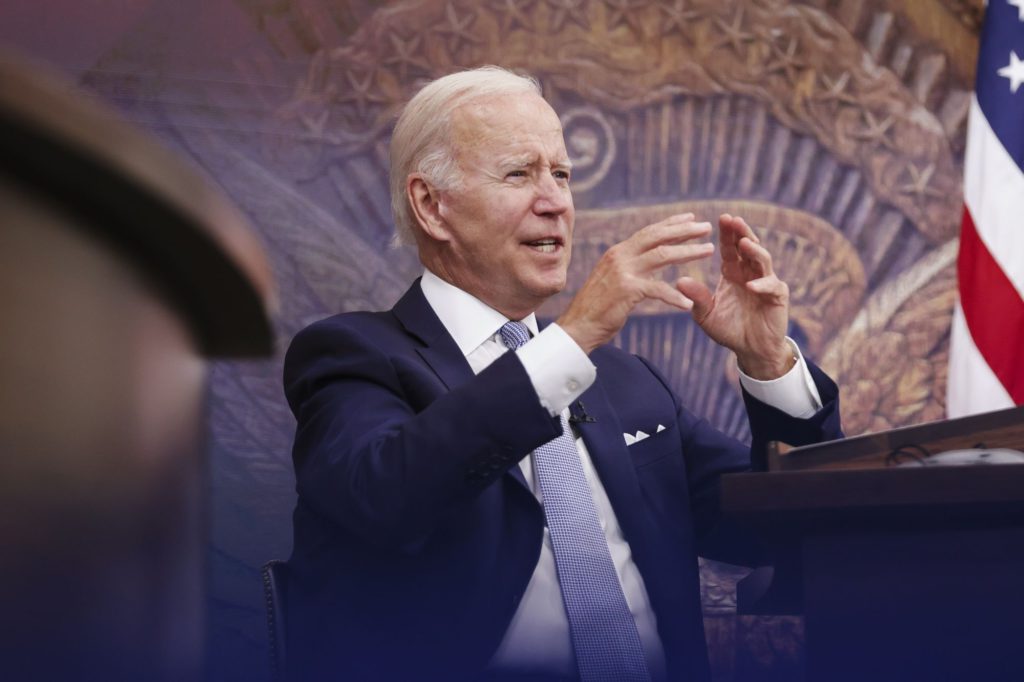
(Bloomberg) — President Joe Biden said the unemployment rate falling to pre-pandemic lows was “the result of my economic plan” as the White House sought credit for surging jobs gains that bolstered the president’s insistence the nation has not fallen into recession.

“More people are working than at any point in American history,” Biden said in a statement Friday. “That’s millions of families with the dignity and peace of mind that a paycheck provides. And, it’s the result of my economic plan to build the economy from the bottom up and middle out.”

The 528,000 jobs added in July was more than double the 250,000 predicted in a consensus estimate of Bloomberg economists. The overall unemployment rate fell to 3.5%, Labor Department data showed, matching a five-decade low. 

Read more: US Job Growth Surges, Tempering Recession Worry and Pressing Fed

The gains came even as White House officials had warned earlier in the week that they expected job growth to cool. Biden has said his goal is for “steady, stable” economic growth. The figures sent stock futures tumbling as analysts predicted that the robust job market would leave the Federal Reserve more likely to aggressively hike interest rates in September as the central bank tries to fight soaring inflation.

Still, the strong labor market helps Biden argue that the overall economy remains strong despite two consecutive quarters of negative GDP growth, which has prompted Republican criticism that the US has entered a recession. 

“There’s more work to do, but today’s jobs report shows we are making significant progress for working families,” Biden said.

The jobs report caps a stretch of good fortune for the president, who saw his approval rating slip to record lows last month. Since then, Senate Democrats have agreed on a legislative package that includes subsidies to lower the cost of health care and electric vehicles, gas prices have fallen significantly, and Congress approved a package that included more than $50 billion in subsidies for domestic semiconductor manufacturing.

More stories like this are available on bloomberg.com

©2022 Bloomberg L.P.

Disney+ Growth May Beat, Coinbase Users Poised to Contract: US Earnings Week Ahead

(Bloomberg) — Better-than-expected second-quarter results so far this reporting season have supported a rally in the S&P 500 Index, which is having its best earnings run in 25 years. About 75% of firms have exceeded estimates — lower than the 87% for the whole season a year ago but still in-line with the pre-pandemic average, Bloomberg-compiled data shows. Yet with company executives on earnings calls discussing the potential for an economic slowdown more often than they have since April 2020, updates to company guidance may carry risk, as major reports this week from Uber to AMD brought full-year guidance cuts that came below estimates. 

  • To subscribe to earnings coverage across your portfolio or other earnings analysis, run NSUB EARNINGS.
  • Follow our TOPLive blogs for real-time coverage and analysis of results from Coinbase and Walt Disney.

Earnings highlights to look for next week:

Monday: AIG’s (AIG US) second-quarter results are due after-market close. Consensus estimates point to year-over-year growth in net premiums written for the sixth consecutive quarter, as Bloomberg Intelligence said the property and casualty business is supported by commercial price increases. Investors may watch for updates on the spinoff plan of its life insurance unit — originally slated for 2Q — after market conditions have become less accommodating, according to BI.

Tuesday: Coinbase (COIN US) is poised to see its first contraction y/y in monthly transacting users since it went public as crypto winter eats into second-quarter results, due to be reported after the close. But it’s not all doom and gloom for the cryptocurrency trading platform, which blamed an economic downturn when it announced global job cuts in June: Citi analysts said a potential for stablecoin legislation and increasing confidence of a ETH 2.0 merger in September could help reverse a slump.

Wednesday: Walt Disney’s (DIS US) fiscal third-quarter results, due after market close, will be closely watched after Netflix’s better-than-expected subscriber figures lifted sentiment in streaming services two weeks ago. Though the Disney+ service is projected to meet or beat full-year consensus expectations to add about 44 million subscribers, the loss of streaming rights to Indian Premier League cricket may force management to reduce its target of 230 to 260 million subscribers by fiscal 2024, said Bloomberg Intelligence. Still, it could still reach its subscriber target and boost profit through the introduction of an ad-supported tier later this year. Demand for Disney’s theme parks has been strong, and the segment may outperform expectations despite a $350 million hit from overseas closings.

  • ESG in Focus: Disney is navigating a political minefield as it has recently drawn the ire of both Democrats and Republicans. The company lost its decades-old special tax status after Florida Governor Ron DeSantis said he would “fight back” against the company for its criticism of a Florida law that limits what educators can discuss about sexual orientation. Subsidiary Hulu was criticized by Democrats for refusing to air certain political ads, to which Disney responded by intervening and reversing the decision.

Thursday: Rivian (RIVN US) is scheduled to release its fiscal third-quarter results after the bell. The EV maker appears to have shrugged off supply chain snarls as it reaffirmed its full-year production target. That hasn’t stopped the company from trimming costs and cutting about 6% of its workforce on inflation, higher interest rates and higher commodity prices, it said in July. Though the company has a high cash balance, it may need more liquidity in 2025, earlier than it plans, as competition from Ford, Tesla and GM speeds up. Rivian may burn around $19 billion in cash through 2024 as it expands operations, while shareholders Amazon and Ford don’t appear to be capital sources. Rivian’s five-year default risk, at more than 16%, is similar to GameStop’s, said Bloomberg Intelligence. Shares were dragged down by automaker Lucid on Thursday after it halved production targets for the year, citing supply-chain issues. Still, electric vehicle companies shook off the gloom after peers Lordstown Motors and Nikola gave more upbeat updates.

More stories like this are available on bloomberg.com

©2022 Bloomberg L.P.
Bitcoin Lingers Near $23,000 as Job Gains Weigh on Risk Assets

(Bloomberg) — Bitcoin lingered near $23,000 after a report showing the US added more jobs than forecast last month renewed concern that higher interest rates could reduce demand for riskier assets. 

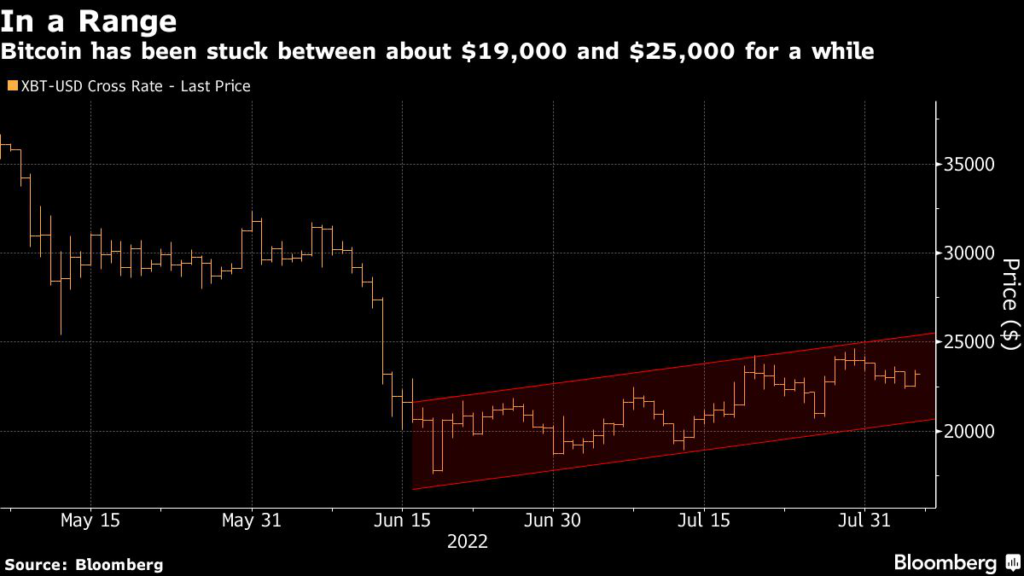
The largest cryptocurrency rose as much as 4.2% to $23,467 on Friday, before paring the increase. Bitcoin remains within the range of around $19,000 to $25,000 that’s held it since mid-June. Ether was up as much as 8.4% to $1,724 before also pulling back a bit from the highs of the day. 

“That was not a good jobs report for risk assets,” Craig Erlam, markets analyst at Oanda, said in an email. “That could worsen any slump further down the road, which is why we’re seeing risk assets sinking and Bitcoin is very much among them. It’s still a little higher on the day, but it’s given back a fair bit of its earlier gains.”

Other coins remained higher, with Polkadot and Aave gaining more than 5%.

Cryptocurrencies have traded in tandem with risk assets for months, seeing high correlations with the NASDAQ 100 in particular. They’ve struggled as expectations for Federal Reserve rate hikes increased amid stubbornly high inflation, but have climbed off their worst levels of the past few months. 

Nonfarm payrolls jumped 528,000 last month, beating all estimates and the largest increase in five months, Labor Department data showed Friday. Employment in the prior month was revised up to a 398,000 gain. The unemployment rate fell to 3.5%, matching a five-decade low. Wage growth accelerated and the labor force participation rate eased.

“The Fed is likely less concerned with recessionary conditions and more focused on their dual mandate of inflation and unemployment,” said Josh Olszewicz, head of research at digital asset fund manager Valkyrie Investments. Central bankers are “likely to continue with successive rate hikes,”  reducing the allure of alternative assets. 

More stories like this are available on bloomberg.com

©2022 Bloomberg L.P.
Lyft Posts Record Earnings as Ride-Hailing Rebounds

(Bloomberg) — Lyft Inc. jumped as much as 8.6% Friday and is on track for its best week in nearly two years on after reporting the highest earnings in its history.

The San Francisco-based ride-hailing company reported adjusted earnings, which strip out some costs, of $79.1 million in the second quarter, far surpassing the $18.1 million average analysts were expecting, according to data compiled by Bloomberg. Revenue rose 30% from a year earlier to $991 million.

The results are a sign that Lyft is approaching a full recovery from the pandemic amid a broad-based rebound in ride-hailing that also buoyed rival Uber Technologies Inc. in the period. Record adjusted earnings and plans to reduce spending on driver incentives assuaged investor concern about costs that sparked a rout in Lyft shares when it reported first-quarter results in May. 

“The worst seems to be behind Lyft overall after last quarter’s stumble,” Barclays analysts wrote in a note to investors after the results. 

Lyft saw a 16% increase in active riders from the same period last year to 19.9 million, the highest since the start of the pandemic.

Read more to see what analysts are saying about the results.

Chief Executive Officer Logan Green said on a call with analysts that Lyft would reach pre-pandemic ride-share volumes in the medium term. 

Like other gig economy peers, Lyft is confronting investor pressure to rein in its cash burn amid a gloomy economic outlook. The company hived off its rental car business in July and said it would slow hiring to cut back on costs. 

“We re-prioritized our R&D initiatives and reorganized teams to ensure laser focus on driving profitable growth,” Green said. Lyft is forecasting revenue of $1.04 billion to $1.06 billion and Ebitda of $55 million to $65 million for the third quarter.

A key challenge for Lyft and rival Uber Technologies Inc. has been matching surging customer demand with sufficient drivers on the ride-share apps. The imbalance has led to higher fares and wait times for passengers. Despite spending millions in incentives to get more cars on the road, Lyft’s and Uber’s efforts have been undercut by soaring gas prices that whittled down driver earnings and made it harder for companies to lure them back.

The number of active drivers on Lyft grew about 25% from a year earlier, while new signups rose nearly 35%. That’s improved wait times and the cost-per-ride is gradually declining. “The driver situation is materially improving and it’s not as much of a concern as previously,” co-founder and President John Zimmer said in an interview.  

On Tuesday, Uber said it would be paring back spending on incentives and instead has focused on adding driver-friendly like the ability to see fares and destinations before accepting a trip to “build trust and transparency.” The company said new driver signups in the US were up 76% compared to last year.

Lyft, which rolled out its own version of upfront fares earlier this year, will be expanding the feature to other markets, Zimmer said.

But while both ride-hailing giants face some of the same pressures, Lyft shares have fallen about 60% since the beginning of the year, a much bigger hit than the 24% decline at Uber. Unlike Uber, which offers food delivery through Uber Eats, Lyft’s core business is ride-hailing. The company has explored tapping other revenue streams like facilitating last-mile delivery for businesses. 

(Updates with share price in first paragraph, analyst commentary in fifth paragraph)

More stories like this are available on bloomberg.com

©2022 Bloomberg L.P.
Software Stocks Are Hot Again as Earnings Shows Resilience

(Bloomberg) — The fast-growing software companies that took a pounding in this year’s technology stock selloff suddenly are stars of the market, and earnings are a big reason why. 

Companies from Atlassian Corp. to Alteryx Inc. and Cloudflare Inc. have reported strong results, underlining tailwinds for the industry that bulls say remain intact even in a weaker economy. 

At the same time, valuations have come down after the brutal first half and, just as importantly, sentiment toward the Federal Reserve has shifted and investors now are far less concerned that the central bank will go too far in raising interest rates. 

“I’m optimistic about the ability of these stocks to outperform over the intermediate and long term, since they’re being fueled by underlying trends that remain quite strong,” said Hilary Frisch, senior research analyst at ClearBridge Investments. “Valuations are at multi-year lows in some cases, but the fundamental picture has only gotten more clear.”

While none of these stocks are household names like industry giants Microsoft Corp. or Oracle Corp., investors large and small flocked to them during the bull market of the past couple of years because of their rapid sales growth and, in many cases, their exposure to hot sectors such as cloud computing or cybersecurity. This year has been tough.

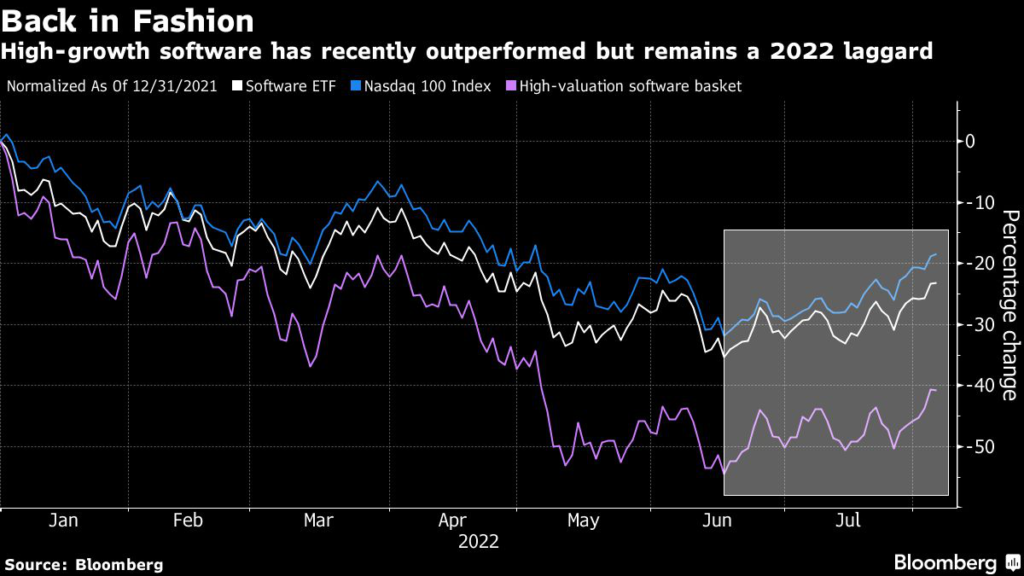
A Goldman Sachs Group Inc. basket of high-growth software has slumped 41% in 2022, more than twice the decline of the Nasdaq 100 Index, and steeper than the 23% drop of the iShares Expanded Tech-Software Sector ETF. The slump came as the Fed began aggressively raising rates to fight inflation, a headwind to high-valuation stocks that are priced on their prospects far out in the future.

Investors, however, looked optimistically at Fed Chair Jerome Powell’s comment last month that the central bank will slow the pace of increases at some point, suggesting a friendlier environment for growth stocks. The yield on the 10-year Treasury has gone from a recent peak near 3.5% to less than 2.7%, relieving some of the pressure on growth-stock multiples. 

Since a June 16 closing low for the Nasdaq 100, Goldman’s software basket has easily outperformed, jumping about 30%.

“By and large, software weakness has been 100% about the macro environment, not fundamentals,” said Jordan Klein, a managing director and tech analyst at Mizuho Securities, who noted some exceptions such as pandemic beneficiaries like Zoom Video Communications Inc. Otherwise, he said, corporate results are illustrating the enduring strength of their businesses.

The Goldman basket trades at 7.8 times forward sales, about half its average going back to 2018. In early 2021, it was trading at nearly 25 times estimated sales. The Nasdaq 100 has a multiple of about 4 times estimated sales.

Among specific reports, ZoomInfo Technologies Inc. spiked more than 10% in the wake of its results, while Confluent Inc. rose 11% after hiking its forecast and Alteryx popped nearly 20% after its own bullish forecast. Atlassian, HubSpot Inc., and Cloudflare all gained after reports late Thursday, with Atlassian up 8.2% and Cloudflare climbing 14%.

The sector has not been uniformly strong, with ServiceNow Inc. and Datadog Inc. both falling after their reports. But of the 38 companies in the S&P 500 software & tech services sector that have reported, 28 exceeded earnings estimates, while seven have missed. 

A key question for investors is how growth will hold up if the economy falls into a more protracted downturn. Mark Haefele, chief investment officer at UBS Global Wealth Management, wrote that it was too soon to move back into growth stocks, singling out unprofitable tech as an area that could be particularly vulnerable.

“The rising cost of capital, tightening financial conditions, and growing recession risks are likely to limit the upside for unprofitable tech companies given limited near-term scope for strong margin expansion,” he wrote.

Still, software companies are putting up the kind of growth that investors love. Wall Street expects earnings for the software and services sector will rise about 12% in 2023, compared with the 15% pace that had been expected in late February, according to Bloomberg Intelligence data. Revenue is expected to grow 11%, down from the 12% pace that had been expected in early July.

Tech Chart of the Day 

While Uber Technologies Inc.’s stock is on track for the best week ever as a public company, shares of Lyft Inc. are on course of their biggest weekly gain in 20 months. Both ride-hailing firms announced better-than-expected quarterly results this week. Lyft was up 5.6% after the company reported the highest earnings in its history.

Top Tech Stories

  • DoorDash Inc. soared after the company reported revenue that beat analysts’ expectations, boosted by a record number of orders, showing customers’ appetite for takeout isn’t waning despite rising inflation.
  • Zillow Group Inc. shares sank after the company predicted that a significant contraction in home sales would weigh on the amount of advertising it can sell to real estate agents.
  • Warner Bros. Discovery Inc. plummeted after the recently merged media giant posted a second-quarter net loss and sales that fell well short of estimates.
  • Meta Platforms Inc., one of the few S&P 500 companies without debt, sold $10 billion in its first ever corporate bond deal as its cash flow and stock price fall.
  • Elon Musk said Twitter Inc. misrepresented the size of its user base to distort its value and then “played a months-long game of hide-and-seek” as he sought more information to complete the $44 billion purchase of the company.
  • Tesla Inc. shareholders approved a three-for-one stock split on Thursday as the electric-vehicle maker seeks to attract an even larger number of retail investors amid a furious rally since late May.
    • CEO Elon Musk said he sees signs that the global economy has gone “past peak inflation.”
  • Alibaba Group Holding Ltd.’s better-than-feared sales figures haven’t persuaded options traders that the worst is over for the stock. The put-to-call ratio derived from open interest jumped to about 1.2 times on Friday, the highest in about 10 months, suggesting bearish views on the Chinese e-commerce giant are holding sway.

(Updates to market open.)

More stories like this are available on bloomberg.com

©2022 Bloomberg L.P.
Meta Delays Job Offers for Summer Interns, Making Gen Z Sweat

(Bloomberg) — Internships at Meta Platforms Inc., the Facebook and Instagram owner, are coveted for their selectivity, high compensation, lavish perks — and most of all, the potential job offer waiting at the end of the summer. This year, that’s more elusive.

Meta told interns via email in early July that it would delay deciding whether to hire them, giving the company extra time to assess staffing needs, according to a spokesperson. It’s so far the most prestigious program to change or cancel plans to offer interns full-time jobs, but it’s not the last. Twitter Inc. also said it would be delaying hires, as did a number of startups.

As hiring slows and the risk of recession looms larger, companies are freezing recruitment, cutting jobs and tightening budgets. Nearly one-third of organizations polled last month by consultant Gartner Inc. said they’re slowing hiring, up from 15% in May. Limiting intern hires, like quietly taking down job postings, provides one way to avoid layoffs for full-time employees.

But internships are key for providing a future talent pipeline — and for increasing the gender and diversity makeup of companies. Meta has said it will be a challenge to maintain its diverse workforce as recruitment slows. 

The class of 2021 graduated into a robust labor market, as stocks soared. Just a year later, a weakening economy is forcing companies to reassess their growth. 

At the end of May, Jenna Radwan, a recent graduate of the University of San Francisco, received an email from her would-be-employer Hirect, a hiring app. The message informed her that they could not longer offer her a position, just two weeks before her start date. “The rug was pulled out from under me,” she says.

Anthony Zhao received his fall internship offer from Shopify Inc. in June, conditional only on his reference check. Four weeks later, he received an email informing him they were no longer hiring for that position. At the end of July, the e-commerce company cut 1,000 workers, or 10% of its workforce. 

The 20-year-old has since accepted a position at another company, and is still hopeful, he says. “It’s not great short term, but I think long term, if I play my cards right I can learn a few things and come out ahead.”

Despite Meta’s move, some recent graduates say they’re more likely to accept any offers from big tech companies and banks, which they see as more economically stable. 

Representatives from Alphabet Inc., Google’s parent company, and Amazon.com Inc., which also recruit for entry-level positions out of their intern pool, said they do not plan on changing or scaling back their recruitment out of their internships. Representatives from similarly prestigious programs at Goldman Sachs Group, Inc., Citigroup Inc. and JPMorgan Chase & Co. told Bloomberg they plan to issue interns roughly the same number of return offers as in past years. 

That continuation comes in spite of broader hiring slowdowns. Goldman Sachs said it will slow its hiring, while Wells Fargo & Co as well as Bank of America Corp. trimmed their staffs over the past year. Tech companies from Google to Microsoft Corp. have also said they will slow recruitment. During last week’s third-quarter earnings call, Apple Inc. Chief Executive Officer Tim Cook said they will continue to hire but will be “more deliberate in doing so, in recognition of the realities of the environment.”

One summer intern at Morgan Stanley said though it isn’t her dream to go into finance, she’s hoping for an offer before economic conditions worsen. Another intern at Amazon, who asked to remain anonymous, expressed a similar sentiment. He’s worked at Amazon for three summers now and figures he might as well stay for the security.

He’s grown nervous as big tech companies slow hiring and smaller ones cancel programs or retract offers. Coinbase rescinded job offers and announced a hiring freeze earlier this summer. Twitter also retracted offers in May amid the Elon Musk takeover bid. 

Fewer jobs at top companies means that some top graduates will take lower-paying jobs with less-profitable employers, according to Hannes Schwandt, an economist at Northwestern University’s Institute for Policy Research. 

“This year’s crop of interns is no worse than previous years,” Schwandt said. “This will bite them a little bit after, when the economy is doing better.” Relative to graduates who enter a stronger job market, so-called ‘recession grads’ make less money even once economic conditions improve. 

Meta chose to delay hiring for the time being because junior level recruiting has outpaced senior level roles, Andrea Beasley, a Meta spokesperson, said. Meta will focus its hiring efforts on leadership and senior level positions, specifically those related to fields like machine learning and artificial intelligence. 

One Meta software engineering intern explained that he and other interns were shocked by announcement, because the company has a reputation for generous offers. The intern, who declined to be named for fear of jeapordizing his career prospects, said managers had praised his work throughout the summer, and he became enamored with the big tech lifestyle –from the New York City office’s free sushi to the gym membership subsidies. He couldn’t wait to come back after completing his studies.

After Meta’s plans changed, he stopped dreaming about post-grad life at the company and started updating his resume. 

More stories like this are available on bloomberg.com

©2022 Bloomberg L.P.

Futures Drop, Yields Rise as Jobs Fuel Rate Bets: Markets Wrap

(Bloomberg) — US stock futures turned lower and Treasuries sank after data showed a booming labor market that might prompt the Federal Reserve to raise rates sharply at its next meeting.

Contracts on the S&P 500 slid more than 0.5% and the two-year Treasury yield jumped toward 3.2% after employers added 528,000 jobs last month, more than double what economists expected. Wage growth also came in stronger than anticipated.

The strong jobs report validates the Fed’s view of a resilient economy that can withstand additional interest-rate hikes. Traders must now recalibrate expectations for Fed policy, with a hike of three-quarters of a percentage point now the more likely scenario at the September meeting as the central bank battles inflation.

A handful of Fed officials said this week reiterated the central bank’s resolve to bring down high prices. Among them is Fed St Louis President James Bullard, who has said he favors a strategy of front-loading big interest-rate hikes. That stance has likely strengthened after Friday’s job report, paving the path for an outsized hike and ruling out the possibility of a dovish pivot that Fed Chair Jerome Powell hinted at last week. 

“Odds of a 75 bp move next month have shot up, as they should,” writes Win Thin, global head of currency strategy at Brown Brothers Harriman & Co. “We still get one more jobs report before the September FOMC but barring a disaster, I think 75 bp then is a done deal.”

Despite being the focus of the day for traders, the jobs report supposedly has little value for those trying to predict a recession because it’s backward-looking. 

Corporate earnings, combined with thin liquidity that’s common in the summer, took the stock market on a ride this week. Many firms beat expectations and proved they could handle high inflation and a gloomy economic outlook. But investors have resumed shunning global stocks in favor of bonds, according to Bank of America Corp. strategists, who say it’s time to step back from US equities after July’s rally.

US-China tension also remains among the uncertainties clouding the outlook. China announced it would halt cooperation with the US in a number of areas — including working-level talks on climate change and defense — after US House Speaker Nancy Pelosi’s trip to Taiwan this week. China also sent warships across the Taiwan Strait’s median line in the first such incursion in years, a day after likely firing missiles over the island.

West Texas Intermediate stayed below $90 a barrel. Gold fell and Bitcoin gained.

This week’s MLIV Pulse survey is asking about your outlook for corporate bonds, mergers and acquisitions and health of US corporate balance sheets through the end of the year. It takes one minute to participate in the MLIV Pulse survey, so please click here to get involved anonymously. 

Some of the main moves in markets:

Stocks

  • Futures on the S&P 500 fell 0.8% as of 8:43 a.m. New York time
  • Futures on the Nasdaq 100 fell 1%
  • Futures on the Dow Jones Industrial Average fell 0.5%
  • The Stoxx Europe 600 fell 0.2%
  • The MSCI World index rose 0.3%

Currencies

  • The Bloomberg Dollar Spot Index rose 0.6%
  • The euro fell 0.6% to $1.0180
  • The British pound fell 0.7% to $1.2080
  • The Japanese yen fell 1.1% to 134.36 per dollar

Bonds

  • The yield on 10-year Treasuries advanced nine basis points to 2.78%
  • Germany’s 10-year yield advanced seven basis points to 0.88%
  • Britain’s 10-year yield advanced eight basis points to 1.97%

Commodities

  • West Texas Intermediate crude rose 0.5% to $88.98 a barrel
  • Gold futures fell 0.9% to $1,789.90 an ounce

More stories like this are available on bloomberg.com

©2022 Bloomberg L.P.

Ships Delay Sailing to Taiwan Port to Avoid China Drill Zone

(Bloomberg) — China’s military exercises are making ships think twice about heading into one of Taiwan’s most important ports, creating potential delays for shipments of electronic goods.

Ships are dropping anchor at sea to avoid a drill zone located just outside Kaohsiung port in the south of Taiwan, said Jayendu Krishna, deputy head of consultancy Drewry Maritime Advisors. The zone, one of the largest areas where China is carrying out exercises, is 15 nautical miles away from the entrance of the port.

Ship owners, worried about the possibility of missile strikes, are choosing to idle vessels and burn extra fuel until the drills pass.

“They will avoid going to Kaohsiung for the next two to three days, because that’s directly in the line of fire,” said Krishna. “Some dry bulk ships and tankers have been asked to anchor and wait for orders.” 

Kaohsiung is operating normally, and there is no unusual ship congestion off the coast, according to the port’s vice president, Su Jiann-rong. “There has been no impact from the military drills so far,” he said, adding that there are empty piers available in the harbor.

No ships have cancelled plans to enter or leave ports on Thursday, according to a statement from Taiwan’s Transportation Ministry.

The Taiwan Strait is a key route for supply chains, with almost half of the global container fleet passing through the waterway this year. While vessels are continuing to travel through the strait during the military exercises, they are navigating around the drill zones. 

Some shipowners have barred their vessels from transiting the strait. Two liquefied natural gas suppliers informed ships to not travel through the waterway until they can confirm the military drills have ended, according to traders with knowledge of the matter. 

At least two very large crude carriers en route to Kaohsiung have been diverted to Sha Lung port, at the northern end of the island nation. The supertanker Barakah switched its destination on Aug. 2 from Kaohsiung to Sha Lung, while the VLCC Ghinah also changed its route to avoid the military drill zone.

Kaohsiung is a major gateway for vessels picking up Taiwanese semiconductor chips, and is also where state-refiner CPC Corp. makes petrochemicals to supply manufacturers around the world, said shipping experts. 

Additional delays are likely to ripple out and eventually affect shipments of Asian goods headed to the US, said Drewry’s Krishna.

(Add details of VLCC diversions away from Kaohsiung port in ninth paragraph)

More stories like this are available on bloomberg.com

©2022 Bloomberg L.P.

Close Bitnami banner
Bitnami