
Bloomberg

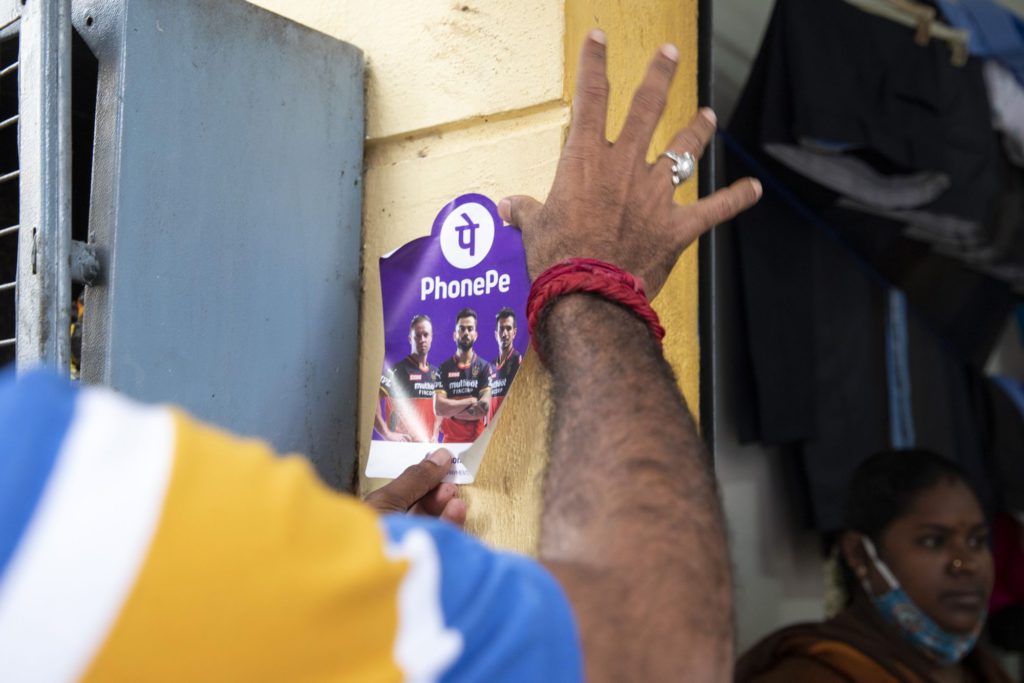
Walmart’s Payments Startup PhonePe Seeks to Raise $1 Billion

(Bloomberg) — Walmart Inc.-owned digital payments brand PhonePe is seeking to raise as much as $1 billion from General Atlantic and existing investors including Tiger Global Management, Qatar Investment Authority and Microsoft Corp., people familiar with the matter said, even as global funding dries up for startups.

The all-equity round is expected to close in the next two weeks and may take PhonePe’s valuation close to $13 billion, including new capital invested, said the people, asking not to be named as the details of the deal are private. The valuation catapults PhonePe among India’s most valuable brands in a digital payments market forecast by Boston Consulting Group to triple in size to $10 trillion by 2026. 

The company is in talks with SoftBank Group Corp.’s Vision Fund, an investor in PhonePe’s parent entity Flipkart, although Walmart will remain top investor, the people said. Forced to go on the defensive due to its portfolio losses, SoftBank has cut its investments sharply this year.

PhonePe declined to respond to emailed queries about the fundraising.

The new valuation would give Bangalore-headquartered PhonePe a higher valuation than arch-rival Paytm’s parent One97 Communications Ltd., whose market capitalization has dropped to $4 billion — down about 70% from its market debut last year. Competition is escalating between PhonePe, Paytm, Alphabet Inc.’s Google Pay and Amazon.com Inc.’s Amazon Pay, as well as a raft of startups looking to capitalize on India’s fast-digitizing economy. SoftBank also backs Paytm.

PhonePe is closer to profitability in its core business, one of the people said. Revenue at the digital payments player grew about 140% to 16.5 billion rupees ($200 million), while losses narrowed by about 15% in the business year ended in March, the company said.

A funding drought continues to plague India’s startup ecosystem, where companies are slashing headcount by the thousands and putting on hold plans to go public as valuations plummet. 

To prepare for an initial public offering, which the people said is at least 18 to 24 months away, PhonePe has flipped its headquarters to India from tax-friendly Singapore. The company will be an entity directly under the Walmart umbrella, instead of under Flipkart, they said. 

Launched in 2015 by former Flipkart executives Sameer Nigam, Rahul Chari and Burzin Engineer, PhonePe was soon acquired by Flipkart. PhonePe came under Walmart’s ownership when the US retailing giant bought Flipkart in 2018 for $16 billion. The startup had 415 million registered users and 30 million registered merchants around India as of last month. 

More stories like this are available on bloomberg.com

©2022 Bloomberg L.P.
US Congress Pokes China With Taiwan Defense Support, Chips Ban

(Bloomberg) — The US is set to pass legislation ramping up weapons sales to Taiwan and restricting government use of Chinese semiconductors, strengthening the White House’s hand while excluding measures considered most objectionable to Beijing.

Language in the must-pass annual defense legislation reflects how lawmakers on both sides of the aisle have shown a growing willingness to confront China, despite White House concerns. 

The bill, which is set to pass the House as soon as Thursday, authorizes up to $10 billion in weapons sales to Taiwan and would boost ties in ways that some in the Biden administration fear undermines the president’s ability to set foreign policy. 

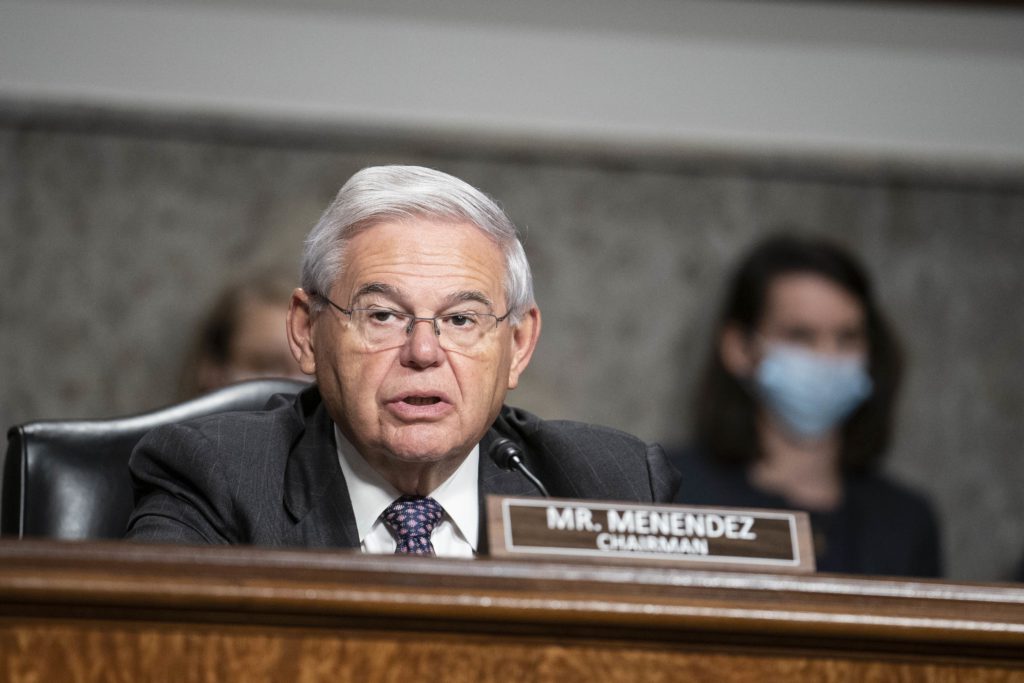
“The China challenge has become the most significant national security issue our nation has faced in a generation,” Senator Robert Menendez, a New Jersey Democrat, said in a statement. 

The bill does ease back some of language that would have been more unpalatable to China, including earlier proposals to designate Taiwan a “major non-NATO ally.” That change was made after lobbying by the Biden administration

The Taiwan element in the 2023 National Defense Authorization Act is based on legislation he and Senator Lindsey Graham of South Carolina had circulated earlier. Menendez said that China’s military build-up, including new technologies and weapons that could be used against Taiwan, means the US needs to step up its support for the island to deter an invasion. 

Rear more: Taiwan Defense Against China to Get $10 Billion Under US Bill

The legislation lands as Biden seeks to balance forceful policies aimed at China, which the US sees at its top strategic competitor, with efforts to contain their competition from spiraling into confrontation. The Senate will take up the bill next week.

Beijing criticized the bill on Thursday, with the Foreign Ministry saying in a statement that the US should “remove negative content related to China” and “stop using Taiwan to contain China.”

A recent meeting between Biden and President Xi Jinping was seen as a positive development for relations between the world’s top two economies, which had reached a low point earlier this year after House Speaker Nancy Pelosi visited Taiwan, a move that angered Beijing. 

In terms of technology, the US has focused in recent years on restricting the kinds of semiconductors China’s companies can procure from the US and its allies, and by boosting its own chip manufacturing. 

Washington has also attempted to restrict the use of Chinese-made technology in US devices. To that end, another provision of the NDAA will restrict the use of chips made by certain Chinese companies in items used by the military or other parts of the government.

That section was watered down after a coalition of US businesses objected to language that would have barred the purchase and use of Chinese semiconductors by any federal contractors. 

The final version is more permissive regarding the use of semiconductors in equipment unless they are involved in a ‘critical system,’ according to the the text of the bill. The latest version also sets a five year deadline for compliance, and also allows the executive branch to waive the requirement.

Rear more: Senate Panel Approves Taiwan Measure That Makes Biden Uneasy 

“Scores of companies and associations shared their concerns with the chamber about the original proposal, and it’s good news that the sponsors made the final version more workable,” said Matthew Eggers, vice president of cybersecurity policy for the US Chamber of Commerce.

Senator John Cornyn, a Texas Republican, said in an interview that the chips provision “definitely sends the signal that we need to not spend” on China for US technology. He said the Taiwan provision was included as deterrence to reduce the chances of China invading Taiwan. 

Such an invasion would spark a regional conflict and endanger the semiconductor supply chain as well, he said.

“Anything we can do to deter that is important,” Cornyn said.

–With assistance from Roxana Tiron and Lucille Liu.

(Updates with comment from China’s Foreign Ministry.)

More stories like this are available on bloomberg.com

©2022 Bloomberg L.P.

China Pushes Triumphant Storyline on Covid Zero Pivot

(Bloomberg) — Chinese state media struck a triumphant chord over the country’s efforts to contain Covid-19, reflecting the government’s efforts to dilute perceptions that its shift away from the stringent approach was forced by public discontent.

“In the past three years, the virus has become weaker, but we have become stronger,” said the commentary that appeared Thursday in the Communist Party’s flagship People’s Daily and in local newspapers across the country.

“We got through the most difficult moment!” it added, before emphasizing the variant spreading in China has become less dangerous and hinting at economic reasons for making changes to President Xi Jinping’s strategy. “Epidemic prevention and development are two ends of a balance. Both are extremely important.”

The commentary also sought to portray policymakers as proactive in making the changes, while avoiding referring to the protests that broke out in cities across the world’s No. 2 economy early last week. “In the battle with the coronavirus, China has taken the initiative to adapt to changes and always puts the safety of people’s lives and health first,” it said.

See: Xi’s Covid Retreat Shows China Masses They Have Real Power

The Chinese government faces a major challenge convincing the nation of 1.4 billion people that the mass testing, frequent lockdowns and strict travel curbs in place since early 2020 were worth the sacrifice now that it is radically changing course. As recently as mid-October, Xi himself publicly defended the strategy, saying it “protected people’s safety.”

People’s Daily said in mid-November that China could achieve “dynamic Covid zero,” going so far as to say it would help, rather than hinder, the Asian nation’s development. The newspaper hasn’t used that phrase since Nov. 29, just after the most widespread unrest in China in decades.

On Wednesday, the government surprised the public by eliminating key tenets of its virus elimination strategy, including forcing infected people into quarantine camps, while also easing travel requirements and rules that required frequent PCR tests to enter most public venues.

Also: China Eases Curbs in Major Shift From Covid Zero Policy

There are signs the rapid change is giving some members of the public whiplash. On Thursday, screenshots appeared on Chinese social media critical of Liang Wannian, an epidemiologist turned health official who led China’s initial pandemic response. 

They contrasted Liang saying Wednesday that the current mutations of virus posed less of a threat than in the past to remarks from April, when he said the death rate was 7 to 8 times greater than the flu. Liang also warned the public in April that “as soon as we relax and not care about the virus, it will result in many serious illnesses and deaths.” 

One Weibo post contrasting screenshots of Liang’s remarks was captioned: “The Chinese people will remember you.” 

There’s other signs that the policy change is front of people’s minds now. Half of the top 10 trending topics on Weibo on Thursday were related to Covid-19. Internet users were discussing what to do if they got sick and how ill people may not need to visit the hospital.

–With assistance from Charlie Zhu and Davy Zhu.

(Updates with chart after sixth paragraph.)

More stories like this are available on bloomberg.com

©2022 Bloomberg L.P.
Car Sales in China Drop as Covid Lockdowns Kept Buyers at Home

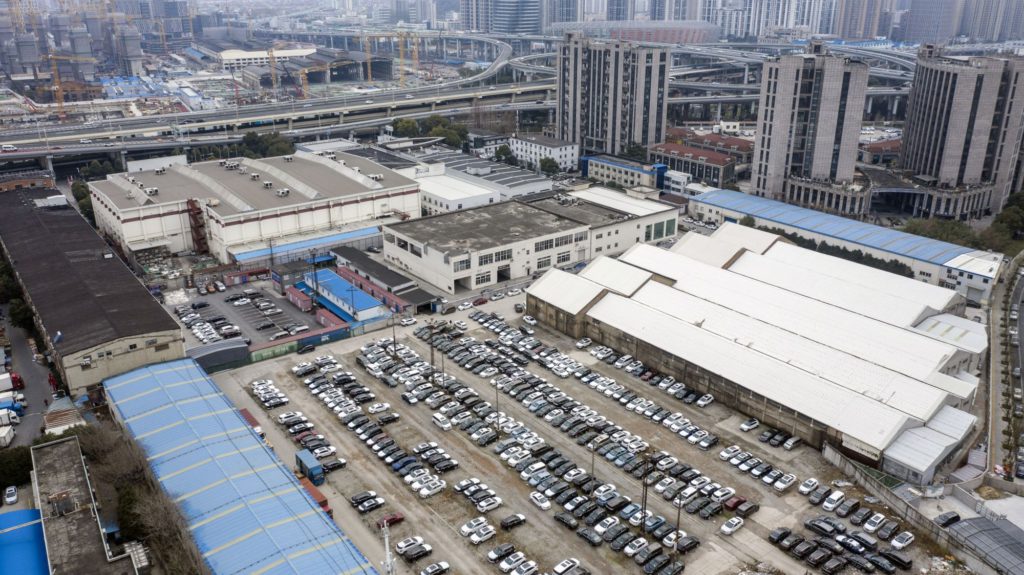
(Bloomberg) — Retail sales of passenger cars in China slipped in November as lockdowns due to the country’s still strict approach to Covid kept buyers away from showrooms.

Sales totaled 1.67 million units last month, down 9.5% from the same period of 2021 and a 10.5% drop from October, data from China’s Passenger Car Association released Thursday showed.

Sales of new-energy vehicles, which include pure battery electric cars and hybrids, rose 58.2% year-on-year to 598,000 units, led by local giant BYD Co. and US pioneer Tesla Inc. NEV deliveries to car dealerships may now touch 8.4 million in 2023 in what is the world’s biggest automobile market, PCA said.

“We’re still optimistic about NEV sales in 2023, with an increase of at least 30%,” Cui Dongshu, secretary general of the PCA, said. Deliveries this year should total around 6.5 million, he added.

BYD, backed by Warren Buffett, shipped 230,427 units in the month while Tesla delivered a record 100,291 EVs. Some 62,493 of the locally built Model 3 sedans and Model Y sports utility vehicles were sold to the domestic market, leaving 37,798 for export, according to PCA.

China’s automotive industry, like most others, has been hampered by the country’s Covid Zero approach, which officials only recently started stepping away from. For much of the past almost three years, authorities have been locking down swathes of the country, forcing people into Covid quarantine camps and subjecting large portions of the population to mass testing.

That’s disrupted economic growth and dented consumer confidence. Companies including Volkswagen AG and Honda Motor Co. have been forced to suspend production as employees were stuck at home and components couldn’t reach the factories. Supply chain snarls have also hit almost every firm.

Guangzhou-based Xpeng Inc., for example, only delivered 5,811 vehicles in November and 5,101 units in October. Another Chinese EV maker Li Auto Inc. said publicly that two of its models had been delayed due to a lack of “essential components.”

“Covid outbreaks and lockdowns in major automotive consumption regions, including Guangdong, Chongqing and Henan, have hit both the supply and consumer ends, leading to an abnormal consecutive month-over-month decline in this fall and winter,” Cui said.

Car sales are however expected to pick up in December ahead of state subsidies for cleaner vehicles and tax cuts for low-emission gasoline cars falling away. NEV deliveries to car dealerships for the first 11 months of the year were 5.74 million.

Wholesales of gasoline automobiles in 2023 are expected to drop by 10% to 15.1 million units, PCA said.

(Updates with 2023 forecast in third paragraph.)

More stories like this are available on bloomberg.com

©2022 Bloomberg L.P.

The ETF Era Is Going to Be Here for a While

(Bloomberg) — Subscribe to Trillions on Apple PodcastsSubscribe to Trillions on Spotify

The future is very bright for ETFs, which in 2022 saw record volume and the second most flows and new launches—all astounding numbers considering the stock and bond markets were in the gutter return-wise. So what can we expect next year? What areas should people be watching? 

On this episode of Trillions, Bloomberg Intelligence’s exchange-traded fund team go over their just-published 2023 Outlook which covers topics such as active, alternatives, crypto, China and thematic investing—and just how big ETFs could get. Our analysts include Athanasios Psarofagis, Rebecca Sin, Henry Jim and James Seyffart. 

More stories like this are available on bloomberg.com

©2022 Bloomberg L.P.
BT Pension Fund May Need to Get More Support From Telecoms Group

(Bloomberg) — BT Group Plc’s pension fund said it may need to tap the telecommunications company for more support if its returns fall too low. 

BT Pension Scheme Management, or BTPSM, said it had become more cautious in how it manages liquidity for its almost 270,000 member scheme, according to a letter to the Work and Pensions Committee of UK MPs. The fund said it needed to have buffers to withstand market turbulence, but there is only so much liquid collateral it can hold without it being a drag on returns. The Financial Times reported on the letter earlier. 

The BT pension is one of the largest defined benefit plans in the UK and it used liability-driven investment strategies to help it manage its risks. The pension, which pays out about £2.5 billion ($3 billion) in benefits each year and has about £47 billion of assets, was responding via a written submission to MPs investigating the selloff in gilt markets in late September. 

“We have become more cautious in how we manage the scheme’s liquidity and have increased the collateral buffer to which we operate,” BTPSM wrote in the letter. “This will position the scheme to better weather any further volatility in the gilt market but will also reduce the expected returns from our assets.”

“The scheme does need to achieve a certain level of investment return to achieve its 2034 funding targets and if expected returns fall below this level then the scheme may need more support from BT in future valuations than previously anticipated,” the fund added.

Last month, regulators told UK pension funds to hold onto newly increased cash buffers to protect against any future turmoil in bonds markets. Officials in Ireland and Luxembourg, countries where the bulk of sterling liability-driven investment products are domiciled, said they didn’t consider it appropriate for these kinds of funds to reduce resilience at this point. 

“We remain on track with our plan to eradicate the BT Pension Scheme funding deficit by 2030, despite the recent volatility in the gilt markets and subsequent impact on the LDI market,” a spokesman for BT said by email. BTPSM declined to comment beyond the letter.

BT shares fell as much as 2.4% in early London trading.

More stories like this are available on bloomberg.com

©2022 Bloomberg L.P.
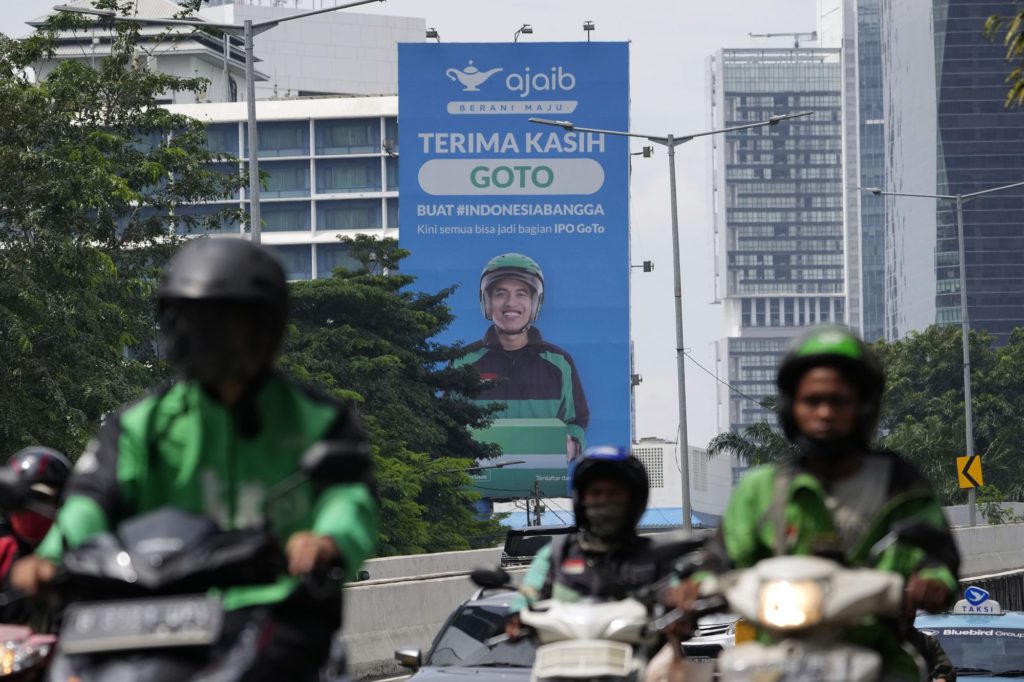
GoTo Assures Investors It Has Enough Cash to Reach Profitability

(Bloomberg) — GoTo Group said it has enough funds to last until it reaches profitability, trying to alleviate investor concerns about its financial health following a 70% slump in its stock price.

“Our balance sheet is sufficiently healthy to take us to profitability,” Chief Financial Officer Jacky Lo told investors in an online meeting on Thursday. The Indonesian internet company expects “to be able to accelerate” its breakeven timeline, will curb expenses and is considering selling non-core assets, he said.

Shares of GoTo have suffered as a lockup on its major shareholders’ stakes expired at the end of November, freeing early backers to reduce their holdings. The ride-hailing and e-commerce provider faces intensifying competition from rivals such as Grab Holdings Ltd. and a deteriorating global economy. GoTo is about six quarters away from a cash crunch, Aletheia Capital said, recommending investors sell the stock.

GoTo said last month it’s cutting 12% of its workforce, or 1,300 jobs, after its losses mounted. Like technology companies worldwide, GoTo is confronting the effects of stiffer competition, economic slowdown and heightened investor focus on the bottom line. The risk of customers becoming more budget-conscious in the face of an impending recession has triggered job cuts, closures of business units and other measures across the tech industry.

“We will continue our disciplined approach to reducing operating expenses, which we are confident will result in continuous sequential improvement in our monthly cash burn,” Lo said. “We may also consider divesting some of our non core assets and also investment portfolio and we will not make any new investments that do not contribute to an acceleration of our profitability.”

The stock plunged by 6.5% to 100 rupiah in Jakarta trading — close to the daily limit — leaving it down 70% since its April debut. Indonesia’s largest tech company now has a market value of about $7.6 billion.

Early backers such as Alibaba Group Holding Ltd. and SoftBank Group Corp. were held to an eight-month lockup expiring Nov. 30 to support the stock price following the company’s initial public offering. GoTo’s plan to facilitate controlled stake sales by pre-IPO backers — aimed at avoiding a bigger selloff at once — didn’t come to fruition.

Formed via a merger of ride-hailing provider Gojek and e-commerce firm Tokopedia, GoTo raised $1.1 billion in one of this year’s largest IPOs.

–With assistance from Yoolim Lee, Norman Harsono, Soraya Permatasari and Yudith Ho.

More stories like this are available on bloomberg.com

©2022 Bloomberg L.P.

Dyson’s $949 Air-Purifying Headphones Almost Double AirPods Max Price

(Bloomberg) — Dyson Ltd. is moving ahead with the launch of a pair of noise-cancelling headphones it says can purify air, moving into a crowded market with a pricey and alien-looking gadget.

The Dyson Zone, as they’re called, are priced at $949 in the US, where they’ll be released in March, the company said in a statement. China gets them first, in January, and then the UK, Singapore and Hong Kong will also have a chance to purchase the headgear, whose front piece is reminiscent of a Hannibal Lecter mask.

The detachable front bar, which sits over the wearer’s mouth and nose and gives the Dyson Zone its unique selling point, is intended to serve a similar purpose to the humble virus-fighting face mask: preventing the inhalation of undesirable airborne particles. Though Dyson has said in the past that its gadget, even with its filtering abilities, was not designed for protection against Covid-19.

Read More: Dyson Is Said to Be Working on an Air Purifier-Headphone Combo

The price takes these wireless headphones out of the consumer market — dominated by Sony Group Corp., Bose Corp. and Apple Inc. — and sets them on an uphill climb given the top of that segment is marked by the likes of the AirPods Max retailing for $549 in the US.

That isn’t deterring the firm better known for its pricey vacuum cleaners, bladeless fans and hair dryers.

The Dyson Zone works with compressors in each ear cup, which draw air in through two layers of filters before projecting it to the nose and mouth. Dyson’s filters, which last a year, can capture particles as small as 0.1 microns, Dyson said. Another layer can also filter out odors like construction and sewage fumes or gas pollutants like nitrogen dioxide.

Despite the prospect of a whirring motor ruining the audio experience, Dyson claims the 11 microphones in the product will help reduce ambient noise by as much as 38 decibels. The filtration system and the headphones can run together for four hours from one charge.

More stories like this are available on bloomberg.com

©2022 Bloomberg L.P.

Consumers Cut Back on Smoking, Clothes, Trips: The London Rush

(Bloomberg) — Companies reporting this morning are a cocktail of the state of consumer, among them selling cigarettes, clothes and holidays. They all reported something similar to a “difficult macroeconomic environment,” which for these companies translates to: people want to spend less.

Here’s the key business news from London this morning:

In The City

British American Tobacco Plc: The Lucky Strike cigarette maker has passed on increasing inflation in its supply chain in the form of higher prices to help improve its adjusted operating margins — that’s combined with a three year cost savings program, expected to save it £1.5 billion a year by the end of 2022. 

  • The company held its full year revenue guidance, despite what it said were industry-wide pressure on volumes in the US, mainly from a worsening economy and Covid-era trends normalizing

Frasers Group Plc: The owner of Sports Direct and Jack Wills’s gross margin fell year on year in the first half as a result of a cocktail of factors including inflation and more full price sales last year. 

  • It posted what it says is a “strong performance” in the first half, despite the worsening economic conditions, rising prices and pandemic-related supply chain issues, which it says are beginning to ease

On the Beach Group Plc: The package holiday provider says it is in legal proceedings with airlines to recover money due to the company for cancelled flights as a result of this summer’s travel chaos.

  • The company says there’s been growth across premium and long-haul trips in the last six weeks, and “more subdued” trading in the sales of 3-star holidays

Glencore Plc: The commodities trading giant last night abandoned plans for a controversial coal mine in Australia that would have been one of the largest in the top exporter, citing global uncertainty and its plans to phase out emissions. 

In Westminster

Keir Starmer’s Labour party is preparing to challenge the Conservatives’ proposition to be the UK’s natural party of business with a growth plan focused on industries of the future following the recommendations of a former Tory minister.

The UK is failing to develop a skilled and globally desirable workforce, with domestic talent increasingly less attractive to overseas businesses, according to a new survey of international executives.

Pubs and restaurants, meanwhile, have suffered a collapse in Christmas party bookings due to next week’s rail strikes, with industry chiefs suggesting the plunge is as bad as last year when omicron cases were surging. 

In Case You Missed It 

London is no longer Europe’s dominant financial centre of as a result of Brexit, says Stephane Boujnah, chief executive of the continent’s largest exchange group. Listen to the latest In The City podcast episode: 

The London Metal Exchange attracted takeover interest from rivals as the historic institution wrestles with its future in the wake of March’s nickel crisis.

Finally, Sam Bankman-Fried’s cryptocurrency exchange FTX held talks to sponsor English Premier League teams Manchester United and Liverpool earlier this year, people familiar with the matter told Bloomberg. 

Looking Ahead

Closing out a quieter week for earnings, homebuilder The Berkeley Group Holdings Plc is due to report tomorrow. Needs-driven buyers will be key in sustaining housing activity amid high mortgage rates, and Berkeley’s base is strongest among first-time buyers in London who want to remain in the city, according to Bloomberg Intelligence.

For a news fix when the day is done, sign up to The Readout with Allegra Stratton, to make sense of the day’s events.

–With assistance from Kwaku Gyasi.

More stories like this are available on bloomberg.com

©2022 Bloomberg L.P.

Europe Stock Futures Edge Down; Asian Shares Mixed: Markets Wrap

(Bloomberg) — European equity futures inched lower, raising the prospect that a regional benchmark may fall for a fifth consecutive day after pressure on riskier assets in Asia and the US.

Stocks in Japan, Australia and South Korea followed a the S&P 500, which dropped for the fifth day. Hong Kong shares rallied on reports that mask-wearing requirements may be scrapped. Shares in mainland China seesawed.

A gauge of the dollar gave up earlier gains to be little changed. The offshore yuan held below the 7 level to the greenback as investors continued to balance China easing Covid restrictions and a dimming outlook for the global economy.

The euro rose slightly while the pound was little changed. Treasury yields rose after a sharp decline in the prior session. 

Read: Bruising Stock Reversal Shows How Fed’s Pivot May Come Too Late

Chinese regulators asked the nation’s biggest insurers to buy bonds being offloaded as retail customers pull their cash from fixed-income investments, according to people familiar with the matter.

Iris Pang, chief economist for Greater China at ING Groep NV, said China’s economy would face further strain next year despite relaxed Covid restrictions.

“The manufacturing sector in 2023 is not going to look good because of the very weak export sector and a likely recession in the US and Europe,” she said in an interview with Bloomberg Television. “We can’t be too optimistic for retail sales to boost growth in 2023. It may happen in the second half but not in the first half.”

Elsewhere in markets, oil rose after a four-day drop as investors weighed the impact of China’s moves to ease virus curbs against a looming US slowdown.

Gold slipped after rising 0.9% in the previous session on weakness in Treasury yields, with traders looking to Friday’s US producer price report and the US Consumer Price Index print next week. 

Key events this week:

  • ECB President Christine Lagarde speaks, Thursday
  • US initial jobless claims, Thursday
  • China PPI, aggregate financing, money supply, new yuan loans, Friday
  • US PPI, wholesale inventories, University of Michigan consumer sentiment, Friday

Some of the main moves in markets: 

Stocks

  • Futures on the S&P 500 were little changed as of 6:51 p.m. Tokyo time. The S&P 500 fell 0.2%
  • Nasdaq 100 futures were little changed. The Nasdaq 100 fell 0.5%
  • Japan’s Topix Index fell 0.4%
  • The Hang Seng Index rose 3.2%
  • The Shanghai Composite Index fell 0.1%
  • Euro Stoxx 50 futures fell 0.1%

Currencies

  • The Bloomberg Dollar Spot Index was little changed
  • The euro was little changed at $1.0515
  • The Japanese yen was little changed at 136.72 per dollar
  • The offshore yuan was little changed at 6.9673 per dollar
  • The British pound was little changed at $1.2202

Cryptocurrencies

  • Bitcoin fell 0.1% to $16,810.27
  • Ether fell 0.3% to $1,228.67

Bonds

  • The yield on 10-year Treasuries advanced three basis points to 3.45%
  • Australia’s 10-year yield advanced one basis point to 3.37%

Commodities

  • West Texas Intermediate crude rose 1.7% to $73.21 a barrel
  • Spot gold was little changed

This story was produced with the assistance of Bloomberg Automation.

–With assistance from Rita Nazareth and Stephen Kirkland.

More stories like this are available on bloomberg.com

©2022 Bloomberg L.P.

Close Bitnami banner
Bitnami