
Bloomberg

Son Quietly Ups SoftBank Stake to 34%, Edging Toward Buyout

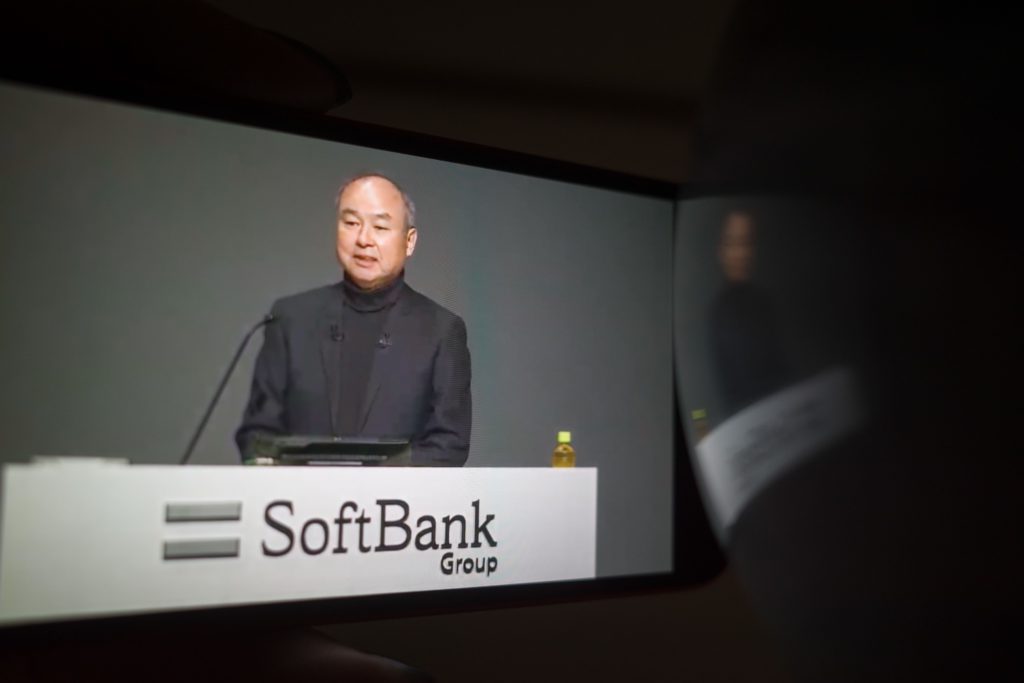
(Bloomberg) — Masayoshi Son has quietly tightened his grip on SoftBank Group Corp. during a tumultuous market downturn, edging closer to the point where he could bid to take the world’s largest technology investor private.

The billionaire now owns more than a third of the company he founded, after aggressive buybacks in the last two months reduced SoftBank’s outstanding stock by almost 90 million. Son’s stake in the company rose to 34.2% from 32.2% as of end-September, according to Bloomberg calculations based on company filings. That’s up from 26.7% as recently as March 2019.

SoftBank’s share price reversed losses to close up 2.2% after the news on Thursday. It was the stock’s biggest rise in three weeks. The benchmark Nikkei 225 Stock Average fell 0.4%.  

Under Japanese law, Son gains additional rights after breaching one-third ownership. The 65-year-old wields more control over asset sales, some buybacks, mergers and corporate bylaws by having the power to veto any special resolution put before shareholders by activist investors.

Son is also closer to the point where he could mount an effort to take SoftBank private, an idea he has repeatedly discussed internally. One option long debated is a “slow-burn” buyout to gradually buy back shares until the founder has a big enough stake to squeeze out remaining investors. Under Japanese regulations, Son could compel other shareholders to sell if he gets to 66% ownership, in some cases without paying a premium. 

“There’s not a single reason why SoftBank should be listed,” SMBC Nikko Securities senior analyst Satoru Kikuchi said. The company can raise the funds it needs without being listed and without a public entity’s restrictions and costs, he said. “It’s not a good fit for the current business model.”

The idea of a buyout has been debated fiercely for years inside SoftBank. Advocates argue that going private would free SoftBank from regulatory oversight and shareholder scrutiny over investments and staffing. Venture capital peers Tiger Global and Sequoia Capital are closely held. Son would take the company private if he could afford it, one person familiar with the billionaire’s thinking said. 

But many lieutenants oppose a buyout, according to another person close to the situation, who asked not to be identified because the talks are private. It would be an enormous financial undertaking that would consume management’s attention and leave it short of cash to make acquisitions and investments. 

At SoftBank’s current market capitalization, the price of an MBO would be about $50 billion — roughly double the size of Michael Dell’s buyout of Dell Inc. in 2013 — assuming the need to buy two-thirds of the company.

“He’s not going to have any money left to go out and do the investing that he wants to do,” said Kirk Boodry, an analyst at Redex Research, who publishes on Smartkarma. 

Privatization could jeopardize the terms of debt financing for Son personally. Roughly a third of Son’s SoftBank shares are held as collateral, while Son already owed SoftBank $4.7 billion at the end of September.

“An MBO is a monumental undertaking,” said Justin Tang, head of Asia research at United First Partners.

At an earnings call last month, Chief Financial Officer Yoshimitsu Goto dismissed market speculation that the company’s recent flurry of share repurchases was in preparation for an MBO. He cited technical issues that led to a concentration of orders in October.

Apart from any buyout, Son’s rising influence has fueled governance concerns. While the founder has always wielded substantial control, he has proven responsive to outside critiques, including when activist Elliott Management built up its stake in SoftBank in 2020. 

Now Son may be less inclined to listen to outside points of view. More importantly, activists will be even less inclined to try.

“This goes against the value of being a shareholding company,” said Masaru Kaneko, professor emeritus at Keio University. 

Son’s personal finances are also tied up with SoftBank’s stock price in complex ways because of his margin loans. If SoftBank’s shares tumble again, for example, Son may be inclined to prop up the price through a company-financed buyback — something that would prevent banks from asking for more collateral on his loans.

“The buybacks open the company to criticism that Son’s personal interests and the company’s interests have gotten jumbled up,” said Koji Hirai, president of merger-and-acquisitions advisory firm Kachitas Corp.

“That Son is a major shareholder in the company he founded, demonstrates his confidence SoftBank’s growth,” a spokesperson for the company said, adding that SoftBank “strictly adheres” to legal and regulatory requirements and has administrative checks in place regarding governance and conflicts of interest.

Much hinges on the initial public offering of SoftBank’s chip designer unit Arm Ltd. next year. SoftBank was seeking a valuation of as much as $60 billion for Arm in an initial public offering — almost double the amount it paid when it bought the business in 2016. If realized, that kind of return would not only provide capital to help turbocharge SoftBank’s investment machine, it would also open a path to privatization.

SoftBank’s cash flow will determine whether Son gets favorable terms on loans to finance any MBO. Other asset sales that could quickly bolster SoftBank’s cash position include its shares in Alibaba Group Holding Ltd., SenseTime Group Inc. and DoorDash Inc.

Going private “is not something that’ll happen tomorrow,” Kikuchi said. “But if you’re talking about next year or the year after, it’s plausible.”

–With assistance from Peter Elstrom, Haruka Kuroo and Vlad Savov.

(Updates share price reaction in third paragraph)

More stories like this are available on bloomberg.com

©2022 Bloomberg L.P.
South Korea Orders More Striking Truckers to Return to Work

(Bloomberg) — South Korea ordered striking truckers in the petrochemical and steel sectors to return to work, widening measures aimed at ending a labor impasse the government said could deal a “fatal blow” to its global competitiveness.

President Yoon Suk Yeol authorized the measure issued at a cabinet meeting Thursday, his office said in a text message. The order comes as the strike enters its third week, and after Yoon last week issued a similar order for truck drivers in the cement industry to return to work.

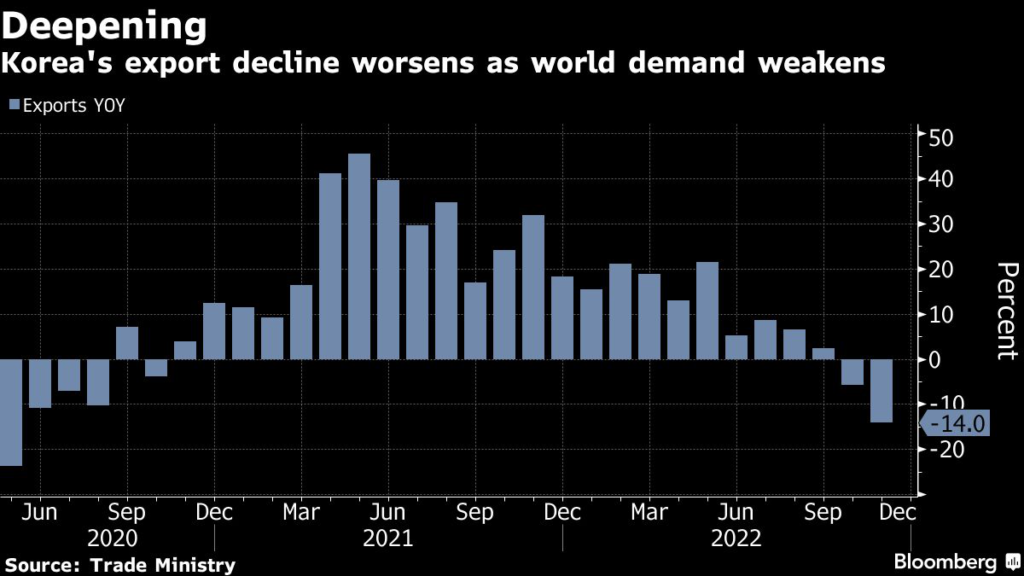
The truckers’ strike has added to worries after South Korea’s exports fell the most in two-and-a-half years in November, dragged down by an economic slowdown in China and cooling demand for semiconductors. The country is on track to record its first annual trade deficit since the global financial crisis as elevated oil prices and a fluctuating currency remain risks for exporters. 

Finance Minister Choo Kyung-ho said the “massive logistics disruption is wreaking havoc on our economy.” Truckers who do not abide by the back-to-work order may face criminal charges including up to three years in prison, he added. 

“This may deal a fatal blow to the global competitiveness of the steel industry — already suffering a hard time due to the September typhoon damage and global demand slowdown — as well as the petrochemicals industry facing crisis due to global oversupply,” he said at a news briefing.

Union officials have not yet released a statement on the most recent work order. The union representing the truckers in the cement sector had criticized the previous order, saying protests will continue. They are demanding a better wage plan that guarantees minimum freight rates, which would help to ease pressure from skyrocketing fuel costs. 

The ongoing labor action has caused at least $2.6 billion in supply disruptions to the economy, according to the trade ministry. 

Shipments of steel products stood at about 48% of usual levels the last two weeks and some companies have already suspended operations or curtailed production, the transport ministry said in a statement. Petrochemical product shipments reached just 20% the normal levels, causing close to $1 billion in damage, it added.


The public appears to be backing Yoon’s tough stance on the labor action. A poll conducted this week by Gongjung showed the president’s approval rating had jumped by more than 9 percentage points to over 41% from its previous survey taken just before the strike started. 

But Park Sangin, an economics professor at the Seoul National University, said the government may be inflating the actual damage caused by the strike to rally backing for the president. 

“Serious logistics disruption will only happen when the strike goes on longer term. It may take up to six months to a year eventually,” Park said. 

He added there appeared for now to be sufficient stocks of steel, cement and other materials. But a prolonged walkout could cause a serious crisis by triggering production disruptions in such major industries as car production, shipbuilding and semiconductors, Park said.

The truckers’ strike — protesting what they see as a lack of progress on wage demands — began Nov. 24 and virtually suspended manufacturing and the delivery of steel, cement and petroleum products. Cement deliveries were down more than 90% at one point, but recovered to about 100% of normal levels after last week’s return-to-work order, according to the government.

Read more: Korea’s Intense Strike Culture Builds Pressure on President Yoon

Shipments of containers at 12 ports in the country recovered to 115% of normal levels after the government asked drivers last week to return to work by sending text messages, letters and making phone calls, according to a statement from the transport ministry Wednesday evening.

–With assistance from Sam Kim.

(Updates with quotes, context.)

More stories like this are available on bloomberg.com

©2022 Bloomberg L.P.
Wirecard CEO Braun Gets Day in Court After Two Years Behind Bars

(Bloomberg) — Markus Braun makes his first public appearance in court today, more than two years after his high-flying digital-payment company Wirecard AG collapsed under the weight of fraud allegations, wiping out billions in shareholder value and destroying Germany’s efforts to breed a new technology champion rivaling Silicon Valley. 

The Munich Regional Court is scheduled to open the case against Braun and two co-accused on Thursday in a spacious courtroom located in the Stadelheim prison, among Germany’s largest prison complexes. With more than three dozen journalists from across the globe registered to follow the proceedings, the trial is set to stretch well into 2024 as the presiding five judges pours over material collected in more than 700 binders of documents.

The case will retrace the steps leading up to the early months of 2020, when Wirecard fought an increasingly futile battle to portray itself as a digital payment pioneer under assault from short sellers and journalists alleging the company was built on fraud. In the end, the business quickly crumbled, with Wirecard first admitting that more than $2 billion in cash it had previously reported as merely missing likely never existed, and the company then filed for insolvency a few days later on June 25, 2020. 

By that time, Braun, an Austrian who nurtured a cerebral aura with his rimless spectacles and penchant for black turtleneck sweaters, had already been arrested. He has remained in custody for the best part of two years, making only a brief public appearance in Berlin two years ago in November where he was questioned by a parliamentary committee seeking to shed light on the scandal. He provided no insights into what may have led to the breakdown of the erstwhile darling of investors and politicians.

Warning Signs

Wirecard’s collapse proved an embarrassment for Germany’s regulatory and political institutions because red flags had existed for years. Damning reports by short sellers like Fraser Perring and a series of articles by the Financial Times questioned management’s accounting of business in Asia and the Middle East, charges the company always denied. Instead, Munich prosecutors initially took the company’s side, going as far as investigating journalists and short sellers instead of Wirecard. 

As a result of Wirecard’s collapse, the head of the Bafin financial watchdog, Felix Hufeld, was forced to step down in early 2021.

Prosecutors finalized their probe into Wirecard’s decline and fall in March, having spent almost two years retracing the company’s demise. They have charged Braun alongside two co-defendants — former chief accountant Stephan von Erffa and Oliver Bellenhaus, who ran a Wirecard company in Dubai and who has become a key witness.

According to prosecutors, the trio “invented purportedly extremely profitable businesses, particularly in Asia” to make believe that Wirecard was a successful company. In reality though, underlying assets in Dubai, the Philippines and Singapore didn’t exist and paperwork was forged, according to prosecutors. 

Large Payouts

Banks paid out loans of about €1.7 billion euros ($1.8 billion) and two bonds totaling about €1.4 billion, “operating under the mistaken assumption of dealing with a successful, prosperous, properly managed and in any case creditworthy DAX company,” prosecutors wrote in a statement when they filed their indictment.

By reporting fictitious results, the trio manipulated markets, using fabricated numbers to seek loans, say the prosecutors, who have charged the three men with aggravated fraud, market-manipulation and false accounting.

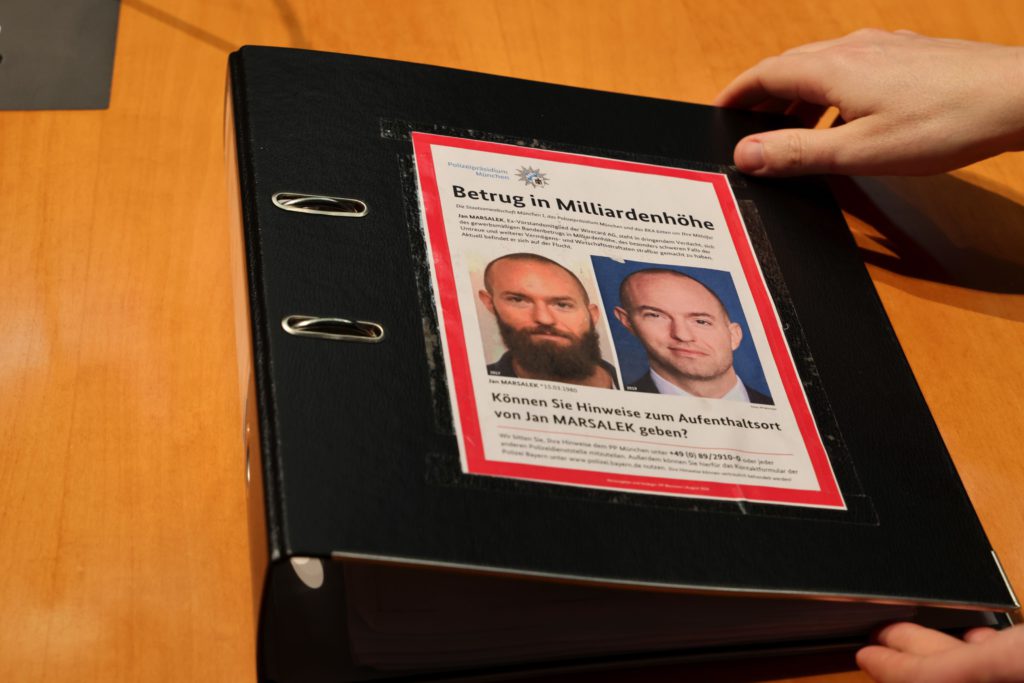
Braun was also charged with breach of trust by making Wirecard pay more than €200 million to an obscure company, a maneuver allegedly orchestrated with his right-hand man at the time, Jan Marsalek, then Wirecard’s chief operating officer. Some of the money was channeled back to the men, according to prosecutors. 

Marsalek fled when the scandal broke and remains at large. He’s now on Interpol’s most wanted list and a Munich probe against him and other suspects continues. 

Retracing the business activities took a large team of investigators more than a year, involving more than 40 search warrants in Germany alone and the retrieval of data from places as far flung as Mauritius, the Philippines and Brazil. 

No Release

While Germany has had its share of accounting scandals and high-profile corporate collapses, few compare with Wirecard because the failure marked the first time that a company listed on Germany’s benchmark DAX index went bust. Wirecard was long seen as Germany’s ticket to the world of digital payment systems as the world shopped, played and communicated online. When it all turned out to be built of sand, politicians and regulators faced tough questions how a sophisticated economy like Germany could have been so easily tricked, and why nobody followed up on early warnings.

Braun has denied the allegations and has insisted that the foreign partner business at the heart of the fraud allegations was real. His lawyer Alfred Dierlamm has said the evidence suggests that Marsalek and others set up an elaborate system to channel money out of Wirecard and into their own pockets, without Braun’s knowledge. 

Dierlamm didn’t reply to an email seeking comment. Sabine Stetter, a lawyer for von Erffa, said she will comment on the case in her opening statement. 

But a Munich appeals court that had to rule on several occasions in the past two years whether Braun could be held in pre-trial detention wasn’t swayed by Dierlamm’s argument, finding instead on each occasion that the evidence against the former CEO was strong enough to keep him in custody.

Two Sides

In the upcoming trial, prosecutors will lean heavily on their key witness: Bellenhaus, Wirecard’s former Dubai boss. 

A month after Wirecard declared insolvency, Bellenhaus returned to Munich and turned himself in. He was taken into custody and has been held ever since, sharing his inside knowledge in a long series of interviews. He will be instrumental to prove that the partner business was fake, and the trial is likely to provide two contrasting sides: the cooperating Bellenhaus on one side, and the stonewalling Braun on the other. 

Bellenhaus’s defense counsel Nicolas Fruehsorger said he expects a lengthy trial given the conflicting defense strategies and testimony of his client’s co-accused. 

“But I have faith that the fact-based truth will prevail in the end,” he said.

More stories like this are available on bloomberg.com

©2022 Bloomberg L.P.

Europe’s Fintech Future Looks a Lot Like Traditional Banking

(Bloomberg) — Europe’s fintech giants were built on the promise of new ways to do finance. Under pressure from rising interest rates and nervous investors, their next steps are looking more like tried-and-tested traditional banking. 

Dutch payments firm Adyen NV began lending to small companies this year following US-Irish rival Stripe, while the UK’s Revolut has looked beyond fee-free offers into more lucrative interest-bearing services and Swedish group Klarna is outsourcing more of its technology.

“A lot of these businesses are expanding into different products and trying to cross-sell them to existing customers,” said Kilian Pender, a partner at Northzone, an early-stage investor in several fintechs including Klarna. “I think they will continue to do so, and with rates rising there is an opportunity here for them to seize.” 

Record losses and a massive drop in tech valuations have pushed companies and their backers to do some soul searching. Adyen’s stock has fallen by roughly 40% in the past year — despite the firm being profitable — while US-based Stripe wrote down its value internally by 27% this summer, and Klarna completed a “down round” that saw its valuation plummet to $6.7 billion from $45.6 billion.

Many of these businesses thrived in easy funding conditions and pandemic-era consumer demand. A series of rate hikes and looming recessions later, the models are being tested like never before.

“There has been a tremendous reset of expectations and valuations and there are some natural repercussions for that,” said Luca Bocchio, a partner at venture capital firm Accel who specializes in fintech. “Some of the big names are quickly adapting themselves and expanding their product remit so that they can provide services across market cycles.”

BNPL Reset

The burgeoning buy-now-pay-later industry is perhaps facing the biggest challenge from a higher rate environment. These companies began by allowing customers to spread purchases over three or four installments with no interest, meaning they depend on fees paid instead by retailers.

But with borrowing rates rising sharply this year, companies in this sector are looking for ways to pass on their higher debt costs.

“This is something we are looking into — it has to be part of the conversation,” said Gil Danziger, co-founder and chief technology officer at Mondu, a BNPL platform for businesses. “The world is changing, and we have to change with it.” 

To be sure, some fintechs are broadening their horizons in the opposite direction. Revolut, which is attempting to become a financial “super-app,” introduced a BNPL product in Ireland this year. It’s also planning to launch some form of faster mortgage process, boss Nik Storonsky said in November, while remaining committed to its crypto business, which has cratered along with the value of digital currencies this year. 

Klarna, once Europe’s most valuable tech unicorn and the face of BNPL, has been exploring a few different products such as price comparison tools. It also announced a technology partnership with small business lender Krea in October, though Klarna has said it’s providing open banking services and not lending to businesses directly.

Business loans are an area of growth for payments firms such as Stripe and Adyen, which already have relationships with small companies through their merchant platforms. Adyen was granted a banking license in Europe in 2017 and in the US last year that will help it expand in this area. The Amsterdam-based fintech is also investing “heavily” in unified commerce and platforms, which will see Adyen launch its own terminal range for retailers.

“Obtaining a license is a hell of an investment, but in return we gain full control over the technology involved, and remove dependencies on third parties,” said Hemmo Bosscher, who leads platforms and financial services at Adyen. “Small business lending is a tremendously underserved segment that has been left behind by banks, and we can use technology to give out prequalified loans and eliminate human error.”

–With assistance from Aisha S Gani.

More stories like this are available on bloomberg.com

©2022 Bloomberg L.P.
Spain to Focus on Producing Simpler Microchips After Losing Bids

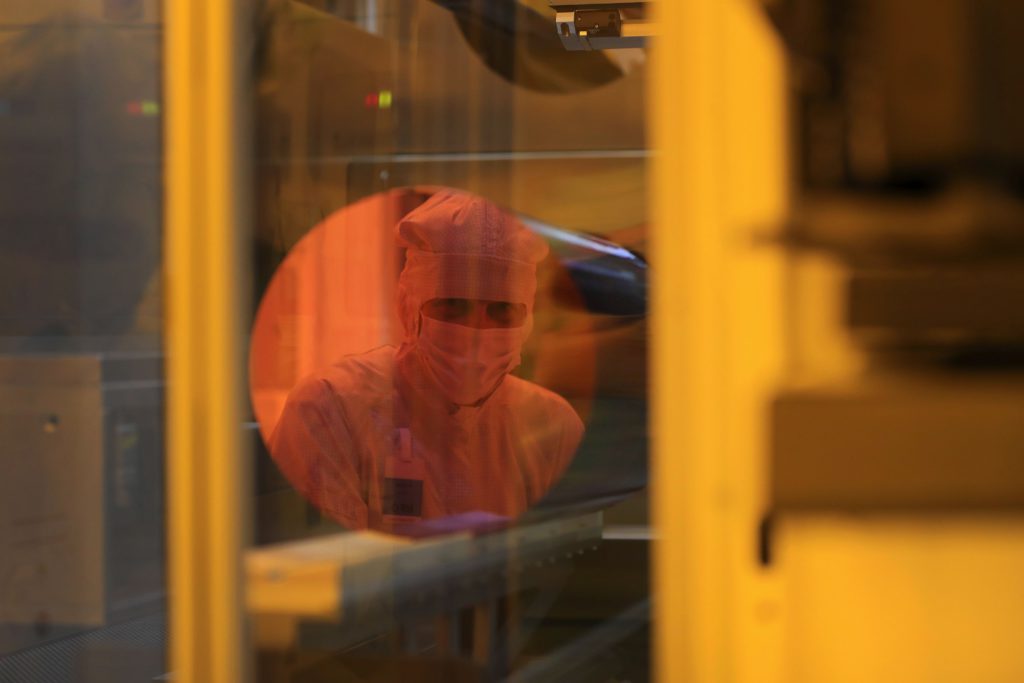
(Bloomberg) — Spain will focus on producing less-advanced semiconductors used in domestic industry after its ambitions to make cutting-edge microchips have failed to attract investment to date, according to people familiar with the government’s plan.

Following losing bids for production facilities to Germany and the US this year, Prime Minister Pedro Sánchez is concentrating Spain’s €12.3 billion ($12.9 billion) plan on midrange semiconductors, the people said, asking not to be identified as the strategy is not public. 

“Spain has not changed its position. From the start, the key priority of our strategy was to attract companies that can either design or produce microchips, and parts of the value chain,” according to a statement from Sanchez’s press office.  

Spain has for now scaled back its aspirations to produce the most technologically-sophisticated chips and is adapting its plan to tap rising global demand for chips of between 10 nanometers and 28 nanometers that can supply its automotive industry, which is the second-largest in the EU, the people said. 

The country aspires to become a top European Union producer as the bloc aims to double its global market share in microchips to 20% between 2020 and 2030, after pandemic-related supply disruptions and rising geopolitical tensions have led to calls for more local production. 

When Spain first announced its strategic plan, financed by EU recovery funds, more than half of the budget was earmarked to subsidize chips smaller than 5nm. These top-of-the-line semiconductors require facilities that cost tens of billions of dollars to develop.

Even before the plan was officially announced, Spanish officials considered shifting strategy after US tech giant Intel Corp. picked Germany to set up a €17 billion European complex in March, according to the people. Subsequently, a large US manufacturer pulled out of advanced talks on an investment deal in Spain after the Biden administration announced $50 billion in subsidies for chip producers, they said.

Focusing on less-advanced chips range will cater to the bulk of global demand, increasing the chances of attracting manufacturers to Spain, which doesn’t have an established technology ecosystem of suppliers and talent, the people said. Spain’s original plan included €2.1 billion earmarked for semiconductors thicker than 5nm.

“We will subsidize manufacturing of chips in Spain based on innovation and in line with the EU Chips Act, which could be thinner or more mature chips,” according to the press office statement. “We have a clear strategy, but we adapt as the market evolves.”

This matches a shift in European policy, after the European Commission proposed the Chips Act early this year to allow subsidies for the production of “first of a kind” semiconductors.

Countries with large automotive industries, including France, pushed to subsidize less-advanced chips needed for car production, arguing that the EU cannot only focus on cutting-edge chips if it wants to meet the 20% target.

EU countries last week passed their version of the Chips Act, and expanded the scope for subsidies slightly. 

Spain claimed its first success in its push to attract semiconductor business when it reached an agreement with Cisco Systems Inc. in November to set up a chip design center in Barcelona. The size of the investment was not disclosed. 

Samsung Electronics Co. is the top target for Spanish officials as it may decide on a major European investment plan next year, according to the people. Top executives from the South Korean company toured the continent during the summer to view potential destinations, they said.  

In November, Sánchez visited Samsung’s chip manufacturing complex in Pyeongtaek and spoke with top executives about investing in Spain. 

However, Spain faces stiff competition even for investments into less-sophisticated plants. A day before Sánchez landed in Seoul, his Dutch counterpart Mark Rutte met South Korean President Yoon Suk Yeol to discuss cooperation in the chip industry.  

–With assistance from Jillian Deutsch.

More stories like this are available on bloomberg.com

©2022 Bloomberg L.P.
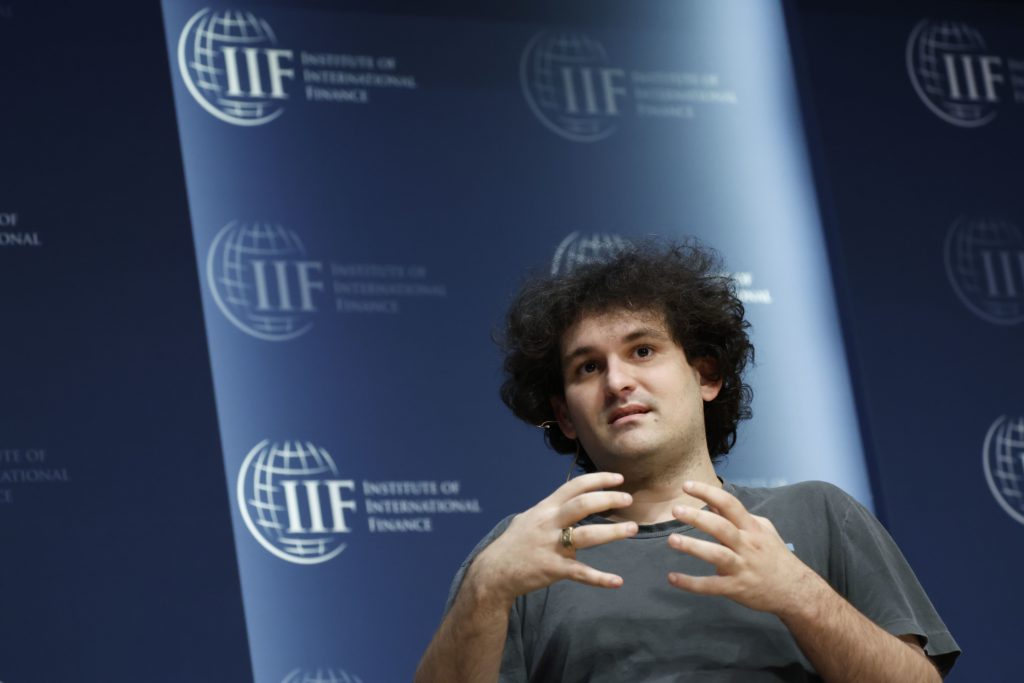
US Senators Seek SBF’s Testimony at Dec. 14 Hearing on FTX

(Bloomberg) — US Senators Sherrod Brown and Patrick Toomey have asked Sam Bankman-Fried to testify at a hearing about cryptocurrency exchange FTX’s collapse on Dec. 14, according to a letter issued Wednesday. 

Brown, who is the chair of the Senate Banking Committee, said he and Toomey are prepared to issue a subpoena if the disgraced crypto founder doesn’t choose to appear voluntarily.

Brown wrote that Bankman-Fried “must answer” for the failures of FTX Trading Ltd. and of Alameda Research, two of the entities in the sprawling and now-bankrupt FTX universe. “There are still significant unanswered questions about how client funds were misappropriated, how clients were blocked from withdrawing their own money, and how you orchestrated a cover up,” he wrote.

Read more: FTX Received Some Customer Deposits Via Alameda Bank Accounts

Bankman-Fried had previously suggested that he would be willing to appear in front of a different committee — House Financial Services — after he’d finished “learning and reviewing.”

In response, Maxine Waters, chairwoman of the House Financial Services Committee, told Bankman-Fried that it was “imperative” that he attend that hearing, scheduled for Dec. 13. “Based on your role as CEO and your media interviews over the past few weeks, it’s clear to us that the information you have thus far is sufficient for testimony,” Waters’ verified account posted on Twitter.

By Wednesday night, Representative Waters’ rhetoric had hardened further. “A subpoena is definitely on the table. Stay tuned,” Waters’ account said in a tweet posted jointly with the verified account for the House Financial Services Committee. Waters’ tweet also directly referenced a report from CNBC that said she had informed a group of Democrats she didn’t plan to issue a subpoena to Bankman-Fried. “Lies are circulating,” Waters said, referring to the report.

The letter from Senator Brown and the comments from Representative Waters come during a week in which Bankman-Fried, who resigned from FTX in early November, has continued his post-bankruptcy tour of podcasts and interviews against the advice of various lawyers.

  • Read more: Sam Bankman-Fried Should Shut Up, Bernie Madoff’s Lawyer Says

In a Twitter Spaces held on Tuesday, participants grilled him on how exactly things went south at FTX so quickly, and what happened with users’ funds on the exchange. By the end of the interview, Bankman-Fried had taken on a combative stance toward the people asking questions.

That same day, Bankman-Fried’s representative Mark Botnick confirmed that the embattled CEO had retained New York defense attorney Mark Cohen to represent him. Cohen was previously part of the team that represented convicted sex trafficker Ghislaine Maxwell.

While Bankman-Fried has not been charged with any crimes, he is facing a slew of investigations and class-action lawsuits aimed either directly at him, at companies in his defunct crypto empire, or both. Most recently, federal prosecutors have begun investigating what role Bankman-Fried and Alameda may have played in the collapse of the TerraUSD algorithmic stablecoin and its associated Luna token, according to a report in the New York Times citing people with knowledge of the matter.

Botnick, Bankman-Fried’s representative, declined to comment beyond a statement previously provided to the New York Times and attributable to the former FTX executive: “I am not aware of any market manipulation and certainly never intended to engage in market manipulation. To the best of my knowledge, all transactions were for investment or for hedging.”

  • Read more: What Are Stablecoins? Why Did TerraUSD Collapse?: QuickTake

(Updates throughout)

More stories like this are available on bloomberg.com

©2022 Bloomberg L.P.
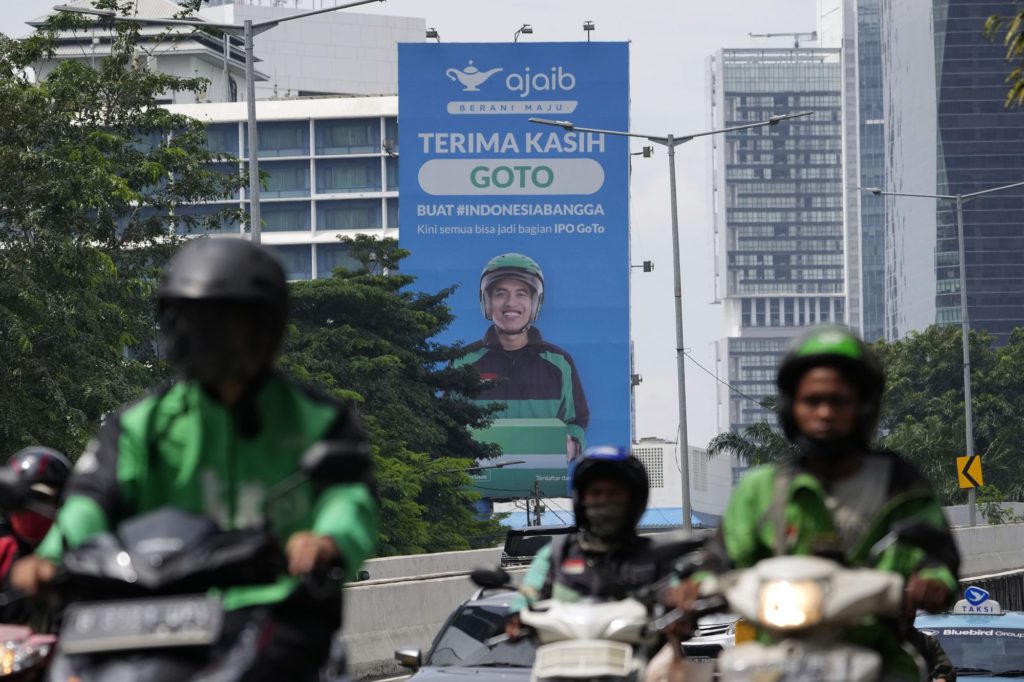
GoTo Shares Drop to Fresh Low Ahead of Meeting With Investors

(Bloomberg) — Shares of GoTo Group fell to yet another record low ahead of a meeting with investors Thursday afternoon, where the Indonesian internet company is expected to explain how it’s being affected by the slump.

The stock has suffered as a lockup on its major shareholders’ stakes expired at the end of November, freeing early backers to reduce their holdings. The unprofitable company is meeting with investors at 2 p.m. Jakarta time in a session accessible online.

Investors are assessing GoTo’s prospects as the ride-hailing and e-commerce provider faces intensifying competition from rivals such as Grab Holdings Ltd. and a deteriorating global economy. GoTo is about six quarters away from a cash crunch, Aletheia Capital said, recommending investors sell the stock.

The stock plunged 6.5% in Jakarta trading — close to the daily limit — leaving it down 70% since its April debut. Indonesia’s largest tech company now has a market value of about $7.6 billion.

Early backers such as Alibaba Group Holding Ltd. and SoftBank Group Corp. were held to an eight-month lockup expiring Nov. 30 to support the stock price following the company’s initial public offering. GoTo’s plan to facilitate controlled stake sales by pre-IPO backers — aimed at avoiding a bigger selloff at once — didn’t come to fruition.

Formed via a merger of ride-hailing provider Gojek and e-commerce firm Tokopedia, GoTo raised $1.1 billion in one of this year’s largest IPOs.

–With assistance from Yoolim Lee.

More stories like this are available on bloomberg.com

©2022 Bloomberg L.P.

China Electric Car Giant BYD Enters Malaysia in Sime Darby Deal

(Bloomberg) — China’s BYD Co. will sell its electric vehicles in Malaysia in a 500 million ringgit ($113 million) tie-up with Sime Darby Motors Sdn Bhd. 

Sime Darby will be BYD’s exclusive distributor in Malaysia, with the first showroom to open later this month, the companies said in a statement Thursday. They plan to have 20 dealerships by next year, and 40 by 2024, they said. 

BYD will bring its flagship Atto 3 to Malaysian market, with the standard model priced at 148,800 ringgit, and the extended-range version at 167,800 ringgit.

The deal adds yet another country to BYD’s growing list of export destinations, which now stretches from North to Southeast Asia, Australia and Europe to Latin America. BYD has announced its entry or started selling into several foreign markets such as Brazil, Chile, Germany, Israel, Japan, and India.

Thailand, and more broadly Southeast Asia, has become a new battleground for EV makers, especially as Chinese brands look beyond their home market for further growth.

More stories like this are available on bloomberg.com

©2022 Bloomberg L.P.

Stocks Mixed on China Reopening, Recession Fears: Markets Wrap

(Bloomberg) — Stocks in Asia fluctuated following signs China would further relax its Covid restrictions, while Treasuries flashed warning signs of recession. The dollar strengthened in an indication of demand for havens.

Equities in Japan, Australia and South Korea dropped, along with futures for US and European benchmarks. Stocks in Hong Kong rose after media reports that mask-wearing requirements would be scrapped. Shares in mainland China seesawed. 

The dollar resumed gains after a small decline Wednesday. The offshore yuan held below the 7 level to the greenback as investors continued to balance China easing Covid restrictions and a dimming outlook for the global economy.

Bonds rose in Australia, with the 10-year yield falling 3 basis points to 3.33%. Treasury yields of the same maturity rose after a sharp decline in the prior session. 

Read: Bruising Stock Reversal Shows How Fed’s Pivot May Come Too Late

Chinese regulators asked the nation’s biggest insurers to buy bonds being offloaded as retail customers pull their cash from fixed-income investments, according to people familiar with the matter.

Iris Pang, chief economist for Greater China at ING Groep NV, said China’s economy would face further strain next year despite relaxed Covid restrictions.

“The manufacturing sector in 2023 is not going to look good because of the very weak export sector and a likely recession in the US and Europe,” she said in an interview with Bloomberg Television. “We can’t be too optimistic for retail sales to boost growth in 2023. It may happen in the second half but not in the first half.”

Elsewhere in markets, oil rose after a four-day drop as investors weighed the impact of China’s moves to ease virus curbs against a looming US slowdown.

Gold was little changed after rising 0.9% in the previous session on weakness in Treasury yields, with traders looking to Friday’s US producer price report to gauge the Federal Reserve’s next monetary policy moves.

Key events this week:

  • ECB President Christine Lagarde speaks, Thursday
  • US initial jobless claims, Thursday
  • China PPI, aggregate financing, money supply, new yuan loans, Friday
  • US PPI, wholesale inventories, University of Michigan consumer sentiment, Friday

Some of the main moves in markets: 

Stocks

  • Futures on the S&P 500 fell 0.1% as of 12:16 p.m. Tokyo time. The S&P 500 fell 0.2%
  • Nasdaq 100 futures fell 0.2%. The Nasdaq 100 fell 0.5%
  • The Topix Index fell 0.7%
  • The S&P/ASX 200 Index fell 0.6%
  • The Hang Seng Index rose 2.7%
  • The Shanghai Composite Index was little changed
  • Euro Stoxx 50 futures fell 0.3%

Currencies

  • The Bloomberg Dollar Spot Index rose 0.2%
  • The euro was little changed at $1.0502
  • The Japanese yen fell 0.1% to 136.82 per dollar
  • The offshore yuan fell 0.2% to 6.9770 per dollar

Cryptocurrencies

  • Bitcoin was little changed at $16,839.01
  • Ether rose 0.2% to $1,233.97

Bonds

  • The yield on 10-year Treasuries advanced three basis points to 3.45%
  • Australia’s 10-year yield declined three basis points to 3.33%

Commodities

  • West Texas Intermediate crude rose 1% to $72.72 a barrel
  • Spot gold fell 0.2% to $1,782.98 an ounce

This story was produced with the assistance of Bloomberg Automation.

–With assistance from Rita Nazareth and Stephen Kirkland.

More stories like this are available on bloomberg.com

©2022 Bloomberg L.P.
US Sides Against Google in Consequential Social Media Case

(Bloomberg) — The Biden administration told the US Supreme Court that social media companies in some cases can be held liable for promoting harmful speech, partially siding with a family seeking to sue Alphabet Inc.’s Google over a terrorist attack.

In a Supreme Court filing on Wednesday night, the Justice Department argued that social media websites should be held responsible for some of the ways their algorithms decide what content to put in front of users. 

The case, likely to be argued early next year, revolves around the family of Nohemi Gonzalez, a 23-year-old US citizen who was killed by ISIS in Paris in November 2015. Her family is arguing that YouTube, which Google owns, violated the Anti-Terrorism Act because its algorithms recommended ISIS-related content.

The Justice Department did not outright side with Gonzalez. Instead, the government argued that the family should get another crack before a federal appeals court that tossed out the complaint against Google. The government said social media companies shouldn’t be held liable simply for allowing content to be posted or for failing to remove it.

Read More: Social Media Company Liability Draws Supreme Court Scrutiny 

The case could narrow the country’s interpretation of Section 230 of the Communications Decency Act, the tech industry’s prized liability shield that protects social media platforms from being held liable for content generated by users.

“The statute does not bar claims based on YouTube’s alleged targeted recommendations of ISIS content,” wrote acting US Solicitor General Brian Fletcher.

A coalition of 26 states and Washington, D.C. also filed on behalf of Gonzalez in the case, arguing that courts have encouraged an overly broad interpretation of Section 230. They claimed the statute currently holds them back from enforcing state laws when criminals operate online. 

Congress has long debated whether to reform Section 230, which was originally passed in 1996 before the modern internet came to dominate everyday life. Lawmakers on both sides of the aisle have argued that the sweeping immunity has enabled the social media companies to make editorial decisions affecting billions of people without consequences. But Congress has struggled to create and pass bipartisan legislation on the issue, leaving the question of online speech to the courts. 

Most of the Supreme Court justices have not made any public statements about their views on Section 230 – except Justice Clarence Thomas, who last year said the court should consider treating social media companies like public utilities. That would enable the government to create a much more aggressive regulatory regime around companies like Meta Platforms Inc., Twitter Inc. and YouTube. 

The Google v. Gonzalez case has already attracted attention from some senators on Capitol Hill. Republican Senators Ted Cruz of Texas and Josh Hawley of Missouri submitted briefs in support of reforming Section 230, which has long faced the ire of conservatives hoping to punish the social media companies for allegedly censoring conservative content. 

Google has argued that narrowing Section 230 could make it harder for them, and other social media platforms, to remove terrorist content. 

“Through the years, YouTube has invested in technology, teams, and policies to identify and remove extremist content,” said Google spokesman José Castañeda. “We regularly work with law enforcement, other platforms, and civil society to share intelligence and best practices. Undercutting Section 230 would make it harder, not easier, to combat harmful content — making the internet less safe and less helpful for all of us.”  

The Justice Department sided with Twitter and Google in a separate Supreme Court case involving social media this week. At issue in Twitter v. Mehier Taamneh is whether Twitter violated the Anti-Terrorism Act by failing to enforce policies against pro-terrorist content on its platform. Fletcher argued in a filing on Tuesday night that Taamneh’s family had failed to prove that Twitter was intentionally “aiding and abetting” terrorism. 

The cases are Gonzalez v. Google, 21-1333 and Twitter v. Taamneh, 21-1496.

More stories like this are available on bloomberg.com

©2022 Bloomberg L.P.

Close Bitnami banner
Bitnami
