

Bloomberg

Dish Nears Launch of Mobile Service, Taking on AT&T and Verizon

(Bloomberg) — Dish Network Corp. will be another step closer to launching its new nationwide wireless service — Boost Infinite — when it starts taking online customer sign-ups as early as Aug. 8, according to marketing materials for the launch seen by Bloomberg.

The company is taking the sign-ups on a new website that lets potential subscribers register for more information. It’s the latest move in what’s been a challenging transition from pay-TV provider to 5G wireless company — a shift that got underway when Dish acquired the prepaid mobile service Boost from T-Mobile US Inc. in 2020.

Though Dish has already begun rolling out 5G in more than 120 cities, including Las Vegas and Albuquerque, New Mexico, the service has been offered as a beta test. The new website signals that the company is closer to a true consumer launch. Even so, the sign-up page won’t let customers actually subscribe just yet — that’s scheduled to occur “fairly soon,” a person with knowledge of the plans said. 

The idea is to become a fourth national wireless carrier — alongside Verizon Communications Inc., T-Mobile and AT&T Inc. — but with lower prices. Boost Infinite is expected to target regular monthly customers that may be looking for a cheaper alternative to the national brands. Dish hasn’t announced any pricing for the service yet.

Dish executives on an earnings call Wednesday provided few details about the launch of Boost Infinite, beyond saying that the service would be a challenger to the big three of the wireless industry.

“We have to be scrappier and more innovative and much more entrepreneurial,” Dish Chairman and co-founder Charlie Ergen said on the call. “I think you’ll see Boost and and Boost Infinite come up with creative things in the marketplace.”

After months of technical delays hampering its network expansion, Dish unveiled what was billed as the nation’s first cloud-based 5G wireless service in May. The trial service, located in Las Vegas, was called Project Genesis and offered unlimited data, text and calling for $30 a month. 

After acquiring Boost from T-Mobile two years ago, Dish struck network sharing agreements with the carrier and AT&T, helping it offer mobile service across the US. 

Ergen said in May that the cloud-based wireless network will attract as many as 40 million subscribers and lift Dish’s annual revenue above $30 billion. In June, Dish said that it had met a US deadline to have its 5G network available to at least 20% of the population. 

Dish holds a stockpile of wireless airwave licenses and is building what it refers to as a more nimble, software-run network that it can outperform those operated today by the three major US carriers.

Plans for the new monthly 5G service were disclosed a year ago by Stephen Stokols, chief executive officer of Dish’s Boost Mobile unit. Dish says it will undercut the competition through “disruptive” pricing, a potentially well-timed move as larger rivals are raising rates and fees.  

One early drawback to the Boost Infinite service is that, for now, subscribers will need to buy a $900 Motorola Edge+ phone to get connected to Dish’s new network. More phones that are compatible with the system are expected in the third quarter, Dish told analysts Wednesday.

More stories like this are available on bloomberg.com

©2022 Bloomberg L.P.
Microsoft-Activision Deal Doubt May Yield Big Reward: Tech Watch

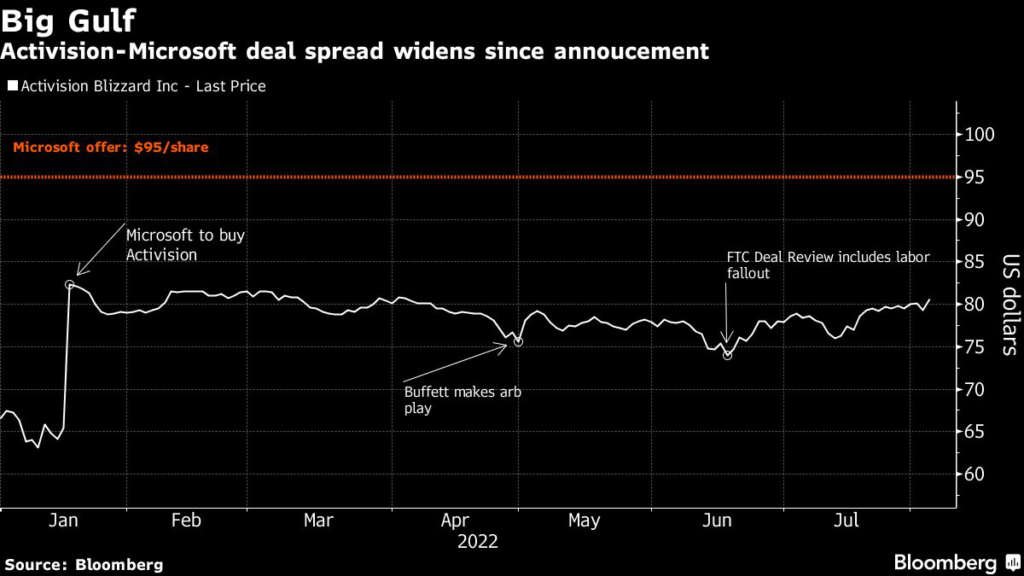
(Bloomberg) — Microsoft Corp.’s purchase of Activision Blizzard Inc. is bogged down, yet some traders are betting the deal ultimately will go through. If they’re right, there’s serious money to be made, given that the videogame company’s shares are still almost 20% below the offer price.

Stricter US antitrust regulators, the series of international approvals needed, a broad slump in technology stocks and the size of the $69 billion deal have all contributed to keep the gap between Activision’s price and Microsoft’s $95-a-share bid stubbornly wide. That’s made it one of the most potentially lucrative opportunities for arbitrageurs who speculate on acquisitions. 

The heightened attention that US regulators are paying to big companies, especially in technology, has resulted in a longer period between when a deal is announced and when it finally goes through, raising the risk of a transaction falling apart. 

“Given the deal’s sheer size and heightened antitrust scrutiny towards big tech players, that’s ultimately causing the very large spread,” said Julian Klymochko, chief investment officer at Accelerate Financial Technologies Inc. 

Microsoft announced the Activision acquisition in January and has said it expects to complete it in the year ending June 30, 2023. And Broadcom Inc. has said it aims to wrap up its $61 billion takeover of VMware Inc., announced in May, by October 2023.

Averaged annualized US deal spreads, which offer a gauge of the risk of transactions collapsing, have jumped above 15% from about 10% at the beginning of the year, according to data from Susquehanna International Group. That came amid rising fears of deal collapse or repricing, and higher costs to carry risky positions.

To be sure, one of the widest arbitrage spreads in technology mergers has nothing to do with regulatory hurdles. 

Elon Musk is trying to walk away from his $44 billion acquisition of Twitter Inc., and the company is suing him to force completion of the deal. Twitter shares are trading at $41 versus the deal price of $54.20, offering a 32% gain if the transaction goes through as agreed.

Under the stewardship of Lina Khan, the Federal Trade Commission has already sued to block two major takeovers. She’s advocated for a more forceful approach to reviewing large technology deals, arguing that companies in the industry can use their dominance in one line of business to gain power in other markets.

The slump in the tech sector also hasn’t helped with deal spreads. The Nasdaq 100 Index is down 19% this year, forcing investors to price in a greater downside risk to Activision shares if the deal falls apart, Klymochko said. 

Given the length of time until the expected closing of the Activision purchase, the stock has to endure higher volatility for at least a few more quarters tied to company-specific newsflow and general market performance.   

However, there is “a relatively strong consensus that this deal should go through,” said Cabot Henderson, a market strategist at Jonestrading. Wall Street seems to agree, with 26 of the 32 analysts covering the stock pegging their 12-month price target at $95 or more. 

And investor Warren Buffett has bought a stake of about 9.5% in Activision in a merger arbitrage bet. The 91-year-old billionaire has about seven decades of experience in arbitrage, including in technology companies: He bought shares of Red Hat Inc. before it was acquired by International Business Machines Corp. in 2019.

Last week, MoffettNathanson LLC analyst Clay Griffin upgraded Activision to outperform. “Though we’d push back on the notion that Microsoft will be closing on Activision any day now, we do see strong rationale for why it ultimately should,” he wrote.  

Tech Chart of the Day 

The Nasdaq 100 is roaring back from its June lows, up 19% after Wednesday’s rally. Technology stocks are staging a recovery after a series of resilient earnings reports amid growing concerns of a global economic slowdown. The latest rally has helped tech-heavy index gain more than $2 trillion in market value. The index was extending gains on Thursday, up 0.3%.

Top Tech Stories

  • Alibaba Group Holding Ltd. led Chinese tech stocks higher on Thursday as investors repositioned ahead of its quarterly results, though caution remained about a number of roadblocks ahead.
  • SoftBank Group Corp. has raised as much as $22 billion in cash through the sale of prepaid forward contracts using Alibaba shares, the Financial Times reported, citing filings it has seen.
  • Activision Blizzard and NetEase Inc. have torpedoed a World of Warcraft smartphone game that had been in development for three years, raising questions about one of the industry’s most lucrative business relationships.
  • EBay Inc. reported second-quarter revenue that beat expectations and an upbeat profit outlook, evidence that a new focus on luxury items and collectibles is helping offset slowing sales and customer traffic.
  • Apple Inc. expects to delay its next major iPad software update by about a month, taking the unusual step of not releasing it at the same time as the new iPhone software, according to people with knowledge of the matter.
  • Asia’s chip giants are falling behind in a share-price rally staged by their global peers over the past month, and that divergence is unlikely to narrow easily.
  • Nintendo Co. reported worse-than-expected first-quarter earnings Wednesday as a weaker yen failed to offset declining hardware and software sales.


(Adds stock moves in last paragragh.)

More stories like this are available on bloomberg.com

©2022 Bloomberg L.P.

Nikola Stands by 2022 Electric Big Rig Goal as Sales Climb

(Bloomberg) — Nikola Corp. reported its first meaningful revenue and said it’s on track to deliver as many as 500 electric big rigs to customers this year, even as the company continues to grapple with sluggish production.

Sales in the second quarter were $18.1 million, the Phoenix-based company said Thursday in a statement, beating analysts’ expectations. Nikola also reported a narrower-than-expected loss of 25 cents a share.

The company built 50 battery-electric semis in the quarter, the low end of its prior guidance of as many as 60. It also delivered 48 to dealers, missing its own forecast.

Nikola’s shares were little changed at 9:38 a.m. in New York. The stock declined 24% this year through Wednesday’s close, but has recovered in recent weeks from a June low of $4.72.

The startup sees itself as a leader in clean-energy heavy vehicles in a high-potential field for zero emissions trucks that includes other aspirants such as Tesla Inc. and legacy players like Volvo AB. At the same time, Nikola has been trying to repair its reputation after paying a $125 million penalty to US regulators for allegedly misleading investors and dealing with the delayed launch of a battery-electric truck.

The company also announced the location of three hydrogen-fueling stations in California, a launch market for its fuel-cell powered trucks. The sites are in Colton, Ontario and a location servicing the Port of Long Beach. Nikola has long held plans to build a nationwide series of stations for FCEV semis. However, it’s encountered multiple hurdles in breaking ground and confirming sites, despite agreements with corporate partners. 

Read more: Nikola Buys Battery Maker Romeo at 11% of SPAC Valuation 

Nikola ended the quarter with $529.2 million of cash and restricted cash on its balance sheet. The company also has the ability to call on $312.5 million from an equity-line-of-credit agreement it has with Tumim Stone Capital.

Capital Raise

On Tuesday, shareholders approved the issuance of new shares to potentially allow the company to raise capital. That vote had been postponed several times as retail investors, which are a sizeable slice of the investor base, failed to submit their proxy votes.

The startup began generating its own funds after initiating production of trucks it could actually sell in March, with revenue from those vehicles now showing up in the company’s earnings statement.

Trevor Milton, Nikola’s founder and former executive chairman, goes on trial next month to face charges of allegedly making false and misleading statements about the company’s technological capability and business prospects when he was at the helm. He resigned from Nikola in 2020 and was subpoenaed as part of an investigation by the Department of Justice. 

(Updates with share trading in fourth paragraph)

More stories like this are available on bloomberg.com

©2022 Bloomberg L.P.
WeWork Offices Are Now Just as Full as They Were Before the Pandemic

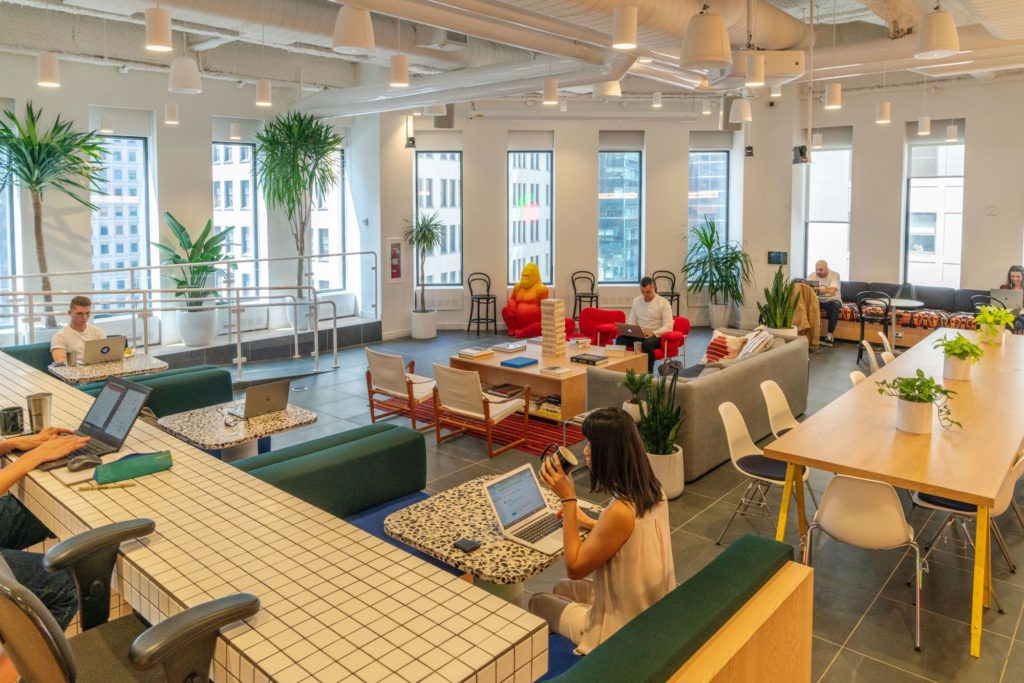
(Bloomberg) — WeWork Inc. said offices were 72% full at the end of the second quarter, matching the occupancy rate from before the Covid-19 pandemic in late 2019 for the first time.

WeWork’s occupancy rate — the percentage of its total desks that were rented out — dropped dramatically during the first year of the pandemic, when many tenants canceled their rental contracts and decided to work from home. That metric hit its low point of 46% a year later.

The company pitched a turnaround story when it went public last year in a blank-check merger. WeWork’s buildings have slowly filled back up. WeWork management has maintained that more customers are drawn to its flexible office space offering as they attempt to figure out long-term real estate strategies in a new world of hybrid and remote work. It now has 62,000 subscriptions to its All-Access pass, a product that allows customers to book space for shorter increments of time.

Occupancy aside, the second-quarter performance was less rosy.  The New York-based co-working company had $815 million in sales, missing an average of analysts’ estimates compiled by Bloomberg of $821 million. The shares fell as much as 3.7% during trading Thursday.

WeWork continues to lose money and is narrowing that gap more slowly than predicted: Last quarter it reported a $635 million loss when analysts expected $479 million. Its loss in the second quarter is wider than the first quarter’s $504 million. 

Still, the company is working on taming its once-roaring levels of cash burn. In the first quarter of 2021, WeWork lost $2.1 billion, hit by the shockwaves of the ongoing Covid-19 pandemic and a hefty settlement payment to its co-founder and former chief executive officer, Adam Neumann. The company has also looked to expand its software offerings; in April, it said it would start selling tech tools to help companies manage manage their employees and their physical spaces.

(Updates with shares in the fourth paragraph.)

More stories like this are available on bloomberg.com

©2022 Bloomberg L.P.

Tiger Global’s July Gain Leaves Fund Down 49.8% This Year

(Bloomberg) — Tiger Global Management’s hedge fund gained just 0.4% in July, narrowing its loss this year to 49.8%, according to people familiar with the returns. 

The fund trailed broader markets, with the S&P 500 advancing 9.1% and the tech-heavy Nasdaq Composite Index surging 12%. 

Chase Coleman’s firm underestimated the impact of rising global inflation and entered 2022 with too much exposure, Tiger told investors in a letter Wednesday.

“We did so with a view then and now that the industries and companies in which we invest are deflationary over the long run,” the firm wrote. “We did not appreciate how unique the circumstances were that enabled inflation to rise and persist, and our portfolio composition and exposure levels were not well-suited for the volatility that followed.”

July’s results follow a 3.4% gain in June that was preceded by five straight months of losses, as Tiger was stung by sharp declines in some of its biggest equity holdings and the markdown of some venture-capital investments.

Tiger Global’s long-only fund rose 4.6% in July, paring its loss for the year to about 62%, people said.

A spokesperson for New York-based Tiger declined to comment.

Private Companies

“We further marked down the valuations of private companies in our portfolios, despite adequate cash positions and positive operating performance overall,” it wrote.

Coleman, 47, is among several so-called Tiger Cubs — named for money managers who previously worked at Julian Robertson’s Tiger Management — that have struggled this year as surging inflation, rising interest rates and war in Europe have crushed equity markets. 

Tiger Global, with a bent toward tech stocks, was at the sharp end of the equity slump. Its bets include stakes in beleaguered used-car platform Carvana Co., whose shares have plunged 85% so far this year, and digital bank Dave Inc., which has plummeted 93%. The fund also had positions in Netflix Inc. and Shopify Inc., which have also cratered.

It’s not the only Tiger Cub fund seeking to turn around a difficult start to the year. Steve Mandel’s Lone Pine Capital posted a 7% gain for its hedge fund in July, following the broader market higher and paring its 2022 decline to 33%. In June, Philippe Laffont’s Coatue Management broke even to hold its losses through the first six months of the year at 17%.

(Updates with details from investor letter starting in third paragraph.)

More stories like this are available on bloomberg.com

©2022 Bloomberg L.P.
India Seeks Wider Authority Over Global M&A With Antitrust Law

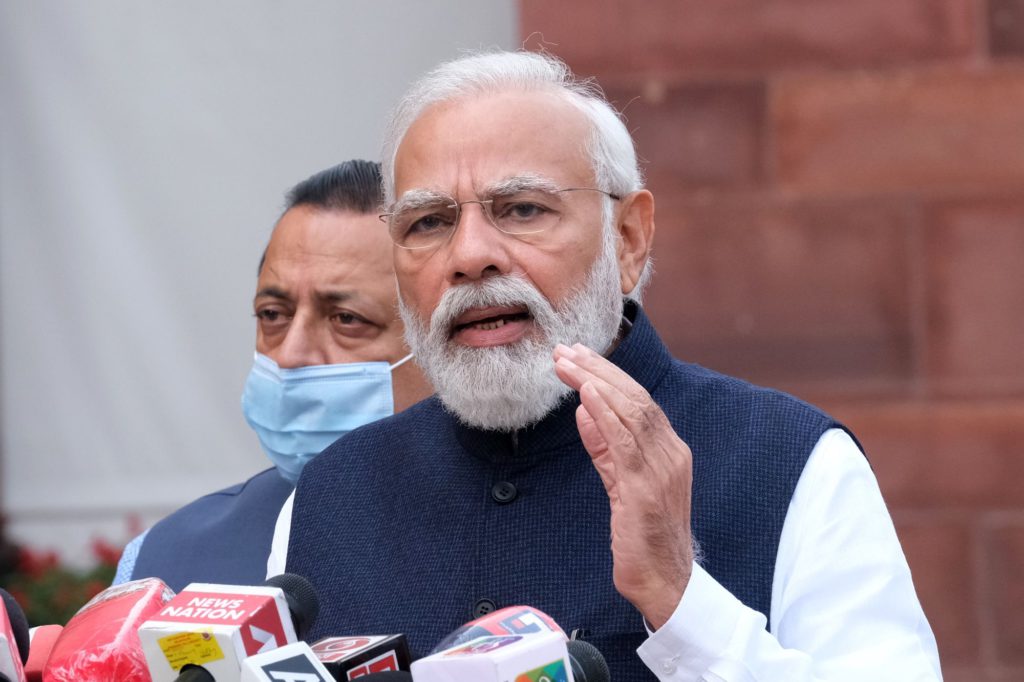
(Bloomberg) — India plans to overhaul its competition law so that global technology companies will have to seek the country’s antitrust approval for many overseas mergers and acquisitions, an ambitious move by Prime Minister Narendra Modi’s government to gain the kind of influence over Big Tech that Europe and China have.

All deals where the transaction value exceeds 20 billion rupees ($252 million) would require permission of India’s antitrust regulator if the firms have “substantial business operations in India,” according to a draft bill seen by Bloomberg News. The bill could be presented to parliament as early as Friday, according to a person with knowledge of the matter who confirmed the document’s contents.

The government will bring in rules defining “substantial business operations” once the amendments are approved, the person added, asking not to be identified discussing private details. A spokesperson for the corporate affairs ministry did not respond to calls seeking comment.

India’s current antitrust rules allow the regulator to examine deals based on asset size and turnover of the companies involved, but the amended law will, for the first time, allow the competition commission to scrutinize transactions based on their value.

The proposals stem from India’s view that it should have a say on deals such as Meta Platforms Inc.’s 2014 takeover of WhatsApp, given the messaging app’s large Indian user base. With 834 million internet users and the consumer digital economy expected to become a $800 billion market by 2030, Modi’s government has been working on regulations to tighten oversight.

China has wielded its power over the mergers of foreign companies with increasing force in recent years. In 2018, Qualcomm Inc. scrapped a $44 billion bid for rival chipmaker NXP Semiconductors NV after Chinese regulators failed to approve what would have been the largest-ever deal in the chip industry.

Competition law in countries such as Germany and Austria also follow the deal-value threshold for mergers in the digital space. Germany amended the German Act Against Restraints of Competition to prescribe a deal value threshold of 400 million euros ($407 million) for merger notification while Austria has prescribed 200 million euros ($204 million) for the same.

India’s definition of the value of transaction will include “every valuable consideration, whether direct or indirect, or deferred for any acquisition, merger or amalgamation,” according to the draft bill.

The government is also seeking to reduce the time limit for approval of mergers to 150 days from the existing 210 days to expedite the approval process, according to the draft bill.

More stories like this are available on bloomberg.com

©2022 Bloomberg L.P.
Trapped H2O Investors Inherit Stake in Troubled Ride-Hailing App

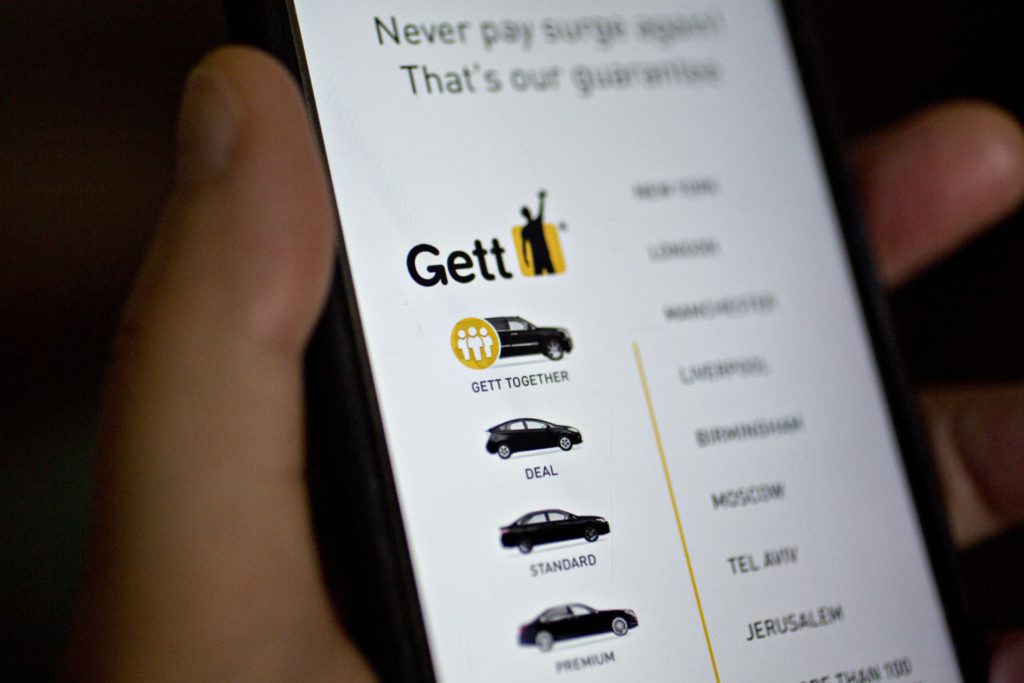
(Bloomberg) — Investors who have been trying for two years to reclaim money trapped in H2O Asset Management have had a new problematic investment dumped on their books: a ride-hailing app whose valuation has tumbled 75%.

German entrepreneur Lars Windhorst — as part of an ongoing attempt to repay money owed to the money manager — in January agreed to hand over notes linked to London-based hailing app Gett, according to a letter published on the firm’s website last week. H2O clients are owed about 1 billion euros ($1 billion) from assets that were frozen by the French regulator. 

Back in January the Gett notes, which pay out if the company goes public, were valued at $106 million because the company was about to list through an already announced deal with a Special Purpose Acquisition Company, or SPAC. But that deal has since been shelved and the company’s valuation slashed to around $250 million from more than $1 billion.

The note adds to complications for investors still waiting for H2O’s outsize bet on Windhorst to come good. In 2019 the money manager saw billions leave its suite of funds after a Financial Times article detailed the scale of investments in companies linked to the entrepreneur. A year later the money manager was forced to freeze the funds by the French Market Regulator, reopening them only after sidepocketing the Windhorst notes. 

A spokesperson for Windhorst’s investment firm Tennor Holding declined to comment. An H2O spokesperson confirmed details of the Gett investment but declined to comment further on the sidepocketed funds. 

Russia Exposure

Gett has expanded rapidly since it was founded by Moscow-born Israeli entrepeneur Dave Waiser in 2011. It drew backing from Volkswagen AG and billionaire Len Blavatnik’s investment firm Access Industries. Windhorst took an undisclosed minority stake in the business when he contributed to a funding round, according to a person familiar with the matter. 

The aborted SPAC deal, backed by Rosecliff Venture Management LLC, would have valued the company at around $1 billion. The firm was initially set up as a ride-hailing app, but now offers an aggregation service using existing ground transportation platforms. 

In March this year the firm announced it was not going to follow through on the SPAC deal and that it would exit its Russian business, one of its three main markets. Waiser, who had been chief executive officer, moved on and was replaced by Matteo De Renzi. 

A spokesperson for Access declined to comment. Representatives for Gett and VNV didn’t respond to requests for comment. 

Evergreen

Windhorst had initially attempted to pay back H2O through a company called Evergreen. To help fund the potential deal, Evergreen issued a bond, sold in part to high-profile German investors, including fashion retail magnate Friedrich Knapp and health care entrepreneur Ulrich Marseille.

The buy back, which was intended to take place in several steps, stumbled as the French regulator ordered H2O to freeze redemptions from some of its funds because of valuation difficulties, while Windhorst was also unable to arrange sufficient financing.

Read more: H2O’s Crastes Faces Solo Future for London Fund Manager He Built

Tennor then reached another deal with H2O to restructure the outstanding bonds instead of buying them back. The new transaction includes the issuance of 1.45 billion euros of notes due next year to retire debt linked to companies owned by Tennor, according to a statement from Windhorst to business partners and clients last year. 

Tennor was declared insolvent in the Netherlands in 2021, a ruling later reversed on appeal. At the end of 2021 H2O wrote down those notes by around 40% and acknowledged how little had been paid back so far and the Dutch court decision. 

More stories like this are available on bloomberg.com

©2022 Bloomberg L.P.
Top Argentina Executives Bet On Biotech Startup Fund GridX

(Bloomberg) — Some of Argentina’s most renowned business leaders including e-commerce billionaire Marcos Galperin and pharmaceutical mogul Hugo Sigman are among investors pledging more capital for biotech accelerator GridX as initial investments begin to pay off.

The Sielecki family, which runs a pharmaceutical business, and Gador SA are other names renewing their commitment to GridX. After a first fund raised $10 million, the second fund expects to hit $50 million by next year.

Read more: Latin America’s unicorns face a reckoning as VCs flee

“Entrepreneurship in Latin America is very difficult,” Miguel Galuccio, GridX’s chairman, said in an interview last month. “We provide a platform to succeed.” Galuccio, an oil veteran, 54, who’s on the board of Schlumberger, has experienced first-hand the struggles of starting a business in the region after building his own shale driller Vista Energy.

The new influx of cash for GridX — including funds from US biotech investor Paul McEwan and family offices in Mexico and Argentina — is a nod to the high regard in which the startup accelerator has come to be held after it began raising money in 2017. It’s already gathered half of the $50 million goal and is widening its investor targets to institutions.

The role wealthy business executives and families are playing to seed the investments is helping to compensate for tighter liquidity from venture capital funds as a rout in the technology sector and rising interest rates globally prompt a pullback.

GridX matches scientists working on biotech projects with entrepreneurs. Take Beeflow, which supercharges pollination to increase crop yields, or Stamm, which makes small-scale machinery in a bid to proliferate access to biologists working on sustainable manufacturing.

“Argentina has a distinguished tradition of science,” said CEO Matias Peire, a 44-year-old business administrator who came up with the GridX concept and found support from Galuccio, referencing the country’s three Nobel winners in medicine and chemistry. “But we need this sophisticated process of transforming the science into something tangible.”

GridX, which is headquartered in Buenos Aires and employs 11 people, has 42 companies in its portfolio worth around $300 million, Peire said. Most of the companies got their break through the first fund, which involved Sigman, one of the first backers, convincing MercadoLibre Inc. founder Galperin to invest as well.

The second, bigger pot of money will try to keep companies better funded as they grow and reach more scientists in other Latin American countries.

GridX’s expansion comes as researchers in the region test solutions for a world grappling with climate change and health crises. But bringing projects to fruition is under threat from both global market volatility and Argentina’s broader credit woes.

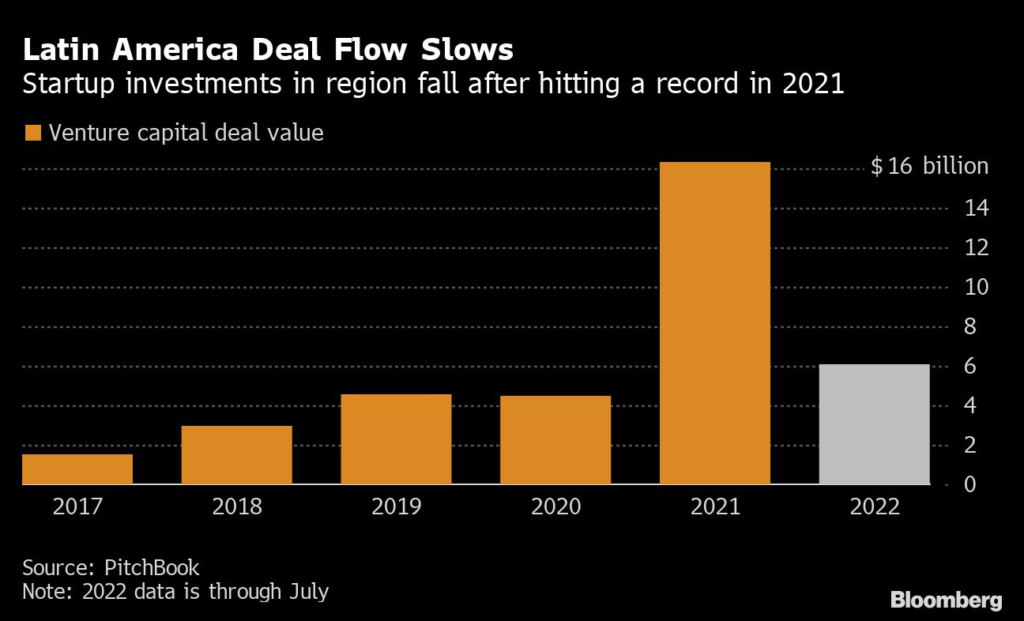
After a record $16.3 billion of venture capital poured into Latin America in 2021, it’s been a different story this year. Investments through July 27 were $6.1 billion, according to financial data firm PitchBook.

GridX is undeterred. “This process of markets falling will end up being an opportunity soon for our sector, rather than a threat,” Peire said. “The appetite of venture capital won’t fall that much.”

Still, there’s a long way to go for biotech, which accounts for less than 1% of the region’s venture capital deals.

“We are building the market” for biotech, Peire said. “There’s no deal flow in Latin America, no company where a big investor can come in and put down $50 million. Creating globally-competitive companies needs this deep process.”

GridX has built a pipeline of startups such as Puna Bio, which uses organisms sourced from the harsh climate of the Andes to make products for crop growth and soil nutrition; and Onco Precision, which develops bespoke cancer treatments.

Around 20 GridX companies now have outside backers, including US venture capitalist Tim Draper’s investment in Stamm.

There’s also a tangible success story. Caspr Biotech, which aims to broaden access to molecular diagnostics for doctors, was recently acquired outright.

GridX’s process involves a search for scientists toiling on groundbreaking projects at universities and laboratories, then teaming them up with entrepreneurs. The subsequent startup then receives $200,000 and, later, global investment connections.

These connections include IndieBio, another biotech startup accelerator but with greater clout and headquartered in San Francisco.

To be sure, other startup accelerators also use matchmaking programs. And there’s competition in Argentina from biotech funds like SF500 and Aceleradora Litoral, as well as broader startup funds like Sancor Seguros Ventures.

Galuccio used a soccer metaphor to describe the success he sees ahead for GridX. “There are a lot of companies that we see becoming goals,” he said.

More stories like this are available on bloomberg.com

©2022 Bloomberg L.P.
Food-Waste Tech Company Afresh Raises $115 Million in Funding

(Bloomberg) — Afresh Technologies Inc., which makes software that helps grocery stores reduce food waste, raised $115 million in new funding. 

The Series B round was led by Spark Capital. Insight Partners and VMG Partners also participated, along with Walter Robb, a senior executive at S2G Ventures and the former co-chief executive officer of Whole Foods Market. With the new investment, the San Francisco-based company’s total funding has reached $148 million.

Afresh offers an operating system that helps grocers reduce the amount of fresh food that is thrown away. Retailers can view their inventory within Afresh’s system and use its technology to more accurately forecast what foods consumers are looking to buy. The predictive system’s reliance on data means stores will produce less waste.

The company has announced partnerships with grocers in more than 3,000 stores across 40 states, including Albertsons and Save Mart. Its target is to work with 10% of US supermarkets by the end of 2022, with the new funding going to fuel that expansion. It will also go toward international growth and expanding the software for use on other categories of food. 

Afresh says it helps customers reduce waste by 25% or more. These efforts can help improve profitability, Robb said, which is especially important as food prices continue to surge. 

Emily Broad-Leib, director at Harvard University’s Food Law and Policy Clinic said it’s “legitimate to think we can get to zero food waste in grocery stores.” Improved ordering and better use of foods that would otherwise be thrown away are potential solutions, she said. 

As much as 40% of the food produced in the U.S. is never eaten, according to the environmental group NRDC. Most of that goes to landfills, generating emissions that contribute to climate change. By some estimates, food waste produces about 8% of all human-caused greenhouse gases. Homes are the largest source of waste, but supermarkets, restaurants and other businesses also contribute to the problem. 

More stories like this are available on bloomberg.com

©2022 Bloomberg L.P.

TIPS Liquidity Shows Clear Signs of Improvement, Tradeweb Says

(Bloomberg) — Liquidity in Treasury Inflation-Protected Securities has made notable strides in the past year aided by increased customer interest in the product, according to Tradeweb Markets Inc., which operates a leading electronic trading platform for US government bonds.

While TIPS liquidity “still notably lags” compared with nominal Treasuries, “significant investments in infrastructure by TIPS liquidity providers over the last several years” are making a measurable difference, Tradeweb says in a blog post. In particular:

  • In the request-for-quote (RFQ) trading protocol, dealer response times of under a second have increased to around 70% from around 50% in mid-2021, the approximate level since early 2020, “a clear sign of auto-quoting,” Tradeweb says
  • On the customer side, there’s been an increase in auto-execution trades suggesting “that the market is getting comfortable enough with TIPS liquidity to ‘set it and forget it’ through automation”
    • Percentage of tickets executed via Tradeweb’s automated-execution engine AiEX exceeds 20%, up from closer to 10% in 2020
  • Number of trades by institutional clients on Tradeweb platform more than doubled over 2016-2021, “with notable growth happening this year”
  • TIPS market growth is also driving liquidity improvements, Tradeweb says; issuance increased 29% between 2016 and 2021, and New York Fed’s primary dealer statistics show average daily volumes up 34% over the same period

More stories like this are available on bloomberg.com

©2022 Bloomberg L.P.

Close Bitnami banner
Bitnami