
Bloomberg

Bonds Rally on Economic Fear; Tech Stocks Gain: Markets Wrap

(Bloomberg) — Government bonds rallied from the UK to the eurozone to the US Thursday as economic and market anxieties tested the equity market’s bullish resolve. US futures rose.

Treasury yields were lower in the wake of an outsized rate increase by the Bank of England in the face of mounting recession risks. Contracts on both the S&P 500 and the Nasdaq 100 pushed higher, following the tech-heavy Nasdaq’s advance of 19% from its June low.

The bond market, especially the inverted Treasury yield curve, is flashing warnings on the economy amid a global wave of monetary tightening. US initial jobless claims rose slightly and are holding near the highest level since November, data showed Thursday.

“There’s an intense tug-of-war happening in the economy and markets,” said Dan Suzuki, deputy chief investment officer at Richard Bernstein Advisors. “On one side, you have a narrative that reasonable growth is going to support continued inflation pressure and keep the Fed hiking. The other narrative is that slowing growth is going to ease inflation and allow the Fed to stop hiking.”

Benchmark gilt yields tumbled after UK policy makers warned of a long recession and said its rate path was not pre-set.

US-China tension remains among the uncertainties clouding the outlook. Taiwan braced for the Chinese military to start firing in exercises being held around the island in response to US House Speaker Nancy Pelosi’s visit.

Gains in the Stoxx Europe 600 Index were led by retailers, leisure and technology firms, alongside an advance in shares of Chinese tech companies. 

Oil steadied after erasing an earlier loss as investors weighed weaker US gasoline demand and rising inventories against a token supply increase from OPEC+. Gold advanced and Bitcoin oscillated near $23,000.  

Among individual stock moves, Glencore Plc shares fell as much as 2% as its capital return plans overshadowed solid first-half results.

This week’s MLIV Pulse survey is asking about your outlook for corporate bonds, mergers and acquisitions and health of US corporate balance sheets through the end of the year. It takes one minute to participate in the MLIV Pulse survey, so please click here to get involved anonymously. 

What to watch this week:

  • Cleveland Fed President Loretta Mester due to speak, Thursday
  • US employment report for July, Friday

Some of the main moves in markets:

Stocks

  • Futures on the S&P 500 rose 0.1% as of 8:48 a.m. New York time
  • Futures on the Nasdaq 100 rose 0.2%
  • Futures on the Dow Jones Industrial Average were little changed
  • The Stoxx Europe 600 rose 0.4%
  • The MSCI World index rose 0.3%

Currencies

  • The Bloomberg Dollar Spot Index fell 0.1%
  • The euro rose 0.2% to $1.0187
  • The British pound fell 0.4% to $1.2103
  • The Japanese yen rose 0.2% to 133.53 per dollar

Bonds

  • The yield on 10-year Treasuries declined three basis points to 2.67%
  • Germany’s 10-year yield declined seven basis points to 0.80%
  • Britain’s 10-year yield declined nine basis points to 1.83%

Commodities

  • West Texas Intermediate crude rose 0.4% to $91.02 a barrel
  • Gold futures rose 1.3% to $1,799.20 an ounce

More stories like this are available on bloomberg.com

©2022 Bloomberg L.P.
BMW Bets the Fuss Over Its Heated-Seat Subscriptions Will Pass

(Bloomberg) —

The auto industry is having its horse armor moment.

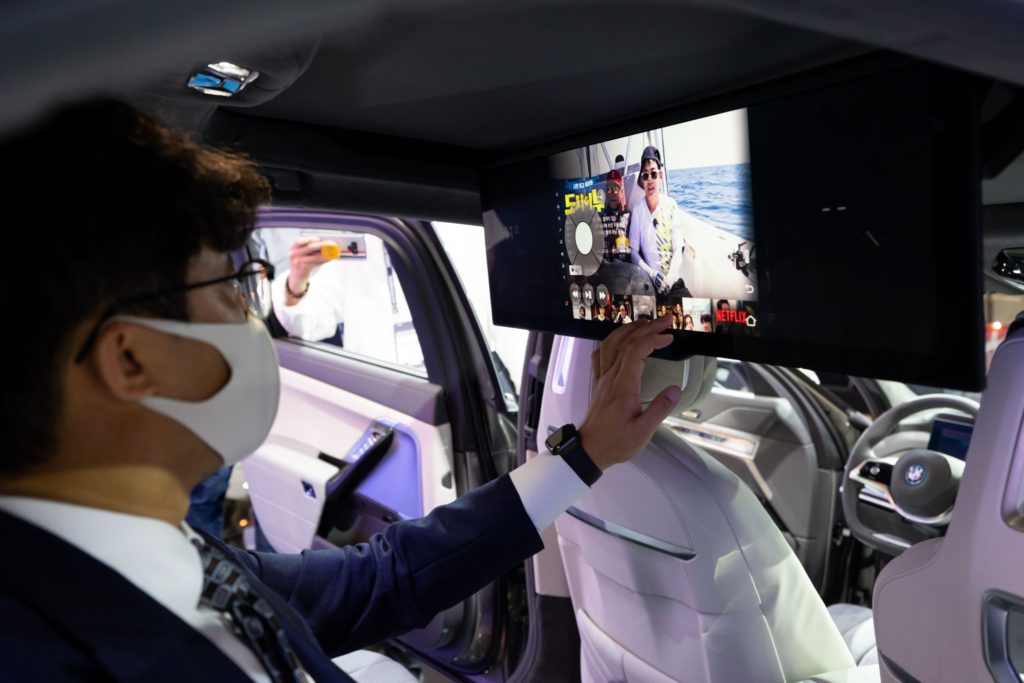
BMW has taken flak for weeks after beginning to sell owners in certain markets subscriptions to heat their seats. The backlash has been reminiscent of the initial recoiling in the gaming industry in the early 2000s, when Maryland-based developer Bethesda began squeezing more money out of customers who’d purchased the latest version of The Elder Scrolls, one if its most popular series. Gamers were nonplussed about paying $2.50 to put unprotective shields on their player’s equine. The phrase horse armor became shorthand for useless or overpriced downloadable content.

Controversial as this was, gamers bought and bought some more. Today, micro-transactions are a staple of the gaming industry, generating billions of dollars of extra revenue and profit.

BMW is betting the maelstrom over its heated-seat subscriptions shall pass. Some of the fuss had to do with a database mistake in South Korea, where seat-heating is standard in new BMWs and therefore wouldn’t need unlocking. Drivers there who got the offer to subscribe to the functionality anyway were understandably fuming. The company apologized, quickly fixed the issue and has clarified that customers in other markets who’ve paid for seat-heating when buying their BMWs won’t have to repay for it.

The automaker will, however, stick with its strategy to offer certain services reliant on hardware built into its vehicles for a fee, a spokesman said. In the UK, for example, owners can pay £15 ($18) to warm their bottoms for one month, £150 for a year or £250 for three years. Unlimited seat-heating costs £350.

BMW sees these sorts of services becoming serious revenue generators, eyeing some €5 billion in sales this decade from its digital offerings.

And it isn’t alone. Over-the-air software updates for cars that were pioneered by Tesla years ago hold the promise of a financial relationship with customers extending beyond the point of sale. Stellantis is targeting €20 billion of extra revenue from software-driven features in its vehicles by the end of the decade. Volkswagen has been on a software-talent hiring binge and has a pay-as-you-go model in mind.

BMW says its micro-transaction strategy offers greater flexibility. Customers can activate a feature like seat-heating only during the winter, or upgrade a used BMW that didn’t have the functionality when it was first purchased. Drivers can also test out offerings in its ConnectedDrive store before deciding to purchase them either temporarily or for good. In the future, the carmaker envisions allowing customers to unlock entertainment or higher drivetrain performance, even just for single trips.

“We know from our customers that their mobility demands are not as static as they used to be,” BMW spokesman Torsten Julich said.

That may be so, but the bad press BMW has gotten nevertheless shows the perils of presenting new digital services without careful explanation. The company has been through this before, getting grief for briefly offering Apple’s CarPlay on a subscription basis in 2019 before backing off. It was skewered last year merely for evaluating the heated seat as a service idea, then went ahead with it anyway.

Tesla hasn’t been perfect, having charged hefty amounts for driver-assistance features that haven’t lived up to their billing. But the electric-car maker has gotten a lot right in this domain. Owners routinely turn on their car to find it was updated for free since they last slipped into the driver’s seat. Some of these features have been silly — fart noises, for example — but others have seriously enhanced performance. When Amazon increases the price of a Prime membership, it largely doesn’t faze consumers because the company is constantly adding new movies, music, e-books and more.

It’s clear BMW and its peers have more to learn about what customers are willing to pay for, and what they should get for free after having made what is typically a consumer’s the second-most costly purchase, after a home.

More stories like this are available on bloomberg.com

©2022 Bloomberg L.P.
Alibaba Sales Better Than Feared in Defiance of Economic Turmoil

(Bloomberg) — Alibaba Group Holding Ltd. posted better results than many investors feared, avoiding a sharp sales contraction despite a rocky Chinese economy that’s sapping consumer sentiment nationwide.

Its revenue slid for the first time on record in the June quarter, albeit by a fractional amount that was less than analysts projected. The contraction marked an official end to a decade of sizzling growth for China’s internet giants, which began to wind down in 2021 when regulators slapped curbs on a range of sectors from e-commerce to social media.

China’s e-commerce leader reported revenue of 205.6 billion yuan ($30.4 billion) in the June quarter, enough to beat projections for 204 billion yuan. Net income fell 50% to 22.7 billion yuan. Its shares rose more than 3% in pre-market trading in New York.

Alibaba is still grappling with the economic fallout from nationwide Covid-related lockdowns and a near-economic contraction in China. Smaller rival JD.com Inc., which escaped the worst of the crackdown, is overtaking Alibaba in sales growth, while up-and-coming competitors such as ByteDance Ltd. to Pinduoduo Inc. are drawing more users away.

Click here for a liveblog of the earnings.

Jack Ma’s Ant See Profit Fall 17% After Regulatory Setback

It’s also managing a series of run-ins with regulators. These range from antitrust fines to tax evasion probes, but have culminated in China’s largest recorded cybersecurity breach, which experts linked to Alibaba’s cloud business. That division grew sales 10% in the quarter, the slowest pace on record. 

Abroad, the US added Alibaba to a growing roster of companies facing removal from US stock exchanges, because of Beijing’s refusal to permit American officials to review their auditors’ work. The company is seeking a primary listing in Hong Kong that would enable it to tap more mainland investors, while also maintaining its listing status on the New York Stock Exchange. 

Once the most valuable company in China, Alibaba has seen its market value tumble after Beijing launched its sweeping crackdown on the private sector more than a year ago. The government forced Alibaba’s finance affiliate, Ant Group Co., to call off what would have been the world’s largest initial public offering in 2020, and then launched reforms that have undercut Alibaba’s business model.

Following a ferocious crackdown on the country’s most prominent billionaires, Alibaba’s co-founder Jack Ma has made significant concessions to appease Beijing. Last week, Ant said in a filing that Ma will cede control over the fintech arm and reduce his Ant shareholding over time to a percentage that does not exceed 8.8%. He currently holds 50.52% voting rights in Ant.

The move, likely to reduce some of Alibaba and Ant’s regulatory headwinds, has weighed on Alibaba shares, on fears that a leadership change could further delay Ant’s initial public offering.

What Bloomberg Intelligence Says

“While the fall (in customer management revenue) could narrow sequentially in 2Q as fewer Covid curbs lifts sentiment among businesses and consumers in China, Alibaba will likely struggle to stem a margin decline as lingering concerns about the spread of Covid-19 and a slowing Chinese economy raise the need for more merchant support and shoppers’ incentives on Taobao and Tmall through September.”

– Catherine Lim and Tiffany Tam, analysts

Click here for the research.

Revenue from Alibaba’s core China commerce division slid 1% during the quarter — the first contraction on record.

In response to slowing growth, Alibaba said in May it will take a “more disciplined” approach to spending and scale back expenses in areas that aren’t generating long-term value. This shift — in line with Beijing’s incentives — marks a major shift from the aggressive and wide-ranging market-share grab that characterized the e-commerce giant in the past.

Adjusted earnings per ADS of 11.73 yuan beat estimates for 10.33 yuan, reflecting those efforts.

“While Alibaba has indicated that it will be focusing on costs, I think the magnitude of its leverage still surprised the market,” said Vey-Sern Ling, an analyst with Union Bancaire Privée. “There will be positive read-through for the rest of China internet companies who will have similar cost focus, especially given the new regulatory environment.”

Alibaba has also turned increasingly outward, building Southeast Asian arm Lazada, Trendyol in Turkey and Daraz around South Asia into important units of the company. Alibaba has outlined a long-term goal of quintupling Lazada’s gross merchandise value, the sum of transactions across its platforms, to $100 billion.

More stories like this are available on bloomberg.com

©2022 Bloomberg L.P.
Goldman, Bernstein Strategists Say Stocks Rally Set to Fade

(Bloomberg) — The recent brisk rebound in equity markets won’t last as macroeconomic data continue to deteriorate and earnings forecasts are being slashed, strategists at Goldman Sachs Group Inc. and Sanford C. Bernstein warn.

“Without clear signs of a positive shift in macro momentum, temporary re-risking could actually increase risks of another leg lower in the market rather than signal the end of the bear market,” Goldman strategists led by Cecilia Mariotti wrote in a note dated Aug. 4.

With investors once again flocking to equities in recent weeks, Goldman strategists said market positioning has improved from a very bearish level seen in June, and the swing in asset allocation could fuel the rally in the short term. But ultimately, the strategists said they’re “not convinced that we are past the ‘true’ trough in positioning just yet, and we think the path from here is likely to become more dependent on macroeconomic data.” 

Bernstein strategists Sarah McCarthy and Mark Diver said in a note on Thursday that the earnings downgrade cycle is just starting along with outflows from stock funds. While investors have stopped buying equities in the second quarter, funds haven’t yet seen a reversal of the “huge” inflows of $200 billion seen in the first quarter, they said.

Read More: Bernstein Disagrees With BofA Survey on Capitulation

“We expect another leg down in the market in the short run,” Bernstein strategists wrote.

European and US stock markets in July posted their biggest monthly gains since 2020 as investors turned optimistic about corporate earnings proving resilient to surging inflation and a glum consumer outlook, while weaker economic data increased bets on a dovish pivot by the Federal Reserve. The drop in bond yields has fueled a 19% bounce in the Nasdaq 100 from its June lows. 

Read More: Bulls at Risk of Falling Prey to Bear Market Rally, Charts Show

But with Federal Reserve leaders pledging to continue an aggressive fight to cool inflation despite recession risks, strategists have cautioned against assuming a sustained recovery in stock markets. And although corporate earnings have been much better than feared this season, the likes of Morgan Stanley and Bank of America Corp. strategists have said that profit estimates will need to see much stronger cuts before stocks can find a true low.

Berenberg strategists Edward Abbott and Jonathan Stubbs also warned of the threat to equities from weaker earnings to come. The strategists’ top-down model showed corporate earnings are likely to fall 15% to 20% year-over-year as margins come under pressure, they wrote in a note dated Aug. 3.

DayByDay technical analyst Valerie Gastaldy said on Thursday investors should take profits on the rally as “from now on, what happens is very uncertain.” The S&P 500 is at the most appealing level for bears to sell again, she added.

(Updates with comments from DayByDay in final paragraph)

More stories like this are available on bloomberg.com

©2022 Bloomberg L.P.

The Electrification of Transport Is Happening in Odd and Interesting Places

(Bloomberg) — Some of the best zero-emission solutions are hidden from public view. One of them is a weird-looking, one-trick pony called a yard truck.

“They have a lot of different names: yard dogs, mules, switchers or spotters,” said Kurt Neutgens, chief technology officer of Orange EV, a Kansas City, Missouri-based company that manufactures yard trucks for warehouse operators, including companies like DHL. 

The yard dog’s job is simple: It moves trailers from a warehouse where they are filled up to its parking lot, readying each trailer to be attached to a fossil fuel-guzzling semi-truck and moved around the country. Almost every one of the tens of thousands of warehouses in the US has yard dogs, typically between two and 10 units, and almost all of them run on diesel.

Neutgens, a former Ford auto engineer, wanted a better solution. “I did math models of every vehicle type out there,” he said, trying to suss out if an electric model would be economically feasible. As it turns out, an electric yard truck “made sense financially and technologically from the get-go 12 years ago,” he said. “It was ready.” So in 2012, Neutgens and friend Wayne Mathisen pooled $50,000 of their savings to launch Orange EV. Mathisen is now chief executive officer.

Convincing warehouses to switch to electric wasn’t as easy. First, the upfront cost of an Orange EV yard dog is $200,000 or $300,000, depending on the battery size, compared to diesel varieties that cost about $100,000. Second, no one had used an electric one before.

Mathisen had longer-term economics on his side. Even at pre-pandemic diesel prices, he says Orange EV’s yard dogs can save $50,000 each year in fuel costs alone. Orange EV also built proprietary charging equipment that makes it possible to charge the trucks during drivers’ breaks.

In 2015, with five employees, Orange EV sold its first unit. Marketing and word of mouth helped grow the company, and Mathisen says the company was profitable by 2016. This year, Orange EV has 170 employees and will sell 200 yard dogs, each of which avoids 1,700 tons of CO2 emissions. The drastic reduction in air pollution from avoiding burning diesel brings additional benefits to warehouse employees.

Already, some US states are offering subsidies for electric yard dogs — as much as $150,000 per unit — which makes the switch a no-brainer if a warehouse can handle the upfront investment to replace the entire fleet. But Orange EV says it doesn’t need to rely on the subsidies: More than 60% of its sales last year didn’t include them. The competition is also taking notice, as TICO, Autocar and other makers of diesel-powered mules announce electric versions. 

To fuel its own ambitions, Orange EV announced today that it has secured $35 million from S2G Ventures — its first large outside investor. Some 5,500 yard trucks are sold in North America annually, and Orange EV’s goal is to make as many as 1,500 units a year. That sum won’t be enough money to fund a new factory entirely, but it will be enough to get the company to the next stage before it has to raise more money.

And why orange? “Everything back then was green, green, green. Our philosophy was: ‘You’re going to buy this because it’s a better truck.’ We wanted to get away from: ‘You’re going to buy this because it’s good for the environment,’” said Neutgens. “But it’s also a great standout color. We didn’t have a whole lot of marketing dollars, so we thought it was probably good that everybody noticed our trucks.”

More stories like this are available on bloomberg.com

©2022 Bloomberg L.P.
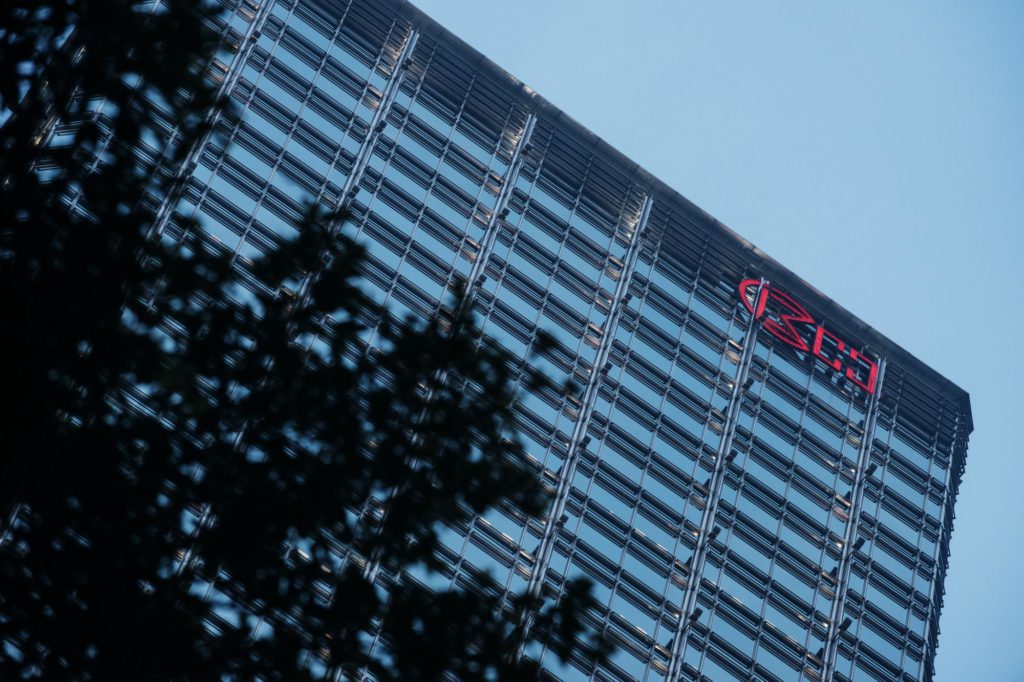
Li Ka-shing’s Flagship Sees Profit Rise, Warns of Recession Risk

(Bloomberg) — CK Hutchison Holdings Ltd.’s profit rose 4.3% in the first half of this year, boosted by its global operations even as the conglomerate founded by billionaire Li Ka-shing warned of rising risks from a worldwide recession. 

The flagship company of the CK Group reported net income of HK$19.09 billion ($2.43 billion) for the six months through June, according to a statement Thursday. Total revenue advanced 8.1% to HK$229.6 billion from the same period last year. It raised the interim dividend to HK$0.84 a share, compared with HK$0.80 a year before. 

CK Hutchison, with interests across telecommunications, retail, ports, real estate and infrastructure, relies on Europe for more than half of its revenue and on China for about 20%. The globally diverse portfolio makes it more resilient to regional risks, with a post-virus recovery in most parts of the world helping to counter the impact of Covid Zero lockdowns in China. 

The company still faces challenges from ongoing supply chain disruptions as well as its heavy reliance on Europe at a time when the euro and British pound are slumping against the US dollar. That’s hurting the company’s bottom line as it reports earnings in the US dollar-pegged Hong Kong currency. 

“Expectations for growth this year and next have been and are being revised substantially downward, with heightened risk of recessions expected in several of the markets in which the group operates,” Chairman Victor Li, Li Ka-shing’s eldest son, said in the statement. He added that the group is well-placed to maintain a growth trajectory and keep delivering solid performance.

Source: Company filing

Since March, recurring Covid outbreaks across China have seen the country shutting down its larger cities including Shenzhen and Shanghai, gutting the local economy with store closures and logistics disruptions. 

China Cities Toughen Covid Steps to Avoid Shanghai’s Woes

CK Hutchison’s China health and beauty operations, which accounted for 13% of its retail revenue last year, have been battered by the movement curbs. It reported a 60% fall in earnings before interest, taxes, depreciation and amortization, or Ebitda, in the first half of the year.

The solid performance in Europe and the rest of Asia, however, was a silver lining. The entire retail segment reported a 10% fall in Ebitda for the first half of the year. 

Globally, a stronger dollar remains one of the group’s major challenges. Based on its 2021 results, a 10% depreciation in the British pound against the US dollar would lead to an Ebitda decline of about HK$2.5 billion, Citigroup analysts led by George Choi wrote in a report in June, citing management estimates. A similar depreciation in euro would result in an Ebitda fall of HK$3.1 billion, Choi wrote.  

Reinvigorate Prospects

The group’s stock price has persistently underperformed this year, trading 31% below analysts’ 12-month consensus target price.

The company will pursue telecom consolidation opportunities and was in talks with competitors in places including the UK, Sweden and Denmark, Canning Fok, co-managing director, said at an analyst briefing Thursday. He didn’t elaborate on the nature of deals. 

To reinvigorate growth prospects, CK Hutchison and the wider CK Group have also been monetizing some of their assets. 

Li Ka-shing’s CK to Sell AMTD Stake After Unit Soars 14,000% 

The UK’s antitrust authority in March cleared CK Hutchison’s sale of its British mobile masts, paving way for the completion of a larger sale of its European towers to Cellnex Telecom SA for 10 billion euros ($10.2 billion) that was announced in 2020. The deal is expected to complete in August 2022, the company said in the Thursday statement. 

Last month, the CK Group agreed to sell a minority stake in its UK utility Northumbrian Water to KKR & Co. for 867 million pounds ($1 billion). The deal is expected to add gains attributable to CK Hutchison’s shareholders of about HK$1 billion. 

London Building

In March, the group’s real estate arm CK Asset Holdings Ltd. agreed to sell the landmark building that’s been UBS Group AG’s London headquarters for $1.6 billion. CK Asset disposed of its aircraft-leasing business for $4.28 billion late last year, exiting an industry that’s become especially volatile and unpredictable during the Covid-19 pandemic. 

CK Asset posted a 55% rise in net income to HK$12.9 billion. It raised dividend to HK$0.43 per share from HK$0.41 last year, the firm said in a statement Thursday.

The outlook for the real estate arm is gloomy. Hong Kong’s residential property market is under pressure due to rising interest rates and a stagnant housing investment demand. Home sales in July fell 57% in value from the year before, government data show. Goldman Sachs Group Inc. expects home prices to drop 20% slump by 2025. 

A weakening local economy and slump in IPOs is subduing demand for office spaces and hurting CK Asset’s office leasing business.

Hong Kong Island’s grade A office vacancy climbed to 10.1% — the highest since 2006 when Centaline Property Agency Ltd. started tracking the data. Demand slack and excess supply is going to make it harder for CK Asset to lease its new office tower Cheung Kong Center 2 at high rents.

(Updates with details throughout.)

More stories like this are available on bloomberg.com

©2022 Bloomberg L.P.
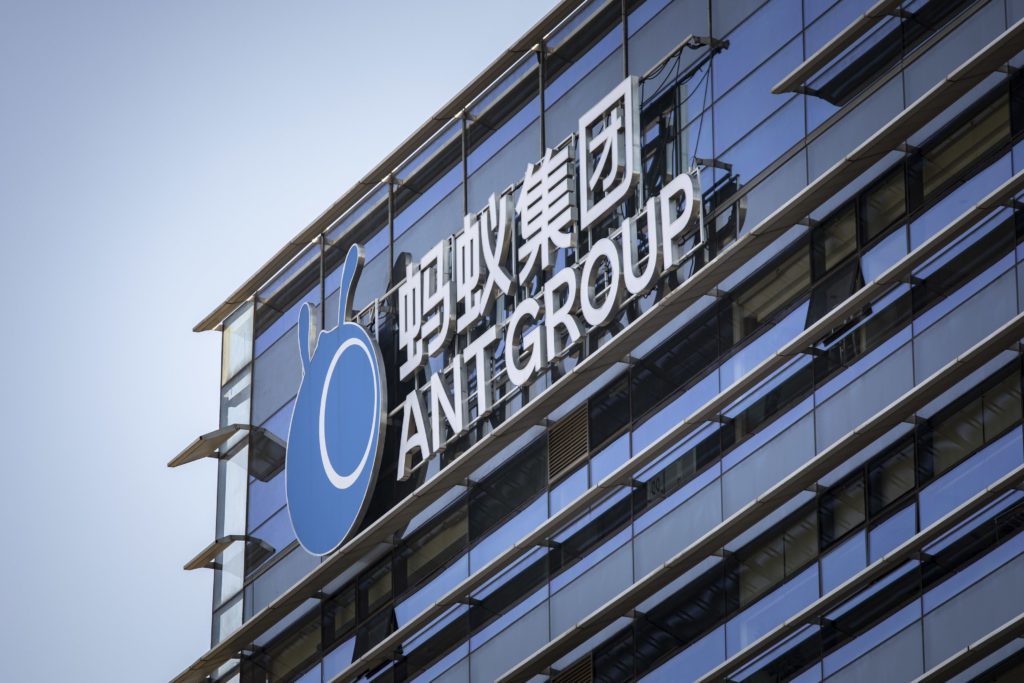
Jack Ma’s Ant Sees Profit Fall 17% After Regulatory Setback

(Bloomberg) — Billionaire Jack Ma’s Ant Group Co. saw profit growth fall in the three months ended in March as it reels from the pain of a sweeping overhaul ordered by regulators.

The Hangzhou-based company contributed 3.7 billion yuan ($547 million) to Alibaba Group Holding Ltd.’s earnings, a filing showed Thursday. Based on Alibaba’s one-third stake in Ant, that translates to an estimated 11.2 billion yuan of profit for Ant’s March quarter, down 17% from a year earlier. Ant’s earnings lag a quarter behind Alibaba’s. 

Ant declined to comment in an emailed. 

The fintech giant has been restructuring its operations to meet a list of demands from Chinese regulators over the past year, including beefing up capital, curbing consumer lending, and shuffling its management. Ma is also considering ceding his control of 50.52% voting rights in the firm, people familiar have said. 

In a filing in July, Alibaba reiterated that Ma “intends to reduce and thereafter limit his direct and indirect economic interest in Ant Group over time” to a percentage that does not exceed 8.8%. 

China kicked off a campaign to rein in its tech businesses after snuffing out Ant’s planned $35 billion initial public offering in late 2020. The crackdown has snowballed into an assault on every corner of China’s technosphere as Beijing seeks to end the domination of a few heavyweights and create a more equitable distribution of wealth.

As part of the government-ordered restructuring, Ant has ramped up its capital base to 35 billion yuan. It is also building firewalls in an ecosystem that once allowed it to direct traffic from Alipay, with a billion users, to services like wealth management, consumer lending and delivery. Alibaba also removed Ant executives from its important partnership committee, a group of people who can nominate the majority of the board. 

Consumer loans jointly made with banks have been split from Ant’s Jiebei and Huabei brands. Assets under management at its proprietary money-market fund Yu’ebao — once the world’s largest — dropped about 35% from a peak in March 2020 to 813 billion yuan as of June. 

Still, Ant is yet to apply for a financial holding company license to be regulated like a bank — a major move widely seen as an indication on whether it has satisfied Beijing’s requirements and that may set the stage for a resumption of its share sale. 

Its affiliate Alibaba logged better-than-projected quarterly revenue. Revenue came to 205.6 billion yuan in the June quarter, versus the average projection for 204 billion yuan. Net income fell 50% to 22.7 billion yuan. 

More stories like this are available on bloomberg.com

©2022 Bloomberg L.P.
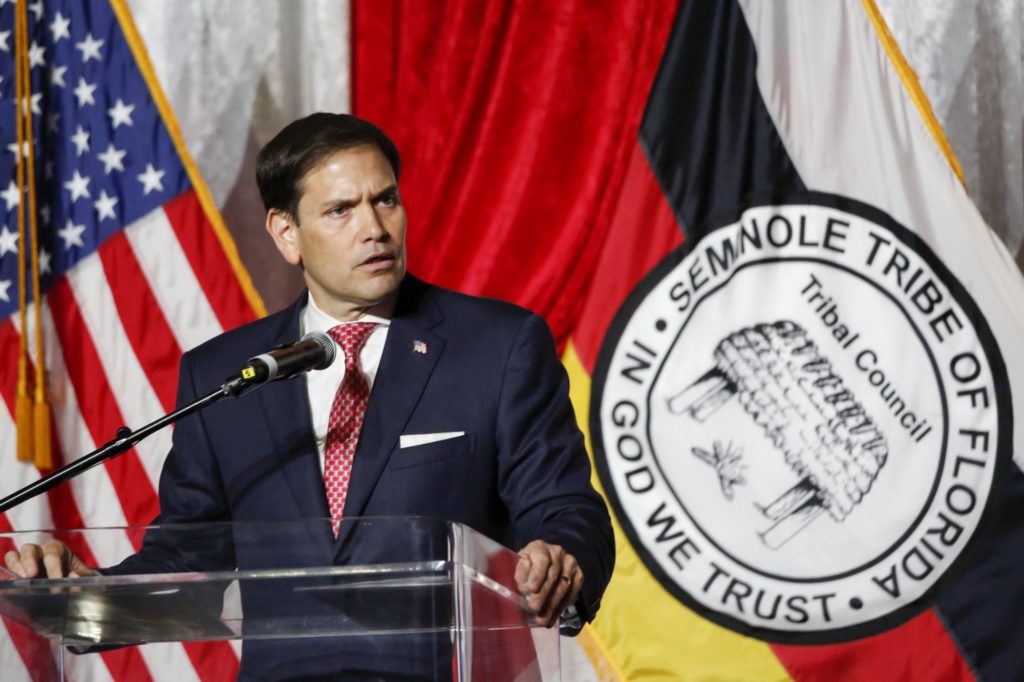
Fake Marco Rubio Letter Part of Pro-China Campaign, Report Says

(Bloomberg) — Multiple news websites and social media accounts that claim to be independent have links to a Chinese public relations firm, according to the security firm Mandiant Inc. Some of them have allegedly published fabricated content, including a fake letter from a US senator.

Mandiant said it detected 72 news sites and several social media accounts that are part of an propaganda effort intended to “disseminate content strategically aligned with the political interests of the People’s Republic of China.” The campaign focused on political enemies of the Chinese government, the Xinjiang region and criticism of the U.S., the report said.

The websites, which present themselves as U.S. news outlets, were built using Chinese code, according to the report. Mandiant announced in March that it is being acquired by Google, a deal that is expected to close by the end of the year.

In one instance, a Twitter account linked to the campaign posted a fabricated letter purporting to come from the office of US Senator Marco Rubio, the Republican from Florida. It was addressed to Adrian Zenz, a prominent critic of the Chinese government’s systematic imprisonment of Uyghurs in Xinjiang. The letter falsely claimed that Zenz received financial support from Rubio and right-wing political operative Steve Bannon.

The Chinese Embassy in the US didn’t respond to a request for comment. 

“I am not surprised that I was targeted by China once again,” Rubio said, in a statement provided to Bloomberg News. “It is important to expose these networks. Even sloppy efforts can cause confusion, and you can be certain the Chinese Communist Party will continue to slander its opponents in increasingly sophisticated ways.”

Neither Zenz nor Bannon responded to messages seeking comment.

The campaign, which Mandiant dubbed HaiEnergy, wasn’t particularly successful, failing “to generate substantial engagement outside of the inauthentic amplification that we have identified,” the researchers said. What makes this campaign stand out among past information operations linked to China is the involvement of a public relations firm, Mandiant said. The report didn’t directly link any of the inauthentic activity to the Chinese government.

The public relations firm, Shanghai Haixun Technology Co., hosted the domains used in the campaign, according to Mandiant, though researchers couldn’t determine if the Chinese firm was aware of the full extent of the propaganda effort. On its website, Haixun offers content creation for “positive energy” geared toward English-speaking audiences. It purports to offer content creation in over 40 different languages.

A representative for Haixun said Mandiant’s claims were “nonsense” and that the campaign described in the cybersecurity firm’s report didn’t exist. Haixun was just a media distribution platform that worked with Chinese companies, the representative said when reached by phone. 

China’s government has repeatedly denied claims it was behind cybersecurity attacks, saying the US was a bigger violators.

“We do know now that the private sector is involved to some extent in this game,” said John Hultquist, vice president of intelligence analysis at Mandiant. “Even though right now this isn’t the most effective program, they’re clearly invested in it, and I think that the geopolitical realities are such that we have to keep a close eye on it.”

By leveraging a public relations firm to publish inauthentic articles and social media posts, Hultquist said, it gives the perpetrators the ability to obscure their responsibility. “I think more and more players are going to rely on firms like this to do these types of operations,” he said.

More stories like this are available on bloomberg.com

©2022 Bloomberg L.P.
CK Hutchison Posts Profit Rise as Global Assets Hedge Risks

(Bloomberg) — CK Hutchison Holdings Ltd.’s profit rose 4.3% in the first half of this year boosted by its global operations even as the conglomerate founded by billionaire Li Ka-shing warned of rising risks from a global recession. 

The flagship company of the CK Group reported net income of HK$19.09 billion ($2.43 billion) for the six months through June, according to a statement Thursday. Total revenue advanced 8.1% to HK$229.6 billion from the same period last year. It raised the interim dividend to HK$0.84 a share, compared with HK$0.80 a year before. 

CK Hutchison, with interests across telecommunications, retail, ports, real estate and infrastructure, relies on Europe for more than half of its revenue and on China for about 20%. The globally diverse portfolio makes it more resilient to regional risks but  A pivot to living with the virus in most parts of the world helped counter Covid Zero lockdowns that hurt business in China. 

The company still faces challenges from ongoing supply chain disruptions, risk of global recession as well as its heavy reliance on Europe at a time when the euro and British pound are slumping against the US dollar. That’s hurting the company’s bottom line as it reports earnings in the US dollar-pegged Hong Kong currency. It also cautioned against macroeconomic headwinds as fears of a global slowdown loom. 

‘Revised Downward’

“Expectations for growth this year and next have been and are being revised substantially downward, with heightened risk of recessions expected in several of the markets in which the group operates,” Chairman Victor Li, Li Ka-shing’s eldest son, said in the statement. He added that the group is well-placed to maintain a growth trajectory and keep delivering solid performance.

Since March, recurring Covid outbreaks across China have seen the country shutting down its larger cities including Shenzhen and Shanghai to break the transmission chains, gutting the local economy as it led to store closures and logistics disruptions. 

China Cities Toughen Covid Steps to Avoid Shanghai’s Woes

CK Hutchison’s China health and beauty operations, which accounted for 13% of its retail revenue last year, have been battered by the movement curbs. It reported a 60% fall in earnings before interest, taxes, depreciation and amortization, or Ebitda, in the first half of the year, the exchange filing shows.

The solid performance in Europe and the rest of Asia, however, was a silver lining, helping offset some of the pain from China. The entire retail segment reported a 10% fall in Ebitda for the first half of the year. 

Globally, a stronger dollar remains one of the group’s major challenges. Based on its 2021 results, a 10% depreciation in the British pound against the US dollar would lead to an Ebitda decline of about HK$2.5 billion, Citigroup analysts led by George Choi wrote in a report in June, citing management estimates. A similar depreciation in euro would result in an Ebitda fall of HK$3.1 billion, Choi wrote.  

Asset Sales

A lack of catalyst to the group’s performance is reflected in its stock price, which is trading 31% below analysts’ 12-month consensus target price and has changed little this year.

To add ammunition to its capital and boost growth, CK Hutchison and the wider CK Group have been monetizing some of their assets. 

Li Ka-shing’s CK to Sell AMTD Stake After Unit Soars 14,000% 

The UK’s antitrust authority in March cleared CK Hutchison’s sale of its British mobile masts, paving way for the completion of a larger sale of its European towers to Cellnex Telecom SA for 10 billion euros ($10.2 billion) that was announced in 2020. The deal is expected to complete in August 2022, the company said in the Thursday statement. 

Last month, the CK Group agreed to sell a minority stake in its UK utility Northumbrian Water to KKR & Co. for 867 million pounds ($1 billion). The deal is expected to add gains attributable to CK Hutchison’s shareholders of about HK$1 billion. 

London Building

In March, the group’s real estate arm CK Asset Holdings Ltd. agreed to sell the landmark building that’s been UBS Group AG’s London headquarters for $1.6 billion. CK Asset disposed of its aircraft-leasing business for $4.28 billion late last year, exiting an industry that’s become especially volatile and unpredictable during the Covid-19 pandemic. 

CK Asset posted a 55% rise in net income to HK$12.9 billion. It raised dividend to HK$0.43 per share from HK$0.41 last year, the firm said in a statement Thursday.

However, CK Asset’s outlook is more sobering as it points to challenging market conditions. Hong Kong’s residential property market is under pressure due to rising interest rates and a stagnant housing investment demand. Home sales in July fell 57% in value from the year before, government data show. Goldman Sachs Group Inc. expects home prices to drop 20% slump by 2025. 

A weakening local economy and slump in IPOs is subduing demand for office spaces and hurting CK Asset’s office leasing business.

Hong Kong Island’s grade A office vacancy climbed to 10.1% — the highest since 2006 when Centaline Property Agency Ltd. started tracking this data. Demand slacks and excess supply is going to make it harder for CK Asset to lease its new office tower Cheung Kong Center 2 at high rents.

(Updates with details throughout.)

More stories like this are available on bloomberg.com

©2022 Bloomberg L.P.

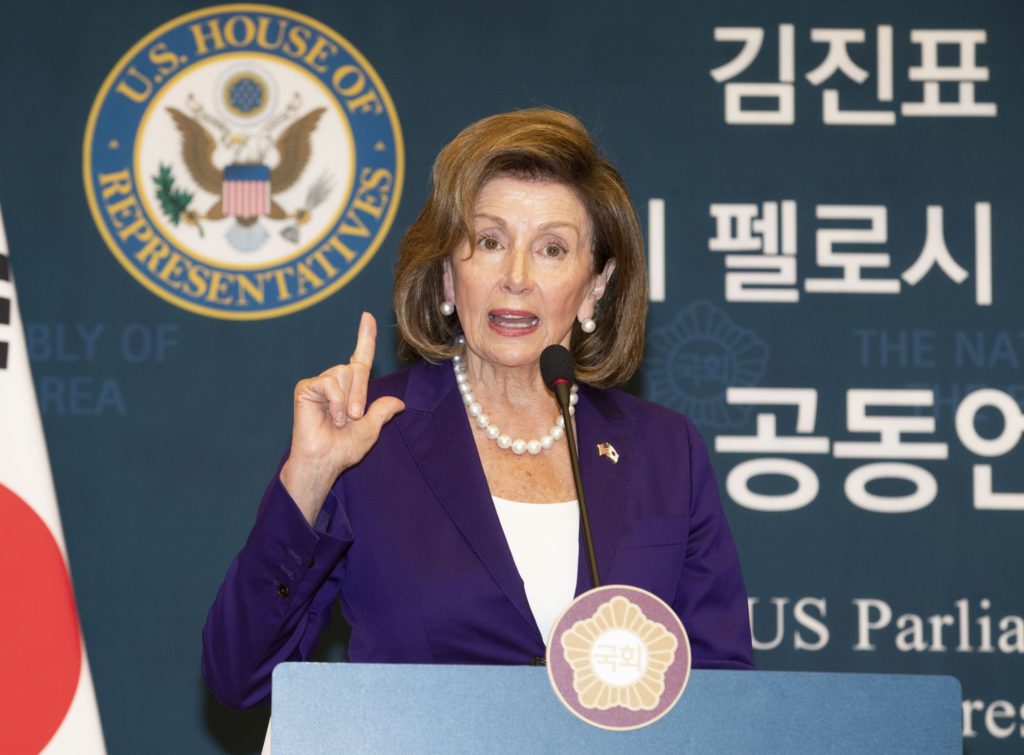
South Korea Leader Snubs Pelosi Due to Vacation, Adding to Woes

(Bloomberg) — After US House Speaker Nancy Pelosi captivated the world’s attention with a groundbreaking trip to Taiwan, she received far less fanfare on her next stop. 

South Korean President Yoon Suk Yeol, who has seen his approval rating drop to near historic depths just three months after taking office, didn’t see it necessary to greet Pelosi in person — opting for a phone call instead.

“President Yoon’s vacation schedule and Speaker Pelosi’s visit to the Republic of Korea overlapped, and we did not rearrange our schedule,” his office said in a statement. 

Yoon will likely be the only leader not to meet Pelosi during her high-stakes Asia trip, which included becoming the highest-level US official to visit Taiwan in 25 years, as well as the first sitting House speaker to visit South Korea in about 20 years.

Although Yoon has pledged to rebuild security ties with the country’s long-standing American ally and take a tough line with China, his popularity has swiftly fallen in recent weeks over numerous missteps. Putting off a meeting with one of the most powerful US politicians risks adding to the self-inflicted damage that has dogged his government since it took power in May.

“The optics look very bad,” said Duyeon Kim, an adjunct senior fellow in Seoul at the Center for a New American Security. “It could raise serious questions in Washington about Yoon’s ability to walk the talk about being a self-proclaimed globally pivotal state, a strong team player on Team Democracy, and being able to stand up to China to protect its own national interest.” 

Every other South Korean president has met Pelosi since she first became speaker in 2007, and President Roh Moo-hyun met her in 2006 during a visit to Washington. She is the first sitting House speaker to arrive in South Korea since Dennis Hastert in 2002. Pelosi is set to meet Japanese Prime Minister Fumio Kishida on Friday in Tokyo in the final leg on her trip. 

During her brief stop in South Korea, Pelosi and her congressional delegation met lawmakers at parliament in Seoul, where they agreed to work to end North Korea’s pursuit of nuclear weapons. The US and South Korea have warned that Kim Jong Un’s regime may soon conduct its first nuclear test since 2017, as he modernizes an arsenal of weapons designed to deliver atomic warheads to the US mainland and its allies in Asia.

Pelosi’s agenda also included a trip to the Panmunjom truce village in the Demilitarized Zone that divides the Koreas. The place where soldiers from the two sides stare down each other is a symbol of military tensions that have simmered since the US came to South Korea’s defense in 1950 after North Korea invaded and started the Korean War. 

Yoon Young-chan, a lawmaker for the opposition Democratic Party who served as a press secretary to Yoon’s predecessor, former President Moon Jae-in, said the decision not to meet the US House speaker “may send a wrong message to our ally.”

“It would be hard to convince both Washington and our people that he is simply not seeing Pelosi as it overlapped with his holiday schedule,” Yoon Young-chan added. The president’s office said he was watching a play the night Pelosi arrived.

Since winning a presidential election in March decided by the closest margin in the country’s history, Yoon has seen his support erode. Several major decisions have proved unpopular and touched off waves of criticism, including relocating the presidential office, announcing plans to shut the Gender Equality Ministry, giving his government more power over police and lowering the age children begin school by a year.

Yoon’s support rate hit 28.9% in a survey taken less than a week ago by the Korea Society Opinion Institute, with the approval numbers of his administration ranking among the lowest for any president since South Korea became a full democracy in 1987. Although there is ample time to reverse course in his single, five-year term that started in May, the former prosecutor’s early stumbles have raised questions about whether he can make the transition to running a government. 

Yoon has won praise from the Biden administration for bringing changes to South Korea’s security posture. That has helped the US as it looks to build alliances among partners for a united front against Russia over its invasion of Ukraine, push back against an assertive China and try to end North Korea’s atomic ambitions.

His government has also raised South Korea’s stature in international groupings such as NATO, and brought back joint military exercises with the US that had been scaled down or halted under former President Donald Trump to facilitate his nuclear negotiations with North Korea.

But Yoon’s government has waffled on joining the Biden administration’s proposed groupings such as the so-called Chip 4 alliance to safeguard the supply of semiconductors, which are vital for modern technologies and future ones like artificial intelligence. South Korean chipmakers such as SK Hynix Inc. and Samsung Electronics Co. Ltd. could be hamstrung by moves that cause a backlash from China, where the companies have production bases for memory chips. 

While having neither Yoon or his foreign minister meet Pelosi may be seen as a “diplomatic discourtesy,” it won’t cause any major damage to the alliance between South Korea and the US, according to Yang Seung-ham, a professor emeritus of political science at Yonsei University in Seoul.

“At a time when Pelosi has created controversy in Taiwan, the presidential office may have wanted to distance itself from any political conflict,” Yang said. “She is still the number three in the US, after all, and it wouldn’t have hurt Yoon to greet her in person.”

More stories like this are available on bloomberg.com

©2022 Bloomberg L.P.

Close Bitnami banner
Bitnami