

Bloomberg

Stocks Hold Gains as Traders Ratchet Up Rate Bets: Markets Wrap

(Bloomberg) — Stocks nudged higher Thursday as investors assessed the corporate profit outlook, while wagers on further Federal Reserve interest-rate hikes lifted Treasury yields.

Early gains in the Stoxx Europe 600 Index were led by retailers, leisure and technology firms, alongside an advance in shares of Chinese tech companies. US futures were little changed.

Equities are proving resilient to heightened bond market anxiety and an inverted Treasury yield curve flashing warnings on economic risks, as the S&P 500 climbs back toward the highest level in two months. But a global wave of monetary tightening risks upending those gains.

“There’s an intense tug-of-war happening in the economy and markets,” said Dan Suzuki, deputy chief investment officer at Richard Bernstein Advisors. “On one side, you have a narrative that reasonable growth is going to support continued inflation pressure and keep the Fed hiking. The other narrative is that slowing growth is going to ease inflation and allow the Fed to stop hiking.”

The pound moved in a narrow range ahead of a Bank of England interest-rate decision that’s expected to deliver a half-point rate rise, despite growing risks of a recession. 

Read more: BOE Weighs Historic Rate Rise and Recession Risk: Decision Guide

Treasuries slipped, taking the US 10-year yield to 2.73% as Fed officials indicated they were resolute on aggressive rate hikes to cool inflation. Oil hovered near $90 a barrel, hampered by demand worries. Gold advanced and Bitcoin oscillated near $23,000.  

Among individual stock moves, Glencore Plc shares fell as much as 2% as its capital return plans overshadowed solid first-half results.

US-China tension remains among the uncertainties clouding the outlook. Taiwan braced for the Chinese military to start firing in exercises being held around the island in response to US House Speaker Nancy Pelosi’s visit.

This week’s MLIV Pulse survey is asking about your outlook for corporate bonds, mergers and acquisitions and health of US corporate balance sheets through the end of the year. It takes one minute to participate in the MLIV Pulse survey, so please click here to get involved anonymously. 

What to watch this week:

  • BOE rate decision, Thursday
  • US initial jobless claims, trade, Thursday
  • Cleveland Fed President Loretta Mester due to speak, Thursday
  • US employment report for July, Friday

Some of the main moves in markets:

Stocks

  • The Stoxx Europe 600 rose 0.2% as of 10:10 a.m. London time
  • Futures on the S&P 500 were little changed
  • Futures on the Nasdaq 100 fell 0.1%
  • Futures on the Dow Jones Industrial Average were little changed
  • The MSCI Asia Pacific Index rose 0.4%
  • The MSCI Emerging Markets Index rose 0.5%

Currencies

  • The Bloomberg Dollar Spot Index was little changed
  • The euro rose 0.2% to $1.0189
  • The Japanese yen fell 0.4% to 134.36 per dollar
  • The offshore yuan was little changed at 6.7653 per dollar
  • The British pound rose 0.1% to $1.2166

Bonds

  • The yield on 10-year Treasuries advanced three basis points to 2.73%
  • Germany’s 10-year yield was little changed at 0.88%
  • Britain’s 10-year yield advanced two basis points to 1.93%

Commodities

  • Brent crude was little changed
  • Spot gold rose 0.8% to $1,778.59 an ounce

More stories like this are available on bloomberg.com

©2022 Bloomberg L.P.

Buy Crypto Now, Pay for It Later

  • Listen to Bloomberg Crypto on the iHeartRadio App
  • Listen to Bloomberg Crypto on Apple Podcasts
  • Listen to Bloomberg Crypto on Spotify  

(Bloomberg) — If you’re an avid online shopper, you’ve probably been prompted to “buy now, pay later” from companies like Klarna and Afterpay. Just as you’re about to hit “buy,” you’re offered the option of paying in installments rather than all at once, and often with the promise of no interest on those payments. These digital options skyrocketed over the last several years — and now, BNPL has come for crypto through a decentralized finance lender called Teller.

Is this a good idea? Joining this episode is Bloomberg reporter Misyrlena Egkolfopoulou to discuss.

Follow us on Twitter @crypto, and subscribe to the Bloomberg Crypto Newsletter at https://bloom.bg/cryptonewsletter

More stories like this are available on bloomberg.com

©2022 Bloomberg L.P.
China Chipmakers Rally as US Tensions Seen Fueling Support

(Bloomberg) — Shares of Chinese chipmakers are getting a boost from intensifying Sino-American tensions, as traders expect Beijing to step up support for homegrown firms to bolster the key technology.

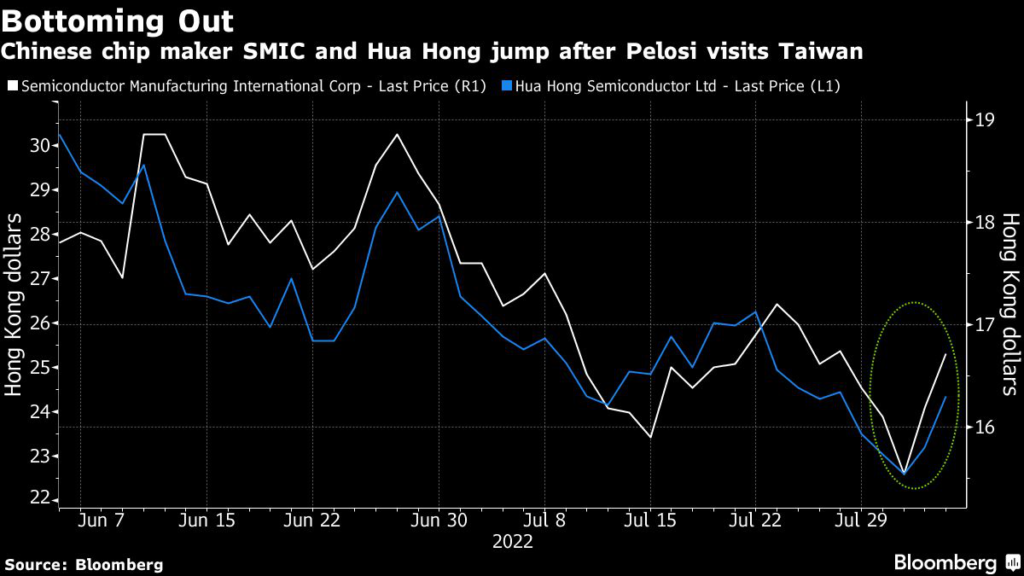
Semiconductor Manufacturing International Corp., which is China’s largest chipmaker by market value and faces US export curbs, gained 3.3% in Hong Kong, following a 4.1% jump on Wednesday. Hua Hong Semiconductor Ltd. advanced 5%. The city’s benchmark Hang Seng Index rose 2.1%. 

US officials have been accelerating efforts to curb China’s ascent in the industry, deeming chips as crucial to not only the economy but also for national security. House Speaker Nancy Pelosi’s visit to Taiwan has only worsened tensions, and will likely force Beijing to hasten local development of advanced chips, according to strategists.  

“China’s focus on supporting its domestic semiconductor chip industry should be unwavering going forward, and heightened tensions with the US will only fuel the push further,” said Vey-Sern Ling, managing director at Union Bancaire Privee in Singapore. “Directionally, the US is likely to ramp up restrictions on exports of semiconductor production equipment to China,” Ling said. 


Beijing has slammed tough sanctions imposed by the US, which limit Chinese firms’ access to advanced chip-making gear and technology. One of the latest such moves is the Chips and Science Act approved by the Congress. This bars companies that receive federal funding from materially expanding production of chips more advanced than 28-nanometers in China. 

READ: US to Stop TSMC, Intel From Adding Advanced Chip Fabs in China

Despite US efforts to counter China, the Asian nation’s chip industry is growing faster than anywhere else in the world. Nineteen of the world’s 20 fastest-growing chip industry firms over the past four quarters, on average, were from China, according to data compiled by Bloomberg in June.

“China has been accelerating development of their chip industry ever since US-China tensions began escalating with the Trump administration, and recent events add to that,” said Bloomberg Intelligence analyst Marvin Chen.  

Even with the latest rally, SMIC’s share price in Hong Kong remains less than half of its July 2020 peak, as China suffers a broad economic slowdown. SMIC is expected to report around a 30% drop in second-quarter profit next week.  

More stories like this are available on bloomberg.com

©2022 Bloomberg L.P.
Rolls-Royce’s Exiting CEO Posts Earnings Miss as Long-Haul Lags

(Bloomberg) — Rolls-Royce Holdings Plc Chief Executive Officer Warren East unveiled lackluster first-half results in his final earnings presentation while saying a mounting recovery in long-haul travel means the jet-engine maker should still hit its full-year financial targets.

The UK engineering giant posted an underlying operating profit of 125 million pounds ($152 million) for the first six months, down from 307 million pounds a year earlier and lower than predicted by analysts. 

Shares of London-based Rolls fell as much as 8% and were trading 6.9% lower as of 9:37 a.m., extending their decline this year to 31%.

Rolls-Royce has endured a slow recovery from the Covid crisis as lingering barriers to international travel hold back flights with the long-haul planes it powers, depressing both new sales and revenue from shop visits. East, who exits at the end of 2022, pointed to a 1.1 billion-pound drop in cash outflow as a sign of progress and said he sees demand accelerating later into the year.

Flying hours for wide-body engines, a key metric for vital overhaul activity, are still down 40% on pre-pandemic levels, while Rolls continues to struggle with supply-chain disruption and faces challenges including rising inflation.

Still, East reiterated full-year financial targets of low-to-mid-single digit underlying revenue growth, an unchanged operating margin and modestly positive free cash flow this year, weighted toward the second half.

Cost Concern

Agency Partners analyst Nick Cunningham said in a note that Rolls’s revival has been a slow one, and that while the first-half results should represent a “crossover point” from loss to recovery, there’s a risk that challenges could “crystallize as real costs in the meantime.”

The company sees large- and business-engine deliveries at 309 for the full year, the same as in 2021. It issued fresh guidance for the defense business, saying it expects a low double-digit margin as it boosts investment to support future growth and recent orders.

Rolls-Royce also got a boost this week from Spanish approval for the sale of its ITP Aero arm, set to generate proceeds of 1.7 billion euros ($1.8 billion).

East declined to specify challenges for successor Tufan Erginbilgic, who spent 20 years at BP Plc before joining private equity firm Global Infrastructure Partners, saying he inherits “sustainable” foundations to build on.

Narrow-Body Decision

One decision facing Erginbilgic will be whether to re-enter the market for narrow-body plane engines. East said that Rolls is “of course” interested in powering such aircraft, which represent the biggest sector in aviation, but lacks industrial capacity to address demand alone and would need a partner.

Rolls-Royce previously made turbines for single-aisle jets with Pratt & Whitney via the International Aero Engines joint venture. Pratt currently competes with the CFM International alliance of General Electric Co. and Safran SA.

Rolls said that parts and raw-material shortages are less severe in the wide-body engine sector, given its lower volumes. The company is managing to source sufficient titanium, though semiconductors used by its power-systems arm are more of an issue.

UK aerospace and defense supplier Meggitt Plc separately reported a 27% gain in adjusted first-half operating profit to £78.6 million. CEO Tony Wood, a former Rolls executive who was tipped for the top job before East got the role, said he was “encouraged by the strong recovery in passenger demand.”

The company said its £6.3 billion takeover by US rival Parker-Hannifin Corp. remains on track for completion in the third quarter after UK authorities cleared it in July.

(Updates shares in third paragraph, adds engine flying hours in fifth, analyst comment in seventh, CEO comments on narrow-body market, supply-chain issues from 11th)

More stories like this are available on bloomberg.com

©2022 Bloomberg L.P.
Alibaba Jumps Most in Six Weeks Before Earnings Amid Tech Rally

(Bloomberg) — Alibaba Group Holding Ltd. led Chinese tech stocks higher on Thursday as investors repositioned ahead of its quarterly results, though caution remained about a number of roadblocks ahead.

Shares of the e-commerce giant gained 5.2% in Hong Kong, among the best performers on the Hang Seng Tech Index, which advanced as much as 3.2%. The stock rose for two consecutive days, after a visit to Taiwan by US House Speaker Nancy Pelosi sent broader markets tumbling this week. 

Strategists Fear Pelosi Trip to Have Deeper Global-Market Impact

The rebound across tech comes as investors have started to add back exposure after pricing in too much risk earlier, according to Vey-Sern Ling, managing director at Union Bancaire Privee in Singapore. An overnight rally in Chinese ADRs also provided a boost, he added.

Investors will be laser focused on Alibaba’s forward guidance when the firm reports after hours, particularly after harsh Covid lockdowns in China during the second quarter put a drag on growth. Concerns about a slowing economy, an ongoing regulatory crackdown and heightened Sino-American tensions also complicates that outlook.

Even with the two-day rebound, Alibaba is still down more than 20% this year in Hong Kong, tracking the Hang Seng Tech Index. SoftBank Group Corp. has raised as much as $22 billion in cash through the sale of forward contracts using Alibaba shares, the Financial Times reported, which would add to selling pressure down the road if SoftBank opts against buying back the Alibaba shares.

Here are three charts showing the hurdles ahead for Alibaba’s stock: 

Analysts expect Alibaba’s April-June sales to fall 0.9% from a year earlier, marking its first-ever quarterly revenue contraction. Some analysts are also focusing on cost-cutting measures and investment spending plans in the company’s results.

Daiwa Capital Markets sees a larger sales reduction, as core commerce may “take a hit from supply chain disruptions in April-May,” analysts including John Choi wrote in note last month. 

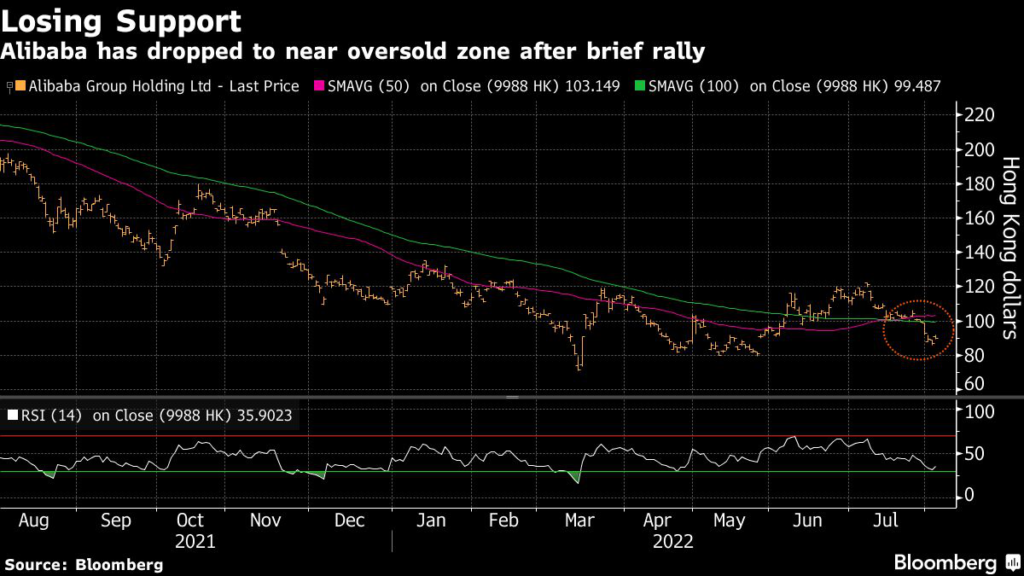
Alibaba’s more than 21% slump from a July high has put the stock near technically oversold territory. Shares have fallen below both 50-day and 100-day moving averages, which had been providing some support. A fresh regulatory penalty on past deals, a reported probe on data leaks and a soft macro economy have sent the stock tumbling. News that co-founder Jack Ma was planning to cede control of Ant Group also created uncertainty. 


Investors are trying to gauge how much Alibaba’s businesses can recover in the coming quarters after China started easing quarantine rules and vowed to support the economy. Geopolitical tensions and global recession worries have stalled a recent uptick in analysts’ profit projections, sending the company’s 12-month forward earnings estimate back toward 2019 levels.

(Updates with closing prices in the second paragraph.)

More stories like this are available on bloomberg.com

©2022 Bloomberg L.P.
Next Raises Profit Outlook as Hot Spell Spurs Fashion Buying

(Bloomberg) —

Next Plc raised its profit forecast as the hotter weather and return to formal events encouraged more Brits to buy summer clothing but warned that worsening inflation could hit consumer sentiment.

The British clothing and housewares chain said profit will be £860 million ($1.04 billion) this year through January, up from previous guidance of £850 million, according to a statement Thursday. Next stock was up about 3% at 9:08 a.m. Thursday in London. 

The retailer said even though sales rose £50 million more than expected in the second quarter as people attended weddings and parties, it does not expect that surge to be maintained, warning that inflation is likely to have a negative impact on consumer spending for the rest of the year. 

“I think people are moderating their expenditure on everything,” Chief Executive Officer Simon Wolfson said in a phone interview. “The way they are doing that in clothing appears that people are buying fewer, much better things rather than the same number of things at a lower price.”

There had been fears that clothing retailers would be badly affected as consumers, grappling with the worst inflation in decades, prioritize spending on essential items, such as food and fuel, rather than clothing. Next had lowered its profit and sales guidance in March as the war in Ukraine and higher inflation in the UK weighed on its outlook. The company is often considered a bellwether for the health of Britain’s main streets.

Next raised prices about 3.5% in the first half and this will rise to about 8% in the second half, as previously guided, said Wolfson. The higher prices in the second half may contribute to growth not being as strong as in the first, he said.

A lot of the higher input costs that Next is seeing stem from the price of freight and are particularly notable on big, bulky home products like furniture, he said.

In a departure for a retailer whose e-commerce growth has significantly dwarfed the retail store arm in the past few years, Next’s online sales were flat in the second quarter while shop sales rose. 

Next said “growth online has ground to a halt”, blaming it on a “short term reversal of pandemic trends” when more people used the internet to shop and were wary of visiting crowded places. The switch to stores from online is likely to continue through to the end of the year, said Wolfson.

Customers are also returning clothes at more normal levels after two years of “exceptionally low returns rates” during the pandemic when people buying slouchy leisurewear, rather than more fitted clothing, sent back fewer items. Next increased the charge for online returns from £2 to £2.50 in late June while other retailers such as Zara and Boohoo Group Plc have started charging customers. 

What Bloomberg Intelligence Says 

With quickening inflation squeezing consumer incomes, management’s prediction of a subdued 1% sales increase in 2H seems realistic. A return to more normal online conditions, with the return-rate back to 42%, prevents a bigger increase in expectations.”

Charles Allen, Bloomberg Senior Industry Analyst 

Next 1% Profit Boost Defies Waning Online-Retail Outlook: React

The uplift in the profit forecast “largely from the second-quarter performance, will not stop investors from focusing on a highly uncertain second-half outlook,” James Grzinic, retail analyst at Jefferies said in a note to clients. 

Next has around 500 stores in the UK and Irelandand a large domestic and international online division selling its own range of fashion, as well as third-party brands. It also uses its infrastructure network to help rival brands sell their goods online.

(Updates with CEO comments from fourth paragraph.)

More stories like this are available on bloomberg.com

©2022 Bloomberg L.P.

French Tech Startup Back Market Said to Start Early IPO Prep

(Bloomberg) — French technology startup Back Market has started early work on a potential initial public offering, as it seeks to tap into heightened demand for secondhand devices, people familiar with the matter said.

The company, which operates a marketplace for refurbished smartphones and other consumer electronics, has had informal discussions with banks about a potential listing, the people said, asking not to be identified discussing confidential information. 

Back Market is considering listing as soon as next year, though it hasn’t set a precise timeline for the potential share sale, the people said. It’s aiming for a higher valuation than it achieved in its $510 million fundraising round this year, which valued the business at $5.7 billion. 

Deliberations are in the early stages, and Back Market could opt to raise more funds from private investors before proceeding with an offering, the people said. A representative for Back Market said it’s working to improve its financial and legal procedures, though an IPO isn’t the company’s “top priority in the near future.”

Large European startups are increasingly shying away from the IPO market due to a sharp drop in valuations, particularly for publicly traded tech stocks. Investors have also turned more risk-averse due to heightened inflation and the threat of a recession, making listings more challenging. 

Technology companies that completed IPOs in Europe last year have since fallen an average 42% from their offer prices, according to data compiled by Bloomberg weighted by offer size. The number of new listings globally in the first half of this year was about half the same period in 2021, the data show. 

So-called circular economy companies that allow consumers to buy used goods have grown in popularity in recent years. German consumer-tech subscription platform Grover raised funds at a valuation of more than $1 billion in April. Vinted, the pre-owned clothes app and Lithuania’s first unicorn, raised money from investors last year at a 3.5 billion-euro pre-money valuation. 

Back Market has received funding from investors such as Eurazeo SE, General Atlantic, Generation Investment Management and Goldman Sachs Group Inc. 

(Updates to add IPO performance in sixth paragraph)

More stories like this are available on bloomberg.com

©2022 Bloomberg L.P.
Zalando Stock Jumps as Online Retailer Sees Stronger Growth

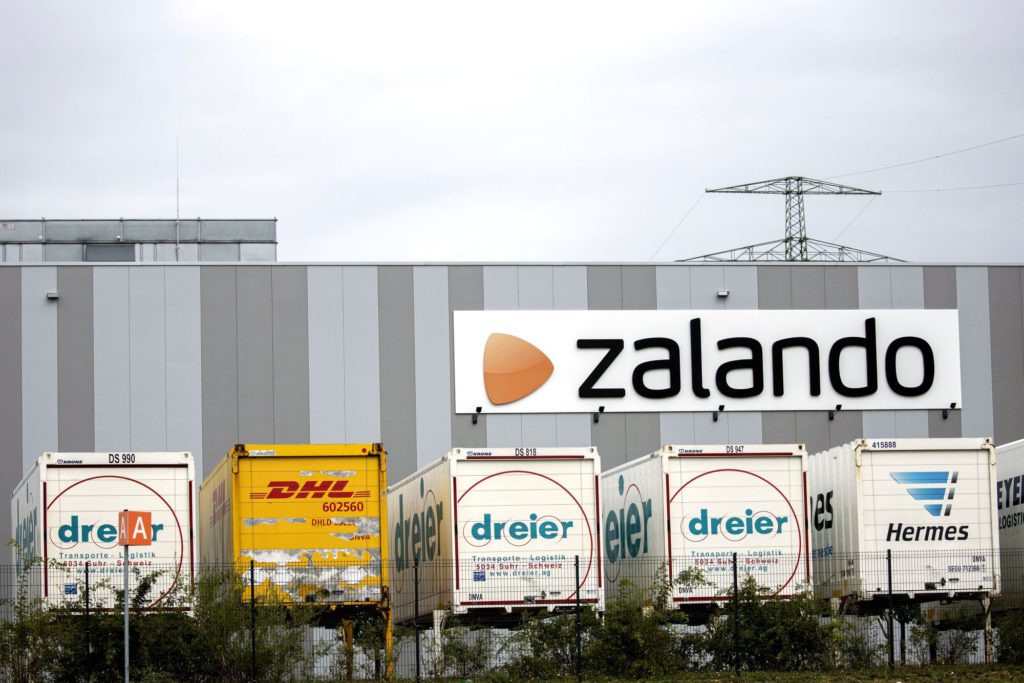
(Bloomberg) — Zalando SE rose more than 10% in early trading after Europe’s largest online fashion retailer held its full-year forecast steady and appeared to be getting a grip on managing the worst inflation in decades and volatile consumer demand. 

The German retailer now expects improved profitability and a return to growth in the second half of the year, according to a statement Thursday. 

The brighter outlook comes after Zalando negatively surprised the market in June, when it warned profit would be far below its previous guidance and forecast a new earnings range. 

The new forecast was for adjusted earnings as high as 260 million euros ($264.7 million), almost half the previous expected peak. Zalando blamed macroeconomic challenges that are likely to be “longer-lasting and more intense than previously anticipated.”

Zalando said performance had started to improve in the second quarter with the number of active customers rising and growth in its shopper loyalty program. It has introduced a minimum online purchase value in all 25 markets it operates in, which has improved the “order economics,” cut costs and improved the efficiency of its European logistics market, the company said. 

Boohoo Group Plc and Asos Plc shares also rose in early trading Thursday. 

Zalando’s results are reassuring as there had been some expectations the company could cut its outlook again, RBC analyst Sherri Malek said in a note. 

While online retailers boomed during lockdown when people had no choice but to use the internet to shop that growth has since slowed as normal shopping patterns return. Consumer demand is also volatile as rising inflation across the euro zone, which is at an all-time high, hits consumer confidence. 

Zalando sells a mix of its own brand and third-party apparel. The retailer has been aggressively expanding in the past few years. Last year, when online sales were booming, it set out a plan to corner a 10th of Europe’s fashion market estimated to be worth 450 billion euros in the long term. 

More stories like this are available on bloomberg.com

©2022 Bloomberg L.P.
Goldman, Bernstein Strategists Say Stocks Rally Can Fizzle Out

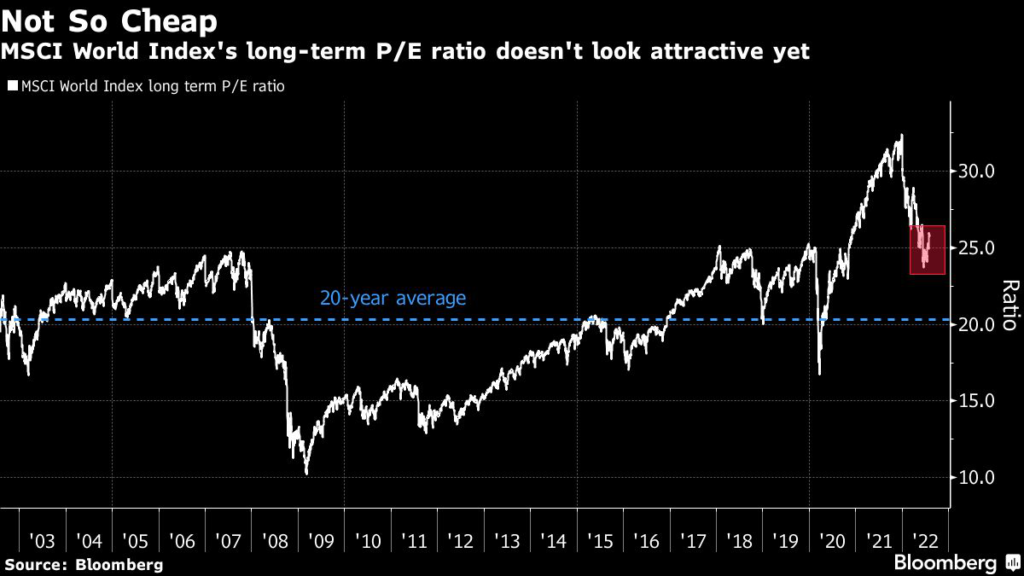
(Bloomberg) — The recent brisk rebound in equity markets won’t last as the macroeconomic data continue to deteriorate and earnings forecasts are being slashed, strategists at Goldman Sachs Group Inc. and Sanford C. Bernstein warn.

“Without clear signs of a positive shift in macro momentum, temporary re-risking could actually increase risks of another leg lower in the market rather than signal the end of the bear market,” Goldman strategists led by Cecilia Mariotti wrote in a note dated Aug. 4.

With investors once again flocking to equities in recent weeks, Goldman strategists said market positioning has improved from a very bearish level seen in June, and the swing in asset allocation could fuel the rally in the short term. But ultimately, strategists said they’re “not convinced that we are past the ‘true’ trough in positioning just yet, and we think the path from here is likely to become more dependent on macroeconomic data.” 

Bernstein strategists Sarah McCarthy and Mark Diver said in a note on Thursday that the earnings downgrade cycle is just starting along with outflows from stock funds. While investors have stopped buying equities in the second quarter, funds haven’t yet seen a reversal of the “huge” inflows of $200 billion seen in the first quarter, they said.

READ: Bernstein Disagrees With BofA Survey on Capitulation

“We expect another leg down in the market in the short run,” Bernstein strategists wrote.

European and US stock markets in July posted their biggest monthly gains since 2020 as investors turned optimistic about corporate earnings proving resilient to surging inflation and a glum consumer outlook, while weaker economic data increased bets on a dovish pivot by the Federal Reserve. The drop in bond yields has fueled a 19% bounce in the Nasdaq 100 from its June lows. 

Read More: Bulls at Risk of Falling Prey to Bear Market Rally, Charts Show

But with Federal Reserve leaders pledging to continue an aggressive fight to cool inflation despite recession risks, strategists have cautioned against assuming a sustained recovery in stock markets. And although corporate earnings have been much better than feared this season, the likes of Morgan Stanley and Bank of America Corp. strategists have said that profit estimates will need to see much stronger cuts before stocks can find a true low.

Berenberg strategists Edward Abbott and Jonathan Stubbs also warned of the threat to equities from weaker earnings to come. The strategists’ top-down model showed corporate earnings are likely to fall 15% to 20% year-over-year as margins come under pressure, they wrote in a note dated Aug. 3.

More stories like this are available on bloomberg.com

©2022 Bloomberg L.P.
SoftBank Raises $22 Billion by Selling Alibaba Derivatives

(Bloomberg) — SoftBank Group Corp. has raised as much as $22 billion in cash through the sale of prepaid forward contracts using Alibaba Group Holding Ltd. shares, the Financial Times reported, citing filings it has seen.

SoftBank has this year executed the sale of about a third of its Alibaba stake through these contracts, a type of derivatives that allows the Japanese company to raise cash immediately while retaining the possibility of holding on to the shares, the report said. 

It has sold more than half its Alibaba stake through this type of derivatives, the report said. SoftBank could shrink its stake below the threshold for retaining its board seat and prevent it from including its share of Alibaba’s income in financial statements, it added. 

SoftBank Group shares rose 2.6% in Tokyo trading, while the benchmark Topix was flat. Alibaba shares climbed 4.7% in Hong Kong following a rebound in the Nasdaq 100. The e-commerce giant is scheduled to report earnings later in the day.

This way of execution, more of a delayed approach, is better than direct sale in the market as the latter “could have certain shock on stock price in the short term,” Willer Chen, an analyst at Forsyth Barr Asia Ltd. told Bloomberg News. “Still, it is a share reduction.”

SoftBank has raised money by selling derivatives linked to Alibaba shares since at least 2016, opting for such complex transactions instead of a straight sale to reduce pressure on the Chinese company’s share price. About $13.17 billion was raised through prepaid forward contracts using Alibaba shares, from new contracts, rollovers and early termination of existing contracts in the year ended March, SoftBank said in its earnings report published in May. 

SoftBank founder Masayoshi Son was an early backer of Jack Ma’s Alibaba and the Chinese e-commerce giant remains his most successful investment by far. In recent years, SoftBank has used its stake in Alibaba shares to engage in complex derivatives transactions for purposes including hedging exposure. 

A global stock market downturn has dealt a blow to SoftBank’s earnings as the valuation of its tech investments continue to slide, raising concern over its financial stability. Son has repeatedly said SoftBank has enough cash to withstand the stock market rout, but said the value of new investments could shrink to as little as a quarter of what it was a year ago. 

Banks including Mizuho, Goldman Sachs and UBS, participated in the forward sales of 213 million Alibaba shares this year, which in most cases delay the final handover for about two years, according to the FT report. 

“Softbank has been using such ‘forward sales’ to raise fund over the last few years. The investment banks arranging this derivative product do not need to sell all the shares immediately,” said Steven Leung, an executive director at UOB Kay Hian in Hong Kong.  

(Updates with share prices in fourth paragraph)

More stories like this are available on bloomberg.com

©2022 Bloomberg L.P.

Close Bitnami banner
Bitnami
