Bloomberg

Reuters US Staff Plan to Strike for First Time in Decades

(Bloomberg) — Thomson Reuters Corp. journalists in the US are preparing to launch a daylong strike Thursday, the first walkout in decades among the media company’s long-unionized staff.

Employees plan to start a 24-hour strike at 6 a.m. New York time Thursday after claiming the company didn’t fairly negotiate pay increases, according to the Communications Workers of America’s NewsGuild, which represents US-based Reuters reporters, photographers and video journalists. The group said about 90% of the 300 or so Reuters employees it represents agreed to participate.

The news organization proposed a three-year contract with guaranteed annual pay increases of 1%, according to the union, which would erode employee spending power against a backdrop of 9% inflation. Members of the guild believe Reuters managers aren’t working with them in good faith, and have also filed a complaint with the US National Labor Relations Board. They join an expanding group of media workers that have recently pushed back against what they characterize as unfair treatment by their employers.

“In 2020 we were all asked to step up,” said energy reporter Tim McLaughlin, a member of the union’s bargaining committee. “Everyone just rose to the occasion, and we thought – wrongly as it turns out – that we would get something in return.”

In an emailed statement, Reuters said it was “fully committed to constructive negotiations with the NewsGuild” to reach a contract. “These conversations are ongoing and we will continue to work with the Guild committee to settle on mutually agreeable terms,” the company said.”

Reuters employs around 2,500 journalists in close to 200 cities total, according to its website. The guild represents employees at outlets including the Washington Post, Politico, and Bloomberg LP’s subsidiary Bloomberg Industry Group. Bloomberg LP, parent of Bloomberg News, competes with Reuters as a provider of financial news and services.

The Reuters strike comes amid a wave of increased activism and organizing among media workers. The NewsGuild has prevailed in unionization elections in recent years at publications such as the Los Angeles Times. It also mounted strikes during the past year at outlets including Buzzfeed, the Miami Herald and, during Black Friday, the New York Times Co.’s Wirecutter product-review site.

Reuters employees timed Thursday’s walkout to coincide with the company’s second-quarter earnings announcement, hoping to maximize attention from management and customers. While one-day strikes often do more to impact companies’ public image than their operations, the guild said it expects the strike to disrupt Reuters’ newsgathering work by forcing management to rely on reporters abroad or editors to cover the day’s events.

In its statement, Reuters said, “We have extensive contingency plans in place that will minimize this brief disruption and are confident that we will deliver the highest quality of service to all our customers.”

The media company said in its first-quarter earnings report in May that sales and revenue exceeded expectations, with total company revenue up 6% from a year earlier, to $1.67 billion. One of Reuters’ major customers automatically pays more due to increasing inflation, according to its 2021 annual report. The London Stock Exchange Group Plc, which purchased a data business from Reuters in 2019, will pay the media company at least $339 million per year until 2048, and “the contract requires adjustments related to changes in the consumer price index,” according to the report.

In the May earnings announcement, Thomson Reuters Chief Executive Officer Steve Hasker said the company would invest in its business and employees. But guild members, whose most recent union contract expired in late 2020, said the company hasn’t been giving back to the employees who fueled its success. 

“Most media companies are having a hard time, but that ain’t us,” McLaughlin said, adding that the attitude of Reuters employees ranges “from peeved to apoplectic.”

A 1% increase in pay would amount to an 8% decline in purchasing power, according to Heidi Shierholz, president of the Economic Policy Institute, who served as the Labor Department’s chief economist under President Barack Obama. And some economics research suggests inflation won’t ease in the near future.

“It is no surprise that workers are not OK with that,” Shierholz said. “In order to fully offset inflation, right now a big increase will be required.”

(Updates with Reuters comment starting in fifth paragraph)

More stories like this are available on bloomberg.com

©2022 Bloomberg L.P.

Telenor Thai Unit Merger Seen Delayed by Regulatory Scrutiny

(Bloomberg) — Telenor ASA’s plan to merge its Thai unit with a local mobile operator has run into fresh regulatory scrutiny and objections from a rival that it’s seeking to topple as the Southeast Asian nation’s largest carrier.     

The National Broadcasting and Telecommunications Commission said on Wednesday it needs more information on the proposed merger between Telenor unit Total Access Communication Pcl and True Corp before it can make a decision. The regulator still needs to analyse the structure of the new entity and the impact it will have on competition among other issues, Trairat Viriyasirikul, the commission’s acting secretary-general, said in a statement.

While a set of expert-panels appointed by the commission scrutinized the merger between Thailand’s second- and third-largest operators, their findings were incomplete to determine the potential impact, the regulator said. The commission hasn’t set a deadline for ruling on the planned merger.

The fresh regulatory scrutiny comes amid opposition to the combination from some consumer groups and market leader Advanced Info Service Pcl, backed by Thai billionaire Sarath Ratanavadi and Singapore Telecommunications Ltd. The opponents of the deal have raised monopoly concerns.

The Thai regulator said additional information is needed to design “measures to prevent acts that can cause monopoly or unfair competition in the telecommunication business.” 

“The recent developments suggest two possible outcomes; block the deal or give the green light with very strict conditions which might reduce the benefits of the merger,” Phatipak Navawatana, an analyst at Krungsri Securities, wrote in a note Thursday. “The conditions might include forcing the parties to sell some spectrum to newcomers in the industry and to stimulate more competition, like what happened in the US.”

Total Access, known as Dtac, and True said in a joint statement on Wednesday that the proposed merger complied with all applicable Thai laws. The companies said the regulator only needs to issue a notification to acknowledge the merger, and is not required to approve or disapprove such plans under the current rules.  

“Thailand needs two strong market players, not one strong and 2-3 weak players, which does not promote effective competition,” the two companies said in the statement. 

Tender Offer

The combined entity, valued at $7.56 billion at Tuesday’s closing price, will have more mobile subscribers than Advanced Info, the current market leader. Total Access and True, backed by Thai conglomerate Charoen Pokphand Group and China Mobile Ltd., are seeking to expand their presence in Internet and startup ventures by joining forces.

Under the terms of the proposed merger, first announced in November, True shareholders will receive 0.60018 shares in the new company for every stock held, while Total Access holders will get 6.13444 shares for every stock owned. True and Total Access will also make a tender offer for shareholders who oppose combining the two companies.

With the regulator planning more scrutiny, True and Dtac will miss a September deadline to list the new company on the Stock Exchange of Thailand. The CP Group would own 29% of the merged entity, Telenor would hold 27% and China Mobile would have 10.4% with the rest being held by minority holders, according to the proposed merger terms.

(Updates with analyst comment in sixth paragraph.)

More stories like this are available on bloomberg.com

©2022 Bloomberg L.P.

Google Defeats Lawsuit Decrying Animal Abuse Videos on YouTube

(Bloomberg) — An animal rights group failed in a legal attempt to force Google to do more to keep videos of animal abuse off its YouTube streaming platform.

Alphabet Inc.’s Google is protected by a federal law, Section 230 of the Communications Decency Act, that shields internet platforms from lawsuits based on content posted by their users, Santa Clara Superior Court Judge Sunil R. Kulkarni said in a tentative ruling Wednesday.

The group, Lady Freethinker, sued last year, accusing Google of profiting from animal abuse videos by placing ads alongside of them. Some of the offensive videos cited by the group included pythons attacking puppies.

By allowing the videos on its platform, Google was violating federal law that bars depictions of animal cruelty, Lady Freethinker said. But the judge noted the group only listed claims involving violations of state and local laws, such as breach of contract and false advertising.

“Section 230 clearly states that ‘no cause of action may be brought and no liability may be imposed under any state or local law that is inconsistent with this section,’” the judge wrote.

The case is Lady Freethinker v. Google LLC d/b/a YouTube, et al, 21CV390154, Santa Clara Superior Court (San Jose).

More stories like this are available on bloomberg.com

©2022 Bloomberg L.P.

Crypto Guidance That Banks Rely on Targeted by Elizabeth Warren

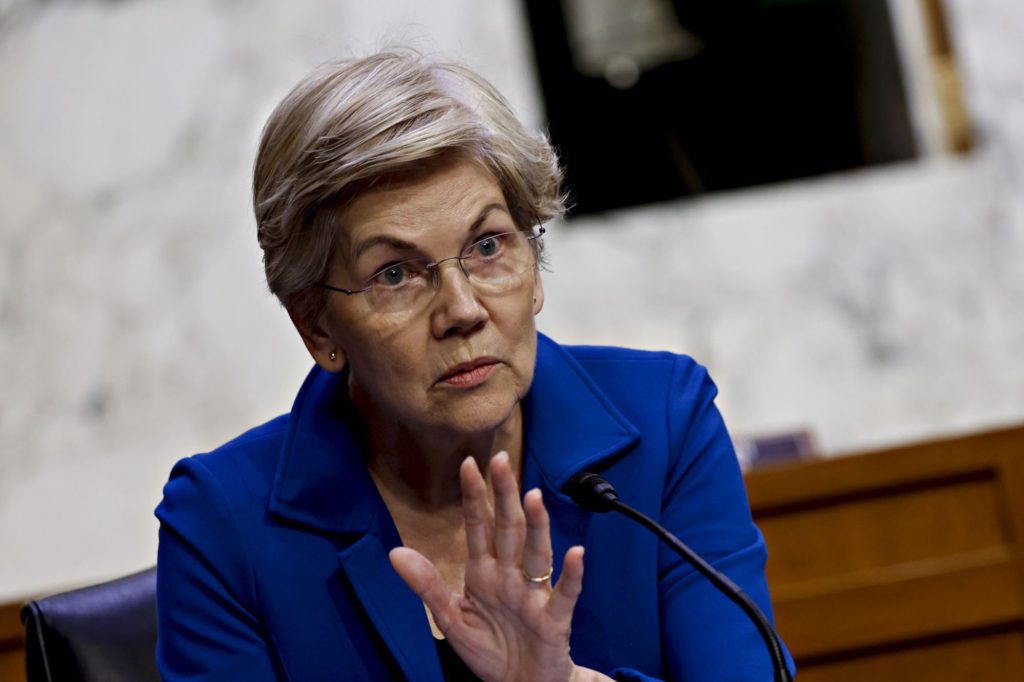
(Bloomberg) — Massachusetts Democrat Elizabeth Warren is circulating a letter among her Senate colleagues that would ask a key US bank regulator to withdraw legal guidance that has underpinned Wall Street’s foray into crypto.

Warren wants the Office of the Comptroller of the Currency to pull a series of Trump-era interpretations that paved the way for banks to offer services like crypto custody for clients. The letter, a draft copy of which was reviewed by Bloomberg News, calls on the OCC to work with the Federal Reserve and the Federal Deposit Insurance Corp. to replace them with an approach “that adequately protects consumers and the safety and soundness of the banking system.” 

Warren is currently asking colleagues to sign on to the letter, and plans to soon send a final version to OCC acting head Michael Hsu, said an aide for the senator. 

In response to a request for comment on the draft letter, an OCC representative referred to Hsu’s previous remarks, including a recent speech in which he advocated for what he called the regulator’s “careful and cautious” approach to banks trying to engage in crypto.

After several recent high-profile blowups cost investors billions of dollars, pressure has been mounting for lawmakers and regulators to clamp down on corners of the crypto market. Warren, who’s a member of the Senate Banking Committee, is among the lawmakers who have been most critical of the asset class. 

The recent turmoil, including the collapse of the TerraUSD stablecoin and bankruptcies of several digital-asset firms, has increased concern that OCC’s past actions may have exposed the banking system to “unnecessary risk,” the letter says.

The OCC under the Biden administration confirmed in November that banks can participate in certain crypto activities, but only after they’ve obtained written approval from their supervisory office. The letter says that while that updated guidance aimed to rein in risks, it didn’t go far enough to do so. 

“We are concerned that the OCC has failed to properly address the shortcomings of the preceding interpretive letters and the risks associated with crypto-related banking activities, which have grown more severe in recent months,” the letter says.

While Wall Street banks have shown more interest in crypto, they’ve still remained largely on the sidelines in part due to lingering legal questions in the US.  

The letter closes with a series of questions for the regulator, including asking the OCC to name the regulated banks that are currently offering crypto-related services and inquiring about the estimated total dollar volume of those activities. 

More stories like this are available on bloomberg.com

©2022 Bloomberg L.P.

How a Celebrity CEO’s Rule of Fear Helped Bring Down Hot Startup Zilingo

(Bloomberg) — At first glance, the implosion of vaunted fashion startup Zilingo Pte looked jarringly sudden. 

When the Singapore tech darling suspended its 30-year-old chief executive officer Ankiti Bose over complaints about alleged financial irregularities, it was March. Within weeks, creditors were recalling loans, more than 100 staff had left, and Bose found herself fired, though she denies any wrongdoing. The company’s survival is now in question.

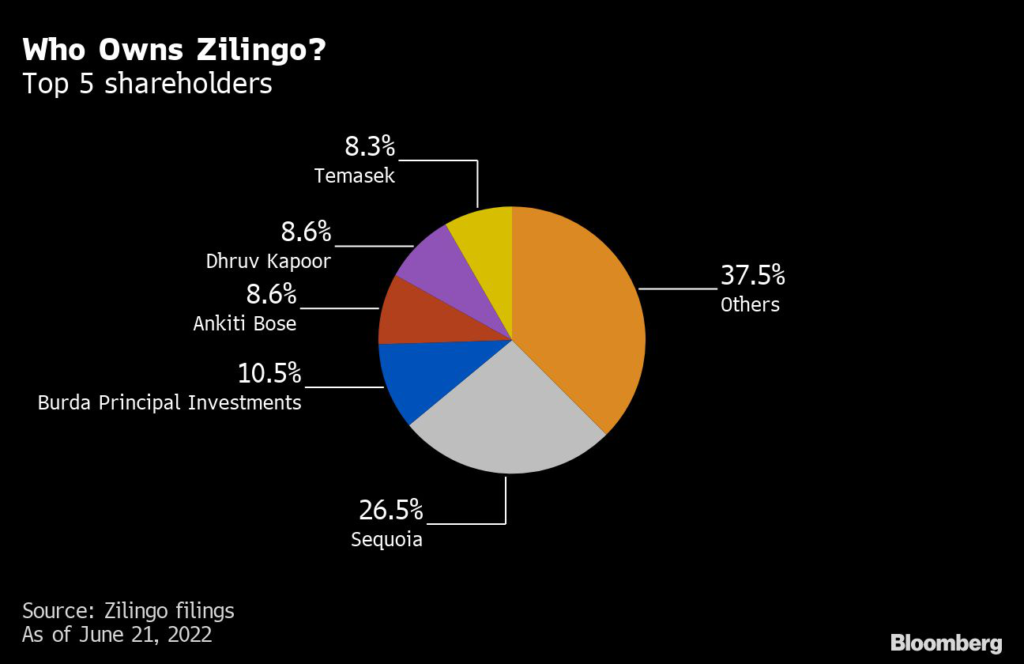
The Zilingo meltdown has rattled the tech industry in Southeast Asia and beyond. The startup had raised more than $300 million from some of the region’s most prominent investors, including Temasek Holdings Pte and Sequoia Capital India, the regional arm of the Silicon Valley firm that backed Apple Inc. and Google. Bose was a celebrity who crisscrossed the globe to speak at tech gatherings from Hong Kong to California. 

Interviews with more than 60 people, including current and former staff, merchants, investors, entrepreneurs and friends of the key players, suggest that Zilingo struggled for years under Bose’s leadership. Bose’s management style alienated employees and undermined the business, according to staff who worked under her. The startup veered from one strategy to another in pursuit of sales, including a $1 million promotional trip in Morocco, loans to customers and a short-lived push into the US. At one point, she became fixated on “crazy growth” to catch the attention of Japanese tech titan Masayoshi Son, according to two former employees with direct knowledge of the matter.

At the heart of the company’s breakdown lies the soured relationship between Bose and her longtime supporter, Shailendra Singh, head of Sequoia India. Allies for years, they fell out as financial pressures mounted. Singh lost faith in the management skills of the young founder he had championed, while Bose believed Singh betrayed her by pushing her out of her own company, according to people familiar with their relationship, who requested anonymity as the talks were private. The clash grew so acrimonious that Sequoia’s lawyers demanded in a May legal notice that Bose stop making allegations that could tarnish Sequoia’s reputation, the people said.

Zilingo’s turmoil highlights an apparent lax internal corporate governance culture that’s not uncommon in the startup industry. For two years, the company failed to file annual financial statements, a basic requirement for all businesses of its size in Singapore. Auditor KPMG LLP has yet to sign off on Zilingo’s FY20 results. While it’s not unusual for startups to miss these deadlines, which can result in a fine of up to S$600 ($430), it is typically a warning sign that firmer action may be needed by the board.

Yet, investors including state-owned firms Temasek and EDBI, put more funds into Zilingo at the end of 2020. Shareholders that together own a majority stake of the company only formally acted against Bose after whistleblower complaints were filed earlier this year.

Tech Warning

The saga has also become a warning for the region’s tech community, which is assessing the fallout of global economic shocks from Covid, to the war in Ukraine and global inflation.

“Whatever happened at Zilingo, there will be a lot more dramas in the next couple of years as the big worldwide recession impedes hot shots from raising money,” said veteran investor Jim Rogers, chairman of Rogers Holdings Inc. in Singapore. “I’ve seen this rodeo before.”

Bloomberg News reviewed dozens of internal documents, emails, texts and other media from Zilingo, and Bose sat for two extensive interviews, one before and one after her dismissal from the company on May 20. The board’s decision to fire her wasn’t abrupt, but rather the culmination of years of tension, according to the documents and people with direct knowledge of the matter.

“Board members were concerned about the company’s performance over the last few years and sought to share suggestions to address the company’s performance including cash burn,” Zilingo and its board said in a statement to Bloomberg News. “In March 2022, investors received complaints about serious financial irregularities which appeared to require investigation. With the support of the majority investor shareholders, an independent forensic investigations consultancy was appointed to look into the said complaints. After a comprehensive process lasting almost two months, including numerous opportunities for Ms. Bose to provide documents and information, the company subsequently terminated Ms. Bose for cause based on the findings of that investigation.”

Bose said the process to terminate her was an “unfair witch hunt” and denied that she was given numerous opportunities to respond to allegations. She said she hasn’t seen the investigation report, which wasn’t made public. On the board’s suggestion to implement changes, she said the team cut the cash burn by 70% between the end of 2019 and the end of 2021. “It was not easy, we did not succeed at everything,” she said in July. “It was chaotic and painful, but we did do it and we made the best effort we could.”

Read: Zilingo’s Fired CEO Responds to Questions of Mystery Payments

Zilingo’s origin story is part of Southeast Asia’s startup lore. Bose came up with the idea as she wandered through Bangkok’s Chatuchak market, where 15,000 stalls offer goods from across Thailand. She and co-founder Dhruv Kapoor wanted to build a platform that would allow such small merchants to sell to consumers across Southeast Asia.

Singh was instrumental from the start. He and Bose had worked together at Sequoia and he was happy to support one of the firm’s own. Singh had started his career in Sequoia’s Silicon Valley office, learning at the side of veteran investors Michael Moritz and Doug Leone. Singh had transformed Sequoia Capital India over 16 years into the region’s biggest venture capital firm with some $9 billion of assets under management and 36 unicorns on its scoresheet across India and Southeast Asia. 

He invested in Zilingo’s seed round in 2015, when Bose was 23 years old, and in every fundraising since. “We think the world of her,” he told a fellow VC in 2016, in an email seen by Bloomberg News.  

But like many upstarts, Bose and Kapoor faced challenges almost from the beginning. Their consumer-focused fashion site struggled because of the thin margins and low average income in Southeast Asia, a fragmented region with different languages and currencies. By late 2017, they decided to reposition Zilingo into a business-to-business platform, where small manufacturers and wholesalers could sell goods directly to small retailers in the region.

In 2018, Zilingo raised $54 million from investors. The company decided to splurge $1 million to whisk nine social-media influencers to Morocco for a three-day extravaganza, complete with camel rides, a hot-air balloon trip, yoga lessons and gourmet dinners. 

It was a massive flop, according to an early employee with direct knowledge of the event. The goal of #ZilingoEscape was to bring in 1 million new users, one for each $1 spent. The final tally was about 10,000, the person said. Bose declined to comment specifically on the campaign, but said it was part of the company’s $10 million annual marketing budget.

This appears to have become a pattern for Bose. With cash in Zilingo’s coffers, she would dive into new initiatives to supercharge growth even if the immediate financial benefits were questionable. In one example, Bose suggested Zilingo subsidize a 2% to 4% discount for transactions, effectively paying merchants to trade with each other. She cheered on the team as gross merchandise value hit $1 million for the first two months, even though Zilingo was getting no fees from the merchants, said a person directly involved. 

In 2018, Bose came up with the idea of giving out loans to suppliers and vendors who needed capital. It took off, so in the coming months Bose cranked up the pressure. She told the team to give out more loans each month on a running basis, the person said. But no one could have predicted the pandemic, or the toll it would take on startups like Zilingo, and much of the debt had to be written off.

Yet Bose’s star was rising in the industry. In early 2019, Zilingo raised $226 million, lifting its valuation to $970 million. The charismatic CEO wooed tech gatherings with her vision of how startups like hers were a new model for the emerging world.

“We are about to shake things up quite a bit,” Bose said at a panel discussion in Singapore, flashing a wide smile and drawing applause from the audience. 

Inside the company, she drove staff relentlessly. In one instance, Bose messaged a senior lieutenant early on a Sunday morning and called about a dozen times. When the employee didn’t pick up immediately, she told the lieutenant: “You obviously don’t care about the company enough.” 

Publicly, the company seemed to be going from strength to strength. In July 2019, James Perry, former managing director and Asia-Pacific head of technology investment banking for Citigroup Inc., joined Zilingo as its first chief financial officer. 

It was a coup for Bose, some 20 years Perry’s junior. Bose said in an interview with Bloomberg News in 2019 that Perry’s experience and respect in the financial world would compliment her “young and crazy” self and give confidence to investors. “He’s James Perry, he’s a god in finance,” she said.

In the investment world, her big target remained Son, whose SoftBank Group had upended venture capital by making huge bets on unproven startups. Bose told her deputies that Zilingo needed to achieve rapid growth to catch Son’s attention, one of the deputies said.

Bose met Son twice that year, once in Jakarta and a second time in Tokyo, according to people familiar with the matter. She explained her vision for Zilingo, but Son never backed her. Neither did KKR & Co., which was considering investing in the startup at the time, the people said. A SoftBank spokesperson declined to comment.

In October 2019, Zilingo announced it would spend $100 million to expand into the US, establishing offices in New York and Los Angeles. Bose’s idea was to take advantage of President Donald Trump’s trade war by offering American retailers a way to avoid tariffs by finding producers outside China. Less than a year later, the company shut its US operations.

By the end of 2019, Singh and other directors had told Bose several times to slow the cash burn. But Singh wasn’t getting regular financial reports from Bose, and it wasn’t till a board meeting in November that the directors learned that the company was actually going through some $7 million to $8 million a month, more than they had expected. Singh picked up the phone and had a tough conversation with Bose, according to people with knowledge of the conversations.

Guzzling Money

It turns out that the company was guzzling money. The $226 million Zilingo had raised from investors in early 2019 was gone in less than two years. 

In 2020, the pandemic battered the business and Bose saw an opportunity to supply personal protective equipment, inking a deal in April to supply 10 million KN-95 masks, valued at $22.5 million, to India. Six months later, Zilingo was embroiled in a legal battle with the Indian government, which claimed the company had failed to deliver 3.2 million of the masks on time. The company didn’t comment on the lawsuit, which is still ongoing.

In September, Perry left Zilingo to rejoin Citigroup. 

Inside the company, former employees paint a picture of a boss who ruled by fear. She allegedly told some staff they’d have no second chance in the startup industry because of her powerful connections. She would publicly shame employees and declare that she had to do everything herself to save the company, one person said. Another described her as a narcissist who would throw anyone under the bus if it meant saving her own reputation. 

Asked in an interview in Singapore before she was fired about the culture under her leadership, Bose uncharacteristically paused and stared out of the window as the sun set over the city.“I was 23 when I started the company,” she said eventually. “I liked having control at the beginning. Of course I made mistakes and learned from them. By the time we got to the stage where we had all these senior people, I don’t think I was a control freak.”

In her most recent interview with Bloomberg in July, Bose reiterated that she has not done anything wrong. In future, she said, “I’m going to be a lot calmer, a lot more empathetic and understanding of how people work together. That has been a big learning for me. Managing people, managing relationships, managing communications — I think all of this is coming down to that.”By November 2020, Zilingo had barely enough cash to last a month. A group of existing investors including Sequoia, EDBI, Sofina, Temasek and SIG stepped in to rescue the company by purchasing $25 million of convertible notes. 

In January 2021, Singh and Bose met at the Four Seasons Hotel’s alfresco cafe as they did from time to time to talk shop. Singh suggested Bose consider stepping aside. He said Ananth Narayanan, founder of brand-building service Mensa Brands and ex-CEO of fashion platform Myntra, could be a potential successor. The two men had met recently and, when Narayanan said he was looking for a new opportunity, Singh had thought of Zilingo.

Bose was shocked. “Not yet,” she said. 

She went home and, that night, sent a series of emotional texts to Singh, saying his suggestion was a gender-related issue and pouring her heart out. She said her departure would make her look bad, as though the firm needed to be saved by someone else. Singh said it was just a preliminary idea and there was no need to discuss it again. He urged her instead to focus on improving metrics, finding a new CFO and fundraising, according to people familiar with the meeting and texts seen by Bloomberg.

Bose ended the chat by saying they should work together toward the best possible outcome, and Singh replied with two thumbs-up emojis. It was 2:29 a.m. 

The mounting pressure was also testing the relationship between Bose and co-founder Kapoor, the chief technology officer. They had clashed over the future of the company the previous month when the company was scrambling to stay afloat.

“I am scared honestly that we will not hit our goals,” she texted Kapoor several hours after the chat with Singh. “When something is wrong the blame falls on me, but everyone’s there to take credit for the good,” she wrote, adding, “I don’t like being hated for busting my ass at all.”

Bose spent most of the year trying to pull in more funds. In July 2021, the company took mezzanine debt of $40 million from Indies Capital Partners Pte and Varde Partners, but subsequent efforts to raise money from private equity and venture capital firms failed. One issue was a concern from potential investors that users were making fake transactions in key markets to bilk Zilingo’s subsidies. Executives from two firms told Bloomberg News that they decided not to back Zilingo after they found evidence of merchant fraud in Indonesia, the country that accounted for more than half Zilingo’s GMV in the financial year 2021.

There was no suggestion that Zilingo was involved in the suspected fake transactions. Some existing investors, including Burda Principal Investments Ltd., Temasek and Sofina, questioned Bose about the company’s unaudited financial reports, according to people familiar with the matter. But Bose was providing monthly financial updates to the board, and they were lenient as Zilingo was busy with fundraising at the time, one of the people said.

In March this year, Bose received an ominous text on her phone: “Storm is coming your way.” A few days later she was asked to join a meeting with investors at Burda’s shophouse office on Singapore’s Boat Quay, according to people familiar with the details of the meeting. There, Singh and the two other shareholders dealt her a stunner. They said Zilingo’s board had received complaints about alleged mismanagement and financial misrepresentation and they were suspending her during an investigation. Singh urged her to be cooperative.

“We just want to save the company,” he said, according to one of the people.

Bose promised to help. As she left, she started running through the pouring rain.

“I think the tale is about what sometimes happens when you go into hyper-growth mode,” said Aliza Knox, senior advisor at Boston Consulting Group, who has held senior management positions at tech companies including Google and Twitter in Asia Pacific. In these situations, startups need to think about adding independent board members beyond “founders and funders,” she said. “Could some of the problems have been mitigated if there were a different kind of board a little bit earlier? That’s an important question to ask.”

Zilingo isn’t the only Sequoia-backed startup embroiled in controversy. BharatPe’s co-founder Ashneer Grover resigned from the fast-growing Indian fintech startup in March after senior leadership accused him of misappropriation of funds. Grover has denied the accusations against him, including that he stole company money to fund an extravagant lifestyle, which he said stem from “personal hatred and low thinking,” he said on LinkedIn. 

A forensic team from EY India has looked into Indian social commerce startup Trell, another Sequoia-backed company, amid allegations of financial irregularities. Trell’s three co-founders did not respond to requests for comment. Co-founder and CEO Pulkit Agrawal in March sent a note to investors, questioning the nature of the forensic audit, the Economic Times reported, citing its own review of the note.

Sequoia India and Southeast Asia published a blog post in April, saying it would take “proactive steps” to drive corporate governance at startups it invests in. 

Singh is feeling the heat as he evolves from startup cheerleader to champion of corporate governance. Increased scrutiny prompted some Sequoia-backed Indian founders to compare him to a forceful ruler from Indian history.

“There is art to setting up governance — the board, process and advisers — in such a way that brakes kick in automatically when something bad happens,” said Dmitry Levit, founder of Singapore-based VC firm Cento Ventures. He said many of Sequoia India’s companies are like racing cars. “If somebody tries to run a Formula One car on off-road terrain in stormy weather, it can’t absorb the shocks.”

Sequoia India said it has always cared about corporate governance. “Building world-class companies requires first-rate governance,” a Sequoia India spokesperson said in a statement to Bloomberg. “There is always more we can do to work with founders so that their companies benefit from better, more robust standards of governance, such as stronger audit oversight, clear whistle-blower processes and the need to bring independent directors on board earlier.”

Salary Questions

The zeal for governance may have come too late for Zilingo. About a week after Bose was suspended, a board director and an adviser to another shareholder questioned her about why she was drawing a monthly salary of S$50,000. Her employment contract five years ago stated it as S$8,500 and the adviser had just discovered she’d been making considerably more since 2019, according to people with knowledge of the matter. Bose said the numbers are inaccurate but did not provide her salary information.

Investigators hired by the board also questioned her about three sets of revenue numbers for FY21 that Zilingo had shared with external parties: $190 million, $164 million and $140 million. Bose explained to them that the $190 million had been circulated before the year closed and before the cancellation of masks and other orders. The $140 million was used in a due diligence report for fundraising, while the $164 million included uninvoiced revenue, according to a document seen by Bloomberg. But another document the company shared with a potential investor, seen by Bloomberg News, shows Zilingo’s net revenue for the year was about $40 million. A representative for Kroll Inc., the firm that conducted the probe, declined to comment.

Bose said in an interview with Bloomberg News in May that Zilingo has used aggressive methods for recognizing revenue, but that the calculations are standard practice for the industry and that all of its investors were fully aware of them. “These matters are well understood by all investors,” Bose said in the interview.

Zilingo “went through a tough time during Covid,” said Rohit Sipahimalani, Temasek’s chief investment officer. “There were clearly some things the board was unaware of, and when there were complaints made, they investigated into it and actions have been taken subsequently.”

Zilingo Board Said to Approve Debt Repayment to Creditors

Now, the company is in turmoil and some employees say they are worried about their future. The board in June was considering liquidating the company. After her suspension in March, Bose herself filed a formal complaint to the board, asking it to also suspend Kapoor and then-Chief Operating Officer Aadi Vaidya, a friend from college, for their poor work performance and lack of leadership. A representative of the company, Kapoor and Vaidya declined to comment. Vaidya resigned last week after seven years with Zilingo, explaining “now is the time to move on, clear my head and reset priorities.”

It’s a steep fall for Zilingo from just five months ago, when Bose’s fundraising efforts valued the company at $1.2 billion. 

More stories like this are available on bloomberg.com

©2022 Bloomberg L.P.

Ken Griffin Added to Twitter-Case Subpoena List With Goldman

(Bloomberg) — Ken Griffin, the billionaire founder of hedge fund Citadel, was added to the list of those Twitter Inc. has subpoenaed in its effort to force Elon Musk to complete his $44 billion purchase of the social media company.

The subpoena notice was filed after notices by Musk’s lawyers saying they had requested records from Twitter advisers Goldman Sachs Group Inc. and JPMorgan Chase & Co. to gather information on how the two helped steer the company during its deal negotiations with Musk.

Musk’s legal team wants the banks to turn over “documents and communications” about their discussions about the proposed merger and analysis of Twitter’s financial conditions, according to filings made public Wednesday in Delaware Chancery Court. The subpoenas also demand information about any talks “with or about other potential purchasers of Twitter” besides Musk.

Later in the day a filing revealed that Twitter wants information from Griffin. 

Efforts to Serve Subpoena

“Service was attempted on August 1, at both the Citadel office at 601 Lexington Ave., New York, NY 10022 and at Griffin’s Manhattan residence,” according to the filing. “Citadel refused to accept service on Griffin’s behalf, stating that legal papers will only be accepted at the Chicago office.”

At Griffin’s residence, “the doorman accepted service of the subpoena, but explained to the process server that Griffin’s apartment was currently under construction and unoccupied,” the filing said.

Both sides are seeking information to make their case ahead of the Oct. 17 trial in Twitter’s suit seeking to force Musk to complete the acquisition. He claims he canceled the deal because Twitter failed to provide him with information about the number of spam and bot accounts on the platform. Twitter says his bot complaints were a pretext for him to walk away.

The two have also been fighting over the schedule of the filing of Musk’s counterclaims against Twitter’s lawsuit. 

Read More: Musk Says Twitter Uses Court Rules as ‘Shield’ to Hide His Case

Torrent of Subpoenas

Twitter had already sought documents from Musk adviser Morgan Stanley and other banks that offered to finance the acquisition, as well as several investors who backed the deal. The company has since unleashed a torrent of additional subpoenas, including of Tesla Inc. and SpaceX. Musk’s companies were asked to turn over any documents about the Twitter deal, including communications with their boss.

A unit of crypto-currency exchange Binance was also subpoenaed by Twitter. Binance put $500 million into Musk’s $7.1 billion equity raise for the deal in May. Twitter’s lawyers want to know about investment terms and the billionaire’s efforts to syndicate the package, according to court filings. 

Twitter also sought information from Musk’s lawyers at Skadden, Arps, Slate, Meagher & Flom and McDermott Will & Emery. 

The case is Twitter v. Musk, 22-0613, Delaware Chancery Court (Wilmington).

(Adds paragraph and story link on dispute over filing of Musk’s counterclaims in second section.)

More stories like this are available on bloomberg.com

©2022 Bloomberg L.P.
Meta Asks Court to Force Snap to Hand Over Data as It Fights FTC Antitrust Lawsuit

(Bloomberg) — Meta Platforms Inc. is asking a judge to force Snap Inc. to hand over data it says is needed to help the Facebook owner defend against a US government antitrust lawsuit. 

In a filing with a federal court in California, Meta said Snap should turn over information it says can help refute the Federal Trade Commission’s contention that it has a monopoly in “personal social networking services.” Meta said it served its subpoena on Snap more than five months ago. Among the data it seeks is the number of Snap users and the amount of time they spend on the app, which it says will help with the assessment of Meta’s market share. 

“After months of delay, Snap has refused to produce the vast majority of the documents Meta has requested,” according to the filing, dated Aug. 2 and posted Wednesday. Snap “has refused to provide critical information about the competitive marketplace (a key issue in this antitrust case); it will not even conduct standard custodial searches for emails and other electronic documents.”

Snap told the court in the filing that the subpoenas should be quashed because they are “overbroad and unduly burdensome.” Meta is seeking “documents from almost every department at the company, relating to every single one of Snap’s products and nearly every aspect of its business,” Snap said. 

“Not only would the burden on Snap of complying with these subpoenas be crushing, but it would further harm the competitive landscape for Snap to have to turn over these competitively sensitive documents to Meta,” a Snap spokesperson said. “The burden of forcing Snap to comply with these subpoenas, and the intrusion into Snap’s strategic decision making, are not justified, and Snap is confident the Court will take appropriate action to protect Snap from this overreach.”

“The subpoena we served on Snap is standard procedure in civil antitrust litigation,” Stephen Peters, a spokesperson for Meta, said in an email. “Snap is one of the many companies against which Meta competes every day — and is one of just two currently operating companies the FTC itself claims is a Meta competitor within the commission’s fictional market definition. The information sought by this subpoena is important to the preparation of Meta’s defense against the FTC’s meritless case.” 

The case is Meta Platforms v Snap, 2:22-mc-00146, US District Court for the Central District of California.

(Updates with comment from Snap)

More stories like this are available on bloomberg.com

©2022 Bloomberg L.P.
Walmart Cuts 200 Corporate Jobs as Costs, Inventory Weigh

(Bloomberg) — Walmart Inc. is eliminating about 200 corporate jobs as it contends with rising costs, bloated inventories and weakening demand for general merchandise. 

The cuts include staffers in last-mile delivery and merchandising, said people familiar with the matter, who asked not to be named because the matter is private. Walmart will also add an unspecified number of jobs in areas such as e-commerce, health and wellness, ad sales and supply chain, said one of the people.

“We’re updating our structure and evolving select roles to provide clarity and better position the company for a strong future,” the company said in an email Wednesday. “At the same time, we’re further investing in key areas and creating new roles to support our growing number of services for our customers, suppliers and the business community.”

The retail giant is tightening its belt a week after slashing its annual profit forecast for the second time in less than three months. US consumers are pulling back on clothing and durable-goods purchases as soaring inflation raises the cost of food and basic items. That’s prompting Walmart to cut prices on general merchandise even as grocery sales — which are less profitable for the retailer — continue to rise. 

The shares fell less than 1% in extended trading in New York. Walmart has dropped 9.8% so far this year, while an S&P 500 index of consumer-staples companies slipped 2.9%. 

Walmart has more than 100,000 management and professional workers in the US, according to a federal filing. The company, the country’s largest private-sector employer, has a total US workforce of almost 1.6 million people. The job cuts were reported earlier by the Wall Street Journal.

Inventory Surge

Trimming the corporate workforce isn’t an unusual move for Walmart, said Jennifer Bartashus, a retail analyst at Bloomberg Intelligence. The Bentonville, Arkansas-based company eliminated hundreds of corporate jobs around the same time of year in 2020. 

“While job cuts are always a difficult decision, Walmart’s growth as a technology-focused company has likely helped introduce more efficiencies and productivity into its operations,” Bartashus said. 

Inventories surged during the company’s fiscal first quarter, in part because of a mismatch between customer demand and its merchandise. Walmart is scheduled to report second-quarter earnings Aug. 16.

In addition to spending more on groceries because of the highest US inflation in four decades, consumers who were cooped up in their homes earlier in the pandemic have been shifting some dollars to services such as travel and restaurants. Some may also be stepping back from home deliveries as they go out more. 

As concerns rise about economic activity slowing in the US, other companies have also been shrinking their workforces or tapping the brakes on hiring plans. Ford Motor Co. is preparing to cut as many as 8,000 jobs, Bloomberg News reported last month, citing people familiar with the plan. Meta Platforms Inc., the parent of Facebook, said it was slashing its hiring goals for engineers by at least 30% this year. Alphabet Inc.’s Google told employees last month it would slow hiring the rest of the year.

The US Labor Department is scheduled to release its July jobs report Aug. 5. US nonfarm payrolls probably expanded by 250,000 jobs last month, based on estimates compiled by Bloomberg. 

(Updates with analyst comment in seventh paragraph)

More stories like this are available on bloomberg.com

©2022 Bloomberg L.P.

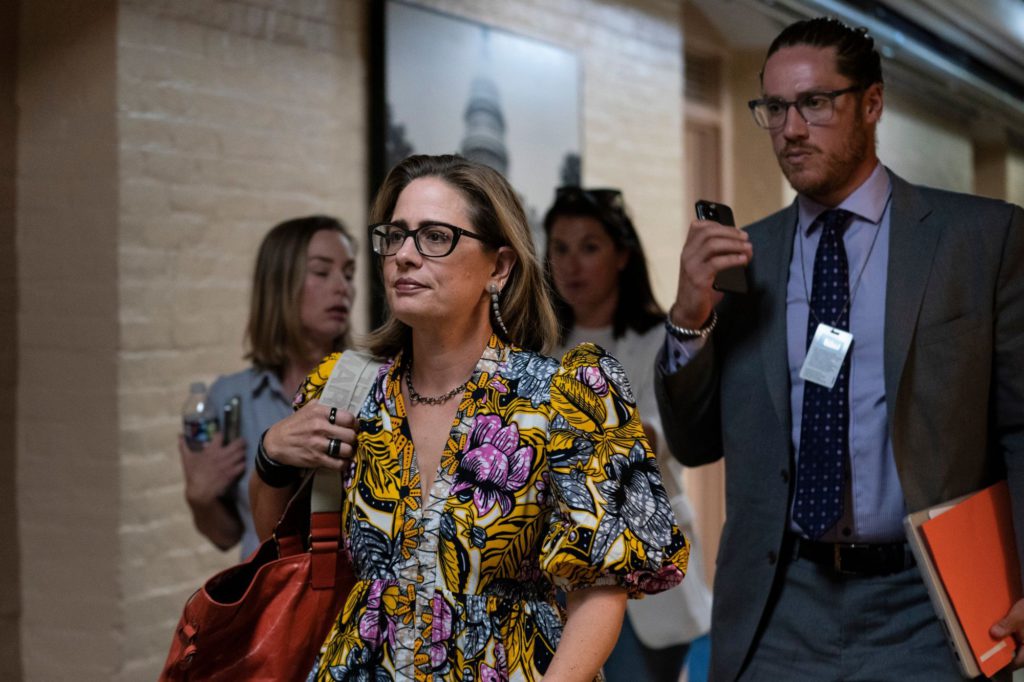
Sinema Seeks to Keep Private Equity Break, Curb Corporate Tax

(Bloomberg) — Senator Kyrsten Sinema is seeking to preserve a tax break for investment managers and narrow a levy hike on large corporations in the economic package Democrats want to pass as soon as this week, people familiar with the discussions said.

The Arizona Democrat, a pivotal vote in the Senate, is asking to drop a provision from the bill that would scale back a tax break for fund managers, known as carried interest, according to one person, who asked for anonymity because the discussions are private. She is also pushing to narrow the 15% domestic minimum tax on financial profits, also known as the book tax, people said.

Democrats need Sinema’s support to pass the bill using the fast-track budget procedure they are employing to bypass Republicans. Changing the tax provisions risks irking West Virginia Senator Joe Manchin, who negotiated the package with Senate Majority Leader Chuck Schumer. Manchin has said he is “adamant” that the carried interest change remain in the bill.


EXPLAINER: How the 15% US Minimum Corporate Tax Would Work

Manchin told reporters he has not heard of Sinema trying to remove the carried interest provision. Hannah Hurley, a spokesperson for Sinema, declined to comment about any requests to change the bill.

Politico and Axios previously reported details of Sinema’s negotiations. Sinema is also looking to add $5 billion in drought relief to the bill, Politico reported. 

Democratic Senators Mark Kelly of Arizona and Martin Heinrich of New Mexico said the drought issues in their states should be addressed but didn’t say whether they want it in this bill.

Sinema has been faced with a barrage of lobbying from business interests and Senate Republicans. She has met in recent days with business groups representing her state as well as her GOP colleagues. Groups representing private equity and manufacturers have also been conducting advertising and advocacy campaigns to reach Sinema and Arizona voters since proposal went public last week.

One way to make the corporate minimum tax less costly to businesses is to let companies still claim depreciation tax breaks for their investments in equipment and facilities. The levy, as currently drafted, doesn’t allow businesses to claim those benefits.

The technology and manufacturing industries would be some of the most affected sectors from the book tax without the change. Companies, including Alphabet Inc.’s Google and General Motors Co., could be subject to the tax if it were to become law in its current form.

Republican Senators John Thune of South Dakota and Rob Portman of Ohio, who have been speaking with Sinema, have both raised concerns with how the minimum tax could undercut tax breaks that are designed to help companies to innovate and grow. Portman, at a press conference Wednesday, pointed to a bipartisan bill that passed by the Senate last week to provide funding and tax incentives for semiconductor companies as an example of how Congress has repeatedly encouraged business investment.

“Every developed country in the world helps to encourage their manufacturers to make more investments,” he said. “And here we are, less than a week later, saying, ‘you know what? We’ve changed our minds’?”

Sinema praised the corporate minimum tax last year when it was introduced in the Senate, without endorsing specifics. She was involved in the development of the proposal, but that was before inflation shot up and the threat of a recession materialized. 

The changes Sinema is seeking could end up shaving tens of billions — or more — of revenue from the bill. That would likely mean that Democrats would have to cut into some of the roughly $300 billion worth of deficit reduction in the bill or trim some of the spending on climate and health initiatives.

Getting rid of the carried interest provision would only cut $13 billion from the $739 billion revenue expected to be raised by the package. The minimum corporate tax at 15%, however, is the biggest revenue generator in the bill, estimated at about $313 billion. 

EXPLAINER: Why ‘Carried Interest’ Is the Most Reviled Tax Break: QuickTake

(Updates with drought relief, in fifth and sixth paragraphs)

More stories like this are available on bloomberg.com

©2022 Bloomberg L.P.
Robinhood Faces SEC Probe on Compliance With Short-Selling Rule

(Bloomberg) — Robinhood Markets Inc. said it faces a US Securities and Exchange Commission investigation into the brokerage’s compliance with a short-selling rule.

The SEC’s enforcement division requested information about Robinhood’s adherence to Regulation SHO and matters related to securities lending and fractional shares, the Menlo Park, California-based company said Wednesday in a filing. 

The online brokerage, which slashed 23% of its workforce this week, has faced several regulatory actions in recent years.

On Tuesday, Robinhood’s cryptocurrency arm was fined $30 million by the New York State Department of Financial Services, which accused the firm of violating anti-money-laundering and cybersecurity rules. In 2020, the SEC fined Robinhood $65 million for misleading its customers about a key source of revenue, called payment for order flow. The firm didn’t admit or deny wrongdoing in that case.

Read more: Robinhood Slashes 23% of Its Workforce in Sweeping Overhaul

More stories like this are available on bloomberg.com

©2022 Bloomberg L.P.
Close Bitnami banner
Bitnami