

Bloomberg

Robinhood Cuts 23% of Staff, Joining Netflix and Amazon in Tech Slowdown

(Bloomberg) — With recession fears mounting—and inflation, the war in Ukraine and the lingering pandemic taking a toll—many tech companies are rethinking staffing needs. That’s included freezing hiring, rescinding offers and even laying off workers.

Robinhood Markets Inc. was one of the latest to make cuts, moving to eliminate nearly a quarter of its workforce. Oracle Corp. also has been paring its staff this week.

Here’s a look at the dozens of companies tapping the brakes.

Alphabet Inc., Google’s parent company, has been decelerating its recruiting efforts. Chief Executive Officer Sundar Pichai told employees this month that—although the business added 10,000 Googlers in the second quarter—it will be slowing the pace of hiring for the rest of the year and prioritizing engineering and technical talent. “Like all companies, we’re not immune to economic headwinds,” he said. The hiring pause is part of that slowdown, Google said, “to enable teams to prioritize their roles and hiring plans for the rest of the year.” It had nearly 164,000 employees at the end of March.

Amazon.com Inc. said in April that it was overstaffed after ramping up during the pandemic and needed to cut back. “As the variant subsided in the second half of the quarter and employees returned from leave, we quickly transitioned from being understaffed to being overstaffed, resulting in lower productivity,” Chief Financial Officer Brian Olsavsky said at the time. Amazon has been subleasing some warehouse space and paused development of facilities meant for office workers, saying it needed more time to figure out how much space employees will require for hybrid work. During its quarterly earnings call on July 28, the e-commerce giant said it’s been adding jobs at the slowest rate since 2019. After relying on attrition to winnow its staff, Amazon now has about 100,000 fewer employees than in the previous quarter. The company now has 1.52 million full- and part-time workers and is still the largest employer in the tech world, despite the reduction in headcount.

Apple Inc. is planning to slow hiring and spending at some divisions next year to cope with a potential economic slump, according to people familiar with the matter. But it’s not a companywide policy, and the iPhone maker is still moving forward with an aggressive product-release schedule. Apple had 154,000 employees in September, when its last fiscal year ended.

Carvana Co., an online used car retailer, laid off 2,500 people in May, about 12% of its workforce. In an unusual move, the executive team will forego salaries for the rest of the year to pay severance to those who were let go, according to a filing with the Securities and Exchange Commission. The company had more than 21,000 full-time and part-time employees at the end of last year.

Coinbase Global Inc., a cryptocurrency exchange, told employees it was cutting 18% of staff in June to prepare for an economic downturn. It also rescinded job offers. “We appear to be entering a recession after a 10+ year economic boom,” CEO Brian Armstrong said in a blog post. “While it’s hard to predict the economy or the markets, we always plan for the worst so we can operate the business through any environment,” he said. The company ended the quarter with about 5,000 employees. 

Compass Inc., a real estate brokerage platform, is eliminating 450 positions, about 10% of its staff, according to a filing last month. The company had nearly 5,000 employees at the end of 2021.

Gemini Trust Co., a cryptocurrency exchange founded by Bitcoin billionaires Cameron and Tyler Winklevoss, announced a 10% staff reduction in June. TechCrunch reported that the company laid off another 7% on July 18 and said a leaked plan showed it was seeking to cut a total of 15%, bringing it from 950 employees to 800 employees.

GoPuff, a grocery delivery app, is laying off 10% of its workforce and closing dozens of warehouses. The cuts will affect about 1,500 staff members—a mix of corporate and warehouse employees.

Lyft Inc. told employees it was reining in hiring in May after its stock dropped precipitously. The company went further on July 20, announcing plans to shutter its car-rental business and cut about 60 jobs. Lyft had about 4,500 employees in 2021. Archrival Uber Technologies Inc., meanwhile, has been more upbeat. CEO Dara Khosrowshahi told Bloomberg in June that his company was “recession resistant” and had no plans for layoffs.

Meta Platforms Inc., the parent of Facebook, slashed plans to hire engineers by at least 30%. CEO Mark Zuckerberg told employees that he’s anticipating one of the worst downturns in recent history. The company had more than 77,800 employees at the end of March.

Microsoft Corp. told workers in May that it was slowing down hiring in the Windows, Office and Teams groups as it braces for economic volatility. The company had 181,000 employees in 2021. More recently, the software maker cut some jobs—less than 1% of its total—as part of a reorganization. On July 20, the company said it began eliminating many job openings—a freeze that will last indefinitely.

Netflix Inc., the streaming giant, has had several rounds of highly publicized layoffs since it reported the loss of 200,000 subscribers in the first quarter. In April, it began scaling back some marketing initiatives, then cut 150 employees in May and 300 in June. Last quarter, it reported $70 million in expenses from severance and shed an additional 970,000 subscribers. Netflix had 11,300 employees in 2021.

Niantic Inc., maker of the Pokemon Go video game, fired 8% of its team in June. It was an effort to streamline operations and position the company to weather economic storms, CEO John Hanke told staff in an email. Niantic had around 800 employees at the end of last year.

OpenSea, an NFT marketplace, laid off 20% of its staff on July 14. CEO Devin Finzer tweeted, “We have entered an unprecedented combination of crypto winter and broad macroeconomic instability, and we need to prepare the company for the possibility of a prolonged downturn.” 

Oracle, the database and cloud services company, is cutting workers in its US customer experience and marketing divisions. The company employs  133,000 people, according to its website.

Peloton Interactive Inc. announced plans to cut about 2,800 jobs globally, roughly 20% of its corporate roles, as part of a surprise shake-up in February that saw its CEO John Foley and several executive team members step down. In 2021, the company reported having nearly 9,000 employees.

Redfin Corp., another real estate brokerage, cut 8% of its staff in June. “We don’t have enough work for our agents and support staff,” CEO Glenn Kelman wrote in a blog post, saying that May demand was 17% below projections and that he expected the company to grow more slowly during a housing downturn. Redfin had about 6,500 employees at the end of last year.

Rivian Automotive Inc. is planning to cut hundreds of non-manufacturing jobs and teams with duplicate functions. The Southern California electric-vehicle maker, which has more than 14,000 employees, could make an overall reduction of around 5%. In a memo to employees, CEO RJ Scaringe said, “We will always be focused on growth; however, Rivian is not immune to the current economic circumstances and we need to make sure we can grow sustainably.”

Robinhood, the online brokerage, has had two rounds of layoffs — cutting 9% of its workforce in April and another 23% this week. CEO Vlad Tenev attributed the move to overstaffing in 2021 and said, “We have seen additional deterioration of the macro environment, with inflation at 40-year highs accompanied by a broad crypto market crash. This has further reduced customer trading activity and assets under custody.” The company had about 3,800 employees at the end of last year and racked up more than $2 billion of losses since going public last July. 

Salesforce Inc., the cloud computing platform, has been slowing hiring and reducing travel expenses, according to a leaked memo reported in May by Insider. It had nearly 78,000 employees as of the end of April.

Shutterfly, a maker of personalized photo items, laid off 100 staffers in June, CEO Hilary Schneider told Bloomberg. The company, which has 7,000 employees, is making hiring adjustments to weather the economic uncertainty. “Clearly we’re going through a period of economic choppiness on a global level,”  she said. “When you look at the supply chain, it certainly is driving inflation and impacting consumer confidence.”

Shopify Inc., an e-commerce platform, is laying off 1,000 employees, 10% of its workforce, CEO Tobi Lutke said in a letter to employees on July 26. The affected jobs included recruiting, support and sales. The company is offering 16 weeks of severance, career coaching, a laptop and internet allowance, home-office furniture and a free Shopify account for those who want to launch their own storefront. Shopify has 10,000 employees, according to its website.

Spotify Technology SA, the audio service, is cutting employee growth by about 25% to adjust for macroeconomic factors, CEO Daniel Ek said in a note to staff in June. “I do believe only the paranoid survive,” he said on a conference call this week. “And we are preparing as if things could get worse, but it’s hard to be anything but optimistic given what I am currently seeing.” Spotify has more than 6,500 employees, according to its website. 

Stitch Fix, an online personalized styling service, said in June that it was pursuing a 15% reduction in salaried positions—about 4% of its workforce—with the majority coming from non-technology corporate jobs and styling leadership roles. It’s coping with higher expenses and weaker demand. According to its website, the company has 8,900 employees.

Tesla Inc., the electric-vehicle maker, cut 200 autopilot workers as it closed a facility in San Mateo, California, in June. CEO Elon Musk said earlier that layoffs would be necessary in an increasingly shaky economic environment. In an interview with Bloomberg, he said that about 10% of salaried employees would lose their jobs over the next three months, though the overall headcount could be higher in a year. The company had 100,000 employees globally at the end of last year.

Tonal Systems Inc., the home fitness startup backed by sports celebrities Steph Curry and Serena Williams, laid off 35% of its 750 employees on July 13, according to CNBC. 

Twitter Inc. initiated a hiring freeze and began rescinding job offers in May, amid uncertainty surrounding Elon Musk’s acquisition of the company, according to an internal memo obtained by Bloomberg. More recently, it said it would be paring back office space, but without job cuts. The company had 7,500 employees in 2021. 

Unity Software Inc., which makes a video-game engine, surprised employees in June when it sent pink slips to 200 of its 5,900 workers, amounting to 4% of its workforce. Its CEO had assured staff there would be no layoffs, according to Kotaku.

Vimeo, a video sharing platform, cut 6% of the company in July. CEO Anjali Sud said in a blog post that it had slowed hiring since the beginning of the year. “The reality is that the challenging economic conditions around us have impacted our business. We must assume that these conditions will remain challenged for the foreseeable future, and that we aren’t immune. So while we’ve intentionally taken action across other expense areas first, it’s become clear that we also have to look at our largest area of investment, our team,” Sud said.

Wayfair Inc., the online furniture retailer, initiated a 90-day hiring freeze in May. The company had 18,000 employees as of March.

Whoop Inc., a fitness wearable startup, laid off 15% on July 22 and now has about 550 employees, according to a company statement reported by the Boston Globe.

(Updates with Robinhood starting in second paragraph.)

More stories like this are available on bloomberg.com

©2022 Bloomberg L.P.
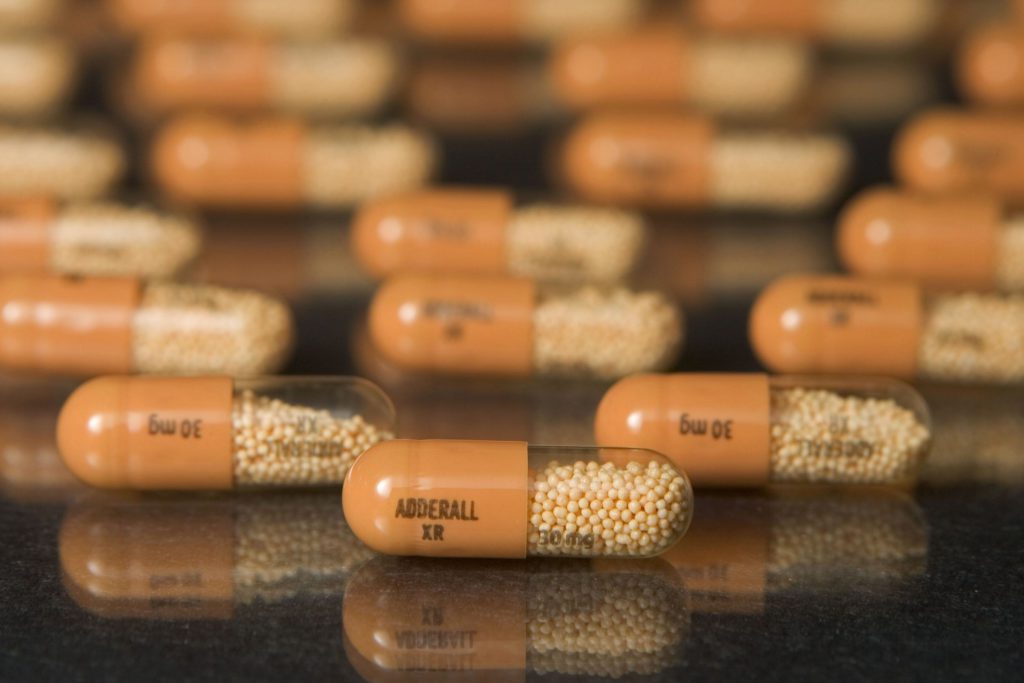
Ex-Congressman, Professor Say ADHD Startup Done Overstated Their Ties

(Bloomberg) — Mental-health startup Done touted its relationship with a former congressman and a Stanford psychiatrist and professor in a pitch sent to potential investors. But those people say their role has been misrepresented and exaggerated by the company. 

In an April document for possible funders, Done listed former Michigan Representative Bart Stupak on a page titled “Advisers & Investors,” according to a copy of the document viewed by Bloomberg. 

But in a statement to Bloomberg, Stupak said that the presentation substantially misrepresented his role. Stupak said he is “not an adviser nor an investor” for Done, and that he only “handles government relations,” for the company, which grew rapidly last year by connecting patients online with medical staff who could prescribe ADHD medications such as Adderall. The company has come under scrutiny for making those drugs, which can be abused, easier to obtain than some experts say they should be.

Done didn’t dispute the existence of the documents or that they may have been shared but called them “drafts.” There is no indication on the documents that they are not final. 

On the same “Advisers & Investors” page, Done also listed Nina Vasan, a professor at the Stanford School of Medicine who founded the university’s lab focused on mental health innovation. Like Stupak, Vasan disputed Done’s description of her. 

“I am not, nor ever was, an adviser to Done,” she said in an interview. “Advertising me as such is inappropriate and makes me uncomfortable. I have not had anything to do with the growth and development of that company.” 

Vasan, who is the chief medical officer at a different mental health startup called Real, did invest in Done’s seed round in 2020, according to people familiar with the matter. But the amount was in the tens of thousands of dollars and represented less than 1% of the total $3 million raised, the people said.

Pitch Document

Along with the “Advisers & Investors” slide, the April document includes the company’s operating metrics, a list of key executives, industry statistics, an outline of the platform’s offerings and a timeline of projects planned for 2022  – all standard parts of a startup’s pitch to funders. It was provided to Bloomberg by a potential investor who received it, and it’s not clear how widely it was distributed outside the company or how many other investors, if any, got copies.

Done said there are “no official corporate documents” that describe Stupak and Vasan’s roles in the way the pitch obtained by Bloomberg shows. 

“Any documents or presentations that state so are inaccurate,” the company said in a statement. “Many documents and presentations have been distributed in draft form that have no legal or binding authority to our company or corporate structure.” 

As online ADHD startups have faced scrutiny, some have exited the business. One Done competitor, Cerebral, said earlier this year that it will no longer enable prescriptions for controlled substances used to treat ADHD, such as Adderall and Ritalin. Another competitor, Ahead, previously announced plans to wind down and stop offering services to existing patients as of last month. Many of those patients have since turned to Done, Bloomberg has reported.

The April presentation projected that with additional funding, Done could reach a $100 million annual run rate and “become the predominant market leader” this year. As part of its plan, Done listed launching partnerships with schools, hospitals and corporations, as well as incorporating in-network insurance coverage.

While Done describes the documents as inaccurate, it’s not the first time the company has called Vasan a funder. In fact, an earlier version of the company’s pitch materials that was shared with different potential funder in April 2021 described Vasan as a “notable” investor. The person who shared the 2021 presentation didn’t give money to the company and asked not to be named.

High-Profile Names

Along with Vasan’s Stanford pedigree, Stupak’s career history lends its own credibility. In 2000, his son died by suicide, an event the former Democratic congressman has said may have been linked to the prescription drug Accutane, which comes with warnings about mental-health side effects. The drug’s maker disputed those claims at the time.

During almost two decades in Congress, Stupak became an outspoken voice on drug safety, in particular around online prescribing. He was the lead sponsor of the Ryan Haight Online Pharmacy Consumer Protection Act, a 2008 law that imposed rules around the prescription of controlled substances through telemedicine. The law is named after an 18-year-old man who died of an overdose of Vicodin that had been prescribed to him via a telemedicine appointment. It requires clinicians to hold at least one in-person appointment prior to writing a prescription. That requirement was waived during the Covid-19 public health emergency.

Done’s showcasing of high-profile, influential figures in the health-care sphere in a presentation to an investor comes at a time when the embattled startup is facing intensifying scrutiny from clinicians and customers who say the company’s rapid growth has come at the expense of patient care. The change to the Haight Act during the pandemic fueled Done’s and other similar  companies’ growth by letting doctors and nurses working with the companies write prescriptions for controlled substances, including stimulants used to treat ADHD, which is also known as attention-deficit/hyperactivity disorder. As Covid-19 wanes, some lawmakers have urged regulators to extend the waiver.

Stupak, now a partner at Washington-based law firm Venable LLP, first registered as a lobbyist for Done in January and has received $100,000 in fees from the company so far this year, according to disclosures filed with the House and Senate. In addition to both chambers of Congress, Stupak engages the Department of Justice and the Drug Enforcement Administration in lobbying activities specifically related to the Ryan Haight Act on behalf of Done, according to the filings.

Done’s subscription-based service connects patients seeking help with ADHD with nurse practitioners who perform virtual evaluations and write prescriptions. Customers pay $199 for an initial appointment and $79 in subsequent months. Since its founding in 2020, Done has amassed over 30,000 members, according to people familiar with the company’s operations. The startup has parlayed its growth to expand into new revenue streams, including a pediatrics version of its service for parents looking to treat their children’s ADHD, fetching a higher monthly fee of $125.

More stories like this are available on bloomberg.com

©2022 Bloomberg L.P.
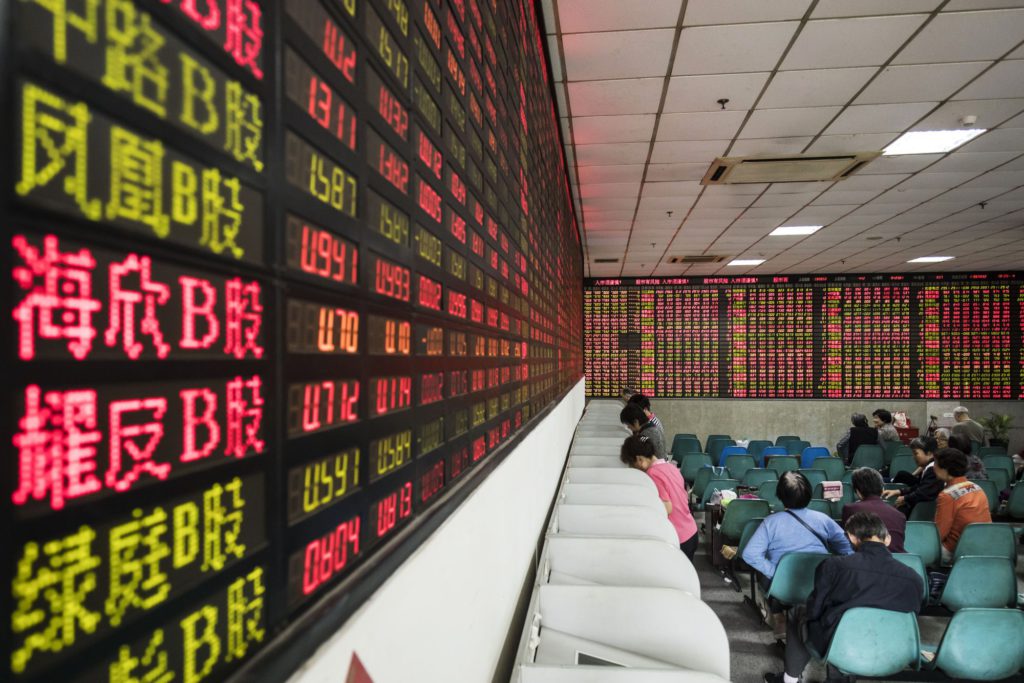
Tech Fuels Stock Surge as Earnings Buoy Sentiment: Markets Wrap

(Bloomberg) — US stocks rose as corporate earnings continued to roll in and economic data came in better than expected. Treasuries trimmed earlier declines as traders priced in the possibility of further interest-rate hikes from the Federal Reserve. 

Earnings set the tone for stocks, with solid reports from Moderna Inc. and PayPal Holdings Inc. lifting the Nasdaq 100 as much as 2.8% and pushing it to a level last seen in May. The S&P 500 also rose as much as 1.7%. Recent data eased concerns of a broader economic slowdown as growth in the US services sector unexpectedly strengthened to a three-month high in July.

“Now that we’re 70% through the earnings reporting season, we can clearly say that it’s not the earnings Armageddon that many had feared,” said Art Hogan, chief market strategist at B. Riley Wealth. “That’s important.”

The Treasury 10-year yield pushed toward 2.8% as swap markets showed traders pricing in a 50% chance for a three-quarter percentage point rate hike in September. 

Treasuries had rallied last week after Chair Jerome Powell signaled that the pace of future increases may slow later this year, boosting the odds for cuts next year in market-implied measures. Several Fed leaders have since said the central bank is far from done with tightening and remains laser-focused on tamping down price gains that are the hottest in four decades.

“If there is a change in tone by Fed members, it is similar to a parent that is finally telling the kids that you’ve had enough candy, no more,” wrote Peter Boockvar, chief investment officer at Bleakley Financial Group. “For decades the Fed always gave the markets more candy, especially when the kids cried out for it. Now, the kids are going to have to do without as long as inflation is at the very unsatisfactory levels that it’s pacing at, even with an expected fall.”

Read More: Fed Leaders Pledge Tough Fight to Keep Inflation Credibility

Markets are also somewhat calmer as US-China tensions simmered after House Speaker Nancy Pelosi left Taiwan. Her visit had provoked an angry response from China, and markets were on the edge ahead of her arrival on Tuesday. 

US stocks are roaring on Wednesday after a session with many twists and turns on the previous day. But equities trading doesn’t reflect the headwinds confronting the market, according to Goldman Sachs Group Inc. strategist Sharon Bell.

“There’s a little bit of complacency in there and markets are not fully taking into account the risks,” Bell said in an interview with Bloomberg TV.

Seeing riskier areas of the equity market reprice higher as some earnings estimates get slashed indicates that investors may be overly optimistic, said Emily Roland, co-chief investment strategist at John Hancock Investment Management.

“In this environment, we would rebalance into quality companies and sectors that have strong balance sheets and more durable profitability,” she said. “This is not the right time to emphasize cyclical areas or ones that have a greater need for capital.”

Roland considers tech stocks that meet certain profitability and return metrics “higher quality.” She would deemphasize consumer discretionary, financials, and industrials, she said.

Thin liquidity during the summer lull also tends to magnify small market moves, said April LaRusse, head of investment specialists at Insight Investments. 

“Sometimes that can make it look more exciting than it probably really,” she said. 

The Cboe VIX Index also shows price swings are usually prevalent in the summer and early autumn. August and September are historically the two worst months for the S&P 500 Index.

Oil fell after a brief rally as traders mulled the lack of relief for oil markets and a poor demand outlook. The dollar pared gains after jumping to its highest in a week.


This week’s MLIV Pulse survey is asking about your outlook for corporate bonds, mergers and acquisitions and health of US corporate balance sheets through the end of the year. It takes one minute to participate in the MLIV Pulse survey, so please click here to get involved anonymously. 

What to watch this week:

  • BOE rate decision, Thursday
  • US initial jobless claims, trade, Thursday
  • Cleveland Fed President Loretta Mester due to speak, Thursday
  • US employment report for July, Friday

Some of the main moves in markets:

Stocks

  • The S&P 500 rose 1.6% as of 1:50 p.m. New York time
  • The Nasdaq 100 rose 2.7%
  • The Dow Jones Industrial Average rose 1.4%
  • The MSCI World index fell 0.8%

Currencies

  • The Bloomberg Dollar Spot Index was little changed
  • The euro fell 0.1% to $1.0152
  • The British pound fell 0.2% to $1.2146
  • The Japanese yen fell 0.7% to 134.06 per dollar

Bonds

  • The yield on 10-year Treasuries was little changed at 2.76%
  • Germany’s 10-year yield advanced five basis points to 0.87%
  • Britain’s 10-year yield advanced four basis points to 1.91%

Commodities

  • West Texas Intermediate crude fell 3.2% to $91.36 a barrel
  • Gold futures fell 0.7% to $1,777.60 an ounce

More stories like this are available on bloomberg.com

©2022 Bloomberg L.P.
Swiss Engineering Company ABB Tries Again to Sell Power-Conversion Unit

(Bloomberg) — ABB Ltd. is preparing to kick off a fresh attempt to sell its power-conversion unit as Chief Executive Officer Bjoern Rosengren continues to offload peripheral businesses, according to people familiar with the matter.

The Swiss engineering company plans to start soliciting interest in the business in September, the people said, asking not to be identified because the information is private. ABB is working with Citigroup Inc. on the proposed divestment, according to the people. 

The unit may attract interest from buyout firms and some select companies, including telecommunication players and Asian suitors, they said. ABB pulled the plug on a previous divestment attempt in 2019. 

ABB’s power-conversion business, which was acquired as part of a $2.6 billion deal for General Electric Co.’s industrial solutions business in 2018, helps telecommunications and technology companies run infrastructure and use energy more efficiently. 

Clients have included phone carriers such as Verizon Communications Inc., as well as technology giants including Google and Cisco Systems Inc. The unit was formerly known as Lineage Power Holdings, which GE acquired in 2011.

No final decision has been made, and ABB could opt to keep the business for now, the people said. A spokesman for ABB confirmed that the company is looking to dispose of the division in the second half of 2022, declining to comment further. A representative for Citigroup declined to comment. 

ABB in November 2020 announced plans to exit three divisions as part of Rosengren’s plan to boost the Swiss engineer’s profitability by focusing on core businesses. ABB sold its Dodge mechanical power transmission business, but postponed the listing of its electric car charging operations. It also delayed a decision on its turbocharging unit, though a spinoff slated to go ahead in October.

(Updates with Citigroup response in sixth paragraph.)

More stories like this are available on bloomberg.com

©2022 Bloomberg L.P.

Coinbase Asks Supreme Court to Halt Account-Holder Suits

(Bloomberg) — Coinbase Global Inc. asked the US Supreme Court to halt two lawsuits by users of the cryptocurrency exchange platform while the company presses appeals that seek to send the cases to arbitration.

In one case, a man says Coinbase should compensate him for $31,000 he lost after he gave remote access to his account to a scammer. In the other, Coinbase is accused of violating California consumer law by holding a $1.2 million Dogecoin sweepstakes without adequately disclosing that entrants didn’t have to buy or sell the cryptocurrency. Both suits seek class action status.

Federal trial judges in both cases rejected Coinbase’s bid to send the disputes to arbitration, which the company says is required under its user agreements. At the Supreme Court, Coinbase says the trial court proceedings should stop while the company presses its appeal at the San Francisco-based 9th US Circuit Court of Appeals. The 9th Circuit refused to block the cases.

The cases could have ramifications beyond Coinbase as companies seek to enforce arbitration agreements with consumers and employees. Coinbase says trial court proceedings should automatically stop when a party files a non-frivolous appeal seeking to send a case to arbitration. 

Coinbase asked the Supreme Court both to intervene on an emergency basis and to take up the company’s appeals.

The issue “arises in every case in which a party appeals the denial of a motion to compel arbitration,” Coinbase argued in court papers.

The cases are Coinbase v. Bielski, 22A91, and Coinbase v. Suski, 22A92.

(Describes potential broader impact in fourth paragraph.)

More stories like this are available on bloomberg.com

©2022 Bloomberg L.P.
PayPal, Moderna Lead Buyback Frenzy Week, Giving Stocks a Lift

(Bloomberg) — Investors are debating whether the rebound in US stocks will stick, but corporate America is taking no chances and turning a favorite old method for juicing the market: Buying back billions of dollars of their own stock.

At least $21 billion in fresh share repurchase programs have been unveiled this week alone, with PayPal Inc. leading the charge and authorizing a new $15 billion buyback plan as it works with Elliott Investment Management to turn around its struggling shares. Moderna Inc., Airbnb Inc. and Marriott International Inc. have also added to or unveiled new programs in the last three days, following a slew of others, including Chevron Corp., Charles Schwab Corp. and Exxon Mobil Corp. that did it last week. 

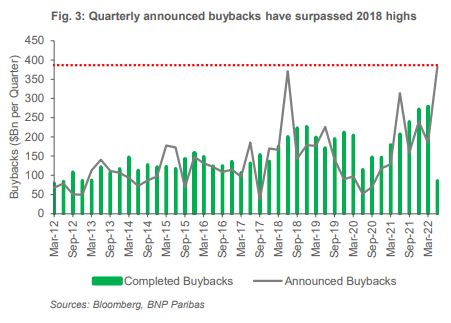
Altogether buyback announcements for the second quarter earnings season have already surpassed 2018 highs, when companies said they planned to repurchase almost $400 billion of their own shares, according to data compiled by BNP Paribas. And the announcements may not be over yet, with more than 50 S&P 500 members still set to report earnings still this week. 

The strategy is working. At least for the ones with the largest programs. 

PayPal and Moderna saw outsize share price jumps following their buyback announcements, adding 8.8% and 16% respectively on Wednesday. Shares in The Charles Schwab Corp., which announced a $15 billion buyback plan last week, are up 11%.

“Buybacks should provide another flow tailwind,” BNP Paribas Equity Derivatives Strategist Maxwell Grinacoff wrote in a note on Monday. Announced buybacks have hit the highest in more than a decade, Maxwell added.

For Wall Street strategists schooled in the logic of “buy low, sell high”, buybacks this year likely make complete sense. Companies like PayPal and Moderna have slumped more than 25% amid a boom-to-bust cycle for pandemic winners turned losers. By scooping up shares at a lower value, the company can theoretically resell them later on in a secondary offering, ideally at a higher price, to help raise additional capital.

Smaller companies or less hefty programs don’t always give a meaningful boost to shares. The S&P 500 Buyback Index, which tracks 100 stocks with the highest buyback ratio, has underperformed the broader market since the start of May, falling about 3% compared to a nearly unchanged S&P 500.

One notable exception this season among companies known for supporting robust buybacks are banks. JPMorgan Chase & Co. and Citigroup Inc. announced they would be pausing current share repurchase programs in order to help meet higher capital requirements following the Federal Reserve stress test. JP Morgan and Citigroup shares, up 4.9% and 2.8% respectively, are trailing the broad S&P 500 9.6% advance since July 14. 

“In the here and now, investors like it when their favorite companies buy back shares. Speculators like it too, because there is a large buyer whom you know will be active in the market,” said Steve Sosnick, chief strategist at Interactive Brokers LLC. “It is quite reasonable to think that buyback announcements have been a key trigger to the recent rally.”

More stories like this are available on bloomberg.com

©2022 Bloomberg L.P.
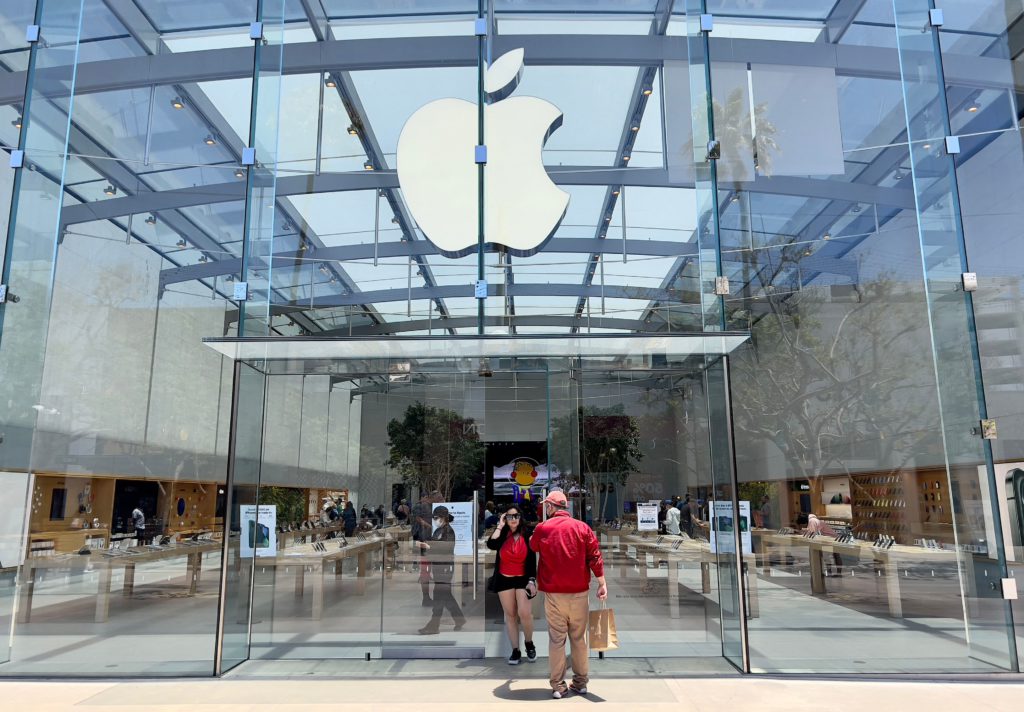
Apple Plans to Delay Launch of iPadOS 16 Update by About a Month

(Bloomberg) — Apple Inc. expects to delay its next major iPad software update by about a month, taking the unusual step of not releasing it at the same time as the new iPhone software, according to people with knowledge of the matter. 

For the last several years, the tech giant has released major iPad and iPhone software updates, known as iPadOS and iOS, at the same time in September. This time around, Apple plans to put out iOS 16 during the usual period but not launch iPadOS 16 until October, said the people, who asked not to be identified because the deliberations are private. 

The delay of the software is due, at least in part, to an ambitious effort to overhaul the iPad’s multitasking capabilities. The update includes a feature called Stage Manager that lets users operate several tasks at the same time, resize windows and bounce between different clusters of apps.

During beta testing, the system has drawn criticism from some developers and users for its bugs, a confusing interface and lack of compatibility with most iPads. Staggering the release schedule will also allow Apple to put more engineering resources into completing iOS 16, the software update that will come included with the iPhone 14 in September.

The change also would bring the iPadOS 16 release closer to the launch of new iPad hardware. The company is planning an updated iPad Pro with an M2 chip, along with a faster entry-level iPad with a USB-C port, Bloomberg has reported.

An Apple spokeswoman declined to comment on the plans, which could change as the Cupertino, California-based company gets closer to its fall product launch cycle. 

Read more about the iPad’s new multitasking feature in Power On

Even before the additional delay, Apple’s software releases have been slightly behind schedule this year, with the public beta phase of the updates starting later than usual. But the company has dealt with these kinds of hitches before. Apple faced significant challenges with iOS 13 in 2019, which affected the debut of the iPhone 11, leading Apple to change the way it handles software updates.

The Mac is getting the same Stage Manager feature as part of macOS Ventura, but that version of the system has been less controversial. The Mac update is scheduled for release in October, the same month Apple typically rolls out major Mac software upgrades. And watchOS 9, the latest Apple Watch software, is still slated for September alongside the iPhone update. 

The iPadOS 16 update also includes new features such as a built-in weather app, improved support for external displays and new Mac-like controls for productivity apps. The iOS 16 update, meanwhile, includes a redesigned lock screen, the ability to retract messages on iMessage and a redesigned Home app for controlling accessories. 

Apple has already said that several features planned for iPadOS 16 and iOS 16 won’t arrive in their initial versions. That includes a feature called Live Activities that will let apps like Uber pin a pickup’s status on the iPhone’s lock screen. There’s also a redesigned CarPlay interface on its way, and an iPad whiteboarding app called Freeform. 

More stories like this are available on bloomberg.com

©2022 Bloomberg L.P.

Crypto Miners Would Get Tax Reporting Reprieve in Senate Bill

(Bloomberg) — Crypto miners and software developers hoping to avoid new Internal Revenue Service reporting rules are getting help from a group of key senators.

Legislation introduced Wednesday by a mix of Republicans and Democrats including Senators Pat Toomey, Cynthia Lummis, Rob Portman, Kyrsten Sinema, and Mark Warner would exempt the firms from being considered crypto “brokers.” Under a 2021 law, the label could trigger requirements to collect information on customers’ capital gains and losses and other transaction data.

The Treasury Department has said it supports not classifying miners, developers and other “ancillary parties” as brokers, thus sparing them from the effort aimed at boosting tax compliance. 

Despite that, industry executives are still pushing for Congress to intervene to ensure Treasury actually includes the exemptions in regulations. Crypto advocates have said miners and software developers don’t have access to the information that they’d need to report.

A similar effort by the same group of senators last year failed at the last minute because of a dispute over an unrelated issue involving military spending. 

More stories like this are available on bloomberg.com

©2022 Bloomberg L.P.

Canadian Crypto Firm CoinSmart Is on the Hunt for Cheap Assets

(Bloomberg) — CoinSmart Financial Inc. is looking for deals in Canada, Europe and the US as turmoil in the cryptocurrency industry creates opportunities, according to Chief Executive Officer Justin Hartzman.

The crypto-asset trading platform is sifting through distressed assets, custodial-services firms and other exchanges and payment platforms, Hartzman said in an interview. 

“M&A is an interesting thing, something that I spend a lot of time on,” he said. The high cost of regulation — or lack of regulation — gives the firm an “opportunity to jump in and find some properties or some targets that are really advantageous to our growth there.”   

The Toronto-based company hasn’t been immune to the market collapse that’s pushed some lenders and hedge funds, such as Three Arrows Capital, into bankruptcy. CoinSmart’s shares have lost about three-quarters of their value this year, shrinking its market capitalization to just C$14 million ($11 million). That’s a fraction of Coinbase Global Inc., which has also tumbled on increased scrutiny from US regulators. 

Tumultuous times give CoinSmart the opportunity to reflect on the company’s strengths and weaknesses, Hartzman said. “Across the board, over 56% of volume retail dropped internationally across all platforms,” he said. “We’re closer to a 30% reduction in volume.” 

Listed in Toronto and Frankfurt, CoinSmart’s transactions exceeded C$1 billion last year, and the firm has 250,000 registered users, according to the CEO. The company went public in November, when crypto trading was surging, after obtaining licenses from the Ontario Securities Commission.

Canada has pushed further than the US in regulating the crypto market, classifying Bitcoin and Ethereum as commodities and selecting the types of tokens that were allowed to be accessed early on. Platforms facilitating trading in securities, instruments or contracts involving digital assets are required to register as a dealer and eventually become a member of the Investment Industry Regulatory Organization of Canada, OSC said in an emailed statement. 

In the US, the Securities and Exchange Commission’s scrutiny of Coinbase is igniting concerns that a major crackdown for the rest of the industry is imminent. Regulators are still jostling over which tokens are considered securities. Asserting that for specific tokens would be problematic for the industry because such a label triggers strict investor-protection requirements. 

CoinSmart doesn’t currently accept US customers because the rules are fragmented, making doing business cumbersome. Lack of unified regulation is hampering growth and products in the US, according to Hartzman. 

“In Canada, the regulator has done a lot more work of focusing and has been more diligent, in my opinion, on being clear about what is and what isn’t” considered to be a security or commodity, said Som Seif, CEO of Purpose Investments Inc., which launched the first Bitcoin exchange-traded fund in North America last year.  

Purpose’s crypto ETFs reported C$500 million in net inflows since the beginning of the year, and anticipates growth this year, Seif said in an interview. 

“I think we’re seeing that institutions who can effectively buy things anywhere in the world are saying I don’t need a US ETF, I’ll just buy the Canadian,” he said. “We’re seeing that in our product, but also broadly.”

More stories like this are available on bloomberg.com

©2022 Bloomberg L.P.
Luxury Brands Gucci, Tiffany Dive Into NFTs Despite Slump

(Bloomberg) — Even the cold winds of a crypto winter can’t keep luxury brands away from nonfungible tokens.  

Kering SA’s Gucci and LVMH’s Tiffany & Co. this week added to the throng of high-end brands diving further into the cryptosphere, launching NFT-related projects. For Gucci, it’s adding another crypto to the wheelhouse of currencies it accepts as payment, while Tiffany will use NFTs as a digital passport to make custom physical jewelry for crypto aficionados. 

The companies described these initiatives as “the future” and “yet another step” in their exploration of web3, a moniker given to next-generation internet technologies. 

But the market conditions for these launches seem less than ideal. 

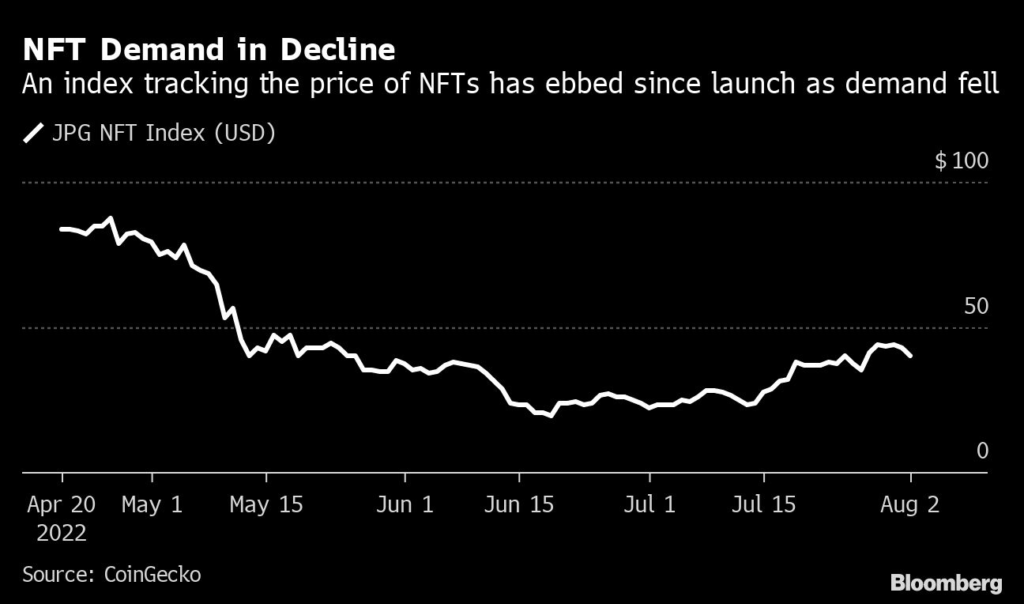
Demand in the NFT market has slumped in recent months, with resale value performing poorly alongside wider industry turmoil that has wiped around $2 trillion from the crypto sector’s total value. Still industry executives said many large consumer companies continue to see NFTs and web3 technologies as a promising way to engage with customers.

“Brands have this opportunity to have a new kind of relationship with their customers,” said Ian Rogers, former chief digital officer at LVMH and now chief experience officer at crypto hardware firm Ledger. “What you are going to see over the next few years is a lot of experimentation as people figure that out.” 

Read more: CryptoPunks Lurk in Tiffany’s Little Blue Box: Bloomberg Crypto

Ledger itself has launched a marketplace for NFTs which it hopes will become the home for drops from leading brands and artists. It also previously collaborated with LVMH’s Fendi, creating Fendi-branded tech accessories designed to house Ledger’s USB stick-sized wallets. 

The partnerships work both ways, with pricing data showing that endorsement by big brands can be beneficial for crypto projects too. 

Following Tiffany’s July 31 announcement that it would offer “NFTiff” collectible passes that could be redeemed by owners of CryptoPunk NFTs for a custom pendant, the digital artwork collection’s floor price rose more than 9% to 74.69 Ether, or roughly $123,000, according to data from NFTPriceFloor. 

And after Gucci’s tweet on Tuesday about accepting ApeCoin as a form of payment at some of its boutique stores in the US, the token pared an earlier 4% slump to trade nearly flat by 5 p.m. in London, according to pricing data from CoinGecko. The Bored Ape Yacht Club collection of NFTs, created by ApeCoin issuer Yuga Labs, also rose Tuesday, climbing 5.2% on Tuesday to 84.19 Ether.

By contrast the broader JPG NFT Index, which tracks the prices of a small number of blue-chip NFT projects, was down 5.4%.

“I’m hearing lots of brands are actually happy the price speculation has fallen away,” said Simon Taylor, head of strategy and content at crypto fraud prevention startup Sardine. “Brands that were concerned about being seen to make a quick buck are now less concerned. The recent launches show belief in the utility of NFTs to engage their consumers and customers to do new things digitally.”

Read more: The Disastrous Record of Celebrity Crypto Endorsements

Gucci will be the first brand to accept ApeCoin in US stores and plans to expand that reach across the rest of its North American presence this summer, company spokesperson Claudio Monteverde said in an email Tuesday.

The Italian fashion house had posted a job advertisement for a “Web3 Manager” in January, seeking someone with experience in digital assets to help drive sales in digital art and NFTs. Monteverde confirmed that the position has yet to be filled, as “the team is still evaluating some options.”

A permanent team dedicated to the metaverse, a virtual world that includes different technologies, was formed by Gucci more than a year and a half ago, he added. Evolved out of the brand’s earlier gaming strategy, Monteverde said the Dream Big unit could be seen as akin to “a startup exploring new areas of opportunity” for the business.

More stories like this are available on bloomberg.com

©2022 Bloomberg L.P.

Close Bitnami banner
Bitnami
