
Bloomberg

Stocks Drop as US-China Tension Stirs Haven Demand: Markets Wrap

(Bloomberg) — Stocks and US equity futures slid Tuesday amid escalating US-China tension over Taiwan and deepening worries about a global economic slowdown, driving investors into the safety of government bonds.

The Stoxx Europe 600 fell 0.6%, with energy among the few industries bucking the trend after BP Plc hiked its dividend and accelerated share buybacks to the fastest pace yet after profits surged. An Asian share index slid the most in three weeks, with some of the steepest falls in Hong Kong, China and Taiwan. Contracts on the S&P 500 and Nasdaq 100 slumped as much as 0.8% as July’s equity market rebound stumbled into August.

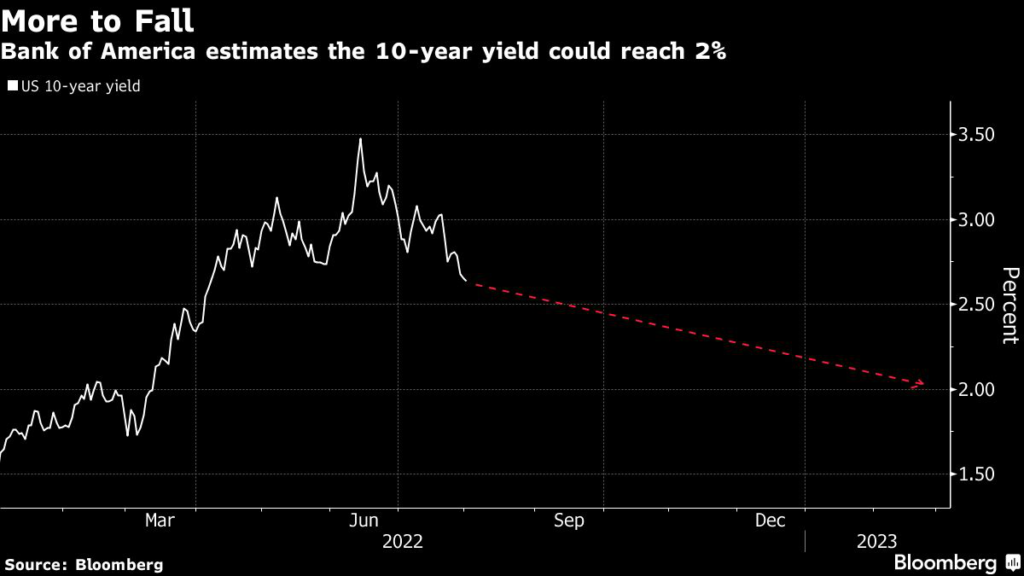
US Treasury 10-year yields dropped for a fifth day and approached 2.5%, a level last seen in April, while the Japanese currency advanced to the strongest level in two months.

US House Speaker Nancy Pelosi is set to land in Taiwan on Tuesday and would be the highest-ranking American politician to visit in 25 years. China views the island as its territory and has vowed an unspecified military response to any Pelosi visit.

The visit may end up being another “short-term dislocation” for markets but “it’s always concerning when they do happen,” Ayako Yoshioka, senior portfolio consultant at Wealth Enhancement Group, said on Bloomberg Radio.

Pelosi’s trip is creating a fresh pressure point for investors already dealing with the prospects of a US recession, worldwide rate hikes and inflation that risks becoming entrenched as Russia’s war in Ukraine exacerbates food shortages.  

China, which regards Taiwan as part of its territory, has vowed an unspecified military response to any Pelosi visit that risks sparking a crisis between the world’s biggest economies. Pelosi is expected to arrive at 10:20 p.m. local time via private plane at Songshan Airport, according to the Liberty Times, one of several media outlets linked to Taiwan’s ruling party. 

“Over the long run we fear that a Taiwan war is more likely than not” according to Matt Gertken, chief geopolitical strategist at BCA Research Inc. He recommends government bonds over equities, US defensive sectors and haven assets.

Investors are also keeping a wary eye out for more potentially hawkish comments from Federal Reserve officials about the need for higher interest rates to restrain elevated inflation. Expectations for how aggressive the Fed must be have receded because of recession risk, so any shift in those perceptions could stoke market volatility.

Goldman Sachs Group Inc. strategists led by Cecilia Mariotti said it was too soon for stock markets to fade the risks of a recession on expectations of a pivot in the Fed’s hawkish policy. JPMorgan Chase & Co. strategists, on the other hand, said the outlook for US stocks is improving for the second half of the year on attractive valuations and as the peak in investor hawkishness has likely passed.

The prospect of a demand slowdown has sapped oil, leaving it around $94 a barrel. Oilseed and grain futures fell after the first grain ship since Russia’s invasion left Ukraine, heralding some relief for a tight global food market.

This week’s MLIV Pulse survey is asking about your outlook for corporate bonds, mergers and acquisitions and health of US corporate balance sheets through the end of the year. It takes one minute to participate in the MLIV Pulse survey, so please click here to get involved anonymously. 

What to watch this week:

  • Airbnb, Alibaba and BP are among earnings reports
  • US JOLTS job openings, Tuesday
  • Chicago Fed President Charles Evans, St. Louis Fed President James Bullard due to speak at separate events, Tuesday
  • OPEC+ meeting on output, Wednesday
  • US factory orders, durable goods, ISM services, Wednesday
  • BOE rate decision, Thursday
  • US initial jobless claims, trade, Thursday
  • Cleveland Fed President Loretta Mester due to speak, Thursday
  • US employment report for July, Friday

Some of the main moves in markets:

Stocks

  • The Stoxx Europe 600 fell 0.6% as of 10:50 a.m. London time
  • Futures on the S&P 500 fell 0.6%
  • Futures on the Nasdaq 100 fell 0.8%
  • Futures on the Dow Jones Industrial Average fell 0.5%
  • The MSCI Asia Pacific Index fell 1.2%
  • The MSCI Emerging Markets Index fell 1.1%

Currencies

  • The Bloomberg Dollar Spot Index rose 0.1%
  • The euro fell 0.2% to $1.0237
  • The Japanese yen rose 0.6% to 130.87 per dollar
  • The offshore yuan rose 0.2% to 6.7675 per dollar
  • The British pound fell 0.3% to $1.2215

Bonds

  • The yield on 10-year Treasuries declined three basis points to 2.55%
  • Germany’s 10-year yield declined six basis points to 0.72%
  • Britain’s 10-year yield declined seven basis points to 1.74%

Commodities

  • Brent crude fell 0.7% to $99.28 a barrel
  • Spot gold rose 0.1% to $1,774.79 an ounce

More stories like this are available on bloomberg.com

©2022 Bloomberg L.P.
The SEC Probably Thinks This Is A Security

  • Listen to Bloomberg Crypto on the iHeartRadio App
  • Listen to Bloomberg Crypto on Apple Podcasts
  • Listen to Bloomberg Crypto on Spotify  

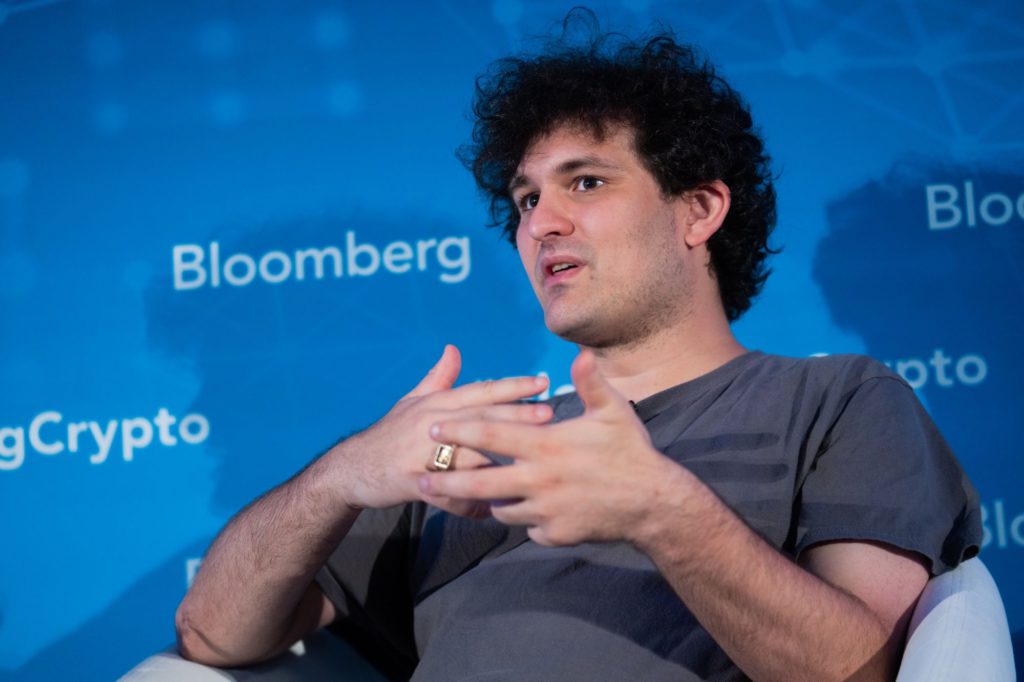
(Bloomberg) — One of the most interesting conversations in crypto right now is all about definitions, especially the definition of a security. Who better to tackle this than Bloomberg Opinion columnist Matt Levine, a former practicing lawyer and investment banker who has written extensively about securities, securities law, insider trading — all things that are very much topical in crypto right now. You’ll also hear highlights from Matt’s interview with Sam Bankman-Fried at the recent Bloomberg Crypto Summit in New York.

Follow us on Twitter @crypto, and subscribe to the Bloomberg Crypto Newsletter at https://bloom.bg/cryptonewsletter

More stories like this are available on bloomberg.com

©2022 Bloomberg L.P.
Clothing, Drugs and Electronics Are All in Scope of Democrats’ 15% Minimum Tax

(Bloomberg) — The economic plan advanced by Senate Democrats would lead to higher taxes for makers of clothing, drugs and electronics, according to an analysis by Congress’s official tax scorekeeper, adding complexity to the debate over the 15% US corporate minimum tax. 

About half of a new alternative corporate income tax would be paid by companies that self-identify as manufacturers, with about a quarter of the total being from companies making apparel, pharmaceuticals and electronics, according to new data from the Joint Committee on Taxation.

Democrats say the additional data helps bolster their case that the 15% minimum tax is necessary to compel profitable US companies that have outsourced jobs and used creative tax planning to avoid levies to pay more to the Internal Revenue Service. Republicans, however, have criticized the levy as detrimental to American manufacturing and that it could mean more jobs being shipped overseas.

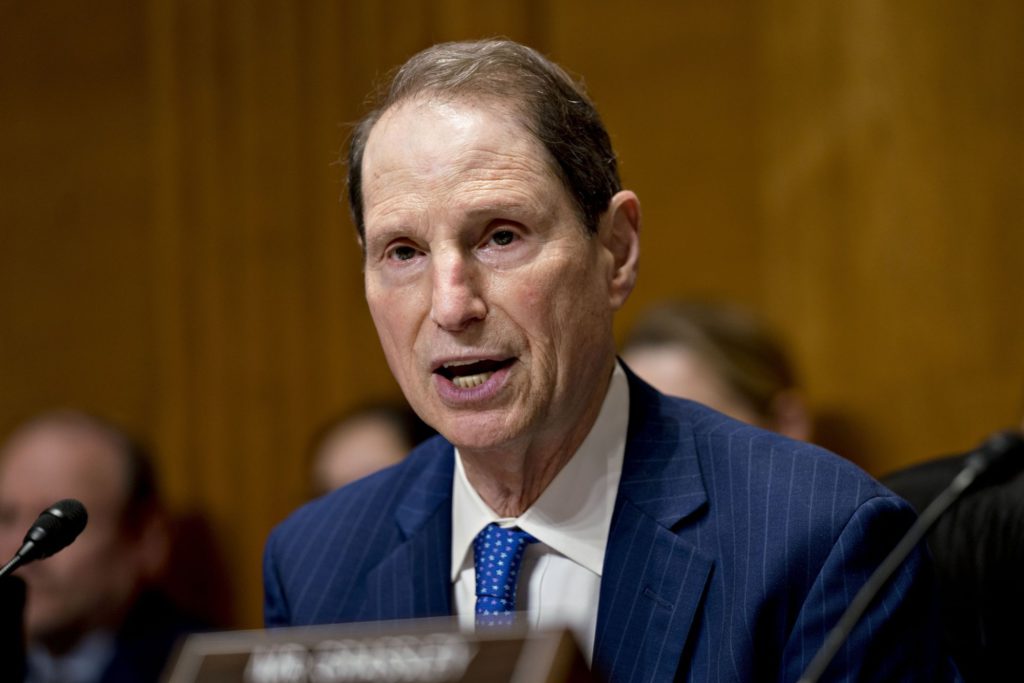
“These companies are playing the most games, and avoiding tax by manufacturing their drugs, phones, and shoes abroad. This is a minimum tax for tax dodgers stamping ‘Made in China’ on their products,” Senate Finance Committee Chairman Ron Wyden, an Oregon Democrat, said in a statement.

The bill that Democrats want to pass as soon as this week imposes a 15% minimum corporate levy on companies that have traditionally been able to pay little-to-no taxes because they were eligible for a long list of credits and deductions. This measure is known as the book tax, because it is applied to a company’s book, or financial-statement, earnings — rather than the income calculation traditionally used for tax purposes. 

Senator Mike Crapo of Idaho, the top Republican on the Senate Finance Committee, said in a statement that the tax would harm American supply chains and discourage innovation in the US.

The tax would bring in about $313 billion in additional revenue over a decade, making it the largest revenue raiser in the entire $739 billion package, according to the Joint Taxation Committee. The bill includes funding for clean energy incentives, lowers prescription drug prices, extends Obamacare premium subsidies and expands the IRS’s enforcement capabilities.

Wyden has been focused for months on how drug companies use tax maneuvers to avoid owing levies in the US. A report he  released last month found that drugmaker AbbVie Inc. made 75% of its sales to American customers but only reported 1% of their income in the U.S. for tax purposes.

More stories like this are available on bloomberg.com

©2022 Bloomberg L.P.

Robinhood Veterans’ Fintech Raises $60 Million in Funding Round

(Bloomberg) — Parafin, a financial-technology startup run by former Robinhood Markets Inc. staffers, raised $60 million in its second funding round.

GIC Pte, Singapore’s sovereign wealth fund, led the fundraising, Parafin said in a statement. GIC joined existing investors including Thrive and Ribbit Capital to value the company at $520 million, and bring its total equity funding to $94 million.

Founded in 2020 by Sahill Poddar, Ralph Furman, and Vineet Goel, Parafin works with companies such as DoorDash Inc. and Mindbody to build their financing arms, with a focus on lending to small businesses. 

“As we started the company during the pandemic, we noticed small businesses weren’t getting the help they needed,” Goel said in an interview. “We want to be the one-stop shop to enable these platforms to offer a variety of financial products.”

Earlier investors in Parafin include Robinhood Chief Executive Officer Vlad Tenev, Robinhood co-founder Baiju Bhatt, DoorDash co-founder Stanley Tang, Chime co-founder and chief technology officer Ryan King and SV Angel.

Parafin said it also raised a debt facility of as much as $150 million from Atalaya Capital Management, and Jefferies Financial Group Inc.

More stories like this are available on bloomberg.com

©2022 Bloomberg L.P.
As Pelosi’s Controversial Visit Nears, Taiwan Plays It Cool

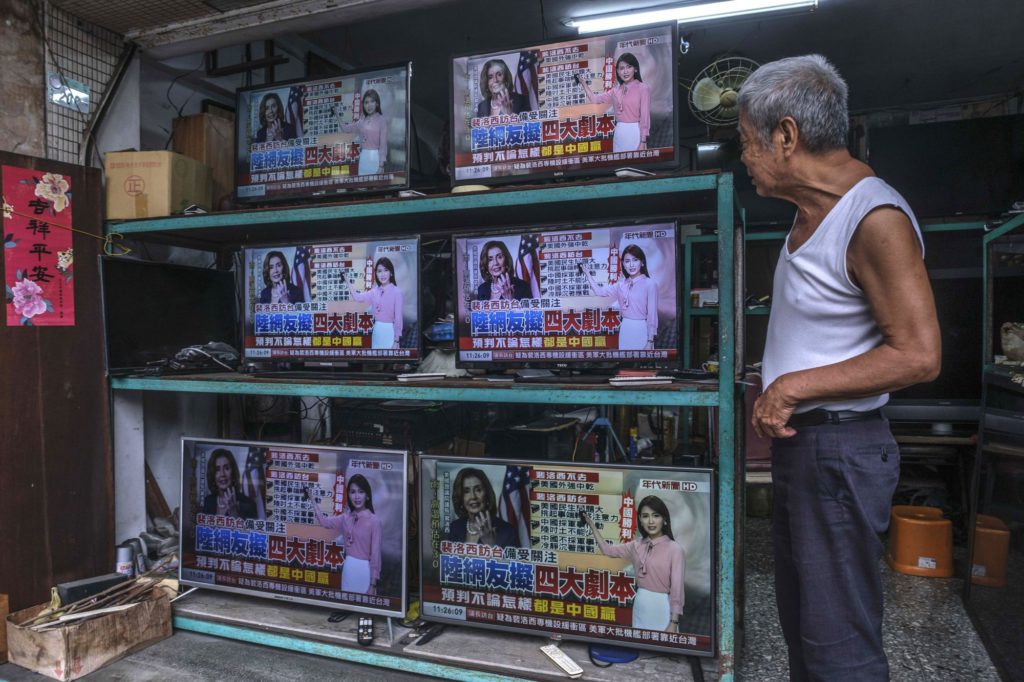
(Bloomberg) — Even as Taiwan becomes the center of a showdown between two of the world’s greatest superpowers over a landmark visit by US House Speaker Nancy Pelosi, locals are showing little alarm, reacting to threats from China with their usual sangfroid.

Beijing, which regards Taiwan as part of its territory, has promised “grave consequences” for the visit by the highest-ranking US official in a quarter century. While that has prompted global speculation over the possible forms of retaliation, such rhetoric and the specter of military conflict have become part of daily life in Taiwan. 

“I didn’t even know about the news that she’s coming, my news feed didn’t push this to me,” said Wei Chen, a 25-year-old cafe worker, said on Tuesday morning. “China has been sending out these kind of ‘warnings’ pretty often and nothing has happened.”

The visit by Pelosi is splashed across the front pages of about half of Taiwan’s major newspapers, after days of a relatively muted coverage. Liberty Times reported that she is expected to arrive Tuesday at 10:20 p.m. local time. 

But social media responses were largely pitched between ambivalence and humor with lighthearted posts gathering steam on Facebook and Twitter. One popular online meme juxtaposes Taiwan’s social media discourse — bubble tea, coffee, and local pineapple snacks — with discussions among the international community that focuses on Pelosi and the threat of war. 

“Chinese threats and military posturing around Taiwan is a constant for the Taiwanese. For them, this isn’t a radical departure from their day to day,” said Amanda Hsiao, a senior analyst at Crisis Group based in Taiwan. “This is the context they have to deal with and so for them it’s a way of not of downplaying that threat from China by not playing it up themselves.”

Beijing’s aggressive “wolf-warrior diplomacy” and rhetoric has had a diminishing impact over time, with people increasingly desensitized to the repeated but unrealized threats, said Wen-Ti Sung, a political scientist at Australia National University’s Taiwan Studies Program. “It is essential for maintaining their own sanity not to overreact to threats from China.”

China’s social media sites have been dominated by the expected visit for days. Eight of the top 10 trending topics on China’s Twitter-like Weibo service were about Pelosi or her trip on Tuesday afternoon. They have garnered millions of views, with hashtags describing the situation as a “dangerous provocation” and playing up pointed live-fire drills in Fujian province, across the strait from Taiwan.

Restraint is often part of Taiwan’s strategic response to Chinese military escalations. 

“The Taiwanese don’t want to add to it and amplify those threats,” Crisis Group’s Hsiao said, adding that Beijing’s fiery rhetoric was considered aimed at deterrence. “We’ve seen that pretty consistently in the way they’ve handled Chinese threats, not just around this event.” 

Taiwan’s foreign ministry has stayed silent so far, declining to confirm the visit again on Tuesday. Taiwan always welcomes international visitors to gain a better understanding and display their support, spokeswoman Joanne Ou said at briefing in Taipei.

The muted political response in Taiwan may be imitated by other states across Asia. The furor around Pelosi’s visit risks straining relations throughout the region as governments confront the reality of ratcheting tensions between the world’s two largest economies. Both the US and China have sent diplomats to engage with Southeast Asian leaders. US Secretary of State Antony Blinken is due to visit Cambodia and the Philippines in August.

As Pelosi makes planned stops through Singapore and Malaysia, it’s likely that local officials will try to avoid being seen too closely allied with Pelosi’s trip to Taiwan.

Still, there is some unease over the visit, with tensions across the Taiwan Strait at their highest level since 1996 when Lee Teng-hui was elected president in Taiwan’s first direct election. 

Financial markets are increasingly pricing in higher risks. Taiwan’s benchmark stock index closed 1.6% lower on Tuesday, while some investors sought safety in the yen which touched a two-month high. 

Hunter Hsiao, a Taipei-based equity investor, said he and his colleagues have been closely tracking news of Pelosi’s visit since last week.  

“There may be a larger and longer-term impact to Taiwan’s stability, rather than just short-term systemic risk,” Hsiao said, requesting that his employer not be named as he was not authorized to speak publicly. He said Taiwanese people who are more risk-sensitive, such as those in finance, should have contingency plans, whether they involve hedging investments or even immigration. 

Local business owners also worry that Pelosi’s visit risked triggering a worsening of an already-weak business environment. Waning global demand for electronics and rising inflation has dragged down Taiwan’s pace of growth to the slowest in two years. 

“As a business owner, I am worried that more black swan events will come amid inflation, recession, and the war in Ukraine,” said Lee, owner of a software startup, declining to give her full name. “If any party acts irrationally, that would cause real damage to safety of the Taiwanese people.”

More stories like this are available on bloomberg.com

©2022 Bloomberg L.P.
Taiwan Risk Joins Long List of Reasons to Shun China Stocks

(Bloomberg) — The list of reasons to sell Chinese equities just keeps getting longer.

Stocks took another dive on Tuesday as traders braced for geopolitical risks to intensify with US House Speaker Nancy Pelosi’s planned visit to Taiwan. Beijing regards the island as part of its territory and has promised “grave consequences” for the trip. The tensions may exacerbate outflows from China after global funds sold about 2.3 billion yuan ($342 million) of local shares via the exchange links on Tuesday.

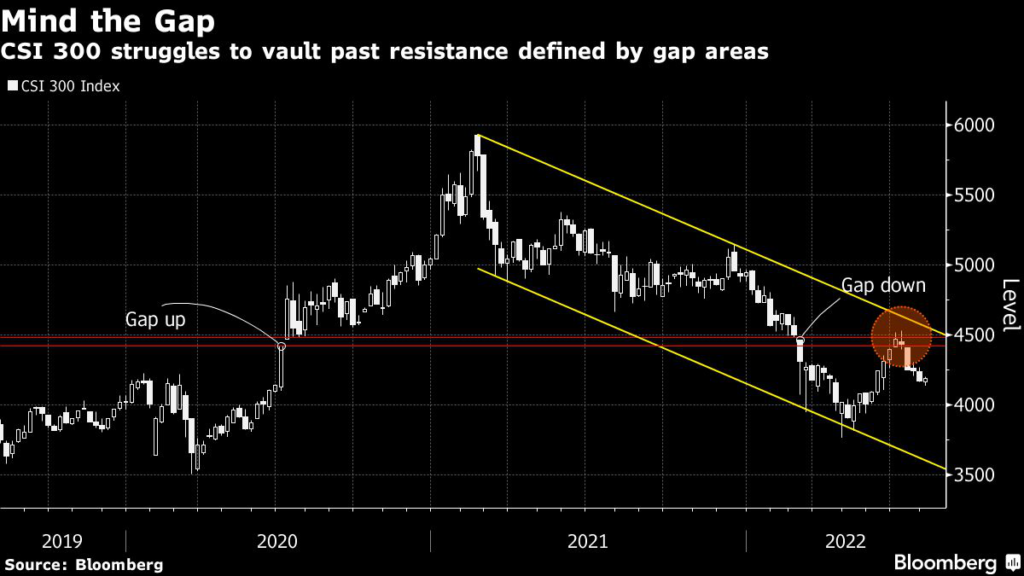
A gauge of Hong Kong-listed Chinese stocks slid 2.5%, taking losses for the year to about 19% — one of the world’s worst performers among major equity indexes tracked by Bloomberg. The benchmark CSI 300 Index closed down 2%, its biggest loss since late May.

Tensions with the US are the latest headwind for Chinese equities, which are already reeling from the impact of slowing growth, a deepening property sector crisis and tech crackdowns. Pelosi’s planned trip threatens to complicate Sino-American ties, which have already been hurt by a row over trade and a potential delisting of Chinese firms in the US. 

“There is a lot of nervousness in the market about where things will go from here, and fear of an actual hot war,” said Zhang Fushen, senior analyst at Shanghai PD Fortune Asset Management LLP. “My positioning now is light and I have the flexibility to build out my position if things escalate and stocks trade lower for a period.”

Pelosi is expected to arrive in Taiwan Tuesday at 10:20 p.m. local time via private plane at Songshan Airport, the Liberty Times reported, without specifying how it got the information.

‘Watershed’ Event

The White House sought to dial back the rising tensions with China, insisting the trip doesn’t signal a change in US posture toward Taiwan and urging Beijing to refrain from an aggressive response.

“If she does make the visit, this could be a watershed marking a new form of escalation in US-China relations,” said Li Weiqing, partner at JH Investment Management Co. “While previously the tensions were economic, this may be the first time in years that there is direct military contact,” he said, while adding that the market impact may be short-lived. 

READ: Taiwan Stocks Slide as Rising US-China Tensions Dent Sentiment

The worsening standoff comes just as Chinese equities are grappling with a deepening crisis in the housing sector. Hundreds of thousands of homebuyers have refused to pay mortgages on stalled projects and China Real Estate Information Corp. estimates that new home sales in 30 Chinese key cities may have fallen 33% on year. 

To make matters worse, the nation’s official economic growth target of around 5.5% is looking increasingly out of reach. Top leaders told government officials last week that this year’s growth estimate should serve as guidance rather than a hard target that must be hit, according to people familiar with the matter.

China should achieve “the best outcome” possible for economic growth this year while sticking to a strict Covid Zero policy, the Politburo, the nation’s top leadership, said after a meeting last week.

“The concern about the economy is also real, you don’t even have to read between the lines of the Politburo readout to realize that 5.5% is pretty much out of the picture,” said Shanghai PD’s Zhang.

Other Chinese stock gauges also fell on Tuesday, fueling a broad decline in Asian equities. The Shanghai Composite and ChiNext Index dropped at least 2% each.

Money managers had withdrawn $327 million from exchange-traded funds that invest in Chinese shares last week.

“Escalating geopolitical tensions increase risks for the region,” said Marvin Chen, a strategist at Bloomberg Intelligence. “China equities will likely see risk premiums rise and volatility may increase in the near term depending on China’s reaction.”

(Updates throughout)

More stories like this are available on bloomberg.com

©2022 Bloomberg L.P.
Taiwan Risk Brings Another Torrid Day for China’s Stock Market

(Bloomberg) — The list of reasons to sell Chinese equities just keeps getting longer.

Stocks took another dive on Tuesday as traders braced for geopolitical risks to intensify with US House Speaker Nancy Pelosi’s planned visit to Taiwan. Beijing regards the island as part of its territory and has promised “grave consequences” for the trip. The tensions may exacerbate outflows from China after global funds sold about 2.3 billion yuan ($342 million) of local shares via the exchange links on Tuesday.

A gauge of Hong Kong-listed Chinese stocks slid 2.5%, taking losses for the year to about 19% — one of the world’s worst performers among major equity indexes tracked by Bloomberg. The benchmark CSI 300 Index closed down 2%, its biggest loss since late May.

Tensions with the US are the latest headwind for Chinese equities, which are already reeling from the impact of slowing growth, a deepening property sector crisis and tech crackdowns. Pelosi’s planned trip threatens to complicate Sino-American ties, which have already been hurt by a row over trade and a potential delisting of Chinese firms in the US. 

“There is a lot of nervousness in the market about where things will go from here, and fear of an actual hot war,” said Zhang Fushen, senior analyst at Shanghai PD Fortune Asset Management LLP. “My positioning now is light and I have the flexibility to build out my position if things escalate and stocks trade lower for a period.”

Pelosi is expected to arrive in Taiwan Tuesday at 10:20 p.m. local time via private plane at Songshan Airport, the Liberty Times reported, without specifying how it got the information.

‘Watershed’ Event

The White House sought to dial back the rising tensions with China, insisting the trip doesn’t signal a change in US posture toward Taiwan and urging Beijing to refrain from an aggressive response.

“If she does make the visit, this could be a watershed marking a new form of escalation in US-China relations,” said Li Weiqing, partner at JH Investment Management Co. “While previously the tensions were economic, this may be the first time in years that there is direct military contact,” he said, while adding that the market impact may be short-lived. 

READ: Taiwan Stocks Slide as Rising US-China Tensions Dent Sentiment

The worsening standoff comes just as Chinese equities are grappling with a deepening crisis in the housing sector. Hundreds of thousands of homebuyers have refused to pay mortgages on stalled projects and China Real Estate Information Corp. estimates that new home sales in 30 Chinese key cities may have fallen 33% on year. 

To make matters worse, the nation’s official economic growth target of around 5.5% is looking increasingly out of reach. Top leaders told government officials last week that this year’s growth estimate should serve as guidance rather than a hard target that must be hit, according to people familiar with the matter.

China should achieve “the best outcome” possible for economic growth this year while sticking to a strict Covid Zero policy, the Politburo, the nation’s top leadership, said after a meeting last week.

“The concern about the economy is also real, you don’t even have to read between the lines of the Politburo readout to realize that 5.5% is pretty much out of the picture,” said Shanghai PD’s Zhang.

Other Chinese stock gauges also fell on Tuesday, fueling a broad decline in Asian equities. The Shanghai Composite and ChiNext Index dropped at least 2% each.

Money managers had withdrawn $327 million from exchange-traded funds that invest in Chinese shares last week.

“Escalating geopolitical tensions increase risks for the region,” said Marvin Chen, a strategist at Bloomberg Intelligence. “China equities will likely see risk premiums rise and volatility may increase in the near term depending on China’s reaction.”

(Updates throughout)

More stories like this are available on bloomberg.com

©2022 Bloomberg L.P.

India’s Zomato Appoints Four CEOs, to Change Name to Eternal

(Bloomberg) — Zomato Ltd., the Indian food-delivery company that went public last year, is appointing chief executive officers to lead its key business units and plans to rename itself Eternal Ltd. after winning approval to acquire another delivery startup. 

Zomato, backed by Ant Group Co., Temasek Holdings Pte. and Goldman Sachs Group Inc., said in an internal memo that it will name CEOs to at least four units after the deal for grocery-delivery startup Blinkit. The target company also owns a business-to-business unit called Hyperpure, which delivers ingredients and kitchen supplies to restaurants.

“We are transitioning from a company where I was the CEO to a place where we will have multiple CEOs running each of our businesses (e.g. Zomato, Blinkit, Hyperpure, Feeding India), all acting as peers to each other, and working as a super-team with each other towards building a single large and seamless organisation,” Deepinder Goyal, its co-founder and chief executive officer, wrote in a note shared with employees. “Starting today, we are going to call this larger organisation “Eternal,” Goyal said, adding that it will remain an internal name for the time being.

The company’s emails and workspaces will take on the Eternal name and Singh said he foresees a day when instant grocery overtakes its food delivery business. At that time, “we will change our company’s name from Zomato Ltd. to Eternal Ltd., and also change our stock ticker to ETERNAL,” he added in the note.

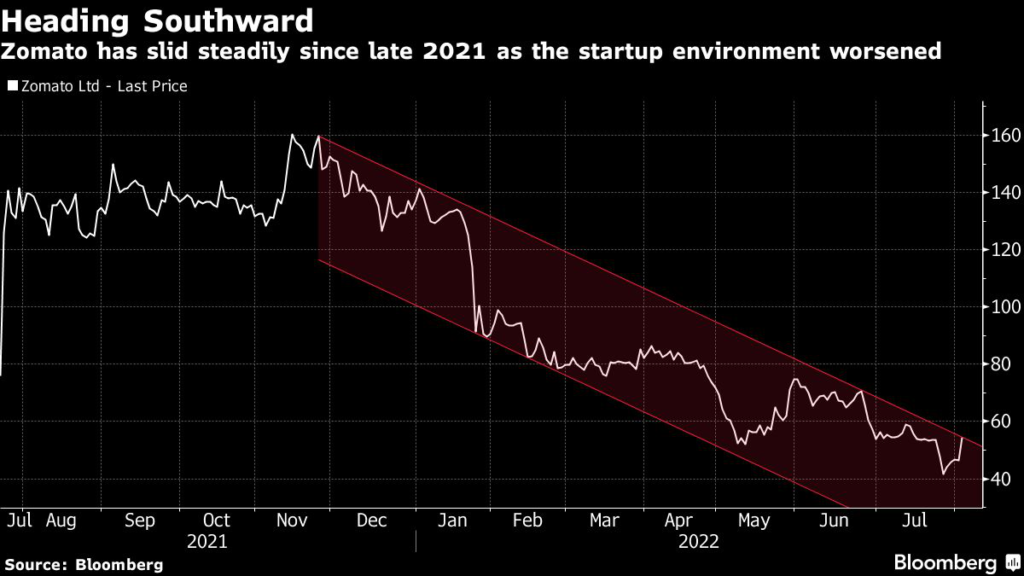
Zomato’s shares soared as much 19% on Tuesday after it posted a smaller-than-expected loss of 1.86 billion rupees ($23.7 million) in the quarter ending June. The stock plunged to a record low in July after the IPO lockup period for investors expired.

Zomato’s 1Q Demonstrates Urgency to Improve: Street Wrap

More stories like this are available on bloomberg.com

©2022 Bloomberg L.P.

The Hot New Trend in Weight Loss Is Anything But a Diet

(Bloomberg) — Subscribe to Prognosis (Spotify) Subscribe to Prognosis (Apple Podcasts)

Companies like WW, formerly Weight Watchers, and Noom, which makes a buzzy weight-loss app, have a new pitch for would-be members: They can lose weight without dieting. Sort of. Call it a holistic lifestyle approach. 

People used to be willing to do “draconian, onerous things” to shed pounds, said Gary Foster, the chief scientific officer for WW. But it’s no longer all about weight anymore; it’s also about health. They are now saying “‘no longer am I willing to eat in wacky ways. I want to come out of this program, eating more healthy, not less healthy,’” he said. 

WW pivoted in 2018, debuting a program more focused on overall health alongside the new, abbreviated name. More recent entrant Noom, meanwhile, emphasizes psychology as a means to changing one’s lifestyle and habits. Noom charges about $60 a month for a program that incorporates daily lessons, calorie counting, activity tracking and coaching. The company describes itself as “more than a diet.” Its advertisements promise people they can “stop the yo-yo dieting,” or tell them to “stop dieting. Get life-long results.” 

Whether these new and still-evolving approaches will relieve weight anxieties still remains to be seen. In this new episode of the Bloomberg podcast “Losing It,” we explore why the backlash against dieting is happening, how companies are getting in on the action, and whether we’re actually over losing weight…or maybe just over the word “diet.” 

More stories like this are available on bloomberg.com

©2022 Bloomberg L.P.

Just Eat’s Lieferando Launches Rapid Delivery Hub in Berlin

(Bloomberg) — Just Eat Takeaway.com NV has launched its own service offering rapid delivery of grocery and convenience items in Berlin, pulling the firm deeper into an already crowded market.

Just Eat’s so-called ‘dark store’ will target a delivery time of around 20 minutes and offer consumers more than 1,000 items from fresh produce to baby products under its local Lieferando brand, according to a statement. The latest expansion follows the company’s nationwide rollout of a similar service in Canada, and comes as Just Eat navigates slowing growth and turbulent markets.

A crop of newcomers like Gorillas Technologies GmbH and Flink SE have built out networks of urban warehouses to offer delivery of essential items in minutes, while Delivery Hero SE and Deliveroo Plc develop competing services.

Previously Just Eat has focused on offering grocery delivery in Europe in partnership with existing operators like Asda Group Ltd. In Berlin, it partnered with online retailer Wuplo.

“Grocery and convenience represent an incremental market opportunity that further enhances our consumer proposition, drives networking effects and brand loyalty, and improves our delivery fleet utilisation,” the company’s interim Chief Operating Officer Andrew Kenny said.

Read more: Just Eat Enters U.K. Grocery Delivery With Asda Partnership 

More stories like this are available on bloomberg.com

©2022 Bloomberg L.P.

Close Bitnami banner
Bitnami