

Bloomberg

Women’s Health, Semiconductors, Crypto Spur Recharge Capital Dealmaking

(Bloomberg) — Some of the world’s most controversial and crisis-prone sectors are exactly where Lorin Gu wants to put his firm’s $6 billion of capital.

Women’s health, semiconductors and cryptocurrencies all present key opportunities for dealmaking, said the 29-year-old founder of investment firm Recharge Capital. 

The firm, which raised funds from backers including Bain & Co., Walt Disney Co.’s private-equity arm and William Ford of General Atlantic, seeks investments in “high-potential, highly-lucrative disrupted sectors,” Gu said in an interview. 

Those include women’s health, where it’s been an investor in clinics offering fertility services such as in-vitro fertilization as well as those providing abortions. Since the supercharged abortion debate in the US underscored the importance of choices surrounding fertility, it’s doubled down, Gu said.

“Unfortunately the world has played out exactly how we imagined it,” Gu said from the firm’s New York office. “We knew fertility was going to become a hot topic.”


Recharge, which also has offices in Singapore, Hong Kong and Taipei, has a staff of 50 people between 29 and 43 years old, more than half of whom are women. It generated 29% gross returns in 2021 and nearly 13% this year to date, according to people with knowledge of the firm’s performance.

Following the US Supreme Court’s decision in June ending the constitutional right to abortion, Recharge will expand its investments in companies that offer women’s reproductive care. Gu’s goal is to make it cheaper and more accessible, especially to women in states with restrictions, he said.

Private clinic owners in the US are thinking about how can they combine with other companies in a “roll-up style” to serve people across state lines, helping women who live in areas where abortion is limited, he said.

The debate over abortion is likely to spread to other nations, so Recharge’s investments can help make reproductive services available to more women at reduced costs abroad, Gu said.

He also wants to make other fertility services such as IVF less costly, by building on existing investments in the clinics. Recharge holds stakes in clinics in the US, Europe and Southeast Asia, and is working to expand its international network.

“Fertility has been an overlooked sector because people thought it impacted a small percentage of the population who are naturally infertile,” Gu said. “More and more people want to have the capability of making sure that, through IVF, their children are perfectly healthy.”

Semiconductors, Crypto

“The issues we focus on are narrow but still have room for innovation and growth, especially around emerging markets,” said Gu, who worked at Blackstone Inc. and Cyrus Capital before establishing Recharge in 2019.

Recharge targeted semiconductors launching a strategy in 2020 and boosted its wager as the pandemic and geopolitical tensions aggravated a global shortage of the chips. It joined Carlyle Group Inc. and others to invest $300 million in Airoha, one of the largest wireless-device chip manufacturers. 

The firm also looks for crossover between semiconductors and crypto, another disrupted industry of late. The metaverse is powered by semiconductors, Gu said, forming the infrastructure from which crypto continues to build. 

Gu tapped his roommate at Harvard University, John C. Lo, as a managing partner at Recharge. Lo runs the crypto-focused investment fund and lab, Omakase, and was a core contributor to the DeFi trading platform Sushi. 

With the hedge-fund like strategy, Recharge looks for opportunities to bridge traditional and decentralized finance, building its own DeFi products or investing in outside firms like Percent Technologies, a fintech that combines crypto and credit markets. Most traditional firms trying to enter crypto don’t have access, or face regulatory limits, and Recharge looks for ways to provide the entry point, Lo said. 

“Digital assets will provide efficiency in traditional finance, and vice versa,” he said in an interview. 

The recent meltdown in crypto markets hasn’t deterred Lo. He sees crypto having a perception problem amid news reports about tokens and scams. “In terms of the actual utilization and impact, its actually a small percentage of problems in the space,” he said.

Lo and his team are focused on the risks and inefficiencies of the developing crypto marketplace, including NFT’s. They’re working on ways to monitor investments and provide early warnings of a problem.

“We have seen and learned a lot of lessons. We’ve seen what works and what doesn’t,” Lo said. “Now is the time to build things that will last forever. DeFi will remain as the great experiment, and the metaverse will continue to test the rules.”

More stories like this are available on bloomberg.com

©2022 Bloomberg L.P.
Apple Starts Four-Part Bond Sale to Fund Buybacks, Dividends

(Bloomberg) — Apple Inc. is tapping the high-grade bond market with a sale in as many as four parts. 

The longest portion of the offering, a 40-year security, may yield around 150 basis points over US Treasuries, according to a person familiar with the matter. 

Proceeds from the sale are earmarked for general corporate purposes, including the financing of share buybacks and dividends, said the person, who asked not to be identified as the details are private. 

Read more: NEW DEAL: Apple $Benchmark Debt Offering in 4 Parts

The sale comes after the US primary market for investment-grade bonds sprang back to life in the second half of July amid a credit market rally. Many of the big banks brought large debt sales after reporting earnings, helping supply beat expectations for the month. The momentum is expected to continue into this week with Wall Street syndicate desks expecting around $30 billion of new high-grade bond supply. 

Apple, one of eight companies selling new high-grade bonds Monday, appears to be taking advantage of the recent stability and relatively cheaper cost of funding in the corporate market. The yield on Bloomberg’s benchmark investment-grade index hit a nearly two-month low on Friday.

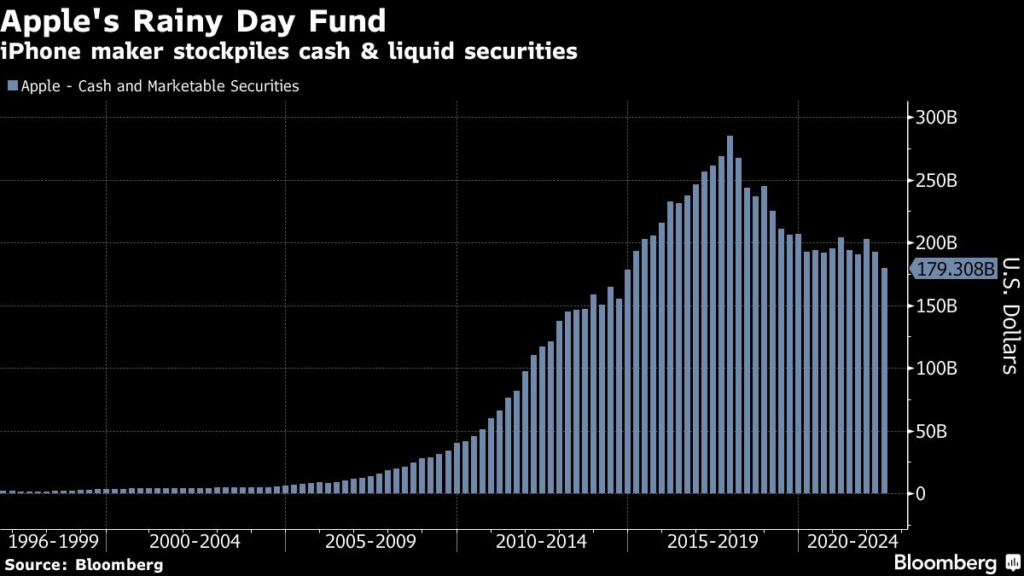
The iPhone maker’s cash and cash equivalents stockpile sits at nearly $180 billion, while it has paid out around $14 billion dividends each of the last three years. 

“Apple consistently borrowing tens of billions of dollars annually is due more to its confidence in expanding cash flow than operational needs,” Bloomberg Intelligence analyst Robert Schiffman wrote Monday. 

Goldman Sachs Group Inc., JPMorgan Chase & Co. and Bank of America Corp are leading the sale, the person said. 

In December, Apple’s long-term credit was upgraded to Aaa by Moody’s Investors Service, putting it in an exclusive club with Microsoft Corp. and Johnson & Johnson as the only US corporations in the S&P 500 with the highest possible credit rating. 

(Updates with number of high-grade deals, Bloomberg Intelligence commentary starting in fifth paragraph.)

More stories like this are available on bloomberg.com

©2022 Bloomberg L.P.
Amazon Starts Same-Day Deliveries From Diesel and PacSun Stores

(Bloomberg) — Amazon.com Inc. has started delivering items from brick-and-mortar stores in a dozen US metro areas, the e-commerce giant’s latest effort to make more products available for speedy delivery.

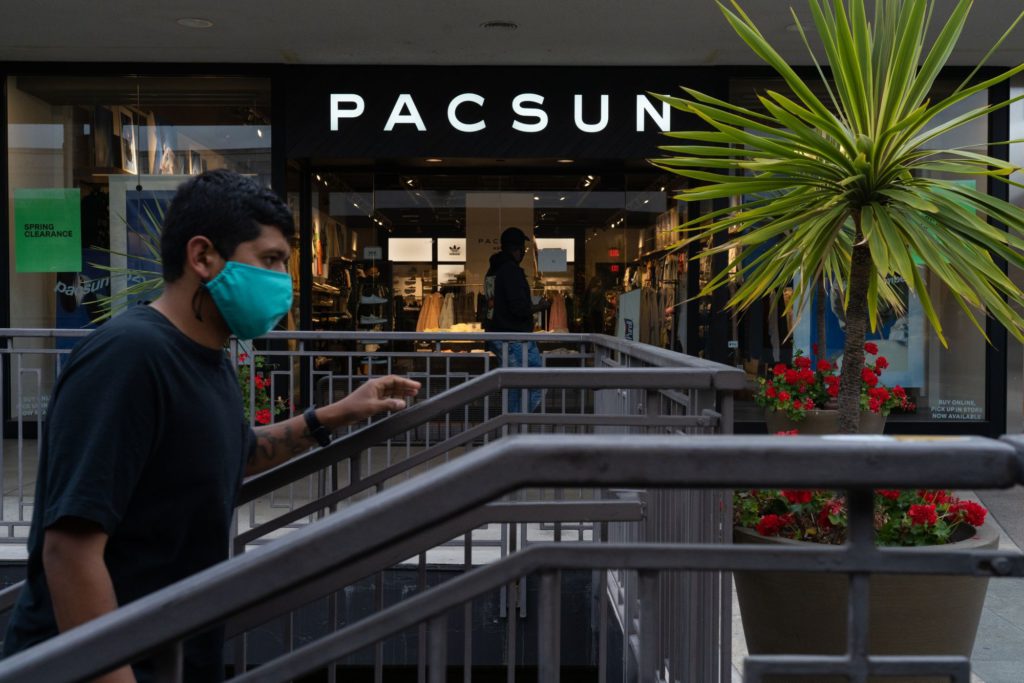
The company’s initial partners are Diesel, PacSun, GNC and SuperDry, Amazon said in a blog post on Monday. Bloomberg in May reported that Amazon was testing the service, which uses the company’s gig-economy Flex drivers to retrieve and deliver orders. 

Amazon Prime members in parts of select cities, including Atlanta, Chicago, Seattle and Washington, will see items from participating retailers listed on the Amazon website and app. Delivery costs $2.99, and is free for orders of $25 or more. Some stores offer the option of buying items online and picking them up at the premises. 

Amazon’s website lists 24 participating locations, all of which appear to be in shopping malls.

The Seattle-based company says Sur La Table and 100% Pure will soon join the service and plans to add additional retailers and cities in the coming months. 

More stories like this are available on bloomberg.com

©2022 Bloomberg L.P.

Uber Misses Out on Reopening Trade as Investors Crave Profitability

(Bloomberg) — Consumers have rediscovered the desire to travel following the pandemic, but the reopening trade isn’t filtering through to ride-hailing companies, which are poised to report quarterly results in an unfriendly environment for the stocks.

Shares of both Uber Technologies Inc. and Lyft Inc. have struggled throughout 2022, extending long-standing slumps as they fail to live up to the hopes of optimistic Wall Street analysts. The pair are confronting high inflation and a potential economic downturn that could damp demand. At the same time, aggressive interest rate increases by the Federal Reserve have made unprofitable growth stocks like these very much out of favor.

“We’re seeing a real reckoning across the class of companies that might have good growth prospects, but which aren’t making money,” said David Klink, senior equity analyst at Huntington Private Bank. “There’s a higher hurdle for owning growth stocks if the growth isn’t profitable, and just because Uber’s valuation looks low, it can still move lower.”

Uber shares fell 0.4% on Monday, while Lyft dropped 2.2%.

Uber reports second-quarter results before the market open on Tuesday. Lyft’s will follow after the market closes Thursday. While Uber’s stock rose 15% in July, that was its first positive month of 2022; it remains down 45% for the year. Lyft has lost nearly 70% of its value this year, while the Russell 1000 Index is down 14% and a gauge of airline stocks, another industry that’s a reopening beneficiary, has fallen 19%.

The comparatively better performance at Uber, investors say, come as it operates internationally, while Lyft is only in the US and Canada. In addition, Uber’s larger scale and auxiliary businesses like Uber Eats provide additional levers for growth. Analysts expect Uber to report a revenue increase of almost 90% in the quarter, compared with less than 30% at Lyft.

“Uber might have somewhat better prospects than Lyft, but only a few companies can really maneuver in this environment, and Uber and Lyft aren’t among them,” said Ken Mahoney, chief executive officer at Mahoney Asset Management, who said he wouldn’t invest in either. 

A driver survey by MKM Partners in July found that increased fuel prices probably were leading drivers to cut down on the number of hours on they were on the road, suggesting potential supply constraints for Uber and Lyft heading into the third quarter.

“GDP is slowing, consumers are tightening their belts, and there’s high gas prices and upward pressure on wages,” Mahoney said. “It’s possible their profitability picture worsens further, and in this environment, investors are really looking at cash flow and wanting quality.”

Unprofitable growth stocks more broadly face challenges such as a rising cost of capital and tightening financial conditions that will limit their potential valuation upside, Goldman Sachs Group Inc. strategist Ryan Hammond wrote in a report last week.

Despite the headwinds, Wall Street remains positive on Uber. Almost 90% of analysts tracked by Bloomberg recommend buying the stock, while only one has a sell rating. The average analyst price target is $46.75, roughly double where the stock is now.

For Lyft, about 60% of analysts recommend buying, while the rest have the equivalent of a hold rating; none advocate selling, and the average analyst price target of $35.67 suggests a return potential of more than 160%.

JPMorgan is among the firms with a positive stance. It has an overweight rating on both Uber and Lyft, and named Uber one of its top picks, behind Amazon.com and Booking Holdings Inc.

Both are emerging as more structurally profitable, and they’re trading at a “March 2020 cash crunch/early pandemic price,” wrote analyst Doug Anmuth. However, he added, the pair remain “show-me stories, especially in challenging macro or a recession.”

Tech Chart of the Day

Technology stocks rallied on the last trading day of July in what became the Nasdaq 100 Index’s biggest monthly gain in more than two years. Amazon.com Inc. and Apple Inc. added about $196 billion in market value on Friday following their quarterly reports. The e-commerce giant notched up its biggest monthly gain since October 2009, while for the iPhone maker it was the largest since August 2020.   

Top Tech Stories

  • Tesla Inc. has signed new long-term deals with two of its existing Chinese battery-materials suppliers, the latest move by automakers to secure supplies amid intensifying competition.
    • Investors expect Elon Musk to sell more shares of Tesla by the end of 2022, according to the latest MLIV Pulse survey.
  • Alibaba Group Holding Ltd. fell on Monday amid escalating concerns that the stock could be booted off US exchanges for failing to comply with disclosure rules.
  • Sony Group Corp. fell as much as 7% after the tech giant trimmed its profit outlook, reflecting the impact of recession fears on the global gaming industry.
  • Japan’s push to turbocharge its startup ecosystem as part of Prime Minister Fumio Kishida’s New Capitalism agenda will need at least a decade to bear fruit, according to Yo Shibata, a Japanese entrepreneur and angel investor.
  • Indonesia began blocking websites from gaming store Steam to digital wallet PayPal Holdings Inc. over the weekend, making good on promises to bar internet services that don’t register locally and submit to a tightening regulatory regime.
  • Jidu Auto, an  autonomous electric vehicle startup backed by Chinese tech giant Baidu Inc., is considering raising about $300 million to $400 million in fresh funds, according to people familiar with the situation.

(Updates to market open.)

More stories like this are available on bloomberg.com

©2022 Bloomberg L.P.

Global Payments Agrees to Buy Evo for About $1.6 Billion

(Bloomberg) — Global Payments Inc. agreed to buy Evo Payments Inc. for about $1.6 billion in cash to expand into new markets in Europe and South America. 

Global Payments will pay $34 a share, according to a statement Monday. That’s about 24% higher than the closing price Friday and roughly 40% above the stock’s 60-day average price.

“The acquisition of Evo is highly complementary to our technology-enabled strategy, and provides meaningful opportunities to increase scale in our business globally,” Global Payments Chief Operating Officer Cameron Bready said in the statement.

The payments sector has been consolidating following a period of rapid growth that accelerated when the pandemic intensified consumers’ shift away from using cash. Global Payments last year agreed to buy real estate software company Zego from Vista Equity Partners in an all-cash transaction valued at $925 million.

The Evo transaction will expand Global Payments’ presence in new regions including Poland, Germany and Chile, and enhance its scale in existing markets such as the US, Canada, Mexico, Spain, Ireland and the UK, according to the statement.

Global Payments climbed 3% to $126 at 8:40 a.m. in early New York trading. Evo rose 21% to $33.

(Updates with shares in last paragraph. A previous version of this story corrected Bready’s title in third paragraph.)

More stories like this are available on bloomberg.com

©2022 Bloomberg L.P.
Singapore Gives Vauld Parent Three-Month Creditor Protection

(Bloomberg) — The Singapore High Court granted the parent of troubled crypto lender Vauld a three-month protection from creditors, giving the company breathing room as it seeks to sell itself to rival Nexo. 

Justice Aedit Abdullah gave Defi Payments Ltd. a moratorium that would last until Nov. 7, half of what the company had asked for, according to a court hearing in the city-state on Monday. During this period, the company’s 147,000 creditors will be barred from taking legal action against it. 

“I am concerned a six-month moratorium won’t get adequate supervision and monitoring,” the judge said, adding an extension may be possible based on an assessment of the firm’s progress in engaging with its creditors. He asked the company to form a creditors committee to address the issues, and will take note of the progress at the next hearing.

He said Vauld should provide details like cash flow and valuation of assets to its creditors in two weeks and management of its accounts in eight weeks. 

Like that of fellow crypto lenders Voyager Digital Ltd., Babel Finance and Celsius Network Ltd., Vauld’s unraveling was swift. The Singapore-based company reassured customers about the health of its business on June 16, only to announce steep layoffs five days later. In early July, Vauld halted withdrawals, trading and deposits on its platforms and announced that it was in discussions with Nexo. 

Sheila Ng, a lawyer for Defi Payments, said Monday that the firm needed six months of breathing room, including for restructuring, due diligence by Nexo and reconciliation of the group company accounts.  

She said the company will take into account the court’s suggestion on allowing a minimum withdrawal for its creditors. These include Vauld users with cryptocurrency balances in their accounts, institutional lenders that have lent funds to Defi Payments and vendors. 

Antoni Trenchev, co-founder and managing partner of Nexo, said in a message that the company remains “optimistic as to the transaction and how it will hopefully come about.” He added: “But we have to understand the liabilities, the receivables, who the counterparties are, what are the prospects of getting those receivables and, you know, all things like that in order to be in a position in order to make a decision. And it takes time.”

Scrutiny

Some crypto lenders offered double-digit yields — as high as 13% in Vauld’s case — then made risky bets to generate even higher returns on those deposits. That business model came under strain after the TerraUSD stablecoin collapsed in May, sparking a crash in cryptocurrency markets.

The series of failures will likely lead to greater regulatory scrutiny. Singapore’s central bank has already said it’s considering introducing more safeguards for consumers in the crypto industry.

Vauld has $330 million in assets and $400 million in liabilities at the group level, Chief Executive Officer Darshan Bhatija had said in an email to creditors on July 11. The company raised $25 million in a funding round led by Peter Thiel’s Valar Ventures in July last year. Investors in the deal included Coinbase Ventures and Pantera Capital.

(Adds comment from Nexo co-founder.)

More stories like this are available on bloomberg.com

©2022 Bloomberg L.P.
US Equity Futures Retreat Amid Hawkish Fed Talk: Markets Wrap

(Bloomberg) — US futures slipped as a rally that powered US stocks to their best month since 2020 turned fragile with central bankers driving home the message higher interest rates are needed to bring inflation under control, despite rising recession risks.

Contracts on both the Nasdaq 100 and S&P 500 traded lower on the heels of the best month for stocks since the year of the pandemic. The Stoxx 600 Index rose 0.3%, led by banks, as HSBC Holdings Plc posted better-than-estimated profits. 

The dollar fell against all of its Group of 10 peers ahead of data later Monday expected to show a slowdown in US manufacturing for July. 

Oil declined after poor Chinese economic data added to concerns that a global slowdown may sap demand. West Texas Intermediate dropped below $96 a barrel after sinking almost 7% in July in the first back-to-back monthly loss since late 2020.

Traders are speculating the Federal Reserve will tone down its anti-inflation campaign and opt for a slower path of rate hikes after data showed the US economy shrank a second quarter. While that sentiment drove July’s market turnaround after historic first-half losses, over the weekend some Fed officials sought to reinforce the message that higher rates are needed to stamp out price pressures and downplayed recession risks. 

“The fact that a very weak run of data is seen as equity bullish just purely on the basis of lower rates speaks to just how utterly dominant Fed policy has become in driving investor behavior,” said James Athey, investment director at abrdn. “Unless the Fed pulls off a miracle I am afraid the bear market is absolutely not over.”

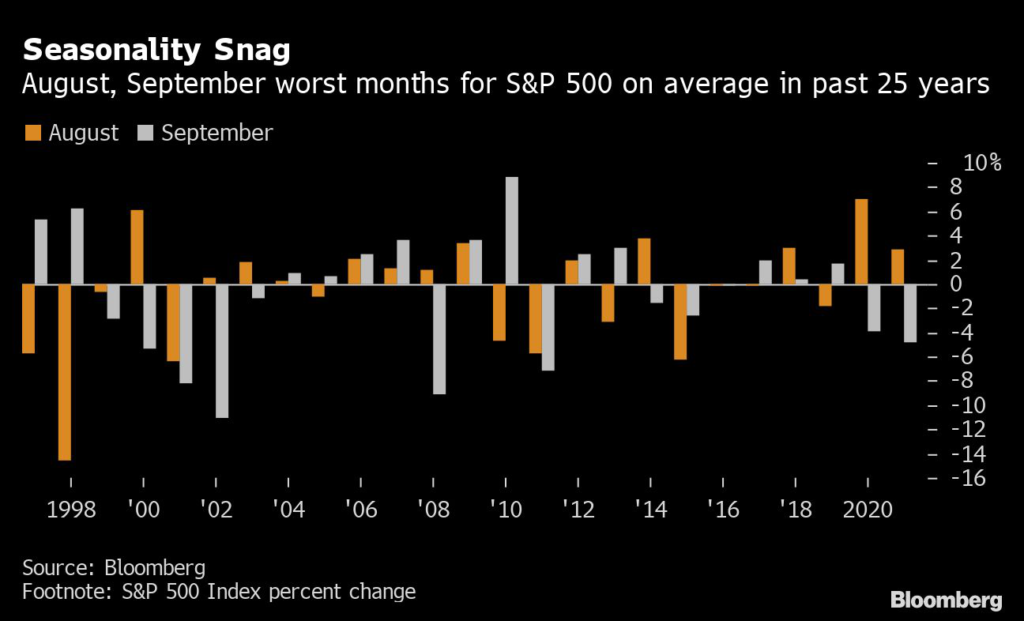
Despite a 12.6% advance from a low on June 16, the S&P 500 could be facing an ugly stretch. Wall Street lore says October is the most dangerous month for the stock market because of crashes in 1929, 1987 and 2008. But August and September are actually worse, with the S&P 500 averaging declines of 0.6% and 0.7%, respectively, over the past 25 years. 

Read more: Surging Stock Market Is Heading Into Riskiest Months of the Year

Treasury yields steadied with the 10-year rate at 2.65%, well down from June’s peak near 3.50%. Italian bonds rallied, sending the 10-year yield below 3% for the first time since May, as investors bet that a new government will stick to commitments needed to unlock European Union funds. 

Bitcoin declined after reaching the highest levels since mid-June on Saturday amid optimism that the market may have recovered from its worst levels.

Investors are also monitoring US House Speaker Nancy Pelosi’s trip to Asia. A statement from her office skipped any mention of a possible stopover in Taiwan. A visit may stoke US-China tension over the island.

What to watch this week:

  • Airbnb, Alibaba and BP are among earnings reports
  • US construction spending, ISM manufacturing, Monday
  • Reserve Bank of Australia rate decision, Tuesday
  • US JOLTS job openings, Tuesday
  • Chicago Fed President Charles Evans, St. Louis Fed President James Bullard due to speak at separate events, Tuesday
  • OPEC+ meeting on output, Wednesday
  • US factory orders, durable goods, ISM services, Wednesday
  • BOE rate decision, Thursday
  • US initial jobless claims, trade, Thursday
  • Cleveland Fed President Loretta Mester due to speak, Thursday
  • US employment report for July, Friday

Some of the main moves in markets:

Stocks

  • Futures on the S&P 500 fell 0.3% as of 8:15 a.m. New York time
  • Futures on the Nasdaq 100 fell 0.2%
  • Futures on the Dow Jones Industrial Average fell 0.1%
  • The Stoxx Europe 600 rose 0.3%
  • The MSCI World index rose 0.3%

Currencies

  • The Bloomberg Dollar Spot Index fell 0.3%
  • The euro rose 0.1% to $1.0233
  • The British pound rose 0.5% to $1.2227
  • The Japanese yen rose 0.7% to 132.30 per dollar

Bonds

  • The yield on 10-year Treasuries was little changed at 2.65%
  • Germany’s 10-year yield was little changed at 0.82%
  • Britain’s 10-year yield was little changed at 1.87%

Commodities

  • West Texas Intermediate crude fell 3.2% to $95.43 a barrel
  • Gold futures rose 0.4% to $1,789 an ounce

More stories like this are available on bloomberg.com

©2022 Bloomberg L.P.
North Koreans Suspected of Using Fake Resumes to Steal Crypto

(Bloomberg) — Suspected North Korean thieves are plagiarizing resumes and pretending to be from other countries as part of a wider effort to raise money for the government in Pyongyang, according to interviews with cybersecurity experts and data provided to Bloomberg News. 

The fraudsters are plundering job listings on LinkedIn and Indeed, incorporating details they find on legitimate profiles into their own resumes in order to try getting hired at US cryptocurrency firms, according to security researchers at Mandiant Inc. One suspected North Korean job seeker recently claimed to be an “innovative and strategic thinking professional” in the tech industry, according to Mandiant, and added, “The world will see the great result from my hands.” The job applicant’s account, which Mandiant identified on July 14, claimed to be from an experienced software developer. But researchers found nearly identical language in another person’s profile.

By collecting information from crypto companies, the researchers said, North Koreans can gather intelligence about upcoming cryptocurrency trends. Such data – about topics like Ethereum virtual currency, nonfungible tokens and potential security lapses – could give the North Korean government an edge in how to launder cryptocurrency in a way that helps Pyongyang avoid sanctions, said Joe Dobson, a principal analyst at Mandiant. 

“It comes down to insider threats,” he said. “If someone gets hired onto a crypto project, and they become a core developer, that allows them to influence things, whether for good or not.” 

The North Korean government has consistently denied involvement in any cyber-enabled theft.

Other suspected North Koreans have fabricated job qualifications, with some users claiming on job applications to have published a white paper about the Bibox digital currency exchange, while another posed as a senior software developer at a consultancy focused on blockchain technology.

Mandiant researchers said they had identified multiple suspected North Korean personas on employment sites that have successfully been hired as freelance employees. They declined to name the employers.

“These are North Koreans trying to get hired and get to a place where they can funnel money back to the regime,” said Michael Barnhart, a principal analyst at Mandiant. 

In addition, North Korean users, claiming to have programming skills, have posed questions on the coding site GitHub Inc., where software developers publicly discuss their findings, about larger trends in the cryptocurrency world, according to the Mandiant researchers.

The evidence detected by Mandiant reinforces allegations made by the US government in May. The US warned that North Korean IT workers are trying to obtain freelance employment abroad while posing as non-North Korean nationals, in part to raise money for government weapons development programs. The IT workers claim to have the kinds of skills necessary for complex work like mobile app development, building virtual currency exchanges and mobile gaming, according to the US advisory.

North Korean IT workers “target freelance contracts from employers located in wealthier nations,” according to the US’s 16-page advisory released in May. In many instances, the North Korean workers present themselves as South Korean, Chinese, Japanese or Eastern European and US-based teleworkers, according to the US advisory.

In April, an executive at Aztec Network, a blockchain company, described the experience of conducting a job interview with a possible North Korean hacker as leaving him “a little shaken.” “Terrifying, hilarious and a reminder to be paranoid and triple-check your OpSec practices,” he wrote, in a Twitter thread. The executive didn’t respond to a message seeking comment.

In a related tactic, suspected North Korean hackers have replicated Indeed.com and used it to gather information on website visitors, according to Alphabet Inc.’s Google. By setting up websites that appear to be real, spies can dupe job-seekers into sending their resume, thus beginning a conversation that could enable hackers to breach their machine or steal their data, according Ryan Kalember, executive vice president at the email security firm Proofpoint Inc.

Other fake domains, created by suspected North Korean operators, impersonated ZipRecruiter, a Disney careers page and a site called Variety Jobs, according to Google.

“We see a torrent of this everyday,” said Kalember. “Their ability to come up with convincing cover companies is getting better and better.”

In February, the security firm Qualys Inc. said it detected a phishing campaign in which the so-called Lazarus Group, a name that the US government sometimes uses to describe Pyongyang-backed hackers, targeted job applicants who applied for roles at Lockheed Martin Corp.

The hackers sent individual messages that appeared to be from Lockheed Martin, using email attachments that appeared to include information from the company but in fact contained malicious software. The ruse followed similar efforts in which attackers posed as BAE Systems Plc and Northrop Grumman Corp., according to Qualys.

“If you look at the job listings, they’re appealing to people’s ego and the desire for money,” said Adam Meyers, senior vice president of intelligence at CrowdStrike Holdings Inc. “They’re capitalizing on that, but the fake job listings are an opening gambit for their broader cyberattacks and espionage.”

North Korea’s focus on stealing cryptocurrency comes after the country’s hackers spent years stealing money from the global financial system, Mandiant researchers said. After a notorious 2016 heist on Bangladesh Bank, where the US accused North Korean thieves of trying to steal close to $1 billion, global banks added safeguards meant to stop such breaches.

“The market has changed where banks are more secure, and cryptocurrency is a totally new market,” Dobson said. “We’ve seen them go after end-users, crypto exchanges and now the crypto bridges.”

More stories like this are available on bloomberg.com

©2022 Bloomberg L.P.

Maduro Embraces Stock Market in Latest Venezuela Nod to Normalcy

(Bloomberg) — Venezuela’s stock market was derided by the late President Hugo Chavez as a tool of the rich, pummeled by years of recession and avoided by international investors as the nation’s currency became nearly worthless. 

But in his attempt to resuscitate the economy, Chavez’s hand-picked successor is making amends with one of the institutions most battered by years of socialist policies. In an about face, President Nicolas Maduro plans to sell slices of the government’s stakes in state-owned companies through the stock exchange.

“The government has taken a 180-degree turn,” said Gustavo Pulido, the head of the Caracas Stock Exchange. 

The move, while modest in scope, is dripping with symbolism and in line with Maduro’s push to energize the deeply damaged economy by allowing more free-market enterprise. Already he’s made progress shoring up the bolivar and wringing out some modest growth in a country that saw poverty and hunger explode during decades of socialist policies. 

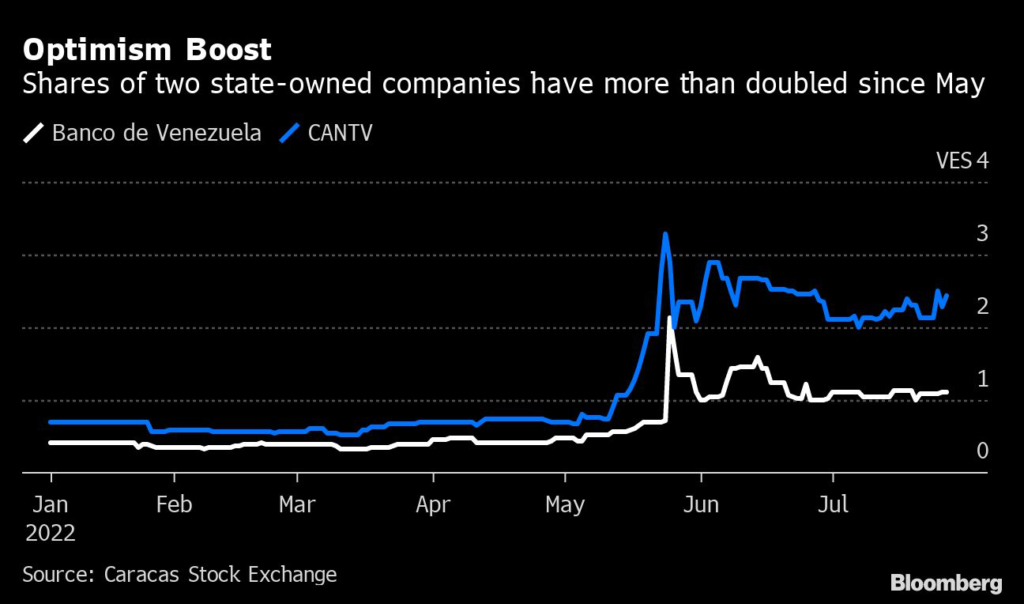
In coming weeks, the government will offer 5% stakes in lender Banco de Venezuela and fixed-line phone and internet service provider Cantv. More such listings could follow as the government seeks to raise cash.

The most enticing target could be companies tied to oil, gas and petrochemicals which, according to Maduro, could follow suit. Offering shares would be a game changer for Venezuela’s most important industry, allowing the businesses more independence as the government’s stake shrinks, according to Tamara Herrera, an economist and director of Venezuela research group Sintesis Financiera. 

Venezuela’s hydrocarbons law states that energy companies must be majority owned by the state, so that would need to be changed for the government to sell off controlling stakes. It’s not clear that Maduro’s administration would allow that, given that he and his allies often speak about how Venezuela’s natural resources belong to its citizens. 

The Banco de Venezuela sale is likely to come first. The lender’s most recent financial statement shows profit jumped 70% in dollar terms in the first half from a year earlier. The latest data showed it had 15 million customers and a 26% market share.

Cantv is more of a question mark. It recently selected brokerages to act as structuring agent and bookrunner, but the most recent financial statement is from the end of 2020, when it swung back to a profit after losses in 2019. Service has suffered amid years of disinvestment and infrastructure theft, while its fees remain heavily subsidized.

Both companies have ping-ponged back and forth from state control to the hands of private investors. Cantv was first acquired by the Venezuelan state in the 1950s, then got privatized in the 1990s. Chavez took it over again in 2007. Banco de Venezuela was bought by Spain’s Grupo Santander in the 1990s. Then Chavez nationalized it in 2009.

Cantv and Banco de Venezuela each have a small number of shares already trading on the bourse, and the price shot up after the government announced its plans for a stake sale in May. Cantv is up 227% since then, while Banco de Venezuela has gained 109%. Cantv’s market value is $331 million, while the lender’s is $695 million.

US Sanctions

Government officials spearheading the asset sales haven’t publicly stated the rationale for the plan, but Maduro has said capital was needed for developing public companies and acquiring new technology. 

The first equity sales are likely to draw limited interest as they will be priced in bolivars and foreign investors are restricted by US economic sanctions. There’s also a dearth of financial data available for the companies, and of course very few analysts to provide advice to anyone considering an investment. The government says the price will be determined by the market.

In recent years, the stock market has mostly served Venezuelans with money trapped in the country. Thy buy equities to try to offset the impact of inflation and the tumbling value of the bolivar, which lost 99% in the last three years. The market has delivered as a hedge, with a benchmark index up in nominal terms more than 160,000% in 2018, 5,000% in 2019, 1,000% in 2020 and 300% last year. 

The government’s plan to list shares meshes with other more open policies it’s implemented in recent years, such as allowing foreign-currency transactions and easing price controls. Still, the potential is limited by the sanctions that will prevent US investors from participating in the market.

“The message from the government is that they are willing to allow support between the private and public sectors,” said Juan Domingo Cordero Osorio, president of brokerage Rendivalores. “What we are experiencing is irreversible.”

Venezuela’s economy is still struggling, with gross domestic product now one-third of what it was when Maduro took office nine years ago. Parts of Caracas still feel emptied out by the mass emigration seen over the past few years as workers sought better opportunities in Colombia, Spain or the US. 

But for Pulido, the head of the stock market, the planned share sale is an encouraging sign. He expects more equity issuance to follow and thinks it could help Venezuela shore up its economy.

“It is a first step,” Pulido said. “The government needs to provide legal safety for this plan to be successful. The stock exchange offers both legal and operational safety.”

More stories like this are available on bloomberg.com

©2022 Bloomberg L.P.

With $208 Billion Between Them, Asia’s Two Richest Men Face Off

(Bloomberg) — In June, Indian billionaire Mukesh Ambani and his aides ran into an unexpected dilemma when debating where to train the dealmaking lens of his empire next.

Ambani’s Reliance Industries Ltd. was contemplating buying a foreign telecommunications giant, when word reached them that Gautam Adani — who had overtaken Ambani as Asia’s richest man a few months earlier — was planning to bid in the first big sale of 5G airwaves in India, according to people familiar with the matter. 

Ambani’s Reliance Jio Infocomm Ltd. is the top player in India’s mobile market, while the Adani Group doesn’t even have a license to offer wireless telecommunications services. But the very idea that he might be circling ground so core to Ambani’s ambitions put the tycoon’s camp on high alert, according to the people, who asked not to be named discussing information that isn’t public. 

One set of aides advised Ambani to pursue the overseas target and diversify beyond the Indian market, while another counseled conserving funds to fend off any challenge on the home turf, according to people familiar with the discussions. 

Ambani, worth almost $90 billion, ultimately never bid for the foreign firm, partly, the people said, because he decided it would be more astute to retain financial firepower in case of a challenge from Adani, who has seen the world’s largest wealth gain this year — to $118.3 billion, based on data from the Bloomberg Billionaires Index.

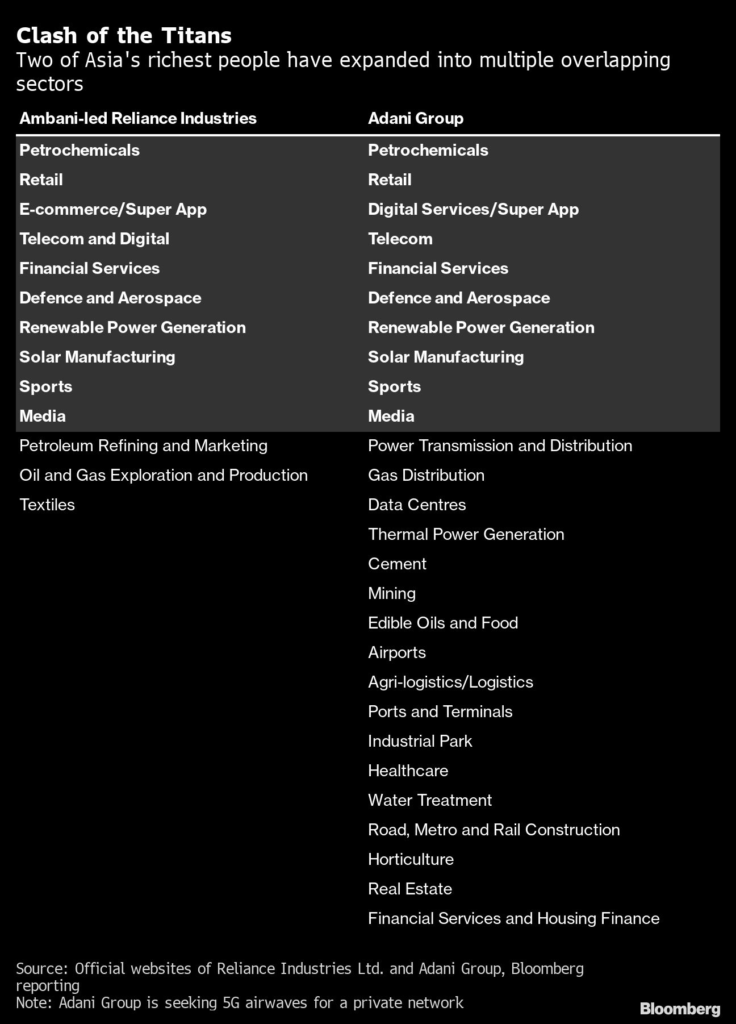
After peacefully expanding in their respective domains for over two decades, Asia’s two richest men are increasingly treading the same ground, as Adani in particular sets his sights beyond his traditional areas of focus. 

Billionaire Dynasties

That’s setting the stage for a clash with widening implications both beyond India’s borders, as well as at home as the $3.2 trillion economy embraces the digital era, triggering a race for riches beyond the commodity-led sectors where Ambani and Adani made their first fortunes. The opportunities emerging — from e-commerce, to data streaming and storage — are reminiscent of the US’s 19th century economic boom, which fueled the rise of billionaire dynasties like the Carnegies, Vanderbilts and Rockefellers. 

The two Indian families are similarly hungry for growth and that means they’re inevitably going to run into each other, said Arun Kejriwal, founder Mumbai investment advisory firm KRIS, who has been tracking the Indian market and the two billionaires for two decades. 

“Ambanis and Adanis will cooperate, co-exist and compete,” he said. “And finally, the fittest will thrive.”

Representatives from Adani’s and Ambani’s companies declined to comment for this story. 

In a public statement on July 9, the Adani Group said that it has no intention of entering the consumer mobile space currently dominated by Ambani, and will only use any airwaves purchased at the government auction to create “private network solutions,” and for enhancing cybersecurity at its airports and ports. 

Despite such commentary, speculation is rife that he might eventually venture into offering wireless services for consumers.

“I don’t underestimate a calculated entry by Adani into the consumer mobile space later to compete with Reliance Jio, if not now,” said Sankaran Manikutty, a former professor at the Indian Institute of Management in Ahmedabad, who remains a visiting faculty member there and has worked extensively on family businesses, telecommunications and strategy in emerging economies. 


For decades, Adani’s business were focused on sectors like ports, coal mining and shipping, areas that Ambani stayed clear of amid its own heavy investments in oil. But over the past year, that’s changed dramatically. 

In March, the Adani Group was said to be exploring potential partnerships in Saudi Arabia, including the possibility of buying into its mammoth oil exporter, Aramco, Bloomberg News reported. A few months before that, Reliance — which still gets a majority of its revenue from businesses related to crude oil — scrapped a plan to sell a 20% stake in its energy unit to Aramco, gutting a transaction that was two years in the pipeline.

The two billionaires also have significant overlap in green energy, with each pledging to invest more than $70 billion in a space that’s heavily tied to the priorities of Indian Prime Minister Narendra Modi’s government. Meanwhile, Adani has begun signaling deep ambitions in digital services, sports, retail, petrochemicals and media. Ambani’s Reliance either already dominates these sectors or has big plans for for them.

In telecommunications, if Adani does start to target consumers in a big way, history suggests that prices could plunge amid the early phase of competition but rise again if the two companies secure a duopoly, with India’s wireless space currently dominated by three private players. When Ambani made his initial foray into telecoms in 2016, he offered free calls and very cheap data, an audacious move that saw costs across the board drop for consumers, but they are increasing again as he’s cemented his control.

On the surface the two men appear quite different. Ambani, 65, inherited Reliance from his father, while Adani, 60, is a self-made businessman. But they also have some remarkable similarities. 

Largely media shy, both men have a history of being fiercely competitive, disrupting most sectors they set foot in and then dominating them. Both have excellent project execution skills, are extremely detail oriented and dogged in pursuing business goals with a track record of delivering on big projects, analysts and executives who have worked with them say. 

Both hail from the western province of Gujarat, Modi’s home state. They have also both dovetailed their business strategies closely with the prime minister’s national priorities. 

Not all Adani’s dealmaking overlaps with Reliance, and he’s raced ahead with outlays on M&A even as Ambani has stayed cautious on spending heavily overseas amid the uncertain global outlook. Adani Group acquired the Haifa port in Israel in July for $1.2 billion. In May, he bought Holcim’s Indian cement units for $10.5 billion.

For now, most of Adani’s new forays are so nascent that the full impact is hard to immediately gauge. Yet analysts are in agreement that the two men are likely to play a big role in reshaping the Indian business landscape, potentially leaving increasingly vast portions of the economy in the hands of two families. 

That could have marked consequences in a nation that has only seen income disparity widen over the course of the pandemic. 

While India’s current economic advance is similar to America’s so-called Gilded Age in the 19th century, the South Asian country now faces risks of rising inequality, said Indira Hirway, director of the Centre For Development Alternatives in Ahmedabad.

“Rapid diversification and overlaps between them can lead to duopoly if they work together, hurting the smaller firms in these sectors,” Hirway said. “If they start competing, it can impact the equilibrium of the business landscape as both conglomerates will be fighting for resources and raw materials.”

(Updates the stocks chart with latest share price movements.)

More stories like this are available on bloomberg.com

©2022 Bloomberg L.P.

Close Bitnami banner
Bitnami