
Bloomberg

Investors Think Elon Musk Will Sell More Tesla Stock, Even If He Doesn’t Buy Twitter

(Bloomberg) — Investors expect Elon Musk to sell more shares of his electric carmaker Tesla Inc. by the end of 2022, according to the latest MLIV Pulse survey.

About 75% of 1,562 respondents, who include portfolio managers and retail traders, say Musk won’t end up owning Twitter Inc. — a deal that led him to offload about $8.5 billion of Tesla shares in April. A third of respondents predict he will settle with the social-media company for more than $1 billion rather than seeing through his $44 billion takeover at $54.20 per share, while 27% think a judge will order him to pay the $1 billion breakup fee.

Musk will likely sell shares regardless of what happens with the Twitter deal,” said Mike Loukas, chief executive officer of TrueMark Investments, echoing the sentiment of 68% of those surveyed. “But if investors read too much into it, they’re likely not seeing the forest through the trees.”

That could signal further pain for Tesla stock, which is down about 16% this year, more than the 13.3% decline in the S&P 500. The Austin-based company has been roiled by supply-chain shortages, Covid-related lockdowns in China, and confusion surrounding Musk’s pursuit of Twitter.

Tesla was trading up 0.66% at $897.30 before market opening in New York. S&P 500 futures were little-changed.

Musk, 51, is the world’s richest person, with a $260 billion fortune derived largely from his stake in Tesla. But he’s been shedding shares as of late: He conducted a Twitter poll in November about selling 10% of his position, then proceeded to sell more than 15 million shares over the next couple of months.

Musk offloaded about 9.4 million Tesla shares in April after his deal to buy Twitter, amounting to $25 billion worth of stock sold in the span of six months. He’s now attempting to back out of the agreement, which will be the subject of a fast-tracked October trial in Delaware Chancery Court.

Resolution Relief

Whatever the outcome, investors expect that Tesla shareholders will welcome an end to the matter.

“If his stock sale is accompanied by a definitive agreement that puts the Twitter mess behind him, Tesla could rally,” said Steve Sosnick, chief strategist at Interactive Brokers. “A definitive end to Twitter would remove a distraction and theoretically allow Musk to focus more on Tesla.”

Read more: Option Bets Rise on Twitter Gains as Musk Legal Battle in Focus

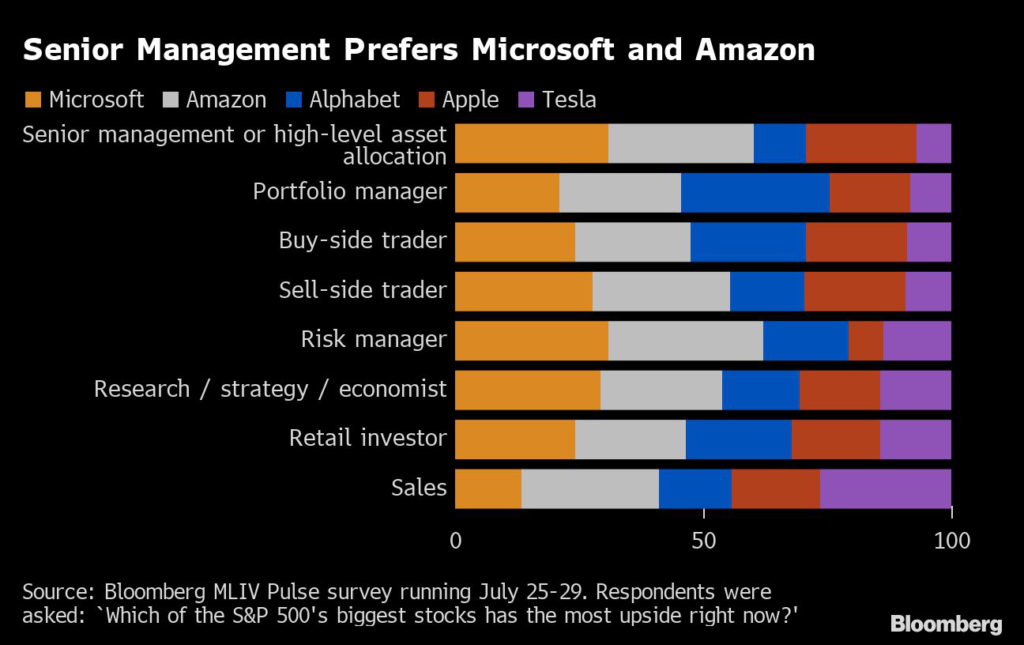
Still, survey respondents are less confident in Tesla’s upside relative to four other megacaps in the S&P 500. About a quarter said Microsoft Corp. offered the most potential, roughly the same share as Amazon.com Inc. Alphabet Inc. got 21% of the vote while Apple Inc. received 18%. Tesla came in last, with 12.5%.

The threat of competition for electric vehicles looms large, with most global automakers working on their own EVs. The macro backdrop is also challenging, with the US economy shrinking for two straight quarters.

Those wider concerns were on the minds of the investors who responded to the survey, resulting in a cautious note. They expect value stocks to perform better than growth shares over the next six months, though the largest technology companies are more likely than not to post at least modest gains from here through year-end.

“Any tech monopoly is going to be a flight for safety,” Alex Moazed, the chief executive officer of Applico, said in a Bloomberg TV interview. “Investors want to put their money in the less risky places that can still grow.”

As for Musk, his time atop the Bloomberg Billionaires Index may be short-lived. After taking the No. 1 spot last year after Tesla’s huge rally, just over 50% of respondents say he will lose that position by the end of 2023. By comparison, almost 33% say he’ll hold on until 2025 or later.

Grace Capital’s Cate Faddis and Loup Ventures’ Gene Munster will take your questions in our live blog, MLIV Pulse Q&A: Musk, Tesla and Twitter. Tune in on Aug. 2 at 10 a.m. New York time, and send advance questions to TOPLive@bloomberg.net.

Subscribe to MLIV surveys at NSUB MLIVPULSE. Click here for full survey results.

(Adds share price in fifth paragraph, link to full results in last.)

More stories like this are available on bloomberg.com

©2022 Bloomberg L.P.

Pearson Says Blockchain Could Make It Money Every Time E-Books Change Hands

(Bloomberg) — The chief executive officer of Pearson Plc, one of the world’s largest textbook publishers, said he hopes technology like non-fungible tokens and the blockchain could help the company take a cut from secondhand sales of its materials as more books go online. 

The print editions of Pearson’s titles — such as “Fundamentals of Nursing,” which sells new for £57.99 ($70.88) — can be resold several times to other students without making the London-based education group any money. As more textbooks move to digital, CEO Andy Bird wants to change that. 

Read More: Understanding NFTs and the ‘Bored Ape’ Boom and Bust: QuickTake

“In the analogue world, a Pearson textbook was resold up to seven times, and we would only participate in the first sale,” he told reporters following the London-based company’s interim results on Monday, talking about technological opportunities for the company. 

“The move to digital helps diminish the secondary market, and technology like blockchain and NFTs allows us to participate in every sale of that particular item as it goes through its life,” by tracking the material’s unique identifier on the ledger from “owner A to owner B to owner C,” said Bird, a former Disney executive.

On Monday Pearson reported results ahead of analyst estimates, reiterated its full-year outlook, and announced it would find £100 million in cost savings. It also launched a strategic review of a Virtual Learning business called OPM. 

Shares rose 10% at 11:12 a.m. in London on Monday, their biggest intraday move since the company received a takeover approach in March. 

Read More: Pearson Jumps on 1H Sales Beat, Cost Savings: Street Wrap 

The NFT market has taken a downturn after a boom in speculation during the pandemic, but the comments underscore how Pearson and its competitors are finding ways to shift from a paper book market where an individual title can cost more than £100 to a digital market where it sells online textbook subscriptions.

It’s not the only new technology Pearson is looking at. 

“We have a whole team working on the implications of the metaverse and what that could mean for us,” Bird added.

(Updates with shares and context starting in fifth paragraph)

More stories like this are available on bloomberg.com

©2022 Bloomberg L.P.
Tesla Model 3s Sell Used for $91,000 to Eager Australian Buyers

(Bloomberg) —

In a distant land the electric car industry has almost forgotten, one of the year’s unlikely best investments is turning out to be a new Tesla.

Months-old Tesla Model 3s with only a few hundred miles on the clock are selling for around A$130,000 ($91,000) or higher in Australia, more than one-third above the price of a new one. 

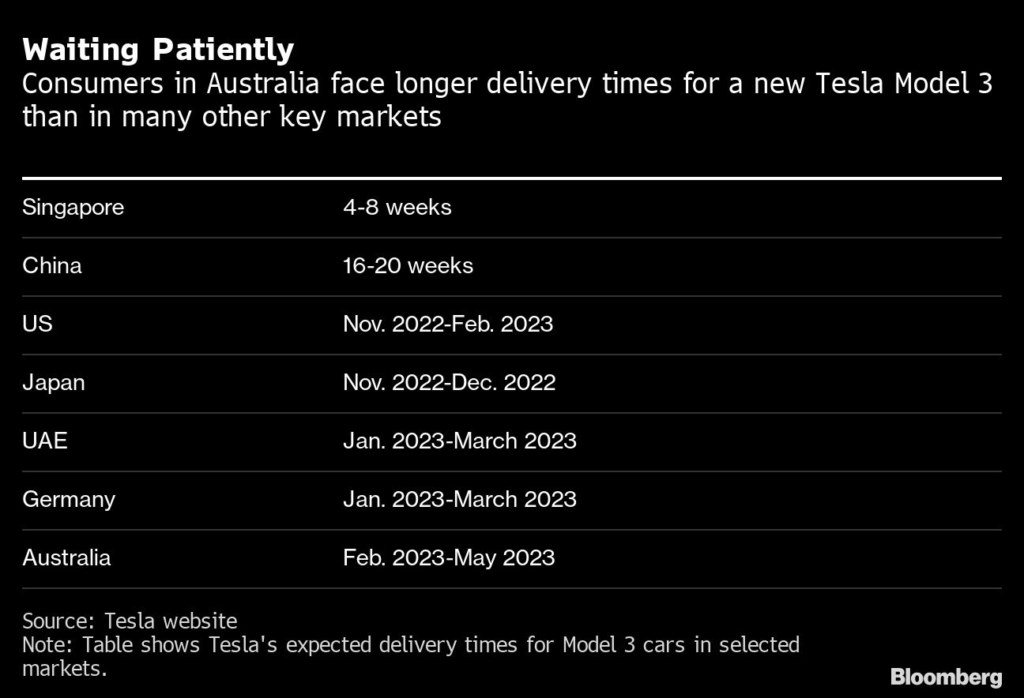
That’s because the delivery time for a brand-new model is so long Down Under — up to nine months — that buyers are losing patience. They’re paying huge premiums to skip the queue, even if it means settling for a second-hand car.

A cocktail of industry disruptions is turning the traditional pricing model on its head. Supply-chain snags stemming from Covid-19 lockdowns are delaying auto shipments worldwide. At the same time, surging gasoline prices triggered by Russia’s invasion of Ukraine has buoyed demand for cheaper-to-run EVs.


A top-of-the range Model 3 Performance costing A$91,600 ($64,200) ordered in Sydney today would be delivered between February and May 2023, according to Tesla’s website. That’s a longer lag than in the US, Japan and Germany, while Tesla fans in Singapore might have to wait only four weeks.

Alternatively, barely used versions of the same car are available now from several sellers across Australia for between A$130,000 and A$138,000, according to carsales.com. Demand is so high for used EVs in Australia that Lloyds Auctions can’t sell them fast enough.

“We are telling anyone who might be considering selling their EV or hybrid vehicle, the time is now and we need your vehicle,” said Kirstie Minifie, local head of marketing and design for the auction house. “We have seen second-hand electric vehicles sell for auction over the original retail price.”

While the value of used Teslas has also climbed in key markets such as the US, the price distortion has been especially severe in Australia, a country that has long been an EV laggard. 

Plug-in vehicles make up only 2% of all new-car sales in Australia. Takeup is way behind the global average of 13% in the final three months of 2021, and a tiny fraction of the market share in leading adopters like China and Norway.

Even before the current supply-chain snarls, Australia’s relatively low adoption of EVs had led major carmakers to prioritize other nations for their new models. Charging stations in Australia are still a novelty and are free in many public locations such as supermarket carparks or shopping malls.

Now, both factors are pushing up prices across the country as buyers race to get their hands on used EVs.

At the Good Car Company, an Australian business that sells new, used and imported EVs, demand is far outstripping supply. Wait times can stretch to two years on some models, said co-founder Anthony Broese van Groenou.

Even older EVs such as Nissan’s Leaf are selling for more than they were two years ago, he said. A Hyundai Ioniq 5 can take 12 months from order to delivery, and there’s a two-year wait for an EV6 from Kia, he said.

“Demand has just been unprecedented,” Broese van Groenou said. “We can’t keep up.”

More stories like this are available on bloomberg.com

©2022 Bloomberg L.P.
Evergrande Debt Setback Drags China Developers to Five-Month Low

(Bloomberg) — A worsening crisis in China’s real estate sector is dragging industry shares to the lowest in almost five months, with home sales slumping further and new setbacks spreading at the nation’s most indebted developer.

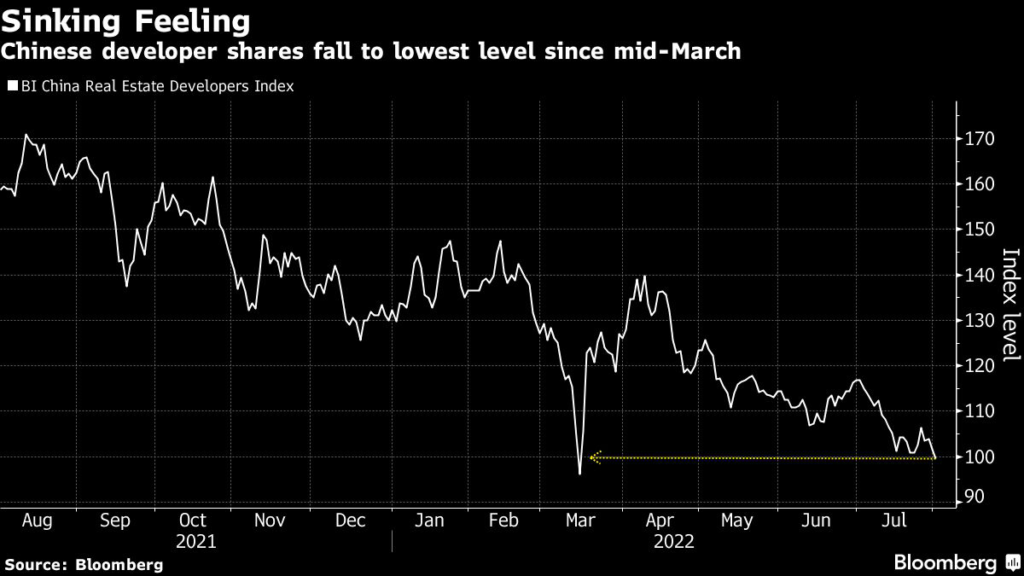
A Bloomberg Intelligence index of developer stocks dropped as much as 2.3% to the lowest level since March 16, before paring. Guangzhou R&F Properties Co. and Country Garden Holdings Co. led the declines, each losing about 4%. 

The industry’s outlook turned darker after data showed home sales extended a plunge amid a widening mortgage boycott, while China Evergrande Group failed to unveil a preliminary restructuring plan by the end of July as it had long promised. Investor mood also soured on signs that Beijing is prioritizing the completion of homes for social stability over developers’ financial health.

“There are no signs that China will provide stronger policy support in terms of refinancing,” said Daniel Fan, a Bloomberg Intelligence analyst. “The policy of prioritizing home delivery would help market sentiment only if the measures result in a rebound in contracted sales. But at this moment the sales are still choppy.”

China’s junk dollar bonds, dominated by notes of developers, were little changed Monday morning, according to credit traders. Total returns for these notes fell 7.9% in July, the biggest loss since February and a record-extending 11th-straight drop, according to a Bloomberg index. 

The latest weakness in developer stocks followed fresh signs of trouble in China’s property sector and its broader economy. Combined contract sales by the country’s top 100 developers fell 39.7% on year in July, according to preliminary data compiled by China Real Estate Information Corp. Factory activity in the world’s No. 2 economy also unexpectedly contracted last month, highlighting the fragility of a recovery amid sporadic Covid outbreaks.

Also weighing on investor mood is news that China is considering a plan to seize undeveloped land from distressed real estate companies and use it to help finance the completion of stalled housing projects. While the initiative would help appease angry buyers of unfinished homes, it may potentially remove a key source of assets for creditors seeking to limit losses during a debt restructuring. 

In a development that indicates the limits of Beijing’s capacity to help distressed builders, a private developer that received a state bailout in May had to extend maturities on all its remaining $1.57 billion of dollar bonds by 20 months. 

Meantime, government-backed Sino-Ocean Group Holding Ltd.’s credit rating was cut into junk territory by Moody’s Investors Service, a move that reflects expectations that support from the developer’s top state shareholder will reduce over time. 

Also disappointing investors was Evergrande’s apparent setback in its closely watched restructuring exercise. The developer at the epicenter of the industry’s debt crisis missed a self-imposed deadline to deliver a ‘preliminary restructuring plan’ by the end of last month and instead pledged to announce a specific one within 2022.  

Evergrande also said separately that a unit will need to sell shares in a regional bank after losing an arbitration ruling. 

“Generally, the delay in announcing a detailed plan is disappointing, though unfortunately investors have few options other than to wait,” said Shu Hui Woon, credit analyst at Lucror Analytics. “There could be more winding-up petitions if Evergrande drags the process further.” 

The unit’s stake sale in Shengjing Bank Co., a local lender in northeastern China, may prompt more onshore creditors to protect their interests, Woon said. 

(Updates with details of Sino-Ocean’s rating downgrade)

More stories like this are available on bloomberg.com

©2022 Bloomberg L.P.

What Happens When Cops Seize Crypto and Bitcoin?

  • Listen to Bloomberg Crypto on the iHeartRadio App
  • Listen to Bloomberg Crypto on Apple Podcasts
  • Listen to Bloomberg Crypto on Spotify  

(Bloomberg) — Picture this: you’re the FBI, trying to track down the digital keys that will give you access to illicit or stolen crypto. You’re rifling through books and papers stuffed in suitcases or tearing open gum wrappers. Seems like something out of a movie, but in the world of crypto these odd nooks and crannies have become normal places for law enforcement to look for digital passwords. In 2021 alone, cops in the US and UK seized billions of dollars worth of crypto assets from various criminal busts. With so much money on the line, enforcement agencies around the world have had to learn quickly how to spot these digital assets and seize them from accused criminals.

In this episode, Bloomberg reporters Ellen Milligan and David Voreacos discuss how the seizures of digital assets are transforming policing policies and protocols around the world.

Follow us on Twitter @crypto, and subscribe to the Bloomberg Crypto Newsletter at https://bloom.bg/cryptonewsletter


More stories like this are available on bloomberg.com

©2022 Bloomberg L.P.
Indonesia Launches Own Metaverse to Promote Its Small Businesses

(Bloomberg) — Indonesia has tasked the state carrier with creating a metaverse to promote local firms that compete with foreign services, its latest effort to take back control of the internet from Google and Facebook.

PT Telkom Indonesia launched “metaNesia,” a virtual world meant to help Southeast Asia’s largest economy adapt to the fast-changing online landscape frequented by its young population, State-Owned Enterprises Minister Erick Thohir said in a statement.

“Don’t let other countries create a new world with their own payment system, while the market remains in Indonesia. Then we will regret it,” he said on Sunday.

What the Metaverse Is, Who’s In It and Why It Matters: QuickTake

Details are scant on how metaNesia will operate and what its scope will be. Thohir said it will act as a platform for Indonesia’s micro-, small, and mid-sized enterprises to showcase their goods on an equal footing with larger foreign businesses. Organizations will also be able to offer crucial social services like online health consultations to more people on metaNesia, he said.

The service includes a Metaverse Mall to feature shops, service centers and entertainment, as well as a Metaverse Concert for events. It aims to host an NFT marketplace, virtual meetings, and even yoga and esports functions later this year.

More stories like this are available on bloomberg.com

©2022 Bloomberg L.P.
Alibaba Drops as Inclusion in US Delisting List Fuels Jitters

(Bloomberg) — Alibaba Group Holding Ltd. fell on Monday amid escalating concerns that the stock may be booted off American stock exchanges for failing to comply with US disclosure rules.

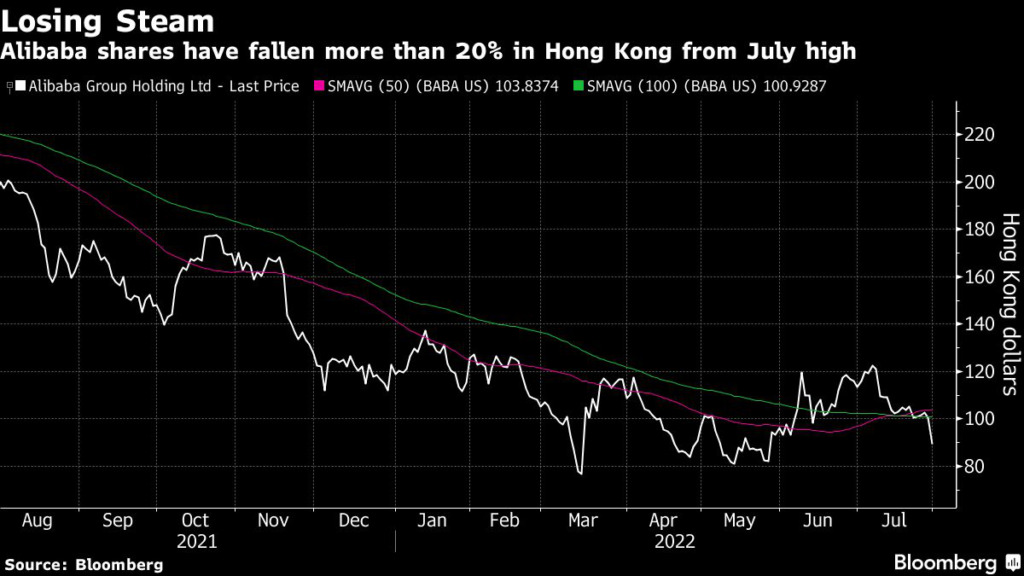
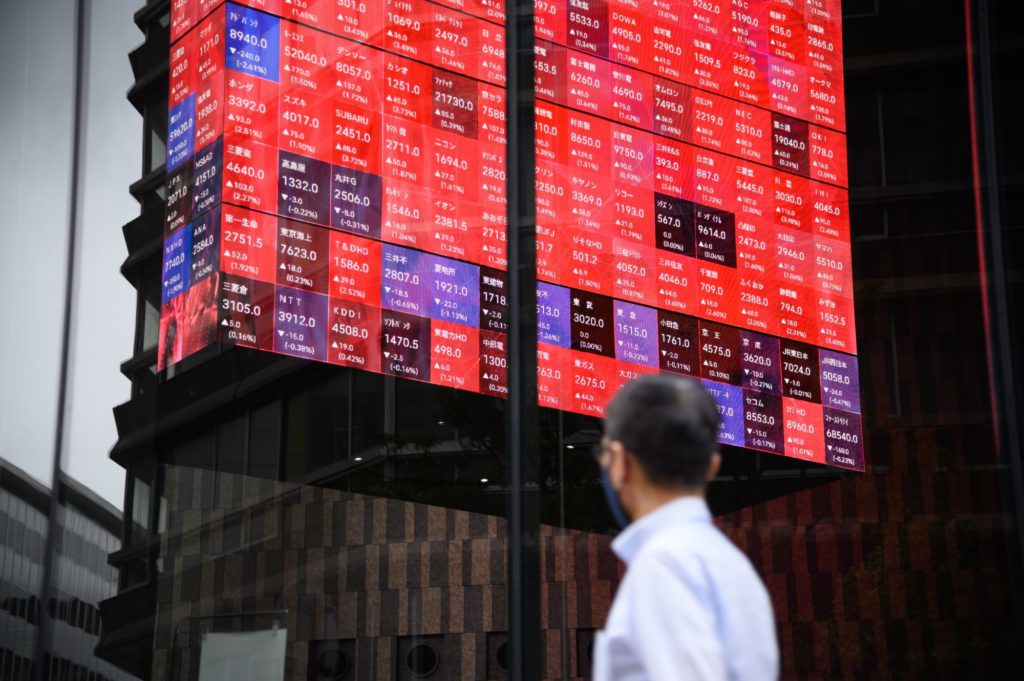
The e-commerce giant’s shares declined 3.8% in Hong Kong to lead a drop in the Hang Seng Tech Index, which closed down 0.2%. The US securities watchdog on Friday added the stock to a growing roster of companies facing removal because of Beijing’s refusal to permit American officials to review their auditors’ work. 

Alibaba’s stock had rallied briefly early last week amid optimism that the company’s plan to seek a primary listing in Hong Kong would enable it to tap more mainland investors. The gains have since vanished as traders brace for the firm’s earnings report due this week, with analysts predicting that the firm will announce its first-ever negative quarterly revenue growth.

“Alibaba’s recent application to the HKEX for dual-primary listing status and the lack of positive news on the US-China negotiations on the audit issues have likely led the market to believe more strongly that Chinese ADRs will inevitably be delisted,” Jefferies analysts including Edison Lee wrote in a note on Sunday. 

Alibaba said it will seek to maintain its listing status on both the NYSE and HKEX and will comply with applicable laws and regulations, according to a statement to the Hong Kong stock exchange.

The stock has dropped 26% from a July high, after climbing 70% from a record low reached in March. Its recovery lost momentum as it was reported that company executives were questioned by authorities in connection with a case on data theft, and the firm was fined for not properly reporting past deals.

What’s Driving US-China Spat Over Audits, Delistings: QuickTake

(Updates with closing prices throughout)

More stories like this are available on bloomberg.com

©2022 Bloomberg L.P.

European Stocks Rise as Bank Earnings Show Upside: Markets Wrap

(Bloomberg) — European stocks ticker higher as corporate earnings continued to deliver upside surprises while investors assessed remarks from central bankers that higher interest rates are needed to bring inflation under control.

The Stoxx 600 Index rose 0.2%, led by banks, as HSBC Holdings Plc delivered better-than-estimated profits. S&P 500 contracts slipped following the best month for US stocks since November 2020, paring the annual loss in the underlying gauge to 13%.

The dollar fell, while Treasury yields inched higher but at about 2.67% the 10-year rate is well down from June’s peak near 3.50%. The yen jumped for a fourth session versus the greenback. Oil retreated. 

“It is fair to say that this earnings season has so far revealed pockets of corporates turning cautious but not a widespread move, and the market has put in one of the strongest rallies on record,” Deutsche Bank AG strategists including Binky Chadha wrote in in a report. “With earnings weakness already widely expected, a more than typical rally was more likely than not in the absence of signs of widespread corporate risk aversion, especially given the large selloff and very low investor positioning coming in.”


The risk of a recession has cooled expectations for how sharply the Fed has to hike rates to tame inflation. That spurred a July rebound in stocks and bonds. But market jumps that ease financial conditions can imperil the goal of curbing demand to contain the cost of living, adding pressure on the central bank.

Federal Reserve Bank of Minneapolis President Neel Kashkari said Sunday the US central bank is committed to reaching its long-term inflation goal of 2%. Before that, Fed Bank of Atlanta President Raphael Bostic said the monetary authority has further to go in raising borrowing costs.

Investors are also monitoring US House Speaker Nancy Pelosi’s trip to Asia. A statement from her office skipped any mention of a possible stopover in Taiwan. A visit may stoke US-China tension over the island.

What to watch this week:

  • Airbnb, Alibaba and BP are among earnings reports
  • PMIs from US and euro area, among others, Monday
  • US construction spending, ISM manufacturing, Monday
  • Reserve Bank of Australia rate decision, Tuesday
  • US JOLTS job openings, Tuesday
  • Chicago Fed President Charles Evans, St. Louis Fed President James Bullard due to speak at separate events, Tuesday
  • OPEC+ meeting on output, Wednesday
  • US factory orders, durable goods, ISM services, Wednesday
  • BOE rate decision, Thursday
  • US initial jobless claims, trade, Thursday
  • Cleveland Fed President Loretta Mester due to speak, Thursday
  • US employment report for July, Friday

Some of the main moves in markets:

Stocks

  • The Stoxx Europe 600 rose 0.2% as of 8:43 a.m. London time
  • Futures on the S&P 500 fell 0.2%
  • Futures on the Nasdaq 100 were little changed
  • Futures on the Dow Jones Industrial Average fell 0.2%
  • The MSCI Asia Pacific Index rose 0.8%
  • The MSCI Emerging Markets Index rose 0.2%

Currencies

  • The Bloomberg Dollar Spot Index fell 0.2%
  • The euro rose 0.1% to $1.0234
  • The Japanese yen rose 0.7% to 132.39 per dollar
  • The offshore yuan fell 0.1% to 6.7585 per dollar
  • The British pound rose 0.2% to $1.2199

Bonds

  • The yield on 10-year Treasuries advanced one basis point to 2.66%
  • Germany’s 10-year yield advanced four basis points to 0.86%
  • Britain’s 10-year yield advanced four basis points to 1.90%

Commodities

  • Brent crude fell 0.6% to $103.39 a barrel
  • Spot gold was little changed

More stories like this are available on bloomberg.com

©2022 Bloomberg L.P.
Vinci Agrees Deal for 30% Stake in Mexico Airport Operator OMA

(Bloomberg) — Vinci SA has agreed to buy Fintech Advisory Inc.’s 30% stake in Mexican airport operator Grupo Aeroportuario del Centro Norte SAB.

The French concessions and construction company will become the leading shareholder in the operator, known as OMA, it said in a statement Monday that confirmed an earlier Bloomberg News report. Financial details were not disclosed. 

The deal is valued at about $815 million, including some debt, according to a person familiar with the matter, who asked not to be identified discussing confidential information.

The transaction is for shares held by billionaire David Martinez’s Fintech Advisory Inc. in two separate investment vehicles, SETA and Aerodrome. The purchase price for SETA’s holding is about $578.7 million, while the Aerodrome stake would fetch about $236.7 million, including some debt, the person said. Some of SETA shares carry certain special rights. 

Martinez, a billionaire and native of Mexico, is the founder of Fintech, an investment firm with offices in New York and London.

OMA operates 13 international airports in Mexico, including the hub in Monterrey, the country’s second-largest business and industrial city. 

The deal is expected to complete by the end of 2022. 

More stories like this are available on bloomberg.com

©2022 Bloomberg L.P.

Indonesia Briefly Blocks PayPal in Move to Police Its Internet

(Bloomberg) — Indonesia began blocking websites from gaming store Steam to digital wallet PayPal Holdings Inc. over the weekend, making good on promises to bar internet services that don’t register locally and submit to a tightening regulatory regime.

The government briefly barred PayPal from operating, before backtracking to give the digital wallet operator an additional five days to submit its paperwork, the US firm said on its local web page.

Google, Meta Bow to Sweeping Taxes, Content Curbs in Indonesia

It’s unclear if Indonesia will block more websites. Alphabet Inc.’s Google and Meta Platforms Inc.’s Facebook are among those that have submitted to the regulations, which grant the government sweeping powers to shut down content it deems undesirable and tax digital sales. Rivals including Amazon.com Inc and Alibaba Group Holding Ltd.’s Alibaba.com missed the July deadline but completed their registrations before their services were blocked.

Social media operators are facing increasing scrutiny from governments around the world as their influence grows. The rules would let Indonesia government block services that fail to remove within 24 hours content that could potentially “incite unrest” or “disturb public order,” such as those that promote child pornography or support terrorism. They also let the government impose a value-added tax on the sale of digital goods, from content to virtual items.

Amazon, Alibaba Miss Indonesia Deadline for Registration (1)

More stories like this are available on bloomberg.com

©2022 Bloomberg L.P.

Close Bitnami banner
Bitnami