Bloomberg

China Probes Head of State Chip Fund on Serious Law Violation

(Bloomberg) — China launched an investigation into the head of a high-profile state-backed semiconductor fund, the latest in a series of probes targeting key figures responsible for shaping its chip policy and investment.

Ding Wenwu, general manager of the National Integrated Circuit Industry Investment Fund Co. Ltd, is suspected of “serious violation of discipline and law,” the Central Commission for Discipline Inspection said in a statement Saturday, without elaborating. The CCDI is China’s top anti-graft watchdog.

Ding, 60, is currently undergoing a disciplinary review by an inspection team dispatched by the CCDI to the Ministry of Industry and Information Technology, according to the statement. 

Read More: China Probes Government, Bosses as Chip Race With US Heats Up

Earlier this week, authorities said Minister of Industry and Information Technology Xiao Yaqing is under investigation. While Beijing hasn’t linked the two cases nor specified allegations beyond legal and disciplinary violations, they come on the heels of several cases since late 2021 that have unnerved an industry accorded priority status by President Xi Jinping and long accustomed to government funding and support. 

Just days before Xiao’s probe was announced, Caixin reported an investigation had also started against Zhao Weiguo, who had served as the chairman of Tsinghua Unigroup before the company — once regarded as one of China’s national champions in semiconductors — collapsed under a mountain of debt.


More stories like this are available on bloomberg.com

©2022 Bloomberg L.P.

Social Media Platforms Under Scrutiny Ahead of Kenyan Elections

(Bloomberg) —

Authorities in Kenya have given Facebook a week to comply with regulations related to hate speech after a report found the social media giant had failed to address the issue ahead of elections next month. 

The warnings by the National Cohesion and Integration Commission follow findings from an investigation by Global Witness documenting how Facebook, owned by Meta Platforms Inc., didn’t detect hate speech advertisements in both Kenya’s official languages — English and Swahili. 

Misinformation on social media has become an increasingly major problem around the world, especially during elections. Kenya holds what promises to be a closely fought presidential poll on Aug. 9, with Deputy President William Ruto and former Prime Minister Raila Odinga the leading candidates to replace Uhuru Kenyatta.

Meta said earlier this month it has been working for the past year to prepare for the elections, using artificial intelligence, human reviews and user reports to remove content that is harmful or otherwise violates company standards. 

“In the six months leading up to April 30, we took action on more than 37,000 pieces of content for violating our Hate Speech policies on Facebook and Instagram in Kenya,” the group said in a July 20 update. Elections in the East African nation have in the past been marred by violence. 

Meta didn’t immediately comment on the NCIC’s recommendation.

Kenya is not new to the use of social media for nefarious reasons during elections. In the 2017 vote, Cambridge Analytica was accused of working secretly with Kenyatta’s campaign, as reported by Channel 4. The country has one of the highest internet penetration rates in sub-Saharan Africa, at 85%.

Facebook is not the only platform under scrutiny, Twitter Inc. and newcomer TikTok are also being analysed. Research by Mozilla Foundation found that TikTok has become a “forum for fast and far-spreading political disinformation,” in a report released in June. 

More stories like this are available on bloomberg.com

©2022 Bloomberg L.P.

Bitcoin and Ether Are on Track for Their Best Month Since 2021

(Bloomberg) — Bitcoin and Ether, the world’s two largest digital tokens, are headed toward their best month since 2021 amid a revival of risk appetite in global markets and optimism about an Ethereum network upgrade.

Bitcoin is up 28% in July and Ether 70%, though their rallies paused Friday. Both were little changed, with Bitcoin at about $23,950 as of 5 p.m. in New York and Ether hovering around $1,730. 

Growing signs of a US economic slowdown are leading some investors to the view that the Federal Reserve will be done raising rates by year-end and might even pivot to cutting borrowing costs in 2023. That in turn would create a more favorable backdrop for speculative assets such as crypto, which has taken a drubbing this year.

“The week has continued a very welcome up trend,” Adrian Kenny, senior sales trader at GlobalBlock, wrote in a note. “The crypto, and wider markets in general, have seen somewhat of a relief rally in the last few days.”


Cryptocurrencies are trying to recover from a rout this year that’s wiped more than 50% off the MVIS CryptoCompare Digital Assets 100 index. Earlier this year, virtual coins were buffeted by the Fed’s shift to monetary tightening and ensuing leveraged blowups, such as crypto hedge-fund Three Arrows Capital.

“Signs the Fed may be nearing the end of their hiking cycle have lifted all risk assets, and crypto has also benefited,” said Cici Lu, chief executive officer at consulting firm Venn Link Partners. “Liquidation of leveraged positions seems to be over,” she added, and “markets may have found the bottom.”

Meanwhile, the Ethereum blockchain is due to move to a more energy-efficient so-called proof-of-stake system. That’s been a tailwind of late for its native token, Ether. The virtual coin could push toward $1,915 to $2,000 in the days ahead, according to Mark Newton, head of technical strategy at Fundstrat.

“Ethereum looks more attractive technically than Bitcoin in the short run, so pullbacks into mid-August should be buyable,” he said.

Still, cryptocurrencies were under pressure at the end of the week as two key US inflation gauges on Friday posted larger-than-forecast increases, adding to worries that prices will remain persistently high for longer than expected. Elsewhere, US Securities and Exchange Commission Chair Gary Gensler said he is stepping up his push to get crypto trading platforms to register with the Wall Street regulator. 

Joe DiPasquale, CEO of BitBull Capital, said he’ll be watching to see where Bitcoin closes out the month and whether it retests key supports around $19,000 to $20,000. “Successful bounces from that range could give bulls a solid foundation for a continued rally,” he said. 

(Updates prices throughout.)

More stories like this are available on bloomberg.com

©2022 Bloomberg L.P.

Musk Files Defense Under Seal as Twitter Trial Set for Oct. 17

(Bloomberg) — Twitter Inc.’s lawsuit against Elon Musk over a canceled $44 billion buyout of the social-media platform is set for a five-day trial starting Oct. 17 in Delaware, with the billionaire filing his defense and counterclaims under seal.

Delaware Chancery Court Judge Kathaleen St. J. McCormick set the trial date after Musk’s lawyers claimed Twitter wanted an Oct. 10 start date “without justification.” Twitter said it wasn’t opposed to Oct. 17 as long as it was assured of a full five-day trial. 

Meanwhile, Musk’s legal team also filed its formal answer and counterclaims to Twitter’s suit over the teetering transaction Friday, but the response was sealed. Under chancery court rules, Musk will have five days in which to produce a redacted version of the filing.

McCormick agreed earlier this month to fast-track the trial over the Musk’s failed bid to acquire Twitter for $54.20 a share, which he nixed over claims usage statistics for the social-media platform are inflated by spam and robot accounts.

Twitter claimed Musk, the world’s richest person, was dragging his feet on setting the schedule and lobbed a letter onto the court docket without sharing it with his opponents. McCormick, in her eight-page order, warned both sides that any pre-trial information exchanges “should not be requested or withheld in an effort to inflict unreasonable demands on or extract unreasonable benefits from the opposing party.”

Twitter’s lawyers say they’ll need only four days to proves Musk is misusing questions about spam and robot accounts as a pretext to walk away from the deal. The company said it had turned over all its information about those accounts and it is seeking to force the billionaire, who co-founded Tesla Inc., to consummate the acquisition.

Musk counters in court filings Twitter’s handover of the so-called bots material hasn’t been robust and the company’s mishandling of that data provides a legitimate basis for his cancellation of the buyout.

The case is Twitter v. Musk, 22-0613, Delaware Chancery Court (Wilmington). 

(Updates with filing of answer and counterclaims in third paragraph)

More stories like this are available on bloomberg.com

©2022 Bloomberg L.P.

Alibaba Added to SEC List of Chinese Firms Facing Delisting

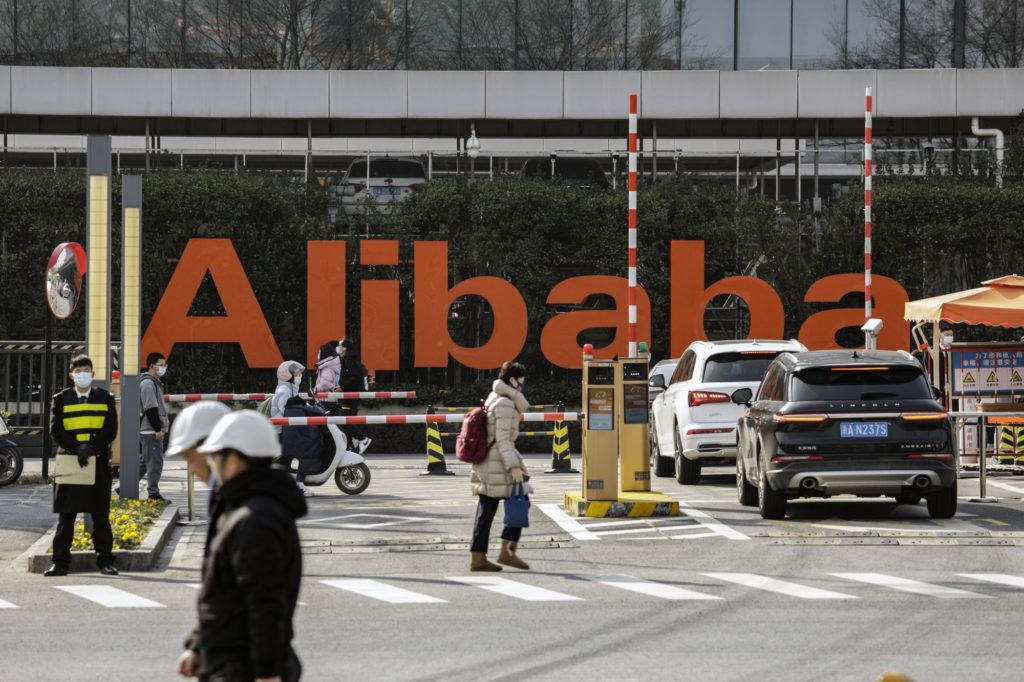
(Bloomberg) — Alibaba Group Holding Ltd. has moved a step closer toward getting booted off US stock exchanges for American inspectors not being able to access to financial audits.

The US Securities and Exchange Commission on Friday added the largest US-listed Chinese company to a growing roster of firms that face removal because of Beijing’s refusal to permit American officials to review their auditors’ work. The publication of the businesses’ names, which was required by a 2020 law, starts a three-year clock to a final delisting. 

The SEC’s move adds to a wall of worry for investors, who had already been assessing myriad concerns including earnings risk, the impact of Jack Ma’s reportedly ceding control of his fintech arm Ant Group Co. and persistent Covid risks in China. Alibaba’s US-listed shares extended their declines for a third week and have slumped 21% in July, its worst month since November 2021.

“Sentiment has turned sour again around China,” said Adam Crisafulli, the founder of Vital Knowledge.

Wall Street’s main watchdog is cracking down on New York-traded firms with parent companies based in China and Hong Kong. 

Dozens of other countries permit the US audit inspections, giving American officials the go ahead to interview local accountants and scrutinize the documentation underlying their work. China and Hong Kong have refused, citing confidentiality laws and national security concerns. 

With the clock ticking, some Chinese firms including Alibaba and Kingsoft Cloud Holdings Ltd. said this week they are seeking primary listings in Hong Kong, joining Bilibili Inc. and Zai Lab Ltd. which made the move earlier. The switch could help companies tap more Chinese investors while providing a template for other US-listed Chinese firms that face delisting should Washington and Beijing fail to settle audit disputes.

A primary listing is a precursor to joining the so-called Stock Connect program, which allows millions of mainland investors to directly buy stocks in Hong Kong. That frees up a large new pool of capital that may become especially crucial if China’s e-commerce leader gets delisted.

The SEC’s addition of firms from Alibaba to Pinduoduo Inc. to its list following the publication of their 2021 annual financial statements has jarred global investors. 

Beijing has discussed with American regulators the logistics of allowing on-site audit inspections of Chinese companies listed in New York, Bloomberg News reported in April, spurring hopes for some kind of deal. But Securities and Exchange Commission Chair Gary Gensler has repeatedly said it’s unclear if American and Chinese authorities will come to an agreement.

How U.S. Is Targeting Chinese Firms for Delisting: QuickTake

Alibaba would be by far the largest Chinese company to get kicked off US bourses if regulators fail to strike a pact. The company has argued that, since its 2014 New York IPO, its accounts have been audited by globally accepted accounting firms and should meet regulatory standards. 

Earlier this week, Gensler reiterated that Chinese and American officials need to reach a deal “very soon” for the next steps to take place to avoid a halt to the firms trading on US exchanges. 

(Updates with closing share move in third paragraph.)

More stories like this are available on bloomberg.com

©2022 Bloomberg L.P.

Stocks Stage Comeback With Best Month Since 2020: Markets Wrap

(Bloomberg) — The stock market wrapped up a chaotic week, with solid earnings from tech megacaps bringing solace to traders worried about the many cross-currents rattling economies around the globe.

After a horrific first half, the S&P 500 had its best month since November 2020 and Nasdaq 100 had its strongest performance since April of that same year. Tech led gains Friday, with Amazon.com Inc. and Apple Inc. soaring as higher revenues from the pair of iconic powerhouses countered fears about a profit slowdown at time when the industry is rethinking its staffing needs.

Despite worrisome signals from economic proxies like Walmart Inc. and United Parcel Service Inc., the earnings season as a whole has turned out to be brighter than expected, with about 75% of the S&P 500 firms that have reported results beating analyst estimates. That’s fueling speculation that Corporate America will be able to weather the perfect storm of hot inflation, jumbo-sized rate hikes and dwindling growth. 

Bloomberg Intelligence’s fair-value model suggests a modest recession may have been priced in following this year’s stock selloff. That means a price recovery could emerge with an earnings trough in the second half of 2022.

“The fact that earnings are not as bad as feared is a very constructive thing for the markets,” said Anastasia Amoroso, chief investment strategist at iCapital. “The fact that we have priced in a whole lot of slowdown already, that too has just de-risked the landscape. So I think what can happen for the next couple of weeks is that the technical momentum really keeps moving stocks higher, while we wait for the next Fed move or the next inflation print.”

Despite the big rebound in stocks this month, several market watchers are still skeptical about a sustained rally due to the many economic challenges and the fact that the market hasn’t gotten cheap enough to call it a bottom.

“This is a rally within a bear market rather than the start of a new bull market,” said David Donabedian, chief investment officer of CIBC Private Wealth US. “We would expect a lower P/E ratio if we were at the bottom of the market. While the equity market has partially recovered, we expect it will retest the lows we saw in June.”

Donabedian says optimism about the Fed potentially ending its tightening cycle earlier than expected is “more hope than reality”. He sees further rate hikes and says there’s still a lot of work ahead to bring down inflation while adding that “a slowing job market is on the way.”

Two key US price gauges posted larger-than-forecast increases, with the personal consumption expenditures index — which forms the basis for the Federal Reserve’s inflation target — climbing at the fastest pace since 2005. Consumers’ long-term inflation expectations also remained elevated. 

Swaps showed traders increased bets on a 75-basis-point hike in September, though they continued to wager that a 50-basis-point hike was the most likely outcome. 

Fed Bank of Atlanta President Raphael Bostic noted the US economy was “a ways” from entering a recession and officials have further to go in raising rates to get prices under control. Fed Governor Christopher Waller pushed back against economists Olivier Blanchard and Lawrence Summers, who said the central bank’s assertion that it can cool off labor demand without much impact on the unemployment rate “flies in the face” of evidence.

In other corporate news, Intel Corp., the biggest maker of computer processors, slashed forecasts for the year. Roku Inc., the maker of streaming-TV devices, said advertisers are pulling back on spending due to economic concerns. Exxon Mobil Corp. and Chevron Corp. posted their highest-ever profits, reaping the rewards from surging commodity prices. Procter & Gamble Co.’s forecasts growth lagged estimates.

Some of the main moves in markets:

Stocks

  • The S&P 500 rose 1.4% as of 4 p.m. New York time
  • The Nasdaq 100 rose 1.8%
  • The Dow Jones Industrial Average rose 1%
  • The MSCI World index rose 1.2%

Currencies

  • The Bloomberg Dollar Spot Index fell 0.2%
  • The euro rose 0.2% to $1.0221
  • The British pound was little changed at $1.2177
  • The Japanese yen rose 0.7% to 133.36 per dollar

Bonds

  • The yield on 10-year Treasuries declined one basis point to 2.66%
  • Germany’s 10-year yield declined one basis point to 0.82%
  • Britain’s 10-year yield was little changed at 1.86%

Commodities

  • West Texas Intermediate crude rose 1.7% to $98.10 a barrel
  • Gold futures rose 0.5% to $1,778.90 an ounce

More stories like this are available on bloomberg.com

©2022 Bloomberg L.P.

Amazon, Apple Add $196 Billion in Value on Resilient Results

(Bloomberg) — Amazon.com Inc. and Apple Inc. added about $196 billion in market value on Friday after they joined technology peers Alphabet Inc. and Microsoft Corp. in assuaging investor concerns by reporting higher revenue even as consumers curb their spending amid rising inflation. 

Amazon shares jumped 10%, their biggest move since February, while Apple advanced 3.3%. The gains helped power a 1.8% rally by the Nasdaq 100 Index, locking in its best monthly performance sine April 2020. Amazon’s 27% surge in July was its biggest October 2009, while Apple’s 19% move was the best in nearly two years.

Amazon expanded both its e-commerce and cloud-computing businesses, with Bloomberg Intelligence analysts noting that the company’s performance proves that “it is better positioned to weather inflationary pressures and benefits from a more-affluent customer contrary to Walmart.”

Meanwhile, Apple beat analysts’ revenue expectations thanks in part to higher iPhone sales at a time when smartphone shipments are falling globally. To be sure, Apple reported an 11% decline in net income, however, the overall results were better than feared.

“Apple appears to be seeing no meaningful impact on its iPhone business in the current macro environment,” Piper Sandler analyst Harsh Kumar wrote in a research note. Also, restrictions on production in China eased at the end of the quarter, which “allowed some pent-up demand to be met,” he said.

(Updates chart and stock moves throughout.)

More stories like this are available on bloomberg.com

©2022 Bloomberg L.P.

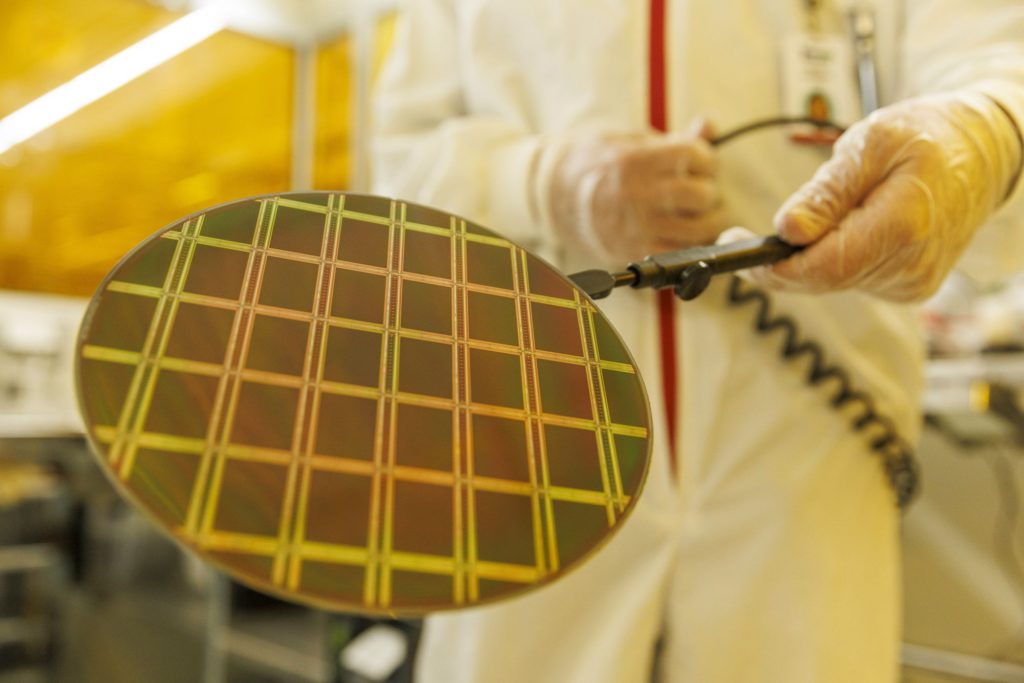
US Quietly Tightens Grip on Exports of Chipmaking Gear to China

(Bloomberg) — The US is tightening restrictions on China’s access to chipmaking gear, according to two major equipment suppliers, underscoring Washington’s accelerating efforts to curb Beijing’s economic ambitions.

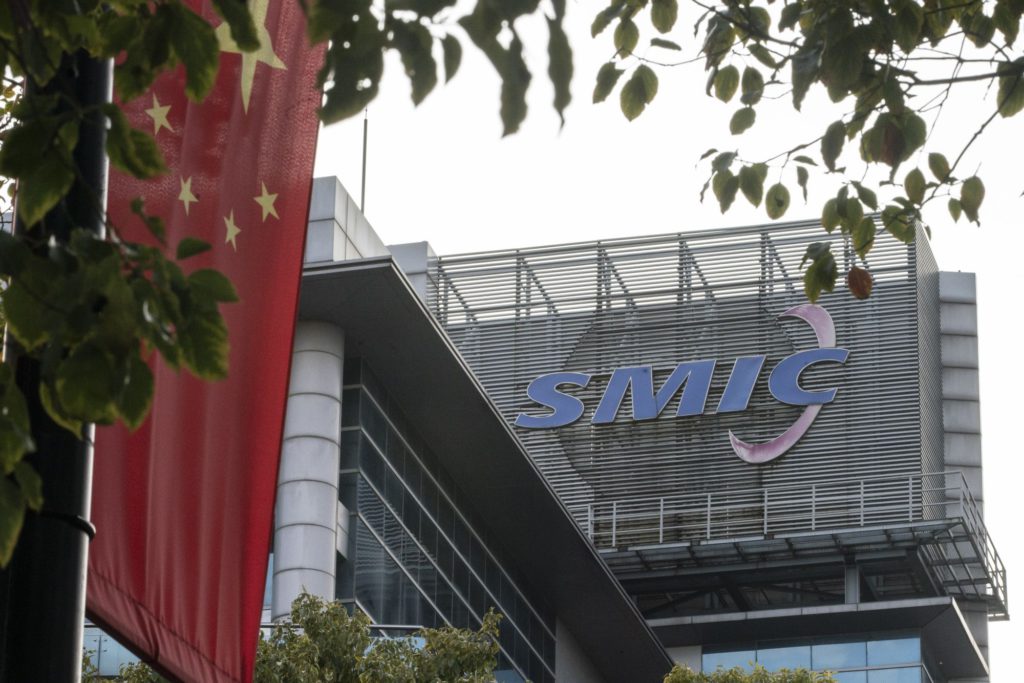
Washington had banned the sale of most gear that can fabricate chips of 10 nanometers or better to Chinese leader Semiconductor Manufacturing International Corp. without a license. Now it has expanded that barrier to equipment that can make anything more advanced than 14 nm, Lam Research Corp. Chief Executive Officer Tim Archer told analysts. The moratorium likely extends beyond SMIC and includes other fabrication plants run by contract chipmakers operating in China, including those by Taiwan Semiconductor Manufacturing Co.

“We were recently notified that there was to be a broadening of the restrictions of technology shipments to China for fabs that are operating below 14 nanometers,” Archer said on a conference call on Wednesday. “That’s the change, I think, people have been thinking might be coming and we’re prepared to fully comply. We’re working with the US government.”

In chip manufacturing, production identified by lower numbers of nanometers is more advanced. That means raising the restriction level to 14 nm from 10 would cover a broader range of semiconductor equipment.

The Commerce Department said in a statement it is tightening policies aimed at the People’s Republic of China, without specifying the precise chip geometry. 

“The Biden Administration is focused on impairing PRC efforts to manufacture advanced semiconductors to address significant national security risks to the United States,” the agency said.

In the past two weeks or so, all US equipment makers have received letters from Commerce telling them not to supply gear to the Chinese for manufacturing at 14 nm or below, according to people familiar with the matter. The letters are at least partly an effort by the Biden administration to look tough on China, but Commerce had already declined many licenses at 14 nm so the change will have little financial impact, they said.

The new requirements are targeted at foundries — facilities making logic chips for others — and exclude memory chips “to the best of our understanding,” Archer said. Lam Research executives said they had incorporated the impact of the US requirements into their outlook for the September quarter, without elaborating.

KLA Corp. CEO Rick Wallace on Thursday also confirmed his company had been notified by the US government of the change in export licensing requirements on China-bound gear for chips more advanced than 14 nm. Wallace said there was no material impact on KLA’s business. 

The comments from the two California-based companies mark the first detailed confirmation that the Biden administration is ramping up attempts to contain China. The US is pushing partner countries like the Netherlands and Japan to ban ASML Holding NV and Nikon Corp. from selling to China mainstream technology essential in making a large chunk of the world’s chips, Bloomberg News has reported.

Read more: US Pushes for ASML to Stop Selling Chipmaking Gear to China

The new rules cover a wider swath of semiconductors across a plethora of industries and possibly impact far more companies than standing restrictions targeted at SMIC. While the new curbs specifically cover equipment capable of making chips more advanced than 14 nm, mature chips could still be affected as about 90% of gear is compatible from one generation to the next. Semiconductor manufacturers can reuse equipment as they migrate to more sophisticated nodes, meaning a ban on one generation could have longer-term ripple effects.

SMIC and TSMC are the two companies with the most advanced logic chipmaking capabilities in China. SMIC’s most sophisticated technology is 14 nm, while TSMC’s best is 16 nm in the country. Those are three generations behind the most cutting-edge technology TSMC owns in Taiwan.  

The new rules are likely to impact SMIC, TSMC and any others with the ambition to build capacity for relatively advanced chips in China, as well as gearmakers such as Applied Materials Inc., ASML and Tokyo Electron Ltd. that sell to the world’s largest semiconductor market. 

Representatives for TSMC, Tokyo Electron and SMIC didn’t immediately respond to requests for comment. An ASML spokesman said the company has not been notified of the potential new rules. A Nikon spokesperson said its shipments to China are not affected. 

More stories like this are available on bloomberg.com

©2022 Bloomberg L.P.

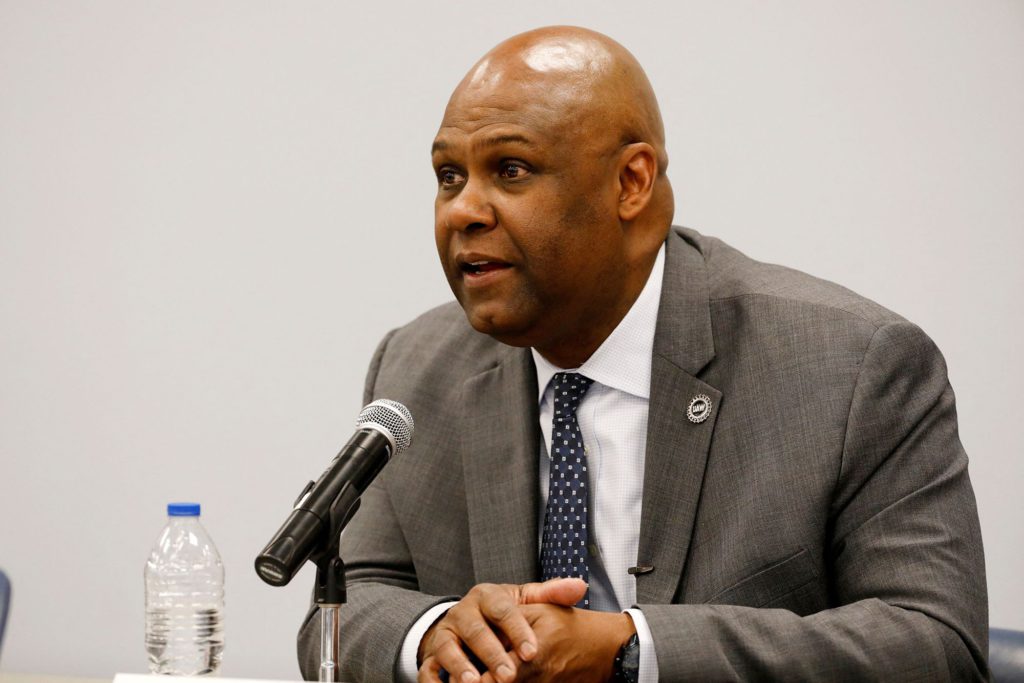
UAW Head Says Battery-Worker Pay Must Match Assembly Wages

(Bloomberg) — The head of the union representing about 150,000 employees of General Motors Co., Ford Motor Co. and Stellantis NV in the US says workers making battery components must be on the same pay scale as those assembling cars or making gasoline or diesel-powered engine and transmission parts.

“We believe our members should be compensated at the appropriate level for the manufacturing” of battery packs, United Auto Workers President Ray Curry said in a phone interview Friday. “It’s important to be able to maintain that in the industry.”

That position could be a major source of friction when the United Auto Workers union sits down with Detroit carmakers next year to hammer out a new four-year contract.

President Joe Biden has repeatedly called for EV jobs to be “good-paying union jobs,” but the simplified structure of an EV powertrain — essentially a battery and some motors to turn the axles — means it requires fewer people and hours to make. 

Automakers are investing billions in new battery plants to power an onslaught of EV models they’re rolling out to catch up with Tesla Inc. At the same time, they’re seeking to drive down the cost of batteries to offset skyrocketing metals prices. At a plant in Ohio operated by GM’s Ultium Cells joint venture with a unit of LG Chem Ltd., laborers top out around $22 an hour vs. the $32 hourly wage for a traditional vehicle assembly worker.

See also: Soaring EV Prices Mean Fewer Middle Class Buyers Can Afford Them

In addition to maintaining current wage standards in the EV era, Curry said union members want a raise, and to restore cost-of-living adjustments to keep up with inflation. The UAW is also wary that chip shortages are giving members a pay cut, since they earn just a portion of their normal wage when factories are idled.

“Our members can’t go through another year in 2023 where there’s a shortage for multiple quarters,” said Curry, who presided over a convention of about 1,000 union members in Detroit this week.

He also said the UAW, which saw two former presidents sent to jail in the wake of a five-year federal probe into embezzlement and illegal payoffs, has corruption “under control.” A report this month from a court-appointed federal monitor said progress on ethics reforms has “remained too slow.”

“We’re doing our daily work — it’s like having two jobs,” said Curry, who will face reelection this fall. “We’re going to continue to work with the monitor to make sure we achieve expectations the monitor has, but more importantly, expectations we have for ourselves internally.”

More stories like this are available on bloomberg.com

©2022 Bloomberg L.P.
Tech Giants Power Stock Rally With Blowout Profits: Markets Wrap

(Bloomberg) — The stock market is wrapping up a chaotic week with solid earnings from megacaps bringing solace to traders worried about the many cross-currents rattling economies around the globe.

After a horrific first half, the S&P 500 snapped back and is heading toward its best month since November 2020. Big tech led gains on Friday, with Amazon.com Inc. and Apple Inc. set to add nearly $170 billion in market value. Higher revenues from the pair of iconic powerhouses countered fears about a slowdown in profits at time when the industry is increasingly rethinking its staffing needs.

Despite worrisome signals from economic proxies like Walmart Inc. and United Parcel Service Inc., the earnings season as a whole has turned out to be brighter than expected — with 75% of the S&P 500 firms reporting second-quarter results beating analyst estimates. That’s fueling speculation that Corporate America will weather the perfect storm of hot inflation, jumbo-sized rate hikes and dwindling growth. 

In fact, Bloomberg Intelligence’s fair-value model suggests a modest recession may have been priced in following this year’s stock-market selloff. That means a price recovery could emerge with an earnings trough in the second half of 2022

“The fact that earnings are not as bad as feared is a very constructive thing for the markets,” said Anastasia Amoroso, chief investment strategist at iCapital. “The fact that we have priced in a whole lot of slowdown already, that too has just de-risked the landscape. And so I think what can happen for the next couple of weeks is that the technical momentum really keeps moving stocks higher while we wait for the next Fed move or the next inflation print.”

Two key US price gauges posted larger-than-forecast increases, with the personal consumption expenditures index — which forms the basis for the Federal Reserve’s inflation target — climbing at the fastest pace since 2005. Another report showed consumers’ long-term inflation expectations remained elevated. Swaps showed traders increased bets on a 75-basis-point hike in September, though they continued to wager that a 50-basis-point hike was the most likely outcome. 

Fed Bank of Atlanta President Raphael Bostic noted the US economy was “a ways” from entering a recession and officials have further to go in raising rates to get prices under control. Fed Governor Christopher Waller pushed back against economists Olivier Blanchard and Lawrence Summers, who said the central bank’s assertion that it can cool off labor demand without much impact on the unemployment rate “flies in the face” of evidence.

Despite the big rebound in stocks this month, several market watchers are still skeptical about a sustained rally due to the many economic challenges and the fact that the market hasn’t gotten cheap enough to call it a bottom.

“This is a rally within a bear market rather than the start of a new bull market,” said David Donabedian, chief investment officer of CIBC Private Wealth US. “We would expect a lower P/E ratio if we were at the bottom of the market. While the equity market has partially recovered, we expect it will retest the lows we saw in June.”

Donabedian says optimism about the Fed potentially wrapping up its tightening cycle earlier than expected is “more hope than reality”. He sees further rate hikes and says there’s still a lot of work ahead to bring down inflation while adding that “a slowing job market is on the way.”

In other corporate news, Intel Corp., the biggest maker of computer processors, slashed forecasts for the year. Roku Inc., the maker of streaming-TV devices, said advertisers are pulling back on spending due to economic concerns. Exxon Mobil Corp. and Chevron Corp. posted their highest-ever profits, reaping the rewards from surging commodity prices. Procter & Gamble Co.’s forecasts growth lagged estimates.

Some of the main moves in markets:

Stocks

  • The S&P 500 rose 1.3% as of 2:51 p.m. New York time
  • The Nasdaq 100 rose 1.7%
  • The Dow Jones Industrial Average rose 0.9%
  • The MSCI World index rose 1.1%

Currencies

  • The Bloomberg Dollar Spot Index fell 0.2%
  • The euro rose 0.2% to $1.0213
  • The British pound was little changed at $1.2168
  • The Japanese yen rose 0.7% to 133.37 per dollar

Bonds

  • The yield on 10-year Treasuries declined five basis points to 2.63%
  • Germany’s 10-year yield declined one basis point to 0.82%
  • Britain’s 10-year yield was little changed at 1.86%

Commodities

  • West Texas Intermediate crude rose 2.6% to $98.89 a barrel
  • Gold futures rose 0.7% to $1,781.80 an ounce

More stories like this are available on bloomberg.com

©2022 Bloomberg L.P.

Close Bitnami banner
Bitnami