
Bloomberg

FTC’s Khan Overruled Staff to Sue Meta Over VR App Deal

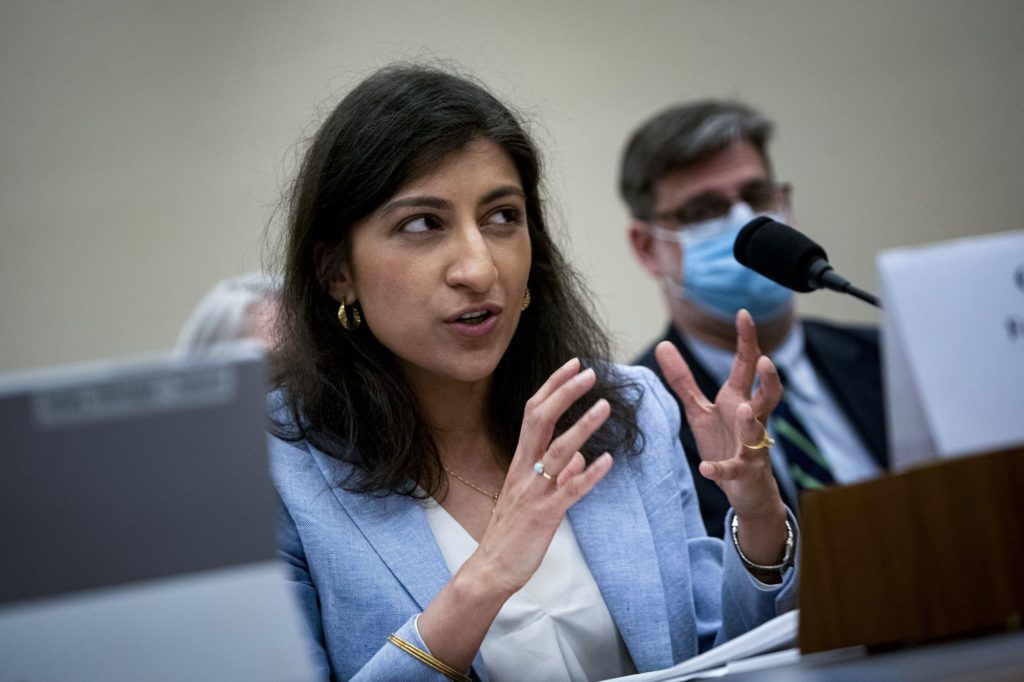
(Bloomberg) — Federal Trade Commission Chair Lina Khan led her fellow Democrats in the agency’s majority vote to sue Meta Platforms Inc. this week, despite the staff recommending against bringing a case to challenge the company’s acquisition of Within Unlimited Inc., according to three people with knowledge of the decision. 

The move demonstrates Khan’s new, more aggressive approach to antitrust enforcement compared with her predecessors — as well as the challenges she faces in bringing the agency along with her. 

Agency leadership has been reluctant in the past to counter a recommendation from staff lawyers and economists, whose job it is to provide a technical assessment of whether proposed deals are anticompetitive and whether the agency has the elements to build a winning case.

In public comments and writings, Khan has emphasized the need to rein in the biggest technology companies, particularly Facebook parent Meta, which she argues has used acquisitions as a form of “land grab” to conquer new markets and “neutralize competitive threats.”

In a 2021 report, the FTC found that the five tech giants — Alphabet Inc., Apple Inc., Amazon.com Inc., Microsoft Corp. and Meta — acquired hundreds of smaller firms over the previous decade, often using loopholes in the law to avoid notifying antitrust regulators about the takeovers.

Despite the ratcheting up of regulatory scrutiny under the Biden administration, acquisitions by the five tech giants are on pace this year to match or exceed the annual totals under former president Donald Trump. In the first six months of 2022, the five announced plans to acquire 24 companies, exceeding the total for the first half for four of the five previous years, according to data compiled by Bloomberg.

While most of those transactions involved small private companies without the terms being disclosed, Microsoft’s planned $69 billion takeover this year of Activision Blizzard Inc. would be the company’s largest ever and one of the 30 biggest deals of all time. The FTC is also reviewing that merger.

In the lawsuit filed against Meta on Wednesday, the FTC alleged the deal would give the social networking company a leg up in dominating the burgeoning virtual reality market. The suit represents the first time the agency has preemptively challenged an acquisition by the social media giant, which has bought more than 100 smaller companies over the past decade, according to a 2020 House report.

The FTC has asked a federal court in California to bar Meta from closing the deal until after it has a chance to hear the suit challenging the merger. Meta said it would fight the complaint.

While critics are accusing Khan of overreach in seeking to block the deal, antitrust advocates have urged the agency to be more aggressive in stopping technology giants from acquiring startups that could eventually become rivals.

The FTC’s five commissioners split 3-2 on whether to file the complaint, with the two Republicans, Noah Phillips and Christine Wilson, voting against the suit. Each of the commissioners had the opportunity to test out Meta’s Oculus product, Within’s Supernatural and Meta’s Beat Saber, two of the people said.

The FTC declined to comment. 

The lawsuit follows the FTC’s 2020 monopolization case against Meta seeking to unwind its acquisitions of Instagram in 2012 and WhatsApp in 2014, after failing to challenge them at the time. Phillips and Wilson also opposed that case, which could go to trial in 2024 in federal court in Washington. The FTC alleges the acquisitions were part of an illegal scheme to monopolize the market for social networking. 

Meta has denied the allegations and is also contesting that case.

Alvaro Bedoya –- who joined the commission in May, giving Khan a Democratic majority –- had multiple meetings with FTC staff and Khan’s office about the Within deal to address his concerns about overruling the staff recommendation, two of the people said. Bedoya, through an FTC spokesman, declined to comment on his deliberations.

Before Bedoya joined the commission, it was deadlocked 2-2, allowing the two Republicans to stymie several of Khan’s more aggressive ideas to promote competitive markets. 

Meta announced last October its plan to acquire Within, the maker of the popular virtual reality fitness app Supernatural, for an undisclosed sum. The proposed deal followed Meta’s purchase of six other virtual or augmented reality app makers over the past three years, none of which were challenged by the FTC.

Formerly known as Facebook, Meta rebranded itself last year in an effort to better focus on the metaverse — a more immersive version of the internet, where people can populate an alternative virtual world to go shopping, go to work and see friends. The company is the world’s top VR headset maker with its Oculus product controlling about 80% of the market, according to research firm IDC.

Within’s Supernatural offers immersive VR workouts complete with music and fitness instructors. In its complaint, the FTC alleged that Within’s Supernatural app competes with Meta’s own Beat Saber, a VR rhythm game where users hit targets in time to music. Meta also has the financial resources and expertise to easily add features to Beat Saber or develop a separate dedicated fitness app that could more directly compete with Supernatural, the FTC said.

“The FTC’s case is based on ideology and speculation, not evidence,” Meta lawyer Nikhil Shanbhag said in a blog post about the case. “We are confident this transaction does not reduce competition in any way, will bring countless benefits to people and VR developers, and should therefore be allowed to proceed.”

During the nine-month inquiry, the FTC didn’t take any sworn interviews of company executives, which it often uses to help build a case, two of the people said, speaking anonymously to discuss the confidential probe. But a few weeks before the Within deal was set to close on July 31, Khan’s office sent the company additional questions and began drafting a legal challenge, the people said. 

(Updates with continued pace of tech deals from sixth paragraph)

More stories like this are available on bloomberg.com

©2022 Bloomberg L.P.

Fintech Startup Orchard Seeks $75 Million in Convertible Funding

(Bloomberg) — Orchard, a startup that offers cash to homebuyers upfront so they can purchase a new residence before selling their old one, is seeking to raise about $75 million, according to people with knowledge of the matter. 

Led by Chief Executive Officer Court Cunningham, Orchard is attempting to raise the funds through a convertible note slated to convert at the lesser of $600 million or a discount to its next common equity round, said the people, who requested anonymity as the capital raising effort is private. The firm is working with an adviser to solicit interest from potential investors, they said.

Orchard spokesperson Mandy Menaker declined to comment on the “value and structure or any aspect of investor discussions.” As with all transactions that aren’t finalized, it’s possible terms and structure change.

The company was valued at more than $1 billion in a funding round last year. Boston-based Accomplice led that round, with existing investors FirstMark, Revolution, First American and Juxtapose also participating.

The startup’s second-quarter results were the strongest in its history, Menaker said, without providing specifics. Its gross transaction volume — the value of homes bought and sold using Orchard — was approaching an annual run rate of $1.5 billion, Cunningham said last September.

As soaring inflation and turbulence in public equities weigh on private markets, cash-hungry startups such as GoPuff have raised capital through convertible notes, in part because they delay the need to lock in a fresh valuation. The notes, which have debt-like characteristics, benefit investors by providing a limit to potential losses compared with traditional equity, which can be completely wiped out.

Cooling US home sales have weighed on mortgage lenders, brokerages and other industry players. The slowdown has slashed the market values of companies including Zillow Group Inc. and Redfin Corp., and pushed others to reduce workforces.

Orchard rival Flyhomes has laid off around 200 staff, citing “uncertain economic conditions,” according to LinkedIn posts by affected employees. A representative for the company said that the layoffs affected 20% of employees and declined to comment further.

More stories like this are available on bloomberg.com

©2022 Bloomberg L.P.
FDIC’s Message to Crypto Investors: Digital Assets Aren’t Insured 

(Bloomberg) — The Federal Deposit Insurance Corp., which protects customers in certain bank failures, has reiterated that it doesn’t insure crypto assets.

The agency released an advisory on Friday to clarify the scope of its safeguards, and said several crypto companies had led customers to mistakenly believe that their products were FDIC-insured. The move comes a day after the agency demanded Voyager, a bankrupt crypto company that partnered with FDIC-insured Metropolitan Commercial Bank, to correct “false and misleading statements” about its deposit insurance coverage.

Voyager had said that US dollars deposited with it were covered by FDIC insurance because of its partnership with Metropolitan, but the FDIC said its protection didn’t extend to Voyager’s customers.

“The FDIC is concerned about the risks of consumer confusion or harm arising from crypto assets offered by, through, or in connection with insured depository institutions (insured banks),” the advisory read. “Risks are elevated when a non-bank entity offers crypto assets to the non-bank’s customers, while also offering an insured bank’s deposit products.”

The agency said it only protects deposit products offered by insured banks, like checking and savings accounts, when these institutions fail. Its coverage does not extend to financial products — such as stocks, bonds, commodities or digital assets — or losses due to theft or fraud.

More stories like this are available on bloomberg.com

©2022 Bloomberg L.P.
T-Mobile Gets Chance to Mend Airwaves Patchwork in New Auction

(Bloomberg) — A US government auction of mainly rural airwaves suitable for advanced 5G wireless service began Friday, giving T-Mobile US Inc. a chance to fill in its patchwork holdings of the frequencies.

The frequencies being offered were once reserved for schools, and T-Mobile holds leases from many institutions already. The new auction involves rights to areas never assigned to a school, and between existing licenses.

T-Mobile is the largest operator in the airwaves being sold, and is likely to be the auction winner, analysts Jonathan Chaplin and Philip Burnett of New Street Research said in a July 27 note.

“We expect this auction to underwhelm on price,” Chaplin and Burnett said. “None of the other national carriers would want to get stuck with these licenses.”

The sale is being conducted by the Federal Communications Commission through electronic bidding, and could continue for weeks. The airwaves being sold are in the 2.5 gigahertz band.

The auction is the most recent in a series by the FCC to offer so-called mid-band airwaves, considered useful for wireless service, including 5G, because they travel far and can carry a lot of data.

“We all know there are gaps in 5G coverage, especially in rural America, and this auction is a unique opportunity to fill them in,” FCC Chairwoman Jessica Rosenworcel said in a news release Friday.

The auction’s start is “a watershed day” for wireless innovators and consumers, said former FCC Chairman Ajit Pai, who proposed the sale while he led the agency in 2018.

The sale may lead to rural consumers benefiting from applications such as telehealth and using wireless data to improve crop yields, Pai said in an interview with Bloomberg Television’s “Balance of Power With David Westin” on Friday.

“These are glimpses of the future that we’re seeing now, and this mid-band spectrum auction could help make it become a reality,” said Pai, now a partner at the investment firm Searchlight Capital Partners. 

FCC anti-collusion rules generally preclude companies from commenting until auction results are final. T-Mobile didn’t immediately respond to an emailed query Friday.

More stories like this are available on bloomberg.com

©2022 Bloomberg L.P.

Troubled Crypto Lender Babel Lost Big While Trading Client Funds

(Bloomberg) — Babel Finance, the Hong Kong-based crypto lender that froze withdrawals last month, incurred “massive” losses while using customer funds for its own proprietary trading, according to a restructuring plan seen by Bloomberg. 

Babel’s proprietary trading desk was the firm’s “single point of failure,” having received an “uncapped” amount of capital from the company’s own wealth-management team, the document, dated July 13, shows. 

In total, accounts operated by the company’s proprietary trading team lost about 8,000 Bitcoin and 56,000 Ether during the crypto market’s plunge in June, according to the plan. These would have equated to roughly $225 million around the time of the events and about $280 million at current prices, according to Bloomberg calculations. Orders by the proprietary trading team were not recorded in the company’s systems and no risk controls were implemented, according to the document. 

“In the volatile week of June when BTC fell precipitously from 30k to 20k, unhedged positions in these accounts chalked up significant losses, directly leading to forced liquidation of multiple trading accounts,” the restructuring document, first reported by The Block, reads. “Due to these massive losses, lending department and trading department were unable to meet margin calls from counterparties, resulting in equity depletion.”

Read more: Crypto Lender Babel Hires Kirkland as Adviser for Restructuring

A Babel spokesperson declined to comment on the content of the document, adding the company is “working closely with clients, investors and other stakeholders and external advisers during this very difficult time in the industry as we believe that is the best path for a full recovery and value maximization for all the parties.”

Babel, according to the restructuring document, was trying to raise $250 million to $300 million with convertible bonds and obtain a $200 million revolving credit line. The plan was made before the company hired Kirkland & Ellis to advise it on its restructuring, according to a person familiar with the matter who declined to be identified discussing confidential information. Babel also recently hired Houlihan Lokey to explore options. 

In May, Babel raised funding in a round that valued it at $2 billion.

More stories like this are available on bloomberg.com

©2022 Bloomberg L.P.
Ex-Voyager Executive Explores Competing Restructuring Plan for Crypto Lender

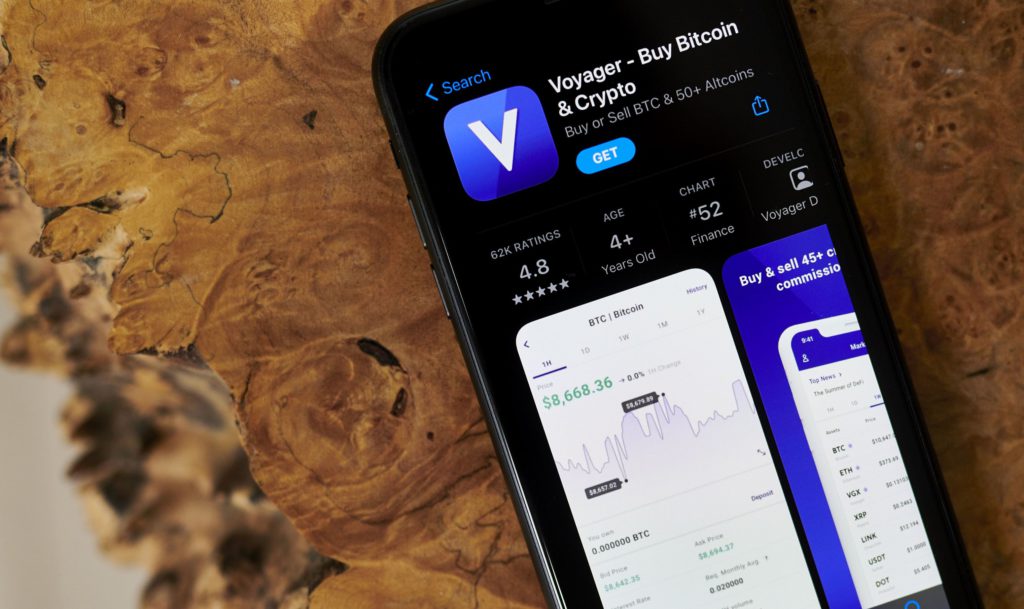
(Bloomberg) — An erstwhile executive of bankrupt crypto lender Voyager Digital Ltd. is exploring a competing restructuring plan that would oust existing management and take the platform out of the lending business. 

Former Chief Innovation Officer Shingo Lavine — along with his father and another Voyager shareholder — explained the broad strokes of their proposal in a bankruptcy court filing Thursday. Lavine left Voyager in early 2021 amid disagreements over the company’s direction, according to the filing. 

In the plan, Lavine envisions a restructured Voyager that does not lend crypto and instead is focused on digital asset trading and customer security. Lavine and his father would lead the operation, according to court papers. 

But Voyager has so far been uncooperative in helping Lavine advance the proposal, Lavine’s lawyers said. Advisers to the crypto platform had not let Lavine’s group access diligence materials as of Thursday despite multiple requests and submission of a confidentiality agreement, according to the court papers. 

Voyager has already filed a restructuring plan and is seeking bids for the company that would provide customers with a better outcome. Under US bankruptcy rules, a bankrupt company often retains the exclusive right to decide how it will restructure until a judge terminates that right.

Representatives for Voyager did not immediately respond to an email seeking comment Friday. 

The bankruptcy is Voyager Digital Holdings Inc., 22-10943, U.S. Bankruptcy Court for the Southern District of New York (Manhattan).

More stories like this are available on bloomberg.com

©2022 Bloomberg L.P.
Walmart Finds a New Way to Take on Amazon: Used iPhones and TVs

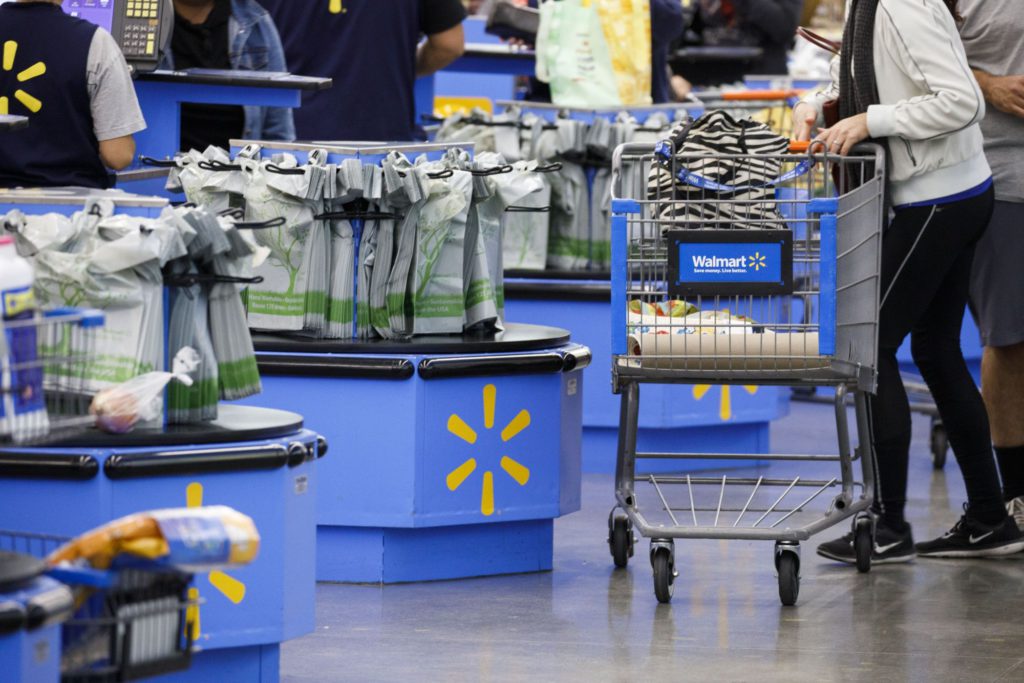
(Bloomberg) — Walmart Inc. has a new sales pitch for consumers contending with soaring prices: Buy used goods. 

A new “Walmart Restored” program will make it easier to shop for refurbished items from the likes of Apple Inc., Samsung Electronics Co. and Whirlpool Corp.’s KitchenAid, the retail giant said in a statement Friday. The restored merchandise will be available online and in some stores this fall. 

“In a year when customers are looking for ways to save money, like-new refurbished products have become an increasingly popular way to cut down on costs without sacrificing quality,” Walmart said in the statement. 

Walmart is seeking to coax more customers onto its website as it ramps up a marketplace of third-party sellers to compete with Amazon.com Inc. While Walmart.com already has sellers of refurbished goods, the new branding will help spotlight the restored merchandise as shoppers look to save money amid the highest US inflation in four decades. 

The refurbished products have been inspected, tested and cleaned, Walmart said. The Bentonville, Arkansas-based retailer also offers 90-day free returns for the items. 

Walmart climbed less than 1% to $130.60 at 11:38 a.m. in New York. The shares tumbled earlier this week after the company cut its profit forecast and said customers were increasingly shying away from general merchandise as soaring food and fuel prices force them to spend more on basic goods.

More stories like this are available on bloomberg.com

©2022 Bloomberg L.P.

UK Pressed on Conflict of Interest and Russian TV in OneWeb Deal

(Bloomberg) — The minister in charge of the UK’s OneWeb stake is also responsible for approving its merger with France’s Eutelsat Communications SA, creating a conflict of interest, according to the head of an influential committee of lawmakers.

“You are clearly conflicted in this process as both the decision maker under the National Security and Investment Act and the government lead for our shareholding in OneWeb,” Darren Jones, chair of Parliament’s committee for Business, Energy and Industrial Strategy, wrote in a letter to Business Secretary Kwasi Kwarteng on Friday. 

New UK takeover laws came into effect in January that grant officials new national security powers to review corporate deals, including the ability to pull apart acquisitions retrospectively. Jones asked Kwarteng to explain by Aug. 12 how he’ll manage the alleged conflict and confirm that his committee will be given “enhanced scrutiny” of the deal.

The UK bought OneWeb out of bankruptcy in 2020 in a controversial $500 million bet with taxpayers’ money on its constellation of small satellites that beam internet connections from low-earth orbit. On Tuesday Eutelsat and OneWeb agreed to merge to better compete with other ventures like Elon Musk’s Starlink — giving Britain and Eutelsat shareholder France significant stakes and board seats in the process.

A separate minister in Kwarteng’s Department for Business, Energy and Industrial Strategy would be responsible for the national security review, according to a person familiar with the business secretary’s thinking, who asked not to be named because the discussions are private.

In the letter, Jones also asked Kwarteng to address concerns about Eutelsat’s role in broadcasting Russian TV, “allegedly including propaganda about the Russian war in Ukraine,” and Eutelsat’s minority shareholding by the Chinese government.

A representative for BEIS didn’t immediately respond to a request for comment.

More stories like this are available on bloomberg.com

©2022 Bloomberg L.P.

Intel’s Gelsinger Says Stock Deserves the Beating It’s Getting

(Bloomberg) — Intel Corp. Chief Executive Officer Pat Gelsinger said his company’s stock deserves the drubbing it’s currently getting from investors after earnings disappointed shareholders and the chipmaker itself.

“We deserve to be down today,” he said in an interview with Bloomberg Television. “With the earnings we’ve reported and the guidance we gave, it is a bit of a reset. We’ve disappointed ourselves and our shareholders.” 

Gelsinger stuck to his assertion that the current quarter will be the low point for Intel, a long-dominant chipmaker that lost its technological edge in recent years. Customers have been cutting orders as they cope with a stockpile of inventory, he said, but they’ll soon return to buying during the typically stronger second half of the year.

Intel shares suffered their worst rout Friday since October 2021, falling as much as 11%. The decline followed the company slashing its annual forecast Thursday and reporting steep drops in personal-computer and server chip revenue.

“We have laid out a multiyear path to the future and we are confident that it will be realized,” Gelsinger said.

More stories like this are available on bloomberg.com

©2022 Bloomberg L.P.
Stocks Climb as Traders Find Solace in Earnings: Markets Wrap

(Bloomberg) — Stocks climbed after solid earnings from megacaps overshadowed concern about uncomfortably high levels of inflation that could make the Federal Reserve keep its firm grip on monetary policy.

The S&P 500 headed toward its best month since November 2020. The Nasdaq 100 outperformed, with Amazon.com Inc. and Apple Inc. set to add nearly $170 billion in market value after joining some of its peers in assuaging investor concerns by reporting higher revenue. Bond yields fell alongside the dollar.

Earnings reports from the biggest technology companies are showing that the group is navigating the tough economic environment better than smaller rivals, fueling a rebound in stock prices and encouraging investors about the outlook for the second half.

“Companies with a strong balance sheet, strong cost controls, and that produce strong sales growth will do exceptionally well in this environment,” said Geir Lode, head of global equities at Federated Hermes, adding that the market will again favor growth over value stocks. 

The tech results tempered worries about a surge in two key US inflation gauges and a reading of consumer long-term price expectations hovering near an 11-year high. Fed Bank of Atlanta President Raphael Bostic said the US economy was “a ways” from entering a recession and the central bank had further to go in raising interest rates to get inflation under control. A soft landing is a plausible outcome for the labor market, Fed Governor Chris Waller noted.

Read: Ex-Fed’s Quarles Says Rate-Hike ‘Athleticism’ Will Cool Prices  

Despite the big rebound in stocks this month, several market watchers are still skeptical about a sustained rally due to the many economic challenges and the fact that the market hasn’t gotten cheap enough to call it a bottom.

“This is a rally within a bear market rather than the start of a new bull market,” said David Donabedian, chief investment officer of CIBC Private Wealth US. “We would expect a lower P/E ratio if we were at the bottom of the market. While the equity market has partially recovered, we expect it will retest the lows we saw in June.”

Donabedian says that the optimism about the Fed potentially wrapping up its rate hike cycle earlier that expected is “more hope than reality”. He sees more rate hikes and says there’s still a lot of work ahead to bring down inflation while adding that “a slowing job market is on the way.”

In other corporate news, Intel Corp., the biggest maker of computer processors, slashed forecasts for the year. Roku Inc., the maker of streaming-TV devices, said advertisers are pulling back on spending due to economic concerns. Exxon Mobil Corp. and Chevron Corp. posted their highest-ever profits, reaping the rewards from surging commodity prices. Procter & Gamble Co. sank as its forecast for sales growth lagged estimates.

Some of the main moves in markets:

Stocks

  • The S&P 500 rose 0.8% as of 11:46 a.m. New York time
  • The Nasdaq 100 rose 0.9%
  • The Dow Jones Industrial Average rose 0.4%
  • The Stoxx Europe 600 rose 1.3%
  • The MSCI World index rose 0.8%

Currencies

  • The Bloomberg Dollar Spot Index fell 0.2%
  • The euro was little changed at $1.0206
  • The British pound was little changed at $1.2177
  • The Japanese yen rose 0.7% to 133.33 per dollar

Bonds

  • The yield on 10-year Treasuries declined four basis points to 2.63%
  • Germany’s 10-year yield was little changed at 0.82%
  • Britain’s 10-year yield was little changed at 1.86%

Commodities

  • West Texas Intermediate crude rose 4.1% to $100.42 a barrel
  • Gold futures rose 0.8% to $1,782.50 an ounce

More stories like this are available on bloomberg.com

©2022 Bloomberg L.P.

Close Bitnami banner
Bitnami
